
Recordings › Ramadan Rendezvous
Al-Hadeed, V4 | All We Ever Truly Have Is The Now | Ramadan Rendezvous | Mufti Abu Layth
salat salaah namaz salaat namaaz as-salah al-salah salawat sawm roza siyam rozah saum zakah zakaat zakah al-mal zakat al-mal obligatory charity haj pilgrimage hadj fiqah jurisprudence fikh hadeeth ahaadeeth hadis hadees ahaadith saheeh sahih hadith saheeh hadith sound hadith authentic malik ibn anas malik bin anas imam maalik imam malik ibn anas asar salat al-asr asr prayer afternoon prayer qiyaam qiyam ul-layl standing in prayer takbir takbeer takbirat takbeerat imaam imams prayer leader witar salat al-witr witr prayer tahajud tahajjud prayer night vigil ramadhan ramzan ramazan ramadaan tarawih tarawih prayer taraweeh prayer faqih faqeeh maaliki malikite malikiyyah maslahah masalih al-maslaha al-mursalah maslaha mursalah public interest muftis haraam forbidden mandoob mustahabb mustahab wajib waajib wajibat sunna sunnat sunan prophetic practice bida biddat bidaa dalil daleel adillah adilla proof aahaad khabar al-wahid khabar wahid khabar al-ahad solitary report saheeh muslim imam muslim muslim ibn al-hajjaj al-muwatta muwatta malik muwatta imam malik muwata imaan eemaan eeman faith 'ayn al-ayn evil eye koran quraan al-quran sura soorah surat suwar soora chapter ayah aya ayat ayaat aayah aayat juzz ajza ajzaa siparah sipara hifz hafidh haafiz hifdh huffaz hafiza memorisation sahabah sahabi sahabiyyah sahabiyat khalifah caliph khulafa khilafah khilafat caliphate khilafa makkah makka mekka madinah madina al-madinah madeenah yathrib andalusia moorish spain soofi tasawwuf tasawuf tasawwof ulema ulamaa shaykh shaikh sheik shuyukh shaykhs ummah umma ummat in sha allah insha'allah in shaa allah insha allah inshaa allah ma sha allah masha'allah masha allah mashaa allah bismillah ir-rahman ir-rahim bismillahir rahmanir rahim bismillahi bismillah al-rahman al-rahim salam as-salamu alaykum assalamu alaikum assalamualaikum salaams salam alaykum wa alaykum as-salam greeting duaa duas duaas supplication tawba tauba taubah repentancelive stream · 1:10:42 · 5,200 views · 28 Mar 2024 · Open on YouTube
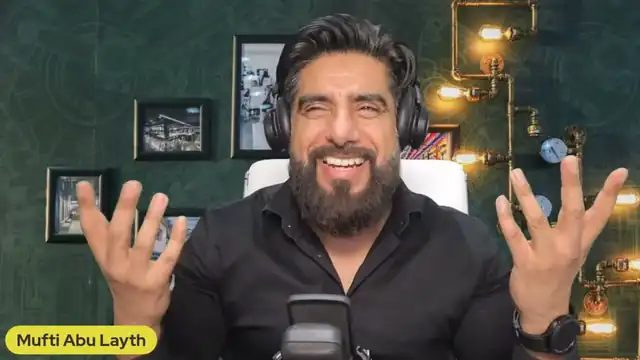 Press play to load from YouTube. Nothing loads until you do.
Transcript
machineauto-transcribed, may contain errors · source: youtube auto · click a time to seek · dotted terms open the glossaryAll right. Bismillah al-rahman al-raheem. I thought to myself Yeah, it's been a while since we've since I've been blessed with your company. Right. So, let me just whilst this is going live, just just ensure that there is a I'll do a quick sound check as well.
Also, right. Um I'll just say Right, just let my um my Patreons know that I'm live. Let's
All right. You see some of likewise happy to see you as well. You all are mean. Like salaam, sound is good. Shukran. Shukran Shaji. Shukran. And somebody is saying, "Look, just before the world is about to end." I You know, sometimes I wonder did it You know what?
Did the world even exist, huh? Allah. Or is it as Sheikh um Al-Jilani says, "Khayalon fi khayalin fi khayali." Allah. You know, an English equivalent I guess is all that we see and all that we see and seems is but a dream within a dream.
Huh? So, I guess sometimes yeah, you know, you kabhi kabhi mere dil mein khayal aata hai. That's that And you know, when people worry about the world coming to an end. Don't worry about things like that, ya'll. You know, things have been before us and they will be after us.
But more importantly there is a higher realm and a higher dimension in which you and I are all a part of. So, this is a kind of simulation almost. A holographic entity reality, an emergent property.
It is but a game. Ya'lamu annamal hayatat dunia la'ib. Know that this that this life of this world that you see is but a game. Allah and a distraction. This world it distracts you from reality with a capital R.
And the absolute truth with a capital T. And that is Allah is Allah. And from Allah is Allah. Is the word Allah. Which means reality. So yeah. And in light of this I actually wanted to speak around this kind of topic.
That you know, everybody is everybody will always have problems, you know, that that issues, challenges um you know my side my side some of these These things they will always be, you know.
The the thing is it's not these problems, it's not these it's how we compute and perceive them. Okay. The way you see something defines the reality of what you are seeing.
You see to some people a calamity can be an opportunity. A struggle could be a character-defining stage. It all comes back to how we And that doesn't take away from the struggle.
It doesn't mean So, let's say there's a storm that we're going to go through now or we are going through. Because everybody is fighting some difficulty. You know, that this this quote of Plato that be kind for everybody you meet is fighting a difficult battle. Everybody, you know, har koi ulja way apni uljhan mein.
This everybody is is is walking uphill. It doesn't matter who they are, you know, they they There's an amazing poem that it's in Arabic where it's about just people always complaining. And not to say and I'm this isn't to just say to that people you know, what's wrong with people they complain.
It's not to say that because they're just human beings. Everybody we're all just we do things in a way until we develop better ways of doing them. So, this isn't a blame thing at all. Rather, bilaks, on the contrary, this is an identification with what's going on. The person begins with that you know, what the saghir wal kabir, you know, that the the young child just wants to be a grow old, wants to be an adult.
And the old person just wants to be young. And he says uh with all of that he is Muhammad. That you know the one who has children, he says he's he's just always in this perpetuity, this never-ending worry.
Are my children okay? Have they got this? Have they Oh, my god. This child hurt themselves. Oh, my god. They're not doing this. Oh, they've gone off and I can't control Do you know as they get older, different problems. He says and and the one that has never had children or has lost them has exploded with with this catastrophe.
And you know I was I I And she And this happens. I You know, you speak to people just on this example to Allah has not blessed them, let's say, with children. And you can one can only imagine the the immense struggle and challenge that they are facing.
And sometimes that you know, naturally hits women much harder than it hits men. But all of this is it is all, you know, this is all a a landscape, the imagery, the manifestation of the divine will. You know, it looks like all s- uh you know, this things overlapping and maybe scribbled or squibbled and you and you move back.
You know, strokes of you move back and it's this beautiful, masterful painting a work absolute work of art. Now, but in it is this you know, it's what one way, you know, a mosaic. A difference between a mosaic and a collage is that in the mosaic you will have stones, pieces of glass, pieces of all sorts.
You know, things on their own that could be very, but as you zoom out, there is this masterful piece of art. And and as I was saying, you can one can only imagine and then I was speaking to somebody um just thinking, you know, that the amount of struggle that they're in because of their children. That they that you know, that they have no bond and it's absolutely you know, just very challenging behavior from from the And and I was thinking of this poem actually.
And he says you know, He says and and the person who has wealth he's worried Oh, no, how do I invest more? How do I secure my as you know, people are trying to take money from me.
Let me invest in this. Let me You know, feet are having. He's in this tired, exhausted, mentally drained. But, you know, and and yet exhausted is the one who is poor. That miskeen is like, "Yallah, where where is this risk going to come from?"
And he says uh He has this this It's a beautiful point where then he says about beauty as well. He says that, you know, a person who loses beauty or attraction, you know, maybe as we age or maybe just other He says a person who loses or doesn't have good looks or aesthetics complains, you know, to themselves they cry out.
Allah, wala yuhibbullahul jahra bis su'. Allah. What a verse of the Quran. But, Allah does not like that, you know, this people but vocalizing in this bad way. But, here a person may complain and and then he says, "And a person who has good looks may also complain because of
You know, it's because of the the problems that that may cause for them. I mean, I'd love to say I can understand and identify with that, but but kahayyar, I'm saying. But, yeah, so you see that that reminds me of which You know the poet Who's the poet here who says the He says, "Ye husn bhi kya buri bala hai.
Jisne dali buri nazar dali." He says what a catastrophe this beauty is as well, huh? He says whoever casted a glance did so with you know, with bad intent. So, right. So, this thing about problems, what I was saying is you know, in some we all we ever have, and this is what I want us to focus on today, is the now.
Al an in Arabic. Al an. You could say al hin as well, but al an. The now. We never truly experience the past or the future. None of us. It is but an illusion, if you think about it. All you've ever experienced is a perpetual series of now.
But our mind is often either in the past, which is depression, because we're like, "Yeah, I did this wrong. I never did this. I should have done that. I messed up in this. I invested wrong. I should have done this business move instead. I should have finished that degree. I should have chosen somebody else as a for a relationship.
I should have You know this gosh, gosh, gosh. You know this that I'm I'll never You'll never be able to return things just by the past by just saying, "Yeah, later. Yeah, lafa." You know, in Arabic, these crying out. Yeah, laitani, if only I did this or that.
This if only, coulda, shoulda, woulda, coulda, shoulda, woulda. These things, they don't change. So, living in the past, where we all live, hopefully, less and less so, it is depression. A potential for it. Or we live in the future, mentally, I'm speaking about, which is anxiety.
Why is the future anxiety? Yeah, you know, is this going to happen? How am I going to pay for this? Yeah, what what How am I going to finish this year? How is this business going to run? How am I going to sort out this relationship thing? Oh, what's going to happen when my kids grow up? Oh, what's going to happen with this? Oh, what's going to I better look to ya, sounds totally different.
Tanafas habibi, tanafas. You know, this take a breath. We haven't even got there yet. You know, the Hadith saying that if you had the Iman of the birds, who leave their nests in the morning hungry, and they come back having had their full.
You know, they did not know what was set out for them that day. They had no plan. But Allah fed them. We don't know, you know, tomorrow will come. Yes, it may come with its problems, but it will come with its solutions as well. So, half of the time, the language we use affects things.
You know, you think to yourself, if there's a problem, you think "All right, this is going to be interesting. Let's see how Let's see what miracles Allah manifests here. Let's see the the potential I can rise to here." Let's see it as a challenge.
You know, let's see it as an adventure. Yeah, what what's better than that? So, insan is split between these two, the past, the present. Or sorry, the future. But all we truly have, what is the haqq here? Al-haqq. The haqq is the now.
Where we spend the least amount of time. And what they show as well, bringing yourself, you know, in in the brain, you have what is the default mode network, which is associate, the more active it is, it's always active when you're not doing things. It's the kind of humdrum autobiogra- autobiography of you, and that's always playing in the background on standby when you're not doing something else.
That a high activation of the default mode network is often linked to depression. And one of the cures to this is by mindfulness and bringing yourself to the now. Allah. You know, you could do that, whether it's through your breath, whether it's through just bringing yourself to the now.
And that decreases, deactivates the default mode network in the brain. It kind of decreases its its activity, reducing depression and anxiety. So, this is what I want to build on and show us where I want to take a look at a um a Hadith.
So, here's a Hadith that is found in Sahih Muslim as well. And um and in some other books of Hadith as well that the prophet said "La tasub ad-dahr." Do not insult or swear or abuse time. Now, dahr is a word in Arabic for time, but there's many words for time. There's zaman, zaman, al-asr, al-hin, al-an, do you know this?
al-waqt. There's many words, ad-dahr. This Hadith says "Do not abuse dahr." Fa inna Allah azza wa jalla qala "Ana dahr." For Allah has said "I am time. Dahr." What makes this really interesting is that we find scholars from within this within our tradition like a Sharif al-Jurjani who has a book at-ta'rifat.
Um and in it he defines many terms that have appeared um in different sciences and spiritual sciences as well. Now, his this is from his book. A Sharif al-Jurjani's book. Uh Abdulqahir al-Jurjani. Now, he has here ad-dahr. What is ad-dahr? Now, look at this definition. It's going to blow your mind.
He says "Huwa al-an ad-da'im." It is the forever now. He says, "It is the expansion, this encompassing of the Hadara, the presencing, the consciousness that is divine." The the kind of the divine presencing, the divine consciousness.
A term used by many great scholars in uh especially in our spiritual tradition, people like Ibn Arabi and many others before him have used al-hadara, this hadara, this presencing from hudur, from being present. Um and al-hadaratul ilahiya, this divine presence or this divine consciousness. This is the implicit, the inner of time.
It is basic It is what gives reality to time. Who? Al-hadaratul ilahiya, the divine consciousness. Allah. That's what al-hadaratul ilahiya in that sense, meaning it's coming from God. Wahuwa batinuz zaman, it is what is the inner fundamental of time.
And with it the pre-eternal and the eternal are united. With this divine consciousness, meaning And in the hadith, so who who is dahr, by the way? This is the definition of dahr. And what what does the hadith say? Who is dahr? Allah says, "He is dahr." Allah says, "I am dahr.
I am the forever now. The one thing we spend our lives running from. To the past which is gone. But just a memory. To the future which hasn't even happened yet.
Missing all the while the present now. Where had we brought ourselves to it there we would have found Allah. Just think about that. Now with that in mind, I want to take So this Suratul
Hadid verse four I'll enlarge the screen so you can read that as well. Look how this verse ends.
Allah brings us back, you know, from the divine cos the glory in the cosmos to how the the the heavens and the earth and how everything has this function and it is in is in flow. Two, Allah brings us to where who are my home. Allah has always been with you.
Ain't no matter what you do. Wherever you were, he was with you. Well, Allah will be my home alone about say. He's He has always been seeing it and he's seeing it all. Allah does not say in this verse that what I am to my home alone he ain't no matter what you do.
That you are with Allah wherever you are. It doesn't say that. Allah says where who are my home. See, Allah was with you all along. Why not the other way? Why not we were with Allah because that's true as well then, you know, if the equation works both way.
True. But I'm to my home alone, you know, you never knew it. You never realized it. But Allah always realized and it was a reality realized. And he knew it. Where who are my home ain't no matter what you do.
Wherever you were in your problems, Allah was right there. But the problem is you see, we had to bring ourselves to that now. To that moment. But we were too caught up in the past or too worried about a future. And with this
All right, so this of I want to also bring us to verse Surah Qaf verse 16. There is. Just hear that. This verse
so majestically ties in with what we're saying. Surah Qaf verse 16. Allah says, "Look, we created insan. We know the the whispering within, the worrying, the anxiety, the the chatter that doesn't stop. We know that.
What does this chatter often do? It leads people to a catastrophizing and a devastating state. What could such a state even lead to? Further catastrophe. It could even lead to a person God forbid taking their own life.
Drowning in such anxiety. That one of the things that they're doing, look, that that people often did or as a method to take their life, that they would suffocate themselves. Hang themselves. Two different.
Allah is bringing your attention right there. That look, even such a thing that was the core of life, closer than that still in the moment was Allah to you. Nahnu aqrabu ilayhi min hablil warid.
Even when people under such collapse, those who maybe even those who've taken it to an extreme to take their own lives even, before and more intimate than that even was Allah to them. But they didn't see it. You see that had we brought ourselves to the now, we would have found Allah.
That the solution to all of There is no problem except there is a solution to it. And there are things that look, there are things that we can change in life. So, let's change them. And there's things we can't change. They're bigger than us. You know, somebody's made a comment about um you know, the world coming to an end.
You and me can't change things like that. We don't need to change things like that. We concern ourselves with this now. You know, lil alam rabbun yahmi. The universe, the cosmos, the world has a lord. He will That's Allah's depa- you know, department, Allah's qualities, Allah's power, Allah's dominion.
Allah watches over them. You see? We We do what we have to do. And I think this Sometimes these things I I began by saying, "Look, everybody is fighting a difficult battle. When you meet people, be kind cuz you don't know what they're going through." And And I guess everybody's going through something.
You know, not But it begins with changing a perspective. How we look at things. And I'll speak about There's a a powerful verse. We'll speak about that another time. But I want to just share this with us today. Huh? That Look, in the end You know, kul lul ladhi fawqa turabi turab.
As uh Wasn't it Abu Firas al-Hamdani who said that, I believe? That in in the end everything that is above dust shall be dust. Allah. There's an epic um um you know, spiritual person of our tradition in the last um in the late 1800s into the 1900s.
A poet as well, Urdu poet. And a great Sufi as well from the Indian subcontinent, Bedam. Bedam Warsi. So, he says that Isi khake astan me ek din fana bhi hoga ke bana hua hai Bedam isi khake astan se. That's uh He says that, you know, that in the in the dust of this sanctity or this astan were often the places associated with these sacred spaces of
spiritual practice and like like you have khanaqa or these words like zawiya and so this word astan is used like that as well. So so he so he says that that in the dust of this astan of this sacred space one day he too like he's speaking about himself Bedam will become you know will perish in this sacred space.
That it is after all it is from the dust of this sacred space that Bedam was made. And that's a great I do love his he has some famous qawwali as well. That is something I have to say I do I do admire that about the spiritual tradition of the Indian subcontinent. You know the way they took that although I don't know to what extent it was celebrated by the
the the clergy if I can say that. I mean some of these people are ulama as well but but the clergy clergy you know the clergy in the Foucauldian sense. So but but they they had something special about them. That was what I wanted to share with us today that remember that always that Allah says he is the you know one could say that is in that is one of the names of Allah one could say if you're following the you know the that part that spiritual
tradition within Islam which like the likes of many great mystics and Sufis and other people who say that Allah has countless names. And 99 are just um these the key names that Allah has shared. So in this Hadith Allah says, I am Dahar.
I am time, but this time here as Jurjani defines it, it is the perpetual now. That the presencing, the divine presencing. So I hope that's been of some help. Uh folks, you know what? We've got a bit of time. Shall we Shall I share the link and if any of you want to share some thoughts, you can jump on.
Um and then I'll wrap this up. Somebody said Sufism doesn't equate to spirituality or to doesn't equal Sufism. Sure, I mean I'm more interested in the uh you know, in our spiritual tradition.
In our and and amongst that the esoteric mystical tradition of ours within Islam. You know, our tradition within traditional Islam. Which has a core role and a core foundation. So I'm not interested in the institutionalized kind of you know, you have different cuz even within institutionalization has crept into everything, including spiritual practices.
So you have Sufi orders and all of this. Um I'm not so interested in you know, and they some of them within themselves will have inner fighting and bickering and and maybe not even embody the true meaning of the kind of spiritual essence that these that this tradition began with. But so I'm not interested in in that stuff.
Um to me it's more the spirituality and the esoteric um uh tradition within Islam that we have. Right, so Let me I did share a link.
Love from Chirag Kabat you should much share a uh uh a poem from Chirag. Right, let me share the link. Here you go. And if we can you're more than welcome to jump on with got a little while we can tell or some chai shai I've got you know chai cup glass here so
you know Kabat Kabat what what is there not to be grateful about? It is you know the the what is there not to be grateful about? Even with you know when we're going through problems and struggles and even then there is there is always something to be grateful about.
Always. It's a perspective you know the Hadith that that a a amrul momin kuluhu here It's all goodness to a believer. That even when calamity strikes him or her they still see the goodness in it. You know what what what what do you call it say what a guy what a what a person, huh?
So Yeah. Love from Dallas. Likewise, Allah keep you blessed. Oh, I missed the super chat actually. I did share the link people if you did want to jump on and uh we can have a quick chit-chat. But let me go back. I missed a a There was I think that us Allah keep you blessed.
Muhammad Faisal Kharwa and from South Africa making dua everybody is having a Ramadan with ease and blessings. Ah, yeah. Allah keep you blessed and smiling. Amen. Shukran, much love for the super chat. And yeah. I'll see you what questions are people Somebody said about Yeah, Georgian what Yeah, Georgian Mach George.
Ah, bring back, man. Yeah, we've Life moves on, yeah. I'm in a different space right Try to you know, presence with me in this hadra that I'm in. Right, who do we have here? We have Zubair Ahmad.
Ah, salaam alaikum. Wa alaikum salaam. Alaikum salaam. Where are you joining us from, Zubair? From India. Bhopal, India. Yeah. Bhopal. Yeah. Yes. First recently I recently met with Mr. Akram Nadwi. He was there. Say that again, sorry. I didn't hear that.
I met Mr. Akram Nadwi in Bhopal. He was there. Oh, wow. I'll be happy in these days. Yeah. No, no, just a few months back. Oh, wow. Mashallah. I want to ask a simple question with you, please. Please, please. May I ask? I'm learning Arabic. And when I read about this fasting Kutiba alaykum uh sayyam Um but it is ayyamam madudat.
Ayyamam madudat means few days. So, how you people qualify the whole month fasting? If the Quran says ayyamam madudat few days. Faman shahida minkumush shahr falyasum. Yes, yes.
Some days within within the month of Ramadan. But the verse doesn't The verse says that faman shahida The verse doesn't use kulli. Ash shahr. Ash shahr. Ash shahr, yes. That is the month. Now, ash shahr means the month. Yeah. So, you you feel that it should be Because, look, you're right.
So, ash shahr, the word shahr, month, it has its itlaq on applicability on the whole of it and on a part of it as well. One Yes, yes, yes, yes, yes, yes. I could say that, look, you know, if I say you, I'm talking about the whole of you, but I could you know, you could refer to Oh, I you know, this touched me. I did But it wasn't the whole you, it was a part of you. So, itlaq al kull ala or itlaq al, you know, kull ala al kull.
Both of these are applicable from linguistic perspective. Yes. so how does it actually happen? Uh well, generally the inherited tradition, you see, so to understand this, Islam wasn't it didn't come to us in a vacuum. Like there was an inherit the Quran was revealed in a living thriving community that inherited Islam, that inherited the Quran.
So they they understood this. So you have something in Islam known as the living tradition. That living tradition would would bequeath, it would pass on these the actual lived Islam, especially things like this, you know, fasting, praying salah, um hajj. These kind of things would have been passed on through the living tradition.
So people would have understood that you know, Shahru Ramadan alladhi unzila fihil Quran. You know, so that the month of Ramadan. Um so that shows so that's the that that's to answer your question. Yeah. So it would mean how because one Yeah.
So the I discussed Mhm. word does mean this issue with Dr. Shabbir Salim also. And the problem there are few problems nobody can solve. Like a few zakat and the percentage is not not mentioned. Again, zakat is not mentioned with the money.
I questioned it with Dr. Shabbir Salim. Shabbir Salim says this 2.5 and all this means percentage and ratio ratio is coming from Ibrahim alayhis salaam. I cannot agree with it now because we have no we have we have not preserved any books neither Zita book and as far as Mr.
Buhari is concerned you have made I think two two or three episodes Buhari gate. After that that happened Buhari is not reliable. How can I agree with Mr. Buhari? No but okay so that's a different discussion but you know I've so there's two different things here the whole purpose of you know even the premise of Buhari gate or even that that whole discussion it's not to say that I actually begin by saying we know certain hadith come to us they are correct.
Because we know that through evidence and I give an example of something like like you could actually take for example many things that we've come to learn about today. So let's say today when we So when they took the Quran and they at the folio that they had in Birmingham and they kind of carbon dated it and everything and then they did these x-rays and they found oh certain certain other things that were wiped out and deleted and written again.
Now why was this not surprising to Muslims? Because we already had that narrative taught to us through hadith. That that narrative had already come to us. We already knew so when they said these things we knew that oh that was actually that these hadith that have come to us have been verified today scientifically. So for example when uh Bismillah Rahman Raheem or was you know not to be said before uh uh Surah Tawbah.
So the person in the you know which has then been removed but through x-ray you could find the person had written on that a parchment they had written that don't say you know don't say Bismillah. Now things like this you can see that there's many that's just an example where the Hadith have been proven today they they are correct as well. Now the question is that sure not every Hadith is correct and my point was to remove an infallibility status.
So we don't ever say that any only the Quran we take as this infallible status. Everything else is dhanni it comes to us through ahad. So it that means we can question it. It doesn't mean we throw it all away but it means we can question it and we it has to stand the test. So but coming back to this point with zakat that's going to make a lengthy discussion but in part I agree with you.
You see you are right and no it's not coming from Ibrahim Alayhis Salaam and that would be you know of incredibly far-fetched to say anything like that. Now Ibrahim Alayhis Salaam is on the better part of 4,000 years ago. So you know we're not inheriting practices. Yeah arguably around 4,000 or whatever I mean. So now this 2.5% this is a discussion that the that is within our tradition.
Like the as in the transparency of this is within our tradition. So if you read the fuqaha that speak those who spoke transparently about this they've been honest. They've said that look what happened is the zakat is there and what what we've had is the early zakat people never used to have much gold and silver. Zakat was primarily to do with animals, and it was to do with land.
Now, what's happened is as as time has moved on, people start to have more gold and silver. So, how does that work? Now, what you did have is some weak narrations. You did have Even the Look, you know, with that You know, one thing we have to also really, you know, we have to admire is and maybe it's not everywhere, but it is there, you know, you know, whoever looks for it will see it.
There is honesty amongst several, you know, uh outstanding men of this tradition, you know, outstanding people, upholders of this They've just been honest. They have said, you know, in this bath they say that these hadiths are weak. But, they say, "Look, the spirit of Islam tells us that now that money is becoming a commodity, because it wasn't before, that people never used to have that much gold and stuff.
They used to have animals and livestock. But, now that it is, the spirit of Islam does tell us that, "Look, we need a system. We need a nisab. How do we calculate?" So, we We're not making it up. There are hadiths, but they say these are weak. We accept that. But, it ties in with the greater spirit of Islam.
So, they say So, based on that, we will implement them. And And that That That to me is a the beauty, you know, in that there is a splendor in the honesty. But, also showing that Look, what is this? This is about helping the poor. This isn't about, you know, snatching money from people. This is about How do we help the poor, the the masakin? How do we help people?
So, people want to give, but they want a system as well. You know, you want to give like how much do I what should I give? Let me set a system. So, that they've based a system on these ahadith which do have problems, but they're enough. They do tie in with the spirit of Islam. So, they've used them based on maslaha. And to me, that's not that that that to me, that is fine because that is what Islam is about.
Islam is about making things work. So, and as time evolves, people will change. You see, in the prophet's time, even though gold and silver was there, but most people did not hoard it like that. They didn't actually have savings of gold and silver. Most people, they didn't. Now, time changed. And then people did. So, the fuqaha, as Umar ibn Abd al-Aziz said that, you know, that um um that tahduthu li nasil what is it?
Qadaya bi qadrima ahdathu. Um you know, that the people we will get rulings in accordance with what people bring into existence. So, as they keep changing things, we'll keep having new rulings. So, yeah, so in a nutshell, obviously this discussion can go on forever, but uh I I I wouldn't to me, that's not a, you know, I don't feel that's a significant blow or anything.
I feel that that's something that we have within the Islamic tradition been very honest about. Many people have. Maybe some people haven't. I accept that. If they haven't, that's on them. But people like you could read ibn Hazm, for example. He's been very showing you the hadith, even telling you that they are weak. He brings them all and shows them. And he shows you why we've used them, why ulama have used them. You can see within uh the school of Medina, they discuss it as well, and they say, "Look, well, this is what the practice is based on maslaha, welfare for the general public." So, yeah.
I hope that helps. As a wave G, I'll have to wrap this up. I'm grateful. I'm grateful. I'm grateful. I I'll be I have been listening to you for many many years. Many many years. Yeah. Allah keep you blessed and Allah bless you take care. Yeah, Bhopal. People that was uh Zubair G from All right.
So, let me just uh from Bhopal in India with an interesting question on you know, one Ramadan, where does it say the month? But I I did um and the second the nisab for zakat has not been determined. People have made it up. And I did respond that look, the Quran does say Shahru Ramadanu alladhi unzila fihil Quran, the month in which and it does say faman shahida minkum ash-shahr fal yasum, whoever observes the month, let them fast it.
So, the Quran explicitly does use that word. And I do accept that in metaphor, we can do itlaqul kulli alal juz. So, we can take something and mean a part of it. But there's nothing in the Quran saying that month here is referring to a part of the month. So, just going with the actual reading of the Quran, it does say month. And with the zakat as well that we do you know, within our within the Islamic tradition, people have been very honest and transparent.
Now, true, there have been some people who haven't and that's not on us, that's on them. But people have uh very um you know, they very openly said that these ahadith on the nisab are weak, but we use them based on maslaha. So, that was my response to all of that. Guys, should we take another call and And wrap this up. Yeah.
Ooh, can we eat McDonald's? Boycott McDonald's. Honestly, boycott these good-for-nothing scum. Honestly. I really hope all these companies, you know, meet their fate. Or at least they learn a significant lesson.
You know, they It's not even turn a blind eye. They encourage the genocide. You know, they celebrate the genocide in Gaza. They, you know, give special bonuses and happy meals to soldiers killing babies. You know, I can't Cuz I'm saying, you know what? The Hi.
Hi. Hi. You know, honestly, I don't We're all in the same boat. You know, we I Every day I see an image. Tears my heart. You know, if there if there was something that you could say, "Yeah, take my life and stop all of this." In an instant, I would give it. You know, like this You You know, this You can't see it. But that's me.
You know, we So, these people boycott these people. They're scum. Honestly, if no morals, no humanity, honestly, things like uh McDonald's. Right. I mean, it's just these Honestly, we we have to You know, we have What can we do? We have to live our You know, it's that thing.
We have to bring ourselves back to that present and keep living with our smiles, but you know, this is happening. You know, may Allah um grant the people of Gaza relief, amen, and victory. And you know, now there was this UN Council resolution calling for a ceasefire. Let's see what happens. Let's see what happens. Maybe maybe, you know, you know, maybe out of all of this
you know a a Palestine state is born. Amen. You know, maybe because now too much has happened. You know, this is why before I I always you see to me even the loss of one life is too much. And now too much has happened. You know, now there needs to be a result.
A worthy like they couldn't have died in vain now. So, amen. I do pray inshallah we see a free Palestine very soon. Amen. You see, I missed some quite a few super chats came in all at once. I think I missed them. Yeah, where is Okay, so what are your thoughts on COVID-19 and Rashad Khalifa?
Great for you to make a video analysis. Shukran. Firstly, Yaqub, Allah bless you. Allah keep you blessed. Amen. I do have some videos on that and I have a mind crap with uh um Professor uh what's Edip Edip uh Yüksel Edip. But I've got it. If you type in Dr. Edip and type in my name and he's one of the core representatives or proponents of the 19.
Uh so, I I have a very lengthy podcast with him already on that. I I mean in summary I feel that they could be mystical things to numbers within the Quran, but I don't think we should become cultish over them. You see, that's my point in a nutshell. Cuz you know, Rashad Khalifa became very controversial.
I mean, he did find 19 in a lot of verses and but then because of that he even problematized certain cuz they didn't add up to 19 and he said these two surahs, sorry, two verses were then must have been added to the Quran or something. And I think that's you know, that's that's where this all turns into a cult. Uh Zakariya Law keep you blessed and shukran for the uh super chat. Can you advise on how to go about learning about the different schools of fiqh via an online course?
Um yeah, I mean there's I'm sure there's so much about Ooh, I would say yeah, pick a school. Learn it, get the basics out the way. You know, personally, I would say there is no school that rivals the school of Medina. Allahu Akbar. There is some There is an unrivaled splendor to the school of Medina.
You know that. You know, um somebody came to Imam Malik and they said, "Well, um you know, oh that they wanted to study in uh but they were considering also, you know, should they go to the school of Iraq, school of Kufa?" This is other school, school of Basra. This other Yeah, and Imam Malik responds to him.
He said Imam Malik said to him, "Do you you know, do you do do you just want to learn to do you really want to study this thing?" And he said, "I really you know I want to have a true grasp of this thing. He said then take up residence in Medina. For the Quran surely was not revealed on the side of the Euphrates.
Allah said the Quran didn't come down in Iraq. Yaha yaha. He said it was here that the angel Jibreel was manifest. It was here that the verses of the Quran descended. It was here that the prophet lived and lay buried amongst us.
So take up residence in Medina. So today in a metaphorical sense not about taking up residence but the school of Medina is the school of Medina. The others are good as well. They are here you know. We don't detract from them. You know but but Bitcoin is Bitcoin huh?
The alts can have some use. But Bitcoin Bitcoin here Baba. So yeah. That's what it is. The school of Medina is the Bitcoin of the fit world. Right Nasima Allah keep you blessed. Shukran for the super chat. Is Taraweeh bid'ah? Not sure if you talked about this already but please provide a brief summary since I joined late.
I haven't discussed this today. Um Taraweeh is not a bid'ah. Um but right so this would become a very lengthy discussion. Taraweeh is not a bid'ah. It was something uh the prophet prayed. It's called Qiyam al-Layl. The prayer of night. Now, equally one could argue that it it was not exactly um what it may appear as today in some parts of Muslim communities.
That's true as well. It's become something very um you know, institutionalized in a way. So, Qiyam al-Layl was a prayer at night. Now, what was it really? Uh my the way I would see it is that the way in normal nights you had the opportunity to pray Qiyam al-Layl, which we would now call Tahajjud.
So, Tahajjud, you know, for Tahajjud bihi nafilatan, you know, like so stand is Tahajjud just means to stand up, you know, to wake up at night. Now, the prophet in his time they would have just called this Qiyam al-Layl. So, during the year the prophet did Qiyam al-Layl, you know, he prayed uh during the night. Sometimes there may have been some days he didn't pray, you know, or he kept it very light or some days he didn't.
But, during Ramadan Qiyam al-Layl became emphasized like it or it had a special glow to it. So, whereas in the regular, you know, months of the year it's there, sure, if you want to pray, but during Ramadan it had one could say like an extra bonus to it.
So, in the prophet's lifetime, the prophet was praying and people started joining him. Now, then the prophet did say to them, "Look, I want you to stop doing this because I fear the way this is going, it may become obligatory. And if it does, you guys will never be able to live up to it. Not you as in the Sahaba, but those who come after. Remember, Islam is for us, too. It's for everyone. It's for us useless people as well, not just the great companions.
So, So, the Sahaba dispersed. And as some people continued this as a practice between themselves, and some people probably didn't. Now, many people did in the time of He saw that people were praying in pockets. You know, like let's say a pocket of 10 here, a pocket of five here, maybe some people on their own. You know, some And he said, "You know what would be amazing if I got them all to pray with one.
Like, why why not have a centralized reading rather than just So, so he did. Now, and he said, you know, that wow, what an innovation. Now, was this an innovation in the deeni sense? Now, that's then forever become a debate. One could say, well, part of it could be seen as that, but then one could argue that but people praying under the prophet's time was already established in the prophet's time.
So, the the You know, so what is the bid'ah? Now, and that's a you know, a tangential, you know, discussion we don't want to get sidetracked into right now. The other discussion became, well, how much should we pray? Because in the Muwatta, uh Omar ibn al-Khattab combines them on eight and three witr.
And also combines them on or some might say 10 and one witr. I don't know how we're going to interpret that. Some may do it that way, but I think mostly it's eight and three witr. And in the So, he prayed they pray 11. And in another way in the they pray 20. You know. So, it's going to be 21 or 23.
Now, so how much do we pray? And there's huge immense debate in this, you know, the whole Some people have gone to extremes that, you know, if you don't pray you're sinful in most cuz it's like such an emphasized and some people say 20 is a must and some people say only eight because there's a Hadith of Aisha that the prophet always prayed eight whether it was Ramadan or outside of Ramadan and some people Imam Ahmed ibn Hanbal said I think up to 40 pray 40 and Omar
ibn Abdul Aziz said 36 and you see a simple way to understand this and this is where the legend of Muslim Spain Abu Bakr ibn al-Arabi al-Maliki the great jurist and you know, Hafiz of Hadith of the of you know, of our Spanish Muslim tradition of al-Andalus 900 years ago where he writes that and this is also a view that echoes later on that there is no fixed number in and this is what I
find you know, peace in my heart with as well that there is no set number for that the minimum seems to be that they are prayed in almost batches of four like as in but you pray four in two so that hence because they would be called a turn. So, you have one set of two and then another set of two and that's called tarawiha time.
So, more than one four. So, if they're in fours, more than one four. So, what Ibn Arabi says is that there is no set number. But, we find that the minimum that the prophet prayed was eight. But, there is no defined number. Now, here one could even say, "Well, what if a person prayed four?" But, the prophet never just prayed four.
So, the prophet prayed eight and there's no set number. So, you could pray eight, you could pray 12. As Ibn Sorry, Ibn Abd al-Barr in the Kafi says eight, 12. Um doesn't he say 16 as well, I believe? Or 20. So, in his Kafi, he has these numbers. So, one could pray any number. You know, if you prayed eight, if you prayed 10, if you pray I hear in the Haram in Mecca, they pray 10 now.
Uh under our MBS. Al Saud. You know, we've got to talk about Al Saud. I down spiraled and I ended up really I was watching all these things and just the whole, you know, the the the independent Abdul Aziz Al Saud and how he backstabs the whole auto You know, the whole betrayal.
We've got to speak about that another day. You know, the Sharifs of Mecca, how they backstab the Ottomans and then join with the British and then how the British backstab them and get Al Saud to backstab them and and then but then the British still use them in Iraq, but then they get backstabbed again and we've got to speak about that, man. It's just wow. So, what whatever a person is going to pray and it is it is considered recommended.
So that's the the way the school of Medina says it. So we don't use the word Sunnah Mu'akkadah in the Maliki school like that. We just say it is Mandub, it is recommended. It is a virtuous and a great thing to do if people are going to do it. Right with that folks, let's wrap this up. Allah keep you all blessed. I will come live again. Let's let's see maybe one of the nights this week weekend.
So keep a lookout for it. Maybe Friday night if that works. I'll but I'll drop a message and those of you that want to reach out to me Instagram, Patreon, those of you that need maybe want to be part of my Discord, you're more than welcome to go over to Patreon forward slash let me see is it here forward slash Malm at patreon.com forward slash Malm and you can subscribe. It is a tiered system.
You can join the Discord and but there is a tier that it's one of the top tiers that allows you a one-on-one once a month as well where we can do other therapies and see to your issues and challenges and guide you through them inshallah. Other than that people take very good care of yourselves. Allah bless you all. Huh? We will return back as I'd mentioned that
Take very good care of yourselves. Wa khuda hafiz.
Something wrong here?
Tell us what is wrong and it will be checked against the recording. Nothing changes until a person has reviewed it.
Sending a note needs JavaScript, which is off or unavailable in this browser. Nothing has been sent.
No name, email address or account is asked for or stored, and the inbox does not store your IP address. For rate limiting it keeps an unreadable fingerprint of your connection for 48 hours, and our database provider's own logs record connections as every website's do. Only your note, its kind, the page and the moment in the recording are kept, for review.
Cite this recording
Stable id, transcript version and tier are part of the citation. Every change to a transcript is logged.Mufti Abu Layth Archive, auto-transcribed, may contain errors. https://muftiabulayth.org/r/yc_jhxc888a/ (accessed 1 November 2026)
- APA 7
Mufti Abu Layth. (2024, March 28). Al-Hadeed, V4 | All We Ever Truly Have Is The Now | Ramadan Rendezvous | Mufti Abu Layth [Video, auto-transcribed, may contain errors]. Mufti Abu Layth Archive. Retrieved November 1, 2026, from https://muftiabulayth.org/r/yc_jhxc888a/
- Chicago author-date
Mufti Abu Layth. 2024. "Al-Hadeed, V4 | All We Ever Truly Have Is The Now | Ramadan Rendezvous | Mufti Abu Layth." Video, auto-transcribed, may contain errors. Mufti Abu Layth Archive. Recorded March 28, 2024. Accessed November 1, 2026. https://muftiabulayth.org/r/yc_jhxc888a/
- BibTeX
@misc{abulayth-yc-JhXC888A,
  author = {Mufti Abu Layth},
  title = {{Al-Hadeed, V4 | All We Ever Truly Have Is The Now | Ramadan Rendezvous | Mufti Abu Layth}},
  year = {2024},
  month = {3},
  date = {2024-03-28},
  howpublished = {\url{https://muftiabulayth.org/r/yc_jhxc888a/}},
  url = {https://muftiabulayth.org/r/yc_jhxc888a/},
  organization = {Mufti Abu Layth Archive},
  urldate = {2026-11-01},
  note = {Auto-transcribed, may contain errors}
}