
Removing Facial Hair For Women? | Mufti Abu Layth
hadeeth ahadith ahaadeeth hadis hadees ahaadith maaliki malikite malikiyyah maliki school hanafite hanafiyyah hanafi school muftis hukm ahkam hukum hukam ahkaam haraam forbidden iman imaan eemaan eeman ulema ulamaavideo · 6:41 · 5,100 views · 8 Dec 2021 · Open on YouTube
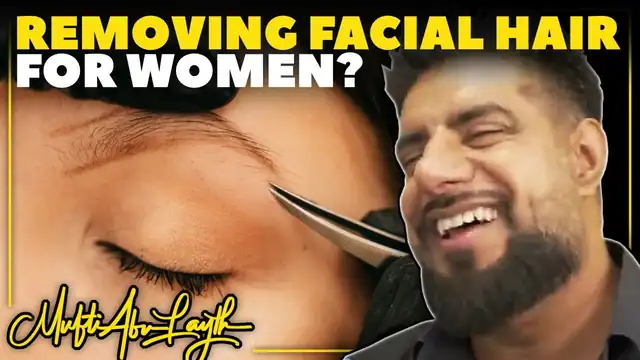 Press play to load from YouTube. Nothing loads until you do.
Transcript
machineauto-transcribed, may contain errors · source: youtube auto · click a time to seek · dotted terms open the glossaryall right here are rodriguez excessive facial here for a female um surgery to remove yeah so this is an issue that um as you can imagine like every issue in islam the scholars have disagreed but you will find that the malikiya and the hanafiya from the schools of law were very clear in women can remove all this facial hair and things like like excessive hair and they can make their eyebrows they can do these kind of things it doesn't
especially the malikia were very clear so they say so you'll find um both in the in the shahrul kabir and sarir i believe as well so you'll find the supie um i believe both discussing that when the hadith about the woman uh the prophet cursing these people was not to do with this and it was to do with they say women who were in a state in a state of iddha a period of mourning following the death of a husband and it was just to condemn that because
it was causing social issues and the hanafiya and kitab arthur bring a narration from uh about imata about removing here from the face so these two schools are definitely very uh on the lenient side and you'll find abu walidal bhaji as well from the malikia once again will use references and other scholars will as well that when there was a companion whose nose was cut off during some battle or something he was um and somebody struck him with a sword and they had cut off his nose
now in the time of the prophet so he would wear a golden nose i've always wondered i wonder how he would make it stick i mean maybe they had something that tied it around or i don't know but uh he would wear a golden nose and obviously gold because it's malleable and you could design it and and it won't kind of um erode and corrosion and stuff like this but you see the golden nose would serve no purpose at all it's only aesthetic so the prophet didn't never condemned him
never criticized him for that and this is it's rulings like this that abu ali talbaji then expand on seeing that this is uh purely aesthetic values and that if a person it can it can aid the it can add value to their life in terms of their confidence and things like this then they then this is what these schools say and many today of the ulama from um from egypt as well in other countries the darlista al missouri and many of these all amen will all concur with that ruling
and also a point worth noting which many people ignore the hadith they use to say that but the prophet cursed these women that those who uh trim the eyebrows namisadas mutton misat with the teeth and those who um extend the hair and those who do tattoos and and even on tattoos the malakia you'll have um people discussing it uh you'll have um amongst them uh zanati who will speak about the maliki's giving according to some malikis not being
haram they will say it wasn't also arguing in line of that as well and stating that the barber women have have always used tattoos now and they said that this was either to do with the women in the ita in that period of mourning or it was to do with those who did it with a an intent to mutate now what's interesting is those people who do take this hadith literally and very harshly to the letter saying that women who trim the eyebrow and that's their world view if they want to take that that's absolutely fine it's the
perspective the faith the pro we can't impose things on one another these you know if you believe in something that's your belief you don't need to do it but you can't go around imposing on somebody else why don't you do it well they might follow the maliki method they might follow the hanafi mother they might follow the ulam they might follow see it's your faith and akam are only to you or you may advise if people ask you say well i've heard this from a teacher you know it's up to you but you can't impose on others that's that's absolutely out of order you are not trained to do that i mean you're not allowed to impose any way but you're not even really allowed
to teach it unless you're trained you can only just say oh i heard such and such now something that people an important thing that people often miss is the hadith mentions about those women who straighten the teeth and they file it and straighten it but today then braces would cover that ruling because braces for the most part just have an aesthetic value and they're often straightening the teeth with them that's all you're doing and sometimes they have to file down some of the teeth yet you see because braces are ubiquitous
most uh i i'm not aware maybe they declare that haram as well then because that's what the hadith says about the women that file the teeth and the reason they would file them is if you're gonna say it's for aesthetics then that's exactly what most braces do today most people their teeth are just fine as in from a functionality perspective it's just they don't look good so they need to and you do get exceptions where people it's it's troublesome for them but in most cases it's just aesthetic value and i'm not aware of ulama really being harsh against braces
so that's food for thought
Something wrong here?
Tell us what is wrong and it will be checked against the recording. Nothing changes until a person has reviewed it.
Sending a note needs JavaScript, which is off or unavailable in this browser. Nothing has been sent.
No name, email address or account is asked for or stored, and the inbox does not store your IP address. For rate limiting it keeps an unreadable fingerprint of your connection for 48 hours, and our database provider's own logs record connections as every website's do. Only your note, its kind, the page and the moment in the recording are kept, for review.
Cite this recording
Stable id, transcript version and tier are part of the citation. Every change to a transcript is logged.Mufti Abu Layth Archive, auto-transcribed, may contain errors. https://muftiabulayth.org/r/xsh3ujna0ls/ (accessed 1 November 2026)
- APA 7
Mufti Abu Layth. (2021, December 8). Removing Facial Hair For Women? | Mufti Abu Layth [Video, auto-transcribed, may contain errors]. Mufti Abu Layth Archive. Retrieved November 1, 2026, from https://muftiabulayth.org/r/xsh3ujna0ls/
- Chicago author-date
Mufti Abu Layth. 2021. "Removing Facial Hair For Women? | Mufti Abu Layth." Video, auto-transcribed, may contain errors. Mufti Abu Layth Archive. Recorded December 8, 2021. Accessed November 1, 2026. https://muftiabulayth.org/r/xsh3ujna0ls/
- BibTeX
@misc{abulayth-xsh3ujNa0ls,
  author = {Mufti Abu Layth},
  title = {{Removing Facial Hair For Women? | Mufti Abu Layth}},
  year = {2021},
  month = {12},
  date = {2021-12-08},
  howpublished = {\url{https://muftiabulayth.org/r/xsh3ujna0ls/}},
  url = {https://muftiabulayth.org/r/xsh3ujna0ls/},
  organization = {Mufti Abu Layth Archive},
  urldate = {2026-11-01},
  note = {Auto-transcribed, may contain errors}
}