
Hakeem Ibn Hizam: Seerah Snippet | Mufti Abu Layth
hadeeth ahadith ahaadeeth hadis hadees ahaadith sirah seera seerat prophetic biography ka'bah muftis shaytan shaitan shaytaan iblis iblees shayateen shayatin satan jahannam jahanam jahannum koran quraan al-quran ayah aya ayat ayaat aayah aayat khalifah khalifa caliph khulafa khilafat caliphate khilafa makka mekka madinah madina al-madinah madeenah yathrib dawa dawat da'ee invitation salam as-salamu alaykum assalamu alaikum assalamualaikum salaams salam alaykum wa alaykum as-salam peace greeting baraka barakat barkat baraqah rahmah rahma rahmatvideo · 26:48 · 2,000 views · 28 Apr 2022 · Open on YouTube
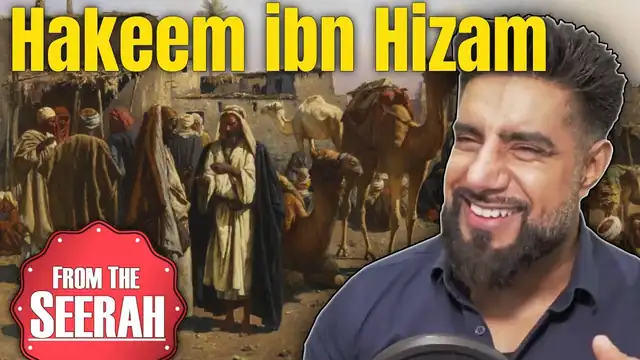 Press play to load from YouTube. Nothing loads until you do.
Transcript
machineauto-transcribed, may contain errors · source: youtube auto · click a time to seek · dotted terms open the glossarylet's go to a snippet from the sira in light of this topic people which is about risk divine providence and it is about that that by giving and in giving it is that we receive from god in light of this let's come to a personality from the lifetime of the prophet sallallahu alaihi islam and i'll just tell you a brief bit about him he's somebody who is older than the
prophet sallallahu alaihi wasallam he was very well known amongst the amongst the sub clans of quraish his name is hakim is the same those of you that remember when we mentioned just earlier today when we spoke about the prophet saying he was granted he was as risque the love of his wife who is
so that is the same so she is the aunt of hakim so this is who he was and he was from this if you remember even radhila had a business she was from very prosperous and well-to-do family and so this whole clan were well known and there were a few families that before islam when the kaaba was there they had they had like an absolute behind the scenes pass so they could go into the kaaba not every person could just go you know in jahiliya days
not every person could just go into the kaabah they were only the prestigious families and hakeem family um so his arm and so on these people they could go in there so they were those select families and some people have said that uh um that his mother when she was in there and she went into labor and gave birth inside the ka'ba so hakeem was born this is before islam way before islam and he's older than the prophet he's some say maybe eight or ten years older than the prophet sallallahu alaihi he was born in fijo phil gabba inside uh the kaaba he was born
and so he was somebody of opulence and he was and there's no any and he grew up he was popular in makkah and um he's one of those people he he didn't embrace islam straight away he prior to the prophet um receiving prophethood he was a good friend of the prophet sallallahu salaam i'm not saying he was always with the prophet but he was a good friend he was older slightly older than the prophet and he had a good bond with him and he was somebody very well to do himself the prophet as well
would trade and was a merchant but hakim ibn hissam he was quite established and you know people looked up to him he was quite charming amongst quraish when the prophet left and began his dawah and began prophethood and then was in makkah hakeem seems to kind of withdraw he doesn't really um he still likes the prophet but he doesn't embrace the message himself then the prophet migrates to medina and he does he does have a soft spot for the profit in fact there's an incident where he travels to medina once you see because
he is um quite well to do and he's quite you know he's got his he's got opportunities and stuff and he buys this very expensive suit so a suit for them was this uh what they would call a hula and it was a little bit like a kami's kind of thing and it was a like a um like a sarong a nizar torti that they would uh were underneath so he he he buys this um expensive um kind of garment which apparently is sold by like somebody some royalty
uh the yazin or somebody and he buys it and he comes and he gifts it to the prophet but he's not a muslim and the prophet says to him that i don't i can't accept it as a gift and the prophet says to him that look we're in very critical times i can't like i can't be in debt because there's been wars between quraysh of makkah and medina you know this is it's not pleasant times the war could erupt again at any point and the prophet salallahu teaching us look
at this point even teaching us character the prophet said look i can't and he said i brought it all this way and it's an outstanding suit and the prophet salallahu said to him okay let me buy of you allah you know a lie there's so look at this this is we're just digressing here look at this snippet the brother said let me bite off you then you know i can't be held in a favor not not with these looming circumstances it's just not right because there's like a cold war standoff going on and i can't be
i can't do that so he allows the prophet to buy it and the prophet bought it and you know one of the reasons as well you see the prophet sallallahu alaihi wasallam wasn't himself he never condemned people wearing luxurious kind of items and clothing but himself he wasn't of he wasn't drawn to that world and the prophet knew that i'm not going to wear it you see and if it's mine i'm just going to gift it and if i give this person's gift it may offend him so let me purchase it
then it's truly mine and and the prophet does actually he gifts it and he gives it and then there's this whole incident where um some person is um usama tim nazaid is wearing it and um hakeem exam actually sees him and they have this altercation but hakim ibn islam giving you some backdrop to him at the fat of makkah the liberation of makkah he embraces islam before the prophet sallal islam arrives in mecca but when they are when the muslims are on their way and you can see here there's a a quote as well
that just under his where he says his name in the center he says that um and the prophet says they were when they were approaching mecca he said you know there's four people prominent people who i have this thing in me that i feel that they are removed from the pagan practices and i really have this kind of hope that they will embrace islam and he says and from them is
this is before the prophet has reached mecca and whence so before the prophet reaches he had always had a liking for the prophet and when he hears that the prophet is coming and now maybe circumstances will change he thinks you know what i'm this this is it's high time i i need to embrace this message so he comes out to the prophet and sends the message out that he embraces islam before the prophet even arrives at makkah this is why he's one of the people that the prophet says when he enters makkah and he's offering sanctuary to people and the famous statement that
whosoever enters the house of abu sufyan is is secure and whosoever enters you know something on another side note here how to engage people through the seerah of the prophet salallahu you know people these were people of importance they weren't just anybodies you know abu sufyan was a person of high standing amongst his people
um hakim ibn hisam was a person of high standing even though he was very loving towards the prophet abu sufyan was very anti the prophet and sometimes circumstances make us put us in a position where we are against someone maybe in our heart of hearts we don't have issues with them but circumstances have made it so change the equation look how the prophet taught you just change it because you see diff you know it's as as winston churchill said he
said when they were trying to defend the suez uh suez canal and they were and then they end up attacking the and facing quite a bit of a defeat and he says that um he says that defeat is one thing humiliation is another you see because it's one thing just losing but being insulted and degraded this is something unnecessary and it is a totally different genre
remove that from the equation abu sufyan who hates he's been he hates the prophet point he's in this position where he's in the rival he's the arch nemesis what does the prophet do gives him respect so you wouldn't have expected that i say
he whosoever enters his house is safe sure people are going to rush there but who is who does that give prominence to and respect to and honor to to the person whose house it is everybody's rushing to my head take me and take me and take me in i'm all of a sudden in a very noble position and i didn't expect it you see compassion and respect you give respect you see that risk
whatever you give you get it could have backfired you know people say well it could have backfired sure you never you never lose anything by giving respect the prophet said for solidifying that bond between him and hakim
it works i'm telling you because the hearts are created in such a way that love melts you honestly love will melt you like nothing else will melt you you'll feel that i can't wow you know especially when you least expect it that is it is it will shake you to your core and recreate you in better form honestly i tell you it's one of the most amazing things i have to say one of the things that really kind of
re i brought my world to a an existential review was the amount of love i i received and from unexpected places you see where you least it it'll change it it brings you face to face with your true self makes you it's a reality check this was i meant after my the incident so you've got here at the father he embraces islam and then he moves to medina
now following that he does partake he's with the prophet sallallahu salaam and they partake in expeditions and do different you know different projects and things and he's with the prophet side by side now there comes a time after the battle of i believe it was her name so the prophet sallam there was a certain point where he would distribute wealth amongst people and and wealth would include actual gold and silver but you know to the arabs back then wealth was not as much gold and silver
that was there but that was secondary or even tertiary what was primary wealth for them was things like camels uh horses cattle gold sheep that kind of livestock was primary wealth and then wealth was stuff like food like staple uh food like wheat barley you know that kind of stuff and then land and then things like gold and silk gold and silver we think that they traded mostly in gold they didn't they most of their trade or or a lot of their trade put like that
was still in bartering so hakim ibn hisam turns up and this is such a beautiful hadith honestly you're going to love this hadith seriously wallahi you're going to take this with you for the rest of your life the prophet sallam is his distributing wealth to people and he asks the prophet salallahu he says can i have some
the prophet says and he gives him and it gives him so many camels so many whatever it was an allocation and he's still he's still there and then somebody else the prophet is distributing and he and he says again he says can i have some more you see insane inside see allah says
you know he's his love for so the prophet sallam gives him again and a little while he says the prophet he's still here he's he's he's got this he's got more and people are there as well and people are watching and he's and he said lope it's like he's had i think some of the narrations say a hundred camels now and so much like and the prophet's distributing and then he says because there's there there are a surplus for example stuff that is then
kept to be utilized and he says to prophet again he says he says can i have some more. and the prophet salallahu three times you see people are watching not once does the prophet say to him no now it's not that the prophet didn't feel that look what is going on here the prophet gave him again this third time
and then it's such a famous hadith we've got it there as well the prophet sallallahu alaihi sallam says to him and it says and in some narrations this dunya in hadith
in some narrations and in some water you know this wealth this world it is appealingly attractive it is it is isn't it the prophet is not denying that you see this is the beauty the prophet is not denying that it isn't it is that see the greenery like like how nature appeals to us that's how the prophet is describing sweet
it's like so sweet and appealingly attractive the prophet is saying that he says you know whoever embraced it with a richness of this soul like you know it's not about like you may not be rich but you are rich at heart
a person you know it's not like his heart is rich he has some contentment the prophet is not saying don't take it whosoever took it with a richness of the soul they will have a blessing they will be blessed for them
whoever took this this world with this is kind of like this lust this this kind of self that is greedy watching over it did the prophet say he won't have it no he'll have it the prophet is saying he'll still have it but the is taken away what does that mean
it's like the one who eats and eats but doesn't get satiated and then the prophet crowns this statement with this final line he says so beautiful honestly this look that the hand the higher hand the elevated hand is better is more is better than the hand below the hand that's giving
and the hand that's taking you see no point in that statement did the prophet reprimand him did the prophet say to him you know this dunya is evil why do you want so much are you greedy are you not making it about you the prophet begins by acknowledging you know this dunya it has an appeal doesn't it affirming that it has an appeal then the prophet doesn't say don't take it don't go after the dunya it's the devil deceiving you says you know whoever does go after
seizes it but with a richness of their heart they get a bonus god will bless it for them whoever sees it here they still have it the prophet never said they won't hide him they cursed are you cursed or the greedy that's not how you teach people sure they want it's natural to want things
it's natural to want the prophet understands this is the quran saying look that allah is saying he has this deep love in him for for wealth for the dunya for it's natural we want power we want these things the prophet is not saying don't do this you're greedy you get away oh i'm disappointed in you oh no i was saying look you'll still get it but it just won't have the barakah some people have you noticed some people they eat and it's as though they don't
get satiated and then just reminds him something you know the hand that gives is is better than the hand that receives it's not knocking the hand that receives not saying that the hand because people sometimes need to receive just look how delicately
delicately nesting that that but the honda gives is you know they say hakeem was so this struck him so powerfully that he took this oath to himself that wallahi after this day like to himself this is not something he had to do he said i will not take from like my hand will always be the giving hand never the taking hand and and he lived on after the prophet
salallahu he lived a very long life and he passes away in the khilafah of the law and throughout abu bakr's time or omar's time you know whenever there was certain distribution of wealth and his name would often be in the list in fact there's an incident on where he's trying to give it to him and he would refuse to take it he says i i made an oath to myself a commitment that my hand will always be the giving hand and umar even on one occasion had to have people testify to say look i'm trying to give this to him this is his allocation this is allocated to him i'm
trying to give it to him he's not taking it but wow you know this is such honestly such an amazing hadith that and what i love about it and you i'm sure you guys totally wallahi and i feel that this isn't emphasized enough is how the prophet described it not denying any of it not trying to say look this is evil you're like this you're like that and not even once saying no to him and he's asking again and again and again and the prophet's not even once saying that
it's giving it it's getting it it's like how much more and then the prophet just a just such a you know a sweet reminder that you know this dunya it does have an appeal doesn't it but you know when you take it take it with the richness of the soul and god will double it for you in barakah and just remember that the giving hand is always in a place of in relation to the receiving wow i really feel that these messages
need to be in a time where people i don't i don't know in a time where the the true character of the prophet sallam is often distorted it is so important that we reconnect with this true character with this true personality of the prophet salallahu with the real seerah not kind of because there's a lot of noise okay
so i feel this is always it's too important to remember these little nuggets and to store them with us keep them these are things stories tell your children these stories tell people around you remember them for yourself you know let it be a lesson and all of these really they exemplify and instantiate the verse
we sent you as a paragon of mercy as an embodiment of mercy so sallallahu alaihi i thought that
Something wrong here?
Tell us what is wrong and it will be checked against the recording. Nothing changes until a person has reviewed it.
Sending a note needs JavaScript, which is off or unavailable in this browser. Nothing has been sent.
No name, email address or account is asked for or stored, and the inbox does not store your IP address. For rate limiting it keeps an unreadable fingerprint of your connection for 48 hours, and our database provider's own logs record connections as every website's do. Only your note, its kind, the page and the moment in the recording are kept, for review.
Cite this recording
Stable id, transcript version and tier are part of the citation. Every change to a transcript is logged.Mufti Abu Layth Archive, auto-transcribed, may contain errors. https://muftiabulayth.org/r/xhjnfpxj6uw/ (accessed 1 November 2026)
- APA 7
Mufti Abu Layth. (2022, April 28). Hakeem Ibn Hizam: Seerah Snippet | Mufti Abu Layth [Video, auto-transcribed, may contain errors]. Mufti Abu Layth Archive. Retrieved November 1, 2026, from https://muftiabulayth.org/r/xhjnfpxj6uw/
- Chicago author-date
Mufti Abu Layth. 2022. "Hakeem Ibn Hizam: Seerah Snippet | Mufti Abu Layth." Video, auto-transcribed, may contain errors. Mufti Abu Layth Archive. Recorded April 28, 2022. Accessed November 1, 2026. https://muftiabulayth.org/r/xhjnfpxj6uw/
- BibTeX
@misc{abulayth-xHjNFPxj6Uw,
  author = {Mufti Abu Layth},
  title = {{Hakeem Ibn Hizam: Seerah Snippet | Mufti Abu Layth}},
  year = {2022},
  month = {4},
  date = {2022-04-28},
  howpublished = {\url{https://muftiabulayth.org/r/xhjnfpxj6uw/}},
  url = {https://muftiabulayth.org/r/xhjnfpxj6uw/},
  organization = {Mufti Abu Layth Archive},
  urldate = {2026-11-01},
  note = {Auto-transcribed, may contain errors}
}