
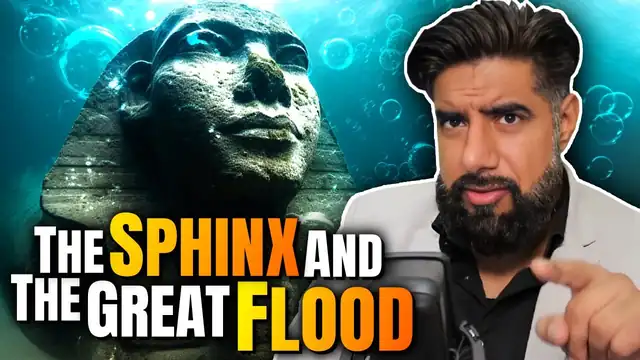
The Sphinx And The Great Flood | Meetup With Ahmed Sultan | Mufti Abu Layth
aqidah aqeedah aqida creed aqeeda aqaid muftis dalil daleel adillah adilla proof kalam ilm al-kalam kalaam koran quraan al-quran sufis sufism soofi ulama ulema ulamaa deen al-din ad-deen ad-dinvideo · 18:09 · 3,900 views · 4 May 2023 · Open on YouTube
 Press play to load from YouTube. Nothing loads until you do.
Transcript
machineauto-transcribed, may contain errors · source: youtube auto · click a time to seek · dotted terms open the glossarytalk to us Ahmed what's preoccupying your precious thoughts well uh right now the one thing that has really on my mind these days is uh the impact of like the Aristotelian and neoplatonic uh um views on Islam like uh you know early on we had people like Abu mashar and jabir who would take a bunch of uh hermetic texts and yeah pretty much include them in in our Doctrine and Theology and I was wondering is that more an example of like syncretic Islam or is this something that is genuinely
like well-founded in our religion wow what what do they give you to eat and drink in Canada yeah it's producing such great minds that such young ages it's like I need to import some of that water or whatever it is wow at the age of 17 you're dude I'm impressed myself yeah it's just because I've been watching this video [Laughter]
show your passion and even your question I just saw in the comment in the it sent in the private chat it said on uh right on Hermes yep wow price majestis are right in Islam wow see look at all of these questions that's what a question uh right so about the neoplatonism and Aristotelian thought and I think these things came to people like as as science
because these things were almost a scientific way if we could say of looking at things whether it was looking at ideas or whether it was looking at the world whether it was looking at you have to remember as this stuff got translated it got brought into the Muslim World it it was very impressive for people who were intellectually inclined in in that sense they saw it as well because now we take things for granted because the world has moved on and Sciences caught up and excelled and philosophy has kind of excelled and all these things have so to
us it's like well but going back in time these things would have been very all-striking wow to be able to kind of narrow things down look at them analytically divide things have categories for everything be very um yeah so but your question was sorry more about theology was it yeah so like I know early on we had uh like for example IBN Nadeem or uh right yeah yeah they gen like they they tended to just kind of accept uh all of the Aristotelian thought like specifically
their cephyrian thought as Islamic and they went so far as to say that you know or even hermetic thought for example Hermes uh was right I was going to say with your question that's what certain uh olama had felt um and they they equated him um equally to um to uh Thoth from the Egyptian um kind of thing as and they saw maybe these people because Idris it's really it seems like some kind of
Greek rendition of the name it doesn't have to be but the kind of is at the end uh but I suppose it doesn't have to be but and it's very um obscure anything about it because the understanding is he's pre-noahai yeah so he's like before and so the question is well okay so who was he and to some people he's you know the person who
set up the pyramid and set up certain the infrastructure for the great uh you know empires of Egypt to come and he's the people he's the first who taught it how to write or he made inscriptions and he's the first to so but there's a huge mystery there's a lot of to do with him being the first in conveying knowledge through somehow the pen a lot of Muslim Scholars have felt that he may have been the first person to introduce this but he's long before the great flood
yeah and so who who who is this person and the Quran doesn't mention much about him at all except you know rafana who like this he was he had this you know McCann and Aliyah this kind of elevator and people say was he Enoch of the the kind of of the the biblical apocryphal uh tradition was he this person that was raised by God and he uh was from way before Noah's time and and all this so we just talked
the question is we obviously there's no way of knowing anything because like this how how could we ever find out um yeah what could we unearth that could give us some insight it's because the only things we can unearth are right either science makes some breakthrough into something which this isn't doesn't seem to be that realm that science could make a breakthrough into that could unearth something or the other thing is archaeological findings and if this is something so old
then archaeological findings seem very difficult about an individual sure maybe about an era but nothing about zero is mentioned so it's like well okay if we take let's say I'm inclined to believe okay now I'm inclined I do this is where I so here's where I'm at with the great flood I feel the great flood was the younger dryas uh the kind of that mini ice age that occurred um so it's it's going well just before ten and a half thousand years ago so that so so when the globe when we came out of the Ice Age
um I think about 14 000 years ago started to come out then maybe 14 13 uh 13 and a half or something and then uh I Think About by about 12 000 years uh a girl so about 10 000 BC about ten and a half thousand BCE or about twelve and a half thousand years ago the earth for some reason it suddenly goes back into a mini Ice Age like unexpected so first of all it's going according to its kind of pattern the Ice Age takes thousands of years it does but then suddenly Earth is kind of catapulted back into a mini ice age that lasts
about one and a half thousand years with this huge kind of flooding that takes place we know several you know much of land certain parts of the globe do got certain certain lands do go under uh underwater uh we know that there's uh there's still alleged uh living memory through the oral tradition there's a great book The Edge of memory uh which is a study on the oral tradition oral memory and it shows where people still have certain memories passed down collectively that
date speaking of certain lands that are actually there we know now through obviously satellite footage and geological awareness uh sorry geographical awareness that they they wouldn't know like 100 years ago they wouldn't know but they have this through tradition passed down that they used to be landed then he got drowned and they're right in many of the occasions and so and that land we know through now uh mathematical kind of surveying that it was in the younger driest that it gets flooded and the bearing Strait is another example of that that appears in some of the Ottoman
maps and it was uh Graham Hancock's got a lot of great stuff on this and how it was submerged by about ten and a half thousand years ago so if we go with no Hal Islam this is the era of the younger dryers kind of thing so okay so we're talking arguably that Idris whoever this person whoever this Prophet Allah is he's pre-dabbed so he must be from the either the the warming the Ice Age prior to the mini dryers is age so it's like wow how do we even and what's fascinating is the Sphinx because the
water damage that it has on its kind of upper surface is dated to uh you know we're talking almost 20 000 years ago if not more so when that part of Egypt and would have been plunged underwater so and this finding that was made that this appears to be water damage was mocked for so long and Graham Hancock speaks about this other people speak about there's a book about the Sphinx mystery and um the origin of the Sphinx or something it's called I've got it here somewhere so it's uh the I've forgotten the name
of the the first person who who kind of postulates this hypothesizes and he gets ridiculed and and Shonda of the kind of um archaeological uh you know kind of like fraternity and he's discredited and his life is made into a misery and but now we're finding evidence to support this like uh um um what is it like uh Quebec so yeah it's so it's interesting so I honestly I just don't know how we would find out ever about an individual because we'd need writing and I don't know how we
would get that now even if we got it we wouldn't be able to decipher it like we've got writing now we've got some if we can call it writing but descriptions of the Indus Valley so we have some we have Indus Valley inscriptions which may be anything from six to arguably 8 000 years old indecipherable we don't know how to decipher them and we're still awaiting the Rosetta Stone we we don't know how to crack this so it's like wow even if we did get hold of let's say we Unearthed some
inscription how how would we even the journey is just so I mean it's exciting but I just don't know how you see there's certain theories that science could lead us to so for example there's a question um didn't neanderthals speak and you say well you know language isn't fossilized so how could we ever tell and well true but now we've realized that well okay that the the fox what is it the fox 2p Gene
so is associated with language and you see it has a certain mutation to it you see it's shared with all species uh with sorry not all with many species it's shared but it undergoes a mutation we have it at a mutated um we have a mutated version of it but we're the only ones that have that mutated version and it's associated with language with us now the Neanderthals uh it appears have the same uh mutated version
which now is giving some theory that okay so maybe they had some kind of language it may not have been as and obviously the larynx was not as in as as this but it's also it's kind of halfway it's not quite like primates and monkeys or whatever but it's kind of halfway so maybe they had some kind of sounds and words but just not as developed as us um so here science is giving breakthrough to something that could not have been fossilized so you say well did Neanderthals speak well there's no way of ever knowing his last mystery well actually you know the Genome Project is shedding light that actually well if
they had this hmm uh but when it comes to individuals how would we ever know it's but I love the question man I'm glad you you know you made my my wine my mind wandered so um as to the other thing on Aristotelian um I don't know I don't I don't know if I could have a definitive answer on why certain Scholars held the neoplatonism or even Aristotelian thought um certain Scholars like they they believed in the ashara uh and the 10
intellects as you know the whole uh Aristotelian thing I'm pre uh Aristotle as well some of them but this thing of that the celestial bodies are also intellects and there's the 10 intellect and then there's the great intellect uh uh old world but then there's and and it's quite a strange Theory when you think about it you know these ten intellects and God's kind of working is hierarchy in the hierarchy of uh intellects and although they don't say Allah is the first intellect but they say from him kind of comes this
from it comes the world and the acruth blah blah blah blah blah and some could say well you know Muslims other Muslims do it in a similar way like let's say in the mystics would say well first comes this essence Allah brings it into being which let's say Sufi is called it or whatever they want to call it but from this emanates uh something else then from that will be this and then you'll get Mata and so on and so forth and some people may say well no first of what first emanates we're going to call the first thing
uh the the pen and then from the pen it brings into existence other things by writing it but here writing doesn't have to be like writing as in it brings it into existence somehow maybe these are all permutations of a a very profound concept which is difficult almost ineffable like if you look at science saying well first There Was You know it's saying well okay we're going to T1 just after nothing and there's some kind of cosmic uh Essence some kind of cosmic dust or something
some Cosmic uh reality which then results in a big bang and from energy emerges you you start to get obvious you get hydrogen you will get you you start to get the forces start to break off the um you'll have this the strong force the electromagnetic gravity sorry gravity right in the beginning the four forces then Mata emerges and you see so you're seeing this thing in a hierarchy going back to a kind of Singularity and it's
okay so you know it's interesting that you've got I guess very different things being said but maybe in some way trying to describe something almost uh you know non-describable you know in a way by using uh different and words I I don't know but Ahmad it's been epic shukran I I really honestly I I admire your your kind of depth at such a young age man what what are you you're still at College I take your high school in your case uh I just finished high
school I'm entering uh psychology I'm doing a psych major wow okay you know what you're gonna make serious ways man this this greatness ahead of you honestly you said you take two didn't you I I do I have a psychology degree as well yeah so I love psychology so it is something you know anything that can explain the human mind and human behavior it's just fascinating yeah it was such a strangely strange creatures
uh people Ahmed Sultan from Canada uh you know what I don't know what you guys are being fed in Canada but whatever it is it's boosting that brain power I'm envious why didn't I get this kind of stuff why don't I get it now let alone in my uh younger days
Something wrong here?
Tell us what is wrong and it will be checked against the recording. Nothing changes until a person has reviewed it.
Sending a note needs JavaScript, which is off or unavailable in this browser. Nothing has been sent.
No name, email address or account is asked for or stored, and the inbox does not store your IP address. For rate limiting it keeps an unreadable fingerprint of your connection for 48 hours, and our database provider's own logs record connections as every website's do. Only your note, its kind, the page and the moment in the recording are kept, for review.
Cite this recording
Stable id, transcript version and tier are part of the citation. Every change to a transcript is logged.Mufti Abu Layth Archive, auto-transcribed, may contain errors. https://muftiabulayth.org/r/xdc4wupuwbk/ (accessed 1 November 2026)
- APA 7
Mufti Abu Layth. (2023, May 4). The Sphinx And The Great Flood | Meetup With Ahmed Sultan | Mufti Abu Layth [Video, auto-transcribed, may contain errors]. Mufti Abu Layth Archive. Retrieved November 1, 2026, from https://muftiabulayth.org/r/xdc4wupuwbk/
- Chicago author-date
Mufti Abu Layth. 2023. "The Sphinx And The Great Flood | Meetup With Ahmed Sultan | Mufti Abu Layth." Video, auto-transcribed, may contain errors. Mufti Abu Layth Archive. Recorded May 4, 2023. Accessed November 1, 2026. https://muftiabulayth.org/r/xdc4wupuwbk/
- BibTeX
@misc{abulayth-Xdc4wuPuwbk,
  author = {Mufti Abu Layth},
  title = {{The Sphinx And The Great Flood | Meetup With Ahmed Sultan | Mufti Abu Layth}},
  year = {2023},
  month = {5},
  date = {2023-05-04},
  howpublished = {\url{https://muftiabulayth.org/r/xdc4wupuwbk/}},
  url = {https://muftiabulayth.org/r/xdc4wupuwbk/},
  organization = {Mufti Abu Layth Archive},
  urldate = {2026-11-01},
  note = {Auto-transcribed, may contain errors}
}