
Islam in the West & Islamic Legal Theory - Yahya (John) Ederer
salah salaah namaz prayer salaat namaaz as-salah al-salah salawat fiqah fikh imaam imams prayer leader usool usool al-fiqh usul ul-fiqh usool ul-fiqh surah sura soorah surat suwar soora madinah madina al-madinah madeenah yathrib shaikh sheik shuyukh shaykhs alhamdulilah al-hamdu lillah alhumdulillah alhamdulillaah hamdulillah as-salamu alaykum assalamu alaikum assalamualaikum salaam salaams salam alaykum wa alaykum as-salam peace greeting deen al-din ad-deen ad-dinvideo · 3:36 · 4,000 views · 18 Mar 2012 · Open on YouTube
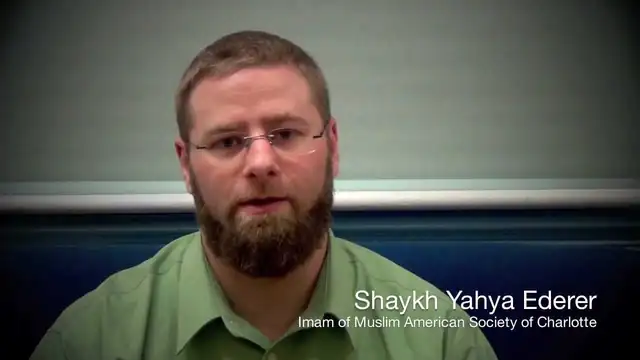 Press play to load from YouTube. Nothing loads until you do.
Transcript
machineauto-transcribed, may contain errors · source: youtube auto · click a time to seek · dotted terms open the glossarySalam alaikum warahmatu lovely catalyst Bellator black mother nothing alhamdulillah horrible an amine or salat wa salam ala Bharathi rock mountain Delilah mean by the Anisakis mine your brother in my error I'm coming from the states Charlotte North Carolina and the Imam of the Muslim American society the brothers would like me to talk a little bit about the reality of Islam in the West as it relates to the Islamic legal theory system so looking at the principles of jurisprudence what we call will sue the filth we see that definitely we have definitely a haka large presence of works that help us to
understand underlying realities of our society as they relate to underlying principles and wisdoms and reasons behind certain rulings that come within Islam of course Islam is something that was meant to be suitable for all times and places and so one of the definite strong points that we would have to have in actualizing an expression of Islam in the West properly would be to look into a ricotta Mikasa ate the Mikasa of the Dean and we have a book by hitman actual
we have the humanish out to be his book Chapter VII that is basically the main reference in which he goes through a long dissertation of understanding the principles of Islamic law and the objectives behind the general structure of Islamic law so when we look at those things and we look at the general culture and society in which we live we can now apply rulings properly and efficiently that facilitate a more comfortable attachment to the religion
rather than trying to take a literalist approach that would be that would be understood that you're dealing with things that are similar to the life of the prophet sallallaahu sulla which is not the case so I advise all of the students of knowledge out there to get into the books of law school it is well known that the Malekith have with the concept of Amidala Medina that there is a recognition of the value of understanding the general culture of society this is what my Sheikh Ahmed syllabic told me a long time ago whenever I was looking to study Islamic
law he's now the assistant dean of Islamic law at Shattuck University in Morocco and I think that if we all look at this approach is more of a comprehensive approach to dealing with different particular Messiah or situations that were dealing with I think is a lot more fair and reasonable than trying to import a mentality or a concept of Islamic practice for application that was obviously developed in a place outside of the lens in which we're trying to function so the imported hand-me-down follow-the-leader without question attitude is not going to
facilitate a future first lamb and the West only an approach which is based upon understanding the principles and the underlying objectives of the Islamic law and how the literal texts can be transferred from time to place with meaning behind them so Jews a camel off Aaron will up whom Allah be Maha Bua
Something wrong here?
Tell us what is wrong and it will be checked against the recording. Nothing changes until a person has reviewed it.
Sending a note needs JavaScript, which is off or unavailable in this browser. Nothing has been sent.
No name, email address or account is asked for or stored, and the inbox does not store your IP address. For rate limiting it keeps an unreadable fingerprint of your connection for 48 hours, and our database provider's own logs record connections as every website's do. Only your note, its kind, the page and the moment in the recording are kept, for review.
Cite this recording
Stable id, transcript version and tier are part of the citation. Every change to a transcript is logged.Mufti Abu Layth Archive, auto-transcribed, may contain errors. https://muftiabulayth.org/r/wsjt-ufk4bq/ (accessed 1 November 2026)
- APA 7
Mufti Abu Layth. (2012, March 18). Islam in the West & Islamic Legal Theory - Yahya (John) Ederer [Video, auto-transcribed, may contain errors]. Mufti Abu Layth Archive. Retrieved November 1, 2026, from https://muftiabulayth.org/r/wsjt-ufk4bq/
- Chicago author-date
Mufti Abu Layth. 2012. "Islam in the West & Islamic Legal Theory - Yahya (John) Ederer." Video, auto-transcribed, may contain errors. Mufti Abu Layth Archive. Recorded March 18, 2012. Accessed November 1, 2026. https://muftiabulayth.org/r/wsjt-ufk4bq/
- BibTeX
@misc{abulayth-wSjt-Ufk4bQ,
  author = {Mufti Abu Layth},
  title = {{Islam in the West \& Islamic Legal Theory - Yahya (John) Ederer}},
  year = {2012},
  month = {3},
  date = {2012-03-18},
  howpublished = {\url{https://muftiabulayth.org/r/wsjt-ufk4bq/}},
  url = {https://muftiabulayth.org/r/wsjt-ufk4bq/},
  organization = {Mufti Abu Layth Archive},
  urldate = {2026-11-01},
  note = {Auto-transcribed, may contain errors}
}