
Recordings › Quran Quest - Tafseer of the Quran
Mawaqif - Quranic Reflections - Juz 4 مواقف عند آيات القرآن
salat salaah namaz prayer salaat namaaz as-salah al-salah salawat malik ibn anas malik bin anas imam maalik imam malik ibn anas imaam imams prayer leader masjed masaajid masajid maaliki malikite malikiyyah maliki school hukm ahkam hukum hukam ahkaam halal halaal lawful haraam forbidden mubah mubaah fard farz faraid fard ayn fard kifayah fardh dalil daleel adillah adilla proof riba ribaa sood usury imaan eemaan eeman jannah janna jannat koran quraan al-quran sura soorah surat suwar soora chapter ayah aya ayat ayaat aayah aayat juzz ajza ajzaa siparah sipara qira'at qira'ah qiraa'aat qira'aat tilawah tilawat tilaawah al-andalus andalusia moorish spain ulama ulema ulamaa umma ummat community nikkah nikaah nikah nama nikahnama taqwa taqwaa muttaqi piety shukr shukar shukur ibadah ibada ibaadah ibadat rahmah rahma rahmat ajr sawab thawab thawaab sawaabvideo · 26:33 · 3,900 views · 10 Mar 2025 · Open on YouTube
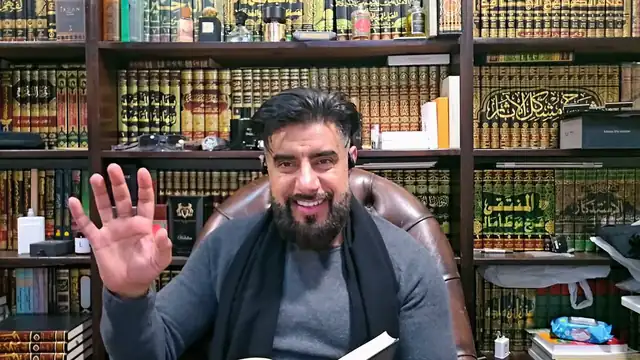 Press play to load from YouTube. Nothing loads until you do.
Transcript
machineauto-transcribed, may contain errors · source: youtube auto · click a time to seek · dotted terms open the glossary[Music] a mean right let's continue with these MAIF these state s at which we stop and reflect whilst going through certain verses of the Quran ju
begins an invaluable lesson that there are certain Mak certain um stations really that one would never achieve or arrive at unless we part and give so there is there is an art to giving that develops us so something to reflect on the following verse
that that there was a time where there was this participatory relationship that people had with the Shar of their age that they could declare certain things Haram they had that agency it's a fascinating uh point of [Music]
reflection now these verses go on to mandate and it's fascinating it's the only time that this term Baka is used in the Quran where is this that the first abod of worship was laid out in beaka now many have said that is mcah some have argued it may have been a different point on Earth um and you can look into that research that for your own uh interest it is fascinating uh just to ponder on we see many of these verses that
follow remind us of our in this um and as an that we are amongst the best of um that have been that we call people that we guide them we instruct them towards good we prevent harm from happening we have faith now it is undeniable that the umah of of Islam has qualities that no other faith
can compare to I mean that I feel is it is an observable fact that this this even this very concept of this this kind of that we have that wherever you go around the globe Muslims that we have this sense of belonging that is amongst the many unique cat of this
um many of these verses that we see in the following Pages remind us about remaining steadfast that there are there will be people that plot against you that at times you will be afflicted by hardship that we must keep resilience this is something that we are reminded time and time again
that Allah helped you at when you thought there was no way that you could be helped and that have God Consciousness that you may truly be people of gratitude a verse this to reflect that hasten towards towards a forgiveness from God and a
paradise now this verse shows us that it is equally permitted to be doing to to be incentivized by a reward that although the higher mam is to do all of to do any good deed for our love for Allah now that is the higher makam and in some of my uh previous videos I've spoken about a metaphoric uh and a metonymic relationship with God and that's using the terms from leanian psychoanalysis
not just the linguistic terms of metaphor but so really our relationship with Allah it mandates that when we do things it should be for him but if somebody was doing it for a reward that you know I do these things so I get some goodness in the that we can see this verse it it um it incentivizes for that that why don't you hasten hasten towards a Jenna so and another fascinating Point here
there's a description of that J its width is that of the distance of the heavens and the Earth so as amongst other people will say that that even if you could measure that that's not what it's trying to say that this is its measurement of distance it's leaning in on how we imagine things our imagination and it is a metaphor of sorts so it's not it's trying to say that it's incredibly vast it's not trying to give you a precise measurement
but leaning in on how we imagine and use language here we find the first time in this in reciting forwards the name of the messenger of Allah sallallahu alaihi wasallam which is mentioned four times in the Quran as Muhammad and a fifth as Ahmed so and this is the first as we're reading
through that Messengers before him have gone that Messengers have come and gone that they've passed away before some have even been killed in previous um that if this messenger was to you know if he was to pass would you just turn back on your heels do you not have any resilience that here Allah is showing that the ultimate message and bond with Allah is the ultimate that it is not to be compromised for
anything and it is not dependent upon any person and not even Messengers that that is the ultimate sacred Bond and commitment we have to Allah and we are all equal in that and then the following verses once again there's several verses reinforcing this message of resilience right throughout Surah Al Iman um we see this
a beautiful verse here that we pass by that it is by Mercy of Allah that you were soft for them that the messenger of Allah his exemplary characteristics were soft that had you been harsh people wouldn't they would have dissipated and disappeared and vanished from around you and here we are encouraged and this is a message for us all that ultimately it is good
character and consultation have Mas this is something we can never you never go wrong with this phrase it is something that in andalus in Muslim in the latter centuries especially the nid uh Dynasty it became emblematic and it's written right over everywhere right throughout the alhamra palace and it was something you know it become a bit of an icon an iconic a for them during the
those last two centuries of Muslim Spain that if Allah um is to Aid you and help you then there none can overcome you and what an empowering verse it is verse
169 that those that have been killed in the path of Allah do not think that they are just merely dead these people they are alive with Allah being given a type of risk that you do not understand so delighted and en Joy ecstatic with what Allah has given them of his grace and mercy this verse highlights that one that death is not the
end of reality as we know it but that those who die in the path of Allah have a special Mak after this passing generally speaking everybody is alive in the in that baraki realm when we go from this D so the Barak is something that we've always been connected to from before coming to this dun even right throughout this world we are still connected with the Barak which is a a kind of one could see it as a higher realm of which this is a almost
like a holographic emergence this dun and in some ways like the subcon the unconscious the Deep unconscious like that but as we pass from this duny we go straight to the B everybody is alive there so why specifically mention about the sh to show that they have a special Mak a special reality with God for what they've
sacrificed i' like us to take a look at and the first verse that have this tawa this God Consciousness note that right throughout the Quran repeatedly Allah tawa is not the same as fear tawa is a Consciousness is fear in Arabic so people often translate that as fear it is not fear it is a conscious to be
aware of that who your lord who created you from a single naps and created you in many kinds what's fascinating a little grammatical Point here that before we get to that Allah says that have tawa of Allah who you will be asked
about now how do we read Aram the grammatical is it so most of the recitations which is the accusative which means it is following on from the word Allah so that have this consciousness of Allah and your kinship your relationships amongst you the other way to read it is have conscious this God Consciousness
which you will be asked about and you will be asked about kinship and relationships the interesting thing is that can you in the Arabic grammar so this is now for the uh the Arabic Buffs and those uh the Arabic grammar G out there okay so can you do where you connect something upon a pronoun so in Arabic when we say like if I say look I passed by him
was can I say and can I say that in Arabic so many of the gramians they deny this they say that you can't do that with without repeating the um the the preposition so I could say so by repeating the B just to without the preposition to put it into J they the bosan say that that's unacceptable and poor Arabic but this recitation is an argument against them
and this is what the KF went with uh saying that it is permissible using this as uh as evidence and Malik the famous Al Malik he also used this as evidence and also says that that you know it's clear because that is if if the Quran is showing that that you know if the verse is saying
that then what greater evidence of the Arabic language and I'll tell you a little incident those of you that are familiar with m who is the he's like he's from the bus school of grammar and he was um you know like one of the Final Bosses he was like one of the final Don of the bosy school and his rival at the time of the kufi school is Abul Abbas and they both have the K Abul abas AB
Abbas and uh and and they're great linguists but they obviously very passionate about this school and mu he says uh about this verse he said if I was in a in Salah and I heard somebody ever the IM recite it like that he says I would just I I would take my shoes and abandon the
Masjid I mean sometimes the the kind of uh the staunch you know the kind of N I suppose of these chians that he said that I would just I would take my shoes and just leave the mosque I would abandon the Mosk that if I heard the Imam recite it like that meaning that that's to him poor Arabic so uh so most the recitations do read it as well AR but there is in the recitation well arami and the and the debate is can you do upon a pronoun without repeating the
preposition so was you know or um let's [Music] say for example but could you say could you say that without repeating so it's a fascinating those of you that are interested in that then the verse of nikah now this verse a few points of reflection that one is the why does it begin speaking about orphans and that is because in the past
it was a tribal structure in Arabia so people and it was a warfaring society you know there was a lot of war going on war mongering and things like that raiding and people were killed often so the the Offspring and the the children and they don't have to always be children children but they could be like for example teenagers whoever they are but they're not fully grown adults were then left to the greater kinship of that tribe to take care of them and here you had an issue with wealth that sometimes those people
inherited a certain amount of money so some people may think well you know what I'll just marry that person and and lay claim to that wealth so this is why it begins with that it's not in any way giving reference to young children and we know that because the moment it speaks about nikah it says that fun it uses the word women and then then it goes on to
say and that's another debate that these numbers in twos and threes and fours is this um and uh is this enumeration or is this restriction is this restricting the numbers to that and even as says that really you one could not draw successfully from this verse a restriction and limitation on four uh wives Maybe from other evidence like theith of but not from this verse itself which is just enumerating and then some people have
challenged that like Imam sha amongst other people that really there is no limit on the number of wives a person could have and they use the example of the S of the Prophet sallallahu alaihi wasallam uh to support that case and other people argue against it including as he he argues against using the S and as an example for that what's interesting is the verse moving forward the verse
six that when does that wealth be returned to those orphans so you it says here that you can test them that are they worthy to handle and manone manage money and wealth so money management can they do that you test them when theyve reached an age that is now ready for nah so you keep the wealth you Safeguard it until they are capable and then you return it to them there is a discussion here that the fukah of the past the
scholars at what age did they consider somebody competent and to have capacity so they said with B that when a person is uh has reached adulthood and they would often say that in the past like having gone into puberty you are in that stage you're no longer a child you're in the early stages of let's say manhood or Womanhood now what if it's not clear like sometimes you can just see physically a development what if it's not clear what many people will find fascinating to learn is that they
actually give an age in the past and this is way before modernity so this is like IM Imam Malik's time Imam Abu hanif's time 1,200 years ago so Imam Malik in the Rah of IIM from him says that for boys and girls from it is 18 that is the age and Abu hanifah in one Rah says it is 18 for boys and 17 for girls um in another uh IM and is and IM Ahmed and some uh of
the Maliki of that past had said 15 and IM Abu hanif as transmits from him that popularly had said it's 19 for boys and 17 for girls so back then 12200 years ago those are the ages they've given for for uh a person to have transitioned into adulthood and true true puberty as in you've gone through it all now and they are a man and a woman so it really cancels out this thought that you know that people in the past were
marrying little girls and doing things like this there is nothing generally to show things like that and that is unfortunately uh an insult that has been has has been levied against by islamophobes against the prophet sallallahu alaih wasallam and unfortunately many Muslims have fallen into that due to just because just sectarianism and that they've also kind they've reinforced that narrative which
is utterly uh inaccurate and false that the marriage of to the prophet sallallahu alaih wasallam was in her late teens anything around the age of 17 to 19 around that age that should got married the verses that follow discuss the famous inheritance and the fud which means also plural of f which means obligation but here it is used to mean the share that you uh has been mandated for
you and there have been some debates during throughout our tradition especially in the Malik you had certain that did speak of and they spoke of something known as trajectory hermeneutics and they did argue that do these things over time do they change and many people had said they don't change and some had said that these aam are to reflect a society as the society changes the rulings change and amongst them was abim Ali from about
800 years ago a very great Maliki from northwest Africa he was known as the shul Islam in his time this is way before modernity so he had argued that the uh these things do change uh according and that the Shar mandate it's not that we are saying the argument is that the Shar itself mandates that these things should reflect the day and age and his grandson I believe it's his it's his uh through his
daughter who then also building on that uh issues his ruling of which is to do with inheritance and the inheritance of the wife and he says that the wife inherits 50% half of what the husband leaves before the inheritance is divided and this is built upon what what is known in the uh in that in thewa within the Malik as some people called it so it's a fascinating discussion and not everybody agreed with those things
but yeah may Allah bless our journey bless you all
Something wrong here?
Tell us what is wrong and it will be checked against the recording. Nothing changes until a person has reviewed it.
Sending a note needs JavaScript, which is off or unavailable in this browser. Nothing has been sent.
No name, email address or account is asked for or stored, and the inbox does not store your IP address. For rate limiting it keeps an unreadable fingerprint of your connection for 48 hours, and our database provider's own logs record connections as every website's do. Only your note, its kind, the page and the moment in the recording are kept, for review.
Cite this recording
Stable id, transcript version and tier are part of the citation. Every change to a transcript is logged.Mufti Abu Layth Archive, auto-transcribed, may contain errors. https://muftiabulayth.org/r/waadcmikw_e/ (accessed 1 November 2026)
- APA 7
Mufti Abu Layth. (2025, March 10). Mawaqif - Quranic Reflections - Juz 4 مواقف عند آيات القرآن [Video, auto-transcribed, may contain errors]. Mufti Abu Layth Archive. Retrieved November 1, 2026, from https://muftiabulayth.org/r/waadcmikw_e/
- Chicago author-date
Mufti Abu Layth. 2025. "Mawaqif - Quranic Reflections - Juz 4 مواقف عند آيات القرآن." Video, auto-transcribed, may contain errors. Mufti Abu Layth Archive. Recorded March 10, 2025. Accessed November 1, 2026. https://muftiabulayth.org/r/waadcmikw_e/
- BibTeX
@misc{abulayth-wAaDcMikw-E,
  author = {Mufti Abu Layth},
  title = {{Mawaqif - Quranic Reflections - Juz 4 مواقف عند آيات القرآن}},
  year = {2025},
  month = {3},
  date = {2025-03-10},
  howpublished = {\url{https://muftiabulayth.org/r/waadcmikw_e/}},
  url = {https://muftiabulayth.org/r/waadcmikw_e/},
  organization = {Mufti Abu Layth Archive},
  urldate = {2026-11-01},
  note = {Auto-transcribed, may contain errors}
}