
Unrestricted Q&A with MALM PT2
salat salaah namaz prayer salaat namaaz as-salah al-salah salawat ramadhan ramzan ramazan ramadaan maaliki malikite malikiyyah maliki school hukm ahkam hukum hukam ahkaam halaal permitted lawful haraam forbidden mubah mubaah wajib waajib wajibat dalil daleel adillah adilla proof jahannam jahanam jahannum ummah umma ummat nikkah nikaah nikah nama nikahnama talaq talaaq triple talaq talakvideo · 31:16 · 7,200 views · 11 Nov 2014 · Open on YouTube
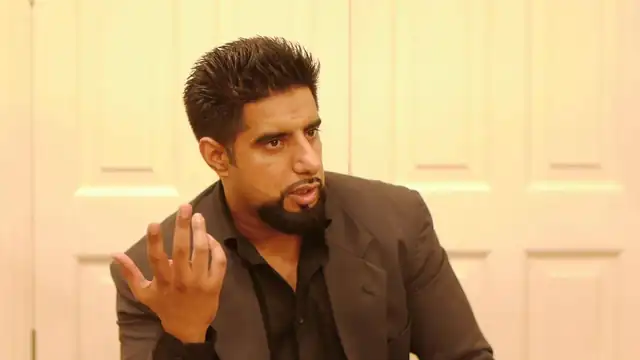 Press play to load from YouTube. Nothing loads until you do.
Transcript
machineauto-transcribed, may contain errors · source: youtube auto · click a time to seek · dotted terms open the glossarynow what do we have here should teenage boys be getting married in today's society Anonymous signed as Anonymous for the record we're talking about of age uh people so it is legal age to get married with consent is 16 I believe and without consent I mean parental consent just to clarify with parental consent and
guidance is 16 and as an adult 18 a person may get married should they should they be kind of guided down that path if is that the question because the question is say should they get be getting married in today Society I'm understanding that to mean that should they be kind of guided to to kind of do things like that to seek that out that so when they're 18 or when they by the time they're 19 they should definitely be married is that what we something we as a community or as Muslims should be pushing that's what I'm understanding from the question so if it's wrong uh you can correct me and but I know you've you can just
say I'm not saying but I would imagine the person means although it's not me but I I gather the person's to talking about so you see this is a this is a very challenging question that has been that is facing the Muslim Community and especially the younger Community with and it's almost like a catch 22 for those who are to answer because you see we are in a society where um there
I mean there's so much there's so much emphasis on really on just the sexualization of people on everything like this the whole there is such an emphasis on all of this everything has been heightened and uh accentuated really the whole things from you know the media to everything you can imagine I think in unprecedented ways at the same time so people are so everybody is a part and parcel of this same Society so everybody whether they're Muslim or non-muslim they're all in this Society at the same time we have this emphasis on modesty and on kind of well
you shouldn't be engaged in anything wrong or you shouldn't be doing this or you shouldn't be and yet Society is so much like the way it is and then islamically there is this thing of well people you know they could get married but yet we know I mean when I say married I mean a nikah I mean because I I would like to clarify as well that there is a difference between a state marriage and between a nah just and this there are there is a great deal of overlap but there is a difference just as there is a difference between a civil divorce and a t so there is an overlap
but there are huge differences both have their own uh conditions some of which are similar and some which are different and both have their own type of Regulation one is a Rel religious Union it is not something which is state recognized it is not something which is kind of state regulated it it may not even a nikah it doesn't even necessarily reflect the concept of marriage in terms of a a nikah allows things like multiple type of Partners from you for a man it does and which a marriage doesn't a nikah has certain rights in terms of um let's say Post nikah in terms of the
divorce things like the which a marriage doesn't recognize in terms of The Inheritance which the marriage doesn't recognize in terms of what is obligatory in terms of which the marriage doesn't recognize State marriage at the same time the state marriage will have certain conditions which a nikah may not necessarily so these are two separate entities just to clarify because sometimes people feel that a nikah is identical to a marriage and it isn't although people use the word marriage for it in English right now so just having clarified that you see if you tell somebody oh why didn't you just do a nikah and but everybody knows that the
age of like 19 18 even 20 I mean these these ages aren actually many of you might probably think what the hell of course we're incredibly mature I was just about to say they're not actually sometimes so mature I mean they're not really so I mean the people you know young people growing up they're still learning there's so much more to learn there's so much more to understand Rel relationships obviously you know beyond just the initial type of gratification they're going to be immensely Dynamic and complex and problems involved and stuff like this and and a person at the age of 18 19 20 that they are going to
struggle just as you know mature adults struggle with relationships these people are definitely going to struggle with with relationships so the question is you're pushing them into something or you're not pushing but you're guiding them if if you do take that approach of saying well Islam says why didn't you just get married do a nikah well you know you're kind of putting them on a track to which they're going to struggle but the Catch 22 is well they're going to struggle anyway not in that because the way Society is so it's one of those where I suppose we've got to kind of just leave it by saying it's going to be their call
you know if they feel that this you know I want to look I want to do an out with somebody then fine I mean it will bring with it its challenges it will bring with it its problems as it'll have obviously the joys and stuff like this but if it doesn't work we have to have the attitude of it doesn't work I mean it's because that is the biggest type of challenge that when people are younger there a great chance of them you know the relationship just running into trouble very early and not being able to sustain it and then separation and stuff like this so that's going to be a reality really
which people have to just Embrace that well look well fine you know if that was something they did to kind of avoid uh being in Haram relationships obviously then the other element that is the other part of the equation is well what if there's children and things like this and then it gets really uh intense as you can imagine that you know people might feel well you know was too like a woman might think you know I want to go to university and now you know I'm pregnant and I got to drop out of University I got to take care of my kid and this guy's ruined my life and and and you know I'm just
saying like I I I I'm also involved in uh many of the things that the Islamic Council UK deal with when it comes to T and nikah and we look at cases like this very often I mean I'm not saying necessarily that identical to that but similar where people will feel that oh when they do separate and and then there's this this type of um almost regret and stuff like this and it is difficult because it's irreversible in things like you're talking about children then it impacts lives the qualitative life of the child and stuff like this so maybe it would be advised and I I'm very we of saying this type of stuff being recorded so I don't know how
it will be kind of understood but maybe if you know look that option is there for people to do nikah if they are doing it just to kind of look I just want to be in a Chase relationship I don't feel you know that we should be living in just Haram relationships and stuff like this in that case and if they're thinking well you know that's really the sole reason and I don't mean to um necessarily I mean how long will this will it be for the rest of my life maybe it won't I don't know uh in that case then maybe they should practice I mean make sure that there's use of uh contraception and stuff like this in order to kind of know what they are
actually doing okay as opposed to uh just making you know decisions and then later on thinking well I don't know you know now we're stuck with this so okay that was quite a daring response I don't know if I'm going to get get slaughtered for for having said that but I mean it's just look it's a difficult situation it's a difficult question and it requires sometimes just answers which are there may not be poetic as in to people they may not be what people want to hear but it's just real that's all it is it's just dealing with real problems in the real world and so people
are doing this anyway so it doesn't you know you got to just be real with the situation right for the camera a question once again is smoking allowed weed or tobacco I think we need a weed break can we have a a marijuana corner so we just know nobody cut and paste that part and post it separately on YouTube saying look what mu saying oh my God he was instructing it saying can we have just answered this the question
about tobacco um it says all tobacco the general there is a debate on Tobacco I do feel um I mean have said it's anything from uh unpleasant to Haram that's where the you know that's the Spectrum none of I don't think any of them have just said oh it's it's a good thing nobody has said that nobody said it's it's completely devoid of any value as in it's absolutely neutral they've said like it's mildly discouraged to it's
discouraged to it's strongly discouraged to it's Haram and you will get Haram mentioned a lot I personally in my understanding I feel that it would it would probably just it would be discouraged because of the things that it doesn't actually have any uh positive value to it it doesn't um I know people feel it de-stresses them but that's actually just a learn learn type of behavior that they've received from and and obviously it is addictive that the the the type of um carbon monoxide whatever I mean the whole thing is it is kind of um it's not it is physiological
it's not like just you know somebody can snap out of it in that in that sense with the whole nicotine and everything so just the nicotine is there enough evidence to say that actually K you yeah I mean this is why I would say in my understanding this is my understanding people you know they have a right to disagree I would say that it would be discouraged but it would vary depending on your consumption so if you were kind of set if you had set about to destroy yourself then it would be Haram like but if like I do feel that
it's difficult to say if somebody just picked up a cigarette and took you know just a drag on it that that is a Haram act that Allah will punish this person we believe with potentially with the hell you know saying this I feel that's a bit of a what the hell you can't say stuff like that like I feel so whereas the concept of Allah says do not throw yourselves into destruction if you are smoking in ways which is just you know people are smoking 20 cigarettes a day 30 cigarettes a day that non-stop chain smokers just damaging themselves
damaging I I feel that would be more I mean if I was to say something is Haram I would say that would be as opposed to just trying a cigarette or a cigarette as a closet statement just a a whole just saying absolutely this whole thing is Haram just move it to me it's it's not about sympathizing I don't actually smoke right I just to clarify that I mean just in case people feel that you know when you're you're more sympathetic to something when you do it that is true but I don't actually smoke I'd never adjusted to the taste of it I just couldn't uh like the taste of it but the thing is I I find it
difficult declaring something to be Haram unless the evidences Clearly say so but I do understand this concept of harm if a person is harming themself in any way and that is not exclusive to Tobacco if you are harming yourself in any type of way just that is going to lead to just destruction or at least part of you know your body is in you damaging you whether it's your liver or your or your lungs to that extent then that would be Haram so I know it's a tricky answer once again again that I've I've kind it's not been very clear as in you know somebody just pick it up oh that's absolutely Haram I would feel that it's something
which people should avoid always uh if anybody was to ask me I would say you shouldn't smoke um I don't see any benefits in it I feel that it is uh a huge part of it is ritual as well and you can leave it by kind of learning rituals in its place you know sometimes people counselors and other people recommend kind of like toothpicks and stuff like this other things because part of it is a ritual of just taking out the cigarette it's a psychological ritual but in addition to that there is the physiological side you can kind of counter it with things like nicotine patches and other things until you come off it it is a weakness and I don't feel it's a something people should
do having said that if it was absolute small quantities and a oneoff some people they do things like what do they call it social smoking or a oneoff in a gathering and I have actually met people that have actually done that that they don't smoke and as a oneoff you know you might say on a handful of occasions in a year they've been in a particular Gathering and they've had a cigarette in my understanding that wouldn't be Haram it's not necessarily a good thing smoking seen as because of all the reasons I said but I don't believe like that it would be har I hope that's answered that and the weird thing I think I answered before so in respect
to the we thing oh to grow Mary Jane now say that it does have some health oh yeah it feels good has some it's a lucrative benefit I must say no I think people say it I heard this somewhere I don't know how valid it is so I don't want to just give people unnecessary hope I heard somewhere people saying it actually has more benefits um and less harm than tobacco um I mean I don't know whether that is
true or not but AC it is commonly accepted is it okay that it has it's it's less harmful than uh the thing is personally like I said we the historically The View on that as I explained earlier on was the same except it was seen in a similar way as discouraged to Haram I mean that was the spectrum that the had kind of dealt with it on they all agree that it's not NES it's not something which if you had in your pocket your Salah was invalid you know it's just a cigarettes it's not considered NES as opposed to things like alcohol which many of the not all but
many consider NES they consider it impure so you can't be carrying it on your person if you're praying Salah now so besides that I mean hundreds of years ago they discussed that M they actually discussed believe it or not they actually discuss opium and stuff like this and what is the ruling and even back then they didn't think opium was was uh they thought well they say well if you're addicted to it you're addicted to it what the hell I suppose the culture then was very different they weren't seeing it it wasn't a social type of it was more seen as like people were using these things medicinally or as a infrequently it wasn't like this type of whole culture but the ruling does stay it is from a
just to clarify from a discouraged to a Haram the have argued I would feel that this the Spectrum what I spoke of in terms of consumption and stuff like this obviously bearing in mind that it is illegal I have to remind everybody right but let's say if somebody um in some place where it was in a legal manner consumed as a oneoff would that be considered as Haram I believe the same ruling as cigarettes in that sense would apply that it would be more a general overall ruling and in fact it'll probably be a bit stronger because drugs have with them or weed has with it a culture of which usually
involves contact with drug dealers and it involves this and that and there's a whole culture with which cigarettes doesn't have and this is why I said from a philosophical perspective it would be interesting for them to kind of maybe legalize things like weed because it would eliminate all these things just making it like cigarettes so because of that culture involved and that whole lifestyle because it's not just a you know there is a lifestyle involved with drugs that's why the it would just be taken a bit more seriously that's all but I think the general Principle as I explained with tobacco would still stand trying to be as evasive as you can
see as possible all right so we know be having that break right right how this got to be a sting operation how would you get slave girls in this time get out of here you want me to answer something like that on [Laughter] camera I think so I see we got the religious things out the way first we got Ramadan and
everything out the way and we relaxed a bit with marijuana all right let's let's take it up a notch how are we going to get slave girls that's the question is it what the right well I'm going to have to answer this that I'm afraid you cannot get slave girls right let me clearly say that to the camera right so obviously this doesn't exist in our day and age like that um historically obviously there was a context there was a whole situation and which was a worldwide type of phenomenon
obviously which to today I suppose in some parts of the world as a um you could say you know as an underground type of phenomenon exists in some parts there's some Niche type of you know there are these type of markets available in some parts of the world but not recognized by any type of State worldwide and deemed illegal worldwide since the whole you know un type of convention on it so nope I know you were thinking possibly I'm not going to say about the Haram thing and somebody sneaked it well how is he going to give us a method well no method on that I'm afraid
right yeah and just on a broader aspect of the issue what's your handwriting like by on unrelated note it's a we question so um uh like first of all the term slavery is the contention that's a good point M but there were I mean the actual rules the thif of slavery it was similar to if I'm not wrong was it similar to like an employment or you know a depend I mean I
think that's a good question that you're asking obviously you see slavery from the way Islam had kind of like because in the books of f they still discuss this it's very different to when we use the word today the immediate understanding that comes to our mind what comes to our mind is obviously the whole uh American concept of slavery and the whole you know 400 years whatever it is of just like you know just having people just kind of like that type of slavery African-American slavery that comes to your mind that was not the way uh that slavery was understood or is dealt with
in the F books the historical F books we have so in the F books the slave probably had a position which to some extent was similar to the servant that you would have in certain parts of the world people have servants they have I suppose Maids like an employment although it wasn't an employment per se it was kind of it had huge overlaps it also was kind of kind of considered at times like having these people or this person as as an extended almost member of the
family who would do many things I mean they would do errands but they would also on times be educated sometimes more educated than the household and you see this in many occasions you see that uh many of the sometimes came I mean there were many amongst them that came from slave type of backgrounds they were you know that they were from that but they were very educated they later on were just free and they just carried on living their lives you see some of them the famous story of yak the famous uh type of geographer the Muslim geographer that goes around the world and from um from sham traditionally I mean he was a
slave that was brought up in a family he generally he actually man that his uh I mean if you say master but obviously you see when we use these terms we get straight connotations coming to our mind straight away as person with a whip and this and that it kind of it's not like the person that kind of I suppose who he was who he was with uh educated him more than his own son because his son was less able and he wasn't like disabled but he was just less able cogn I mean he wasn't that bright and it was Yak who used to manage the business they had a business he used to manage the accounts I mean this is just an example they used to manage the accounts and even you know
he would send him and this was common of those type of if you want to say those type of slaves they would be dealing with the trade so they would be handling huge amounts of money they would be handling stock they would go out of town bring stock home they would I mean if it was an issue of like why don't you escape there was no better opportunity than to be given you know all this money and but it was part and parcel of that social narrative that people but it was very different we find it quite difficult today to understand um how it truly was because it doesn't exist like that in our time and that which did exist prior to our time was just a
drastic like version of slavery and horrific version so it's so that's the last type of impression the world has of it um but the Islamic concept was very different in fact some uh forgotten the name I mean maybe somebody here would know there was a famous I think it was actually English um author who who who talks about his travels I think it was during the 19th century uh no sorry not 19th 18th century and he goes through some of the ottoman State and he's describing the servants and he's very shocked and he says the slaves and he says that he says that this is not like it's like nothing what he pictured of
slaves and he says that they all seem to be you know they can read write they seem to deal with the trade they seem to do and he was in his writing about how shocked he is that this is the the slavery that's going on there so it is very different and you're right that there is there was this type of almost like saying employment EX employment is obviously very different to certain hours this was like you were kind of taken in you kind of became an extended member of the family there were times that you weren't always that people did sell you on and stuff like but there were it was quite common that people had and usually these slaves ended up having that family name as well and they had
that name and usually they were very um you know proud of stuff like that name and they were kind of that became part of their social recognition or identity and and they had a lot of privileges in some ways as well that there were things like there were understandings that um if there ever be a battle or a war or a civil war or anything uh anybody that was a slave would never be killed by rule I mean that was the the kind of law the unwritten law I mean it may have happened on an odd uh in an odd situation but it never usually happened so you see you know whenever there's been battles and sometimes they say there was like this town got attacked and they was they were hunting this guy
but he got away the only reason they get away usually is because as they're going the people the the people that have invaded or attacked them from the other region assumed he was one of the slaves and they let them go because there was this rule that you don't actually harm the slaves because that because they saw them as neutral that they're not actually part of the animosity and so I'm just saying it was a very it is difficult for us to to to grasp and it is nothing like the our you know the recent world global example of Amer so okay so that said and there are some very sensitive questions sometimes
surrounding all of this and one thing we have to remember is that look we are in a particular day and age and we are looking at sometimes historical incidents historical reportings historical writings from a complete different era sometimes up to a thousand years ago and what we're trying to do sometimes is place our lens of political correctness on it and it's impossible you know you can't because societies kind of they develop they change they just they they change they're not actually you know immutable society's people language changes social perception changes um attitude towards
certain stuff so sometimes you will see um like things like let's say racism is an interesting one because historically and in some parts of the world people will address people with certain things and not see that connotation of racism to it like they will kind of see oh well that's just normal and everybody in that Society just sees it as normal and but in some societies where there is discrimination and it's like at a state level so let's say here or within the UK or within the states within the West I mean not so long ago from a state level there was racism I
mean it wasn't it wasn't something that people were even shy about I mean they were declaring it from a state perspective in America against the blacks here I suppose against everybody but I mean the race laws have I mean they're not so old that have come in for the equalities act and stuff like this but the point is now so people would have this understanding like let's say somebody said oh uh you know these black people or these so and so now there would be this understanding wait a minute oh is that coming from a racial tone is that coming because we're in a context where it's like that because we're beginning from the state down people were being very discriminatory they were being very RAC rist they were being like but in certain parts of like let's say as an example let's say Sudan which is you know Arabic speaking part
of the world um they they're black racially now they would commonly use the word black not as a um as a racist way I mean to them it would be absolutely normal but you see now to them in that part of the world using that they wouldn't it wouldn't even cross their mind that oh this is a racist thing because that narrative doesn't exist it so sometimes and that's in our day and age can you imagine like if we taking the rhetoric of an age which is 500 600,000 1200 years ago and you're looking at it today from this and you're thinking well you know wait a minute what's this what's why why is this word
being used what so sometimes we have to be and with slavery as well and with at dealing of women and stuff like this you have to sometimes look at the social context we are in a different social context and we have to evaluate things for our day so I mean just to kind of because the reason I said that is because sometimes I have come across people have said oh do you know in this classical text there was this was used and you know this was used against women or this was used against this was sounds a bit for example uh whether it's on slavery or like I said women or whether it's on Races they said afterwards let's say they've used this word here that's because you got to put everything in its
context obviously today we're living in a very different part of the world and we've got to kind of recognize look this is this is going up the ladder this this is like taking it a notch high this is almost planned did somebody actually sequence did they put these in the Hat in a particular order it's going to take him out like this it says okay is oral sex Halal right okay
right so this is definitely working up the ladder um well I mean you want your break here sure right uh yeah I think it's going to be it's just that it's going to be an awkward one to start off on again I mean the general understanding that um I do believe is within the Maliki maab as described by the very early authorities like ASB um who was an absolute Authority and from the students of the students of IM Malik and has been transmitted is that it is permissible I
mean there's nothing Haram per se about it and so so that
Something wrong here?
Tell us what is wrong and it will be checked against the recording. Nothing changes until a person has reviewed it.
Sending a note needs JavaScript, which is off or unavailable in this browser. Nothing has been sent.
No name, email address or account is asked for or stored, and the inbox does not store your IP address. For rate limiting it keeps an unreadable fingerprint of your connection for 48 hours, and our database provider's own logs record connections as every website's do. Only your note, its kind, the page and the moment in the recording are kept, for review.
Cite this recording
Stable id, transcript version and tier are part of the citation. Every change to a transcript is logged.Mufti Abu Layth Archive, auto-transcribed, may contain errors. https://muftiabulayth.org/r/w9uub406hi0/ (accessed 1 November 2026)
- APA 7
Mufti Abu Layth. (2014, November 11). Unrestricted Q&A with MALM PT2 [Video, auto-transcribed, may contain errors]. Mufti Abu Layth Archive. Retrieved November 1, 2026, from https://muftiabulayth.org/r/w9uub406hi0/
- Chicago author-date
Mufti Abu Layth. 2014. "Unrestricted Q&A with MALM PT2." Video, auto-transcribed, may contain errors. Mufti Abu Layth Archive. Recorded November 11, 2014. Accessed November 1, 2026. https://muftiabulayth.org/r/w9uub406hi0/
- BibTeX
@misc{abulayth-W9UuB406HI0,
  author = {Mufti Abu Layth},
  title = {{Unrestricted Q\&A with MALM PT2}},
  year = {2014},
  month = {11},
  date = {2014-11-11},
  howpublished = {\url{https://muftiabulayth.org/r/w9uub406hi0/}},
  url = {https://muftiabulayth.org/r/w9uub406hi0/},
  organization = {Mufti Abu Layth Archive},
  urldate = {2026-11-01},
  note = {Auto-transcribed, may contain errors}
}