
Recordings › Quran Quest - Tafseer of the Quran
Mawaqif - Quranic Reflections - Juz 3 - مواقف عند آيات القرآن
salat salaah namaz prayer salaat namaaz as-salah al-salah salawat zakah zakaat zakah al-mal zakat al-mal obligatory charity hadeeth ahadith ahaadeeth hadis hadees ahaadith imaam imams prayer leader ramadhan ramzan ramazan ramadaan masjed masaajid masajid mosque hukm ahkam hukum hukam ahkaam fard farz faraid fard ayn fard kifayah fardh dalil daleel adillah adilla evidence ribaa sood interest usury djinn jin jinnat jinni jahannam jahanam jahannum koran quraan al-quran ayah aya ayaat aayah aayat juzz ajza ajzaa siparah sipara wahy wahi wahee ibadah ibada ibaadah ibadatvideo · 25:13 · 4,600 views · 6 Mar 2025 · Open on YouTube
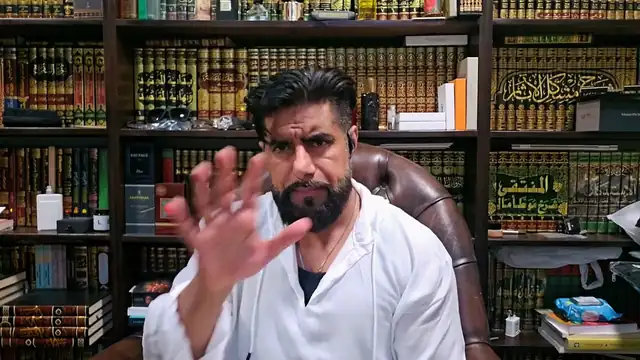 Press play to load from YouTube. Nothing loads until you do.
Transcript
machineauto-transcribed, may contain errors · source: youtube auto · click a time to seek · dotted terms open the glossaryall right let's continue with these stations at which we stop whilst pondering and reflecting on some verses of the Quran so looking at CHS three a fascinating verse straight away is about the comparison between prophets
that that these Messengers we excelled and raised exalted some above others but then you have the Hadith that the prophet Sall alhi wasallam said do not uh praise me above or raise me in ranks above unun mat so how how do we reconcile between there's been several interpretations but it's safe to say that there is a hierarchy between prophets and Messengers
uh with the messenger of Allah s wasallam being now so what and and that is affirmed by this verse that we exalted some above others but the Hadith is speaking about comparison where you to raise one you put down another which often happens in society and that also teaches us a mode of conduct that we shouldn't always see things that where one excels another must be put down also
here we begin with this is the only time in the Quran that the word appears hence it's called aat and it's and there's a huge debate over what exactly is the kury is it Allah's Dominion or so on we won't really get into much of that but this is a very special a and everybody should Endeavor to memorize this let me share something with you you know as
a as a kid we in our when I was growing up we had this you know this kind of uh like a decorative Tre tray or something like a piece in our front room that said um it said in in Udu and when I was a kid we would learn U basic u in in the Masjid so it just said if a person had a problem and they read this ayat kury the problem would go away so I don't know how old I would have been I'm assuming maybe about eight
something like that so I heard that that oh you know if you have a problem and and from And I memorized it as a little boy and any time I got into a problem or a worry I would recite it ayi and you know I and the problem would always to to some extent disappear or I'd be saved in some or it'd be extenuating kind of circumstances and but yeah it is something which from when I think back to
Childhood that if we can everybody should memorize aat and it has its Mysteries Allah will unveil for you a mean another verse straight after it that there is no compulsion in this thinge now people have disagreed read on what this means the way the verse reads is there is no compulsion in the matters of
De that we really shouldn't use the dean as an imposition on one another now you can guide to matters but never Force because it goes against the very nature of submission to Allah cuz really anything that we do as an act of worship or anything it is by submission of our will to Allah not out of fear or coercion that corrupts and
pollutes our submission to Allah then so that's something to reflect on and then a uh an amazing description of ibraim challenging who is said to be Nam to to a debate where he says that indeed my Lord gives life and death and and it's very famous that nimrud then said well I give life and death you know he is a person sentenced to death I let him go there is another person executes some
other B for no reason right so so ibraim says to him well my Lord brings the sun you know Rises it from the East you bring it from the west then and and I guess that is you know when people when they have nothing better to say than I suppose it's that's what they resort to you know they denigrated selves but it's just something
to to reflect on these verses something a reminder a mo for us a verse 263 that sometimes this is a principle for life that sometimes it is better to just say a kind word and let something be than try to be charitable in such a way that it will be followed by
harm and this could be in many ways it could be where uh and you can relate this to your personal lives that maybe sometimes by by doing a certain act you're imposing so much hardship on you and others that really it's just better to apologize and say a kind word that and just let things be rather than so much hardship over a charitable act that's a uh a very profound
principle to to really keep in our tools for Life yeah now moving through these verses we have uh the very famous verse of Reba that and it follows on from sodat uh you move through these verses and then Allah speaks about expenses and spending and then F poor people people and and then those who spend it their wealth in the path of Allah and this
then leads to the verse of it's interesting that now one point of reflection those who consume riba this is speaking of the of Jah that they do not stand and the MU say here stand means on the day of judgment not here because here when you look at them they do stand they appear as normal
people they do not stand on the day of judgment except as though they have been touched one could say possessed by by Devils or by demons by the Shan I suppose one thing that comes straight to mind is and this is used often for possession demonic possession Gins demons possessing people this is not a proof for that firstly it's speaking about the a that on the day of judgment these people will be falling about as if they've been touched but one
could argue that well why does it say as if they've been touched by Dem because that must be something if it's mentioned in the Quran then it must be something which we know well and real in this world and an answer to that is not necessarily so you see in the Quran let's take a verse where Allah is describing Janam and they're describing a tree that emerges from the pits of hell and how you know the kind of how hor horrific
this tree is just the sight of it and Allah says in the Quran that that uh that the emergence of this tree the way it emerges that it is as if the tree the branches these things are they are the heads of and demons now one could say well we've never seen the heads of demons or the
heads of sh so what are we when we're reading that verse how do we understand it and the answer to that is well you are to rely on imagination when Allah is saying if you were to see this tree it is as if these monstrous shans their heads are hanging there this is what now none of us have ever seen that but we are to rely on our
imagination to envisage it so the Quran and Revelation does lean in on human imagination to fill in some dots into say oh this is how scary that manther will be so when the verse says that as if they've been touched by demons or by shtin it doesn't mean that that is an actuality but that's leaning in on our imagination another fascinating point and have you noticed that RBA whenever
it's written in the Quran why is it written with a wow so there's a huge disagreement amongst the MU and the Gran and linguist that why is it written it'll be R wow it's written and then it's got the mud but it's always with a wow why not just the way we would write it today in Arabic and they disagree amongst themselves why is that some saying well um a lot of the gramians had the interpretations some people saying that this was because they took it from let's
say the language of who pronounced it ribo they want to write it like that I think far or amongst other linguists said to distinguish it from the word Zena because they never used to write the dots um and other people but all of these appear somewhat critiqued as he highlights that that the reason he feels that that this they would always write the wow was to teach people its root so even the word zakat is written with a wow Salah is often written with a wow so as to highlight the root of that word is
with the wow so wow not R so that's a fascinating point for those of you learning Arabic another is known as ay the long longest verse in the entire Quran right so you've got here and this will be verse we've got 282
now that if you take a loone amongst yourselves this is the longest verse in the entire Quran the whole page is dedicated to one verse and it covers that if you are taking a loan let the be a witness amongst you and it's also with the famous verse where it mentions that if not now that then if there's not two men then one man and two women so it's famously the one of the two uh women uh testimonies and are they equal to one or
what is the scenario I won't go into that in too much detail I have in the past got lengthy videos on that generally in the understanding that it's not that two women equal one man but that in these matters of buying and selling and debt especially where you are taking loans and having people testify people in the past would often there would be cases often of witness intimidation so and it was far easier in those societies as it is Unfortunately today in some parts of the world to intimidate women more than it is
men so it was more a a a kind of uh defense against that it's not that two women equal one man that so you've got more so if the person tried to intimidate one woman the other would still be there as a support so yeah so that's and I there are more detailed videos on that a fascinating Mo I want us to reflect on here is this
also speaks about um that take Witnesses if you are to buy and sell now this is a ruling which now that's a clear verse of the Quran and it's an imperative it's a command yet truth be told that's not really seen as an obligation by most Muslims although some did take that as an obligation most did not that that if we were to buy and cell do we need Witnesses and really this is to prevent
dispute in the Shar there is a principle that almost every prohibition is linked to that which leads to dispute so this too would be a matter of of that and something for uh little something intriguing the verse that follows Allah
says that always give the one who has an AM should hand it over now it mentions do not conceal your testimony now this is a a fascinating Mo now you may ask why is it let's say you witnessed something now you witnessed it and that matter is let's say there's a dispute or there's an issue about it now you've not been asked to come testify but you decide to preemptively
go and test justify like I know like let's say two people have had this person bought a car from this person now there's some issue going on so I turn up whether it's in a court of law or whether it's in some kind of um dispute territory so whether it's an arbitration or a mediation or something and I turn up as a witness I say I'd like to witness that testify that so and so did this but they've not invited me yet they've not asked me to come testify and I preemptively of gone to do this so you're going to think well and what now
here's the the strange thing so according to the Sha that if you do that your testimony is B and rejected because you are not allowed to testify unless invited to testify and as wild as that seems so and I'm not sure maybe the Sala may follow them because really the Sala have very similar kind of uh principles like the Hadith is we just go with it because there is a Hadith of Abu that speaking of the you know the
corruption of people in the end of times and it says a time will come that after them will come such and such people who are bad in character and it mentions that after them will come a people who will testify even though they are not being invited to testify so the fascinating thing is so from that they took this masalah that oh if any person testifies he his testimony will be rejected and he will be barred from testimony unless he was invited if
he preemptively turns up he's B so this is the Sha and then Imam we they try to draw some distinction that that's in relation to like anything this is to do with anything to do with people so yeah and so I found that very intriguing the the other mabs Imam Malik's maab clearly says that's not the case uh of course you can testify even if you've not been invited in fact there is a Hadith of the Prophet praise those people who go and testify when they've not been inv like
they preemptively do it as an act of and this verse of the Quran do not conceal it said that that Hadith that the are referring to that is speaking about where people and Imam Mai said the same thing that where people are falsely testifying and you can understand that by the context actually that you know then will follow such like good people a people
that such a people who will themselves testify they're not even being invited to testify now we have to fill in the dots there you see you lean in on imagination that obviously in that context this means that they're giving a false testimony not that they you know doing so it's intriguing that I thought that was a an intriguing sh brings it up in his t so I thought I'd I'd share that and I'll leave us with the the verses to do
with that the mother ofam uham is a prophet in Islam prophetes according to many of this them so when she was born the mother was anticipating it to be a boy and it was Mariam so she
says so when she gave birth she said Ya Allah it's a female I've given birth to a female and clearly Allah is more he knows right now this is fascinating and the male is not like the female see this is intriguing because following that you know going with the flow that we were reading she is anticipating it to be a
boy she gives birth to a girl and she says oh Allah it turned out to be female now in line with this what you would imagine it to say is and the female is not like the male but it said it the other way
around and yet the male is not like the female it's on verses and understandings like this that he builds his understanding that the female is actually in a makam much higher than that of a male and he uses this verse amongst other evidences like the fact that she mirrors giving Creation in giving birth and the fact that theim the womb is in
the it is something it is a derivative from rman as the Hadith states he builds on that his foundation that the female is actually in a much higher maam than the male or you know although in physical form she may appear weaker and he has a whole fascinating discussion on that that the fact fact that Allah has made her a vessel for life and these instances he cites them from the Quran to substantiate his point
so that's it's a fascinating Mo to reflect on because you don't hear these kind of discussions often that you know the the of of the Mak of a female over a woman in fact it's seldom mentioned but Ari does have a fascinating discussion on it right so these were some that we stopped with today Allah bless you all may he bless this Ramadan and Grant ease to each and all wherever they may be
Something wrong here?
Tell us what is wrong and it will be checked against the recording. Nothing changes until a person has reviewed it.
Sending a note needs JavaScript, which is off or unavailable in this browser. Nothing has been sent.
No name, email address or account is asked for or stored, and the inbox does not store your IP address. For rate limiting it keeps an unreadable fingerprint of your connection for 48 hours, and our database provider's own logs record connections as every website's do. Only your note, its kind, the page and the moment in the recording are kept, for review.
Cite this recording
Stable id, transcript version and tier are part of the citation. Every change to a transcript is logged.Mufti Abu Layth Archive, auto-transcribed, may contain errors. https://muftiabulayth.org/r/vncb9giemn8/ (accessed 1 November 2026)
- APA 7
Mufti Abu Layth. (2025, March 6). Mawaqif - Quranic Reflections - Juz 3 - مواقف عند آيات القرآن [Video, auto-transcribed, may contain errors]. Mufti Abu Layth Archive. Retrieved November 1, 2026, from https://muftiabulayth.org/r/vncb9giemn8/
- Chicago author-date
Mufti Abu Layth. 2025. "Mawaqif - Quranic Reflections - Juz 3 - مواقف عند آيات القرآن." Video, auto-transcribed, may contain errors. Mufti Abu Layth Archive. Recorded March 6, 2025. Accessed November 1, 2026. https://muftiabulayth.org/r/vncb9giemn8/
- BibTeX
@misc{abulayth-VNcB9gIEmN8,
  author = {Mufti Abu Layth},
  title = {{Mawaqif - Quranic Reflections - Juz 3 - مواقف عند آيات القرآن}},
  year = {2025},
  month = {3},
  date = {2025-03-06},
  howpublished = {\url{https://muftiabulayth.org/r/vncb9giemn8/}},
  url = {https://muftiabulayth.org/r/vncb9giemn8/},
  organization = {Mufti Abu Layth Archive},
  urldate = {2026-11-01},
  note = {Auto-transcribed, may contain errors}
}