
Shame Culture & Honor Killings In Muslim Culture? | Mufti Abu Layth
hadeeth ahadith ahaadeeth hadis hadees ahaadith maaliki malikite malikiyyah maliki school 'urf muftis kufr kaafir kufar kaafirun disbelief koran quraan al-quran salafis salafism wahhabi wahabi wahhabism nikah nikkah nikaah nikah nama nikahnama talaq talaaq triple talaq talak hijaab hejab hijabi zina zinaa zinah fornication deen al-din ad-deen ad-dinvideo · 14:24 · 2,900 views · 25 Aug 2022 · Open on YouTube
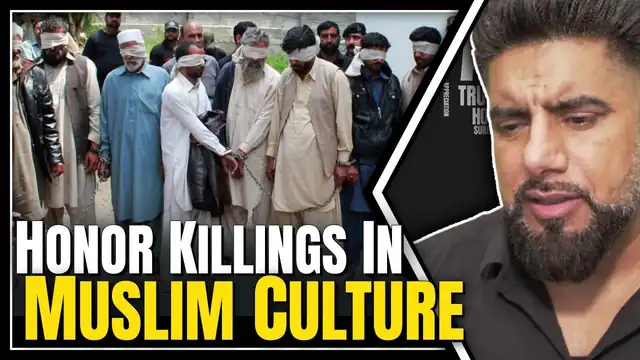 Press play to load from YouTube. Nothing loads until you do.
Transcript
machineauto-transcribed, may contain errors · source: youtube auto · click a time to seek · dotted terms open the glossarywhy do some muslim communities uphold shame culture and honor killings does it have its root in islam or pre-islamic culture um all right so yes first of all it's we need to condemn any kind of honor attacks on a killings on a violence shame culture this is not to do nothing to do with islam but like many things people can shroud it in islamic rhetoric so it's not difficult look a person can take
the quran and use it to justify any kind of means so let's say you had all kinds of crazy sects in the past that did things like the juarez who were like the forerunners to isis they would butcher people and really ruthless they would use certain verses of the quran to try to twist it towards the meaning so it's like they attacked said iran and they said that all of you have become kafir and they used verses of the quran to justify that you know you two are trying to have
a truce where really only god is the true judge and so people can use the quran or use islam it's a bit like saying how bush used you know the the um the american constitution to justify his kind of his enemy combatant state and try to uh justify justified gitmo guantanamo bay on the back of the american constitution so a person can use anything and twist it to say well oh
i'm using it's like how putin was now before invading he used a democratic alleged democratic process to say well you know now the upper house in russia has has authorized me following our democratic process to do this so people may say this is to do this has nothing to do with islam nothing islam abhors and condemns this shame culture this kind of shaming name and shame this kind of honor attacks all of these it is just insecure people and it very like so
so for example people will hold like what do like if you take a look at like let's say romance is demonized in some parts of the muslim world like having being in love with someone is demonized like if if you're not married yet so even if let's say the person now came to propose but it became known that oh he likes her it's like no this is now a dishonor like i mean what goddamn millennium are you guys living in like this
that was never the case like in even in jahiliyyah arabic arabia and in islam islamic arabia in the time of the prophet these things marriage was such a natural thing it was never like this it was never like that like they marriage and love and divorces and they would have divorces and marriages straight away and they weren't tarnished there was none of a lot of this there seems to be a heightened attitude towards sexuality especially in the desi world which is not really doesn't come to us from islam because the islamic literature seems to be
much more emboldened and kind of brazen in its attitude towards sex so in fact we don't even dare translate how it's said because it's too kind of appears vulgar but in arabic it just appears normal so they treated like sex was a very natural state to them so
now in pre-islamic arabia they wouldn't have sure they would have had their own social kind of thing so maybe they looked down on for example slaves so if a woman had an affair with a slave then that may have been seen or maybe they saw it as a certain because the the tribe was an inferior tribe they maybe saw that but it wasn't the fact that she was for example having this romantic affair with someone that was itself seen as like oh my god that's so so disgusting or that i mean i'm not
saying well maybe they didn't celebrate it but they didn't they weren't it wasn't a big deal for them these things weren't how they saw it sure maybe if she you know they had other rules and and i don't believe that they had stoning um this was not from pre-islamic arabia this was from the jewish things so the arabs wouldn't have had that they would have had the lashing and stuff so they would have lashed people but they wouldn't have stoned them this was not a an arab custom mainly for things like that i'm not saying obviously people knew how to pick up stones and throw them at people they understood that but it
wasn't like you go and stone somebody for um you know having a sexual encounter that was not um generally as far as i'm aware known as an arab custom that that was something that was in the in the torah and in from the jewish customs and even the jews didn't really do it in arabia so maybe the odd jewish thing because even in the hadith the jewish people are practicing something else they're kind of blackening the faces and putting them on donkeys when they catch them doing adultery and making
them go around so they're not actually doing things like the stoning and in fact that's the way they come to the prophet saying well look in the in the famous hadith that we only judge by our book and the pro and the prophet saying well that's double standards then because your book says something else so uh because because they're saying we're going to blacken the face and put them on a donkey and i think shave his head or whatever and and then they make this statement about we only go by our scripture and and the prophet says well but that's not in your scripture you know this doing the donkey thing and doing all isn't your scripture about stoning
and so this is the kind of the double standard and the hypocrisy that the prophet is pointing out to them that you know but you guys sure but why are you claiming that you you only stick to scripture then so this is um but this whole culture is a very backwards nothing to do with islam and you'll see different cultures muslim cultures are very open to so many things like it's a good example contrasting something like afghanistan pakistan those areas with something like mauritania because like mauritania is going to
be both ends are hyper religious let's say or i don't know if hyper religious is the right word but both ends have religion is the strong current that permeates their entire society but yet the manifestations are so different like if you take mauritania take this relationships as an example women will throughout their lifetimes have multiple marriages and it's like a social status symbol
so if a woman in fact you can go onto youtube and watch a drama on it i mean you can watch a documentary on it so they women will kind of in their ways social their kind of shame or not shame but they'll mock a woman who's only ever had one marriage in her life like they'll be like hahaha or she's only ever had one man and they they'll be women on average will go through at least 10 marriages there's somebody that will this one lady speaking about how she's been through 40 marriages she's like really boastful that i had 40 marriages
and there's things where they they will be like the husband and wife there there was an incident where the husband and wife were like oh look you know they're not really getting on so she says look you know what i think and he says i think we should just divorce or whatever and she's like yeah that's great and she says do you think your friend you know i kind of is he up for marriage and then he sets her up says yeah yeah of course he is so she then marries the friend and and this is a very now you see if i describe these practices to you you're gonna like a stereotypical kind of uh profiling thing is
if i tell that to let's say people in pakistan without describing who the culture is they're going to picture something oh these are these lewd europeans kuffar got no value for god got no value how can a woman want to be with 20 men throughout her life how can a woman and then you tell them no this is mauritania where children memorize the quran and everybody is a habit of the quran and they do hijab and they've got mashayik and they're deeply rooted in maliki all they know is fair and fair and they memorize poems and they some of the best kind of uh memories that we've got in the entire arabic world and
they won't be able to like they'll be like a system malfunction like they won't be able to understand that how does that happen because to them they think like in let's say the eastern part that the sexual um sensitivity um must be which is so these kind of insecurities that they have they don't recognize they think they heightened sexual sensitivities and taboos are must be rooted in the islamic identity this is what they
assume so if you thereby the corollary that follows the logical conclusion is that if you are islamic you too must have these values embedded but if they were to find a society that was arguably more islamic than them because unlike them they actually all almost memorize the quran and they all understand arabic and they memorize maliki firk and they teach some of the greatest kind of memories on earth they they study hadith i mean this is the common people you'll hear stories of women saying well you know i won't even marry a guy who
hasn't like if if the guy hasn't even memorized these poems on grammar and so on then what a failure it's like how people would say does he not have a degree they would say does he not know alfie you know al-faytim na malik he doesn't even know that so if you tell them that these women have or this society is even more islamic but yet the attitudes towards sex and relationships are entirely different they won't be able to fathom that because what's the alternative because they because where are you getting your sensitivities and this from because you're getting them not
then from islam you're getting them from some insecurities that you have that are kind of cultural insecurities and that nobody wants to admit to you see people feel bad saying uh this is an insecurity they justify by saying no this is a religious good act that this is you know as people say the youth you know the youth the people who don't uh they don't be jealous over their women and the youth now you hear this often amongst our salafi brethren using this term that the youth now
so the mauritanian machete all these people they're probably considering them the youth then but that said speaking of the selfie that the the divorces happened just the same amongst them they they marry these women divorce them pass them around and utterly destroy the the woman by the end of the process so there is a lot of unpacking and unwrapping to do and one thing we learn is that culture
is not coming from religion if anything the religion will take the flavor of the culture that you have and i love what um had said that he gave this example i heard it years ago in his lecture series um i think it was on the four math herbs where he said that islam is like a stream uh like a river and the water just takes the color of the
riverbed so that's what islam does it just kind of flows over taking the kind of reflecting the properties of its environment that it's passing through i thought that was epic
Something wrong here?
Tell us what is wrong and it will be checked against the recording. Nothing changes until a person has reviewed it.
Sending a note needs JavaScript, which is off or unavailable in this browser. Nothing has been sent.
No name, email address or account is asked for or stored, and the inbox does not store your IP address. For rate limiting it keeps an unreadable fingerprint of your connection for 48 hours, and our database provider's own logs record connections as every website's do. Only your note, its kind, the page and the moment in the recording are kept, for review.
Cite this recording
Stable id, transcript version and tier are part of the citation. Every change to a transcript is logged.Mufti Abu Layth Archive, auto-transcribed, may contain errors. https://muftiabulayth.org/r/utqwtz1pdv0/ (accessed 1 November 2026)
- APA 7
Mufti Abu Layth. (2022, August 25). Shame Culture & Honor Killings In Muslim Culture? | Mufti Abu Layth [Video, auto-transcribed, may contain errors]. Mufti Abu Layth Archive. Retrieved November 1, 2026, from https://muftiabulayth.org/r/utqwtz1pdv0/
- Chicago author-date
Mufti Abu Layth. 2022. "Shame Culture & Honor Killings In Muslim Culture? | Mufti Abu Layth." Video, auto-transcribed, may contain errors. Mufti Abu Layth Archive. Recorded August 25, 2022. Accessed November 1, 2026. https://muftiabulayth.org/r/utqwtz1pdv0/
- BibTeX
@misc{abulayth-utqwtz1pdv0,
  author = {Mufti Abu Layth},
  title = {{Shame Culture \& Honor Killings In Muslim Culture? | Mufti Abu Layth}},
  year = {2022},
  month = {8},
  date = {2022-08-25},
  howpublished = {\url{https://muftiabulayth.org/r/utqwtz1pdv0/}},
  url = {https://muftiabulayth.org/r/utqwtz1pdv0/},
  organization = {Mufti Abu Layth Archive},
  urldate = {2026-11-01},
  note = {Auto-transcribed, may contain errors}
}