
The Story Of Tarafa Ibn al-Abd: Pre-Islamic Poet | Mufti Abu Layth
hadeeth ahadith ahaadeeth hadis hadees ahaadith saheeh sahih hadith saheeh hadith sound hadith authentic al-bukhari imam bukhari sahih al-bukhari saheeh al-bukhari saheeh bukhari imam al-bukhari ka'bah ka'ba kaabah muftis jahannam jahanam jahannum sahabah sahaba sahabi sahabiyyah sahabiyat amanah amana amaanah amanatvideo · 39:19 · 2,800 views · 10 Jul 2022 · Open on YouTube
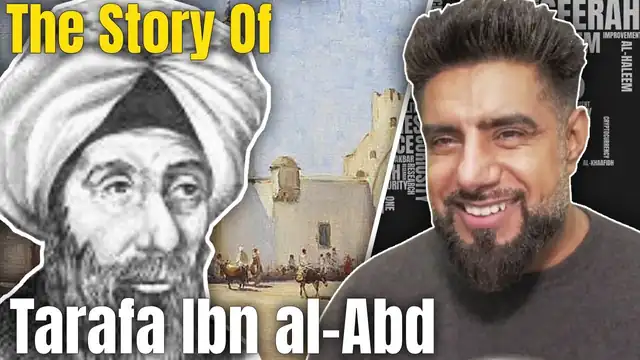 Press play to load from YouTube. Nothing loads until you do.
Transcript
machineauto-transcribed, may contain errors · source: youtube auto · click a time to seek · dotted terms open the glossarylet me introduce to you this personality okay from pre-islam this guy he is from the tribe of bakarib those of you that remember that we'd spoken about and the whole and this was a huge tribe bakrik and the whole you know the war that they had harbaugh if you remember
this kind of like a fighter kind of tribe and they were known they were quite surplus lived right down from the middle east region into nudge then they were kind of scattered and yeah and there's this and we'll actually go through this incident there was a time where i don't know if i've narrated it before known as the the day of the car where they actually take on the sassanid uh dynasty and it's in the lifetime of the prophet salallahu we'll speak about that another day and that's where they take on parvez he's the kisrah of the time but bakrik nawai'il are this kind of
tribe and they're known for this kind of ah this boastful attitude and they've had several poets from them this poet or this personality he is that means his poem his is one of the 10 attached poems that was attached to the kaaba as the gold standard of poetry his poetry has been deemed if not the highest form of poetry then at least it comes second
so some people claim that uh imra al-qais who we've covered um has you know his the best people say then he comes you know if takes gold then he takes silver and he has a famous her [Music]
that is speaking about his love and he has many loves he's not monogamous this this personality some of them are like if you remember antara he who was the the warrior he was just it was just habla till death you know it was that uh but some of them are kind of like all shall we say high in exploration and amongst them is and he's and he's incredibly wise for being so young his poetry is so full of wisdoms that they became proverbs that are some are even used till today
so he has so for example in arabic there is a poem there is a proverb that is so if somebody says if you mix it's a bit like in english they're saying um it's a bit like saying apples and oranges where somebody's mixing something somewhat similar yet different that they're both kind of fruits but they're different and somewhat in that regard is where he comments on his one of his uncles who's speaking about abba which is a male camel but he accidentally attributes something to it that is female and
tarafa said is that you know he is to treat as a female camel alba the male camel as in he got it wrong you know he's mixing apples with oranges in that sense and and and this has become a proverb which is still used in in arabic has many wisdoms like this like he said in the poem that abba munderin abba mundarin afra
he said that you see this line of his means just that some evil is easier than than other than others as in you know some evil is less than uh than other evils this has or some harm is less more tolerable beca became proverbial so like that he has many um he has in his poem that uh mustafa and from insanity is
the inflamed love you see so incredibly wise young man who in such he he passes away as a very young man just in his mid late 20s 26 and some people say maybe 27 years of age but in that time he says all of these things these incredible poems that we still have to today full of all of these these gems and his uh his which i mentioned
is like this kind of desert which has mixed sand and stones in this place she has ruins debris the debris of her the ruins of her old dilapidated home stand out as the way a tattoo appears in the hand he's saying that um and he says
that he says that my companions they kind of as we stood there they kind of tell me look don't don't kind of destroy yours don't be ruined over her have some strength and this is an amazing honestly he does get a bit it's one of the longest i it is the longest it is over a hundred uh couplets in it i think 104 or something but he um and he and he has so many gets carried away by his camel describing his camel which we'll find boring as hell but then he starts to put all these wisdoms in there that are so um
you know brilliant he has a line in there that he says [Music] allah he says you know when your own relatives or the people near and dear to you do oppress you he says it hits harder than a fine fine steel sword you know the finest swords muhammad was a sword made out of fine indian steel back
then they would call it muhammad from the word hind and it was a highly kind of like valued sword so he says it hits harder than that and this guy what he had he's he's actually related to um several of the poets there's the two famous there's the murakish two famous moroccan they are his uncles he's from his dad's side and from his mom's side he has a famous uncle who's a poet known as and people say his name was or some say it's whatever but he's known as
and he in almo stay very tight they hang out from his mother's side is from a different uh still from that kind of rabia tribe of the uh dubai but he's um but anyway you he's a poet as well and you see poets were incredibly they were rated but they were feared in that day and age as well because they would say a poem about you and it would go viral and they would diss you they they released these diss tracks about you and they would go viral so what happens is uh tarafa
he has a uh a relative his his own brother-in-law yeah his wife's husband wife's husband wife's brother he's the husband wife's brother so his brother-in-law who's also from the same tribe and that guy's name is um is up to hammer right so this up to amar they have some kind of he doesn't kind of get on with him or something and um and and one day um you know there's some family bickering going on and maybe the wives told the brother something and the brother's like that good for nothing you
know you know the family politics so he says the brother-in-law says something to him and that's the worst thing you want to say to a poet because it's like nowadays i guess the influences you know you say something and influencers will be like hey i have a meltdown on social media so tarafa he has this meltdown in the form of a poem and he says this poem about his brother-in-law um and he says in it
now this is a style it's a diss track okay it's dissing him but the style of literary style is one that arabs would use to to really praise people but they would begin as though they're gonna diss you but it became a style that they would say you know the only thing good about him that or they would say there's no goodness that you'll find in him except and then there would be the the volta the kind of plot twist the the kind of um you know the punch line that they would say except he's incredibly generous or you know
this is how they would say so it's like it became a thing and and you have in sahih bukhari as well the poem that comes down that they say uh i think about the sword that comes from and i think it's when is in abdullah malik's time or one of the kings he has it and the poem honestly i love that line uh it's inside but it's a famous poem of the arabs that they say you know there's no you no
goodness in them except that the swords have been dented excessively by the clash of armies you see it's a way of saying that that they're so cur like they've been through so many wars that that the the swords carry so many dents and this is obviously reflecting their courage and victories and triumphs and legacy but it begins by saying him you know ah there's no goodness in them
so this guy says uh he says about his um about his his brother-in-law he says he says you know this there's no goodness in him except that he's he has richness so you think okay so this is building up it's getting climactic
he says and except that he has a fat plump waste that when he gets up it's all feminine and kind of like you know it's so he you think he's going to praise him and then he just really disses him saying you know that the best thing about him is he he's really curvaceous you know and voluptuous this is what he's saying about him so obviously this poem has gone viral yeah now this brother-in-law abdul ammar he happens to be one of the the the kind of
the guys who hangs out with the king in hera in which was in modern day iraq the old cultural capital of the arabs which is the the lachman dynasty their capital okay and the the hassani capital was busra but these guys it's al-hira so the king there at the time was some people said it was uh what is it who was spoken about but i think it most likely it was probably am ripened so and this guy was like a vicious king as well he's really known and he ruled like like an excessively long amount of time
like some 40 plus years and he's got it on luck right the arabs fear him and so anyway um what happens is he happens to be um like have a relationship with the king as in he because the kings in the past what they used to do is they used to enjoy good company so they would have like like nowadays people watch movies and do stuff that they would have the evening gatherings so they would look out for so they would ask that if anybody imagine you knew somebody that's that's a great uh that's
great company that was like prized after it was like a great prize so they would hunt out great company like people who knew poetry people who were funny people who you could just sit and and they would drink with them and they called them the arabic word is nadim like a drinking partner okay so um so so these people they were from the the kind of man of the king so the brother-in-law so he's chilling with him one day and he's drinking and then they go out on this hunting thing they go let's go hunting so whilst they're hunting they hunt this kind of wild uh this zebra
or so this kind of they find this thing and the king hunts it i'm so when he hunts it he tells this guy the brother-in-law's he says to him there's a lot of ambrose here by the way in this story he tells him the brother-in-law that hey uh i've caught it so they catch this this this animal i think it was some kind of like a a zebra or some wild animal they've caught and and he chucks it in this ditch and now he's the king you know he doesn't want to kind of cut it up and get all blood over him so he tells this guy the brother this brother-in-law of tarafa
um he tells him that hey could you um jump in there and cut it up for us will you bring us the meat so this guy jumps in there and he's trying and he can't seem to cut it it's not easy cutting an animal and so he's he's trying and he's like you know the the you know the triceps ain't really working so he's like when he can't seem to do it so the king looks at him and and he starts laughing
what kind of a man are you and the king says that you know it's true what tarafa says about you the only thing you're good for is just being curvaceous so obviously this guy now abdul hamer he's like insulted so [Laughter] human emotions huh they get the better of us
so he says aha he says well you think that's bad you should hear what he says about you now if ever in history a sentence has caught somebody's attention and believe me in the love for the love of god it has been that one you know when somebody says do you know what such and such you should hear what such and such says about you if our attentions are suddenly
so what does he say about so he says no what does he say so he reads this poem to him where basically tarafa says about the king that we have a king who's no like if only in place of him we had a sheep basically look there's a little back story to this that the kings and i've mentioned this before when i spoke of the later king not many they used to have these weird distribution of days
so they would say that um they they divide their days into like one day so they would have one day which is like for the people like let's say they see people they deal with their what they need and stuff and they would have another day where they for example one of them whoever he meets he's going to kill him or some kings had that but this guy he would have a day where he goes hunting that day he does you could be dying he's not going to help you he would only go hunting and if he met people on that day and you came in his way he would just shoot you
with an arrow so tarafa had said a poem about him he'd said that you know this guy this king if we had a sheep in place of him it would be more useful at least it could kind of give us milk like whenever we need it he said he has a day where he goes hunting birds like he sends off his falcon and he kind of hunts these birds he says well at least the birds can fly away what about us we can't even fly so here at this point so this guy tells this brother-in-law tells the king that he said this poem about you now
the king ahmed nahin gets incredibly insulted but he kind of covers it up he thinks you know what he boils when he hears this that how dare he say that about me but he wants to get him but then he thinks you know what if i tell this guy that i'm gonna get him this guy might maybe he'll have a change of heart because ultimately he's related to him like if i tell him watch i'm gonna chop him up now then this guy might tell him and give him a head start to run away so he kind of plays it cool and says ah shut up man you're just hating on him and he tries to keep it a bit
uh easy like he tries to you know but in his mind he's plotting away let alone this the king had previously heard that you know muthalumis this guy's uncle who's also a poet he had said a poem because they you know if you don't if they want to diss you they he had said a poem dissing this king's brother he had a brother called caboose who was also useless and uh so lazy that they said this poem about him being lazy so anyway in the weeks and months ago this king decides i want to get my revenge basically there is no revenge i
want to kill him execute him but how do i do it so he comes up with this plot he says okay what i'm going to do he says invite them so they invite this this invite goes to both of these they're getting invited they're getting more dressed up we're going to the royal court nice this one nice so they go there and i'm ripping him he's um obviously he's this huge king
now people say to him you know if you invite them and kill them here you're basically going to trigger off this whole tribe don't do that have them killed but not here and he says okay fine so when he calls him the king also has an ounce of doubt that is you know maybe this guy isn't as i've heard about maybe he's a good guy or whatever and so so the worst thing happens here is when the king invites him tarafa who's a young man was incredibly kind of
self-arrogant as well so he kind of even in front of the king he's kind of doing this walk like he's kind of boxing and muthalemis does tell him his uncle you know you might want to take that down a notch because this king doesn't like arrogance and he says now what are you on about he says the king's invited us he likes us you know let's be ourselves and even in front of the king he starts doing this little kind of dance and the king is now definitely thinking now this guy's so self-conceited that he definitely insulted me i'm definitely going to do with this guy
so anyway they chill they spend their evening they drink with the king and they do all of this and the king says hmm don't you worry man i got in store for you man i got in store so the king says to him you know what i've got a gift for you gifted gift give me argument he says really he says he says you know what in bahrain this this other region he says we've had these uh
amazing things turn up he says you know i'm gifting one to you i'm gifting it to both of you it says says here's a letter it says take this letter it's got the royal stamp on it royal seal take it to the governor of bahrain which bahrain isn't the country bahrain today but it's that regional the eastern side of old you know the arabian peninsula was called bahrain back then so they say okay they get incredibly
chuffed now as they're leaving the palace they're all kind of chuffed lottery man lottery muthalumis the uncle you see he's slightly older in age he says my intuition man intuition you know something i tell you if your intuition ever tells you something see it through there's no harm in being cautious this
guy he he says you know my intuition is telling me something's wrong here so he says to thorify you know what let's open up this this letter let's open it up that's the royal seal if we open it we violate it you know it's it's like a sacrilege this guy's a king and we're going to get a prize so what alam is is
so whilst they were in here which is the capital cultural capital he quickly finds some young some young lad who looks a bit educated and he asks him look excuse me can you read because this guy himself he couldn't read he was a great poet but he couldn't read this also shows how they used to make poetry intuitively it wasn't an educated process like institutionally educated so he finds this young man who can read and he says look i he says read this for me so they break the seal and he reads and the guy is like whoa he goes
what do you mean what's going on and the guy says well he says who on earth is and he goes that is me says god damn he says it says in here when muslims comes to you kill him
so what alam is is absolutely petrified he's like what the hell grabs the letter rips it up throws it in this um in this river and this uh river which he says a poem about he says it because it was called cafe that river was and he says uh something about cathalica that's how i throw kulla that every piece of paper that misguides i throw he said this point so he rips it and then he goes to tarafa he says stop i says what the hell he says you know what you've got to throw away that
goddamn letter it's it's a death sentence you're carrying your own death sentence so they said that the guy said no don't be silly you would never do that to us it's the king so more than begs him look please don't listen to me i'm i'm i'm parting ways i'm out of here i'm going straight back to our territory and i'm getting out of here not even our territory i'm saying look let's save ourselves the king is after us and i knew it because i had insulted his brother and you'd insulted him
so tarafa says that you know what i don't believe it i'm such a world-renowned poet there's no way the king would do this to me i'm gonna collect what's mine and so what happens is he continues he persists and he goes to bahrain and you know it's and when he gets the the the kind of it's not a king but the deputy the kind of governor of bahrain who's under the king of under this king
he opens it and he looks at tarafa and he's heard of tarafa because everybody's heard of this renowned celebrity poet he says to him do you know what's in this letter he says a prize he says it's instructions that i execute you
and he says and now that it's come to me i must do it so he says to tarafa that okay the least i can do is are your favors huh [Laughter] he says the favor i can do is i can allow you to choose how i execute you yes all your compassion [Laughter]
have compassion on those on earth the one above will have compassion so this compassion he says you know what i gotta be compassionate so he says the least i can do is let you choose i am multiple choice so what it's interesting actually that uh he actually you see that the death that they used to choose in many ways it was much more compassionate that what he said is okay he said if there's no way if it's inevitable he said then let me drink till i get drunk and when i pass out
then he says that just to slit an artery and let me bleed out and that evening he spends the and he's kind of obviously dining and then he's drinking and he says poems as well and he says poems to that are transmitted even to his um to this brother-in-law of his
uh he's saying that you know tell this this servant of this misguided person what is it it's an amazing poem that one by the way he says to him and he says he says
that if he says i know that basically if somebody one of your your people if one of you is denigrated is that a loss then you are a loss he's saying to him he says how can you leave that how can you go astray that he's
that the truth that what is right has a known way amongst people people know what it means to be to be to be right and he says to him that um he he says if a person can't even forgive a joke like i said a poem about you as a joke
and you took it to this extent that you you know are having me killed this is says that person what ignorance does that person live and reside and he says he says
that if a person can't even have control over his tongue has that it is then it is just something that shows his weakness and he has this kind of beautiful line at the end of it where he says um
that he says you know the souls of people knew from long ago that for me i don't that it knows that there are some who are venomous their enemies the adversary they're not going to help you and there's some that will kind of be true to you and in some ways this echoes the hadith that the prophet said that there's these souls that they that they have this pre
consciousness that they know they gel they harmonize and they some that are adversarial it's amazing his poems honestly he um they have so much and his you know his uh malacca he says to in the end of it and this is why in it this line that uh enough is that when those who are near to you oppress you it is worse than being hit by the fine by the most powerful
sword there is and in the end he kind of he seals [Music] this line is golden he says that the days and time itself will unveil to you what you are ignorant about that time will show you so
will come to you in a way that you haven't that a person he says that a person will come to you with the news that you did not pay your property but such is time it will do it it will show it to you he says the ending of that
already you know this poem this part of it i learned this when i was in that you know that i so it's probably about 20 years ago wow honestly it's like it's such an amazing line if you're going to learn a certain couple of certain lines from arabic poetry this is definitely one he says and and such people will come and be the be you know the kind of the bearers of news that you have never traded with you don't know them from
anyway but such is time it's amazing and this actually comes in a hadith i'll share that with you in a moment as well but this legend of a man dies at this very young age and and what this letter that he carries became known as the letter of al-muttalamis so people in time to come would name this phenomenon that if i'm sending a letter with you that when you get there it says you know kill the messenger
that kills the bearer of this letter this notice this became a tactic and it became it took on the name or because his uncle was called his uncle actually gets away he runs and then seeks refuge with the hassan in busra and then he writes poetry dissing all the lachman kings and kind of absolutely humiliating them um but any and he does he really laments his his nephew's loss and speaks about him and tarafa dies at this young age but leaves behind such a rich legacy
full of wisdom even though he was only 26 or 27. that goes on right till our very age and this this poem of his that's so it's so so when you think about it from that era of sadness right down to even the prophet salallahu this poem these words and you today here are kind of saying them
that time will teach you about that which you today remain ignorant of allah i have to say there is honestly splendor and strength in stories so i hope that's been of some benefit let me share
Something wrong here?
Tell us what is wrong and it will be checked against the recording. Nothing changes until a person has reviewed it.
Sending a note needs JavaScript, which is off or unavailable in this browser. Nothing has been sent.
No name, email address or account is asked for or stored, and the inbox does not store your IP address. For rate limiting it keeps an unreadable fingerprint of your connection for 48 hours, and our database provider's own logs record connections as every website's do. Only your note, its kind, the page and the moment in the recording are kept, for review.
Cite this recording
Stable id, transcript version and tier are part of the citation. Every change to a transcript is logged.Mufti Abu Layth Archive, auto-transcribed, may contain errors. https://muftiabulayth.org/r/umgxhi-2i4s/ (accessed 1 November 2026)
- APA 7
Mufti Abu Layth. (2022, July 10). The Story Of Tarafa Ibn al-Abd: Pre-Islamic Poet | Mufti Abu Layth [Video, auto-transcribed, may contain errors]. Mufti Abu Layth Archive. Retrieved November 1, 2026, from https://muftiabulayth.org/r/umgxhi-2i4s/
- Chicago author-date
Mufti Abu Layth. 2022. "The Story Of Tarafa Ibn al-Abd: Pre-Islamic Poet | Mufti Abu Layth." Video, auto-transcribed, may contain errors. Mufti Abu Layth Archive. Recorded July 10, 2022. Accessed November 1, 2026. https://muftiabulayth.org/r/umgxhi-2i4s/
- BibTeX
@misc{abulayth-umGxhI-2i4s,
  author = {Mufti Abu Layth},
  title = {{The Story Of Tarafa Ibn al-Abd: Pre-Islamic Poet | Mufti Abu Layth}},
  year = {2022},
  month = {7},
  date = {2022-07-10},
  howpublished = {\url{https://muftiabulayth.org/r/umgxhi-2i4s/}},
  url = {https://muftiabulayth.org/r/umgxhi-2i4s/},
  organization = {Mufti Abu Layth Archive},
  urldate = {2026-11-01},
  note = {Auto-transcribed, may contain errors}
}