
Recordings › MindTrap with Mufti Abu Layth
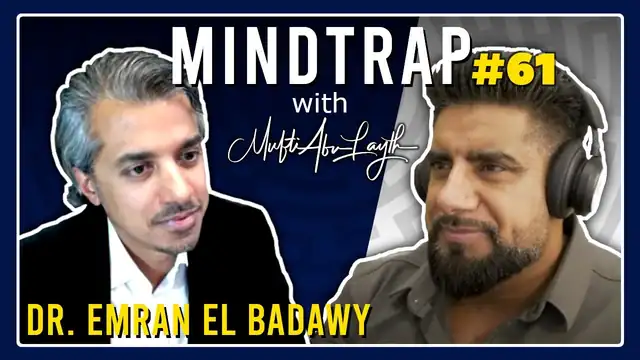
Dr. Emran El Badawy | Philology, Patriarchy & Pre-Islamic Arabia | MindTrap#61 | Mufti Abu Layth
hadeeth ahadith ahaadeeth hadis hadees ahaadith saheeh saheeh hadith sound hadith tafseer exegesis tafasir tafaseer commentary sirah seerah seera seerat prophetic biography imaam imams prayer leader masjid masjed masaajid masajid maaliki malikite malikiyyah maliki school ijma' ijmaa muftis dalil daleel adillah adilla proof riba ribaa sood usury rawi raawi ruwat narrator kuffar kafir kaafir kufar kaafirun disbelief imaan eemaan eeman shaytan shaitan shaytaan iblis iblees shayateen shayatin satan akhirah akhira aakhirah akhirat hereafter jannah janna jannat jahannam jahanam jahannum koran quraan al-quran surah soorah surat suwar soora chapter hifz hafidh haafiz hifdh huffaz hafiza memorisation khalifah khalifa khulafa khilafah khilafat khilafa makkah makka mekka madinah madina al-madinah madeenah 'alim aalim ulama ulema ulamaa shaykh shaikh sheik shuyukh shaykhs ummah umma ummat fitnah fitan strife trial nikah nikkah nikaah nikah nama nikahnama in sha allah insha'allah in shaa allah insha allah inshaa allah as-salamu alaykum assalamu alaikum assalamualaikum salaams wa alaykum as-salam greeting barakah baraka barakat barkat baraqah taqwa taqwaa muttaqi god-consciousness dhikr zikar dhikar zikir adhkar azkar remembrance deen ad-deen ad-din rahmah rahma rahmatlive stream · 1:37:13 · 6,300 views · 2 Nov 2021 · Open on YouTube
 Press play to load from YouTube. Nothing loads until you do.
Transcript
machineauto-transcribed, may contain errors · source: youtube auto · click a time to seek · dotted terms open the glossaryUh salaam alaikum warahmatullah ta'ala wabarakatuh ahlan wa sahlan bil qaum. All right, people. So, let me just check that we've got sound. I'm just going to bring up some of our fellow viewers. Just bring up the chat. Make sure you guys can see that we are loud and clear.
All right, live. All right, people. People, uh if you just leave a comment, yep, I can see you on Facebook.
Those of you just tuning in, click like, click share. If you can hear me loud and clear, I hope you can because I've got a hell of an interesting Minecraft session for you guys tonight. So, right, I just see on just check the YouTube comments as well. Make sure you guys Yep.
I take it you guys can clear. Likewise, it's a pleasure. I take it you guys can hear me. Okay, so, right. Now, just bringing before you the profile page. Right. Right before you people of right, I present today's guest. You can see that is a profile of Dr.
Imran al-Badawi from Houston, Texas. And a professor in Middle Eastern studies, somebody who's incredibly passionate about uh about pre-Islamic Arabia and much of the the diverse legacy that went into that. I present to you without further ado, ahlan wa sahlan Dr. Imran al-Badawi.
Ahlan wa sahlan Mufti Abu Layth and to all of your followers. Salam alaykum. Hope you're doing well. Pleasure to be with you. Shukran. Shukran. People, I just want to before we get stuck right into it, I just want to make sure you can hear our beloved guest loud and clear. If there's Uh you can let us know. Alternatively, oh we'll get we'll get cracking.
So, Dr. Imran. Right. It's I've I've just been so excited about about this discussion because I'm so I just find this whole topic of uh pre-Islamic Arabia just so colorful, but at the same time out of reach. Unfortunately, because it's it's just been maybe left unexplored by so many.
Before we jump right into that, I want Tell us a bit about you. A bit of your journey that's led you to here. Um you know, because this is such a It's like, "Wow." Pre-Islamic Arabia topic of you know, dynasties and kingdoms and and warriors and legacies, but a bit about the professor himself first.
Guide us through a little bit of a journey. Sure. Um, you know, uh, my journey like many academics and, uh, you know, researchers in this world begins with curiosity, and a curiosity about the world. And that curiosity began in my own infancy and my own youth. Uh, growing up, I think, in many different societies. I was born in Kuala Lumpur, Malaysia, and raised partly there and partly in different societies in the Middle East like Egypt and Saudi Arabia.
Um, I had the benefit of coming to the UK, of course, for a brief, uh, brief, uh, amount of time. Uh, and my my siblings spent more time in the UK. And then, of course, uh, in the US. And even within the US, you know, the undertaking my my, uh, s- secondary and then, you know, sort of, um, undergraduate and graduate school education. And then, later on, you know, getting married, settling down, uh, working working a job.
All of those things involved lots and lots of moving. So, I think that the earliest, uh, or should I say the the sh- the the theme, I think, of my early life was really sort of being itinerant and moving around a lot. And that does shape your curiosity and your sense of being, uh, because it it compels you to be broad-mindedness to be broad-minded.
So, that's that's how I, you know, that was the hook, uh, that began my interest in Islamic civilization broadly speaking, but of course, looking at, you know, Quran, pre-Islamic Arabia, uh, the Bible, uh, the Arabic language, Syriac, um, things of that nature. But then, of course, I I always have an interest in origin stories. Okay. wow. Or origins of modern Arabia and modern Middle East. And the reason goes back to I I struggled and then I even I I even found pleasure and joy in discovering my own origins.
And I you know, and I that for many of your listeners, I presume the majority are Muslim, but you know, for for for all those who are listening and watching, you know, Muslims themselves are incredibly diverse and their origin stories are fascinating. So, yeah. Yeah. And what what was the thesis that you chose when, you know, um for your PhD?
And what interested you in that? Sure. So, I did my PhD at the Department of Near Eastern Languages and Civilizations at the University of Chicago. Mhm. And you know, so somewhere in the middle of this very long arc of of curiosity and and travel and uh is is my move to Chicago. And it was my first choice, shall we say?
Um I had a choice actually to of coming to the UK and studying there to do my graduate studies or coming to the University of Chicago. It was a difficult choice, but I made the right choice because uh the institution itself was heavily imbued and embedded with, you know, in this obsession with Oriental languages and the Middle East. And it had a You know, that of course I studied in in a building which was called the Oriental Institute, which of course has all sorts of uh you know, has a a legacy which is problematic, but um the the scholars there were just simply so incredible.
And I worked with Professor Fred Donner, of course, who was my doctor father, right? Uh he's my mentor and still today a good a good friend and still. And my dissertation was about uh the Quran and Syriac Christian literature. Um so, that was And that was my interest also prior to that. I did a master's in religion and uh, the Department of Religion at Temple University in Philadelphia.
Um, and my was there there I had two, of course. One was uh, unfortunately Mahmoud Ayoub who just passed yesterday. Uh, I just uh, we learned Uh, you know, Allah yarhamhu, he was a he was a such a man. Uh, he was he was physically blind, but you know, uh, intellectually and spiritually uh, the most uh, seeing and sentient uh, rich human being that you know, that I've ever known.
Anyway, I'm going May Allah bless his afterlife. Amen. Yes, sir. Um, and you know, he was he was one of the people who sort of pushed me in this direction as well. And I I did a master's thesis looking at the language of justice between the Gospel of Matthew and the Quran. And again, I found the links there to be strongest in Syriac. So, um, my curiosity had led me for one reason or another to this, you know, rather bizarre language to you know, in the in the public sphere of of Syriac or you know, the Syriac dialect like the of Aramaic.
And the thesis was again, was on uh, Quran and Syriac. Wow. And cuz there is just so much history and so much detail that um, it's just there to be explored by people who are interested in Quran studies or just about Islam from pre-Islamic uh, Arabia and the landscape, the pre-Islamic kind of Arabian landscape.
Um, a lot of people sometimes are unaware and I know we were I've we were saying this discussing this as well and and I've said this previously on my show that people seem to zero in on the Hijaz region in Arabia. And they seem to think, well, this is where everything was happening pre-Islam, which is that this kind of this almost like a horizontal diagonal strip going across um, Arabia which would have Mecca, Medina, these kind of places in it today and but really in pre-Islamic Arabia, a lot was happening in the northern kingdoms, a lot in the southern kingdoms, a lot of
the history and and also the build-up to what would eventually become the the the platform for Islam was shaped in many ways by what was going on there. Um I mean this is uh an area that you you find very fascinating. Tell Tell us about the what Why Why Why is this so because you find it very interesting, why is it so interesting to people?
I could go on for hours telling people why I find it so um but from your passion cuz to some people isn't this almost dead history? That it's not Some people when I speak about it they may think you know what so you know that's what's so important or you know what Why is that What Why does that excite you? You know um well thank you for the question of course and it's really important to again I go back again to be curious and to be curious about one's own story in this world.
Um And so I I would begin answering by saying that you know there's there's recent scholarship in the social sciences about the relationship between identity formation and storytelling. Yeah. So we get our identity whether we're Muslim, Christian, atheist, anything else Yeah. through the kind of stories that we tell ourselves, that our parents tell us, that our governments, you know, our schools they shape who we are as human beings.
And so as a result we um you know if I put on my Muslim hat, we're shaped we're shaped as Muslims because of the stories that we've received from tradition. Whether it's uh Ibn Ishaq or Tabari or a whole host of of classical and post-classical names that tell us what Arabia was and what you know, what the origins of Islam were and what the you know, where you know, who Muhammad as a prophet was and where did he come from and things of that nature.
Um and we forget that a story is told by you know, by a storyteller. It's constructed. It doesn't mean the story is not true, but it it means that the story has been put together. It's been assembled from parts. Yeah. And it it's you know, stopping at just the story itself is insufficient, I think, for anyone who is curious. Wow.
That is the difference. If we're not curious as people, you just take the story, bam, end of story. But uh you know, so so to go back to what you're saying earlier, I mean, it's when when you when you read in you know, uh the tafsir works about um uh or even a tariq works about you know, um Babylon or uh about a particular you know, about or about Jeremiah was in you know, and it makes associ- historical associations, which at first glance don't mean anything.
But to the researcher who is you know, drawing connections between the biblical world, which again in Arabia, you know, uh involved predominantly Aramaic dialects, otherwise Greek and to a lesser a lesser extent maybe Latin and you know, Coptic other languages. And on the other hand, of course, epigraphic South and North Arabian scripts. So basically, you know, inscriptions on rocks.
Mhm. Um to to those individuals, when you start when you start telling and hearing and reading those stories, you start to make connections that take you to these kingdoms that you were just naming just now. And they and they gives a lot more detailed, isn't it? I was going to say, you know, what just building on what you said about this storytelling and identity formation, the Arabs historically, so pre-Islam, because when we say Arabs today, there's this this this this kind of story and identity.
Did the Arabs of uh pre-Islamic Arabia, if we go back for a few centuries, did they consider Arab as an identity? And did they feel that they were connected to other Arabs in in your perspective? This is a hugely contested question. I mean, it's it's it's debated ad nauseam. There's no end to this debate, you know, um on you have two ends of a very long spectrum among researchers.
Uh one end of spectrum says that you have no coherent unity called Arabia or Arabs until Islam. Yeah. And then on the other end of the spectrum, you have um some researchers that say that no, you have um you know, that the Arabs do that there is some sort of coherent Arab identity prior to Islam. And and everything in between. If you ask me personally, one of the arguments I'm making in the upcoming book is that looking at Christianity in the Arabian, you know, peninsula or the Arabian sphere prior to Islam is
integral to understanding who are the Arab, you know, of pre-Islamic Arabia. Yeah. So, you know, there's something you know, Irfan Shahid mentions of course the importance of what he describes what he describes as um an Arabic church, uh something something of that nature. And we have to keep in mind that what is it that in pre-Islamic or in late antique societies people unified around?
They unified around a particular cult or particular church, um right? Or or a particular set of religious and cultic, you know, beliefs. So in that scenario, I would say that there are instances of smaller-scale you know, unifications of of error. So I've I've mentioned of course, you know, there's there's there's we can think also of you know, proto-Arabic church under maybe the and you know, again under under um And this church this is an interest because you've you've spoken about this
at length in other places as well that this is that this key figures here like as in and the whole some of these kind of rebellious movements against the Romans and some had argued that that one of the key things driving this figure this female pre-Islamic Arabian figure is to establish an Arab church an Arabian kind of breakaway from um just the the kind of what may have been the orthodoxy to many and to establish something which once again is it's reflecting that kind of somewhat of a
loose unit. I don't know if you could say unity but a unifying factor of identity. Yeah, I mean I I think so and I think I think it informs there it cuts across many different areas. One of course is Arabic an Arab identity which is contested. The other one of course is the crystallization maybe even dissemination of Arabic language and the and then the third one would be of course religion itself and monotheism especially Christianity and varieties of Christianities or even monotheism that spread throughout you know, Arabian society.
And I think that the again the character of Queen Mawia or Mayvia who of course in the dies approximately we say 425 CE a, you know, early 5th century. That that is an important uh I'm not tipping point, but it's an important date. It's an important shift in history that has hitherto been unappreciated, which is, you know, one of the reasons why I wrote the book. Yeah. But it's important also for your for your viewers and your listeners to know that when we talk about Arabs, uh you know, what it means to be Arab, it's really complex and we we don't have enough time to get into all of it.
But the original sort of substratum of of of of Arab Arabic speakers Yeah. and even Christian Arabic speakers is north. It's in greater Syria, Bilad al-Sham, you know, even Iraq and northern Mesopotamia. It's somewhat We don't Again, it's contested and it's it's still being researched and it's not it's not been hammered out yet. It is not the Hijaz. It is definitely not Yemen.
Why am I saying it that way? Because tradition tells us the opposite of what I just said. And there are reasons for that. Because the tradition itself uh was crafted. It was a story that is told by storytellers for an audience who were paid, etc. etc. for you know, there's there's a market for these things. Um during the early early and middle Abbasid period, right? So we're talking about, you know, 8th, 9th, 10th century.
That's when the stories of where did the Arab come from? That's where that's that's when the stories were being written and when they were being disseminated. Very very different than piecing it together from evidence that comes Would you say because the northern kingdoms heavily as they develop uh the the kind of tribes from the north spanning forward into you've got Ghassan in in the west, which is kind of affiliated to the the Romans and then the Manadhira or the Lakhmids, which who affiliate themselves to the Sassanids.
These are both fundamentally um let's say if we're using the term Qahtani kind of tribes, southern tribes that all that has been stated that posited that they were of southern origin. Would you feel that that southern origin thing was later manufactured? Or or were they origins from down south moving forward or is that all part of the What do you What do you think?
You know, these are these are such huge questions which um I'll I'll I'll preface by saying that again among researchers we don't yet have a solid answer. We have again different camps that are disputing until we sort of gently come towards a some sort of consensus or you know, at least remedy I think some of the stratifications between us or the the gap. But the short answer is I believe the distinction between south and north Arab Mhm.
uh again Adnan and Qahtan or um you know, the the the you know, Adnan Adnan and Yemen these these distinctions reflect an existing difference between peoples Mhm. that was in some cases either flipped or even used for political purposes. It was it was totally transformed. So, there is an existing difference a structure where you know, you do have different kinds of you know, pre-Islamic Arabian groups.
Yeah. But uh but let me explain to you why you know, what what what what gets to the answer of your question is um there is already scholarship on this and I think it's Rina Drory has an article again of you know, creating the uh pre-Islamic Arabia in the Abbasid era which uh again you have you have tribes that came from the south um who were resentful that you know, uh Quraysh and you know, the you know, the the the inhabitants of Mecca, Medina, and Thaqif that they sort of took over and became prominent and of course the Umayyads they just took over the whole empire right?
They created an empire. So what about these southern tribes and that they basically rewrote history in order to contest the power of the Umayyads and the northern Arabs and make the southern Arabs more powerful or you know at least to contest power that way. So that's that's the that's the linchpin that's the important thing. If we get if we dig even deeper of course you do have distinctions between Arabs and you know we can elaborate.
Do you feel that their origin was that the let's say if you want to call it the original kind of tribe was based in the south or were they based on this hypothesis they were always up north and it was later back projected? You know again I I may not even be qualified to answer that that kind of question but I can say briefly you know we have we have there are other when we look at the epigraphists um there is you know Christian Robin Ahmad Al-Jallad and and huge and Leila Namah of course there are others who who can speak I think a little bit more
clearly about when do we start getting because the language is the most important litmus test. When do you start getting Arabic language you know glosses and things like that? When do you start getting actual Arabic? You have to look at the what the epigraphists say and I would say based on my research which is majority literary looking at again looking at Arabic Syriac and you know and Greek and other literary sources the origin is north.
That much that much I can say you know that the origin does come from north and even you know north of the Hijaz but that origin does spread and it spreads for you know again one of the reasons is is complicated and and and is disputed as well but it spreads from it spreads from greater Syria Bilad al-Sham the Syrian desert towards Arabia proper where we receive it in through the Hijaz and through other communities as as Arabic. Yeah, because cuz many historians have argued like you're saying and Tim Mackintosh argues it in his book as well that you see Qahtan, this isn't really a name
and it's been later assumed to be a name because the two for the viewers, the two main kind of branches of the Arabs are the Qahtan and the Adnan. Um and the Adnan being uh from Ismael alayhis salam coming kind of intermarriage coming down. So, people have said that the Qahtan isn't actually a name. It was just how the southerners would refer to Qaht which would have been a desert that desert kind of area and the an at the end was just a definite article and some later people assumed it to be a name and it
and even opposed it with a parallel name Adnan to kind of go with Qahtan Adnan. Um it's it's No, I I I Mhm. No. I mean just to add to what you're saying it's to agree with its overall point. I think that the details you might get different varieties. I think that Mackintosh's point is is well taken and uh now the rhyme scheme of Qahtan and Adnan, that's uh you know, certainly not unheard of and I'm sure if even you look when you dig deeper into Arabic genealogy, there's all sorts of I mean quite frankly constructed made up details because that's how you tell a good story.
You have to construct a story. And one thing also to keep in mind is that, you know, the this imagined figure of Ya'rub ibn Qahtan, it's clearly a made-up. I mean Ya'rub yani Ya'rub, it's like it's made it's like a verbal they've verbalized the name in in order to show just how Arab the first Arab was. So, clearly it's constructed and it's meant to I think also echo a biblical figure this Tayman even Yuktan which is in Genesis Genesis 10 and the table of nations somewhere there.
So there's also and I want to I want to quote someone else also or just inside someone else. Abdulrahman al-Ansari famous Saudi scholar he is sort of you know discovered uh um oh my god I'm forgetting forgetting the city now but oh Qaryat al-Faw which is of course in the south. Uh it belonged of course to the I'm forgetting now oh my god the the Kindites right the Kinda uh the first there are two sort of kingdoms of Kindats the older one and this is the older capital and the city is absolutely magnificent what the remnants that we have show that there was a magnificent city there but Abdulrahman al-Ansari is you know he's this uh he's he's Saudi of course he's worked for the Saudi government for the longest time he's published on pre-Islamic Arabia and
looking especially you know at the at the kingdoms. He says without any sort of you know qualms whatsoever that the stories we have of Adnan versus Qahtan are completely just you know we cannot take them as historical because the first instance we have of the story is over 200 years after you know after the Quran after Muhammad after the origin stories. That would be like me today sitting here in Houston Texas you know telling you and the audience that you know the most cutting edge you know wisdom we have on George Washington is the book I'm writing right now.
You know it's been you know 250 years or you know almost 300 years and we honestly as as Muslims and as you know receivers of the tradition many non-Muslims as well we take that for granted and we take for granted something that it that is a story constructed after the fact uh as as history and that that is that's a mistake in my opinion. Yeah and and something just adding so complimentary to what you're saying is this the acknowledgement within our literature Islamic history of of this is of the tribe Quda'a.
And this is an interesting point because I know you make reference as well to the distinction or some of the rivalries between the Ma'ad and Quda'a. Now, Quda'a it's famously documented that when people were asked uh who are the majority of the Arabs? Are they Qahtani or Adnani? And people would say "Masha'at Quda'a." You know, what it just depends on Quda'a. In Tayamanat fal-Qahtaniyya wa in ta'addanat fal-Adnaniyya.
If Quda'a are attributed to Qahtan, then they are the majority. If they attribute themselves to Adnan, then they are the majority. And this is just because they had so many sub-tribes belonging to Quda'a and nobody seems to know. And Ibn Abd al-Barr, he writes about it and you know, he all the great Muslim historians write about just saying, "Look, we're not really so sure because some people, you know, are they the Some people say they were just another tribe, like the way you had Qahtan, you had Adnan, you had Quda'a.
And to the extent that some there's weak, not reliable sound, but there's even hadith that people have kind of brought up that um there's the incident of um uh Amr ibn Amr ibn Murra where the prophet says uh and this is not an authentic hadith, but the prophet says um "Man kana min Ma'ad fal-yaqum." You know, whoever's from Ma'ad uh stand up.
And uh and this person gets up. And the prophet says "Ijlis, sit down." And he says repeats this thing, you know, "Man kana minkum min Ma'ad fal-yaqum." Whoever's from Ma'ad and Ma'ad is this from Adnan. So, this person gets up repeatedly on a few occasions and then the prophet tells him to sit down. And and he says, "I'm from Quda'a." And and allegedly the prophet says and this is not a sahih hadith, but it's in some of the books. The prophet says "Quda'a is ibn Malik ibn Himyar." You know, he's from this Himyarite, the other Qahtani tribe.
And it's amazing this this you know, this huge the majority that the determining factor tribe of Quda'a. People can't truly allocate them and then they've had to come up with stories to say, "Well, you know, one way to reconcile is this Quda'a was the son of the Himyarite one, but he's after he passed his mother remarried Mu'ad Mu'add and this became you know, just this whole story." No, as uh if I can add to that, there are a couple of things I could say in response and really it's talking about Arabic genealogy and origins, you know, we're getting really deep.
One of course is that the stories the the sort of you know, aqwal and akhbar that you're sort of I can hear echoes of you have you have the same formula applied elsewhere. So, you know, man akthara al-arab, you know, they they talk about Tamim. You know, this depends on what source you're reading. You know, Tamim of course is a large tribe with tribe. which may have had a Christian population as well and you know, in the eastern in eastern Arabia. And uh in addition to that, you know, they have you have hadith ascribed to Muhammad the founder of course of the faith, you know, saying, you know, alaykum bi shamikum fa in abaytum fa alaykum bi yamanikum fa you have the same distinction sham and yaman, right?
You just have this it's a fracture in the middle somehow, okay? And that probably goes back to Roman times at least, right? That's that's another point. Another point to keep in mind is uh you know, there are some scholars who sort of you know, try to to to discern as as empirically as possible in medieval by medieval standards, where did the Arabs come from? And one of them is ibn Durayd, he's a philologist of course.
And um you know, there are a couple of things that he does. He starts looking at these names. You and I right now are speculating. We're looking at Adnan and Qahtan and Quda'a and Ma'add. What are these names? He starts looking at them and he goes deeper and deeper and deeper and he says uh in his study, of course, that the names of of the Arab of at least of their of their origin uh starts to produce Syriac names, you know, the Syrianiyya. And he was not comfortable or he sort of set this bar that, you know what, we we should not speculate any further because he can't get into Syriani for whatever reasons because they didn't have the tools necessary to get into it.
And but they speculated nonetheless. So, that's something to keep in mind for your for your uh audience as well is that the Arabic philologists, and I would say even the legal scholars, they said that, you know, we should not do something, but they did it themselves. They had enough freedom They had enough They had enough academic freedom and intellectual freedom to explore. Today, we've lost that, but that's another subject. Um what I want to say about Ibn Duraid is that he does not dispute that Syria the individuals, imagined individuals with Syriac names, Yeah.
were the or were the sort of uh forefathers of the originators, of the ancestors of the Arabs of, you know, of today. And the second point is that um you know, the Syriac ancestry of of um Ma'ad, you know, or what whichever uh Arabic group we're talking about, I would say is among the Christian Arabs because those, you know, those are the ones that were associated with Syriac. So, even within the even within the the uh Islamic tradition, if you dig deep enough, if you imagine imaginatively and curiously, you will start to divulge, you know, the connections with with the churches, with Ma'ad, with Quda'a.
Uh one final point on this, with Quda'a, I would like to I mean, I think that uh there is enough of a case to think of uh Quda'a as I would say the Roman foederati. They, of course, uh in in the world, you have different classes of, you know, the the civilians and the foederati, of course, are the tribal groups that are bound by by treaty with with with Rome. They, you know, they started, uh, you know, in the time of Constantine and even prior to that, but became very prominent, um, with the Christianization of of of the Near East.
And Qudah, I think the Arabs themselves were shaped by the Roman Empire. That is That deserves just sort of, you know, pause and reflection, especially by those who take Arab identity for granted to be something that is in True. Just unpack that a bit, because that's quite Just to grasp what you're saying there, that it's, uh, shaped by the the Romanization process. But what would you What are some features of that?
Sure. I mean, you think about it, where is it that we get this word Arabia, right? The way we get it, the, you know, I mean, we have this this term Arab, you know, Jan Retso and a host of other people have published on, you know, where does the word, you know, Arab come from? And I'm not going to get into that. It's just too too many tens of thousands of pages on that. Um, but Arabia itself as as a coined phrase is really something we get from, you know, historians like like, uh, Strabo and Pliny the Elder and and, uh, and and others even prior to that, you know, you can even go back to, um, Herodotus, you know, in the 5th century or so, um, when
you really have Greek seafaring not scholars even, just the geographers, uh, you know, um, you know, itinerant, uh, proto-scholars, you know, businessmen, people who work for state men, men of state. They're the ones who did the explorations, and they're the ones who cataloged and, um, you know, sort of mapped the Near East for, uh, what would eventually become the Roman Empire.
Yeah. And, uh, you know, you have under Trajan and other, you know, Roman emperors, the extension of the, you know, Limes Arabicus to the borders of Hijaz. Wow. Arabia enters history because of the Romans. Right? It doesn't enter history because of, you know, Arabia Arabians themselves were fantastic in any way. To quote, let me think now, um Oh my god.
Nadia al-Sheikh, they were the most despised people in the late antique Near East, right? So, we have to ask ourselves again, in pre-Islamic Arabia leading up to Islam, how is it that, you know, the most despised people, these uh either, you know, commercial communities and cities or nomadic peoples who were forgotten by history, how did they enter history and then take take it over completely? One of the vehicles is Rome.
And it's a really important vehicle. They are the ones who gave the people their name. They are the ones who gave them, in many many different instances, their culture. And this is complex because of clearly the But they did refer to themselves, you'd say, like there's the inscription from Imru' al-Qays, the the king, Imru' al-Qays, not the saying, you know, that had a he writes it What is it?
Imru' al-Qays Malik al-Arab kulluhum. Um the inscription that was found from pre-Islamic Arabia. And And also just a little point just to just throw in there. The southern Arabian kingdoms they did exist from wouldn't you like a lot of artifacts have been found from almost a thousand years pre-Islam. Whether they, you know, the kingdoms of they want to say of Saba or whatever, but they they obviously these huge kingdoms there and uh they found a lot of whether it's going to be statues, coinage, other or just just just artifacts from there.
Um so, I mean, you would say but there has been uh significance that they have been in their own way quite, you know, opulent and had huge civilizations at that part of the world flourishing in their own way. I mean, of course. I mean, this is not to say I mean pre- pre-Roman Arabia or the pre-Roman Near East is full of, you know, proto-Arabic speaking people in the north.
Mhm. And uh various South Arabian kingdoms in the south. You have Saba and Himyar, the big ones. You have Qataban and others a little bit later on. So, uh you know, the Minaeans are very big. The Greeks talk about them. They're you know, along the Red Sea coast. This is way before the Romans, right? And you know, and leading up to them. So, uh they do exist and they have some role to play. But again, who are we talking about here? When we talk about the Arabs that gave us, you know, for lack of a better terms, you know, Islam today, they're part of something revolutionary.
They're part of a break in history history, right? And that break uh is, I would say, more on the recent side, what we call late antiquity, right? It has to It's when It's when Rome and Persia are starting to crumble. Yeah. That those Arabs enter history. Yeah. And the Again, the Quran talks all the time about Aad and Thamud and, you know, and Midian and these sort of Arabian populations that have gone.
So, you have several communities of Arabia that have sort of been lost to history. Uh but we're talking about really new Arabs and new Arabians and new Arabic speakers. And these guys, I really do think that it's important for us to put on the radar. They come through the Roman Empire. They serve Rome into a large extent, not all of them. Um and uh they also uh they're involved with Christian disputation, you know, between the churches. They're very very involved.
That's why they actually entered history. They were not nobodies that all of a sudden woke up and decided, "Oh my god, you know, there's there is Muhammad is here." Or there's there's It took time and and it developed because uh there were certain power structures that that put it into place. I take it you There's a some of some of the key features jumping up with the key name some key names jumping. It's like the Sassanids you're referring to and I suppose countering them the Lakhmids.
Um See an interesting point here is the Sassanids who were kind of like this client, I don't know if you want to say state or this kind of I don't know this free-flowing people that served as a protectorate and also protecting them against the Sassanids a buffer zone for the Romans. But were contrasted more by the Manadhira or the Lakhmids who were really that buffer zone for the Sassanids the Persians.
But whereas the the Sassanids did take on um Christian the Christian identity of the Romans as well. They took on the language as well. They did understand the language. They even some of them the kind of names and definitely the faith. You don't find that with the Manadhira the Lakhmids. They don't seem to take on the Persian names, not the Persian religion, not the Persian I mean I I've always found that as an a very intriguing point that I mean what what are your thoughts on that?
I mean again you're they're such very large questions. You know, I feel barely qualified to answer some of them but I'll give it a stab. You know, um So the the broad the broad brush strokes of the broad picture is again the late antique Near East and even the antique Near East. You know, if you look at the ancient Near East after the fall of these you know, ancient empires like the Babylonians and Egyptians when they when they sort of you know, fall and after Alexander then the the the Near East really is divided into two.
A Persian sphere and a Greek and Greek speaking sphere. And that that continues really after Alexander for quite some time. And you know, prior to Islam those fissures continue, they persist. I mean, right up until just after the prophet almost and then Islam going into the middle middle east. Because, you know, Mesopotamia and you know, and Syria of course were fertile, cultivable, you know, well established ancient communities going back to you know, some of the ancient most most ancient communities on the planet.
But, the no man's land in between them, you know, the sort of deserts of Arabia, of course they were they were greener and wetter than they are today, but they were unmanageable and unconquerable. And so they they established or they they made use of client kingdoms. The names that you just mentioned of course prior you know, on the eve of Islam you have the Manadhira or the Lakhmids in the east serving the Persian the Sasanian. And then you have in the west you have of course the Ghassanids or the Ghassanids of course serving serving the eastern Roman empire.
But prior to them of course there existing structures as well. In they're different, you know, we'd have to do each one by itself, but I'll make one distinction and then then I can elaborate, but I'll just make the distinction. In the west the the Ghassanids and their predecessors, so you know, Salih and Tanukh and even what we can you know, try Kalb, those associated with Quda'a, all of those guys were part of a sphere because it was Roman that afforded some afforded more participation than their eastern you know, kindred.
So, that that that made it easier for example, you have you have Arab you have Roman emperors who have Semitic origin, right? You know, Philip the Arab is a famous example. Right. And there are others as well. Um Uh anyway, so I I don't want to get into those details, but I can elaborate later. But in the east you don't have any such thing like that, right? It's the the in fact just just a little spring there when Khosrow does propose for Nu'man ibn al-Mundhir's sister his response was very kind of you know like
something like he says something like you know don't don't you have any cows of the Persians to marry and this leads to his own death. He gets killed It's the the relationship between the you know the the Sassanids especially you know in the 6th century, right? Get gets very contentious and by of course by 628 he kills of course the last the last uh Lakhmid king and one thing I wanted to mention of course the qualitative difference of course the Persians have a history of kingship which goes back which which includes the Zoroastrian religion.
Yeah. Which is sort of this ultra-nationalist Persian religion and you'd have to you know for for all intents and purposes you have to be Persian. Uh whereas that's not the case in the Roman Empire where you have a I don't want to say it I again I'm going to make arguments that are that are not historically true when I say diversity. Everywhere is diverse. But the crystallization of power in the Sassanian sphere um meant that you had a Persian king who was Zoroastrian all the you know uh the inhabitants of of the realm uh had to legitimately be Zoroastrian and you get of course the development of you know the the the Eastern church or the sorry the the church of the East
develops in uh the in in Persia as really a rival to the West but I mean it's a little bit more complex. Um there are there are some differences. I think those differences are the result of the Persian qualities of of uh the Sassanian Empire and I would say the the more you know heterogeneous qualities of of the Romans and that influenced the Arabs in their different spheres. Wow.
Yeah, no, absolutely. And And what is interesting is that the it seems to be the eastern, the Manadhira, or the Lakhmids, that seem to really cultivate what goes on to become, I don't know, the the leading, if we want to loosely use Arab culture, they become the the city, you know, they're they're kind of like the London, Paris of that time that because Hira, the the city of Hira seems to be this cultural capital that people are well, you know, that they're exciting their poetry and these are the Muluk al-Arab and these are the Um yeah, what what are your thoughts on
that? Why Why Why does it kind of shift to them? Is that just you feel it's coincidental or cuz it doesn't shift as much with the Ghassanids. There isn't I mean, they're obviously Arab as well, but you get more of it just eastwards. The capitals of these client kingdoms changed over time. And certainly again, prior to Islam when we're sort of really concerned, right in the if we look at the 6th century and take a snapshot, you'll have Bosra in the in the west uh in modern-day southern Syria and in the east you have al-Hira.
And al-Hira again is the it's the city of uh of kings. It's very simple, right? It's it's opulent. It's um it does become uh you know, an epicenter also for Christianity in you know, in in the 6th century because because the Syriac church fathers convert uh you know, the Manadhira, right? They convert them. And that's how they that's how they discover monotheism and they discover Christianity.
And there are all sorts of stories about, you know, there's a there's a golden idol of al-Uzza, who is uh the high goddess uh even in Mecca, right? Prior, you know, on the on the eve of Islam itself. So, uh that's happening in al-Hira, but we have to keep in mind something that our sources are the ones who really also play up Al-Hirah. And our sources are predominantly Abbasid, they're predominantly Mesopotamian, and they come, you know, they they they they come from individuals who are from Basra, Kufa, and Baghdad, and that's part of the sphere of influence of Al-Hirah, which was abandoned over time.
So, we have to keep in mind some of that imbalance, the the the prominence of Al-Hirah comes because of our sources. But, that being said, I think that it's it's pretty well established in among, you know, the historians of of Arabia pre-Islamic Arabia and and and the Near East that the the Manadhira of the Lakhmids were more powerful and prominent and wealthy on the on the advent of Islam than than the Ghassanids. We're a little bit more shackled, a little bit more uh just just weaker, you know.
And they, you see, this Arabic script as we have it today, um this has its origin from, you know, generations, some generations before Islam, and it really it's it finds itself coming emerging out of Hirah, and that kind of region from what what I've come across that this is this was referred to as al-khatt al-jazm.
And you had the southern kingdoms or they say or Arabs who or people the dwellers of the south uh who had a script known as al-musnad, which really is not cursive script, it's more kind of almost somewhat semi-hieroglyphic almost if you if if you look at it. And this script is then later becomes the script of Islam as well. It becomes This script is kind of inherited, and it becomes the um you know, the the the kind of lingua franca.
Although it's not the language, but it's the script. Do you that could have also possibly added to what you're saying as well, that that balance or the imbalance rather because this is where it comes from. What are What are some thoughts on on on this and this language or the script being imported? Another hugely Well, another big question. There's not that much contested here. It's still sort of being explored, but I'll give my perspective.
Other scholars of course have theirs, but you know, it's generally I think understood there is great scholarship on this by, you know, Beatrice Gründler, you know, talking about the evolution of the Nabataean Aramaic script into the Arabic script that we that would become Arabic today. That transformation really takes place between the third through the sixth century.
Again, you can have this Ahmad al-Jallad has some papers on that as well. Gabriel Reynolds, my colleague, talks about Quran and Bible. Even in my own book, the first book on the Quran and Aramaic Gospel traditions, I cover some of this territory as well to look at how do we get the Arabic in the Quran? The the connection with al-Hirah and with Ibn Durayd and others is I think a different um It refer It It's It's a reference to a different aspect of language.
And I think it And I think maybe if I can use this as maybe vocalization. So, let me let me let me split them in two again. So, you have between the third and sixth century the evolution of you know, whatever the Nabataean script into the Arabic script and that gives you the sort of the haykal, the rasm of Arabic itself. Which is still very similar. People can see the Nabataean origin. They can see it online and they can see contemporary Arabic and you can see some similarities.
Yes, it's sort of the fa, the ain, and the lam. You can figure it out. And again, if you know if you know Aramaic, it's you know, it's it's it's it's really sort of a marriage between the two. But then separate from that, when you start getting Arabic written in books, and the first Arabic book we have in the world is the Quran, right? And then after that you Where else do you get sort of Arabic literature or Arabic prose? You get them in in papyri and you know coins. You know where the Muslims are starting to write things now.
And this is within the first, you know, 70, 80, 90 years of Islam itself. And during that time period in the early Islamic period, I think that's when the question of al-hirah comes into, you know, that's that's when it becomes important because how do you vocalize Arabic? This goes back again to I mean it goes back to both Syriac and actually Greek. We don't have that much time to get into it, but there's some scholarship by Monder Younis for example looking at how, you know, in Arabic you have fatha, kasra, and damma, right?
There's sort of three short vowels. And in Arabic you have vowel quality No, no, you have vowel length and vowel quality, right? You have basically the three short vowels and the three long vowels. And that this was developed sort of in the shadow of the Syriac vowel system which get into now, but again you have the you have the tar ha's, qaf, you have some of the same words. And it that's also built on the rabbinic, you know, model as well.
So what I'm trying to say here is that the Arabic vocalization system went went through, you know, the the literature of the Jews and the Christians and later on landed in the lap of the Muslims. Which is a separate question from where do we get the script? Yeah. And that's fine. That's actually that makes sense as historians and as scholars of language and documents for it things to be hybrid.
You get a piece from here, a piece from there, and another piece from there. And that's Arabic came together like that. in in in some in the Islamic literature what we tend to see is that there's some narrations of in some of the historians cite that Abu Sufyan is one of the first people to kind of bring over someone who he marries into his own family and Bishr ibn Abd al-Malik, I believe, who who kind of teaches them this rasm al- jazm and and then you've got the Battle of Badr.
And you see that when the the Prophet Sallallahu alayhi wasallam is saying to captives that, you know, you can just you go through This is how they can purchase their freedom is they just teach someone how to write. And it's interesting because the cuz some people may have understood, "Oh, well, the Ansar or people in Medina or Yathrib didn't know how to write." But that that wasn't the case. They did. But it's that the script would have been different.
They would have been relying on the Yemeni southern script, the Musnad, and this is where it starts to get replaced with the jazm, the the the northern script, which is the modern kind of the later Arabic script that we have today associate. But this would also go back to, you know, when you said historians find a lot of the inscriptions and the Arabian inscriptions in the north Let's say Middle East and not so much in southern Arabia because arguably the script that we associate with Arabic today would be in the northern origin following from the Nabataean and into and it wouldn't be the
the southern. Yes. Yes, so I mean just just to comment a little bit as we were just speaking out about the subject. Um one is about what you said earlier about the, you know, the the sort of uh traditions uh you know, reported to Abu Sufyan and the other Umayyads. There's there's a lot There's a lot of tall tales. I I would be I mean, it's interesting it's Abu Sufyan. But it's Abu Sufyan. I mean, and then the Banu Umayya, you know, it's interesting.
It's It's Abu Sufyan. From everyone in Mecca, it had to be Abu Sufyan, you know. But I think there are there are reasons for that, of course. And you know, um you know, there there are stories also of um you know, Abu Sufyan or Yazid, particular origin stories that are tied to them. And I really do think that, you know, our first inclination is to think that someone this is pro-Umayyad. I don't want to use the word propaganda and upset anyone, but this is just the way people tell stories.
You tell stories, there are, you know, there are are are enemies and there are friends. That's just how we tell stories, especially in a traditional society. And a couple of things to keep in mind are we have inscriptions and you know, there are some inscriptions that are very famous and scholars have you mentioned one of course is the Namara inscription. Malik's Arab killer you're talking about of course this is dated 328. Prior to that there's also the inscription from 267 CE.
This is really a hybrid, you know, people have argued about you know, it it it begins in in in in in Aramaic it flips to Arabic goes to Aramaic. I'm I'm sort of mishmashing it now, but there are other inscriptions in 470 you have the Hima inscription, you have a trilingual inscription in 528 the Zabad inscription and others that again a a host of of scribbles in Safaitic and Thamudic. Those are all being there's a lot it's there's a revolution being going on right now among you know, looking looking at pre-Islamic Arabian inscriptions.
So, there's a lot we don't know and there's a lot that we're learning year after year. And and and I would I would just emphasize again that we have to be a little bit skeptical again when it comes to Arabic origin stories in in the literature. You know, speaking of inscriptions there was one I was taking a look at Ahmad Jallad I believe was speaking about it. It It had the name Yazid and it said "The God Allah." Is it you've probably come across it, yeah?
And this seems to be a trend of pre-Islamic kind of Arabs of really using this more so that they would you see whereas with the Islamic if I can say culture or very loosely, there's certain ways of blessing, you know, "May Allah have mercy on you." May Allah "May Allah have mercy on you." May Allah have this. But this "The God Allah." um you know, may God remember or be mindful of uh it doesn't seem to be so common, but there was this whole huge I remember reading this kind of question marks that who is the person that this inscription is speaking of?
Cuz it says, you know, dhakara Allah Yazid. And some said it was Yazid ibn Muawiyah. Some say no, they must have been one of the maybe the you know, pre-existing king called cuz of the style and um I don't I don't know if you're familiar with that, but I just that just came to mind and what your thoughts on it were because of this whole trend of dhakara Allah. It's It's a very different way of mentioning.
Uh and this uh follow and a a kind of stemming question from this is that they were using Allah, the word Allah, if this is pre-Islamic, then they were using this term because this is also uh this you know, people ask questions sometimes, was this word being used before? And you know, why does it have a unique way of writing it then? And uh you know, why is it not just written how you think because it's written it has its unique um inscription, Allah.
Your your thoughts on on that, Professor? A couple of things. The paper you're you're you're citing from by Dr. Al-Jallad, I read it. It's a short paper and I think it's great. I think it sort of stands on its own and I and I agree with the conclusion of the author, which is uh I would imagine that it refers to you know, Yazid the the Malik the That is one of the earliest kings of of the Muslims. Um the caliph there. Yeah, Muawiyah's Muawiyah's son, yeah. Yazid ibn Muawiyah, yeah.
Yazid ibn Muawiyah, exactly. So, uh and I'm saying Malik again because this is this is the the phrasing that the you know, these This is the other thing I wanted to mention to you. We don't know who the author is, but I would suspect all of our Arabic inscriptions, and I mean Arabic proper, not Safaitic or Thamudic, the ones that uh uh uh epigraphists, you know, uh um assign assign the category of Arabic, they're all Christian.
And many of them have a cross either put after it or associated with it somehow. So, there is almost tentatively a one-to-one relationship between the spread of the Arabic script and the spread of Christianity. Which makes a lot of sense because I've been arguing for years, right, that the you know, the the default mode of of Arabs uh on the eve of of of of Islam and you know, in in the sphere of the Quran, that the majority of Arabs, again majority I'm using that term lightly, uh uh that the the existing structures that exist are monotheistic.
They're primarily Christian and Jewish and Mandaean and other things like that. And this is more data that I think moves in that direction. To get to your uh to the detail of your question with Zakarallah or or Zikrollah or something like that, right? Um it may it may seem, you know, by I ha- again, I I I have not researched this myself right now, but you know, the with the funerary inscriptions that we have to um you know, Allah ghafar Allah or you know, something like that, um that Zakarallah may seem strange, but it's actually not strange at all if we keep in mind the Christian background of the author.
This is what some people said that it seemed to be a Christian style. Ex- exactly, because there's so many things about that because even if you look in Syriac or uh you know, Christian Palestinian Aramaic, you know, that commemoration dikra or or zikra or uh zikr is associated with commemoration, remembering God, commemoration of death, you know, commemoration of you know, it you can they come together quite seamlessly.
And uh even Allah, the name, something has been published about for it is it does through come through sort of a Christian pipeline. And it's not shocking again to the the critical scholar that what we describe as Islam today or the Quran as it's, you know, as it's uh you know, foundational ancient source would come from uh communities of Jews and Christians who are who are breaking away, right?
We have the again the argument of Hanifs. Who are the Hanifs? They're very very contested. But I think that this inscription again, all the Arabic inscriptions mainly 5th and 6th century, they're all Christian and they all I think um they're Christian. in many ways, I mean, very self-evidently and self-proclaims to be a continuation of these, you know, of Christianity, of Judaism coming through the Abrahamic.
Itself, it is claiming that in essence anyway. Although sometimes in culture that can kind of we can lose that and think, well, and this is what you'd mentioned in uh um um you know, the prophet amongst the believers, the believers movement by your own uh Fred Donner. Of course, Fred Donner. And I think that's that's that's very fascinating as well, him, you know, what what he's highlighting there is saying that, look, well, this seems to be a somewhat of a continuation coming down.
And people, you know, asserting this, we are believers, and it's later on that this culture or identity gets more carved out, you know, this whole Muslim Islam kind of um uh identity. Just about the the the you know, the the pre-Islamic thing. I was just curious your thoughts. Um Sheikh Taha Hussein, he is uh very clear of the opinion in his book Al-Fan uh Al-Shi'r Al-Jahili.
He feels that a lot of what we have of pre-Islamic Arabia, uh we have these great poets, we have the Mu'allaqat, this great high Arabic poetry that's been kind of transmitted. We have these people like Nabigha, Imru' al-Qais, and all these people are really just fictitious. He feels that they were kind of created by In the time of the Abbasids, there was this surge to say, "Look, let's you know, bring us stuff to corroborate the Arabic language." And and and the Bedouin, because there was money involved and people were searching for it, they started to just make things Whether they were doing it with genuine
false memories, it could be also argued, or were they just making it up for the sake of it? But But this it seems to be the line that Sheikh Taha Hussein is taking. I mean, what are your thoughts on I know today the civilizations themselves, we have archaeological findings for them. We have, you know, you have inscriptions, you have rock inscriptions, you have coinage, you have different kind of artifacts that are found to substantiate a you know, kingdoms and dynasties.
But about this kind of culture that's trickling through with these kind of celebrity poets and the these kind of incidents and all this kind of heroism and the Ayyam that are being transmitted, the Ayyam al-Arab. Um is a lot of this uh manufactured? Uh Do you Do you Do you Do you Do you feel What What's your thoughts on this, Professor? Where do you stand compared to Sheikh Taha Hussein?
Oh, man. Uh Taha Hussein is such a a great scholar. I don't agree with everything he says, but you know, my my two cents, and I know that our time is getting limited, so I'm trying to think now how to say this quickly, because all your questions are so are so broad. You really You really big heavy hammer questions. Um I I think that I The answer is I I'm somewhere in the middle.
I do believe that as you say you said something very um very astute just now, you know, that that these are celebrities and that there's you know, Michael McDonald and others uh they describe uh you know, this whole subject of who are these uh pre-Islamic Arabian poets in Mu'allaqat, you know, someone like Imru' al-Qais or you know, um uh he's you know, typically sort of uh the most prominent among them. Al-A'sha, Zuhayr ibn Abi Sulma, that the latter of course having I think some you know, Christian echoes there.
Who are these people? And they are celebrities. They are not there's nothing sure they're celebrities, they're heroes. They are the epicenter of the storytelling and the identity formation. So, if you think about what are the kind of stories that we tell about you know, Charlemagne or uh even Muhammad the Prophet or uh you know, Ali ibn Abi Talib, you know, the first Imam, you know, this sort of aggrandizing quality, the accretions of of uh uh ahistorical elements to make the the story more powerful and to make her identity more entrenched in history.
That's what's going on over here. So, I think deep down in there there's a kernel, there's someone there. I don't know if that's their name necessarily. And this the the kind of of poetry that we get now I think has gone through several filtration processes. I mean, they've sort of been edited uh many times. There's also scholarship on this. Um and you know, there's there's the work for example of Umayya ibn Abi al-Salt, you know, he is he is a he is a pre-Islamic poet who we know borderline Hanif, borderline monotheistic.
Um and you get you get sort of skepticism and sort of confirmation for is is this real? Is it not real? You know, most recently maybe uh Nikolai Sinai has published I think um uh you know, in favor of there there is some historicity to to this. So, my short answer is you know, not working on this specifically is that I'm in the middle somewhere, but uh we have to be mindful that again a lot of Taha Hussein goes really far. He became sort of hyper skeptical because of his teachers in France and Germany and I understand that, but I think we have to scale back Dothan a little bit and probably the truth is somewhere.
Cuz I I I too I would feel that and you know, we were discussing this earlier that I I feel that there there was historicity to these poets. These people did exist. I did this is my personal where I just stand personally and I feel that they were people and these stories were handed down, but like anything yes, I agree that people, you know, as you mentioned that they aggrandize things, they overemphasize affiliations, you know, this is my my tribe.
We're going to really big this person up and maybe even modify and purify once again, filter like you're saying, the Arabic language because his point was that it seems really suspect that these people all seem to be speaking the same Fusha. You know, his argument is these are diverse Arabs and they all seem to be speaking the same Arabic. Like how how does that even happen? And he's he's asking this is way before Islam.
And and I think he's got a point there. No, that's exactly right. He has a that that's well stated and he does have a point because you know, you have all these dialects of Arabic and everyone has agreed to that. How can you be How can they be delivering it in this Fusha if we call it that? I mean, there is there is no way again that these I I think that what we can do is look at some of the you know, for example like al wuquf ala al-atlal or you know, this this finish of sort of standing over the the ruins.
Whether it's it's graves or the ruins exactly. Is that does exist. You have that in the epigraphic record. So, the the the the genre of poet and the genre of poetry and the the you know, the kind of madīḥ and you know, and al wuquf ala al-atlal though they they are real. We have evidence for that, but the actual these long 60 70 80 lines, are they really from pre-Islamic Arabia?
I mean, I would err on the on the on the side of skepticism, right? And again, I think the most we can get is sort of echoes, little bits and pieces of, you know, place names and that that are real, but it's it's clearly been been strewn together, you know, by by or at least edited by later hands. And I I know we're taking up a lot of your time, benefiting immensely. Doctor, I wanted to come towards concluding as in bringing it towards something you're very, once again, invested in and speaking of bouncing off heroic legacies.
Uh your works, your books, they focus on some heroic uh feats and accomplishment by especially female pre-Islamic uh figures. Uh just some words on this and what why that is. Is it just in line with, well, you know, we have an absence of women in history? Is that what kind of draws your interest to that? Or is it uh is or are there other factors and and why this?
Thank you so much for asking that because otherwise I was going to intrude and ask it myself, but No, that that is Doctor, the the the souls are connected. The souls are There you go. Uh I feel again, it's it's it's interesting how you said it, you know, feeling passionate about something. You know, our passions again, you know, we have of course within Islamic discourse, you know, submit you know, Iman. So, you know, you you you have the sort of uh uh acknowledgement that human beings, you know, we our whims change and even as as scholars, you know, our interests shift.
Yeah. And one thing that that I want Just on that for the viewers, the very word heart is something that moves. Yankalib and it takalib, it turns. Definitely, I would I would second I would second you on that. And I would add that um I was researching as I always am, you know, I was uh holy men in Arabia. And I think the question arose, you know, why is it that everyone you know, every dude that's important in the put on is a prophet?
Nebi or Rasul, right? Something like that. And there's scholarship on this. And I started to go deeper and deeper. And as I started to research this, I really stumbled, you know, I sort of just, you know, sort of tripped over and fell headlong into uh you know, some of the some of the great prominent names of Arabian queens. Uh you've mentioned some of them like Zenobia, Mawia. And I would add to this list Khadija. And I call her Lady Khadija or Sayyida Khadija, right?
Um um um um Amira of Mecca or there are also some titles that are associated with her, of course. The there's a certain regal class of women in pre-Islamic Arabia that are not not just that they were overlooked, they were blotted out. So, to get back to what was your question, the the the reason for I have Again, I have two books coming out. And they're both about women in pre-Islamic Arabia and and and early Islamic Arabia as well.
The reason for that is because I stumbled across their importance. And it's not because I thought, "Well, we're talking a lot about men. Let's dedicate a book to women." It's It's not the case, you know. Much more profound than just It's much more profound and it's and it's actually, I would add, it has been an egregious oversight that we as um you know, an educated public and as scholars have overlooked and even ignored the importance of the regal class of pre-Islamic Arabian women.
So, that's what I'm doing now with my scholarship. I'm trying to honestly atone like a kafala for some of my early sins. And I mean my sins that in the sense that the uh focusing too much really on We we focus too much on the patriarchal tradition, the given tradition. There's nothing wrong with acknowledging that. But then what what what is it that they're keeping out? Why is it that they assert, you know, a certain kind of, you know, marriage contract or legal testimony or, you know, certain rights the way they are?
Um And by again and and Islam as a as a civilization is one that is, I would say, focused predominantly on justice and on revolution and things things of that nature, which is why, you know, you have a lot of even in modern day times, you know, a lot Muslims are very active in what comes to justice movements all around the world. That's just a little side point there. It's interesting. I was just what's his name?
Malise Ruthven in his book contrasting Islam with Christianity, he he he characterizes Christianity as with love, but he characterizes to sum it up, but Islam with being centered around justice. And that's that's I'm just saying just adding to what you're saying. It's an interesting point to contemplate. Yeah, so he Yes, and and and I think I think that's correct.
But what I was going to add is that also that that revolution, that move towards justice was was it takes place within highly patriarchal society. And the complexities of that, again, led me to write the book. I talk about pre-Islamic Arabian um women who are poets, queens, um lesbians, right?
You know, other categories. Just trying to spice up the for the for the readers. Trying to spice it up. Professor She's another another, right? when we talk about I'm I have to I have to dig up, of course, the name, right? But you know, this is this is important for for scholarship and it's also important, I think, for the public because Islamic tradition is one which really, I think, has gone through a process of orthodoxy and uniformity, which really keeps women out, if you ask me my honest opinion.
And that that for us to get a full picture of what is pre-Islamic Arabia and how is Islamic tradition constructed, we have to also look at who were the powerful women and where did they all go? Why is it that we have a category you know, one of the most important categories of Hadith sciences is Why is it called Rijal? Because, you know, this is, you know, men men I mean I'm being sort of facetious here.
There's no Al-Nisa, right? Doesn't exist. That's so so true when you say it like that. That's so Yeah. And you know, just to throw just to throw in there, you're speaking about prominent people. One one of the interpretations was that Quda'a was the name of a lady. And it wasn't actually the name I'm just saying it just a random to throw in there that if let's say if it was a woman, it's once again a very influential woman.
Somebody that goes on to a, you know, to really determine who the Arabs are as a number. I'm just just putting that There That's one of the arguments again, you know, sort of where did these tribal names come from? Are they totemic? And then they And they, you know, they There's one of the argument that you mentioned, of course, that a lot of like Kindah, Quda'a, you know, that they these that they're sort of like a female, you know, matronymic or something associated. Maybe maybe not, you know, but one point that I make in in in one of the upcoming projects is that the the figure of Mavia is important because she's actually historical.
When you think of Adnan, Qahtan, all of They're not historical. These are These are fictitious characters. Mavia is a real historical character. What timeline are you place are we placing Mavia? So, Mavia is active active roughly 375 to 425. That's a very broad range. It's maybe 375 till before 400. But, you know, she 250 2 to 300 years before Islam we're talking.
Correct. Right. And I you know, that's when the process of the Christianization of Arabia goes full throttle, right? And it's because of a woman. And she brings into power this little little known holy man called Moses coming out of Sinai. You know, it's almost like it's uh This seems very archetypal and very just Exactly.
Moses from Sinai. Moses from Sinai. He's He becomes the bishop, doesn't he? He does become He does become the bishop and he becomes the bishop over the Arabs because the Arabs, like the Syrians, like like the Egyptians, they were actually friends because they were against the Romans. And the Romans here are the Greek is the Greek speaking church. And again, to to to try and simplify matters, the Arabs play a very important role and Muawiyah again is the queen in in that vicinity.
She's actually historical. Whereas all the names of these all these these patriarchs, these Arabian patriarchs, they're fictitious. So, there is a lot to be gained by studying these women because they'll give us a more accurate picture of what Islamic and pre-Islamic history is. The picture we have now, like I said, some of it is egregiously false because we keep talking about men all the time. We're so obsessed with the Muluk that we're not actually paying attention one really really important thing in the second project is looking at the importance of Arabian goddesses.
According to Ibn al-Kalbi, I mean, you know, he is our, you know, our expert on pre-Islamic Arabian cults and religion. Al-Uzza is the high goddess, you know, at the advent of Islam. Why is that? Again, there's a whole lot of I talk a whole lot about this. And why is it that, you know, within the Quran in Sura 53 Al-Lat and Al-Uzza and Manat the third other right? That these Why do you have this trinity of beings?
You have another trinity as well. That should already raise our attention. We have a Christian trinity, you have a pagan trinity. Um, one is female, one is a you know, one's the high god of the other is male. Why is it that the only vision we have of prophecy, right? When Najm al-Din and the whole process, right? It goes through this the newest scholarship on this is we have Sakr Hussein who's in Oxford and others after him. Um, looking at why is it that this prophetic vision that the first deities named are these three female deities?
And why is it that later on Allah has to come and remove them? All these questions are really, really important. And I go really, really deep in in my studies and some of it can be uncomfortable, but I think it makes me feel comfortable because I want to know, I want to stand on firm ground. Um, so and when you when we look again at the at the history of of the Arabian you know, pantheon Mhm.
Uh, it's very much It's very female kind of If there's lots of females that really important um, including the three that we've discussed right now, but it's also in conversation with other cities like Palmyra, Hatra, Qaryat al-Faw, other other locales. I go into all of that as well. So you can actually know, actually learn what pre-Islamic Arabia was like. What did the Quran and its first messenger, what did they come to correct?
Right? If you don't actually know what was there the problem of course this is the last thing I'll say about this and we can turn it back to you is the problem of course is with the narrative we have from the Sira is that it's Sirat Rasul Allah. It's literally the life of the messenger. This is the way Christians wrote all the time. It's the life of Simeon, the life of Jacob, the life of That's not history. It's actually hagiography. And when you dig deep and when you especially I think the untapped there's a lot of untapped reservoirs looking at looking at the Quran, looking at Ibn Kalbi, looking at the Arabian epigraphic sources,
and looking at the importance of female deities, you get a much much much more truthful picture of a pre-Islamic Arabia was like. I mean, would you feel that this, you know, this is kind of patriarchal, if we want to say, engineering? Um was this Do do you do you feel this was uh prescriptively being done, or was this as descriptive of how events would have been?
Because uh for the most part, you know, it's a very brutal world. And obviously that the power would have lied with the men who were wielding the swords and and the armies. And so, was it a situation of just, well, this is how things were, or do you feel that no, there was this almost somewhat of a misogyny in in in intent being carried?
Misogyny? You feel misogyny? That was very briefly answered. It was straight away to the point. And to just elaborate very quickly, I mean, it's just, you know, you have you have scholars like Leila Ahmed and Amina Wadud and a whole host of other scholars who who study and therefore comment upon Islamic tradition and its and its precedents.
Which are misogynistic because it's about power. And one point I make in the upcoming research is that in some cases, you can even argue that, you know, the arch nemesis at an epistemological level of of men is women. You know, it's not like, you know, al iman wal kufr. It's it's actually, you know, it's as simple as men and women. Um that's not that's not I'm not really saying I'm not saying anything particularly precise right now, cuz we're we're at the end and I have to go soon, but the argument of daughters of Allah, the demotion of these female deities is one example which we can comment on briefly.
Uh Christian Robinaux, of course, has he he publishes he has like, you know, 200 papers and majority in French. So, those who want to know if you brush up on your French, he has some great research on the daughters of Eel or the daughters of El, which you find in South Arabia and Saba, and you find it also Palmyra and other places. But this is basically the this idea, the daughters of Allah, the daughters of the high god, whoever that may have been in pre-Islamic times, was merged later on with the three high goddesses, Allat, Manat, and Uzza.
These three were not daughters of Allah. They're not, but they were merged later on, and that process again is a very gradual one, which again I would I go back again to the Romans. The Roman Empire, Roman culture, Roman society is one which was highly patriarchal. It put men in the front seat. It it demoted women you know, to the point you don't have any female empresses, right?
It's not you have very powerful, you know, women who work you know, for sort of behind the throne can rule. And the dynasty to keep in mind again is is the Severan dynasty of you know, Severus in the Oh my god, the second and third century. Uh But anyway, uh So, just just to just to put that question there again, would you feel that's the way that people understood the world?
That's what I'm asking. Or is that a kind of um Like are they maliciously themselves trying to put down or is this how they understand the world would just work that way? Because let's say in most parts of the world people just wouldn't accept him that day and age, a woman to be leading them. So, people naturally wouldn't try to do that because they think, well, why would we do that because that's just not going to work.
Um Or do you think they are doing this to be kind of cruel towards women? You know, this is I would really This is a very important question. I think that as historians and as as as an educated public, we should ask this question all the time. Why is it that Why is it that women are sidelined to this point? And I would say that it's both, honestly. I think, yes, this is how This is how the ancients saw the world.
They saw it through the kind of a men. But, there are episodes where they sort of, you know, just bludgeon women to death. And some of some of the stuff is really unpleasant like this, you know, the spread of um the the early caliphate under Abu Bakr and uh and Omar, they were not very women-friendly, if you ask me. If you look at, you know, especially in uh you know, in in Yemen and uh the the the the class of of priestesses and Kahinat, of course, they colored their hands red that celebrated uh the death of Abu Bakr, they were butchered.
You know, there are examples of that. So, there are examples of malicious um you know, hegemony, you know, against, you know, gender hegemony against women. But, then, of course, this is the way the the the you know, that um uh the the ancients saw the world. I think another thing to keep in mind is you mentioned Ayyam al-Arab. The frequency of warfare. This is an argument made by Hatun al-Fassi. She publishes in Arabic and in English.
Great. She She's published about uh She has a latest book as a translation, I think, of her work on the Nabataean women uh in in pre-Islamic Arabia. That just came out, I think, this year. Um she she talks about the the frequency of warfare and the destabilization of the state empowers men. So, the more war you get, which is, you know, at almost a purely male institution, empowers men because women get afraid and you know, you have rape as a weapon of war.
All these things, it's it's indirectly and over time it raises, you know, the men into positions of power and it totally puts women, you know, side they have to, you know, hide and go into the corner. So, this you know, over centuries does affect I want to say one last thing. This is of course within Roman literature you find that you know, the fringes of the Roman of the Roman world are the barbarians.
So, for example, you have the Germans, the Celts, the the Saracens, you know, the Libyans. And the barbarian people, you know, they're they're typically nomadic hunter-gatherers, other other, you know, things of that nature. They tend to have more powerful women. It's you know, it's almost like the stereotype if you know, you go out to the country and you have not the countryside, but you know, you know, you you you go out to Central Asia with the sheep herders and the women are sturdy there.
You know, you go to Texas and the women are sturdy cuz you know, it's it's more you know, it's it's the wilderness. That's that's that's the reality actually of the ancient world as well. Arabia, barbarian society, you know, for lack of better terms and its women were more rugged and empowered than their settled, you know, cosmopolitan, you know, Roman counterparts. That's important to keep in mind as well.
So, Cuz I just wanted to uh the I'm just to kind of conclude that. You see because in my the my perspective, the way I see things, I I agree with you that there will be people, there will be episodes of just this kind of pure malice and that will be everywhere in every kind of genre. But I would have felt that it's that it's just it's more so the way people saw the world.
So, for For primates generally are patriarchal um with the exception of bonobos, but generally they they are patriarchal societies, patriarchal tribes, uh the alpha male, uh and also elements of like when you said war it it did come down to physiological factors as well. I mean, unquestionably in very unstable societies historically with warfare, it was more so, not always, not exclusively, but the men fighting who then wielded the power.
Uh did they did they feel women were inferior to them? I would agree with you. They most people did. But was that out of a kind of a hatred towards women? Or was it just the way the world was then? I would have felt that they would they would have actually not been hating on women, but just thinking that well, this is how just as they felt slaves were inferior.
Uh even if they treated their slaves well, but it was a kind of like a consciousness, a social zeitgeist. Of And And a good example is like like what you mentioned, like if you go to rural parts of the world which are very patriarchal, like let's say uh like I I'd lived in Pakistan, let's say, for many years. And in the villages and where people have this, but there isn't a there isn't this kind of mental malice that people sometimes argue for today that they say that, you know, men they hate that it's almost that they hate women.
But in those societies, women it's just the way they see the world. You know, a couple Yeah, yeah. A couple things. I mean, I feel what you're saying. And I'm not trying to I'm not trying to go off a sort of uh you know, on a tirade against men, you know. That'll be weird. But you know, I I I do think when our female colleagues or when uh you know, we have sort of gender-based arguments to um that clarify certain egregious uh practices in the past, we should listen.
So, that's one thing. I think we should listen. The other thing is, you know, I'll so I'll I'll defer a little bit to them. So, if if if we can adjust our minds to thinking about uh, women in I would say this, I've argued this in the upcoming research, for example, within uh, 8th and 9th century Abbasid, especially in Baghdad, that there was a slave trade. Integral to that slave trade is bringing in non-Muslim women for sexual pleasure.
It's very simple. It doesn't require much mathematics. How we make our peace with that, how we want to describe it, that's, you know, that's another issue. one could argue with the Abbasids, there's actually, you know, with Ma'mun, Amin, uh, it was really bringing in the the slave boys for sexual pleasure, because that was kind of getting out of control. Yes, uh, you know, I mean, uh, again, we we can go deeper into that.
I wanted to mention one thing. What I'm trying to say, to start to try and be try to try and make a positive statement, rather than all of the Uh, a part like a positive statement is to look at um, what am I trying to say existed prior to Islam. You had many different things, it was a patchwork. There's not just one answer, but part of it is, again, it building on Hatun al-Fassi and um, uh, when you had a strong state, like even today, if we look at the UK, where you are, or the United States, where I am, for the most part, it's a strong state.
Therefore, women can go out to the street. Yeah. And for the most part, if you're not in a shady area, uh, uh, you know, exist unmolested, dress the way they want, get an education, get a job, travel freely, have a boyfriend, break up with that boyfriend, have a girlfriend, break up with her, be all They can do those things. They can do that because the state and the society in which they live is stable and gives them the rights gives everybody those rights.
And that's that's when we think of, for example, Nabataea, a society which is very cosmopolitan, very Roman, very wealthy. Merchant empire. Merchant kind of empire. For sure. They had those kind of rights. Therefore, they owned they owned property and um you know, they enjoyed some of the uh freedoms to whether it's dress or other you know, or other things that we take for granted. That's where it took place. But again, with the onset of warfare, the destruction of these very you know, powerful street structures, with the shattering of Arabia really, then the status of of women does decline.
Prior to that as well, I also use two other arguments, you know, you have um in in Egypt, in ancient Egypt, the institution called the wife of Amun. Long story short, it's it's uh a class of priestly women who were as powerful as just just you know, just south of Pharaoh himself, you know? But they were the most powerful women were very very powerful and they were able to express that power in sexual form.
Also in uh in Mesopotamia, of course, you have the priestess of Ishtar. So, you have another class of of priestesses who were able to um uh the the the one one thing I want to keep in mind is there is there is also a practice of sacred marriage. Eros gamos, which is you know, uh uh classes of male and female priests that uh you know, they they enact in some cases, you know, this sort of divine union on here here on earth.
That that all all of all of these practices are institutions that are supported by larger structures. When you shatter those structures, those things start going you're just left with angry dudes with guns and horses. That's and that's that's the problem is when we're talking about history, that's all we're doing. Like, which guy on a horse won the battle? Which guy on a camel won the battle? And that's where I that's where my intervention comes in.
I'm like, we have and I'm starting with myself. I I reprimand myself first. We've been doing this wrong, I think. And uh we need to really look at the whole picture. One last thing I'll mention also, uh I bought us a few minutes, so I'm okay. But, um I I wanted to say that Zahra Ayubi has this great book, um who's I think gendered morality. And it's looking really at the classical and post-classical Islamic civilization, especially in the Persian and, you know, I want to say Urdu-also-speaking world, but looking at morality is a category of piety and practice that is male, that
is masculine. Yeah. Women are really a Women are a problem. Think about it. For it to be a pious woman, number one, you're a problem. Now, how do we fix that problem? For a man, you exist in the state of You can go to the mosque, you can lead, you can travel, you can write, you can publish, you can be an authority. Yeah. So, if I take all those for granted and enjoy them, I have to also acknowledge that Who's Who is the other?
Well, it's the one And it's almost projected onto her this temptress, this this almost this fitna, isn't it? The the absolutely The word that is used that she's a fitna, she's a the the arrows of the devil, you know, all these kind of uh That's That's the wording that that that is often used, yeah. That's ab- That's absolutely right, and some of that comes, um you know, a lot a lot of this comes again from uh pre-pre-Islamic uh echoes.
You find in the church fathers, you find it in the Syriac works of the church fathers, where really um I would I would say tentatively, you know, you have celibate men who have fantasies. And you have men of the cloth, and you have good men, and write beautiful poetry. And their poetry is so beautiful because they imagine You look at Saint Ephrem when he's describing paradise, and he's talking about the the plucking the fruit from the tree, and how beautiful and opulent round and shiny it is.
and I'm like, "Come on, dude. This is this is like a you know, it's like it's so titillating and it's so and so beautiful at the same time." I really it really it really is just beautiful. You find that it that that echoes you find those echoes later on I would say in the Quran and certainly later on in in the Hadith literature. It's it's really powerful. Um so the way the way that men saw women in Islamic tradition, especially in religious circles, some of that I would they would just comes out of a Christian and to a lesser degree even a rabbinic tradition.
A pure pure Puritan kind of Puritanism, that kind of angle often. It's uh it's definitely it's definitely an an uneven one, but uh you know, you know, we we take it with respect and with love and with care, but we have to also be critical and uh anyway, so Yeah, I absolutely agree and I'm really grateful that you've highlighted these points because uh and I've discussed this on previous Mind Traps that I feel that the basis that at the core of the faith, the true message is that of this equality, of compassion for all, of love for all, of justice.
And along the way things do kind of, you know, there's there's a lot of cultures, there's a lot of thoughts, a lot of perspectives that kind of cloud things and it's it's only getting these fresh ideas again that that that tell people to wait a minute, kind of dig a bit deeper and see things and and gives them that new outlook. So shukran, much appreciate. When can we expect the book? Is it coming out soon? Um thank you, so the first book um Queens and Prophets, uh The Making of Late Antique Arabia will be published by One World Books in London, uh where you are, and that should be coming out sometime in 2022.
Uh inshallah, big inshallah on that one. And then um after that will be a book uh tentatively titled Female Power in the Quran and Early Islamic Arabia. And that should be I guess the following year. Um anyway, I have other projects that I'm working on, but let's just you know, those are the two that are coming up. I want to thank you for for giving me the time. I want to thank you for your vision and leadership. Uh the global Muslim community needs uh platforms and and and venues and and and listening sessions like this one where we can think outside the box.
I can see it right behind you. That's you know, that's not a subtle hint to your audience, but I really want to thank you for for doing this work and we need more of it. Shukran, Professor. Really appreciate it. Uh before we go, just a quick one. If anybody wants to reach out to you, what's the the best way to do so? Is there some kind of page they should like, anything? Um or follow you on Twitter? Is that the best place? The simple thing is just to go to social media. You can find me on Twitter, that's fine.
And you can send me a message, we can go from there. You can of course look me up, you'll find my you know, my faculty page and all so. Happy happy to People, shukran for your time once again. That was absolutely honestly was just like an absolute a treat for me to have this discussion with you, Professor. I appreciate your time and and the viewers. May Allah bless you all, keep you all smiling. And it's over and out from here. Salam alaykum wa khuda hafiz, people.
We'll be signing out. If you haven't already liked and subscribed to my page, then go get over there, people. Get on with it. I'll bring up the page.
Something wrong here?
Tell us what is wrong and it will be checked against the recording. Nothing changes until a person has reviewed it.
Sending a note needs JavaScript, which is off or unavailable in this browser. Nothing has been sent.
No name, email address or account is asked for or stored, and the inbox does not store your IP address. For rate limiting it keeps an unreadable fingerprint of your connection for 48 hours, and our database provider's own logs record connections as every website's do. Only your note, its kind, the page and the moment in the recording are kept, for review.
Cite this recording
Stable id, transcript version and tier are part of the citation. Every change to a transcript is logged.Mufti Abu Layth Archive, auto-transcribed, may contain errors. https://muftiabulayth.org/r/tyamir9x0uw/ (accessed 1 November 2026)
- APA 7
Mufti Abu Layth. (2021, November 2). Dr. Emran El Badawy | Philology, Patriarchy & Pre-Islamic Arabia | MindTrap#61 | Mufti Abu Layth [Video, auto-transcribed, may contain errors]. Mufti Abu Layth Archive. Retrieved November 1, 2026, from https://muftiabulayth.org/r/tyamir9x0uw/
- Chicago author-date
Mufti Abu Layth. 2021. "Dr. Emran El Badawy | Philology, Patriarchy & Pre-Islamic Arabia | MindTrap#61 | Mufti Abu Layth." Video, auto-transcribed, may contain errors. Mufti Abu Layth Archive. Recorded November 2, 2021. Accessed November 1, 2026. https://muftiabulayth.org/r/tyamir9x0uw/
- BibTeX
@misc{abulayth-tYaMir9X0Uw,
  author = {Mufti Abu Layth},
  title = {{Dr. Emran El Badawy | Philology, Patriarchy \& Pre-Islamic Arabia | MindTrap\#61 | Mufti Abu Layth}},
  year = {2021},
  month = {11},
  date = {2021-11-02},
  howpublished = {\url{https://muftiabulayth.org/r/tyamir9x0uw/}},
  url = {https://muftiabulayth.org/r/tyamir9x0uw/},
  organization = {Mufti Abu Layth Archive},
  urldate = {2026-11-01},
  note = {Auto-transcribed, may contain errors}
}