
Unrestricted Q&A with MALM PT3
maaliki malikite malikiyyah maliki school hukm ahkam hukum hukam ahkaam halal halaal lawful haraam forbidden mubah mubaah sunna sunnat sunan prophetic practice koran quraan al-quran sura soorah surat suwar soora chapter shiah shiite shi'i twelver ithna ashari nikkah nikaah nikah nama nikahnama mahr mehr meher haq mehr dower talaq talaaq triple talaq alhamdulilah al-hamdu lillah alhumdulillah alhamdulillaah hamdulillah niyyah niyah niyat niyya niyyatvideo · 12:11 · 4,300 views · 4 Dec 2014 · Open on YouTube
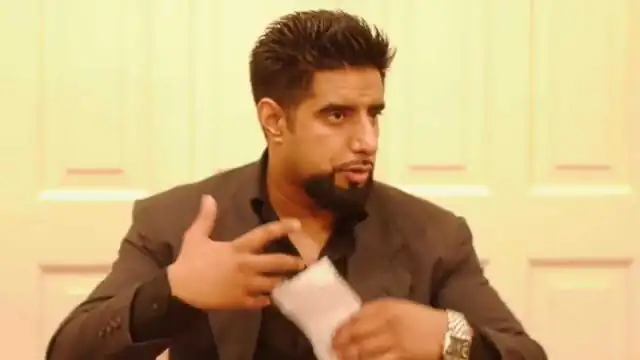 Press play to load from YouTube. Nothing loads until you do.
Transcript
machineauto-transcribed, may contain errors · source: youtube auto · click a time to seek · dotted terms open the glossarycan you marry a woman for a night and divorce her so we've got we've got the drugs we've got everything we've got the ruling well we know if she gets pregnant she isn't going to have to fast they're like they've like got everything kind of hated for um you see the thing is
see the thing is we you see our loyalty lies to being objective okay to be not to be emotionally SED in in kind of looking at the question as it is from a true objective perspective and that is that you see nikah doesn't actually have a Time limitation to it okay we in Islam do not have this concept asak writes in his we not have this concept of till death you know do us part like that type of thing is not an Islamic he says that is aah that is a Christian marriage not
a an Islamic marriage now that said the general understanding of the is that mut is not permissible mut is a kind of temporary um I suppose self terminating marriage so somebody says look you know uh 24 hours or 48 hours or more conveniently till the end of the
hour until check out time is that so till that time I mean more conveniently but the thing is that this you see this self-terminating concept is deemed uh um un Islamic from by the majority I mean there is obviously the mut thing I know there is the the split within the Shia and Sunnah but the point is the general understanding is mut is impermissible and Haram however that said the then agree they like the way they agree on that point in general they agree on the point that nikah is not a
lifelong necessarily not a lifelong commitment it can be I mean you know it's it's a family unit whatever I mean people they have the purpose I mean nah the accept is for multiple purposes it's not a Christian concept of it's only for procreation it's not Islam so you'll see IM when he discusses the Mak they mention obviously there's multiple type of objectives for nah uh it may be procreation it may be to have a family let's have children it maybe to settle down it uh they mention it maybe for other things somebody needs they need taking care care of and they think look I know why don't I get married and you
know I can kind of split this and live together with somebody that can take care of that could be an objective and it could be just for just like instinctual gratification it could be for just sexual pleas Pleasures there's nothing from an Islamic perspective to say that's wrong or kind of looked down upon it's not um now that said they all everybody accepts that talak is fine like a person it is permitted to give talak although they disagree that if it was just done for no reason maybe it's discouraged to if it was done to harm somebody then it's may be Haram but but it's still valid if it happens but the general understanding is
that it is permissible um to give T otherwise Allah wouldn't have legislated it I mean there's a Surah in the Quran called it's not it's not something it's the same law and narrative that comes to us from Allah about nikah that comes to us about T it's not something different now based on that the previously have discussed this concept of that having aah with the intention of divorcing now although they all agree that if it was an expressed intention as in a Tim like this type of concocted plan that this will terminate at this
point and that would then become M and would not be permissible but if it was just a uh it was an understanding that a person or an intention of a person had but it wasn't like a an part of a contract or an agreement it's just an understanding so historically because there was a lot of TR uh travel so people would often wherever they would go sometimes they would just marry people think why is the world like that today so you've obviously read about i b the famous Maliki uh Legend who traveled the world I mean he had a kind of you might say almost like a personal ritual that wherever he would
stop with whichever people he would marry from them like so and when he'd go he' just divorce and carry on and then all the CSA would catch up with him he has to take a mortgage just to pay the monthly CSA so but he would some sometimes and he would take multiple wives wherever he would go you take like two three wives and they stay here for a little while and move on take another two three and sounds almost like a but anyway so coming back to it the thing is now you see if there was this
understanding the generally write that this is not Haram okay it is actually it is they do consider some have said it's Mak it is actually permitted because there's nothing to actually say it's Haram because there is a hope that there is a chance that you the person might think well actually you know I I don't want to give the to this woman I want to stay with this woman there's nothing you know you know this is actually really good it's working out so well and and there's nothing to self-terminate it's not that then the the nikah is going to self-terminate so therefore it can perpetuate it can carry on it has that potential as long as the potential to carry on is there it is permissible
now another thing is if there was I would add this Clause I I do feel that that is permissible as in it may be Mak and maybe that people may look down upon it I don't feel it would be Haram if however this is important that if there are the right understandings and the social type of um almost you might say narrative for it like what you what I do feel is Haram is if it was misleading and deceptive if it was deceptive I do believe it would be Haram like if a person so for example
there's a woman who says uh I'm only going to marry a like I'm only going to marry one guy I'm only going to stay because you got to remember something as well historically or in these other parts of the world sometimes where this is more common maybe or especially historically marriage and divorce was not an issue at all so a woman would for example she'd have a talak she just remarry and there was a whole social narrative that provided for that it wasn't people it wasn't a stigma it wasn't something like oh she's got a talak oh no was fine like it was like the women were fine with in some parts of the world today you will see for example a lot of the talak is actually initiated by the women they they don't mind it I mean they they feel look this isn't working I want a
talak and they remarry I mean that in some parts of the world that's an absolute no no like a talak like a woman would get it but she would almost HED she was RA rather be dead than have it but I mean you know in dire circumstances she would just accept it so you've got to look at the social as well where you are you've got to look at the context if it In some cultures for example in some societies a woman understands that she wants her understanding is one of there's just going to be one marriage in my life and there is a stigma associated with divorce and she feels like let's say you know how would she live or society would
look down on her family would look down on her now she likes somebody and she wants to be with this guy but the guy knows the only way she's going to be with me is if she if I marry her if I do nikah with her so she says let's say in this situation she says all right look if you do Nia with me yeah yeah we can get together we can do so he says all right fine and then according to this situation one day two days s Days Later whatever he says oh I've given you talak and gone like not only did he mislead her he deceived her because she would never have agreed to that situation she would never have even accepted that situation he's potentially destroyed her
mentally because she would be a mental wreck and perhaps be you know forever distrustful of all relationships in those circumstances I believe it would be Haram um to kind of do that because to cause that type of harm would be Haram however if there was a social understanding where it was understood that look you know I tell you what why don't we have a nikah if it lasts it lasts if it doesn't it doesn't you know like we and we're mindful like I mentioned earlier on you know if they've got that understanding then there should be things like contraception involved there should be these type of things if they felt look you know if it lasts alhamdulillah if we feel that it doesn't you know if they've
got this type I'm not saying they agree on in the contract you can't do that but if this was the understanding then it would be permissible like that it may be looked down on by some people but it wouldn't be Haram like that so there is a big difference I'm just clarifying between harming and deceiving people to kind of just get gains from them just to kind of like use them and abuse them and that's it and between an understanding in which people feel look I'm just trying to you know this is life and we want to just get by like people feel that look I want be in a Nia with this person they're unsure whether they think that that's going to be forever like maybe the person is a bit Wacko and they're think I don't
know if I can be a to I don't know maybe we can be in a very long relationship maybe we can't and there's that understanding and maybe that understanding is mutual yeah the for the the has to be observed oh yes very good question shukan uh all I see where the question came from now I'm joking right so the wait a minute the handwriting right so so the thing is now that's a very good question a distinction between and nah as uh as im as as for example he kind of clarifies is that the conditions of a nah have to
be met for it to be a nah and for a mut it was just an absolute private apart from the time element the self-terminating uh Clause that was also it was just a private you know you just meet up and hook up that's it it wasn't there was no witnesses there was no you know Mahar involved there was no you know whether the W or whether there isn't the w that's there's a debate but the point is there was none of the other conditions were met so that is crucial that the conditions are given the reason I didn't mention that is because I thought that's well that's obvious but thank you it's good to highlight that the conditions are necessary the Mah whether there will be
a W uh the witnesses these type of things it's not a you know this total secret thing and they can't be if it was to be something like this that it would be just to reiterate categorically Haram if it was misleading or deceptive in its nature to kind of just in any way exploit somebody okay that would be impermissible so and to be honest with you this is a very very tricky I think I've just been given so many this is just one of the worst nightmares for for like some of the thinking damn get all these questions together
Something wrong here?
Tell us what is wrong and it will be checked against the recording. Nothing changes until a person has reviewed it.
Sending a note needs JavaScript, which is off or unavailable in this browser. Nothing has been sent.
No name, email address or account is asked for or stored, and the inbox does not store your IP address. For rate limiting it keeps an unreadable fingerprint of your connection for 48 hours, and our database provider's own logs record connections as every website's do. Only your note, its kind, the page and the moment in the recording are kept, for review.
Cite this recording
Stable id, transcript version and tier are part of the citation. Every change to a transcript is logged.Mufti Abu Layth Archive, auto-transcribed, may contain errors. https://muftiabulayth.org/r/tuukuve1ccs/ (accessed 1 November 2026)
- APA 7
Mufti Abu Layth. (2014, December 4). Unrestricted Q&A with MALM PT3 [Video, auto-transcribed, may contain errors]. Mufti Abu Layth Archive. Retrieved November 1, 2026, from https://muftiabulayth.org/r/tuukuve1ccs/
- Chicago author-date
Mufti Abu Layth. 2014. "Unrestricted Q&A with MALM PT3." Video, auto-transcribed, may contain errors. Mufti Abu Layth Archive. Recorded December 4, 2014. Accessed November 1, 2026. https://muftiabulayth.org/r/tuukuve1ccs/
- BibTeX
@misc{abulayth-TUUkUVe1CCs,
  author = {Mufti Abu Layth},
  title = {{Unrestricted Q\&A with MALM PT3}},
  year = {2014},
  month = {12},
  date = {2014-12-04},
  howpublished = {\url{https://muftiabulayth.org/r/tuukuve1ccs/}},
  url = {https://muftiabulayth.org/r/tuukuve1ccs/},
  organization = {Mufti Abu Layth Archive},
  urldate = {2026-11-01},
  note = {Auto-transcribed, may contain errors}
}