
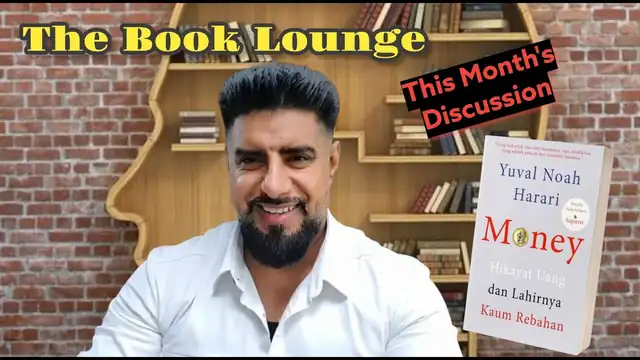
The Book Lounge 'Money' by Yuval Harari *Thoughts & Discussion
qiyas qiyaas ijma' ijmaa riba ribaa sood usury shaytan shaitan shaytaan iblis iblees shayateen shayatin satan jahannam jahanam jahannum surah sura soorah surat suwar soora wahy wahi wahee ummah umma ummat nafaqah nafaqa nafqa nafaqat alhamdulilah al-hamdu lillah alhumdulillah alhamdulillaah hamdulillah niyyah niyah niyat niyya niyyat amanah amana amaanah amanat deen al-din ad-deen ad-din ajr sawab thawab thawaab sawaabvideo · 1:57:44 · 2,900 views · 1 Sep 2021 · Open on YouTube
 Press play to load from YouTube. Nothing loads until you do.
Transcript
machineauto-transcribed, may contain errors · source: youtube auto · click a time to seek · dotted terms open the glossaryforeign foreign people so I'm just going to bring this up all right I can see you all I've got I've clicked all the the buttons I could possibly click so God knows if this is streaming or not so people was I do apologize for the technical delays as always but that's an occupational
hazard you guys have to kind of just roll with it so uh firstly let me just check some of the the the names who we've got here we've got morabity we've got ibnash furnace how do you say that it's actually a good shot it's the Turkish
German you like but doesn't matter we'll we'll get to that so leopard you do in it we've got doofus no no camera there we can't see doofus yet Lee Imran Khan britannian a fry Emmy a fry welcome paragon source oyster and some of the cameras coming on and off so I'm since this is the first time we are streaming it I'm I'll put on a
question uh right okay we're live I take it and let us get just check if these guys I know on Facebook they can definitely uh see us so all right so people shook around for taking the time out we're gonna be taking a look at money Yuval Harare Harare before we uh begin I just want to what what do you guys think about the book overall I want to go through some of the themes and then open it up a bit but
what do you guys think about this uh book choice I think it is a very interesting choice because there's many similarities between money and religion Maybe hmm okay okay well that's interesting I mean what what why do you why do you feel that there's a many similarities Bitcoins uh money could be seen as a type of God you know in God we trusted money we trust that's what I suppose I took from the book now that is that is very powerful that's something I want to take a little
look at and that is uh imaginative realities because belief systems are part of the the psychosocial Realm they exist within within us they don't exist as you know like that's not you're not going to find religion like that or money in that sense even though money is paper and so on but the idea of it is within the mind that's fascinating I mean did you did was it a difficult read did anybody feel it was a difficult no it wasn't a difficult trade it was a nice easy read actually yeah
that's what you think about it yeah um what what what somebody's saying it was a bit difficult for them no yeah the vocabulary wasn't that hard but uh some of the ideas were very new to me like I've never had them if in my life if you guys can switch on your cameras so we can see who's speaking because it doesn't show up so well on my screen who's speaking and I'm trying to just grasp
um so if you can switch them on guys for him a quick question I haven't read money but I have I have read sapiens and I believe there is a chapter on money in this book I wasn't aware that there was a book like up until now so yeah so so it is very much taken and extrapolated from sapiens but then he builds on it so there's there's obviously more in this than just the chapter of money in sapiens although the fundamental ideas are still there that's the same kind of building blocks he's
building that on so okay all right guys is that is that okay guys are you in a bit of a stable position to switch on your cameras let's bring it on people all right that's a lot better so we can actually see some of the some of the luminary faces uh Bhutan Britain on no all right that's I think they coming up yep okay awesome right Lee if you're about Rami if you're there
I think they've gone on a early tea breakdown I'm making I'm making my chai right now so I can't really go on camera yet okay rest of you guys are you oyster nope oysters gone off on a break right see all this while while I do my technical stuff cool so guys I found this um I mean I found it um incredibly interesting as a read it was um one thing about the author I
do love his uh style of writing I love that from sapiens uh to be fair it's something very I found it quite gripping his uh his choice of vocabulary is something very smooth so it's not it's sophisticated yet smooth he's not um trying to he doesn't come across as though he's trying to forge a um you know like a sophistication but it is sophisticated so I I was gripped the first time with his book Sapien so same thing here and there's a lot of topics and I thought just
um highlighting some of them uh going through them about just imaginative realities uh the concept and just feeding through from that into the historical uh development of money and how that that's been interesting because he he touches upon morality and that's this whole this whole kind of Ethics surrounding uh economics whether you know he's gonna speak about liberalism what that what that could offer and he's going to speak about you know should uh just historically how
you've seen Mercantile companies and the whole Colonial kind of uh tragedies and it's quite surprising for me I didn't know some of the details of how these companies developed and became these kind of superpowers in and of themselves and then this whole thing about uh artificial intelligence he goes into into that to unpack it that really because I suppose the economy is about efficiency and if it's about efficiency it's not about you it's not about you know it's about what you can bring to the table it's not people don't pay you for your hour they pay you for the value you
bring in that hour and if it's about value what if an algorithm can do it better than you and then I felt he kind of in the end he dedicates his section going into this kind of um apocalyptic a kind of scenario of oh my God uh AI may take over the world and uh it got a bit kind of I don't know but for me got a bit Doom and Gloom at the ending and I was a bit kind of hmm I didn't really like the way personally he kind of brought it to to an end um unlike his book sapiens which he brings to an end on a high note of
humans may become this you know they've gone from uh Homo erectus Homo Augusta homo you know uh you've got heidelbergensis and Homo Sapien the wise to homodeus the Divine like uh human which is Yet to Come and here he just ends it on well you know humans will just be a redundant useless class so I don't Let's uh let's let's open that up a bit so what are you so looking at imaginative realities we'll kind of guide through it and then highlights things that kind of
stuck out for for you guys to Adele and that you found really interesting or you found maybe a bit disturbing so who who'd want to take a shot at that first who we got yeah scope what about you oh we can't hear you I I can't hear you okay I can't can anybody else hear
scope are you sure it's not on mute no I don't hear anything I don't hear anything check that the your audio on the uh yeah just check your microphone that it's not on mute or that you've got the right one connected okay till then what about you would you uh would you like to take a a star about it how do you about unfortunately I I didn't read the book I read the beginning of the book yeah well that this is the beginning of the imaginative realities so what do you
yeah what are your thoughts on that it was interesting on page 11 it said in other words money isn't the material reality it is a psychological construct I think that was interesting um uh he he unpacks that right through the the whole kind of the the first I don't know maybe fifth of the book or something he's kind of like going into this whole psychosocial construct of money um I mean how how do you how what are your thoughts about all of this I is there pour out share with us
talk to us ah my thoughts yeah yeah yeah that's uh I mean I think uh a quote that stuck a lot I think was the was the quote that was put out that um because everybody is that the but it's at the back of the book about uh everyone always wants money because everyone else also wants money which means you can exchange money for whatever you want I feel like it's uh it's kind of if I have understood it correctly it's kind of hopeful uh in a way because if if it means that it's you can
I mean it you can change the reality of it um yeah yeah it doesn't have to be uh the value of it is is in it because everyone else wants it do you see that as a do you see that as a plus or a negative I see it as a plus because it means that you're not necessarily susceptible to chasing the same thing I mean you can change it for it doesn't have to be like some type of a God I mean I guess um okay you can exchange it for for
something else rest of you what what do you guys feel about that I mean because this is a really this is I mean the whole book is themed on it's centered on money um this entity is this in and of itself a good thing or a bad thing it's being deemed the root of all evil according to you know some people uh I would I think in sapiens he talks about the fact that people do not trust people but they do trust the money that those people hold right so it's not yeah well that's interesting because it kind of I don't know I don't know whether it contradicts the
um the idea you know the religious idea of you know trusting the community and helping each other this isn't about this is devoid of you don't need to feel Bound by religious tools exactly right in one way it kind of maybe facilitates helping the community because you don't have to trust the individual as long as they put their money forth you can do what they you know what that money whatever you want and you can help the community in and so it's an interesting concept but yeah if you if you kind of delve into that it really goes deep right because um I think you know that the premise that capitalism is but built on is as long as everyone has what what their
what they need I'm willing to help the state or I'm willing to pay taxes basically right as long as I'm good I'm willing to pay taxes right so it's it's basically helping yourself by helping others basically by by paying so it's kind of this this weird dynamic and I think money yeah money allows for that right and I I just I mean I feel it's uh I mean this is why I didn't want to kind of I wanted some of your thoughts before I kind of uh shared some of my mind on it what what about uh leopard what what sorry I didn't catch
leopard what would you what should we be referring to you as apart from leopard [Laughter] that's what I was thinking it's a name you see because I was like this is my kind of cross eyes at this hour this is my cross cross eyes at this hour as I'm turning into a vampire yep no my name is
what about your thoughts on this being the central theme money uh I mean what because this it's such a powerful theme it's it's something indispensable it's something inevitable it's deemed the root of all evil yet is deemed the ultimate pursuit of uh you know of of of of the human capris so people people will die over money literally I mean they will so what are your thoughts on it do you see it as a negative positive
I suppose that when you say people will die or money if they will also live because of money you know that's the reality of it and in the question that uh you pose like is it right here is human Universal it is you know and it is because of money that we are able to grow to exchange to love to so this is just it is the reality of life and we wouldn't actually be able to to function further if we didn't have this unit of measure it is a universal unit of measure for us to interact
regardless of where you are I am across time you know it is one of those Universal truths absolutely I don't see there's something negative yeah I mean I personally don't either but I can see how it's it's interesting if you ask people many people may feel money is like they say it's the root of all evil so they'll say it is a negative I don't personally see it like that either I feel great come on whoever singers lying money you see more than just being when you say money is great do you mean great for
for its utility or do you mean something more than that I mean that I think I think a lot of people uh go through a lot of stress because of money you know um in terms of the lifestyle and there's poverty and this yeah and there's a lot of emotional and mental stress because of money and when we have money and we can grow money and we can I don't want to use the word funnel because then that makes it sound Shady but like you know dilute money I think it does
um strengthen the community of course it does that so from a from a utility perspective what about what about you Romney what what do you think about that What's um what would you so you know that that line you guys that the author talked about that it's an imaginative reality I think that's the word right yeah it's an imaginative so like all of that is true it's true it's an imaginative reality but it's it's like an over rationalization and what I mean by that is none of us think of it that way so for example language is sounds you make with your mouth or you know shapes and patterns
you put on paper that mean something but we don't think of it that way it's just it just yes it is an imaginative reality that is all true but just because that's true doesn't I mean it's profound when you think about it but from a pragmatic point of view it doesn't okay yeah it's true but I just feel like it's a it's profound but it doesn't really make a difference that it is what's interesting though is the way he breaks it down money at least the way that we're using it it's in inevitability right if to do the things that money does it's inevitable it's like an inevitable path from harder to whatever you know trading uh those shelves I believe you use the example um being able to create industry money
was an inevitability so whether it's good or bad uh I think it's one or the other is naive anything that can produce tremendous good generally has the potential of the opposite so money for all the good that it produces just like the internet uh I believe that yeah it has a propensity poor evil and that's the reality and as long as you have and I think this is where I guess government you know uh gets involved as long as you have some checks and ballots balances and a moral compass in your society that should try its best to curve that evil that can be laid out so that's how I see it I mean I actually found I find it incredible you see this is why I was asking zakira that do you when you're
saying it's amazing I agree that I feel money is absolutely amazing but I may I mean it greater than just utility this is why I said did you just mean from the angle of utility that you could use it to buy stuff and you could do stuff with money it's function it's functionary kind of purpose you see to me money is the it is one of the Hallmarks of human greatness that they could come up with a construct that became a shared belief system and through it you can despite rivalries
despite bitter enmity you can still come to an agreement uncover what they have the example he gives that you know in the Crusaders sorry not the Crusaders the Inquisition and when they can't stand the Muslims from the Moors from North North Africa but yet they're happy to receive their money that says and the Muslims who hate the he mentions the you know the Iberian the andalusi kind of Christians Ferdinand and Isabella and but yet they're happy to receive the minted coin with the cross and say you know uh Mother of God on it
and things like this because money is a construct you see it shows you see that's just the the petty quabbles put that aside but the idea of what we've created it it it's it's just so far reaching like to appreciate it I guess a person would have to be an alien to come here and see what humans have done like what have they actually created they've created a system and they all believe in it it doesn't matter what they believe in they believe in this and it doesn't even exist and yet it is everything
and it's a thing maybe I I would like to ask you a question on that like do you like most people don't realize that it's a story right it's it's it's a huge narrative that that we that we kind of live in but we don't know this is not immersed in The Matrix of it that you can't tell but what happens when people when all people realize that like everyone in society actually realizes that it's a big story and just made up like what what would happen it doesn't matter it doesn't matter I think even if we know it we are too Tethered to The Matrix we're not you see because of its
function and its utility and we will still always be a part of the myth even if we know the myth is just a myth you see now I know this is a myth it doesn't stop me still wanting to pursue entrepreneurial and make a lot of money because I know money will still get me stuff so it doesn't so the myth even with the fact that we know it's a myth it we still it's still that's the power of and if you think about it that's the power of the human will and Imagination combined that they could come up with this
I I honestly I find it like just totally mesmerizing what humans have pulled off with money because it's and the fact that it has no existence and now it's literally come to that because at least okay first it began with you know certain shellfish and certain things and then it kind of bought a system and then you know minerals gold and silver and and then paper and but now nothing just digits and now crypto which is going totally you know underground and so it's you can make money now out of just
nothing like I just type in digits and there it is that's amazing but again it's an inevitability at least it just seems like it's inevitable to do what we needed to do yeah like across the world you needed this to exist so it's it just and and it works everywhere it many things are imaginary for example meridians longitude of latitude many things are imaginary but they actually have some tangible reality behind them exactly
it might be something which is doesn't exist but it is the value it's basically value of things value of productivity value of work done it's value fundamentally there's an arbitrary nature to it though yeah it's still arbitrary just like uh anything like GMT like whatever Meridian attitude longitude so many things are arbitrary but they are backed by something very very tangible yeah I I think we're the part of the evil that you could talk about is it's not
the perfect calculator for Value so how do you value a guy turning wrenches in the auto shop you know versus the owner so this is when you get into Capital like this is when you get into economics right how much more valuable is that guy turning wrenches you know in the shop versus the owner who's sitting at the office this is where money people say the evil comes from so that's just the it's just not the perfect you know so that's one example yeah no I think it actually serves like the hierarchy we have in society right that the hierarchy that's already present that we that we all accept that some people are are from a higher social class or ever have better jobs or whatever I think money
facilitates that kind of right uh we give money to people who perpetuates the class system exactly yes I mean that that's interesting I suppose because that question that he does tackle that as well as he said Rami that the you know the the the CEO who's sitting there and and you've got the hard workers on the ground and what he's making the CEO in seconds and minutes they don't make him you know it doesn't it doesn't even they're nothing compared to what he's yet they're putting in all the hard work
uh yeah that's it's not perfect yeah yeah I mean it's I I do find it I I find it mesmerizing in the fact that it really just it's like you said it's a necessary myth but it's a myth we are all so comfortable with well I I also look at it as some kind of reward that Society gives you for achieving something in that Society right for example a c or a founder of a big company that let's say Discord for example it now allows us to have this
chat right so we kind of reward that guy by giving him a lot of money because he thought up of an idea that became Discord so the question is of course like does he deserve that much money right maybe that's not per that's not the imperf a perfect aspect that you're talking about right so I I see it as a reward system like money is a like works as a reward for people in society yeah I mean there's the question does anybody deserve to be a billionaire have you I don't know if you've come across those kind of um presentations where they where they show you like they'll be like okay this is the average person's annual wage this
is this person this is this person this is a million and then when it goes to billions and it will show like certain people like Jeff Bezos or certain people as wealth and the screen literally keeps moving for like three minutes and halfway it says it stops and it says and says haha only joking we're not even halfway and it says uh it does raise the question wow you know with that much money um does doesn't that just render a person because I don't know what the what the motivational fact is will then be
because wouldn't everything just dissolve because if you've got literally billions I mean wouldn't the the concept of money just almost dissolve well that's a question that's not answered a lot like there were a lot of interviews with a lot of billionaires but they don't really talk about what what value that money has after a certain threshold right like how much money do you actually need right it's not much you know I mean need the need finished a long time before yeah with the plebs and The Peasants well let's say living to live a luxurious life let's say all right when you have
that much money it's not billions right it's maybe a couple of thousand dollars a month that you actually need right um but they don't seem to answer that question it's it's very weird I haven't I haven't seen that maybe you guys there is an interview there is an interview and from what the interview they interviewed people like Bill Gates and stuff and what they answered was when you get to a certain level like the billions they say what we're what we're looking for oh Are We There Yet Rami is it they want Power oh it's not working is it oh man no don't we can hear you now we can eat you okay good and what I was saying was uh there is an interview where they ask these people and they
said that what they seek after money is change like they want to be able to Institute change and like their vision of the world onto the world because now Nothing is Stopping them money's not necessarily stopping them so whether it's to get into politics or to you know like Elon Musk would I want to change the way Transportation work they are now able to go you know really do what they want and I think that's a what's after the building because I think I feel like you can see that with kind of Bill Gates as well like you know he bought out a bunch of farmlands so he wants to he has an idea of like growing sustainable food and everything so I
feel like for those people it's not like the money is converted into like new opportunities for their ideas to take hold so I feel like it's not the greed of money but just their ideas and being able to put them into action is is it power though because you see money clearly can't be a motivational Factor if you Jeff Bezos or you know because or Bill Gates money would have dissolved as in uh it would have long dissolved in front of you you would no longer be motivated by money but maybe there would be alternate power other elements that
still drive you as a human being I mean I don't know what those uh like you're saying maybe the like Rami said maybe the ability to influence the ability to kind of it's it's an interesting thought I'll have to wait till I get to my first billion and then right so yeah I mean yeah speak following from you know speak about money and these people he then he touches on this what he calls The Cult of the free market this kind of thing that
that this world or the Free World or the World At Large really Prides itself on free markets that they're not government controlled but there's actually this is a bit of a paradox because ultimately how free are they you know there's uh there's still tyranny linked to this uh hence the cult of free markets um yeah I mean is that something any something interesting about that whole section that you'd like to share because I found really fascinating where he kind of highlights the whole rise of these
historical companies to be honest I didn't realize how powerful some of them were until I was reading his book uh when he speaks about the Dutch companies and um I mean I didn't know about the East India Company but the way he speaks about some of them and how this gave birth to the stock market and the shares that we kind of see now where people saw it as a safe kind of bet to say well you know um I don't I ain't gonna physically do that but I'll invest so it's not I'm not gonna put all my eggs in this basket but I'll kind of put an egg in there and and something in there and and you you end
up developing this kind of stocks and shares and then you've got the London Stock Exchange and you've got in Amsterdam and I mean I found that very uh very interesting from an informative uh uh perspective what what about you guys anything interesting on on that that you'd like to kind of put out there maybe discuss well for what it's worth um I don't know if it's related but I I've just read shoe dog it's it's a book by Phil Knight the owner of Nike or the founder of Nike um amazing book like the the the story of Nike is really amazing how he built
it and everything but then afterwards I was watching this interview and well in the in the book he says well I've CR I wanted to create the perfect shoe at you know people all over the world could could enjoy it and and you know do their favorite sports and Etc but then in an interview he's confronted with a question like why do you uh why do people in Indonesia and Vietnam you know live in those terrible conditions people that work at your factory at the Nike factories and he doesn't want to answer that question and I know it's a multi-layered complex Quest answer but it's re it's like this cognitive dissonance because in the book he's
really like heartfelt and he he he he's genuine and he and he tells a story like all his flaws and everything but then when you when you look at that interview it's like this completely different image that you see like is he not is he not honest like is he not telling us the truth is it just greed uh is he is he doing it for the money purely like I don't know what to think of that like I love Nike and and it's like yeah because he he kind of touches on that topic in this book where he says uh you see these people who so he'll speak about um which is the is it's the Dutch companies
and with Indonesia the had the the large Indonesian kind of company they were the Dutch weren't they yeah and so yeah so he speaks about the Tyranny that they that they were kind of unleashing in uh Java and these places in Indonesia but he mentions that these same people would have children whom they love and families back home and and they've the very caring supporting kind of that they are basically there are no pure villains the irony being that
no person themselves sees themselves as the villain in a story um and if and in some ways that's the I feel the tragic downplay of movies sometimes that they especially very simplistic kind of movies that they that you have a good guy and you have a bad guy and the bad guy you know in the traditional set is this villain that he knows he's the villain and and everybody knows he's the villain and he looks like a villain and and the good guy is this but in real life everybody feels they are the good guy
even the bad guy so even hit Hitler in his mindset would think he's the good guy he wouldn't think he's the villain he would think no I'm I'm the good guy I'm restoring greatness to the Germanic people you know I'm bringing back a glory and the scapegoat whether they were the Jewish people or whoever but that he's doing something nobody sees themselves as the villain and and in life real life they will be people that they will be very loving towards very caring to it so when he says these same you know Dutch companies or that were committing atrocities elsewhere it was
still very loving towards their own children and very you know it's this this it's not a binary and I feel that so the same thing that what you you're saying somebody who's saying look oh I'm doing all these great things I want to I'm so passionate about this shoe and I'm so passionate about this and but at the same time I've got people in I don't know Bangladesh working in a factory making this so cheap Under you know inhumane conditions but I'm not really thinking about that you know I'm thinking well well they're better than not having it you understand and so this this is the the kind of the
irony of hmm I suppose capitalism that's an interesting one because you know this whole what he speaks about the cult of free markets its rests on capitalism how do you feel about the thought of capitalism because it's something that once again is some you know deemed by some to be the devil and by some I don't know the Savior where do you guys what are some of your thoughts who who else is is uh lee are you are you with us this is Lee now at least right what what about you
zakira what are your thoughts where do you this because this is all nesting itself on in capitalism and capitalism is quite a I think especially you know many people look down on capitalism and he does list many reasons why you could where do you guys stand with that um for me you know to be honest I don't actually have an opinion and that's the worst opinion together I don't have an opinion that it is uh you know inherently bad because what is the opposite or the antithesis of capitalism
what is it so that that is so you don't yeah so it's like what what is the effort is it is it Socialism or is it or is that or is it communism you know and then that's considered quite bad based on the history of whatever happened previously you know so they definitely are yeah but in but just like as with money it is also there is a necessary component to it you know because if we don't have it then would there be
that growth you know so when we were talking earlier about the Dutch East India Company and uh that also saw uh the the pie growing because previously in his book he mentioned that okay the pie was a certain size and if I took a bigger piece it means somebody else was not was being sure changed and then with the capitalism and and credit you know there was growth there was opportunities so they are also you can't ignore that you know you can't ignore that so
I mean so yeah I agree with exactly what you're saying I personally my my view as well I don't see capitalism um as bad per se but I I feel that I can understand he highlights some of the dangers he says that you know he he'll highlight that we're under the Nazi regime and um I don't know Christianity you've seen many people get slaughtered he said you've seen much more under the the banner of capitalism at a you know if you're going to look at things like I suppose uh you know the whole kind of slave trade
you're going to look at things like the companies that were set up or even prior to that Latin America and it's kind of colonization um it's all on the back of this money ultimately capitalism and growth so I can see what he's saying that ultimately and I think everybody would agree but it isn't is is it necessarily something people wanting even this sense of greed to want more money is it necessarily A Bad Thing because I mean he he shows how Adam Smith sorry I think one of the things that he
also highlighted about it is that the difference between like uh the people of old and now wanting more money and I think one of the key differences in capitalism is that when the Kings and whoever had uh loads of wealth and they ordered it and they squandered it and then it got looted or something along those lines the difference with capitalism is that that money was intaken and then re- you know invested you know into maybe a bigger company creating more job opportunities things like that so there are those so I'm not um they said that always the
case though isn't money always ultimately reinvested uh and this is where Adam Smith had that kind of revolution in showing people in you know The Wealth of Nations that that greed actually can be a good thing because he said he said that look when a person Builds an I don't know a huge shop and it's thriving he has to employ local people and then he has to pay them and he has to buy things from other people and things are ultimately trickling back down into that kind of catchment area and that's common sense to us today but 400 years ago that wasn't common sense
so today we think of course that makes der you know if if a Tesco's decides to open up around the corner it's going to employ people who are going to live around here and it will then they will ultimately be a kind of trickling down to some except I'm not saying all its money is going to trickle down but there is a reinvestment that pie does you know local people do take a piece of that pie as well but yeah hmm like maybe maybe an ethical question um do you think that that greed and being a good person can live can coexist
basically like I agree we I think we all we all like see that something negative right and yeah it's definitely a negative it's a negative characteristic let's say like it's negative um so like how does that coexist with having upright morals and and like being a good human basically what do you think about that you know can I just say yeah of course I just think that you do need to have a moral there has to be a sense of morality with it the U.S the business owner or the person that is on that top chain you do have a sense of
responsibility to the community you know uh it's it's like this concept of Ubuntu I spoke of you have to give back to your community so if you're sitting there on the top it doesn't mean you get to enjoy it alone you have to give back to your community because you are essentially making your money off your community but the question then would be that you see when you say you have to give back how do you how would you define have to give back wards sorry I mean that's what taxes are for right because when people according to the
pain they have to give a certain amount of taxes because they would use it for other things but taxes are mostly for these things only like for education and other things the government takes taxes from them so that's one way of doing it because if uh if he himself is given a choice to do something for the people then he will do it in such a way that he also gets money out of it the kids just try to increase his own Capital like in the process most of the people but who who wouldn't let's just be honest most people that's gonna be most people they would like if people will give
but they will always you see I think it's incredibly naive to assume that we as human beings are not driven for the self we are always driven for the self and I think only a it would be incredibly uh foolish to I mean I get the fact we won't want to admit to it because it sounds negative it's like greed nobody would want to admit that they have greed but we all have greed it's a it's a creature characteristic which we can't be devoid of but but it's horrible to say it because it sounds horrible so
I think in the same way we are all driven by personal interests we are ultimately self-centered but we also want to do other Noble things as well it doesn't you see that doesn't it's not a binary it's not doesn't mean just because we we have some self-centered greed we don't want to help people we do as well because that's incredibly rewarding as well so yeah but there is also what makes it sustainable you know the fact that if you are trying to do something good to affect your community and you are getting it back it makes it as something as a long-term sustainable
uh operation that can carry on yeah I agree I mean although I I do feel that a lot of people if given the choice would like to get away with stuff as opposed to be taken to task for it but I so for example let's say giving back to the community so there's certain things that are inevitable like if you open a huge let's say you opened a huge I don't know Asda or Sainsbury's or something you would have to employ people because that's how you're going to get the job done so you will naturally and this in your mind isn't giving back that
you are giving back because you are employing people but then there's actual giving Which is for free you know Gratis now this thing where you give something for free I think people don't like that in the in the kind of capitalist world uh they don't like to kind of give things for free but they may do it because it saves them you see so a lot of large companies corporations they have a quota a community quota um and part of that is really uh because it serves on their tax interests but they do so Banks and huge corporations
if so for example if you're a school or you're a I don't know a community organization you could apply to a local bank or a local institution that is you know quite wealthy let's say uh Sainsbury's or something a large kind of institution and you could ask them to support a project and they would have a community mandate to do so but and so they here they are giving for free but really it's still it's just a way to kind of save a certain amount of tax that they're gonna have to end up paying anyway and it makes them look good because they'll be able to say well you know we help out the local community and
it's great marketing too exactly it's it's like they'll take a few photographs and I mean a lot of companies a lot of Corporations do this yeah do you think that that those big companies or individuals rather that they would pay taxes out of their own volition like let's say they were given a choice to not pay those taxes they like they will most certainly bend the rules to wherever they can I mean just take a look at um a place like Amazon or uh you know Costa or you you'll get these Starbucks I'm pretty sure Starbucks as well where as soon as the tax was laid
on them they just just shifted abroad and so the way they do it they'll mean huge corporations do it in a way that they will have a company abroad and this then company has to pay a certain kind of residual to that company and the way it works is their profit is always kind of offset by what they have to pay this company which is offshore which is them so in that sense your profit doesn't count to and it doesn't reach technically an amount although it does to pay any tax so they pay this is how you know if you see how do Amazon and these companies not pay any taxes in the
UK it's because they have to residually keep paying the offshore company uh which is this loan so for example that's one of the techniques that they just take but anyway I mean I I agree with you I don't think if companies were given the choice that they would will I don't think anybody willfully would want to just give away a lot of money it's amazing isn't it it's money isn't it's that kind of [Laughter] well my bookkeeper doesn't think that he he's like he's so Pro taxes like he loves paying taxes and I I love that actually in him that's why he's my
bookkeeper I love the fact that he you know as as oh he's a Muslim individual um and that that's also important of course you know for me but and he he says no I'm not going to avoid taxes I'm not going to duck taxes I'm gonna pay them as the good civilian that I am and then that's very admirable and I yeah I feel that you know there's something that very a lot of people don't realize and some people do especially these kind of some of these um kind of motivational Moguls and people like that that they you see and we've really had this in our tradition from from the from the get-go that
really the it is incred like unfathomably rewarding in fulfillment to give but it's counter-intuitive you see it doesn't make any sense does it like if I say you know I've got I don't know 200 pounds in my wallet should I give it away for free and you think well then I'll just be 200 pounds less but really that's you know it's it's it's amazing that the the reward and fulfillment in helping is it brings a contentment to life that
having triple the amount of money wouldn't but people because it's so counter intuitive and rational people don't do it and and this is why some of these you know key motivational speakers will always be very big even non-religious ones will be big on giving because of the rewards that it brings back to you as a person and just feeling like that fulfillment yeah I think this is a little bit similar to like what a couple of you have talked about um but like a theme as I or
something I was thinking about as I was reading about it and as all of you have been chatting is you know we they had the growth of capitalism they were able you know the creation of the shares and all of that and you know it allowed them to grow Beyond just the sustainability but one thing that really interested me um is that you know we've we have this tremendous tremendous growth and yet there is still this huge mindset of gear City and um somehow that carried itself along
alongside capitalism which is you know why we have this situation with Amazon why P you know like we why greed has a negative connotation to it like there's nothing wrong with having a um you know accumulation of things you know for a particular purpose but you know what is the balance between you know a you know excess accumulation especially you know towards one group one individual um and leaving about the others and I just I I just really thought about and something even in my own life you know I
I just really think about you know in my own life I definitely practice giving and and and I see the immense benefits of doing that and it's and I just wonder you know how can there be a change in this you know it because it's really a collective conscious like how can there be a movement of change to I mean I'm using like terms that make people feel emotional emotional but like a more socialized capitalism um where there is that you know more
giving back Community because to me I like capitalism has become a serious you know quantity over quality and you know something that I personally have an interest in is you know like textiles like beautiful textiles and I appreciate fast fashion but like you see what's happened with fast passion anybody that knows anything about it it's you know crazy what it spent planet and um I don't know like how can there be a you know how can we balance how can it be about because could it and also it could
be that it tips the balance so like you know one of the things I I was really um quite you know mind blown by when I was reading about and I was thinking about quite a bit of what was about King Leopold the the second and what he highlights that oh and I was thinking I remember discuss oh that's actually probably why I read that as leopard so King Leopold you see he according to this version he had highlighted that he initially with the colonial kind of um
um escapades going on had asked to set up a humanitarian effort in central Africa and he said he was going to set up a non-governmental humanitarian project dealing with infrastructure and health care for the central Africans and they gave him uh the colonial Powers kind of set aside for him land which was like 75 times the size of Belgium and then he turns out to be one of the most tyrannical you know like a vicious uh colonialists that goes out there and maims and kills
and but he begins with this kind of I'm here for the people you know Muslim we are people to do islah and and he says I'm here to help the you know to to tackle the slave trade and make sure no people are being enslaved and make sure they've got hospitals and health care and infrastructure and and you fast forward a couple of decades and they've the the the the amount the quantity that have been killed for rubber for rubber especially so they I don't know let's say let's just say this may not be true but let's just go with the benefit of the doubt let's say
he was sincere in his intention when he began let's say he was um he began with this intention that I want to you know there's a slave trade going on this tyranny I want to help these people so he goes in as this with this let's say according to him and people with a clean heart but within within a a generation's time he it has gone 180 to apps to become a a vicious tyrant that is I mean I don't buy that
I I don't buy the fact that it was an admirable no I'm I'm not but what I'm saying is even if you go in with that there was some intention yeah like I'm not saying he was Mother Teresa but let's say there was let's say there was some genuine like let's just say I mean even if we buy that that he felt that I'm gonna do something Noble as well like people sometimes want to do something Noble to show other people that you know unlike you barbarians I'm civilized haha and maybe I mean I'm not saying he did I don't but let's just say we take his word for it
how that shifts so suddenly to become something so evil when it sees opportunity it's scary yeah the thing is I'm from Belgium myself so it's kind of a off the home subject um and there are a lot of nationalists here that that use those ideas to defend not tearing down Leopold statues and stuff so things that have happened with the with the BLM movement um and it's weird you know it's like people love stories right yeah but Leopold did this for Belgium and and and we are here now because of him because
of it of his efforts to convince those Nations to give him that money in that land so I think what he did was probably is tap into that you know that that the the people are susceptible to admirable things right to admirable attempts and I think he he kind of tapped into that and convinced them to yeah and give whatever he needed to build that you know colonial power in Congo um well I don't know if I don't know if it's realistic that he could shift that fast I don't know like if he if he had any you know kind
of uh moral or I don't know uh this this upright um idea of bringing change um and then shift that that fast in a generation I think even even if he had some like yeah because I don't believe personally anybody is 100 evil and I don't believe anybody is 100 good in that sense that people will always be somewhere on the Spectrum they'll have some good in them some bad and some will preponder it at times so even if he did have I mean it even if he did like felt that look I want to do something as well like I know I'll take some profits and I'll do some
good but it turns into something which is like a Frankenstein and that just goes to show the power of how humans can flip you know when you give them their own little world and there's profit and this money and this opportunities and there's nobody policing you yeah Psychopathic I guess well maybe even a good example
I mean this I always think about things in just a completely I don't know different way but it to me I just think about the complexities of human existence you know like I think about for example like you know think about these people that started Amazon Microsoft you know they just started from these very you know from the camera have you seen that Meme where they say all these started from a garage and it says what's your excuse and the guy says well I don't have a garage yeah you know to me I think about it and I'm like you know the initial people that
worked with them you know they probably were like oh they probably had a much more uh fair and and balanced way of separating the assets so then you have to ask like what is it that changes what is it that lessens the humanization like the the humanity of of it as it grows and to me I just think about you know their their then just basing their decisions upon their personal experiences that have been passed down to them through life and I don't and so I think about that and I and that's why
I talk about Collective conscious because I'm like okay well you know um up until modern times you know there was a lot more you know conflict famine death you know industrialization really changed things even now we have you know I mean you know that he even in the book he talks about how the nature of war is changing yeah and um I I think about that and I'm like okay well you know so they're tapping into something they're tapping into some sort of Conquest but what is that Conquest
you mean at what price yeah and and are they mixy and are they mixing up the conquest of capitalization with you know the conquest of man and territory and you know survival and existence I mean can we ever truly separate these things humans will always be driven for you know this with this kind of territorial even if it's become uh you know at a mental level so imperialism today isn't in that sense but it's imperialism for resources and it's Imperial it's still going on but it's more about you know okay we won't take their land we'll just
take you know we'll take this or we'll take their oil or we'll take the we'll take their markets you know we want them to buy our products our services and it's still a form of imperialism I mean it's but yeah and that's the question see and that's where this book left me very um I don't know like thoughtless because I said is because for me obviously I maybe not obviously but for somebody like me I say okay well is there a way to you know change this is there a way to make it better and you look at these systems that are
continuously in place and you know I'm like okay well maybe not but maybe who knows but when you know the the flip side of that is in this let's say this last century the the kind of it's it's much more than even a leapfrog but the the kind of leaps that human civilization has made in such a short span of time I there was a um I don't it wasn't a meme but it was just just like a poster I guess I'll share it on my insta story tonight it said it had a picture of the first plane
I think it was the Wright brothers trying their plane and that kind of prototype plane and and it had a picture of the moon landing and he said and I can't believe these were just 66 years apart and you know that's just and that's a human lifetime that you know from the first let's taste flight to we've landed on the moon I mean that's you know when you think about it it's like this is all happening in our we are alive in these times it's it is incredibly profound at the same time I mean it's a bewilderment it's like a concoction of emotions uh you
know we could I don't know yeah oh I would say I would agree and I I think you know I often I I sometimes have to balance you know we have to balance like you know how we feel about something with the rationality behind it but I think sometimes in this cases they can merge together because obviously it feels good for everybody to you know have certain you know like uh certain standards of living and we now know that it's possible due to the amount of growth that has happened in
such a short time and you know the technology and new technologies and so that is where I I sometimes stop myself I'm like am I being too like utopian here but I'm like I don't think so because I think with the sharing of information the problem that I see I'm not going to call it a problem but the situation I see now is that we're in our lifetime at this current time I feel like the environment is we're still just switching blame back and forth based you know based upon what's happening between the groups we're just you know continuing in that cycle of just you know the back and forth when people are
able to sort of just like take a step above that and I think like think a little bit more collectively and you know utilize capitalism utilize technology key kind of hypothesizes that that we are on that elevator or that escalator so to speak but it is happening with computers and machines and artificial intelligence and algorithms that they are already taking over um human jobs they are already taking over you know you know he says like so for example uh it won't be long before
we'll have self-driven taxis and he gives the example of where you had taxi bases all over the world and now you just have this app Uber and and drastically reduced kind of um people in the middle and you've got really just algorithms and codes and some people mining it but really it just manages everyone worldwide and you've got oh I'm sorry well let me tell you something this is what was so fascinating because he was saying you know from a capitalistic standpoint then the human
is useless and I said yes exactly that's exactly no they aren't I mean the thing is the thing is from a capitalistic standpoint this is talking about totally utilitarianism we're taking completely like because we've been through these you know industrial times we've taken out a lot of just you know like especially in the US people are working 60 hours a week 70 hours a day you know like this is is this and as and even as like Muslims like is this like and the Muslims so many Muslims they've taken on this you know idea that we're just supposed to struggle and life
is supposed to be hard and I'm like I feel like the test is that like that's not really the test the test is that like that's not life like if a law is like you know like if a law is how we see him and we take his Divine names like then that's that should be how our life is and so if we have these Technologies assisting us in our life I think he's saying you don't have a choice it's not up to you they will just replace you oyster what were you saying you're about to say what
do analogy making your life easier so that you are not having to have so much you know physical and mental exertion in those areas then that means that you can focus on a different type of existence which is going to be towards that uh towards that you know utopian dream of like you know everybody is benefiting everyone yeah but at this point he's kind of his kind of hypothesis was that it's not really you don't get a say in this this will just happen because thank
you viruses yeah because he was trying to say that you see people will willfully just become because if I owned a company and I could hire let's say 100 people to to do a certain job but now I could just hire seven and I just have everything computerized now the computers are much more efficient they will make less mistakes they don't require breaks they that can work around the clock they okay they require some maintenance but I can pay for that as a one-off and so it so people will just he's saying it'll just organically go in that direction it really seems to be according to him
um it's quite it's quite scary you're right reading it because he's he turns a bit I mean he turns it a bit Doom and Gloom I felt well that's where social policy comes into play if you have like if we continue on this cycle of you know quote-unquote this well being accumulated um you know people are gonna revolt against that so I don't know if this is just the natural you know progression of something let's take an example where he says look he gives the example of IBM Watson yeah
which is already at use in the UAE in certain parts of the world so it can analyze within seconds really and you know definitely within a within just yeah literally seconds within a minute it would analyze what would take you know expert doctors countless hours and days to kind of come up with certain and they could be tired but that doesn't mean that the IBM Watson or computers like these will take pictures of doctors that actually is not very much likely to happen uh see like during Industrial Revolution yeah Industrial Revolution all these machines
they did not replace humans they just created another uh let's say an Avenue for humans you know so that they could you see because Engineers they could like work yeah but he gives the example computers did not replace humans they did replace humans in like the manual labor they they obviously made machines different Avenues people Services because right now the largest largest industry the in in the western world is services but Services can be automated
like like IBM is a prime example of of automating a service and doing it much more efficiently good years and years of Correction learning data and it needed a lot of computation power to come to this point as they are not possible for every computer to come to that point because it would cost billions like but it would cost billions But as time progresses it becomes cheaper like let's say the first computer would have cost a ridiculous amount to make and now everybody's phone is probably you know much more powerful than the first
computer so what he's saying is that as as corporations start to rival each other things start to get cheaper that's just the nature of the markets now the example he speaks about doctors like why can't doctors be replaced he says that and he gives the example that they can because what does a doctor actually do he says a doctor checks symptoms now he says it's actually quite easy with a lot of these apps for you to check your GP just checks your blood pressure he checks your kind of he'll check things like your heartbeat he'll check this and he'll measure it up against your historical Medical Data your family history what's going on in the city
currently and he said imagine a computer could do that within seconds by searching what words were being used flu pandemics colds that if people have got a cough today in the emails he knows that there's 300 more emails today in London that where people have sent an email saying I've got a cough so he picks up on that he knows and he gives a good example of the stock markets when in I think it was 2013 or something with a somebody hacked the um the Associated Press and said the White House had been attacked so the shares rapidly dropped and the Dow Jones
had dropped by I think 150 points but as soon as the Associated Press had corrected it because you see this was the downside because as soon as it got hacked these algorithms picked up oh my God America had the dollar and it started dropping selling selling selling selling but as soon as it realized within minutes within six minutes so we had lost something like I think 150 billion and it and it regained it within six minutes because of the algorithms and he says like that that could never and there was another incident we geek sites I am pretty sure like a ridiculous amount going into something much higher but they've recovered it within minutes
and the humans human capacity could never have done that um it's interesting because ultimately it comes down to money because if you had a choice and you're the customer like a good example like he gives about Angelina Jolie and her um that's it right so she has that given uh her genetic data so she doesn't actually have any cancer signs but the but the kind of readings
tell her she's very likely 80 something percent likely to develop breast cancer um so she says I'm gonna preempt it and I'm gonna go and have surgery I don't even have cancer yet but the but the algorithms the computer is telling me is very likely I'm going to develop breast cancer within the next five years maybe or 10 years so why don't I jump the gun and have surgery so she undergoes excruciating that that's actually a particular Gene which shows how much disposition you
have to get kind of but a doctor couldn't have done that exactly but a doctor couldn't yeah so if you were in that position but people who do the testing they are human right the machine doesn't do that no it's actually the machine because you send off your DNA oh I mean sorry in her yeah that machine exactly like it's a it's a gene I don't remember the name of that Gene oh yes so Angelina Jolie her mother had breast cancer her mother had cancer and she died of breast cancer and her aunt also has breast cancer breast
cancer she also died of breast cancer and that's why she got her genes tested there's a case where she doesn't actually have the disease but a machine tells her that you are likely by statistics 87 likely let's say to develop this in the next few years thereby you act and actually conduct surgery so it's it's just it's very telling like let's say you're in that position now tomorrow or I'm in that position where a machine tells me that look you haven't actually got this yet
but there is a 67 chance or an 87 chance this will happen you might as well jump the gun and you see it's a very difficult position let's be honest I'll be very because you'd feel like you know maybe I should do something about this yeah that's like isn't that in the future I'm kind of tired if I could point out that I think for me like after I finish the book I was kind of thinking like why how is this related how is all the AI stuff related yeah and I realized it was like the trust aspect right so he was
saying that money because of its utility and its trust became like this dominating thing that but yeah yeah I don't know like if you work on it I mean AI like if you say AI it sounds so weird but already these systems are being used at doctors offices right now but they are doing very menial jobs they are and the ones that do you know this kind of jobs even they are banned by humans and they have lots of human supervision among them he says that you only have to solve the problem once so if your program isn't
working you only need to put in the money to get that because he's not because you know Kia uh oyster he's saying like you said that let's say these are in a very minimal capacity but are they we ourselves so with the with the brexit uh propaganda and there was the uh you know the major documentary what was it again the big um you know the company yes that's it the Cambridge Cambridge analytical that's it how these people they target and this was done in America and how they targeted people and they twisted their vote
um whether it was with brexit or whether it was over there and they swung them towards like if they start showing you like let's say somebody algorithms start bombarding you like let's say today algorithms start bombarding us with just racist attacks like everywhere I go I keep seeing news that there's racist attacks I naturally will start thinking about security and start thinking about you become very conservative like you become by default yeah because let's say tomorrow one of the politicians said oh if you vote for me we're going to crack down on racists and now the algorithms keep sending me racist racist racist attacks and I feel
that you know what let's go with them now I've just been primed because I've just been conditioned by algorithms and it works it clearly works I mean like doesn't it come down to the fact that humans yeah well like I I I I kind of uh agree with oyster in which she says like we need humans to have hundreds to have intuitions like ah maybe I could use this computer to develop something that predicts whether I will have breast cancer or not right so I think it's it comes down to us being the best versions of ourselves and staying ahead of you
know whatever developments there are he argues that he doesn't say there'll be no need for humans he says there will be a d individuation so the individual won't be needed like there will be a class of humans that will always be necessary but the vast majority may become a useless class like what do they have to offer like he says like just think of it now like think of the majority of the people what are they good at like they're not actually good at anything mostly speaking they're not engineers and astrophysicists and you know they're not like majority of the people are just kind of doing just
regular stuff that can be taken over by machines and and algorithms and automated like let's say you're a taxi driver if tomorrow Uber just automated its cars that's taken out all the taxi drivers let's say nowadays people have things dropped off like Amazon you buy online like now that's for moving shops that that's the point maybe maybe maybe like they're they're predicting a decrease in population right over the coming hundred years they're saying that it will probably drop down to three billion four billion like maybe it it will go hand in hand you know the more we the in like what was the way to use
the invisible I don't remember so he says that like what it is is you have the individual is in individual he's indivisible he's something unique yeah he says this culture of the 20th century that you are unique he says is no longer true in the 21st century because you are actually just an algorithm and he says some people might be unique like let's say computer programmers and software but he says the majority of the people are not them so he says that there will always be a need for some people but a lot of people might be redundant now there is an interesting point he
says he says look maybe the way like let's say you go back when industrialization began and it knocked out you know uh computers machine started to knock out all these manual jobs we developed new jobs like today you've got graphic designers you don't have graphic designers 50 years ago so he says that's true maybe we'll create new Industries but the question is we don't know what those Industries are so we can't teach our children to prep for them in school you know it's like because well I don't believe that actually I I believe there is an Essence in the human being that when you see patterns I I'm a strong believer you know in patterns right like
if you are able to see patterns and and connect the dots basically I think you could do that in any age but what tell me what could detect patterns better than you computers don't have punches right computers don't have intuitions and I think because we are able to connect dots and have intuition that makes us Superior in my opinion um what is intuition is it intuition influenced by like whatever like maybe you're in a bad mood maybe you saw something you read something like a lot
of medical students as well they'll say that sometimes like some medical students because they were reading that chapter they'll be able to figure out like the disease let me share a a a brief paragraph part of a paragraph from here this is on page 117 he highlights a recent study commission by Google's Nemesis Facebook has indicated that already today the Facebook algorithm is a better judge of human personalities and disposition than even people's friends parents and
spouses the study was conducted on 86 000 people plus here who have a Facebook account and basically the this Facebook algorithm it detected a person was made to our answer a hundred questions and it it predicted their responses and it was more accurate if they prod if they had ticked something like he mentions uh if they picked 150 likes on Facebook let's just say in your time you've ticked easily 150 likes it could predict your responses your selection your answers better than your family
members would guess for you and if you ticked 300 it actually ticked it better than you it predicted it shows the study shows it's it's crazy it says in other words if you happen to have clicked 300 likes on your Facebook account the Facebook algorithm can predict your opinion and desires better sorry better than your husband or wife can predict for you so the person who lives with you Facebook already can guess your answer better than they will think you're going to guess that what you're going to say that's already this is already a study that was done a few years ago so now
it's probably improved it's crazy it's scary yeah it is it is crazy freaky as hell definitely I I can't you know that's undeniable you know like for example there's also the example of Tinder Tinder has like an 800 page file on you and knows when you're in the mood for the section right so they have like numbers like around New Year's for example good thing we haven't got Tinder counts like around New Year's it skyrockets because people are looking for partners right romantic Partners oh right that makes sense yeah yeah so it's crazy what
they know about us but maybe intuition is not a good term you're right uh maybe I think oh I do believe in intuition I do believe what you're saying I think like um a hypothesis right like you have to have a hypothesis one thing cannot do is uh like whenever we train an AI we give them data we give them lots and lots of yeah so it just acts based on those data it converts it into mathematical algorithm and then it learns from the past and then it acts according to that data for example when we testing on self-driving cars let's
say so uh for for making that AI to understand like what a road looks like you have to feed them with like thousands and thousands and thousands pictures of roads specifically so that's this AI understands okay this is a road okay this is a road and if there is an off-road thing then it will get confused and it goes the other way so I think the main problem with uh him people and Engineers face is you know AI it has the ability to learn so it's not just a computer algorithm it has artificial intelligence so it learns as a key line so as it
keeps going it learns it teaches itself as we keep giving it data it learns with that but it can get the data itself on the basis of that data it cannot go in Google no it can actually so Google it can it can do so for example it can as long as it has the tools and the algorithms on how to acquire new data so let's say you can do Google searches now it doesn't need you now because it can do Google searches and it can do so as long as it's first been designed to be able to do Google searches to add to its intelligence it can now just keep doing
that in fact he gives an example of uh what was it a Korean company or it's a company which has an artificial intelligence as one of the board members and he gets a vote and it votes for it votes as part of the startup to prom it has nepotism it votes for companies that promote artificial intelligence it's crazy he takes on what was that experiment that they did on Twitter that they had to shut down very soon because it started to get like it started to get very nasty like they did this artificial Microsoft at this Microsoft didn't experiment they had
their own AI that basically learned a question and answer them and people manipulated it to work positive about Hitler and stuff like this or racism yeah there was one it turned it became racist yeah it became they had to shut it down they were like we're turning this into a monster here yeah so the organization I'm working for is going through the same phase that we're talking about becoming racism
uh where do people are working in it so for example in our organization they've got a new system since August uh this new AI system that they've turned on and this air system is going to pick up every customer introduction with the company on how they behave for example if a customer makes a payment and they've missed up one digit from a reference uh we will initially collect that for the customer and the AI will pick up this plan so for example let's say the month after if the customer does exactly the same mistake again with Mr digit the AI will automatically reallocate that to the correct record therefore they don't
need us on a hundred percent what they've explained is that the stuff that they've got they are going to start reducing those particular roles and what they've told us is that you've got two years to upskill yourself to the next stage otherwise those roles will be obsolete because the AI will do the basics so the AI will interact with customer payments create these basic sort of interactions that they do with records and anything that's complicated that's where the human interaction will come in so it's just like we were talking before what good is majority of the human for if you looked in the history I think you know where I live in the area I live in
in the UK obviously there were no houses here mostly it was like farmlands so people worked in the Farms most of the time look at it now that the farm does not exist it's all homes everywhere roads everywhere so humans have moved on from the past the jobs that we did majority in the past are done by machines most from now and we moved on to the next stage so the next stage I could give you an example is Blockbuster that was like a video stop yeah it was everywhere now off studio for Netflix remember that the good old days so obviously not for us not for us Asians we had to go to the local Desi kind of video store
only the privileged people got to go to Blockbusters so that's moved on what's Happening Now I was taught to make jokes like it was feeded lots of jokes okay so that it make a joke by itself until the jokes it made was yeah listen to the joke yeah knock knock who's there who's Alec Alex knock knock jokes that's it that's the that's what it came up with it was period with 30 000 jokes and that's what it came up with that's why AI yeah but you know since okay but now but there's been what about the the Turing tests and
those that they built on where they would ask you or they did it with people flirting and they would ask the person that there's two people you're talking to two people one of them is a machine you have to guess which one but the majority of the people didn't necessarily get it right so that goes to show that they didn't like that you'd think if I if somebody was flirting with you you could tell if that was a machine or a person but actually it didn't they a lot of people actually got it wrong they they what they thought that who they thought was the human was the machine and that's
that's quite freaky you have to see you got a perfect machine like what what algorithm was it built on like did it learn it by itself or does it uh or what what were the cues given to it because sometimes we give a cue yeah because I think we have to know artificial intelligence is it can search and develop because you've given it those techniques to do that so it could say for example what are the most common pickup lines and he could run a search itself and he could pick them it could match Trends what are the most successful pickup
lines what are quirky pickup lines and it could filter them out and I suppose it would be more confident than a human because a human might kind of be a bit like oh I don't know if I should say this and the Machine isn't going to have emotion so it'll just say it and it may come across like oh okay that's that's nice of you and you've been catfished by IBM what is the question is like dude sorry go ahead go ahead yeah no I I I actually wanted to respond
is empathy like the the robot doesn't have so they may have a lot more knowledge and and yes that's a very good point very good point yeah so I just wanted to add that like
obviously we we didn't hurt we didn't hear anything oh right sorry uh sorry what I said is that there was a discussion saying that you know with these new Teslas and self-driven cars that they would have an algorithm and let's say as more of them appear in the future let's say the car was to get into an accident and it knows the probability that look I'm gonna like let's say it has to crash and if it crashes this way it endangers you more or it crashes that way and hits someone but endangers you less so it has to make a decision yeah but but this is for a machine if you're buying the machine you would want
the machine to always favor you probably like I wouldn't buy a machine that says you know what if the worst if it came to the crunch I'll favor the other person over you I would think well I'm paying for you I'm paying for the one that favors me so it's now that's just like mind-blowing isn't it because it's ethics and you think wow machines making these isn't there a Will Smith movie about that where the robot jumps out yeah I Robot yeah that's it and it doesn't save his kid isn't it that's the I think his kid drowns and he because he feels there isn't the robot does a statistic there's only so much percent
chance yeah yeah [Laughter] this this show it's called the good place I don't know if you guys have already heard of it and this this this yeah kind of setup is presented there where there's a train and it needs to choose between two tracks right like on one track you have a child I think the other one two or three adults and then which one does it pick right which one does it run over or run over so it's it's like are you going to uh to Hell based on that decision you know it's like this very humorous setup is the is
the AI going to hell it would be interesting actually what would the AI choose you know that trolley kind of thing A friend of mine actually did this experiment okay wow like a classmate of mine actually did the AI trolley problems like there was this uh trolley like it was like through a computer simulation there was who wrote uh okay one had three people and the other had two people so okay of course it shows a utilitarian way that you know two is less than three so I'm gonna kill the two people and then you give it a more complex problem much much complex like one had a small
kid and the others had a bigger person so would it prioritize the life of a small kid than an old person so that was a thing gives you goosebumps in anticipation what is the machine gonna say yeah so now we wanted to see that oh who is it gonna crash so it just killed both
kill the guy was it the Terminator was it Arnie that had come back from damn what how why would it kill both of them I don't know it was then then you started to search for a bug like a word you know actually what uh we gave the data based on different accent statistics and different views of people like where people will ask like one two or anything like that so it was given uh like if you tell your view that now I
would choose to go this way all right it was given views of like many many many many many people and according to that it decided that what was a popular opinion so uh I think there was a bug or something that's that's actually whatever we were doing it wasn't a cap it wasn't killing a cat whatever it wouldn't kill the cats killing a cat wow cats aren't just carry a cat with you wherever you go in these self-driven cars yeah say look oh if you kill me you're gonna kill the cat it was going according to consensus it was like because in international
people's usually exaggerate cats right you know yeah yeah but what's important what's interesting is he speaking about input speaking about input he has the way he he speaks about the app ways and I've used ways and you know the road maps and he says that you see this is being fashioned by the people using it so when it finds out that for example let's say this particular road is clogged up so everybody on so it will redirect you but if it redirects everyone then it
knows that oh is this going to clog up that road so so half of them it's got a trick and tell well you guys carry on this way and the other half is going to tell to go this way so how you know this would be interesting how would it who would it decide who to trick and who too more distance or like this would be the first one to go to that too it will be done according to a particle it won't choose by itself and what about attachments where we you see this is like still separate to us but what about like the because he
has this whole section on the you know the contact lenses the kind of the little devices where we will become also like this new homodeus this kind of way we can kind of zoom in or record or check sugar levels with the uh contact lenses and um so you've become basically through equipment we have to always be switched on with our phone and we have to always have like the phone charging and because the data has to be up to what's my heart rate and what's my it's uh it is interesting very yeah there's some stories that people have
people's lives have been saved by a simple heart rate monitoring or a smart smart watch that it was irregular and and it said like hey there is something wrong with your heartbeat and uh and people went to the doctors and well hard to see then they were they were about to die like that actually that close so it's a simple heart rate on it right so yeah that's um yeah because his point was that people will do this willfully they'll want to do it it's not that it won't be imposed they will give in they won't even give in they will themselves plead to have it the irony of uh because of uh survival Instinct yeah because people will just think actually it's better for me you know I should be like now you have these
apps I did actually have one myself as well I'd taken it off you know the phone that kind of sorry the watch that monitors how you sleep and it'll kind of tell you your sleeping patterns and you had light sleep and deep sleep and I wore it for a little while and then I just kind of was over the the kind of novelty of it but it's it's like that and you think yeah I don't know I I found the end I found the ending of it a bit Doom and Gloom because of all of that I don't know if Doom and Gloom is the right word but I found it a bit unnerving because of that human specialty I guess and you kind of feel
uh oh you know it's kind of saying well hmm you know what makes you so special okay this Consciousness but what if you could do all these things without consciousness and you think well ah we live in interesting times we live in interesting times it was good you know I think I I I truly think that you know that that people are the only human or are the only beings that can kind of understand the interconnectedness of the world like I think a computer um you know processes data and they can find patterns and they can give you uh
you know data on on the spot but a human being can like reach further I believe like they can see uh layers of existence that that the computer will never be able to see in my opinion I don't know you know how it's going to develop but and I'm I'm Pro-Tech I'm Pro AI it's not that but I I want to believe that humans are special no I I I believe you exactly I I believe that that Eureka moment doesn't come from the epiphanies the human epiphanies don't just come from machines like I don't think computers would be able to make epiphanies per se but see his point was that
his point was kind of like there will always be people but they they won't be most people and which is kind of a bit sad as well when you think of it it's kind of like damn you know it's I suppose it's a bit um I don't know I found that a bit dark because I suppose you know to be honest I think what he's saying kind of holds up that most people you know when you think about it what do most people actually most people like in one of his other books he says like think about it like if if let's say there was kind of Destruction most people wouldn't know how to make a light bulb work most people wouldn't know how electricity works most people wouldn't like even the
things we take for granted we wouldn't most of us don't know anything like me included we wouldn't know how to set up telephones for example we wouldn't know even though we use them every single day uh but yeah it's I suppose it reminds us of our Frailty which is our vulnerabilities and it's kind of unnerving to to come face to face with your weaknesses yeah does he talk about the concept of like having this standard wage for everyone even if you don't work you get like this standard allowance um in the future not right I think I think slightly and in the other book he does uh yeah and say where he discusses
I was thinking actually of of the next book we'll discuss it on the book Lounge I was thinking possibly of a Brave New World which which kind of ties into to this whole thing of what if we did have a Utopia but then it's it's it's a very challenging narrative because you see the question is motivation isn't it like it's it's good saying look we give everybody so much money but then I don't know this argument's both sides I suppose you're helping people but then there's the uh and losing value maybe yeah like what are people
you know what what are they doing to are we self-actualizing and but then there's the question what if you could just take a pill and you could just be happy and that's what he explores and this is why not quite in this sense that in his uh you see and and will will possibly if we go with that book that's what it's about uh Aldous Huxley about you know be interesting to kind of explore that but what if you could let's say on a daily basis like as a vitamin you take something and your
let's say happiness levels are from one to ten being utmost Bliss and you are at a 10. let's say you're averagely out of six seven maybe like now seven would be happy but let's say you're at six just above neutral and and all of a sudden you take this vitamin and now we're at nine or ten every day we're just happy but then we have to go to work and we have to do all this and we have to what you see would you because it's that movie Matrix if you knew the Matrix would you want to opt out
who said no I I don't see the because I I would feel probably who's me oyster yeah because I would Pro I would probably up know as well because I think anyone when you watch them I watched The Matrix recently again incredible movie so ahead of its name you just want that juicy steak don't you in the military 100 I I would I would stay in The Matrix I would be like give me some something like the guy says and who wants to wake up to that misery I just live in this place
yeah yeah it's an incredible I I think that movie was so ahead of its time The Matrix honestly it's even if we come to the real world real world is also not any less miserable anymore [Music] and what if this real world is just another illusion [Laughter] to some extent it is an illusion you know if you think check this out that 99 of everything you have everything of matter is just empty space because of the way atoms are kind of placed it's
not it's actually mostly just empty vacuum but that now who would believe that now think about it it is a matrix so stay in The Matrix now you'll be in The Matrix anyways you will only leave Matrix when you die so mostly that reminds me of that uh by the prophet saws he says like it's such a profound do I like show me things as they really are like what does that even mean you know like there are so many layers to existence um it's the concept of the thing uh the
thing in and of itself like do you know something yeah and it's like yeah yeah of course of Heidegger and of things in and of themselves philosophy and you see it's it's an intricate balance and it's a beautiful balance but it's also it has its challenges because when you see things as they are um you're kind of disenchanted as well but the rest of humanity isn't so it's it's difficult as well it has its challenge to because other people they they haven't experienced what you've experienced they don't see things as you see them so you come to terms
with that and that is quite challenging as well because you feel because everybody's in that you know it's like Socrates in the cave the the allegory of the cave he's come out and um and he realizes it's all a game you know that this uh and and it's it's a it's a beautiful uh allegory really one of a prophetic nature if you think about it and that they live in this cave those are I take it everybody's kind of come across it but if you haven't they're all in this cave and they they kind of they're kind of like Bound in a way that they can only look forward and there's a fire behind them and there's a
passageway in between where people carry these objects which cast a shadow onto the wall of the cave so these people that are just trapped in the cave can only look forward at these shadows and they've been like that for ages that they've the Shadows make shapes that these people have become so good that they can guess the shapes and they can and they challenge it and they've got like a a assist hierarchy who is that person's the best at guessing and that person's the you know he's like at this class and Status amongst themselves who can guess the shapes and the sounds and and for some reasons Socrates manages to
to break loose of his kind of noose and he and he turns around and he realizes oh this is a fire you know it's that's what it is and then they weren't those were just Shadows by these people walking carrying some objects and then he kind of comes out of the cave and he's blinded by the sunlight and um and and then he goes back in and he thinks I want to tell everyone that this is just way inside a cave there's a much greater World outside and you know this is you guys are just playing this game of these shadows and shapes and but when he's come back in to tell them not only do they mock him but because he's come back in from the light the darkness he's not as good as guessing the shapes
anymore because he can't his eyes haven't adjusted so they laugh at him and and I think that's this I'll agree of what Plato tells about Socrates the allegory of the Cape is so profound because it is like that is the challenge like when you become disenchanted when you see things [Music] that show me things as they are ye people are not on that wavelength and it must be so difficult you know beginning with the prophetic um struggle himself the prophet salallahu I leave some struggle because
people around him just wouldn't have understood and you know and this is and then coming down to to to to everyone today but yeah I think wow this is we've been going on quite a while I know some of you in the UK probably thinking I know uh uh ibna fernas is thinking that that AI algorithm is going to sack me tomorrow and replace me with [Laughter] that for turning up late right I know alhamdulillah I think it's it's I've really enjoyed this I think we'll kind of uh start to wrap up
it's you know this was a first I wasn't too sure how it's gonna go but I was kind of excited at the same time I thought look the first one is always a bit in the year you don't know and um but now that we've got some kind of a an understanding I suppose for the next one we could people will be perhaps you know it'll be even more uh it'll be better I guess but is there anything you guys want to share and then we can kind of maybe wrap this up
I I liked it I know right yeah I guess this was the first date it looks like our first date went well so all right now on to the uh Second Date engagement second date [Laughter] engagement straight away Rami yeah uh well is there anything any if any if you guys wanna I don't know say if there's anything it doesn't have to be but if you you are feeling something you can go for it and then we'll start to wrap up is it a movie is it always the last or
is it like I I was thinking that's an easy way to remember the last day of the month and if there's ever an issue we could have it maybe the penultimate one before or something we could kind of gauge it but I think it's just an easy way to say you know just that's how I felt I don't know how you how how do you guys feel about that uh I guess we'll be having book club uh in the New Year huh we're gonna be going at here January 1st all right no we could have it no it's the last day so the I know I know but I'm saying that for you it's gonna be 11 p.m and then you know by that time we're gonna say New Year's in the middle of the book talk
no I'm sure I'm sure we can on certain occasions we can make arrangements and adjust the dates it's not it's not Revelation or it's not a religion so we've got more flexibility than that let's let's do it when the when we cite the new moon maybe well then we'll argue yeah but but I'm I'm really glad alhamdulillah that we had this discussion so guys that was epic what we'll do is do share your thoughts if you're feeling certain other I know we we've got the the channel for suggested books and and do share the quotes during the so what we did have is we've got one
of the channels saying highlights quotes and as you're reading the book of the month you can just kind of keep sharing you can say well you know I've this was a quote and I found this incredibly interesting or whatever uh that you'd like to share and there are other there's there's uh reading lists you can recommend people to read this if you want people to download something you want to share a link that they can download certain books that may help them you can do that and there is a channel for the next month's suggestion where you can just suggest books and people have been doing and I found that very helpful and obviously you've got the general Chit Chat uh channel so guys it's been epic
um I'm going to bring up for uh here the final page which those of you who are watching this on YouTube and Facebook if you haven't already liked and subscribed get on with it people and as always it's good to read get reading you know we are in a day and age where we have disengaged with reading and it's a tragedy because really we as human beings and especially as Muslims it is the first commandment of Islam to read and we have become a people so disenchanted by reading and you know we don't read you say to people like I said look let's do the book club and people
so many people want to flood it just for a kind of banter chitcha you know share jokes or fan club or this guy you know and this this is about like I really want people to read I want people to be mature in their ideas and grow up mentally and discuss things and it's it's it's amazing it's amazing but guys you you've all been awesome you've been amazing uh much love to all of you sugar and for taking the time out likewise viewers take care of yourselves
thank you thank you for your time
Something wrong here?
Tell us what is wrong and it will be checked against the recording. Nothing changes until a person has reviewed it.
Sending a note needs JavaScript, which is off or unavailable in this browser. Nothing has been sent.
No name, email address or account is asked for or stored, and the inbox does not store your IP address. For rate limiting it keeps an unreadable fingerprint of your connection for 48 hours, and our database provider's own logs record connections as every website's do. Only your note, its kind, the page and the moment in the recording are kept, for review.
Cite this recording
Stable id, transcript version and tier are part of the citation. Every change to a transcript is logged.Mufti Abu Layth Archive, auto-transcribed, may contain errors. https://muftiabulayth.org/r/tivuhqmhylo/ (accessed 1 November 2026)
- APA 7
Mufti Abu Layth. (2021, September 1). The Book Lounge 'Money' by Yuval Harari *Thoughts & Discussion [Video, auto-transcribed, may contain errors]. Mufti Abu Layth Archive. Retrieved November 1, 2026, from https://muftiabulayth.org/r/tivuhqmhylo/
- Chicago author-date
Mufti Abu Layth. 2021. "The Book Lounge 'Money' by Yuval Harari *Thoughts & Discussion." Video, auto-transcribed, may contain errors. Mufti Abu Layth Archive. Recorded September 1, 2021. Accessed November 1, 2026. https://muftiabulayth.org/r/tivuhqmhylo/
- BibTeX
@misc{abulayth-tiVuHQmHYlo,
  author = {Mufti Abu Layth},
  title = {{The Book Lounge 'Money' by Yuval Harari  *Thoughts \& Discussion}},
  year = {2021},
  month = {9},
  date = {2021-09-01},
  howpublished = {\url{https://muftiabulayth.org/r/tivuhqmhylo/}},
  url = {https://muftiabulayth.org/r/tivuhqmhylo/},
  organization = {Mufti Abu Layth Archive},
  urldate = {2026-11-01},
  note = {Auto-transcribed, may contain errors}
}