
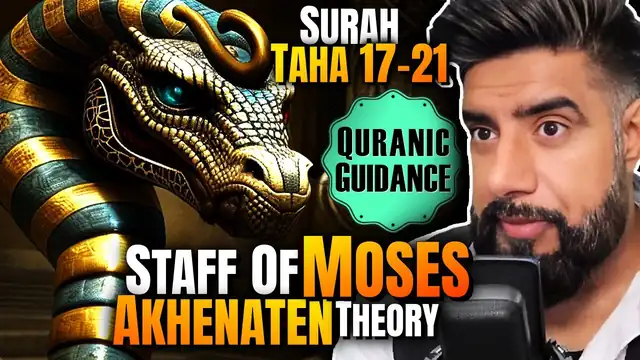
Staff Of Moses And The Akhenaten Theory | Quranic Guidance Surah Taha 17-21 | Mufti Abu Layth
tafsir tafseer exegesis tafaseer commentary musafir traveller musaafir safar muftis dalil daleel adillah adilla proof sihr sihar jadu jadoo kala jadu sorcery koran quraan al-quran sura soorah surat suwar soora chapter ayah aya ayat ayaat aayah aayat wahy wahi wahee tawakkul tawakkal reliance on god dhikr zikr zikar dhikar zikir adhkar azkar amanah amaanah amanat trust ibadah ibada ibaadah ibadatvideo · 28:43 · 10,000 views · 12 Feb 2023 · Open on YouTube
 Press play to load from YouTube. Nothing loads until you do.
Transcript
machineauto-transcribed, may contain errors · source: youtube auto · click a time to seek · dotted terms open the glossarypeople I want to take a look at these verses now the incredibly fascinating verses from those of you that um if you haven't if it's not fresh in your mind then when you can if you can uh after the show if you can tomorrow just take a look at it this Surah it's it has an amazing kind of um
rhythmic awe to it Allah and this is what they uh what is transmitted was really awestruck by when he first converted to Islam now it's an amazing um amazing Surah and it has this this kind of this um
it it has a style about it that is brief so it mentions things just concisely but they kind of like they pack a punch when it's said so yeah so this this from from verse 17 to 21 it's addressing this um a particular incident about Moses and it's the incident to do with when Moses has received
you know he's encountered Divine countenance and he has received revelation he has interacted um with the transcendental Divine so Allah has this communicated with Musa and you've got the whole burning bush incident now after that you have these verses and this song and I just want to just looking at whatever fresh eyes people bring to the verses the verses are so
giving back in turn so let's take a a look at this the verse begins foreign and
what is that in your right hand oh Moses Allah Allah you know this this is gonna be interesting because why is that a question what is that in your right oh so okay let's take this first of all with just its its meaning so you have just the apparent meaning Allah is asking Moses what is that and I'll bring up the translation again the translation is right beneath him what is that in your right hand Moses answered
this is my staff my stick I lean on it when I walk um and with it I uh with it I beat down leaves for my flock and I have many other uses for it Allah said throw it on Moses he threw it and behold it was a snake active in motion a loss had crossed it and fear not we shall return it to its former state um so okay so you look at this verse and this is about perspective so on one level
this is so this is speaking about a miracle this is what it's speaking about so many people look at this and they'll say well okay this is Allah had asked Moses what is that he said it's my staff it's my stick you know rod this is what I do with it you know I lean on it I um I you know I I attend attend to the flock of sheep with it I um you know I carry stuff on it I I've got all I've got other time
I've got other you know I do other things with it and Allah says well okay I'm going to now reveal uh the power of the miracle throw it Musa Islam throws it it turns into a snake naturally is frightened Allah says it's okay fear not hold it and as you do this will turn back into its first state which is the rod and the staff the stick okay and then Musa Islam repeats this miracle
at a later face to face with the Pharaoh a kind of encounter with the Pharaoh and The Magicians and it's a well-known incident so okay so from one perspective to people this could be speaking about the the unfathomable power of Allah to turn a staff a stick into a snake a living snake by a miracle so this is the glory of God so that's one way to look at this that this is referring
to a um an incident of a miracle what is called or people call amarjisa okay another way well people could look at this same verse and say well okay did it turn into a snake and that's a discussion on do the laws that Allah has set in nature does he violate his own laws or do things just come together at a certain time so there are there's another verse of the of the same
incident and it mentions that um that it is as though it is from the John it is from the snakes it is from um it is as though it's a snake okay so some people could say well okay from another perspective maybe there was something um to this maybe there was uh a kind of trick that let's say The Magicians were using I mentioned this many years ago I said that this was
one of the explanations I I'd given at the past saying it could have been that you see when The Magicians were making things turn into snakes they weren't actually making them but there was a certain trick that they were exposed to in some uh historians write that they used Mercury and different some of them sorry write this in the Quran that they in the tough scene of the Quran that they used to use zitbach and this kind of stuff Mercury and liquid mercury and it would do something and until maybe this is somehow uh it's it's being shown to Moses that this is and so what he does
is he actually exposes their magic as opposed to bringing a more powerful uh phenomenon of apparent magic to them so that's one way because one way a person could say well you see if if The Magicians came and did Magic and Moses came and turned it into a snake and he they killed the snake ate their snakes then in a way to the to the spectators they can't really tell the difference they can just tell that his magic was better than their magic so what it does by
you know what it does as a um side effect or a byproduct is it a firm's Magic but it just affirms that Moses his magic was better than their magic that one way of looking at it because it could be like well because to the common person who was spectating at this great event they they can't tell they think you know when The Magicians throw the sticks and turns into snakes uh to them it seems like whoa okay that seems like it's a snake now if Moses came and did the same thing but just out did them
let's say his really turned into a snake but there's also perceptibly turned into a snake so the to the bystander because this says the Quran says that it would be a spectacle for people to watch so they will gathered so the people couldn't tell except they could just tell his version was more powerful so that one may argue is simply you know by as a byproduct it's affirming the uh that might is right that the greater one always wins one could argue maybe one could maybe counter that by saying no but that's how Allah Works in his world
of um of his laws of nature he breaks them at times and he does them in that way that's the wisdom sure I mean however people want to understand it some people might understand this as this is a testimony to the glory of the power of God that he is doing a miracle and other people may say well okay but that may be a bit you know I don't know if that adds up in all the ads up here but I don't know if it adds up there because then the spectators wouldn't really be able to tell so it makes more sense as the Quran says so what the their tricks became
invalidated so okay because he exposed the truth the ultimate power just lies with God these people have no power it was but just a trick so okay that's one way of looking at this verse but okay here's right another perspective on this same verse you see and I know I've discussed this in in the past as well that that there's a plausibility that Moses may have been
now there's a plausibility obviously I'm not saying we you know we can't say these things nobody can claim certainty or you know even good enough there's there's a plausibility when you look at the evidence because arkanatan is the the person a a pharaoh now keeping in mind Moses would have been a kind of pharaoh in the sense if you mean a pharaoh is royalty so Pharaoh in our obviously in Arabic is but in Arabic we use it as a name almost
but that's not what it was in it meant the the great house the great uh the great household so whoever you know the Palace of the Pharaoh so to speak meant the far this was if you were of that you were a pharaoh you were of the great household and Moses obviously grew up as a foster child to the firaun in however you want to place it so um so to The Outsiders he would have been of the household he would have been
obviously rude like if you grew up in Buckingham Palace um you know your royalty it doesn't matter so the word Pharaoh for them was like royalty and obviously they you know they tried to they had their own belief system as well but I'm just using the word here so okay there's a plausibility that uh Moses may have been Akhenaten Akhenaten was the first pharaoh to destroy all the other gods in the temples and say the one God and you know this huge overlapping kind of Stories the the
problem is the Pharaohs tried to diminish they try to ex um they they tried to kind of um eradicate and erase his history because they were really upset with what he did but there's these stories of him also involved in an exodus because he sets up a separate town called Amana which was became the armana kind of Kingdom then and these are the things which is huge similarities he leaves with a certain people as well he sets up the but okay let's let's take a look at this
this uh hypothesis Moses was from the household let's say if he is akanatan when Akhenaten leaves now there's a certain point you see I cannot and leaves and he goes and there's obviously different stories about Moses this time some people say this may have been after he'd got in some kind of trouble there's the story there's the incident in the Quran about him killing someone but it doesn't mention more it just mentions you know about him killing someone with when did this incident take place obviously people debated they're not quite sure is it later on is it at the
same time is it but let's say Moses has gone off and now he's received Revelation and but according to this hypothesis the Pharaohs after Akhenaten are not from the Royal household they're the government they're the generals in the Army horam herb and these others become I think there's maybe four or five that in between they become um the Pharaohs but they are not like I think horm is the most vicious but they weren't royalty before they were just military generals so
in this incident Akhenaten or Moses let's say he goes off now he spends many years away in the wilderness or he goes off in the quranic story in the Bible story Moses goes for at least 10 years to median and he stays away and and all of these things before he comes back when you see the incident here is what did Moses what would have he had that signified this royalty because hurum herb and the other pharaohs who took over after him they weren't true royalty they were just
military generals and when Moses comes back let's say he's this man with this beard and he's 10 years and he's aged and he's looks different and but he has the Royal scepter you see the staff of the Pharaohs and according to certain descriptions the staff of the Pharaoh had this serpent on its head and in light of this hypothesis and I'll tell you who is Ahmed Osman in his book he speaks about this hypothesis he's one of the first people to I think there's one to others but he really he authors several books on it if you want his book
it's called Moses and Akhenaten and so he has this whole thing now he brings this to this verse as well to our attention saying that it's interesting in the Quran Allah asks Moses to throw the staff and lo and behold it's a serpent now one way to look at this so this is a different perspective this akinatan hypothesis for example Allah is asking Moses
you see because Moses in that hypothesis held on to it you see he didn't he didn't let go of this Royal scepter he took it with him and it was always a remembrance of who he was and in that way this verse seems ever so interesting that Allah says that Musa
oh what is that in your right hand almost and keep in mind that Musa is not actually Moses's real name even Jewish people I mean some say maybe it was a name given because he meant Moshe from the river but Moses most likely meant um son of like the the Pharaohs were called like you have uh tutmosis uh you'll have many of these Moses Moses was like an add-on but they say that the reason they called him Moses was almost to negate any royalties as as though they it's like
saying almost Abdullah but then they just call you ABD so this is and what is that in your right hand Moses and then what begins is almost a series of justifications oh of this this here Isaiah this is my staff it's my uh you know um
you know that this is that I oh I lean on it and I carry you know my burden on it and some people say can mean about carrying you know like a traveler would carry stuff and some people say to lean on and oh I lean on it and uh oh I attend to the flock of sheep with it and oh and I've got other tasks it's almost a it's a beautiful sense of justification almost that oh right this this is why I and then it's
throw it and then as it kind of claims and just lies shining let's say in in the Sun you see it for the Royal scepter the serpent the snake of what it is and the historians like Ahmad Usman who have this akhanatan hypothesis will say when Moses came back and the people were casting the snakes they were trying to do their tricks he held up his scepter and everybody knew
that akhanatan had returned that this that that's a different angle of this of looking at these verses so okay this is one way now another perspective so let's go with see this is what I'm saying that the Quran it brings you know what every person they come they read it it they take something away from it now check this many of the mystics how they did the seed of these very verses let's go back to him now this is
this is amazing you're gonna love this check this out Moses has received revelation and he has now been entrusted with this uh very weighty responsibility of bringing these people of of God the Israelites to you know to a separate land where they can worship freely okay it's a very difficult task now
Allah says what is that in your right hand Moses Moses says oh this here I saw you this is my stuff that I lean on it you know my flock I use it to tend to the flock foreign
I've got so much so many other things this this that this is indispensable in or it's so helpful sorry hear Allah is reminding Moses as these many Mystics explained to us yeah Musa how can you rely on anything lean on anything
use as a means of Reliance anything other than Allah that this is not the way of pure tobacco I lean on it I tend to the flock with it
only and only Allah throw it distance yourself from any illusory sense of dependence and Reliance or comfort that is but an illusion of this Dunya
Musa Lose Yourself of these mediating games of this world alcohol he threw it foreign the mediums of this Dunya are in essence and the Dunya by extension a serpent
ER that they have no ultimate loyalty with you at any moment they will sting you they will poison you they will strangle you they will and destroy you your Reliance must at all times be only Allah
and when you see when he saw the the serpent he's frightened it's it's scary because that is the the brutal God perspective on the reality of this world that this Dunya is brutally it's frightening almost
but then not if you have tawakul Allah Allah says don't because when you're in the world you must live in the world by the world you must use the asbab but keep in mind at all times Allah
pick up the staff pick up this Reliance this illusory mediating instrument which for a moment has distracted you from your true Reliance only on God pick it up we will return it to its instrumental aperture and its features
but remember the true reliance is on Allah Allah that is just mesmerizingly beautiful and so powerful as a concept these very same verses so many ways to read them and they give so much meaning to everyone and maybe infinitely more meaning to other people who bring um
you know their perspectives to the amazing verses of the Quran uh these somebody said where is this this reference is in many of the mystical uh you know the the uh the mystics Serene so you will get so you'll find it in you'll find it in others as well you know there's a great website I do use it it's called um I just have it on my thing great tough seeds I think it's called great tough series.com it's in Arabic and on there you can select the
genre of tafir human do you want ferk do you want this do you want um so if you pick the one that is Mystical with the sufia so it'll bring up several tafasir then but they'll only bring up those tafasir if you select that genre it'll bring up like crocheted in fact even kosheri makes reference I believe to this point as well that this is uh it's a metaphor but it'll bring up even bring up uh Buckley bring up like Royal Bayan it'll bring up uh it brings up a few of these so it's amazing these
things are there but it's so put that references aside it's so amazing that when you just look at these same verses what they um serve you as an Insight I hope that's been of some help people
Something wrong here?
Tell us what is wrong and it will be checked against the recording. Nothing changes until a person has reviewed it.
Sending a note needs JavaScript, which is off or unavailable in this browser. Nothing has been sent.
No name, email address or account is asked for or stored, and the inbox does not store your IP address. For rate limiting it keeps an unreadable fingerprint of your connection for 48 hours, and our database provider's own logs record connections as every website's do. Only your note, its kind, the page and the moment in the recording are kept, for review.
Cite this recording
Stable id, transcript version and tier are part of the citation. Every change to a transcript is logged.Mufti Abu Layth Archive, auto-transcribed, may contain errors. https://muftiabulayth.org/r/s7d9jojs95a/ (accessed 1 November 2026)
- APA 7
Mufti Abu Layth. (2023, February 12). Staff Of Moses And The Akhenaten Theory | Quranic Guidance Surah Taha 17-21 | Mufti Abu Layth [Video, auto-transcribed, may contain errors]. Mufti Abu Layth Archive. Retrieved November 1, 2026, from https://muftiabulayth.org/r/s7d9jojs95a/
- Chicago author-date
Mufti Abu Layth. 2023. "Staff Of Moses And The Akhenaten Theory | Quranic Guidance Surah Taha 17-21 | Mufti Abu Layth." Video, auto-transcribed, may contain errors. Mufti Abu Layth Archive. Recorded February 12, 2023. Accessed November 1, 2026. https://muftiabulayth.org/r/s7d9jojs95a/
- BibTeX
@misc{abulayth-s7d9jojS95A,
  author = {Mufti Abu Layth},
  title = {{Staff Of Moses And The Akhenaten Theory | Quranic Guidance Surah Taha 17-21 | Mufti Abu Layth}},
  year = {2023},
  month = {2},
  date = {2023-02-12},
  howpublished = {\url{https://muftiabulayth.org/r/s7d9jojs95a/}},
  url = {https://muftiabulayth.org/r/s7d9jojs95a/},
  organization = {Mufti Abu Layth Archive},
  urldate = {2026-11-01},
  note = {Auto-transcribed, may contain errors}
}