
Is Human DNA More Like Chimps Or Bonobos? | Mufti Abu Layth
muftis koran quraan al-quran ummah umma ummat ajr sawab thawab thawaab sawaabvideo · 11:16 · 2,000 views · 12 Nov 2021 · Open on YouTube
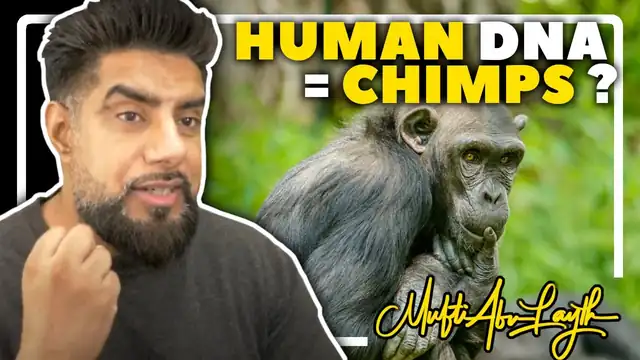 Press play to load from YouTube. Nothing loads until you do.
Transcript
machineauto-transcribed, may contain errors · source: youtube auto · click a time to seek · dotted terms open the glossaryAre humans more like chimpanzees or bonobos? That's such a fascinating discussion. He shows the stats in this that we're kind of in the middle to both. So, chimps, you see like that's a picture of a bonobo, yeah. So, they if if you're unfamiliar, they look just like they look to to to normal people, they look just like chimpanzees. But, once you become familiar with the differences, you can actually tell.
They are like the nerdier They're like the nerdier version. That's how he describes them as well. And what You see, if you place them side by side, they chimps seem to be much more uh hench with their They seem to be much more muscular. They seem to have a slightly wider uh jaw structure. And you can then tell. You see, once you can tell, you start Ah, right, I see what you mean.
They seem like the more nerdy type and the more And they are I mean, chimps are incredibly intelligent as well, but the bonobos are very intelligent in their own way. And they're both related to humans. But, with similar degrees of variation. So, it's like humans are in the middle uh to them both. And And they are related to each other as well, but they're different.
Um and it's interesting that the the dialogue which way are human do humans weigh more towards? Is it chimpanzee behavior or bonobo behavior? And bonobos are fascinating, you know, they're like Honestly, this this book really it opened my eyes to It really deals with morality and bonobo tribes and how they do things and they're very um they're very peaceful compared to other compared to the other primates.
Um they are matriarchal, which is interesting. I wonder if that's the determining factor. And so, their societies are run by the alpha female and not by the alpha male, even though bonobo males are physically bigger and stronger than the females. But yet their societies are matriarchal. And they resolve most their conflicts through sex. It's It's like they are the only other species beyond humans who are so obsessed with sex.
And it's And they they will You see, if you put So let's say they he he gives site studies of when they introduce separate a new tribe to bonobo tribes. And what they do is there'll be this this minute of 1 to minutes of this kind of like tension that they'll just kind of just eye each other out and and then they'll just get together and have this huge orgy.
And it obviously it'll just be all kinds. So So it'll it's heterosexual, homosexual, everything, but but not incestuous. That's That was a fascinating point as well that they show because people that have claimed that these things are socialized, incest, and it's not inherent. It seems to be inherent within you know, all these wide variety of species that they do do not that there's this taboo.
But um Yeah, and then they'll just all get on. And they'll be perfectly fine. It's like, "Wow, maybe humans can And chimpanzees You see, it's really fascinating what this the author really goes into detail to show as well that you know, we have this image that uh we have this image that chimpanzees are super cute.
And they are, right? So I mean Zara, Zozo, my She watches all these kind of YouTube channels where they have these pet chimpanzees at home. And they do look super cute, I have to say. You know, they kind of dress up like humans and they like really they do all these things and but he highlights that it's these people that say that all these chimpanzees are super cute have never lived amongst or seen chimpanzees in their natural habitat.
They are so brutal. And you could never like he gives this example, you know how you could just introduce two tribes of bonobos. You could never do that with chimpanzees. There would be a full-blown war at such a gruesome level that they will do things like gouge the eyes out, rip the testicles off the other they will mutilate. They don't just when they find an opposing chimp, they don't just beat him.
They torture him to death. They will There's incidents that he cites where they will pick up these rocks and keep bashing him on his head till they crush his skull. I mean they they they are like so brutal. And they can you know the the chimps even bonobos with with the clench of a jaw they can crush a bone. That's how much power especially chimps they have in their jaw.
They have very sharp teeth by the way. Uh they can chimpanzees do eat meat but they off infrequently do. They they are uh omnivorous. They can do have like these ruthless canines. If you see a chimpanzee and his his kind of bite it's ruthless. It can actually crack a bone. It does crack bones but they only crack it off. They don't when they have internal tribal fighting so in when they fight within the tribe, they won't um it shows that they even when they hate the other person, they're still exercising some restraint.
Because they don't crack bones and things. They may be they'll beat up the other member and beat him up even bad, but they even when they beating up bad, they usually won't crush his bone. So, it shows that they exercising some kind of self-restraint. But when they find a member of another tribe, they are ruthless beyond measure. And it's so much that I think humans can learn from how these primates behave because and but within their own community, the structures they have and the rules and the laws, it's fascinating.
We got to discuss this tomorrow on the book club. It's like, "Wow, honestly." You learn that how they recognize fairness, for example, first-hand fairness, how they they get upset if they're being treated unfairly, and how their memories of when they hurt someone even years later, they remember it, and how they take care of their sick, and they take care of their elderly, and how they it's they they run a campaign to become the next alpha, and it's amazing, and even how fear of consequences are so crucial to them
to to for the community to prosper, there has to be this fear of consequence. And it's interesting that when the alpha male goes out, so he will let's say in certain settings where the alphas has left for for a while, then then all the other males start their things, and they they they start all playing up, and now then they go and they start mating or trying to mate, but and flashing their, you know, their their privates.
But what they will do is in between, they'll stop, and they'll go and check, is the alpha back? And he's not back, and they'll carry on. And then they'll keep like after every 10 minutes, they'll go and check, has he come back? And when he comes back, they do this kind of this uh this sense of this kind of flattery of trying to to welcome him. Like hey, and they'll come and pet him and all like they're so wild by Shabazz she you know the cham chagiri it's amazing.
Honestly, I think it's so wild that the intelligence they have as well. And that they have the um the self-restraint of a child a human child. So a monkey can will give up a banana to have a a better banana or a better reward. But he will give it up if he's told like okay, don't eat this banana but we'll give you more and he understands that and he has to self but this banana is in front of him and he has to self-restraint.
They can self-restraint for about 18 minutes they found. Which is about the maximum for a child as well. And so it's and then after that he's like ah forget that. It's like let's just eat this. But that but on some things they display much more intelligence than a child. You see so when a monkey was given a scenario like the bonobos when he was given a scenario where he's put in a room and there's some food but he can't reach it and he needs to devise a plan to reach it.
So he's trying to come up with some but there's no tools there. And then later on he's given a tool he would choose the right tool to go and reach it. But what was interesting better than that was when the monkey was later on given a tool and there was no hanging fruit but he was given a choice between the tool or fruit he chose the tool and put it away for a future uh for a future scenario where he may find hanging fruit.
So he's planning. And but a human infant wouldn't do that. So, so it's fascinating, you know, the sense of uh the sense of how they have a sense of this planning and how they sense uh wrongdoing when they know they've done something wrong by the way. That's fascinating. Like how uh a chimp would um So, one chimp that's taken away and it could see the other chimps although they're not there but they are, you know, they're out there and they can look in through the glass and they can see this chimp and the chimp is doing tasks and receiving a reward.
So, he keeps receiving the reward but then he could see the other chimps are watching him. So, then he will the chimp in the in this case uh stop taking the rewards. But it continued to do the task but when given the reward wouldn't take it because it knew that the other chimps could see it and they could it could they would see this as being unfair. So, when he goes back, they're going to batter him.
So, so he would just refuse. But when they offered the the fruits also to the other chimps and this chimp, then it ate it. It's amazing. Honestly, I think wallahi Allah says in the Quran that, you know, go travel, look into nature, learn, observe. I felt I am the one I don't they look at this don't they look at the camel.
Look at animals. Allah says that They are like civilizations that mirror you in certain ways. Allah. Yeah, so fascinating.
Something wrong here?
Tell us what is wrong and it will be checked against the recording. Nothing changes until a person has reviewed it.
Sending a note needs JavaScript, which is off or unavailable in this browser. Nothing has been sent.
No name, email address or account is asked for or stored, and the inbox does not store your IP address. For rate limiting it keeps an unreadable fingerprint of your connection for 48 hours, and our database provider's own logs record connections as every website's do. Only your note, its kind, the page and the moment in the recording are kept, for review.
Cite this recording
Stable id, transcript version and tier are part of the citation. Every change to a transcript is logged.Mufti Abu Layth Archive, auto-transcribed, may contain errors. https://muftiabulayth.org/r/rydmfhyouwi/ (accessed 1 November 2026)
- APA 7
Mufti Abu Layth. (2021, November 12). Is Human DNA More Like Chimps Or Bonobos? | Mufti Abu Layth [Video, auto-transcribed, may contain errors]. Mufti Abu Layth Archive. Retrieved November 1, 2026, from https://muftiabulayth.org/r/rydmfhyouwi/
- Chicago author-date
Mufti Abu Layth. 2021. "Is Human DNA More Like Chimps Or Bonobos? | Mufti Abu Layth." Video, auto-transcribed, may contain errors. Mufti Abu Layth Archive. Recorded November 12, 2021. Accessed November 1, 2026. https://muftiabulayth.org/r/rydmfhyouwi/
- BibTeX
@misc{abulayth-rYDMFhYoUwI,
  author = {Mufti Abu Layth},
  title = {{Is Human DNA More Like Chimps Or Bonobos? | Mufti Abu Layth}},
  year = {2021},
  month = {11},
  date = {2021-11-12},
  howpublished = {\url{https://muftiabulayth.org/r/rydmfhyouwi/}},
  url = {https://muftiabulayth.org/r/rydmfhyouwi/},
  organization = {Mufti Abu Layth Archive},
  urldate = {2026-11-01},
  note = {Auto-transcribed, may contain errors}
}