
Recordings › Monday Nights with Mufti Abu Layth
Monday Nights with Mufti Abu Layth | Session 12
salaah namaz salaat namaaz as-salah salawat aqidah aqida creed theology aqeeda aqaid fiqah jurisprudence fikh hadeeth ahaadeeth hadis hadees ahaadith saheeh saheeh hadith sound hadith seerah sira seera seerat prophetic biography madhab mazhab mazahib madhaahib malik bin anas imam maalik sahih bukhari saheeh al-bukhari saheeh bukhari imam al-bukhari averroes ibn rushd al-hafid fajar salat al-fajr fajr prayer magrib salat al-maghrib maghrib prayer sunset prayer ishaa salat al-isha isha prayer night prayer jummah jumma jumah friday prayer rukoo bowing sajda sujood prostration qiyam qiyaam qiyam al-layl qiyam ul-layl takbeer takbirat takbeerat allahu akbar imaam prayer leader udhiyah qurbani qurbaani udhiya udhiyya kurbani masjed masaajid masajid mosque khutba khutbas sermon faqeeh fuqaha jurist usul al-fiqh usool usool al-fiqh usul ul-fiqh usool ul-fiqh legal theory shari'ah shariat sharee'ah maaliki malikite malikiyyah maliki school hanafite hanafiyyah hanafi school shafei shafiite shafi'i school hambali hanbalite ijtihaad ijtehad independent reasoning mujtahideen mujtahidun mujtahidin fatwa fatwah fatwaa fataawa legal opinion muftis hukm hukum hukam ahkaam halal halaal lawful haraam mubah mubaah fard farz faraid fard ayn fard kifayah fardh sunnat sunan prophetic practice ikhtilaaf khilaf scholarly disagreement mawdoo maudu mawdhu fabricated hadith rawi raawi ruwat rijal aathaar athaar al-muwatta muwatta malik muwatta imam malik muwata tawheed tauheed touheed oneness of god shirq mushrik mushrikin polytheism iman imaan eemaan eeman atharis atharism athariyyah mutazilite mu'tazilah djinn jin jinnat jinni 'ayn al-ayn evil eye sihr sihar jadu jadoo kala jadu sorcery shaytan shaitan shaytaan iblis iblees shayateen shayatin satan akhirah akhira aakhirah akhirat jahannam jahanam jahannum koran quraan al-quran sura soorah surat suwar soora chapter ayah aya ayat ayaat aayah aayat hifz hafidh haafiz hifdh huffaz hafiza memorisation sahabi sahabiyyah sahabiyat makkah makka mekka madina al-madinah madeenah yathrib sunni ahl as-sunnah ahl al-sunna sunnis shiah shiite shi'i twelver ithna ashari salafi salafism wahhabi wahabi wahhabism milad meelad milad un-nabi mawlid al-nabi mawlud eid milad 'alim aalim ulema ulamaa shaykh shaikh sheik shaykhs ummah umma ummat fitnah trial talaaq triple talaq talak zinaa zinah fornication adultery in sha allah insha'allah in shaa allah insha allah inshaa allah subhan allah subhaanallah subhanallaah bismillah ir-rahman ir-rahim bismillahir rahmanir rahim bismillahi bismillah al-rahman al-rahim salam assalamu alaikum assalamualaikum salaams salam alaykum wa alaykum as-salam peace greeting zikr zikar dhikar zikir adhkar azkar remembrance du'a duaa duaas supplication tawba tauba taubah repentance ikhlas ikhlaas al-din ad-deen ad-din ibadah ibada ibaadah ibadat ajr sawab thawab thawaab sawaabvideo · 1:32:20 · 3,400 views · 13 Feb 2017 · Open on YouTube
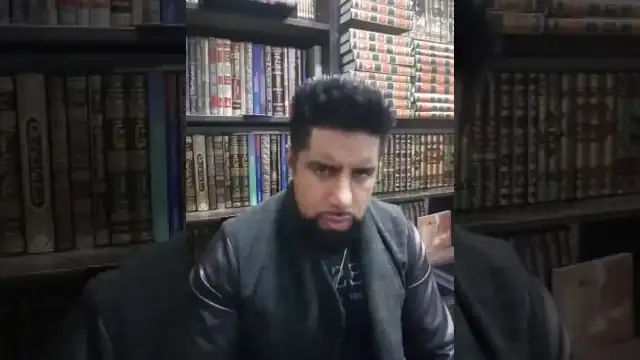 Press play to load from YouTube. Nothing loads until you do.
Transcript
machineauto-transcribed, may contain errors · source: youtube auto · click a time to seek · dotted terms open the glossaryRight. Let's see. Right. So, I'm just going to wait for this to go live. Well, let's clear up some of this while it's As-salamu alaykum warahmatullah ta'ala wabarakatuh.
Let's see, folks, how it's going. Um Right. God. Let's see.
Have you watched Muslims like us? Lol. Um Muslim Is that No, I haven't watched Muslims like us. Um Right. So, let's Let's get started. Can somebody just give me a shout-out whether the voice you can hear the volume fine? Is that Is that okay? Um When is my birthday? My birthday is in January, people. All right. So, is it haram to take sleeping pills?
Uh right. Plenty Right. Is the volume okay? Can you hear me fine? Yep. I take it you can. As-salamu alaykum. Um Mira Shukran Faisal. Okay. Innal hamdalillah wa kafaa was-salatu was-salamu ala rasulihil Mustafa wa ala ibadihil ladhina irtada wa man bi hudahum wa athari ahlil Madinah iqtada wa ba'd fasalamullahi alaykum wa rahmatullahi ta'ala wa barakatuh.
Right. So, we've got a lot of amazing questions coming right through. Okay, so uh Shokran Salman Kader, I appreciate it just as much. Um some angry faces already. Love to see you all get Love to see I'm still doing my magic, weaving my magic on some people on Facebook with this question praying Isha before midnight.
Okay, let's take that question. Uh praying Isha before midnight. I'm not sure what that fully means. Um the thing is if you mean by that because Isha obviously is before midnight, Isha is with the horizon disappearing. And the time for salah in general, as Imam Malik says in his Muwatta and I do understand there are varying narrations.
So if you look at uh some other I know some other uh students transmit different things, but the Muwatta, which is his book of Hadith, which he himself authored, he says in it waqt al-salah ma lam tadkhul al-ukhra, that a salah remains as long as the salah has not come in. And and he's speaking about uh things like Maghrib goes on till Isha and Isha goes on till dawn, till subh.
The only exception in the break in the chain is Fajr. Sorry, I'm saying it Fajr Fajr because that's what most people refer to it as. The school of Medina call it as-subh, but the morning prayer, the dawn prayer, subh or Fajr, whatever you call it, once it's sunrise, that ends. And so that doesn't technically go into another salah because it has such a clear demarcating point, which is sunrise. Okay, so I hope that uh clarifies that question.
It's not um it's nothing controversial really. And um that can you pray for a particular time? Of course, you midnight it kicks in way before midnight. You can pray after midnight as well. Right, offering salah, please share the proofs of offering salah with open hands. Okay, that's a good question. This is referred to as sadl. Okay, sadl and the Hanafi tend to refer to it as irsal, which is a kind of hanging, and the the Maliki or the school of Medina refer to as sadl, which is also to allow something to hang.
Sadala, uh, if something just sadala is for something to hang. Quite often used with the with the kind of, um, cloak, if you like. It kind of does sadl. Anyway, so coming to this point in prayer, where do we place the hands within salah? Now, you have to understand, it is interesting that many people don't think about this.
None of the schools of law or thought or madhahib or whatever you want to call them refer to the placing of the hands as an emphasized sunnah. None of them. So, none of them believe this was such an important sunnah that the prophet always, you know, he advocated strongly that you do. Nobody.
Right, so that's the first interesting point. None of the schools of law say that by forgetting to place your hands or by not placing your hands in the appropriate position, whatever that may be, should you do sujud as-sahw? A sajdah uh, to to repair the salah, to salvage the salah. No school of law says that.
Thirdly, this is another really intriguing point. Right? There isn't a single undisputed Hadith on where to place the hands in Salah. Now, some of you are probably thinking, "What on earth is he talking about?" Because there are plenty of Hadith.
You'll be surprised. There are plenty of Hadith, but none of them are problem-free. So, I'm just going to actually just check that I've got this on Yeah, I've got this uh oh All right. All right. So, none of these are problem-free. So, every single And the most authentic narration that people present is the one Imam Malik himself presents in the Muwatta.
And Imam Bukhari presents it as well. So, the point is that So, let's say this Hadith uh where the companion is saying, "Kulluna nu'mar." That we would be commanded to place our hand above one above the other in Salah. But, he doesn't say who commanded him. Now, the assumption here i- No, not the assump- The general If you read that, you would think, "Well, that must definitely be speaking about the Prophet Sallallahu Alaihi Wasallam." But, then the person transmitting says, "I think he may be talk I I assume he he he says he
You see the wording that he uses. He says, "I assume he is indicating by that the Prophet." The problem with this twist of the narrator to say that is it brings in a whole realm of doubt that why is he doubting that? See, he's saying that "Wa araahu yanmi ila Rasul." That I That I I assume or it appears to me that he is indicating that that's the prophet.
So, anyway, so this brings in a whole debate. Uh the issue The point is if this is something which uh and the prophet did every day and he prayed his salah like this, you would assume that there are hundreds and hundreds of transmissions describing this. And which are sahih and unquestionably sahih and going back to the prophet and and there ain't.
There are not. There are ahadith that go back to the prophet. They are all criticized in their chain and those which are sahih are not clear. So, they don't mention the prophet in them. They just say that we used to do things like this. Uh so, which is interesting. Now, you think, "Well, why is that?" You think, "Well, come on. Mufti, come on." You know, that should be pretty self-evident.
And I say, "Well, you know, funny you should say that because the thing is then you have a hadith which is also transmitted in all the major books of hadith and more elaborately in some than others. Right now, this hadith that you have uh of Abu Humayd al-Sa'idi. Now, this hadith is one where he There is a dispute going on amongst the companions on how to pray.
And he says, "Right. Okay, stand back, people." He says, "Ana a'lamukum bisifati salatin nabi. I am more uh uh knowledgeable than all of you on how the prophet sal allahu alayhi wasallam used to pray." So, he says, "Step back. Let me Let me show you." So, they say, "All right. Fine." And he says that the prophet would do this and then he would stand straight. He would raise his hands to for takbir.
And then he does not mention in any of the riwayat the holding of the hands. So he mentions all the other things. He mentions holding the knees, making doing tasbih, doing dhikr, doing this, doing that. But he does not mention. And what he does say is He says hatta He says that he he did takbir. He says then he let his hands go.
He says until every limb returned to its straight resting place. So here some people said, "Well, couldn't this be the straight resting place?" So you say, "Well, you know, I could let I could concede to that, right, if I didn't know better." So you say, "Well, let's read on, Watson." And as you read on, you find that when he describes the rising from ruku, he says, "And then when they stood up
from ruku, and then have the same wording again, until each limb returns to its straight resting place." Now when you get up from ruku, most schools do uh you know, rest the arms on the side. So I I know I know some Hanafi for example, in order for consistency, they then do that after
They then do that after ruku while in sitting in the salah. Uh but generally speaking, most of the madhhabs recognize that a position of saddal after ruku. So, this is the This hadith is incredibly interesting. Moving on from hadith, the you see several people have said well, first of all, let's debunk some myths.
Okay. Here is an interesting story that Imam Malik was one day beaten up. Now, he was not to be fair, Imam Malik was kind of Inquisitioned, if you like, and he was I don't know if full-on torture he was he was tortured by being punished in front of people.
I It wasn't necessarily like an ongoing incident, but there was an incident where he wouldn't retaliate. Oh, sorry, he wouldn't kind of he wouldn't go back on a particular ruling that he'd issued. So, he'd said and and there's a huge debate over what this point was. But, it generally referred to talaq, to do with divorce and Imam Malik had said that the divorce a forced coerced talaq is not a talaq.
And that is the transmission of Ibn Abbas and that or talaqul mukrah laysa bi talaq. So, why this caused a whole a big hoo-ha in the first place? There's there's explanation around it. People say this was an indication to Imam Malik supporting the rebellion and the uprising of Muhammad Nafs az-Zakiyya and his brother Ibrahim in Kufa.
So, but Muhammad Nafs az-Zakiyya was in Medina and the political strife that was going on was that they were saying we have given allegiance and Imam Malik had been asked and he kind of symbolically responded by saying well, that a a coerced talaq is not a talaq, meaning that read between the lines as in a coerced allegiance is not a pledge of allegiance. That's anyway the the predominant narrative.
So, the point being Imam Malik was beaten. Now, some people say by that beating he was lashed and so on. Uh he his shoulder was dislocated. Now, whether his shoulders were dislocated or not, Allahu Alam, they may have been, but generally they don't they don't transmit that his shoulders were dislocated. Some people say maybe they were dislocated. Now, some people say because his shoulders were dislocated, he would pray like like he he couldn't raise his arms.
Right now. So, all his followers out of dedication to him started to hang their arms in salah. This is the most absurd, ludicrous, pathetic, explanation I've ever heard coming from any Muslim.
This almost trumps all their other kind of But anyway, let's not go The point is that if Imam Malik's shoulders were dislocated, let's just say they were. Let's say they were. I mean, he would have had them popped back in. If your shoulder gets dislocated, you're not going to for the rest of your life run around with dislocated shoulders, are you?
You're going to obviously go to people that they they can pop them back in, they can relocate them. So, the thing is so that's just I'm sure he had that much common sense. Secondly, just because Imam Malik, being the legend that he is and the don of Medina, his shoulders, let's say hypothetically, became dislocated, all the Muslims that rate him are not going to start all of a sudden hanging their arms in salah.
And just as if God forbid, let's say Imam Malik was have lost a leg, so all the Muslims would stand on one leg in salah out of honor for Imam Malik. I mean, for God's sake, have some respect for the intellects of the Muslim community. I mean, why do people think that the Muslims were so dumb? They Why would they do something like that? So, I just want to debunk that myth immediately.
The other thing is there are several narrations that you do find. Uh once again, narrations on both sides, you do find narrations to do with qabd, but they All narrations to do with placing the hands anywhere are all problematic. Right? So, there are other narrations that the Sahabah during uh certain times would clap their thighs to keep warm and stuff like that, and you could only do that if your hands were at the side. Another famous one is the uh the hadith of um Who is it?
Zaid ibn Aslam, isn't it? When he says about he came in and uh and somebody I think sneezed and he said something and people started looking at him, and he thinks, "Why are they?" And he says, "What's wrong with you? Why are you looking at me like that?" And And he's speaking about the verse had been revealed, but at this point he doesn't know that qūmū lillāhi qānitīn, and stand for Allah in a state of um uh deep submission, like with sincerity.
And it meant as in when you stand in prayer, do not talk. But he was unaware of this ruling. So, he's asking them, "Why are you uh you know, why are you looking at me like that?" So, he says, "So, they started uh to clap their thighs." Now, this is interesting that why their thighs? Because if they were standing in prayer like this, why would they start going like that? Why wouldn't they go like this?
So, unless they were standing like that. That's an interesting one. Anyway, let me and the final icing on the cake, let's leave Imam Malik, the don of Medina. Imam Malik, wallahi people, I have to sidetrack, but I feel is the savior for us, especially in the West today. And I want to come back to that, but I'll come back to that, in fact.
Let's just speak about this for a moment. Let's put Imam Malik aside, right? So, did you know who else used to pray like this? Well, how about Abdullah ibn Zubair radi allahu anhu from the Sahaba? It's documented. He would pray with saddal. Urwah ibn Zubair, right, would pray with saddal. Hassan al-Basri in Basra would pray with saddal.
Ibrahim al-Nakhai, the teacher of Imam Abu Hanifah, would pray with saddal. Awza'i would say you could do either. Let's go to Egypt. Layth ibn Sa'd, the famous, you know, major mujtahid mutlaq would pray with saddal, right? Sa'id, let's go to Medina. Sa'id ibn al-Musayyab, the son-in-law of Abu Hurairah radi allahu anhu, would pray with saddal.
Let's look at the student of ibn Abbas, Sa'id ibn Jubair, the famous, you know, legendary mujtahid who clashes with Hajjaj, would pray with with saddal, right? So, these are some names that I've brought before you. One of the positions within the Hanbali school, school of Ahmad ibn Hanbal, is to pray with saddal. And then, to top it off, the don of Medina, Imam Malik ibn Anas, would pray with saddal.
Okay. Although he has transmitted as well to pray with qabd, in my understanding, and even if you go outside of Ahlus Sunnah wal Jama'ah and look at any of those who that the formation of Ahl-ul-Sunnah wal-Jama'ah like the Khawarij for example and even the Shi'a if you look at them just as as an observational kind of not experiment but as an observation you will see that they also continue till today to pray with sadl.
So sadl as the Hafiz the great master of Hadith ibn Abd al-Barr the don and Spanish Muslim scholar of Muslim scholar the scholar the legend of Muslim Spain says in his book al-Kafi that al-qabd was sadl kilahuma sunnah. And he he says that holding the hands like this or letting them drop both are from the sunnah and he was a Hafiz the most knowledgeable person of Hadith in the 5th century in the entire Western Muslim world.
Undisputed. That's who he was ibn Abd al-Barr. And he's the same person who ibn Hazm says about him that he says that in when he's praising the legends and the legends of the past the major mujtahids and he says and he says and those who we today we have reached who themselves are dons and epitomize ijtihad that they are mujtahids living and walking and breathing amongst us.
He says Yusuf ibn Abd al-Barr ibn Abd al-Barr is one His name was Yusuf by the way. So So this this is him speaking anyway. So do not be mistaken by these very superficial kind of statements okay. So that answers the question on sadl. It's it's definitely a sunnah. I'm not saying people have to to sadl. I'm not saying they have to do come.
Whatever you do, both are from the way of the messenger of Allah Alihi Wasallam. Okay? Now, Okay, that's it. I want to say a little point here now. I want to kind of go on to a side question, which is the school of Medina and Imam Malik. I seriously feel people and and this is my take and you know, it's I I I I simply just present my ideas to you, you know.
Uh for example, you know, you know, you can take them with kindness or just dismiss them gracefully. The point is that that Imam Malik for us in this day and age presents he himself is a salvific. He is a savior. Like I a salvific figure, somebody who really can guide us to salvation.
Not I don't mean by that necessarily that he has answered every question that we will be facing. He hasn't. But his method he was the only Imam, the only Imam out of all of these Imams that today are rated and celebrated and we respect them all, you know, but the point is we respect them all, but out of all of these Imams, Imam Abu Hanifah, Imam the only Imam who was undisputed in his and Hadith.
So, nobody could question him, did he know Hadith? He was a mirror of the believers in Hadith. He was more obsessed with the preservation of Hadith than the so-called pseudo kind of Hadithy people today. Right, he was he He he was the head of in his time what was known as the Ahlul Hadith movement.
The Ahlul Hadith movement historically, which really historically in the time of the Seleucid was embodied by the school of of Hijaz. And and by Hijaz it was predominantly two cities, Mecca and Medina, and predominantly led by Imam Malik. And then you had Sufyan ibn Uyaynah and other people as well as part of that movement.
Now, Imam Malik, despite being the the head of this movement, he was somebody at the same time who firmly believed in reason. Firmly that faith would make no sense without reason. In the Muwatta, which is as Imam ash-Shafi'i said, that mawdu' ala ardhi kitabun asahhu He says that there is no book on this earth more authentic by the kitab Allah min kitab Malik.
That after the book of Allah that is more authentic than the book of Malik. And people may say yes, he said that when the book when Bukhari wasn't author authored or whatever, but but I mean, who cares? The point is even Imam Bukhari himself when asked who is the heavyweight, this is Imam Bukhari being asked who is the ultimate heavyweight of Hadith, which chain is the you know, it's the unbreakable, unsinkable.
It's the the donnest of don chains in Hadith. Who is it? He said, it is unquestionably a Malik an Nafi' an ibn Umar. It is the golden chain, he said, as-silsilatu dhahabiyyah, which is from Malik, from Nafi', from ibn Umar. Now, this thing, you see, Imam Malik, despite having at least the most authentic chain we have in the world today, yet in his book, which many believe to be the most authentic book of Hadith, on several Hadith, after quoting them, rejects them.
He is quoting them. He is quoting them, people. He is telling you they are sahih. He is telling you he is the don Amirul Mu'minin is the heavyweight. He's wearing the belt of heavyweightness. That is the one of the ultimate accolades you could have in the Hadith sciences, Amirul Mu'minin, the leader of the believers in Hadith.
He's bringing you Hadith and then saying, "No, sorry, we don't act according to that. Nah, our practice doesn't recognize this." What There's two ways of approaching this. One is just to look at those isolated practices and then start saying, "Oh, that's interesting. Uh right. Oh, wow. I see." And you've got other evidences and so on.
I'm not interested right now in that. I mean, that's great and it's amazing and many ulama have done that. I'm interested in this methodology. Right. So, the point is this methodology of saying, "Well, look, we've got amazing Hadith. This sahih Hadith, but I'm sorry. A Hadith in itself does not overrule every It is not authoritative.
Imam Malik is saying, "Here I presented here I tell you we don't accept it." This is the middle path that will save many people today that are questioning their faith. Wallahi, I I can almost swear on by that. That there are people today that are being force-fed Hadith force-fed them.
You have to accept. You have to accept. They're being pitted against Allah that if you question these, you are challenging Allah and his messenger. And many just submit, and then some they snap. And this leads to the other extreme that they denounce all Hadith. The Hadith we don't want Hadith. Reject them.
And thereby they forego an amazing, magnificent portion of the Sharia. Right. And the middle way is the way of Medina, the way by Imam Malik that certain Hadith you reject. Even if they're sahih, but but if they clash with the overall message of this deen, if they clash with reason that is firmly and soundly established, then there is a huge question mark looming over them.
Okay. And I I wanted to clarify that because a lot of people misunderstand this thing and they they take extremes. And I feel this is And if this path had been shown to us by any other Imam, he may have been questioned that yes, that's because he wasn't a don in Hadith. That's because he never knew Hadith. That's because This is why I said that Imam Malik is that savior because he is one who cannot be questioned for his authority.
Do you know when a transmission he said when he uh uh when he when on on the death of one of his teachers, he said do you he said at home I have a trunk, a whole like a massive chest full like a drawer kind of thing, a large container full of Hadith transmitted by him, and I haven't till date transmitted one of them. And they They they said to him, "Yeah, Imam, but why?" And he said, "Because those hadith that we don't accept them.
They don't make sense, and if to transmit them is only to be a fitna." So, this is an understanding of This is somebody who is learning from the students of the students of those who met the messenger of Allah. So, anyway, I thought I'll give you a little intro there to the school of Medina.
I've done some lectures on this. Watch out for them. You can go to YouTube. There's a lecture of mine called The School of Medina in the 21st Century. Check it out. It's an audio. It is quite lengthy, but I hope you benefit from it. There is another one as well called The Way of Imam Malik. Get on to those people, and let me know your thoughts. Stay in touch. Right. So, now I've heard Let's see.
What are the reflections of situation in Aleppo? Uh Abdallah Had, subhanallah, what a question, huh? The thing is it is I was just saying to somebody um I was saying to, you know, a a friend of mine just just recently that I was on Facebook and uh somebody had shared like a 360° view of a walk they were conducting down some street in Aleppo.
So, it's one of those where you can kind of flick through the the camera. You can kind of rotate the camera, and you can look around, and and the person's just taking a walk. Nothing much is happening, and you can just see like maybe some children in the corner, an old person is walking up the road, and you can flick this the camera. You can look up to the top, you know, the sky, the ground. You can amazing technology, but I mean I was just taking a look at that. It was on Facebook.
Um wallahi, I have to say it it shattered my heart. That to see what they've done. They It doesn't matter who they are. They have destroyed that place. I mean, and by that place I mean civilization there.
In all honesty, it will probably take a hundred years to restore any kind of true meaningful thriving uh civilization in that place. The buildings were all dilapidated. They were destroyed. There was just rubble everywhere. They were Generally, the place There were some people around.
There were people some but you could tell in general it was a ghost town. The buildings obviously this was a different city, Aleppo, but many years back when in in the late '90s when I studied in Damascus and you could see that the design work and everything was just identical. It was the same kind of design, the same kind of style, the same kind of And it was a beautiful place. It was a beautiful place. I mean, it had its problems. God knows it had its problems.
But they were nothing like what has become today. And it's it's almost despairing to see it because there is no you know, we're in such as as a Muslim community, we're in such a mess. Such a mess. Um, it's almost like there's no hope. Like what Like what do you do with with the you know, I mean, I say that I mean, I know I there's no humor in it, but I mean, I Like what do you do with the Muslim world?
It's it's kind of I don't know. I mean, there's there's people want to live their lives. Islam's become something different. It's no longer about a natural way of life. It's all about, you know, some kind of like false aspirations and a and a claim to power and it's I don't know, you know, Allah musta'an. May Allah make easy the struggle for each and all and may he, you know, restore hope, dignity, and civilization to these war-torn lands.
May he protect us all from such fitna. I tell you, the fitna of civil war is probably amongst amongst the greatest fitan there are. Wallahu alam. Okay. Let's take some more questions now. Right. Ah, I was just about to take a question there. Is every type of show-off shirk asghar? Adeeb Shams, is every type of show-off a shirk asghar?
Of course it isn't. And we need to I mean, I completely disagree with this culture of um, you know, I completely disagree with this culture of Sorry, I'm just trying to stop these questions from going up so fast. Right. Um, uh, somebody's saying, "What should I I mean, you could keep answering a question uh, you know, typing in the question.
I don't know. I'll try and answer. I know I can't answer all the questions. Right. So, right. So, anyway, the thing is, ah, forgot what I was about to say then. Ah, forgotten now. No, shirk asghar. You know, I'm not in this whole culture of Oh my god, people. Oh my god, don't even say me. Saying me shirk. Oh my god.
Oh my god. It's kind of mega uber humility D. I don't know. Me as a person, I find it kind of ridiculous. And, you know, Allah says in the Quran about people, you know, where you have done and you have that people love to be praised. People What what did the prophet say in the Quran? And the prophet said what you are only listen and sit again fill up here and place for me a praising tongue in those who come after me.
I mean, these are the prophets telling this is human. Wait, chill out, yeah. Live life a little. Let people be praised. I mean, arrogance is something else. Arrogance is a sense like belittling others. But there is no harm in in being praised or in in showings of in Allah you have been in your after Allah Allah wants to see his blessings upon you in amongst the people.
So, that's my understanding. Right, let's take some questions, people. Let's take some questions. What is uh damn, right. Why could you explain Barzakh? Time spent in the grave after we die, do we feel the happiness or sadness through our soul? And inform destiny. Uh right, I think that Imams Imam Hassan, first of all, a shout-out. Right, all right, look at this.
This is a sign. And if you're wondering, it's not I'm not carrying this because it's got the flag of gay pride on it. My daughter's it's a football. That later later let's go. Right, so the point is now the you see there's very little we truly know about the afterlife. One thing I can say in my understanding, I feel there will be almost a it will be a sense of timelessness and it will be very fast at the Barzakh thing because when you look at the Quran describing those who have risen from their graves, they will say come
and somebody will say Uh, know, you know, you are or miss for you like it's only been half a day at best that they can't even remember what it was. It was just like somebody says won't we just put in right now. So, I don't know. I mean, I don't know, but I feel it it will just Allahu Alam. Allahu Alam. I mean, our our what can we say?
Our um hope from Allah is always great and positive. Why is settle criticized because it is my people who can't accept it? Can you explain short so you can answer us all? Uh, right topic the sex slaves in the Quran. The Quran gives women their full rights, then how does one account for the right to have female slaves? How can they provide consent?
Krista, naughty naughty. It's a sting operation, isn't it? Trying to get me all Look. There are certain things which in all honesty when we look back at the way they are that they may have been practiced in the past, they will not make much sense to us today. That's because the world has changed. I do not believe these things are permissible today.
And in short, I believe that the Quran set out and Islam set out what we call trajectory hermeneutics. So, trajectory ethics that that that it set out ethics in a way that it would continue to evolve and humans would their ethics would continue to develop until they reach that mark. So, it does it at at an arch. Once they reach that mark, the thing is no longer permitted.
So, I believe that's my understanding of how Islam set out things like the rules on slavery as a whole. So, slavery today is forbidden. I do not I don't believe Islam would accept it today. Although it did previously, but it set out hermeneutics in a way to say destruction is on its way. That face.
It's not coming. All right, so Okay. All right, so Hi guys. Hi guys. Hi guys. What now? This is the devil incarnate, people. If I ever believed in demon possession, I'd believe it because of her. Okay, so go on, off you go. All right, so the thing is, look Uh so I hope that explains things, yeah.
I don't um accept that that the consent the sexual thing is complicated uh and it does give rise to many problems. And sometimes it's a it is a bit So, the thing is that You see, if if you because on one hand, it in a way sometimes it is a slap in the face for those who go on about this hyperbolic kind of modesty that and yet they push concepts like that that how can you speak about somebody not even being
allowed to uncover a face and on the other hand, you're prepared to force yourself on women just because they don't belong, you know, they don't have the and this it shows this disparity. And I think this is one of the the challenges for us Muslims today to in this century, really, and especially Muslims in the West to evaluate uh certain aspects and come up with answers as well.
And Zara. Bloody hell, she's going to cause destruction in the That's my work area, so she's going to mess it up. Zara? Neeche jao. Right, so the thing is, anyway, so the point being that I feel we have that it is a reminder for many of us that okay
Right, so sorry people, just one moment. I'm going to have to going to Damn, I can't even Damn. Sorry people, I'm just going to have to give me a few seconds. There's going to be destruction here.
Zara, come on. Right, so anyway, sorry about that people. So I do feel that is a very strong question. I don't know if I have necessarily the whole holistic answer, but I have an answer and that is my understanding.
In terms of the sexual consent, I think there was a greater narrative at play and that was that people we I mean, I know it You see, once again, we wouldn't be able to truly understand it, but I think it was part of that understanding that they had that this is what happens in slavery. And weirdly, they had all kind of accepted in some way and and I know that's not It doesn't sound, but it's a bit like saying that if you were a slave today, how would you not think about running away?
You would definitely think about running away. Yet, they were often This was the norm for slaves to take money, to go to the marketplace, do the shopping, come home, travel to different towns, buy stock, come back. If you were a slave and you were let out of the house, how would you ever think about coming back? It doesn't does not make any sense.
And yet that was even that that was considered so weird that a slave would have the desire to run away. How If you read a lot of the historical accounts of slaves, they used to just embrace the fact that they were a slave. Now, I So, what I'm trying to say by that is we can't understand that mentality. Not trying to justify anything, I'm trying to explain that we can't understand it. That's all. So, uh So, the point is that um if in there are a lot of uh difficult questions.
The sexual thing ties into that, as as I mentioned, that people kind of And I think Islam, when it condoned it, it did so just on the basis of pragmatism. That it was almost inconceivable that uh you would have somebody that is you know, you have that sense of authority over uh for a man and a woman. And and you to be isolated and doing all the And you would not be having sex.
I mean, it was uh In my understanding, because it was deemed so im- almost you know, it was it was going to happen 100%. by giving certain rights and then well, they are a bit like a semi then they're like almost like a semi-wife status that they have this they cannot you know, if they get pregnant, they automatically become free. They have this they have these rights. They must be provided for.
They must be taken care of. And I think that was just a pragmatic solution to a particular problem, which it set out a trajectory to outlaw in the future. I hope that's some uh What are the pros and cons of interfaith dialogue? Um I mean, I think uh David, there's always dialogue always has positives to it. So, I think there's always benefits in building bridges.
Uh you know, I So, I think that's just a very straightforward question. Ahmed Larson, a joke. All right. Thank you. Righteous, um should talk about Aleppo instead of these unnecessary fake Everyone wants to know about it. Go right. Okay. Well, I'm just going to um block that person right there.
See, the thing is, look, I just spoke about Aleppo. Okay. Look, I can I can stand here and you can sit wherever you are and you can cry and you can, you know, burst out in tears. You can and fast. You can stop eating luxuries. It's not going to change the situation in Aleppo. We are 100% powerless from a real from a ground point of view.
Okay. So, the Muslim leaders may be able to intervene. We may be able to have some play an activist role in doing something. And many Muslims are. And to come on here and assume that just because you're speaking because I'm sitting here now, I'm not doing anything. How would you know what I'm not doing? I mean, do I have to share my entire life with you? Do I have to share every other group that I'm a part of or things that I get involved with or charities that I give or that I don't give or that I I mean, so just because I'm taking some time out to answer people's question, to make such an arrogant assumption that I have no value.
I've already spoken about Aleppo today. So, to make an assumption that I have zero value for the lives and the tragedies that are being conducted worldwide, I think is extremely arrogant on your behalf. And it's demonstrative of the damn problem that we're facing. Which is Muslims too busy trying to just play uh I don't know like dictator with other Muslims. You know, that is our problem that everybody just wants to tell everybody else off.
I wonder what you were doing. I mean, what the hell are you doing on Facebook live watching me? You know, if why ain't you saving Aleppo? I mean, how the hell are you going to save it anyway? So, I mean, look, so people need to stop this get off this high horse. Sometimes reality is brutal. It is like that. My heart bleeds just as yours does, but I mean, I can't do anything to stop it. If I was in a position of power, I would stop it in a blink.
Okay, I would stop it in a blink, but I'm not in a position of power. So, chill out, people. Chill the hell out. You're just working me up for no reason. Right, so All right. Can a woman wear perfumes in public? Waqar Hassan, yes, she can. In my understanding, that is a good question.
You see, I think there is a distinction between something which becomes the norm and something which is extraordinary to attract a massive amount of attention. Right, so I'm just trying to stop these questions from rising. Right, so historically, in some societies, certain perfumes uh were not the the kind of norm.
Okay, so people did not uh you know, like they had a slight touch of perfume. So, all the women, even in the prophet's time, they would bathe in certain water that they would mix certain herbs in and and rosewater in and stuff like this so they would have that fragrance and smell but they wouldn't have like doses and doses and doses of perfume all over them.
So when one or two women just suddenly tried that you can imagine what that created and this is what the prophet was telling off. Okay, he was not saying people shouldn't smell nice. They should and especially in a society where this becomes the norm. Okay, this becomes the norm and to and the alternative especially in societies where people work up close.
You see we are not so often in the open air and so on you know like they were in 7th century Arabia or so on or in certain parts of the world today. People work indoors in buildings. Okay, and to not smell nice right or to smell and that doesn't mean you need to cover yourself with perfume. That that would just be silly. I mean everybody would consider that silly but to smell like almost repulsive or to have body odor is is ridiculous and body odor and things like that would be more apparent in a society that is up close that where people are always so to always you know
have the odor and have I don't know you know antiperspirant to have perfume. This is from I believe it's from the hallmark of the Islamic civilization to smell and that appearance is always good. Right, so I think you can draw a very firm line there. Okay. Good to see the Haram police since we don't meet the prerequisites for a valid Salat al-Jumu'ah.
Right, I accept believe that Jumu'ah is permitted wherever we are. It's not I don't take the view that although I do agree that Jumu'ah in its fundamental basis was perhaps more of an um uh it was more linked to governance of power than it was to do with I feel it's it it has many strands to it, yeah.
So, I'd say communal thing. So, it has a community spirit element. It has a strand of uh worship unquestionably. It has a strand of learning. So, you know, the khutbah. It has a strand of uh of governance or power of governance or the governance of power. This But, I feel the governance element or this link to the the the governance of power was a strong part of Jumu'ah.
And it was done to establish the the strength of Muslims, but also to remind them who ruled and stuff like this. And to And this had remained the practice throughout the Muslim lands. So, if you read I'll tell you who's got an interesting piece. You know, uh George uh Makdisi on his uh The Rise of Islamic Colleges. It's a very interesting piece, actually. I didn't finish the whole thing, but I read almost about at least half of it.
And And the thing is in it when he speaks about through research of how masjids could be opened anywhere. But, Jami'a, a place where Jumu'ah took place, would only be allowed. You could only open that if it was sanctioned by the ruler. And they were all documented. So, you could be an Imam in a musalla somewhere, which doesn't make a difference or a musalla, but not in a Jami'a. A Jami'a would only be authorized by the ruler because you would always have to mention his name uh in the khutbahs.
And by way of this, people would know who the ruler is, as well. And it's interesting. So, a lot of the major Imams, this is a good point as well that a lot of the major Imams throughout Islamic history have never led Jumu'ah prayers ever in their lives. So, Imam Abu Hanifah, Imam Malik, Imam Sha- None of these people ever ever led a single Jumu'ah prayer in their life.
They never gave a Jumu'ah khutbah ever. Right. So, uh but that said, I do feel that it is valid wherever you do it. Okay. So, right. So, um As-salamu alaykum. Wa alaykum salaam, sh- uh Ustad Khalid Ahmed. All right. Imam Malik, here I come. Bring it on. That's the way. How do you distinguish between custom and Sunnah? Uh sitting on the floor and eating.
Okay. Well, the thing is a Sunnah is You see, it depends. If you're just being linguistic, then I suppose a Sunnah could be any action of the prophet, but that is not the technical Sunnah. A technical Sunnah is an action which God has mandated from you but without obligation. So, God wants you to do them. Not just the fact that the prophet did them. So, for example, people are going to say, "Well, uh and some things are just, you know, human things." So, people can say, "Yeah, well, the prophet used to sleep." So, is sleep The prophet used to breathe.
Is breathing Sunnah? Oh, look, I'm doing I'm I'm I'm you know, doing acts of Sunnah. May you're not. Okay. This is not a religious act. This is just a human It's just part of living. Okay. Every human being will do that. So, these things are not the legal Islamic definition of Sunnah. The definition of Sunnah is an action which the prophet has told you is rewarded by the deen.
He has encouraged it. He has openly expressed it and encouraged it and generally practiced it. And usually they say with consistency, mawada alayhi. That he consistently practiced it. So, in a In a nutshell, it's what Allah wants you to do and he will reward you but without obligation. So, does Allah So, the question is does Allah want the whole world to become look like Arabs?
Uh no, because that would be silly. Because then why is Allah praising the diversity of human beings? Why is he praising our different cultures and our different, you know, um why would he do this? And why why would the prophet be a messenger, you know, you know, for all of humanity? You know, bashiran wa nadhira for the whole of humanity. But rather than just being to the Arabs and and imposed Arabicism of the world.
That's nonsense. So, that doesn't make any sense. So, the prophet And if you look So, if you look at things that the prophet he didn't do exclusively as religion. So, the fact that the prophet sat on the floor, but all of Arabia in his time generally sat on the floor. They did sit on chairs as well, but they generally sat on the floor. So, if you went in you know, in in Mecca before Islam, they were already doing that. So, it's not a an Islamic custom.
Neither are clothes. So, when the prophet went to Tabuk, which was under Roman rule at the time, he wore a Roman thobe. So, these kind of things these the clothing is not part of an Islamic identity. Unfortunately, today people have made it so because we're so superficial. Uh that we've made these things as part of identity and they're not. And this is what causes the problem.
Uh Sheikhana Mahmoud Shaaban, ahlan wa sahlan. All right, the people those of you that don't know that Sheikh Mahmoud Shaaban in the house right there, in the house. Right, so Muwaffaq wa iyyak. Hayyak Allah wa afak. Sheikhana wa sallam ala shaykhayn. Those of you that don't know the two don Malikis of Egypt Sheikh Mahmoud Shaban is very close to them Sheikh Ahmed Taha Rayan a heavyweight of Maliki faith worldwide unquestionably people and also you have Abdul Saboor Sayed Sheikh Abdul Saboor Sayed as well.
Wasn't Imam Shafi an authority in the sciences as well as the founder of he was but he what I was trying to say is he was critiqued on Hadith he himself says says as well that his knowledge in Hadith is is you know it's not as strong as he would like it to be obviously by our standards it was you know legendary but I mean by their own standards it was wasn't as top as as some of the others.
Should you recite the Bismillah after Fatiha and before the Surah in the five prayers Alex no you shouldn't and that was the practice of the people of Medina you do not recite the Bismillah in we do not generally consider the Bismillah to be it is a part of the Quran in the sense that in Surah Naml when Suleiman Alaihis Salaam sends a letter to Bilqis but beyond that when it's when we start a Surah every Surah so Bismillah Alif Lam Meem this Bismillah is not actually a part of the Quran it's a Sunnah.
So the messenger of Allah used to recite it like that so that's how we recite it the Quran is the actual Surah it's not actually Bismillah Raheem. That is the understanding of the people of Medina okay and as transmitted by Imam Malik. Khalil Choudry Abu Hanifa had a similar methodology absolutely is a legend the only problem with Imam Abu Hanifa is today
Imam Abu not just today for centuries his madhhab has kind of really taken a 180. And it's become, you know, and I borrow the term from Dr. Sherman Jackson that crypto-Shafi'ization has taken place. That they've become Shafi'i in methodology. So, they've kind of rejected all this reasoning except the fact that their madhhab is built upon it.
But what they do is they accept whatever's previously there and they refuse to accept anything else. And even what's there, it's all become about Bukhari and Muslim. And this it's very So, the madhhab today and for centuries, for at least I would assume at least maybe six to eight centuries, has not reflected the early attitude of Imam Abu Hanifa at all. So, one of my favorite books actually, and it was summarized I've got to I've got to reorganize all of these, by the way.
So, um but it's known by Imam Abu Ja'far al-Tahawi, his Sharh Ma'ani al-Athar. Um and there was a summary of it done by Ibn Rushd. And it's amazing because all of his book, he is just showing reasoning all the way through. Like he'll say, "Here's a hadith. We don't" And it's really and it is fascinating. And he will say, "And by the way, they refer to reasoning as nazar." Okay.
They don't refer to it as aql. And I think although they do mean in general aql, but because the term aql unfortunately became a casualty of ideological warfare. So, the the war that took place between Ahl al-Sunnah and the Mu'tazila, one of the casualties of war unfortunately, which we still suffer from today, is the demonization of the aql.
So, Muslims began to in order to take to to attack the Mu'tazila, they began to demonize the aql. In fact, we are the only tradition, probably the only through, you know, civilization that actually considers the intellect to be negative. Like I mean But anyway, so what a lot of scholars would do is they would avoid that term and they would use the term nazar, which means reason.
So, instead of saying intellect, they would say reason. Right? So, this is why and Imam Abu Ja'far is a good example. So, he brings several hadiths, several hadiths. Uh a good example is like the black dog is a is a demon. And he brings this and says this hadith makes no sense, you know, he says a a dog is a dog, no other dog is a demon, the color black in any other animal doesn't make it a demon, therefore this is inconsistent and so on.
And and this is the understanding of our Imam Abu Hanifah. And I think he's a he's a legend for doing what he did, really. Uh unfortunately, not as celebrated by the Hanafi as in my understanding he ought to be. Um Right. So, difference of uh right. So, usul in Shafi and Maliki fiq Right. Let's the 100 years of Ah, right. 100 years of making money for corporation, maybe that was the objective.
Not sure what that's in relation to. Yep. Uh I'm in a lot of hierarchy, which never was. Islamic dark ages, mawlid. See this mawlid thing? I mean, I've answered this before on so many occasions. Look, I I don't know.
You see, if you want to do it, do it. If you don't want to do it, don't do it. I mean, that is as simple as that. It's a difference of opinion. The early a lot of the early Maliki for a few centuries, including Imam Malik, were not down with this kind of thing. In fact, this practice didn't exist till a few at least 400 years at least after the Prophet Sallallahu Alaihi Wasallam. Um you know, it came into practice about 5th century Islamic era um and then it started to probably became more accepted by the 6th century and 7th century onwards it probably becomes uh at least 50% of you know, the Muslim
culture perhaps or more. And you know, in our times it's become the outright majority. Uh it does not mean that you love the Prophet more um by celebrating his birthday. But I mean, if you want to do that, fine. Just do it. I mean, I don't see I don't see a big deal really. But I don't like I'll be honest with you. I don't like the the this kind of uh uh these green lights everywhere and this shape of a shoe and this has become symbolic of something and uh of a sandal and and I don't like this kind of like like uh small little Kaabas being stuck
on top of the whole parade of people um with the whole parade of people uh you know, dressed it's just it's a strange in this boggy green and and you know, bombarding the streets and and this is going to trigger Islamophobia. Look it is going to do it. Look, we let's picture Look, let's just be serious.
Okay, let's flip the screen. Imagine Hindus started doing that with Ganesh. Or with People are going to say, "Why do you always mention Ganesh?" Okay, with Ram Ramji is up. All right, what Imagine they started to get their statues and this long parade all dressed in orange. Marching thousands of people in our streets. Like let's say how would you feel?
Let's just be honest. Like people don't mind what you do. Just don't impose it and you know, don't just force it in people's faces. They it's it's just nonsense. I I don't like folklore. Honestly, I I I see that folklore is the death of reason. And you know, if you want to celebrate, some people say, "Look, I love the prophet. I read some qasa'id.
I read some nashids. We get together. We learn about the sirah of the prophet Muhammad you know, we talk about great things about the prophet. We have an inspiration. We feed people. We do you know, great. Great. You you know, in many ways in many ways you're doing much more than somebody like me. But I think this stuff is in my understanding is silly. Okay, this celebrate this this kind of all this and I hate the green they use.
This bogey green. It's like all everywhere splattered all over the houses, the Christmas lights, the it's it's a so and this has become symbolic and I don't like this. Uh I'm just expressing my view, but Mawlid in itself in and of itself is is arbitrary. If you want to do it, do it. If you don't want to do it, don't do it. Okay? If you don't do it, it doesn't make you a bad person.
I don't personally celebrate the Mawlid. Like I said, I I follow what Imam Malik did in the early Uh you know, to me it's just a normal day like any other day. But I mean if somebody if to them it's a special day, they want to celebrate it, then I I respect that. You know, like I I I'm honored by their love for the prophet Muhammad. Uh I'm probably just too lazy to do anything myself. Truth might be it's just laziness. But anyway, so that's in summary and we need to really grow out of these and Uh may Allah make things easy.
So when one does to study the religion akida and its proofs, are English resources or better off learning Arabic first? Khalil, I would definitely say you see I'm sure there are a lot of things in English, but my my Islamic reading you see first of all I don't read as much as I wish I did. I I listen a lot more than I read. So, I'm usually always listening to podcasts and lectures and but I don't read as much.
And the Islamic reading that I do is almost always in Arabic. I don't I don't think I've I've probably got one or two books somewhere in English that are linked to Islam, but usually they've probably just been gifted to me. I've not So, I don't know really. But there is a lot of I would say in Arabic an awesome book which I think Muslims ought to teach is the Assasul Taqdis is the the base of um of sanctification
by by Din al-Razi or the So, I think that I would put I wish places like madrasas would take that up. I think You know you love the rainbow of To follow those you have to How do you explain to those Why do we have to follow a madhhab? Islam Following a madhhab is not a an Islamic obligation like that.
Uh in the sense you're not sinful if you don't follow a madhhab. But following a madhhab is the only common sensical approach to having an in-depth understanding of the Sharia. It's to make a basis from which you can build. Um It doesn't And it's also a way of thinking. So, And this is what I know people don't follow madhhab, but that's because usually they don't have that basis and they don't have that in-depth of the deen.
And if they do, they usually have always studied from a madhhab. Even the Salafis today in in Saudi Arabia all teach the Hanbali madhhab as a basis because they've even realized that there's no way around this. You can't circumvent this. So, that's what it is. Otherwise, following a madhhab in itself is not a an Islamic obligation per se.
And but you can watch my YouTube video on that. Right. Abdullah Awesome, I've answered that. What made you prefer the Maliki madhhab? I didn't choose the school of Medina. The school of Medina chose me. Awesome, man. There's too many things I can't say. Too many things. Uh Jamila Khan, alaykumu salaam. What's your view on hudud laws?
You see, the thing is this is um an interesting question. It's very uh it can be quite controversial. The thing is it ties in with the slavery thing I said earlier on, uh which is to do with trajectory hermeneutics. I feel that the Quran came to us in a time primarily addressing the people it came to because they were the most important vessel for Islam.
They had to be brought into this idea. The first effective community would have then shaped and dictated Islam and how it will forever be or will not be in time to come. So, it was too important that it addressed them. So, most, not all, but uh many things in the Quran are directly linked to them.
And they are a reminder or a kind of parallel or a parable for others who come after. They are a a point of reflection for others who come after. And there will be many things in there that will still directly involve others that come after. There will be some things which maybe just, you know, more reflectionary.
So, that's the understanding of the Quran. So, the Quran comes like So, for example, its message of tawhid will forever be and that is the most important message of the Quran. You know, perhaps a third of the Quran is all about just believing, accepting Allah, etc. And that will forever always be. Then a huge portion of the Quran is all about stories of the past. And that in itself is not really law-giving.
That's just kind of reminders and reflectionary and stuff like this. And then there's several verses to do with uh with ahkam, okay, to do with laws. And these obviously are they relevant to everybody. But they may change, some of which may change their manifestation depending on the environment. As an example, let's take a look at slavery as an example.
That's a good example which I've already explained, so I won't go into too much. Let's take another example like zihar. So, the Quran has a whole, we can't say paragraph, but it has, if we were to describe it almost as two paragraphs, almost like several verses dedicated to this ruling of zihar. Now, zihar to us is absolutely irrelevant.
Okay. So, zihar even to the generations which came just after the prophet, it became irrelevant. So, zihar was a pre-Islamic practice of conducting divorce where somebody would say to his wife that uh in order to divorce her, he would say, "Well, you know what? You to me you In essence, they would say, "You're like my mom now." People are thinking sick games going on there.
This is not the Oedipus complex, people, but the point is what they would say and the way they would phrase it is they would say, "Your back to me is like the back of my mother." Uh meaning that the way I wouldn't sexually approach my mother is like like touch her back or touch her in that sexual manner, I will not approach you in that.
So, we no longer have this sexual tie and therefore over and out. Off you go, please. Are you going to call the cab or should I call Can you imagine taxis then on a camel? They just turn up like an Uber. So, the point is the thing is now this even in the time of the prophet had massively decreased, but it was still present.
Okay. In the communities after the prophet, like I'm I don't even mean long after, like in the tabe'in time, the student of the Sahaba, in these two like Imam Malik's time, this was definitely not a practice anymore. Nobody divorced their wife with this kind of wording of hey, "Your back is like the back of my mom. Your legs are like the legs of my mom." And stuff like this. I mean, nobody used that kind of wording.
It was obsolete. To them it was archaic. So, the point is well the Quran this was revealed. And in it because the person came to the prophet and said, "Look, I've got um you know, I said this to my wife." And he was kind of regretful and remorseful. And he didn't want to really part ways. He just got angry and said it. But you see, to me what's more important is the method is the is the kind of reason not the It's like the fabric, the the inner meaning.
You see, these several verses were revealed in which Allah said, "Look, what you guys are saying is nonsense. It's it's just zoore. It's just a fabrication. You're not even You're saying she's like your mom, she's not like your mom. You know, you you're just saying something which is nonsensical.
You're calling her back like the back of your mother, she's not like the back of your mother. So, I tell you what, here is an expiation. Why don't you either fast or so and so or free your slave. Once again, the hint on freeing as many slaves as you can. And then everything's okay. So, the Quran came with some hope to say, "Look, relax. It's not over.
You can carry on, but you know what? For kind of breaking her heart and disparaging her and trying to tell her that you won't sexually approach her and stuff like this and the fact that she reminds you of your mom and things like this in a sexual way, right? Because of that, you here is an expiation you can give, a kafara. Now, why would Allah reveal this when nobody after that era would ever practice this?
The thing is there was a greater message of hope. The fact that Islam was that Allah was teaching them to still salvage things. But that's another point. I don't want to sidetrack, but my purpose of saying this is there are several rulings which primarily came to address the people the Quran was revealed in. Now, Hudud is one of those things. The punishments The punishments that were set out in the Quran they were not unique to the Muslims.
The Arabs The communities were already doing these things. So, the stoning was a Jewish practice. It was something that from the Bible the biblical communities, some of which were still conducting, especially the Jewish communities, they had things like that. And they had other versions as well, but they had this concept of stoning. Uh the cutting of the hand Several communities were doing things like that.
So, the Quran came with a norm that fitted their understanding. That they was the norm then. Once again, it came in line with trajectory hermeneutics. That as human ethics would continue to develop, these rulings would change. So, in the time of the prophet, although there was some understanding of imprisoning people or hold Not imprisoning them, but holding captivity, holding them captive, but prisons didn't exist within the Arabian Peninsula the way they later emerged as prisons.
So, they start to emerge later on. In the time of the prophet, there were no prisons. Now, some people say, "I know the prophet imprisoned or cap- held people captive in the masjid." But that's not a prison. It may have a similarity, but the purpose What I'm trying to say is that certain civilizations would continue to develop. So, this understanding was It's not modern. Right? So, I know people And here's another important thing.
People are going to say, "Well, oh, you're saying this to suck up to the West." Okay. Well, I mean I'm not okay. I'm saying this because this is how I understand things. Now, for your understanding, just to shed some light, one of the most outspoken scholars on this topic, Abul Qasim al-Birzali, who was a Maliki legend, lived 700 years ago.
I mean, do you think colonialism wasn't at its peak then? It wasn't, you know, it wasn't kind of ruling the world then. He clearly spoke, and he ruled, and he said that the hudud in his day and age, that people have changed in the hudud ought to meet the ethical developments. Now, this is Maliki fiqh.
Okay, he was saying this. Now, he writes about this profi- prolifically, and I know people challenged him. And people disagreed with him. Ibn Sham'ah is one of those that disagreed with him, and I accept that. And the Tunisian king at the time, the from the Hafsid kind of dynasty, was first influenced by al-Birzali, and then later goes to Ibn Sham'ah, and then, according to some narrations, comes back to al-Birzali. Al-Birzali is then followed by several Malikis that come generation after generation until this becomes the norm in several societies within the several parts of the Maghreb.
Right, this was what they said majara bihil urf or majara This was what they had majara bihil amal in several places, that they would accept financial penalties instead of So, instead of cutting off the hand, they said that there would be a finan- there would be a fine for it instead. Now, you may disagree with that, and I respect that. You may disagree, but the thing is this view, this argumentation is 700 years old, at least when it's being openly argued for.
Like very openly in writing and becomes the norm in a huge part of the Muslim world. Centuries after centuries, it's the same time Imam al-Shatibi is writing his book on the the objectives of the Sharia because there seems to be this realization at this time. And this continues right several people. You have Ibn Khujo and all these other Maliki that continue this line of thinking.
Right up until our recent times, you have the famous Sheikh Yahya al-Wulati al-Maliki al-Muri from Mauritania. Uh of you know, over a hundred years ago. Uh he has his very famous book on usul and things like this known as Yahya al-Faqih writing about this promoting this saying that that that since the ethics have changed, this is the view.
For those people who are going to be shocked by this, did you know that the Hanbali madhhab the Hanbali madhhab in its uh it has different opinions, but according to what they call the azharu riwayat, the most apparent of its ruling says all hudud, all capital punishments are dropped by simple tawbah.
Did you know that? By simple tawbah. That the hadith that the Prophet when they when they tried to stone they stoned this person and he ran away and they caught him and caught up with him and the Prophet later reprimanded them. Halla taraktumuhu, if only you'd left him alone. Fa yatubu fa yatub Allahu alayhi, that he would have done tawbah Allah would have done tawbah on him. It's in the Musnad of Ahmad.
The point is that this this view has existed. This was one of the older views of Imam al-Shafi'i that all hudud drop with tawbah. The punish the hadith Ibn Hajar brings the riwayah uh the there's a Hadith in Sahih al-Bukhari, but there's other narrations to it. When the companion comes and says I've committed a crime, I've committed a crime, and the prophet says, "What?" And in one Hadith he just says, "Well, they say that, you know, some people say, well, he had been kissing this woman and things like this.
But in the other Hadith, the narrations Ibn Hajar brings, he says, "Qad zanait, I did zina." And the prophet says, "Well, have you done Have you prayed?" And he says, "Yes." And he says, "Well, this sin has been forgiven." And Ibn Hajar is transmitting there, and he says, "Well, he says, well, this is one of the shows the Hanbali view that say that tawbah drops all punishments, capital punishment. My point is that this thing that today Muslims feel champions our sharia, it does not champion our sharia, and it has begun to compromise the message because people think Islam is all about these
five punishments or whatever they are, which are today deemed by non-Muslims, definitely, and even many Muslims, but they deemed as something medieval. They deemed as something people have moved away from corporal punishment of beating people up and cutting off hands and doing stuff like this. You know, this is So, and uh people will say, "Yeah, but due process or due" But people have turned away from this. So, what happened is the message gets compromised.
And the overall message. So, people today are prepared to compromise the reason Allah made uh communication with mankind to recognize him over a fiqhi ruling that has so much ikhtilaf over it. So, I think, look, that's my message that, look, I believe that these things today would be substituted because the ethics have developed in line with the view of thinking of many And this is the view of legendary shuyukh today, like Sheikh Abdullah bin Bayyah, an amazing legendary scholar, you know, currently residing in the UAE.
Uh so, the point is I hope that add some um you know, some some light on that. Uh right. Uh jinn possession, Hanzala, please watch my previous uh clips. I've really elaborated on them in great reason. All right, last one two questions people some quick um let's take some rapid rapid round questions and call this a call this a night.
Um All right, let's see. Right, Muslim women praying with men. That in the time of the prophet Muslim women and men used to pray together without a barrier. That is the way of the prophet but they didn't generally pray side by side. The women prayed in a row behind and the men in front and that's absolutely fine. If a person was praying with his own wife or somebody like this or a family member uh side by side, the scholars have spoken about it.
The salah would generally be valid. Um it's not that it wouldn't and there is some dispute. I know that you know, some of the schools the Hanafi and other schools may call some issues with that but generally the prayer would be valid but that's not how it's generally done. Okay. All right. Mm right. So, okay, what is the wearing football shirts with your team's emblem on it including animal emblems uh sorry, animal symbols.
Uh wearing pictures or stuff like this is permitted. Football, I'm not really a uh I don't watch football at all really. So, I don't know much about the symbols involved in football. Uh but the thing is uh you can wear it. I don't feel if it's got some alcohol name on it then generally I I would say it's better not to wear it than to wear it. Okay, because it's just unnecessary advertising for stuff like that. That's my understanding.
Allahu Alam. After the vampire slayer, all right, Nathaniel. No, you don't move. Arrogant people, right, so beautiful, don't need to prove to anyone. Do you own a business? How do you Yep, I'm involved in a few businesses, people. Entrepreneurship is the way forward, I'm telling you. It's the way forward, people. Keep an open mind.
I don't mean by that attend these stupid seminars. Where you just pay people to tell you to But just you know, keep your mind open. Any businesses, online businesses, doing different things. Venture out a bit, huh? Let the floodgates of risk open up for you, inshallah. Now, I tell you nothing is certain in this world, but if you're ever feeling scared about things like risk, remember that Allah sustains the tiniest of microbes.
And at the end of the day, we are still so beloved to Allah. Would he not sustain us? Of course, he would. Inshallah, you know, so Allah um always have always have a positive mindset of Allah. Okay, so I would you know, it's one of the it's an amazing hadith that that is transmitted as a hadith qudsi that abdika bi. I treat my slave as he expects me to treat him.
So, if you're somebody always in guilt, always like this, then that's how Allah's going to treat you because you expected him to treat you like that. And you see these happy-go-lucky people, right? And they always think good things are going to happen to them. And what do you know, good things do happen to them. And that's because they expect Allah to treat them like that. And Allah treats them like that. So, always think positive of Allah. You know, and I have to say this Junaid Jamshed incident, I was thinking about this, and it really did get to me.
As it did to many people, and it's not about, you know, some people say, "Oh, but many other people died on the plane." And that's obvious. Many, you know, but it's because you don't know the other people. They It's just abstract kind of data. But, because he Junaid Jamshed was a household name, and many and I've personally met him. I'd sat down with him. He'd come to Birmingham. I'd spoken to him at a restaurant and stuff like this a few years back. But, I mean, the point is it's not even about having met him was the thing, but because he's a known name and you've heard him sing and you've heard him do things.
And And now somebody tells you about a tragic kind of And And look, I personally disagreed with his several of his views. I did I agree that several of his views was seen as sometimes misogynistic and things like this. But, the guy, you know, he he he I commend his kind of I wouldn't have done it in the same way, but I commend his sacrifices for what he thought was I mean, he did it for for the for the sake of Allah or for Allah and Islam in his understanding, which, you know, maybe if I was in his position, I would
have definitely done things differently. But, I feel he did whatever he did, and he gave up an amazing career. You have to remember he was a person his his band Vital Signs emerged in Pakistan um with the fall of martial law. So, General Zia-ul-Haq, who was seen as extremely freaking button, you know, condemning people and this kind of like iron fist approach.
This kind of rose from the rubble of that, and it was a sign of rebellion and freedom, and it was a sign of regaining that spirit. And you know, they came out with their leather jackets and their stonewashed jeans and the and and this And he And he was a good-looking guy, and he and he was out there, and he had many fans. I mean, I I I as a kid I'd heard of him, but I wasn't like such a fan or anything. Obviously, I heard of his Dil Dil Pakistan and a few other songs.
But, the point is this guy had a lot going for him. And he and in his own way he sacrificed it for uh for for what he believed in. And that was an amazing cause. I mean, that that was in it that sacrifice is huge. So, and he's died in a tragedy, so it becomes very like shocking to people. And I was kind of shocked at the the hatred that kind of poured out from some people towards him upon his death and saying um look that oh my god that this guy this apostate has died and so on and blind swearing at him and abusing him and and it
it just it just once again disappointed me uh with the state of the Muslim community. Just to think that well just as you think, you know, you maybe we're emerging from this backwardness, this medievalist mentality. We're not. And and even some of the feminists really went for him on Twitter and and I just felt that look and and I responded to some of them by saying look I I personally disagree with these things, but the thing is the guy there's a time and place for everything and this is not the time nor place.
You know, the guy's just died in a tragedy, for god's sake. Have some Where is your humanity? He's a human being at the end of the day. I mean, I personally disagree but this is not the place for it. But, I but anyway, I was thinking about the incident. Now, I was just thinking damn, like imagine being in a position like that that you know that you only have like maybe 1 minute or 2 minutes.
And there is a sense of hope, but there's this overwhelming kind of like uh-oh. What would you do? And it's it's a daunting incredibly daunting thought. And I would say that look Allahu Alam. I mean, you know, we're not in that position and we can only speculate and it's a it's a very terrifying and daunting position. But in some way like you think to yourself that look, no matter what your position, think your situation think good of Allah.
Okay. That he has showered you with unlimited, you know, unrestrained and unrestricted gifts and blessings in this dunya. And what's to come is more awesome. That you are going to a much greater place than this. Okay. And to kind of think of all the amazing things that could lie in in wait for you.
So and with that thought, I think you'd say your shahada. I mean, the thing is one thing for sure is that look, everybody's time in this dunya is finite. Yeah, and we we all got to go at some point. And in some way rather than a long agitated kind of thing, you know, I mean, although the shock of a surprise, but you think my point of of mentioning this was that coming back to always to have a good state of mind about Allah, especially in tragic situations.
And to just kind of I suppose if you can't do anything about it then just embrace it and just you know, think good of Allah. And I know that's very easy to say and very difficult to practice. You know, with that I ask, you know, may Allah protect us all from any kind of let alone tragedy of any kind of discomfort in this dunya. May he shower us with just comfort and ease and and give us the best of both worlds.
And may he replace the suffering and grief of any worldwide with infinite and abundant joy. Inshallah, with that people, I'm going to leave you for tonight's show. Inshallah, till next week. Remember me in your duas. Take good care of yourselves. Salaam Alaikum Warahmatullahi Ta'ala Wabarakatuh.
Something wrong here?
Tell us what is wrong and it will be checked against the recording. Nothing changes until a person has reviewed it.
Sending a note needs JavaScript, which is off or unavailable in this browser. Nothing has been sent.
No name, email address or account is asked for or stored, and the inbox does not store your IP address. For rate limiting it keeps an unreadable fingerprint of your connection for 48 hours, and our database provider's own logs record connections as every website's do. Only your note, its kind, the page and the moment in the recording are kept, for review.
Cite this recording
Stable id, transcript version and tier are part of the citation. Every change to a transcript is logged.Mufti Abu Layth Archive, auto-transcribed, may contain errors. https://muftiabulayth.org/r/rfdwfop4tl8/ (accessed 1 November 2026)
- APA 7
Mufti Abu Layth. (2017, February 13). Monday Nights with Mufti Abu Layth | Session 12 [Video, auto-transcribed, may contain errors]. Mufti Abu Layth Archive. Retrieved November 1, 2026, from https://muftiabulayth.org/r/rfdwfop4tl8/
- Chicago author-date
Mufti Abu Layth. 2017. "Monday Nights with Mufti Abu Layth | Session 12." Video, auto-transcribed, may contain errors. Mufti Abu Layth Archive. Recorded February 13, 2017. Accessed November 1, 2026. https://muftiabulayth.org/r/rfdwfop4tl8/
- BibTeX
@misc{abulayth-rFDwFop4tl8,
  author = {Mufti Abu Layth},
  title = {{Monday Nights with Mufti Abu Layth | Session 12}},
  year = {2017},
  month = {2},
  date = {2017-02-13},
  howpublished = {\url{https://muftiabulayth.org/r/rfdwfop4tl8/}},
  url = {https://muftiabulayth.org/r/rfdwfop4tl8/},
  organization = {Mufti Abu Layth Archive},
  urldate = {2026-11-01},
  note = {Auto-transcribed, may contain errors}
}