
Laila Tul Qadr: When? & What to do? | Mufti Abu Layth
salah salaah namaz prayer salaat namaaz as-salah al-salah salawat hadeeth ahadith ahaadeeth hadis hadees ahaadith saheeh sahih hadith saheeh hadith sound hadith authentic malik ibn anas malik bin anas imam maalik imam malik ibn anas imaam imams prayer leader nafl nawafil nafil nafilah nafila voluntary worship ramadhan ramzan ramazan ramadaan sadaqah sadqa sadaqat sadqah voluntary charity hanafite hanafiyyah hanafi school fatwah fatwaa fataawa legal opinion muftis sunna sunnat sunan prophetic practice qadar taqdir taqdeer qada wa qadar al-qada wa al-qadar predestination divine decree koran quraan al-quran wahy wahi wahee ulema ulamaa shaykh shaikh sheik shuyukh shaykhs subhan allah subhaanallah subhanallaah baraka barakat barkat baraqah dhikr zikr zikar dhikar zikir adhkar azkar duaa duaas supplication ajr sawab thawab thawaab sawaabvideo · 13:11 · 7,500 views · 6 May 2021 · Open on YouTube
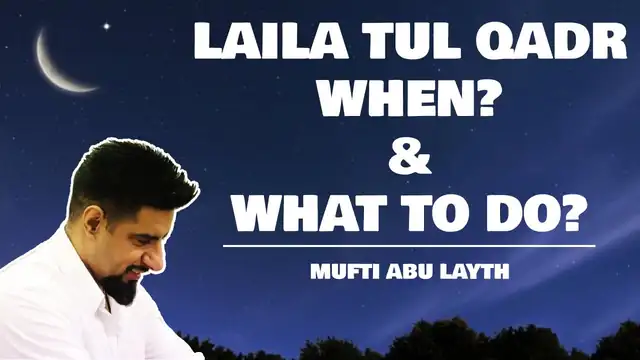 Press play to load from YouTube. Nothing loads until you do.
Transcript
machineauto-transcribed, may contain errors · source: youtube auto · click a time to seek · dotted terms open the glossaryforeign what does it mean what is it why is it important when is it and what is one supposed to do in laylatul right so simple questions as they may be the answers for some are perhaps more complex than others so first of all leila it means the night of power
or the night of decree we understand that this is the night in which revelation began that we revealed it in reference to or the kitab um revelation or the quran okay
that it is more virtuous um it is an abundance of or abundant blessings are to be found on this night this is what we generally understand that it's qualitatively speaking it is better than a thousand months although this number is not this number isn't um it isn't reductive it's exemplary to mean abundant and and countless blessings in terms of time
span right now when is it the scholars have disagreed massively and so drastically on when leila qatar occurs so some saying that like imam abu hanifa's transmits from him that right throughout the year that it is right throughout the year some people feel it moves along the year in different dates throughout the year the majority of the ulama feel it is within ramadan okay so as uh
um including qadhikhan but ibn abidine transmits from imam abu hanifa that it is it rotates within ramadan however a more popular as you move along the spectrum more popularly it's believed to be within the last 10 nights of ramadan imam malik it's transmitted from him that it moves around in these um in these last nights as ibn atla transmits from him that's also uh his understanding
and another transmission from imam malik is that it's on the odd and even nights of ramadan in the last 10 days which is perhaps more befitting considering that people begin ramadan on different days especially in our times okay so we so according to imam malik's understanding it really fits it doesn't matter what day you start one day before or after as it often is the case here
within the uk um the last 10 nights would still have layla in the odd and even so whichever it falls on more uh according to imam sheikh ayi perhaps the 21st night or the 23rd the more towards the 27th that is one of the transmissions of uh
and a lot of the transmissions from ibn omar which are found um within the sahih that it is uh within the last seven he does transmit in the same reward as some people feel it's in the first seven of ramadan and some feel it's in the last seven and that's what he feels he's um his understanding is so you can already gather from this that there's a huge difference and descent on when laylatul qatar takes place however for the most part people go with the hadith which are transmitted from i shall
the and the understanding that it is going to be in one of the odd nights of the last 10 days popularly understood to be the 27th night okay and that is what um [Music] they say that the fatwa that's the hanafi fair as well they say the fatwa for the common people is we just set that date and we just give them that and there's no harm in that okay so whatever a person feels it's this great scope
and diversity to cater for them now um what can be done on so firstly i would say that it is just lay little other in and of itself just on just the sidestepping and explaining that it is a temp it is a blessing that incorporates it it encapsulates this barakah temporally okay so by just having passed through it you have passed through this
uh immense state of barker there's there isn't a mandate on what to do that's just to just to clarify in my understanding of things now moving back the things that a person can do there's many things that scholars have stated however there is quite a um there's an enigma okay there is a bit of a problem i will come to that um but first of all what can people do so you can recite the quran
you can pray salat on nawaz you can pray nephil you can do thicker which you can give charity you can um you can learn there's a number of things you can give um which i've mentioned there's a number of things that people can do you can do istighfar seek forgiveness now these there's nothing wrong with any of these and these are all actions okay there are all virtuous actions virtuous on any night
and unarguably more so in a blessed time space okay however the um the enigma or the the kind of the issue is that we don't find any of these transmitted from the sunnah of the prophet salem we know that the prophet sallallahu alaihi wasallam himself he would that he would do that as the as the hadith mentions that he would stay awake
um during these nights or for a longer portion during these nights but it does not clarify or transmit what the prophet salallahu would actually do now the hadith in termithi where aisha radhillahu is asking the prophet what should i do on laylatul so the prophet mentions and that to a very short dua
foreign most generous so forgive us and that's a very very short sweet and simple dua but there isn't a a scheduled structured list of what to do during these nights now that doesn't mean that all these actions that i've listed before from tilawa or nafal or charity or dua or that there's anything wrong with these things these are great virtuous actions
however they have not been transmitted in a structured format by the prophet to perform in these last nights what that means is if a person wants to do them that's absolutely fine these are ichthy hardy matters and these are fatawa and improvisations of the scholars of islam that have said well these are great actions and people should do these things um what one shouldn't do is impose this on others so you shouldn't think well you know i've spent this whole night awake
and such and such has just gone to sleep it is a personal practice at best that is all it is uh people do perform at the caf as well but the you know the critical chasm that polarization that problem persists because even there you will find how imam ali transmitted he said a s
and except he names a just one person but generally the practice of in his time and the generations before him that they had left um uh atikaf and then there's discussions on that some people because they felt it was almost or resembled a monastic practice um you know and things like this but that's a discussion for another day but my to to sum that up what i'm saying is that yes there is great virtue in this night
by one just being in this night they have absorbed these blessings yes if one chooses to do more if um to pray to to tilawa to do athkar even thicker just thinking about it because zika means remembrance but is it a simple chanting just to a ritual chant or is it remembering in this in the sense of mindfulness of allah i would argue for the latter but even if
a person just did simple uh ritual chanting of subhanallah that is virtuous if a person prayed nafal or did atikaf or gave sadaqa or did these things these are incredibly virtuous but we are not to impose our righteousness on others especially since none of these actions have been described from the prophet himself doing them specifically for um the ashral as specifically for little so although we know the prophet described this night
with immense value but we don't have any description of what he himself sallallahu alaihi wasallam did during these nights and the only very few descriptive uh hadith we have are our very short duas for the most part i hope that's of some help may allah make things easy and may he accept from each and every
Something wrong here?
Tell us what is wrong and it will be checked against the recording. Nothing changes until a person has reviewed it.
Sending a note needs JavaScript, which is off or unavailable in this browser. Nothing has been sent.
No name, email address or account is asked for or stored, and the inbox does not store your IP address. For rate limiting it keeps an unreadable fingerprint of your connection for 48 hours, and our database provider's own logs record connections as every website's do. Only your note, its kind, the page and the moment in the recording are kept, for review.
Cite this recording
Stable id, transcript version and tier are part of the citation. Every change to a transcript is logged.Mufti Abu Layth Archive, auto-transcribed, may contain errors. https://muftiabulayth.org/r/r63uy_b9glw/ (accessed 1 November 2026)
- APA 7
Mufti Abu Layth. (2021, May 6). Laila Tul Qadr: When? & What to do? | Mufti Abu Layth [Video, auto-transcribed, may contain errors]. Mufti Abu Layth Archive. Retrieved November 1, 2026, from https://muftiabulayth.org/r/r63uy_b9glw/
- Chicago author-date
Mufti Abu Layth. 2021. "Laila Tul Qadr: When? & What to do? | Mufti Abu Layth." Video, auto-transcribed, may contain errors. Mufti Abu Layth Archive. Recorded May 6, 2021. Accessed November 1, 2026. https://muftiabulayth.org/r/r63uy_b9glw/
- BibTeX
@misc{abulayth-r63UY-b9GLw,
  author = {Mufti Abu Layth},
  title = {{Laila Tul Qadr: When? \& What to do? | Mufti Abu Layth}},
  year = {2021},
  month = {5},
  date = {2021-05-06},
  howpublished = {\url{https://muftiabulayth.org/r/r63uy_b9glw/}},
  url = {https://muftiabulayth.org/r/r63uy_b9glw/},
  organization = {Mufti Abu Layth Archive},
  urldate = {2026-11-01},
  note = {Auto-transcribed, may contain errors}
}