
Recordings › MindTrap with Mufti Abu Layth
Shaykh Sidi Iqbal | Tunisia, Maliki Madhab & Dietary Customs | MindTrap #81
salah salat salaah namaz salaat namaaz as-salah al-salah salawat fiqah jurisprudence fikh hadeeth ahadith ahaadeeth hadis hadees ahaadith tafsir tafseer exegesis tafasir tafaseer madhhab mazhab school of law madhahib mazahib madhaahib malik ibn anas malik bin anas imam maalik imam malik ibn anas imaam prayer leader udhiyah qurbani qurbaani udhiya udhiyya kurbani masjid masjed masaajid masajid shari'ah shariat sharee'ah maaliki malikite malikiyyah maliki school hanafite hanafiyyah hanafi school fatwa fatwah fatwaa fataawa legal opinion halaal lawful haraam forbidden sunna sunnat sunan prophetic practice jahannam jahanam jahannum koran quraan al-quran surah sura soorah surat suwar soora ayah aya ayaat aayah aayat sahabah sahabiyyah sahabiyat salaf as-salaf salaf al-salih salaf us-salih al-salaf madinah madina al-madinah madeenah yathrib sufis sufism soofi ulama ulema ulamaa sheikh shaikh sheik shuyukh ummah umma ummat madrasah madrassa madrassah religious school mahr mehr meher haq mehr dower in sha allah insha'allah in shaa allah insha allah inshaa allah alhamdulilah al-hamdu lillah alhumdulillah alhamdulillaah hamdulillah subhanallah subhaanallah subhanallaah as-salamu alaykum assalamu alaikum assalamualaikum salaam salaams salam alaykum wa alaykum as-salam peace baraka barkat baraqah blessing shukar shukur gratitude duaa duas duaas supplicationlive stream · 1:47:37 · 4,000 views · 3 Oct 2025 · Open on YouTube
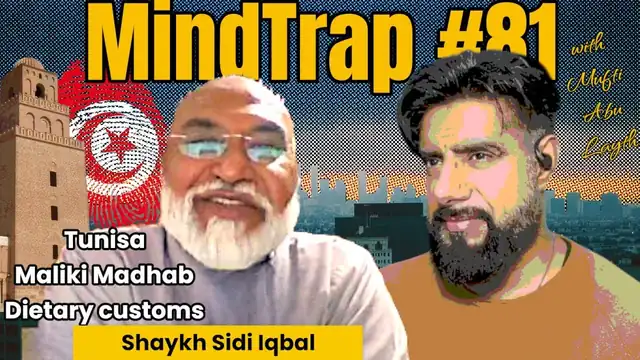 Press play to load from YouTube. Nothing loads until you do.
Transcript
machineauto-transcribed, may contain errors · source: youtube auto · click a time to seek · dotted terms open the glossary[Music] [Music] All right. Alhamdulillah. Just going to wait for some people to
tune in. Uh we've we are back with Mind Trap Allah Akbar. and as always here to share some epic and just very uh soul inspiring conversations inshallah.
And who better than to resume this amazing series with than our own beloved and esteemed guest Sheh Siddikbal who requires no introduction. He's been on the show many a times and really just sharing invaluable gems with us. Um somebody very dear to me and many of you as well.
So spring onum all there's always uh it's always a pleasure as I can see those of you just tuning in you're more than welcome to click like and share right and what's up fresh.
This is uh >> it's the it's the N that you guys bestow upon us. So she wow it's been quite a while and I know um you know there's been as always I guess many of things taking place life.
Yeah, you we we were just connecting that you've recently also traveled to the holy land of Tunis Allah abar as did I. So that's very yeah I mean I'd love to get you know just pick up with some of your reflections on that and just allow things to unfold.
>> It's um I I came back sad sad actually. Uh sad in the sense that I know we uh you know South Asian Muslims and uh we put down our culture and you know our practices.
Um but then when you see uh you go to Tunisia and you know um because of colonialism uh and then you know the after effects of um the colonialists um I'm reminded by you know um I don't know if you um you know Afab from Bristol he's moved to Australia now.
Afab Afab Malik was >> Yeah, Afab Malik. Yes, >> Afab Malik. >> He wrote that booken since I've spoken to ages. May Allah protect him and preserve him. Um and you know give him the best in this world. And he know the broken chain thing. uh um he gave he he wrote a book um and Indonesia you see that you you know uh it's broke because um if we had um
you know imams like um uh you know the great or you know um uh uh you know Muhammad Kwani Yeah. >> Uh, you remember did you did you get to imam too?
>> I did, you know. I did. I I got to s. >> Um, >> yeah. Really? >> You know, it was interesting because nobody really I mean the people didn't really know these uh tombs or anything. They didn't know uh hadn't really heard of them. Maybe they've heard the names as in because you know streets are named after them or colleges and universities but >> but they don't really know anything about them.
So Imam Saknon I asked um our driver we had this driver take us around >> and he'd never heard of it. I mean the thing he knew was the sahhabi alawi and and he knew the masid of and that's it never knew anything else and so I put it into Google Immun >> and now that you've got his uh his kind of makbara and it's at this point and we just followed Google maps and it took us into these, you know, took us cut us
through some neighborhoods and and it said like you're 3 minutes away for example. So he was telling me, you know, this is definitely wrong. It can't be, you know, this is going towards just nowhere. So I said, well, you know, let's just And so we keep going and it says like you're 2 minutes away. Then we came out in the back where it's the there was just like open land and you know some and it just looked like a dilapidated area like nothing.
And so he said to me that you're you know this is wrong. There's nothing here. So I said to him well it's saying it's only one minute away. Let's just keep going you know we'll just turn back from wherever it is. And it was there. That was it. The the So yeah so it was quite a learning experience for him as well. Uh our taxi driver, he actually knew the area. The area is actually it the whole district is you know the local rubbish it as well.
>> Yeah. Yeah. Um before we went I did research uh a lot of people have complained to you know the uh the city council and um uh if you you find certain videos of um and even use um uh items where you know um the the locals have gone and cleaned it up but >> okay >> there's so much rubbish there and um the tombs are >> and Um afterwards we went uh because it was a Sunday uh uh I actually asked around cuz I went I wanted the complaint
in with the council but it was closed and um the cafe right opposite the guy spoke really good English. He said it's not just the tomb of um uh Imam Smoon the whole city is you know neglected uh everything. Um but again uh it it's still the building is still there. Um uh then you know um the same with Imwani.
>> Um exactly the same. H >> how was that finding that for you? Uh it I I I I the thing that you know as I said left sad because you know um I I tr I was in Kerwan then I went to Monet Mazer's tomb is you know Bourja you know the founder of modern day Tunisia his tomb complex there's guards there's a everything there well you know Um uh uh the
cemetery which is attached to right at the beginning of it is the t tomb of you know the great Imam Mazeri and um >> beautiful building it's not you know um derelict like Imam Sman or imized but um empty um uh and the thing I found really to me which was Uh the uh you know um the opposite you know um uh
the contrast was um sides um >> okay >> okay >> is the one who cuz you know there's two opinions that you know uh how the yeah I thought it was what's There's another >> what's the other opinion?
Yeah, >> I can't remember the name of the other but you know see the is the well known but you know his tomb complex um again the maybe because it's in the capital and um the Ottomans um build complex um uh around it. as cold as of um Sidi Mahar is alive and kicking. It's not, you know, the relic.
It's um >> uh well, you know, uh lot of women there, but you know, um you go to a lot of the tombs that you find women there, but um >> is that >> the contract was that it was live and kicking and the mosque opposite um which is named after Sydney Haris, but people know more for uh the Turkish um governor who um built it.
And I said, "Look at this." Now, you know, the one who authored the uh you've got to, you know, ask the locals don't know it. You got to ask Google to uh Google maps and he takes you there. >> And while you managed to find with ease or was that tricky or difficult for you?
>> Oh, ease. It wasn't a problem. >> That was >> Wow. So we struggled through that as well. >> I did. I I had >> Yeah, I had marked them out Google Maps before I went. Um the strange thing that I did go on. >> No, no. I was going to say, but the Google maps take you, but you know, getting into that almost the old Medina thing, it was because all the tight alleyways and everything, it wasn't it just got you straight there.
No, not a problem. you >> uh the we arrived um in the evening um the day before >> okay >> and um we took a walk and um uh quite strange thing I've there's a zi there attributed to you know um uh not zawi of jalani and I subhan allah look at this you know the guy never even came here but you He's supposed to have done the that's marked and it's a big building
>> big building but you know uh the the uh I went around you know uh uh near most of the medina you know uh near the uh the great mosque and um it was really really fascinating how many mosques you know uh mosque and tombs of you know, um, uh, greeting, you know, uh, Quran, um, that had come and settled there, which was really interesting.
And, um, and they were, you know, the prayer they would open, but uh, um, no, it doesn't open at all. >> Yeah. I what had happened is when I got there once again I knew this was the you know we got to the medina the old medina and I I I you know it's just old it's those kind of old style homes and the alleyways and um and it's crazy because I asked somebody for some directions.
our driver was I mean he was more alien to all of that than which is surprising because >> I was under the impression he knew all these things and he clearly didn't then we asked some of the locals and and there was this there was this guy who you know just almost looked entirely out of it if I could you know say say that not to be judgmental but Yeah, you know, like somebody just totally looked like just out of it and he um you know, just
dressed odd and and just this whole thing about him and he's just uh looked like he was almost I don't know whether it's high on something or drunk or almost something but he he So I'm asking somebody else I said you know do you uh the of so they're saying to me that yeah, you know, you see that alleyway, go through that alleyway and kind of and I said, "Yeah, but I I'm trying to ask, but because once you go through it kind of it's not just right there, you got to keep going." And so he says, "This guy, yeah." So this guy says, "You know what?" He says, "Uh, yeah, I'll come with you."
>> So I thought, uh, he goes, "No, no, no." He just I've got to say he masha you know you don't know who is you know like what kind of mode of being they are in a sense >> this guy was an absolute for us like an absolute angel almost like he >> took us uh I had my little ones with me my girls we went right through he took us he showed us completely around you know the he took us to the masid tal abwab he took us to other places like the you know the hand uh uh where they would kind of hand woo weave uh scarves
and stuff and all of the and he just really show I was shocked >> he knew it all but even he didn't know the exact home of he knew everything else and I said to him that you know it said back there there was a the uh the street of Khwan it must have been that so he's kind of confused >> you see that street. >> Yeah, it is. So I said to him, it must have been in that street.
So he's confused. So there's some those homes, some of them are inhabited. So there was this older lady standing by by her door. So he asks her and she says thinks I'm speaking about some masid or something. And I said to her, "No, I'm not talking about the masid. Speaking about the M ofi." So she's looking at me like, "I don't know what the what are you talking about?" And I said, you know, he's he's d.
>> Then I went on Google and I showed her the picture of the the house. >> So she recognized the door of it. So she goes, "Ah, that one." She goes, "Yeah, you got to go back those alleyways." And it was where we thought it was that street of but >> wow I did think as well that you know these legends and giants and and so much could be done with just a tiny bit of investment >> you know like all they have to do and people will people will come you know people will I mean they would make back exponentially they would make back money because it would bring in that I know
Tunis is trying to now bolster its tourism again. So it's um you know they're trying to invest again. >> There's a lot Tunisia has a lot to do to get people back cuz you know Tunis airport I wouldn't recommend anyone to fly into there really bad. Oh, the uh the right.
Okay. The actual capital Tunis. >> Yeah, I actually were going to >> I I stayed in the capital. I actually stayed in Riyad right opposite uh the Riyad I was saying in was um where you know was the house of Kaldun. Um, >> oh ma really I was I was really >> following in the footstep of legends.
And then you know you walk down you walk down was is the mosque where he used to teach >> all that is. >> Yeah. Uh but going back to you know the uh the mosque of the three doors you know you know um before the uh you know um the man uh you know the manuscript that we have in Birmingham which is the oldest Um before this manuscript we the only two
uh oldest records we had from the time of you know the Sahaba um uh was you know the calligraphy in the Dome of the Rock uh and you know the calligraphy right at the top of you know this mosque >> okay I don't know up >> because it's very old.
Uh um uh but uh like a lot of stuff in Tunisia that you know the locals are not aware of it. Um >> the uh the tourist people are not highlighting it and um uh they are trying the government is trying to get you know the Europeans back because >> Yeah. They're trying hard now with tourism. >> Yeah. >> Yeah. But not you know the Muslim tourists.
Yeah, they're not see what they don't realize I think what you know it's something that other countries clocked like obviously Turkey and even Morocco and other things clocked that >> there is much more tourism even from the west but from the Muslims or the kind of ethnic >> yes >> they they are bringing in much more than the regular kind of like white westerner that was it's not I mean they are drawn as well to obviously go on holidays and to those countries but >> the amount of money that is coming in from these you know from Muslims as
tourists just I mean it doesn't mean they're coming on Islamic tourism but they're just coming they're just Muslims who happen to be living in the west >> it is a gamecher I >> speaking of the places the the companion uh that is buried the aloi Um yeah, you know, I I mean that's something that she um was like a very profound experience for me, you know.
I I didn't know about the I didn't know that of of the sahabi. My my ignorance I didn't know of of this sahhabi being buried there or much about this sahabi. Um I mean that's you know I admit to that I didn't know that and and when I was there in Tunis and I was planning some visits so I was looking you know who else can I visit what's the kind of zarat and so it came up as the as the most prominent >> especially in so I I was learning about the sahhabi oh
this was the companion and and so we'd gone there And yeah, I was mentioning this. I think I was sharing it previously as well with some people that you see we went there and I had Zara with me and so we've kind of gone in and it was noon and it was boiling and and like I said I don't you know know too much about this sahhabi at this point and at this point I just knew he's a sahabi and he'd come here and >> so we've gone in and it's quite empty.
These places are quite you know they they have a caretaker there and uh so we've gone in and just done fata and you know gone in come back out and the caretaker I you know just donated some money to him and we were going >> and he as we're kind of leaving and so he kind of calls me back and he goes uh you know oh come back come back he's saying something I don't understand what he was saying stuff first.
So I've gone back >> and he says um you know what he so he takes me back in the in the room and he goes I'm going to open the cage for you know there's the cage >> around the sahhabi's >> grave. So I I said to him, "Oh, there's there's no need like you know like it doesn't matter like but but he started opening it and he's like and he says you know why don't you just go inside go into the next to the actual >> so I thought well cello you know since it's opened it would be disrespectful now to say no and so I've kind of gone in again with Zo and we've gone in and
I've said yeah let's just do Fatiha again and just doing Fatha uh and you know you can read the things and I just just kind of just touched the uh you know you could touch the the tomb thing >> she I was suddenly so overwhelmed with I don't know what you know like I really um like it was like I my eyes became tearful I Um, no, you know, no premeditated, no,
in fact, if anything, I mean, embarrassingly, it was so hot. I just wanted to get out of there before. This is why I was telling him, "Oh, no need to open it. I just want to go back." It was boiling. >> And it was so like, you know, in that moment, like I was trying to make sense of like, wow, like this this profoundity. So I so I just make my dua and whatever and I came out and and then I was learning more about the companion as well and just who he was and he would be known to carry the hair of the prophets prophet
sallallahu alaihi wasallam with him and >> and according to some narrations asked to have it buried with him >> with him >> and it just made me think she that you know places that they must have a kind of, you know, like a like a hub, almost like a magnetic field hub, but of of >> of what it does to a person's consciousness that makes it sacred.
That when you're that there must be, you know, like a charge. There must be something, isn't it? that like almost like a spatial and temporal like a field almost of you know whether it's going to be like a special barakat or a special something that maybe not always but it can connect with your consciousness and trigger like a certain cuz I I was making sense of that I I mean obviously it's a very sacred place but the way I I felt that and it wasn't it was something you know
when like I said it wasn't I wasn't premeditating anything and if anything I was unfortunately trying to actually get out of it cuz I was thinking I'm just sweating so much and >> and yeah and it had me just really think about that that how places maybe because of events that have happened there or people that are there or that they kind of almost have this like a field to Um >> so yeah I just um yeah just sharing sharing that with you but
>> we have a precedent from you know this in the Quran. Yeah, >> you know, you know, when he uh comes on to, you know, uh and she has fruit out of season. And um he asks, "So, where have you got this?" And she says, "From God." Uh and um says, "If you can give a fruit out of season, you can give me sun out of season." So, he makes dua.
So it's uh uh there are certain places because of the individuals um alive or you know dead they carry this um thing. It's like um you know uh great mosque has this uh buzz. >> Yeah. >> This energy. >> Yeah. >> Because you know uh uh people have been praying there for literally over a thousand years.
Yeah. Yeah. That is >> Yeah. And then you know um inshallah next time you go you should go to the zuna. This is where the to teach the you know the great like Abdullahbin Omar Abdullahbin Abbas and others and then you know um Omarb Abdul Aiz sent you know Fah from Medina um to um Tunis and this is where you know the Zetuna comes about that you know this is where the people of Medina was saying the
adage is that you know the Sahab conquered the land but it was the people of Medina that conquered the hearts because they came and taught the de and um uh this is one of the foundations that you know um the people of Medina came and laid uh um for um the school of Medina to this date.
You know it continues And um praying there is um I was literally you know um uh around the corner from where I was staying and um uh it's an amazing place. Amazing. Um >> Yeah. Wow. No, it it is it is. >> Yeah.
>> And and I mean the heritage it has and the tradition. I mean what's interesting is that you know you speak of Zetuna. Zetuna of all the um you know it was uh like it was alive and kicking as you said not so you know only within decades ago >> and one of those >> Yeah. So >> colonialist that destroyed it >> colonialist but but even during colonial times it was alive and kicking wouldn't you?
No, it was I the thing is the colonialist left in person but they left their you know um replicas behind >> cuz you know >> I feel that where did that go? Because you know it's if you look in the late 1800s >> Yeah. >> and the early 1900s and you've got all of these >> Yeah.
Yeah. But and all of them you know there was so many of themh Salim there was there's so many coming like a whole tradition comes down >> and then within decades it's like nothing like I don't get how that disappears like that I would yeah >> the system got destroyed the system got destroyed it's like no I know what happened in 1970s uh in Morocco I'll give Morocco as an example Uh the functioned um and continued to function from the
day it was founded till you know um uh the late 1970s when you know the feeder colleges you know the madaris around the kerowine were closed >> and opened up to tourists. So you know the fee uh uh how students got into the uh cuz you know they came from villages, towns uh they they did their uh uh they memorized the matum and they came to the kowine and they would stay in the madaris around them and then they would
be prepared to attend kowine and um those feeder colleges were closed off it was for a quick dollar, you know, the tourist dollar and um it destroyed the whole system. So what the king did uh what the king did you know um he moved uh the scholarship from the he built you know a new state-ofthe-art um building you know >> in um and moved you know the but you know the
old system was gone we had finished it >> so now you know um uh in the late um early uh late ' 90s before you know died uh the famous you know um address he made that I I made a mistake by saying um you know our um youth to the Middle East and um uh yes that was one mistake but the greater mistake was you know destroying um the education system cuz you know uh the resilience of uh our you
know scholarship is that you know if you leave it alone whatever comes they will you know um uh uh defend the system is resilient that it can defend itself it's like you know um I would actually you know um encourage people to go and visit South Morocco you know the Seuss >> Seuss yeah >> yeah because you know the Seuss the old system is still functioning.
The madaris are still there. Fukah are still there. And um okay, an example I'll give you, I don't know if you have you heard of uh Mudi >> the Oh, the Usulli who has the >> Yeah. Yeah. Yeah. I have this >> he did something on the Nam of uh is it like something to do with Shabbi or something?
He's brought he has one uh like a two volume work. Noanis is he has a sh on it and then he has >> on what you are saying as well as well. Um >> but the thing is he has his own madrasa he's a massive building and they're still teaching the old way people come memorize the mat and then you know um the um gives um uh but that system in Tunisia is gone >> and um uh uh and we can't blame the
colonialists for that the French we we uh I blame other things in themselves, you know, the uh the neoc colonialists because you know um uh we like you know in in Pakistan and um uh I don't know about Bangladesh but in Pakistan uh our rulers have been worse than you know the British cuz you know the uh the British colonialists we knew that they were outsiders but these people are doing exactly what know the colonies did but even worse and the same thing happened in Tunisia
>> with the education system but alhamdulillah you know when uh what the Moroccan king did was he recognized his mistake and then said look um we're going to go back to our system where [Music] Malik and alhamdulillah you know uh um since Then um it's interesting how you know the Wahhabis just um became Maliki.
Well, I suppose you know anything if the if it's work related why not? >> Yeah. >> Why not? Because the thing is that you know um uh that you find that you know uh there are so many um you can tell when they will say that you know um >> yeah I know where you're coming from
>> you know you know um heritage uh you know Um uh this uh where was it? Sunday. Yeah. Uh someone told me that you know uh someone selling um [Music]
any cutting story short uh went and picked it up. Uh uh uh I've I've had um certain you know sections of it uh have been >> I've got some sections of it >> but it's not complete 12 volumes. >> This is what 12 volumes 12 volumes >> 12 volumes. So from there is you know um certain sections that I'm of missing but you know uh um most commentary is there.
So I'm reading the introduction and um do you remember you know some time back you know from the other side of the pond someone was saying that you know um the um you know were reliable >> oh relied upon >> yeah some people make that claim >> yeah so um uh you know uh um you know um did the chapter headings on it.
>> Yeah. >> And I >> on the >> on the Yeah. He he arranged it, you know, bookwise and then chapter headings >> and yes and um >> Okay. Wow. Okay. because you know whenever you come across this you know it's always there >> he did that >> and um the editor of um you know this uh the commentary on is an Algerian guy I can't pronounce his name it's it's his PhD
um the 12 volumes and um he goes it in print I said bloody hell I think I've missed such a thing and um >> the wait the the is in print is is that what I heard or what >> as the go of the which was rearranged chapter wise by imbiz >> okay >> and
And so I read the note and I said, "Bloody hell, I've had that book for ages cuz you know, you buy your book and you you're only interested because you know at that time I was um uh uh trying to why did I immune the uh uh um uh stories is that you know he wrote it because you you know [Music] >> wrote the book.
>> Yeah. So, uh they actually found that you know um that book was brought into print of you know Abdazbun. >> Yeah. And um it's actually that is a smaller part of what it majority of the book is of um you know um of um uh imbi which you know um the chapter headings added by imi that's a
>> okay okay I have I had no idea she there is uh you know your mic is there any chance cuz I'm having a few people >> as well saying it's quite choppy and I can hear it >> if you can Oh yeah. Yes. Yes. Yes. That's a lot. >> Was that the mic connected right?
>> No no no where you just put it a second ago. >> Uh is is a lot better. >> You hear it now? >> Yeah. Yeah. That's a lot better. >> Yeah. So yeah, that that is a lot better. It's just um it is coming. It was let me just see as well quickly in the section here. It was kind of getting No, I think the where you placed it was fine.
>> It's just that it was being a bit choppy when it was as well. So, let me just see here on I'll just adjust this as well from here for for you. See if that makes a difference. Um, so sometimes I it allows the system to correct it. So, okay. I'll >> Yeah.
So, okay. Obia is Yeah. I mean, the is obviously very um controversial people. No, this is the thing now that it's not >> because you know you you start reading >> it's not cuz the thing is look you know what is you know Malik >> yeah Malik >> yeah and um then his works are you know from the um >> so Yeah,
>> he at that time he is arranging the chapter the stuff in chapter head uh chapter headings >> and then uh you uh there's um you know great you know and his and um you know he's uh you know
yeah yeah of course >> yeah that's his last work on that's it >> he he has no major work after that >> and >> I mean that in and of itself is 20 plus volumes yeah >> yeah and um uh this it's uh really uh one of the things I have to do is just you um write up my cuz what I do is I I I get a book and I get postits and um I'm sticking in books and um uh the amount of postit that I have you know um
uh in theat of um uh the amazing is literally too many because there's so much in from the bay so much I I highlight I take a a yellow highlighter and I just go I highlight all my >> Yeah. >> Yeah. >> Yeah. But then how do you access it again?
>> Yeah. So it's a good point. I did used to put you know sometimes I used to have those little um I suppose you know those kind of little bookmarkers like you get loads of them the little tiny stickers >> in I I I just put postits. >> Yeah. I like that. I like that. >> Absolutely.
I I I can go back to it >> because this this this whole thing that um because Hazam makes this claim, doesn't he? He comes up with this that oh when he's describing the andaloo and the am the malikia of Anderaloo and he then he puts that claim in there that the uh the Malika don't really consider it anything and and I feel that people are quoting him but it doesn't really make sense
>> exactly and and how can it be the zade I didn't know of that he'd uh categorized the chapter headings >> uh for >> I I'll show you. Hold on. I'm >> go for it. Sh. See, this is for the uh Maliki fans out there. School of Medina people. If you do have any questions, by the way, that you want to share to the sheh, you can post them here.
Uh the mic is a bit choppy on um um Cherikbal's side. I'm not sure. H Yeah, we can >> shall I just change the port? >> Yeah. Yeah. Can you Yeah. Can you change the port? because it is it's coming off with interference and [Music]
uh connection. I don't think it's a connection issue. Um I think it's just the you know the mic catching interference um which it which does happen. So, let me There isn't a a fan or anything blowing in the background.
I I don't think there is. So, said the mic is correct. It's connection. Um, no, it should be connected fine. And I think you're just Let me just un I think you just uh Right. Yeah. As soon as she's done it, we'll have a look. I don't think it's the connection to the live stream. It's the connection to the sheer zone.
Um, yeah, it's not cuz I can tell it's not my it's not from the system here, but yeah, those of you that are just tuning in, uh, sure, you know, do like and share. And if you do have any questions that you want to put anything interesting to Shikbal, you can put it in the uh comments and we'll sure get to them.
But we were just discussing for those of you that have just joined uh some of the great mother texts of the Maliki Madhab and one of them named after the great sheh is um >> how is it now? Can you hear me now? >> Uh right. I mean I I can hear so even that time we could hear it's just that it was getting a bit choppy in between.
Somebody's saying uh the video is choppy. The video shouldn't be choppy. Um it's the connection. No. Um let's see. The mic is correct. It's the connection. H But cuz it could be sometimes the um let's let's see. So yeah, Walt Sh's doing that.
So we're discussing the the great mother text which became controversial. Uh not that I'm I believe it's controversial but that it became so as some people claimed it was not really a relied upon text within the Maliki Madhab. So it is from the early generations if you like the students of the students of Imam Malik or just after and they're compiling it's in the early era where they're compiling mass reporting from the imam and so this is one of the major texts.
>> Uh yeah let's see one moment. >> Yeah I'm just going to let this go past. I've got an aeroplane flying over. Yep. So, let's see. I can hear you now. Let's see. And I can So, hopefully >> you can, >> right? Oh, what you could do, Sh?
>> Somebody's saying it might be your connection. She do you want to uh what is it? Leave and reconnect. Shall I um do you want to somebody did make a suggestion what if you rejoin the stream and so the same link that I've sent you and I'll just remove you from here and then you just come back and let's see if that refreshes it for you.
>> Okay. >> Okay. So we'll just have Sidikbal join again because it could be that um yeah so the it's this one you know one of the major mother texts that you have within the school of Medina you have uh obviously the you're going to have the um of you'll have the much you'll have the uh also the Um was also considered by some issu
um you'll have abduses abdus's um what is also like his major now this is known as it became controversial because of some of the views that he arguably transmitted from Imam Malik and with time some people cla claim to distance themselves from uh from the book saying it's not really reliable.
It's not within the Maliki um you know the the kind of pantheon of Maliki mother text because it has the views of uh quite a few views. Um it also transmits the statement that Jesus died on earth a natural death. It also transmits certain uh fatawa on intimacy issues that are controversial and at times blacklisted the maliki mother the issue of in particular anal sex for example stuff like this now because
Abdul transmits this from Imam Malik it became Let's we've got you back. Um >> uh right. I we can try I think it does have a little uh like an echo still.
So, I'm not sure whether you know in uh mic settings it could I'm just uh I do have an option from here as well but my side I think it's this can only >> but we could just try we could keep going and just see how it kind of gets along. I was just highlighting that yeah the that some of the people uh tried to distance themselves from the that it was from the mother texts that um you know it did have some controversial narrations like that of Jesus having died on earth or or that of intimacy
issues or intimacy matters. Now Hazam if I recall correctly made this statement as well that oh the Malikas don't the Maliki uh don't really consider it to be anything but that contradicts the is diametrically opposed to the reality on the ground because on the ground you have you know the the greatest one of the greatest malikes of his time in Muslim Spain which is Rush who is Rush the grandfather of the philosopher
and so he is known as Kad Jama. He is one of the supreme you know judges of Muslim Spain. He's an absolute legend within the Maliki Madhab. Nobody denies that. He's one of the four authorities that uh Khalil relies upon for his mtasar kind of interpretation. And Rush spends an entire part of his whole life dedicated to writing a commentary on the Arbia which is you know it spans today.
Um it's going to be in 20 odd volumes. I've just got it over there. I was just looking at the number of volumes again to remind myself. So the like how could it be that that book be unreliable? So that's a fascinating uh you know an intriguing point. Uh if you actually look at you know the know like um the >> the kind of thing >> you know yeah the things you find rarely
will you not find >> after the would they would have the [Music] >> and um uh you you've just got to look at, you know, how many people transmit [Music] from >> Yeah.
I mean, nobody's going to have an issue with nobody. I don't think any person could say it's like I mean, I don't know how he even wrote that. How do people even write these books of that? Um, you know, obviously this is 20 volumes and it just continues. >> Yeah.
>> Yeah. And this is in our day and age 20 volumes in their time. It must have been um, you know, just it must have been incredibly vast and so I don't think anybody denies that. And also Z in his does include the but I suppose somebody could say the could bead but nobody can deny the bayan
>> no no was that can't be denied you can't you know any serious student >> uh of you know the school of medina um if he is not familiar with you know that um with someone you know who who presents himself you know as senior um you know someone who's familiar you know has stuff up within >> and is not familiar with the >> um I
I'll keep my thoughts to myself >> sure you It just occurred to me it could be if possible, do you have any earphones by any chance nearby? If not, no worries. It just occurred to me it might be that the mic is catching uh like a small feedback loop.
That's what it might be doing. >> It might be. >> No. >> If not, no. I have um on my phone. Um, uh, let me >> Yeah, no worries. You you take take a look. >> And whilst you're Yeah, >> that's all I've got here. There shouldn't be I turn the Bluetooth off. Otherwise, there's no >> there's no mics, anything.
But I can >> No, no, no, no. That's fine. No, I just thought if there was any earphones, it just occurred to me it might be the >> I have no >> Sure. Okay. No, no worries. We'll >> historically, >> you know, continue what you're talking carrying on. >> Yeah. historically you know um uh because you know there's a book called Messiah which is transmitted by um is a student of as well >> and um
>> uh in there you know um uh uh I think it's Jimi his name was he passed away not that long ago and he was that was his is a toy side of and in that he categorically says that you know um uh after the was what you um ended up with.
>> So I I would have especially in Alandaloo I would have thought so >> I would have imagined >> in Carowine. Okay. This is the uh scholarship in and um uh if you look read the introduction to the is the students that are asking him questions about the you know the from the to expand on and that itself shows you uh the status of that you know the
students are asking explanation So he ends up writing you know the and he doesn't stop at just messiahs he just ends up going through the yeah I mean that it is it is definitely something uh it's a fascinating discussion uh one could ask well you know why do you I think um he tends to transmit more of these some
of these masil that are deemed a bit more controversial as opposed to the other you know why is it not in the why is it not in although some of these many of these are lost as well so we don't you know like the the actual of Abdakam or the of or the of Um >> we have
>> no Abdak you know commentary on it is in print. >> Yeah yeah yeah I do have that but that's such a small but that's such a small >> No the full commentary is in print. uh uh it came out um from and B brought it out and from it's in four big volumes from the beginning.
>> Okay. Right. Okay. No, I've not. So, the one I've got is just one volume here somewhere on the shelf. >> I know that that just the journey. That is just the journey. Um >> uh um and that was printed by Dulam. I have that. But this one brought out um little couple of years ago. >> Yeah, >> it's um
>> Yeah. Yeah. Also, >> let me show it to you. Yeah. Oh, hang on. I'm missing. It's in print and uh I think um you might be still be able to pick up um a hard copy of it. and some of the is >> some of the discussions in there are um >> in the I am definitely interested in picking that up.
I didn't realize but but a lot of the books today because there was the Moazia as well Moazi um that I mean a lot of them are not um they're not as available so maybe people can't contrast them but a question would be why you know >> sorry um uh I've got really really bad habit I I'm aware of it.
No, you know your faults and when you do it, you realize it. So really my apologies. I I I do do that in but um no one can make this argument that you know because those works are that we don't have access to them. >> You know the it's included in them. uh the works that I'm >> you've got them in the ro this is you know something that you know um uh uh the favor that you know the work that
did was so tremendous that you all those works he put them all in one place for us >> yeah no theat is epic I don't think anybody could deny that and Um but my thoughts were that well people could say that theat is well they could say well it's the so you know the fact that there's narrations in there we're not necessarily you know they could bead that's the whole point that you know something was and I suppose their argument might be well that's the whole point that they
are uh rare but whereas Because in a particular book when like let's say >> Yeah. So the why why would um he why would he have views transmitted that are more controversial for example than the other?
Um or is it maybe they just chose to avoid certain mass and maybe he put them in there and um h I mean that would be question >> uh my own understanding is that um uh you find that uh with you know uh later imams they're they're trying to bring the school in line with the earth through why you know the and the other imbush to a certain extent is already doing that.
>> Yeah. But um you find that you know um uh the uters they are in the uniqueness of the school there's a >> uh people of Medina had their own take their own understanding and um uh it's you know something inherited uh it's uh preceded is set by your scholarship of the Sahab by the and carried on by the um uh which you know are unique and um
uh sometimes like you know um uh I myself have caught myself up cuz you know we are familiar with the minora texts more uh uh then uh we are with you know the um it's like you know >> yeah uh I'm I'm familiar with scholars that have memorized you know the you know from all the way to and then the as well uh I don't know anyone who's memorized you know the I've heard of you know from uh certain scholars that you know even the women
and Moritania scholarly they'll memorize them >> but the thing is >> memorize the wow Yeah. >> Okay. >> You find that you know even you know the commentators on the even they are not commentating on the they are commentating on you know bodies and uh you know you know of the you know incomplete work that you know uh once he became the judge He stopped
working on it cuz he was a very scrupulous man. He was paid to do a job and he wanted to do that job. what he was paid from. Then he had, you know, to um feed himself and his family and he worked on and um uh the work that you know the later imams like and you know and you know all the others that did afterwards um majority of commentators are commenting on the commentary I mean of the
so when Uh sometimes I'm uh uh as I said that you know um even I I found myself that you know um uh surprised that you know how the hell could I have missed such a point when you know I Malik the people of Sham you know um they have asked said how the hell could I have missed for so long and um you know I abar you know from his commentary that I was mentioning before he says Malik is saying that you know the people of Sh have this
and um it's not you know the time of Malik is about the time of the companions but uh again it's there and um >> so sometime like you know in the well-known texts because we are not familiar with them we are familiar with you know summaries that have been summarized for because we're relying on the commentaries. we're not going back to you know the uh um texts themselves and then we don't have critical editions of the texts and I I've been you know seeking since I
have been MIT you know for a critical edition uh of the and um I uh I have you know um even uh print uh people you know um printed you know manuscripts. Yeah. They've scanned them and printed the manuscripts which have you know notes of um you know the uh uh uh other scholars
of them. And then you know um Abu Aan he came up with a um an addition but you know this um >> uh editor of the you know um you know [Music] he is the first one I've come across who used 12 manuscripts and Um >> 12 12 manuscripts of the >> no
>> I don't realize there are 12 no the view six manuscripts you know for the he brought out a critical edition of >> oh of he used 12 >> 12 yeah I I bought one in recent years actually.
I bought it from Morocco that it had um it was it was a critical edition. I'm not sure the exact number. I'm not sure if you you probably have it as well, but it was like a revised and it had it was based on several manuscripts. The recell of Zed and I do have one better than this guy. >> Okay.
any interesting you know with this new Abdul Mahab Bdadi's uh commentary did does it have you come uh come across any interesting masil that maybe Abdul wahab has uh any particular rulings that he's he's said that are just intriguing or as he said any anything stand out from it >> yeah that was one that Because you know the well-known position of the school is that you know um horsemeat is uh is a no no.
He says it's okay and he he brings amazing evidences for it >> that horsemeat is what? >> Yeah maliki the mash is that no we don't eat it. You know that's a good you know it's a good point she speaking of the discussion of meat that because in the Maliki Madhab you've got the like quite a bit of a spectrum of where people stand and on one so I have a video as well called um um called meet in Islam uh a diverse
perspective or something like this where I'm covering the four mhabs and it's a very lengthy video showing the whole purpose of It was to discuss diversity in Islam because it ranges from one hand the very well arguably the hanafi are perhaps the most rigid in food to many Maliki on the other side who are arguably the most kind of uh li you know open when it comes to food.
Um now there are many I know I think uh Kasims you're right his view of that um you know horsemeat and these things are not allowed in the verse of the Quran but there's many Malika from other roots that have said well just bar pig apart from pig nothing else is haram uh even if it's makru but it's not haram so yeah I mean I wonder what your your thoughts or where you place yourself even she because I so you've got that view saying
well even predatory animals lions tigers that they're not haram they might be makru but they're not haram uh nothing and actually >> yeah so >> the well known is that within the Yeah. So, so they say and and I believe following the verse um
you know this that this verse where he says is that because Allah says apart from anybody eating I don't find anything haram except this except and ma and so on. So that's the only haram things in Islam. Um yeah so that's but then you do get these views where some people will say things like uh like you said horsemeat or uh using the verse of the Quran saying that therefore you know so these animals are for utility
um so you don't really eat them but yeah I'm not sure where you find yourself in that discussion. No, the the the um uh rebuttal to that is interesting. He says if if the ayat is bringing being put forward that they are for riding then so are camels.
>> Yeah. Exactly. Yeah. Yeah. That that's a solid argument. You can't really It's a good point. But it's just that I I guess it's one thing to say you know this is fascinating because many people when you know when they addressing the Sharia they seem to have like a very rigid uh binary perspective you know like uh they they almost as if they fail to see the colorful reality of life that there's many things people even if they're not haram people tend not to eat them.
And so some people they can't you know they struggle with that like they feel that it must either be haram that's why people don't eat them or if it's halal then why why don't you eat them but it doesn't work like that like not everything just because it's not haram doesn't mean you eat it. So, so this in that sense the you know in in the broad malika sense that well nothing apart from pig is haram uh even if it's maku it doesn't mean you necessarily go and eat those things people generally don't eat stuff like that but it doesn't make it haram >> like that doesn't
>> it's like you know um uh uh the classic thing that you get from Malik is now oh they dogs and um cats because you know >> uh than haram but I not come across you know any maliki who will eat a dog or a cat. It's disgusting. >> But again it's just >> uh just because it is halal permitted doesn't mean going to go and eat it.
>> Different people have their own tradition and um people stick to them. It's like you know if uh South Korean or North Korean Muslims um uh if they happen to be Malik in their culture is they eat dogs um uh because of you know uh the winter uh um you know to keep themselves warm then fine that will be part of their culture and from uh a Maliki point of view um it's not an animal that is haram >> but you know um uh um relics in the UK or the US or you know anywhere else in
the Muslim world um uh just don't eat you know cats and dogs. >> Yeah. And and it doesn't mean and and that's the point that just because something is not you know this is the aged old debate between you know like the hanafia the hanafia traditionally always and the shafa were always at loggerheads they never used to really it's like the maliky were just majestic in their own world nobody really buted heads with the malika so much but the shaf and hanfi are always historically at each other's throats and not to be you know but it was the
age-old debate on the purity of bodily fluids as well and the thought of the shafy that you know a person's uh intimate fluids or sperm especially is not nudas impure so the default argument of the hanafia would be well you know if it's if it's not haram then it must be edible like this argument that you know if something isn't haram, why don't people eat it?
>> It's so It's so silly. >> But this is the But people don't It doesn't mean that just because something is not haram that you like a tiger or a lion or these things are not considered haram in the mala, but it doesn't mean people go around eating them. Obviously, not that a tiger would let you eat it. That's another question as well. So the but I've seen you know this strict binary that people have and I think a uh an interesting hadith in line with that is that you know the Arabian lizard which was like a larger lizard
>> that they had the >> the Arabs eat it and it's not haram but there's the a very there's like a popular >> Yeah Because they gave it to the prophet and he said no. And they said oh is it haram? And he said no. He said I you know my people never used to eat this kind of stuff.
So I find it nauseating. It makes me sick. But it doesn't mean that it's haram. Like there's obviously cultural um differences with >> So that's what exactly what I was saying about cat and dogs. >> Yeah. So I mean dogs I mean people don't eat stuff like that anyway. That's just >> I think people would find that very insulting because they'd be because cats and dogs are very de >> Yeah.
Fine. Um, you know, horses are very dear to people, but know >> Yeah, they are. You're right. >> Yeah. >> But, but, uh, you know, Turkish tribes and Turk, you know, different uh, um, descent of Turks have been eating um, horses for so long. >> And even in Europe um, because of post Napoleon wars um, uh, people have been eating horse meat.
>> Yeah. They Yeah. Yeah. Yeah. You're right. They do. They um people do eat. I I guess there's it just comes back to a general, you know, that thing of people generally go for things like poultry or dosile kind of creatures, sheep, goats, uh even beef. It's fascinating that we were talking about this that if you if you think about it like you take the DIY community now you know the Muslims we're not vegetarian you know we eat meat yet beef is not really was not was not really
part of our uh diet really if you think of I mean in the west now it's starting and it's increasingly growing but you find that for example in places like uh a lot of people would say, "Oh, you know, ma gosh, then they'd stay away from it and they'd feel that maybe it was unhealthy or they had other reasons." And um apart from I think the Patan areas, they did eat it and do still continue to eat it.
But a lot of our places >> Punjab was eaten, you know, >> but they don't eat it much though, do they? Isn't it like uh do they eat it much? Like I thought they were not >> not as much as the pans the pro.
>> Yeah. Because weak. >> Yeah. Because we more like a lamb and sheep eating people. Uh and it's in the west that this has grown more because I was discussing this. I said it's fascinating that look in a culture where we eat meat, we don't really have we don't do much with meat. Like it's surprising like we don't have steaks. We don't have you know like ribs.
We don't have like you'd think people have been eating these for hundreds of years. Somebody would have thought I know why don't I just cut a piece and make a steak. But nobody like we we eat meat as a secondary thing as part of a curry. But we don't eat it primarily as meat itself almost. and and I was we were just discussing this as a discussion that that's intriguing whereas other like you could get for example the uh >> I was I was just going to say like the Arab world or you could get central Asia like you know you get these videos like people in Usbekistan or different places they up in the mountains and they're
cutting up and they've got loads of meat and they're making a steak and they're doing this and now you would think well what's so different about that culture and like our culture which also eats meats all meat also has cows has you know bulls has this kind of stuff and we do eat them as well but we've never like through hundreds of years never developed this culture to just eat the meat like I I don't that's quite intriguing as a you know just as an observation
>> um you know uh it's a discussion on you know the history of um uh >> yeah because of the Indians the Hindus do you think it's that >> no it's not because of the Hindus because the thing is that you know the Muslims are not the only one that brought you uh eating you know the Hindus were eating beef um uh uh now it become what has become you go to ancient scriptures um the best um uh sacrifice you could do was you
know you would sacrifice a bull to their gods. >> So once it was sacrificed you know the meat was eaten uh um and um uh yes they would sacrifice you know a bull rather than you know a cow. M >> uh but the meat was eaten um the different ways of cooking you know meat you know Turks came the Persian came uh um the Arabs before them.
So certain ways of cooking you know even you know with the haleem uh um uh uh and you know the different way cooking meat with certain grains and those are you know the interaction uh with uh different races or Muslims that came uh uh and um how we our diet is more you know um there's lot more ve vegetables and the variety of vegetable dishes the pulses
and um uh then the and the always there I know uh have you ever called >> sorry it broke up a bit there I didn't catch that >> it's um a big um or sometimes a big, you know, um uh like a small stick, but you know, uh it's thinner, but you know, it's cooked.
Um it's a big dish. It's called puna. It's um >> Okay. >> It's It's but but beef has always been hot. Uh it uh you know um uh you'll find that you know the buffalo was sorted more than you know the um malo cows for beef >> and um even you know um uh uh even the prefer the buffalo over the >> Yeah.
Yeah. because no because it's it's like there's so many of these things there, you know, the buffaloos and the pants and all of the there's so many. But I I I just thought it's it's an interesting observation that we don't we generally I think over there people use them for things like dairy and and other things, but they don't use them primarily for for food.
uh and maybe that's a secondary purpose of it like they sometimes have it but they generally resort to uh lamb sheep you know that kind of stuff you got the mutton you've got goats you've got stuff like that and I just thought that's intriguing h maybe is it because of the sensitivity to the Hindu culture that they avoided >> um I don't I I I don't think that you know I I I was revisiting Um you know um's work on um
and um he says um eating meat is >> eating what? eating meat. eating meat is for the >> you know it's it is wild though because when we think about it it's like when >> the you see it's such a part of our lifestyle and I as definitely as as you know could not be vegan or vegetarian but it's so um you know almost dissociated because
the actual thought you know the actual sacrificing like I've never actually ever sacrificed an animal and it's a bit like when said as well that I've never you know like but I don't know if I could bring myself to doing it I >> I find it >> no no seriously you've got you've got to >> seriously >> I tell you you know like you I have never >> Oh my god I'd be gut Thank you.
I have not I slaughtered the chicken said that, didn't he? >> On one eve. >> Yeah. But but uh uh I ended up uh uh slaughtering nine cows in one day. >> Slaughtering what? Sorry. What did you say?
>> Nine nine cows. Nine cows you did. >> Yeah. >> Yes. >> And um I couldn't do it enough that you convince me that you know you want beef every day. I will say go and slaughter a cow and then talk to me. I can't you know I was when you're in Pakistan when I studied in Pakistan lived in Pakistan obviously there was so many times you know you'd witness slaughtering I mean it wasn't all the time but every now and then and in the village
I remember uh this one time they were sacrificing uh this goat our own goat like we had this goat and and k goat kids uh so baby goats are the cutest thing ever. Like I think they're just >> like it's amazing how cute a baby goat is. Like a >> it's just so cute.
>> And so this goat had it had like two, you know, kids, two baby goats or whatever. And so they were sacrificing it and like like the way it kind of damn it kind of crushed my heart the way it cried out and I just couldn't like I thought to myself stuff I don't know I guess you know to people maybe it's a double because I I I do eat meat and I think we are made for and the animals Allah has created them for humans but it is such A I don't know like I found it so
difficult that scene where the kid cried and and I just witnessed the the goat doing this and I thought to myself damn I could never do that man like I thought I don't know it sounds like yeah but there is I I get it it's the ecosystem and it is the way and it is a sacrificing of Allah I understand that but Yeah, it's wow.
I mean, maybe it's, you know, uh I don't know. Uh that's just a thought observation. >> Just to take another life uh to you know make sure that you know other people have something to eat. Um if physically um
there's something that you know happens within you spiritually it it's an experience to be had cuz you're literally taking it >> and and then you appreciate me you appreciate meat a lot more because that animal died so you should have, you know, um the taste taste of steel.
>> Damn. >> That's that's >> Yeah. I mean, there is a whole responsibility in that, isn't there? That you in a way like that you've had to take the life of these animals so you can eat, so you can enjoy. Just that you know. >> Wow. >> Yeah. It's not that you need to. It's just, you know, you want your taste.
>> You want that taste. >> It's not like you don't need it. >> And it's you know >> and then we don't appreciate the food. >> We don't appreciate >> that. It's true. We we I I think is there anything more ungrateful than insan that's uh >> yeah salam we have been getting a bit more of people saying about the uh what about the you know the lagging
and the mic okay I mean what we'll it has been one and a half hour what we'll do is we'll uh we'll wrap this then sh and if if it's okay with you we'll circle back again as well and because there's another >> two people saying look uh uh that it's it's kind of it's lagging a bit so but yeah we were just speaking about for those of you that I'm hopefully when it's playing on YouTube it kind of it adjusts the lagging part but we were just highlighting that how the you know
the the the just just the great responsibility I guess or the kind of awe associated with that Allah has permitted for us to eat meat and and you take a life to really satiate what is what what you know I guess borderline luxury because even though you know maybe we we do
It's not borderline. It's luxury. >> It is luxury. It's really is being straightforward. It is luxury >> and because we could just live off vegetables. We could as human beings. >> No, the thing is we could live off, you know, forms of protein. >> Yeah.
>> Protein. there's there's so much for forms of um uh clothing that we could have from the sea. Um and um the this whole thing of um uh we are supposed to be stewards but you know we're behaving so badly as states.
um uh the animals are not raised um uh um ethically um >> and then you know we're not we're not ethical in what we consume. If we were more ethical in what we consume then we wouldn't need so much slaughter of >> Yeah.
No, >> it is you know when we think of it it is a huge like Allah says you know it is an ama isn't it so Allah did give the ama and I suppose insan took it but you know as Allah says insan is excessively ungrateful so it is a daunting and a thought just sitting with that uh realization [Music] Yeah.
So, so Shukran once again Allah >> bless you for really taking the time out. I know it >> is a bit late and if it's okay with you, we'll circle back and we will uh definitely want to get more gems from you. Are your your lessons are still going uh the udu? I know you've been teaching Malik in Udu as well. For the viewers that don't know, she has been doing that.
I take it they're coming along well. And >> Saturdays, >> alhamdulillah, they're every Saturday. >> Every Saturday uh 4:00 to uh 6:00 uh Britan UK time. >> UK time. So every Saturday people between 4 to 6:00 p.m. afternoon uh UK time uh Shikbal is teaching Malik and that's in Udu.
I'll also share a link to your YouTube channel on the in the description for this video. Uh guys do make sure you head over to it, like it, subscribe, click the notification stuff uh icon. Do be a part of it. I think it's a a beautiful journey and I feel that you know there's in life one must have certain things that are passionate to them.
What is life without passion and there must be some you know some things that you have that fire about and and one of them is always I find it and especially the school of Medina. So >> yes >> that is uh something that you know the the fire always burns for in my heart. So >> guys this it is something and and it has a a joy to it.
It has a um you know it has it just has something so enveloping about it. So yeah become a part of it like it enjoy it. Learn it and leave your thoughts. Leave a comment things like that. >> Things like that. Uh somebody said go live more often. Yeah, we will. We will inshallah. Shukr and Allah bless you all. And do check out look out for that link and subscribe to Shikh Siddikbal's channel as well.
So >> it's not my channel. It's um the channel of um you know the uh Pakistani uh um brothers who are in the lessons. They've set It's not >> I don't have a channel. I don't >> You have channels with an S and
>> and they're all uh they've got a Facebook page. Um yeah, I think it's called um the Mali in the bar or something like that on Facebook. >> So um >> okay, >> alhamdulillah there a good bunch of brothers um because it's um an alternative to the status quo in Pakistan.
Um yeah, >> alhamdulillah. >> Alhamdulillah >> guys right somebody said more on Arab inshallah definitely we have to talk about that in the coming Which one? Which one? >> We could talk about both, but I think they mean the mystic, the legendary mystic. >> They should read him. They should read him. And it's really really really important because uh just as misunderstood, so is you know, and the reason they are misunderstood is people don't read them.
people rely on translations uh but they don't read you know uh the original works of um or of um uh I would recommend that you know uh learn Arabic and go and read the original rather than the translations or someone's interpretation of them because um you will find them the soundest people that uh and the soundest scholarship that we have in the dean.
And um the beauty of the school of Medina is that you know um both you know um if you uh uh you know may Allah give you ti you know in the spiritual realm to meet both of them and to sit with both of them and have a conversation or you know uh be you know the silent um witness to both having a conversation and um you will come back and that's a conversation to be had
>> because the thing is that you know there is no difference there is no difference between you know the understanding of and um because the thing is that you know the depth and understanding that they have. >> Yeah.
>> Inshallah, you know, um, you know, the philosopher. >> Yeah. >> And um cuz he's a Malik. >> Yeah. Of course. >> As well as being a philosopher. >> Uh, you know, both of them met. >> Yeah. Yeah. Yeah. Yeah. Yeah. And here's the kind of the mystical encounter that they have, the dialogue, the exchange.
Yeah. But the but both of them uh uh except that both of them are on the same journey. >> Yeah. >> The journey is the same. >> Yeah. >> It's like you know uh uh the uh uh the people of God say that you know um uh every human being's journey to you know his make is unique.
And um uh you read the fat you know um uh and his insight into you know the nus uh of the dean the sunnah is that's where he's getting it from it's he's not getting it from anywhere else and it's the >> same with you know he you know uh I would recommend anyone you know who's uh to you knowhar that they get the
>> and read both of them. >> Read both of them because um the thing is that at the end of the day we're all trying to understand the un ununderst understandable. >> Yeah. >> We're trying to make sense >> to comprehend the incomprehensible. Yeah. >> Incomprehensible. And um uh we have you know uh the and we have the sunnah and then you know what misam said we have the understanding that comes from them both and it's that understanding that you
know because you are at a certain level uh or at you know a certain point on the journey where you know some people are above ove you, others are below you. So the people below you won't understand you while you know the people that above you, you won't understand them.
>> Yeah. >> And it's just comprehending that we are on those we're we're on the journey and where we are um that you know uh our understanding of those nos And then you know the understanding you get from those nus that is you know uniquely yours and I >> uh uh na I can't tell you how many times uh I have had an opinion and you know five years later or you know six years
later I've ended up with a work and I I'm not one of those that goes into such because you know something has clicked that your opinion is you know that of you know one of the great imams but you know you thank Allah that how the hell did I arrive at that >> wow >> but it's it's um uh understanding you know um uh uh the great of our um uh people are not familiar with you know the way of soul of Andalucia and um cuz
you know you get to taste with them but then people uh don't realize that you know was Sufi was Sufi and you know I would recommend anyone you know I if you are going to Marash Go that im >> actually go and pray pray your prayers there.
>> Is is he is he buried in Marak is he is >> buried in Marakash is just a from Jamal. >> Oh okay. Wow. Okay. I didn't realize was very clear. His mosque opens you know um at the uh uh you know prayer time and um uh he is you know um someone who influenced you know the uh imams like you know literally he was the
of the people and others M >> but the thing is that you know uh you know when you read the it's uh what he's teasing out of the ayat of the Quran >> it's shocking >> but then you know when you readjan um I I I again that's my view uh my you know um uh understanding is um I would
have given the title of but again that's that's the called >> Allah Allah >> you know you need to read his Quran you need to read you know his >> it's in print the editor you know they did I I long um thing I have that you know uh you've got you know uh um people from the east you know editing um manuscripts from uh and Lucy and the Mr.
And you know the ayats they put them in wor I mean they don't put them in wor while the uh commentators are actually using those but again it's a side issue just but uh if you have really uh read his and um uh also you know his um on the asal that's something beautiful as well.
It's really beautiful. >> Okay. Wow. Definitely that's that's amazing and people that's the works of Rajan >> right we will pick this up again guys it's been an absolute pleasure >> before we go if you know people want um uh Google Google maps will tell you where Iban is >> oh where he's where his tomb where he's buried >> yeah so in marakush >> wow So that's the >> actually you know from
if you ask someone you know where's mosque >> uh but it'll only open at the time of prayer they lock it afterwards. >> Wow. >> Anyway, >> right people absolute pleasure till next time. take very good care of yourselves all of you and sheh once again as well right and to the viewers
Something wrong here?
Tell us what is wrong and it will be checked against the recording. Nothing changes until a person has reviewed it.
Sending a note needs JavaScript, which is off or unavailable in this browser. Nothing has been sent.
No name, email address or account is asked for or stored, and the inbox does not store your IP address. For rate limiting it keeps an unreadable fingerprint of your connection for 48 hours, and our database provider's own logs record connections as every website's do. Only your note, its kind, the page and the moment in the recording are kept, for review.
Cite this recording
Stable id, transcript version and tier are part of the citation. Every change to a transcript is logged.Mufti Abu Layth Archive, auto-transcribed, may contain errors. https://muftiabulayth.org/r/qhjlxw2lskk/ (accessed 1 November 2026)
- APA 7
Mufti Abu Layth. (2025, October 3). Shaykh Sidi Iqbal | Tunisia, Maliki Madhab & Dietary Customs | MindTrap #81 [Video, auto-transcribed, may contain errors]. Mufti Abu Layth Archive. Retrieved November 1, 2026, from https://muftiabulayth.org/r/qhjlxw2lskk/
- Chicago author-date
Mufti Abu Layth. 2025. "Shaykh Sidi Iqbal | Tunisia, Maliki Madhab & Dietary Customs | MindTrap #81." Video, auto-transcribed, may contain errors. Mufti Abu Layth Archive. Recorded October 3, 2025. Accessed November 1, 2026. https://muftiabulayth.org/r/qhjlxw2lskk/
- BibTeX
@misc{abulayth-QHjlxw2LSkk,
  author = {Mufti Abu Layth},
  title = {{Shaykh Sidi Iqbal | Tunisia, Maliki Madhab \& Dietary Customs | MindTrap \#81}},
  year = {2025},
  month = {10},
  date = {2025-10-03},
  howpublished = {\url{https://muftiabulayth.org/r/qhjlxw2lskk/}},
  url = {https://muftiabulayth.org/r/qhjlxw2lskk/},
  organization = {Mufti Abu Layth Archive},
  urldate = {2026-11-01},
  note = {Auto-transcribed, may contain errors}
}