
Recordings › MindTrap with Mufti Abu Layth
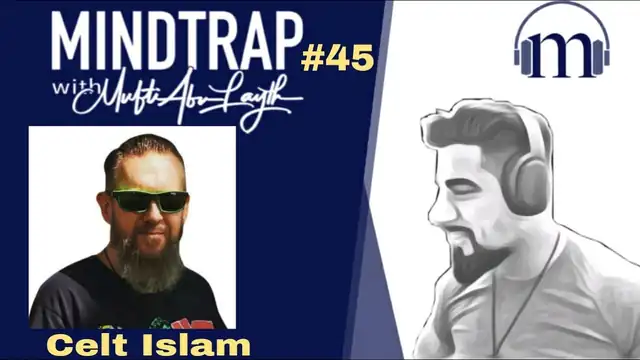
Celt Islam | Dallas AbdulQadir alSufi, DMT & Denisovans | MindTrap#45 | Mufti Abu Layth
zakah zakaat zakah al-mal zakat al-mal obligatory charity fiqah jurisprudence fikh hadeeth ahadith ahaadeeth hadis hadees ahaadith saheeh sahih hadith saheeh hadith sound hadith authentic tafseer exegesis tafasir tafaseer commentary madhab mazhab school of law madhahib mazahib madhaahib malik ibn anas malik bin anas imam maalik imam malik ibn anas imaam imams prayer leader masjid masjed masaajid masajid maaliki malikite malikiyyah maliki school muftis haraam sunna sunnat sunan prophetic practice bid'ah biddat bidaa innovation riba ribaa sood usury tawheed tauheed touheed oneness of god kufr kuffar kafir kaafir kaafirun disbelief iman imaan eemaan eeman djinn jin jinnat 'ayn al-ayn nazar sihr sihar jadu jadoo kala jadu sorcery shaytan shaytaan iblis iblees shayateen shayatin satan jahannam jahanam jahannum al-mahdi mehdi koran quraan al-quran surah sura soorah suwar soora ayah aya ayat ayaat aayah aayat tilawah tilawat tilaawah wahy wahi wahee khalifah khalifa khulafa khilafah khilafat caliphate khilafa madinah madina al-madinah madeenah yathrib shiah shiite shi'i twelver ithna ashari salafis salafism wahhabi wahabi wahhabism soofi tasawwuf tasawuf tasawwof tariqah tareeqah turuq tareeqa sufi order 'alim aalim ulama ulema ulamaa shaikh sheik shuyukh shaykhs dawa dawat da'ee invitation ummah umma ummat fitnah fitan strife trial in sha allah insha'allah in shaa allah insha allah inshaa allah subhan allah subhaanallah subhanallaah bismillah ir-rahman ir-rahim bismillahir rahmanir rahim bismillahi bismillah al-rahman al-rahim as-salamu alaykum assalamu alaikum assalamualaikum salaams wa alaykum as-salam peace greeting al-din ad-deen ad-dinlive stream · 1:50:11 · 6,100 views · 25 Nov 2020 · Open on YouTube
 Press play to load from YouTube. Nothing loads until you do.
Transcript
machineauto-transcribed, may contain errors · source: youtube auto · click a time to seek · dotted terms open the glossaryAll right, people. Marhaban. All right, welcome back to Minecraft with Mufti.
All right, people. An awesome incredibly interesting guest tonight, as they always are on Minecraft. It is, let me bring up the intro page first of all, just so you can see that right there. I mean, look at that. Doing it right there with that with that photograph. You can just see Look at the posing. Look at the design, the stereo.
That's what we're talking about, people. Let's bring on Kelt Islam. Wa alaykumu salam wa rahmatullahi Kelt, ahlan wa sahlan, welcome to Minecraft. All right, it's a pleasure. Let me just check before we just call before we continue, somebody just mentioned something about sound.
I can see that the sound is working fine on the equalizers here. If there's any Let me just check with the Ah, I see it's not picked up on the Facebook chat. Once again. Let me just check the Facebook chat. Sound is fine. Shukran Henna, you're doing it. Ayub, likewise. All right, clear. Awesome stuff.
People Right, just getting right back to it. Kelt Islam. Kelt, ahlan wa sahlan. I mean, you're For those of you that are unfamiliar, Kelt who has been a Muslim for many decades, he is an established uh music producer. You've produced I believe What is it? 10 music albums.
You've got a a vast interest of reading into Islam. Uh into different topics as well, whether it's anthropology, other kind of the lost chapter in human civilization. You've spent some interesting time with certain Muslim communities within the UK and abroad, but tell us a bit about how your journey began. I mean, where did How Where What is the point of origin of Kelt Islam?
Ah, interesting question. Um the point of origin Well, I suppose it always starts with consciousness, being consciously aware of things and questioning things. I've always questioned things. And And I've always uh questioned the things um Uh uh well, I suppose what brought me to the deen ultimately was um the the realization of truth Okay.
in in in many aspects. Um But really I I suppose my spiritual journey began when I was 15. For So for our viewers just so that I mean you you you weren't born a Muslim. You you weren't raised as a child as a Muslim. No no I was I was raised like any other typical northern My My dad was a popular lord so I lived in a You're doing it.
You know full of Irish full of Irish cuz I've I've got Irish uh ancestors as well which we can get into that's really interesting. But anyway But yeah you know I grew up a typical you know northern Yorkshire lord. But when I was 15 I went to visit my mother. Because I grew up with my father you see. And my mother had converted to Islam when I was about eight.
And so when I was 15 I'd I'd gone to visit and she said hey you know this weekend is a big Islamic like camping conference thing in Leicester. You should go. And I thought okay and I went with some other English Muslims and it was a predominantly like a big Salafi type of thing you know. But it really moved me.
And you're how old? 15? 15. And I remember meeting um Muslims you know from all around the world and that really really inspired me. And but it wasn't until I was 17 that I actually embraced Islam. That I made that decision that I want to become Muslim. And I suppose what what did that was was um reading about Prophet Muhammad and how he was as a character.
And because I remember reading Martin Ling's book Muhammad. And I thought I thought that was really good. I remember coming because at that time when I was 17 I'd gone to stay with my mother in Birmingham. And I remember coming home that afternoon and saying I want to become a Muslim now.
And she was like, hey What do you mean? You know, cuz she was kind of shocked. She was like, hey, what where's this all come from all of a sudden? Because my mom never rammed religion down my throat, never. If I asked a question, she'd give me an answer, but she'd never preached. She would never like, you should believe this or you should do this or do that. She always said to me, be yourself, always.
And and and and she was a guide for me, you know, and uh But so that weekend I I took the Shahada. We had like a big party. I took Shahada and that was kind of like my first steps. And then it was meeting a Sufi Sheikh Sheikh Abdul Qadir in Dallas from Scotland. He impressed He You know what's interesting is so many people in the West who are very significant Muslim figures from the likes of whether it's going to be Sheikh Hamza Yusuf, whether it's going to be Sheikh Abdal Hakim Murad, whether
it's whether it's going to be you know, you you can Omar Farouk Abdullah, so many of these different prominent people at some point early on in their journey, they crossed they substantially crossed paths with Sheikh Abdal Qadir al Sufi. Whether they go on to stay with him or not. Well, how about Well, let me just interrupt you there.
Every single name you mentioned was a student of his. Yeah, that's what I'm saying. That's what I I mean like it's amazing It's very intriguing that the kind of impact he Sheikh Abdalqadir as-Sufi has had. So, how did how did you bump into him? Well, I bumped into him because he was visiting and and my mother had gone out to meet him.
The There was some kind of private dinner and they were they were meeting him. And my mom came back that night and said "You've got to come and meet this man. Sheikh Abdalqadir, he wants to meet you. I've told him about you." Okay. He wants to meet you and I thought, "Who is this guy who wants to meet me?" What? And I remember I remember walking into the house and seeing him just alone.
Well, wait a minute. I'm dealing with somebody here I've never dealt with before. There was a presence in the room I'd never felt before. And his smile shattered me. And the way he spoke to me and he said In basic terms he said, "You know, Adam with me in and enjoy that beauty Right, sorry.
The Uh uh it just went slight There was a slight interruption there. Uh lost you for a few seconds. He invited you to Granada to come to Granada and live with him. Yes. Wow, okay. I saw So, which did he Adam and I lived with Sheikh Abdalqadir and and uh it What's really interesting is the first book he ever gave me.
I was expecting him to give give me a Quran or some Hadith or some Sufi book. He gave me this massive called the Beethoven the Beethoven compendium. And it was everything about Beethoven. I was scratching my head, you know, thinking, "Hey, but I tell credit.
And from it. At the I gained some knowledge from it, but years later when I became a musician, it all made sense. And I remember I remember saying this to the Sheikh's closest um um friend, Sheikh Omar Vadillo.
I remember mentioning this same to him. And Sheikh Omar said, "I remember because the the Sheikh said, 'This is where this man's going.'" And so he could see for some reason that I'd end up doing music and that this book and this knowledge here was going to be of use to me musically and spiritually because Beethoven believed in tawhid.
He rejected the Trinity. Beethoven believed he did And then the Beethoven's he believed in tawhid, did he? Okay. Yes. You see, all them Germans were all into that that you know, they were into um the whole uh philoso- I mean, you look at the great philosopher Heidegger and the unity of being. How it's connected to Ibn Arabi.
You know, it's very interesting stuff. And um and Goethe especially and Beethoven were fascinated by the Sufi texts. Especially what was coming in from Turkey. At that time there were a lot of Ottomans coming in. Hey, so is it I just that's a little interesting story for you.
No, that's very fascinating. I mean the It it is amazing because Sheikh Abdal Qadir al Sufi he may be unknown to many people in this day and age surprisingly in the West but he set up one of the first indigenous Western Muslim communities that there are. I mean in the UK he set it up.
I don't know whether he set it up somewhere prior to Norwich but he set it up in Norwich and these were indigenously these were indigenous Muslims British English most of whom and a whole community of them you know so it's really quite a quite a phenomenon. Isn't it? Yeah. Yeah, yeah, definitely. I mean They first started off in London and then they they moved to Norfolk.
They they used to live in a big mansion house. Like a big car commune and then and then eventually they all moved into Norwich they and they got a mosque. Became more of a kind of a living community as such you know. The early days were very much laying the foundations for everything. Because the thing is about Sheikh Abdal Qadir he sends people out around the world to give people the deen who have never had it.
So you see we sent people to the jungles in South America in Mexico and the Mayans accepted the Dean. They were so familiar with it because they had this tawhid. Now they've got the Imam Malik Mosque in Chiapas. Yeah, I've heard about that. Mayan Muslims.
There is Yeah, and a lot of them were Zapatista rebels and they they put their arms down. Wow. I mean, there's definitely some incredible insight that Sheikh Abdal Qadir as-Sufi has had. I mean, that is undeniable. I mean, the man had um you know, a kind of piercing, I don't know, spiritual foresight.
Although in some ways one could could still raise some questions that this could have been an exemplary, uh iconic Muslim community for, you know, the whole Western world that this is how Muslims thrive. This is who Muslims are. They're not your typical stereotypical kind of, when you picture Muslims um but for some reason it it never quite hit that mark.
It kind of crumbled uh away from that. What do you think were some of those factors? What do you see what happened was is that Sheikh Abdal Qadir started the community and it got bigger and bigger and bigger. And then in the late '60s and early '70s it just went massive. And they had a village set in San Antonio with another Sheikh, Sheikh Fadhlalla, who was a Shia.
Okay. And so it was shared between them both. And this is where Sheikh Hamza came in because Sheikh Abdal Qadir used to be married to his his sister. And so so Hamza used to used to live with Sheikh Abdal Qadir. Oh, okay. And what So where was Is in in Norwich or is that in San Antonio?
It it was in Norwich. Wow. Yeah. And it's interesting cuz when I see when I when I see him speak and the way he is about himself, so much I see wow. I can see so where he's got it from from Sheikh Abdalqadir. You know, the Sheikh Abdalqadir it was Sheikh Abdalqadir that sent him to South Africa to meet Sheikh Muhammad ibn al-Habib.
He said, "That's the man you need to go and Because the thing is with Sheikh Abdalqadir he was he's not you know, he kept always said to people, "It's not about this tariqa thing. It's you know, and some some people he would kick out of the community. And those people who he would kick out, they would end up starting their own community because that's what they needed to do. They were they were being stagnant where they were.
And the Sheikh was like, "Go away." And then they would go off and do their own thing, you know, and it's you know, he is an a very interesting character. I would say he's eccentric. He was always I mean, he came from a very like an elitist backdrop as well, didn't he? He's like very Yeah.
His family have served the crown for over 200 years. Um and I think he's from the the royal Stuart line. I mean, he's a giant of a man. He's about 6 ft 4. No way, is he? I always pictured him as as a short I don't I don't know why.
He's he's a giant. He's this giant Celtic warrior that you know, that speaks the Queen's English. You know, um it's he's quite a phenomena himself, you know, just It's interesting because I mean, he he's he he he he he is definitely somebody that's had such an impact, yet simultaneously, he's simultaneously, he is not so known by so many people.
Like, I think most people most Muslims commonly in the West today uh I'm assuming don't know about him. They you know, if you mentioned uh Abdal Qadir as-Sufi, they wouldn't really know anything about him. Um so, yeah, it's a bit of a uh an almost oxy an oxymoron in some way. Yeah, hm.
Well, it's that's how Shaykh Abdal Qadir likes it. He's not interested He's He's not interested in being a star. Yeah, hm. He made his star. Hamza Yusuf. Yeah, no, of course. If you want to know Shaykh Abdal Qadir, look at Hamza Yusuf. It It's all It's It's kind of like that. Yeah. You know, and and and Abdal Hakim Quick and all these other amazing characters, Shaykh Umar, all these incredible, you know, even Shaykh Murad Sultan Winter, you know, you know, all these people have had
a connection with him as Yeah, this So, you know, he he was the one that brought them in. And then kind of helped them go where they needed to go. Hm, wow. I felt in some ways though, what the the kind of dawah, it because it took a lot of kind of interesting dynamic turns.
Um I feel some things it did, it you know, I mean, obviously, whether they thought it obviously they would have thought it's right at the time, but this thing like uh this gold thing that getting hooked Oh, the deep the gold dinar and the dinar. I felt that kind of hijacked almost their entire uh dawah for a substantial period. I mean, this is how I felt about it.
I don't know how you felt about it. It's true. Yeah, it's true. I mean, that is so true. And it's interesting how it totally distances itself Yeah, now he has, yeah. Totally. Yeah, he he wants nothing to do with it. But but that but but really what was going on there? What what is the dinar really about? It's about amr. It's a about people establishing amr.
Having leadership, having an amir. Looking after yourselves. Collecting the zakat and looking after yourselves properly. That's really what it's about and and and and not being connected to the usurious system. Um you know, and and and to try and bring it down. In in in in in in one shape or form.
But you see, the thing is, I know this is going to sound controversial and it is controversial, but many times that community has been it's been attacked from from higher forces that don't want them to progress. Okay. You know, it's been warned time and time again. That community has been warned time and time again. Even to the point where there was there was paid fitnas where people would would go in into the community and creating fitna.
Infiltrators. There was money Yes. To break the community. Cuz what you got to understand is, especially in the '80s, there were thousands of them. YOU CAN'T GET INTO NOTICE MUCH. YOU GOT MOVE. And he and and then he had to in Spain, you know, Sheikh Abdal Qadir. You know, uh the truth be known, Sheikh Abdal Qadir by Allah brought the deen back to Spain.
There weren't any Spanish Muslims. These hippies became Muslim in in London in 1971, '72. And Sheikh Abdal Qadir said, "Go back to Spain and bring the deen back there." And that's exactly I mean, look at this the community in Granada and now they're in Seville and Madrid and Cordoba. They're massive. And they've got a mosque there now.
They have, yeah. I visited the the Cordoba I mean, the Granada mosque is, yeah. Yeah. I used to I lived with a guy who who designed that that mosque. In fact, Sheikh Abdal Qadir used to make me live with Timothy Karim. He was an an older gentleman who had come from an aristocratic background. And he used to design the interiors for the royal family. He He designed the mosque and he designed it.
This is what I love about Sheikh Abdal Qadir is that he he is very into indigenous people keeping their identity. That seems to be like a key feature. Spain. Yeah, you know, so you're not having any domes and minarets because that's not the culture. Yeah. I mean, that makes sense. To be honest, that is also the I know he really promoted the the Maliki madhhab as well and that is what the Maliki fiqh teaches as well that you you you kind of indigenous with your culture.
It's just starts Arabic. Yeah. I mean, Sheikh Abdal Qadir taught me how to pray. Yeah. Properly. In fact, that you know, I've only spoken to him once. Um it's probably been about maybe about 10 years, uh 11 years ago, something. But um somebody phoned me. They were doing something in South Africa. Wait, he's in South Africa now, isn't he? So, they I think they were having Yeah, it He lives He lives in France.
now. Okay. Yeah, yeah. He isn't He He isn't his twilight, subhanallah. He's He's an old man. You know, he's probably 90 years old or something, you know. And And that time somebody they were having some gathering, some international gathering or something, and and I don't know who who, but a few people must have spoken about me.
Uh that Oh, because I had done some event at Norwich, and they'd said, "Oh, you know, this this Maliki Mufti, he's British Pakistani." And And it was kind of odd for them. And so, he's mentioned So, he had asked one of them to phone me. So, they phoned me, and he And that's just really what he just said. He just said, "I want to congratulate you on having arrived at the school of Medina." And, you know, the It's And he just spoke some words about the the Maliki madhhab being what it is, and and he was just really happy to hear that.
So, that was really just my So, I know he was very passionate about the about the Maliki madhhab. Yeah, yeah. Very much so. You know that You know, he That's That's what he pushes and teaches. And it's interesting cuz that community has many scholars that have slight different takes on the Maliki madhhab. But as you know, we have that leeway.
Yeah, no. You know, we have difference of opinion, and we respect it. Di- Do you feel it became a bit cultish though, the whole thing? Um every every community that I've visited or been a part of always ends up it going through these phases, being a bit cult-like.
Yeah. And uh and I suppose this is why Sheikh Abdullah has been the way he is because he he doesn't want them to do be that. He wants you to just get on with your life. And um and and and do it it it um how can I say, you know, establish the deen as much as you can and bring people in.
All people who have never been given it. Yeah. You know, he's very into the dawah. You know, and uh but it's but it's not into the going into the street and shouting and all that stuff or or making a business out of like some people may have these dawah businesses. No, it's it's it's it's all to do with personal contact. Yeah. And meeting people personally. And um and I suppose that's what Sufism really is.
It's it it it it it's that it's that experience of the real without book learning, without it's what you experience and and um and feel and uh um and gain from from You know, company and everything else. This this whole mindset, this spiritual kind of uh renaissance that took place in in the kind of early '70s.
The which was which kind of tied in with the hippie culture rising and and it's around this kind of time that these people are going off to North Africa. It is also linked with the presence of psychedelics as well. Uh if if I'm correct. Oh, totally. Yeah. Yeah, totally. I I mean I mean the the early Sheikh Abdal Qadir was was an anarchic hippie.
He was kicked out of the British an- anarchist movement for being too anarchic. That's that's a medal you want to wear. Yeah, yeah, you know, but but even before Islam, Ian Dallas was somebody. He was a famous actor. He was one of the major actors for Fellini.
Um and when Bob Dylan came to Britain for the first time, who did he stay with? Ian Dallas, his friend. That's what I meant, very elite circle. Them's the people that Yes, you know, but he was already uh he was already a Sheikh before he become a Sheikh.
He he already had that about him. and and um and a and an aura of him and and full of wisdom and and knowledge. Mhm. You know, but this psychedelics thing with with Sheikh Abdal Qadir, what what what was how was that like? Yeah. Well, I mean, you know, I mean, a lot of those people I I I I remember meeting one of uh one of the the older ladies uh in the community and she was telling me in the '60s when she took Shahada while she was on acid.
That's That's the way Shahada ought to be. She was a hippie. She She was a hippie at the time and uh and she's taken acid that she'd ended up in the zawiyah in London. And I was like, I want to and she's one of the greatest Sufi women in our community. So, yeah, in the early days, it was quite wild cuz they didn't know the Deen that much.
They were still learning it a bit. Yeah. No, I'm with you. I mean I I'm a an advocate of psychedelics anyway. I don't believe they're haram. I've got a detailed video explaining that. And I do feel that they're kind of like almost God God's way of leaving a cheat in nature, a kind of portal to this other realm. Yes.
Definitely. And the first time I took acid and um and I I it changed my life. Okay, wow. It I mean totally and made me uh love life even more. Yeah.
It it put and it and it never left. It scared me. The love and the the the the feeling that I am am what I was experiencing cuz I taken a lot of psychedelics and I've never had hallucinations. Mhm. I've never had don't you don't have visions? You don't you haven't seen the you don't see stuff?
Yeah, I I I Yeah, I have visions. Uh but but you know like some people see Yeah, yeah. And stuff, you know, and for for me it's um it it's kind of like I I keep I go through these different kind of layers until eventually I come to uh the the realm where no no um The spirit world.
Beyond Well, the the world beyond form. Ah, the formless. Is it where everything is Yeah, that is an amazing uh experience. Yeah. Mhm. Wow. And and it's only mo- it's only It's momentary. Okay. It's like a It's like a lot puts me there for a moment. Yeah.
And then I'm back and then I'm back again. Wow. And that is six scenarios. So you know, LSD, would you Would you equal I know mushrooms are clearly and often uh are seen as this kind of entheogen, this uh gateway to kind of spirituality and consciousness. Do you see LSD How do you rate it with uh shrooms?
Would you say that it's much more or less or it's a diff- It's not really spiritual or is spiritual? What's your experience with with with that? Um I suppose with LSD it's been more where I'll laugh for 3 hours. I I do that anyway. You know you know to you know to the point where you know I I can't um you know I'm holding my face and begging, "Please." Laugh- Laughter is good for the soul.
Yeah yeah, totally. I mean um it's you know I've I've not taken uh a lot of psychedelics, but throughout the years I've tried you know I've tried dabbled in yeah yeah. This that and the other. I've always been like it's like a lot resets me. And I'm like, "I'm new again. I I I can taste new again. I can see new again." Wow.
You know, and and my I suppose the my my mom is just like Yeah. You know you have no fear. Yeah. of of the creation. Nothing. And you know this this this element this element of no fear is not to be misconstrued as you're kind of carrying a death wish. It's more about that now the the fear of the unknown disappears, doesn't it?
It's more along those It's not like you're kind of this arrogant cocky person going about got no fear. It's more about you You see, as human beings we have this fear of the unknown, this fear of death, this fear of shrivel away. Totally. Wow.
You know, but but but at the same time, I wouldn't recommend it for everybody. That's interesting. for everybody. Yeah. It's not for improves the connection. I'm back again.
All right, you're back. You're back. Right, so awesome awesome. Let me just uh bring that back. All right, you're back. You're back. Uh yep, so you were saying sorry before we kind of lost you. So it's not for everybody. No, it it it is not for everybody.
But um but I'm a great believer that it can help a lot of people. Mhm. A lot of people, especially people who have um um uh mental health depression uh addictions Yeah. PTSD Yeah, yeah, exactly. You have a bit of bit of mushroom tea and uh reset.
I've seen it so many times. Wow. Have you Have you ever experienced DMT? Yeah. Yeah. What what what are your thoughts on that? That's that's it's a very overwhelming Uh what Yeah, that that's that's definitely matrix. Mhm.
You know, that's kind of that DMT to me is like a matrix experience. Yeah. I I I don't I don't go into the world the formless world. It's it's more a a kind of like an like being ejected. You're just like you don't really have much of a There is no transition. You're just there.
And that too on nitro boost. I mean, what DMT obviously is uh experienced in different forms. Some if it's if it's inhaled, it's very short and short-lived and very spiked. Yeah. Obviously, there's the ayahuasca which would be a very lengthy 12 to 14 hours. Yeah. Did Did you experience just the the short spike? The the thrust?
To I mean, you it's you wouldn't describe it as uh pleasant but as as kind of overwhelming more likely. Yeah, definitely. It's It's more of a a mad experience if anything. Um but it definitely brings like um interesting um I mean, for me as an artist yeah.
You know, um I've I've experimented on it making music. Wow. Okay. That's gets really interesting because when you when you're on that your tuning starts all the different. And plus sometimes with sound you see sound is something that really just it it like almost becomes 3D.
I don't know. I don't know any other way to describe it. So I expect especially when you're modulating sub bass. That your whole universe starts to Have you have you ever started to see sound synesthetically? Like synesthesia where where sound is kind of like shapes and Yeah, that's a strange feeling. And and smell and smelling sound as well.
Wow. Okay. And tasting it. Tasting sound. fascinating. Wow. Yeah, it's interesting when you can taste the sound. You know, smell it. It's like oh. Okay. That's interesting. Yes. And and I'll certainly only certain types of music works. So.
That's why you have psychedelic music because that music is for that realm or comes from that realm. Wow. Because I've You see it's right throughout the world. It is a widely known belief of the of the shamans. That that it is through sound that one connects to consciousness.
Um and I feel that's really fascinating considering that even the Quran is a Quran. You know, it is a something that is linked with sound really. Not less so with sight. It's not about reading. It's more about the recitation of what you hear. Yes. So, I I've I mean, what's it what's interesting about Quran, doesn't matter who's reciting it.
When you start hearing it being recited, it it has a frequency. Yeah. And I've see I've seen people get shattered, brought to tears, just by hearing it. And they're and they're not even Muslim. That's how powerful the sound of Quran is. It is. It is incredibly profound. And I have to say that, you know, one of the um the the the I say immense blessings is that having been able to learn Arabic and
understand the Quran, that no matter sometimes, you know, whatever world you're in, um adrift somewhere, you know, you suddenly might unintentionally, you know, you might just perchance end up hearing a verse of the Quran or reading something somewhere, maybe online or hearing some especially hearing more so.
Like you might put the radio on and and they've just and it boom, it takes you straight there. Like you because especially you, you know, if you've if you've had I suppose it it's not restricted to people who only understand it, but more so if you understand it, it just propels you, projects you as this projectile straight back into it.
And that you know, I I'm so um grateful for, but I just wanted to say that while while, you know, while you were saying about the about the Quran and the effect it has on people. Yeah, yeah. Have you ever have you ever heard the Quran whilst on an entheogenic trip? whilst on Oh, yeah.
Yeah, yeah. I've I've I've done it Yeah, yeah, yeah, yeah. It's It's an where where you can where I can smell Yeah, and you can and you can see things and revelation in its non language form. A kind of descriptions of it are that it will open up and you will you kind of see things and it's an amazing world. And I I feel in many ways it's a shame that Muslims have kind of missed this this boat.
on you know, this Actually, there's a few things. One being music. Uh that even though Muslims have got Muslim music, but they for the most part kind of it's not officially endorsed. So, they've kind of that art and psychedelics. Yeah. And even though Muslims have got art in terms of geometric geometric shapes and stuff, but actual art of of people or of things uh you know, they kind of Speaking of geometric shapes, it's interesting that these patterns that one sees and then you see in the cultures of the Aztecs and
um it's no coincidence. Well, this is it when when you're on psychedelics and you start seeing these patterns. These You know, yeah, definitely. You know, I I suppose that that was another thing as well, you know, um uh for me, you know, as a even as a child You see, when I was a child I I I used to have these like bizarre fevers.
Okay. And and and I'd go into this other world. I can remember the world. Okay. And and sometimes it was scary, a scary place. And um uh So, I I'd already experienced weird things without psychedelics before when I was a kid.
And and and and and seeing these patterns. And it and it's interesting when I look at the geometric patterns. They were These are these patterns that you see. Wow. Especially when when you when when you I suppose how can I describe it like in a you know like in this vortex that's just totally And and patterns are are mathematical.
Which is you know by physicians. I mean, physicists, sorry, not physicians. Physicists will explain that mathematics is the language of the cosmos. It is Well, look at the Look at the the patterns Yeah, exactly. You know, the different how You know, science how by you you know, it's it's so mathematical that when like Pythagoras when he has his he discovers that well, if you get a string and you kind of fold it, the octave it kind of it rises in sound and
the actual that there's a mathematical structure to the octave. in They're not just you know, random. They're not just They don't I mean, they sound good and pleasant, but it's not There's a method to it. Just because we don't recognize it doesn't mean there isn't a language. And I find that so amazing that even these things that you're saying patterns, they are ultimately still mathematic kind of representations in their own way.
Yeah. Oh, wow. I I yeah, so that's you know somebody here had said I think it's a good question to tackle. They said DMT or these things are a gateway to atheism. That take it at your own peril. Uh This is I would say Exactly. I mean that that that is only somebody There are no atheists when You know, like they say there's no atheist in atheists in foxholes.
There's there's no atheists in DMT trips. There's only stubborn deniers. You know, that that that is some one may one may deny and that may be this Jahood, this kind of true definition of Kufar. But really one experiences of a transcendental world. Not just glimpses.
You you you are kind of a person I I I I would actually feel that most of these people who are hardline atheists have once having experienced these things really struggled existentially because now they do believe that something exists, but they don't want to go back into organized religion. So they don't know where they stand because it's a struggle because Well well I mean, this is the conversations that I have with people you know, especially in the music world.
And uh you know, and the conversations that I have with people that say that they're atheists, but once you start to talking to them about Allah, what Allah is and what Allah isn't they're just gobsmacked and they're like, "Okay. I'm kind of seeing it." And I'm like, "You've really got to abandon every image, everything you think is God is not." Yeah.
God is not a thing. Mhm. Somewhere fixed within space and time. Because if God was fixed within space and time, that would mean space and time is greater than God, and that's stupid. Exactly. No, no. That's why the God God is not And Allah says, "Look to Allah Allah am may ya see fun." You know, I read this uh tweet.
I wanted to speak about it. I'll do it on next week's Monday nights with Mufti. This person or in his Twitter he he was a Mufti and he's saying he's complaining that people seem to be too many people seem to be referring to Allah as God. And he said that, you know, this is unacceptable and he's condemning this and he's saying Allah That's stupid.
saying Allah's real name is Allah. And I just couldn't stop you know, like almost went into hysterical laughter. I I had to respond to this person by saying So, let me get this right. Allah has an Arabic name. So, thousand years ago, you know, circa when Arabic was invented, prior to that what Allah didn't have a name?
Is this Yeah, exactly. People don't understand that when Allah is saying that Allah may ya see fun, that is a world without words. It is a world without forms. It is not this contained constricted world which we experience. So, just because when we speak Arabic, Allah has revealed himself as Allah as God.
In other in another language you would say God in in Urdu you you would say Khuda. In other things, these are not these are just signifiers to the signified. That's all they are. Yeah. Yeah. It's not his name. It's just we know what And when we say and you know, when we say oh these like because people might say I think that person had added you know Allah has my own name.
Allah has the beautiful names you know that these things yes Allah is addressing them in Arabic saying that look Allah has the most you know to God belong the most beautiful names and he gives an example the preserver the mighty the so on. Now obviously he's going to say them in Arabic because the Quran is a Quran Arabi.
It is an Arabic Quran he's not going to halfway say in Greek. Now this but that doesn't mean that Allah because it comes back to this point that you know Allah is not contained within space he's not contained within language. Yeah exactly. Yeah. Yeah you know so you know with the psychedelic experiences you know people you know well just about everybody that I know personally in my life that have taken psychedelics are deeply spiritual even if they're not Muslim.
And it's actually surveys will show that that what it does is it heightens a sense of and this is western surveys on where generally people are either agnostic or atheist or you know not really practicing a religion. That it heightens spirituality it develops a closer link to nature and it actually removes a fear of death.
Um But yeah you know what's interesting is what people may say well you know this okay so you seem to be accepting of this this dimension this realm this this kind of almost like parallel experience which is sublime in in many ways. But what about within Muslim culture when there's all these other things which are also a bit woo-woo, like things like uh you know, uh demonic possessions going on, and uh people are Oh, no.
Don't don't get me on that one. So, so people will say, "Well, why you know, well with you Yes, so you should be equally so immersed in this culture." That's for me. Yeah, do do indulge us on your thoughts on these demons. Well, um if they exist I I I've not I've not found one yet.
Even when I used to Even when I used to go hunting them. Even when I used to it you know, because before I was Muslim when I was a young teenager, that's what we were all into. And our friends were older than us. They were in their 20s. So, they had all these books on magic that The one guy had Merlin's Grimoire. Okay. You know, we had all these things, you know.
You know, and um and you just realized that actually it's absolute nonsense. Ghosts don't exist. Uh all this jinn possession, jinns playing tricks, it's mumbo jumbo. Absolute rubbish. And it's funny how it only seems to exist in the Muslims. Don't exist anywhere else. And it's like people who don't believe in it, n- you know, don't get afflicted by it.
It's like You know, I I say, "Look, it really, you know, you can send your jinns my way. I don't really care about it because I don't believe in demonic possession. I don't believe in the evil eye. I don't believe in these things. You know, if you want to cast it and send it, and go for it. I mean, it makes no difference." you know My Sheikh always taught me La hawla wala quwwata illa billah.
That's it. There's no other power. There's no magic power. No. The Shaitan is not omnipresent. Allah is the omnipresent. Well, no. Allah is the all seeing, all hearing, the all knowing, not the Shaitan. And and and when it comes to demons, if if demons exist, yeah?
I think they would have made made themselves be known by now. Yeah. I mean, and it's so absurd that this You know, when you ask people, well, what is the objective? Or okay, what's this jinni trying to achieve by possessing someone? So, they say, well, he's trying to create mischief. And you say, well, I can think of a million better ways.
What mischief? Exactly. Catatonic schizophrenia is hardly a kind of cataclysm. It's like, well, okay, what's the Yeah. I mean, one of the one of the wonderful things I love about uh cuz I love the I'm very into the Ottomans. I'm not the biggest fan, but I do like some of the Ottomans also.
Some of the things they are. They are, yeah. And uh and and and this is one thing I noticed about the Sufis early on is that they recognized that this demonic possession was nonsense, and that people were suffering from mental health. And there's a mosque to this day, I think it's in Bursa, which uh one room has music, another room has arts and crafts, another room woodwork and things like that.
Another uh another room where they they massage you. They you know and and and giving them like you know herbs and remedies to help people with mental health. They had these things which they called Maristans which are linked to like the kind of word we have Bimar which is in in Urdu people use it for somebody who's ill and a Maristan was this hospital that they had and they had these in like what these are what you you know like what you're kind of highlighting there in in various places and they would have
all kinds of therapy at that time since it was very freestyle. It wasn't structured by a state or things like this. So part of it was music therapy as well. Yes, music therapy and chanting therapy was uh you know and because mu- music and chanting is primordial. That's why it can never be haram.
All these stupid harami idiots say oh bida bida. What are you on about? You know nothing about primordialism. It makes you don't you don't end up know nothing about your human nature. zero sense for music to be haram. It is just so ridiculous. Because when you I'll tell you I'll I'll tell you one thing though in in over 20-odd years of me producing music there's only ever been one sound accidentally when I've been playing with the analog synths that that really frightened me.
Okay. Cuz this is interesting because Plato speaks about some music. room went thick. Okay, well. It's like the the atmosphere totally changed. And I remember reading something from Ayatollah Tabatabai. Yeah. The famous uh scholar Tabatabai. Tabatabai, yeah. Tabatabai and he wrote that they they are some frequencies to keep away from in music.
And and maybe that was one of Cuz what's cuz what's interesting is killed is that even Plato in his Republic he speaks about how music has the power to heal. It has these things. But there are certain sounds which he speaks that can be very debilitating on people like it can destroy people.
And it's not quite clear what he's cuz it it kind of gets lost on following civilizations. They're not too sure exactly what musical notes is he talking about cuz he's talking about certain He says that there's certain notes and he says there's a particular frequency which is should be banned prohibited. Yeah, yeah. Cuz the thing is really when you're playing with with analog synth you all types of frequencies are bashing all over the place.
And uh I mean I I've never you know the the state of mind that music puts you into because like I said consciousness the key to it is sound. And if the universe if let's say the string theory be correct then in at the root of the atom when you're breaking into these subatomic particles there is vibration and sound.
There is a musical you know and Allah says that but you just don't know that they're there. Everything is in a state of harmonious glorification. It is doing something but you just don't know it. You know. Well well well the you know the the ancient dynamic tradition of om Om this kind of yeah. I mean the you know creating this frequency just you know, to put yourself in a a kind of divine realm or such, you know.
A a place a safe place. Yeah, and it's it's I I think in many ways it's a shame people who lived their lives kind of depriving themselves of music with the belief that God will punish them if they listen to it. I mean, I suppose he he isn't going to, but it's kind of their loss. I mean, I find that fascinating how people are utterly paranoid.
Yeah. I mean, I understand it because I went through it myself. Yeah. As a young as a young man studying I mean, I I went through it as well. you know, it's it's at Yeah, yeah, at times I was like, "Oh." You know, and and then and then I just realized that I have to abandon the nonsense. Yeah. I have to abandon any all this mumbo jumbo because Allah's with me no matter what.
It's the all-seeing, all-knowing, all-hearing. So, nothing to worry about. Absolutely. Absolutely. And I I feel that Yeah, it's I mean, for those wondering, I do have a very detailed video on music which you can watch, but there is not a single thing in the Quran or Sunnah that prohibits music. And there There are false weak narrations of Hadith, but nothing sahih.
Yeah, definitely. Um and it's just to me it's just the fact that well, that something See, because ultimately, music is also mathematics, isn't it? Um and rhythm. Uh it's and to to consider this just to consider sound because of its rhythm. Haram.
That punishable by the hellfire. This very concept must have been introduced by the devil. Yeah, definitely. I swear. Yeah, if I was the devil, if anything that's Yeah. It would put you off it. That's what Because music's always been part of my life. You know, since the childhood. You know, at 4 years old, what I wanted for Christmas was a record player.
Okay. And and my my first record was um She Loves You by the Beatles, Blueberry Hill, Fats Domino. And uh I can't forget what the other one was. Uh and the album I got was Disco Fever. Okay. And this was 1977, I think it was.
And uh and the music has helped me and has always helped me go to a place I felt safe in or where I can expand my mind. Do you listen to much in just instrumentals or are you or must it be music instrumentals as well? Yeah, I I mean, most of the music I write Okay.
Have Have you come across I don't know if you have, but I think I think it's a Effisio Cross or something. Effisio Cross. I am absolutely just wild by his instrumentals, honestly. Uh I'll I'll I'll I think I know who he's talking about. Yeah, yeah. He does And he does this very deeply kind of emotional um I think he actually may have a religious or spiritual kind of uh it's it doesn't show in the music, but sometimes the way he might label them.
Uh it seems that maybe he's a Christian or something uh like that he brings in in his titles, but it's a so powerful. But yeah, sorry, you were saying. But yeah, I mean music-wise, I write many styles of music. It's not just one particular style of music I do. When I'm doing a Celtic sound show, Okay. that is just full-on mayhem.
Serious. What? Is it like just what? That's a Just full-out everything. Yeah, it's full-out techno, drum and bass, dubstep, hip-hop. It It It It's rave music, but it's composed. Okay. There's There's order to the chaos. I do. Yes, there it's a composition and I'm taking you on a journey. Oh, okay.
And And then I've got other music that I do, which is more How can I say it? More chill. Chill. Relaxing kind of stuff. Cool. Yeah, you know, and um you know, there are some music I've made people cry. Yeah, I mean I found That's because of from the things that can make me incre- I mean I'm sure it's with everyone, make them incredibly emotional. make me cry.
It is so um It's just music, really. Wow. Yeah, yeah, some opera. the piano? Are you Are you into the piano? Piano I find very it deeply touching. Yeah, yeah, definitely. I mean I I I kind of dabble with all types of instruments. But my main instrument is percussion and keyboards, pia- you know, that type of thing. But I I will pick up a bass guitar or a guitar or whatever and and get a sound out of it.
Um and And plus also sometimes my live act is a band. So I have a drummer and a percussionist. And everybody in my band So it's is, you know, one's a drum- Your music is mainly instrumental. You're not focusing on lyrics and singing and stuff like that. No, it sometimes I'll have vocalists and they'll do some songs.
Like for example, I've got a new album coming out. And it has a Prodigy singer, Shahin Badar, from she's a Sufi singer from India and and she's famous for singing with the Prodigy. And when Keith died, she was she was really upset, so she phoned me from India and said, "Look, you know, Keith's died. I'm really upset.
What do I do, brother?" And I said, "I'll tell you what, I'm going to write a tune for it and you're going to sing the song." Okay. So, she's done this Sufi song Okay. for him. lamenting, you know, asking God to forgive him and and you know, and and and have a safe journey type of thing, you know. So, so there are some of my music that are songs. But I'm more into instrumental music.
I'm more into your experience immersive rather Yeah, not just hearing it, but feeling it. So, I only play through certain sound systems that have that power that I can push the sub and then and then modulate that sub and and get your heart Wow. Because because what it is, you see, some of my music, not all, but some of it is like a Sufi hadra to me.
It takes me Okay. takes you know, it puts me in that state. And and it's interesting what happens. This There's been times where I at one time I played at Glastonbury and I've got like three or four thousand people in front of me in the cave, this massive part of the rave part of Glastonbury. And they're all stood there not moving and I looked at my mate, A Will on the decks, is doing the scratching.
I said, "Have I done something wrong?" And he said, "No." He said, "They're absolutely taken away, mate." And I suddenly looked at them and they were in complete awe because of where they're taking them because what it do when I put a a show on I'll build it up, I'll build it up, I'll build it up and let you get all this energy out and then I'll bring it down. And give you lots of ambient beautiful sound.
You know, so and it it's interesting what happens afterwards, you get mobbed and they're like "What, you're Muslim?" And really gets interesting. You know, and You know, music And throughout throughout the years some of my friends have become Muslim. Okay. You know, um you know, close friends. I have a lot of close friends that took the Shahada.
I I took the Shahada for them. And and it's interesting wherever I go, I always bump into some another convert. Allah seems to seems to put somebody there. You're doing it. You're doing it. Right. So, yeah. Um Music brings people together. clearly the nourishment of the soul. It is In fact, that's what it's actually called in in Urdu.
They actually say "Ruh ki ghiza" from the Arabic word "ghiza". Um and it and it's been there since time immemorial what humans saw in nature, um you know, whether it was through the waterfall or the rivers or the trees and the sounds being made by animals and in nature. You know, speaking of human historically, I know this is also an area that you are very interested in as am I.
Yes. Spit some gems of Because recently they found a Denisovan flute. Oh, have they? How do you know it's How do you know it's Denisovan Denisovan flute? It could be Because it's been Well, it's been found in that Oh, in that same cave cave or in that location. Yeah. Yeah. Wow.
It's been found in that way and it's made out of swan. Swan? Wow. Yeah. Swan bone. Wow. And it's all even early humans were making music. Definitely. I mean, the Denisovans are so fascinating anyway and that's this They're this whole category of a species we have where we've really where we have this we've introduced this category through DNA.
Uh not really through the what normally happens. You find a bunch of bones and you realize well, these bones are not like They've just found a small initially just a pinky bone and and then later on a jaw. Uh I believe a lower jaw and things like this. But and a bit of a maybe a femur. But but it was just through this pinky bone being so well preserved.
They got extracted the DNA of an entirely new species of our ancestral kind of cousins. I mean, wow. And they And they feel that so many people still today have probably I don't know 1 to 2 to 3% of the Denisovan DNA as well. Especially in the Polynesian islands and the Aborigines and um Uh this this is so Well Well, there's a big mystery to the Denisovan DNA because there are some Amazonian Indians in in South America
that have the same DNA. And not only that, but they are cousins and related to Aborigines in Australia. Yeah. So, at some point they were going across. Yeah. How on earth were they managing that? Boats. Look, if you can build pyramids, you can build boats. I mean, there's even depictions of flying crafts.
And this that's that's not rubbish. You know, there's depictions of flying crafts. I mean, one thing for sure, definitely the you know, the the kind of signs that they have like the Nazca lines and these different um uh these kind of symbols made out on the landscape that you can only really appreciate from the air.
You can't really appreciate it uh from the ground. So, that's always fascinating, isn't it? That uh what on earth is going on there? Because uh Exactly. So, you couldn't cuz I mean, that You know, they they probably made gliders. Yeah, these uh that that's it. These uh they've got I I you know, all over the world really these kind of uh these Nazca lines and you see them.
Uh obviously humans over the centuries were kind of ruining the places because they were uh and growing obviously growing crops as well and stuff like that. But, it is how what was the purpose of them? You know, how were these lines created with such images and where on the ground you can't really appreciate it or even see it. You need to be so many, you know, you need to be so high up in the in in in the air in the sky to be able to appreciate it, yeah.
Uh well, that's uh Yeah, it's a big mystery in South America, massive. Yeah, I mean I I definitely do feel that people were I don't know if they were more advanced than us today uh or as advanced as today, but I feel that they would have been at least as advanced as maybe like I don't know, the 18th century or something like that at least.
Yeah, definitely. It's what it seems like is that human beings probably reached uh a point to say in 16th, 17th centuries. kind of medieval, late medieval style, yeah. Yeah, because they are ancient maps depicting land masses and islands that are now under the sea. But but 15, 20,000 years ago they they were they were islands that you could visit at the mean, some by Florida Antarctica, which was only discovered in the 1800s by Russians, but yet
uh it's on these maps. The Yeah, yeah, the Piri Piri map, isn't it? And who's Piri Reis? And Piri Reis was an Ottoman, wasn't he? He was an Ottoman Muslim who And he writes on the map that he basically drew a map from From hundreds, I believe, over 100 over 100 uh manuscripts that have come from Egypt.
How do you feel about this the city of Atlantis being America? Or that being the the region? What are your thoughts on on that? Cuz Um I'm not too sure. Plato saying obviously speaking of it being from the west, and you've got um and they're giving a kind of timeline um that it seems to be some kind of an advanced civilization.
And he's dating it back to uh, you know, allegedly that, you know, when they go back in the dates, well, they're pushing it back to just before the or around the Younger Dryas kind of kicking in. So, hm, I don't know. I mean, Graham Ha- Hancock's Was that Was that that I mean, there was definitely advanced civilization. Um, during the last ice age, the the Younger Dryas, because there's pyramids in the sea off of Cuba and places like that.
not so familiar with them. Now, they were they were they were above land 12, 15,000 years ago. Oh, okay. But, you see, what happened You see, what You see, what happened was a catastrophe. They don't know whether it was solar flare or it was something struck the North Atlantic and melted that ice and send the world into a torrent that that didn't recover for at least 4,000 years.
Yeah. I mean, they uh y- Right, you're absolutely You know, I was just checking into this that yes, uh a researcher in Argen- in Argentina was the first to lay eyes on the mysterious underwater um, these kind of structures, these uh pyramids that have been spotted underwater. Hm.
Yeah, they're They're They weren't anywhere near They weren't anywhere near them. Wow, okay. I'm not cuz I've not really That's something I'd like to look into a bit more. I've not really looked into that. But, yeah, that that is so um Uh, Uh, Graham Hancock explains that it was most likely a cataclysmic event with some, you know, some major um, either a kind of meteor not even a really a meteor, but really a um like some kind of an asteroid or something coming
uh, through and and its major point of collision, it would have there would have been several points of collision, but he argues that the major point of collision was North America. Yeah, which explains all the megafauna just being wiped out. And you can see it. You see Graham Hancock's friend Randall Carlson, he does some amazing videos.
And he's and he and he and he shows you the land and you can see where it's torn through America and wiped it out. Yeah. You know, where where it's been melted, the water. And do you know that they keep finding mammoths, you know, where they've been frozen solid. Yeah.
You know, the the it sent the it sent the whole ecological system in chaos. Absolutely. You know, this was probably the great catastrophe of Noah's Ark. Yeah, that You know, that's exactly what I've kind of argued for in recent times saying that look uh, or in my recent show, sorry, that that the flood of Noah alayhis salaam is most likely referring to that the floods caused uh, with the Younger Dryas.
Yeah. Cuz that just makes so much sense. But it has happened before as well, which might even explain the extinction of of of other hominids, you know, because maybe maybe Adam and Eve were Adam and and Noah and maybe been Denisovan Neanderthal. No, but I feel that That's my thing.
Okay. I You see, I feel that Adam and Eve was the first uh the first human Homo sapien to have uh consciousness the way we have it. And he was thereby the father and if you that the forbidden fruit was a psychedelic that triggered a higher level of consciousness.
Um cuz it kind of makes sense to to me that that that would have been uh you know, because it's linked to self-awareness and even the clothing and and the verses that mention that they seem to have a sense of shame, which is linked with self-awareness because shame is a social construct. Uh and it's a social phenomenon. You feel ashamed in the presence of the other. You don't feel ashamed on your own.
Yeah, so Yeah, I I I I I I feel I'm I've been I've been I've been watching your your show. I've been watching your show and I can say yeah, definitely I'm on the right track there. Definitely on the No, people. Drugs are bad.
But these are not drugs These These things are entheogens. These are uh We don't group them with drugs. Drugs are obviously terrible. These are entheogens entheogens. Yeah, your your your conscious your consciousness is just like it's just you know, totally open. It's you're open. And um it it it's the opposite to say like alcohol consumption cuz that's those things are just it's amazing.
They're so you know, you truly appreciate the understanding of what is otherworldly and what is so this worldly. You know, because something like Alco Yeah, and it's so it kind of leaves the soul stained. You know, this kind of yeah. Yeah, definitely. And and yeah, but what are your theories on the whole you know, you've got these all the ancient the Olmecs and the statues of from the Olmecs or these ancient structures.
Are you also in line with that I mean, what are your thoughts on them? When when did they emerge and Well, well, I you know, it seems like to me that I'm not too sure about the Olmecs. The Olmecs is ones I've not really paid much attention to, but I will do at some point.
I've mainly looked at places like Machu Picchu and Puma Punku. Because they're for me I mean it's just my opinion and and and and other people's opinions too that that that are experts on it, that these are ancient. Oh, they are. They are incredibly ancient and Yeah, the these could be at least 15,000 10,000 years old.
Yeah. Yeah. And and what's interesting is especially with South America is the polygonal masonry that the form of masonry that they do the stone is exactly the same as ancient Egypt. I'm not talking the Egypt of the pharaohs, I'm talking pre-pharaonic.
But what what you're saying pre-pharaonic, what structures are you referring to? Pre pre Well, pre the the pre-dynasties. Because the dynasties talk about Yeah, but what is that, you know, but just to concretize it, what kind of structures are you talking about? Like are you talking about the Sphinx? Are you talking about the Well, the Sphinx for the Sphinx that has polygonal Uh but there are other buildings as well.
Which they which were buried. Um I try I think what it's called. Yes, Saqqara where they've recently discovered uh almost 50 plus mummies recently. They've kind of unearthed them, yeah. Yeah, yeah. They they are are structures there that they're they're older than the pyramids. And and look and the architecture's differently. It's different as well, but I tell you what gets me though.
Because I I've even had a go at Zahi Hawass about this, the man who was in charge of in Egypt. He always puts his pic He always puts his pictures up all looking, oh, we found this, we found that. And I always ask him, can you explain the 30-ft diameter saw blade cut marks in the stone, please?
The what? The 30? 30-ft diameter saw marks blade cutting the granite. Okay. They were cutting that granite like butter. I I I I'll have to check this out. This is uh Go and look at it. Go and look at it. Um I I can give you loads of videos and it Brian Foerster.
He's your man for this. Cuz he goes to all these places around the world and he he takes the photographs, he takes people around and he shows you the drill holes and he shows you he brings experts, people who know how to cut stone. And you can see the saw blade mark, 30 ft. Wow. 30 ft saw blades.
Yeah. Two of them. Are are these Do Do you feel these are You know how it's argued by it's Colin, I believe, who who speaks about them this kind of hybrid hybridization between Denisovans and Homo sapiens may have had Andrew Collins, that's it. So, and that Well, this might explain that This might explain the It might explain the giant giant mummies the giant mummies with the elongated skulls which they always conveniently
try not tell you about, but it's in public domain. They are giant mummies with red hair and elongated skulls, but hey, they also crop up in South America, the same bloody people. Cuz he has this theory that they that they may have been this this kind of cross Yeah, this hybrid between regular humans and Denisovans which were these giants of these people that may have then passed on some of the knowledge to Homo sapiens with the Younger Dryas kind of thing when that was coming up.
That's interesting because you've got Gornaya Shoria in in in Russia where they found these massive megalithic structures that are ridiculously massive. And they're ancient. They can't be dated on it. What What region is that? It's It's It's called uh Gorno-Altaysk.
Gorno-Altaysk. Okay. Mhm. Wow. And it's where the Denisovans lived. And I'm not talking about the the mountain structures. There's others. There's others. In fact, I've got I've got a book I've got it downstairs. It just came this week, actually. I haven't read it, but it's uh it's called from It's called something like Eden to Altai or Eden in Altai.
Uh Have you Have you heard of it? It's by that Is it George Ash or something or something? Ash something. And And he argues that um that Garden of Eden was in what would be that region that the kind of Russian steppes up there where it's Siberian places like this are. Um Let me see. Yeah.
I It That is interesting because there's many others. It's called that's Eden in the Altai. Scientists say that golden age. Yeah, that's Eden in the Altai. Yeah. Yeah, because because there's even talk now that it may even the out of Africa is could be a bit rubbish.
This a person who posits that theory, although it's not yet been um But yes, uh I controversial. Yeah, his name is uh It's controversial. His name um Uh But I've got his book as well where he argues a complete different route, something almost coming out of Australia and going the other way. Um So, he has this He's British, actually.
I've I've got his book as well. I'll I'll It'll come to me. But this is by yes, Jeffrey Ash, Eden in the Altai, the prehistoric golden and the mythic origins of humanity. So, I it just arrived this week and I was just kind of reading into some of it and I was like, "Wow, okay, this is it's interesting." I love reading something kind of even no matter how bizarre it sounds so long as it's intriguing.
You know, something that was radical to test your to test the norms. So, yeah. Wow. Cuz you know, these cuz these ancient these ancient narratives, you've got things like in the Bible, you've got all these different, you know, narratives speaking of like so the Nephilim like who were they?
So, they come you know, the thing is that when the sons of man come on to the women, they have these and when the Nephilim it's like, well, who were these Nephilim? And obviously people some people just going to say, "Well, demons." And I think Muslims so easily kind of put all of this in the category of the jinn. Like they will just say, "All of this is the jinn." Yeah.
This is This is the biggest problem with the Muslim world. They're still stuck in the Middle Ages. And when it comes to the jinn the jinn and demons and all that, just get silly. But And what's interesting is the jinn by the Quranic language simply just means that which you don't know. It doesn't actually mean necessarily the species demons.
So, jinn could refer to although it's taken on that shape later on as Islamic culture has kind of solidified, but originally Well, well, people thought the shamans Yeah, exactly. And I I've argued that exactly in Surat al-Jinn said that the the tafsir of these jinn were the shamans in Arabia that kind of nomadic yeah exactly.
Well, that Yeah. Because because they what they called the um um Ah, Allah mentions them in the Quran. The the uh star worshipers Majoos? um Yeah, yeah. The Majoos. Well, the Majoos community still exists.
It's a very very small community now. But it still exists in Arabia. And I saw a recent documentary on it actually. It's quite fascinating cuz they believe in tawhid. Yeah. I mean in a I suppose a different permutation but yeah. But the um Yeah, I mean it's it's all fascinating stuff because I think it's the Majoos is that they're basically Okay, are they?
Okay. Mhm. Traditionally, they were and because and they used to go to they used to go and pay homage you know, they used to go to Egypt. They go back thousands of years. they yeah, yeah. They're old. Yeah. And Cuz some people have some people have argued that Zarathushtra was he because a common dating for him only places him something like 600 years BC or something like this but others have argued that he was a contemporary of Abraham.
Almost 4,000 years and some have argued he was Abraham to that extent as well. I mean Well, what it It seems like to me that um that Zarathushtra wasn't as old as they thought. It looks like like a lot of things they it builds on previous structures.
Yeah, which it Yeah, yeah. And uh And and and what's interesting is is that it's almost like story for story of why Iran is now Shia. Because the Shah of Iran had his dream of that the Imam Mahdi made him the shadow of God on Earth and and the the Imam Mahdi's representative. And and he made Shia the state religion.
But it was almost the same Yeah. during during the time of uh the pre-Islamic Persian Empire with Zoroastrians. Yeah. The same thing happened. No, there there is a lot of there is a lot of symmetry in uh what when we've got ancient history of the Middle East or the Near East and today even.
And I've mentioned this on some of my uh Monday nights when I've spoken of the history that even just as the pre-Islam or slightly just before the emergence of Islam and as Islam is rising with the with the Prophet Sallallahu Alaihi Wasallam having having starting to uh profess his message you had this struggle between the uh the Sassanids, the Persians, and the Byzantines.
And the Persians having they had allies in part of the Levant. Uh and they had allies in Egypt and in Yemen where they had set up and it's interesting that this was some have argued part of the um some have argued that this may have even been part of the reason why many of the clans of Arabia got behind the prophet because they saw some as Austrian emergence throughout Arabia and they feared that you know this and they saw the prophet as this force that would be
able to completely solidify Arabia. Um and it's interesting that you fast forward and even though religions are are different, names are different, but you've got still Iran, you've got its links with Lebanon, its links with Yemen and it's trying to you know it's it's like wow not much has actually changed. NO, NOT AT ALL.
YEAH. There's still this kind of like It's still very similar, you know the whole landscape isn't there's a lot of symmetry to in history and even though the names, the religions have even changed, but still Well, well well the Persian Gulf, the Persian Gulf used to be a one land mass. There's there's civilizations on there yet to be excavated.
You know, they found stuff in there as well. Yeah. That used There used to be a river. Uh Inaya has asked that have you uh have you looked into Michael Sarian's is it Sarian's works the Atlantean connections to the Kelts? I don't Have you have you? Ah yeah. I know somebody who was on that one at the moment.
Um it it's kind of new to me at the moment, but but the Celtic thing is interesting. Because you find Kelts in North Africa and you find Kelts in Iran. Okay, I didn't know this. I didn't even know that North Africa had So okay, tell me what Yeah. Yeah, North North Africa, Spain and they're called Kelts because that's what the Greeks called them, Keltoi.
Because they all shared a commonality, a common culture. But truth be known is there's a massive his- there's a massive mystery around the Kelts. A total mystery. They don't actually know what they actually fully believed in, where they actually fully came from. All they do know is from Roman propaganda or Greek propaganda.
And so it's been tarnished, but there is a big mystery with the Kelts. But what is interesting is the cave paintings in China of the red-headed guys wearing tartan sat in a cave with some monk painted on a wall off I'll send it to you. Wow. Okay, that's That's fascinating. And is this the I know you said about Celtic Islam and tying it into into By the way, some of my somebody had mentioned about their DNA some of mine when I did this 2 years ago, I think I can't remember now was it it was actually an I can't remember whether it was 17% or
something. It came back as linked to the Kelts. I was trying to figure out how the hell did that happen. Well, I'm I'm going to give you my DNA rundown now. One half of my One half of my family is Anglo-Saxon and definitely Viking. All right. Because that that that family is is from the north of England.
And we're all blonde big Viking. Uh whereas the other side of the family is from Ireland. But there's a twist. Our Irish family came to into Ireland via France, via England because we were Moors that had converted to Catholicism.
My grandfather's family were were Arabs. Okay, well, ethnically Arabs? They were They were Yeah, yeah, yeah, we we was we we were And it's interesting cuz my grandfather had black hair and dark He was quite a dark Your actual Not like great-grandfather, your actual grandfather. Wow.
My actual grandfather, and his father His father was the same. Black hair, dark. And uh and I and I come from quite a prestigious family, so so our family My my my father's got the the the tree. And and and it was about 280 years ago our family left Spain and worked its way through and then ended up in Ireland.
Okay, that's interesting. Mhm. Do you Are there several families that did that, migrated to Ireland, or was that a a very uh isolated event? Um there were several There were some Morris families that actually moved to the the Alps. Mhm. Okay. And it there's been a there was an interesting thing on the Alpine people, why they they've got Arab DNA.
And it's because they're descendants of Moors. Mhm. Okay. Because even during the time of when when Christians and Muslims were fighting one another, people were traveling people were traveling everywhere. I mean, it's You know, so So there were several You know, they they were going to different places. And it's amazing how through DNA we some of that story we can unmap of people cuz when you're reading certain DNA in a certain place and you know it's found in another place and and that's where it's strong you can see the kind of journey that it's made and
I find it so fascinating. I mean I did my DNA test I think it's probably been about 2 years or uh yeah something like that now. And I was just so intrigued by this whole thing and that's why I did it. I thought let me get this whole And I actually discovered an Irish aunt through it. So we And we're we're we're very close now. I mean that's my actual mom's kind of half-sister as in same father different mother.
Uh yeah so I mean it was a really incredible and all my family's been over there. They've been to this is in Southern Ireland. They've been there and I've still got to go. I mean this year the lockdown kind of kicked in. But yeah I mean and it's it's amazing. So yeah so yeah so you have Celtic But but it's interesting that that that DNA thing didn't come through that because she my aunt would have is the daughter of my grandfather who's Pakistani.
But it seems to have predated that. Uh which is really intriguing because we were trying to figure that out that how could that be? So it could have been that obviously certain maybe in during the British Raj certain people going over or I don't know what it how it got it but it would have worked its way because it showed in my mother's DNA as well the exact same similar kind of proportions.
Um so it's like okay. I mean you know it could it could well be from kind of like Celtic times where they were traveling and trading you see. Because what they found especially in when I was in Sweden they found stuff from India in Sweden. They've come from India, you know, all these little Buddha statues and stuff.
And uh you know, so people you know, they were going to great lengths trading with one another. And and and especially the Vikings, the Vikings were phenomenal for it. And and because I've got Viking DNA as well, I'm I'm also into that side of things. And Vi- Viking history is very interesting because we're we're we're taught that they were all bloodthirsty and they Odin.
But but truth be known is the Anglo-Saxons, they were the ones that when they came to Britain went on genocide. The Vikings didn't commit genocide. They didn't believe in it. The Vikings had a problem with Christianity because Pope Constantine saying, "Drove his armies through and you have to convert it or you're put to the sword." Now you see in in Viking culture, you can believe whatever you want to believe in.
You can be whatever color. They used to marry people from China, all types of stuff. They were They were very open-minded people and they were shocked. They couldn't believe that people would come and kill you for religion. And that's why they went got angry. That's why they were ransacking. Why do you think they were ransacking monasteries?
Because they were going to monasteries and seeing that that they were fat and the people were starving. And they had all the gold and the people had nothing. In Viking society, they shared everything. Everybody was wealthy. Everybody was looked after. So it was a a shock to them. They were like, "Oh, they must be demons.
They can't be godly." And that's what they were saying to people. We're saying, you know, "And we want to come here and farm." And that's what they did. There was very few battles, actually. It was the Anglo-Saxons. When they came, they were wiping out the Britons like nothing. But the worst thing was when the Anglo-Saxons came to Britain, there was hardly anybody here because of there was a plague.
Okay. A famine. There was a huge famine, you see. So, the populace just dropped. So, there was hardly anybody here. When the When the Romans ditched it, it just went into And And the There was a volcano that had gone off, and it had affected the climate. And it had dumped on Britain and other areas, so people couldn't grow crops and stuff.
That is uh Wow, that is very interesting. I mean, there There There is interaction historically. Some Muslims do document certain interactions with the Vikings. Um Yeah, definitely. Right. I I do have a I have a book, actually. I need to I forgot what it's called now. Um it's a Muslim historian who writes about the Vikings of Cadiz.
Now, what happened was the Vikings raided, didn't they? They raided Cadiz. And uh and they caused a a lot of trouble. But when they came the second time, they got their backsides kicked. And they were that impressed on on what they'd seen, they came back and said, "Can we be friends instead? Can we trade?" And where What region What region was this?
you mean? In In South Britain. In Cadiz. Yeah, because in uh in Spain there there is the it's documented Abdurrahman II. So, not the major, you know, there's the absolute epic Abdurrahman III who is the caliph. No, no, it's So, during his time what happens is the Vikings kind of make their way into Cordoba through the river and nobody's expecting it and they just one morning just wake up and there's just so many ships.
They've got their Viking ships just there. Just something like over a dozen or 20 ships. And and they just go in and they just loot the place and raid it and and it's successful and obviously Cordoba was rich. So, they they do attempt a second. But by that time the Muslims have obviously prepared a defense cuz they'd never been attacked by the river before.
And so it was it was never on their mind that this was a weak spot. Uh but they do so and in the second attempt it's foiled. I mean, they're not the Vikings are you know, are defeated and okay, but I didn't realize about the friendship thing afterwards. That's Well, check this out. Not only is that but but they had their own convert community.
Now, this historian, I've forgotten his name now, but he he laughs about it and it's and it's and it's quite interesting this what I'm going to tell you because he says that some of them had converted and got their own thing going. But they haven't quite sussed out not to eat pork. So, everybody So, everybody in Cadiz is is giggling. They find it funny. They weren't They didn't oppress them.
They didn't say, "Oi, mate. Stop bloody eating pork. It's haram." They gave them time to adjust. But they thought it was funny. They thought it was and every and everybody thought they were funny that they were lovely funny people. And then there's also the you have Ibn Fadlan's journey. Which which is turning to a a movie a film with Antonio and I'll tell you something so much of that film is from his biography.
You know the bit where they doing the the burial And that the whole of that cultural process is only preserved through the Muslims depiction of it. Otherwise history has no other record of it. That's right totally lost and Ibn Fadlan he said that um they were the most kindest people loving people.
He said the only problem he had with them Yeah, he speaks about they wouldn't wash. I've read that. They used to wash from one bowl. They They wash from one bowl and then they'd pass it on and spin it around and pass it on and he said that they had gross he said so he was trying to teach them how to how to wash them. I have read that actually and yeah yeah that is interesting.
Wow that's amazing. Wow we've had some amazing quite a few diverse topics jump up. Um I think I mean I mean I'm obviously so I love these topics so it's been absolutely epic. I know it has got quite late here. Um people Yeah. Uh killed if people want to know more about your music or just generally all these cuz you're not just you're not restricted to music you're a man of many sciences history philosophy spirituality what you know you've got culture all of these things
in addition to obviously ethnobotany with the with the whole Mother Nature. So, people want to just connect with you. They want to reach out. Where is the best place to go to? Um well, um if you just type in Kel Islam on Google, you'll it'll just it's never ending. Uh but you can get me through SoundCloud.
If you type in Facebook Kel Islam, that'll take you straight to the Facebook as well. Instagram, you active on yeah. Uh Instagram as well. Instagram as well. Because there's many topics I like to talk about. And answer, you know, Sufism is one of my favorite topics, you know. Uh always will be. It's always dear to me cuz that's that's my kind of uh uh how can I say um that's um one of the energies that I I follow on.
Is is the is the is the Sufic knowledge and experience. And and I love reading about the old Sufis. Although a lot of things are said about the Sufis, I probably blown way out of proportion. Nothing new there. But but it's fun anyway. But I find it fun and interesting, you know. Um but yeah, bismillah, people are welcome to contact me and chat to me uh and if they want uh to talk to me on a any subjects they're welcome to, you know.
And next year, inshallah, I'll be gigging again. So, I'll be doing live shows at Glastonbury, places like that. Wow. Okay. Glastonbury live shows. All right. Um But I can I'm I'm regular on the BBC Asian Network and BBC 1Xtra. So, listen out for my posts when my stuff is you have to if you're not already following Khaled Islam, uh you've it's a must.
Check out Instagram, Facebook, like, subscribe, spread the love, people. Spread the love. And uh likewise, leave your comment leave your thoughts in the comments uh section. And if you haven't already subscribed to my videos and my YouTube channel, then god damn you. That's all I can say. Oh, it's been absolutely awesome.
Khaled, it's been epic. Shukran once again. Much love to you and to our viewers. Salam alaykum. And we'll have to we'll have to pick this up again and do uh resume but there's so much to just talk about. So, guys, for now, signing out. Salam alaykum.
Something wrong here?
Tell us what is wrong and it will be checked against the recording. Nothing changes until a person has reviewed it.
Sending a note needs JavaScript, which is off or unavailable in this browser. Nothing has been sent.
No name, email address or account is asked for or stored, and the inbox does not store your IP address. For rate limiting it keeps an unreadable fingerprint of your connection for 48 hours, and our database provider's own logs record connections as every website's do. Only your note, its kind, the page and the moment in the recording are kept, for review.
Cite this recording
Stable id, transcript version and tier are part of the citation. Every change to a transcript is logged.Mufti Abu Layth Archive, auto-transcribed, may contain errors. https://muftiabulayth.org/r/pgty4gz2cnu/ (accessed 1 November 2026)
- APA 7
Mufti Abu Layth. (2020, November 25). Celt Islam | Dallas AbdulQadir alSufi, DMT & Denisovans | MindTrap#45 | Mufti Abu Layth [Video, auto-transcribed, may contain errors]. Mufti Abu Layth Archive. Retrieved November 1, 2026, from https://muftiabulayth.org/r/pgty4gz2cnu/
- Chicago author-date
Mufti Abu Layth. 2020. "Celt Islam | Dallas AbdulQadir alSufi, DMT & Denisovans | MindTrap#45 | Mufti Abu Layth." Video, auto-transcribed, may contain errors. Mufti Abu Layth Archive. Recorded November 25, 2020. Accessed November 1, 2026. https://muftiabulayth.org/r/pgty4gz2cnu/
- BibTeX
@misc{abulayth-PgtY4GZ2cNU,
  author = {Mufti Abu Layth},
  title = {{Celt Islam | Dallas AbdulQadir alSufi, DMT \& Denisovans | MindTrap\#45 | Mufti Abu Layth}},
  year = {2020},
  month = {11},
  date = {2020-11-25},
  howpublished = {\url{https://muftiabulayth.org/r/pgty4gz2cnu/}},
  url = {https://muftiabulayth.org/r/pgty4gz2cnu/},
  organization = {Mufti Abu Layth Archive},
  urldate = {2026-11-01},
  note = {Auto-transcribed, may contain errors}
}