
Was Amenhotep III Sulaiman (A) | Mufti Abu Layth
tafsir exegesis tafasir tafaseer commentary muftis hukm ahkam hukum hukam ahkaam dalil daleel adillah adilla koran quraan al-quran sura soorah surat suwar soora chapter ayah aya ayat ayaat aayah aayat nikah nikkah nikaah nikah nama nikahnama salam as-salamu alaykum assalamu alaikum assalamualaikum salaam salaams salam alaykum wa alaykum as-salam greetingvideo · 25:50 · 8,900 views · 14 Apr 2021 · Open on YouTube
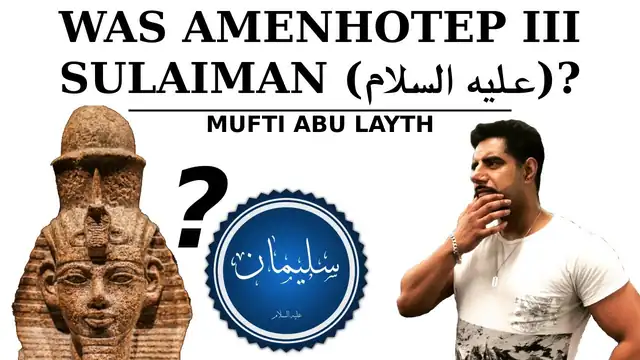 Press play to load from YouTube. Nothing loads until you do.
Transcript
machineauto-transcribed, may contain errors · source: youtube auto · click a time to seek · dotted terms open the glossarythat right people i want to share some uh research with you i've spoken previously of akhenaten and moses the parallels and and the discussion that was akhenaten moses and i've said that look even though it's not factual uh as in not entirely evident but the point is those who feel that akhenaten was moses i find myself more inclined towards that camp i can't say as a fact because obviously i don't nobody has the facts but it seems to be
that the the kind of so-called deemed heretic king of uh of egypt the pharaoh of egypt that kind of boycotts the other gods and calls towards one god and does all of this he was most likely may have been moses now in this theory amen amenhotep is is juxtaposed with the prophet solomon that was he solomon now according to this theory the chronological order
of the biblical prophets is restructured okay so i accept that uh in the quran it doesn't necessarily highlight a structure of the prophets in their chronological order so the quran doesn't really say for example i mean it obviously speaks of adam speaks of noah but then in some verses it'll bring this prophet before that prophet some verse it brings that prophet after this prophet like we don't know okay we don't like obviously there's an assumption but the assumption really has come to us through the judeo-christian sources not through the quran itself so the quran doesn't mention what
was the order of certain prophets we have an assumption okay now according to this theory uh solomon if he be and i'm going to just share this with you then he would be the father of akhenaten of the prophet moses if that be true now amen otip is the one who by the way he brings this arten which is the one god uh he highlights him and he kind of like it has this emphasis on him as well and hence teaches it to akhenaten who goes on to then later on
kind of abolish all of the gods in egyptian history so i thought i'd share this with you guys it is quite interesting obviously this is not factual this is not like the facts aren't there this is just speculation some theorists have put this out there including certain muslims the historian uh osman ahmed but also mustafa and other people as well other just non-muslim egyptologists or or historians or certain theorists have hypothesized this as well and people have denied it obviously they've challenged it but i thought well it's worth sharing i would highlight that certain i did
list certain things that so for example one uh we'll go into the etymology of the name which is really interesting as well because ammon hotep ammon is the god and you have to remember that the ancient egyptian like arabic as well is a language that didn't have vowels so you have to fill them in so whether it was an ah oh this is is kind of like assumed later on and understood so it was uh uh aman hotep or they used to write a manhole tub or but i'll come into that but aman meant peace
okay sorry amen meant sorry amen was aman the god it was the god's name and hatha was peace and you'll see how the hebrews and i'll show this in just a moment would not use the egyptian word but use the their hebrew word which was salim and they often referred to names in the other way so the egyptians would put like how we would say things like abdullah in arabic so abd comes first and allah comes last or like let's say people say uh i don't know they want to say something like obey the law or habibullah and
god's name at the end the egyptians would put god's name first so amman being peace now the hebrews would have had it as aman salem peace and obviously they would have put the god's name last and i'll show that as the theory being solemn mine now solomon but we'll come to that or sulaiman but also the descriptions and i'll share some of these as the great kind of dynasties that they had or the empires that were marked with peace for decades and like renowned world-renowned kingdoms one of the
reasons this hypothesis has emerged is because there's been a long search for the kingdom of solomon and it's been nowhere to be found so despite there being so many descriptions of this vast kingdom he had with these amazing palaces and so on but yet nothing and nothing despite like rigorous searching in the kingdom of israel today they've not found anything that has supported that ever such a kingdom existed which leaves three hypotheses okay one that for example because something because other kingdoms have come up they found other things
they found coins they found kind of pottery they found ruins they found stuff but nothing for solomon or david which meant either one that they were entirely made up which obviously we as muslims don't believe that but historians do they say that solomon never existed he was a myth and so was david the other is that they were uh they they were they did exist but they weren't mighty and powerful the way people think they were they were just small time rulers maybe just ruled over a small town or a village but later people amplified their history and just boasted it and you know just
kind of hyperbole said oh they were massive and everything and that's what like uh what's his name um israeli finkelstein and these historians today go with the third theory is that maybe they were but we're looking in the wrong place and the wrong time maybe they were other figures that have a very similar ex description and they were in egypt and not in jerusalem but because certain rulers of egypt also ruled over jerusalem you have to remember that they expanded right into so the kingdom
of david is described as from the euphrates to the nile now there's no history of any middle eastern people people ever ruling from that part of the world the riven isle whereas there are descriptions of tutmosis for example ruling of asking them that moses iii and then amenhotep also which was really decorated with peace because in his time there was so much peace also the interesting thing about amenhotep is that he was really described as a master builder like had so much building work going on
another similar thing that was described for solomon he was described with like like spectacular palaces which is once again there also the interesting thing is that solomon in the bible is described as having married the daughter of pharaoh which according to egyptian history the daughter of pharaoh never ever married a non-egyptian um that's like so it's never doc we're so that kind of is interesting as well uh and i'll just show some of these in just a moment um what's interesting as well there is almost a mirror image similarity between the throne
of solomon and the throne that was then described by the grandson of amenhotep which is tutankhamun okay but there's almost a mirror image similarity what is also interesting is the the tall statues that are described in the bible and in the quran the small statues that the quran describes that solomon had built for him which also at thebes which today's modern day luxer thieves was built by aman the third and although most of it is in ruins today but two giant statues which are 70 foot tall
still stand today despite the ruins um so okay to share some of these things people just to give you and and this is a theory and also also before i go into it just to let you know what is interesting is in luxa and i'll come to this in just a moment in luxa there are uh descriptions today of the only known historical palace which was for amanotip iii which had in this magnificent palace it had a what is it tilings which were made
with uh which were made to appear as water with fish in them and there's descriptions of this which mirrors what the quran says when the queen of sheba came and she raises her skirt to kind she thinks it's water and suleiman says in the quran that he says no it's he says that this is you know it's not uh it's not it's just made to look as though it's water and it's interesting the quran highlights that and that is actually the depiction of the of the palace at luxo ancient thebes of amenhotep iii also what are interesting is the proverbs the similarity between the book of proverbs
of solomon and in the bible and also the maxims of amenhotep iii these are some of the things but let me just show you um so this is interesting this is a an artistic picture of the um you've got the uh the palace and and the kind of basin uh that you've got huge uh for solomon on top and at bottom what you do find is the the palace the ruined the ruins of the palace of uh
of amenhotep iii okay now just to show you here as well and i'm gonna show you a bunch of different things you can see here this is just an extract i just thought i'd share it you can see some of the details that solomon's 80 000 quarry men men that were going to the quarries bill bringing back all these kind of huge bricks and whatever and you can see that manito also citing thus it came about that eighty thousand unclean individuals were rounded up and dispatched to the stone quarries and he's speaking about amenhotep the same number that is quoted in the bible in the book of kings about solomon so you know that's
quite uh interesting um if you take a look at that here's another extract that is speaking about wives and concubines in the book of kings that he had 700 wives princesses and 300 concubines um you can see that a little further down they also describe that certain scarabs now scarabs are these kind of that they would have written in clay and obviously have it um um kind of inscribed in there so so they still survive hundreds of scarabs have survived and you can see in that the marriages of yemen hold up
is they spell it with the yemen as in with a y but they pronounce it ah but that's in ancient egyptian amenhotep the third with foreign princesses uh also mentions that one tell by in modern day israel describes the 300 concubines as mentioned so amin hotep iii marries this wife who brings to him these 300 concubines with her which is almost a mirror image of what solomon is described as in the quran sorry in the bible with his uh with his where he marries a wife that comes to him with 300
concubines it's interesting that this uh this is the verse about uh that when this was said to the queen of sheba uh uh which is said as bill kries or whatever her name is that look into the palace falam she thought it was some kind of a pond or a lake or something she kind of lifts her skirt or whatever she was wearing to to walk and he says
he says no it is it is a palace that has been made with these kind of glass tiles that have water in it that look as though it is made out of water but it isn't so you see um and i'll just show another verse as well and then we'll come to some of these things so just so you have it now this is a verse as well in surah sabha it mentions uh that solomon had ya maluna he had these great kind of things being made for him and he had huge statues being made for him it's for the prophet
and he had these huge kind of like basins these massive kind of basins and containers that were put there and you can read the english translation below there as well and this is just to give you guys an understanding now this as well you can see here the the name uh in hotep that the god uh which is ammon and the setting sun in the west that's what it kind of meant with peace uh sorry ammon was that ammon was the the god
that was setting uh in the west that kind of that goodness that god that they understood uh in that language and and peace was hoteb and you can see that they give an example um this is just some extract just to kind of show you i know some of you guys may read back and how it was later pronounced and the and as an example there you had uh guyame or gilame the first the first of england which becomes george the first of england just to show you how names are later kind of reiterated and the great greek historian i mentioned this before
we where he highlights 80 000 unclean individuals unclean meant they were probably you know of a different religious different religious background or something went to the stone quarries and this is the same thing mentioned about the term unclean is mentioned in the book of kings in the bible about solomon in year 10 of solomon's reign he married a foreign princess the name is given and a marriage scarab was issued with these words persons in his in his harem 317 women now the book of kings gives it as 300 concubines a very close kind of match you can see there um now this is the interesting thing about
the name as well you can see i'm in hotep uh aman aman however you want to say and peace and greek it was read as amanovius um [Music] the other way solomon okay now right just so you can see how this kind of comes back and i'll just bring back here the once again the the kind of artistic picture that was done uh by a christian artist about the the palace of solomon and you can see those kind of statues
and different things and the huge basins and you can see below at thebes or modern day luxa what it would have been the palace of amenhotep iii now in addition to uh there's certain statements about fort you know solomon's army for example he's stated to have had um 1400 chariots which is huge you know 1400 chariots but yet it's interesting that um according to the biblical history solomon's kingdom is captured within five years of his passing away i mean where did all those
army military strength go i mean he is captured quite easily you know it's not even it's captured quite easily actually and it's interesting the salt in the bible it doesn't mention even one hebrew wife of solomon but it mentions all these foreign wives that solomon has a lot of wives and he marries from each of the seven major kingdoms which is the exact description of amenhotep that he had many wives and married from each of the major seven kingdoms um also uh i'm just thinking that well the the wisdom thing is something interesting as well that amenhotep was known for being like very wise and
very preoccupied and he has this the maxims of amenhotep which actually have a lot of similarity to the the proverbs of solomon in in the bible so and also what's interesting is at the egyptians solomon is described in the bible as ruling and david with 12 districts and they use these 12 districts for taxation purposes in the united israel or united monarchy now what is interesting is the israelites had no such concept whereas the egyptians did it's documented divide districts into 12 for taxation purposes and amenhotep definitely had 12
districts for taxation purposes um right so that's uh i think just to give some interesting uh obviously amenhotep having some connection with the axumai kingdom which would be modern-day ethiopia now or what is now abyssinia i guess but was ethiopia now it's interesting that the axomite kingdom was also connected with the southern arabian kingdom for a period of time as the axomite kingdom hence abraha who goes over much later in the time you know before the time at
the birth of the prophet time and comes and conquers and brings the elephants and so on but he brings them from africa he brings them from the axomite kingdom so this axonite kingdom had kind of what was the remnants of the axomic kingdom this had lasted for centuries and and and it's been argued that she the queen of sheba was from that axomite kingdom that she goes up because ammun holteb does marry into the axomite kind of kingdom so anyway i thought look this is very fascinating um it does put the chronology on its head unquestionably it does uh
kind of say well hmm you know what do we say about the chronology then and things like that but but i don't see it in any way necessarily clashing with the quran you have to remember that look even descriptions yes we do have more detail we have evidence that amenhotep existed and we have evidence of his reign but because of these scarabs and because of these inscriptions on the wall and because of all these records the armani letters and other letters they say letters but obviously these kind of inscriptions that have survived and we have nothing of solomon
of course or any of the biblical ancient figures but we must remember as well certain things that are attributed to these pharaohs of the past these rulers of egypt they there's a lot of speculation as well in between so people may say well you know he uh this person worshiped other gods or did he do this or did he one thing we do know is that uh akhenaten definitely spoke out against all of the gods and just called for artan the one god which in hebrew would be adan and adonai which is in hebrew oh god oh god mentioned in the hebrew bible aden
but arten in because they would substitute the t for the d was taught by aman hotep to his son which would have been akhenaten now all what you see what i'm saying is that yes although it has been alleged that uh amenhotep did was kind of he was gifted because he had wives from all these other kingdoms like he had a wife from the mitani kingdom from the ammonites from the babylonians and they sometimes sent their gods as gifts like so there's the description of ishtar the female goddess being
sent with you know as a gift to him because the wife that was there was from that mitani kingdom now but equally in the bible you have the parallel that solomon was being sent to all these statues and hence in the bible they say solomon started worshiping other gods and things like this now we as muslims don't accept that narrative but we accept that maybe some people assumed this about them that's why they transmitted it but we say that no obviously that doesn't necessarily have to be true because these are speculations but the speculations hold
true about both they do say about amenhotep that because he had so many wives there you would send other gods and he was getting influenced and hence by the end of his life he starts to stamp out more about the one god arten but equally in the bible they have the same story about solomon they say you know solomon did this and some of the early muslim muslim all kind of transmitted under the verse of the quran although we don't necessarily accept that but a lot of the early muslim do you know where where they say that mo soliman al-islam in the verse where he kind of says oh that these things made me forget about you and but and what are these things that he's
referring to it doesn't quite explain in the quran and then some of the mufasirin the muslim facility took the judeo-christian version that solomon got tempted and kind of got distracted from god and then other ulamanted condemned them for transmitting that but a lot of the early tafseer books all transmitted you know if you look at them they will say they go with the judeo-christian version i'm not saying that's true but i'm saying that what it seems to be is that people may have assumed this about them they may have wrongly assumed it about solomon but they may have assumed that because he's got wives from other kingdoms who may have had other backgrounds that he too
has got influenced like that so uh and allah obviously in the quran is correcting that saying that look he was a man of god so this is all very fascinating i have to say the parallels are quite you know mesmerizing if you look at them i just thought i'd share that with you uh you know research yeah unlike these other people i've been you know we have to the whole thing is the mind must always continue to explore um so do look into that people okay if you if you're interested if not don't worry about it and i'm not saying this as a fact okay so
people say oh he's saying that he was this i'm saying that look these theories are interesting and there are a lot of parallels that i feel you can't just brush away they are worth inquiring over worth pursuing to look into and they may actually be they may even have some truths to them i can't say as a fact neither can you we can't even say as a fact that those people existed from an historical fact we can just say as muslims we believe they existed but we can't say as a fact because you don't have proof we don't have a single set of proof that these people actually existed
that is archaeological so yeah so that that was why i thought i'd say it it's definitely very interesting right okay you're doing it is everybody you're doing it you're doing it and that's actually interesting by the way zebra i'll say some of the historians had mentioned that amenhotep because the wife he takes from the axomike kingdom they transmit her name as some azeb something as if and that's because the way they would write it they would write it backwards and some of the historians had mentioned that that backwards would have been
zeba or saba or shiba which would have then been the queen of sheba from the axamite kingdom marrying amenhotep so that's um
Something wrong here?
Tell us what is wrong and it will be checked against the recording. Nothing changes until a person has reviewed it.
Sending a note needs JavaScript, which is off or unavailable in this browser. Nothing has been sent.
No name, email address or account is asked for or stored, and the inbox does not store your IP address. For rate limiting it keeps an unreadable fingerprint of your connection for 48 hours, and our database provider's own logs record connections as every website's do. Only your note, its kind, the page and the moment in the recording are kept, for review.
Cite this recording
Stable id, transcript version and tier are part of the citation. Every change to a transcript is logged.Mufti Abu Layth Archive, auto-transcribed, may contain errors. https://muftiabulayth.org/r/opqcasmswgg/ (accessed 1 November 2026)
- APA 7
Mufti Abu Layth. (2021, April 14). Was Amenhotep III Sulaiman (A) | Mufti Abu Layth [Video, auto-transcribed, may contain errors]. Mufti Abu Layth Archive. Retrieved November 1, 2026, from https://muftiabulayth.org/r/opqcasmswgg/
- Chicago author-date
Mufti Abu Layth. 2021. "Was Amenhotep III Sulaiman (A) | Mufti Abu Layth." Video, auto-transcribed, may contain errors. Mufti Abu Layth Archive. Recorded April 14, 2021. Accessed November 1, 2026. https://muftiabulayth.org/r/opqcasmswgg/
- BibTeX
@misc{abulayth-OPqcasMSwgg,
  author = {Mufti Abu Layth},
  title = {{Was Amenhotep III Sulaiman (A) | Mufti Abu Layth}},
  year = {2021},
  month = {4},
  date = {2021-04-14},
  howpublished = {\url{https://muftiabulayth.org/r/opqcasmswgg/}},
  url = {https://muftiabulayth.org/r/opqcasmswgg/},
  organization = {Mufti Abu Layth Archive},
  urldate = {2026-11-01},
  note = {Auto-transcribed, may contain errors}
}