
Recordings › Meaning with MALM
Your Focus is Your Future | Meaning With MALM #48
wudhu wudoo wuzu ablution al-wudu wudhoo salat salaah namaz salaat namaaz as-salah al-salah salawat aqidah aqeedah aqida theology aqeeda aqaid hadeeth ahadith ahaadeeth hadis hadees ahaadith saheeh sahih hadith saheeh hadith sound hadith authentic tafseer exegesis tafasir tafaseer malik ibn anas malik bin anas imam maalik imam malik ibn anas al-bukhari imam bukhari sahih al-bukhari sahih bukhari saheeh al-bukhari saheeh bukhari imam al-bukhari fajar salat al-fajr fajr prayer dawn prayer maghreb magrib salat al-maghrib maghrib prayer sunset prayer sajdah sajda sujood prostration azan azaan athan adhaan call to prayer imaam imams prayer leader udhiyah qurbani qurbaani udhiya udhiyya kurbani shari'ah shariat sharee'ah maaliki malikite malikiyyah hanafite hanafiyyah hanafi school qiyas qiyaas fatwah fatawa fatwaa fataawa legal opinion hukm ahkam hukum hukam ahkaam halaal lawful haraam forbidden mubah mubaah fard farz faraid fard ayn fard kifayah fardh sunna sunnat sunan prophetic practice muhaddith muhaddithun muhaddithin muhaddithoon hadith scholar kufr kafir kaafir kaafirun disbelief iman imaan eemaan eeman ilm al-kalam kalaam djinn jin jinnat jinni shaytan shaitan shaytaan iblis iblees shayateen shayatin jahannam jahanam jahannum koran quraan al-quran sura soorah surat suwar soora chapter aya ayat ayaat aayah aayat hifz hafidh haafiz hifdh huffaz hafiza memorisation wahy wahi wahee sahabah sahabi sahabiyyah sahabiyat hijrah hijra hijrat migration khalifah khalifa khulafa khilafah khilafat khilafa mecca makka mekka madinah madina al-madinah madeenah yathrib salafism wahhabi wahabi wahhabism 'alim aalim ulema ulamaa shaykh shaikh sheik shuyukh shaykhs jihaad mujahid talaq talaaq triple talaq talak in sha allah inshallah insha'allah in shaa allah inshaa allah alhamdulilah al-hamdu lillah alhumdulillah alhamdulillaah hamdulillah bismillah ir-rahman ir-rahim bismillahir rahmanir rahim bismillahi bismillah al-rahman al-rahim as-salamu alaykum assalamualaikum salaams salam alaykum wa alaykum as-salam greeting niyyah niyah niyat niyya niyyat taqwaa muttaqi god-consciousness sabr sabar shukr shukar shukur duaa duas duaas supplication ibadah ibaadahlive stream · 3:06:19 · 3,600 views · 13 Jan 2023 · Open on YouTube
 Press play to load from YouTube. Nothing loads until you do.
Transcript
machineauto-transcribed, may contain errors · source: youtube auto · click a time to seek · dotted terms open the glossarysalaam alaikum Bismillah Bismillah right let me just pop this chart out and see that right um okay let me just see that the voice is do a quick audio check
right I take it this is the audio is coming through fine let me just check in case I've uh uh right okay I think the audio is coming through fine uh let me just check with the comments guys Bismillah see what do we have is the yep
all right everyone I take it you can hear me loud and clear there's no um um finally changed a lot right let's begin Bismillah um
foreign it's been quite a while honestly I really you know time goes by and I I linger to to come to to interact and see you guys and yeah to come live so let me just first of all see who we have here and whilst you guys are clicking like and sharing the love out there I'll also
bring up uh today's what I wanted to get through today um Okay so um all right here we are so Bismillah
this is what I wanted to take a look at today and that is the theme your focus is your future and I feel that such an apt theme given that we are at the beginning of a new year that sometimes by shifting your focus you can perhaps redefine your entire future Allah and some quranic guidance on that and some thoughts I wanted to then take
a look at two key themes today one is in line with focus and perspective and I've termed it the blois interpretation [Laughter] and and it's on how we view certain aspects of Islam and being the central region of false I believe of France and I'll come to that as in an interesting thought and the last I don't think you can see it there
let me if I statues in Islam hmm an interesting discussion I've had a few people ask me about this and I thought well even though I do have some old videos on it why not go through a discussion on it so that's today's theme and the topics and I'll try to get through them as swiftly but with as much justice as I can but let's see who we've got online with us Scorpio
clear a pleasure as always right finally I've got to you know what there's still some this is all work in progress it's all work in progress from Karachi Karachi is
right so we've got Dempsey Mike Dempsey how you keep in pleasure as always and Mel from Australia see the name Mel just sounds so Australian doesn't it and Sam hankster care about Islam alaikum
uh right Daniel's saying he'll keep he'll walk catch up tomorrow that's a pleasure Lucy Wayne Jones look at this the little vampires yes Salah awake at this Godly hour I love you with Allah from Darwin in Australia Fahad we love you too yeah as always and our beloved number one love you Allah shower you with his infinite grace right so as we let's let's get started
right so that's I thought you know since it's a new year relatively I've got coffee here but I'm feeling the Thirsty man there is a miracle in every new beginning I thought this was a simple yet beautiful quote because you know New Beginnings
they bring with them a kind of an energy and whether people may argue it has a re a real existence or whether it is a placebo regardless but the energy works even if it is in your mind but the fact that a new year has a sense of potential to be actualized is a beautiful opportunity whether that just simply exists in your mind or there
is a a tangible reality to that the main point is we can capitalize on it so yeah the perspective people it's always about perspective and and this you know everybody makes New Year's New Year resolutions or not every many people do and and this is exactly what I'm talking about
that there are certain things and even if they are just opportunities seize them something that excites your spirit snatch it up let it set your soul of flame Allah yeah but don't whatever you do don't allow a life devoid of passion don't do that
you know you um and and if you feel and this is going to people who may feel that they don't have or they can't feel that flame within them then this is a new year this is a new beginning find it fan it and allow it to grow Allah
that respond to every call that excites your spirit by mawlana jalalatin our room in light of um beginnings and and thereby you see because you can't mention Beginnings except in our mental framework it is tied into the understanding of endings you see it comes back to that thing of I guess um the structuralist perspective on things like saying well
aren't social and so Syrian and and even fukaldi and another aspects of looking at things that words are tied in with other words within our mind whether we like it or not a plate it is a bowl I guess or a dish to eat upon but it's tied within the framework in the sense that it is not a bowl or it is distinguished from a cup so things are tied Within These meta structures within our minds without even
thinking about it so when we speak of Beginnings there are thoughts subconsciously of endings and I thought what a poem by farak gorakpuri because when people think of endings or they think of life or they think of these things can be quite um for some people it can make them just put them down for a while it can maybe even depress certain people or make people think that there's not enough time
which time is finite an infinitude of time is is something but people feel oh my God or maybe I've gone beyond a certain age or maybe I've gone like what can I do now and I love this poem of firat where he says [Laughter] Allah Allah says that I accept this life
this this is an idiom in Urdu that life is simply four days this is a idiomatic within the Urdu language and Hindi so he says I accept that life is just four days foreign [Laughter]
are so plentiful but that's quite a bit yeah that every moment is something I was thinking about this that look we don't have to wait for some tragedy to be fullness we don't have to be sadly reminded about um I'm noticing a bit of a stall on this
um right on this stream I can if that is the case but it hopefully it's it's all fine I take it it's not stalling for you guys or anything um it's just for a moment it seemed a bit choppy on on the screen so hmm that could just be how I'm viewing it here but I'll let you guys give some feedback on that so what I was saying is that
we don't need to await a tragedy or some bad news or being told something um yeah this seems to well it seems to have all of a sudden adjusted now so I don't know it seems to have gone normal okay well let's see
yeah so um you can imagine it for yourself God forbid you were given some bad news just think about that I was speaking to a friend yesterday um you you and he was just telling me about his cousin who
whose condition who's or who had already recently been diagnosed with a terminal illness as well um and then suddenly and rapidly deteriorated I think he was in his mid is in his mid-30s and just had a child and yeah Allah may Allah make things easy it's people we become speechless and without expression without knowing what
to say in these circumstances definitude of time God forbid anybody is given such a tragic news last summer Allah but we can take it upon ourselves to for a moment dread that we only have a very short time left just Dre if a mental a torturing thought experiment
a person had six months one year eight months and in that moment allow it to momentarily just agonize you by thinking that oh my oh my God I want to do this or I've not spent enough time doing that or
and then before the grace of Allah that you are not yet in that circumstance and may you never be I mean but to zoom back out and now focus on trying to draw in some of those goals why not
you know it's we take these things for granted that today today is the first day of the rest of your life no matter how long or how brief that is I mean these
these moments of focus are so valuable right y Johnston Allah bless you always and always keep you smiling I mean and we've got more from Bangladesh
right okay so in line of that I um but even if it is not the you know the quantity of moments in a lifetime but but the quality of each moment in a lifetime that counts may Allah bless that for us all amen right let's um
and in light of that I have shared this before yeah yes all done I love you guys too what what's this why don't you do tick tock I don't I I don't I don't think you can do Tick Tock for me can can you do Tick Tock for me a desktop and stuff like that or is it just still I don't know Tick Tock is too I I don't know I just don't get a good
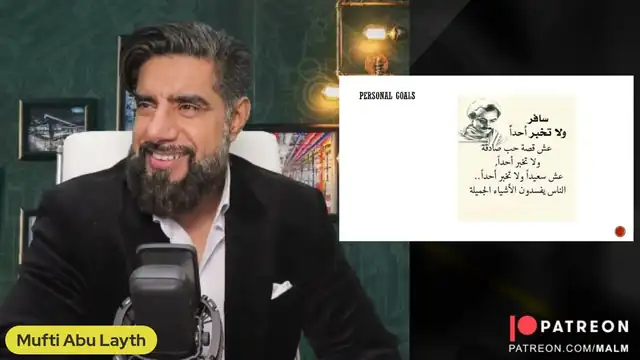
vibe from things like tick tock I get this um I don't know this this negative energy this is an amazing poem I have shared this before by jibran Khalil Japan travel and do not tell anybody
that live a life of true love do not share it with people with anyone foreign live happily and do not tell anyone people have a tendency to ruin beautiful things that is so powerful honestly so powerful right
just let that sink in ah speaking of poems you know I came across a fascinating poem by The Legend and Dawn of Islam of Islam the legendary Maliki from Muslim Spain and he has this poem which where he's just highlighting that everybody in this world is going through some agony
it's epic let me share it with you guys quickly huh he says uh it's called who is it that has you know true what he's trying to say has enjoyed the true fruits of just um absolute Bliss in this world who that who is it that has achieved the the pleasure of his thoughts
whether he is in difficulty or hardship I'll have to swiftly go through it not take up too much time you know people like a rich person may be taking all his what he's facing in life and and just you know you just slapping it all up much more than what a poor person maybe um may have the opportunity to to to kind of sweep up
so the poor person is so uh frustrated with his lack of but the one who has abundance remains continues in a state of exhaustion because of it is says if if somebody's tongue goes off with you know they Let it Loose they they end up saying things they shouldn't have they should have people from around them are gone
this is what he's saying that you're on your own do you not see that the mighty Majestic King who has such an army remains pawned against held against Hostage to his depressive thoughts despite his Majestic Realm that a king has so much yet he's still so worthy he's got his problems this guy
might that Army might attack that Kingdom might do this his his ears to the throne are not appropriate there's politics going on somebody's attempting an assassination attempt s he says that he hears something that that Delights him that he's thinking this is epic this is a king like we've got so much more gold and so much more uh assets and but at the same time he hears and used that by which the the
wide world of his Palace start crawl and creep in on him maybe he is that such and such an such and such Rivals are making their way towards him or a new plot or such that an uprising or the death of a of a loved one or it doesn't matter all the wealth in the world cannot guarantee you and cannot guarantee happiness he says
you see these people they always no matter how you could get multi-million you could get billionaires and they're worried about their safety [Laughter] you know I was um I was on a travel last month and um I was walking past and this is the thing going back to Khalil you know
go on your Journeys but you don't need to tell people but and I was walking past and you know in broad daylight there was this person just just taking a nap on the road disheveled and taking a nap right the you know just sleeping without a acceptable worry in the world all this noise all this commotion the traffic the Allah and then you could have a billionaire having to
excessively take sleeping pills and watch all his security camera the cameras you know and his Security man and am I okay or is Allah Allah see this is uh
this world is but an entertainment it's a sport when people mess up he's saying they no longer even equal the value of of the nails meaning just they have no value left on foreign
the greatest Hafiz of Hadith in the Muslim world Cordova about 900 years ago Legend dawn of Islam and has some major books in the Maliki School and he's also the one who in his Cafe says you know whether you hang your hands or you tie them in Salah right so and and nobody could rival him in Hadith in the entire Western Muslim world
that's what he was half but he look at how he's highlighting analyzing that even the religious person plagued [Laughter] remember what I said about the relationship with God through metaphor or metonymy just because a person has preoccupied themselves with rituals and ibadat and worship and it doesn't mean that they're they've somehow saved themselves sure it's a beautiful approach but
hell the journey still lies ahead he says what about the one of worship the one who does worship he says he's forever like he says look at his face frowning and just you know agitated why his entire life he says
he's just worried about a punishment of the grave so much that he can't even live this life that Allah has given Allah Allah you see to miss the trees for the world this is wow he says that even if a person you know you might think well that's the rich person the king even the worshiper he's depressed all his life just always constantly drowning in this
horror of the punishment of the Creed Allah you see he says he says and the person who is a businessman is always worried about his profits decreasing about the losing stock about losing well
he says and a person who is a family man he always hold his worries and concerns what about the one who can't have children he carries and mirrors an unfathomable burden as well in life you see to some people I can't wait to have a family to some people they're struggling with the family this is the health this is the this is the game of this world
Allah you see this is he says many people when they're sleeping ah beautiful they're asleep but then they're having nightmares no they wake up terrified by their nightmares which never even existed yes [Laughter] yes sometimes the answer is in just pausing stopping
and laughing at it all just taking it all in and laughing Allah Cosmic laughter divinely inspired he says he says you know and there was a time I envied the birds how they flew in their nests and and settled above sawed the skies and rested in their nests
he says and then I saw them that were preyed upon and hunted with their nests taken and seized a lot and look at and this is a really lengthy poem but I'd taken some snapshots from it says he's soliloquizing here that what is how how do we get out of this here
what do I do about this how do I save myself from Allah foreign whether it appears bitter to you or sweet sovereign
and I would footnote that by saying and just sit back at times and just just laugh at it all in many ways it is a Divine Comedy unfolding Allah yeah that's just I I saw that and I honestly it I found it so it really made me laugh I want to share it with you guys let me see for a moment what you guys are saying and I'll come back to this
at what perfect timing of there foreign women education ban
I'm not you see I don't know too much about it and I'm not sure whether see the problem is as well we are in an age of too much information and and amongst that diluted with it and at times indistinguishable from it misinformation so I don't know how legitimate these things are I know people are saying some people are saying it but then often they have an agenda and I don't know like they are I hope
these things are not true and and when they're saying a ban what is the ban and is what what are they speaking about and what are the true details of it I genuinely do not know um and I am reluctant to take wholeheartedly just what I hear on the media especially that to a media that hates Afghanistan and that to a media that has is responsible for the problems that Afghanistan is going through right now
these people don't have no sympathy these people created the damn problems that are are infesting those countries for decades you know so it's it's old you know this is the thing with discourse analysis you have to evaluate what's being said in the power dynamics in that are that are embedded in that discourse Taliban or Banning women from education first of all who's telling us this what agenda do they have in this
I really struggle to believe that it's neutral if anything they have an apathy antipathy and um I I would say a hatred for the Taliban you know that that's so this this and we have to keep in mind that the problems in Afghanistan a lot of them are a result of Western meddling in just politics in just proxy wars against Russia and then just just pumping in
you know tons and tons of dollars and dollars worth of resources to boost the Jihad camps just so we can get around the Muslim world this whole creating this Jihadi Culture by the CIA nothing else the CIA and Noam Chomsky has so much research on this just so we could create an era of mujahideen that would fight against the Russian um the Russian communists and they do that for a decade and now oh and now we've got a problem well
der Sherlock's of course we've got a problem so yeah I don't really and I have to say you know you see some of these you see some of these I see some of these clips come on YouTube um and I don't know some of the I don't know their names or I'm not sure if uh but some of the seniors in command in the Taliban in Afghanistan so I think there's I think there's names like I think I mean maybe mixing it up yakub or something and
um but you see them just they just walk into this great add them some official parliamentarian office or they're going and they've just got the chatter on their shoulder and you know and not a worry in the world though you gotta love it like it's like like wow you know you can't help but there's a side of you saying he you know these guys they tried to decimate them with the latest technology with Millions upon millions of dollars
with the lives of soldiers that were just puppets in the hands of politicians just greedy you know gluttonous politicians and congressmen and these people just stood their ground and here they are now where this Great Mighty Como ad of the United States had to bow
to the Taliban and you know that is in that is there is an Abrahim you know don't don't be arrogant that yeah and I feel so I don't know what the problems are specifically but I feel that there's a lot of propaganda you know there's a um there's this YouTube I've forgotten the the name of the channel but it's um uh it's it's a black lad black guy from I think the UK who's who's touring
places like Pakistan and uh Afghanistan and he's so welcomed and it's amazing they're like short clips and he's loving it he's just full of life there he's like yeah I'm with the Taliban assalamu alaikum assalamu and he's got this funky hairstyle and he's got and you know he looks so out of place they're incongruent but it's it's just he's so but he seems so welcomed he seems so nobody's shooting him nobody's harassing him inviting him for tea and food and in one of them that I saw clippies with a woman
nobody's doing anything and so you know we have to be a bit wary when we just hear things people saying yeah yes um is it Bilal Kareem somebody's saying his name is Bilal Kareem is it or are you writing somebody else's name um writing other news before we begin I guess Prince Harry yeah I I've been watching these memes going around and I don't know you know about this this book is written
yes Allah I don't know I don't know yet what's coming of the world honestly um Andrew Tate cello I guess I have to say a few words about Andrew take foreign right I'm incredibly fascinated by the phenomenon of Andrew Tate you know as a psychologist I love it it's you know this is unprecedented in human history
like we've never checked this out we've never had a parallel like onto Andrew Tate this guy is like just just just hear me out I'm speaking about the phenomenon not so much this is the person and then there's the phenomenon the phenomenon and rotate is larger than life he's you know is this he's he's larger than the person and rotate so imagine we went to early 2022 and I told you that there would be a person who'll emerge who
he's not a celebrity he's not a musician he's not an actor he's not a singer he's not a um he's not any known he doesn't stem from any known stardom but he will become arguably one of the most influential people on the globe within six months it'll come from nowhere and he will hold he will wield so much influence
you would have laughed at me I would have laughed at me if if I told myself this that that's impossible I mean look at these great actors they can't get that kind of influence look at these multi-billionaires they can't you know wield that kind of influence how can somebody out of nowhere within months came learn but he did it's wow and I feel that he is you know Andrew Tate is truly living in modern times
the life of a medieval King truly like you can't you know the guy is living this life of a like how you picture kings in the medieval times say what they want do what they want you know it's like just living an absolute fantasy of money assets whatever victories they want women however people want to see it so and even Kings today can't live like that like you couldn't get a king today that could live openly the way Andrew
Tate was living so it's it's a very fascinating phenomenon um I I also find it interesting how divisive he is how much hate he evokes in people it's fascinating people hate him with a passion and yeah I mean I my personal thoughts on him I think he um I I agree very much with how Joe Rogan said it that look the guy speaks he motivates
uh man you know young disenchanted man he gets them to get off the lazy behinds and start doing something and I think that he speaks of male Excellency in a time with it where it was almost a crime and a sin to speak of male Excellency however he kind of messed up with the misogyny stuff you know he messed up with that and I think he you know when he he tried to rectify but I I think it's it's late because and I
think Andrew Schultz said it really well about him as well you see he said that the guy is a genius and his message actually is very empowering but the problem is his message really should be aimed at women as well but the way he packages it it's indigestible to him indigestible and I absolutely agree with that I think his message you know the misogyny stuff the uh the putting women down kind of stuff I don't think okay so I don't think he hates women that's uh to say he is a misogynist at core like
somebody who just hates women I don't my opinion is I don't think he hates women but sure he his his character that he plays this kind of I don't you know I'm this kind of medieval King character that he's you know oh you know uh one over here one over there you know I'll move These Hoes out the way and all this kind of stuff he constantly goes on about this this kind of stuff you know it kind of messed him up uh because it it just had he just aimed at male Excellency had he just stuck to that you know guys
get off your behind get your butt to the gym stop making money focus on you start you know don't be a loser in life get up even his even his his take on depression people might mock it but it's actually a very powerful technique from a psycho you know from psychologizing it where he says look I don't believe in depression and he says and even if you'll exist because I don't believe in it I don't allow it to get me down that's a very powerful way of looking at the world and he gives the analogy of you know if if a person believes in ghosts and another person and they're in this big spooky house alone one of them
believes he's in a haunted house and the other just thinks he's in a big house alone because it does come down to the narrative so yeah I think if he just stuck to that male Excellency thing but not gone down this road of trash talking women but you know yeah but people are so divided over him it's my heart it's a spectacle to watch actually some people take it so personally and
um it is fascinating though that how he managed to beat the algorithm just become everywhere that is you know it's a phenomenon but you gotta you gotta be like wow take the phenomenon is definitely uh something you have to be interested in the phenomenon not maybe not the person the person I think can be weird and stuff like this and about his court case and then I'll just wrap these I think that I do hope it's not true I you know there was something being said I think it was on Joe Rogan show and on another show as well I think
it might have been uh Patrick David or someone but they they were saying that you know there's people out there who would rather that those horrendous stories are true just so they can see him go down like imagine you had a imagine like here's a thought experiment imagine you had the ability to push a switch and make those events be true or untrue that there's many people would want them to be true as in women were actually raped and human traffic just so he could go down and that's very telling and and I hope
these things didn't happen and they may have happened and unfortunately it's the way of the world and horrible things happen and may Allah make things easy for any victims anywhere and everywhere so yeah that said I do think that um this is this is once again that coming back to that discourse analysis that him being sent down has very little to do with the crime that he may or may not have perpetrated I think everybody in their heart of hearts knows that
so him being tracked down is not to do with the crime the crime is just a pretext and an excuse that that's that much I think everybody can see they were in a particular show they were highlighting that the American Embassy was involved in his arrest which is crazy but yeah nevertheless the person you know he is often at times a fool and speaks some ridiculous things and some things very empowering but larger than him is the phenomenon and quite an a
Fascination for from a psychologist's point of view to just see this happening in real time but I would say guys just ease up with the emotions around these people you know you you don't need to be a die-hard fan for a routine you don't need to hate him with a Venom he doesn't care like you know the guy is you know and there's a beautiful Hadith here that in turmered as
that the prophet the message of it is that love and hate with some limits to it don't go all wild in your hatred towards people don't go all excessively blind in your love towards people that's a very um beautiful reminder of a Hadith um yeah so yeah so I mean that the you US Embassy was involved because he's not American I don't think he's American I think he's he said on the
other show he's British I'm pretty sure he is British as in he was born and raised for most of his life in Luton why Luton why is it Luton or what is it you always have these I won't say fast let me retract fascinating these strange characters emerging from Luton ah right let's move on um yeah he is British yeah he is British yeah um let's move on and that's just to to sum that up by the way I'm not saying
uh my my only message is to just ease up in the love and hate that we surround symbols by he's a very fascinating phenomenon from a psychology point of view and just observe it like that you know and just don't worry people ain't you know the world's been here before him and the world will be here after him right so about yeah um Professor Ali atai of Daytona College sure I'd love to get get if you're in touch with him do um yeah
um do yeah do you have a word and let me know right so people let's come back to um some let's come back and refocus have they Shadow banned you do not get notification see posts on IG anymore may Allah bless you and you what does that mean Shadow band
uh on Instagram am I banned on Instagram I don't know I was not that I'm aware of I've was on Instagram earlier on I usually share humorous funny events in my story so pretty sure that was still working so I don't know why would they have Shadow Banned Me all right so I'm not uh yes I don't know oh what they did to undertake Shadow Man means your content does not show up ah well I'm sure my content does show up
unless I don't know does it not show up I'm pretty sure it does but yeah nevertheless right alarm I like not those who ignore you right let's move on people I want to coming back to refocusing I want to share a some verses of the Quran um some some brief words on this and then we'll move on to the topic and this is in line with a new focus is uh
that a new Focus or your focus is your future so there were two verses and two of the the this style of verse appears in these two verses of the Quran in Surah insan verse 13 verse 29.
and it's actually a very very beautifully empowering verse of the Quran and there's two ways of looking at it and I want to share this uh with you guys that out of Allah firstly hakima now you do not wish unless Allah wishes
indeed Allah is all-knowing all wise Allah that you do not wish accept or unless that Allah wishes Lord and nourish her of the entire existence or the worlds the universe that's how how I'm translating it there is how many people understand this but the beautiful thing about
the Quran is that every time you approach the Quran with a fresh perspective you find in it you find in it a fresh meaning Fresh Value a fresh message that is giving meaning to your daily life so that's the same verse Allah
an interesting point is how we understand illah except unless so it could be that you do not wish for anything unless Allah has willed it that's one way of looking at this verse many people see it like that and that too is absolutely on point because Allah is absolutely in control
but yet in the majesty and the glory of Allah's words you read it again and illah reads as also except that illah you do not will or you do not will something here wishing isn't just like tamini in Arabic is like like in Urdu the word Tamanna comes from the Arabic word it is the Arabic word right so where
a person is just wishful desires like wishful thinking oh like you know if only this and this no insha Allah is more about willing it is about wishing but that kind of intention to will something to do something to move towards something that as Allah says that do not say you are doing something except that Allah will sit Allah remember Allah the power of Allah
you do not will something make an intention a focused intention and move towards it illah accept that and yes except then Allah wills it wow just look at that same verse and this verse appears two times in the Quran you've got that in front of you right there sorry and the verse is they're not in the same
Surah but the number is quite it's almost in order 30 and 29. you do not let me repeat that you do not will something so one way of looking at this and these are just fresh perspectives they're all right but one way of looking at this is unless Allah has willed something and decreed it you can't will it you can't make it happen you can't move towards it sure
it's a zoomed out perspective you zoom in in Sun willpower free will new beginnings new Focus near erada you move towards something you will it you want it you are not doing that except
and yesha Allah the moment you do it Allah wills it up you step towards it in the Hadith you step towards it Allah towards that goal towards godliness towards goodness towards Allah rushes towards it hastens towards
by you willing something the Divine algorithm comes into play Una you do not will Allah accept and yes except in that case Allah has willed it up Allah that is just wow honestly I want you to think about those verses take them with you
you do not will something except Allah will will it into existence so it's a new Focus It's A New Perspective a new intention and your focus is your future remember that I want to share that with us may Allah bless us and it's a great opportunity to reflect that especially at the beginning of a new year to think wow let's make things happen how do we make we will them
we will Allah Wills them into existence Allah I want to share that that is honest it is such an empowering verse the one of the most empowering verses of the Quran these two very similar in in in expression all right I'll leave you guys with that on the quranic guidance let me take a look at some comments shukran
right right what's this Allah bless you as well all right let's um see what's going on I want to share with us let me move on to the next discussion
Bismillah folks I want to share with us a an evaluation okay perspective on viewing Islam and evaluating that perspective I've turned this the blois interpretation now why the blois interpretation and that is
let me just bring this up the blur interpretation and here fourth henceforth I shall use this name just as certain interpretation certain viewpoints I guess in quantum physics you have the famous Copenhagen interpretation and this attitude this perspective
we will name it and that's very important and we're all aware of that in discourse analysis when you name something why it's very important it really redefines the entire discourse but we'll speak about foucaultian discourse analysis another time but the blois interpretation let's zoom in and then we'll Zoom back out okay into take a snapshot of what's going on a couple of years ago there was a story that had circulated on certain
um social media uh kind of platforms about an individual um who was in France in the region the city of blois um which is central France I believe where he would ride a donkey now this person was from a very strict uh perspective of Islam
one may say a The Fringe and the far right of a salafist interpretation of Islam so not even regular salafis or regular like the far right of that that you know at the far end of that Spectrum so many selfies wouldn't agree with the individual on this perspective but he's stemming from that interpretation um was in France where he would ride a donkey because he declared Western um he declared
Western inventions or Western technology to be a an invention of the kufar and thereby we should really avoid the the the kind of assets and tools and uh inventions and Creations the ijadat of the kuffar because in essence they represent the devil and the and kofor they symbolize kufar and their tools and Technologies are also representative of them which is kuffa
so right now this view so this person felt that uh in this hypothesis that the prophet sallallahu alaihi wasallam rode natural Road animals like whether it would have been a mule maybe a donkey a horse a camel so these things have been created to to write as into you know for transport and this is in the Quran this is in the Sunnah
so true Islam is that you stick with that you do not accept anything modern into the Sharia because this was the way of the prophets now bear with me here now this Focus this viewpoint that we confine ourselves and parametrize ourselves with the the lifetime of the Prophet his like things that were being done in front of him or
he was doing them or people around so whether the prophet rode a donkey or not he rode a horse he rode a camel but people in front of him did ride donkeys in and around Medina and Makkah and so this thereby there is what they call uh uh I'm takriri that the prophet has condoned this behavior and this is therefore part of the Sunnah of not only the prophet the Sunnah of Islam inventions that come afterwards are a bit
and are not part and parcel of Islam I we're going to call this interpretation the blower interpretation okay and this is important because what we're going to do is now detach it even from this individual this person even if he does not exist let's say even if this whole story is false let's say hypothesize it doesn't matter because this interpretation remains an
interpretation okay so we're going to Anchor it in most likely this was as you can see the photograph there and it was I think about five years ago it was being shared and um but the point is we're less interested in the in in the person and more interested in the interpretation the phenomenon so detaching it from our good friend let's say Abdullah over here and now we're zeroing in on the blois interpretation of Islam and that
is that Islam is anchored to and parameterized within the the the the understandings and mechanics of life during the lifetime of the Prophet salallahu anything after that no right so especially if they are introduction Innovations of the kuffa now what's fascinating about the blois interpretation is that immediately it's laughable a person may think Health out that's
absurd that's crazy you know that's so easy to deconstruct and take apart but what happens is the moment you try to do that you realize quite paradoxically that the broad interpretation is almost impossible to deconstruct thank you and you think what so you take now
our fellow in Islam right there and he has this verse of the Quran two verses in the Quran one from Surah nahal and the other from Surah where Allah says Allah created these creatures there are benefits and you can take warmth from them and make clothing you can eat from them
and there is a beauty and an ornament in in livestock and then Allah says and they carry your burdens you know they carry your weight of things for you which includes you and then includes carrying goods they carry your goods to a place you would not have reached except by Dire exhaustion if it wasn't for them
indeed your lord is merciful compassionate now Allah is mentioning in the Quran horses mules and donkeys Allah is saying that in the Quran look it's in the verse you've got verse 8 right there horses mules and donkeys
so that you may ride them okay so that you may ride them foreign and as a a kind of that there's a a feature an aesthetic feature in them horses and they do look amazing and there's an aesthetic feature
and Allah creates that which you do not know and in the other verse as well you can see it um Allah mentions uh and upon them and on ships you are carried now so these verses of the Quran especially the first one Surah nahal Allah names these creatures horses mules and donkeys so that you may write them so
let's being here Mister we're going to call him brother let's say brother blah okay because he's from the region uh hypothetical from what I've come across he was from the region or in the region blur in France so brother bloody and remember more important than this brother is the interpretation now the broad interpretation even removing him the interpretation is our Focus focal point he says well look
I'm acting according to the Quran Allah has said in the Quran these creatures are they Lee and that is the as the justification as the litter kabuha that Allah has created them and oh one may even say talil or one may say whatever however you want to justify this lamb but so that whether it's artiba or however that but Allah has mentioned it stated it it is a verse of the Quran
Now by you not riding a donkey or a horse or a mule you are going against the Quran because Allah has said this is what he created these beasts of Transport for he did not take cars now one may say well he said ships true but he did not say cars did not say planes
so now you respond to to this interpretation by saying yes of course that's fine but that was in the time of the Prophet because there were no cars there there were no vehicles so of course but as Motor Vehicles got invented as they can outperform uh you know beasts of Transport they can go farther faster more reliable last much longer so on so forth the world has shifted so we're not actually going against the Quran just because the prophet did this
does not mean that the prophet did not want us to adapt to our own day and age thank you sounds about right yeah at this point Aruna over here our brother he says just one more thing like Colombo she says but when this very point is presented to you in all the other aspects of Islam in clothing in having a beard
in dressing in a certain way in having certain punishments in Islam in having certain things and the very same argument is presented to you that you say yeah just because the prophet did that and it is mentioned in the Quran we're not saying that it's wrong but we're saying that now that the day and age has changed and the world has changed then those things ought to change as well that we now have substitute uh uh clothing we have not substitute but alternate clothing different cultures different practices
different penal codes different criminal justice or perception of Justice being that today in this day and age it's no longer corporeal it's not about hitting the body but it's about it's more mental about taking away freedoms and things which is seen as a higher punishment in this day and age actually if you read Foucault and other people but you so ahuna over here our brother he says well when this very same argument is presented to you you say no
we must stick to the same kind of clothing that the prophet wore the same kind of styling of let's say the beard or the hair to the prophet salallahu did or in his time people did the same kind of punishments that happened either by the prophet or in his time the same kind of transactions that were permitted then we are permitted to do those things that weren't allowed we
aren't no longer allowed to do so you say yeah so so at this stage you respond by saying well yes but that's different really household they say well no that's different because that's things the prophet spoke about and they are verses in the Quran saying that we should do these things
but this is a verse in the Quran where Allah is saying this is what you should do [Laughter] this Paradox that we have within this equation is impossible to escape you can't actually escape the blah interpretation you can't shut it down you think it's it's very easy you see when you first when we first saw this
many of us may think what a bachata got it maybe you know it's it's got a an absolute love for the prophet salallahu's time but it's a misplaced love some of us may think what a fool some people may think what a fool why is he riding a donkey next to cars some people may think oh he's embarrassing Islam he's saying Islam says it's Haram to ride a car we must ride a donkey because people rode donkeys or a horse or a camel because that's what people rolled in the prophet's time
and people some people are ridiculing him some people are mocking him some people may not be mocking him or ridiculing him but thinking this is ridiculous this is this argument is so silly would fall apart in just a moment like give us one second and it will fall apart the problem is as we come closer to the blois interpretation of Islam we realize that not only does it not fall apart it actually applies so much pressure to your own interpretation of Islam that if it falls
apart it will it will cause your interpretation to fall apart it's crazy it's a paradox you see because everything that you then believe about Islam in saying that Islam has these immutable laws that do not change over time or it has Traditions that are anchored only in the time of the Prophet or the Sunnah meant to to dress and resemble physically the prophet salallahu alaihi wasallam all of those same rulings and I'm not
saying they're wrong most okay so most all of Islam may not feel that to dress like the prophet is the Sunnah but there are certain people that feel that other ulama in Islam did not feel to you we need to dress like the prophet they said that wherever Islam go Islam is for the whole world it's not here to turn the world into Arabs it's here for for the whole world so Allah knows that the whole world are not Arabs so they don't need to dress like like if you live as an Eskimo you don't need to be dressed in a thobe walking around freezing yourself that's obviously for a hot climate so but there are some people in Islam like
you have a spectrum you have some people that believe they're right on this end where they feel that everything from your dress to everything must be how the prophet did it so because the prophet sat down and ate we must sit down and eat because the prophet um eat with his hands did not use a spoon more of generally did not use a spoon it didn't use a knife and things like that but he didn't use so we're not going to use that so because the prophet slept on the floor we should sleep on the floor because the prophet so these people who hold this View and this is this view is not I'm sure many of you
are not surprised by hearing this many people actually promote these things these are often promoted amongst the bleaky jamaat for example amongst other people as well and this isn't a disc but this is a I'm just saying this is a view some people may say okay no the the clothing and the the dress and that is not part of the Sunnah however other things are like let's say the beard is so not some things but other things and okay sitting on the floor is not Sunnah but
um they might say for example doing certain other practices how a person with the Izar they should wait above the ankles below the ankles or wearing certain type of shoes or certain colors or these things are somehow some people may say okay those things are not Sunnah but the way we um those things are not fixed that's fine they they can change with culture but our interpretation like not our interpretation sorry the verses in the Quran when they tell us to do something that thing is fixed it can never change
so if it tells us that this is how you buy and sell that's how we bind although the Quran doesn't really go into how you buy and sell but let's say it tells us about certain punishments or it tells us certain practices let's say how to conduct certain Oaths or write certain testimonies then because it said it like that that can never change okay but then this so but but they'll say those things the culture the clothing can change so some people are further down the line but then you have somebody on this side
as Arjuna who says well he says well no that but Allah says in the Quran that donkeys and horses are to ride and you guys are now going against the verse of the Quran because you're neglecting the verse of the Quran and you say no but Allah didn't mean that so you're saying yes but Allah meant that yes horses and these things are to ride but you can also change with time and create alternates you can create you know mechanistic models that can go farther and do much more
thing but no but you said when Allah spoke about testimony and these things and whether it was selling and buying or punishments that they because Allah said them we can never that they are fixed so Allah also said that riding a donkey or a horse is what you can do for transport and Allah did not say anything else so why are you not sticking to what Allah said and doing that why are you neglecting the word of God so as you try to argue against it every argument you present
can equally be mirrored against you in your argument for the other cases so this becomes quite a perplexing paradox so it's very fascinating and this is all about perspectives so what I'm trying to show here is that interpretations The Message of Islam the Quran over 6 000 verses of the Quran the Quran came primarily to connect human beings
to our creator anything between 135 verses as some people had said um all up to 500 verses are only verses to do with rulings the rest five and a half thousand plus verses of the Quran are not to do with rulings okay the Quran was here it was law this Divine rope that we hold on to as Allah says in the Quran and with it it pulls us
into line of law but along the way we will have interpretations and that's okay our interpretations will differ with other people there are people that will say like many ulama within Islam many malikia that have said yes the punishments of a time do change great uh I will qasim many people after him in the Maghrib this is going from six seven hundred years ago in Islam great fatwas on it
pages and Pages dedicated to how these ulama of Islam wrote about punishments changing or other rulings changing and other people rejected it said that no they're they're great Scholars but they're wrong caliphs of Islam like Solomon the Magnificent Suleiman al-kanuni the reason is called al-qarnoon is because he changed he said that the Sharia mandates that we changed the laws he changed a lot of the punishment said that in this day and age there should be Financial penalties imprisonments and things and you still got in the ottoman archives uh these records of what they s
what the fukaha substituted the scholars mainly that day and age hanafi Scholars substituted the punishment saying the Sharia are mandates we substituted other people said they're wrong sure they may be great Scholars but they're wrong sure he may be the Sultan of Islam but he's wrong they said no this is how Islam wants us with the day and age to change people with rulings with uh buying and selling with buying online saying you can buy online nowadays you can buy with the click of a finger you don't need to you can buy in different places or throughout the world you can buy
cryptocurrency you can buy things without possessing them you can because the day and age has changed you can buy and hold on to intellectual properties unlike before the day and age has changed the interpretation this is all the beautiful colorful diversity within Islam that what really matters as the verse of the Quran and we've been through this before and those of you that haven't watched my video on meat in Islam a case study for diversity I recommend that is that we understand
that you see Allah says what you sacrifice to God never reaches him the meat of these animals neither the blood that you shed reaches God your devotion reaches God your devotion is your path wherever you find yourself sure the blah interpretation of Islam we may disagree with it we may say people may say oh that
doesn't make any sense it's it's out of date it's like this it doesn't why do we need to ride a donkey in 2023 but the blow interpretation that's his devotion another person may say well such and such things we must dress like this that's their devotion another person may say this is like this that's their devotion another person in Islam may say that all things change the Sharia wants things to change this these objectives of the Sharia the laws change with the day and age the things change with that they need that's what Allah wants that's their interpreter
that's their devotion this is all within the framework of Islam No matter how absurd it sounds maybe the blois interpretation sounds absurd to people maybe the bursuli if I can call it the bursley interpretation of the great Maliki Legend the makassidy interpretation that these things change sounds absurd but it's all a path to God and these things fall under the metonymic relationship with God and I've spoken about that previously that the
higher order relationship with God is the one through metaphor not metonymy so these are still this is an amazing beautiful relationship with God but it is through a metonymic one not a metaphoric one and that's a discussion we've already had so I wanted to highlight these because you see at times when we see things like the blue interpretation of Islam no matter how absurd it may seem when you come towards it every if you try to take it apart everything including your
own interpretation falls apart so the answer somebody asking is devotion these actions you're riding a donkey or riding a driving a car don't reach God your devotion how you buy and sell and transact or how you believe certain laws change or don't change does not reach God your devotion and taqwa reaches Allah may Allah shower upon us I mean through his grace
and understanding that has compassion for all Muslims amen no matter how diverse and colorfully different their perspectives are I mean it is all one you know one large beautiful family of Islam No matter how crazy at times things seem may Allah allow us all to understand that I want to share that with us I hope it's of some help
right yeah so somebody said yes of course uh I'm not speaking about uh things that lead to causing harm to other people so obviously in Islam just as in modern law as well your freedoms are yours so long as they do not infringe on the freedoms of another so your hook are yours in Islam so long as they do not violate or infringe the rights of another individual so trying to kill someone that's clearly that's
not only uh uh utterly condemned within Islam but it is described and an undistated akin to having committed an entire genocide of the human population as in having wiped out the entire human civilization that's what it's like if you kill one person that's what the Quran says so there's no room for sparing anything like that there's no in these practices that I was speaking about the diversity it was not
talking about where you cause harm it was talking about how you practice something within Islam how you believe certain practices are not about infringing the rights and causing harm let alone Bloodshed of others I don't know what this question means isn't it isn't it better we we look blah interpretation from Islam sure rather than vice versa the new interim also a
new reality check to Islam well that's what I've just done so I don't know maybe you've just joined the stream now and you've not or either that or you don't you struggle with comprehension [Laughter] you know I can only explain it to you I can't understand it for you let's move on people right so I let's see were there any uh comments any discussions
but I hope that that by the way um I hope that gives uh a lot of you know it gives some perspective some light and it's of some value uh yeah and in time to come we will refer back to things like that okay the blois interpretation of Islam right now I wanted to discuss as well I'd been asked um by some people if I could speak for a while now if I could speak on statues in Islam
and just about diverse perspectives so yeah let's go to that and see if we can shed some light Bismillah I mean first of all finish whatever was left of that kahua all right so people let you guys share out the uh all right where's my things let you guys share out the live stream spread the love people
all right so controlling women question about controlling women these things are absurd you know you don't control people never use the faith you see the problem is people you know people who are controlling people they have this within them that they are controlling in their personalities Islam for them is just a justification
they use Islam to justify that don't ever use Islam to to apply Force to people ever you know there is it is just Salaam don't ever do that
sure a relationship is a meeting of mindsets some people have a particular mindset in Islam they are restrictive they're very controlling they want to be in a relationship with somebody that is going to accept their level of control do I as a person think this is a good thing I don't think it's a good thing but I accept that this is how some people are now relationships now they may meet somebody
that equally wants to be controlled or is happy to be controlled and I don't know why but maybe for whatever reason really in Islam you see the problem then emerges that people then say that no the only reason I'm making these demands or the only reason I'm doing this is because Islam wants me to that is the problem okay yeah that is a huge problem why because the teaching of the Prophet sallallahu
alaihi wasallam that you had this that you speak whenever you speak in whatever age in accordance with the reason and intellect of people do you wish that a people should deny Allah in his messenger because they will and that's on you that's on you
now you may think well I did this out of a love for but it was a love misplaced it may have been a love but it was a it was a a love that was misplaced and at its core twisted so yeah and there is a there is a very powerful Hadith many scholars bring this hypnot Rush brings it and many other ulama discuss it there is a Hadith of
a companion who uh who goes to the uh the prophet salallahu and he complains about his wife and this is when this is in the lifetime of the prophet in Medina so in the Arabian culture and the City of the prophet this person complains to the prophet what does he say
what does he say he says that he says Allah he says this this woman like he's complaining about his wife says he says you know many men try it on with her you know it's as people always do unfortunately these things happen he said you know if a man tries to touch her so she's out and about and doing things and once again goes back against people
who think women never used to be out and about he is a Hadith so when she's out and about and obviously because these other men are not in her house are they so when she's out and about and presumably she's beautiful and attractive and men are hitting on her but then they go beyond just hitting on her they stop they try to touch her fondle her and and check what the husband says he says you know any man who tries to touch her she never pushes his hand off
meaning that she's cool with it she's cool she loves the attention she's not necessarily sleeping with them he doesn't say she's sleeping with them but he says that I'm sure he must be having his insecurities that she might be tempted but he's saying you know he's and he's seen this he's seen man trying it on and and they will try to touch her and she'll just playfully go along and then she'll be on her way so
what does the prophet salallahu it's a powerful Hadith the prophet says because that behavior is quite shocking just being outright like if if a woman is in a relationship with you that behavior is is not on by any kind of standard any societal standard okay even today Ultra Modern I mean I don't know about some but generally speaking broadly speaking nobody accepts that kind of behavior
and it does hit hard at men because uh I mean or with the man who she would be in a relationship with it's kind of hardwired into the DNA so and the prophet salallahu replies to him says the liquor
you see this divorce her because that kind of a woman is not a homemaker she's not the kind of person that you will find Solace and peace with she's not the human being that will complete you or be a source of Tranquility for you which is not the type of woman that you would anticipate would nurture your children
the prophet said divorce did not say attack her he did not say that so and so she was in Islam never never hit a woman never
nobody should ever do that and they should not justify it definitely not with Islam so the prophet didn't say anything like he said but you know what's really interesting is this companion's response he says he says
hahaha he says but I love her is he love her [Laughter] come here what it does with people on love he said o prophet of Allah but I love her and the prophet said
for I'm sick how was spirit he said then hold on to her and have patience see you if you choose that path then be patient Maybe she will change the prophet did not say to him you must
he didn't say that he didn't the person said he did advise don't let her you know this is not the kind of woman that will be a source of peace for you a person said but I love her said I can't do without her privacy then keep her and be patient [Laughter] this Hadith is so amazing honestly just by it's this Hadith in and of itself is
a it's it's like a PhD it's just phenomenal it's like it it is such so many complexities are tied into this Hadith wow foreign to be with someone and they're problematic but you want to be with them trauma bonding
trauma bound yeah we're bonded through trauma yeah [Laughter] well and people do this trauma bonding and you find often people go back and back in these situations seeing Islam advises but it gives free will if you take a choice but don't apply Force see the prophet could have said control her lock her up at home keep her in the confines of the four walls do not let her go out do not let her out of your sight make sure she's covered up make sure she does not travel without a
maharam could have said all of this he didn't said If You're Gonna Keep Her said he did advise that that kind of a woman is not really going to be a source of peace for you but sure if you can't live without her then be patient it's two tragedies in life one is not getting what you wish for and the other is getting what you wish for as Oscar Wilde so that's that's an amazing Hadith to really ponder over wow no right let's um
move on what is you're so good and clever um buttering up man you are University inside your brain Allah bless you boosting the ego I like it I like it massaging the ego right um the civilian Vic I used to collect figurines I can contemplate on keeping
them or selling them we decide to give them away I wish I just trashed them I feel like I made about what uh but decide to give them away when I think about it now I wish I just trashed them feel like I made a bad decision sure whatever you choose to do it is your life um but in line with that let's go to today's discussion on statues and figurines within Islam
right so people statues in Islam what a topic and there's quite a few key points that we have to cover and that is that is there an objective to this topic this discussion is this what about the the the the traditions of the prophets and and the traditions of Islam or whatever what is the diversity on this discussion
what are the reasonings that are found or the or the justification sorry and the replies so all of these things are something I will try to um I will try to go over today let's first of all take a look at what we mean this topic everybody is familiar with the prohibition against statues um or figurines or Idols or things like that in Islam now before we even begin a discussion we
have to ask this point that our hello all the rulings in Islam are they set with an objective or are they just simply simply ritualistic so here you will find many mad herbs especially the hanafi madhub the Maliki method especially even the others as well more or less fall in line generally but you find the these methods championing
this discourse that rulings in Islam are always that means they contain an island is a cause a reason so if Allah says don't do something there is a reason why he said it and the reason this is to distinguish that illah is separate from ibada so when Allah says uh you should pray for example these things are worship so they are rituals rituals in their Essence the ritual is the goal rituals do not they are atomized as a
goal they are a goal so the fact that you Worship Is the girl now you could say well worship also connects you to God and allows you to reflect sure but the definition of worship so why you do one rakul and two sujud and and do this and why in wudu you wash your arms and wash your feet and these things are rituals okay they are not Malala so when we're saying in Islam or are they are they worship and ritualistic are they rituals so what the especially the hanafis and the malikis and the others also but these two champion this they say well
worship is all tabudi worship has no um it's not about a causal agent it's about a ritual fulfilling a ritual sure it may have hikmah wisdom but we're not talking about wisdom we're talking about illah the cause for it and stuff however other actions like let's say don't drink alcohol this has an idler to it don't gamble this has an illah to it it's not an act of this is not to do with worship right this is to do with there is a root cause why you should avoid that it will
harm your health it will do this you'll be intoxicated lose reason you'll become addicted to gambling there's there's always reasons now why do why do we discuss this straight away is because well that then has a corollary discussion a follow-on discussion that is well when the illa is no longer there is the ruling there so if alcohol was no longer intoxicating is it still Haram and in that case no it wouldn't be if it was not intoxicating if alcohol is a chemical group
um if ethanol was to diminish within it um ethanol being the intoxicating element alcohol is a chemical group that has basically a molecular compound structure containing hydroxyl amongst other carbon and another kind of uh molecules but ethanol is the intoxicating uh element ethanol can change but it still remains part of the alcohol group like vinegar is still part of the alcohol group it contains hydroxyl in all of these but
it's ethanol is converted to acetic acid through um acetobacter now that so the moment it does that it's still part of the alcohol group vinegar so you can make vinegar out of wine out of spirits out of these things but it becomes Halal the moment it becomes vinegars the Hadith in termidi says the best of your vinegar the prophet said is the vinegar of your wine made out of wine that's intermediate so so yes so once the Ayla is removed does the ruling change so it's important to get that discussion you can look it up in your own time but let's move that to the
side now so right now we've got this discussion the next discussion is are statues and Idols a discussion of Akida or ferk ferk is basically Haram Halal and things like this or are they matters of belief and you can see this maybe a bit like a Venn diagram or or a bit of an overlap should we say as opposed to a Venn diagram but that generally these things are part of ferk these rulings of having figurines and statues and and dolls or characters and
you know having these kind of things but if they were turned into Idols of worship then it would become linked to Akida okay so you can see why this can be a part of both categories prophets and traditions well we're going to take a look at the Hadith that prohibit this why were Idols prohibited in Islam but then why is it that certain prophets had I had statues and not only did certain prophets have statues like Solomon alisalam but these statues are or him having this is then a praiseworthy element that is mentioned
in the Quran so that becomes interesting and from here you can see a diversity of viewpoints you will get some people arguing that every single thing and a drawing and an idol and a statue and a figurine every single thing is Haram in Islam right and then you'll get a a view saying well drawings are okay but moving along the Spectrum drawings are okay but uh no sorry you'll get a view saying okay as long as it's not human so it could be a tree and things like this a plant or a mountain you could draw them
but anything human or animal related or statues are still Haram then you get it a bit further on saying well okay uh drawings are fine but anything 3D like a figurine or an idol or a statue is Haram and then you'll get some saying well um okay uh if it is um an idol for worship then it's Haram but if it's just a statue and you can tell it's not a human because you can maybe create uh you know some kind of uh defect in it to show that look it's not a human then it's okay to some people
saying well look maybe everything is fine as long as they're not being idled to worship and bow down to and create as Gods so you're going to have this whole spectrum of opinions that exist within Islam towards um uh towards Idol statues and figurines all right so let's begin with taking a look at why we feel these things are Haram so those let's go with group Haram that is saying that you know that the or the the the far right we're gonna
go with the far right thing every single thing but everybody will accept this Hadith that we're looking at now so this Hadith that is found in bukhari amongst other and you find this in the sahihan and you find it in other books as well and this basis and you get certain variants but this is also called formation or uh uh creating a and Surah is also a photographed today but this in the classical sense was speaking about structures the first to create statues or to swear
in amongst humans was called Manoa people of Noah this is in a Hadith in bukhari where you can see uh even at your age and we have discussions on immature age when he does but that's a different discussion from atar from IBN Abbas saying that fitzafir in the tafsir of uh of no Ali salaam saying that do not leave these uh Idols these gods they mentioned that these were the men these were Pious men who when they
passed away people decided to build statues for them and then they ended up worshiping the statues so you can see this saying that look this is really to do with a what we call in the Sharia blocking the path because these people created statues to commemorate them and then they started worshiping the statues okay so that's um
and then the Arabs inherited this afterwards um so they're saying well look people used to um that's one way that they were Pious people and you ended up worshiping them but then we know as well through mythology that there's other Idols that were not people so you get for example in India many Idols of um that off of fictitious characters they're not very human they may be part animal part human or a monkey god or an elephant guard or a snake guard or worshiping fire or worshiping so you do get um you know diverse kind of statues and
things historically they're not just people you do get fictitious uh God's being created as well through the imagination and in light of that you get the other popular sahihadith as well that says that the prophet said that he says to um let me send you on a mission that the prophet sent me on Allah
so where he says that this is a very popular Hadith I believe inside Muslim that the uh is saying the prophet sent me on a mission that if I find any Idol I should Smash It and if I find any raised grave I should level it so this is interesting because you've got this perspective now saying well okay these things are categorically Haram okay now right okay so with that in mind we're going to take a look at you've got here and this is once again another uh Hadith explaining this thing of common or and these Idols which I've
mentioned um and it says that is saying this and you can see this ideology that looked most worship idol worship began by people worshiping the Dead right okay now that's okay you put that aside now what's fascinating we come to this another perspective because based on that statue should have always especially statues of grandeur should have always been Haram because komenoir was the noahide tradition is so far but you know whether
we believe it was with the younger dryers or whenever it was but we're looking probably the last mini ice age but since then the time of Noah let's say whether uh that's uh going to precisely describe it or not but the point is all these Traditions have appeared since so the Quran in Surah Sabah as you can see highlights Suleiman Ali Salaam and in verse 13 it says and he had workers working for him that when the Quran is highlighting this as a glory
that Allah has bestowed upon Suleiman that for him these things were being built and constructed as a manifestation of the glory that God had bestowed upon this Prophet that they he would build these maharip these huge maharib and they say were places that could were temples you could worship in or a point of worship for focal religious folk Focus what am I feel but take and great statues tamathil is the plural of Tim third great statues and
great plates these dishes like massive kind of trays and huge pots see and then Allah is saying be grateful for all of this you family of David express your gratitude yet so few of my servants are grateful now that's fascinating because if Idols were always going to be Haram and people worshiping them then Suleiman
having huge mentions Idols being built for him and then Allah saying be grateful for this foreign and these Idols were great huge massive and there's another there's a theory as well and I do have a video on it that could Solomon Suleiman Ali Salam be the same as amenhotep III there's a theory out there and I discuss it who who was one of the great uh Pharaoh kings of Egypt
um before Moses and that so that's a that's a theory I'm not saying it has to be accurate but I have a video explaining that foreign so these just as as an example amen hotep had those huge you have in Luxor those huge um statues created outside the temple so the understanding is there's things whether that according to some Theory whether that was Solomon then those are those statues some of them that are still left or something similar like that he had huge statues made
so not only is it not bad but it seems to be something that a prophet did and he is being praised for and he's being asked to be grateful for and then Allah is telling us about it in the Quran so this is really fascinating now so it's like oh okay so what's going on here and then we've got this Hadith that you can see from Aisha who's saying and this is just once again some of the other sources that she bought this pillow that had these kind of uh drawings on it and
um I say drawings but woven into it and the prophet wasn't happy with it he didn't like it and he said what's up with this pillow and she says I brought it so you can recline and he wasn't happy with the thing and he said and this is a popular Hadith that is used for people who create these structures they will be punished on the day of judgment it will be said to them create give life to what you created
set the house in which there are these Idols or pictures or structures or whatever because I'm a pillow it would have just been a picture then Angels don't come into that house so you can see two very contrasting traditions you can see one where mahariba places of worship and that have huge statues associated with them for a prophet and he is being asked to be grateful for these statues and then you have this Hadith which is also variants of it in bukhari and in other books that apparently Angels don't enter a place where there are statues and that's
fascinating so okay so what's going on here so this is part of what's going to parameterize the debate and discussion so this is uh part of a uh an interesting discussion that I I I got on it that you can see here look that the Masala and I'll just read through it and there were various sources discussing this and you've got a lot of people nowadays you've got it you've got discussions in the encyclopedia uh the Kuwaiti encyclopedia you've got discussion so many several have guarded several other ulama from other parts of the world you have several salafi Scholars have discussions
on it you have that famous bin Amin website you have uh several people have got and there's different extracts I'll kind of put on here time to time and just some things so you can see that look the issue here is okay what about because we've read the Hadith about destroying statues or destroying because even in this pillow Hadith uh the other narration says that Aisha says she cut it up into two different pillows where the pictures were now distorted so to distort the pictures to cut them up or to break down the idols as in Ali said the prophet sent him on that mission and he continued this mission after the
prophet yeah so he says look what about the issue of also photographs they say photographs are fine because they are simply capturing a reflection um so one way of looking at this is those things which were Haram or Haram so you don't end up worshiping these things doing silk okay okay um
now what I started and it doesn't even if people are not worshiping them but there's a fear that you might end up worshiping them so we're going to declare it haram and this is you move along the Spectrum from the far right saying everything is Haram started to say okay certain things were put it in a like let's say you had a rug on the floor that had a drawing on it
now people walk over a rug this can never be a place of worship so therefore things like that are fine so many people and this is except a drawing on a cloth I believe um so so that I believe that may be an extension of a Hadith inside Muslim so that shows things like that well if it's on the floor or in a position that is demeaned um okay let's move on and then some people said look expanding upon that well sorry the majority of people things that are things like nature are always
permissible most people say you can draw animals you can draw a Landscapes Horizons but there are some people and there's certain people who said that look you can create statues you can create Idols uh little figurines you can create these things characters so long as you are certain people are not worshiping them
use the great legendary Maliki and he would create statues so that's another interesting thing that you'll see several people that do disagree amongst them quite notably the malar keys will appear time and time again so just beginning there you've got the great um you've got the great Maliki usually
the great Legend Nuri Maliki who was from uh you've got in the 600s who was from Egypt and he himself would create figurines and we'll come to that in a moment and he he would actually he boasts about it as well so that's fascinating but let's take a look here at another summary so you've got look at this
so several Allah said look if little figurines or statues are not being glorified in the house they're just there or they hung up or as you've got pictures or you've got um or you've got them on a rug or on the floor or on pillowcases these things are fine and there's a quote here by ekrama where he says
that you would hate those statues that were set up as in almost at an altar like to to to to to kind of like hold in high esteem uh uh sorry and he said well I get on about somebody as to things which were laid out people would walk over or on drugs or on things like this nobody had an issue with um and you've got here muhammadin also from the turbine saying
so he's him saying this similar thing IBN Abdul bar is saying look this is from the the moderate way of looking at things so he's in the middle saying look um and many ulamar upon this and there's no Clash this is a better way to go this is cited in the beginning of the of today's live stream his poem so you can see people saying look um if you don't if you're not so um holding them in such high esteem these things seem to be fine but here's an interesting point what is mentioned is the sahaba it says
the sahaba did not destroy the idols they came across or the statues in Iraq in the kingdoms of Iraq Persia or sham lucky enough but in places like India and the Arab countries they did destroy them because in those places they were worshiped unlike in the Palaces of Persia they were not worshiped that's a fascinating point there that you can see that is and a distinction that is being made so here's an extract with the references describing some of the companions when
they entered the Palaces of uh the Persian kings okay at the time he had like these kind of like statues or murals all on the walls that were all colorful marsuma they're very precisely drawn out and many of them still remain and you can find them even till today in whether they're going to be in museums or what have survived that is right so now just moving along to where he says um is going to quote uh
that you see the point is that if the companions understood what said now Ali was saying as a directive from the prophet that when you find a statue except you break it why did they not break these things is the Royal uh Court the Royal Palace uh the main kind of he says that they had a great statue of anusharwan this huge uh or either a huge painting of him a picture of him or it could have been a statue and he says anusharwan was
the great famous kisara that was known for his Justice um and the Caesar of uh sorry of what would have been the Byzantine so there was this huge mural of this war taking place in the Royal Courtyard uh not Courtyard sorry the the actual uh Salon or the the kind of Royal Lounge um and he goes on to say this is that the famous Abbasi poet even writes about this in hisari and you can see the poem right there explaining it further
down um I've got it the so that's fascinating and the sahaba did not uh destroy and here this is fascinating um so here you can see in his book highlights over 300 sahaba entered Egypt and the first Medina that they went and and took was ainu shams as ibna kathir highlights will be there and it has huge statues in it come on
he's a very famous Muslim historian and um he he he he he documents things historical artifacts and we'll do something about him in the future from the the 500s hijri he writes in his journey which he kind of blogs back then if you like um he speaks those statues remain up until his time 500 years later in Abdullah al-baghdadi's time and in the city einshams which was one of the first cities a small City small town but the sahaba uh liberated
and he says and you can see it's uh fortresses it's kind of the the walls to the city and some of them have been destroyed the walls or due to battles and things like this and he says uh and ini is a Beethoven there's a temple in it says you've got great statues still in there that statue would be 30 arm qubit lengths tall that's how massive they were these statues in Egypt and he's mentioning
so that's how huge they are and he carries on to describe them and he says and they've there's a lot of writings hieroglyphics he's speaking about them with an unknown script he says we can't seem to read what they what these writings say and he's 500 years after the sahaba he says lived in Giza and they lived in fostart which was outside of Cairo uh modern day Cairo today and they are closed very close to the pyramids and they would have seen things like uh you know the Sphinx and stuff like this and many other
things says there's many writings with drawings on these pyramids and inside these places and he says he says I haven't found anybody in Egypt who claims they can read these writings he says the these writings and drawings are so much and many that if uh he says if we take the least away from these pyramids it would end up becoming at least 10 000 pages of a book
but the point is none of the sahaba endeavored to wipe these things out and the question would be why not and so here's another report asked the companion you know part of the conquest of Iraq and one of the sharing he enters the Palace of quesara film and there's many paintings on the wall and statues and he does not destroy a single one and many of them remain and some of them remain in museums up until today uh none of the companions condemned him for this and you can see here probably
transmits in history when he goes into the iwana he reads the verse of the Quran okay Allah says those those people they lived in how much luxury and abundance and and when their time was up we inherited a different people their abundance so and he prays in that the prayer of Conquest
and he sets up a place for prayer and there are out of this kind of cement like structure uh statues and whether the horses and men so you've got these kind of statues that they have in this huge Palace prayed in that uh Lounge room that Royal lounge with these idols and statues there is
and it was gathered in that City but yet there was no uh report of these companions destroying these Idols although that you'd think if that was important they would have done that and another report of that is so this is a report some people have denied this however that they say naomar also enabled the minting of the coins the way they were so the coins in the time of the sahaba were mainly Roman coin and push and Persian coins so the Roman
coins were the dinaris uh uh dinari which dinar is Denari which was Roman which was the golden coin and Dirham was drachma which was the Persian sassanid silver coin and they the Arabs used to use them with the drawings of this of the Season that on it and the Companions and the prophet never objected to this so some people claim Omar also enabled further minting of these coins but other people have challenged that so that's not proven so fair enough the first uh we know that the companions did trade in these coins and they kept them and they said it's
fine to have them and we know the first caliph to coin uh mint Islamic coins or Muslim coins was Abdul Malik number one in the omeyads and invented and he put and many people have said he put a picture of himself on it and many of the caliphs were put as pictures on the coins their faces and things like this were used and people never condemned that usually so this is another but one could argue that look hmm you know but maybe they don't support it there is there are reports
would use them for trade um so so here you can see this in this uh script the author this is one of the many authors discussing this also saying that look um one could say Aisa alaihi salaam creating a clay bird is also creating figurines using that as a as a verse but Suleiman al-islam using that again about statues and that we've already covered right okay so and the reason I'm going through all of this is to give you a more comprehensive Outlook
what was fascinating is L which is the Sphinx um and they call it was that the statue of the the two great pyramids who will need and that's the Sphinx uh tell us
and people say it's he's a kind of an omen Watchdog if you like like a watch out so Giza doesn't get drowned in sand and who's from very long time we're going back almost a thousand years in his why is this interesting because some people have argued that you know in Napoleon's time the sand had covered up the Sphinx so when they got there that it was up until the head so they they thought it was just a head and then
later on as they keep unearthing it they realize and now it's gone further you've got the whole body so people assume that it's been like that for like Millennia but it hasn't because look in the Islamic Diaries the Sphinx body was described because they described it in the books so they say look you've got a huge statue it's a good omen or an omen to keep away the bad luck of the curse it has the face of a human and this is where you've got this
describing this we're going back almost a better part of a thousand years now he says and he mentions and then he has knees and he has a head and his shoulders and his body is like a lion and his massive the Sphinx it is a beautiful statue foreign as though it still looks new in his day and age he says it's as though they just made it
and he mentions uh and he says and it is covered in a red dye which today it isn't so um and he mentions and it remains tilted today in his day and age despite it being uh hundreds and we know thousands of years old also speaks about these things so that's fascinating because some people said the sahaba never got to see the Sphinx because the Sphinx was covered up but we know that's not true and right now this is fascinating
right so you've got here uh this is another Hadith um where where somebody says to IBN Abbas uh you've got Hassan this person says and a person came to him and he said if not bus I'm a person who makes my living by making statues and he says that you know but Islam has stopped me and IBN Abbas says to him that foreign
now it's showing that diversity early on why didn't you make things like trees and other things so you're still creating things but you just don't have to create humans now that's fascinating okay because it's showing a very early diversity right from the time of the prophet this is from the tafsaid of alusi you've got uh and that's one of the malikis and you get Malik is often here in the hidayah they were some Scholars they permitted
creating structures and statues who also transmits who's one of the malikis who had a commentary on the Quran called Quran it's not in print and it's I believe lost today unfortunately and they use this Ayah um and that's most likely the Ayah of Suleiman and now what is
saying however you know we disagree with this and he says that look maybe in the Sharia in the law of Suleiman al-islam is allowed but in our law it's not allowed but once again you're seeing that something that if it was so shockingly this disgusting how could have it existed in the time of a prophet and the profit being praised for it but okay maybe it's impermissible in Islam According to some people but other people are saying well that's impermissible because people used to worship statues in that day and age but
if they didn't worship statues then it was fine so this so you can see this debate and here are some bullet points that you've got people saying look statues those who permit statues are saying look okay some said well if it's not complete what about if you chop the head off what about if you don't put eyes in it what about if you can and you've seen that in a lot of books and some people said
you can have a statue of time complete just have a tiny little hole in it somewhere why even if it was a small hole but we know with this it couldn't be something that could live so what they're trying to do is almost it's almost like saying look who've created a big human but if he was a human we've put a little hole there now you know this is a statue which really people know anyway but you can see here the malikia this is from you know almost thousand years ago giving these kind of fatwas
and the hanafia and the hanabila was slightly stricter which they said that but to have this statue the hanafi said you must have a big hole in it somewhere here said it could just be a tiny little hole to show it's not a human being and then some another point is you can have these statues if it has some benefits like toys they mentioned like the Hadith that the women folk would have toy figurines in their household and Aisha had toy figurines in her household like figurines um so you've got that there okay and there you've got at the bottom in his stuff
save mentioning that look um once again mentions Maki Phil hidayah says look for cotton some people did permit so you see the malachia time and time again or to be mentioning although of course we may not fully agree with him but he's quoting Maki if Nabi Talib from his hidayah he's also quoting uh um I'm not sure if he quotes um I think he may do but uh you've got here he quotes in the house was a grammarian who says uh what is it I'm going to surja is some
uh people said a uh this is really a group of Scholars whether you agree with them or not who said it's fine because of these verses of the Quran okay now let's move on so you can see a a difference of opinion being said but somebody may say look the Hadith we read earlier on said that you'll this is then a creation similar unto God so you can see here because
that argument of creating something because the Hadith said Allah will say create what you created then IBN Abba said to him look why do you create trees why don't you create uh nature but then that's also a creation of God what if God said like you could create the moon and then God says to God then create the Moon do you think you got created that argument the same argument could apply there so the point is that it comes back to the reasoning and you can see here it says well is that like a call about yes
that this Hadith is speaking about those who did this defying and challenging God saying to Allah we challenge you that we've created something better than you that is where this applies and you can see here he says and he mentions uh that people who intended that okay and this is also it says in the encyclopedia Kuwaiti encycloped which is a large uh compendium One of the largest
in Islamic in in ever that is in in printed I've got it here it's in about 45 volumes or something so right so now let's go back to that Hadith of Aisha with the pillow and the prophet not coming in so people say well what about this though what do you do about this Hadith because you know you're not allowed to the Hadith Says angels don't come in so you can see from the tough seat of uh this is from now we him saying that well look she turns it into two separate pillows all about some people said
this is something out of the prophet's personal piety he did not like so that's one way of looking at it another fascinating point is people who say you can't have statues in a house of or maybe photographs or figurines Angels don't enter there's another Hadith and I've it's at the bottom here that the Angels do not enter a house which has a bell so if you have a ringtone on your phone then that according to that the Angels
cannot enter that house because it's a bell if it's like a bell that is or you have any of the Bell so what about that then so how do people reply to that then that's a Hadith says it's sahih so one way of responding to this and and that is that you can see here and he's from the 300s he's once again a major mileage and you see the Maliki is coming time and time again he's from Muslim Spain one of had one of the earliest um uh no so he uh is one of one of the very
early malikes in Muslim um leading Scholars if you like uh he speaks a lot on bidai and other things as well very well known and a contemporary to him over uh similar to him is daudi uh who had one of the earliest commentaries on um one of the earliest commentaries on sahil bukhari and in his commentary on a side note is the one who said a uh a caliphate he's the one who said uh a caliphate is not an obligation in Islam but it may be a sunnahan Ibrahim is
so that Malik is daudi who has a famous book it's still in print I do have it here but it's so these Maliki you see the Malik is coming time and time again they said that this Hadith is speaking ibrah also cites this and this extract here is taken out from uh commentary on Muslim but you IBN has the same discussion if you if you look for it it'll come with the exact same wording um that this author most likely just took it from fatulbari
don't enter these places with Idols are the Angels of Revelation specifically this is what dawoodi and other than them so this is really restricted to the time of the prophet and to the prophet and who also said this
he said this Hadith of angels not entering is specific to the prophet the famous who has his Hadith collection this uh he says from the you know the late 200 uh early early 300s that IBN is saying this a very famous major muhadith of Islam and he says because and this what's similar to this is the Hadith with having bells that that is to do with the prophet salallahu alaihi and not other people um another fatwa you've got at the bottom and this is a side point you know
Malik is getting carried away you've got once again um who was a very early Maliki from the Middle East a contemporary and almost a rival at times he transmits the the kind of the other tradition of the school of Medina often the Iraqi tradition based on reason but his fatwa at the bottom there so you're seeing malikis come up and up again he says what if you make statues or figurines out of things like dough and uh edible products so you make like today you could get
um you know these sweets that are like figures and things like this and you can eat them so that kind of stuff back then they're making it out of flour and they're making it out of this kind of stuff wheat and so on and people end up eating it he said what's the ruling on that and you can see there I'll just enlarge that again and he speaks about it and saying that look these things are permissible it's just once again showing this discourse and he's very ancient he just misses Imam Malik so we're talking over 1100
years ago this scholar having this kind of a discussion back then once again we're hearing a lot of the the malachia names you know we're hearing you've had cut off you were going to come back to karafi but you've had even ah you've had us you've had so you're getting a lot of malakia with sometimes varying opinions but appearing time and time again the school of Medina always had a way of looking at things from a different perspective so and this is a this is another a little summary by a contemporary scholar uh
who is a Sheikh uh uh Islamic in German in Libya but I just thought well you know it just has a little snapshot so I just included it he's a contemporary saying the same kind of things uh and look it says those Idols or figurines that are harama only those that people worship nothing else he says that Allah is very clearly
these things are not and then he mentions the example of Aisha having things he mentions the example and other people have as well Aisha had a horse with wings uh as an idol she had other figurines um these things were never a problem and he goes right down um to the end and people have obviously uh will disagree with this will disagree with him um and they'll disagree with this whole view of course but I'm just showing you these are certain Scholars once again just summed up so you've got it as a um a kind of summary there and and you've got the other camps
obviously saying everything is Haram now this is a fascinating point I thought I'd include this you've got look and this is written uh and um this is written I believe this by um and al-azhari Scholar but there's a few uh olama from several from writing the exact same thing if you go online you find it the exact same thing mostly even the same wording and it says look the The Scholar Maliki scholarship in 1285 um he mentions
it's a huge book awesome book um there is you know it's in about about 9 10 volumes and generally he's a huge usually within the Malachi and he has his book and um but you see the awesome thing about uh he was an engineer in his time and he lives in the time of you can see al-kamil uh right there I've brought that up for you who the Muslim caliph who was the um I believe he was the fourth uh a ubid
or some people have said the fifth a ubit sultan of Egypt and I believe and in his time he has this uh this very fascinating structure and what's interesting and here's an extract where um let me sum it up for you first and then I'll read it highlights that this King at the time the ubit king alcame he has this uh uh he has this structure that is gifted to him where it is a clock with all these figurines and they come out and they do things and the color changes and they
have these kind of uh what he speaks about shama Adan which is like with this kind of glowing candle but a figurine with some light inside it if you like or but the figurines do things like they move they have robotic uh elements to them and they can move and the Animals their heads can move and then they have characters of figures Who come out and say things and he mentions that there was a that the king had a special large clock where after every specific portion of the day which they called an hour but it doesn't correspond to our 60 Minute hour it's like a portion of the day I think they may have divided the whole day into ten
that when a portion would go by this would happen and when a certain part of the day had gone by like in the morning he says that this figurine would come out from on top that was a shark's picture of a man that would then say that long live the king and it had a voice and then karafi says that alhamdulillah I had the skill to create all of these and I create them and I created better ones the only thing I can't create is it says the voice but other than that I I beat it with all he created one with that it looks like the person's coming out and doing the adhan has his finger in his ears and this is a
great malicky Legend participating so this is participatory rulings where he himself is uh is boastfully saying this in his books on hey look what I used to make and sell so that's fascinating you know and this is going back 700 years in Islam and here's an extract from what he's writing and this is in the Alarm by zerkali but it's also in his as well is taken from him he says
every time portion of the night would pass by in fact a door would open a figure would emerge from it as if he's kind of attending to the Sultan in humility when a whole ten portions of the day had gone by um from the top window a figure of a person would appear you know may Allah Glory To The King and people would know that okay the
morning has begun because this this figure would shout that it was a figure but it would create a voice and he says he says I created one just like that was it Tuffy and I made it even better yet I made it that the colors would change that maybe by the the lighting in it or the the lamps but he says the lonely that every portion of the day would have a different color to it and he says there was one a lion whose eyes the
colors would change from black to white then to red he says in every one portion of the day it would have two colors that alternate this is his and he's boastfully saying this says so we know what part of the day it is he says and two Pebbles would fall down from two birds when a certain portion of the day they will drop these Pebbles and one person figurine would enter
and another figurine would come out and one door would close another door would open when it was Dawn time so right from the top uh a one figure person would emerge when it was Dawn when it was Fajr and he had a finger in his ear as though it is now time for the foreign
says I created these figures these kind of robotic figurines they could walk move these kind of automatrons animatronics where they could move left and right and they could move their heads he says and they could even whistle they could create a whistle like in lie to Kalam but he couldn't produce words and he says this is something I could not do um that's just fascinating this is one of our great Legends of
islami once again a major Maliki and we're seeing a lot of uh malikia in that so you can see here a huge diverse uh diversity on this topic of statues and figurines and Idols in Islam where you've got from one end first of all you understand the reason why this was Haram the reason is because the Arabs were worshiping because prior to that profits had these and they were praised for them they had statues like Suleiman the Quran even cites it as an act of Glory so we know in the time of the Prophet
because Arabia was worshiping statues statues were Haram because of to close that Gateway that pathway so some people said by extension every single thing is going to be Haram regardless of whether they end up worshiping or not even photographs or even pictures or and some people say well okay photographs are right but everything else and some people said well okay if it's just a drawing some of the Hadith say is we can have that because if you put it on a rug then you're walking over it you know nobody's going to worship because it's on the floor some people said well actually you know if it's not
for you know worship then we could keep it a lot of the companions over 300 companions went to Egypt um we don't see them destroying any of the idols or statues and they even prayed in the vicinity of some of these Like Us and other people in the iwano kiseral so because Persians weren't worshiping their statues they didn't see it necessary to break it whereas Satan Ali was sent to break the idols of Arabia because they were worshiping them and when when Muslims and Muslims conquered Sindh the Indus part of uh what was then
India they did break some of the idols in those regions because they were worshiped not because they were just idols and statues so some people were saying that then you've got some of the mother of saying no you can create statues you can do this just put a little tiny put a little tiny hole in it as some of the molecules said hanifier said no but it must be a slightly larger hole so it can show us a as a kind of blemish and then you've got some people you've got the uh saying well you know oh you can create whether it's going to be edible products that look like figurines and right to the extent you've got people I shaved in El karafi saying that
I used to create these myself and I was very proud of them and I could make them move left and right and and they had some kind of life and movement to them but I could even create some that could whistle but I just couldn't create words so you've got this whole plethora and you know these people will disagree with these people and I've read online people really shocked that karafi saying this was a great scholar of Islam how dare he create these things did he how did he you know did he not how did he have the audacity knowing that this is Haram in Islam how could you do this and that's because he obviously viewed it differently and that's my whole point
that this is the whole thing within Islam if you are somebody that uh feels every single thing is Haram old statues are Haram all photographs are Haram then that's fine you do you you know that's your devotion you do that nobody's telling you that you need to have photographs nobody's telling you you need to have statues nobody's telling you you have to follow that but you cannot impose on those people if you are somebody that believes no that the only reason these were Haram for worship if you don't worship them everything is is fine then you do you but you don't impose on those people
so this is all a a breadth of the discussion that exists here but it is something really fascinating I thought I'd share it with you guys I had been asked and it was quite a bit and yeah and as you can see there was quite a few uh Scholars re-emerging like all these people all often whom are malikis and you know it's no coincidence that this school of Medina
uh how it really anchors itself in Muscle High and wealthy and makasid of Islam I hope that's been of some help guys I know it went on for quite a while wow but yeah I hope uh you know it can if at the very least expand that discourse for you I mean may Allah bless you all foreign
did you get chat GPT to find I wish I could chat gbd I'm waiting for it to uh incorporate the Islamic stuff it would really change everything honestly don't know where my theme would be without your efforts Allah bless you my brother and keep you always smiling I mean um so I wish the mainstream mostly looked into them if they were late does I understand now when he said that of the Quran right so
Surah Saba 34 claimed that the jinns made statues for the Quran statutes for Prophet Solomon I mean whether some people see it as the gin or some people see that the Gen were categories of workers for him or whoever they were the verse is highlighting that he had huge statues standing for him as an act of glory and he needs to show gratitude shukran I said it mentions for this so the Quran is not nobody disputes that Suleiman had statues huge statues and this for him was a positive
thing nobody disputes that the Quran is being very clear that that show that be grateful that you had all these great things these great statues and great parts and great trays and great things and uh these huge temples built for you maharib and all these things whoever built them regardless of who built them that's not the the point is not the the construction workers you know whether you want to say they were the Jinn whether you want to say they were human beings or that's irrelevant the point is that this was not a bad thing for
Suleiman in fact it was seen as something he should be grateful for so that's the interesting part of the discussion nobody disagrees in that as far as I'm aware more generally as far as like my knowledge that that is a verse a clear verse of the Quran and people what they say is okay that was his Sharia our Sharia is different that much I covered in in the in the coverage today so yeah
flattering flattery this one I like it right so guys uh this has been quite a um yeah I mean it's it's it's fun to share these things at times um yeah you know it becomes part of the Legacy people who want to learn can go through a whole plethora now now they can research words they can I've given them the I've shown the text they can search those sentences the text will come up they can search these kind of things now you know this is now I've put this as a legacy for anyone and everyone to come through
you know I yeah it's there all right guys I think you know with that let's wrap up today it's been quite a we're coming to three hours wow what an episode yeah I've got thirsty huh guys as always it's been awesome I've got to get some more mind traps on quite a few have been waiting damn this has been a bunch of stuff going on you know
seriously yeah things have been interesting and just different and preoccupying and and laziness I can't lie you know it's something I need to work on I do try but yeah you know stuff and my mom's health has you know it is what it is and may Allah um it was a difficult day I had actually last month and it was really bad really deteriorated but then alhamdulillah you know it's it's okay more or less since then some days better than others those who don't
know she's uh in palliative care now uh stage four of bowel cancer and been you know it's it's seeing people in it has a um it reminds us of the fragility of intern you know we think we're this with a sub coach nothing yeah you know we're helpless and yeah there's uh there was a day it was you know last month it was really they hadn't prescribed they hadn't set up the part
of the palliative care they're supposed to give my mom morphine and and there was a delay in you know it was just um like Health Care you know the they were just Mix-Ups they kept sending the wrong person and then delaying and rearranging an appointment and blah blah blah amidst this my mom had this really terrible night and sheer Agony and it was Allah it was it was no less than a storm to go through and I I was there um yeah you know if I've seen desperation
I've experienced it on that night man you know you just don't know what you know when a person breaks down and you don't know how to help them and you don't know what to do because you can't do anything to stop the pain and yeah you know and I honestly I contacted friends and I contacted I was prepared to almost do anything to what do I do does somebody tell me what to do and it's difficult but I mean in the end you know we did get help and it was a busy
time of the year as well and ambulances were all out and then I did explain you know I explained and you know these Health Services you call 111 and they're useless I mean they're not used to be you know they just read a script and yeah is it covered is it because of this now is it this is it because of a bruise it like for God's sake just human to human you know just help me um and I did explain my situation to the and then the the the 999 at first they you know very similar assessing but then I explained myself and I said look you
guys gotta help me man I don't you know when a person says just kill me to stop this pain you know what does a person do in that situation yeah but that then they were helpful to be feared that the ambulance they redirected an ambulance from outside the city outside of Birmingham it came I mean the guy I was really grateful and and then by the morning they did set everything
up they set up the home palliative care they arranged for the morphine they arranged these things picking on like the person who went into the storm it's not the same man who comes out of the storm you see you yeah yeah you know we ask Allah these things difficult but in Sun you know like what are we are [Laughter] well you know we hang by a thread
and in it we think everything of ourselves wow wow and in that is a glory to God really but wow you know and just reminds us to absorb each moment I mean and to to an act of kindness where we can people are struggling you know everybody's got some struggle going on yeah everybody to some extent is helpless in something guys ah I get distracted let's wrap this up
people um you know for joining the stream people always it's a pleasure honestly I love you guys man Allah keep you all blessed keep you happy um if you want you know reach up subscribe to my channel I do try to upload videos every day if you can reach out to me on Instagram [Music] uh if you want a one-to-one consultation you can book it via patreon.com forward slash malm you can book it on there um and you can join the Discord server as well there's different options but other than that people just take very
good care of yourselves yeah may Allah bless you all say a Dua for someone yeah you know anyone other than yourself try to sometimes say Dua for people uh have a good evening
Something wrong here?
Tell us what is wrong and it will be checked against the recording. Nothing changes until a person has reviewed it.
Sending a note needs JavaScript, which is off or unavailable in this browser. Nothing has been sent.
No name, email address or account is asked for or stored, and the inbox does not store your IP address. For rate limiting it keeps an unreadable fingerprint of your connection for 48 hours, and our database provider's own logs record connections as every website's do. Only your note, its kind, the page and the moment in the recording are kept, for review.
Cite this recording
Stable id, transcript version and tier are part of the citation. Every change to a transcript is logged.Mufti Abu Layth Archive, auto-transcribed, may contain errors. https://muftiabulayth.org/r/onuy-sfgwu0/ (accessed 1 November 2026)
- APA 7
Mufti Abu Layth. (2023, January 13). Your Focus is Your Future | Meaning With MALM #48 [Video, auto-transcribed, may contain errors]. Mufti Abu Layth Archive. Retrieved November 1, 2026, from https://muftiabulayth.org/r/onuy-sfgwu0/
- Chicago author-date
Mufti Abu Layth. 2023. "Your Focus is Your Future | Meaning With MALM #48." Video, auto-transcribed, may contain errors. Mufti Abu Layth Archive. Recorded January 13, 2023. Accessed November 1, 2026. https://muftiabulayth.org/r/onuy-sfgwu0/
- BibTeX
@misc{abulayth-OnuY-sFgWU0,
  author = {Mufti Abu Layth},
  title = {{Your Focus is Your Future | Meaning With MALM \#48}},
  year = {2023},
  month = {1},
  date = {2023-01-13},
  howpublished = {\url{https://muftiabulayth.org/r/onuy-sfgwu0/}},
  url = {https://muftiabulayth.org/r/onuy-sfgwu0/},
  organization = {Mufti Abu Layth Archive},
  urldate = {2026-11-01},
  note = {Auto-transcribed, may contain errors}
}