
Recordings › Quran Quest - Tafseer of the Quran
Mawaqif: Some Quranic Reflections
fard farz faraid fard ayn fard kifayah fardh koran quraan al-quran ayah aya ayat ayaat aayah aayat sahabah sahaba sahabi sahabiyyah sahabiyat madinah al-madinah madeenah yathrib ulama ulema ulamaa talaq talaaq triple talaqvideo · 12:42 · 7,200 views · 3 Mar 2025 · Open on YouTube
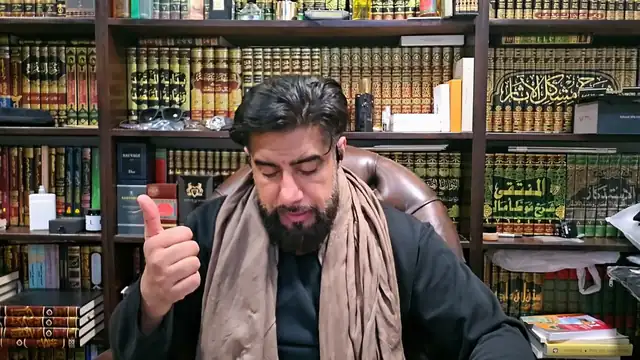 Press play to load from YouTube. Nothing loads until you do.
Transcript
machineauto-transcribed, may contain errors · source: youtube auto · click a time to seek · dotted terms open the glossaryI want to share some Reflections and let's together go on a journey W stopping at certain ma these stations reflecting on on certain verses and meaning of the Quran uh they are arbitrary stops at different places not entirely random yet arbitrary so at Bak what it covers and this is especially for those of you looking at one ju each day which is as I'm going through a ju each day I'm stopping and
reflecting on some of these verses and there's in s certain verses about taking Oaths that Allah says do not make Allah be a barrier a wall for you to attain some good how often do we see people take an oath where they cut off ties you know whether it's going to be with family with uh children um whether it's going to be with friends with other or that there was a particular action that they may have done but they say w I will never do
that now right this is not something do not make Allah be that barrier okay to you doing good and then Allah speaking of vows or Oaths says Allah does not take you to task for that which you know these Oaths which are mishap which if whether you just say w or you said it rightfully wall I swear by Allah such an such happened but it turned out you got it wrong that that's you know that that's not something Allah
you are sinful for so just to think about that and consider that especially with OCD which ruins so many lives right also Bak really covers a lot about uh divorce and and something interesting is that in jilia times you had if a person if somebody passed away the Widow would have to observe an entire year an entire year she would have to observe in a state of mourning and Islam came and uh
prohibited or didn't it it guided us to better uh more elegant understand standings and it's and it said that four months is the morning period and and this is the period in which a woman refrains from getting married again uh and then there's also the discussion of which is when a woman uh abandons kind of makeup and doing herself up this is called in Arabic so this is especially in the state of mourning for a widow now
does a divorce have to do that as well so here the disagree and you'll find that uh IM Malik they would say that there's no upon the upon the divorce whereas IM abif suf from the people of Madina and said that the divorce who's had three talak does observe there's an interesting M here what about a Christian wife does she uh observe does she observe what if she's a
um a widow how do the rules apply and many of the including Malik and and and said it does apply whereas Abu from the Malik from the from the said that there's no since she's not even Muslim and theith said that any woman who believes in Allah and the then let her observe such and such um over the as a widow but she is a Christian
but it's interesting seeing this development and there's also can the uh does a woman that is going through an must she stay must she do M that just restrict herself to the parametes to the parameters of the home now there are certain Scholars that said that especially for the widow um they said that the widow M must do that certain Scholars uh that had highlighted that and they based that on
the transmission of and his son abdah okay however there is a disagreement amongst the companions said that no a woman doesn't have to do that is something uh that is optional and you see that actually commands her sister or guides her sister and tells her to when her
husband had passed away to leave her home and let's go do which was not an obligation and she actually was known to give that fwa that's a fascinating observation um that we've got there also in something I want to share with us inah Bak that you've got um a a people that are referred to at the end actually before we come to that something I'll share that the Quran
highlights since we were talking about and divorce that when a when divorce takes place there was something known as it was a kind of gift that uh upon parting the husband would give now unfortunately these things have fallen out of practice in Islam and we only what keeps getting pushed to the Forefront is you know things when they go wrong and we get unfortunately Muslims see just negativities but this was something that is spoken of in the Quran and what's fascinating is there
were certain who saw it it as this is by the way which means that you give something you gift something and amongst the people who held this opinion of it being mandatory Wasim Muhammad both of them from the of Medina and Abu so that's actually something that's quite uh intriguing if you you know it's not a practice we see today but yeah I want to bring our attention
to uh a verse that speaks about a people that Allah brings our attention to them that do you not see and this is verse um 244 right do you not see those people who um who left their homes and they they they abandoned their homes they'd gone and they were thousands out of fear of
death then Allah said to them die and then brought them back to life indeed Allah is graceful uh and merciful uh to his people but they are not grateful in in return now this this narrative this narration who is it speaking about who were these people and did they actually die and were they brought back to life now that's a fascinating inquiry um many
people have said that was uh the prophet Ezekiel from the Bible and there's a narration about a certain people that are brought back to De from death and they trapped between these values and in his refers to it you have many mu will refer to it what's fascinating is thatn brings a narration from of who is the student ofn Abbas saying that this this is an allegory that Allah is
giving it is not an incident it is a now people disagree with that opinion of that uh this narration or this incident is speaking of those people who out of cowardice thought that they could save and some people say it's was because there was going to be a plague some people say maybe there was a war maybe there was uh a pandemic in the past and some people chose to flee out of fear of death and they're the ones that died and so on and what if the the narration
varies about who these people were but the fact that they out of some cowardice fled and Allah gives them death and then gives them life so had said that that was an allegory it's not about it actually having H it happens all the time with people it's not a specific people now others including disagree with and say that no that these this would be an actual incident uh as actually highlights that they may
have been given an apparent death that it wasn't actually death that it was a near-death experience or he says he uses the term Sak it may have been something that uh mimics what today we may call like a heart attack that they are completely uh appear to that their heart stops for certain moments that they appear dead but then they come back to life he says or it could be symbolic or metaphoric about uh humiliation is a form of death so Allah gave them death and then brought them back to life nevertheless what I found interesting
was that back then in the time of the transmits this opinion even if we don't choose it but it's fascinating that he saw and understood the Quran and he's the student of IBN Abbas that this to be an allegory that this is a meth it is an example it is not something um it is almost proverbial that it's being given just as a lesson not as an actual incident that they saw and read into the Quran
with such um perspectives is fascinating I thought I'd share that uh with us all Allah bless you all
Something wrong here?
Tell us what is wrong and it will be checked against the recording. Nothing changes until a person has reviewed it.
Sending a note needs JavaScript, which is off or unavailable in this browser. Nothing has been sent.
No name, email address or account is asked for or stored, and the inbox does not store your IP address. For rate limiting it keeps an unreadable fingerprint of your connection for 48 hours, and our database provider's own logs record connections as every website's do. Only your note, its kind, the page and the moment in the recording are kept, for review.
Cite this recording
Stable id, transcript version and tier are part of the citation. Every change to a transcript is logged.Mufti Abu Layth Archive, auto-transcribed, may contain errors. https://muftiabulayth.org/r/nxgrbwbadrs/ (accessed 1 November 2026)
- APA 7
Mufti Abu Layth. (2025, March 3). Mawaqif: Some Quranic Reflections [Video, auto-transcribed, may contain errors]. Mufti Abu Layth Archive. Retrieved November 1, 2026, from https://muftiabulayth.org/r/nxgrbwbadrs/
- Chicago author-date
Mufti Abu Layth. 2025. "Mawaqif: Some Quranic Reflections." Video, auto-transcribed, may contain errors. Mufti Abu Layth Archive. Recorded March 3, 2025. Accessed November 1, 2026. https://muftiabulayth.org/r/nxgrbwbadrs/
- BibTeX
@misc{abulayth-nxGRbWBaDRs,
  author = {Mufti Abu Layth},
  title = {{Mawaqif: Some Quranic Reflections}},
  year = {2025},
  month = {3},
  date = {2025-03-03},
  howpublished = {\url{https://muftiabulayth.org/r/nxgrbwbadrs/}},
  url = {https://muftiabulayth.org/r/nxgrbwbadrs/},
  organization = {Mufti Abu Layth Archive},
  urldate = {2026-11-01},
  note = {Auto-transcribed, may contain errors}
}