
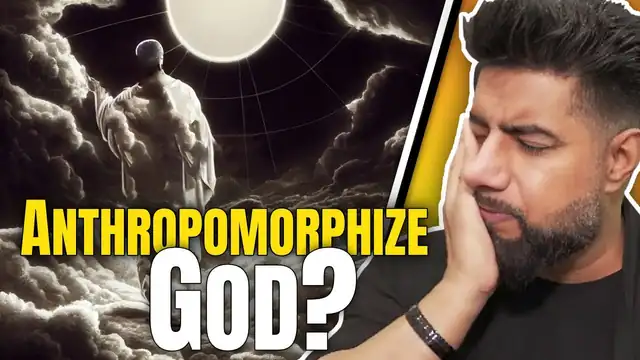
Ibn Abi Zayd al-Qayrawani creed? Should We Anthropomorphize God? | Mufti Abu Layth
aqidah aqeedah aqida theology aqeeda aqaid hadeeth ahadith ahaadeeth hadis hadees ahaadith ibn abi zaid al-risalah author ibn abi zaid al-qayrawani malik ibn anas malik bin anas imam maalik imam malik ibn anas imaam imams prayer leader maaliki malikite malikiyyah maliki school hanbali hanbalite hanbali school muftis hukm ahkam hukum hukam ahkaam atharism athariyyah koran quraan al-quran ayah aya ayat ayaat aayah aayat ahl al-sunnah ahl as-sunnah ahlus sunnah ahl al-sunna salafis salafism wahhabism ulema ulamaa scholarsvideo · 14:22 · 5,400 views · 12 Sep 2022 · Open on YouTube
 Press play to load from YouTube. Nothing loads until you do.
Transcript
machineauto-transcribed, may contain errors · source: youtube auto · click a time to seek · dotted terms open the glossary[Music] it depends how people are looking at it so what you have is there is a discussion that do we anthropomorphize god even okay even like no i don't mean this disrespectfully but do we
let's say in a dignified sense anthropomorphize god or should we is the question that in a dignified i don't mean in a disrespectful sense should we pitch a god or liken god onto us as in consider in the christian sense how god made man onto his own image so we there is this understanding that god is like a man this is
hence you see the famous you know sistine chapel and the famous drawings that god made man onto his own image the christian teaching now this is then inherited by many uh not many by some muslims they inherited this belief so but they like many things they inherited it but then they kind of owned it by fashioning it their own way so they then said that look we're not going to so they owned it but they put several disclaimers on it like they said look
we're not so god we're going to own the concept but we're not going to be as brazen about it so we're not going to say well god has a body like ours we're not going to say his limbs are like our limbs in fact we'll just say we have no idea what god's parts his body parts or his limbs look like then they went to the extent to say well we're not going to say he has limbs we'll just name the limbs so we won't say he has limbs we'll just say he has hands he has a foot he has a leg
he has but we won't use the word limbs so so this is what the discussion kind of folds out as and then you have the parallel muslim theologians who um who are the majority of the muslims people may use the name ashadis they may use the name matsuridis but mainly this who are the who went on to become the majority of the muslims who said that we don't say any of that if we don't say god has body parts we don't say god has hands and a foot and in fingers and things like this we don't
say this and wherever so then the question has come but what about where these wordings have appeared in certain texts like let's say there's a verse of the quran that says the hand of god is over your hands um or if it says something like god is saying oh like i have you in my eye like i i see you with my eyes or something it doesn't say but what it says to moses you are in our eyes and where it mentions that i created this
creation is with my own two hands oh wait god says he will wrap up the heavens in his hands what does this mean then so this is the debate really in a nutshell this is what it is so the latter group who said that no god does not you know we don't anthropomorphize and we don't even half quasi-anthropomorphize as in we don't affirm we don't say these things like god has a foot and a hand and we don't do that these things in the quran are expressions like language like in english we say to
catch a bus we don't literally catch it this is an expression so in arabic when when you say things like life and death are in the hands of god you're not trying to say god has a hand you're just trying to say god has control over life and death so that group went that way which which most ulama in islam kind of went that way that pretty much you know that's how and that seems to make a sense that seems to make sense really to most people the first group which were mainly the
hamballis that's why this was traditionally known as hambali or today known as salafi akida or people call it wahabi akhida as well so this this akita that god has literally traditionally it's called humbly though so this this humbly akida is people that say no we will say that god has a foot and he has a hand and he has these things but we will just say we don't know what those we don't know what the hand looks like so this is the kind of distinction that you're getting okay
yeah so i mean these things are really um yeah that's that argument in a nutshell really the majority of the muslims have really always been with the latter group they don't really say things like god has these things um you know it's up to people to be honest most people most muslims would not really believe that god has the most muslim that i've ever met won't really believe that god they won't say things like yeah god has a foot and god has this and god has that but if somebody wants to believe it like it is the salafi
it is the their belief um i don't they find let's say the word wahhabi derogatory they don't usually call it wahabi the other people might call it that but they will call it uh either they it's called humbly akida but they might call it atharia ah so this is the new name given to us fine you know if people want to believe that it's up to them you know if a person says look i want to personally i would say all of this is still the mainstream of muslims they are still this is all still within sunni islam
you do have other muslims as well so i mentioned this is the large batch let's say that don't say that god has eyes and you know he doesn't have these they don't say things like that they just say god is all seeing and all this and that's it we don't go you know they don't speak like that but then there is another uh batch as well which were more like the philosopher muslims uh people like ibn rust and the great maliki legend and other people and they
um they're very similar as well to this to the main part except they will go a step further in highlighting look none of this saying this stuff doesn't make sense because it causes problems in other things you can't say you know what's the point of all of this like why are you making so they kind of just argue it a bit more um because really what is the point of this of this argument like what is the point because people will say well the point is let's say the first group the athletes they will say that the point is that these things are mentioned in the quran so because they mentioned in the quran
like god says his hand like the day like he crea create he created with his own hands so because allah has used the word hands therefore we have to believe in them fine you know if a person wants to believe like that that's that's fine it doesn't look it's not nobody should be trying to control people over what they want to believe the that bulk the rest of the muslims usually will say well that was a figure of speech it's like saying you know it doesn't mean that god's trying to say he has two hands he's just saying he created everything with his hands that's a
figure of speech and that's fine you know because everybody agrees that there are verses of the quran that none of them take literally so for example the verse of god's hand is above their hand on the bay'atur redwan nobody takes that literally the verse that i quoted before that god says we breathed
we breathed our into adam nobody says god has a rooh the verse that jesus says to god that you know you see you know what is in myself my nufs but i don't know what is in your naps nobody believes god has enoughs even though that's in the quran so there are definitely things in the quran that people nobody takes literally like they accept them as a figure of speech and then they disagree on the rest but i would say look all of this is within
sunni islam all of it i i feel that people you see the problem is some people these people might say all of these are not sunny chuck them out some might say check them out of islam some might say okay leave them in islam chuck them out of sunni islam make them deviant but that's actually the mainstream of muslims and then the mainstream of muslims might say well okay the philosophers chuck them out or they might say check them out islam or they and they will say well these people the atharis took them out of islam because they say god has body parts or they might say well okay or check them out sunnis and everybody's just chucking
each other out of islam and it's appalling it's embarrassing so in all honesty all of this is really uh sunni islam okay whether they agree with each other or not it's also islam so if somebody wants to believe that they can believe it if somebody wants to believe that they can believe it you know it's up to them somebody wants to believe what people like said or even said or other people they can believe it now these are all sunni kind of representatives so yeah and as to um
say the issue is you see what people are doing is they're trying to claim like they want to claim people to their gang like i've got more people in my gang from the past so they will say look if nobody said he does say in his resale he has a statement that is you know has been problematized by people because it's in his resale and that's like a text that's over a thousand years old so in the he writes that allah is a focal arch that allah is above his throne
and he mentions this so this has been used by the athari group let's say cohort to say well he's in our group because he used this word that allah is um above like sitting above his throne literally like as in so because he's used these words he must be in our group and they then claim him because they'll say look oh he's one of us now but to be honest he definitely wasn't humbly but he does say that in his reseller text
the other thing is he in his other books like in his german he says other things which are against athadi so he will say things like uh um he condemns anybody who says things like in the um so in his german there's things about people who say god has certain other things or does such and such and there's the hadith of i think god laughs or something like this and he's highly condemning all of these and saying um and he's quoting from imam malik um so he in his journey he doesn't seem
to be atari and in his resala he does seem to be utterly so it's now there's a bit of well okay so where was he now people explain so some people so the athletes might say oh well you know in his german yeah he's saying that but maybe he means something else when he's dissing that over there and these people will say that when he said that he was just provoking the the you see in his time you had the obedien who were ruling tunisia and central north africa who were
and they say he was writing this to provoke them so everybody's got a kind of theory on it it doesn't matter he himself has long passed away so i hope that helps
Something wrong here?
Tell us what is wrong and it will be checked against the recording. Nothing changes until a person has reviewed it.
Sending a note needs JavaScript, which is off or unavailable in this browser. Nothing has been sent.
No name, email address or account is asked for or stored, and the inbox does not store your IP address. For rate limiting it keeps an unreadable fingerprint of your connection for 48 hours, and our database provider's own logs record connections as every website's do. Only your note, its kind, the page and the moment in the recording are kept, for review.
Cite this recording
Stable id, transcript version and tier are part of the citation. Every change to a transcript is logged.Mufti Abu Layth Archive, auto-transcribed, may contain errors. https://muftiabulayth.org/r/nn2ev0oyl9y/ (accessed 1 November 2026)
- APA 7
Mufti Abu Layth. (2022, September 12). Ibn Abi Zayd al-Qayrawani creed? Should We Anthropomorphize God? | Mufti Abu Layth [Video, auto-transcribed, may contain errors]. Mufti Abu Layth Archive. Retrieved November 1, 2026, from https://muftiabulayth.org/r/nn2ev0oyl9y/
- Chicago author-date
Mufti Abu Layth. 2022. "Ibn Abi Zayd al-Qayrawani creed? Should We Anthropomorphize God? | Mufti Abu Layth." Video, auto-transcribed, may contain errors. Mufti Abu Layth Archive. Recorded September 12, 2022. Accessed November 1, 2026. https://muftiabulayth.org/r/nn2ev0oyl9y/
- BibTeX
@misc{abulayth-Nn2ev0OYl9Y,
  author = {Mufti Abu Layth},
  title = {{Ibn Abi Zayd al-Qayrawani creed? Should We Anthropomorphize God? | Mufti Abu Layth}},
  year = {2022},
  month = {9},
  date = {2022-09-12},
  howpublished = {\url{https://muftiabulayth.org/r/nn2ev0oyl9y/}},
  url = {https://muftiabulayth.org/r/nn2ev0oyl9y/},
  organization = {Mufti Abu Layth Archive},
  urldate = {2026-11-01},
  note = {Auto-transcribed, may contain errors}
}