
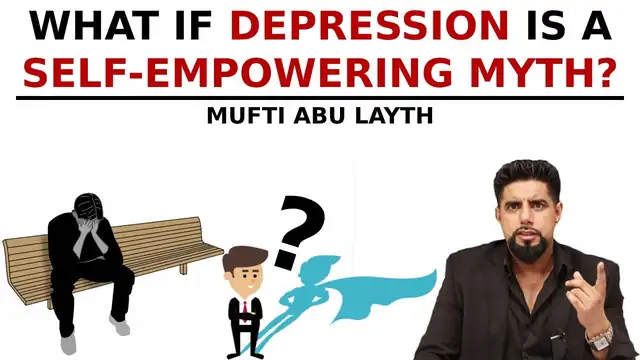
What if depression is a self-empowering myth | Mufti Abu Layth
muftis riba ribaa sood usuryvideo · 12:10 · 2,900 views · 8 Jan 2021 · Open on YouTube
 Press play to load from YouTube. Nothing loads until you do.
Transcript
machineauto-transcribed, may contain errors · source: youtube auto · click a time to seek · dotted terms open the glossarygoing down you see on that note uh my thoughts i was discussing this with the i was mentioning it to a few friends actually that it's really fascinating how in certain cultures you see this is in light of depression okay um depression is a uh it's sorry just getting my oh people my skull skill people go
so in light of uh you see this recent century uh depression has really become a phenomenon quite a widespread phenomenon and it's debilitating it's kind of crippled countless people led to all kinds of tragedies
now i was just observing and kind of contemplating how is depression okay now let me um i know the you see a lot of people suffer from depression so i'm trying to word this in the most precise way that i can but you see what if depression is
a a kind of self-fulfilling or a self-empowering psychosocial phenomenon with psychosomatic abilities so let me elaborate what if depression obviously it's it's real but what if it is actually in a great part a kind of theory a myth that if you embrace it it then takes on a life of its own and those people who don't embrace it
as a myth they are not as debilitated by it i don't know you see i'm i'm contemplating this theory that what i'm trying to say is you see the symptoms of depression like that you know the general things that they will say about the lack of interest in things loss of appetite the kind of insomnia or um this kind of sense of worthlessness and all these kind of uh frustrations that people go through they
are felt generally as well people to experience them without being clinically depressed so if we call this clinically depressed right so people that may just sometimes go you know everybody goes through these kind of experiences at some point but it's not it's not chronic it's not long term it may just be for a couple of hours it may be for a day some cases maybe a couple of days but that's really it with normal people now when people accept that actually there is a
condition i now have this condition what happens is i think that that it's like a virus that it becomes self it becomes autonomous and it takes over and i think it then if not impossible would become incredibly difficult to remove from from the mind or the brain and it would be then it would manifest itself in very real qualities like so you would see the
insomnia you'd see the uh the the loss of appetite losing or gaining weight or whatever and all of these things would become real so that's uh it's a an interesting kind of theory i know people may not like to hear that but and i'll tell you what got me thinking further about this i was watching a um i was watching this short clip on color in the past so different communities in the past didn't have the kind of colors we have today or they didn't have names for them so
it was called something like um why the greeks didn't see blue it was a a brief you know just something on youtube now it was highlighting that in if you look at the old greek texts whether it's homer or different people writing they don't use the word blue so they don't describe the sea or the sky as blue ever they in fact they describe it as something um like very kind of like muddy uh waters and things like like they don't use the they may give it a description with something but not something what we would associate
with blue if anything they saw it as an offset of black which is incredibly strange for us today since blue is such a a uh you know important significant color in all of our lives so the question is that could these people not see blue of course they could see it but what happens is when they didn't when they didn't have a name for it that phenomenon is still observed but not as powerfully so so what they so sociologists and other
sorry not social other researchers psychologists and other uh people studying ethnographic studies have have conducted tests where people who are unfamiliar with a particular color let's say um they are asked to spot out what they see as different so imagine they see um pink as a shade of red which many cultures did actually so if they don't have a separate title for it they're not as quick to point it out now you might think well that's obvious but it's actually not
uh to these people to these people it will just be another form of red but what happens is the moment these people are taught that that is actually a separate entity with the name pink for example or blue or whatever it is the mind now pronounces that color and amplifies it every time they see it so the visual effects of picking up that color become actually much more vivid for those people after they learn that so it's not that
prior to that they couldn't see it but after it it becomes a much more real color to them in the real world and pronounced and distinguished so based on this i was you know that kind of got me thinking again and i was thinking hmm you know if a person was not to embrace the myth of depression would they still get as depressed as people who do embrace the myth and my hypothesis is that they wouldn't that they may get depressed but not as
depressed because they don't because the mind can't resonate the myth because they haven't embraced it so hmm that's my hypothesis but yeah i mean it's food for thought i know people may not like it but what i was going to say i got onto i got distracted mentioning this what i was going to say is it's interesting how in the past certain cultures they glorified depression and and from that is the urdu culture it's really fascinating that
the urdu poetry from the 18th um definitely 19th century onwards up until even today although the great poets obviously are of the past the concept of ram this melancholy this kind of state of being saddened and depressed and was seen as something that they were all seeking and it was like seen as a prize that i want yo ram that this was the thing that they would um everything you know it'd be always about
you know the realm of life of existence you know the beloved all of these things they sought them and they weren't seen as a distinguished poet until they were inflicted by this ram you know it's like when he says what is it
that if i have you then the whole you know world of my life is enlightened but he says if i have you then what is then what is the need for the room of this world now it's interesting it kind of that how those people when they saw it in such a prize-like culture um it changes the comp it absolutely
changes everything to do with melancholy i i just you know these were just some thoughts that i was really um amazed by when i started contemplating over it that wow i never thought of that before how these cultures glorified depression and when they glorified it they almost sought it out i'm not almost they did seek it out and it was a it was a a mark of you know of distinction for them so yeah just food for thought people just putting it out there right so what is going
on somebody said lol now depression is a myth well everything is a myth to a great extent so when i said the myth of depression i meant in this as a psychosocial narrative because ultimately most things are like our myths are even though we embrace them like like money money is a myth possession is a myth laws are a myth states are a myth um beliefs are a myth um all of these things ultimately are myths
i don't mean in the mythological sense i just meant and as things that actually exist in the mind and then we associate them with something in the real world but they're not actually that association isn't as obvious it's a human-made association so yeah anyway food for
Something wrong here?
Tell us what is wrong and it will be checked against the recording. Nothing changes until a person has reviewed it.
Sending a note needs JavaScript, which is off or unavailable in this browser. Nothing has been sent.
No name, email address or account is asked for or stored, and the inbox does not store your IP address. For rate limiting it keeps an unreadable fingerprint of your connection for 48 hours, and our database provider's own logs record connections as every website's do. Only your note, its kind, the page and the moment in the recording are kept, for review.
Cite this recording
Stable id, transcript version and tier are part of the citation. Every change to a transcript is logged.Mufti Abu Layth Archive, auto-transcribed, may contain errors. https://muftiabulayth.org/r/mf5fufct-yg/ (accessed 1 November 2026)
- APA 7
Mufti Abu Layth. (2021, January 8). What if depression is a self-empowering myth | Mufti Abu Layth [Video, auto-transcribed, may contain errors]. Mufti Abu Layth Archive. Retrieved November 1, 2026, from https://muftiabulayth.org/r/mf5fufct-yg/
- Chicago author-date
Mufti Abu Layth. 2021. "What if depression is a self-empowering myth | Mufti Abu Layth." Video, auto-transcribed, may contain errors. Mufti Abu Layth Archive. Recorded January 8, 2021. Accessed November 1, 2026. https://muftiabulayth.org/r/mf5fufct-yg/
- BibTeX
@misc{abulayth-mF5fUfCt-yg,
  author = {Mufti Abu Layth},
  title = {{What if depression is a self-empowering myth | Mufti Abu Layth}},
  year = {2021},
  month = {1},
  date = {2021-01-08},
  howpublished = {\url{https://muftiabulayth.org/r/mf5fufct-yg/}},
  url = {https://muftiabulayth.org/r/mf5fufct-yg/},
  organization = {Mufti Abu Layth Archive},
  urldate = {2026-11-01},
  note = {Auto-transcribed, may contain errors}
}