
Quranic Arabic 04
salah salat salaah namaz salaat namaaz as-salah al-salah salawat ramadhan ramzan ramazan ramadaan muftis haraam forbidden sihr sihar jadu jadoo kala jadu sorcery koran quraan al-quran surah sura soorah surat suwar soora in sha allah insha'allah in shaa allah insha allah inshaa allah salam as-salamu alaykum assalamu alaikum assalamualaikum salaams salam alaykum wa alaykum as-salam peace greetinglive stream · 1:00:43 · 4,100 views · 20 Apr 2021 · Open on YouTube
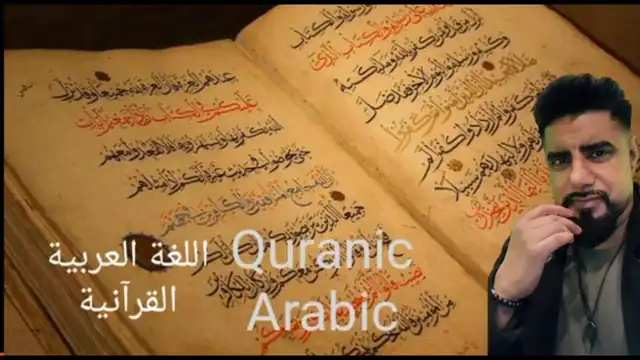 Press play to load from YouTube. Nothing loads until you do.
Transcript
machineauto-transcribed, may contain errors · source: youtube auto · click a time to seek · dotted terms open the glossaryall right people all right this is going to be a pre-recorded session continuing from the quranic arabic so those of you that haven't caught up with the previous ones i think there's been three prior sessions this is based on dr ibrahim sorti's book towards understanding quranic arabic enjoy people i hope it's of some benefit and ramadan mubarak salaam allah
straight away you know you're writing this but there's some conjugation taking place you're doing uh you're putting nouns into the genitive and i'll show that in a moment uh whereas things like the dialect that they'll rest above the line so if i just very quickly show you on the board here um where so this the real and the reason i'm saying this is because right okay now moving on to without further ado to what we're trying to take a look at today quranic arabic here we are
right learn and apply attach pronouns okay the first thing saying construct phrases all right it is i funky graphics and hollow verbs three very interesting um rules and techniques which we're going to learn about today and so i hope in general by the way i mean i as i'm going through this work i mean this is the bulk of your lesson and i know some of us are sometimes saying well it's difficult during our daily lives and routines to
kind of fit in the arabic let's fit in arabic every day but it is important that we give something like let's say 20 25 minutes on a daily basis and really just all you have to do is just do really just go through the homework you can break up the homework to have it as a 20 25 minute thing every day and the bulk of the lesson is what really we're going through now so that will keep some consistency in shop right so moving on she's got quite a bit to do like regular pronouns i mean first of all
pronouns these were the pronouns we've come across um by now these should be like second nature we should all know these like the back of our hands right so but what are attached pronouns well you see when we look at just going back to this these pronouns whenever we want to say something like he is she is these pronouns come on their own and this is how
but if we wish to join them for something like if i wanted to say um like i want to put them after a proposition let's say so from this is from him even in english we cannot say from he he changes into him so whereas he was the nominative case if we like so in this case the nominative is the one with the bomb if you like that is this case now it would have been albeito a preposition
comes before it min and now it has to be read as minil bay t that's because this is now the genitive case because men the preposition makes it genitive now just as prepositions for example this genitive case which we have here this is now an attentive case we could have had a pronoun here so imagine we had he
so we want to say he and we're talking about somebody who is a student he's a man when we say from it becomes him so for that these pronouns change so becomes who this who ending
minky so these basically all of these mean uh from him from her from you from you from me that's what they mean now uh is that is this kind is this making some sense what i'm saying
no right okay sometimes when i'm right you know because they're so generally in arabic by the way where people write they don't write problems it's not like usually in arabic if you're just reading arabic there will be no vowels whatsoever but obviously we write them because we're
um i might forget to put in the vowels but i will you know have more of an effort to make sure that the vowels are there but this is obvious as well so there shouldn't be confusion but um okay from him okay what we're trying to say is that pronouns can be of two types those pronouns which will come on their own like he and she then there will be pronouns which will come attached to words or attach to prepositions like in english him or her okay so
those in arabic are these what we've got in front of us [Music] prepositions
if you add the prepositions to the nominatives these are the endings from absolutely so just as if you added a preposition to a word the ending changes so if you add a preposition to a pronoun it changes into one of these is there a different ending for each nominative for every proposition i'm not quite sure what you mean by that i don't think i understood that
um you cannot say it like that you [Music]
[Music] you could not say here you would say you could not say does that make a bit more sense
[Music] he so let me first of all let me just make sure that we understand the general gist of what's going on and then i'm going to explain those differences do we understand generally what these are saying then you got the gist excellent yep that's good so right okay i'm gonna i'm gonna come back to this actually in a moment because this is these are attached pronouns
but these we haven't done the construct phrase thing yet so i'm going to leave that for a moment right now if we take if we take a look what he's what uh what dr sufy's got in his book as an example it's unit 15 he has uh i've said page 144
right actually page before you get to one four four one four three if you look at page one four three right you can see at the bottom unit 15 he's got minha number two and so on
right now if you take a look at uh page one four four if we take a look at that one four four and a number seven first sentence on top we can see it says it reads what is the asking first of all
m he the next example
number eight aina if is really not so much that the meaning is so great but it's just to get the gist of these things okay these sentences um the next one right can somebody actually translate
can you translate number nine number nine what excellent absentee all right anybody else i'm gonna straight away do everybody else get that as well
did you understand that all right okay good excellent as long as you got it how do you me foreign
does that make sense right so we've seen this some usage some use of these pronouns these are called attached pronouns so if i just move this back over there right okay so if we just go back to them for a moment um attached pronouns okay
just as you can see the on page 143 unit 15. right okay now that said any questions on that is that okay all right good
okay excellent i think most people seem okay with that all right dr samir you okay with that yep kids all right excellent okay i'll get to that as well that's dr magics i think come on i'm sure you get what it's saying very simply is that if that normal purpose normal pronouns which we've learned
like these must be always used on their own as though they're in the nominativ if you wanted to use them after a preposition they will turn into these so just as in english you can't say from he he has to turn into him the word him and in english although nowadays we do use me instead of i quite a bit but really the nominative case is just i so to say it is me is actually now it's acceptable
english but generally it used to be incorrect english it was correct it was correct to say it is i or not it is me but now obviously it is acceptable because these are the genitive and accusative type of pronouns right okay now moving on to the next rule next thing is right what on earth is a construct phrase what is a construct phrase well it's called an above okay
now what it means is it's the joining of two words in english you have two methods to do this one is by use of the word of and the other is with apostrophe s okay so that's in english now in arabic what we do is we get the two words that we want to make a possession out of so this is a and in the environment what it does first of all it it demonstrates possession ownership
or it is even if it's not actual ownership but some type of belonging now the way we do that in english in arabic sorry is we get the two words and put them in order so the position will come first and the possessor will come second so as you've got here we want to say the student's book or the book of the student so we put the word book here okay put the word book here first and then we put the word
gymnastics right there which means the book of the student okay so you can see once again if we go back to make your possession you put the two words in order the object first and then the o now that possess their second and then what you do is you take away the tanween from the first word so you get rid of one man in the first word and you give the
last word a kessler as you can see here and leave only one dogmatic last word okay is that making sense so far well what's going on making attempting to make notes right so that's good so so that's basically the rule that you put the two words together the object first and then the owner or the possessor second
you get rid of one from the first word or one vowel rather and you give the second word now okay to start off with we've got some words here right the words you probably don't understand raja means a bike or motorbike and sayonara means car but the rest of the words you should understand i'd like you to make the construct phrases for these make the ivars for them okay so if you make that right now and
then i'll listen to your answers in a moment so i'll give you should i say like two minutes to do that finished
[Music] be i want the answers what is wrong on the last year and last example sorry which vowel only we done right okay i'll activate roof bombs
right okay can you read out your answers foreign
b next right so the the possession the pronoun that's being added is at the end so in arabic unlike some language where you say
my your you put it in front of the word in arabic you put it at the end okay so with that now said what i'd like to do i'm going to show us some uh some words the thing is that you could perhaps later on in your own time you can access this whole slideshow and have a go at completing all of this if you like but right now you could choose a word and you can kind of what is it attach it or construct a construct phrase with it let's say you attach it to these pronouns
so as an example also i mean i'll go through the first one so a student who body is another student your student valuable key and finally be my student now what i'd like you to do is on your own maybe just choose two examples perhaps and go through them it's okay you can kind of go through them
right if i was to say how would i say my name my name in fact if i what i'll do is i'll select people that'll be easy so we'll start from the top of the list so start with you might be uh so it might be my name how would you write that if you can you can write it in english and put it into the chat
right good okay so uh we've already got that one answered so matthew that's gonna be a bit of a cheat situation if i let you get away with that so okay how would i say my country instead my and i know these all right these haven't got vowels i suppose that's the what did i say buddy no there's a lamb in the middle by the way
so how would it be the word is so what i'll do is as i give you the word i'll read out the word as well to you say my country excellent right okay you cannot say it should still be kuala mukha okay so you got the word just just saying just to clarify that way you've got the word just so whatever your word is so in this case the word is we've got that now
it would normally have two on but because we're making it into a construct phrase it will just keep one and then what we do is we add on the car and obviously you wouldn't write this bit it would join on so oh does that make sense dr magic
that happens is the first word loses its its double vowel it can only have one vowel left like leave one and you give the last word a kaspar okay right now going back to the slide right so who's next uh junaid uh janae didn't have it go on and janae how would i use the word eben son how would i say her son
her son if not all right look at janae showing off with the with the with the outright script i like that that is very good if you can do that guys that's very very his teacher
his teacher which is haram [Music] no we're gonna do spanish after this no okay what what what do you mean money mo because we've got
a this is a who right this is a who this is so if you said so what would it be yes sir i want you to have a go again like you see you're on the right track but you're just not saying the end clearly so his teacher how would that be [Music] good but we want all the vowels being read so you can't just say you gotta say saying all the vowels even the one on
the meme any idea are you writing excellent yep you're writing moving on to alright yep no all right okay anyway um if we take a look at
um moving on to all right right we've got here three uh construct phrases to make i'd like you to make these in arabic he can make them in arabic i'll give you just what i say over a minute see amina i would say his house
i mean at his house right all right sentences one to four uh if we have a quick read of these sentences what do these sentences mean so the first one
says right the chapter of the quran that's excellent once again it'll be quite um obvious sort of honest
this is an obvious one beethoven now the thing is what i'd like you guys to remember is that as you kind of as you'll go away and you're going to try to make construct phrases later on you might forget yoga you might think which word comes first is it the i mean is it the possession is it the possessor and what you do is use these words as anchors so use words that you already know such as
these words we already know so use these words as anchors to kind of remind you oh yes obviously the messenger of allah that's how to do it and as a rule uh if i as as a rule if i just add here that these words so if i just put that out so something like
they the house of the man now if just as a rule to remember that this word which comes in front can never have an alif lam okay on it because it will be it will be definite if it's joined onto or control or added onto something different just as in english you can't say like if i said the man's house
i can't say the man's the house so that's exactly how it is in arabic so in arabic the order of writing and if you kind of maybe listen to this it might sound a bit i don't know if it'll make sense straight away but if you listen to this the order of writing or the order of structure is like using the word of so you say the house of allah or the book of allah or in this case the house of the man so bait comes first just as the name just as in the of construct
house concerts however grammatically it's similar to the apostrophe s so just as in the apostrophe s you can't add the word onto the possession the possession you can't in arabic either so i can't say in arabic oh does that make sense i'd like you to does that make sense guys yeah yep good all right i'd like to take a look
at the sentence number it's on page 157 number 32 and it reads mantilla in fact i'd like everybody to translate that by trying to without trying to kind of cheat by looking at what other people are saying if you kind of look at it yourself read it to yourself translate and then uh yep some yeah that's correct but the
whole sentence excellent the preposition right then come on everybody's got you translated without trying to cheat and relating yours we're still from excellent maddy right okay now coming back to
attach pronouns if i just take a new whiteboard here right okay now generally if if you're going to attach a the pronoun which is who which means he this one here if you're going to put that at the end of a word which ends in either asia
or it's got just a kasra so as an example let's say the word fee so the word fee ends in a year now if you're going to join that on so what you've got there they should have been however it becomes very awkward to say so to say fifo therefore it is read as
fi he itself carries a tesla just for convenience likewise if we're taking a look at the word for example which means to so if i said that's inconvenient right can you repeat that yeah so which has a yeah so if you added on if you added that to the word
him or it if i want to say oh this is to him or to it instead of reading it as is how it should have been read it is instead read as he because it's easier to pronounce and the arabs were all about ease back in the days it's like they saw chill out back in the day sit under the palm trees and think how do we create some ease in this language of ours so they found that much easier so that's how we say basically
um likewise if now um was it samir early on who gave an example by saying the book of history now if we made a construct phrase like um in fact without getting into actually a complex sentence let's use a sentence like let's say his room how would i say his room his room
his room people all right excellent so you got it there and i remember i remind you that a single dot i have to kind of do it sometimes a bit thicker because that's my digital pin it doesn't allow me right so
[Music] right that's all good can you see that excellent right however now if we wanted to add a preposition in front like i want to say where is he or where is it and you want to say well it's in his room so we add this preposition right here we say as you can see now what do you think happens here talk to me people what happens here because we normal preposition what does it do to the word after it makes it carry it makes it in the genitive case
so what is going to happen here look anybody else answering all right we're getting some all right guys kirsten okay we're getting some answers here my kids saying a speech mark got no idea what that means
right okay excellent because what we're gonna have here is that this one as you can see i've neatly rubbed that out now that should become that should take a kasra now it does take a kasra but so it should have been free of but as you can see that is quite awkward to say and i'm sure you'll agree with the arabs on that one so that is quite awkward to say
it sounds quite a bit as well all right so so what once again we see that convenience coming in okay so as a rule once again i'll reiterate that as a rule if who this who if he the with him comes after either a year it comes after this which the
as is this itself carries a cursor okay so you can make a rule of that okay you can write that down as a whole excellent people excellent athens we're making amazing progress strides we're taking strides i'm telling you right okay now moving on to the next next bit here right you're ready for it
right we did this right okay past tense verbs now we did past tense verbs before which was fine but we looked at regular verbs today we're going to look at hollow verbs okay so what on earth are hollow verbs well here they are right here this what you can see this was a normal verb the archetype which we learnt about and he has three radical letters always to it
however which means he did in some verbs that is missing the middle letter is so it's a hollowness so this as you can see here it's red which does not mean karla is in black in order just in case somebody is thinking right but it's ala which actually means he said right right
okay so let's move on slightly so this was the general conjugation patterns okay this is how he conjugated verbs he did she did you did you did i did that's all good i'm sure you guys have mastered that already so right but however now what do we have here see with the hollow verb first of all there is caller it's all finding no problem here there it is
oh what a nice just happened right okay ignore that oh my god all right ah pointer tool all right guys sorry about that just ruining the the graphics there right so here it is now karla is fine here as you can see to say she's she said it's not so difficult either you quite simply just add on a tap as we did
generally so that's not so difficult however when it comes to you this is where once again it gets slightly tricky right when it comes to you now what should have been uh where normally you just add a ta at the end and just say but you can't do that here that is wrong okay what we do
is this originally actually was used to be once upon a time now when you're saying let's move this on when you're saying she she did it's fine but when you take this to you the hollowness is dropped we drop the hollowness okay so and because it used to be a well
originally we give the first letter a bummer so we're joining it on to the third letter now so as we've given it the bummer okay right now let's go back to that
and the rest is either the same quality i think it is important that we copy this out this one scale this hollow scale like you said i said we said and you can see in the last three the hollowness is dropped and you get this and the reason is because originally this was a wow okay so really this can only take two vowels anyway it can only take a bummer or a kasra which we're going to see in a
moment okay so you're copying that up if you all copy out just this parlor palette doing that
so likewise if you were to take the verb now sama which will fit on the same pattern as barley exactly which means he fasted you would conjugate that in the same way as well so once you finish writing that how would you say i fasted i
fasted excellent ascension sum tool it's exactly the same ultra it's on that pattern okay has everybody finished copying this up in tahitu are you finished now i'm
good all right so so as i mentioned that let's go back to this this could only be one of three could either be what the hollow letter can can only be a vowel letter and there's only three vowel letters there's an alif there's a wow and there's a yeah and basically they call these vowel letters because they sound uh no we're just coming to that now imagine that they sound like vowels they sound like
it will carry a kasra how would you write santo in arabic there you go right here sometime there you go how's that how does that look you're very welcome ripon now so if you now if you take a look we'll go back to the presentation uh by the way guys this presentation will be downloadable for you guys so you can
kind of access it and download it okay right now let's take a look here we've got and you can tell i've given away the clue that it takes a kasra a kasra so this the original letter in these was at the beginning when it kind of drops the hollowness so can you complete that i'd like you to
complete that so norma let's do one uh yep go for it because i mean it's the whole point the way we're going to really remember these is there has to be active learning remember what the last letter used to be aha good question spoken like a true detective it's magic um at this stage i'll just tell you what they are but later on you'll recognize how you know because you'll know through the
present tense verb because whenever you'll be given a verb you'll be given both the past and the present and the present tense will tell you tell you what it was but at this stage you'll just have to take my word for it i guess okay okay guys we any luck with the correct answers i do indeed mr rupaul or doctor rupan i should say
rip on mention there's the completed slide as i did say next time i said i'll have to complete a slide on so you can see here look but he slept she slept okay but she sold okay these are hollow verbs now i am conscious of the time and we have kind of gone over really um 10 30 we've gone to 10 35 there was some activities to do but i
suppose you can do that as part of your um general act homework and things like that if you like can i ask a question of course you can yep what's the question but if you very quickly would like to take a look at page 159 unit 18 you can at least see what i mean so if you take a look at page 159 unit 18.
yep okay is that uh you're saying 1 17 yep uh yeah so if you're looking unit 18 you can take a look very quickly as sentences one two four just to take a look maybe to have a go to just read one of them obviously not number one which is just saying that really
if you take a look try and maybe just have a little read and think what what what's being said here but more what is the near te near past tense so he has just left the room or you have just uh you have finished eating so that type of heaven has so the prayer has been established that's what god comes for now all right so number two has some fairly large did you pass for allah meaning for the sake of allah every day if you can do about 25 minutes every day
25 to 30 minutes every day that's all i i think is really needed that would get me really in a week uh basically up until next lesson you've been over know what is it over two hours two and a half hours and i think to read through if you are getting stuck at least do you know do what you can do okay that's what i'll say um
but it is i mean if you can get that done okay because if not next week we will also continue with uh right okay i'll explain that in a moment then next week we will continue with a bit more to do with the hollow verb because we've not completed uh we'll take a look at a few more examples have a bit more practice as well we'll also look at how to make the active participle from these hollow verbs because we've not done that so things like that actually so you know we've not completely moved away from the topic but what i was saying is we could read
thoroughly through unit 15 and 16. if you could write and translate unit 17 then there's a vocabulary list to copy which is not hard work which is not i said hard work uh five cons five constant phrases we've got to make as part of exercise number 22. that which is part one part two is placing the vowels it's not actually difficult what they mean is if you look at page 172 right now you can see the exercise you've got loads of 10 arabic sentences and this is how they write
in arabic they write them without the vowels but they're asking you you to write the vowels put them down because you should be able to now actually make those vowels out in using the grammar that we know and it is quite interesting what you can do you don't have to actually write that out i know was it a ripon that actually um i think it was very fun that he uh he he just kind of uh he just took a picture of it and then just did it on that really was that europon just did it on his book so i mean it saved him time as opposed to yep he took a photocopy and he's kind of like just
uh done the vowels on the photocopy and then scanned that and i thought that was pretty good because i mean in a way and then annotated of course of course doctor report right so uh the thing is that it it just meant that it saved him time in having to write those okay thanks for that so you can hear us and like i said when it comes to translating sentences you can just do something like take two a day twist um and like i said when it comes to translating sentences you can just do something like take two a day or you know you're at work you just remember the english
oh you have to remember that uh oh boy what is your name who are you where is your house oh boy what's your name who are you and where is he at so now you're trying to work through that during the day things like that i mean just to make it easy on yourself that's all so inshallah i think it's we've we've gone through quite a bit we covered attached pronouns moved on to construct phrases and then looked at hollow verbs and how to conjugate them and really quite an extensive amount uh what's number two number two was uh i mentioned putting the vowel vowels onto um onto those words you can just photocopy and
put the vowels and scan it uh any questions feel free to get in touch you can use the whatsapp group uh janae will add any of you if you're not adding on to that already i'm not sure if you are nagina but uh janae can add you onto the whatsapp group for any questions the whatsapp group is always better so everybody else can benefit as well now i think inshallah go get some rest and i'll see you all next week
Something wrong here?
Tell us what is wrong and it will be checked against the recording. Nothing changes until a person has reviewed it.
Sending a note needs JavaScript, which is off or unavailable in this browser. Nothing has been sent.
No name, email address or account is asked for or stored, and the inbox does not store your IP address. For rate limiting it keeps an unreadable fingerprint of your connection for 48 hours, and our database provider's own logs record connections as every website's do. Only your note, its kind, the page and the moment in the recording are kept, for review.
Cite this recording
Stable id, transcript version and tier are part of the citation. Every change to a transcript is logged.Mufti Abu Layth Archive, auto-transcribed, may contain errors. https://muftiabulayth.org/r/l2_iuemkbco/ (accessed 1 November 2026)
- APA 7
Mufti Abu Layth. (2021, April 20). Quranic Arabic 04 [Video, auto-transcribed, may contain errors]. Mufti Abu Layth Archive. Retrieved November 1, 2026, from https://muftiabulayth.org/r/l2_iuemkbco/
- Chicago author-date
Mufti Abu Layth. 2021. "Quranic Arabic 04." Video, auto-transcribed, may contain errors. Mufti Abu Layth Archive. Recorded April 20, 2021. Accessed November 1, 2026. https://muftiabulayth.org/r/l2_iuemkbco/
- BibTeX
@misc{abulayth-L2-IUEmKbCo,
  author = {Mufti Abu Layth},
  title = {{Quranic Arabic 04}},
  year = {2021},
  month = {4},
  date = {2021-04-20},
  howpublished = {\url{https://muftiabulayth.org/r/l2_iuemkbco/}},
  url = {https://muftiabulayth.org/r/l2_iuemkbco/},
  organization = {Mufti Abu Layth Archive},
  urldate = {2026-11-01},
  note = {Auto-transcribed, may contain errors}
}