
'Suhba', 'Meaning itself' & Cigars - The Blessings of The Collective Dialectic | Mufti Abu Layth
salat salaah namaz salaat namaaz as-salah al-salah salawat hadeeth ahadith ahaadeeth hadis hadees ahaadith sahih saheeh sahih hadith saheeh hadith sound hadith imaam imams prayer leader qiyas qiyaas muftis sanad isnaad asanid chain of narration rawi raawi ruwat rijal jinn djinn jinnat jinni sihr sihar jadu jadoo kala jadu sorcery jahannam jahanam jahannum koran quraan al-quran aya ayat ayaat aayah aayat verse wahy wahi wahee sahabah sahabi sahabiyyah sahabiyat companions madinah madina al-madinah madeenah yathrib ummah umma ummat in sha allah insha'allah in shaa allah insha allah inshaa allah alhamdulilah al-hamdu lillah alhumdulillah alhamdulillaah hamdulillah bismillah ir-rahman ir-rahim bismillahir rahmanir rahim bismillahi bismillah al-rahman al-rahim as-salamu alaykum assalamu alaikum assalamualaikum salaam salaams salam alaykum wa alaykum as-salam peace greeting barakah barakat barkat baraqah duaa duas duaas supplicationlive stream · 1:11:38 · 3,000 views · 2 Feb 2026 · Open on YouTube
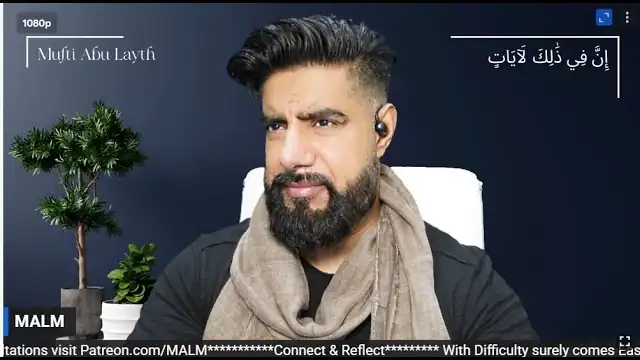 Press play to load from YouTube. Nothing loads until you do.
Transcript
machineauto-transcribed, may contain errors · source: youtube auto · click a time to seek · dotted terms open the glossaryAll right. Bismillah. Let me just check all this is live. Alhamdulillah. I'm just going to highlight here as
well. Right. Okay. Allah Allah. It's, you know, there is something about the um I've gotten [clears throat] back into
this hay recently and what I've done is um I bought one of those um they they had this it's a bit of a I don't know whether it's I I won't say gimmick, but it's what it's this chai maker where you can just place all the um ingredients, everything inside this machine and it's not machine, this kind of um don't know what to call it, but it's like a container and it just
doesn't overspill. It just it's designed with engineering that it just contains it. I'm very impressed with it. Although well I didn't find the um the people I as helpfully responsive but I did love the mach the the instrument so I've been yeah really hooked on China in any case
I take it the volume is all coming through good uh anyone that's tuning in. Likewise, if any issues, just holler at me with the that's with the audio and video.
But yeah, other things as well, you can feel free. I want to do not such a long live stream just meet connect reflect [snorts] I've been thinking about quite a few philosophical themes really amongst them this on the collective dialectic the sba the baraka of the sba really honestly this has been something really on my mind.
I'll let people tune in. Yeah. Just till then I was uh reflecting on the lines of I was just thinking about you know his classic poem where he says Um,
he says that the heart seeks again that opportunity That yeah that our days and nights, our time that that may it be consumed once again entirely in just in just the devotional what can we say in the in devotion to
the beloved. the janaki. It is epic. That's part of his uh but it's been so long that we've called our guest That reminds me, you know, people when I used to being many decades ago in class,
they'd always uh I think in part marvel and in part just always laugh at my ha just because I think they weren't used to saying the so clearly in Udu. I guess you don't really say it like that, but that's the Arabic spilling in, you know, I suppose they would say, I suppose too, but I would just say
that from the the opulence of the of the cup of the mug of the of that which in one drinks. from the opulent from the whole abundance of or the one could say the ecstasy of the cup
that we have a whole a whole a whole meet up of just light it's one of's classic you know mut And on a ADHD tangent there, [clears throat] yeah, this journey with ADHD is an interesting one.
And in on tangent there, Mitan Chakarabat thei the famous Bollywood actor when I was a kid when Mitan was my favorite actor uh from Bollywood as a kid. So I I used to think he was obviously I mean I was probably about 10 but uh he I always thought I saw this coolness to him.
He he had this kind of you know this aura about him but he he would recite a lot of poetry in his Bollywood movies and he says this in a few of his uh in some of his movies you know when he's about to like as a oneliner when he's kind of just uh uninvitedly uh intruding and then he'll say
All right. So, yeah. Um what's the final uh the uh the final couplet in the it's uh I suppose he ties the first with the last jo this kind of this volcanic this kind [clears throat] of excitement, this kind of eruption.
But in the first couplet to do with the cup, in the last couplet to do with tears that he says, that we are that we are sitting in preparation
for a storm to land. Meaning that the tears, the emotions as they burst, there is something to Allah. Allah Kaz im Kaz, how are you?
It's been a while. I haven't seen uh I did see some social media post. I think it was just a quick video of you looking rather dashing, young man. I like it. Yeah. So, what is going on? I wanted to speak about, you know, a topic that was on my mind and that was this thing, the blessing of the SBA.
you know that there is something in the companionship this is I mean us as people obviously we've got it the prophetic example from the prophet sallallahu alaihi wasallam but us as people there is something about the collective dialectic okay and the dialectic is something that is it's like an what [clears throat] we mean by dialectic is when there is an engagement between two things, but sometimes there's also a to and fro.
There's a bit of pull and tug. There's a bit of um you know, it's not just all a um um just something all just one monolith. There's, you know, sometimes you can So, let's say you're sitting amongst friends, you're having a conversation, you there could be a bit of, you know, there's pushpull factors. They're saying something, you're saying something.
There's a bit of a challenge, a bit of a I mean, not in a um in a negative way. I don't mean challenging in a hateful, vengeful or toxic manner. I mean in a it's all amongst friends. But there is something to that dialectic yields incredible results and it's there is baraka there is blessings there are answers from that honestly I feel we were talking about this yesterday um
it's been on my mind for a while you know sometimes I will that there is there is a healing that there is the need. See, we as creatures are human is a political animal. By political, I don't mean politics in the modern sense or let's let's rephrase it then is a social creature.
Human is a social creature. where Aristotle uses the term, he says that the human belongs to the police, not the police, the popo, not them. The I mean the police as in I'm not saying it with an accent police. I'm saying P O L I S.
The police is the the settlement, the society, the community, the police. And this is where I suppose you get the word politics from is it is that of the police to run the police. But so what Aristotle is arguing is that insan is the only creature for whom it is unnatural to be in nature.
Think about that for insan. You see for every animal out there nature is its natural mac natural habitat. For insan his natural habitat is the police. It is the community. It is the settlement. It is the it is the society.
this polish this is in cern living in nature is somewhat unnatural to us by nature I don't mean villages I mean actually living in wild nature cuz villages too are a polence they are a settlement of a community so I don't mean by living in nature as in living in the countryside or living in I mean raw nature like to live as beasts would in in the woods, in the forests, in caves, in as
actual animals do in nature. For us, it is entirely unnatural. See, so we are an anomaly in nature. Incern is a natural anomaly. We are an outlier. And one could argue that one definition of is place something where it doesn't belong.
Insan truly speaking doesn't belong in wild [clears throat] nature. Can live that. It doesn't belong there. Insan belongs in a settlement in a community a society right societ in the polish as translating this arisatilian thing said
insan belongs in the medina Allah see the medina Ina is the polace. Medina is the settle for insan this linguistically speaking. Then there is Medina. May your blessings forever are found.
and but the Medina with a small M is the polace. It is the settlement. So this dialectic we can it is priceless.
we can gain inspiration, we gain answers, we gain you know I was sitting I was talking with some friends um we were talking about some challenges um my mate said to me there's a few of us and he said well you know I don't have I don't know what to say because I don't have I feel I don't have the answer to this let's say this challenger at hand and I said that you see it's a wrong
assumption to assume that when we discuss problems or challenges as friends that one of us has the answer in some things sure you know a person could come say hey guys I was trying to do this or I've got an issue uh you know with this going on or I've got an issue with my car or I've got something going no those are very direct problem solving uh questions.
Then you have life problems. When one is discussing this, it is not an answer that comes to you from the person. It's not that the person says, "Oh, I have the answer." The dialectic by engaging it, the answers arise from the unconscious, from the persona.
they come to us. So whilst you're talking it out, the answers will arise gradually in their own time, you know. But it's not and it's this blessing that that expands our horizons like this right now is a sa it is a it is a collective dialectic. You know people from all over the world are joining here.
So yeah, this is something really it has been on my mind in a that we can't stress enough the blessing of the collective dialectic the SBA that wherever you are maintain your bonds or cultivate your bonds of friendship.
they are too necessary. And I find in this age, you know, when I do my when I'm talking to people generally, when I'm doing my one-to-one sessions with people, when I'm doing other things, when I'm just meeting people, I find often, not always, but in many cases, people that that there is a lack of,
you know, of the friendship In modern society, I feel that it's not like people have friends, but they don't seem to like they have acquaintance kind of friends. A lot of people that so you know like let's say you may work together or we'll go to the gym together or you know I'll see you at this place or you know we'll go get some food.
But we need to invest in these friendships or invest in where whatever the friendships are to have that deeper layer not just this acquaintance because the acquaintance bond is fine but it's not it's not where the magic happens. The magic happens in those deeper layers. So finding people, knowing people, connecting with them and investing in them because it's an investment.
It's an investment of time, energy, an investment of love. You know that you give people your time, you give people your company, you they gift you this, you give them gifts. Honestly, I think one of the most amazing hadith of the prophet sallallahu alaihi wasallam is that really feeds into this dialectic we're speaking about is the give gifts to people you will that they won't that they will uncontrollably love
you in turn. Theith says it's you know said you know you know you give gifts there will be love it's un it's you know it's unavoidable [laughter] people you know there's a saying you're kind to someone you enslave their hearts There's that poem
and forever has insan been enslaved to kindness and gracious behavior. We we're kind of bowled over with it because it's the nature of insan. And so I I just wanted to really share that because I feel that it is so crucial this collective dialectic and I think the more I age in life more I you know just I go through and I experience life that's a better way to say life experiences me or I [laughter]
are we going through time is time going through us all we know is it's happening and even then what is you know we are I was saying you know we're having this conversation that one thing that unifies all of us together all human beings not just now forever every human being that has lived and us not just from a um not just from a DNA perspective because
we are ultimately connected. We are directly connected. One unifying factor between every insan and is the first person perspective. I am this. It's an incredibly unique perspective that only insan has and every single one of it shares this same frame or this window into reality.
The window of the first person perspective is the same. And really this window is but a mirror to in any As Allah says in the Quran, I am because true amness [clears throat] or is only belongs to Allah is kind of the it is there as far as we're concerned but it's it's a it's I
guess in many ways more dreamer you know it's it's it's like matter around us It's real. But then is it real? When you go into it, where is it? When you go to the quantum world, where is it? You know, does it exist?
Isn't it everywhere? Where is it? And how is it 99.9% empty and not there? So it is there, but simultaneously it's not there. as says that it's like a reflection. It's there but it's not there. No, when you look in the mirror that person is there, but is he there?
Because that mirror image doesn't really exist. It does, but the but you're here. You're not there. So, it does exist. It's part [laughter] it is in part exists in part does not exist.
So yeah these are some midnight reflections and I'm going to share the link if anybody feels and I wanted to share as well. There was something that been in my mind more recently as well as a philosophical thought. I've been revisiting some of my theories on consciousness and the ru and I used to feel that consciousness is entirely synonymous with the ru but I've revisited some of that you know
I feel that it is definitely part of the ru which when it amalgamates with produces this ns which is consciousness which so part of the raw is this consciousness but I feel that the ru is actually more than consciousness so I've been reflecting on this been listening to different things and amongst them you know federico fajin
it's amazing where inspiration comes to you from can listen to different things. And he was speaking about something that really hit me, you see, because he was saying, well, the world, the body is classical information. He's the father of the uh um he's an inspired enlightened person personality.
He's the father of the microprocessor and he he's he's kind of he holds a lot of these tech patents and led the way for a lot of modern day technology but he's in recent years become very I think he experienced certain psychedelics and and then he's become very uh mystical and ex um I would say enlightened and and philosophical.
So yeah, he was speaking and he said well that the body is classical information. The mind is um the mind is quantum. So not just the mind he said consciousness is quantum information.
Now I'm not fully sure if I would say consciousness is but I feel that I would agree the mind is quantum information and consciousness is in part the mind but I feel that there's some complexity to this structure. Now he said that the spirit is meaning and this hit me like a thunderbolt.
You see because the ru see meaning I believe is an irreducible fundamental of existence and therefore it is one of the signs or the proofs for the existence of God because meaning is how does meaning arise?
We are it's not meaning seems so inherent and intrinsic to being itself. It's not just something that a oh I as an add-on make meaning. Meaning seems to Oh, is the mic gone off?
I did say if there was any issues. Oh, damn. Right. I'm so right. You're Has this been the whole way through? I was saying that. Yes. Salam. I can see that the
I thought it should be hello low hello. Why is this just Wow.
Okay. So, hello. Hello. Hello. Hello. Right. Okay. That's been okay. That has now salam. Yeah. Guys, you should have mentioned that before. For some reason, my the streaming software, what it did is it disconnected this and and attuned it to the camera mic, which it shouldn't do really, but it did that.
So, um, right, in any case, it has connected it back now. So, I'm really sorry about that. Yes. Salam. So all that talk has been probably not benefited from. Yeah. Allah, [snorts] I was speaking about um right let me I was speaking about the
uh see I've lost my train of thought now right so meaning It is an irreducible uh fundamental of existence. It's not something which is it's not something which we make as a bolt-on.
It is as inherent to you see something to do with being the word for it is ontology. Okay. So when ontological it is an irreducible ontological construct of reality the stuff of which reality is made meaning is a fundamental construct.
Where did that come from? So I feel right that that oh shookran um somebody's saying the volume could be heard before but it just wasn't as crisp. Right. So where does that come from? So that comes from you know the the co you know the origin story of the of creation
as in in a hadith kudi that Ari relates the famous narration is that Allah says and that I loved that I be known and you know in summary I was a treasure unknown I loved uses that narration of love not just I willed I loved
and and so Allah wished love to be known So he created the first beingness. This beingness is not a thing. It is what some philosophers or in the Christian dialectic they may have referred to as logos or some mystics or some theologians might call it the the first reality the first ontology the some call it
also named later on but this some call it the some call it because it sets into motion the pen. Some call it the alkal oval. Some call it the first contemplation. Some call it whatever you call it. It is not a being per se. It is that by which order emerges from chaos.
It is the first beingness. Not a being per se. It is not an object that how we think of objects. This beingness that Allah created mirrored to Allah his glory. This mirroring is very important for a later discussion of where the human ego is born through the mirror stage as well.
But this mirrored to Allah its glory, his glory. That process you see Arabi highlights that this process gives birth to what he calls the I know this term did exist before but he uses this term the what are the for for a while I was puzzled.
I was somewhat puzzled ain't the right word. I was unsettled by this what is this the you know in is it's akin to Plato's forms it's the categories were born the you know like the categories like if I think of cup it's because cupness exists if I think of pen because penness because everything has a category and then one day in the dialectic it emerged to me that actually I was explaining it to somebody once and
they were saying well well and as I'm explaining it I said well you can it appeared you know in a state of flow it appear like I explained it and the person was struggling and I said well I said think of it as meaning and like that it hit me meaning was born.
A better way to understand the ayanita is just to understand it as meaning as this first beingness mirrored to Allah his glory. Meaning with a capital M was born. From this meaning later creation emerges through other things as well. But this is an irreducible fundamental it is a building block of reality meaning
and I feel that it's from this meaning a later derivative is the ru so the ru is somehow tied into that meaning it is somehow that spirit that essence that connects to meaning connects us to meaning allows us to experience because this was the point I was mentioning about Federrico Fajin was highlighting that and I feel it's an Islamic point that we can only know ourselves through experience
because meaning is see when you experience that is meaning you cannot know yourself through just reading reading about yourself. [snorts] You can only truly know yourself through experience. And I feel that is something priceless. That is something and and in the mystical traditions
that to know your Lord, you must really embark on the journey to know yourself. So yeah. Hey, so this is some food for thought. I I thought I'd share it with you guys. Primal creation. Um, sure. I mean, I'm not sure. I would say being emerged with a capital B cuz what is being?
Being emerges. The, you know, the irreducible ontology emerges. The emerges, the emerges, the emerges, the emerges, whatever you want to call it, it's you know by many names it could be referred to. A name is but a signifier. The signified is the same.
So why why is the symbolism of the pen emerged? Because it's not that a pen looking like a pen emerges, but what does the pen do? It sets into motion meaning. It captures the uncapturable.
You understand? So, [clears throat] and yeah. So, yeah. So, that that's one way that people call it the pen. This hadith I understand is uh not authenticated through sanat through chains of transmission just in case some hadithy dialectic takes place and somebody says yeah that hadith isn't even a sahi hadith but so does um engage that and I I do I mean I like and I do take from him and
people don't need to uh but he highlights that this hadith is not san but through his mystical experiences he came to learn through kashv what today would be you know kashv is where the barrier to kash the barrier to the deep unconscious the barrier to the barak barrier to the orth as he would call the bar that when you do kash of it you remove
the veil through this in a wakeful state like by going through one is by sleeping there's a different channel in dreams but this when doing so through a wakeful state it's usually so much more um it's just so shocking and traumatic. One could even say terrifying even um like think of lan's real that's what we're talking about this and one way obviously in uh to do that as well is through psychedelics is
one way where a person has kash but so arabi highlights that through kash he came to learn that this hadith was sah uh [clears throat] but not sanan but kashan Now you don't need to accept that obviously you could say well according to my hadith hermeneutics that is not a reliable way to authenticate hadith but I would say that's an opinion you know there's uh and what he's presenting is an opinion and what you're presenting is an opinion remember everybody has gaps
even the isnad tradition the purely um the pure isnad tradition is full of gaps as well. You know, let's not forget that it is ultimately fundamentally relying on a its blind spots which are the authentication of the earlier rouat by the much later Rouat who did not see them or meet them.
So when you're taking the authentication of many of the earlier ruat you find it in the books of the you know the second wave muadin you know whether it will be people like uh narrations from Ahmed by his son Abdullah asking you know or the son of Abu Hatimbhatim saying to Abi I asked my father or in the books of Tariq by al- Bkari or in the of Tmidi or wherever you'll find or the calam by Abu Daw you
will find that they are discussing narrators that none of them that many narrators many I would say many I would say most of the narrators that they are discussing they never met. So they are relying on and even the you know the the the the validation.
So let's say when Abdullah asks Imam Ahmed that you know I asked my father about this narrator and he says well he's reliable or he's not reliable or Hatim is asking Abu Hatim. When they are saying such and such person is not reliable, they themselves are like they might say oh this person used to do this or you know he used to do or he is reliable or you know or you know at the end of his age he suffered a bit from some um you know became a bit scenile or a bit suffered from maybe dementia.
Now these kind of things or even when they're saying no he's absolutely sound he is reliable he is this where is the chain authenticating that. So when they're discussing people from layer let's say let's say the Sahaba layer 1 so layer two layer three they appear in somewhere like layer five sometimes even layer six depending on where they are in the chain now where how are they narrating that judgment they're narrating it surely
they've heard it from some people of course but they're not telling you they're not revealing their sources and even if they are let's they they say well I've learned from you know great mother they those sources have to be vetted and verified for their authentic transmission of that statement so just because somebody is reliable doesn't mean you see because this is not about reliability this is about the validation of another person so how does that person know you know so so ultimately there is a huge blind spot
and perhaps even layers of blind spots. So, you know, this it's an incredible incredible science that we we absolutely are in awe and Allah bless all the who's dedicated their lifetimes to this science and you know that that they put so their entire the effort is testimony to The Muslim willpower Allahbar.
But make no mistake, certainty, it most certainly is not. Okay? It is but at best a soft science. So when we're meeting soft science with the mystical experience which I would argue too is but I would argue is in many ways akin to a soft science although it's not uh it's probably much more chaotic in in its nature but I would argue that it is um a
realm of perception albeit close to many people because what's to say you see cuz what's to say this is not a realm of perception that is not imagination a realm of perception and I mean imagination with a capital I the broader Islamic sense of imagination not just imagination as in you know when we say we use imagination to mean something not real not in that sense But imagination with the broader inspirational sense
that everything imagination is the image creating modality of the brain. Is that not perception? You say well no it isn't. Why isn't it? Says who? Say because I'm imagining it in my head. But from that perspective isn't everything in your head. So, how do you know anything is actually out there if all of it is in your head?
Because it is. You would say, well, the visual cortex is at the back of the brain. And arguably, you know, sheer reductive biological sense. All everything you're seeing is in the visual cortex. You know, it's going to be in V1, V2. It's going to be in that part of the occipital lobe. So, really, do you have any unmediated access to the world? No, you don't.
All sound you hear is part of the auditory, you know, processes within the brain, touch, sensation, sensory motor cortex. So, is there any unmediated access to the world? No. And you could say, well, if it's not there, then how do we all agree it's there?
Uh-huh. That that that's a good point. But that's just what we call intersubjectivity. You see, you all are experiencing something that you agree on. Doesn't make it 100%. So, it just means all of you agree on it, you know? So, and you say, well, if all of us agree on it, how could it be wrong? It's not about right and wrong.
It's about from your perspective, you all agree on it. You know, it's like, well, if if something's entirely dark, we can't see in the dark. So, you know, we'd all agree that, well, we can't see anything. There could be countless things there. We just can't see them. So, we could agree that we can't see them. But that doesn't make it accurate in its description because we just can't see what's there.
So, by saying, well, what something may be there doesn't answer the question of what is there. So, I digress. [laughter] Let me share a link and and Allah Allah. No, it's not being shared.
Let me go into this. Go into this. Copy this again. Share it. You can see in the dark with special sungl with special sunglasses, special glasses. You can, but you can't. We only see a tiny amount of the um you know the visual field is a tiny amount. What humans see is a tiny amount of light. If you take the electromagnetic um wavelength, the visual field of light is so small, tiny.
Uh you can bring up the exact percentage. so tiny the utter outright majority of things the human eye cannot see. So most of what is around us we cannot really see or we can't see it the way it is. We can only see it through our lens which is a tiny extremely narrow uh visual field of light.
So, right. So, no, this was not Shopenau's philosophy. I was just speaking about I was trying to bring back this is I I guess we're speaking about idealism and I'm not trying to push a hardline idealism. I'm speaking about the fact that when you have a discussion on hadith uh criteria and where Ari stood in authenticating certain a hadith based on kashan mukafa or is the only uh sunentric model the valid model to authenticate
hadith and that is the dominant model unquestionably and my point was to just argue that you see I don't believe it's as easy to dismiss the kash model. I feel it's an entirely different uh magisteria. It's a different discussion.
Um it's I accept it's highly chaotic but I feel it's an argument. That's what I'm saying. I feel it's an argument. Um it's not dismissed. I feel it gets a seat at the table. That's what I was arguing. And if somebody t took the uh the the entirely senate centric I was highlighting the the kind of um the gaps in that argument where you had the blind spots.
Um and so this so equally it it renders it a kind of soft science. It's not a hard science. It's a soft science. A soft science is still a science. As Freud said, Freud said, make no mistake, this science of ours is a science. I was like, I touch Freud doing it. [laughter] You know, another thing I have to rate Freud for is his love of cigars, you know.
So, so it is a science. I agree. But it's a soft science. Sometimes I'm just waffling on. I'm thinking Nobody understands anything. [laughter] Nobody's understanding. [laughter] [gasps] God salam. Right. So, let me share [laughter] the link.
Put you guys at some ease. What's the says that it all rested on, you know, on one commandment, one that the whole of the altering of reality and everything
rested on just one command. that he or she I guess [laughter] he I suppose here he the divine we could tie it back to that he said turn and here there's a play on words you see because in the Uru language I suppose balat is often very scenically reminiscent of somebody as they're leaving I suppose the great shah Rohan dialogue of palot palot and then she
turns. Uh so this scene that immediately comes to your mind when you think of the term palat that you know as a person is leaving the person is thinking like look back look back that's that one way of understanding palot that you know they say palat palot and then the person does or does not look back obviously uh famous with the the quote by shahan I guess palat that he said, you know, here then there's the the vter
that the the kind of the punchline that my whole reality changed, my dimension changed, my expression, my appearance, my everything changed. You know, palot in one sense you'd understand to mean look back. But in this all of a sudden the punchline takes you to balot meaning change.
So it's a play on words. Um so yeah right I shared the link if anybody um so yeah you know these are fascinating thoughts I've had actually you know what it's coming up to an hour I should wrap this up.
Um I will be doing more. I was uh inshallah some time hopefully. It's necessary that I do this you know because I enjoy this thoroughly. Yeah I should do it with a cigar really you know. Have you thought honestly the you know there is something very different to a cigar that is not like um it's not like cigarettes you know that's pathetic [laughter] there is something very almost sacred about the ritual I feel
that there is just think about it in an age where everything so a lot of people don't know things that in an age where everything is fast-paced, it's all seconds and minutes, that general cigars, just for a moment, just pause, suspend judgment for a moment, folks.
They are for the most part entirely organic. Entirely. They're just leaves that have gone through such a process and then rolled together. They're not factory. I mean, you could say, well, kind of factories in the sense that there's people doing it, but not machines. Before this cigar reaches you, it has probably on average at least taken about 7 years in the making, some even more.
Just think about that. And there's hypers spaces where there's energy [clears throat] you know that that this that it's conveying and yeah and many people don't realize that you see it doesn't these things are not of a there's no addictive nature to them in that sense they're not like cigar cigarettes are very lowly you know they completely I have an utter dislike for things like cigarettes.
Obviously, people smoke. It doesn't bother me. You know, it's their choice. But I don't I've never really been I can't even do that, you know. I'm not even designed. I my like I will incessantly just cough always. Ever since I was a teenager and I tried cigarettes, I just couldn't. I had the inability to smoke even when I wanted to as a teenager.
just because my friends were doing it. I couldn't do it. I would just cough cough cough. This the inhaling of smoke somehow doesn't gel with my biology. Like I just and you know people say well you know you're not doing it right or you're not. But even when I did try as a teenager or you know in later times people say oh have a drag of this have a drag or I just can't like my biology just doesn't gel with it.
Now that's obviously entirely different to the sacredness of a cigar because you don't inhale a cigar. But people what many people don't realize is this plant which they call this hollac plant also known as the nightshaped plant is related. It's the same family as tomatoes as a jeans.
So benan well eggplant your benan are from the same family. Potatoes, chilies, peppers are all one family with the nicotana rostika plant. This this the whole plant is the same. This is why tomatoes contain nicotine. This is why potatoes contain nicotine. So one must question that when certain things are bad like they are like cigarettes.
Is it because of the 1516 additives of pyro you know uh uh pyroine additives and other things that are and the immense industrialized refinement one must question. Another thing is that if one has access to I feel the way the mind works think of it a bit like the analogy analogous to like muscles as a as an analogy I'm not saying it's a muscle but just for some you know we say in our for some approximation
now when you train muscles in a certain Even when you stop, your recourse to those muscles is always rapid compared to a regular person. So let's say a person hadn't worked out or let's say they quit gyming. Now years later they suddenly started doing something they would immediately get such like I mean if they did it for a few days their muscles would actually just bounce back so rapidly they call it muscle memory that a regular person couldn't do something like that.
They would have to grow the muscles. It's a big difference. So the mind in some way analogously works similarly that when we let's say through meditation through uh deep sense of moracaba or whether it's through psychedelics when the mind has opened certain portals other things that are related they enable the access to those portals so much more rapidly
and keeping in mind that this you know the original plant of the tobacco in many shamanic traditions it is the grandfather plant they call it the grandfather and what is the grandmother plant is the awaska plants so there is this sacred traditions that exist exist on earth not to [laughter] these things are uh what I I could say an acquired uh but better still they are
you know there's a bulava [laughter] you don't choose them they choose you that said I'm not I passionately against uh things like cigarettes and 100% against vaping I feel these things unfortunately because You see, think of things always in this way, how is the product designed and made. Think of that always because if something is designed in such a cheap, highly chemical way, just
refined industrially to just pour money out of its customers. So that it's very likely will be toxic cuz it was highly processed. You know, like these vaping liquids, we don't know what's in them. You know, they come mass-produced from China. They're incredibly cheaply produced because obviously they just want maximum yield.
You know, I just want to make something that I can just quickly make money from. I'm probably churning it out in the minutes, you know, using processed chemicals and all sorts. So, it causes damage. And even cigarettes, the nature of a cigarette is to cause it to be addictive. That's how they sell.
It's because people need a fix. Now, the nature of something like a cigar is not like that. It's to to access a plane of consciousness that is very philosophical, very pensive, to put yourself in a zone where you become incredibly thoughtful.
[laughter] I go on not to argue and for and this once again is but just an opinion. It's not to say what what what I'm saying by that is don't ever feel that this life is a journey. You see, you have to find your own path. It's not um somebody's dos and don'ts.
It's not somebody saying do this and you do this. Nothing is for everybody. That's unquestionable. Even something like going to the gym is not for everybody. Running is not for everybody. Some people may do them more harm. You know, it may damage their knees. It may um you know, running, going to the gym may cause inflamed joints and damage people's joints and cause in you know, unsustainable injuries to people.
Not for every nothing is for everybody. So, think about it. Leisure isn't for everybody. Even leisure, too much time of leisure could just cause depression for some people. You don't nothing is for everybody, but something is for some people. [laughter] I don't know where that one came from.
With that, my blessed beloved people, Allah bless you all. Keep you always smiling. You know I [clears throat] want to say look whatever our thoughts whatever we converge or um there's a confluence on or there isn't whether we agree or disagree whether we but one thing we should agree on and we should try is to be a source of light and love you know positivity just smile in the world you know just smile when you see people just it doesn't matter what people say, what
they do, what they are, just smile. You know, it's all going to come to an end for each one of us at some point in this dunya. Onto the next. So, you know, at that point, you could think, "Yeah, at least I smiled. [laughter] At least I spent that one moment more in laughter." You know, and blessed company.
The company of friends, company of family is entirely beloved as well. And and I think if you have young children then definitely, you know, that's a handful. Myin that I have, [laughter] which I call [clears throat] dudu, just means frog [laughter] in our language, but ini. But the thing is, dudu is uh just oh my god, too much of a force of chaos.
she is. But uh that's my ayah aka jin and ifit from the jin. But yeah, but the the the whether it's just spending it in the company of friends, the dialectic, it's very blessed. You know, I really came to understand that it manifested in my consciousness when I was thinking about it. The hadith that that
the salah dua salah actually means dua as well or the salah with a capital S. The prayer. Obviously in this case we understand it to mean the prayer. But one could also in addition to the salah take the small s meaning dua as well or the blessing as well of the jama. It it is to the power of 27 almost you know it multiplies by 27 times then the salah the actual salah or the dua or the blessing or all of these meanings and
more of the f of the individual. And it occurred in my consciousness that you see the dialectic of the group, the collective, it it results in exponential openings, cognitive openings that these kind of fut that you have these revelations in the sense of not obviously like uh prophetic revelation in that sense but revelations in our inspirational sense.
that these revelations that come to us this is by baraka of that sba by baraka of that collective dialectic so keep that and keep smiling and just you know let's let's make a habit you know when you wake up smile that I am a source of positivity I am a source of love that great things are always happening to that there are blessings always coming to me, always enveloping
me, that there is love always around me, that everybody I meet brings some goodness in my life, even if I can't see it in the moment. Allah bless you all. And I will uh right the as you can see here is my those of you that want to reach out for my discord.
We do have a discord for a while mom's mindscape. You can connect via patreon and those of you that would like one-to-one consultations. You can go to Patreon as well. patreon.com patreon.commalm as you can see there. And there you can see it coming up on the ticker underneath. And that's uh that's tier two for the one-toone consultations.
Allah bless you all and keep you always smiling.
Something wrong here?
Tell us what is wrong and it will be checked against the recording. Nothing changes until a person has reviewed it.
Sending a note needs JavaScript, which is off or unavailable in this browser. Nothing has been sent.
No name, email address or account is asked for or stored, and the inbox does not store your IP address. For rate limiting it keeps an unreadable fingerprint of your connection for 48 hours, and our database provider's own logs record connections as every website's do. Only your note, its kind, the page and the moment in the recording are kept, for review.
Cite this recording
Stable id, transcript version and tier are part of the citation. Every change to a transcript is logged.Mufti Abu Layth Archive, auto-transcribed, may contain errors. https://muftiabulayth.org/r/ksgl_dlb818/ (accessed 1 November 2026)
- APA 7
Mufti Abu Layth. (2026, February 2). 'Suhba', 'Meaning itself' & Cigars - The Blessings of The Collective Dialectic | Mufti Abu Layth [Video, auto-transcribed, may contain errors]. Mufti Abu Layth Archive. Retrieved November 1, 2026, from https://muftiabulayth.org/r/ksgl_dlb818/
- Chicago author-date
Mufti Abu Layth. 2026. "'Suhba', 'Meaning itself' & Cigars - The Blessings of The Collective Dialectic | Mufti Abu Layth." Video, auto-transcribed, may contain errors. Mufti Abu Layth Archive. Recorded February 2, 2026. Accessed November 1, 2026. https://muftiabulayth.org/r/ksgl_dlb818/
- BibTeX
@misc{abulayth-ksGl-dLB818,
  author = {Mufti Abu Layth},
  title = {{'Suhba', 'Meaning itself' \& Cigars - The Blessings of The Collective Dialectic | Mufti Abu Layth}},
  year = {2026},
  month = {2},
  date = {2026-02-02},
  howpublished = {\url{https://muftiabulayth.org/r/ksgl_dlb818/}},
  url = {https://muftiabulayth.org/r/ksgl_dlb818/},
  organization = {Mufti Abu Layth Archive},
  urldate = {2026-11-01},
  note = {Auto-transcribed, may contain errors}
}