
Stoning Hadith: Provenance & Problems, Meetup with Musleh | Mufti Abu Layth
sawm roza siyam rozah saum fiqh fiqah fikh hadeeth ahadith ahaadeeth hadis hadees ahaadith saheeh sahih hadith saheeh hadith sound hadith authentic maghreb magrib salat al-maghrib maghrib prayer sunset prayer shari'ah shariat sharee'ah maaliki malikite malikiyyah maliki school muftis hukm ahkam hukum hukam ahkaam haraam forbidden mubah mubaah riba ribaa sood usury aahaad khabar al-wahid khabar wahid khabar al-ahad solitary report saheeh muslim imam muslim muslim ibn al-hajjaj koran quraan al-quran sura soorah surat suwar soora aya ayat ayaat aayah aayat sahabah sahaba sahabi sahabiyyah sahabiyat ulama ulema ulamaa ummah umma ummat zina zinaa zinah fornication alhamdulilah al-hamdu lillah alhumdulillah alhamdulillaah hamdulillah sabr sabar tawbah tauba taubah repentancevideo · 30:44 · 4,600 views · 20 Dec 2022 · Open on YouTube
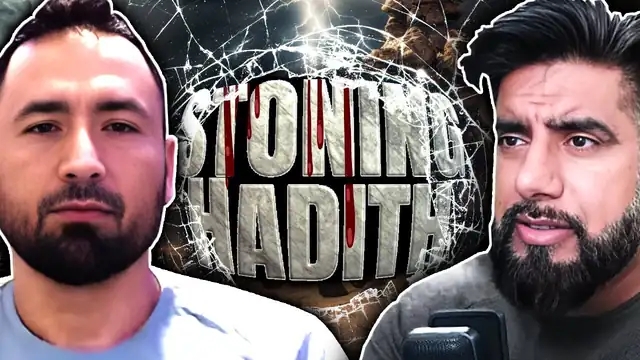 Press play to load from YouTube. Nothing loads until you do.
Transcript
machineauto-transcribed, may contain errors · source: youtube auto · click a time to seek · dotted terms open the glossaryhow are you doing I'm good I'm good where are you joining us from Muslim I'm from Toronto Canada yes Toronto of course of course and we've had you before we've had you before yes I've communicated with you a couple of times yeah how are you keeping and alhamdulillah glorious Thoughts with us actually I was listening listen and um you are talking about Hadith you said that there is no sorry Hadith about the hands
yes yeah uh to be folded or left at the side so this actually piqued my interest and I wanted to share something that I um came across I I've you know I usually go on clubhouse and I talk with people at home right okay you're a man of great patience somebody you miss you over there somebody asked me why didn't you come on clubhouse and I said because I appreciate my sanity you know that's a very interesting um nonetheless it is a it is a venue for
us laymen to learn and share ideas and uh you know listen to other learned Brothers so one thing that I have studied is about you talked about Hadith that is sari and sahih so I looked into the issue of Rajan you know stoningham okay yeah yeah so uh of course there is no uh Ayah in the Quran that talks about that even in Surah al-qahf foreign
so do not associate anybody with Allah and then in Surah maida um so the Hokum is from Allah always and then I went into the Hadith to see if there is any hakun from rasool Allah I don't find any Hadith
about somebody who is married to be uh killed if they are found guilty of adultery or you know zinna and there's four Witnesses to be for them to be stoned there is like that there is one Hadith I came across in in Muslim I think it is uh one six nine zero right I was going to say there are some in sahih Muslim but okay yeah yeah yeah but the wording is very interesting of this out the wording is talking about
66 I think it's verse 5. it comes there in the Quran as well and Fayette means Widow it doesn't mean okay all right sure I mean um Okay so right I mean this is such a big topic so I I I it's not one uh right now of that I will be able to go into so much depth but just touching up on what you're saying so right so okay so say you by the way the way they use the yib is in contrast to Virgin so they use it to mean non-virgin yes uh so
um yes so this is how this is how generally I'm just saying of course that's a different discussion but the the term that they use is bicker and thieb so virgin and the non-virgin would be the theme now I would right so okay this is I I've not really explored this in that way that you're saying I've not taken apart all the Hadith literature that is commonly found in the major books on regim I've not done that um so I can't but I have obviously read uh obviously like in one like when we
covered the books and when we covered sahi Muslim and all these there are Hadith in there the general understanding that I would um go with and that certain Olimar have taken is that you see uh that regime clearly is not from the Quran uh now what inside Muslim there is a Hadith that the Jewish people come to adjudicate to the prophet so they say to the prophet we want you to judge over US based on our law so and then it's the famous one where the person's covering the hand and the prophet says why don't you remove your hand and read the full verse and it says
about stoning so many so several Scholars do feel that this is one of the first time uh the profit gets involved and there is but it is with the Jewish community and it's about their law so the question is that here does this simply those people who took this they took this as a continuation of the Torah saying that this is what it should be the stoning because look there it is it's in the Torah and the prophet said it uh this generally the Quran does not
mention it and the Quran uh does mention the the punishment at the time for adultery and he mentions it as a lashing and the and this is why certain Scholars like Abu Zahra he highlighted the the problem and the difficulty in trying to say rajam uh was what the Quran wanted because because what they say is that look well the Quran the lashing is for just the unmarried people um and so he highlights that that's very difficult because Allah then continue because the married person is called Mason uh by the quranic uh the Fortified
person they say well that's the wording now the verse is as you carry on reading them speaks as you're speaking about the punishment for adultery it mentions the masanat from the slave girls that they have half of the punishment so he says well this doesn't well you can't give half a stoning so it clearly could not be talking about stoning and he makes a very powerful and there's also double punishment for the wives of The Messengers mentioned sure okay sure but but this point here with these verses about the the lashing so um and then you've had certain there's a
whole different discussion on trajectory hermeneutics and that is that uh can the punishment change with the day and age and this is what several malakia felt uh was permissible in the in and that's when you've got people like uh Abul qasimal brazili and the whole several Mahari that came after him about 600 years ago that changed these punishments to different penalties Financial penalties and and they said that this is what the Sharia dictates it's not this is not that what they they're saying we're doing this because of our desires they're saying this is and sure people can say look they got it wrong and that's their opinion but it's also an opinion and a way of looking at Islam
and it's also what some of the Ottomans did as well but the and people may disagree with it but it's a way of thinking and it's there so it's it's tied in the magazine so what you can I think as a summary as a very brief summary not doing Justice to the topic is that well look the stunning is um is there in Islamic history and in Islamic law it is therefore the most part according to many let's say the
majority of the people now there's a question how did it get there and that's uh so that's not quite clear how it got there according to several people so several people will say well because you see whatever answer you provide it then has a it raises more questions because people say well you know it was here the prophet said it but then you've got another Hadith let's say say numbers or people transmitted from say no more that it used to be in the Quran and then well that that raises more problems and questions than it solves
but then you can't but when you start answering that then this one can't be right and even bigger problems than that being in the Quran but it's not in the Quran so then it means that certain parts of the Quran today are missing that were never there and then okay this phrase is a different discussion so okay well this has been part of let's say it's been part of Islamic law what most Muslim history shows it was seldom ever practiced I mean it was because the
ruling is that well to see it obviously makes it almost impossible because four people have to witness actual penetration according to the scholars so now that that's very really because normally when one person comes in and busts someone actually the person gets up now you don't see yeah the issue is about whether it is actually Islamic so where is that demarcation of whether something could be called Islamic so so what what right so the question is this the question is it's clearly a part of Islamic Jewish Prudence it's clearly a
part of Islamic law of the of the scholars but not of Islam Allah this is so this is a different discussion so I agree with you see I'm not of the view that I believe that this was in my understanding this was something that was a continuation of the Torah those people who kept it it was never in the Quran and this is why it was from the akam and according to trajectory hermeneutics it was changed which is according to the Maliki method and the likes of and all the people that
came after him that supported that view so I'm of that understanding so to me that this would not be applicable and it would not be a part of the Islamic law but that said I do recognize that look this ruling is there in most of the Islamic firm and most of the Islam now the question is how did it get the so most people will say it got there because of these ahadis yes now the Hadith are they they're not that the Hadith ADI the question is that some of the Hadith then it's not a congruent picture like they raise as many questions as they give answers so
they do give answers but they raise more questions so one of them is saying well oh it began with you've got the incident of the Jewish people coming uh one of them is saying no it used to be a verse of the Quran and it disappeared one of them is saying well um and then you've got so what I'm trying to say is it's not a congruent picture of how it got there but we know it's it's in the thick in Islamic with the majority of the people it's been there in application we also seem to know that it was seldom practiced they don't seem to like if you look at the water of the whether it's going to be the andalucine
or whether it's going to be the in fact in more detail which is still available today the Ottomans which was therefore you know the better part of seventh century you you can see that in the the edicts are still there and they're being translated and people have done phds on them I think they only ever found something like two cases or something so you can see that it's okay it seems to be the it doesn't seem to be there on the ground it seems to be in the books how did it get in the books well they say because of the Hadith is it because well how did it get in the Hadith uh people say well it's from the prophet
no no it's from God no no it's from the Torah and there seems to be some mixture and there seems to be some Scholars about 600 years ago who said well no it was just part of the laws and the laws change and they changed they said this day and age it changed to financial penalties other days and in other times it would change accordingly so you've got this whole plethora and the reason I'm mentioning guys I'm just trying to to disclosure of what stands as opposed to saying look nobody's ever mentioned people of course the majority of the people have mentioned it let's let's be honest the question is that all of these are valid questions of how did it emerge
what was the you know what fashion did did it come from God did it come from the prophet some people say no it came from the prophet somebody said no no it came from God it came in the Quran someone said no no he came from the Torah it was a continuation and did it was it susceptible to change some people say yeah it was susceptible to change because say no more suspends it you see because if it was the head of Allah then it shouldn't be stopped at all but he suspends certain hadud let's say based on okay that's the chopping of the hand and other things but you have so you can see that well okay these things are subject to time frames and
changes and so this is the summary um but you're right there's there's a lot of questions on how does how did it actually how did it enter Islamic jurisprudence it enters through these Hadith but what is the uh that there isn't a pristine root if there's there's a lot of uh there's a comp mixture yeah yeah the the issue real issue um I'm from Afghanistan originally okay so it is something very closer uh to me because I have in my own life
seen more than two uh stoning uh oh no I don't know I categorically yeah categorically that do not believe that this to be part of for centuries and this was never to me it's a see so I was giving the disclosure of this is how the views are now it seems to me it seems that look this was a continuation of the Torah for whoever thought it in the lifetime of the Prophet it was the verses that were in the Quran now it does seem to be that certain people may
have thought that because the prophet uh ruled for the Jewish people according to the Torah on this thing that Sai Muslim that some people felt oh maybe that was also meant to be for us so it got incorporated into the culture so I do feel that was an itchy hard I I feel that that was not the the accurate position because the accurate position was the Quran the verses of the Quran now it's not that those people let's say that did that didn't know those verses of the Quran but it's that this understanding that they saw the prophet
adjudicate because uh make arbitrary for that Jewish Community Based on the Torah and they may have understood that well because the prophet did it now it's a this is the new ruling for us no I think that's a stretch because I don't think anybody that brought this ruling in brought it thinking they're doing silk they may have thought I think this is where it stems from it's from this case I think that case is you know
that is case zero this is where it begins in my estimation it begins with the prophet arbitrates for the Jewish um dispute that was taking place and this is case zero so the prophet is doing it so and the prophet isn't doing it they do it but he arbitrates for them they come to him it's in sahih Muslim they say that this has happened he committed adultery with his wife and blah blah blah blah and we want you to you know you decide no no you don't you say you judge according from our book so this so it's that's the now and the Torah stoning is clearly there in the
Torah so it kind of it adds up this would be case Zero now certain companions who may have seen this happening now that the prophet said well okay this is it reading from not reading but had them read it in the text from the Torah some people may have thought well oh maybe this is the new ruling then in Islam so this is where the understanding comes so it's nothing to do with silk it's to do with perception so just as so for example some there's a Hadith about fasting now some person this Hadith that the prophet is asked about kissing
during fasting and he says uh it's it's fine and there's an incident where a young person comes and asks the prophet and the prophet says no don't do it and there's an incident where the person one of the people watching he says that you know what is this about how come it was okay and here it's not you know you said don't and it was the reply is or the understanding is that this was a you know a newly young very hot-blooded kind of excited person and it was just for him it wasn't that you know it's just basically
safeguarding that this guy you know what just just fast out the day and then have at it but because in between you know you're not going to be able to control yourself but that wasn't said in the Hadith in the Hadith the prophet just said no don't do it so some companion looking at that just hearing that part might think well actually kissing is Haram during fasting because he only heard that part so it's not that he heard it wrong he actually heard what he heard but somebody who saw the other part may have thought well actually no the prophet said to this person you can do it so
it's absolutely fine so you see it's it's where the understanding stems from so this is how I see it so clearly stoning I do not see stoning as part of Islam in the sense that is it something Allah has ordained I don't see as that at all I see that it emerged from the Torah it was a continuation from there some people may have understood that and it became a part of the Islamic Corpus of law of Jewish prudence hence most people clearly found it very um uncomfortable found something not right but unsettling about it that they
set the bar so high that it almost became impractical to do and throughout that 14 centuries of Islamic existence they there's hardly any things where it happens apart from where people have gone into barbarism and done it just like like you get the recent cases in Afghanistan and these places where they were doing it where you had a continued Islamic civilization it hardly ever happens and in fact places like the Ottomans they clearly redefined it uh just as in in the Maghrib they redefined it as well and said that no you know this the Sharia
dictates that we change it with the day and age based on my passage so clearly to me this was not something um Divine it was not something um you know that was and it's clearly not in the Quran and like people like say it goes against the verses of the Quran uh so that's how I would understand it okay I do understand that many people if you if you believe it's not from Allah if somebody is doing it I know I feel it's clear I feel to to do
that especially uh people trying to do that today like they are this is clear though I would condemn it outright regardless of it being in the film because the thing is that look even their fir has changed with the day and age so even you know the Afghanistan for example has changed and it's very clear that look let's be honest it's very clear that the way the the had set the standards the rules nobody caught that
nobody caught that like that is you know I I it's a very tough sell four people walked in and saw penetrated four people like come on because look this is this is what happens a person bursts into a room sees somebody having an affair the moment somebody burst in people get up yeah you don't see anything you just see two naked people at most let's say this is the best scenario and you know what they were up to but you don't see it now that in Islam is Haram for them to carry out that Hut is Haram but emotions get the better of them
but what I'm trying to say is even by their standards it is not what they are doing isn't even according to that they know that they're not you see even them trying to argue that this is in the fifth it's not like that they are not practicing that by any standard from around this up he refers to chapter 5 verse 33 that those who do facade on Earth that they should be killed severely so one of the ways of killing severely is by stoning
and he says that this is so if somebody is raping then this punishment goes for the rape and he cites the case of Myra ma is and mice gets stoned and Maya is sent back home uh so this is what uh you see but this is this is the thing now this is the thing you see the this whole Hadith with my eyes and you know this whole thing um it is first of all very in itself you see that that's an interesting case because in that case the prophet said why did you not let him go you should have let him go
yes they say it's that they say that they where they uh they catch him because he runs away they catch him and they Stone him and he says I'm sorry I didn't mean to do and they told him he says I I repent and the prophet rebukes them he says why didn't you let him go so this is it that you see the Hadith it's not that the Hadith aren't there but they raise as many questions as they give answers to so this is why that this is why several people in the humbly method felt that there was is tawba
that it was so so it's you know it's not you see this is such a detailed discussion because it's not that the ferc isn't there this is there in the fit but the Fig has so many layers to it like this that then people ignore all the other layers and and that's that's not a complete discussion then because if you're going to discuss hadud first of all it's from the past and you have to discuss what they all said about what you have to discuss those people who said could be substituted you have to discuss those people who said all hadud can be dropped with Toba Allah you have to discuss you have to discuss this then because it is part of our Legacy of
Islam if you're going to say well we're just going to take this one thing and we're going to do this act of barbarism that any person who sees that act will have no doubt that Muslims that they will abhor and hate Islam till their dying breath right it is so shocking I watched once a movie and I was so moved I mean I was I it broke me down honestly it was some Iranian movie I think the something was it something of that like I've forgotten now it's Iranian movie um was it about a lady called Soraya or
something sorry or something but it's it honestly and it was so oh my God I I watched it something like 14 years ago and or sorry about like 12 I think about 10 years what 10 12 years ago or something but still now if I think of it it disturbs me I I find this completely monarchy for the rahmatullah and I would say that look it's if people want to bring it as a physically discussion I accept it as a fairly discussion I do accept that that I'm I feel it's wrong to say none of this exists in the literature it does it's all there in the literature but then we need to have an open clear discussion on all the other
iterations where people are saying like we're having a discussion on because you've got to bring that in then and you've got to bring this but the principle is given to us in the Quran foreign it's the same thing sure sure I'm with you I'm with you but I would say that you see the problem there is we never really take it back to Allah in his messenger we always take it back to the
interpretation of what we think a lion is Messenger are saying and and that's just the same it's always the the interpretation of what we think is being said as opposed to what is objectively being said because none of us have access to True objectivity none of us truly like we can just say well we think this is what we understand from this verse and it's the same problem so I feel that in that sense it's worth bringing all these discussions because all these people have said these things you know they've said like if you want to take it to the Hadith and there is the Hadith you know that tawba does seem to be more
thorough it does seem to be uh impacting the same Hadith with mais that the prophet saying why did you not leave him let him go so this so it does have that discussion does have the humbly discussion then October and dropping all of her dude it does have the Maliki discussion as well as the hanabella discussion on on all hadud can they be substituted it does have this so when we bring all of this in also the discussion that not simply not punishments not simply uh uh situated in time so all the Hadoop that
were mentioned in the Quran was simply from 7th Century Arabia the real question is whether this this is a hat to begin with because the HUD is 100 lashes that's a hard absolutely my point my point is this is the part of contention no I think bigger than that you see I think bigger than that is the definition of how the the the the phenomenology of a hat and how a HUD emerges not what a HUD is not as in is you see you're talking about uh
and also I'm talking the ontology the being of Ahad that I had simply you see the the Quran was going to only address the Arabs with things the Arabs already had it was not going to tell them a punishment that the Chinese had for example it wasn't going to do that because they weren't Chinese people so they were Arabs that lived in a certain like it wasn't going to tell them to use a weapon that they only that the they had in Scandinavia it was going to just address them with things that the Arab climate had so it was it was anchored and rested and
nested in Arab tribal Society so the question is when Islam expands beyond that and those Norms have changed does the the day and age then impact the realities of those who do and this is saying 600 years ago he was saying that the makassid of the Sharia say as Islam spreads it reflects its environment so it no and he said today in the we don't have that environment that they had in and he's saying this 600 years ago he's saying we don't have that environment that they had the so we don't Stone people today he says that this doesn't
this is not the environment of the Mahadev this is you know this is 600 years ago Morocco and Mauritania in that part of the world so he's saying here we do different things so this is what the Sharia wants us to do not what I want this is his thinking now what I'm saying is all of these things have to be part of the discussion I have to wrap this up man sorry this is this is not my best morning discussion to have but it's it's been good
Something wrong here?
Tell us what is wrong and it will be checked against the recording. Nothing changes until a person has reviewed it.
Sending a note needs JavaScript, which is off or unavailable in this browser. Nothing has been sent.
No name, email address or account is asked for or stored, and the inbox does not store your IP address. For rate limiting it keeps an unreadable fingerprint of your connection for 48 hours, and our database provider's own logs record connections as every website's do. Only your note, its kind, the page and the moment in the recording are kept, for review.
Cite this recording
Stable id, transcript version and tier are part of the citation. Every change to a transcript is logged.Mufti Abu Layth Archive, auto-transcribed, may contain errors. https://muftiabulayth.org/r/kclauuwg9sa/ (accessed 1 November 2026)
- APA 7
Mufti Abu Layth. (2022, December 20). Stoning Hadith: Provenance & Problems, Meetup with Musleh | Mufti Abu Layth [Video, auto-transcribed, may contain errors]. Mufti Abu Layth Archive. Retrieved November 1, 2026, from https://muftiabulayth.org/r/kclauuwg9sa/
- Chicago author-date
Mufti Abu Layth. 2022. "Stoning Hadith: Provenance & Problems, Meetup with Musleh | Mufti Abu Layth." Video, auto-transcribed, may contain errors. Mufti Abu Layth Archive. Recorded December 20, 2022. Accessed November 1, 2026. https://muftiabulayth.org/r/kclauuwg9sa/
- BibTeX
@misc{abulayth-kclAUuwG9sA,
  author = {Mufti Abu Layth},
  title = {{Stoning Hadith: Provenance \& Problems, Meetup with Musleh | Mufti Abu Layth}},
  year = {2022},
  month = {12},
  date = {2022-12-20},
  howpublished = {\url{https://muftiabulayth.org/r/kclauuwg9sa/}},
  url = {https://muftiabulayth.org/r/kclauuwg9sa/},
  organization = {Mufti Abu Layth Archive},
  urldate = {2026-11-01},
  note = {Auto-transcribed, may contain errors}
}