
Recordings › From the Mind of a Mufti
What is Trajectory Hermeneutics? - Mufti Abu Layth Al-Maliki
hadeeth ahadith ahaadeeth hadis hadees ahaadith imaam imams prayer leader udhiyah qurbani qurbaani udhiya udhiyya kurbani sharia shariat sharee'ah maaliki malikite malikiyyah maliki school muftis hukm ahkam hukum hukam ahkaam haraam forbidden jahannam jahanam jahannum koran quraan al-quran ayah aya ayat ayaat aayah aayat wahy wahi wahee ulama ulema ulamaavideo · 25:54 · 8,400 views · 4 Feb 2018 · Open on YouTube
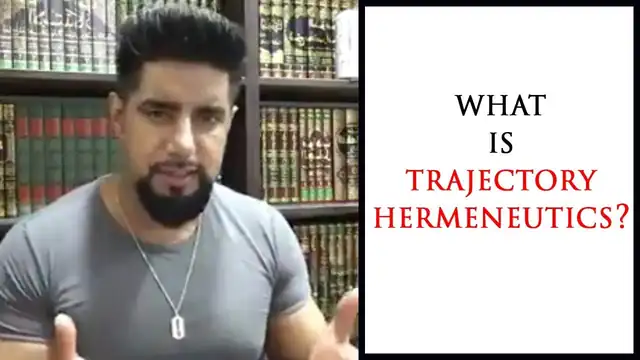 Press play to load from YouTube. Nothing loads until you do.
Transcript
machineauto-transcribed, may contain errors · source: youtube auto · click a time to seek · dotted terms open the glossaryso just finishing the Imam Bui discussion but just touching up on trajectory hermeneutics you see people trajectory hermeneutics means that the Shar is it has inbuilt mechanism mechanisms to be malleable to be flexible and reflect its day and age this is built upon the understanding this is built upon the understanding that laws in themselves you see that there's a great Mis there's a great fallacy of thought people
assume that these laws per se were divine divinely sought after that is not correct you see now you got to understand something so I need you to focus just in case some people say oh I'm misre you know like look there is a distinction between Revelation which is divine and between the what it's what is being revealed the content being sought per se like because and in and of itself
is the Divine kind of will so for example Allah is revealing laws that I'm going to I'm going to break this down for you laws are solutions to people's problems that's what it is they are solutions to people's problems the laws are meant to reflect that in its age Allah will reveal them through Revelation so for example the people let's say at the time they used to cut off the hand of the thief so Allah
reveals this was this the sort after thing since the beginning of time was this the Divine so for example if let's say the Quran was being revealed in Sweden in the 20th or 21st century would these laws be the same let's take an example of the Blood Money the blood money in Islam most of these laws in Islam were already being practiced
by non-muslim Arabs before Islam came along most of them so let's take the blood money as compensation in almost all of the s books all of the s books that you get in Isam and all these other s books they will speak about before the pro when the prophet's father was born Abdullah the prophet sallallahu alaihi wasallam his father Abdullah was born his grandfather he in some narrations the 10 Sons he had in some narrations whatever it is but he drew
lots that he had asked God that if my child lives to a certain age uh what I will do is I will draw lots and if all 10 of them Reach this age or All My Children reach this age I will draw lots and sacrifice one of sacrifice one of the children the actual will sacrifice them to the Gods Not to Allah but to to to the or like I will just sorry to Allah but I will sacrifice him to God yeah so now what happens and this is in all the s books there's a slight variation in the narration so you might get some that
uh whether it was one son or all the sons or whatever but the story is more or less the same now when he draws the lot he that is drawn for for Abdullah the the the father of the Prophet Muhammad sallallahu alaihi wasallam that the grandfather Abdul mutb has to sacrifice him so he doesn't want to because that that son Abdullah is really beloved to him so what he says is that oh um According to some narrations he says well H I won't do that but what I'll do is in place of that the qur used to have
a practice I will sacrifice 10 camels and I'll draw these Lots again right now so he does it again and it still ends up on Abdullah and he does it again and it ends up on Abdullah and he does it again and it ends up on Abdullah and he says no I don't you know I don't want to uh he says I don't want to uh you know I don't want to sacrifice this son of mine so I'll keep giving camels until it reaches 100 camels and then he says you know I've that's it I'm just going to sacrifice these 100 camels in other
variations he just from the beginning decides to sacrifice 100 camels instead of uh Abdullah and it's not 10 times this practice of 100 camels the whole of qu adopt this practice right so this becomes the blood money that qur have and this is way before Islam way before the prophet Muhammad sallallahu alaihi wasallam is even born now Islam comes along and it just condones this practice it just condones saying okay that's the blood Money 100 camels in
theith of uh the letter there's a letter where the Prophet sallallah alaihi wasallam advises that what is the the the blood money and it begins with that that 100 camels right so this is what it actually begins with are you telling me that the messenger of Allah did not know that other regions in the world exist of course he did he knew that there's regions like China there's regions like India hind there's regions in Africa this region are you telling me the messenger of Allah did not know that
there were no deserts in other parts of the world of course he did are you telling me the messenger of Allah did not know that these other far away regions don't have camels of course he did why is the basis for the blood money for if it's supposed to be for the entire world a practice established in jilah in non-islamic periods like what are known as the dark or ignorant ages has why has that become the Islamic Divine ruling how has this become the Divine ruling
why is the prophet people will say yes but the prophet also said you could give a th000 gold pieces yes but afterwards everybody says that the basis The Firm basis was the 100 camels why is the prophet not saying oh by the way 100 camels is if you live in Arabia for those who live in China other parts of the world where they don't have camels and yes the prophet does say later on in the Hadith about or if the about 200 cows and things like this but for the people around them why is he not addressing the people of the world now that's because this this
practice was already the practice before Islam even came so Islam is just condoning what was already there so Revelation condones but this practice of camels per se is not something since time immemorial Allah was solely after per se he wasn't so if the Quran was being revealed in and Islam was being revealed in Sweden let's say in the 21st century the prophet wouldn't say can you give a 100 camels that wouldn't even come into the discourse this
is because it was relevant so the problem that the fallacy is because it's in Revelation people people think it is divinely sought per se now this is the important distinction Revelation is sacred its content is sacred from a religious viewpoint but its content is more importantly relevant that's the distinction the distinction is the content its primary goal is to be
relevant you see the Quran by its content could be speaking about it could be speaking about ABAB it could be speaking about it could speak about many things the Quran as as Revelation is sacred the rulings per se are relevant they're not necessarily sacred from a Divine will perspective this is where the fallacy of thought comes into it people think oh well now oh they kind of deify they take these rulings to be
God so now to change them is to you're trying to change God all of a sudden that is the mistake that is the mistake now trajectory hermeneutics shows that look Allah reveals for example a clear verse in the Quran saying how to give and Z how to give and Allah says and those who are interested in
Islam in his time says no this ruling doesn't fit our age anymore and he changes it he says you can't give it to them anymore many of the including the Han and other people say this is abrogated now when did he get abrogated oh he got abrogated in Omar's time how how does Omar abgate the Quran they say oh well maybe he knew of something no this is trajectory hermeneutics in his time he felt that I'm not saying we have to agree with him but this was the methodology the way of looking the way of
thinking the same thing with slavery now it is the prophet always encouraged the freeing and the emancipation of slaves with the aspiration of setting a trajectory that a time will come when the ethics of the people will develop and enhance to such a stage where slavery will be outlawed and will then become Haram do you know I got into a discussion on this group with it was so disappointing Charlie Dixon I'm going to come to that question and I have
answered it on on YouTube already the the wife of the Prophet was in her late teens and I will come back to that right so now I got into a discussion where people try to say to me where people try to say to me that slavery inherently is not immoral what the hell are they on about how is slavery not immoral snatching somebody's w wives and and children and and making them your
property that is utterly unacceptable it is Haram in our day and age in our day and age people will say right so people will say hm so what will you say about that day and age we are talking about our day and age it is now immoral I'm not saying whether it was deemed immoral by them ethics vary the ethics of age varies so people today we clearly see this as unethical this is Haram it's not some people commented on my thing saying yeah but Islam doesn't say slavery is necessary so it's better not to do it
better not to do it what on Earth are you on about this isn't like saying hey do you want to eat a cheesecake H you know I don't know it's not really too good for my diet like I suppose it's better not to do it what on Earth are you on about are you have you lost your mind what do you mean it's not better not to do it's unacceptable it's despicable you can't snatch people's children under any circumstance so this is the argument given some circumstances you can snatch people's children and wives and turn them into your property
no you can't under no circumstances can you do that and then somebody said well oh oh I I heard this lecture as well and these guys are they said oh yeah but we're not talking about like the US TRA Atlantic tra you know the the Atlantic trade slavery we're talking about slavery like in Islam where slaves had [Laughter] rights I said to them my friend kidnap and rape is still kidnapp and rape even
if you're giving them three meals a day it is still kidnapped it is still rape it is still utterly unacceptable it doesn't matter if you put them in a five-star hotel if you've kidnapped them you've kidnapped them you know if you if you're raping them you're raping it doesn't it doesn't make it okay because you're giving them food to eat so this is the the most absurd kind of logic and then somebody said to me oh right somebody said to me uh oh well they're not really slaves we don't call
them slaves these were Scholars arguing with me on a group they said oh these are not we're like Islam says you're like their caretaker I said are you are you for real caretaker don't beat around the bush everybody knows what bloody slavery is don't try to try to kind of like give it this veneer of caretaker if somebody snatches your kids right calls them I'm a
caretaker what do you mean caretaker so you can't this is nonsense this is absurd don't don't try to lie and twist your words to make to beautify this kind of ugly brutality in this day and age it is Haram right guys in enough with the desserts enough with the desserts pay attention pay attention and if You' just tuned in share the feed get it out there let other people benefit you can post any questions but it's important you stay focused enough of these no more of these kind of those uh dessert related digressions
right so look it's [Music] the thing is that look right so I will be blocking some people if you if if you carry on like that right so now this is what is important all right this is what is important that as the age goes by the laws of have changed I ask you how do you prohibit slavery how do you outlaw slavery unless
you accept that ethics change unless you accept trajectory hermeneutics so otherwise you have to agree with slavery inherently not having a problem so so this is something some food for thought I'm putting that out there and the important thing to understand is that look rules laws were only meant to be solutions to people's problem don't confuse the vehicle which is revelation which is sacred as a vehicle for what it's saying because
what it's saying may be just a ruling which is relevant for its age like for example Allah says in the Quran about preparing a defense strategy prepare for them it's a in the Quran to the extent of your capacity and Allah says prepare horses horses he's telling you as your defense today nobody would disagree with me that oh but that's not talking about in our day and age we would prepare military tanks and and uh and kind of
like airplanes and like we would have kind of military jets and other kind of nuclear power and things like this that today the military aspect is is different you wouldn't prepare horses even though Allah is saying it's a clear verse in the Quran it's not ambiguous but they would say yeah but the day and age has changed but I would say oh but Revelation is sacred they will say yeah it's sacred but it's it's the spirit that's important so this is why it's important to understand that look
right Charlie no I do not believe that the prophet Muhammad traveled on a winged horse I've answered that it's on YouTube so that's to give you guys some kind of context to all of this okay so it's important to understand these things so as not to confuse and also will make sense then why Islam condoned a lot of ignorant like a lot of practices from the the days of jahia the days of ignorance because it was relevant to their time and it was relevant to the people around him not because God from time when before God created the universe he wanted people to
give a 100 camels as a that that's not what that wasn't the intent otherwise God would have put camels All Over The World God would have put you know did God want since time immemorial to people to cut off their hands not at all so these things are just contexts and it's worth and I highlight to people that it's worth taking into consideration look things like the oldest documented law we have today the oldest documented law we have for human beings is the law of hamurabi okay one of from the ancient kingdoms of Babylon now hamurabi
who dates about 3,700 years ago his laws that he has documented and they're still today preserved in in kind of clay and stone now these laws date back to about 4 and a half thousand years ago and Babylon was not dedicated to Yahweh or the one true God like that at all they had their own Gods and Babylon they they they they attacked Israel the ancient Israel Kingdom of Israel and destroyed the whole thing and they took the the Israelites it's important if you pay attention to this this concept they took many of the Israelites captive and took
them back to Babylon to Mesopotamia and these places now for Generations the Israelites lived under Babylonian rule before Moses before mam came now did you know in hamurabi law which you can check out online you can go to YouTube word for word v him you have the law an i for an eye that is in Ham's part of his his law that he mentions a tooth for a tooth that if anybody l a tooth you will take the tooth of the other person he does also he he is also very in Hammurabi's law they do distinguish between the rich
and the poor the rich are kind of okay but the poor you definitely do this for he mentions an eye for an eye and things like this now because the Israelites lived under the the Babylonian King om for Generations it's only natural this is way before Moses this is way before mam is even born before mam now this it's only natural it is only natural that they would have Incorporated these understandings and these morals of like an eye for an eye because
hamurabi and the bab the kingdom of Babylon had these already therefore in their time because this was their moral and ethical standard Allah affirmed it for them in by making because it was relevant to them so Revelation came down being relevant to the Israelites who had lived under Babylonian rule whose laws we already have
right no I'm not saying that no no no hamurabi and these laws existed in Babylon so hamurabi laws date back to about 4 and a half thousand years ago Moses was not around 4 and a half thousand years ago okay right Moses whether you want to say 3,000 years ago three just over 3,000 years ago uh was Moses now before Moses the kingdom of Solomon and and after Solomon the Kingdom of Israel was kind of destroyed and attacked and and and and the Temple of Solomon was attacked and this is all
before Moses and the the tribes of Israel are taken and and I'm not saying and and they're kind of disheveled but they're taken to Babylon as well so this does take place so there's huge Christian discussions on this already you can Google the Christian discussions on was Mo they feel what that there's a discussion were was was Mo they would say was Moses or the Old Testament taken from the laws of um like there a discussion did they just cut and paste them I'm not saying uh I'm not saying that uh they cut and Pac them from the laws of
um I'm not saying that they cut and Pac them from the kingdom of uh from from Babylon but they were definitely influenced that's what I'm saying okay so just to clarify that okay now so this discussion exists this discussion exists in Christian kind of uh Doctrine already so my point is anyway coming back to this right my point is that they that this naturally a people laws must always reflect a people of their time that's
the point of this discussion so when in the Quran Allah mentions an eye for an eye he doesn't say he doesn't say that this is what the law is he doesn't say that this is it's an eye for an eye he says that oh in the Torah we prescribe this why in the why doesn't Allah just say hey people
know you know know that an eye is for an eye and a tooth tooth is for a tooth Allah says in the Torah we prescribe this because for the people of Israel the Israelites who lived under Babylonian rule would have naturally been influenced and this would have been the moral kind of standard of their age anyway let's move on let's take some of these questions people that uh those of you that you know are asking about the Q&A I'm coming to that some of those questions now but these were very
important okay right yeah of course so on and of course of course is right so the point is that that these things about you know these laws were from that time
Something wrong here?
Tell us what is wrong and it will be checked against the recording. Nothing changes until a person has reviewed it.
Sending a note needs JavaScript, which is off or unavailable in this browser. Nothing has been sent.
No name, email address or account is asked for or stored, and the inbox does not store your IP address. For rate limiting it keeps an unreadable fingerprint of your connection for 48 hours, and our database provider's own logs record connections as every website's do. Only your note, its kind, the page and the moment in the recording are kept, for review.
Cite this recording
Stable id, transcript version and tier are part of the citation. Every change to a transcript is logged.Mufti Abu Layth Archive, auto-transcribed, may contain errors. https://muftiabulayth.org/r/k-vkyngbgeq/ (accessed 1 November 2026)
- APA 7
Mufti Abu Layth. (2018, February 4). What is Trajectory Hermeneutics? - Mufti Abu Layth Al-Maliki [Video, auto-transcribed, may contain errors]. Mufti Abu Layth Archive. Retrieved November 1, 2026, from https://muftiabulayth.org/r/k-vkyngbgeq/
- Chicago author-date
Mufti Abu Layth. 2018. "What is Trajectory Hermeneutics? - Mufti Abu Layth Al-Maliki." Video, auto-transcribed, may contain errors. Mufti Abu Layth Archive. Recorded February 4, 2018. Accessed November 1, 2026. https://muftiabulayth.org/r/k-vkyngbgeq/
- BibTeX
@misc{abulayth-K-vkYngBgeQ,
  author = {Mufti Abu Layth},
  title = {{What is Trajectory Hermeneutics? - Mufti Abu Layth Al-Maliki}},
  year = {2018},
  month = {2},
  date = {2018-02-04},
  howpublished = {\url{https://muftiabulayth.org/r/k-vkyngbgeq/}},
  url = {https://muftiabulayth.org/r/k-vkyngbgeq/},
  organization = {Mufti Abu Layth Archive},
  urldate = {2026-11-01},
  note = {Auto-transcribed, may contain errors}
}