
Hubris ‘Walid Ibn Mughirah (a case study) | Mufti Abu Layth
takbir takbeer takbirat takbeerat ka'bah ka'ba kaabah muftis iman imaan eemaan eeman sihr sihar jadu jadoo kala jadu sorcery koran quraan al-quran sura soorah surat suwar soora chapter ayah aya ayat ayaat aayah aayatvideo · 18:58 · 2,600 views · 9 Dec 2021 · Open on YouTube
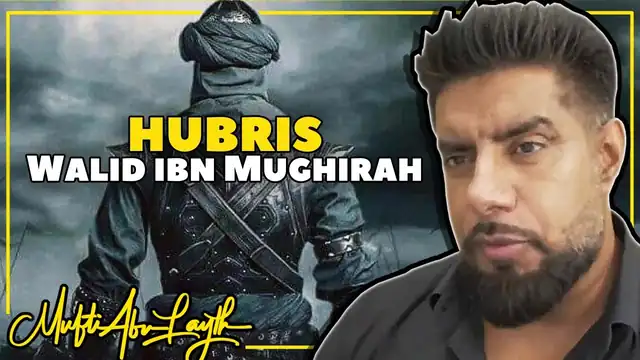 Press play to load from YouTube. Nothing loads until you do.
Transcript
machineauto-transcribed, may contain errors · source: youtube auto · click a time to seek · dotted terms open the glossaryi did want to cover i don't know whoa all right let's cover a brief lesson which is quite important oh this is uh i'll have this clip out by the end of the week on surah zil in the unconscious mind right people think of this verse right now in suratul jumaah this is a verse an amazing verse that we all know
right that is the grace of god the favors of god he gives them to whom he wills it's an amazing verse you know incredibly positive yeah now and we ask allah to really shower upon us all his countless blessings and to make us be appreciative of them but you see i want her to show a different permutation
let's take a look at these verses and then i'm going to go to waleed ibn a brief case study this is from suratul madathira okay from verse 11 now this doesn't have to be solely about walid but people many people feel that these verses were they reflect him as the primary um [Music] subject of discussion but just as an example using him
um as an example for others you can see allah saying that let these people be let such a person be who i created and i showered him with countless gifts and gifts and monies money and wealth and wabanina shahudah offspring and especially in that society where uh people boasted of strong of tribal kind of warriorship and he had three at least three incredibly
prominent sons who were many amongst them khalid bin walid the great warrior of arabia who later on um after fatima embraces islam and and and comes to have the title sayful maslow the drawn sword of god but he was the son so you can see this is the father then things have been made easy for him life in life yet he desires he he's he craves more inna that can this condemnation of his
stubborn hubris that he has this stubbornness that devastation that this person has ruined everything he's basically done in that he kind of he actually delved on this he actually thought about this so hard like he wasn't somebody that just just didn't pay attention he did pay attention that's the problem and then he he kind of planned around it damn him what a plan that he came out with
some another he used reason and was disappointed turned away and considered himself to be something mighty considered istikbar it comes from the word kabir which is big like allahu akbar now is thickbar is to seek something to be big on the tenth form in the arabic uh wasn't in the arabic form so istifaal so to seek something is bar to seek any thought and look and what does he say
that he says he said this is but just magic that is being conveyed a tradition inhabiting this is but the word of man that you know this it's just ruining and damnation for this person and
you can see right i thought to myself hubris this is what i want to discuss and especially in if you take a look at the definition because it is about excessive pride or self-confidence but from the greek tragedy pride or towards pride or defiance of the gods leading to nemesis now why
those of you that don't know walid somebody who was much older than the prophet sallallahu alaihi sallam he was from he was one of the saiyans of quraysh right one of the leaders of quraysh he was from uh berlin and i think he he he he he meets the lineage of the prophet with mura they meter the ancestor but he's from quraish and he was incredibly known as in his day and age clearly a millionaire he had a lot of wealth ranging from in
the hijas to the te hama in all these he had a lot of fields he was invested commercially in in a lot of assets in trade incredibly successful but that's not the point because you might say well musti so what that's true so what he was an incredibly righteous man see this is where it gets interesting he was somebody that
was symbolic of a good cause he was known in jahiliyyah you know how the prophet sallallahu alaihi wasallam was titled in jahiliyyah assad the trustworthy the the truthful that when he was a young man you know years before prophethood he was titled these like people this is how they saw the prophet
guess what his title was people actually saw him as this just justice not even that he himself was the embodiment of justice he endeavored to assist people where he could quraysh was struggling after the there was uh flood damage to the kaaba he said i will solely take up the entire cost what i can to rebuild the kappa he did he was a devout individual and he was
somebody more than just being devout was committed to the concern of people and he um on several occasions he would buy the you know the kisa the cloth of the kaaba he would buy that if he found people were in let's say some kind of desperation he would assist them and he was somebody that looked at as that man is not only wise he is just you know he's grounded he's got money he hasn't driven him crazy he's got wealth
he's got status and he actually gives forward to humanity what a guy it's true though you know giving is living and this is what this man symbolized so what went wrong you see this can be one of the greatest
traps of circumstances sometimes in life the problem is in many ways we are the good guys we are let's say by our perspective worthy you will see many a and this happens with religious figures it will happen with clerics it will happen with people that have been given any kind of there is a a worthiness because and in many cases they are doing things i mean sometimes
they're just rinsing other people's you know they're just on the back of others but you know on many occasions these people are actually doing that and then comes prophethood but not to you [Laughter] it hurts
see this is the ego you've got to understand that what he says you know the verse of the quran that lola nuzzilla has could it not have been revealed on a man who is great from these regions and it's he himself said he never had an issue with the prophet muhammad sallallahu alaihi people didn't have an issue with the prophet he felt people felt the prophet was a trustworthy person they may not agree with his
mission but they didn't have a characteristic issue with him he felt in many ways do i not seriously do i not deserve i have given a lifetime in the servitude to man do i not deserve some something or either there's nothing you see this is this is it because sometimes if there's nothing we can still get by
the problem is coming second place not that he's second in profit but this is the problem you see in a psychological study people were asked um sorry in a psychological study people who were fired from a job to realize that that's because the factory or the place had substituted them with machines let's say certain conveyor belts and all these kind of they've they've had the whole process automated were less hurt
than somebody who was fired to learn that another person had been given his job people were substantially more hurt to realize that actually another person took that but this other people in a similar situation if they learned that oh it became automated and a machine is doing that job we're less hurt you see because nothing isn't as hurtful as something sometimes [Laughter]
so he it really hurt him that how can this be that i have done all of these things i am i'm a great i'm aladdin i'm i just i'm justice the embodiment have i not spent decades helping people financially giving in charity rebuilding the kaaba closing they used to several occasions
defiance of the gods in greek tragedy see excessive pride this self-confidence that am i not i'm so worthy this is arabic and this is the thing that you see it goes back to allah saying that that is
it is the grace of god he gives it to whom he wills so there's so many lessons to learn that when you see when walid turned against the prophet he didn't do it because when he says they ask him can you comment on the quran and he comments on it he comments on the quran he says that he listens to it and he says it's when speaking about it he says that let me see if i've got it here oh no
or may not have it here right so he actually says when he reads the quran he says that oh and he says it has a unique style and a halawa and a sweetness it's something that is supreme and nothing can reign supreme over it and he says all these things until quraish feel he's converted to islam because they ask him is the prophet a madman and he's very is he he's just [Laughter] he's just so he says the prophet isn't a madman because he
knows that if i say he's mad i'm just being a hater and the prophet isn't mad so why should i call him so they say is the prophet a king or an araf one of these people that kind of like cl into their clay like a clear blah blah like one of these fortune tellers is he one of them and he says no he says he's not because he knows you see he is this just person that i ain't gonna lie so this and he says and the quran is magnificent so people think he's going to embrace islam but it hurts him
that why is it not to me because am i not more deserving than he calls the prophet ibn abi kapshad and then the non-muslim uh quraish people would call him that it's just a name like they they had this name for him it's it's not in itself derogatory but it just means the son of this person but they would refer to him as that and he says that am i not more deserving than him so so people think he's going to embrace islam and he refuses and the quran mentions look
he thought about it he put his mind to it he got obsessed with it and then when they asked himself what is it then if you don't believe in it he said well he said it's magic but he didn't mean by magic in the sense that the prophet was bringing up things from thin air because when they said to him magic he said he said he said don't you see that it splits a man from his wife and what he meant was because if you looked at it people who were embracing the faith were separating from the
family so in his own way he he keeps this position of oh i'm still just you know i'm not this i'm not gonna lie i'm not gonna be a hater even though he is hating but i'm not gonna be publicly a liar i'm gonna say things that still have a kind of reality to them about i'm gonna say well that's a magic that you're splitting them with you see so but it is this hubris this pride and it is true because it's it's really a lesson for all of us that we at times it can happen to the
best of people that they can feel that they are deserving and you'd never expect it in the path of somebody who is doing good but yet many a religious folk many are spiritual folks many a humanitarian have kind of gone astray by hubris may allah protect us all and keep us all grounded and humble because it is it is something i wanted to share that with you guys because it is quite profound a lot of people speak about walid but they don't mention this or i've not heard the way this connect
they just mentioned he was this great rich leader of croatian he was the nemesis of the prophet and he was against the prophet but it just adds so much more flavor that you start to realize wow it comes alive in front of you you
Something wrong here?
Tell us what is wrong and it will be checked against the recording. Nothing changes until a person has reviewed it.
Sending a note needs JavaScript, which is off or unavailable in this browser. Nothing has been sent.
No name, email address or account is asked for or stored, and the inbox does not store your IP address. For rate limiting it keeps an unreadable fingerprint of your connection for 48 hours, and our database provider's own logs record connections as every website's do. Only your note, its kind, the page and the moment in the recording are kept, for review.
Cite this recording
Stable id, transcript version and tier are part of the citation. Every change to a transcript is logged.Mufti Abu Layth Archive, auto-transcribed, may contain errors. https://muftiabulayth.org/r/jmm6cmygbow/ (accessed 1 November 2026)
- APA 7
Mufti Abu Layth. (2021, December 9). Hubris ‘Walid Ibn Mughirah (a case study) | Mufti Abu Layth [Video, auto-transcribed, may contain errors]. Mufti Abu Layth Archive. Retrieved November 1, 2026, from https://muftiabulayth.org/r/jmm6cmygbow/
- Chicago author-date
Mufti Abu Layth. 2021. "Hubris ‘Walid Ibn Mughirah (a case study) | Mufti Abu Layth." Video, auto-transcribed, may contain errors. Mufti Abu Layth Archive. Recorded December 9, 2021. Accessed November 1, 2026. https://muftiabulayth.org/r/jmm6cmygbow/
- BibTeX
@misc{abulayth-jMm6cMygBow,
  author = {Mufti Abu Layth},
  title = {{Hubris ‘Walid Ibn Mughirah (a case study) | Mufti Abu Layth}},
  year = {2021},
  month = {12},
  date = {2021-12-09},
  howpublished = {\url{https://muftiabulayth.org/r/jmm6cmygbow/}},
  url = {https://muftiabulayth.org/r/jmm6cmygbow/},
  organization = {Mufti Abu Layth Archive},
  urldate = {2026-11-01},
  note = {Auto-transcribed, may contain errors}
}