
Recordings › Islamic Psychology
The Algorithm from Above | عالم المثال - The Symbolic Order | Mufti Abu Layth
hadeeth ahaadeeth hadis hadees ahaadith saheeh sahih hadith saheeh hadith sound hadith al-bukhari imam bukhari sahih al-bukhari sahih bukhari saheeh al-bukhari saheeh bukhari imam al-bukhari sujud sajdah sajda sujood takbir takbeer takbirat takbeerat imaam imams prayer leader sadaqa sadqa sadqah voluntary charity muftis imaan eemaan eeman shaitan shaytaan iblis iblees shayateen shayatin satan devil akhira aakhirah akhirat hereafter afterlife janna jannat paradise koran quraan al-quran sura soorah suwar soora chapter ayah aya ayat ayaat aayah aayat hifz hafidh haafiz hifdh huffaz hafiza memorisation wahy wahi wahee ulema ulamaa shaikh sheik shuyukh shaykhs dawa dawat da'ee invitation ma sha allah masha'allah mashaa allah bismillah ir-rahman ir-rahim bismillahir rahmanir rahim bismillahi bismillah al-rahman al-rahim as-salamu alaykum assalamu alaikum assalamualaikum salam alaykum wa alaykum as-salam peace greeting niyyah niyah niyat niyya niyyat zikr zikar dhikar zikir adhkar azkar remembrance al-din ad-deen ad-din religion rahmah rahmat mercylive stream · 1:38:49 · 6,500 views · 4 Jul 2024 · Open on YouTube
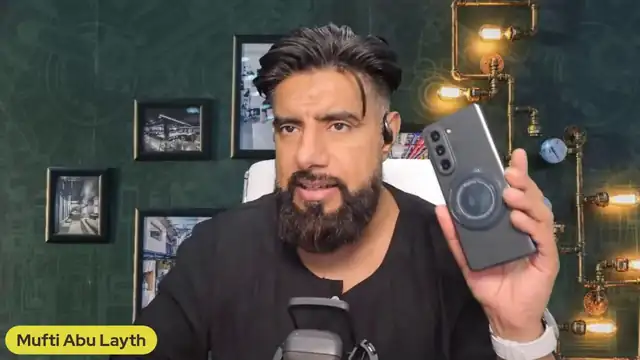 Press play to load from YouTube. Nothing loads until you do.
Transcript
machineauto-transcribed, may contain errors · source: youtube auto · click a time to seek · dotted terms open the glossaryUh salaam alaikum folks. Just going live. Right, let me just check. Right, whilst I'm Right. Right, so just letting this Mhm.
Okay, whilst you guys are tuning in. Okay. Pan
Panda Donk, good morning. Good morning to you too. Allahu Akbar. Clear as always. Ahlan wa sahlan. Alaikum assalam Rashad. Walaikum assalam from Sydney. All right. So, whilst some of you are tuning in clicking like and share.
Whoa. So, Bismillah. I'll just let some As always, a pleasure and an honor to see the love. Gogo's gone. I have no idea who Gogo is, but I hope all is well.
Yes, salaam. All right, Farid G from Portsmouth. You know, I have a distinct memory from Portsmouth.
There's a It was a Is it a a foot a food place but offering exotic So, crocodile burgers and all kinds like that. Yeah, Allah bless each and all. Amen. Lanzetta G, Alama, Mark Lanzetta.
You have indeed. Right, so while people are tuning in, clicking like and share, I'll bring us up to speed with uh what we've taken a look at and what we're going to look at today. So, let me just add this to that.
Right, so previously we're continuing with our journey of Islamic psychology trying to um you know, navigate the teachings of the great mystics of Islam like Sheikh Muhyiddin Ibn Arabi and really fuse that in to um you know, a con contemporaneous outlook of of all the odds if we may call them that.
Right, be they psych physics, psychology, whatever we can benefit from if we can infuse some further understandings that help us along this journey then you know, the more the merrier. So, we've taken a look previously at this khayal hyperspace this alam al khayal that Sheikh uh Muhyiddin Ibn Arabi speaks about.
Now, this is as we've uh explained in the previous session a gift within that we've shown the journey that you have right from the very you know, the before anything you've got Allah and this um the mystic the mystics explanation of the famous hadith Qudsi that Allah says he was a he is a treasure
concealed and he loved to be known. So, from there this this journey, we could say, begins. And you have the first primordial ontological beingness. And we spoke about that. And then you've got a stage which we'll come back to, the A'yan Thabitah, the immutable essences or the the ontology of meaning.
But we'll come back to that stage. Sharing some reference to other philosophical people who speak of the the first, the forms, the other things. And Ibn Arabi refers to them as A'yan Thabitah. But the journey from there is that we as insan are in a we are within several dimensions simultaneously, even if we are unaware of them.
So, we have a ruh, which one could say is of Alam al-Arwah, the world of pure being, the pure consciousness, pure spirit. Then you have this material world. And I've spoken of part of Sheikh Ibn Arabi's um explanations and teachings is that he completely bypasses the uh Cartesian problem.
You know, the Cartesian Descartes' duality of the mind-body. Because that's something philosophers I mean, no point saying scientists, but philosophers theologians have struggled to um explain or escape the duality that there is a body, there is this material, and there is this pure spirit.
And in um the teachings or the cosmic cartography of Sheikh Ibn Arabi, he provides us the intersection, the barzakh, the barrier. Now, this barzakh, this world in between, it is not purely spiritual, but it is less dense than material.
So, it is a fusion of the two, thereby being one of the few Allah Alam, I mean, if other people had presented anything like this, but I'm not aware that they had, but one of the few people to have ever bypass this, um, you know, this this this irresolvable equation of just matter and spirit.
And do the two meet? Because they they obviously coexist, but what about a fusion? I mean, they're they're distinct dualities. So, Sheikh Ibn Arabi had presented this the barzakh, the barrier. In a baynahuma barzakhun And we spoke about the khayal hyperspace and how the the mirror stage as well.
And what I've done is bridged this journey that Sheikh Ibn Arabi is taking us on with the teachings of psychology and philosophy, Lacanian terminology, so you can check those, um, previous live streams. So, from the khayal hyperspace, we've got alam al-khayal, this world within, that is that barzakh, but it is attached to us through the unconscious mind.
So, we are connected to it, and that's where we you know, that's where not even the mind wonders, but that's where the mind is when we dream. When we daydream, when we go into imagination. And imagination is of two types. You have the imagination of this realm or just al-khayal al-munfasil, which is just you know, frivolous imagination.
But then you have khayal al-muttasil, which connects us, binds us to that realm, the khayal hyperspace, the alam al-khayal. So, okay, we've covered all of that and dreams and then Sheikh Muhiyuddin ibn Arabi uses another term, alam al-mithal, which is synonymous or it it is used interchangeably is a better word.
It is used interchangeably with alam al-khayal. But I would like to stress a difference, a differentiation, that yes, it is used synonymously, but lean in on a different feature of it. And that is as the term denotes, mithal, symbol, symbolic, the symbolic order.
And this is what I want to take a look at today. So, we've taken a look at the imaginary order. And you have the symbolic. Today, I'll just bring this back up. So, alam al-mithal, and how this um can better guide us in navigating through this world. And you can see that Borromean knot there, once again, that the imaginary, the symbolic, and the real.
And this is from Lacanian psychoanalysis, but it really complements uh what Sheikh Muhyiddin ibn Arabi and other mystics of Islam have taught us. So, you've got the there is the alam al-khayal, the alam al-mithal, the symbolic hyperspace, and al-haqq, the real. Um we're just using some um overlapping terminology.
So, what is this symbolic order? Now, what we mentioned, as you can see here, this is a definition given in Lacanian psychoanalysis, that remember we spoke of the imaginary being everything within. You know, the past, present, future, everything is the imaginary order, apart from the very now, which ironically we s- you know, w- we less often are found in.
We're often in the past, we're in the future, we're y- we're just caught up with all these So, this inner world, this unconscious mind, which is responsible for most of our decisions, perhaps, in life, uh unbeknownst to us, because it's operating um un- unconsciously. So, that was the alam al-khayal, and we spoke about physis, too.
Dr. Broad, Dr. Price, other people who spoke of the dream hyperspace, as well. You can check that in the previous lesson. So, what is the symbolic, the alam al-mithal? That same imaginary order within. This unconscious and conscious mind we have, but within this world, and that will connecting it as a web that allows for things like meaning from symbols.
Now, mithal means symbolic, something that gives a, you know, a similitude to something, something that is giving you some kind of a signified something. So, language, let's take a look at language, culture, ideas, laws, rights, uh you name it, anything that is not just exclusively you.
It is shared between you and people, but it is a psychosocial entity. It's not something that is tangible, material, even if it has a signified object, some money. Money yeah, is on you know, on one from one angle, it is very real. So, you've got money in your wallet.
But the concept that's just paper. The concept of money is a psychosocial entity. So, what we're finding is that there is Allah subhanahu wa ta'ala has created us with this deep encoded kind of need to see meaning.
And meaning can be seen in this world through language. As you can see here, I brought up a brief, uh some highlights of semiotics, which studies languages. And we're going to bring this back then to our understanding of Islam, and how we navigate through the faith and this world. So, where do we take meaning? So, look for a moment pause.
In fact, you could take a look at this and then we'll just pause. So, look anything like words, images, colors, symbols, an exclamation mark. What does it mean to you? A question mark. This is a symbol. All of these things, it's as if there is an operating software in this ether in in as if there's a Wi-Fi that we are all connected to that allows us to communicate in this way.
How firstly, I mean, it's it's a miracle that that's even possible. How is that even possible? From a I mean, it's it's it's almost inexplicable if you just think about it for a moment that how language works. Language it's it's not only as a it is almost a synesthesia that has miraculously happened as Allah says that Allah Bayan he taught
insan expression. Because language is not random. You see, and this is something what which we can look today at the study of language and you can find that the All right, you can you can find things like the um the study of semiotics.
You can people key linguists like um uh Ferdinand de Saussure and others. I have spoken about them previously in my uh these people in my meaning with Malm sessions. Now, language doesn't just work in a kind of vacuum. Words are not just, you know, onomatopoeias like you say woof because the dog says woof woof.
Words are not like that. They do have an arbitrary nature to them, but not a random nature. So, that's important. They are placed not just as You see, when this is called a cup or a mug. Now, let's say you take a cup. Now, a cup isn't just something you name a cup.
It belongs in a series of words. So, in your mind, which, for example, it is distinct to a bowl, which is distinct to a plate, which is distinct to a uh you know, you may distinguish between a mug and a cup or between a glass or between a You see, so all of these things in our in this kind of ether of language are connected.
It's not just cup stands on its own as cup. It stands connected and correlating and uh contiguous is the word, alongside other words that you can then understand them. Like, chair will be alongside table, alongside seat, alongside couch, sofa, armrest. You will in this kind of space, this mythal space, language exists like that, which you and I have this access to.
It's as if we can tap into it with uh you know, just like Wi-Fi. So, it is nothing short of a miracle. Now, the way it works, our brains are geared in this way to acquire, to they're designed Allah subhanahu wa ta'ala has designed them in that way.
But, that's built upon this understanding that we find meaning in things. So, there is this meaning search, which is built on this primitive of intelligibility, that things make sense. And we'll come back to that in a future session with A'yan Thabitah.
The the the immutable, the primordial entities of meaning. We'll come back to that, and Sheikh Ibn Arabi explains that really amazingly as well. But, so but now we have this search for meaning. And then, what is on primordial to us, we can see symbols.
We can take meaning from them. We can take and we can extract that, and it can culturally we can appropriate it. And then, language, which is a much more complex um layer to that. I mean, just think about it. Words, these structures, you know, we the the these kind of morphemes, we put them together, and then expression can evoke an emotion in the listener, and articulate the very concept I have in my mind.
I mean, if that does not express that we are living in this simulation, then I think nothing does. Express it like that. And you know, this this cuz this world is a manifestation of the of the of Alam al-Mithal and Khayal and the Barzakh. So, each realm is a is a kind of manifestation, almost like a like I'm not saying in that sense, but like a holographic manifestation almost, a simulation of that before us.
So, yeah, so language is just wow, it's something. You know, and I think today there's almost a uh because it's so natural, we it's like as if we don't see the miracle in it anymore. And the way and why I was saying it's like a synesthesia, because it actually is like a synesthesia.
So, there there is a condition in which people's senses can sometimes cross-wire. So, people can see sounds. They can, you know, hear smells. They can So, there's a condition uh in psychology known as synesthesia, and it affects a very small population of the world.
And they can to them they can see these things, and they can they it's it makes a kind of uh um it makes sense to them. So, obviously, it to to regular folks, it wouldn't really you know, to say which is louder, red or blue, doesn't really or which is heavier or which is these things, unless you're picturing an object that is red or blue.
You can't we can't do these things. Now, psychedelics does produce synesthesia in people momentarily. So, people studies show that have experienced that and then they they give qualitative detailed explanations of what they experienced. So, language is in many ways, like if imagine there was an alien that came to this world and now saw human beings.
To them, if they had a different form of communication that was not language as how we do it, it would be as if it is a form of synesthesia. That we some that we have words like we have sounds. You know, these kind of that these small expressions of just just making different sounds with stops as a structure which convey concepts.
It does It totally is um you know, synesthesiac, I would say, to people. But, right. So, moving So, from there, moving moving moving on that this alam al-mithal it is that barzakh world, but it leans into this world.
You see, we It is cuz this world is a manifestation of that. It is the if you the configuration for a better term than simulation, if you like. It is a configuration of that realm. And I explained as things are happening there, they're happening here, but differently. So, a person could be in alam al-khayal, in alam al-mithal, let's say your risk is increasing.
But there the realm it's different. It could be it would be like a kind of code. It's almost like software having a code. But what you're interacting with the user, the interface, it looks nothing like the code. So whilst the risk is increasing in that way, in this world you're getting a new job. You're getting a new contract. There's a payment coming through.
There's So it's mani- manifesting differently. Um Right. And I explained previously how in that sense the art of visualization impacts that. But in this session we want to look at this We want to look at this side of alam al-mithal, the meaning, the coding that is a part of that world.
But it manifests here in a different way, like in language, in art, in uh symbols, in signage, in culture, in in all of these things. This is how it manifests here. But we are built to see and read these signs. And And it results in many people developing myths.
And And so these were just some things that you guys could look up, I thought. Now, the word in Arabic mithal and its derivatives like mathal and the plural amthal. So the word amthal appears in the Quran 19 times. And not to I know there is a whole cult with the number 19.
And the word mathal or its derivative mithal would appear perhaps around 130 times in the Quran. But you see often we are reminded in the Quran that Allah is speaking to us with parables. These are similitudes, stories, allegories.
These are where a depiction is given to us. But that's not the meaning. The meaning is parabolic, symbolic. You extract it. So in certain uh verses of the Quran, we will see this. We will also see how people wrongly apply symbols to Allah, for example.
You know, that almost from the audacity of insan that we then start doing this to Allah. That we then start thinking that we're so smart that we are giving these similitudes to Allah.
That under And And at times to the prophets, people would do this. That you see that they this this term amthal and it is given as one of the in the Quran, it highlights as well that it was one of the miracles of Isa Alaihis Salaam, of Jesus, that he would speak in parables often.
Where he would give these allegories and stories where people are to extract wisdom and And one of the most over, you know, just complete mind-blowing and uh compelling uh um um unfold that we have in the Quran where Allah gives uh this this this like a parable almost of his Noor, his light.
Allahu Noor as-Samawati wal Ard. This is in Surah Noor, verse 35. That mathalu noorihi and the similitude of his light is kamishkatin. That is as kamishkat is as a niche fiha misbah in which there is a lamp.
Al-misbahu fi zujajah. That the lamp is in a glass, this glass container, this uh what az-zujajatu ka'annaha kawkab. The glass as if and look at the similitude within the similitudes. Ka'annaha kawkabun durriyun yuqadu min shajaratin mubarakah.
Which is a flame with a blessed oil. La sharqiyyatin wala gharbiyyatin. One of that is you know, non-spatial. It doesn't have spatial dimension. No east, no west. La sharqiyyatin wala gharbiyyatin. It doesn't have that.
There's no spatiality to it. Yakadu zaytuhai yudi'u walaw lam tamsas-hu nar. That this it it gives light without, you know, it's it's not that it's on fire. Now, you see your it is almost we are all bewildered with this verse.
That Allah says no one Allah no. Light upon light. Allah guides whom he wills to his no. We have Allah and Allah gives these parables and Allah gives these parables and similitudes to people. Allah.
You know, 1400 years later, the Quran this this this method that is given in the Quran of Allah's light, the verse that is it is illustrating to us the light of God. That Allah is light.
And will not alone or he and it's so bewildering the method blinds us. You know, if you try to look into the sun, you're blinded. Here that's because of the power. And here this method that Allah is providing it is blinding us, bewildering us, captivating simultaneously with its just just the majesty in which it's being said that we can't you try to
follow it and and this is in a way Allah is explaining. That you see that bewilderment it will always be there when we try to comprehend when we try to comprehend Allah.
That one of the definitions of Allah those who say that it's from the word aliha and some say it's not it's non-derivative. It doesn't come from any word. Some say it comes from the root aliha. The word Allah is to bewilder. Mysterium tremendum et fascinans.
You know, the great mystery that terrifies yet incredibly fascinates. So, you see here that this is Now, this is being given to us because we have this deep-seated obs- obsessive pursuit to find to decode and find meaning.
So, we've got this verse here. Now, let me just write so and this is once again just showing how we are finding meaning in things. You see, it's not just I was explaining the miracle of using words.
And it's fascinating by the way that words, when you think about it, Allah says that in the amr who his matter, his command, either arada she'en and yaqulu lahu kun. See this word. Allah said be and it is.
That that Allah is teaching us that through the word kun that through the word Now and that's another fascinating discussion we'll speak about that either in the amru li shayin to a thing that he wants to be that he commands it and it is and there is a discussion in that then.
So, is the thing already there? Because he his command to a thing that he wants to be. So, does the thing in potentiality exist? Because Allah is saying that his command to a thing.
So, there's a a fascinating discussion there. I don't know what my hair's doing. All right, so and that's something we'll come into this this which is fascinating because today this is where physics is coming to as well that you've got now quantum field theory with even knows because nothing is technically one could say interchangeable with everything in terms of potentiality.
Because it's but we'll come back to that in another So, it begins with the word, but we have the ability to take meaning from from things. It doesn't have to be spoken. This was a good example that look, you could take the color red. You know, you could associate it with love, associate it with an apple, with you know, with danger, with it's it's just showing how this gift that Allah has given us, how we associate.
And I took some symbols here to share with you guys that what would you See, if you looked at these pictures, you would take a meaning. Now, the picture's not you know, one could say, "Well, what what What what do you understand from that?" It's fascinating, you know, that that like you look at this picture takes one life every 25 seconds.
But it's a it's a key, a car key. Now, you understand something without it being spoken there. And needless to say, we all can just look at this and derive meaning. And this is the breakdown, for example, that we and Muslim scholars traditionally discuss this, the concept of al-ism wal-musamma, that you have the signifier and the signified, a word that we associate and the thing we're associating it with.
So, and this is also important to understand that anything to do with truly the the barzakh, this the alam al-khayal wal-mithal, not here in this world, but in that world or in the akhirah, the signifier does not necessarily reflect the signified.
So, as Ibn Abbas radiyallahu anhu in a famous statement from him said, "The only thing that we have are the names." That innama tashtariku fil-asma, that when the description of Jannah comes, it is just the name that we have tree, for example. We have no idea what that tree reality is or what it would look like or it's just a name, a signifier that you have.
And this really opens up um a lot of clarity on how to understand certain um certain concepts, certain ahadith, certain verses. But here, once again, a parable, you can see and a mathal that Allah is uh giving us in Surat al-Baqarah that you have in verse 264 that Allah subhana wa ta'ala do do not you know, do not nullify your good
deeds, your charity by trying to you know, be boastful. And this is actually a very powerful not just boastful, but hurtful as well. But just don't nullify them. This is not being exhaustive in its way. It's showing you that it could be by trying to say, "Hey, look at the good thing I did to you." Uh you know, nowadays this culture of social media that I'm going to do something good, let me record it.
Masha Allah, I'm giving sadaqah to this poor person. Bichara, poor person is on display. You know, ya salam. You know, the Halim he says that banakar bhes hum fakiro ka Halim tamashaye ahle karam dekhte hain. That you know, we that what he's trying to say is almost we embody the archetype of poor person of poor of beggars to see what
the people of generosity will will do and how will they act out? How, you know, the entertainment that they bring with it. That Banaka bears some fakiro ka Galib. Tamasha Ali Karam dekhte hai.
That this and this is um you know, this kind of mun in Arabic. Yamununa alayka and aslama. Allah says in the Quran that they bring ehsan karte hai. You know, that they that they've become Muslim. That this is a favor. That so this verse la tubtilu sadaqatikum bil manni wal adha.
It doing this nullifies your sadaqat. Don't do that. Don't be Sure, sometimes you can some good deeds could be done with the intention to encourage other people. So, for example, we are a a collective. And we imitate people often.
So, somebody says, "Oh, who will do this?" And and everybody's waiting on the first person to get up. And so, somebody got up and said, "I'll help them." And then another person it gives them courage. Sure, and look, Allah knows the nawaia, knows the niat. So, that's Sure, but in this day and age, we just upon ourselves just taking it a bit introspectively that you know, this thing of la tubtilu sadaqatikum bil manni wal adha.
Don't be so quick to put on display your good deeds. And neither with with any form of hurtfulness. That now here kal ladhi like the and you've got yun fiq ma lahu ri an nas. It's as if the person who gives this but doesn't really Allah and the akhirah are not that person's goal.
In fact, they may not even believe in Allah and the akhirah. Fa mathalu ka mathali safwanin alaihi turab. This parable of a this boulder, this rock, smooth rock, safwan. Alaihi turab, there is some soil on it. Fa asabahu wabilun and then a heavy rainfall struck it.
Fa tarakahu saldan and it left it just smooth, just clear because it had some dirt on it and this rain fall drenched it, but it was a smooth it was a rock. La yaqdiruna ala shai'in mimma kasabu. Wallahu la yahdil qaumal kafirin.
Now, what do you understand from that? That Allah is saying that there is this rock, this boulder with these smooth kind of surfaces to it. It has some soil on it. And it gets struck down with it gets drenched in a strong rainfall.
And it leaves it just almost as if it's shining, almost. But la yaqdiruna ala shai'in mimma kasabu. Now, but what did that mean? It's See now, this mathal to take meaning Allah has given to Who reads the Quran.
What do you take from that? What sym- from that symbology, what do you understand from it? Now, the whole thing about symbols and looking at parables is that you you may understand you may have a slight different nuance to it. From one aspect, you'd say, "Well, it goes to show that you know, this you can't really do anything with that water.
It's not like it's a pool where the water could be collected or it could you know, it could be used for irrigation or for agriculture or for animals to drink from or for people to use. This water just goes to waste." Why the hard rock? I mean, one could say, "Well, maybe this is their hearts." That the heart that the hearts are you know, this is what they are.
Why the soil? Why the soil? So, I mean, does does does that signify then the dirt as in they it had some dirt on it? So, this rock, this hard dirt, but then that gets washed off.
What does that signify to you? Is that well because it was a good deed? And I guess in some way it still helped someone. But then, you see now, this is the whole thing with parables. That Allah has given them to you to take that nuance from it.
Now, you may say you may add to that. You may say, "Well, you know, it gives uh You know, you may add to it. You may say, "Well, this part of this is uh the fact that it's closed off. You know, it's almost stubborn. It's locked off. It's to the, you know, to a to Allah's guidance, in fact.
Somebody Yep. Shay my akul bad deeds prevented the heart from absorbing the guidance. Now, it's But there's But there's so much here when you think about it that it began as a rock, which would not have absorbed in any case. But there's There is uh so much to take from a parable.
This is why they are more core symbols are much deeper to our being than language. That's important to understand. That language is more complex and more intricate and more holistic and more But symbols, you know, that they may not be as um comprehensive in in articulate in that way.
But they are much more kind of primordial to our inner core than language is. So, I wanted to uh share that as well because this Where are we getting this from? This is from that alamul mithal, the barzakh thing leaning in in this world that we are taking it from. And think of it in a way as a as a very as a poor approximation.
As you have in in physics, the holographic principle where you have the barrier which, you know, the barrier also means barzakh, right? And then you have the bulk which is the the kind of hologram entity. But the barrier being the the you know, you're going to have the the kind of border of it, the boundary.
Now, the boundary, which is the term used generally, which is a barrier, what what I was trying to say, similar in linguistic terms almost. They're not using it in that way, but I was just pointing it out that the boundary, which could be used to mean barzakh, a barrier. But so, the boundary where the coding is all, you know, the the the information is all stored.
But it is kind of manifested in the the kind of holographic reality as well. But all of its kind of laws and uh data are coded at the boundary. So, similarly, we are taking this this is coming to us from that realm, but here we understand it. We have language, we do these things.
But in that realm, things can be slightly different as we see in dreams, for example. Things are more about symbols. They can be you know, with just language as well, but often it may have it be more symbolic. So, you see here that language is a form of human reason which has its internal logic of which man knows nothing. I mean, just it's a fascinating quote.
Now, the famous and the you know, the all too well-known dream of of Yusuf Alayhis Salaam, the prophet Yusuf. And where he This This is another verse where he's interpreting the dreams for others. I But, the famous where he says to his father that I see ahada ashara kawkabam wa shamsa wa qamara.
I see 11 planets and you know, these celestial bodies and I see the sun and the moon all prostrating to me. And in the end, when his family arrive to Egypt and they fall in prostration, kharu sujjadan, then he says, "Hatha ta'wilu ya abati hatha ta'wilu ru'yaya." This is the interpretation of the dream that Allah showed me years ago.
Because that world when you're in that world, which is really just in the unconscious mind, when we completely either we're asleep or you know, through we we access it through creative imagination, active imagination, intuition, through entering into a a deep meditative state.
And people have done this through whether it's through dhikr, whether it's through other forms of meta Whatever, however people have accessed, but to do that you have to kind of detach from the conscious, which is The conscious mind is the pilot. So, the moment you see, it's too It's always in this world. Now, if you can slightly detach from it, you start having some access to the unconscious mind, that realm.
But, you can see here in that famous in that very famous dream of Yusuf Alaihi Salaam, which then manifests towards the latter part of his life. Now, here when he is imprisoned, Yusuf Alaihi Salaam, and his two uh fellow prisoners, he says ya sahibay sijin, they say to him that all right, have I
uh Right. So, it says wa dakhala ma'ahu sijin fatayan, these two young men are they they are imprisoned with him. I see that I'm um you know, pressing wine. I'm kind of crushing and preparing wine.
And the other says that look, I was carrying some bread on my head, and the birds were eating from it. Wow. Now, nabbi'na bi ta'wilihi inna naraka minal muhsinin. Now, this is fascinating for so many reasons. First of all, just look at the dream.
Okay, one could say, well, okay, preparing wine. The other carrying bread which birds are eating from. Now, and then they say to him, nabbi'na bi ta'wilihi inna naraka, they don't know who he is. Inna naraka minal muhsinin.
We see you from those people who do good. That they have a clearer access to the realm of the unconscious. That people that have that clean heart from within, the the cleaner it is, the more purer a person's state of mind is, the more access This is See, this is what they the Quran is citing that they are
They are saying as the reason why they're coming to him. They don't know Yusuf Ali Islam is a prophet. They say that, "Oh, we see you as somebody who has kindness and goodness to him." And there is an association, they join the dots between that and having more access to the unconscious world.
So, then Yusuf Ali Islam gives them dawah. And he tells them that, you know, calls them to one God. And then he gives them the interpretation. He says, "I will give you the interpretation, but first hear me out." And he calls them to one Lord rather than idolatry. But then he says, "Ya sahibayya sijjin, amma ahadukuma fayasqi rabbahu khamran.
That one of you will you know, will be like the wine bearer. You'll serve wine to your to your master, to your Lord. As in, you'll go on to get this promotion. You'll be in proximal um you know, closeness. You'll be close and have that role and job. And wa ammal akhar, For you slap will be crucified.
For you slap for taco tire Rosie. And the birds will eat from his head. Who do you have a lot of love you feel the stuff they are Now, there's many things here. Yusuf Ali Salam is a prophet of Allah.
His insight is coming to him as he is seeing it as if it is already happened through divine revelation. Now, generally as we covered in the previous live stream that we are taught through the Hadith of the Prophet Muhammad Ali Salam if you ever if somebody ever tells you a dream, always find
a positive outcome for them. Because that world and this world they there's a strange you know, like almost like that there's a strange chemistry and electricity if you like that that is that a strange happening. And when you tell people certain negative outcomes it triggers a whole mindset of negativity.
Which often create self-create crises and catastrophes. So, the Hadith was that because you see the world of dreams is symbolic. You don't fully understand it and it is a world in it is a world in the making. So, whenever there is if somebody says something, the teaching is that you always either a person has no idea, but if they are somebody that tries to access the the world of the unconscious and interpret
dreams, that they should always find a positive outlet for what is being said. Okay. But, here the thing here is that this is why. This is different. So, the Prophet Yusuf Alayhis Salaam is saying this he is seeing it in real time. And and that is what actually happened.
And that's the you know, the famous incident. But, we've got this whole thing about meaning here once again. Sure, you know, preparing wine, one could say, "Well, yeah, you know, he's going to get promoted to become this." What about this carrying bread? How did Where is the connection to um being crucified?
It just goes to show the complexity and how we don't understand these things. I want to also add here that you know, it's interesting that we would often find that people were slightly older, like the older generation, a lot of them had a very strong connection to dreams.
I feel that we generally are more and more losing that. I could be wrong, but this is my um you know, my feeling that I generally get. Because I find the older generation, ironically, who were less literate and less kind of um involved in this you know, the manifestation of the alam al-mithal here.
And I say this and I think of often uh my own mother, my mom. She would so often, I mean, I'm I'm not saying she'd always have dreams like that or or if she did that she ever would always tell me, but on several occasions she would have dreams about certain things and you know, within um like days they she wouldn't be sure what what it is, but it would give like, let's say, something's like a premonition almost, something bad
is about to happen to someone or something and she saw something and then just within days or that next day or sometimes she didn't know when it she then got a phone call and was told this had happened. And I hear that with many people who, you know, from that older generation. So, maybe many of you you um you know, if you're maybe a bit older and maybe my age, haha, you know, whose parents are in the older generation can identify with that.
That their parents or maybe your grandparents that there was a lot more of that dimension. Um it just it it you know, I'm not saying that their every day was like that, but it had like I feel today we are becoming more increasingly detached from that whole world.
As we start to find you know more of this take more of this mithal in this world you know more meanings and more everything here in this configuration in this simulate in this game. If you like you know Socrates the cave Plato's cave that in these shadows we start to find more meaning. And yeah and and I shared the Hadith last week which is in several books of Hadith including Bukhari that dreams that remain one
46th portion of prophethood. The and in the other narrations that prophethood has ended except that prophecy and prophethood has ended except as a prophecy in good dreams. So I see somebody was just saying that that recently had a dream about me and my future of him.
Mashallah Allah bless your future I mean and many of these things they have such a I I shared this previously that there was um you know a famous narration about a woman that would often you know some people they have they they'll always have odd dreams and they become um almost obsessed over them.
Oh my god I saw this in a dream. I saw a snake in a dream. It must mean something bad. You know like why must it mean something bad? Like you have to remember that that is the symbolic realm, alam al-mithal, alam al-khayal. Things can mean, you know, you could So, for example, you could see death.
But, death could mean the death of problems that were chasing you. It could mean the demise of tragedies and unfortune, misfortune in your life. And from here forward, it is just bliss. It could mean that. I mean, it's how you see things, you know, your kind of perspective is it it's what is crucial there.
So, there is this Hadith where this woman she would uh often come to the Prophet Sallallahu alayhi wasallam and would say that she had this dream and uh and it'd always be this traumatic or like a nightmare. And there's something important to understand here. Not all dreams are meaningful in that sense. So, the Prophet did say that, "Look." He said that uh that he said that al-hulm that you get that bad dreams so, nightmares in that sense are from the shaytan as if it's a touch of
negativity that is sparking it up. And that a good dream is from rahma. But, in another Hadith, it does say that and some dreams are from, one could say, almost the devil's touch, this negativity, the touch of shaytan. And some divinely inspired. And some are tahdith al-rajul nafsa. That they could just be things you're thinking about all the time and as you sleep, it's just, you know, on it's on loop.
So, just a few tabs open in the background. So, that doesn't mean that So keep that in mind once again and the prophet is telling you that as rahmatan lil alamin to so as to prevent you from becoming wrongly obsessed with dreams as well in the if you see something negative and you don't know how to you understand that and and there's a you know there's a um a an amazing um I don't know if antidote or a
um a teaching a ritual that if a person has a bad dream that they could ritual they could have a ritual kind of like a it's not spitting but like you know they kind of like blow aspirated go like this on the left shoulder now person does la hawla wala quwwata illa billah audhu billahi minash shaytanir rajim and they turn sides and sleep the other way. Now you think well what's so fascinating about that?
You know what what's that got to do with something you saw a dream what's this and some people say oh this doesn't make any sense. But you see you've missed the whole mark. What are we covering today? alamul mithal See this whole thing of we take meaning symbols are much deeper than just language.
Rituals are at the level of symbols with our core. They they strike deeper than just the like seeing something. So when you see something you resort to a ritual. Now the ritual is from the hadith. It's as if you are personifying in this moment as a ritual.
As if there is a almost this negativity personified a shaytan here almost. You're going La haula wala quwwata illa billah. There is no strength, there is no might except with Allah. Here is negativity don't have anything on me. You know, this A'uzubillahiminashaitanirrajim.
I'm turning a a new page. I'm turning my side. A fresh start. Look at the power. Honestly, wallahi, that is mesmerizingly beautiful. Wallahi. The you know, if if the only reason people may not see that the just the powerful beauty in that is they don't appreciate the power of psychology.
And this was taught 1,400 years ago. The prophet Muhammad taught this. To combat that. Because people can't sometimes extract meanings and they can get spooked. So Right. So, yeah, bringing that back to Yeah, so there was this narration where this woman would often have these and the prophet would always give her this um he would always he would channel it to a very positive
outlet and outcome and a kind of a manifestation. Remember what I said? Look a field, a quantum field is potentially everything and at the same time nothing. Because the excitations are in superpositions potentially everywhere.
But yet nowhere. You know, it's in some way when Michelangelo said about the um you know, about um about David carving him that he was already there. That I just had to, you know, free him.
As if but you're looking at a block of marble or a block of it's just a block. There's nothing there. But you see to him it's already there. So, there is this potential to how we see things. It influences our behavior. The same thing, you know, in psychology you have the um Pygmalion effect.
Where a person will you know, where you expect somebody you expect a you treat somebody as if they will be with an expectation of success. And a true genuine belief. Like imagine somebody was a football coach and he and this kid comes in to play now and say, "You know what? God, this You know what?
You've got this in you. I can see it." And this belief in psychology they call it the Pygmalion effect. It brings out a true champion in that person. Those people excel. They actually do become. And in one way it was always there. And in one way maybe it wasn't. You know, Schrödinger's thing. We're never going to really know until we do it.
So, and this is why the Hadith said that when the person interprets it, the Hadith if he it's like the dream is like a bird. It's flying, and then when he interprets it, waqa in Arabic, which can mean it happens, and it can mean it fell. And look at that, how those two words are connected in Arabic.
Because it could be that by you interpreting it, you know, you trip the person up. Because the opposite to the Pygmalion effect is the Golem effect in psychology. You treat somebody as if they're a failure. With the expectation and the belief that that person is they amount to nothing, and then they amount to nothing.
So, yeah, now in that incident, on a particular uh day, she'd had a dream, and uh some tragic, and I went over it. And you know, what I'll do is maybe next session or something, I'll bring the actual narrations. But the sh- the prophet, when he comes back from a uh he'd been on a task and errand, and he comes back, says, "Did anybody come visit?" And Aisha says, "Oh, yeah, that lady came." And the prophet, he straight away thinks, "Oh, no." Because she always comes with
dreams, and it's always she's expecting the worst. And And the prophet says, "Well, wh- what did she want?" And Aisha says, "Well, she had this dream." And it was something where she's, you know, it's something bad she's imagining. And the prophet asks Aisha, "Well, wh- what did you say?" And she says, "Well, I mean, to paraphrase, that she'd kind of said, 'Well, oh, that's unfortunate that these things' It was kind of a confirmation of the of the kind of negative outcome.
And in response to that the prophet said he he tells Aisha that don't that we should always find that if a person comes to you always show them the hair in something. Cuz that is our tradition. That that when the people of belief of faith are asked mother until our book home.
What did your lord reveal? That's it. They said goodness. Positivity. That's all Allah revealed. So Yeah. So this and this is a fascinating verses one from Surah Ibrahim verse 25 that once again speaking about these parables that
that we have Allah and then us. Allah gives these and feel like gives these similarities these parables to people. And I thought this was fascinating because you see that in the hope that they may remember.
And on one level is this remembering from another realm or from a deeper knowing. Or is it just remembering here? Because that Allah whom you tell that come. Now one could say well to remember something means we must have at some point known it.
And that's I don't know, you've got the whole anamnesis, you know, that maybe we have certain insights to certain knowledge to certain knowings that we forget in this dunya. And part of that is Allah saying "Alastu bi rabbikum?" "Am I not your Lord?" "Qalu bala." See, in a state of pure consciousness, of pure ruh, pure being, we all said "Bala." Allah says that this that this is okay.
So, this is a kind of covenant that's been taken. You know, that you lest you say "Inna kunna an hadha Oh, but we forgot." So, it's fascinating. Allah says "Wa yadhribu Allahu al-amthala li al-nasi la'allahum yatadhakkarun." And at one level, one could say, "Well, sure, in the in the hope that we, you know, kind of are reminded." Let's say, of certain meanings and maybe there's a deeper that we are that we remember something, something much deeper.
You know, primordial, more right at an inner core level. It's food for thought, people. Food for thought. Right. And this was uh just it was a quote I thought Right. Now, this um I don't know if this can see this, but I'll just bring this I thought that was an interesting quote that um this was by Levi Strauss.
Um He's not a fan of religions, but nevertheless, he did uh look into language and study and and his contributions have been helpful in that science. So, just as the individual is not alone in the group, nor any one society alone among the others. So, man is not alone in the universe. But, you see, that adds to how in this world language, culture, all these things are a collective that we are a part of.
Now, this I thought it's worth bringing here some examples to to aid our understanding. You know, there is the famous Hadith that several people like Imam Ahmad, Ibn Taymiyyah, Abu Ya'la, other people declared as authentic that you have right to Rabbi that the Prophet says that Rabbi fi surati shabbin amrad awfi ahsani surati shabbin amrad ja'ad alayhi khadra.
That I saw my Lord as a handsome young man without a beard, like as in beardless. And with wavy permed hair in a green clothing. Now, this Hadith as you can see, it's, you know, Imam Ahmad transmits it, other people, and these are the people who declare it sahih.
There are other people who declare it weak as well. Ibn al-Jawzi is amongst them. Al-Dhahabi declares it weak. Al-Subki says this was made up. But, those who do declare it actually authenticated, surprisingly, Ibn Taymiyyah, as you can see there the reference in his Bayan Talbis al-Jahmiyyah, you've got uh you've got a few people there, Abu Ya'la, you've got al-Tabarani, Abu Zur'ah al-Razi, Imam Ahmad.
But, the point is now this hadith it is to be understood that you see in anything you see it is in that world of alam al-mithal, alam al-khayal. It is not a reflection or a true reality of what Allah would look like.
It is if a person saw So this let's say many of the ulama say this was in a dream or in a vision or in um but it was in that alam al-khayal, in that barzakh, in that kind of unconscious channel that the prophet is saying this. Now anything you see if somebody saw a dream and in your dream you saw God.
Or you had a kind of daydream or sometimes people um you know that you've kind of gone into a trance or somebody's taken psychedelics, they've you know had that kashf, gone into alam al-khayal, the uh unconscious mind or they've just fallen asleep and they've seen this. They see God as something. Let's say you see God as a human or you see God as a shape or you see God as a uh anything, an object or that is not a reason to freak out.
Because alam al-khayal and alam al-mithal it just reflects that subjective circumstance that you're in that you're going through that's that's that circumstance. In that moment in that realm this was a This was a kind of um an appearance, an apparition.
It does not mean that this is what Allah is like. Okay. It does not mean that. And there's nothing And there's nothing wrong for you seeing Doesn't mean you're a bad person. It doesn't mean, "Oh my god, your iman is not pure or you are not um you know, you are not." And the reason And even if this hadith is weak, this hadith I mean, forget This isn't about I'm not trying to you know, build this on this hadith.
I'm trying to say that if you see in a dream or you see in through the unconscious mind, you experience a an encounter with Allah, with God, or with anything, let's say. And it is different to how you know, you It It is not a reflection of your iman.
It is fine in that in that moment, the encounter can be anything. It is a world of symbols. And the symbols keep changing. And that's fine. It is not how uh a one-to-one a reality of how that is. Just as, for example, in Yusuf Alayhis Salaam's dream, he saw the sun.
He saw his father He saw the sun, the actual sun and the moon, and 11 stars. They're not people. You know, he saw them kind of in some form of prostration. It's This is absolutely Like, let's say somebody saw uh they have experiences, they see light, they see these things. That's not something to get worried about, that this is not what Allah is like. So, in alam al-mithal, in dreams, in these things, it is absolutely and it is not a bad kind of reflection, okay?
So, just to clarify that, I thought that's very important. And I wanted to you know, personally I don't this hadith to me is neither here nor there. Um it is the alam al-mithal. So, it being true, if it is true, is fine, you know, it doesn't really have a it doesn't cause a problem. This is an interesting hadith which is then in Bukhari, Muslim, uh Ibn Khuzaymah, and other books that the when the companion said, "Will we see our Lord?" Now, what Ibn Arabi teaches us and other scholars, great scholars of Islam, that the day of
judgment is still the understanding of it is the realm of the barzakh, the alam al-mithal world, and the akhirah begins after that. So, now, in this hadith, they say that will we see our Lord? And Allah says that uh sorry, and the prophet says, and it's a very long hadith, and he says, "Uh of course, the way you see this moon." Now, that's because in alam al-mithal, Allah can appear as anything.
It's it's symbolic. It's not a true reflection It's It doesn't mean So, just as you see the moon here, it doesn't say that Allah will be the moon, but it in the hadith, Allah says the prophet says, "Do you not see the full moon? You see the full moon like this, you will see Allah." So, people could say, "Well, does that mean Allah has direction and he has a certain thing?" And no, no, this is speaking about whatever this apparition, this manifestation, this experience that people are having, it is still the world of symbols.
So, it is not it is like that dream world, that space, the barzakh space. Right, so and what is fascinating is this Hadith goes on to say it has a and I thought I'd share this that it goes on to say that Allah appears to the believers. Fay Fayatihim Allahu fi suratin ghayra surati allati ya'rifunahu.
Fayaqulu ana rabbukum fayaquluna na'udhu billah. That Allah appears to them in a form by which they did not know him by. So, they say na'udhu billahi mink. Hadha makanuna wa hadha makanuna hatta ya'tiyana rabbuna. We will remain here until our Lord comes. Now, the Hadith is a very lengthy Hadith. It's in Bukhari, Muslim, Ibn Khuzaymah, the other books as well.
And it says Allah appears again in a different form but which they did not know him by. Then it says eventually, I think the third or fourth time, that fa'idha ja'a rabbuna 'arafna. Now, they say we will know our Lord when we see him. Faya'tihim Allahu fi surati allati ya'rifunahu. Fayaquluna fayaqulu ana rabbukum fayaquluna anta rabbuna. Fayattabi'unahu.
Now, this is a very fascinating Hadith because in this Hadith what is this form that they are recognizing Allah by? Um what's even more interesting is that the other forms, these apparitions, these experiences, these manifestations that they that they are having with Allah, it is actually Allah in the Hadith.
But they just don't know Allah by that form. Not that Allah is it isn't Allah. So when Allah is in the form that they recognize him by, they say, "Yes, this is Allah." and they submit. Now, this could be understood in one way by saying that Allah is testing them.
I think many commentators took it down that road of saying, "Well, maybe Allah's testing them as in appearing as a false god, appearing as Jesus Christ to Christians or appearing you know, like this kind of a test." But the Hadith doesn't mention that. But many commentators took it in that direction as in it's a test. So he's appearing as a false.
So the first apparition or the experience that they're having, the encounter, is a false one to test them. But the Hadith itself does not mention this at all. It just says he appears in an encounter by which they do not recognize his form. So that's one way of understanding that it's almost in a miss it's a test.
So it's in a false form to test them. The way the mystics understood this in Islam, and I find that much more profound and meaningful, is that they may be many experiences that people have of Allah that they have found Allah in that maybe we haven't had those experiences.
Now, it doesn't mean that just because somebody because we haven't that it wasn't Allah that they found. Now that's not to mean in idols and things like this. It doesn't mean in that way. But somebody you know, they may have known Allah in a particular way that that other people may not have.
But it's not to say this is how the mystics interpreted this how Sheikh Ibn Arabi um and I so that they that this is has a much more a profundity to it. That there are ways that people may have known Allah through a certain knowing, maybe through a certain gnosis, maybe through uh
a um sorry, I was just saying what I just heard. So yeah, that's this Hadith is really kind of mind-blowing in what it may and may not mean. Allahu Alam. Once again, it comes back to symbols and what do we understand from this because and it's there. It's a very lengthy Hadith. It's in Bukhari, Muslim, Ibn Khuzaymah and other books.
Um yeah, it's it begins with that will we see our Lord on the day of judgment. So if anybody wants to check it out. All right, with that in mind. So I thought this helps us navigate this with much more clarity that all of these ahadith they are part of that alam al-mithal.
You know, that we don't it doesn't it really what Sheikh Ibn Arabi does is bypasses this whole thing of literalism versus uh where a lot of people got stuck. That oh, does Allah have a direction? Does Allah have this? Does Allah have, you know, how does Allah come in the ranks? Um you know, with the angels on the day of judgment, how does this happen? How does that happen?
And I feel that this explanation really this whole kind of um outlook gives a uh it really just circumnavigates all those issues. And is very profound. So, yeah. And may this allow us to be better guided in our faith, in our bond, in our understanding uh of the deen.
And also to appreciate that how we take meaning in this world from the kind of boundary, if you like, from the kind of um the coding which appears different, maybe. But in this world, in this configuration, this simulation, it appears like this.
And so, yeah. I will do one on the real as well, which is interesting. Here was a fascinating thought that I've lived through some terrible uh I've lived through some terrible things in my life, some of which actually happened. But it goes to show, you see, most of our world, it's in this.
It's We think it's concrete, but very little of our actual world, most of our world is psychosocial. And one thing I'll add before kind of just signing off on this is to understand that you see without this Alam al-mithal without human consciousness to take symbols and meaning is this world even here?
Now, this may sound bizarre to people because you may say, well, you know, if nobody's there to hear the tree fall, does the tree fall? Now, it's not just bizarre in that sense. Yes, stuff would still be but would it be what you see when we look at things, when we understand the world around us we our consciousness
shapes or identifies as a better word, delineates a reality to us. It's not clear that that reality exists in the same way without us looking at it. So, let me explain that right now you see me sitting here. You see this chair behind me. You know, you see this watch which is on my hand but yet you recognize it to be distinct from my hand.
You see this microphone in front of me. But, you know, between me and these things and there there is this there is air. There is stuff. Why is it obvious that this stuff and the air is not part of one giant piece? And you think, well, that's obvious.
Well, it's not obvious. Why is it obvious? It's only obvious because you and I one we see light in a particular way. So, and our you know, the the the the kind of visual field for light for us it's so tiny along the actual spectrum of light. So, we see light in a particular way and we then have an understanding of objects being distinct.
And this was a classical problem that was brought about uh or highlighted by Parmenides. That everything is a whole. That nothing is in motion. And you can think, "Well, that's ridiculous because of course things are in motion. Look, I just picked this up and I put this there." But you see, if you zoom out it's not clear that these are distinct entities.
Just as look like let me Why do you not think that the head is sep- is a separate entity to the rest of the body? Well, you understand it in that way. Because you understand that no, no, that's one thing. Like I could be standing still right now. Yeah. So, let's say I'm standing still. You say, "Well, this person is still." But within me, let's say blood is pumping and there's movement.
But I'm recognizing that person is still and stationary. Because in my world, that's what stationary would mean. And I'm differentiating. But similarly if you zoomed out enough our movement too could just be like blood cells in what is otherwise a still
entity in reality. Like if you zoomed out, even the solar system would be, you know, indiscernible. You wouldn't even, let alone Earth, the solar system would disappear amongst billions of galaxies. So, from a perspective, like because if I said to you, "Look, is this an object? Or is it, you know, many objects? Or is it just one?" And you say, "Well, that's just one entity." But if you zoomed in and there's, you know, at a molecular level, there's all kinds of things and movements happening.
But you're not seeing it from that level. So, to you and me, that is one item, one object. But similarly, because the way we read symbols, our consciousness interprets uh meaning, we see humans, objects distinct from the air around it.
But what if something didn't see it in that way? And it saw the So, it wouldn't be clear like sure, stuff would still exist, but would the stuff be how we see the stuff to be? Or we understand the stuff to be? And the answer to that is no, and this is why the miracle of the ruah of consciousness is what gives rise to this whole cosmos, and this is the beauty that where Allah says,
I loved that I be known. And Allah says that he through us observes his majesty, that, you know, that I become the eyes by which Allah says, "My servant, my person sees. I become the ears by which he hears, the hands by which he touches. So, may Allah bless us all. Amen. And you know, bless this journey of ours.
May he keep us all keep you all smiling. Amen. Wherever you are. May your light always shine bright. Right, people. I'll leave you with that. Allah bless you. Salaam Alaykum. If you do want to reach out to me, you are more than welcome at patreon.com/malm or on Instagram. If you wanted to be part of the Discord, it is on patreon.com/malm and there are the one-to-one perspective sessions available there as well.
And you can kind of it allows you to book yourself in through the calendar. Other than that, people, take very good care of yourselves. Salaam Alaykum. Allah Hafiz.
Something wrong here?
Tell us what is wrong and it will be checked against the recording. Nothing changes until a person has reviewed it.
Sending a note needs JavaScript, which is off or unavailable in this browser. Nothing has been sent.
No name, email address or account is asked for or stored, and the inbox does not store your IP address. For rate limiting it keeps an unreadable fingerprint of your connection for 48 hours, and our database provider's own logs record connections as every website's do. Only your note, its kind, the page and the moment in the recording are kept, for review.
Cite this recording
Stable id, transcript version and tier are part of the citation. Every change to a transcript is logged.Mufti Abu Layth Archive, auto-transcribed, may contain errors. https://muftiabulayth.org/r/jdseuzu0nd8/ (accessed 1 November 2026)
- APA 7
Mufti Abu Layth. (2024, July 4). The Algorithm from Above | عالم المثال - The Symbolic Order | Mufti Abu Layth [Video, auto-transcribed, may contain errors]. Mufti Abu Layth Archive. Retrieved November 1, 2026, from https://muftiabulayth.org/r/jdseuzu0nd8/
- Chicago author-date
Mufti Abu Layth. 2024. "The Algorithm from Above | عالم المثال - The Symbolic Order | Mufti Abu Layth." Video, auto-transcribed, may contain errors. Mufti Abu Layth Archive. Recorded July 4, 2024. Accessed November 1, 2026. https://muftiabulayth.org/r/jdseuzu0nd8/
- BibTeX
@misc{abulayth-jdsEuzu0Nd8,
  author = {Mufti Abu Layth},
  title = {{The Algorithm from Above | عالم المثال - The Symbolic Order |  Mufti Abu Layth}},
  year = {2024},
  month = {7},
  date = {2024-07-04},
  howpublished = {\url{https://muftiabulayth.org/r/jdseuzu0nd8/}},
  url = {https://muftiabulayth.org/r/jdseuzu0nd8/},
  organization = {Mufti Abu Layth Archive},
  urldate = {2026-11-01},
  note = {Auto-transcribed, may contain errors}
}