
Dawah Scene today, Blasphemy & a Culture of Ambiguity | Rendezvous #Inner_Compass
wudhu wudoo wuzu ablution al-wudu wudhoo hajj haj hadj aqidah aqida creed theology aqeeda aqaid fiqah jurisprudence fikh hadeeth ahadith ahaadeeth hadis hadees ahaadith saheeh sahih hadith saheeh hadith sound hadith authentic tafseer exegesis tafasir tafaseer madhab mazhab school of law madhahib mazahib madhaahib malik ibn anas malik bin anas imam maalik imam malik ibn anas imam bukhari sahih bukhari saheeh al-bukhari saheeh bukhari imam al-bukhari takbir takbeer takbirat takbeerat imaam imams prayer leader ka'bah ka'ba kaabah masjed masaajid masajid mosque usul al-fiqh usool usool al-fiqh usul ul-fiqh usool ul-fiqh legal theory shari'ah shariat sharee'ah maaliki malikite malikiyyah maliki school hanafite hanafiyyah hanafi school fatwah fatawa fatwaa fataawa legal opinion hukm ahkam hukum hukam ahkaam halaal permitted lawful haraam forbidden mubah mubaah farz faraid fard ayn fard kifayah fardh obligation sunna sunnat sunan prophetic practice saheeh muslim imam muslim muslim ibn al-hajjaj kuffar kaafir kaafirun disbelief iman imaan eemaan eeman koran quraan al-quran sahabah sahabi sahabiyyah sahabiyat companions tabi'un tabieen tabi'i successors as-salaf salaf al-salih salaf us-salih al-salaf early generations hijra hijrat hijri migration ahl al-sunnah ahl as-sunnah ahlus sunnah ahl al-sunna sunnis salafis salafism wahhabi wahabi wahhabism sufi sufism soofi 'alim aalim ulema ulamaa shaykh shaikh sheik shuyukh shaykhs dawa dawat invitation umma ummat fitnah fitna fitan strife madrasah madrassa madaris madrassah religious school deobandi deoband barelvi barelwi brelvi barelwis talaq talaaq triple talaq talak insha'allah in shaa allah insha allah inshaa allah alhamdulilah al-hamdu lillah alhumdulillah alhamdulillaah ma sha allah masha'allah mashaa allah bismillah ir-rahman ir-rahim bismillahir rahmanir rahim bismillahi bismillah al-rahman al-rahim as-salamu alaykum assalamu alaikum assalamualaikum salaams wa alaykum as-salam peace greeting barakat barkat baraqah blessing niyyah niyah niyat niyya niyyat aadaab adaab etiquette ikhlas ikhlaas amanah amaanah amanat trust al-din ad-deen ad-din rahmah rahma rahmatlive stream · 1:41:32 · 10,000 views · 11 Oct 2026 · Open on YouTube
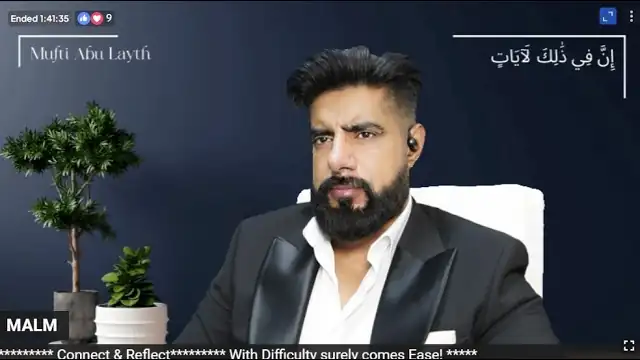 Press play to load from YouTube. Nothing loads until you do.
Transcript
machineauto-transcribed, may contain errors · source: youtube auto · click a time to seek · dotted terms open the glossary[music] >> Allahu Akbar. Bismillah Bismillah Innalillahi wa kafaa Was salatu was salamu ala rasulihil Mustafa wa ala ibadihilladhina rtada wa man bihudahum ihtadaa wa biathari ahlil Madinati iqtadaa wa ba'd
Was salamullahi ala al qawm wa ahlan wa sahlan bikum wa marhaban ya jama'a. I'm just going to allow people to tune in and I'll just share this myself as well and those of you tuning in feel free to click like and share ya jama'a.
Right, I'm just trying to see that as well. Is that going through? It is. Mhm. All right. Uh S Uh All right.
Okay. Bismillah. Allah [snorts] Allah All Ya salam. Ya salam. >> [snorts] >> Can you send the link? I will be sending the link for you can tune in and share your thoughts inshallah.
Meanwhile, ya salam. [clears throat] Uh this just so much going on. Why is this camera is kind of twitching here? One moment. I believe we're back.
Allah. So, right. Yes, alarm. Ah, ahlan wa sahlan, ya jama'a. Yeah, what's the world coming to? I'm going to share the link on Ah. May keep this relatively brief as you can see.
The exhaustion has caught up with me. And a few thoughts and discussions. And of course, I'll share the link and you're more than welcome to um to kind of >> [snorts] >> jump on and share any discussions and what's preoccupying your precious thoughts.
Allah. Right. I've had some reflections whilst people are tuning in, I guess, and and kind of liking and sharing. Yes, alarm. You know, the
I was online the whole apostasy thing. And as you're aware, or those of you that are not aware, there is a um there was a whole case going on to do with blasphemy and and that's in uh Saudi Arabia currently and it's making the you know, the headlines.
So, those of you that are familiar, there's there's this case of a Sri Lankan who works in Saudi Arabia. And he's been arrested on blasphemy charges.
So, the context to all of this is the [snorts] this I need to put something I think my eyes are a bit way too tight today. I don't know what's been Should put some kind of um So, he's been picked up on some blasphemy charges in Saudi Arabia.
And what this is about and now he's been sentenced to death. So, this has caught the media, the socials, people are picking up on it, they're discussing. They are you know, there's to and fro and uh non-Muslims have picked up on it quite a bit and and it's brought the whole topic of blasphemy back into the somewhat of a discourse.
And it's also um you know, triggered a larger discussion on Islam and how and I've you know, you've got on TikTok and all these kind of things platforms different many non-Muslims having these kind of dialogues with Muslims where they're saying things like, "Okay, so if I was to insult your prophet is that mandate for murder to murder me?
Like is that does that mean that uh according to your religion I should be killed?" And and and then it sparked all sorts of discussions where they're saying, "Well, what if I was to insult your God Allah according to Islam I'm not generally killed.
So or at least I'm, you know, given certain respite and so how is it if I insult the Prophet Muhammad alaihi wasallam that I'm instantly killed and I'm not even a Muslim and so this this seems to be quite a bit of a discussion going on. So this particular case, the Sri Lankan one it's something around a Sri Lankan worker who is in uh he works in Saudi Arabia and there's something about a Hindu
pilgrimage taking place either in India or in Sri Lanka, somewhere there and in this people in the pilgrimage are reacting to a video of a Muslim beating a dog. So there's some incident. So this this is um so there's a reaction to reaction to a reaction.
So, So, people in this pilgrimage are reacting to this some circulating video in their group or in the pilgrimage about a Muslim I I think a Muslim a Hindu Muslim or maybe a Sri Lankan Muslim beating a dog or hitting a dog or something. So, they are insulting Muslims and in turn and then Muslims have jumped online and engaged this and it's gone back and forth.
And apparently this is what the article say. Allahu Alam, I'm just relaying what's being said. So, some Muslims have jumped on and responded to the online assault to Muslims by assaulting the Hindu gods by saying, you know, well, this to this god and this to that god. And in turn this Sri Lankan has then responded to some Muslim or this is the story who is in turn insulting a Hindu god by him insulting the prophet Sallallahu alaihi wasallam.
So, So, this is um Now, when he's done this apparently he after some short while deleted his comment. However, it was picked up. It was um you know, screenshot it and things like this. Then some Sri Lankan Muslims I think have reported him. They've realized he lives in Saudi Arabia where obviously this would be a big deal.
So, they've reported him to the local authorities in Saudi Arabia. Um they I think they've tagged his company where he works in Saudi which has then reported him to the police. So, then he's been picked up and he's got done initially for some cyber crime, but then the prosecution said actually they want him trialed under Sharia, and thereby he's been given the death penalty.
So, this has garnered a lot of uh well, somewhat you know, some attention online. Now, this brings this whole discussion. You know, there was a clip I saw of this uh like a TikTok clip of a um I've forgotten his name.
Non-Muslim English something tough or what's his name? But he he does these podcasts where he calls on uh many people calls on Muslims as well and tries to uh engage them even though he's somewhat you know, somewhat polite to them, but he's obviously luring them in for a lot of So, he had this um it's a viral clip.
I've forgotten the guy's name right now. But he had this Salafi um Liam Tough, that's it. Liam Tough. And he had this Salafi um I think British Salafi Somali lad, I think on the I think he's Somali. And and obviously now you know, that's the Somali community generally is an amazing community.
This don't know what's this particular individual, obviously they don't bear responsibility for him, but I'm just describing him. So, so this guy's there's this viral clips where he's having this conversation and asking him Abu Sayf Allah, that's his name. Sayf Allah. And he's asking Sayf Allah all these things and you know, what are the this and blasphemy and so on.
But in the end, he has this thing where he asks him that look, okay, um we've had a very pleasant conversation, haven't we, you and I? You know, I've come across very decent, haven't I? And and this is really he's setting him up because he knows the kind of person this Saifullah is and how he would reply and respond to these kind of questions.
So, he asks him, you know, we've been really great, haven't we? You know, so under Sharia law based on blah blah blah, whatever I've said, wouldn't you know, if you were in charge, you know, would you have like would it be right that I should be killed? He has this kind of clip something like that. And that person, Saifullah, says unflinchingly, yes, of course.
You know, unquestionably we will kill you. And and that's what he ends his podcast on because that is what you see, the propaganda that he's trying to feed to the people is this is what Muslims are like. This is what you're dealing with. Doesn't matter how pleasant they may seem and how, you know, engaging they are, deep down they would believe that you should be killed.
Now, that's nonsense. But unfortunately, time and time again, see, I suppose people like that will take the bait. Maybe in their way they are thinking we're being so sincere. You know, we're being, you know, this is Musaddiqan, li, you know, liman na'taqid. And our faith and our Aqeedah and But this irreparably damages Islam.
Irreparably. And the Dawah industry has been nothing but a total mess. You know, something like about 10 years ago. I think all the better part of 10 years. I when I used to do my Monday nights in the earlier part of them. There was some I can't remember now, but there was some episode where I was asked about Dawah.
And I said that I think people shouldn't do Dawah. And then I'm I give a caveat. I say, well, you know, if you like somebody like Sheikh Hamza Yusuf for then of course, but for most people they shouldn't bother with Dawah. And I said because really all they're doing is unbeknownst while you know, whilst you know, unaware of it they are nothing but damaging and destroying the face of Islam.
And at the time people you know, they I think cuz now this is probably about I don't know, 8 9 years ago I said that. And at that time they I remember there was this onslaught against me for saying, oh, you know, this guy must clearly hate Islam or he must why would he say that we should not be doing Dawah? Why should we not But look.
Are we not in the shambles are we not lying in decay. The Dawah industry, the Dawah boys, the Dawah Have they not just desecrated Islam? You know, it's become a laughing stock.
Ridiculed. You know, and is this not an Amana that we have from Allah and his messenger? Is it not Was it not enough to just live your life according to Islam? However you believe it, you know, people disagree. They have different views, you know, some people Whatever your fit was dictating to you, was it not enough to just live by your rulings and be a great example to people?
But you don't need to go shout at the top of your lungs about And And what has it brought about? You know, this propaganda embarrassment, humiliation, scandals. You know, just non-stop fighting, hating.
And all these people have disintegrated and they just hate each other now. First they hated on other people collectively, now they just hate one another. And that's the problem with hate. You know, there's a a proverb from a line in Arabic poetry that a naru takulu ba'daha il lam tajid ma takul.
That fire consumes itself if it finds nothing else to consume. That is the nature of hatred, negativity. Hey, you know, may Allah really Ah. May Allah allow the light of this thing to shine. Amen. But it's otherwise.
You know, the question of I got >> [laughter] >> I'm sick of fighting. What would we be able to do about this? Um But this So speaking about these things, you see because now every non-Muslim is weaponized with these things. What do you say about blasphemy?
And blasphemy, by the way, was not blasphemy in this sense. It was in that day and age a sense of treason. And it wasn't The prophet look, there were many the non-Muslims Quraysh would often insult the prophet. They often insulted the prophet. They were very rude and belligerent and you know, arrogant people.
Many of the chieftains of Quraysh and the people, you know, when the prophet was praying in the Kaaba, they came and threw these kind of entrails and you know, kind of waste of like the intestines and stuff like on top of the prophet. So I said His daughter came and removed it and told me on for beauty them and they were very rude to the prophet.
So I said to them They attempted to kill him before the Hijrah. You know, they they would often insult and swear at the prophet. The prophet never taught that in turn we should kill them. He never taught that. Right now This we as Muslims have the utmost respect for the prophet.
So I said to them So for us [clears throat] it is tantamount akin to kufur that we would ever dishonor the prophet Sallallahu Alaihi Wasallam. But people who don't believe in Islam, they're going to That's going to be, you know, people amongst them will be They will be, you know, mischievous shayatins amongst them as well.
People who try to trigger, who try to rage bait, who try to um elicit reactions from Muslims. They will do these kind of things. You see, when they say things, you know, we The message of the believers is Qalu salama. Say salam, they walk past. They ignore these people.
Don't take the bait. You're not here to be executing people who And all And this is nothing but defaming and defacing Islam. So, And really, if people say this was for the love of the prophet Sallallahu Alaihi Wasallam, where is your love when you kept shouting at the top of your lungs that the the prophet Sallallahu Alaihi Wasallam married Aisha at the age of 6 and 9, which is nonsense.
But You see, now you've weaponized these Muslim non-Muslims with this kind of um you know, these kind of slogans, these kind of Now, that is what they immediately throw uh Muslims. Oh, so your prophet married this or your prophet, which he didn't. And you kept Where was your sense of honor then?
So, in the past, many most civilizations, most settlements had treason. Even today, there are laws of treason, which they call high treason. Or al-khiyanat al-uzma. This kind of great treason, high treason.
And in the past, this was tied in to many intricate nuances. So, you see, people lived within city walls. It wasn't like today, the way you have metropolitan settlements and people just come and go and highways and roads and motorways. You had these kind of towns and these kind of Well, we say cities today, but they weren't like today as large as today's cities, but they were like today what we might consider towns.
And they had villages, which were like village and rural. They had towns and they were often enclosed by walls and protected. Some had moats and some had, you know, obviously in these but other places they had walls and they had these kind of protections and and some had maybe were set up against valleys and mountains to protect them and so each settlement you see, they had weak spots.
They had in these places uh a lot of uh you know, that they would have had vulnerabilities. So, when you were looking at them, how do we know that um you know, how do we know what what would be a place to attack if you were to attack? If a person, you know, where are whe- where are their weak and vulnerabilities or blind spots within this town?
You know, is there a certain part where the wall could be taken out? Are they All of these things were only secrets that people that within those towns knew. Other people don't know that. And this meant sometimes the determining factor between life and death for the entire settlement. So, in the past when a person abandoned Islam, what that meant often was they were going to a different community,
a different town, and taking up kind of residency with them. On many occasions, this meant that they were potentially a threat to attack that town. And this is why it was considered khianah and hirabah, a sense of a declaration or a kind of like a terrorism.
Hirabah is like the classical version of terrorism. In Arabic, this term hirabah. So, this is why they there was this declaration of war against people like that. It's not because of the faith per se. Now, people may say at the time, "Oh, well, you know, we can't risk it.
If they abandon the faith, we're going to consider that kufur. We're going to consider that khianah and thereby in the past." But, these were rulings of fiqh. This is not in the Quran. This is from fiqh, okay? So, when we mention these things, they are in fiqh. They are fatwa.
Now, there is one Hadith massively problematic Hadith. It's in Sahih al-Bukhari. It's by Ikrimah. Who was a Kharijite whose whose belief system was that when people commit any kind of sin, they become a kafir. Whose belief system involved a uh a lethal was based on the concept of using lethal force.
The Kharijites often had a uh a tone of, you know, uh military militant lethal uprisings. This is what the whole dawah was built on. And one way to have an uprising against Muslim rulers is to declare them kafir. And thereby say that the blood of kafirs is permissible.
It's a very Kharijite tendency. You know, once again popularized by the likes of Ibn Taymiyyah. I'm not saying he invented it. He didn't invent it. But it was popularized once again by his kind of obsession with this uh you know, the the the the the kind of the kufr of Muslims.
And then the halalih of their blood. Them being halal to kill. This kind of blood lust was once again popularized by Ibn Taymiyyah. Now, that's not to say, you know, obviously, look, Ibn Taymiyyah had his own challenges and and it's unquestionable, you know, he was Look, he was a scholar, but it's unquestionable he was somebody who suffered from immense mental health issues.
Immense mental health. I mean, you know, in this day and age, you don't like And it's no surprise. Obviously, he was very, very negative and spiteful towards any Muslim that he felt was a deviant. And he he his writings are vicious, you know, like they should be killed and massacred and looted and but then you see this is the problem with hate.
Islam is not a dean of hate. But the laws of nature, one could say almost the laws of attraction that Allah has put in the cosmos is that the energy you put out is the energy you get back. If you promote affection, love, compassion, mercy, you will find that in the creation of God. You will find it in the world Allah has created around you.
But if you promote this or become obsessed with negativity, with hatred, with this kind of blood lust, unfortunately, with the likes of Ibn Taymiyyah, that's you know, the latter part of his life, he's then met with this same treatment by people. I'm not saying it was good. I'm not saying it was but then that's, you know, those who you know, if if if that's, you know, the bed you make, then that's the bed you lie in.
He he kind of preached most his life that anybody who he felt was a deviant should be tortured or killed and massacred and looted and taken as slaves and and then what happens is the other people, the Malikiya and the Shafi'iya, who believe he's a deviant, then have him tormented and imprisoned and tortured and which was wrong. I mean, I'm not saying those actions are fine, but this is the playbook.
You know, it's the energy you put out into the world. It comes back at you. You see, if you put out a negativity, a hatefulness, so this is what the you know, the blasphemy, the apostasy, this is what those things were. They were a khiana. They were about high treason. They were not about um you know, the way they've become understood as kind of uh you know, oh, if a person doesn't believe, they should just be executed.
And this is why the early Hanafiyah, they clearly made a distinction that there was no um capital punishment, no execution laws for for women that apostated. So, why not? Because And they answer it. They say because she wouldn't be They didn't see her cuz they say that they didn't fear harabah from her.
They did not fear that she would be a military threat to them. So, that gives you the reasoning. They these things, you know, they preoccupy our our thoughts and our mental landscapes, huh? All right.
I'm going to share the link. Let's All right, where are we? Ya salam. Here it is. Let me All right, there you go. I've shared that, people. Uh Not here.
What is it? Is what? Not here. >> [laughter] >> Hi people, you can I've shared the link. If you log in, uh you will need to switch on your mic and your camera.
And then All right. Allah Allah. So, hi. What is going on, people? You know that I heard this poem. It was uh being recited by uh
Remember Dharmendra? He's passed away now. And um he had this poem where he says that sub kuch ba ke bhi hasil e zindagi kuch bhi nahi.
That even after we even after we have accomplished everything. So, even after we've accomplished everything the totality of what we get in this world is still nothing. You know, that sub kuch ba ke bhi hasil e zindagi kuch bhi nahi.
Kambakht jaan kyu jaati hai jaate ho. Hi hi hi. That kambakht jaan kyu jaati hai jaate ho. Hi, that why is leaving this world and the death of us. Why must it be the death of us? As in that why that we almost lose our lives when trying to leave this
He means in the sense in just having to embrace death. But in the sense of having to you know, it is the like it Like even if it wasn't death, it would be the death of us having to leave. >> [laughter] >> The attachment the attachment to this world. Right. Uh We have Ali.
Uh salaam alaikum. >> Wa alaikum salaam. How are you doing? All right? >> I'm good. I'm good. Wa alaikum salaam and Ali, where are you joining us from? >> East London. >> East London. I thought I picked up the East London accent. There you are doing it. Doing it.
I like it. Right. What's so Ali G? Right. A pleasure to have you online. So yeah, share some what would you any what would you like to share with us? Any thoughts? Any mental preoccupations? >> Yeah, I mean I would love to talk about what you talked about earlier, which is you know, the Dallas scene and in terms of um the Dallas scene specifically in the West.
Um >> Yeah. >> And I actually tend to agree with you that a lot of us have done so much damage um to the message of our faith. Um and there's a number of reasons why. Um, it's because I I think we don't understand the Western mindset properly. Um, and therefore it's hard for us to engage in it.
Even like our local Darul Ulooms and stuff, some of the older people, although they're very pious, very very nice people, alhamdulillah, you know, they've got a lot of wisdom, but sometimes their context is wrong. Do you know what I mean? Because they're stuck in the subcontinent village 70 to 100 years ago. And not in context the contextual West. Do you know what I mean?
Um, and if you try and apply that model onto 21st century America, France, Britain, Germany, it doesn't work. Um, so in terms of like like you said, you talked about Hamza Yusuf, right? >> Yeah. >> I think he's a brilliant da'ee. Without being evangelical, right? He can go to any intellectual Western university setting and they'd love him.
He don't even have to talk about faith. >> Yeah. >> Right? >> Yeah. >> And and the people would love him. They'd come and question him. He'd talk about Aristotle, he'd talk about Nietzsche, talk about um, Schopenhauer, he'd talk about the Western philosophers and he'd relate it to faith in a way that they can understand it. In terms of the Western intelligentsia. Do you know what I mean? Um, and same thing with Sheikh Abdal Hakim Murad, right? >> Mhm.
>> There's very few people that exactly can do that. You know? Um, if you got [clears throat] something to say, sorry, yeah. >> And you know that Hamza Yusuf, I had mentioned that that I was reminiscing over uh, a kind of clip or from one of my Monday nights years ago, almost 10 years ago, where I was answering that question. And that's when I'd said that look uh sure, you know, if it's somebody like Sheikh Hamza Yusuf, of course.
Uh but otherwise, I think overall um people shouldn't do dakwah. Not because you know, God forbid that deen isn't beloved to us, but because we are like we are just scaring people away from the faith. You know, this and and there is this you know, there is this thing of what people say, "Oh, look how many people have embraced Islam." And people have embraced Islam.
But of the people who've embraced Islam, there's two camps. Okay. One is this kind of dakwah approached people. So, you get like stalls and people go to stalls or you know, you get sometimes some people doing dakwah on the streets and doing all of this and you've had people convert through that. Or like what is it in these parks and you know, when they do this kind of stuff. And this is you know, like in the past I'd heard people saying we're a conversion machine machine and I convert so many people and I crunch numbers and the other way is people who've converted to Islam
through the akhlaq and curiosity. Their own curiosity and the manners of Muslims. So, that category is grounded. You'll find people who for In fact, I was watching a clip the other day came up on one of the socials. It was some uh uh English lad who converted to Islam.
And he he had I've forgotten his name now. I I've not seen him before. I just saw the clip. He had all these tattoos and everything, but he just explains that he was homeless and uh you know, living it very rough on the streets and this guy came up to him and said, "Look, you know, like asked him his story, some Muslim young lad and and he said to him, "Look, I'll tell you what, I've got a place, you know, you you can just go stay there and but in any case, he kind of eventually and and he says, "I I said to him, 'Well, why why do you want to help me?'" and so on.
And he said, "Oh, well, you know, I you know, because of I believe in God and I believe in Allah and but in any case, this guy says he never preached to me, never did anything, but eventually, like I think a month or two or whatever it is down the road, this guy becomes interested in Islam just because of the good character. Now, this kind of pathway is very fruitful because it's deep-rooted, its roots they they they run deep on a on this sincerity of of what truly speaks, which is akhlaq.
The other way, sure, you know, people say, "Oh, look, I converted these people." And All right, and and these people came and and what they don't follow up on is how many of them come and leave. >> Yeah. >> Countless will just come and most of them will just leave Islam very shortly after. And and also the amount of people that are otherwise leaving the faith or being brought into question, you know, on this kind of boundary, you know, as the the the term of the Quran al ash-shurufin, you know, uh that it's this this kind of edge that they brought to of the faith because
so because of of of this toxicity. But yeah, that was my um it is it is interesting that when we read, you know, people say, "Oh, the salaf, the sahaba, radiyallahu anhu, the tabi'in, you know, may Allah be pleased with them." Very few of them gave da'wah in in this particular way that people think they gave Dawah.
>> Mhm. >> They were just people who you know, the the the people transmit that they would say, "Oh, yeah, yeah, kunu mithlana." You know, just be like us. People saw in them >> Mhm. >> this very strange yet profound uh positivity and light. >> Yeah. >> Cuz they looked at them that they they came across as though they were you know, to like to the Persians to the Byzantines, they came across as these obviously people that they would look down on.
They used to think, "Oh, these guys were just desert dwellers." And but they had this charm had this positivity, this glow, this confidence. What they saw as this confidence in their God. That Oh, and they and what you remember to the non-believer wherever these people went, success followed them.
>> Mhm. >> Like success came to them. >> Mhm. I think um it's interesting that you mentioned that because um you know, um Tim Winter, Sheikh Abdal-Hakim Murad in a few of his interviews um he cuz he wrote a book um um I forgot the name of it. I think it was one of his latest books, Traveling Home. >> Okay.
>> And and in that book he gives examples of how did the Mongols come to Islam? What was the reason? And he's he he he he when he talks about it, he talks about it in a very profound meaningful He says basically that um he says that um why is it that within a few generations almost all of the Mongols had had embraced Islam? What what is it about them?
He said um they the people that suffered under the Mongols, they didn't reciprocate the evils that the Mongols did to them. Instead, they looked at the Mongol culture and they thought, what part is compatible with Islam? How do we engage with them? And then he talked about the Sufis in particular. Um and he said the Sufis were obviously at the forefront in giving Dawah and there's a certain way um like like what you said that people saw light in those people.
And he mentioned people like Saifuddin al-Baharzi um and Najmuddin al-Kubra. But the way the Sheikh Abdal Hakim Murad and he he says it in a few interviews. Absolutely mind-blowing stuff. I I can't um um um sort of I'm just paraphrasing. Obviously, the way he said it is very very powerful and eloquent may I really um suggest you listen to that. Extremely profound. >> Of course.
>> When you make a grand for sharing that, I appreciate that. Shukran for sharing that and yeah. The rain may Allah guide all to his light. Amen. >> Even even Hamza Yusuf, right? Even Hamza Yusuf like um one of the great English intellectuals of our time, Sir Roger Scruton. He was great friends with Hamza Yusuf, right?
Um he he he he he no generally he criticized Islamism or he what he views Islamism and in terms of obviously a certain movement in Saudi Arabia. Obviously, oil money, the oil Dawah and stuff, you know, what I'm talking about, right? He he's used to criticize that a lot. But when he was with Hamza Yusuf, he said, "Look, the West need Muslim thinkers like yourself." And he sat down with him actually.
Done a few interviews with him. Every time he used to go to America, they used to used to visit him. Actually, Sheikh Hamza Yusuf knew a lot of um uh American intellectuals. He even even now like Thomas Cleary, Dr. Thomas Cleary, a very fancy car, another guy called Professor Robert George who's a very influential Catholic thinker. He's a professor in law, right? And the thing and and they hold him in a lot of reverence.
So, even when they're doing interviews with him, they're the ones that actually ask him questions about their own faith even. You see, you know, you might follow it to them. Yeah. The interesting thing is this, that like take any culture, any culture, that is a Muslim culture. Um the ulama or the preachers, because in the past you didn't have that one from non-ulama.
Like you might have for example, okay, so let me rephrase that instead. So, you definitely you had no doubt one from people who were non-learned in Islam. You had people that one was only something from people who were learned in Islam. Now, there's obviously a hierarchy or you know, there's a spectrum. Let's say that instead of a hierarchy. There's a spectrum of what it means to be learned.
So, obviously there's going to be some people who are so well learned and some who, you know, to a reasonable extent. Like you could say like people who have today's equivalent of an average dollar room understanding even if they haven't done that many years in the past, but they probably did I don't know, four, five years of learning and they would have obviously known Arabic, they would have known tafsir, they would have probably most likely memorized the Quran, studied fit, done all of these things, but maybe they weren't specialists and so, every person was somewhat learned.
Today obviously we we are own is the first unprecedented time in in Muslim history that people who do that one about Islam don't even, for example, understand the Quran in Arabic. They don't They've never really studied uh properly Islam. Like, maybe they've just read a book or two, but they've not That's like unprecedented in Islamic history. But, nevertheless, what I was That wasn't my point.
What I was What What I wanted to say is that take any Muslim culture that has had da'wah, any kind of da'wah, or podiums or membars or the scholars of that culture were often the most eloquent in that language. So, take Arabic.
The ulama, regardless of how, you know, one might say, "Look, regardless of how dogmatic ulama some might be, and some might be harsh, and some might be very loving, or some might be" Just for a moment pausing on that, even though I agree people shouldn't be harsh, and they should be loving and compassionate and positive. But, just for a moment pau- pausing that, those ulama in Arabic are amongst like, if you take the entire Arabic society that they're preaching in or teaching in, they are amongst that
brief margin of people that are the most eloquent in that language. Yeah. So, like Arabic, it is unquestionable that the manabir that the the pulpits of And I don't just mean the actual pulpits, but manabir al fasaha that the pulpits of eloquence are lil ulama. There is no denying that. That you might get some Arabic udaba as well, like uh literature kind of uh you know, specialist that will be very eloquent.
But, really, uh and they may be poets or just people with literature and adab and but the ulama are just up there in Arabic. Now, you could take Persian, Farsi. You could take Urdu. You could take like amongst the most the upper echelons of that language were the ulama.
So, the people who spoke to the common Even today, like if you look at let's say you take the Desi world, Indo-Pak world, the ulama are generally very eloquent. Maybe not everyone, but most of them they always speak poetry. They always speak You know, that that they use big language, big words, sophisticated terminology. They use But, English, we are very poor.
Like, we're on the lower rungs of articulation. So, that in itself is very telling. That that that reflects and mirrors the capacity of the dawah. Like, your language abilities Like, take the Quran. It is incredibly eloquent. And its eloquence [clears throat] captivated the listeners.
So, it's unquestionable that when you speak, you know, the the Prophet Sallallahu Alaihi Wasallam said, "Haddithu al-nas that you speak to people in a way that it mirrors their intellectual capacity." Haddithu al-nas ala uqulihim. That lest What was the opposite? That lest And you you know, uh that you fear And you kadhdhab Allah wa rasuluh.
That they end up denying Allah and His messenger. Okay. May Allah Shukran for sharing your thoughts as well, Ali. >> It's It's interesting you mentioned about the Quran, because even non-Muslims um scholars recognize in terms of its extreme eloquence. People like Angelica Neuwirth, a German Quranic scholar. She's been in academia for over 30 years.
Like she she's written a lot of stuff in the Quran. She's a non-Muslim, but she recognized the eloquence. Sir Roger Scruton, interestingly, said um before his deathbed, he was reading the Quran and he and he and he said something. He said, "The that great voice in the sky." Right? >> Yeah. >> That was his >> You feel Masha Allah. Are you are you yourself uh a madrasa background or something?
Or what's your background? >> I'm I'm not I'm not madrasa at all. >> Well, versed in things. >> No, I I mean I've I've I've read philosophy. I've read, you know, I've read stuff like Nietzsche. I've read I mean to history as well. I've I've got a degree from university. Um so I I kind of read different academic, you know, stuff. Um yeah. So. >> Yeah. No, Masha Allah. You're very come across I can feel the light.
Allahu Akbar. Uh I was going to say definitely are you on Instagram? >> I am. Yes. Yeah. Yeah. >> Yeah. Okay. Yeah, drop me a message. Let's connect in sha Allah. It'd be good to be connected. Always good to, you know, be connected with very uh enlightened minds and just just very, you know, positive uh such voices, articulate voices.
So shukran. And we'll connect here. It sounds uh and you're only in London. You're >> Uh yeah, I'm I'm only in London. And interestingly, it's interesting that you you said am I on Instagram, cuz I messaged you I think last year on Instagram saying I'd love for you to do an interview with um Tim Winter. I think that would have been a that would be amazing cuz you would really pick his brains and you said "Hamdulillah, I'm open to it if he is." So, I did send you that message last year.
>> Okay. Oh, shukran. Okay. Okay. Well, drop me another message and I'll you know, follow up. We'll connect then from there and inshallah, we'll catch up and I like the I'm very intrigued with all your you know, the kind of reading that you're doing, the ideas and inshallah, we'll have to share a cigar on some someday, inshallah, as well.
All right. Ali, well, take care. Shukran for joining us and sharing your thoughts. Allah bless you. Assalam Alaykum. People, that was Ali from um East London, a masha Allah, very well-read voice and it's always good to meet people who are um just very interesting.
You know, like interesting people, don't you think so? Interesting So, interesting people are just always intro >> [laughter] >> Like people so interested in things are interesting to people. All right. Um All right. Uh Dragon Link, I love I love you, too, Dragon Link. I love all of you. Allah bless you all.
Mufti's Insta either makes me laugh or cry. It is so true. Yeah. My Insta stories are like so they're kind of schizophrenic, aren't they? I don't know. Multiple personality disorder or now they call it dissociative identity disorder. So, that's what they are. There's like something very emotional I share or something just some kind of prank or some kind of stupid humor or something very moving or God.
Or something knowledge related and world related. So, there's actually like a whole few different personalities. All right. So, I don't know what that Uh right. I don't know what that says there. Right. I'll just Who do we have here? We've got Yes. Salam. We've got Jonas.
Uh Salam alaykum, Jonas. >> Walaykumsalam, Mufti. >> Yes. Walaykum ahlan wa sahlan wa masa' al-khair. >> It's very, very nice to be here. I actually just I logged in right now. I saw you online, so I've been watching your videos for many years, actually. And I I really enjoyed your content and especially your your journey from how you began, the transformation, you know, it's uh >> I appreciate that.
>> Interesting. Interesting. >> Yeah. It is. It is. It's I mean, as interesting as life itself, almost. >> Yeah, of course. Of course. >> [laughter] >> Tell us a bit about yourself, Jonas. Where are you joining us from and a bit about >> I'm from from Germany, actually. So >> Oh, mashallah. >> Yes. Yes. From It's a small town. I I don't think you're going to know it.
It's from Würzburg. It's close to Frankfurt. >> Okay. Okay. Well, Frankfurt >> been to Germany before? >> You know, on a very short stop once, many years ago, but I can't really count that as having truly been. So, I have to go. >> Of course. >> Yeah, I have to visit. Yeah, it's uh >> Yes. >> You know, there's Wow. What a Yeah, Germany, huh?
Capital there. So, mashallah. So, Jonas, what is uh on your thoughts and mind? >> Yes, so just I think the discussions the discussion with the of the whole Dawah scene, I think was very interesting and I think it's the same phenomenon that we have here in in Germany. And I can say from a from a personal experience, when I was younger, when I got interested in Islam, I you know, it was maybe like 10 15 years ago.
I was maybe very young, 14 15 years old. And at that time there wasn't as much content online as there is right now. So, you had maybe like just two or three people and most of these people they came from a very like a very Salafi background. And uh I was very interested in the religion, but when you have only this certain type of interpretation, uh and you have your own journey, you have your own thoughts, it's like um yeah, it kind of it took me away from
religion. So, it took me maybe time to, you know, study on my own, study other things. And then, obviously, after this, you have more people, people like you, which kind of uh you know, gave birth to my faith again. So, I think um there is there is there's a need for for people like like that.
>> Uh no, Allah bless you, bless all. I mean, here it's not, you know, this isn't I me as a person, I'm not interested in and I don't want to make this about um cuz I was speaking ideally about the kind of the bad rep that Islam is getting on socials. And and And from there about Dawah, the Dawah kind of industry.
And this isn't about just taking digs at the Dawah industry because or to kind of like just criticize them in that sense because even though obviously we we are criticizing them, but cuz really that's just to engage in the same game. And there's no point like it's above that.
You know, it's above it's about just a sense of you know, there's a like almost I I guess is it an age thing? Is it a a stage of life? Is it it's like a realization that yeah, like where have we got to? You know, like walking you know, like like whilst walking like you suddenly like a person has stopped to reflect that where are we?
Like what where where where did we arrive? Like how So, I guess it's more it's coming from a place of just you know, it's just a reflection. It's not about trying to engage in a kind of uh a negativity cuz that cuz negativity by its nature is very uh consumptuous, you know, it consumes you.
It's very toxic. It's very um And and then maybe just pondering that well, what is the future? Where we're moving forward. A lot of people are cuz there there there are a lot of questions people have now. People are wondering there's this Islam is being pulled in many directions. Uh people are being pulled in many directions.
People are you know, they're kind of throwing back at Islam. They um trying to challenge things, you know, you've got people now um, you know, with with this kind of negativity towards Islam as well. And coming from Muslims as well, you know, coming from people who entirely now uh, sometimes almost hate on the Hadith tradition.
Um, the the the you know, whether they say they hate on it or not, but the energy is hateful. Whether they say it or not, maybe they don't use those words, but the energy is very um, and a lot of this as well is a reaction. Most of his Most of reality is but a reaction to what precedes it. You know, somewhat in the you know, Hegel's Hegelian kind of dialectic that you have a scenario that produces a kind of antithesis of it.
Uh, like a thesis of something and antithesis and then you have a synthesis which produces its antithesis which produces its synthesis. And in many ways, that's what society is doing and the Islamic scene is no different. And so people are uh, you know, this is a antithesis to people trying to double down, down so hard on this dog like dogmatizing the Hadith literature, for example, like super dogmatizing it.
And as opposed to just being honest with it. And remember what [clears throat] why our ulama for most of Sunni Islam most of Sunni because if we're going to take Sunni Islam you know, people love to take it democratically, isn't it? Well, majority majority always. So, if we're going to be democratic then the majority of Sunni Islam is really the Hanafi's and the Maliki's.
That is outright That is probably something like 75% of this ummah. 75 to >> Is it that much? I I I didn't know. >> Probably. I must say I'm assuming because really the most of the entire Muslim world most of the Muslim world is split really between Hanafi's and Maliki's. It was especially especially in the past. And now I suppose with certain but even then like if you're going to think look most of North Africa most of uh you know a lot of Central Africa and North Africa is going to be Maliki.
And then parts of the Gulf and Middle East are going to be Maliki. And all of the Asia and you know the Ajum most of the Ajum world is generally speaking most of it is going to be uh Hanafi. And then you've got Shafi'is in the Middle East and you've got Indonesia which is a large uh Muslim population and therefore a large representation of Shafi'is as well. But really the majority I'm assuming at least like 70% is going to probably be just really Maliki and Hanafi.
So most of the Muslim world drew a distinction between Hadith or Sunnah. But yet for some reason we suffered amnesia and we chose to ignore that fact. And we stomped down so hard with this presenting every Hadith as though it's Sunnah which it isn't.
You know it's a Hadith which we respect but it's not it's a historical record of And so now we've got in reaction people absolutely reject it and they're almost disrespectful to Hadith now. So yeah this it's a reflective moment. >> Yeah people have become very dogmatic about this Hadith literature and stuff.
But what you said before, I think when when you look online, you don't see this like 70-80% you think it's more like the opposite. You think it's like uh So, this this is true. >> so true because when you look online, what dominates the entire Google discourse is Salafi Dawah for the most part. I don't know why that is, but it is.
So, you would assume that they were the majority, but obviously they're a tight minority, but they've You see, I don't know like along the way other things have happened as well. So, the Hanafi's for a little while now have been Shafi'ized. For a quite a while, they've become crypto Shafi'ites. Like they've you know what you call the crypto Shafi'ization of the Hanafi's and many Maliki's.
So, it's like people have not only uh suffered amnesia, but they've also kind of taken on this identity which isn't even this. So, it's uh So, it is you're right that people do behave today like uh oh that like they've forgotten what what's in the Usul books. The Usul books teach us that no, the Sunnah is what we adhere to.
The Hadith is simply a you know, we may consider it a very special or sacred historical record, but it's a historical record and you know, it's historical archives and some sometimes they're correct and sometimes they're inaccurate. People have misreported or they've made mistakes or forgotten and you know, >> It's it's true and you see it even in some cuz I've been in Morocco last year.
And you see when when when you pray, you have the difference you have the the subtle or the covert where you where you put the hands. And traditionally, the Maliki position has been the letting down the hands. Now, when you go to the masjid, the most people that pray in this subtle way are mostly the older people. A lot of the young people, they they have adopted, which is not the wrong way, but it's not like this typical Maliki way of praying, right?
You know what I mean? >> [snorts] >> Because because the thing is that you see the You see the problem with so to people the issue is that they see that as kind of like old-fashioned. They see it as traditional in the sense like, oh, this is what our fathers and grandparents and ancestors say you pray in this way.
But what is What does that mean? You know, like they like they say, "Where is it in Bukhari? Where is it in Sahih Muslim?" So, this new Salafized way of looking at things, it's at face value, it can be attractive to people because it's it's it appears much simpler.
>> Yeah. >> So, and and because it appears in binaries, you see it appears as black and white. So, things that appear black and white often have an an attraction to them to people because people want certainty. They crave certainty. So, you see when you give them ambiguity, and this this is actually something I wanted to share with people actually.
That you see, I feel that there's great wisdom in there being and not just wisdom, that there is a mandate in Islam for a culture of ambiguity. Ambiguity is necessary because even though in the very near short term it may cause some discomfort and you know, amongst people but in the long term it births compassion and tolerance.
That you'll find cultures that are dominated by ambiguity are often much more tolerant cultures. So and you see because if you look historically and a good way to understand this is in language. That we as um um most Muslim cultures, you can look at our for example, poetry.
It's been very ambiguous. It thrives in ambiguity. And so this is something that you see it in the culture at large. So let's take Islam as an example. Now in our sorry, I mean within Islam as an example, let's take uh our practice of Islam. So you've got the four practiced madhhabs.
All disagreeing on on things of what they mandate and disagree with and what they consider fard and sunnah and uh you know, mubtil or what they consider haram and certain things. Like to some people that's just confusion. But they're taught that you just have to accept it because that's the you know, we practice according to what our madhhab is.
Now this may appear at first glance to be somewhat confusing. However, it engenders compassion and tolerance of disagreement. Thereby unifying humans at a much greater level, unifying the ummah. So, this was, you know, what we had within We were carrying a gem, a diamond, which was then shown as confusion by obviously the more, you know, recent binary that was and targeted.
But I'll What I'll do, Jonas, is I'll inshallah let you go. I want to share a bit more thoughts on this because Of course, it's been a pleasure. Shukran for joining us and Allah bless you. People, that was Jonas from Germany. Allah bless him. But I want to just carry on for a few moments with this that a culture of ambiguity is priceless because even though it causes some discomfort at the immediate stage, it goes on to engender compassion,
breadth of horizon, and a greater unity holistically speaking. And it does that because it teaches that we can have ambiguity. You see, if because for example, the Malikiya say, "Well, it's okay. The Hanafis do that, but we do this." It's okay.
Now, this "It's okay" is priceless. Even if it sounds confusing. So, for example, according to the Hanafiya, apart from docile poultry and basic you know, food items that that are generally kind of kept as farm uh animals and things like that.
Every other animal is almost haram to eat. And apart from fish, actual fish, any other sea creature is haram. And every bird in the sky is almost haram. So, that's on one end of the spectrum, you've got uh Hanafis. But then you've got the Malikiya on the other end of the spectrum where according Excuse me.
Right, that's >> [clears throat] >> According to the Malikiya, apart from pig, nothing is haram to eat. It may be discouraged. It may not be something people generally eat, but it's not haram. Whether you're talking about kangaroos or elephants or tigers or wolves or crocodiles or crab or, you know, lobsters or sharks or eagles or anything, it's not haram.
Although people may generally not eat it. So, now however, the Hanafiya will just say, "Well, that's fine. That's the Maliki's, but according to us, we practice like this." So, this momentary ambiguity, what it does is it forces strong arms, compassion, and tolerance.
So, people are taught to tolerate that which is different to them. Now, that is crucial for a much greater level. Otherwise, you end up having this kind of dogmatic extremism that will call for the death of other people. But when people But when people are taught to allow other people and tolerate them, even when we disagree with them, even when we believe certain things are haram and they are Muslim as well, they follow the
same Quran or Sunnah, but they believe actually other things and they believe what we think is haram is not haram. So, this fallacy and delusion of calling to clarity, so so what happened in recent times in the last 1 to 200 years is there has been this call to on the on the face of calling to clarity.
What they've did is try to rid the Muslims of ambiguity by creating binaries. But the problem with binaries is they don't really work in the world at large. And we have been influenced by colonialism because if you look at cultures, world cultures, Muslim cultures thrived on ambiguity.
And this is evident in our language and in our literature and in our poetry and in our faith, practice of Islam, our faith. However, Western European cultures did not and moved away from a culture of ambiguity. And that made sense. Why?
Because they had started to divorce themselves from faith and religion. And they weren't so interested in mysticism. Their poetry exists, but it doesn't exist on the scale of Eastern poetry. Our poetry is worlds and universes apart from English poetry. English and European poetry is it's okay, but it's nothing compared to the Near Eastern poetry, nothing.
They have nothing on that poetry. So, however, the European countries, they thrived with the absence of ambiguity because they started to lean in on the hard sciences. In the hard sciences, you don't need ambiguity. In fact, you don't want ambiguity. In physics, chemistry, mathematics, biology, you don't want ambiguity.
You want certainty. So, they started to draw closer to this thing of reading or minimizing a culture of ambiguity. They didn't get rid of it all together, but they minimized it. When they colonized the Muslim world, Muslims introjected that personality into themselves. And thereby started to mirror it into our faith as well.
And that's the time that you get the rise of cuz when these recent da'wah was that we have in fact no dominant Muslim trend exist today that it did not emerge under colonialism. The Salafi da'wah emerged under colonialism. The Barelvis, the Deobandis, the Jamaat-e-Islami, the every single trend that we have in the Muslim world today, no matter how ancient it claims itself to be, only emerged under European colonialism.
So, and I'm not saying that they were produced by European colonialism. I'm not saying that, but they emerged under European colonialism. So, to assume that they were in no way affected is to be incredibly naive. That surely, you know, if I'm in an air and an atmosphere, I'm absorbing and breathing my atmosphere.
To assume I'm not impacted by the oxygen or the pollen or the uh pollution of my atmospheric surroundings is to be incredibly naive. We cannot avoid but be affected by our atmosphere. So, they were influenced.
I mean, they were influenced obviously. Not that they maybe they did not want to be but they not even ironically, they may have been influenced by even opposing. Because when you oppose, even then, you see, you're not aware of everything you're introjecting. So, one of the things they introjected was, for example, this, a culture of ridding ourselves of ambiguity, calling towards a kind of a clarity of binaries, which on the face of it sounds nice,
but actually is harmful to the deen at large because when you get a culture of binaries, you start calling each other kafir. Because everything is so clear now that when you disagree with me, there is no room to disagree. The only disagreement means you're outside of Islam then. You see, that didn't exist before.
People I mean, it did exist, but it wasn't the dominant trend. I'm not saying this did not exist at all, but the dominant trend was a culture of ambiguity. People disagreed, but they accepted. They said, "Well, oh, you know, that's their method. That's how they do it. That's how they do it." They may have even dissed each other at times. They may have even But in the last 1 200 years, it's become very vitriolic.
It's become kufar kufar kufar. So, we've rid ourselves of this culture of ambiguity. And another example of this is a very, for example, um emphatic trend or emphatic um attitude on outwardly appearance.
And a kind of uniform for Islam. This is very recent. This is from the last This only emerges under colonial rule. Why does it emerge under colonial rule? Because they are trying to distinguish themselves from the colonial powers. And the colonial powers have risen with a kind of modernity and new technology.
So, it only makes sense that people will say And I'm not And they're doing this from a place of love for the deen. That they're saying, "Well, we are not like them. We have a better way of life." So, the question was, "What is your way of life then?" Because people ask, "Well, what is our way of life?" Well, our way of life is that we dress in this way.
Prior to the If you go back a thousand years, find a book where they tell you that dressing in a certain way was Sunnah. A thousand years ago, nobody wrote that. Why? They were closer to the prophet. You know, Ibn Hazm who speaks all about you know, Sunnah, Sunnah, Sunnah, he writes that oh, one of his things was he always dressed differently to most of the people.
He says he always had a style of clothing that was somewhat distinct from the general public in his time. There was no discussion of Sunnah clothing back then. Because everybody just recognized. It was only under colonial rule when when the Muslim countries were colonized by Europe, that people needed something to fight back with. At least tell their people, give them some The identity began with the easy things.
The what do you have in the face of the colonial power? Well, we have an identity. And they This came from a place of love. And the place of love is obviously highly admirable. We admire the love that they had for the deen. However, the result the findings weren't necessarily accurate.
They were coming They were affected by what they're trying to fight. So, similarly, this culture of ambiguity, I want you to take this point, reflect on it, that we have that Islam almost mandates some ambiguity.
This is why Allah speaks of mutashabihat in the Quran. That this that there is an air of ambiguity, which we must allow to exist against our better wishes to wish to completely come out with render a uh certain ta'wil of each one of these ambiguities.
So, yeah, I hope that makes some sense. I don't know. >> [laughter] >> People are probably thinking, "Yeah, yeah. What exactly is is he on about?" >> [laughter] >> He thinks that what I'm on about is so ambiguous. >> [laughter] >> They're like, "Yeah, but he is speaking about ambiguity and but he's being ambiguous he's speaking in such ambiguities that >> [laughter] >> how does anybody understand what he's
actually on about?" So, >> [laughter] >> this is the this is the problem, huh? Allah Allah, huh? Come back, huh? Come back. Come back John Q Jati Jati way. So, somebody said, "So, what clothes did they wear back then?" They wore the clothes that they wore.
Just whatever their clothes were of their culture. Do you think the time of the prophet they dressed in thobes? They didn't dress in thobes like the way Gulf Arabs wear thobes today. But, obviously today we assume that because that's what's been popularized, but it's not. They didn't dress like if you read the description of the actual it wasn't like that.
It was probably they dressed a bit more probably somewhat like I'm not saying it's entirely, but a bit like uh maybe a bit like a kurta that um not exactly but a bit like that. A bit like maybe the salwar kameez kameez like it would have probably been only that long and um and then they had an izaar which was like a sarong.
Uh they wore that underneath and that was a suit. But they never wore thobes like maybe some people you see once again there wasn't this uniform the way people think there was a uniform. This thinking is a very European way of thinking. See if you think about it the Europeans they wanted they came with this frame of mind that needed to organize and categorize everything.
And you categorize people you categorize armies with uniforms you give certain regiments a certain uniform you give certain this attitude was introjected by Muslims as well who started to feel that maybe we as Muslims ought to have a uniform. Sorry we always had a uniform. What is the uniform? The uniform is the dressing of the prophet Sallallahu Alaihi Wasallam.
So so you almost re-enact even if you're unaware of it. You see it's like when Carl Jung said that you know until you make the unconscious conscious it will control and dictate your life and you'll call it fate. And this is what many Muslims were doing that they were being unconsciously what they were ultimately doing was just trying to recreate what some of the Europeans had done in some things.
But without knowing it. So they were just in some things they were mirroring what they were seeing by the ruling class which in the their time in all these dollars that have emerged were colonizing Europeans. So the Europeans had this obsession this linear obsession in categorizing, organizing, uniforming everything.
And that is then introjected into the uh personality of these many of these da'wahs that emerge. Who then substitute it subconsciously with an Islamic identity and say, "We also have a uniform. You know, our uniform is the clothes of the Prophet Sallallahu Alaihi Wasallam." And then what So, it's almost then they go on to recreate an entire genre of things.
All with good intention. You see, some of the the the you know, it's shocking because when we say this now, it's almost as if to challenge light of day. But it isn't. You know, they these things This is why go back a thousand years and show me a book that speaks of that they would rest the scholars of that time said, "We are dressed the way the Prophet is dressed." Nobody said that ever.
Because it didn't exist back then as a thought. That but it began So, you get it right after the Prophet Sallallahu Alaihi Wasallam. Some people will talk right after the Prophet about, "Oh, the Prophet dressed in a particular did his turban." So, Imam Malik says the Prophet did his turban by bringing it round and uh they call it tahnik. And hence Imam Malik never considered any other turban.
He considered every other turban just culture. But he said if a person did tahnik, that was uh maybe they in that sense they were copying uh the sunnah. So, or if a person for example was uh you know, you have uh wore a a ring. So, you you wear the ring on the little finger of the left hand according to the Malikiya. That was how the Prophet Sallallahu Alaihi Wasallam wore it.
But obviously the Hanafi and the other madhhabs disagreed and said no, it's on the right hand and other fingers and all sorts. But the point is that shortly after once Muslims stabilize in their way, there was no more of this oh, I'm dressed like the Prophet culture. In fact, otherwise it'd be easy to just pull a book and show it. When they've said things like that. They don't They don't say things like that.
In fact, Ibn Arabi has a discussion on this in his commentary on Sahih Muslim. Cuz there is a Hadith that when the Prophet went to Azwa Tabuk, he wore a Roman gown. And he wore Jubba Shamia, which is a Roman thobe. And it was They used to wear them very tight from the sleeves then you couldn't you know, you couldn't pull them beyond your not even uncover the forearm with it.
It was too tight at the wrist. And so then the Prophet when doing wudu had to completely remove his his arms from like remove the entire Roman Byzantine thobe. So Ibn Arabi says, well, in discussing that in Tirmidhi that this shows that there is no culture of clothing. The Prophet when approaching Tabuk dressed in a Roman gown.
So So these things have existed. But it's just over time our perception has been shaped and and now it becomes so hard to think even outside of these boxes. Khair, that's um some food for thought, people. All right.
Uh All right. Okay. Um I was going to take a Guys, I think I'll wrap this up actually. It's uh What is the time? Oof, we have gone on quite a while. I'll leave you all with that. Have a very blessed day wherever you are. Folks, it's been an absolute pleasure. Allah bless you all. What I will say is that look, before signing off that in the face of uncertainty in the face of We are in a We are in times where bigotry
um hatred negativity is really rising. And racism uh despotism. I mean, I didn't even speak about Trump sanctioning to live-stream a a public execution death by firing squad for the first time in American history ever to live-stream.
We are in such shocking age and times where you know, it's it's that frenzy age of frenzy again. That in such times, people it is imperative that you be a mirror the light of Allah.
It is imperative that you in the face of all of this and in spite of it be positive. Smile. Do not let yourself get drowned out into negativity. It is nothing but destructive. Do not get bought do not buy into propaganda.
Anything calling you towards hate any kind of hate don't buy into it. Don't whether it's hate of a people, whether it's hate of non-Muslims, whether it's hate of so faiths, sectarianism, gender don't don't buy into this hatred.
There's good and bad everywhere. Do not like just within you let the seriously let let that noor shine. Like let there be warmth there. Everybody's trying. >> [laughter] >> How are we everybody you know in their own you know there's that so sick You know all that everybody's just trying.
They may not be doing a good job. They may improve tomorrow. They may improve the day after. Everybody's winging it. Everybody's messing up. But hey you know like don't let your soul be weighed down with that negativity that poison. It will only poison you.
That try to force yourself in and if you find yourself being one of these people that are negative then you know force yourself to smile. Go out try and do a good deed. Try and maybe just see somebody do some charitable act. You smile a bit. Say something. Make a nice comment.
Make a video on my video making >> [laughter] >> but you can make it anyway. Do, you know, do a nice thing for a family member. Do a nice thing for a friend. You know, treat someone to something. Or treat them to your time. To your conversation. To doesn't have to be about money, but if you've got money, treat them to a gift.
Yeah, yeah, me too. That works as well. Look, spread love through actions. It's easy saying just oh, just be loving, be loving. Do something, you know. Cuz the heart though, the heart ball. These are the prophets of Allah and Islam. That giving gifts and you will increase in love.
Gifts can be financial, they can be a meal, it can be a gift, it can be can be a cigar. I've got a reminds me I've got some guests. We got to have a cigar after this. Oof, I tell you I got hold of oh, I don't have any they're in the other room. I'll show them to you this. Really, you know, this um I ordered just as a trial this box of Rocky Patel gold series.
Oof, wow, they are a mark on. Mark on. >> [clears throat] >> They eat, but you can give people with time. Give them with company. Give them with conversation, with ideas, with a smile. With you know, it's there's many ways the heart though, the heart ball. You will increase in love. That each to them means.
And look, whatever you have, you know, damn, there was something I wanted to speak about here, but you know what? I'm going to have to leave it for next time, but I'll very briefly >> [snorts] >> uh intro share it with you that there you know, some European philosophers, they had spoken of this thing of uh the accursed excess.
Right. Right, the accursed excess. That that the Sorry, the accursed share. And what they were they were onto something, but they couldn't explain it, but we can explain it through Islam. They were trying to say that by that you must They were seeing it as like this accursed share, that there is a share that you must consume or it must be kind of used up.
You can't be reinvested. And somehow it keeps the cycle of prosperity going, but they couldn't explain it, but we can explain it through baraka. They didn't cuz they were atheists. They didn't have that. But they felt that and you know, I know George George Bataille speaks a lot on this. Um but they said, you know, in the past they had these ceremonies, potlatch, and where they would burn their wealth and literally set fire to it and stuff like this.
And but I'm not saying we do that, but they spoke of that you where you consume a certain amount of things where it's not coming back to you. It's not being reinvested. It's not being And that that's counterintuitive. Because really you'd say, well, you know, well, if I just spent 100 pounds here, well, I'm you know, an hour ago I was 100 pounds better off than I am now.
But that's that's the fallacy of the simulation. People. that's the accursed share. You have to let it go for it to come. Now, you see, that part is counterintuitive, but it makes more intuitive sense that we, you know, at the kathar, I keep building together. I keep holding.
But, and here the Quran says, See, it's not that takathur is necessarily, you know, like, um, rotten. That amassing. But, alhakum, it distracted you. It kind of it misdirected you.
Alhakumut takathur. That had you spent, Allah would have given you from sources unbeknownst to you. So, this thing of the accursed share that you give and it comes, this barakah. So, this this is another concept I really want to, delve into and, speak on. But, this comes back to everything I was saying.
You see, the hado, the habo. The hado, the habo. That you will that you give out, it will come and you will increase in love. And that's from everything, your time, your affection, your love, your company, your conversations, your food, your behavior. You know, because at the end of the day, I Sub kuch pa ke bhi hasil e zindagi kuch bhi nahi.
Kambakht jaan kyu jaati hai jaate ho. You know, why is it that even when you've got everything, jaan phir bhi jayegi jaate ho. So, why not kind of condition ourselves? Hey, People, it's been an absolute pleasure. Allah bless you all. Keep you always smiling.
May Allah shine his light on you and through you. Amen. And you know, do uh, like and follow. If you haven't subscribed to this, then reach out to me on Instagram. Follow me. Uh, subscribe to my channel. There's There is. >> [laughter] >> I need to get much better with this kind of stuff, yeah.
There is. Patreon, if you want to book a one-to-one consultation, uh, feel free to head over to patreon.com/mahmoun. And that is the tier two. So, there is like a mentorship I do, which is involved the Patreon group, the Discord group, but it involves like a one-to-one kind of, um, platform for mentoring and just really helping you navigate through your journey of life.
Um, other than that, and those of you that are my Patreons out there, of course, a very dear, dear. Allah bless you all. Keep you always smiling. And And may, you know, always in his grace. Amen. >> [laughter] >> Rest of you as well. Allah bless you all. Take very good care of yourselves, folks. And with that, let's call it a night for me to take out some cigars, folks, and enjoy the rest of this beautiful night.
Something wrong here?
Tell us what is wrong and it will be checked against the recording. Nothing changes until a person has reviewed it.
Sending a note needs JavaScript, which is off or unavailable in this browser. Nothing has been sent.
No name, email address or account is asked for or stored, and the inbox does not store your IP address. For rate limiting it keeps an unreadable fingerprint of your connection for 48 hours, and our database provider's own logs record connections as every website's do. Only your note, its kind, the page and the moment in the recording are kept, for review.
Cite this recording
Stable id, transcript version and tier are part of the citation. Every change to a transcript is logged.Mufti Abu Layth Archive, auto-transcribed, may contain errors. https://muftiabulayth.org/r/iplv3l10ifk/ (accessed 1 November 2026)
- APA 7
Mufti Abu Layth. (2026, October 11). Dawah Scene today, Blasphemy & a Culture of Ambiguity | Rendezvous #Inner_Compass [Video, auto-transcribed, may contain errors]. Mufti Abu Layth Archive. Retrieved November 1, 2026, from https://muftiabulayth.org/r/iplv3l10ifk/
- Chicago author-date
Mufti Abu Layth. 2026. "Dawah Scene today, Blasphemy & a Culture of Ambiguity | Rendezvous #Inner_Compass." Video, auto-transcribed, may contain errors. Mufti Abu Layth Archive. Recorded October 11, 2026. Accessed November 1, 2026. https://muftiabulayth.org/r/iplv3l10ifk/
- BibTeX
@misc{abulayth-IpLv3l10Ifk,
  author = {Mufti Abu Layth},
  title = {{Dawah Scene today, Blasphemy \& a Culture of Ambiguity | Rendezvous \#Inner\_Compass}},
  year = {2026},
  month = {10},
  date = {2026-10-11},
  howpublished = {\url{https://muftiabulayth.org/r/iplv3l10ifk/}},
  url = {https://muftiabulayth.org/r/iplv3l10ifk/},
  organization = {Mufti Abu Layth Archive},
  urldate = {2026-11-01},
  note = {Auto-transcribed, may contain errors}
}