
Recordings › Monday Nights with Mufti #200| Q&A Unscripted & Unrestricted! 😉 | Mufti Abu Layth · 2 Feb 2021 › Segment 4 of 27
Did the early Muslims respect the Torah and Bible, and are they corrupted?
hadeeth ahadith ahaadeeth hadis hadees ahaadith muftis iman imaan eemaan eeman koran quraan al-quran wahy wahee madinah madina al-madinah madeenah yathrib ummah umma ummatHow the early Muslims saw the Torah and Bible, and were they corrupted?
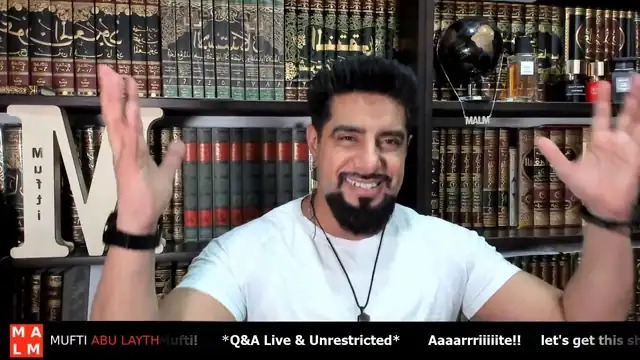 Play from 20:22
The video loads from YouTube only when you press play. Click a time in the transcript to seek.
Watch the answer
Open on YouTube at 20:22The player starts at 20:22, where the answer begins.
This segment19:31 to 26:13 · 6 min 42 sGeneral teaching
The answer in brief
machinesummary, machine-writtenThe Bible has changed in words, stories and translation, but Mufti Abu Layth says its core message is still valid and the Quran does not call it wholly corrupted.
In more detail
After making some viewers moderators, Mufti Abu Layth reads a super chat asking how the Prophet and early Muslims viewed the Torah and the Bible and whether that changed. Mufti says the early Muslims saw the prior scriptures as a source of insight, that Umar held the Torah in very high regard, and that the report in which the Prophet tells Umar that Moses would follow the revelation if alive was about prioritising the Quran, not dismissing earlier scripture. Mufti says the Quran does not claim the prior scriptures have been entirely corrupted. He gives a layered answer: the Hebrew Bible was lost and rewritten from memory after Babylon and has been translated, so words and stories have changed, but the core message remains valid.
Question as read aloud · questioner not identifiedHow did the Prophet and early Muslims view the Torah and Bible: as a source of knowledge, benefit, etc.? And did that view change over time?
Position stated
Mufti Abu Layth says that in much of the Bible words, stories and translations would have changed, but its message would still be very much valid.
“so much of it that would have happened but the message would still be very much valid that's my take on all of this”
Category: teaching
Kind: general teachingTranscript
machine19:31 to 26:13 · click a time to seek · dotted terms open the glossary
fatal damage to Medina. So yeah. Uh right. What is going on? What is going on? Right. Are people saying that there's uh are the mods are the mods asleep today?
[laughter] Hey, let's get uh uh let's turn one two people into mods. There you go. Um who else is here that I recognize? Well, we've got one now.
So, I'll I'll check for some of the the names I recognize. Right. So, super chat Idris. A you're doing it. You're doing it. Much love. How did the prophet and early Muslims view the Torah and Bible a source of knowledge, benefit, etc. And did that view change over time?
It's a good question. I definitely feel that the you see the early Muslims viewed the prior scriptures as a as a a source of insight clearly. I mean that's evident from how they refer to them in how they even do sometimes using them.
It doesn't mean it has to be right but it was their attempt to understand things. Uh there's Omar definitely held the Torah Torah in very high light um in very extremely high regard uh right so these um you know so the you clearly yes there is the hadith from the prophet sallallahu alaihi wasallam that he tells Omar that what are you doing why are you spending so much time invested in the Torah you know, you should be focusing on
what's going on, learning the learning the faith as it's being revealed. And the prophet said, look, if Moses was alive today, he would be following the revelation, which is the Quran. So, yes, of course, but that wasn't to dis prior scriptures, but it was simply a matter of uh prioritization.
Okay? So the Quran was to be prioritized naturally. It revelation was unfolding in real time. So the people around wahi around revelation had to be um focused. But yeah and I think over time Muslim the Quran does not state that um that prior scriptures have been entirely corrupted.
It doesn't say it like that. So, okay. So, this because I've been asked this question as well that look are the does Islam believe that the Quran and the sorry the Torah and the Bible are corrupted? So, this is a layered response.
Okay. So there is a core message in the Torah [snorts] and in the Bible the whether it's the you know the Old Testament and the New Testament there is a core message there as far as Islam is concerned in my understanding the Quran does not dismiss that it's been corrupted. It does not make that claim um necessarily and I don't feel it does.
Some people might argue I don't feel that is what it's saying that they've lost the message. So the message was something else and they've completely lost it. That's not true. Um however, however, and this is where there is a a caveat to it. there's a layer as well if if you want to see it as a layer that the way Islam sees it is that yes it has undergone certain transformations.
So naturally the Bible, the Jewish Bible, the Torah, um it's, you know, it's it's gone linguistic transformations. It disappeared in terms of writing. It's rewritten after Babylon. Um so several hundreds of years it's missing. People are rewriting it. So naturally, you can imagine uh people are changing certain things.
they are um you know maybe they're reconstructing from memory certain parts of it several parts of it in fact the whole thing is reconstructed from memory but I mean certain stories certain explanations may be altered so in that and then they've then the book has undergone uh translations which have given different renditions of meaning.
So in that sense, yes, the Bible, so when people say, you know, has that been changed? Yes, it has been changed. Has it been corrupted? If that's what you mean by corrupted, as in certain words have changed, certain stories may be um differently represented, some may have been, you know, they may have been certain false memories, certain things like this.
Then yes of course if that's what you mean by corrupted then that is true that has happened and biases may have influenced as well stories but if you mean the entire message is is gone there is no message left at all in the Bible or in the Jewish Bible uh the gospels no that's not the case um there you know there's plenty of room for valid me uh you a valid message that is still there in in the scriptural sources but it's in this perspective it's been corrupted if
you want to use the word corrupt. Um so yeah definitely in terms of certain words nuances translations rewriting from memory false memories maybe changing certain stories um and in a in because the Bible is huge so in so much of it that would have happened but the message would still be very much valid that's my take on all of this right let me just right chip You're doing it with the super chat.
Much love. Much love. Opinion on near-death experience. NDEs. NDEs people. NDEs. Gateway to a or just chemicals in the brain. An opinion on mangi and how to convince LGBT to Islam. [laughter] Chip. Chip is on a mission to get the whole LGBT community [laughter] and bring them into Islam.
Paragraphs overlapping 19:31 to 26:13. Full text on the recording page.
Cite this segment
Stable id, transcript version and tier are part of the citation. Every change to a transcript is logged.Mufti Abu Layth Archive, segment 2021-02-02b-S04, auto-transcribed, may contain errors. https://muftiabulayth.org/r/ijwbevcc6o8/s/4/ (accessed 1 November 2026)
- APA 7
Mufti Abu Layth. (2021, February 2). Did the early Muslims respect the Torah and Bible, and are they corrupted? [Video, segment 2021-02-02b-S04, auto-transcribed, may contain errors]. Mufti Abu Layth Archive. Retrieved November 1, 2026, from https://muftiabulayth.org/r/ijwbevcc6o8/s/4/
- Chicago author-date
Mufti Abu Layth. 2021. "Did the early Muslims respect the Torah and Bible, and are they corrupted?" Video, segment 2021-02-02b-S04, auto-transcribed, may contain errors. Mufti Abu Layth Archive. Recorded February 2, 2021. Accessed November 1, 2026. https://muftiabulayth.org/r/ijwbevcc6o8/s/4/
- BibTeX
@misc{abulayth-2021-02-02b-S04,
  author = {Mufti Abu Layth},
  title = {{Did the early Muslims respect the Torah and Bible, and are they corrupted?}},
  year = {2021},
  month = {2},
  date = {2021-02-02},
  howpublished = {\url{https://muftiabulayth.org/r/ijwbevcc6o8/s/4/}},
  url = {https://muftiabulayth.org/r/ijwbevcc6o8/s/4/},
  organization = {Mufti Abu Layth Archive},
  urldate = {2026-11-01},
  note = {Segment 2021-02-02b-S04, auto-transcribed, may contain errors}
}
Something wrong here?
Tell us what is wrong and it will be checked against the recording. Nothing changes until a person has reviewed it.
Sending a note needs JavaScript, which is off or unavailable in this browser. Nothing has been sent.
No name, email address or account is asked for or stored, and the inbox does not store your IP address. For rate limiting it keeps an unreadable fingerprint of your connection for 48 hours, and our database provider's own logs record connections as every website's do. Only your note, its kind, the page and the moment in the recording are kept, for review.