
Recordings › MindTrap with Mufti Abu Layth
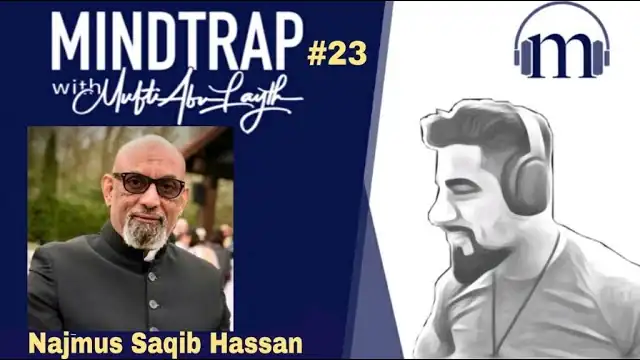
Ust. Najmus Saqib Hassan | Urdu, Unboundedness & Unrivalled poets | MindTrap with Mufti #23
imaam imams prayer leader shafi shafei shafiite shafi'i school 'urf muftis halaal permitted lawful haraam forbidden riba ribaa sood usury kufr kuffar kaafir kufar kaafirun disbelief iman imaan eemaan eeman ilm al-kalam kalaam theology janna paradise jahannam jahanam jahannum hifz hafidh haafiz hifdh huffaz hafiza memorisation ahl al-sunnah ahl as-sunnah ahlus sunnah ahl al-sunna sunnis shiah shiite shi'i twelver ithna ashari aalim shaykh shaikh sheik shuyukh shaykhs fitnah fitan strife trial in sha allah insha'allah in shaa allah insha allah inshaa allah alhamdulilah al-hamdu lillah alhumdulillah alhamdulillaah hamdulillah subhan allah subhaanallah subhanallaah ma sha allah masha'allah masha allah mashaa allah salam as-salamu alaykum assalamu alaikum salaams salam alaykum wa alaykum as-salam greeting aadaab adaab manners etiquette deen al-din ad-deen ad-din ibadah ibada ibaadah ibadatlive stream · 1:28:55 · 3,000 views · 7 Jun 2020 · Open on YouTube
 Press play to load from YouTube. Nothing loads until you do.
Transcript
machineauto-transcribed, may contain errors · source: youtube auto · click a time to seek · dotted terms open the glossaryYep, I take it that's coming through fine. Mhm. Right, yep, I take it that's coming through fine. Excellent. Okay, so people, I can see that this is uh the gain on this might be a bit strong as well on my mic today. I'm just going to slightly turn that down a notch. All right, so we have for us an esteemed uh guest tonight and somebody who takes who has an incredible passion for Urdu literature and Urdu poetry.
I thought, why not? Look, we're talking so much about uh all these kind of theological discussions, political discussions, all kinds of things. Yar, where's the love? Let's get Let's get Let's talk about poetry, about shayari, and let's get an expert, a don, an an ustad. I know he doesn't like to be called ustad, but let's get an ustad on the line tonight with us.
I'm bringing up his profile picture. Look at that right there, an epic don picture, people. I introduce to you Ustad Najm Ustad Najm-us-Saqib Hassan all the way from the United States. Assalamualaikum, Ustad. Oh, alaikum assalam warahmatullahi wabarakatuh. With your teasing going on with the word ustad, I think I'll just lay my arms down, but I would appreciate if you just called me either Hassan or my name full name or whatever.
I'm comfortable either way, but ustad is definitely not a title suitable to me at all. Sure. So, all right, so Hassan, first of all, welcome to Mind Trap, and I've I'm really grateful for you taking out your valuable time to be with us tonight. Shukran. Alhamdulillah. Thank you very much and as I see that your programs are more on political and religious side, but today you brought in something that actually unites both of them and that is a commonality which is to talk about love, to talk about
poetry, passion, to talk about softness of communication and leaving messages in subtle forms and so Urdu literary works is definitely a great choice that you have made and I'm sure people would be interested in listening, talking and getting themselves familiarized with that if they are not already. And but I'm sure the passion of Urdu is everywhere from United States all the way to UK and beyond.
Absolutely, absolutely Ustad. Or in the words "Aati hai Urdu zabaan aate aate." That's the Ji, that is true. That's it. So is it I mean just a quick just just a a small intro about your passion into the Urdu language for people. Those of you that are not familiar with Hassan, he runs or is part of the whole the Urdu Mehfil which is a website and and a group on social media and has his own blogiyat section as well which is a unique take their blogiyat speaking
about poetry, about shuraa, poets and discussing many other things as well. And it is it's mainly I believe it's on YouTube mainly or is it on somewhere else as well? Yeah, it's both Facebook and YouTube actually. Yeah, because a lot of people are not Facebook users so I kind of took advantage of both formats or platforms and so it basically comes to both. It is done live on Facebook and then later it's content is uploaded onto YouTube as well.
Sure. And this Urdu being a passion for you, Hassan. I mean, is this something you know, is this something new? Is it like a childhood passion? I mean, why and how? Give us just some glimpses into the backdrop here. Right. So, by default if you're born in Afghanistan, your terrain would be Afghani terrain and you'll become rough.
You will become used to it. I was born in Lucknow, so Urdu was part of me from my childhood. So, it's that default, number one. Number two, I was born in a family which was a very very literary family and my father who's a very religious figure at the same time, his arts and his fine arts were immensely developed and he was running a magazine at the age of 17 and 18, Urdu magazine by the name of Nayi Naslein.
So, he was very progressive from his very uh beginning and that obviously came into my genes as well. But then definitely he was the person I look up to. He's the person with his mahafil and with his gatherings I got introduced to poets and their poetry and their work. So, it did just stick to me from the very beginning.
I didn't have any trouble understanding poetry and that definitely came from him and I could appreciate at the age of 10 and 9 some of the poetry which was basically some serious poetry. So, alhamdulillah that's how it was and so Urdu has been with me from the very beginning for the reasons I told you, born in Lucknow, born in a family that loved Urdu and we all spoke Urdu because we lived in Lucknow.
I can't argue with that. Can't argue with that. Lucknow is It is after all Lucknow. So, right. Who are I mean, somebody who, you know, you've you've seen your father from a young age, you've been immersed in this world of Urdu. Who are some poets that really stand out to you when you Okay. when you think of Urdu shairi and you your passion, your love, who jumps right out at you?
Right. I mean, it is going to sound like a cliche when I'm going to say Ghalib, but then Ghalib is Ghalib. Wah, wah. You cannot cannot argue with that, no matter how much people who understand and people who don't understand Ghalib would name Ghalib. But because I think his passion was Ghalib, too. So, I remember he had a picture of Ghalib and he Oh, sorry.
I thought I I thought you said for a moment even Ghalib's passion was Ghalib. So, who will be such a That's Oh, who will be such a actually? Ghalib was So, that's how it was. That's true. Great. So, that's how it was. Who will be such a Ghalib who will not know that? That's in his own words. the man.
See, this is this is Ghalib. For those of you that don't know that he's saying that they're asking that who is Ghalib. I mean, for God's sake, is that a question to ask? Somebody else Somebody else tell them who I am. Exactly. And this incident was actually a very funny one. One day he was The way the shair popped up is that he was in the market and obviously he used to take a lot of loan from people, money lenders, and stuff like that.
One day he was caught by one of the money lenders and he had not paid back. So, they got into a little scuffle and then he put Ghalib down and got onto him on his chest. And he said, "Here I am. I Am I Ghalib or you are Ghalib?" Is that the backdrop? That's the backdrop to it. So, Ghalib was so spontaneous and but just that
Ghalib was very witty. His poetry and if you read his letters, he was I mean he was the one who started a different trend of writing, which is called conversation. So, he didn't used to write letters. He would start conversation. And his style was totally different and he was a pioneer in that. Nobody wrote letters like that. And that's why when you read it, it looks like a friend talking to you. It doesn't look like So, Ziauddin has read a lot of his and obviously the voice of Ziauddin has given it life a word different kind.
So, he was amazing. Ghalib's wit was amazing. I mean even in front of Bahadur Shah and English company, his wit would not go. Yeah. I mean he So, you've got Ghalib. Who Who else jumps straight out to you? Um Hassan, somebody like a favorite of yours or for from the classics, is there someone first or is it is it come straight to contemporary or what would you feel?
Well, this is how it started. I used to listen to Ghalib's poetry through my dad. Uh, but I never had the courage to pick up one of his divans. The first book of poetry that I picked up was Jigar Moradabadi. Ah, right, okay. Sahab is between the contemporary and the Yeah. the late comings of, uh, classic shayari. Yeah.
And Jigar I picked up because Jigar's language was very easy and I could understand. He used very little Farsi. Farsi was Ghalib's, uh, forte and, um, he would confuse me at that age with the his vocabulary. So, I went straight towards, um, Jigar Moradabadi. And with Jigar I felt comfortable and I get to understand what is meter, what is behar, what is kafia, what is radif.
So, that helped me a lot because it was the simplest form. Even today when people are struggling with, uh, poetry, the newcomers, I tell them to go straight to Jigar Sahab. Jigar Sahab. will Exactly. Because you'll get a good taste of classic at the same time in a such an easy to understand language that you'll feel at home. Yeah. But if you go to any other classic, then you will find a lot of vocabulary which you'll have to struggle with.
So, don't go that route now. Start with your nursery and I call Jigar my nursery. This is where Jigar Sahab. Ah. Isn't he the Kab Tak Jiyoge Kab Tak Jiyunga Kab Tak Piyunga one of Jigar Sahab, he was like that again. Ah. Yeah. But Jigar's first ghazal that I ever read, I still remember because of its ease and that was Dil Mein Kisi Ke Raah Kiye Ja Raha Hoon Main.
Wah. Dil Mein Kisi Ke Raah Kiye Ja Raha Hoon Main. What what's his the you know the the final to that to that guzzle To this guzzle I probably would not remember yeah I would not remember but I remember another guzzle of his from the same time maybe read within the same month or period and uh Cuz what's very popular about him uh one that comes straight up is hum ko mita sake was a money madam knee you know
that the whole that's this is one everybody's probably heard of without even knowing it's Jigar Moradabadi's. That is true. That happens with a lot of poets and specially with Jigar also but the pages that I had turned during that time from that book were more on romantic side and uh so I started with a very soft cushion uh Jigar Moradabadi yeah.
Let's see okay. And how do you contrast you know a lot of people when they speak of poets and they speak of especially that name of Ghalib has come up um and we're moving down but this how do you contrast there's always this uh comparison Ghalib and Mir Mir Takis Mir Sauda is so good the god of You're right. of speech.
That's true. I think it's like a mountain range actually they are different mountains in this range and you don't compare these mountains by their heights alone. These are different terrains and alhamdulillah I mean I what was best way to understand this that in the 18th century Ghalib the giant was Mir in the 19th century the giant was Ghalib in the 20th century the giant was called Iqbal.
So I these are three parallels, three different and the the best part is that all three, I mean not me me was before, but they each had reverence and so much of respect for their Ustad or their elders in this poetry that So, I don't draw conclusions on who is but me has it.
In many ways, one could argue that Ghalib would not really recognize anyone except Bar Meer, you know. "Ab behra hai jo mutaqid-e-Meer nahi." Whereas he would he would never praise anybody else. Exactly. Beyond him, there was only one and that was Khuda-e-Sukhan Meer Taqi Meer. That is absolutely right. That is absolutely The things that Iqbal has written for Ghalib are so nice and people start comparing that and saying no, Ghalib was this and Meer Iqbal was bigger or different and I say why don't you read Iqbal
himself how he talks about Ghalib and that gives you a clue in that. So, I think that's where the political angle start coming in and disturbing the balance a little bit. Yeah. Yeah. So, you know, do you feel that there's a lot of these, you know, we get these poets like let's say obviously Meer is like amongst the pioneers, but then with the with him, you've got Meer Dard, you've got you've got other people kind of coming up along the way.
You get you get people like Dagh, you're going to get Dehlvi, you're going to get Mirza Ghalib, Momin Khan Momin. A lot of the obviously before them with Meer Sauda, Mirza Sauda, Rafi Sauda. A lot of their topics, the mazameen that they cover are sometimes not only the topics, even the way they say things are sometimes so similar, but just said slightly different.
But do you think it's just is it just luck that made some of them become more popular with it than than others or like they they'll say a poem but that very that kind of mazmoon has been said very similarly by other poets. But, like Ghalib might just become really popular for having said it. I mean, is this chance or is it no is it the whole man in himself?
I mean, what what do you think is going on here? Well, really hard for me to comment on that. I'll be honest with you. But, I think Darbar played a great role. Ghalib was Ghalib, but he was still still not the Shah's favorite and he was not in Darbar. Zauq Sahab had that opportunity and he grabbed it by his teeth and he didn't let it go.
Not to put down Zauq by any means, but then this was a struggle for Ghalib that he would not have the same seat, the same place, the same respect. And there were his contemporaries also and which said very delightful poetry. But, as far as the topic is concerned that similar shair said by different people and one got more attention than the other.
The topics usually run in a time. So, at time of Mir there were certain things being discussed which were not discussed later on or which were discussed that was again due to the time. And then when by the time his disciples came in, the things started changing a little bit more. So, obviously with time these the styles change.
My personal thing is that I mean, as I am basically a lover of classical poetry. But, then when I started reading Faiz Sahab and I started reading uh reading Sardar Jafri, I started shifting towards progressive and a lot of my friends said, "What are you doing? You're going towards progressive? That's a different genre and uh that's not we are supposed to touch that." What What When you say progressive, uh what do you just to clarify, what is it that you mean by progressive?
Okay. So, the classical poetry is what we understand, which is basically um revolving around its classical nature of talking to its mehboob, right? And that mehboob is symbolic, can be anything, but it is usually directed towards um a female uh who is their mehboob. Um but when the progressive shayari is where we changed from the classical topics and theme and went into revolutionary things.
So, a lot of communism-driven poetry is for the progressive poetry and that's the school Jalib and people like this that we speaking about. Exactly. Exactly. So, it started around there. Jan Nisar Akhtar, um Faiz Ahmed Faiz, Ali Sardar Jafri, Kaifi Azmi, all this this school is same and they all probably a lot of them are coming from Aligarh Muslim University.
So, they were all uh they were they were well-read people. Uh they had an agenda. They had the the socialist agenda going on. And that they filtered infiltrated even in the film writings. When they did film writings, the dialogue writings and uh the songs and all, they did bring in their agenda very well. So, that is started impressing me a lot because that was a very human aspect of poetry and they were talking any examples that kind of come right out at you still from that kind of thing that these uh revolutionary poems, anything that sticks with you.
Yeah. Yeah, I won't remember the poetry itself, but that is one of my things these days that from last few years my memory has gone really terrible. Allah restore it. Amen. But there's But there's obviously with Faiz Ali I mean with Faiz we can see straight away things like, you know, Hum Dekhenge and these kind of things are definitely which is even recently in India was kind of brought up and turned into a song and used for the kind of protests and the whole CAA and the CAB thing they used.
right. Also Jalib Jalib's poetry also at the same time became the national song for the the protesters. Yeah. So, that's true. So. But I mean there's another interesting thing we find I feel that you see as a person who is I mean trained within the Islamic sciences I find that it's the sho'ara sometimes who have more audacity to kind of speak on like speak very boldly their mind on theological
issues. You know, like they'll say like they'll you know, if they want to question God they'll question God. If they want to you know, say something like I'm fed up with this and they'll you know, they'll just say like come the poem that come as come fitna there or there or haram to me. You know, at least in our khana this there isn't this fitna of the there or haram. Exactly. Exactly.
I mean is this this is do you find this I find this a very outstanding feature of Urdu poetry? I think what was the issue here was not so much being anti-God or anti-religious. It was the clergy that was bothering them. The institutionalized the institutionalization, yeah. Right, so power struggle, branding, all that which went on then was actually the enemy and that is why Wises became the enemy.
And so anything the Wise is going to say or Naseh is going to say. And the Wise is the preacher in in Urdu and Arabic as well. Wise. Exactly. The one who would give Wazes or with sermons is Wise or Naseh, the one who comes and criticizes you or tries to correct you from Nasiha, Naseh. So So what kind of friendship is this?
He didn't leave any opportunity to have a little squabble. Mhm. They kiss him. The Wise was entering right at the same time.
Yeah, that's and so I see that kind of this them wanting to free themselves from this institutionalization and having a lot of courage. I mean to the extent that you know Mir would say things like you know Mirka, you know he's famous Kalmasut Mirka Kalmasut Puchte Ho Unne To Kashka Khincha Dair Mein Baitha Kab Katar Ke Islam Kiya.
Yeah. Hypocrisy is what was killing them, right? So, it's not that their their teachings were wrong. It is that they found that there's a conflict in that. They're saying something else, but they're really not doing that themselves as well. And they're using that opportunity of knowledge or position in order to institutionalize and grab power over other people. So, that's was unfortunate, but yeah.
But what I loved was also that they you know, and I feel that people today resonate with like it resonates with them, especially younger people that we find younger people have more of an if I can use the word like audacity to just ask questions sometimes. And even if one may say, "Look, I disagree with the questions, but they they they can ask it, and they'll just say straight out, and they'll say, "Well, how do you explain this then?
How do you explain this?" You know, even if you might think, "Well, oh." And there was there's been generations before where we're taught to kind of just shh, you know, just always be quiet, even if you've got a even if you just want to understand something like let's say they say, uh you know, the poem that look at what Wahid is saying, you know, that you know, Wahid piye to halal hai, yahan piye to haram hai. You know, what's uh you know, we drink it over there. Like if alcohol was so horrible, then why is God enticing us about it in Jannah?
And it's Now, one may have an answer, but people get upset that why are they asking this question? But the question is still a legitimate question, you know, it's not a Yeah. That's true. So, that is also something that's killing it actually, because if you do not have that information or knowledge to answer that, it's you yourself who's trying to cover that by shutting down the question.
And that is that doesn't really take care of that problem. The problem exists, rather gets even bigger and comes back as a revolt. So, this is so much even today that when you ask a question which is slightly bold and unexpected, you are seen as a devil's advocate. And you really not welcome to ask that question.
But even poets like today, like I'm sure everyone knows about Jaun Elia. And Jaun Bhai was one of those people who basically asked the same questions and made the made the simple people think. And I mean, we never got to ask Jaun Bhai what you believe in. But his even if you read all his compilations, they're the titles of the compilations will tell you that he is not decided for himself what it's going to be.
So, Gumaan is going to be one title, Shayad is going to be another title. So, stuff like that. But Jaun Bhai was the one who questioned also. And that is why I loved him. But the reason I really fell in love with Jaun Elia Sahab is because his style was so extraordinary, so different, so unique. I mean, even before seeing him, his poetry probably described and made a profile of him that this guy is a perfect And then when you get to see Jaun Elia, He fits the profile.
Yeah, what what when you see him other magnifies. He says, "This is an icon." He's an absolute legend. And his poetry is generally very accessible. It's not as well It's not necessarily, you know, there's the Mu'aqqad that the difficulties of Ghalib's Farasees and other people's Arabic and this It's quite simple, you know, the way he will a lot of his poetry.
Right. I find actually two similarities between Ghalib and him that Okay. his poetry has gained has layers just like Ghalib's poetry. So, he had Ghalib would say something very simple, but then which you will understand and will communicate, but there are layers to that. Ah, yes. And to get to that, obviously, it is a staff's work. Same thing with Jaun Bhai. Jaun Bhai would say something which is going to be very simple, but it's very profound. I mean, Jaun's share
I mean, how simply he has approached this. Wow. How simply he has approached this. This was the first ghazal I was somebody read it to me before I read it. And my thing was when I in the beginning when I started reading Urdu poetry, as I said, it was Jigar Sahab and all. And after that, it was just very contemporary poets of Lucknow who I got into.
So, there was nothing classical. Daagh Sahab, I didn't get to know Daagh Sahab till very, very late. Okay. It was back in Karachi when I came across a gentleman by the name of Saghir Malal. Saghir Malal himself was He passed away, a very great friend of mine, a mentor. He's the one who actually introduced me to Asatza. So, I can say that I'm from Lucknow, but I did not really read classical poets till I met Saghir Malal.
Wow. Okay. He was my guide and mentor to the the real classical work. I'm a huge fan of Daagh. I I'm a huge fan of Dagh. Yeah. Oh, Dagh Sahab, I mean. But you know that Dagh Sahab is Ustad Ghalib is not called Ustad. Uh he he is I mean Ustad is a designation that goes to a few and select and you have to be qualified for that. Ghalib was not deemed qualified for that.
Dagh Sahab was. Yeah. So, that's how it was, I mean. Yeah, but wasn't he I think wasn't Dagh also the kind of didn't he become like a stepfather to Zauq or something? Wasn't there a I think he wasn't there something about he married in and then afterwards left or something? No, I I thought there was something I'd read. Yeah, it is quite possible, but I'm not aware of that. Yeah.
Okay. So, right. Okay, so you've this was quite recent the whole Dagh and these great uh In '80s. In '80s I came across Ustad Sahab actually. So, it was the '80s. But you know, another thing that I totally love about Urdu poetry is the the style of addressing the self khitab at the end.
You know, the uh mukhatabatun nafs like where they in the last uh last couplet, the last poem, they will use their takhallus and address themselves, but thereby immortalizing themselves. It's it's crazy because it I I've not seen that in any like I mean, what I'm familiar with I have read Arabic poetry. I can speak Arabic fluently, but I don't like it's not that same style.
They don't have that style and English poetry has long kind of kind of really fallen out of flavor. Now it's just freestyle poetry in English, but yeah, I find that so unique. I don't know if that really appeals to you, but it incredibly appeals to me. It does, and specially when you say you put the boy's name in the third person, then you're addressing him. But you're actually addressing yourself, but that is good quality as well at the same time.
You're talking to your inner self and you're pointing out uh the flaws or the goodness of that. So Yeah. That's true. That's true. And that that's um But yeah, speaking about you were saying about Jaun Elia, he's somebody who really stands out to me as well. And I felt that he kind of it's his um he has what I would describe as almost a very if I can say almost a brutal approach to reality.
I think you put it very well. You put it very well. Using the word brutal is a very daring word, but you've used it and it fits well with uh his personality and his vocalization of his thoughts. So definitely he was out there. He was straight in your face. And that's how um I mean it this is who can say a sher like this except Jaun Elia Sahab.
Okay. Um Wow. I mean look at the brutal brutal approach to this. Okay. I don't care. This is how things are.
And it's it's it's like he just does not You know, it's like one of these I do not care attitude. And he'll be if it's going to be uh uh counter it's not you know, political correctness can go out the window. Uh other things It's like I was saying you know, that poem of his um I cited this as an example once before. Okay. Uh what is it? Bugle may take a key hasina here.
Jee. Tumhari furqat guzar You know, it's like look at that. Exactly. I mean, that is your word which you use brutal fits in right here that he was not ashamed of letting you know that this is what's running in my mind. This is how I feel.
So, John was classically amazing amazing John. And John got started getting popular in last 7 8 years in India to the level that now there's a Johnism in India and people his books are being published in Devanagari which is the Hindi script in order to understand. If you go to Amazon, you probably cannot find his Urdu book but you'll find his Hindi written books on there.
And then John is discussed on Rekhta and different other platforms. So, that is the voice of the youth these days because a lot of things are very relatable. Because there's a and I just as a side note, I I see I follow a lot of pages. I've actually studied self-studied Devanagari so I can read Hindi so I can read it slowly. But I see a lot of these kind of things being shared on Instagram kind of Shayari pages and Jaun Eliya is like a there's a cult following for Jaun Eliya Saab at the time.
But these topics that you're saying are so you know, because I feel he what he does is Jaun Eliya without any shame, if I can say it like this, addresses his addresses not just his but addresses the inner demons that we all have. Like he Like he's just being honest that we as human beings think like this and what, you know, like uh That's the beauty of it.
People who were holding things back and were didn't have the courage to say it in public and knew that it is right. Um John just changed that game. He said, "This is how I feel inside, which you also feel, but let me put it out there." Yeah. That's amazing, man. That that is so he he he is so amazing. And I and I feel as well, and I've read that you like you're saying, it's only been the last few years that people have kind of taken out some of his clips, and they've kind of put music to them, and they've done this, and then and then it's just like people have started sharing them, and he's just he's just kind of blown up.
He's become this huge uh Yeah, wow. That's true. Yeah, I mean, the simplicity of his language, the intriguing um topics that he touches upon, and how brutally or boldly he presents them is definitely going to be a very fascinating and a very challenging for anybody to write in that And yeah, and sometimes the the topics that he you know, there's that uh line of his where he says uh uh uh Johnny, "Aaj meri barsi hai?" "Yani aaj ke din mar gaya tha main." You know, this whole this like as a thought, like you see
somebody thinking that, "Look, like as a concept, like imagine like we've all have to die someday." Now, that date of our death would ironically we would have passed it every year in our life unbeknownst to us, that it's to be our death anniversary. And and he's kind of like putting this out there, but in a not in a frightened way, just "Kya aaj meri barsi? Yani aaj ke din mar gaya tha main.
Achha achha." You know, it's like it really hits a note with people, I feel. It strikes a a kind of chord. Right. Yeah. A lot of people who know John better and who have associated and read him a lot better say the same thing about him, and basically I learned from them that he always had a third angle to it between the right and the wrong. He had that third angle which very few people perceive.
Very few people can view that. So, his his perception is is definitely a different. Yeah. Do you feel that he You see I see sometimes a like John Elia, I see in him a flash of Sagar Siddiqui Saab. Is it Do you see this or not? No, I cannot say yes I do.
Or is it just the the kind of attire and the the the love for alcohol or is it I don't But I see this kind of attitude uh Yeah. kind of continuing possessive about John and I wouldn't like to be hurt. I'm not sure why, but John I see as a a class of his own, a style of his own, and he did not imitate anyone.
I mean, I can say he did not imitate anyone by design. He became what he became. But uh He says Uh
right. So, yeah. And do you You know, you've got that uh John Elia being, you know, really in just from our day and age um obviously having passed away now, but still having reached the contemporary age. This whole journey of Urdu, do you feel How do you feel the Urdu Shayari has evolved? Uh is it just new topics have been introduced or do you feel there's a there's a more or a kind of more deeper development that's taken place?
Like since the time of Mir coming down. I mean as far as the topic is concerned what the people in the literary circle say that there is nothing left to be said as new. Everything has already been said. You just find new ways of trying and attempting to handle those and it might very well be true that that's how it is.
Um so but as far as uh the styles are concerned that changes with the time that changes with the level of education uh that changes in where it is being said. So like uh of all the places Punjab Lahore became the hub of Urdu and everything that grew in literary circle basically grew from Lahore and not from Karachi if you like to say.
So Karachi is there. They have contribution but the really the bigger contribution came from the Punjabi Shayars who took Urdu as their language and gave it everything. So Faiz Ahmed Faiz Ahmed Faraz from Pashtun Pashtun And you know it's amazing in in an interview I mean this is just pure modesty pure the what but you know Hazrat Ahmed Faraz when he's asked he says he says he have Urdu to mujhe aati nahi hai.
You know like he says that I I don't even really I don't even consider myself an Urdu done. And look at he is the done. I mean I feel his Urdu his poetry has had so much uh you know kabuliyat so much acceptance maybe because they're the kind of things one people can relate to, but they can kind of write on rickshaws or they can write on things. Do you Do you feel that like his his lines are so everywhere, you know, Faraz?
That is true. Well, that kubooliyat thing is actually from Allah Subhana Wa Ta'ala. And Allah Subhana Wa Ta'ala had blessed Faraz with that. That people just loved it and the way he composed things, his amalgamation of Farsi and tarkeeb of Farsi, the way he constructed his lines was so flawless and so sweet.
He says in his He says that "Shairi sab duniya karti hai Faraz, par teri sada bayani aur hai." That's on the bahar of Ghalib's the same Yeah, same kind of zameen of Ghalib's poem, but yeah. That's true. That's true. So, that is true. And same thing I feel about Dr. Peerzada Qasim Sahab also, who was a contemporary of who is actually a contemporary of Ghalib.
he a close friend of Jaun Elia Sahab? Very, very close friend and they were thick. They were thick. Cuz they were on some of the stages together and things like this, I'm sure. If I've seen on YouTube. Yeah, yeah, yeah. That's correct. So, see, mushairas became universal or went global from Dubai, actually. When the recordings of video recordings of mushairas started coming out from Dubai, then it got an international attention.
Before that, it was either happening in India, happening in Pakistan, and stuff like that. And that platform introduced a lot of things. It introduced some of the greatest poets of our times. It introduced great poetry. It lifted up the standard of the mushaira itself. Lifted up the standard of the production of video production of the mushaira. So, a lot of things happened from Dubai. So, Peerzada Qasim Sahab definitely was seen on the stage many a times with his friend Jaun Elia and other friends also.
Yeah. Mhm. Cuz he mentions him and he mentions a Jafri Saab, I think, quite a bit. Saleem Jafri. Saleem Jafri. He mentions him a lot. Yeah, he says Saleem Mardud. He's obviously his friend. He's That's his closeness to him. That's his closeness to him. So, uh Saleem Jafri's contribution has to be written in Urdu's contribution because what he did for mushairas nobody else has done. That is flat-out What What What What are some of the things that he's done?
Just to know. He brought it it both uh I mean at in every mushaira, he brought audience and the poets from both the countries, India and Pakistan. So, he never went on one side. Wow. And he always had a sadar-e-mushaira from India, then he had uh next year he had sadar-e-mushaira from Pakistan. So, his balance of that was great.
And then he chose the right people. And his call was probably heard by everyone who was in that uh in that category. And they responded very well and his standard of mushaira was maintained well. He did not bring poets just to fill in the gaps. He brought even the shayar who started the mushaira at the beginning, ones who are supposed to be uh very young and naive were of some caliber.
So, you did not feel that you've come to a mushaira where the actual poetry is going to come 2 hours later or 2 and 1/2 hours later. From the very beginning it grabbed you because of the quality of uh the poetry. I see. And I you know, on this whole topic of Urdu, um first of all, do you feel that is this something that's emerged only in the last, you know, this this that has Urdu kind of always been there as a kind of like khari boli or a boli or has it been like or is it something that was just in the last 200 years put together 2-300 years?
Uh what what is this what what are your thoughts on on this? Have you I don't know if that's been an area of research or interest. Right. Like sometimes you see the shayari of like Amir Khusrau who is hundreds, you know, we're talking centuries and centuries ago. Yet some of it we can perfectly understand almost. Like I mean the ledger is different, but we So does that mean that this kind of language was always there or Not always, but I mean like for centuries was it there?
That's what I Yeah, so but things developed from one to another. So what what he was doing was in which is khari boli and his his You can say that was the cradle from where different languages started taking shape and Urdu or Rekhta was one of them. So because there are so many commonalities of the language, there is Hindi mixed in that which is also mixed in Urdu.
There's So khari boli actually had a was kind of a base for that. And that's why we still understand because the words and vocabularies are so similar. And his presentations were some very simple too. But then he has tweaked it to a level sometimes where he has used a lot of Farsi which just throws you off unless and until you start reading and finding out what it really means.
So as far as the language, there are two things about Urdu that I know. I mean we do see a lot of political pressure and mostly in India seen by alienating this language and taking it out from the mainstream. But it's not possible. It's not possible. The entire film industry of Bombay runs on Urdu language, no matter what you do.
We may call it Hindi cinema, but because we never claimed it, but it's not at all Hindi alone. It is definitely Urdu. The songs are Urdu. The dialogues are Urdu. It would be very difficult to have a Hindi song going on the way I mean And should should Hindi, the pure Should Hindi or political Hindi I should say. It's not even should, it's just trying to kind of impose in order to subdue somebody else.
But so I don't know whether I strayed away from the question or not. No, no, no, this is good. This is good. This is good. Because I see this also on you see I see this on kind of both sides. I feel that like sometimes in let's say Pakistan, I mean don't get me wrong. Look, I one of the reason I get to I I I managed to understand some of Shayari is because I understand Arabic.
And the difficult words in Urdu Shayari when it comes to Arabic are just normal words in in Arabic. So I love Arabic and I'm very passionate about it. But the truth is that sometimes I see in Pakistan there's this uh I feel this politicized effort to extra change words in newspapers and things which I'm sure the Awam do not even really understand or do not use.
Uh and the same thing in India what they whereas in Pakistan they change it to like strict Arabic words or Farsi. So for example, I remember reading something about just a simple headline about something you know done something or like the loss of something and and and then you'll see something about like Mu'attal and these kind of words. Mhm. But I don't think that the norm and another good example is like recently, do you remember when there was that the the clash last year between India and Pakistan and they returned the pilot?
But on the news headlines it said, "Okay, we're going to release him at this time." But it said it didn't say I can't I can't remember the time. I think it was like 5:00 or 6:00. And it said like Panch Baje what should be said like Panch Baje is Subah. But they wrote Panch Baje Ala Subah in Arabic. Ala and Subah. Now, I obviously understand that. I understand Arabic. But I doubt any like maybe you can make it out that that must mean Subah.
But why not just use the normal word Subah? But like there's a there's an extra effort to show that we are different. And I feel that the Indian government does exactly the same thing. Brings in Sanskriti words and it will eliminate normal which like words like like let's say Dil, they will say, "You know, what is it? Hriday or yeah like and they'll use certain words which people don't use on the streets, you know, nobody Yeah.
That's true. I mean, there is colloquial language, there's a street language, and that is still classy and understood across the board. Uh and you don't need to overcomplicate it uh just to be more pious or um prettier looking. So, that happens and that is totally a political thing, I think. It's on both ends just to make it sound more didn't I say didn't Ghalib as well say something on this that he said he said he said like Urdu of any Hindu and Muslim and Sunni and Shia and you know like because people were trying to say something and and he was trying
to say, "Look, language these things should just be free." Like there was great, you know, what what's his name is it Harishchandra? There's great Urdu poets. Yes, and there's this Pandit as well. There's few good few famous Urdu poets, but they weren't Muslim. A lot of them actually. Yeah, yeah, yeah. Oh, we unfortunately get to read about them and I feel sad that we have also been biased in this that we have not we have kind of Islamized Urdu, which is not the case.
It was the most natural language that was born in India. And it had nothing to do with any religion. Uh but the British probably helped us and we fell in that trap and the Hindi and Urdu were born in Calcutta as two different languages were separated and Urdu became the language of the Muslims and Hindi became the language of the Hindus, not so the case.
Uh a lot of Kashmiri Pandits who came from uh Kashmir and settled in UP and specially in Lucknow, great Urdu poets. Uh a lot of people from Lucknow and surroundings and even places like Madhya Pradesh, which is central Gwalior and some places like that. Amazing poets coming from Gulzar Saab right now. Yeah.
A Sikh person who was basically a very literary uh Urdu poet. the famous uh line that is used by Aziz Mian and all these that uh Sheikh ko milegi Jannat hamein dozakh ata hoga. That that that poem is by by a Hindu Urdu poet. And yeah, I mean he even ends it so amazingly about like uh you know, uh damn. But he says something about what will you know, if tomorrow uh damn, it slipped my mind, but he goes agar Khuda Zahid ka hi nikla or something.
He says to kya hoga or something. What would we do if you know, if if God does turn out to be the God of the Muslims? But the but the point is it's teasing, but they But yeah I and I feel this is another unfortunate I agree with you 100% it's it's a shame to kind of see this because I feel Um another thing I used to see was I did my Alim and Mufti course in Karachi.
Now in the madrasas I would see that you see they would quote Allama Iqbal because he was revolutionary and he's seen as kind of like Nick but he's got kind of type but they but they won't as much kind of like teach about Ghalib Mir and these people and maybe you know because there's a bit of that judgmental attitude sharabi they yet they both they some of them were Shia some of them were these some of them were that and and it's such a shame because I was like this is like what the hell why don't you guys teach other like this is isn't this Karachi Pakistan you should be teaching you should have books
on like shayari and stuff. Yeah this just a recent thing that has started changing and the topics have been suffocated or the poets have been eliminated but look at Dr. Israr Ahmed Saab from our time he would quote Allama Iqbal and eloquently quote Ghalib at the same time so that's the sign of a person who's learned who understands and doesn't taboo or doesn't brand someone as an outcast just because of certain things that are were there in their life.
Yeah. And this term you know this term Urdu is this a recent term or should it be called Rekhta or what's what's what's what's going on with this because a lot of the the the dawn kind of poets like from the 19th century when Urdu's really kind of you know in the time of Ghalib in the time of Dagh in the time of Zauq in the time of Momin Khan Momin they seem to do that do they cuz from what I'm aware they seem to be referring to it as just Rekhta, isn't it?
But people before and after say Urdu and and I know John Elia you have to I won't say it because out of honor for you but but he kind of in his well he has a famous quote where he says Urdu and he's you know the sweat band and he says he says yeah Urdu band kis ka naam hai? He goes uh That's true, right?
He goes yeah to sub Hindustani hai. You know he does his uh But do you have any thoughts on this? What is this Was it something that shifted back forth or no this name Urdu Rekhta? Yeah. So my love for poetry remains strictly my love for poetry and no matter what you name it does not change it. And if Rekhta was its original name and this is how it should continue, I'm happy with that.
If somebody started calling it Urdu, I'm still comfortable with that. So that's that's my take on it. And as far as the See the more I've read about Urdu and the origin, the more confused I get all the time. Me too. This is what I don't understand what I like I'm like ya ho kya raha hai yahan pe? Exactly. So I say you stay in peace and let me stay in peace and you call it what you're comfortable with.
I'm okay with any term you call it. And that is why I also support that anything that needs to be pub- published in of Urdu needs to be published to reach out to a larger audience can't find another script for it. For example, Devanagari. There is no harm in that. It's just a matter of reaching out. We write our names which are Urdu, Arabic, or Farsi names in English by using your English letters English alphabets.
So we don't argue there. We do everything else where we need to adapt to that. So, why get so sticky about these things? And people, if you've got any Urdu related kind of questions, maybe they you know, feel free to post them and I will ask Hassan once once we can.
Abdullah Shukran Shukran much love for your support. Somebody said was Urdu called Musalmani? I I don't know. I mean was was it ever called Musalmani? I'm I'm I've not read anything like that, but I'm I haven't ever read anything like that. Maybe something out of somebody out of contempt if it's called Urdu Musalmani.
That would be very cruel and not right, but uh that can happen. Yeah. Yeah. So, what's my if somebody said what's Okay, so if you've got any questions, feel free to post them and I will ask The word Urdu comes from the Turkish language of horde. Is that That's what I've heard as well that they used to it was named after I mean I'm sure unless you have some other insights on that, Hassan.
Is it No. As I said, that is one of them and the more I read, the more confusing it becomes. So, what we read from the beginning was that it was the language of the warriors because warriors came from different parts of the continent and that's why a common language was developed. So, this contribution of Turkish, Arabic, Farsi, Hindi, Sanskrit and all these languages um that's how it took shape.
It's somebody said about Bahadur Shah Zafar. Uh He wrote Urdu poetry, but did What about Punjabi poetry? Is it true that he wrote Punjabi poetry as well? Bahadur Shah Zafar? No, think so. I wouldn't have imagined living in Delhi. I wouldn't have Yeah, and being a being from the Mughals, Mughals did not have anything to do with Punjabi as far as I know. Yeah.
And and you know, on Bahadur Shah Zafar, that the famous poet the famous poem of his you know, where he says uh Do gaz zameen bin amali Yeah, do gaz Yeah, this this Is that not Is I've heard some people saying that's not his. That's uh Um No, you know, the Mushtaq Rubani, the famous That is the same one, isn't it? Yeah.
Ending with uh Be fatiha koi aaye kyun do char phool charhaye kyun. Um you know, this So, I've heard somewhere that this actually was is not Bahadur Shah Zafar's. I don't know if you've uh come across that. I've actually I heard uh I watched a clip of um Farhan Akhtar actually reading on YouTube and he says it's his uh I think grandfather or great-grandfather or somebody.
I think something Uh I've forgotten the name, but he says it's actually his and they attribute it to some great-grandfather and they attribute it to Bahadur Shah Zafar. I haven't heard of Farhan Akhtar, so I cannot comment on that. But as far as uh Bahadur Shah Zafar's poetry is concerned, a lot of people have different opinion about him that uh whether he was a poet or not at all um because he had the luxury of having the best people around him to uh to write or to improve on his work.
it. Na kisi ke aankh ka noor hoon, na kisi ke dil ka karar hoon. I mean, it's a classical, right? It's a classical, right? No doubt about it. And um but I cannot say who owns it. All right. Okay. And uh is there Uh somebody said I heard that the word kafir, yes, that's the name Samir Shukran Mustar Khairabadi. They've said it's Mustar Khairabadi, you're right.
That's the name he quotes. Um Okay. Right, somebody said, is it true the word kafir kafir is used in a very positive sense in Urdu? Is this true? Um I I can see what they're saying. It's not used positive, but it's used to kind of tease. And I what what do you feel? Just the way we word use the word to zalim. Yeah, yeah. That doesn't mean you're brutal or you're Genghis Khan. It means you are you are lethal in your approach in that sense that you don't hold back anything.
Yeah. So, kafir in Urdu shayari has been used in the same way uh for for their lovers and stuff like Like they'll they'll say things like kafir nigahain or kafir nazarein, you know, this kafir dil, this kafir heart of mine, but in a kind of it's almost in an endearment way. Like they're not trying to Yeah, it's an ultimate type of a praise to that that you're so outlandish in that sense that I mean it's got both खूबसूरती to deal with that again.
Mm. Us Us kafir pe dam nikle wo kya hai sher? Us kafir Uh right. Us ko dekh kar jeete hain jis kafir pe dam nikle. Dam nikle. Yeah, yeah, that's the And you know, interesting on that note, we see that even the kind of uh similarities that are given, uh people will use like sanam, like from the Arabic idol and but, they used to say butan, you know, ishq e butan, worship love of these idols.
They call the women like idols of beauty, like goddesses. And and it wasn't seen as uh you know, like something uh like they weren't kind of, "Oh my god, you're all going to hell for using this. That's true. That's true. Mhm. I mean the Greek had their most finest statues of men and women who were basically shaped for their to be appreciated.
So, yeah, it probably even before Arabic it goes there and Yeah. Right. Let me just see what are the I'm just bringing up this question. Let me see what's scrolling through. Oh boy. We are really This is what I was saying. You really know how to engage. Hassan was saying that how long do these go on? Don't people get a bit I said that once they start talking, it's just it's it's it's amazing.
So, somebody said, "Are you familiar with Gulzar Dehlvi Zushi?" Yes, I am. From my very childhood. Wow. Very childhood. His great grandfather was his great grandfather, if I'm not mistaken, not his grandfather, but his great grandfather was the shagird of Daagh Dehlvi.
Oh, wow. His Say that again, sorry. His Daagh Dehlvi Zushi's great grandfather was the disciple, shagird, of Daagh Dehlvi. Wow. Wow. Wow. All right, people. He is one fine example in one fine example of the Urdu kalam and Gulzar Sahab, Gulzar Zushi. Yeah. And he is still hayat, mashallah, and I've been listening to him from my very, very childhood.
I remember that. All right, so Oh, wow. Yeah. Yeah. I thought you were going to, you know, um What is it? The league of sugar? You know that song? He has that Ghalib something in the Deccan make other is so good.
Right, people. Who stood against What? Who stood against Genghis Khan? That's not Maybe Ghalib would probably claim that he did. Yeah. All that poem What is it? Mazinderani Kamusar. That That was, I think, Akbar's.
How do you find Akbar, by the way? Akbar Allahabadi Where is again in satire there's nobody who comes close to Akbar. So Akbar Being a scholar, he used to say that a lot. He won't spit.
That's a Akbar Allahabadi. Yeah, Akbar has some He has some amazing where he says where he says that everybody criticizes him about his drinking. But is he Persian or You know the You know, nobody's asking, "What do you What do you eat, by the way?" I mean, do you get food or do All right, so Somebody said, "Do you know Muhammad Israrul Haq?" I don't know who that is.
Mufti, please uh Do you know what Is there a poet Muhammad Israrul Haq? I cannot recall anyone by that name. Maybe he has a takhallus and I would know him by that. Yeah, so right. Okay. All right. What about You know, I want to ask you, what about coming right up to this day and age? Do you have any intro Do you find anybody very interesting?
I've listened to people like I don't know if you've heard Tahzeeb Hafi and you've got Ali Zaryoun and I do find them very kind of nice and and and interesting and they've got a very kind of like a Sadaf Behlim as well to the Jee jee. Wow.
Or it had a very fine local taste to it, but at the same time well rooted in the classics. 2 years or maybe around so before he was everywhere, all over and he certainly has a very unique style to it.
So, I liked Hafi. Yeah, and I I What I actually liked about him so much was he has a very a huge simplicity. You know, he has this I can't remember this this line of his As Tino Gochar I don't know you know everything else. Hafi is okay. Uh, I thought, "Wow." And so him and I do like that there's something unique about Ali Zaryoun.
You know, he has this uh Yeah, that's true. I haven't really heard Zaryoun so much, but uh my friends have and they do tell me that I should. It's just my flaw and fault so far that I've not been able to get to him. I tell you know, I've seen a lot of his you know, people cut out clips and they share them on Instagram and they put music in the background and um and it's it is really he's he has this I feel he's somebody who's very securely in touch with the feminine.
Like if I can say it like that. Like he's not you know, like sometimes there's a uh like there is an insecurity to sometimes uh live up to this macho-ness. Yeah. Um and as men people will obviously feel that you know, no, no, I can't be seen as soft. I can't be seen as but he has this very this amazing confidence to be and so securely in touch with the kind of feminine um just the feminine and I just feel that well like he he he is amazing like that.
Okay. Okay. So, okay. Are there any others nowadays? Are there any A lot of them actually. A lot of them. Um even in Houston, one of my very close friend who I once met in Karachi and we worked together in advertising Arif Imam. Arif Imam is amazing.
Um you should find him on YouTube and listen to him. Yeah, Arif Imam is amazing. So, I love him a lot. Um Abbas Tabish Lahore say. He's Tabish, yes, yes, yes. Tabish amazing. Yeah. Uh Saleem Kausar Sahab from Karachi. Amazing. So Wow.
Okay, that's and you know as a well kind of I know we've been going on but here's an interesting very relevant relevant question that any beginner poetry recommendation for people just trying to learn Urdu or for the even for the non Urdu speaking crowd. Is there anything that comes to your mind or Well, as I said in the beginning as well, I send them to Jigar Saab straight up that if you can read Urdu now I would say even if you can read Devnagari approach and start learning from Jigar
Saab the simplicity the construction and the basic fundamentals of Shayari and read a lot read a lot people who jump to writing straight up thinking they have got a great concept going that is fine. I always give the similarity of music and poetry that they both run by their disciplines. So if you don't have sur if you don't have grift on sur no matter how good your voice is it's not going to work.
So having a great voice or having a great pen doesn't make you a great writer or a great vocalist but what it does that this is one tool that you are going to use but you can't use without the discipline of the base of it. So for me what is most important is the the meter and then talaffuz. For me talaffuz is huge.
So these are the things and but again if you are starting to like Urdu poetry and you want to write something start by reading and start by reading simple people don't straight away jump to Ghalib or Mir at all. These are your post-graduations. You need to start very early and that will would be simple poets. Hafiz would be one of them too, actually. But because Hafiz's style is completely different, you might find that poetry it might disturb you in the sense that this is different.
So that's why I always refer to classics because classics are where the foundations are. That's true. That's true. And sometimes, ironically, some of the classics are very simple. I ironically like people think I know Mir and Ghalib might be difficult, but I was giving an example I know I was mentioning to you earlier on I'd seen this website on YouTube called Lehja. And they had a lot of very classic classic poets like you know, we mentioned before Harishchand and we mentioned some Pandit and other people, but their poems, the lines that are included are very simple kind of Urdu.
You're like, "Woah." So you know, here's a question, Hassan. Urdu the shayari has not really has not been at all not not really has not been misogynistic in any sense, but why is it that female shayar or shayarat haven't really appeared as much in Urdu or have they and they've been put aside or have they I know you've got people like let's say Parveen Shakir and you've got one two other, but they haven't there ain't as many or even a 70 30 it's not it's like a rare phenomenon even though the people who read Urdu are not
judgemental against reading women's Urdu poetry. So why is why do you think that's happened? No, but I think there is there there's a little bit of judgemental reading as well. And definitely the poets have male poets have dominated that area just like in many other things. The world is run by men kind of a situation. So they haven't really given room to these poets.
Uh and uh the only people who started from uh Pakistan were the contemporaries of uh Parveen Shakir here in Houston, Ishrat Afreen, uh Shaida Hassan Saheba, um and many more, Fahmida Hassan and all that. So, these were the progressive poets who basically made a name for themselves, but definitely they had to and still do go through a lot of struggle because really men don't give them room.
Sure. So, just I know we've been taking up a lot of your time, uh Hassan. So, two final things I just wanted to kind of uh request if possible. One a question and the other if it's possible for you to recite or read something that you're that is uh one of your favorites or something or a poem that stands out to you. Uh but before we get to that, the question that why should someone like today in the West, we've got a huge diaspora of especially in the UK, we've got a huge uh Desi, especially Pakistani and several Indian uh kind of population.
Same thing in America, spread over Europe. You know, we're British-born, UK-born, US-born. Uh why should they have an interest in Urdu or why should they even engage in Urdu? I mean, what does it have to offer? Like, what's the So, that's the question and then if possible, I'd love to get you to read any kind of poem for us, inshallah.
All right. So, I personally thought till a few years back and maybe some part of me still thinks that that I don't have to teach my children Urdu to read or to write or anything because it's really not going to help them. Um but then um maybe this is out of sheer love and uh no logic attached to this that a culture that we still want to see in our kids is a mix of American Indian Pakistani culture.
We just don't want to let that go. And if you don't want to let that go, you are going to connect it through your food, your fashion, your language, and so on so forth. So, I think that's what it is. To say whether we should be teaching our kids Urdu, how is it going to benefit them in their life? Is it going to make them better Muslims if we are talking about Muslims from India and Pakistan?
It doesn't have to be Muslim. But Yeah. So, I don't think so because to us our religious knowledge, a lot of it came through Urdu. That's why we regard it as a language that transmitted the ideas of our religion to us. But to our kids, the ideas of religion are also coming in English language. And so, the benefit is that is different is really difficult to say.
Meraj Faizabadi once wrote okay um And look, I I'm losing it but again or something not Meraj Faizabadi. This was another poet. And his sheer had a second life Magar Urdu Pyari Bahut Hai. The question was why should we put this burden of Urdu on our kids?
Lekin hum karte isliye hai kyuki hume Urdu se khud mohabbat hai. So, this is this is why what I think. Yeah. Or in Urdu jiska naam hai hume jaante hai Daag. Sare jahan me dhoom oh oh Hamari Hindustan Hamari zuban ki hai. But I I would say personally I would feel that you see I don't feel that I agree with you totally in the religious sense and all of that.
That look, whether they access religion through Urdu is is a bit immaterial because you can use any language and obviously if you're very serious about religion then Arabic you must learn. But I was going to say that as far as that's concerned, it's like any other language. However, I do feel, this is my own experience, that it gives an incredible kind of it brings a just a an amazing touch of adab, adabiyat, this kind of the Urdu because it's really built on the backbone of this kind of poet- poetic culture.
And I feel that it's amazing, especially if you're from that part of the world, even if you're not or ethnically. Like I'm not I mean I'm from originally from ethnically from Pakistan, from the Azad Kashmir side, but we don't ethnically speak Urdu at home. We we would have spoken what is Mirpuri, right? People speak Potwari or Hindko similar to that. But the point is that you see, I what I have found in the adab, like in the lives of these kind of people, Ghalib, Meer, and all these great names, Daagh and Zauq, and I found so many
concepts that are so thought-provoking and they give inspiration, but maybe that might not resonate with some people. But if I would I would say it's definitely if you're if you're thinking of a language then it's definitely a language that holds its weight as well, you know, it's you could learn Spanish, but it's equally amazing, I would say, definitely. Um Is there a Could you honor us Hassan Ustadh with a a famous Oh, not famous, sorry, a preferred poem that you you could you could read for us.
Can I read you from either John or custom up? Both either will I mean John is an absolute legend for for me and I've been going on about him so much in the past as well. So yes, of course of course please. I just so I do have a poet was a lot of people that come from this book which is called the person.
Right. So it's a It looks like it has been written for that though. It was written much before that and uh But anywhere where there is discrimination this share fits right in.
Either about this one give up on the end of you can find a kind of a reflection you can find a good alarm at the good yard. You be good job actually there's a nasty there's a reflection going on. You can relate to it and I think that's one of the the great things about all of a lot of this poetry but That's true. See how to share your hair you basically access it from your own experiences.
And that's how that is what makes it universal and timeless and it stretches for many many centuries. Believe Kumar once said that Kumar once said that a great actor is liked because the audience sees something of himself or herself in that actor.
Wow, so true. So true, yeah. So relate to that. John Elia said that this day has been good. This day has been good. This day has been good. This day has been I'm in one piece that is luxury. Right? When I explained it to someone, somebody else corrected.
He said, "No, you are not right because this was written in a time in Karachi when when you went out in the morning, there was so much of terrorism going on that you weren't sure whether you going to come back alive. So this is targeted against that particular political party." I said, "I'm very sure when John wrote it, it was in that." But the of this thing that I can relate to it in so many different ways and if I confine it to that particular event, then it's tied to one little uh knot to that event.
This can be displayed and experienced in any way anywhere. So I experience it differently that when I get get up in the morning, I'm in one piece. I go out, drive my car where hundreds of cars meet an accident, mine doesn't. I step into my office's elevator where people fall downstairs, people fall down. I go up straight up and without any problems and come back and I in the end with all these accidents that are happening in the world at the same time around me, I come back in one piece.
So isn't that a luxury that I am alive and I am in one piece. So this is how I experience this particular share. Not sure. That was John Saab Kelly mission may get down okay if I could not live in time of Khalid, I am very happy that I lived in time of John area because I have found my contemporary Khalid right here. That's how intricate he is.
So share a piece of the costume Saab guy be deleted hustling cool Kushwaha Lena some charger. Be deleted hustling cool. Kushwaha Lena some charger comes a gentle children cool Roshni not some charger. I'm still the children cool Roshni not some charger. You should send me a lot Kushwaha dunia.
Bahamas and look. Lock Kushwaha dunia Bahamas and look cool dusty can I get in. Dusty not some charger. Dusty I mean this is this is again John style. Yeah. How honest it is. These are these are arrangements of relationship.
Dusty can I get in dusty not some charger. I'm to bus you get the end Rose Gina money cool. I'm to bus you get the end Rose Gina money cool. Up charger could something. Something not some charger. I'm charger could something something not some charger God God bless you God bless you something charger cool.
It's good that you had to head to say what do you not some charger. Are you ugly share to hustle a good old share or Kamala cashier? Get hot coming out of cool. Hot coming out of key care a cheap high share. Hot coming out of key. Care a cheap high share to hot money cool hot money not some charger.
Urdu Mehfil That's um It's been amazing.
It's been quite a quite a session, folks. Uh anybody who does want to reach out to uh brother Hassan, you can do so. What's the best Hassan, for people to reach out? Well, for people, uh YouTube is there, which for which you really don't have to kind of sign up, log in, or anything, which is But you should You should subscribe to Urdu Mehfil with uh with Hassan, okay?
I definitely would request that. So, my address on YouTube is Urdu Mehfil uh youtube.com/urdumehfil, which is one word. And on Facebook, there's a group by the same name, Urdu Mehfil. And my personal page is Najmus Saqib Hassan page, but uh that is not as important. The other important page is where you'll find Urdu-related material is going to be on YouTube and is going to be on Facebook.
So, I do definitely encourage you to go subscribe to our channel, let it grow, and tell us what we are doing right, and tell us what you want us to do, so we can improve on that. Urdu Mehfil Bloggyat is where I sit down and talk to myself. That is, I just recite the poems that I like, and I try to explain to the people who might be struggling with that, not to say that I know any better, but then I can explain in my experiences, through my experiences, and that might help someone.
Because there are still a lot of in Urdu poetry by a lot of people who are who know Urdu and also people who do not know who come from the the Hindi world of and but are still in love with Urdu poetry and Ghazaliyat and so on and so forth. So, I tried to do my two cents on that. And if that helps anyone, subhanallah. If it doesn't, then it was just my babble and it can be ignored.
Uh now, that's just Hassan being humble. People do support his page, like it, subscribe, spread the love, learn the shayari, people. That's what I'm seriously really, you know, even in Arabic, there's a saying of Imam al-Shafi'i where he says that he says "Man ta'allama al-shi'r raqqa qalbuhu." That whosoever learns poetry, his heart softens with it.
Subhanallah. So, people, right with that, first and foremost, our esteemed guest tonight, I'm really grateful that you took your time out, Hassan. Shukran. I do hope in the future we can have a continuous another session where we can maybe discuss some shayari throughout the session, maybe go through it and but I think this has been a wonderful backdrop for people who are curious about the poets, the poetry and the language. So, shukran once again.
I am honored and grateful both for you to taking out so much of time for me and talk to me and I hope that I didn't bother or bore the audience as much. But for me, it was definitely a very beautiful session. And to hear your talaffuz when you said I have learned Arabic, then I made out why and how you were able to say my name right because people in my family also struggle saying qaf.
Oh, right. Okay. Yeah. I mean, kids who have grown up here, for them qaf is an alien pronunciation and it is very hard. So, that's why in my commercial world I've stuck to the name Hassan. I said deal with this and mess it up as much as you can because you can't do much with it. But, Najm-ul-Hassan Saqib is going to be something difficult. So, with that I really want to thank you and I want to thank the audience who are here with us.
I don't see them, but I'm feeling that they have been really wasted They they really loving it all throughout. Guys, much love. Take very good care of yourselves. Stay blessed. Do subscribe. If you haven't already subscribed to my channel, I'm going to bring it up on the exit. Subscribe people. Over and out. Inshallah. Much love. Salaam Alaikum.
Something wrong here?
Tell us what is wrong and it will be checked against the recording. Nothing changes until a person has reviewed it.
Sending a note needs JavaScript, which is off or unavailable in this browser. Nothing has been sent.
No name, email address or account is asked for or stored, and the inbox does not store your IP address. For rate limiting it keeps an unreadable fingerprint of your connection for 48 hours, and our database provider's own logs record connections as every website's do. Only your note, its kind, the page and the moment in the recording are kept, for review.
Cite this recording
Stable id, transcript version and tier are part of the citation. Every change to a transcript is logged.Mufti Abu Layth Archive, auto-transcribed, may contain errors. https://muftiabulayth.org/r/i9z3ws07vei/ (accessed 1 November 2026)
- APA 7
Mufti Abu Layth. (2020, June 7). Ust. Najmus Saqib Hassan | Urdu, Unboundedness & Unrivalled poets | MindTrap with Mufti #23 [Video, auto-transcribed, may contain errors]. Mufti Abu Layth Archive. Retrieved November 1, 2026, from https://muftiabulayth.org/r/i9z3ws07vei/
- Chicago author-date
Mufti Abu Layth. 2020. "Ust. Najmus Saqib Hassan | Urdu, Unboundedness & Unrivalled poets | MindTrap with Mufti #23." Video, auto-transcribed, may contain errors. Mufti Abu Layth Archive. Recorded June 7, 2020. Accessed November 1, 2026. https://muftiabulayth.org/r/i9z3ws07vei/
- BibTeX
@misc{abulayth-i9z3Ws07veI,
  author = {Mufti Abu Layth},
  title = {{Ust. Najmus Saqib Hassan | Urdu, Unboundedness \& Unrivalled poets | MindTrap with Mufti \#23}},
  year = {2020},
  month = {6},
  date = {2020-06-07},
  howpublished = {\url{https://muftiabulayth.org/r/i9z3ws07vei/}},
  url = {https://muftiabulayth.org/r/i9z3ws07vei/},
  organization = {Mufti Abu Layth Archive},
  urldate = {2026-11-01},
  note = {Auto-transcribed, may contain errors}
}