
Recordings › Meaning with MALM
Misunderstood Methodologies | Meaning with MALM #5
salaah namaz salaat namaaz as-salah al-salah salawat sawm roza siyam rozah saum fiqah jurisprudence fikh hadeeth ahaadeeth hadis hadees ahaadith saheeh sahih hadith saheeh hadith sound hadith authentic musafir traveller traveler musaafir al-bukhari imam bukhari sahih al-bukhari sahih bukhari saheeh al-bukhari saheeh bukhari imam al-bukhari averroes ibn rushd al-hafid sajdah sajda sujood prostration takbir takbeer takbirat takbeerat imaam imams prayer leader nafal nawafil nafil nafilah nafila voluntary worship ramadhan ramzan ramazan ramadaan tawaaf circumambulation ka'bah ka'ba kaabah shari'ah shariat sharee'ah maaliki malikite malikiyyah maliki school halaal permitted lawful haraam fard farz faraid fard ayn fard kifayah fardh sunnah sunna sunnat prophetic practice ikhtilaaf khilaf scholarly disagreement riba ribaa sood usury saheeh muslim imam muslim muslim ibn al-hajjaj kufr kafir kaafir kufar kaafirun disbelief imaan eemaan eeman 'ayn al-ayn evil eye shaytan shaytaan iblis iblees shayateen shayatin satan akhira aakhirah akhirat hereafter afterlife jahannam jahanam jahannum koran quraan al-quran sura soorah surat suwar soora ayah aya ayat ayaat aayah aayat qira'at qira'ah qiraa'aat qira'aat tilawah tilawat tilaawah sufi sufism soofi aalim scholar ulema ulamaa da'wah dawat da'ee invitation umma ummat community as-salamu alaykum assalamu alaikum assalamualaikum salaams salam alaykum wa alaykum as-salam greeting shukr shukar shukur duaa duas duaas supplication deen al-din ad-deen ad-din ibada ibaadah ibadat rahma rahmat mercylive stream · 1:42:23 · 4,400 views · 2 Sep 2021 · Open on YouTube
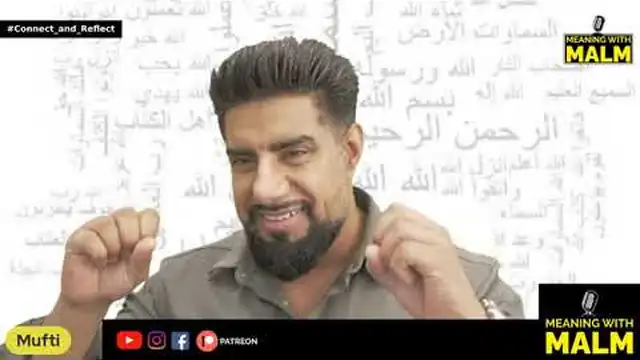 Press play to load from YouTube. Nothing loads until you do.
Transcript
machineauto-transcribed, may contain errors · source: youtube auto · click a time to seek · dotted terms open the glossaryAll right. All right. All right. All right. Just sit up here. First and foremost, as always, as I've learned now before I begin, I have to do a sound check. Make sure everything is coming through loud and clear. As soon as I get the Let me just see what mi gente are saying, what the people are saying.
If I can get a clear from you guys. Till you do that, I will Mhm. I will just bring up here. There it is. All right. Sound is coming through.
Let me just check with Facebook as well. All right. And I'll also What I'll do is take out uh the some of the comments separately. I know that works pretty well as well.
Just put that over here. Drag this back. So, I take it about better. I take it the volume is loud and clear. Let me just can't see from the Facebook. Sound is perfect. Abdul Basit, shukran. For salaam Allah and home, ahlan wa sahlan.
People, bienvenidos a todos. came to and as always All right. So, how are you all keeping? Allahu Akbar.
Right. Wow, it's um I don't know why it seems like an eternity for me. Let me just bring up my my coffee. Just put it right here and Honestly, such is life, huh?
You know, as the poet says, he says, Allah. He says it's not that I'm dedicating it to the coffee, but to all of you lovely folks as well. He says that even without you, it would still get by.
As in life. But both of us, but you know, with uh with a sad temperament. Both be correct. With great restlessness. Allah. People, that is what we are talking about. Okay, so uh as going to today's daughters, I'll be taking a look at some verses of the Quran centered on Dua.
I think that's incredibly important. Why? Because one, there's the aspect of the power of Dua we can take a look at, but also also, more importantly, a misunderstood methodology when it comes to dua. Why people tend to misunderstand um and following from that, a subtopic, what is the distinction between religion and superstition?
Because to some people, they may be the same. Some people may think it's superstition and it's religion. Some people may think it's religion and it's superstition. So, we'll take a little look at that as well. Those of you just tuning in, you know the drill. You know it by now. So, the drill is to click like, click share, spread the love, people.
Do the love, man. Do the love. Spread the love. Don't do the hate. Okay? So, and we've got a la la Actually, Imam Qazi. All right. I jumped ahead. Did you see that's the the Mullah Jat in All right. Qazi, so good to hear from you.
All right. So, somebody says All right. So, how has Mufti frozen? Um hm hm hm. I'm not sure. Have I frozen? Is this frozen? I hope not. I hope not.
I hope not. So, uh let me just take a look at some of the mixed comments. Good vibes. Nope. Shukran. Shukran. So, that's what we want to take a look at. I will also show you that those of you who are not aware, and we'll follow that up with I will take a look at your questions, obviously. Obviously.
You guys are you know me corazon. That's what it is. So Um but and those and and then I'll share the link and we'll have some uh meet and greet as well. Obviously, I'll I'll give preference to your to to my Patreons and to the super chats and and all your love. But we've got a bit of this to take a look at.
I want to show you first of all um All right, those of you who ain't familiar, yesterday we did a the first book lounge meet-up. And the discussion was taking a look at the book Money. And I thoroughly enjoyed I really did enjoy the the convo.
Um I think it's a fantastic way to get people talking about ideas. And it's also a good way to kind of kickstart people into reading. Cuz I feel that we've become a people who have and I don't mean that and I I mean specifically, you know, who is on al-Muslimin or al-Mu'minin, shall I say, the believers. But bil-umum, I mean, you know, an-nas, people generally, that we in this day and age have moved away from books.
And people may still read. I think it's an illusion to think people don't read, but they read things like social media comments, captions. They read They may be doing an equal amount Some people may be doing more reading. But it's not um it's kind of um immediate mhm non-rewarding reading.
So they read a lot of comments, statuses, Twitter feed maybe. I I stand Twitter. So, I'm not on Twitter. I am, but not much. So, uh but let's say people are reading Instagram comments, Instagram captions, uh Facebook, YouTube, surfing the net, whatever, but the but they are not reading books constructively because you could do all of that reading and you could do one fraction of that.
So, let's say you do a tenth of that reading, but you actually take something away with you. Not just, "Hey, my lunch was pretty cold today." And "Hey, I'm stuck in traffic." And "Hey, check out this new Tik Tok trend." Tik Tok. Toba toba toba. Honestly, I think if if ever we have to do the toba again, toba toba toba.
If ever there was something that is there to kind of You know what was interesting is yesterday part of this If you haven't watched this book club thing, by the way, um it is on YouTube. I think it's just shy of It's I think it's a 1 and 1/2 to 2 hours between between that. Uh the discussion, do check it out. It's very fascinating because at the end we do discuss the future of of humans amongst AI, artificial intelligence.
And do we have a future? And And And I think what Yuval Harari does is he really poses some uncomfortable, unnerving, but maybe some very real questions that do we actually have a future with artificial intelligence? Now, of course we have a future. I'm not going down What is it? Nick What is it? Nick Bostrom?
His his kind of thing about they're going to kill off uh all of humanity like the Terminator, but I think I can see how things will become challenging. Like there will be an human underclass. And so right now you have a working class, and you have the middle classes, and you have who are there, the upper echelons of society.
But what this may result in is an underclass, a human underclass where And this was the discussion towards the end of yesterday's meetup that will there still be a um a significant role, a pivotal role for human beings. Now of course there will be because human beings will ultimately be designing new algorithms and doing things and But the question is that is that the individual?
And I really love the way he brings our attention to individual. individual indivisible that the individual is somebody so unique that he can no longer be divided into the other. There's this uniqueness about this individual. And he highlights that the future in this 21st century, it seems we no longer will be the individual.
So humans will always have a pivotal role, but perhaps not most humans or perhaps not many. If not most, not many. Some people naturally will, the best of the best, the creme de la creme, the the kind of Elon Musks and the the you know the the astrophysicists and and maybe not even astrophysicists because artificial intelligence could kind of figure out a lot of patterns and mathematics, but the kind of geniuses and and people that are really good at their craft, they will always have some role, but that leaves many other people who you know, well, I guess they'll always
have Tik Tok. Ah, yes, salam. Yes, salam. So, right, that's um um Fahad I want Mufti back in front of his books.
There's many of things I'm sure you want in life. You see this as I've said before, this is a an exciting new chapter. Let it unfold. Live with it. Embrace it. Be the change. Allah. Right, so, what's going on? Right, I'm just taking a look at some of the comments.
I've got them on there as well. So, okay, that was uh about the book uh the book club. It's called the book lounge. I am thinking of really locking it off to select people and then I'm still in two thoughts how it's going to move forward because I I want people who are you know, they I want beautiful minds to contribute.
Not just anyone and not just a and I like the dynamics and I'm thinking if there's too many people, I don't know how we'll handle it and so we're still working on that. Let us see. I may just kind of just bring in select people and other people may go and I may kind of put it on as a Patreon tier. I don't know. I'm thinking. I'm thinking. But I like it as it is. I do like it. All right, so what is going on?
All right, so we've got here Zayan is saying can we have a mut'ah allowed? Here nothing nothing. You see? Zayan in one sense um isn't that also by name in I'm sure in one stretch to mean fault?
Well, there you go. They've named you. Make you Ziya Carbon. That's Ziya, but I suppose Zayan Ziya Ziya Carbonu. What is it? Make you Ziya Carbonu? Fikre Ghame Dosh Karu. Now, what is it? What's the famous Ziya of the Shikwa? All right, so Okay, let's move on to the um to the Dars so we can take a look at some of the questions later on.
So Mhm. All right, we've had a look at that. So, this was just to show you how the Quran highlights the power of dua, how dua is often misunderstood, difference between religion and superstition. So, that's what we're going to be taking a look at.
I've uh Okay, so first and foremost I think this is one of the most incredible verses of the Quran. Seriously. I really you know, if you haven't paid attention to this verse before, then do so.
You know, in your own time if you feel. It is from Surah Baqarah, the second Surah, the largest Surah of the Quran. And verse 182, you can see it here. I'll just bring it up. Um Right. So, leading up Right, there it is. Right. So, this is going to Yep. So, here it is. On the general standard mushaf, it'll be right the last verse before it kind of changes uh subject to almost verse 186.
Sorry, did I say 182? 186. Right. So, what's interesting is first of all, just a brief uh just just a few I don't know. Just uh words on the context. Allah subhanahu wa ta'ala initially is addressing Ramadan, fasting, the struggle, people before you, all of these kind of things.
And you can imagine that that once again, it brings forward a struggle, it brings forward people. And And you know the nature of struggles? This is something incredibly important. The nature of a struggle is it triggers memories of other struggles. Have you ever thought It's true, isn't it?
That when a person something happens, they then think about other problems and tragedies that have happened and befallen them also. So, and you just think personally as And that's just the nature of things. And there's a good example in Surah Yusuf as well when uh Benjamin is also kept um by the you know by the Pharaohs and and when they come back and tell Jacob so one of the things he says is he starts crying about Yusuf again even though that's you know that's something that's
happened decade before or decades before. So it's just the nature of tragedy it it doesn't beget tragedy but it it it brings a series of it evokes memories of other personal tragedies and struggles. So same thing with struggles.
So there's this Ramadan is going on there's other struggles people are facing and so naturally people will think you know and here this is one of the most hope inspiring verses of the Quran. That you've got here
note that this begins with what he does like I body on me. That when my servants when my people Allah is saying you see sometimes I feel you can translate these words in a way that they make more sense to you. So if to some people the word you see like slaves doesn't make much sense in the contemporary world.
I'm sure in in the in the age when the Quran was being revealed, it made sense. Translating it as servants makes sense, but then you see to some people Mhm, you see to me, servants doesn't make as much. It doesn't quite hit that note because serve to serve God. Mhm.
See, the people of God, his people, his creatures, his So so in that sense, that way that either salaqa ibadi anni when my people ask about me, Allah is saying that tell them for where where am I? Because people say where is God in all of this? COVID happened, this person, this where is God?
Inni qarib. I'm close. I am close, Allah says. Inni qarib. Ujibu da'wata da'i idza da'an. I respond to the call. The da'wa, and it can mean prayer. The du'a, it can mean call. It's the same thing really. When you pray to God, you call upon him.
And I say him here not because God is a he. God is not a he. You see in the Arabic language, huwa and hiya, but huwa because it's a masculine word. Huwa the equally refers to it, it refers to he, it refers to and in this case, God, love what what we call love jalala in Arabic, the the the the kind of the all magnificent word, which is Allah, referring to Allah.
Not it's not assigning a gender. Do not be mistaken about that. Okay? Sometimes but we use these words just You see in Arabic, it's interesting. Would have they understood it like that? They probably may not have been because to them who are was used for other than you know, my other than gender.
But in English, he is really only used for the masculine gender. So, it's um sorry, for the male gender. So, it it's difficult when we translate that. You see like whereas in Urdu, let's say, vo doesn't necessitate a gender. Even though there is gender discourse in in the Urdu language, but you see when we say vo about God, that who are, it doesn't carry a male kind of subtext
by necessity because vo could equally be for any gender and for inanimate and for anima and for it's just vo. So, in Arabic, who are as well, but I think that's important because somebody made a point about saying saying saying he and him for God. But we do in English because that's just how it is. That's the kind of pronoun, but we don't mean by that.
It is very important to know this. And there is a joke about that that some you know, in the some of these philosophical religious texts. Sorry, the philosophy of religion texts. They say that um the Alan Watts actually recounted as well. He's an amazing legend of the last century, honestly. But uh so in it, the joke, they ask the astronaut who goes out to space and they they ask him that, you know, when when you were there, did you see God?
And he says, "Yeah." Uh, and they say, "And?" And he says, "She's black." And and that's like, "What?" And you see the whole purpose of this joke was to I suppose it's more so it makes more sense for I suppose the American uh, audience, especially a few decades back with racism still at its peak, challenging all forms of stereotypes because even when you say he, we're not referring to a male he.
You see. So, she, although grammatically with the Arabic language wouldn't make sense, but really the pronouns don't refer to God. They're they're not in in any gender. You wouldn't But the point of the joke was to challenge the stereotype because people would straight away feel very uncomfortable saying she. And I understand that from a linguistic perspective.
Um, but that's the whole purpose of the joke that, you know, you have to look into your own biases. Yeah, so okay, moving back to Right, some people are saying they want to I'm listening to. Right, okay.
So, you've got this coming back to this verse 186 sort of Baqarah that Allah says, "Well, you mean to be let them have faith in me." You are sure to do. Now, what's incredibly important, the following verse as well, Surah Ghafir verse 60, that Allah says, "Wa qala rabbukum, ud'uni, call on to me, astajib lakum." Now, this is a a condition sentence.
Allah's saying, "You do this, I will do this." It's It's as simple as that. You know, you do this, I do that. Simple as that. That's all. It's a what they call in Arabic jumla shartiyyah. Okay, so So, okay, so you've got two verses here. Now, what's very important about these, just briefly, we sidetrack, they got a bit distracted. Allah is saying, "I am close, let them call on to me, I will respond.
Let them have faith in the hope that they are guided." Now, this is incredibly important. The second verse just It just reinforces that first statement. Why? Because And this is where I want to say, and we'll take a look at a few other um In fact, let's take a look at the next two verses, then we'll come back to why I feel this is incredibly important and misunderstood as well.
So, you've got So, we've taken a look at this from Surah Ghafir, right here, Surah Yunus, you've got verse 12, wa idhā massal insān durr, okay, so whenever some harm befalls an इंसान, da'ānā li jambihī, he cries out, or she cries out, in whatever state they are.
All right. And it says, "Aw qā'idan, or maybe sitting, aw qā'iman, or they may be standing, falammā kashafnā 'anhu durrahum marra ka'an lam yad'ūnā ilā durrin massah." Kadhālika zuyyina lil musrifīna mā kānū ya'malūn. Now, it's incredibly important here that Allah mentions one of the one of the core archetypal situations for insan is whenever they are in distress the soul cries out and connects with
God. That is archetypal that is so primordial it is it is it's something unavoidable. You know, as they say the famous saying there are no atheists in foxholes. The famous saying from World War and and the world wars because at that stage the soul unquestionably unrestricted unreservedly it cries out to God.
It connects. You see you can't like imagine imagine a person is about to commit suicide. Yeah. Now he's standing or she's standing about to throw themselves into a lake or something. Now you see this is them choosing to do it. This is them. Let's say they 100% want to do this. So they jump in.
As they the wanting self jumps in they also fight the drowning. You see. So the question because so okay, but wait a minute. But you want this. You do want this. But there's always so which you but you are resisting this. Which is a natural because it's so primordial. There is more than one self.
You see the self and this is something we can maybe speak about briefly in after we finish this. What is the self? But there are different selves that you have within you and by self the ego. I don't mean the ego the greedy ego but ego the you. So there's a you wanting to kill you. There's a you fighting to survive. So, which one are you? Uh if you can tell me the answer to that, I'll say you've definitely reached a milestone in this life of wisdom.
So, here it is primordial that that self cries out to God. You can't And then Allah says that but when it that harm is removed, now this is in everyone, but many people will pass as though it never happened. But it's interesting when Allah then says, look at the final verse.
This is how it has been decorated falsely. Right? Th- This is how the misdeeds in the translation it says misdeeds of the transgressors have been made appeal- appealing or have been decorated for But it doesn't say kafirin. It doesn't even say It's It's not to do with iman here. Allah's not speaking about whether you've got faith or not.
Musrifin, those who are See, they've translated as transgressors, but musrif is those who are extravagant. You see? And we'll tie that into the talk about the self, the ego. So, okay. So, th- this is um important. And the final verse, which ties in, which is from Surah Zumar, verse 49, that And this ties in exactly to that fact that doron da'ana thumma idha khawwalnahu ni'matan minna.
You see, when the insan is touched with hardship, but it then it is replaced after they cried out, they called upon God, God changed it. Qala innama utitu 'ala 'ilm. He says, but now this can be translated in many ways and I'll check how they've they've translated it. He has I've been granted all this only because of my knowledge.
Okay, yeah, that's that's exactly um one way and you can expand on that. But most of them just do not know. You see when they say when it is removed, they say that in the mouth of the two who Now, one way of understanding this is a line that because I deserved it.
I I got all this goodness because God knew I deserved it. The other way is and this is the which I would find stands out to me and to many of them for serene as well, even a sure and many others that I have been given this that they themselves it's that ego and the self and I don't mean you see ego when we're using ego, what I mean by is the identity of the self.
That's what I mean. I don't mean the greed, although that's a part of it, but the self, the identity. You see because it's all about if you can sum this up in one word, it is gratitude. See, Allah's not asking for anything.
There's nothing to give to God. But it's just appreciation. It's you know, to to kind of throw it in God, you know, metaphorically so to speak like as you throw something in someone's face to say, well, huh, you know, I only well, this only happened because I knew how to handle it. I knew how to do this or it's because of my own, you know, this is that kind of Kuffar.
Not Kuffar in faith and Kuffar, but the true sense of Kuffar. This is what it is. So, these verses, why did I feel this is incredibly important? Verse number one that we took a look at. 186 from Surah Baqarah that Allah says, "Does not matter what your hardship is. Just call on to me." You know, just call.
Just pray. This is the point and that was the second verse, same thing. You just call me. I will I've got this. Allah is saying, "I've got this." Then showing some primordial examples that oh, whenever you'll have hardship, you will call anyway. Then it's inevitable.
Because then your prefrontal cortex doesn't need to the kind of more reptilian brain. The inner core identity of that self will cry out anyway to God. So, and Allah will be there for you because he says whenever you call, I'm there. But then let's hope it's not followed by ingratitude.
By throwing it back. See, that's the important lesson. Now, what what is the other most important thing here when it comes to dua? That is the misunderstood methodologies. Many people feel that if I make a dua, it's it's too easy. It's too easy. Like Allah, give me this. Oh, is that it?
Huh? Is that it? So, they feel that you know, in this world when we want something, we have to struggle. So when I do a dua, it's too easy. There must be a struggle. Hmm, in al usri yusra. That with difficulty comes ease. So what I'm going to do is I'm going to offer God something.
So you have this concept in Arabic of natha. Not natha with which means sight or natha with a tha. Natha is where you offer a conditional. You say, you know, like like in Urdu they say manat. Which is also an Arabic word, manna minna. But here here what it means the same thing, an offering a devo- a devotional um offering with conditions.
Allah. When insan does come back, he comes back to his rightful trading negotiating self. Says God, you know what? I'll cut you a deal. You know, look at the arrogance of the ego at that stage, the self. Says, you know, Ya Allah, I'll keep three fasts.
I'll tell you what, I'll go on hatch. I'll tell you what, I'll build a well. Ah, the laughter it brings. Because can can you imagine the arrogance in saying that to God? But you see, but in some ways we don't we're not blaming these people because these people have a misunderstood methodology.
You see, they are trying to be genuine. Because in this world, there's no such thing as free lunches. You see, it's true. So, they are just trying to be as real as real can be. That yard is I can't you know, in this world I I would have to go, you know, if I want food, I'll have to work.
I'll have to put in a day's work. I'll have to do this What do I give to God? So, they know God doesn't want wealth. He doesn't want that. So, he wants they think he must want ibadah. So, I know I'll pray 10 nafl. I'll pray 100 nafl. And then it it it branches out from there.
It branches out from there and it goes to what? It branches out and it goes to other practices. I'll walk barefooted for I don't know, a few miles. You see, many many parts of the world are riddled with these kind of belief practices. People roll around.
I'll roll around in the dirt. I won't speak. You know, I'll take an oath to do this. I'll take a These things, this is not how you know, this is a very This is amazing hadith. Where the prophet was told about somebody doing this this nazar. And he said, and this is in Sahih Muslim.
He said, "Innama yustakhraju bihi min al-bakhil." He said, "Only a miserly person would think like that." You see, you are you are trying to bribe God. Ya salam. So, this is the thing and I get it that these people, you see, they're coming from a misunderstood methodology.
Because they want to work for it. They want to earn it. You know, when when you take some medication Imagine you were ill. And they said, you know, I said to you, "Oh, here, you know, here's some medicine. Take a sip of this and you'll hopefully you'll get better." So, you take a few sips and you don't feel anything. You will think nothing's working. But imagine all of a sudden you started getting some aches and pains and your stomach aches.
Now, even though you you'll endure the pain because you'll think, "You know what? This is working. It's cleansing." You see, because that is the the sunan of this dunya. That whoever wants something they have to earn it. You know, Al insani illa ma sa'a. So, what's the difference here? The difference is when it comes to Allah
There is nothing, nothing like unto God. So, when you are dealing with him, you don't have to refer to these paradigms. Nothing like you these similitudes, these patterns, the patternicity of of these methods, they work in this world. They are of this world. But God isn't of this world. So, you don't have to worry about trading with him. You don't have to try to bribe him.
And you don't need to think this is too easy. You just Allah says ud'uni astajib lakum. You just do it. I've got it. Now, you you are told Now, there are certain several ahadith and things that teach you when you do make it, you have the certainty. See, if you do a half-hearted du'a Allah ya Go on.
Go on then. It's like go on then. It's not like that. It's It's not about You see, it's not even about raising your hands. It's not about It's about that that you have that conviction. And things unfold. And what I say to people is see the dua in your mind, visualize it having happened.
And if you can do that in sujud in a salah, that's excellent. Otherwise, do it like that. Visualize the result. It's happened. You've seen it in your mind's eye. And what this is And so, just to have that iman, and I thought that this is incredibly important because there's so many people I speak to you sometimes, and they want to make dua, and they want to do these things, but they don't understand, and they And they're doing it genuinely, but they undergo so much hardship.
And the amazing hadith is that Allah says, "I will treat my servant as he expects me." Or I will treat my person as he expects me to treat treat them. So, if the person wants thinks that that if the person thinks I'm only going to get this through hardship, then so be it.
Hardships it is. Somebody else thinks, "You know what? I'm going to get The world is amazing. It's full of possibilities, full of opportunities. Allah is glorious and gracious." And And this is how you get happy-go-lucky people. Cuz they believe it. They This is how they think. And this is how Allah treats them.
So, I thought it's incredibly important to share those words. Cool. I'll wrap that over there. Let's I'll take a look. I know there was some super chats. Those of you sending some super chats, much love to you. All right. Muhammad Hassan, wow, you're doing it. You're doing it. All right. As always, Azarathi Azarathi is always much love for the super chat. Shukran Shukran.
Um Duku saying God is a woman. No, God is not a woman. God is not a man. He's not a woman. These things are forms. God is above form. He is transcendent from any and of any form. Shukran. All right. Lon Zetta, you're doing it. You're doing it. Um All right. So, what's going on?
All right. C2C Contracting Contract Contracting. You're doing it. Much love for the super chat. Dearly appreciated. Uh right. Uh yep. What you can do is feel free to send through any questions that you've got. You can also click like, click share. Yep, and you can send away. And Shukran, much love once again for the super chat.
You can Let me take a look. I'll select the questions. Obviously, I'll have to give the super chats priority priority, man. So, those of you just tuning in, you can click like and share. Let's see what the um I know it's probably a bit late here, but that's You see, I always operate at an international time.
Uh Yes, Rumi did say that. Walk and the way will appear. Absolutely. Uh Maxim Mufti, is that story sahih? Musa asked God what pleases him nothing else but making people happy. I'm not sure if the story per se, but the meaning is correct.
That nothing pleases God more than you contributing something to humanity, you pleasing people. And I don't mean by pleasing people as in sucking up to people and doing nonsense like that, but you bringing a genuine smile to someone's face. That is that these things this cuz it is by serving humanity that you serve God ultimately.
Cuz Allah doesn't need your worship. All right, so let's take a look at some of the questions. And then what I'll do is I'll Let me just check this as well. All right, yep. We've got We've got plenty of time yet. So then I'll share out the the feed, the link to kind of connect.
All right. Actually, I'll speak a bit about the the self and the ego as well in just a moment, but I'll see are there any questions coming in. Um mhm. Uh Uh Sahal Blessed, can I pray in my heart without open my mouth?
Unless you're afraid of flies going in. You know, the thing about um You see the thing about recitation is you see at times there's no harm in saying things in your mind. In fact, at times that may be incredible and awesome and very beneficial.
But but you see within salah the recitation it is salah is about an immersive practice. So when a person speaks they are using multiple it's a multi-sensory approach that you are reciting using the mouth, using words, sound, you are hearing your own words at times.
You you see so it's more of an immersive kind of practice. It's not a Otherwise there's nothing wrong in a person um there's nothing wrong with a person trying to Whoa, who's spamming the Right, so there's nothing wrong about Sorry, I'm just uh Okay, there you go.
Had to just put someone in time out for spamming. Right, so yeah, there's nothing wrong with that per se but that's within salah there are certain ways to do something and ritual in and of itself is very powerful. We'll do a different session on that. Um All right, what is Mhm.
Okay, so let's take a quick look. I want to share some words on the self. Okay, and then I'll share the link. Um All right. So, the self.
This is incredibly important. Think about this, people. When we say ego, the Some people understand ego to mean as in the greediness of a person. Now, that's fine. That's maybe one interpretation of ego, but ego actually means the self. So, when you think about the self, what do you think of?
The self at a psychological level. So, you as a person. You wake up in the morning. You don't need to remember who you are. And by who you are, I mean, for example, not just obviously your name, but your identity.
Whether you are a parent, a child, a sibling, a spouse, whether you are a teacher, a lawyer, an accountant, a stockbroker, whether you are married, divorced, whether you are roughly of a certain age. Now, I get that people sometimes forget precisely their age, but they know roughly, like somebody may say, "Oh, am I 42?
Am I 41? I forgot. Am I 43? I forgot." But they wouldn't think that oh, I'm 19. They wouldn't think like that. So, having an idea of the self, this identity. So, you my ethnicity, for example, I would know that this is my ethnicity. I would know that I'm a person that can speak certain certain languages.
I would know that I'm a person that has certain interests. How do you know all of this? Think about it for a moment. How How do you know that? How do you know all of these things I've just mentioned about the self? You see, it's cuz it's not there isn't a place in the brain that is allocated to the self.
So, there is no self um localization within the brain. So, how do you carry this identity? How does the identity persist? Because the identity, the ego, this is what I mean by the ego, the nerves. This is an illusion. And it's fascinating that you see, even at a psychological level, we recognize that this is an illusion.
I mean, they they are certain concrete markers to it. Clearly, like so if you are male, you have certain male biological markers. I know this uh there's going to perhaps some gender-fluid people may choose to disagree, but you can't They can't disagree at a chromosomal level and at certain fundamental biological marker level, you can't disagree. But, so you could say, "Well, with age, you carry certain kind of things, and you know, you have a Let's say, you're reminded by looking through perception, by looking at your own kind of skin tone and your color and things like this."
Mm. But, that's not really the case, because when you wake up in the morning, you don't remember all of a sudden who you are. You don't kind of go, "Oh, oh yeah, I'm so-and-so." No, you know who you are. You see, now that's fascinating.
That is il al mu. Know. And that by the way, for a different talk, is the first commandment about God, that know he know God. Know he is God. And not that remember or kind of come to a I suppose there's nothing wrong with coming to a realization, but that's not what the first commandment for belief was. It was il al mu an na il il al Allah.
But coming back to this, you know the self. You see, you just know it. You don't have to ponder, you don't have to reflect, you don't have to recollect, you don't have to remind. Generally, this is for most people. You don't unless there's some kind of breakdown going on, a degenerative kind of issues.
But you would know these things. So, the question is, how? You see, cuz that is the question. Because on one hand, we know the self, but on the other hand, it's the self that we take a lifetime to know. Hence, know thyself is one of the greatest maxims. And in Arabic, whoever knows his self or herself truly knows God.
Man arafa nafsahu arafa rabbahu. So, in psychology, this they call it the kind of bundle theory or the bundle loop theory. They they they admit that the self is an illusion. It doesn't actually exist. That what we have, they feel, this is the best we've got so far in psychology. And that is that there is a perpetual constant instant loop that is tight that has a feedback nonstop
which is memory, long-term memory, short-term memory, sensation, perception, uh all of these things are in a constant bio feedback loop. A bundle of these things put together, your memories, your experiences, part of the the the you know, your kind of preferences, so even your fear centers, you know, the the fear center, the amygdala, you'll have different limbic system, the the thalamic kind of uh centers, you'll have the prefrontal cortex, you'll you know, linking in certain memories tied in with other
features, all kind of in a loop. Nonstop this bundle together, not physically bundled together. I mean, they're in the brain, but there is this and they are working in a perpetual loop to feedback so much information which results in an emergent property that doesn't actually exist, but an imaginary kind of uh property which is called the self, which is you, your identity.
That is amazing when you think about it. Because when you realize that wow, that the self is actually but just an illusion. Albeit a very persistent one. And a hell of a one, but it is ultimately an illusion.
And and this is where I had shared some words as well that the realization of non-duality is something which it it's a sense of breaking away from that illusion. That that that is something that only I guess the minority of people will you know, unfortunately achieve in this world and I don't know.
I mean maybe more people who maybe people who take first of all they have to have an interest in it. And then to experience that non-duality otherwise this is just something of the other world. It is of the akhirah yet to come when there is no identity. It is but there is still a kind of you but it's not the you you of this identity.
And this is what was meant by several um ulama as well like Ibn Rushd the great Maliki legend and his contemporary the Muhyiddin Ibn Arabi and other people about the the the self the the fact that they said about consciousness. Because consciousness you obviously have consciousness.
And that is you but then there is the the self you which is the identity you over it. And this is why many people try to quieten their mind by quietening the thoughts because the thoughts are the ego you the identity you. They are not the consciousness of you. But yeah, I I find this incredibly fascinating this sense of non-duality and the search for a unitive
objective or a goal or a trajectory in life. I don't know. These are But I I I think it's also quite daunting because I think for human survive not survival Yeah, actually maybe survival in a more brutal gruesome sense in a more gritty Sorry, replace that with gritty sense.
They must be the identity you because otherwise you Cuz unfortunately people need to thrive in this world and they need to kind of you know, there must be competition and there must be all of this and and it must feed back into the ego the the the identity ego which must then feed back into wanting more and feed and there's this perpetual loop.
And I suppose if there was a disintegration of the identity ego, it would result in maybe I don't know. Would it possibly diminish the drive to to be so for that grit. It may Hmm, so this is I wanted to share some thoughts. I don't know whether they make much sense.
In the words of Bakra Janu Kya Kya Kuch Kuch Na Samjhe Khuda Kare Koi Allah says what is it that I'm just you know, muttering away nonsense in this insanity of mine. That God willing nobody understands anything. Right, there was some um super chats. Let me just get back to them.
Um All right. Wake up. Shukran you're doing it. Much love for the super chat. What's your take on recitations like Surah Fatiha seven times, two roots two times before making dua? Really enlightening topic today, Mufti. Shukran shukran uh Waker, muchas gracias.
Right, so the corazon. Right, so um yeah, these things are you know reciting Fatiha or two roots or like saying salat wa salam ala nabi salallahu alaihi wasallam these things are amazing you know, beautiful things. But I would say if you're going to do them don't do them out of an obligation or do don't do them out of a routine.
If you're going to do them, do them out of love. Otherwise, you you're not obliged to do it. Don't feel that I've got to burdened by stuff. You see, don't make unnecessary obstacles. Do these things if you want to do them, you know, if you say I want to do some glorification, I want to send salat wa salam ala nabi, I want to do these things. Do them out of a sense of love.
Don't ever do them out of a Don't Don't, you know, because if you have to do something out of a I have to do it. I feel that it's a disservice to even do it. That's that's my thoughts. Right, so um There was another super chat. Let me just bring it up. Uh Samia Stana, you're doing it. Much love, much love.
Dearly appreciated. Shukran. Right, so uh Okay. Shafaheit says in Vedanta in Vedanta, mind is compared to the lake and thoughts are the ripples. And when the lake is turbulent, its bottom is not visible. Wow. That is incredibly profound. That definitely sounds like prophetic wisdom, which you know, even Allah says in the Quran that prophets came in all places, you know, you know, you know, there were many we did not tell you
about. I feel that the wisdom of many ancient civilizations would have been prophetic. That they would have been prophets amongst them. And you can see sometimes the gems of that trickling down. When you hear these wise kind of stories, wise parables and allegories and it sparkles with like prophetic guidance.
Allahu A'lam. But that's how it is sounds. All right, so um All right. Okay, so A loop like Sufi's loop. That's referring to me talking about the loop.
Mufti, have you read Al-Hikam by Ibn Ata'illah? I have. You know, in the future, I'll read some from that as well. Why not? Why not? In fact, I did have I don't know if it's here. I have that Ibn Arabi's book. It was something. Is this No, that's not it.
I thought that might have been it, but no, it wasn't. I think I've left it downstairs. I did have um a book. It was really interesting, actually. I thought, you know, I'll I'll I'll read a little extract from it. Here where he speaks he was doing tawaf by the Kaaba and and then he speaks about Adam alayhis salaam and and many Adams and well, it's quite it's quite intriguing.
But yeah, actually I did have a poem somewhere. I saw this and I did print it off thinking, you know what? I'll read this. What I'll do is um I'll share the link. And and once I do that, I'll read this poem. Okay, I've shared that. There was also a Oh, was that another super sticker chat by Azharati?
Shukran shukran. Much love. Duly appreciated. Right, so In Hindu, gods can accept each other. Your god can't tolerate others. The reason said in the Quran is that they will fight each others like like hen.
In fact, male hen. I mean, there's no such reference in the Quran about they will fight each other like I don't know what that reference is to. Um and I disagree that uh I agree that Hinduism it wasn't called uh Hinduism.
Um in essence, it's called Sanatan Dharma. Um it's was a a very tolerant in essence. I feel it had great tolerance to it until the British kind of got there. Um it wasn't really I think some Hindus did become quite um um discriminatory um against other faiths, but that may have been in reaction to the Mo- you know, the Mughals and stuff.
But they in essence, I do accept that they have been quite tolerating within their faith structures. But then you see you that's from the aspect of well, this person worships this God and he doesn't attack that person worship- worshiping Shiva who doesn't attack that person worshiping Vishnu or that person People can have their favorite gods and that's true, but then you look at things like you see and what's interesting is they have that kind of tolerance at a um
at a feel philosophical at a theosophical level. They do have that. And in essence, they do actually just believe in they ought to believe in just one God and they say these are just manifestations. And and then people obviously got carried away, but but and and what's also interesting is they don't have a clear black and white. So they don't have a clear devil and a you know, good guy, bad guy.
They have a very you know, just a gray area. So even the stories like the Mahabharata will show that there is a a conflict of duty. And you just do what you do. You just do you. You don't have to There's no necessary right or wrong. I think in some ways that is profound. But then you see you you look at the where theosophy melts into human the human world, how we live and interact.
And it is incredibly discriminatory. You have the caste system and you have people that are to live an eternity in in this caste and they cannot outgrow this caste and if a person walks in, he can never you know, he can't walk into the kitchen because he's an untouchable and you know, this person is a low caste, they are untouchable and then they've got you know, this person's a Dalit and they can't do this and all the Brahmin are the only one who could read and write first, you know, they were the only ones allowed to read and write and the superstitions that they've riddled the faith with um and
things like the way a person is cursed and to remove a curse, you have to marry a tree or marry a dog or marry something and then the ultimate, they take the theosophy and they and they speak of an eschatology, the after this world and they remove it from that sense of you know, this this kind of harmony into this samsara of where you will have now be re- this rebirth of of of karma with huge tragic fear factors that you're going to be born again as a as a as a beetle or a
cockroach or a dog or a you know, you're going to be born as something tragic and suffer for an eternity. I don't see the compassion trickling down in any way. I do accept that you know, it is true at a theosophic level in its foundation, there was there it was not binary. There were no binaries and and that is that is definitely um a plus point and I think it's something we everybody can learn from.
But then as soon as it it melts into human interaction, it becomes a burden to be you know, this Sanatana Dharma is a burden now because of the caste system and the tyranny and the and the whole rituals are nothing but superstition on steroids.
Now you switch it to Islam and the root thing is just one God as well, which in essence in Hinduism was one God as well. It was Brahman, Brahman the or you know, Paramatma or Ishvara in essence. And it's just one God as well in Islam. And really Islam doesn't go the way Christianity later Christianity goes the full way of empowering the devil to becoming the bad guy and God the good guy.
And I accept some Muslims may kind of lean that way, but I generally the Quran doesn't go that way. Um and so people could say but there is some binary, you know, maybe some people read into Islam a binary between the devil and God. But really Allah does not portray like that in the Quran. Allah portrays this challenge of the ego of the identity ego.
We know what it is whispering to him. We know what it is whispering to that we have created inside we know his nafs his ego, the identity what it is whispering to him. You see? Because if you say it's the devil then tell me when the the the story that is given in the Quran the allegory whether it's metaphorical or literal, however you want to take it. But the story of the Shaitan refusing to bow down to Adam.
The question is well who who was the Shaitan's Shaitan then? If there's an ultimate binary, but the essence was about the nafs. You see the so there isn't this good guy bad guy God is the good guy, devil is the bad guy like some Christians do believe, but there is this ultimate being.
What some people may call the ground of being, but this being which is the ultimate, which is Allah. And yes, I accept that in in some ways people see Islam as Islam can have some binary teachings. You know, because it's part of the Abrahamic faiths, it can have that. And but as soon as you see, when then comes into it connects with human interaction, interacts with the real world, you have fiqh and sharia, and we have differences, and they taught to respect the differences.
They taught to, whether people do it or not is up to them, but they are taught. They they are fundamentally taught that there is ikhtilaf, that this ikhtilaf is a rahmah, that you have different ways of looking at things. You have some person may say that is forbidden, a different person may interpret it differently, and generally for the most part as a concept, it is accepted that there is ikhtilaf within this ummah. And that this ikhtilaf should not be seen as a bad thing.
So, in the human world, in the interaction world, there is great dive It's not binary. It's not black and white. And it's only, you know, unfortunately, some people who like the kind of evangelic people who believe in a strong binary in halal haram, most people they accept this this a difference of opinion, and this is your personal belief. So, I disagree on every account that Islam is um that that it is somehow intolerant.
That it is somehow um kind of restricted to a black and white world. It isn't. It is incredibly colorful. So, and I feel it does stand the test of time. It has stood the test of time. So, I disagree uh passionately with your comment. But, I about how Hinduism could trump Islam.
I I don't But, I'm not saying Hinduism doesn't or any faith or any belief system doesn't have good things in it. It does. All good All good faith systems around the world will have some gems that they can contribute to mankind. And, I personally believe that most faith systems, maybe not all, but most or many, let's say many, had prophetic what what would have been you know, what Islam would call prophets.
I mean, they may use other words. But, yeah. I hope that helps. All right. So, um Right. Okay. So, right. Did I share the I can't remember whether I Okay, I'll share the link. There you go, people.
I think I've shared it now. Okay, I can't tell. Oh, there it is. I can see it now. Once that's shared, if you want to join, you can click that, tune in. Right. I want to say a few words on how do you What is the distinction between superstition and religion?
And, this doesn't have to be a long reply, but it's an incredibly important one. I don't know. I I mean, you can think in your own mind that how would I distinguish? Would I say I believe that it's just it's just God in the equation changing it all? Not at all. Cuz somebody could say, "I believe in a particular God that makes me that tells me to, you know, stand on one foot every Wednesday and and then do something and, you know, every time it doesn't It's not the concept of a God that makes the difference.
The what distinguishes religion, or if you want Some people have called it true religion, but just religion, real religion in that sense, from superstition is that religion in essence is based on a um on a pursuit of intellectual or reason based, and that's what I mean by intellectual, intellectual and meditative inquiry.
What they would say in Arabic, tadabbur. Okay, and tafakkur. Or as the theo Muslim theologians use in their books, nazar. They say nazar. Um which doesn't exactly mean sight, it means reason or reflection. So this kind of reflective, meditative inquiry is what fundamentally demarcates, separates religion from superstition.
Superstition for the most part are are irrational beliefs that play on mostly mostly play on people's hopes and fears. So that's the distinction. Now, some people may say there's an overlap in certain things.
Depends on the perspective, but that's what really demarcates and delineates, separates these two. That so in Islam, you have the you have many traditions of the prophet salallahu alayhi wasallam for, you know, a significant period going through this reflective meditative um solitude where he would go to Hira, you know, Hira Hira or he would go to cave Hira and he would be in a
reflective meditative uh state of personal reflection and inquiry and and that's and you see that that this is why the Quran really does say on so many occasions even though whether people do it or don't, but it says afala yatadabbarun, do they not then get into this reflective pondering state?
Whereas superstitions would never ask you. That's not their role at all. They would never say, "Oh, ponder over these things or reflect or, you know, get into a meditative kind of a mindfulness inquiry or they would never do that." They would just play off hopes and fears and I think that's an incredibly important distinction to know because if you take faith seriously this is my view, it should not be based off fears hopes and fears.
I think if you take it seriously, I mean, if you want to, it's your choice, it's your life, it's your faith. It's absolutely fine, but I feel and this is really the language of the Quran that it doesn't say to people just do it out of this. Some people could use certain verses to mean that, but most of verses speak about a pondering. Speak about reflection, a mindfulness. Most verses speak about that.
Whereas superstition, so if you you know, this is something we've got to ask ourselves. Like, where are we? You know. But I thought it's important to share that. Cool. All right. So, um All right. All right. Let me while some people are tuning in and the rest of you clicking like and share, I'm going to um I'm going to read this poem. You know, it's been a while I came across a different Jaun Elia poem.
He He does have something about him, you know. The May his soul rest in peace. Amen. What I'll do is I'll read it first and then I'll share some I don't know if there's some words or Yeah, okay. I suppose I'll explain the words as I go along. Kisi se ehd-o-paiman, right. All right.
So, kisi se ehd-o-paiman karna rahiyo. Okay. Speaking about ehd, you know, don't about making vows. Us basti mein rahiyo par na rahiyo. Allah. And you see, this is the thing about poetry. Makes you question. What is he even saying?
Kisi se ehd-o-paiman karna rahiyo. But don't make these oaths with people. Us basti mein rahiyo par na rahiyo. Live in that settlement, but don't live in that settlement. Safar karna hai akhir do palak beech. Safar lamba hai aise bistar.
Safar lamba hai bas e bistar na rahiyo. So, he says, "Really, we have to set off in between just two blinkings of an eye. Really, that's all life is when you think about it. The flashback at the end. So, he says don't just stay chilling, you know, just stay there and chill.
Every situation is a berry and a moment. Berry here means like like berries. It actually means berries and like fruits. He's trying to say every situation is a berry and a moment. So, every situation, these moments we have are its fruits. The ever persisting now.
Every situation is a berry and a moment. Don't rely on any sorrow. I love that. Oh my god. You see, what he's saying, I mean, there's many ways to understand it, but one way is that you see, it's it's kind of like a punchline because don't rely on any sorrow.
That don't be kind of just I don't know, beholden or hopeful or anticipation of some tragedy or sorrow. And that's a kind of like a punchline because you'd expect it to be some kind of joyous event, but like I said, in Urdu poetry, they celebrate melancholy and sorrow. So, he's saying that every situation is a berry and a moment.
Don't rely on any sorrow. Pass through easily, my love. Don't die for living. Oh my god. Oh my god. Huh? Pass through easily, my love. He says, why don't you just traverse just go get through it with ease, my dear."
He says, "Lest, you know, let it not be that out of such a passion to live you die." So, Mary Sod to Dinbar Narahiyo. That's once again. See, that just has to be John Elia, isn't it? That kind of hashtag Dil Jale, huh?
The people that are just like always just so They're just broken always. Well, he says, "Look, that we've got a lifelong companionship. So, Mary Sod to Dinbar Narahiyo. So, don't stay with me every day." He's like, "Get your own life, yeah." He's like, "Don't worry, we've got a lifelong thing here." He says, "Bohot Dushwar ho jayega jeena.
Yahan to Zatkinder Narahiyo." Wow, that, you know, life it will become too difficult to live. Don't be too trapped within this self. Allah. Nazar per bar ho Unbar here means weight. What was that point?
About Mir says, Sab pe jo bar Sab pe jo bar girani tha usko ye natavan utha laya. Insaan So, he says, "Nazar per bar ho jate hain manzar. Jahan rahiyo wahan aksar narahiyo." He says another bird bar or jet plane monsoon.
You know, the the scenery after a while it becomes burdensome on the self, on the on vision, on sight. See, scenery is so beautiful when you think about But he says the same thing after a while it becomes burdens burdensome. You know what I'm saying? You know what I'm saying? Wherever you decide to leave, make it a habit that that's often not where you live.
Those were the epic words of Hazrat Don Ilya. Right, I think I missed a super chat. I've shared the Oh, that was just a a super sticker. You do and you go globe. Much love. You do and you do and you do. Right, so All right, I've shared the link. I think some people did try to jump on and Oh, I think some are back.
Let me check. All right, I'll bring on some Where's God, I got to go get ready to take off. Those of you that are into I'm a bit of an audio file. You know, I have to do my reviews as well, right? Cuz uh Cuz people, it is here.
Oh, you can't see it properly, but look at that. All right, the Z Fold 3. I'm going to do a clip at some point maybe just about a review on this, but All right. La la la la la la. I got to say, it's been a while since I've been kind of proud of Samsung.
But they have done it here, you know. Honestly, I have to say the size and weight of this. And you know, when it folds clo- it's not so I haven't really put a I did get a a case, but I don't know the cases don't give you the feel. It feels incredible. I'm sure that's something that could be taken out of context, but this is I'm telling you I th- I think Samsung have done all of us Samsung and Samsonites, whatever,
they've done us proud here with the cuz I love the size at this level because it's just it's slightly different to the See, that was the the one before you've got. So, this is slightly slimmer. And but because of the fold, it's you know, it kind of comes more into the hand and has a a weight to it, not too heavy, but but that kind of valuable weight, you know, when you know it's it's gold.
You know, when you deal with gold for so long. All right, so but I I'm proud, I have to say. I like it. I like it. Right, let's go into I am I have to say my this ego identity has a weakness for gadgets. So, I was going to say those of you are audio file fans, the B&O Bang & Olufsen H N Sorry, H N H9.
They are epic. I mean, they are incredibly unique for sound. So, all right, some of you just tuning in, let me just put this on. off So, who have we got? Muhammad Hassan. You're doing it. Oh, salaam alaikum, Muhammad Hassan.
Salaam alaikum, Mufti. How are you? I'm good. I'm good. How are you doing? Pretty good. Pretty good. Is it pretty late out there in England right now? Uh what is time? What is time? That's the kind of response I expected from you, actually. Allah. And I wouldn't I I I I'll And I wouldn't disappoint. I wouldn't disappoint. It's not my style.
Yeah, man. Um Where are you joining us from, Muhammad Hassan? So, I'm actually joining you guys from the United States, uh Milwaukee. It's Milwaukee. Do you know where that is? I've heard of it. It's like 70 mi away from uh Chicago. So, it's not that far. So, that's like the biggest city that you could probably have a reference to. Um But yeah, I mean, I've been a fan for like so many years.
And it was honestly like a complete accident that I just came upon like a few videos of you. And I was like, "Who is this guy? I mean, he like he's saying he's a Mufti, but then like look at his hairstyle, look at his clothes and everything else. What's going on?" Like, I had to click, right? I mean, that was a very clickbaity So, I clicked and I'm like 5 minutes in listening to your videos and I'm like, "Huh, you know, that is very, very interesting that you've got this sort of a perspective on things cuz a lot of the things you mentioned you usually don't hear that stuff like in the orthodoxy, right?
And uh some of those things you kind of think about yourself and you're like, "You know what? This would be interesting, but then I don't have the background or anything else to uh you know, have any authenticity behind what I'm saying. So, a lot of the things that we come across from you are actually quite eye-opening and um they've changed my perspective on things significantly and uh thank you. Thank you for that, you know.
You're very welcome. You're very welcome. No, I I I really appreciate that, Hassan. And I think it's um you know, it can be for some people a bit of a catch-22 because you see eye-openers come at the cost of a um you know, of cognitive dissonance often. And they come at the cost of some kind of unsettling unsettled feeling because you see, we have to because often we have preconceived notions of things and we come across something and we think, well, well, okay, that's odd.
I didn't expect that to be. And our natural defense systems for for survival are such that they anything that challenges or is contrary to prior kind of um what what um just just constructs that we that we have, whatever they are, whether they're right or wrong. But the the self for self-preservation will seeks to preserve them because it's it's a state of conflict and it doesn't want it doesn't know.
So, it just puts up immediate uh defense systems. And that can be very difficult. So, yeah. But I appreciate that it's been uh of help. Abu Hurairah, right? Your perspective on him uh in terms of his relationship to the prophet and the number of hadiths that he's actually brought up eye-changing for me. I mean, just it just blew my mind. Uh your views on Akhenaten, the second coming of Isa Alayhis Salaam, and then Bukhari gate, you know, I mean, those are some epic things that you've actually mentioned and one of the other ones that I recently came across and I knew you had this opinion and I kind of seen it and
this is something that I actually wanted to talk to you about today is like the age of Aisha, right? And her. And what what gets me is like why are we like sort of just hearing this from you, right? I mean, why are people who are getting trained in like the sciences of Islam and I becoming scholars, why are they almost like parroting what they've heard from people more senior than them?
And I can understand like there's a motivation for preserving Islam and everything else, but like why is there a lack of nuance or creativity and the idea that you can be okay with being wrong and putting it out to the people that hey, you know, this is what I came up with. Like why isn't there any testing of ideas done and why is everything like so absolute? Like I just wanted your opinion um on that to just kind of I've never been able to pin that down like I don't understand why is there this whole notion of you have to be right 100% of the time if you're an alim
or a mufti and there's no like you know, um room for being wrong. So, you got to just stick with your guns and never change. It's He's lost me. Mhm.
Mhm. Mhm.
Mhm.
Something wrong here?
Tell us what is wrong and it will be checked against the recording. Nothing changes until a person has reviewed it.
Sending a note needs JavaScript, which is off or unavailable in this browser. Nothing has been sent.
No name, email address or account is asked for or stored, and the inbox does not store your IP address. For rate limiting it keeps an unreadable fingerprint of your connection for 48 hours, and our database provider's own logs record connections as every website's do. Only your note, its kind, the page and the moment in the recording are kept, for review.
Cite this recording
Stable id, transcript version and tier are part of the citation. Every change to a transcript is logged.Mufti Abu Layth Archive, auto-transcribed, may contain errors. https://muftiabulayth.org/r/giwp5kllsk0/ (accessed 1 November 2026)
- APA 7
Mufti Abu Layth. (2021, September 2). Misunderstood Methodologies | Meaning with MALM #5 [Video, auto-transcribed, may contain errors]. Mufti Abu Layth Archive. Retrieved November 1, 2026, from https://muftiabulayth.org/r/giwp5kllsk0/
- Chicago author-date
Mufti Abu Layth. 2021. "Misunderstood Methodologies | Meaning with MALM #5." Video, auto-transcribed, may contain errors. Mufti Abu Layth Archive. Recorded September 2, 2021. Accessed November 1, 2026. https://muftiabulayth.org/r/giwp5kllsk0/
- BibTeX
@misc{abulayth-giwP5KllSK0,
  author = {Mufti Abu Layth},
  title = {{Misunderstood Methodologies | Meaning with MALM \#5}},
  year = {2021},
  month = {9},
  date = {2021-09-02},
  howpublished = {\url{https://muftiabulayth.org/r/giwp5kllsk0/}},
  url = {https://muftiabulayth.org/r/giwp5kllsk0/},
  organization = {Mufti Abu Layth Archive},
  urldate = {2026-11-01},
  note = {Auto-transcribed, may contain errors}
}