
Recordings › Monday Nights with Mufti Abu Layth
Monday Nights with Mufti Abu Layth: Session 106
wudhu wudoo wuzu ablution al-wudu wudhoo salat salaah namaz salaat namaaz as-salah al-salah salawat aqidah aqeedah aqida theology aqeeda aqaid fiqah jurisprudence fikh hadeeth ahadith ahaadeeth hadis hadees ahaadith saheeh sahih hadith saheeh hadith sound hadith authentic tafseer exegesis tafasir tafaseer al-bukhari sahih al-bukhari saheeh al-bukhari saheeh bukhari imam al-bukhari takbir takbeer takbirat takbeerat imaam imams prayer leader sadaqah sadqa sadaqat sadqah voluntary charity kaaba ka'bah kaabah masjed masaajid masajid maaliki malikite malikiyyah hanafite hanafiyyah shafi shafei shafiite hambali hanbalite ijmaa 'urf fatwah fatawa fatwaa fataawa legal opinion muftis haraam forbidden mubah mubaah mandub mandoob mustahabb fard farz faraid fard ayn fard kifayah fardh dalil daleel adillah adilla proof riba ribaa sood usury hasan hadith hasan li-ghayrihi hasan li-dhatihi hasan sahih kufr kuffar kaafir kufar kaafirun disbelief iman imaan eemaan eeman djinn jin jinnat jinni jannah janna jannat jahannam jahanam jahannum koran quraan al-quran ayah aya ayat ayaat aayah aayat wahy wahi wahee sahabah sahaba sahabi sahabiyyah sahabiyat as-salaf salaf al-salih salaf us-salih al-salaf early generations khalifah khalifa caliph khilafah khilafat khilafa madinah madina al-madinah madeenah yathrib andalusia moorish spain ahl al-sunnah ahl as-sunnah ahlus sunnah ahl al-sunna sunnis shiah shiite shi'i twelver ithna ashari salafis salafism wahhabi wahhabism 'alim aalim ulema ulamaa shaykh shaikh sheik shuyukh shaykhs dawa dawat da'ee invitation ummah umma ummat madrassa madrassah religious school deobandis deoband barelwi barelvis brelvi barelwis insha'allah in shaa allah insha allah inshaa allah astagfirullah astaghfirullaah astaghfar taqwaa muttaqi god-consciousness duaa duaas supplication amanah amana amaanah amanat deen al-din ad-deen ad-din ibadah ibada ibaadah ibadatvideo · 1:45:01 · 9,400 views · 5 Jan 2019 · Open on YouTube
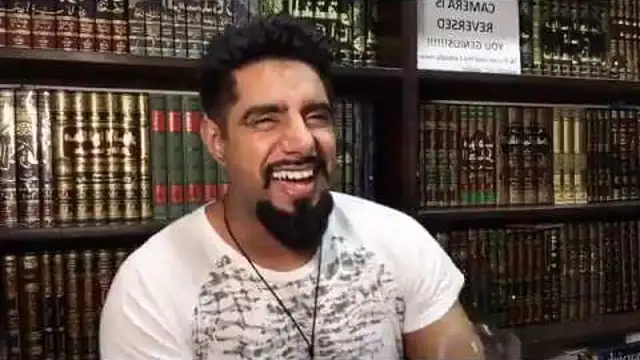 Press play to load from YouTube. Nothing loads until you do.
Transcript
machineauto-transcribed, may contain errors · source: youtube auto · click a time to seek · dotted terms open the glossaryAll right. Let's get this show on the road, people. Let's get this show on the road. Let's see if I've plugged this in well. Let me see. It is my Is it coming through all right or not?
One moment on moment on All right. Just sharing this. All right.
Swagatam, people. Swagatam. All right. Marhaban to the first of 2019, people. 2019. A very blessed and happy New Year to you all. Allahu Akbar. That's That's what we're talking about, folks. A whole year has passed us by.
Wow. All right, those of you. What is up, Robert? What's up, fam? It's all chilling. It's all chilling. All right. Finally have a Nicholas. All right. All right. Como usted. Get that. What's going on, man? Right, people. A new year.
Wow. You know, there was a a summary of uh of 2018. Uh somebody had made some clip or something saying, you know, do you recall this was in 2018? Do you recall this? They said, do you recall the Olympics were in 2018? I mean, I I honestly have no recollection of that.
I was like, "Whoa, was that in 2018?" So, I don't know whether that was just a a black of a video clip or my memory's been wiped. But, nevertheless, to another year of absolute awesomeness, people. You know, peo- we need to have a very positive kind of outlook.
We need to think good. There's an amazing a Hadith which I really like. It depends how you understand it. But, the way I understand it, it's a Hadith Qudsi. And, you know, the meaning, nevertheless, is what is important. And, it's it states that Allah says, "Ana 'inda 'abdi ka dhannihi bi." That I treat my slave as he expects of me, as he thinks I will treat him or her.
And I find that amazing to just you know, just to just the thought of that. So, if you think a lot you know, good things will happen, then good things will happen, people. That's the the summary, the gist of that, that if you if you're a pessimistic person, and you always kind of think of uh like bad things, like oh my god, why what about this?
What about then it is very likely that bad things will come your way. Um and that may not, you know, it it may just be per chance. I mean, it may just be down to you know, where um or it may be that your mindset zones in on these things and amplifies them, whereas normal people uh you know, wouldn't maybe focus on them as much.
So, either way, I think we should always be very positive. And a new year is a is a time to reflect on yourself, to kind of think um All right, people tuning in. Ahlan wa sahlan. Is that Mu'adh? You're doing it. You're doing it. Uh Fayaz Khan says Khadim Rizvi wants to debate you from jail. Khadim Rizvi Sahib damat barakatuhum.
Hadir labbaik wa sa'adaik. Right, anytime. Ghulam-e-Mustafa toh hazir hain. Aap boliyo toh sahi. Khadim Hussain Sahib, right. So, our one of our favorites favorites to mention and speak of. Right, so Yeah, so as I was saying, it's a great time to sometimes uh to to take a moment to just think, "Okay, where am I?
Let me set some targets." Um and these things, you know, some people they get all uh astaghfirullah astaghfirullah Wait, they got to do the proper the Oscar nominated. Let me get this and make this into my astaghfirullah haram astaghfirullah haram and kufur
The only thing haram and kufur ah was those uh deformed genes that made it to you. They were the only thing haram and kufur. Right, so you know, some people say, "Oh, New Year's astaghfirullah and this is haram, kufur and and imitating the kufur and you imitating the kufur blood, you imitating the kufur." Right, well so that's obviously all nonsense.
Anybody saying that is obviously uh in the words of uh who I'll be speaking uh a little more on later on, Asrar Rashid, you are ignorant. Well, we're going to come to that uh review a little later on today on uh on Village Wars, but I think these New Year resolutions, things like this are not haram.
In contrary to uh genetically deformed opinion. Uh but the this is simply an opportunity to just revisit your goals and targets in life. And you see many of the salaf used to have different targets. I mean, some people would revisit themselves on a daily basis.
People like Sayyidna Umar radi Allahu anhu uh ev- each night at a certain point in his life, he would revisit himself and his goals and his aspirations and and also take into account his actions. Accountability, self-accountability. Uh and he would say, "Hasibu anfusakum." He would advise people to do that. "Qabla an tuhasabu." Take yourself into account, set you know, revisit yourself before it's too late.
Some people maybe you know, much later. Some people on an annual basis. And and this So, yeah. What have we learned last year? What have we studied? What have we achieved? I don't know whether it's personal goals, whether it's educ- educational goals, academic goals, work goals, ilm. We should always have some kind of ilmi uh growth taking place.
Always, I believe, you know. Never stagnate. Uh push that. Stimulate yourselves. Learn something. It's never too late to learn, people. Never. Learn a language. Begin. "Ibda'u bil Arabiyyah." Begin with Arabic. And then another language is too. I'm not just restricting it to Arabic. Um somebody's asking me, "Have you taken up a sport yet?" I find no interest in sports.
Honestly, I I just can't um I don't I just don't see the fascination. I mean I don't get me wrong on health. I understand the fascination of health and I do I am addicted to the gym. There's no doubt about that. Um I mean recently I've been taking up a lot more I mean in comparison to my normal schedule a lot more cardio vascular kind of exercises well and stuff like that.
But uh So I appreciate the health aspect but I'm not at all intrigued by sport. I I I mean maybe you know people play a game or something but I just don't see the fascination in it. And I think I've got so many other things to do that why why pick up a boring habit like that at this stage in life? Uh Now Did you see any Spanish chicks?
Did I see any Where was I meant to be looking? Inbox me. So can you break down your gym routine? Yes, sure of course inshallah another day. Is it permissible to sit in a gathering with Muslims are drinking?
Muslims are openly drinking. Right so Right I mean what an interesting what interesting gatherings? What gatherings are you in? They're like Cheers man. Cheers man. Cheers. Right so well people You know many years ago I was speaking about learning languages.
When I was studying Arabic, and this is in the late '90s, I was in Damascus University. So, I went there for a little while. Part of my adventures took me to Damascus University. I was partially shocked. But, I mean, this is I suppose well, anyway, it's a different story.
Let's leave that for another day. But, when I was in Damascus University, in my class, this was in Arabic studies, um there was a I mean, the class was mainly non-Muslim, by the way. There were There was this guy, really old I mean, when I say really old, I mean, compared The fact that I was at the time only 18, just turned 18.
Um this guy was in his 60s. He was white. He wasn't Muslim. I'm trying to I And And he'd come over from America, actually. And he was just intrigued in in in the Arabic language, and he wanted to learn. And he was learning and studying, and it's amazing to to just see that And that was I mean, he wasn't He was okay.
He was at an intermediate level. He wasn't like an absolute beginner. He wasn't so advanced, but he was okay, considering his age and he'd begun not so long ago. It just goes to show I mean, the reason I that, you know, it just came to my mind was when I had mentioned about learning languages, that age should never be a barrier.
So So long as you have the capacity, the capability, then by all means. Right, did you get a massage in in Spain? You Latin native you. Well, what huh?
Were you watching? Right, so what is what is up with the people on on my on my post, huh? On this Is it permissible to shake hands with women? Do the Everywhere you go.
Some really weird creepy handshake. Remember that guy from What was that comedy where he's got the where he's got that funny hand and he's But anyway, I've got a whole video on shaking hands with the opposite gender and it is permissible. It's not haram. You can watch my clip on YouTube. I go through it in much more detail, explain the Hadith, explain those Hadith that claim that the prophet shook hands and those that claim that it wasn't the prophet but on behalf of the prophet the companions they took the bay'ah.
Uh I go through those Hadith. I show the Hadith that many of the leading companions would shake hands uh with women uh and how although it wasn't generally so much of a custom, but it isn't haram either and in some Muslim countries it is a custom, in others it isn't. I do explain that there isn't a single sahih sarih hadith to explain that it is haram. Not a single one.
Not even one to explain it's haram. Uh and the famous hadith that people keep using, I go through that to show it's actually weak. Uh How can a person regain trust of scholars in the West after the whole Bukhari gate saga? All right, Bukhari gate. Those of you that haven't watched my Bukhari gate clip, you need to do so.
Um It was about the authenticity of the hadith in Bukhari that we can't be really so certain uh that Sahih Bukhari today can be traced back to the Imam himself. And in most likelihoods, I'm sure a certain amount of it most likely is from him, but there's a lot of doubt about a substantial amount of Sahih Bukhari that who actually authored and placed those hadith in the book.
Um It's It's just a So, I've got a whole detailed video on that, so you can watch that. Um but yeah, does that in any Did you visit uh Swat? No, I didn't. No, no. Right. So, that doesn't Shh. I don't know. That doesn't detract from trust. It depends when you say how can we trust scholarship?
What does that mean? To trust scholarship. I think all people are motivated by self-interest. I think it's it's It's understandable that people will write or push ideas to kind of and they have an agenda. That that makes sense. Everybody to some extent has their own agenda.
Now, does that mean that we can never trust scholarship at all? I think that the greatest thing is that you see scholars are pushing ideas. And you always have your own sense of reason by which you can um filter, you can weigh, you can um analyze what's being presented.
You have you your own reason, your voice of reason uh to do that. So, I would say that yes, you can trust scholarship as much as you need to trust it. I mean, it doesn't need to be a blind trust uh as in I, you know, whatever the person says, I don't need to hear anything else. I think that's blind following. I'm not in support of blind following, but I believe you can trust you can have reasonable or what I'd like to call good enough trust.
So, if I can term if I can coin that term, that good enough trust, um as they use this term in a lot of uh psychology as well and stuff like this. Maula Jatt, ah ha ha ha Maula Jatt, people, have you seen the new trailer? Oof. Toba toba toba.
Oh my god, the legend of Maula Jatt. Oh, it looks epic. That's something everybody is looking forward to now. And I think it's actually interesting, you know, I'd like to share my thoughts on this, on not on Maula Jatt per se. Oh, Maula Maula no Maula na mare da Maula ne marda.
Not not on Maula Jatt. Maula Jatt is a Pakistani character. But and it's a very There's a classic movie. For those of you that are unfamiliar, there was a classic movie made in um 1979, I think it was. Right? So, a very long time ago. But uh it became a super hit in that part of the world.
And it it re- remained on cinema for something like 5 years, I think. That's how popular it was. But it's basically about the rivalry of these two people, Maula Jatt and Noori Natt. Played at that time by Sultan Rahi and Mustafa Qureshi. But I want to mention something quite interesting here. Not so much to do with the film, although the film is it's it's there as an example, but our understanding of religion and Islam.
Now, you're going to think, "What has that got to do with Maula Jatt?" All right. Well, people, it does have so- something to do with it. Right now, the movie The old movie was a super hit and it's definitely It's actually if you if you're ever bored and you want to watch something for for a comedy, it's actually so funny without They're not trying to be funny, but the dialogues
You would die laughing of the dialogue. But this movie became such a hit. And it was an unofficial sequel. Uh sorry, an unofficial Yeah, an unofficial sequel to a movie that had preceded called Wehshi Jatt. All these crazy Wehshi Jatt toys. But the the issue was that this movie became a pivotal uh point in Pakistani cinema.
And the reason I want to mention this is because in this year 1979 I believe it was that General Zia, who was in control of Pakistan, was undergoing the Islamization of Pakistan. Okay, he was trying to Islamize, forcibly and artificially Islamize Pakistan.
He was changing the names of things into like very Arabic Arabized names. He was trying to push a whole different culture. He was trying to He had this whole Islamic Islamic thing going on. Now part of his Islamic you know, I don't know, part of his um his whole not movement, but his his administrative orders was to censor the media.
And the Pakistani cinema industry, now this is really interesting. Prior to this the late '70s, the Pakistani movies and and this is where it links into Islam, and I want us to focus on this. Pay attention to this interesting point. Prior to this Pakistani cinema was pretty much centered on sentimental romantic movies.
Not that I've watched any of them. Oh, definitely, but this is how it was. So if you look at Pakistani movies prior to General Zia, they were mainly just romantic sentimental movies. Now what happened, General Zia, part of his Islamization process, he banned the open display of affection in cinema because he saw it as anti-Islam.
Now one has to focus on this because this will resonate with a lot of people. His understanding was that his understanding was that to display openly or publicly affection between the genders is haram. And therefore, none of these movies should be passed. So, hence they were censored.
So, this movie Maula Jatt, which is an incredibly obviously a violent movie, um became a super hit. To be fair, I mean, it was for its time well made and the dialogues were were really good for its time. Now, this set into motion because what you have is Maula Jatt is this character who has this this this weapon called a gandasa, which is like a it's like a a tall almost axe.
That's what it's like. But, it's not actually used for an axe. I think they actually use it to cut sugarcane or something. But, it's like it's like that. It's like a long spear kind of thing, but instead it's got this kind of round axe thing on it. And they call it a gandasa in Urdu Hindi. Now, this this movie set about what became known as the gandasa culture in Pakistan, which meant that movies for the next decade all released violent kind of movies centering around this gandasa that everybody goes around chop people up and do all of this.
Now, pause that for a moment. What's interesting, folks, and I want you to pay attention to this. You see, this was allowed. Like no scholars, the clergy, mhm many religious folks have no problem in seeing violence.
It's only affection that they have a problem with. You see, like they banned romance because they saw this as haram. Now, nobody saw violence as haram. Like, they didn't see that Now, I'm not personally I I mean, I don't have a problem watching uh movies, whether they're violent or not. But, what I'm trying to say is that look at the concept.
Like, let's get into the minds of these religious people. They didn't see an issue with, you know, people shooting countless people, chopping them up with axes, and these gandasa's, and and doing all these kind of things. Uh what they saw was an open display of romance is haram.
And it should be banned because it will corrupt our youth. You see, they they saw romance as corrupting, but they didn't see violence as corrupting. And they still don't. Like, the clergy don't see violence as something despicable or they I mean, they might I'm not saying they necessarily advocate violence. I'm not saying that.
Some of them may, but I'm may I'm not saying all clergy or religious people advocate violence. They don't. But, they don't deem it as haram as they deem romance. Like, romance to them is utterly haram and disgusting. Like, this will corrupt our children. It will uh you know, they'll fall in love, and they will do this, and they will do that.
But, they don't see the open display of bloodshed as a problem. They don't think, well, this will And that's just fascinating to ponder over. And the evidence for this was like, I mean this taking this as an example, the Gandasa culture of the '80s in Pakistani in Lollywood, Pakistani kind of cinema.
It took a turn from romance. For decades it was running on just romance, but when the Islamic uh people had a say to censor romance, it became violent and violence was allowed. And you had a whole decade of pure bloodshed, you know, Maula Jatt kind of culture filling the minds of people that this is okay to aspire to.
And I just find that as a fascinating kind of observation. So it's just some food for thought. Um you know, because that how we and I and I don't think just Islam, I think Christianity has had a similar approach. Uh many religions, they seem to have a disdain for romance and affection.
They really seem to have a strong condemnation towards that. But yet towards violence, they you know, even if they don't advocate it, they're not as perturbed by violence. And I find that a fascinating, like I said, observation, uh a social human observation. And I think maybe the exception to that historically was perhaps Hinduism.
I think Hinduism in its very ancient form uh celebrated uh I suppose kind of the whole the whole Kama Sutra, the the teachings of love. So I suppose it was very different. Although today I think um unfortunately the the right-wing the rise of the right-wing Hindutva and stuff like this, but I think in the ancient Hindu teachings that that that was an interesting side they had and focused on that many other religions didn't really focus on.
I mean, Christianity kind of I think was amongst the worst. Uh Islam it depends. You can see some of that side in it, but unfortunately, the scholars that came after the institutionalization kind of s- robbed it of any of that um affection, I guess. Right. So, how come I'm on not Kama?
Motiur Rahman wrote, "What's Kama?" It's Kama Kama. Kama in Sanskrit means mahabbat. Ishq. Love. Not Karma. Karma is your your your deeds coming back to haunt you. Which, to be fair, sometimes I suppose that can happen through through Kama, as well.
Anyway, Mufti, what Um I'm trying to read these. What's your take on when the throne of Sheba was brought to Solomon? I've got a whole video on that, Zoya. Uh I do re- do watch it. Have you read the Are you from uh Azad Kashmir or Punjab originally?
Wow, a lot of ethnic questions today. Wow wow wow. Well, I suppose both, I guess. I take it. Well, when I did my DNA test, and it came back saying you're 100% Punjabi. I was like, "Huh?" I was like, "Dad?"
Well, and then upon doing research, I realized that oh, ethnically, 80% of Azad Kashmir is ethnically Punjabi, that people who must have migrated, God knows when, centuries and centuries, uh maybe millennia ago, but the people that migrated, uh so, that was an interesting uh research nevertheless.
It's It was interesting to But that's for another day, I guess. I I am very fascinated in that uh side of things as well, on things like the history of uh Azad Kashmir or Kashmir as a whole, and looking into things like that. I did um uh when my research and asking people and things like this, I came to realize that places like Mirpur, uh all of these fell under the district of Jammu in pre-uh partition, and they are actually a part of that geographical part of Jammu, uh which is then a part
of Jammu Kashmir as a whole. But uh nevertheless, that's uh a discussion for another day. Right. So, what's going on, people? What's going on? What's on your mind? What Well, I've spent uh I was on a bre- I was on a break, people. It's good to take some time out. Went to Cyprus, chilling out. It's It was good. It was good, but God, honestly, you know, tell you, my kids or my one daughter specifically is such a nightmare.
Ah. I think the whole She was going to destroy the whole of Cyprus, but uh Well, she totally wrecked almost the a hotel. Uh well, I mean, this and this is just at the age of four. So, God, I'm I wonder what will come. Right, what else has been going on? I missed So, because of that, I couldn't do my lives.
I missed the fact that it was Ghalib's anniversary people. Ghalib, the legend of Urdu poetry. Those of you that haven't that can read Urdu and those of you that do understand Urdu, I think you definitely should take a liking or an interest in poetry because Urdu has a magnificent resource um really of um of of of poetry.
I mean, it's so enriched with poetry. So, I definitely think. And those of you that can understand some Urdu, I think you should learn Urdu, uh Hindi, whatever. I mean, I think these are beautiful languages amongst many countless beautiful languages. But, Ghalib, yep, it was his birthday, people. Um and I think All right. What a legend. So, I I didn't get a chance to So, on that note, I mean, any I'll I'll I'll suppose say a few words about him.
He is amongst my favorite poets. A legend. Mirza Asadullah Khan Ghalib. That was his name. He was born in the late 1700s. I know that. And he died in I think it was 1869 or something like that. Now, he was somebody who really kind of I don't know.
He restructured almost part of uh Urdu or he was involved. He was amongst the pioneers who kind of reshaped what will become the the kind of the benchmark of Urdu poetry to come. He was a contemporary of the king uh Bahadur Shah Zafar, who was the last of the Mughal kings before the British dethroned him and they didn't execute him, but they blinded him and exiled sent him into exile.
And that was the end of the Mughal dynasty. But uh Ghalib he lived in Delhi most of his life. Uh and he did spend time in Agra as well, which is where the Taj Mahal is, people. But Agra, previously, I believe it was called Akbarabad, if I'm correct. And this is a a name they've resorted to.
And he's left Ghalib has left his book called Diwan Diwan-e-Ghalib, his poetry, and it's amazing. And he was somebody who was very proud and almost arrogantly proud about himself. And I think that you see that in his poems. And it is it has a cool kind of aspect to it. So he says in his words he praising Meer, actually. He did meet Meer.
Meer was the absolute don of Urdu poetry. But Ghalib was a very young I mean, he was like just a boy when he met Meer. Um and he says uh Are Rekhta ke tum hi Ustad nahi ho Ghalib? So he says that Rekhta is the old name for Urdu. He says that you're not the only don of Rekhta, Ghalib. Rekhta Rekhta ke tum hi Ustad nahi ho Ghalib?
Suna hai agle zamane mein koi Meer bhi tha. That I've heard that in the previous generations, there was somebody called Meer as well. And some people say this is him taking the mick out of Meer, but I think he isn't. He's actually rating He does rate Meer. But Ghalib has his He touches up on a lot of topics in his love.
A lot of them touch upon love, alcohol. Ghalib loved his drink. So, I've often I've quoted sometimes Ghalib's poem where he says, "Ghalib chuti sharab, par ab bhi kabhi kabhi." That you know, "Ghalib, I've left drinking, but even now and then, you know, I It's got to be done, you know, now and then." So, Ghalib was one of those uh And he has Let me think of some solid lines of his.
Um he has one which is really I mean, he has so many which are so fascinating. Uh but his um Mana ke taghaful na karoge lekin, that he says, "I Taghaful is when somebody pretends to be unaware." It's an Arabic word. Uh it's It's not that they're unaware, but they're pretending to be unaware.
So, you know, somebody like is some I know they're looking at me, but I'm still pretending that I haven't noticed, like this. So, in Arabic and in Urdu, this is called taghaful. It comes from the word ghafla. Right? So, he says, "Mana ke taghaful na karoge lekin, khak ho jayenge hum, tumhe khabar hone tak." That he says, "Yet, we will become like we'll become dust." It will take that meaning it's It's to take you so long to notice us.
So, that's an amazing dawn line of Ghalib. Oh, what else comes to mind of Ghalib? His uh I think it's of the same same poem actually that he says uh that life, the only solution to life, the problems of life, it's a bit depressing, he says is death.
Meaning that problems will go on. Uh and this is something that I've said to people often that it's not the problem, but your ability to solve them that counts. So, he says that the problem Uh marg is the the Farsi word, Persian word for death.
So, be beyond death, what is the ilaj of uh the cure to the problems in life? That a flame, that a candle will it will burn in all colors and flames. Like, if you see the the flame on a can- candle and the way it will wither and and and the kind of shades of that the flame will will take in its color.
He says that it will take all colors until dawn. Meaning that And by that time, well, it's dawn anyway. So, and this is an amazing poem of his to just where he speaks about life and things like this. But I I definitely invite you all to explore poets like that. And he has an interesting one where he says uh Kaba Kaba is speaking about the Kaba.
Kaba kis muh se jaoge Ghalib sharam tum ko magar nahi aati. That Ghalib with what face like how will you face the Kaba? That have you no shame for God's sake. So, this is something Ghalib addresses himself about. But right, so that's gone on. What else I uh somebody had asked about Kader Khan see since we were speaking about cinema and and people and celebrities and Ghalib Kader Khan has also passed away a uh a legendary famous actor.
May Allah grant him and anybody who's passed away an an elevated maqam in Jannatul Firdaus and oversee, you know, forgive their shortcomings. Somebody had asked that if I could make a mention about him and why not, of course. He was somebody um who was the son of a Maulana. His father was actually an Islamic scholar. And from what I heard was that Kader Khan uh resigned I mean at an old age not resigned but retired from um from from acting and and part of and resorted to a lot of community work and helped out a lot of Islamic institutes as well and even designed some of the
uh you know, some of the Islamic syllabus and stuff like this. This is uh from what I've heard Allahu Alam. Right, so let's move on people. What are some questions? What are some questions? Today's topics. Yeah, uh what is going on? What is going on? Well, I noted some questions people had asked. Mhm.
All right. The North Sentinelese people. Somebody had asked me about I'd spoken previously uh about the North Sentinelese people from the North Sentinel Islands and how they were an isolated community for for for for maybe I don't know 30,000 years plus something like that 30,000 years.
And that and the Christian evangelist that tried to kind of go across to them and they killed him. So somebody had asked what about Islam? Are we not obligated to take Islam to them? You don't need to take Islam to them and murder them with your viruses for God's sake.
All right, well they're going to murder you anyway. Do we not need to take Islam to them? Right. The things people have justified in the name of God. I don't want to do it. God wants me to do it. These are what we call delusions of grandeur.
Right. So no, you don't need to take Islam to them. It's okay. Don't worry. You know, they have a lord and the lord will cater for them in sha Allah. I think it's uh from a theological perspective the question that's being asked You see people don't Yes, the message of Islam is here and yes generally we are to to give the good news and to to talk reason and talk about these things where possible.
But it doesn't mean to force or to kind of to shove this down people's throats so to speak or to kind of just become obsessed with this da'wah. That was never the message of Islam. Muslims were never obsessed with this da'wah the way today some Western Muslims are behaving.
Today some Western Right, some Western Muslims almost have this obsession of I need to take Islam. I need to take Islam. I need to do these things. And in all honesty, that is just a reflection of their own inner insecurities and them wishing to exert some control on other people even if it's at a subconscious level.
But that is what it appears to be that they're trying to exert some kind of control in the name of God, of course. So you see people historically for example like Qadi Abu Bakr ibn al-Arabi, the great Maliki legend from Muslim Spain almost 900 years ago in his commentary on Tirmidhi in Aridat al-Ahwadhi, he writes that oh it's recommended.
He says once a year as a strategy he mentions this. He says for the authorities not him. Not the Muslims. He says for the authorities to extend da'wah to the neighboring Christian countries and states. Once a year he says mustahab. It's a recommended thing. Not an obligation. He says it's mustahab that it's recommended.
Because look, people don't embrace Islam like that anyway. It doesn't work like that anymore. You know the days of old have gone. You know when people are looking for new gods and new religion the is saturate the market is now saturated. It doesn't work like, you know, in the olden days people were looking for gods of new. And they were searching and for something to liberate them from that.
And and then that time is kind of like sealed up. Humanity now is very different. We don't live in a world like that anymore that somebody's going to come to you with a new god and and people, you know, in in droves will kind of flock to this new god. It doesn't work like that. Uh of course, God is just one.
Uh what I'm trying to say is religion is no longer the motivating force for people worldwide. Uh and it hasn't been for a few centuries. Okay. Religion is an important element in everybody's life and in most people's life uh lives. I mean, don't get me wrong there, but it's no longer like in the days of old.
That's what I'm saying. So, we need to you know, we need to really step out of this obsession. This obsession really I I that's my analysis is because uh second generation Muslims in this country um who are like children of immigrants, Muslim immigrants to this country. I mean generations like which of which I'm included. Now, they have had to rediscover faith for themselves.
And this part of rediscovering something is that it triggers insecurity. So, the first one of the stages that you go through is a sense of affirmation. Now, this stage of affirmation begins externally. So, you begin by demonstrating to others that you are part of this belonging. So, usually it will become with a it will that stage has a uniform stage to it.
So, you will adopt a uniform. Um this happens with it's not just religion. You can see this with other groups as well. Uh once people enter a certain stage, they will adopt a particular uniform. This is really to show others more than it is for them. Because they want to push out to the world that I have now become a part of this belonging.
That is what is happening at the subconscious level. Now, people will recognize them for that. That thereby that recognition uh consolidates their own inner uh belief structure or their affiliation. So, it kind of re-cements it for them and makes it stronger for them. So, this is all part of that kind of and then people want to to recruit others.
Uh this is once again part of re-consolidating and reinforcing your own belief structures. Because so long as you're telling others about it, you must kind of firmly believe in it. So, these This is at a subconscious level. I mean, if you psychoanalyze a lot of what's going on, this and it's not just to do with young Muslims or Muslims.
This is it can be part of anything. When people become a part of a tribe, a group, uh a gang, uh this they all exhibit very similar ostensible behaviors that are easily identified and cla- and classified. And they all fall into the same kind of thing like this affirmation, adopting a uniform, calling others, doing this.
This It doesn't matter whether it's a gang, whether it's a a tribe, whether it's a religion, they all go through these kind of things. And hence, when you reach a secure state of faith, you stop um you stop kind of uh worrying about other people. Hence, these scholars in the past never used to be anything like these people today.
They were very because they were very secure about their faith. You know, they didn't need to worry about it being in clothing, they didn't need to worry about it being in a beard, they didn't need to worry about becoming obsessed about calling people to Islam and stuff like that. So, yeah. So, I hope that um uh does help. What is your view regarding the SRE the government will make compulsory in 2020, which will promote homosexuality, transgender taught to kids from aged four?
Right, that's a Right, okay. I have heard about some of this going on. I mean, to me, my understanding, to be fair, is I'm not happy with um imposing uh sexuality or any of these things onto children.
And and I feel and so, I am opposed to any kind of imposition uh that any government should bring. Um I believe that people that this is unnatural to be kind of forcing uh gender politics and sexuality politics onto children.
Um I'm totally against uh any of that. I feel that you should just let be children. Okay. Let them grow up in the innocence of their childhood. And then Sure, I mean, as they approach you know, secondary school. I mean, and maybe even one year before that or that kind of time uh introducing them to these kind of topics.
I think to me that that's I mean, I'm fine with that. Uh at that age, but this age four, five, six I mean, I I I I think that I I'm I am disturbed about that. Um I'm not happy about these kind of things. So, I think that there should be some kind of collective uh voice. But, you know something? This is not just Islamic.
This is not just We shouldn't isolate ourselves as in make this a Muslim thing. There's many people as who are part of just the general British public that will have an issue with this. They don't need to be Muslim to have an issue with this. So, what I would advise is that when we want to share a or raise a collective voice, it should be a a widespread unilateral it should be a kind of uh a collectivist voice.
It should be a British voice. It should not just be a Muslim voice. I'm opposed to this kind of this ghettoization of just Muslims making everything about Islam. This is not about Islam. This is just about children being used as instruments for sexuality politics.
Because some people are like, let's say some people feel that there's a rise in homophobia or stuff like this. So, they want to teach They want to get children indoctrinated to accept something. So, I feel that this is a we shouldn't just You know, I I've seen some people saying, "Oh, in such and such Islamic center, in such and such mosque, they're going to do talks.
Maulanas are going to do talks on this." Oh, for God's sake. You know, it's this is necessarily a maulana thing, right? This is just a normal human thing like you know, we as normal people, they can raise You don't need to do Islamic speeches on this. Sure, I mean, take action. I mean, take the correct protocol on what to do.
Raise a concern, a parliamentarian kind of what what would bring in parliamentarian action. Delivering Islamic lectures is going to get you nowhere. In fact, if anything, it's going to make people push this even more. Because they're going to see this as some kind of Islamic reaction. And people hate Islam. Let's just be real. Right? They don't want People abhor the term Islam now.
All right? Non-Muslims even if they But even if they don't want to say it to us, they are so fed up with Islam. So, stop making this an Islamic thing and just generally raise it as the concern it is, and people will listen. Because as a citizen, you have the right to raise your voice, and there are non-Muslims who will echo your concerns.
So, that's my Because people are just really fed up with all this You know, all this like political correctness. And this is what gives rise to the far right. Cuz they keep saying, "See these Islamics." And you know, like New Year's Was it New Year's Eve or New Year's Day? There was an attack in um Greater Manchester or somewhere. Right, I saw some video clip.
Some guy they'd arrested for stabbing an old couple or something. And I don't know whether he had mental health issues. I think he did have mental health issues. But the clip I saw, and this was a clip of somebody I think on Snapchat recording him. The police had arrested him and he's saying "Long live the caliphate. Allahu Akbar." You know, this is the kind of nonsense that it's so goddamn disturbing to hear.
It's so annoying. You think for God's sake. Another bloody You know, and what is and you know, long live the caliphate. What caliphate? But what caliphate are you on about? Long live the caliphate. Did your dad run with a separate caliphate? That's been going on.
What caliphate? What the Ottomans? Are you on about the Ottomans? What are they on about? Nobody's even read history. What caliphate? You know, this This is the thing. Nobody has any idea. Inshallah, this is why when I did a history course on Al-Andalus, the whole reason was to demonstrate the rise and fall and show that these things are always political. There has been no caliphate.
Okay, let's get that I mean, if if what you mean by caliphate is the name of Muslim empire, then there have been many caliphates. There have been many Muslim empires. Those empires couldn't give a damn about people like you and me, regular Muslims. They were just politics. They were just people who were in control that couldn't care less about their own people.
They were just in it for power. And that's almost 98% of the time always been the case. The Ottomans had a constant practice of uh fratricide. As soon as they came in, they would murder their brothers. That was a common practice. In fact, some of the Hanbali ulama even gave them the fatwa that it's permissible.
So, this you know, what And you know, these people say, "Oh, they call them The Ottomans call themselves the the khulafa." They did later on. They didn't initially used to call themselves khulafa because they were non-Arabs. Uh and they couldn't really care less about the Arab world. You know, this is another thing. The Ottomans, right, you've got to understand something. These people were off like kind of Mongol descent.
The actual Turkic descent is not from the Middle East. I know Turkey today falls in the Middle East, but they are not ethnically from the Middle East. These people ethnically come from Central Asia, North Central Asia. Hence, today even the Turkic people are people from Turkmenistan and and all those countries. And then Turkey isolated no way. So, hence, the Turkish language is not linked to any neighboring Middle Eastern language.
It's a not a Middle Eastern language. The Turkish language has nothing to do with the Middle East. It comes from far up north. So, the the the whole point of of this is that the the Ottomans were never interested in the Middle East or the Arab world or things like this. They were never Arabs. So, they they moved their capital, one of the first things they did, and then they moved it further north.
And they moved it into what would have been Eastern Europe, and they were always interested in those areas where they ethnically came from and had connections to. They were never interested in this, you know, what is Baghdad and this and that and all these places and the Middle East. I mean, they ruled over them, took the money and took everything. That's not a problem, but they didn't were never interested in those people. So, this thing of them being so Islamic Islamic people, don't get me wrong.
I mean, I appreciate the history as well, but they were never So, people say when they call themselves Look at their titles. They used the title Kaisar-i-Rum. This was one of the titles that many, especially the great you know, the great Turkish kind of sultans of the Ottomans used for themselves was the emperor of Rome, the Caesar of Rome.
That was one of their great titles cuz they considered themselves the inheritors of the Roman Empire. So, just saying anyway, I mean, it's a little I go on about these things because we have this fake nostalgia that if we go back to the Seljuks or the Abbasids or somehow we're going to be living in some paradise. No, we're not. They couldn't care less about the the subjects.
But anyway, right, let's move on, people. What are some questions? I know I've got to discuss today the the village wars that have been going on. First, Louis is asking about the Bir of Buda'a. How is this fit to bathe in? The Bir of Buda'a was not fit to bathe in.
People never used to bathe in Bir of Buda'a. Bir of Buda'a is a well. Uh it's a it's it's a disputed well, but it's a well that existed in Medina historically. Now, this well, apparently people used to chuck all kinds of trash in it. Now, including sometimes some dead animals may fall into it and stuff like this.
So, the allegedly, the prophet was asked about water from this well. And the prophet's response and the school of Medina, Imam Malik's school uses this this teaching as a principle. And that is that in the water the water is not made impure in the water So, except that which changes so so long as these three qualities are intact.
So, the the taste of the water, the the color, and the taste sorry, and the smell. So, the taste, color, and smell. So, long as these are pretty much water, then the water is pure even if something impure has been dropped into it. So, this is a principle that the school of Medina has adopted.
So, if there was a well or a large container of water and something impure dropped in it. But that impurity, let's say you remove the impurity. Like let's say there was a a dead animal or let's say in this well and they removed and now they took the water out and the water still seems to be like normal water, you know, it's got no smell to it. It doesn't seem to have any taste. It doesn't seem to, you know, the color doesn't seem to have been stained.
So, in that sense, the Maliki school of Medina would say you can still use this water if you want. They're not saying you have to use it, but the question was could you use water that something Uh, if some something impure has made contact with it but hasn't impacted it. That was the question. Now, the school of Medina said you could so long as the three qualities of water remain intact.
Now, the people who disagreed with that strongly, um, you had uh, this was regardless of its quantity. Now, everybody agreed that if the water was of a huge quantity like a lake or something like that, then everybody agrees that's fine. But, we're talking about where it's in a confined space.
So, the Hanafiya said that in a small confined space, no. But, if it was something that they say large like they get like a pool like they say 10 arm spans by 10 arm spans. And although Imam Abu Hanifa didn't say that, but they attributed to Imam Muhammad ibn al-Hasan al-Shaybani, his student. Now, and then some people say he never said it. He was just sitting in a mosque that was or in a room that was that big and he said it the size of this room.
And when they measured it, was 10 by 10. So, but according to them, small containers, if something impure drops in it, it's too late. Even if the water looks fine, you must get rid of that water. You cannot use it. Um, that goes with pretty much the Hanbali and the Shafi'i except they came up with a container size, which is almost the size of a barrel, I believe.
They said that if it was the size of a barrel, then it's okay. Approximately, I'm just The Arabic term was qullatayn. So, there's a hadith in Abu Dawud that idhā balaghal-mā'u qullatayn fa lam yahmil khabathan, that this is the hadith. Although this hadith is problematized, it's weak. Um, but the Shafi'i and the Hanbali still used it. So, they said anything that's reaches a barrel, approximate this uh, container size, then it gets makes contact with impurity, it's okay.
But anything below that, no. So a bucket of water, you're taking a bath, something drops in it, and then the problem gets worse just for the fick lovers out there. What about used water from wudu? So we call used water ma al-musta'mal that once you use it's called used water, so you use it for a ritual, they claim these schools claim it becomes impure.
So like the Shafi'i school, the Hanafi school, the Hanbali school, they they they consider that water to be impure or unusable. Some of the Hanafi said it wasn't impure, but it was unusable, as in you can't use it again. Now the problem is if that water you're doing wudu in a bucket and that water falls back into the bucket, then these schools all have a problem with stuff like this and you know, some have more of a problem than others, but the school of Medina was always very kind of sound-minded, always in my understanding spoke from the voice of reason.
It just said, "Look, calm yourselves down, people." You're just having a taqwa attack for no reason. The water's absolutely fine. Ma al-musta'mal they said is nonsense and you can use whatever you want, okay? Uh they said so basically simple rule was if you come across water, you don't know what it is, but it looks, smells, tastes just like water, then it's water and you can use it.
Quite simply put. I hope that explains this issue of what they call ma at-tahur. So ma at-tahur is purifying water, okay? And they call it tahir, which means it's pure wa mutahir. So not only is it pure, but it purifies, okay? And the don of the Maliki Qadi Ismail, right? From the early Baghdadi Iraqi Maliki's, who's personal one of my heroes.
He in his tafsir of the Quran where Allah says that we've sent down from the sky that we sent down which is on an emphatic form tahur on the pattern of to repeatedly or excessively do something like to forgive. So, he said that water repeatedly purifies. It doesn't become impure so easily.
That was some thick for you people. I hope that helps. It's always awesome to revisit some of these thicky rulings. Why is sectarianism such an issue in the UK? It is, man. Tell me about it, honestly. Right. Somebody had asked the question about love the prophet more than our own family.
Now, how does that Hadith of the mithaq? What does that mean? Which Hadith of the mithaq? Type a shino. Personally, I don't know any Wahabi jins. I've spoken to many. Hope that helps. Manaza hala hala. All right. Can you explain the inheritance versus Right. Okay. So, this was a question that there's a Hadith that had a come uh had to have a corner in a lady.
And none of you have faith until I am more beloved to him than mean while I did he or what I did he or what nasty at my end. That more than his father and child and everybody. Now, this Hadith or this teaching that the prophet is more beloved to Muslims than our own family members. What is What kind of What What is this talking about?
This is not speaking about an emotional love. Although that would be awesome, and that may be an aspiration that Muslims may have, but this is a rationalized love. Okay. So, we believe and we accept. So, some things you love them because you know how dear they are to you.
So, the prophet to Muslims, as a statement of faith, is more dear to us than people, generally speaking. But wait, this This hadith had a greater meaning to it, though. It didn't just The prophet wasn't saying this in a sense of See, this because some people might see this as Oh, you know, why would the prophet say something like this?
He was saying this because that what he was trying to say to the people around him was that, "Look, I have shown you a way that is very that is to strip you from these shackles of superstition, from the ways of old, from your tribalistic um kind of from your tribalistic attachments.
Okay. Now, that is going to be hard for you because you are from a tribal society. Now, I want you to know that this what I bring you as a messenger, that you hold me in that light more dear to you than all these things that are valuable to you.
Because if you don't, it will be difficult for you to embrace this truth. Because on one hand you'll have your father, your children, your brother, your tribe, them saying to you, "Oh, what the hell? You're leaving these gods and statues and you're going to worship, you know, God? I mean, just because Muhammad said so? What's wrong with you? Oh, you're leaving our tribe. What's wrong with" So, these things were barriers to people in a tribalistic collectivist society.
So, the prophet saying this to people, that's the light and that's the angle he was coming from. Um Now, so that's the backdrop to this Hadith. It's not just a general thing. The second thing is that yes, to Muslims, the prophet becomes dear because of what he's brought to us. Because he is the the conduit for revelation from God.
Uh as Muslims, we embrace that. Now, this is a rationalized love which over time may kind of may morph into an emotional love. But, it doesn't mean that just because I love my child more than anything in the world, let's say, or I love my Somebody might love their their parents or they might love themselves or they might love their partner or they might love somebody else They might love somebody more than anything in the world.
It doesn't mean that, "Oh my God, you know, they're some kind of kafir." It doesn't mean that at all. Okay, so that's And this the scholars are very clear that this was a rationalized kind of love. Right, people. Let's Right, okay. Let's move on to a quite a serious topic that's been brought to my uh attention about Oh, right.
I'll take a quick question. I've made a note, sorry. There was a question about women praying on their menses. Now, can women pray on the or should women pray on their menses? Now, I've highlighted before that look, women on their menstruation are first of all, to answer the question, no, women don't pray when they're menstruating, but let me expand on expand on that.
So, it's not because it's not because women are impure. I'd like to clarify that, okay? I've said this before, women are not impure. Right. Now, some people think oh, women become some kind of najas or impure and and in some cultures they do things, I mean, non-Muslim cultures, certain Hindu practices and I think uh Tibetan and I'm not sure, some other communities are known they will send women out into a hut.
And the woman must spend her time in that hut and things like this. Now, that is nonsense. Uh it is stupid. Women and and some Muslims have also inherited some of not exactly that kind of practice, but similar to some Muslims. Just to clarify once again, women are not impure when they're on their menstruation, okay? Let's clarify that.
Make it very clear. Yes, they are going through certain, obviously, hormonal and physical uh experiences and that does place a certain amount of pressure on them. Uh whether it's physical, whether it's psychological, unquestionably, there's sometimes anxiety, sometimes stress, uh things like this do happen.
And it's it's very normal. Now, Allah subhanahu wa ta'ala as the Hadith in Bukhari states that the prophet said, "This is something" He said, "Look, don't be" cuz one of the the women she was embarrassed of her her kind of menses. And the prophet said, the prophet said that He said, "Don't be embarrassed about it." He said, "Innama hadha shay'un katabahu Allahu 'ala banati Adam." This is something that Allah has set out in his laws of nature for the daughters of Adam.
That this is nothing to be embarrassed about. Okay. Now, this and when people say, "Oh, but the prophet said, why did the prophet say in some of the Hadith that oh, the women should kind of they should be wary of entering the masjid if they're on their menses?" Now, first of all, most of these Hadith are not sahih. But this message of women staying away from the the masjid at that time, if you look at the Hadith of the women who come to the prophet to complain,
they complain of heavy bleeding. Now, you have to remember that in that day and age, they didn't have things like sanitary pads and things like this and they didn't have um so it was difficult for people and you know, they it could lead to just spontaneous kind of bleeding. It could lead to I mean, it could lead to staining the place where you are to to actual visibility of blood to embarrassment in public.
Things like this. So, the prophet said, he advised certain people that look, when it's like this, to save in orders because people in societies, even in many parts of the world where they don't have things like where they don't have period pads and things like this. Women become embarrassed. And the prophet was trying to save them from becoming embarrassed. And he said, "Look, don't come into the masjid or don't come into certain places if you know that's going on." Not because you're impure.
He never said because you're impure. Just to clarify that. Okay. Now, Allah subhanahu wa ta'ala when people go through any kind of anxiety or any kind of hardship, which may have some level of hardship, Allah has always created ease for them. So, hence when a person is traveling, when a person is ill, when a person is And I'm not saying that these have to but even when you look at a person traveling, uh it's some kind of hardship.
So, Allah creates certain kinds of ease, like he might shorten the prayer, he might do certain things. But people are not always traveling. Whereas something like the menstrual cycle is every month upon a woman, generally speaking. So, Allah has created ease by as a sadaqa, he has forgiven that for them. That they do not need to pray that. And now this is in a hadith, it comes that if Allah gives you something as an act of charity, it's an act of generosity, fa qabaluhu.
That in a hadith that some person, I think was traveling and he said, "Oh I want to or there was a certain sensation that he said, "I don't want to accept it." And the prophet said, "Innama dhaka sadaqatullah, that is a sadaqa of Allah, tasadaqa bihi alayk." And that Allah gave this act of generosity and charitably to you, fa qabal sadaqatahu.
Then accept his sadaqa. So, when Allah charitably gives you an act of generosity, he says you do not need to pray, you do not need to fast, then don't. Don't try to you know, like try to I don't know, don't try to uh champion your uh your your piety by define by trying to challenge Allah.
Like Allah's given you this. He said, "Look, relax, you know, you're going through certain things. You don't need to worry about your salah." So, you don't need to act over pious, you know, "No, I'm more pious than what Allah has You know, Allah said to me, "You don't need to pray." But, I'll show Allah You don't need to do any of that. So, that's uh so, women do not pray on their menstrual cycle, but take it as a bonus, not as a You know, they don't doesn't need to be like a feministic reaction to this.
Like, "What the hell? What the hell? Who does Allah think that we're incapable of praying?" Yeah, so I read the other day that people were saying uh um referring to Allah in the as she. I mean, it doesn't get any dumber than that. For God's sake, take this feminism somewhere else, man.
Allah is referred to by the default pronoun in Arabic, which is hua. And that's in its uh nominative form, fī ḥālat al-rafʻ, uh or in its in the other grammatical kind of forms, whether it's genitive or accusative, it's hu or hi, depending on its form. So, this does translate as he in the English language, but it doesn't mean he as for gender.
Like, it doesn't mean Allah is a man. It doesn't mean that. Cuz God is not a man. Um unless, you know, some anthropomorphic kind of uh people want to believe things like that. Like God is some old man in the sky. He's not. Um but this is the default pronoun. So, huwa also refers to it in the Arabic language as well. If it's a masculine So, all things by default in Arabic are masculine or feminine.
So, and that doesn't mean sexual kind of uh like identity. It doesn't mean that. Okay? So, just as a qalam, like a pen, is huwa. Kitab is huwa. Uh it's it. Okay? So, it doesn't It's a masculine. It's not here. And there's other things which are here. But you don't refer to Allah as he or she, for God's sake.
That is the dumbest thing I've heard. That's just like I need a cause to fight for. I'm so bored. Right. So, Right. Moving on to more serious matters, people. All right. The allegations of sexual abuse and abuse within the UK's madrasahs.
Now, I want to first of all put this under the allegations of abuse as a general Sorry, as a as a generic um umbrella term because there is uh far more physical abuse that outnumbers the sexual abuse, which does exist as well. But I'm just saying I wanted to include all kinds of abuse, whether it's the emotional, the mental, the physical, sexual, all of these things that are taking place within the UK madaris.
Now, this Recently, there was this uh sorry, there was a Facebook post I came across um by a person. His name was His name is Omair Omair Amjed. Right now, he's somebody who went to Darul Uloom Bury. Um It's in the UK, North England.
Right now, it's one of the oldest madrasahs within the UK. And he speaks of in this Facebook post of some sexual abuse that he underwent unfortunately whilst he was there. And I mean and and and you can read it and he speaks about some older pupil, some older student who was a a prefect, I believe, in the madrasah.
That means somebody on good terms with the teachers. Um and given this position of some authority over the students that would uh sexually abuse other children in this in this madrasah in Darul Uloom Bury. I've heard that he sexually abused uh not only this person, but other pupils as well.
Now, this guy made a post I think a few weeks ago there's another person on Facebook by the name of uh Shah Lal um Right, Shah Lalum Amin. Right now, I might be Sorry, I might have written that wrong.
But Sh- Shah Lalum Amin, I believe, his name is. Right now, he wrote a post about undergoing so much physical abuse whilst being in the madrasah that he was repeatedly beaten. In fact, his Facebook page um um is I mean, it's it's full of many memoirs that he's sharing of his madrasa days when he would he and other students would be repeatedly um and relentlessly beaten to a pulp, I mean, in his words.
Uh he says that they were beaten so often and so much that they just went numb to the whole thing. Um Now, this whole thing, whether Look, I want to say something here. I First of all, we need to understand that abuse is a very serious matter.
Okay? This is not a kind of joke. It's not to be taken lightly. I visited this guy's page uh because I saw it Some people shared it with me and and people were discussing it this uh this person who made Now, I saw the comments being made on this post. Okay? People who were apparently graduates or from that same madrasa, who presumably are ulama, maulanas, right?
Writing things like you know, just not like I don't want to quote some of the stuff that they were saying. Just things like, "Well, what do you expect if you went into a basement at night to get You know, do you expect Like is Like basically, isn't that what you're looking for? Some Some guy writing These are like people graduates from this madrasa. People at this madrasa that were at this madrasa with him saying, "Oh, you're I don't I remember you from back then.
You're lying. You're full of crap. You're like this. You're like that." "You deserve, you know, like uh uh a certain sandwich and certain mayo, and you deserve this and you deserve this and you know you're a or you're like this or you're like that. I mean, wow. Like this is is this are these the inheritors of the prophets?
Is this what the madrasas have come down to? You know, even if I'm not saying that the teachers in the madrasa are writing this. Obviously, they're not. But they are well aware. You know, I said this once before when Abdul Raheem Limbada tried to unnecessarily repeatedly um was attacking me online and doing speaking about me.
And I read out some of his posts where he ridiculously um and sensually speaks about a young girl 10 years old and how fascinating her hair is or something because he sat behind her in some airplane. And I found that very disturbing and I was like, well, you know, does it really surprise me that these people who head and lead these Darul Ulooms.
And I said then that they are aware of so many rape incidents within their madrasas. I said and I said I swear by Allah that they are aware of them. That these teachers either they either uh some of them may be involved or they either purposely turn a blind eye or they're indifferent. They just don't care.
If this not be true like look, some people are saying that this person uh is lying. Whether this Look, I don't know. I don't know any of these people by the way. Somebody Can you believe Check this out. Because I put a dua on this person's post. I I read this thing. I don't know. I saw it. I read it and I said, "Look, may Allah grant you and any victims of abuse ease." I said that and may Allah clean these institutions of such filth.
That's what I said. Amen. People started commenting, these kind of graduates of his madrasa and these other people started commenting, "Oh, I bet Abu Layth funded you to come up with this allegation." Wow. And then people just started They started swearing at me. Swearing at me. Like, oh, you know, the homosexual swears and this and that and I'm thinking, you know, and and some person shared this with me said, "Oh, do you know that they've been speaking about you on this post?" And I thought, "What?
Me? Why me?" And so I read And this Honestly, cannot believe that this the depth of stupidity that people will plummet to. Some people on this said, "Oh, Abu Layth likes attacking these institutes." Why? Look, I've always said I believe that madrasas can serve a great job if they will.
But right now these madrasas are at a ridiculously absurd standard. They are so low. They turn a blind eye to abuse. You know, in 2011 the BBC shared a study. This was We're talking 2011 about hundreds of cases of abuse that they said was the tip of the iceberg in madrasas.
Physical abuse is a standard. Sexual abuse, although I'm not saying it's as common as physical abuse, but it is not uncommon in these places. And I guarantee you all of these people that have graduated from these madrasas, these maulanas, know of at least one case of sexual abuse. And that they have turned a blind eye to.
Because for the sake of these elders. Who are the Who on earth are these elders? Who do they think they are? They're not above the law. Right? And they definitely I mean these people are not God. I ask I hope any of whether it's this victim or any victim, I tell them I urge them go to the police.
Report these cases. And if these people like Limbada and all these other people or whoever is in a position of power within these institutes, if they claim to be genuine and truly Islamic, then call for an investigation. Call for an independent inquiry into these cases of abuse.
Let's see how sincere you actually are. If you seriously If you believe this this stuff is false, if you believe that people are making up these stories, and I'm not saying some people ain't making up these Some people may be, but I know that there are genuine cases and many of them. But if you believe that these are false, call for an independent inquiry.
An investigation. Let it be transparent. How will they? Because they know just like everybody else that this is going on. And if that be the case, then I'm telling you if these if such cases such people are meant to be the leaders of this faith, you are just producing You know, I read some of the memoirs of that Shah Lalon Amin.
Uh Uh, I read some of them on his Facebook page. And I And he was speaking about now, after 20 odd years, he's coming to terms. And he said that he has finally reported them to the police. And I thought, "Well done." Because it is unacceptable, I tell you, it's unacceptable to tolerate zulm.
You should not ever It is haram for these people to be conducting zulm, but it is equally haram to let these people get away with it if you have the capacity to do something. Because when you let them get away with it, they will perpetrate that with others. Do not let them get away with it. Right, so And if these people believe that they are being sincere and that they are against then let them call into an independent investigation into these matters.
Because if these matters are false, as you claim, then surely the evidence will demonstrate that. But that's what I And I feel above anything, and this is not me trying to You know, some people say, "Oh, why are you against these It's This is not about a sectarianism." I I don't care what the madrasa is, whether it's a Salafi, Deobandi, Barelvi. These happen to be Deobandi madrasas, but it doesn't matter. I don't I couldn't care less whether it's Shia, Sunni, whatever they are.
But the truth is, if they are teaching people by beating them up, by torturing them, by emotionally abusing them, by sexually abusing them, then before anything, they have betrayed Allah and his messenger. That's before anything. Before It doesn't matter whether he puts Allama, Maulana, Sheikhul Hadith, or, you know, anything Bukhari or anything before his name.
That person has betrayed Allah and his messenger. You have no loyalty to that person. Right, so that's So, I have nothing but stern words for any place. And And it's a shame that our places that are meant to bring forth the preserve the inheritors of the prophets allow for the for the institutes to be to be infested with these these kind of crimes.
So, you know, may Allah subhanahu wa ta'ala cleanse these places, amen. And my duas and sympathies are with any victims. And I do urge people if they have been victims to contact their local police to tell them to not let these people get away with this kind of stuff. Yeah. This is uh it's too much now.
So, So, that's my words uh for that. Right, now. Okay. Let's take one two questions, then we've got to get to this Village Wars people. This debate that's gone down between Asrar and Usman. We got to speak about that. So, any other I'll take one two questions. I know some people had asked uh Do we live with jinns?
What a Do we live with jinns? I have a living relationship. I cohabit with many jinns. Uh look, the jinn is is something that is unseen to humans.
It's not We don't live with them like they're not like ghosts like kind of living like that. It's just some kind of organism that as Allah has explained exists in a way that you cannot fathom. They may exist at a quantum level. They may, which means which would explain why they are you can never see them.
It's just an organism, some living organism that you could never fathom really. I mean, we just couldn't because they they just, you know, the way space So, the way things move through something, the reason you can't is because of the way that the molecular formation that it can't go through it. But certain things can. You see, like neutrinos and other things, they're not They actually go through us.
Countless on a daily basis. And they're emitted, you know, and they come from outer space and they just constantly going through us. And they're only a recent discovery. And so, this is why I think it's so amazing to to to learn about the world around us. But yeah, so All right, let's take another question. Dark matter? Yeah, things like this. I mean, we don't understand, but the reason I said about neutrinos is because like these things obviously pass through us and pass through everything.
They pass through matter generally and um you know, it's just an example of how certain things are so microscopic and so at such a kind of quantum level that we can't understand them. Is Is it unethical of me to share the diversity of opinions of music to a youngster? Of course not. Music isn't haram. Claim they teach jinns Some people have said they teach jinn.
Even the angels must be looking at that guy thinking He's got a class. It's It's like me saying I I teach electrons. I teach quarks.
I cha, do you now? What was the partition of India good or bad thing? Oh, I've discussed that before. I don't know. In some ways I wished maybe it all stayed as one, but history is history, I guess. Right, Tafsir, do you believe that people were Muslims previously Tafsir of I'm not sure what verse you're referring to. Uh, we'll check it up another time.
People were Muslims previously. When you say people were Muslims, they weren't Muslims like I take it you mean like with previous prophets. They were people who submitted to the will of Allah and hence they were called people who submitted Muslims, but not Muslims as in the follow the the fiqh and stuff like this like we do. Right, let's get on to this any other Was there anything uh Mhm.
Mhm. Mhm. Somebody had asked the question about ijma. I've spoken about this previously in much detail. Right, people, there is no such thing in in essence as ijma. I mean, there is some basis for it, but in essence ijma was about the collected uh sorry, the the kind of inherited uh living tradition of Islam.
Um and it was to do with the early Muslims and to do with creed. How do you know whether somebody um I've got a clip on this explaining in more detail. So, basically, there's certain verses in the Quran that if you take them literally, it shows that by doing any sin, you could be a kafir. How do we know those verses are not literal?
Well, the early community inherited that understanding from the prophet, from early Islam, um the companions. They never understood these verses ever like that. That could be called loosely a kind of ijma, if anything. The ijma which was to do with these matters of creed and not become calling people kafir and so on, later on got introjected into fiqh, and this is just a myth.
Muslim There is no consensus on consensus. Nobody can even agree on what ijma means. It's stupid. Ijma is just This is a stupid, bizarre concept that it's the Check this out. It's not even the ijma of Muslims. It's the IJMA OF SCHOLARS. WHICH IS SO ABSURD, CUZ WHO is a scholar?
Like who is a scholar? Let's let's say I'm a mufti upon I'm a scholar. People would say, "What are you on about? You're a kafir." Now, now just for a moment, pause. The way they are responding to me, make no mistake, this is exactly the same throughout every century of Islam.
You just pick certain scholars in Islam, go to their day and age, they may be celebrated figures today, in their own day and age, they were many of them mocked, ridiculed, called kafir. Take Imam Abu Hanifah as an example. In his own day and age, they hated his guts, ridiculed him, called him, you know, kafir. They treated him like a kafir. They said he when he died, they were These were great scholars of his time.
They were saying, "Thank God he died." With that, you know, that They were so People like Sufyan al-Thawri hated him. And yet, today he's an amazing I mean, we love him. But, the point is Imam Bukhari, they they hated him whilst he was alive. So, my point is that many scholars in their day and age were not the way people today are. I'm just giving I know people are saying, "Why is he giving himself as an example?" Just to show you the level of hatred.
See, when I mention myself, you understand ah, the level of hatred. When I say people like Imam Abu Hanifah, you can't you can't kind of mentally grasp the level of hatred. So, it's the same thing. So, it's an ijma of the scholars only, not the common Muslim. They don't give a damn about the common Muslim. Then, so first of all, we don't know who the common scholars are. Secondly, only the Sunni scholars.
Where are the Shia Muslim? Are they part of this ijma? That's a fascinating one. Are the Shia part of this ijma? Cuz people will say, uh no. They say, "Ah, so they're kafir." Is this a Uh no. Ah, so they're So, so this ijma is just it's just a gang of uh
crazy. And from that, let's move on to more interestingly, uh Right, somebody's asked to speak about the Tawhidi versus Haqiqat Jew part two. I haven't watched the part two. I'm going to watch it. So, hopefully on Monday night I will discuss that. Let's move on to this debate, people.
All right. What was it? WrestleMania. All right. Who remembers the good old WrestleMania? WrestleMania 6, people. That was the one. I was a kid. That was the one. Hulk Hogan versus Warrior. Not that these people resemble any of them. Warrior was a legend, man.
All right. I was a major big fan of Warrior, man. I used to have a massive poster of him in my bedroom. I'm a proper Warrior fan. Right, so right now, people, village wars have continued. So, what have we got here? Sheikh Asrar. Molvi Asrar Rashid decided to debate Maulana or Molvi Usman.
Afghani surname. But, Maulana Usman. So, this was to do with the blasphemies of the Barelvi Akabir, the Barelvi seniority, the scholars, beginning with Ahmad Raza Khan Barelvi Sahib himself, and then other leading Barelvi scholars.
Something wrong here?
Tell us what is wrong and it will be checked against the recording. Nothing changes until a person has reviewed it.
Sending a note needs JavaScript, which is off or unavailable in this browser. Nothing has been sent.
No name, email address or account is asked for or stored, and the inbox does not store your IP address. For rate limiting it keeps an unreadable fingerprint of your connection for 48 hours, and our database provider's own logs record connections as every website's do. Only your note, its kind, the page and the moment in the recording are kept, for review.
Cite this recording
Stable id, transcript version and tier are part of the citation. Every change to a transcript is logged.Mufti Abu Layth Archive, auto-transcribed, may contain errors. https://muftiabulayth.org/r/g961zm2zfd8/ (accessed 1 November 2026)
- APA 7
Mufti Abu Layth. (2019, January 5). Monday Nights with Mufti Abu Layth: Session 106 [Video, auto-transcribed, may contain errors]. Mufti Abu Layth Archive. Retrieved November 1, 2026, from https://muftiabulayth.org/r/g961zm2zfd8/
- Chicago author-date
Mufti Abu Layth. 2019. "Monday Nights with Mufti Abu Layth: Session 106." Video, auto-transcribed, may contain errors. Mufti Abu Layth Archive. Recorded January 5, 2019. Accessed November 1, 2026. https://muftiabulayth.org/r/g961zm2zfd8/
- BibTeX
@misc{abulayth-g961zM2ZFd8,
  author = {Mufti Abu Layth},
  title = {{Monday Nights with Mufti Abu Layth: Session 106}},
  year = {2019},
  month = {1},
  date = {2019-01-05},
  howpublished = {\url{https://muftiabulayth.org/r/g961zm2zfd8/}},
  url = {https://muftiabulayth.org/r/g961zm2zfd8/},
  organization = {Mufti Abu Layth Archive},
  urldate = {2026-11-01},
  note = {Auto-transcribed, may contain errors}
}