
Recordings › MindTrap with Mufti Abu Layth
The Hanafi Madhab & The Diverse Schools within | Shaykh Atabek | MindTrap #83
salat salaah namaz prayer salaat namaaz as-salah al-salah salawat aqidah aqeedah aqida creed aqeeda aqaid hadeeth ahadith ahaadeeth hadis hadees ahaadith saheeh saheeh hadith sound hadith tafsir tafseer exegesis tafasir tafaseer madhhab mazhab school of law madhahib mazahib madhaahib combining prayers jam' al-salah jam bayn al-salatayn jam' al-salatayn malik ibn anas malik bin anas imam maalik imam malik ibn anas esha ishaa salat al-isha isha prayer night prayer imaam imams prayer leader masjid masjed masaajid masajid usul al-fiqh usool al-fiqh usul ul-fiqh usool ul-fiqh legal theory maaliki malikite malikiyyah hanafite hanafiyyah shafi'i shafei shafiite shafi'i school qiyas qiyaas fatwah fatawa fatwaa fataawa legal opinion hukm ahkam hukum hukam ahkaam haraam forbidden mubah mubaah mandub mandoob mustahabb mustahab fard farz faraid fard ayn fard kifayah fardh sunna sunnat sunan prophetic practice imaan eemaan eeman faith kalam ilm al-kalam kalaam maturidis maturidiyyah maturidite atharis atharism athariyyah sihr sihar jadu jadoo kala jadu sorcery shaytan shaitan shaytaan iblis iblees shayateen shayatin devil qiyamah qiyama qiyamat yawm al-qiyamah yawm al-qiyama day of judgement jahannam jahanam jahannum koran quraan al-quran ayah aya ayat ayaat aayah aayat wahy wahi wahee sahaba sahabi sahabiyyah sahabiyat companions khalifah khulafa khilafah khilafat caliphate khilafa madina al-madinah madeenah yathrib ahl al-sunnah ahl as-sunnah ahlus sunnah ahl al-sunna sunnis sufism soofi aalim ulama ulema ulamaa shaikh sheik shuyukh shaykhs fitnah fitan strife madrasah madrassa madrassah religious school zina zinaa zinah fornication in sha allah insha'allah in shaa allah insha allah inshaa allah alhamdulilah al-hamdu lillah alhumdulillah alhamdulillaah hamdulillah bismillah ir-rahman ir-rahim bismillahir rahmanir rahim bismillahi bismillah al-rahman al-rahim salam as-salamu alaykum assalamu alaikum assalamualaikum salaam salaams salam alaykum wa alaykum as-salam greeting barakah barakat barkat baraqah blessing sabr sabar duaa duaas supplication ikhlas ikhlaas deen al-din ad-deen ad-din ibadah ibada ibaadah ibadatlive stream · 1:55:44 · 12,000 views · 12 Jun 2026 · Open on YouTube
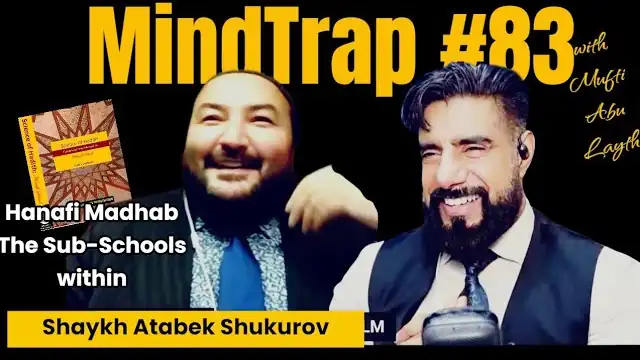 Press play to load from YouTube. Nothing loads until you do.
Transcript
machineauto-transcribed, may contain errors · source: youtube auto · click a time to seek · dotted terms open the glossary[music] Allah Allah bismillah right I'm just going to ensure we are all live just bring this up in front of me Allah Allah uh right those of you just tuning in can click like and share.
I'm just going to and just mention here that I am now have gone live. All right. So bismillah there it is. Um, okay. Let's gone live.
and and welcome back. Allah bless you all. Keep you all smiling and radiant from his Allah abbar. um blessed opportunity to have an amazing conversation with our very near and dear Sheh Atabek who needs no um introduction, somebody well known.
We had a mind trap a few years ago where we went into the uh just the nuances, the iterations, the different reflections of the Hanfi Matab, an area in which Shikh Atabek uh is an outstanding scholar and has great work and research. He's a to many Hanafis a breath of fresh air because you see the Hanafi Madhab one must keep in mind was um one of the earliest and most significant schools of
law in Sunni Islam. However, in recent centuries, it it fell victim to immense stagnation and um just a level of what we call in Arabic Jum. this kind of stalemate scenarios and just v what penicious control uh by by some elements uh and unlike some of the other madhabs that still have always had uh free radical element and radical here I don't mean in a negative sense but free elements that have always
managed to breathe life into the madhab the hanfi mhab struggled on that front and today somewhat only mirrored to a lot of the world uh through the bottleneck of the Indoac world. So really to many people being hanny means being brilliant and that's clearly not the case.
I mean the huge parts of the hanofi world uh remain non-indoac Turkey, central Asia, the Middle East, Iraq, Egypt, uh even parts of Tunisia today or some parts of um the world elsewhere. Without further ado, people present to you our beloved Allah
Yeah. So you're with ush. Uh just firstly before anything I want to thank you for taking the time out. Uh we had a beautiful opportunity to have a great conversation earlier this week. I did think that it would be spectacular you know if we could just have even a glimpse of that or just share some thoughts and reflections online for people and so shukran and you know as the hadith says whoever doesn't isn't grateful to people is not grateful to god so
sorry it's just because of the mind so I couldn't >> yeah so anyway um first of all I really want to thank you lady, it's a great opportunity obviously um and um as we had the conversation last time live uh with your audience um um because obviously you are coming from both of the backgrounds. Yeah. And Hanni and Maliki.
So definitely um I I believe that our conversation today is going to be even further fruitful for both of us, for everybody who who is going to to watch us. Um because you know one thing um u I really struggled um so I had quite a lot of um um for example these type of meetings on TV show for example um channel and like MTV etc.
But most of the time the the the presenters and the hosts they're from among the layman. So their question will be something which is re relevant for the layman which is very good you know. >> However I feel thirsty for more deeper and more academic you can say conversations you know. So it can be only with somebody who is very deeply rooted in the Islamic academia especially yourself.
You specialize in both anafi and maliki. So definitely I I believe that today uh we will be able to bring up quite a lot of issues which are hidden in the very deep ocean of all these um um >> yeah yeah >> meeting of seas.
>> Yeah. Exactly. No because I mean u the knowledge is not for the lay man because there are a lot of intelligent and academic people who are looking for answers also. So hopefully today our conversation will answer their some of their questions inshallah. >> Yeah. Amen. Amen. And those of you just tuning in click uh uh like and share spread the love.
Before anything uh before getting into that I just wanted to share some brief thoughts, reflections, make dua uh for one just just the immense suffering going worldwide but narrowing and and we can see so many eruptions. I mean for those of you that are aware of what's going on in Azad Kashmir and Pakistan uh there's a lot of unfortunate um you know tyranny being unleashed and then Gaza again um the really the
tyrannical genocidal regime uh of Israel has just been unleashing again and on Lebanon recent attacks and then Iran has u started once again in defense, what's going on there to other places uh to issues whether they're in Sudan or the Congo we're hearing of and right now close to home this following this heinous attack in Northern Ireland the completely just mindless pogram style attacks that were on anyone who's ethnic minority especially Muslim but they don't have to be Muslim just people of
color uh black people in Northern Ireland, their homes being torched, set on fire, you know, something out of almost a 1920s, 1940s uh you know, scene that you might picture somewhere. So, we make dua for anyone who is suffering. You know, it it is just really just an uh I read something that said that it is, you know, mindboggling that people will listen to four like four or five billionaires that have their hands in 80% of the
world's resources. They will listen to them that the reason they can't afford a house is because of the migrant who lives down the road. you know, just what nonsense is that? And this is what's happening. People are being played. Um they're being distracted by uh you know, just really tyrants and and people like Elon Musk and other people, Farage and other people who capitalize on hate.
But we must remember at all times following following helping people where we can help them also just to remain as difficult as it is in this time to still have hope and be positive. She just wanted some of your words uh on that as well just for what was going on around the world. Uh I mean especially nearer to home um just before we begin.
>> Yes. So um obviously um in terms of like political and the social uh sciences u obviously you're much more knowledgeable as far as I remember you have master degree in the sociology and political studies as far as I remember. So definitely >> I do have a master's in education but a a degree in psychology I have.
Yeah. And a master's in education but yeah. >> Oh psychology. Okay. Okay. >> Yeah. My degree is in psychology. My degree is in psychology. It's a BSC in psychology in psychology itself. And then my masters was in education. >> Okay. Okay. I don't know where I read it. You had uh MA in politics or social studies or something. No. No.
>> No. But I suppose psychology is close to social. It is similar. I mean it's different but it's similar. >> No. Okay. So I did also MA in forensic psychology also but anyway >> yeah so so definitely definitely um I can only come from the you know from my own background because we are Quranentric and uh Quran explicitly mentioned uh that um the destruction okay so the destruction is mass destruction yeah so it is uh Quran names it as Yeah.
So as you know some of our early mash they differentiate between s and py. Yeah. >> So um py is the day of resurrection. Yeah. But s is the end of the nation the end of the okay. So anyway, so the reason uh for for this is um Allah explicitly mentions um about the so the mass destruction Allah says
as you know in the so when the time of the destruction comes so the actual destruction mass destruction of the nation is caused when the mut the meaning of mut means wealthy. Okay. So the wealthy the very very very highly wealthiest people. So when they will take care of the like leading positions.
Yeah. So political leader. Yeah. So when when the wealthy people will be um will be in the political you can say leaderships. So that is the end of the nation. Okay. Um so but anyway anyway um >> that's a beautiful insight. I never thought of it from that angle. So as in besides just commanding we place them in positions of power.
>> Yeah. Yeah. So and then they messed up their fisk. Okay. Fisk. So they just messed up the Yeah. Obviously we know the meaning of for example what's the meaning of the rats mice scorpions snakes why why why do we call them because they actually ruin things which we build that's that's why [clears throat] it's the element of the negative element of the society so the society creates
like establishes uh you can Okay. Uh uh positive you can say cultures, positive projects and traditions but f disobedient people there after ruining it. Yeah. So but anyway coming back to the current condition um I really uh I really feel sorry for all these victims. Yeah. So I don't know I don't understand the political um events.
Okay. And I don't know who is behind it. Is it is what we see is that what it is or maybe something is I don't understand any of that because I'm quite ignorant in in terms of like political sciences you know but I just feel sorry for the lay man lay men who are uh victimized in all these regardless of their color. Okay. And I can see from both sides you know unfortunately from the colored people as well as from the white people also.
Yeah. People are dying people are being killed etc. Yeah. >> And it's There's a frustration that people have. I was watching this uh discussion that the workingclass white people in the UK uh especially speaking about the UK that there is this frustration of so many things that they've become disfranchised from you know they're struggling to for example have good results whether it's to to get a property to do other things.
Now there is an immense bubbling of this feeling kind of left out in society and their concerns and those things are truly valid. People you know they it is true that what nobody's there for them. You know the government doesn't really care about them. Um people could say well you know like ethnic minorities like we could take ourselves as an example Muslims.
Now we too in many ways we don't have that privilege. We already have an ethnic name. We're less likely to be able to find employment according to data. But we do have things like we do have uh strong family support networks. We do have you know things like brothers, sisters, parents, uncles, nephews, nieces, people they do pull together and we are also a lot of this or or you know Muslim ethnic they are because and this might be actually ironically because we are children of
migrants uh coming to a new place we are very you'll find that they are very enterprising in trying to start new businesses. So some of the highest the data shows the highest number of business franchises or uh I mean enterprises were done uh by ethnic minorities and largely by Muslims actually in this country. So they'll always try to start something start this start that.
Now societies that don't have that like the working white class uh that are suffering in all areas what's happening with that frustration is certain people are capitalizing on that hate. They're seeing the energy and when like so let's say in the last 3 years alone there'd been several there'd been uh there had been a few attempts on decapitation on beheading.
There was an attempt to behead a Kurdish person by a neo-Nazi. There was an attempt to behead a woman. There was another uh beheading attempt as well. None of these caught the media because the people doing it were white. Now, the moment something like this happened, you had an Sudin man, an African, and you know, he was uh horrifically was caught on camera stabbing this uh white person.
This is capitalized fed into the frenzy. You know the people blow into the smoke that that you know they that oh that's your problem scapegoating your problem is really because of these colored people. If you think about it look sheh we were born and raised in this country. Yeah. Now we have if people go back to the 80s when we were kids growing up people you know like our teachers you go to the schools they would have been they would have been heavily mixed white people Asian black people grew up side by side you know yeah we had our communities
people there was racism then as well you know in fact then it was very open um but there wasn't like people obviously it is so easy when When a person is angry to be mislit. >> Yes. >> And this is the immense teaching you know of the sunnah. Somebody was asking me recently in a totally different topic about relationships and I said one of the biggest things if you can capitalize on it is from the teaching of the prophet sallallahu alaihi wasallam if you can obviously it's going to be difficult whenever there's a situation of anger try to contain anger because
anger can be so it's such a force a force field of chaos. So yeah, so that's what we're seeing that this anger is being cat catalyzed, redirected uh because of a select few who have an agenda. People do have an agenda unfortunately for mischief and chaos.
May Allah just protect people. I you know it's just to share our duas and to and to really say I would just like to say that you know in the face of this the as the prophet sallallahu alaihi wasallam said that the mmin believer no matter what the situation the believer is positive no matter how you know you know it is all positive and good like you think well how could something horrible be good.
But the prophet sallallahu alaihi wasallam said he has patience and he's still positive. So that's just a reminder because I know all of us um whether directly indirectly or feeling this. We're watching things we're seeing this. It's it's very unsettling. It's horrible to just even watch it and feel it in the atmosphere. This hatred and negativity.
May Allah make us all be a source of peace and light for one another. Amen. >> Sh coming to circling back to our to your expertise and a more um lively topic and that is the school of Iraq. the school of kufur of the legend the dawn Im Abuhanifh
may Allah uh be pleased with him this school is such an incredible school of thought um for people who aren't aware that there are many subsets subschools what we sometimes call madaris madrasa So you have a madhab and you have madaris. And in the past I've spoken of the madaris of the malikia.
So many of you may be aware and some may be not. The school of medina as an example was located where Imam Malik was in Medina from where the prophet sallallahu alaihi wasallam is buried. Now the school however developed many subchools throughout uh the Muslim world. So very briefly just so we're aware and we can then uh bring this and juxtapose it with the hanafi mab that the school of Medina it had very early on the Egyptian school.
So a lot of Imam Malik's key students not all but a lot like Wahabasim Ashab they all went to uh Egypt and they this this became like the Egyptian the Misin the school and then some expanded further into north central Africa which was modern day Tunis back then it was called this is where the rest of Africa became expanded I believe from that name.
Um so Tunis had some of the key students as far um and these were so key in the understanding. At the same time, some students of Malik uh endeavored further north into the Middle East into Iraq, especially the students of his students, and they set up an entire sub school known as the the Madrasa Iraq, which was namely places like Basra and Baghdad.
Um and because the Iraqis and this had the legends uh like Isel uh who went there and he just became I mean after him he there's so many shot forward uh you know you had the types of um uh Bakar Abhari you had Mabel Assar Abdah al Bakdi you had all of these just legends just sprouting up.
Uh so many so many heavyweights that produce so much from um you had a Ley, you had all of these people. Their key thing because they rivaled or they lived with uh a lot of the Hanfis, they became known in the Malikim to produce the Usul because the Hanfi were very usuli. So the Malikia that shared space with them had to challenge them on they had to show well because kept saying what about your so you see some of the earliest books like was Iraqi ki abdahab and all hisuli books was were Iraqi uh so this school
starts to develop meanwhile in andaloo in western Africa northwestern Africa you had the marah but then you had andaloo which was Muslim Spain they started to they had their key people you know you've got uh going to have Yahi you will have uh also people like um the um al- Maliki with his uh you'll have the just key both
you'll have just the dons emerging huge dons of the Malikim Madab all coming together in Andelus Muslim Spain. So different flavors of the schools emerged in the Maliki Mab. They continued to uh acknowledge and honor one another. So you'll see uh often citing in his work or this is you know they might say what about this principle and they might say you know from Iraqi had that opinion or this was
what the so for example some Malikis from uh Iraq they held the opinion that um only Quran can bring about it can bring about an obligation. Any command you find in a hadith can only be it can only be a recommendation even if it's presented as an obligation. So some like mab and other malik from they held that you might get rulings like when is discussing for example um do we have to cover or other people do we have to cover ourselves in salah and it's an
obligation of the salah to cover the now they will say our Iraqi malikis held the opinion that covering yourself was a separate obligation of Islam and not inherent to do with Islam that it is a pillar of Islam as in with not a pillar but you know like within Islam not the five pillars but >> uh it is nothing to do with it is salah it's just overlap so even if a person technically prayed with no clothes on
>> he might have the sin of not wearing clothes which is a separate commandment but it's nothing to do with salah the salah is valid The rest of the Malikia didn't accept that but they said our said that so they would honor and cite each other and do different things uh how they prayed for example notane praying on the side. So this kind of colorful uh dynamism is is definitely known within the uh maliki mhab.
This is equally uh sometimes not as well known about the Hanafi um matab the what would you but this is true that the you know our conversation was amazing how the hanafi mab is equally rich with these madaris >> yes >> yeah what >> yeah love your thoughts on that >> yeah yes yeah so mutisab it's just amazing that you have mentioned all of the madaris of Maliki Madhab because unfortunately exactly as you have mentioned in our time when we say madhab
so the main you can say understanding is that just one thing just one thing yeah there could be some disagreement between the appearance of the scholars but it's just personal disagreement but they do not understand that it's not personal but the disagreement in most of the cases is based on the differences of the madari within the Hanfi school.
Yeah. Yeah. So um within our madhab also we do have quite a lot of madaris. Okay. We have baghdad we have okay and we have mash of mash of mash of okay and mash of and mash of Yeah. So obviously mash of most of the time they go into the as well as mash of but the the rest of the mad is they are equally shar in the as well as also there are disagreements.
Yeah. Yeah. And um uh >> what yeah >> but uh because what I've heard in the books often people will say oh this is our position the books I'm referring about and then they would just often say you know those who were behind the river they said this and >> you don't hear much about like you know >> rarely exactly exactly it's very rare yeah but in you can find it a bit more often okay
but um in it's very rare okay um and the reason for example in my understanding maybe you can um uh clarify it a bit further In my understanding as we know um we have continued in andaloo am I right? >> Yes. >> As well as Yeah. Yeah. As well as I Malik who he was with Abbasis.
>> Okay. Spreading m spreading the Maliki school within. Yeah. So >> based on my own reading reading the history um the reason why some school or some religion becomes widely spread is one of the main reasons is because the power people of power supported >> so for example let's go back in in in in history for example about the Christianity we had abunites we had arucids okay so where are they Why would we do not have them?
Well, because Constantinos he adopted uh Catholic religion, isn't it? So that's why the other schools Okay. For example, the incanderia they had abunit. Yeah. The the pope arus for example. Yeah. So his opinion his is very close to the Islamic. In my understanding maybe he was the genuine follower of isatah. But why would you not know about the what is his mother?
>> Yeah. So because the politicians have followed >> the Catholic religion as well as the Slav Slavanians Slav you know Russia all of themselves they have followed the Orthodox and Armenian kings also so that's why power the politician they have saved it okay so uh coming back to our understanding for example in the Maliki school so um there were Malikis as well as Hijazi Abbasis there were also Malikis.
So that's why in my understanding um the Maliki Madarus of Maliki school school is preserved much more better than for example the Hanafi because the in the Hanafi uh only the madras which is preserved in the mus of okay it's because and supreme judge of Abba says I'm sorry.
Okay. But what about the um Basra? Who the um the uh father founding father of Basar? Imam Zufur. Imam Zufur never engaged he never was involved into the politics you know as well as the for example they did not engage into the politics you know as well as for example in the summer the main founding fathers of Abu he was not one of the judges and he was not one of the ministers you know so that's why the the predominant the predominant madraser which is remaining
Okay, which contin but for example they are both as well as also okay and okay so unfortunately because they were not part of the politics so their school uh vanished just you know disappeared a bit and you know Hazam he makes a point of that he says that oh
naturally Hazam I I I always have a soft spot for Hazam I do like him I'm very fond of him but he had this uh as everybody knows um you know this kind of fire and against the meds >> now and you know >> mainly me and you I s mainly you Malik and Hani Yeah, Malik and an >> he [laughter] the Malikis were his first, you know, because they were the front first frontier because he was in Muslim Spain which was Maliki >> and the whole of the West.
>> Yeah. Yeah. And and im Yeah. Abu Wid Baji, you know, it's fascinating because Abu Wii Baji was the doorstoppper to Hazam. >> Yes. They say, you know, Hazam was such a a legend that when he came back and started debating people, he was just so good at debating that whoever debated him got humiliated. >> Yes.
>> And so he his notoriety just spread like wildfire. >> And he started to get more influential. People were becoming too intimidated to debate him. And they say and he was so popular until Abu Wii al Burgi set foot and and challenged him and and and and it says I just wish that those debates were documented. It's such a shame.
>> Yes. >> That they died out. >> Um but but yeah, and he does say you know he says he won some, he lost some, but they were uh in any case he says I accept that until he came uh none of these others had a chance. So but he couldn't stand the Malachia. He had such an issue with the Malakia thinking that the Malachia and the Hanfa in the east.
So he highlights that two madhab spread because of the Sultan. He says that you know Madhabani uh that it's only because of the Sultan that because of having power. He says yeah but >> no because he was freeth thinker so um he makes quite a lot of very strong and valid points actually you know >> yeah he was and you know Zufur I I I'm really intrigued with what you said
there about Zufur because Zufur is huge really if one thinks about it within the within the mat >> he's such a huge personality always somebody I found very interesting because he's often uh reasoning things which whether you agree with the conclusion or not you have to admire his working out you think yeah you know like okay I'm whether I'm there or not but I like how he got you know I like his his tools and how he thinks so I didn't realize he had gone to Basra and that
became his uh his kind of stronghold. >> Yeah. Yeah. So because obviously you know um uh when Abu Hanifh appeared. Okay. So because he started um uh he started uh spreading his message. Um so quite a lot of muh hadith they were offended because Abuhanifh in their understanding he was rejecting the narrations in their understanding like authentic narrations.
So um the maybe maybe you read that uh volume of Baghdad of Baghdadi in which he just brought all the offensive like statements of the Muhamad against Abuhanifh. So that's not just without no without reason you know so the reason was Abuhanifh started clarifying the weaknesses and the defects of the hadith you know.
Yeah. And anyway so Abuhanifh was in Kufa. Okay. and Basra in that time they were very heavily influenced by Hassan Bas and Muhammad Muhammad and both were scholars you know. >> Yeah. And uh so they very um they were very against Abu so negative feelings actually it went >> and they were actually very they were even very anti- each other as well.
uh uh Imam Hass Bos and uh there's a lot of statements that they would >> Yeah. Yeah. Like that he would Hassan Basari would say about uh that you know he thinks he's Ysef. >> Yeah. [laughter] >> Yeah. Yeah. So that is from >> going around interpreting things. >> Yes. [laughter] Yeah.
So there are even more like strange even further strange statements of hatri against Muhammad you know but anyway >> yeah yeah yeah I've heard them I've heard them I won't cite them here but I've heard them >> yeah we don't want to mention so anyway um so they were spreading so they were so there were people of okay and then um Abuhanifa one of his students yeah so uh one of the students of Abuhanifh um he was baseri so after completing his studies he came to Abuhanifh saying imam s I want to go back home so uh just give
me permission please said right now I'm just a bit busy my mind is busy just wait for me just couple of days so then I will be ready for you and then I will give you permission yeah >> a useful something so anyway uh after a few days so he called him so he said and then he made his was his wasa is authentic till today still available beside that was we have two other was of Abu Ysef I mean narration of Abu Y in which it says of Abuhanifh yeah and then we have got another was to do with the you know so both are fabricated and only the which is authentic from it's
the of useful something so but it is just niah so he says when you go to the to uh to bas do not engage into the debates but show respect back to the people of knowledge. It's do you understand? But anyway uh and after that Abu Hanifh gave him also a lot of money and he carried on maintaining his student uh financially but unfortunately because of lack of wisdom you know unfortunately most of us have that you know we don't know how to spread the message we we engage into the frictions etc.
So most likely that what happened and use for something he just spoiled. Okay. So that made the even more against Abuhan. Oh he is the student of Abuhanifh you know and in some of the narrations it says that you was forced to leave you know and to leave you know to go out of Basra to live in the outskirts of Basra. Then it came to Abuhanifh. So found out that some friction happened in Basra and then he called Zubar obviously Imam Zuar he's very mature and very knowledgeable person and then he gave him advices so
he said oh Zuar when you go to Basra you know those people they dislike us so make sure that if they ask you a question answer them according to what they believe what is known and what is accepted by the aari But then at the end say but there is another opinion and they will ask you and what is that opinion and after that you clarify that opinion our opinion and then after clarifying they will ask you whose opinion is that and after that say it is the opinion of Abu Hanikha.
Okay. So people so and that how that how the Hanafi school started spreading people were amazed by the opinions because it's like life-changing you know like fresh breath you can say you know and then within less lesser than five six years turned from into the school. Okay. So whenever we say and then he uh he established the school of Yeah.
And uh because unfortunately because they they don't like the you know involving into the politics okay because they are freeth thinkers so there are quite a lot of their opinions did not match with the abasi abasi politicians you know so that's why they were Weren't they heavily Kawar as well in Basra?
Uh I believe it was uh was it dominated but with a bit of the Kawar thing or I think Kawarish they did not live in >> they may have died big cities. Yeah. Yeah. Big cities but outskirts but they they were available if you remember they invaded into Kufa twice during the time of Abuhifa. Do you remember? But then Abas Khalif Yeah. So he was strong enough to take it back.
Yes. So anyway, that's the that's the beginning of Basra. Okay. So I im the father of mad of >> Madhab. >> Yeah. I mean when it comes to Imam Zufur's uh transmissions, they are mentioned within Hannfi texts. So you will get them in the fick books in the uh whether it's you know all kind.
But why was he am I correct in understanding he was older? Was he older than the other two? He was he was older than them both. >> Definitely. Yes. >> Yeah. Definitely. So he was the senior student of Abu Hanifh and Abu Hanifh actually made Will. So so I im supposed to be taking taking the circle after Abuhan. Yeah. Yeah.
>> Is that any okay? Has that been um cited anywhere or mentioned or discussed? >> It is mentioned in in the in nearly all the books and after the death of Abu Hanifh in the Jam Alfa there were two circles. Yeah. Of Hanfi school circle of Abu Ysef only few people would go and the stud circle of Zukar it will be just packed up you know. uh but uh for the reason that Harun Rashid decided to choose um Abu Yus to be the supreme judge.
So that how he became even more popular you know >> and I imam Zufur was forced to leave to you know back to to Basra and he just died there. Why do you feel the um because in the hanafi mab zur like I said he's mentioned but by people he's often either undermined or he's very much just like the back a background character like people don't >> you know it's like they almost don't take him seriously why why do you think that impression developed then along the way considering how substantial and even
in age because Imam Muhammad uh who is considered very senior in the madhab and I mean one could say well because you know he's authored most of the books the uh the um however the ria especially but the he only got to study three years I believe with Immifa >> is that I'm quite skeptical I'm quite skeptical >> even even of that is that like even three years might be a generous reply >> optimistic but optimistic >> and and a lot of his teachings things he's getting from other people but there's somebody between
>> only Abu Yu so when Abu Hanifh died Im Muhammad Hassan he was only 13 years old kid you know yeah so um all of his knowledge okay is taken from Abu Abu Ysef from Abu Hanifh you know so not not directly from Abuhanifh but anyway um the the most important thing is Imam Zukar was identical copy So identical version of Abu Hanifh you know but Imam Abu Ysef he was muadith Assari scholar and as you know the Abbasi kingdom they were assaries.
>> Okay and um so that uh could be one of the reasons why uh most of the teachings of Imam Zufur are just left outside of the as well as the books. You can mainly find them in the books of biographies or the books of man or books of maybe some stories. You know the opinions of Imam Zufar.
>> Why would you feel the Abbasid were more drawn to the Aari uh kind of flavor? >> Yes. So um because u Abu Hanife he was Quranentric. Okay. Because Quranentric isn't it that Quran says okay but if you look into the message of the just listen and obey listen and obey don't think yeah just take what I'm saying do you remember this incident um
incident of for example between uh Abu Hurer and Abbas if you remember. Yeah. So, um >> when you wake up, okay, in the morning, do not do not put in your your hand into the into the water before washing it three times. Do you remember? And then Abbas said, "So, so how are we going to move the mas of Medina, which is like big container, you cannot move it.
So, you have to put in your Do you remember?" So then saying well when I'm narrating from the prophet don't use your brain. So the movement is more like just listening and obeying >> but forentric people more about thinking and contemplating. >> So so it's very it's ideal for rulers and governors because they want they want they don't want people who are going to be critiquing questioning.
They want people who are subordinate. >> Yes, correct. >> Follow. Yeah, that makes a lot of >> makes a lot of sense actually. >> So that's why that's why that's why when it when it came So for example, even Imam Malik Yeah. Uh I'm uh I don't I don't accept I don't accept that narrative of Imam Malik which is widely available now in which Imam Malik appears to be just muddi.
Yeah. because of his statements. Some of his statements is just amazing. So cannot make that type of statement. >> No immalik definitely is not uh I mean he's he's from in the sense that he's a great muhadi you know and from the what they call in that sense he's obviously uh a heavyweight in the hadith arena.
However he is from what they call the the people of reason and even >> in his in the early sections where he speaks about who are he says that Im Malik is clearly from he's not from even though he's of he's a you know of the people of Hadith but he's not in that sense >> yes yeah so but when Abu Jafar Mansour came okay so he uh he called Imam Malik And he dictated saying that keep your
thoughts out of it but only the and that crowd. Yeah. So uh by the dictation sorry so by the advice of Abu Jafar al-Mansur so I im was instructed to prepare the constitution of Abbasa.
Okay. So uh Harun Rashid had something similar in front of him. So he had giant Abu Hanifh but his students are split into two. >> Aari under the leadership of Abu Ysef and the freethinkers and Quranentric Hanafish under the leadership of well freethinkers are not good you know for Haron Rashid. So that's why he said look >> you know in that camp sorry just interject it in that camp where do you place
obviously he is um Muhammad as well as and all of that crowd. So they took from both of the schools. Okay. However, Hassan >> they say he took from Abu Hanifh directly is main so he took from Imam Zufur and I immunities
are more inclined towards the Imam Zupar. However, don't forget that in the books of biographies, he's mentioned as one of the kaldies, you know. So, the uh followers, genuine followers of Imam Zufur, they never accepted to be in the politics, you know. So, they did not want to limit their knowledge. Okay. So, it's it's one of those things. cuz I would have because I would have assumed he too is like Zufur reason >> being uh cuz he's also sidelined.
So I feel that um you know obviously I'm trying to I can just see dots I you know I'm trying to join dots rationally that somebody that becomes sideline but was instrumental in the early days why you know why did the institution not carry him most likely because he wasn't in line with the way of institution you know with the institution so he would have been somebody that thinks differently Yeah.
So for example, what do you think about? Yeah. >> Yeah. Within the Malik, >> he's not being highly respected, isn't he? >> He's not highly. No, no, he's not. >> Because he came to Abu Hanifh. Yeah. So he studied there also. So is >> Oh, right. The same thing. I see. I see. So he took from Zufur and Abu, but he was more inclined toward Zufur, you know.
So >> that's that's that's that is >> if you remember if you remember when Imam Shafi came to Iraq okay >> after the death of um Im imu Muhammad Hassan so because there were some type of um academic you can say uprising you know of the Zufari side of the Hanafi school okay so then the Muhadin came to tackle that.
>> Okay. >> So, Imam Shafi came and he was just uh smashing all of them you know with the narrations. Okay. So, I imat he appeared in front of him as like opposition you know so the side of him you know >> to okay so there was there was debate between them. Yeah. >> Oh wow. Yeah. Because I I because Yeah.
because I do see this um and those of you that aren't familiar with theat that's uh a person who came to Imam Malik he's from the early uh you know kind of cohort he comes but he is very um you can see he's very uh like in the books they'll say well you know he's just asked Immalik a lot of questions but I don't think that was the issue just I think that was a symptom and not the syndrome the deeper syndrome syndrome was that he his heart I don't think was fully there it was like everywhere because Imam Malik's advice
to him is look you keep asking he says mahad you know mahadi you know and he says you keep asking all these questions but I im Malik refers him to Iraq he says look why don't you go to Iraq you know that you're better suited with the Iraq So he goes off, he studies in Iraq and then he but he always is infatuated by Imam Malik as well.
So he decides what he's going to do is create a comparative one of the earliest comparative fit books. So he's going to have the rulings of the people of Medina juaposed with the rulings of Aul Iraq namely Imam Abu Hanifh. So he studies with Imam Muhammad. He gets all collects all of these things and and then he does he he does think that you know when he comes back he'll bring it back to Medina and then verif you know like go over it again because he never he studied with Imam Malik but not as much as he would have wanted to but by the time he's coming back I imam Malik has passed away
and so this book in any case goes on to serve as the bedrock for what became known as the muda so then takes this book and the assad and they take it to the students of Malik and they get you know cross reference loads of masil and and then they redo it and and then it becomes known as the um you know the muda in years to come but that that's why I was saying those who weren't familiar uh the zyad story similar uh she was saying but yeah so so circling back so there was this attempt you feel
to push the bossy uh Hanafi school that unfortunately is not successful. >> Yeah. Yes. So but uh uh anyway um so um unfortunately the the the politicians they were quite against that movement you know if you remember so he's Abasi Sultan Abbasi king >> so he actually um decided just to you know kill all the people you know on the opposite side.
So that was actually one of the last you can say battles in which totally lost. So it was not debate but it was just beheading. So in some of the narrations it say that he was actually burning them also you know burning alive you know. So they had to escape. So they had to run away you know and that how they have got um the mad [clears throat] okay madaris of the han just spread away after that.
Yeah. So for example the alazam okay and then so all of them just spread away okay so and and that how you can say they just vanished all the >> and the of the bal they you know a few years I say a few years ago I think it must have been a decade ago it's just how time passes now I stumbled upon a um two volume uh book I did buy it.
Uh I've got it here somewhere. uh it was the and it was a project put together by I believe the or theat in I can't remember now whether it was Kuwait or Iraq but it was one of these countries they the religious ministry had a project where they collected the biographies of the amount of the of just the bulk >> yeah Yeah, I'm not aware of these projects but that's very important project.
So you know of the they are mainly theologians you know. So for example of Baghdad mainly for do you remember the narration okay of okay in which they narrate from Abu Hanifh that the you know the the hell is going to vanish one day. Yeah. So as soon as all the punishments >> okay as soon as justice is uh applied after that the hell will just vanish.
Yeah. So if you're actually transmitted that's actually transmitted also from some of the Sahabah I believe it's a narration from and some of the some of the believed yeah some of the believed it but okay you're saying that's from the from the transmitt >> yeah yeah they narrated directly from from Abuhan also so if you remember the mashin made on Abuhani.
So it was one of the issues if you remember. So that's the narration of the >> who who who made sorry say that. >> Yes. So Al so you so all of those people. Yes. They made Yeah. So so that was the narration of this directs of Abuhanifh from Bali Mash. So they are the ones who narrated from the this issue.
>> Yeah. But it was >> and Bulk plays a huge you know they're very powerful in I believe uh in in being influenced by Imam Akhanif and also having that bond. >> This is the region of like modernday certain parts of Iran and Afghanistan. This is >> Yes. Yeah. Yeah. Yeah. So uh it's it's really interesting you mentioned it. So can can you imagine say so okay they became they became before and before Bkar also >> wow
>> so they became hanafi during the lifetime of Abu Hanifh so they are the earliest school of the hanafi mab you can say earliest mothers of the hanfi school >> some of the yeah I think there's a name ali or some somebody's names But the some of these I think there's uh an Iski and a few others they've been almost blacklisted or or have they or am I misreading that?
>> No no there are there are >> by the Abasim for example. Okay. So he is really heavily criticized. Yeah. So he's originally because you know the the mash as I mentioned uh bis are mainly to do with the theology. Okay. But the next generation they wanted to learn even more. So they were forced to go to okay to combine between the of but also and the of also.
So that's why so even though he is from the Mashia of but we class them we classify them as one of the Mashiach of Basra. So even though he's from Balk. Yes. because of that >> and and they do have opinions as well >> because uh I I remember at the time looking in when I was going through those two volumed biographies >> they they were citing some of the opinions but they seemed like opinions that were very uh um undermined or not really uh so accepted and and also you don't hear them being cited you know
like in the books they don't really quote the do sometimes quote uh of maybe or maybe Bkar but they don't tend to really quote the B and you'd think well >> same thing with [clears throat] the B for example do you know about uh Bishi everyone knows him yeah he the dire of also but because of his stance yeah against Ahmed do you remember that incident >> but just uh go over it for the listeners and the viewers >> you know Quran yeah is Quran created do you remember?
So he was the main teacher of Mm. Mm bin Harun Rashid. Yeah. >> Yeah. So um but bish bishop bishop mar see so he's one of the fah one of the reliable mhammed his opinions mhammed you know so you can find his opinions in the earlier books books but the later generation so because of the influence of the and the hal movement the later generation they do not even mention his name you know but you can go to for example so in there he praises Michel and was his opinions and sometimes he relies on that also you know so he say
that's the do you understand and is okay but because of this and the humb you can say the the friction between and bisher so later generation they have totally disowned him or another example Zafarani Zafarani they >> was he saying was that what you saying or was he blame or he was >> so he is the one who initiated this uh test you know >> okay >> yes so >> but was he did he initiate it as in he was anti- the position or which which
position was he taking he was saying the kulk uh position with mm and he was okay guiding >> mm yes exactly because uh abbases they were okay so the heavily influenced and uh Bishop Marisi. So he wanted to bring the do you know the the second madress of the Hani school into the power. Okay.
And so they he did not like the black and white thinking of the Asari people, you know. So it was just initiated by him as a test. >> So are you going to use your brain or are you just going to blindly follow? Do you understand? >> I had a a little a little thought on that. uh you know the Quran uh masah you see that why did why why was the kaiff obsessed with it because you know one could say well what's so big about this you know why are the getting into >> so I had a thought um in yesterday years when you know reflecting on this and
that was that it wasn't to do necessarily with the Quran it was more to do with the reality of the Khalifa and his Sultan that there was this impression that the Khalifa is that he is the ultimate Sultan. Now this idea that you know they would say is God's shade on earth and some people they believe directly appointed by God.
So the Khalifa is the ultimate authority. However, this would be would hit a uh a kind of barrier at least in thought by saying sure you are let's say those people who are agreeing with him you are the shade of god on the on earth and you know however the Quran is the word of god but word of god and you are still created because you are insan so which one gets the final interpretation final say.
Now my understanding is the Khalifa would have thought well look the Quran uh requires interpretation and I can speak on behalf of myself. So therefore I should have the ultimate say. Uh but the answer here the comeback is the Quran is and he would say but I'm would say well the Quran is uncreated and he would say no but it's created as well because it's written on paper it's spoken by words so we're both equal in that sense and this is from an authoritative perspective and he's not
trying to say he is divine but he's trying to say if it comes to it I am the final word. Um, this argument is what I feel catalyzed this whole is the Quran created or not created because on its own this argument doesn't make much sense. >> What do you think about >> No, no, that was in my own understanding. I I totally disagree you know why for example Bish Mari obviously I respect he the direction of Abuhanif as well as Alh Khalifa.
So he was glorious theologian and muhadi as well as he's one of the hafi scholars also but why would they bring these type of issues into the umahmah you know and indeed create big you can say mess you know kar is also one of the greatest scholars so he clarified this issue also so he he said they so the the topic the question which they selected to test the muadi that was incorrect is Quran created or uncreated you know so it was incorrect you know but then clarifies
saying clarified that um bishi as well as he wanted to disqualify any of the narrators who are narrating without understanding. >> Okay. So it was the main aim but the question which they have selected it was totally irrelevant you know. So I think um it was big mistake in my understanding because um I I understand the narrators they brought quite a lot of mess into Islam.
For example what do you think? Yeah. Oh you know was affected by black magic. Yeah. Or um Satan re brought revelation. Okay. Chapters of Quran. Okay. verses of Quran and prophetishatam he was unable to distinguish if it was or if it was angel girael it is totally silly absurd you know >> so definitely definitely you know the decision of Mun and Bish Moresi in terms of like disqualifying all these brainless narrators it was good >> but the question or the way which they have conducted this test it was not
acceptable you know >> speaking on that you know this uh magic some of the earliest critics to this whole discussion. >> Yeah. >> That which I myself this is me I feel is blasphemous to the honor of the prophet sallallahu alaihi wasallam. >> Yes. to claim some person did magic on the prophet and somehow the prophet sallallahu alaihi wasallam became um incapable and became lacking in many aspects which I don't even want to really reiterate because I find it so disrespectful >> to the prophet sallallahu alaihi wasallam's honor
>> some of the first people to very openly challenge these beliefs and to be very out very bluntly ly outspoken about how horrendous this claim is and utterly rude and to say this were the Hanf that you know it's people liked Jas and other people >> the very first person to challenge it it was okay senior Hanfi scholar and after that um it was Abu Mansur Muridi and after that Jaffar came back again I'm sorry Jas came with very very heavy You
can say negative statement about it you know saying ah these narrators you can just give them anything and they they don't even understand that it is right or wrong they were just narrated you know. >> Yeah. Yeah. >> Yeah. So, so he said it is the fabrication of the heretics who were trying hiddenly to destroy the message of rasoolam and another scholar after that who spoke about it.
It's again one of our senior scholars but after all three is Chashmi actually he came and again criticized so >> yeah yeah so the main scholars who came to um criticize this hadith about um uh about the magic affecting so these four scholars Yeah. Yeah. So but I think coming back coming back to that uh um uh project of Mun and Bisher okay to disqualify and to ban all these narrators with no you know without in
you know you know brainless narrators. So that was very important project but the question and the topic which they have selected it was not acceptable at all you know but they had to make like proper test proper examination in which they would test the um uh thinking skills you know and the knowledge of and the knowledge of etc. And if they pass the test they then they can narrate a hadith they they can then uh hold for example study circles but if they do not pass the test they had to b.
So it was beautiful and much needed um project but the way it was conducted and the topic they selected it was not acceptable you know unfortunately. >> Yeah. speaking. So where do you place these am that have come whose books have become very popular the likes of the likes of uh the likes ofani with the haya where do you place these within that uh institutionalization uh ladder that's been coming down >> yes so um thankfully we have got these books you know alhamdulillah so god has
preserved appearance of Abuhanifa as well as um in addition to the books of biographies, most of them are still manuscript and the books of manip and books of stories. Okay. So we can just put all of them together to compare one against the other and to restore and resurrect the madaris of you know the rest of the madaris of the madhab which alhamdulillah I hope I was successful to do in terms of the the yes so like testing the hadith recently I have
published comprehensive uh uh principle of testing hadith in which I have included all the madaris of the hanafi school in but unfortunately only to do with the testing hadith but the rest of the the rest of the uh topics inshallah to be published very soon also. >> Wow. So do do you place them as u so let's say we were looking at this um you know this this because there's a dominant hanfi view.
>> Yes. uh from all the Mhabs from all the Mhabs um you know if you were to organize them in those that are incredibly they have uh controlling behavior heavily institutionalized that they are for example very micromanaging of people that may choose to like what image do they show of themselves? Do they allow like let's say you've got a family now in your family you've got let's say many brothers sisters different people now you might have some characters who are a certain character now when people present if they might
try to show only a certain image we are only like this you know push that person aside >> in that similar analogy from the madhabs that have most forcefully managed to implement this style has been the hanfi matab that they have incredibly uh just locked off their madhab in such a way that people made it so rigid to disagree with and just gone to extremes in highlighting that you can't even challenge it.
It's almost like you're leaving Islam if you're challenging almost like to that extent they consider it you know the way they've and their own scholars like you mentioned the the uh you know the silenced their voices over the generations not cited them in books or not where would you so this institutional pathway where would you place for example Saraki or Kaduri or Manani on that.
Were they also part or were they actually people that were no still quite open or where would you place that? Uh and because these are some popular names. >> Yeah, definitely. So the dominating dominating mad say the mothers of Al Baghdad regardless. >> Yeah. Yeah. It is the Yeah. It is today the Hanfi Madhab is the Baghdad. >> Yeah. Exactly. Yeah. Yeah. Because it's like supported by all the politicians, you know.
However, if you obviously you are aware because you studied Hanafi Madha, we have got a lot of disagreements here. So the disagreements mainly happen between the members of the Madaris. For example, uh do you remember there was this um issue of uh now which is happening. Yeah. There is no time of So do we pray is or not? Yeah. Do you remember? >> Oh yes yes yes.
>> Yeah. Yeah. So the disagreement actually happened between alkar and you know so say if there is no time of isa you do not pray is so bkar okay >> no no I'm sorry if there is no time of isa you do not pray your isha it's the opinion of >> okay >> and then yeah and that is represented by yeah and then says is no.
Uh you pray it but you pray it as if you remember. So the disagreement. So many uh many or maybe you can say all of the uh people of knowledge hafi scholars and students they just read through it they say okay so there is disagreement you know between these two scholars. Okay. >> But if you if you are aware of different madaris, you understand that it's not a disagreement between two scholars, but it's actually disagreement between two madresses, you know.
So thankfully we have got over 80% of the opinions of different madaris preserved by these scholars which you have listed imani. So all of them preserved. Yeah, but they did not they did not because of maybe political reason or because of any other reason. So they never said that what alazam said or that what al- basra said but they directly refer to the name of the scholar.
Okay. But alhamdulillah now we can um differentiate you know >> that it's not just scholar but it's just mas. >> I see. I see. And you know when you sayism are you including Samaran and those regions in that or >> is totally is different you know so geographically it's the westernistan samarant is centralistan so bkar is between samarant and >> yeah okay and nasf obviously I'm from nas so nas geographically close to samarant about 40 kilometers
but a nasf they part of Bkari Mashia imi so all of them are part of the um of the alkar >> I mean it's amazing that how Bkar and how even Usbekistan it has this history of the Hanafi Madhab going so far back when you think about it um I mean way predates predates way before India uh having the Hannfi matab Yeah.
Now obviously I would say um the first two the very first two hanafi mases the very first one it is bal or maybe more or less same time and then the the okay so it came even before and alas also bal and >> wow and so and out of curiosity do you see Uh people like um Koduri also very um and Morinani very pro that baghdad
are they slightly they are very pro but they do mention the appearance of the others also >> however a bit because okay so he's yes so uh um I'm sorry I think I have to just turn.
>> Sure. No, no worries. Okay. Would you like to turn? So, you your mic has just been muted, ch I think you've muted. Oh, right. Okay. Okay. There's some sound. Sure. No worries. No worries. All right. So, >> yep, you're back. Yeah. Absolutely. >> Um Yes. So, so um I imi he's um I would say he's very in between.
Yes. So, um uh I don't know if you had a chance of uh um reading my recent book, I did quote from Saraki. So, you can see that he's in between. For example, one of the opinions. Yeah. Um Si, what do you think about uh do you know the hadith? Okay.
So a hadith about uh for example cursing cursing yeah certain group of a people if it is single chain narration is it accepted or not? >> H okay that's interesting >> or yes yeah so uh we do not accept.
Okay. Uh and obviously the the mass you can say the mainstream school they do accept. Do you remember for example may Allah curse the women who pl their eyebrows. Do you remember it's single chain >> narration? Do not accept. Why? Because it is uh um it is like a issue which affects the masses of people. >> Yeah.
>> Okay. And how come that just only one person is narrating it? Okay. So the cursing Yeah. >> Yeah. uh and many people keep uh many people are uh unaware of this that you see in the hanafi madhab to prove any commandment right as in something being haram or being an obligation either way of the spectrum. Yeah. The level the threshold is so high that it must be from the Quran or it must be something so well documented with you know like that is
almost either or close to whether they use the word or other words but it cannot just be a single narration of hadith saying you know this thing is haram and therefore it becomes haram. >> Yeah. >> Is that Yeah. >> Exactly. And the same thing is to do with the punishments also you know. So the punishments in Hanfi school cannot be established by single chain narration. Okay.
So do you remember for example this narration where Abu Hanifh does not accept the stoning of the adulterer. Yes. But the hadith is in Bkari. Yeah. So they they say that it's very strong in terms of chain. Yeah. But according to school this cannot be accepted. So Abu rejected because single chain narration. What sorry the rection >> stoning the adulterer stoning >> stoning the adulterer is this documented from Imamif that he rejected I have read that he rejected this but I wasn't sure from the tiki perspective >> yeah yes yes so um sha mentions that but in um by the interpretation of the
scholars okay so the do you remember the two >> it makes sense with theul because theul of the are that you cannot just establish something so substantial with just from you can't do it. >> Yeah. Yeah. Yeah. Yeah. Yeah. >> Why is there a gap between that and what most hannes today or most hanafies seem to because most hannies seem to behave as though it's okay you can by hanny just join those dots but in hann you can't.
So what where is this? >> Yeah. So the supreme judge Abu Ysef he accepts the single chain narration to establish punishments you know. >> So that that how this issue became like acceptable within school unfortunately but according to our official position it should not be and that's what did.
Yeah. >> Yeah. And even things like when you when you take the uh several rulings the hanafi madhab I mean it doesn't use the word I mean technically I guess it's not allowed to use the word haram it's meant to use but it behaves as though all these things are haram uh so many things you know from where the other methabs totally don't you know you could take something like from the beard to other things they behave this is haram this is haram Yeah.
>> Is there not such a cognitive dissonance because theul of the >> is so opposed to that? But then how does people like Abidin get away with how how can he manage to say that no this is knowing that theul doesn't permit it. >> Yeah. Yeah. Obviously he's like genuine scholar but had very good knowledge of school also also.
So um Do you feel he's I know he behaves as >> No, I don't feel No, he's he is shaf. >> No, no, he's they call him >> the clearly they don't. Isn't he the of the >> because he he knew very strong. What do you think about he's humbly?
>> Yeah, he's humbly fatwa in shafi school also both humbly. So he he's but he he he had very strong knowledge of the school. Okay. And also that because you mentioning this issue of position it is okay. according to the it's which is clearly stated within the mentioned that yeah but obviously the subcontinent the bloafi branch of the subcontinent they are very
heavily influenced by the aar so the the other you know the main people to say that it's waj keeping be is waj but within the of it never was waj But it's just okay. And the uh the text is still available. The text of is still available there. >> Yeah. So, so I would say it is totally new you So for example the the Hanafi Mab continent they are heavily influenced by the Baghdadi but also they have modified the school also okay by the narrations because uh the main
hadithi hanafish are the uh subcontinent you know the hafi of subcontinent >> yeah don't don't you feel they're also heavily influenced by abidin uh that kind of thinking because sometimes abidin's uh way of hann is also very very rigid and very it's it's like you know very harsh understanding of uh you know like always super you see I don't want to just say strict because it's also very um like I feel
it's so legalistic that it's almost devoid of human empathy that it's just Like as if you're just reading. Imagine you're reading a manual on how to fix something. They just treat it. Yes. Yes. That. Yeah. Kill them. Do this. Yes. Yes. You know, it's like we're just reading something. Yes. Haram. Hellfire. Haram. Haram. It's haram. It's haram. It's as if it's just a manual to set something up. It's very devoid of um human empathy or human uh you know that kind of that perspective or the voice of reason is totally has no space in it.
Uh yeah, I don't know how you feel about that. That's been my impression when I you know looking at these things. >> Well, I didn't really understand what what does that mean. However, >> so like let's say for example, let's say they say things like oh anybody who let's say you take a masala, you know, how does a person disbelieve in Islam? Or they might say, well, you know, oh well, you disbelieve in Islam.
If you say anything insulting, fair enough. They might say, "Okay, even if you call an alim, a small alim, you're now a >> Catholic." Yeah. Yeah. No, no, no, no. Because >> Yeah. Yeah. Yeah. Yeah. It's not from him. Actually, even before him, it was al Okay. So, the earlier mash they have mentioned. Yeah. Yeah. So, in the even the vast majority of our mash they do not agree with that, you know. However, presenting it and I know he's not coming up with all the opinions, but [clears throat] he's presenting and endorsing, isn't he?
He's saying, "Yeah, well, he loves you can you can sense he was Sufi." Okay. Sufis they always you know stick to the they try to avoid the you know and even for example because you're mentioning the sob he mentions it's recommended for the people of knowledge scholars and students to once a year and then he justifies you know after mentioning the al kufur and commenting on them he says >> and I could be and I admit then maybe you My my kind of take on him is wrong
then because I'm just going by what obviously we did read extracts of we had to part of our MUI course we had to go through and other things but that was my impression maybe I misunderstood it you know with time maybe I got a wrong impression >> no I think there are two elements you know two elements which made you to think yeah first is obviously their understanding is different to Yeah.
So the for example I will just give you one example. So what do you think about uh for example do you know the uh praying in uh single chain narration promised a lot of rewards. Yeah. And then praying in lesser but again a lot of rewards. And then again a lot of rewards more than the normal ordinary masid.
So so a lot. Yeah. And then continues. So he says so by using the same logic the same praying in the you know mosque in in Damascus. So it's also much more virtuous than praying in any other ordinary masid. So agree with it but do not agree with it because it is so
okay. Oh both of them. Yeah. So it is actually so how are you making he's making because he's you know and are different. their understanding is different to the understanding of the so that's one thing. >> Okay. >> Okay. So the second thing is because he was Sufi so the Sufi they love you know >> so maybe because of these two elements he looked quite strict you know.
>> Yes. So >> it could be so maybe I I kind of put my hand up. Maybe I'm uh mistaken on that and I >> No, I'm not saying you I I do not understand. I do not understand. No, I mean maybe in my like to myself I'm mistaken as in I'm maybe my impression let me put it like that. >> No, no, no. Even for example the other thing which is mentioned by as well as both are giants within Hani school you know about the bead.
Yeah the shaving the beard and then they mention something very like strict. Yeah as these like Mun and Mari Badu. Yes. Shaving beard. >> Yes. Yes. Like he says >> he says that the beard is haram and don't follow these uh western African Muslims like he's talking about >> they shave their beards. [laughter] >> Yeah. Yeah.
Obviously his reasoning his reasoning was just >> about women who cut the eyebrows or cut the hair. >> Yeah. Yeah. >> His his ruling against them is quite harsh as well. because he's you know do that but so he he's very heavily inclined toward the you know but would not do that because he's single chain narration so how are you how are you going to generalize the cursing ofatam on the women nearly all of them do it but the hadith is single chain how you can do it they don't mind you know but they would never do it
>> such a because The hanafi usim don't accept that but the hanafi are accepting it and it's like such a I don't know how to square this circle I feel >> so that's why we need the mas of basra you know back on board so they will sort it out you know they will sort it out >> what are some other points some uh interesting kind of things that stand out or jump out when we think of or when you Think of Bas the like Imam Zur or the others that transmit certain opinions within the Hanafi Madab not as
well uh known sometimes or celebrated. >> Yeah. Yeah. So I have recently published this book. So in that I have mentioned over 200 hadith. Yeah. Mainly from Bkari Muslim which are mainly u not accepted by Abu Hanifh and his senior students. Yeah. students of Alamarant and Albas mainly. Yeah.
So um we can mention uh shall we just go through some controversial issues? Why not just to enlighten people that this is actually the the light of the school of uh Imam Abuhanifh that is shining and you know because what I find sometimes is that people like look Islam is beautifully diverse and it doesn't mean we have to always agree with people.
Uh I did once a video showing the ruling of meat in Islam a uh a study on diversity and I was showing the four mhabs and I was citing references from where on one hand almost everything apart from dosile animals were haram. It's almost you know you take poultry, sheep, uh cows, things like this basics uh fundamental food produce apart from that livestock everything else was haram to the other side of the spectrum >> where mainstream or nothing apart from pig was haram and and that was in the
school of Medina the Malikim and obviously there's disagreements everywhere but I was showing it with script and what I was trying to show was that Look, even if you disagree on all these things like think about food, how people could disagree, the main thing is your devotion to Allah that you that you worship Allah in a state of sincerity. That is the main thing.
and many Hanafia today uh because you know okay Malikis are different because okay at least you know there's the Maliki diversity but the Hanafia are sometimes unaware of these uh this dynamism to their mhab yeah but you were saying yes >> yeah yes yes so because you asked uh some of the some of the examples yes so obviously we have got um over 200 uh examples in here so I [snorts] will just mention maybe a few of them.
Uh do you remember this um the punishment? >> Um do you know for example some um uh non-Muslim okay in Muslim land commits a murderer? Yeah. >> Okay. >> A mur kills Muslim. Yeah. Muslim citizen. So for example let's say this person a non-Muslim kills uh some Saudi person in Saudi.
Okay. So um is there any revenge or not? I'm sorry. So it's other way around. So if Muslim kills non-Muslim, is there any revenge or not? So Abua says yes, there is revenge. >> Okay. >> As in retaliate, you he Yeah. >> So Muslim gets punished. >> Gets punished. Of course. Yeah. Yeah. Yeah.
>> Yeah. For example, in Shafi school, they follow the hadith. Muhammad also follow the hadith. They say there is no punishment. Yeah. >> Yeah. >> I'm not sure about the Maliki school. >> I think the Malikia tend to have both. But you're right. Yeah. Yeah. Yeah. >> So Abuhanifh said there is punishment. So Abu rejected that hadith. Yeah. Because it does not >> he said and this for people who didn't grasp that it was that if a Muslim had killed murdered a non-Muslim, do you retaliate?
uh as in the obviously a system not we're not talking about individuals retaliating but is he punished by the Muslim state do they take him to account if it was a non-Muslim victim? So in very early Islam as you can imagine worldwide there was a lot of this um there there was a lot of this kind of impression attitude sway energy that no you know if it's a non-Muslim we're not going to uh because it was capital punishment you know in these cases it would be a life for a life so they would say no not a Muslim for a non-Muslim however I imanif disagreed and said it was a life for a
life regardless he did take yes that is quite known about Imam Actually the ruling and there are there are there are many other issues. So for example one of them uh uh do you remember this um issue of um uh compensation compensation for the death. Yeah. Obviously there is difference between male and female >> blood money >> blood money.
>> So the compensation of the male is twice as much as a female. >> Yeah. This this is utterly unacceptable. Yeah. Like I feel the the senior Hanfi scholars, early Hanfi scholars, they said it's equal. Exactly. Okay. Or another thing, do you know >> and I argued in an old video many years ago that that was the understanding of really the uh the Malikis as well, the school of Medina and anybody who disagreed with that because surprisingly a lot of people disagreed with that.
gives just nothing but jahili influence that uh a male life is not worth more than a female life. But according to that ruling that if somebody killed a man or if they killed a woman but a man is worth twice what a woman is worth and they said you had to give twice the blood money. And if I'm correct I believe um Shehadi Sab on YouTube also refutes this point.
I believe he has a video saying this is also a very ignorant jahili perspective. It's not really from the essence of Islam because the Quran never says anything like that. It treats naps as naps that a soul is a soul and you can't say well because he's a man he's worth twice the blood money of a woman. That's uh ignorance. Yeah.
>> Yeah. Yeah. And also for example we have um uh another issue um if you have a servant so hadith is in Bkari okay and it says if your servant commits an adultery okay so then okay so just authorizes the master to implement the punishment rejected so he said the the the the master has no right to implement any punishments but it will be uh um passed on to the to the government and they will look into the
into the issue. Yeah. >> Yeah. And um obviously we have um you know one thing I think we made mistake Muisab u >> I think both of us are very sleepy now. Yes. So right now it is the time it is the time in which I should be seeing all these hadith in my dream you know but you're keeping me [laughter] >> this is the you know as they say that it's the it's the eyes that sleep it's the the heart stay awake Allah
>> you know about the the >> there is another another issue. It happened I think about 10 15 years ago. Yeah. They narate this hadith. So the hadith is narrated by um by Abu Daw. Yeah. And yeah and many other uh authentic narrators.
So in which do you remember this uh uh person in Medina okay killed his own servant non-Muslim servant because she used to insult the prophetatam and then just smiled and he did not do anything so rejected that hadith so he said it's not permissible okay if you remember we had this the incident of mumas mut in Islam you're not allowed owed to just people are not allowed to just kill people.
>> Uh these things have a process. They have a legal system. They have all of that. Yeah. They you couldn't just even in historical Islam there would be a judge. There would be uh a person couldn't just take up you know what you call extrajudicial like a person just says oh I killed this person. Why did you kill him? Oh I killed him because he said this. Obviously there has to be a trial. There has to a person is entitled to justice even if they've wronged but there must be a trial to show it because otherwise anybody could kill anybody and then when somebody comes he could say I killed him because he said this nobody was around but I swear he said this and that's why I killed him.
So anybody could do things like that. Yeah. >> Yeah. And also we have another hadith. Do you remember selling a dog? Do you know the fee of selling a dog? >> Okay. >> Right. Yeah. Yeah. Yeah. of Bkari and Muslim it says that forbid actually says [clears throat] no it's not for it's permissible okay and another thing in terms of keeping in terms of keeping dog yeah is it permissible or not permissible okay not dog of a shepherd or dog of you know >> a guard for example just you want to keep a dog >> a regular pet permissible yeah a pet >> where where does he where does he say that because um okay That's
>> Oh, I I just lost the page. Yeah. >> So, so all all the references are here. You can you can find it here. >> All the references. >> Yeah. And um so so anyway, my my main my main focus was not just to create some type of like controversy, but just to present different schools of Hanafi Madhab, you know, different mad of Hanfi Madhab. So I I hope that inshallah it will serve the the >> you know what what I was uh planning to.
>> Yeah, absolutely. No, I totally absolutely agree and shukran. I know we've we have uh like you mentioned your time you're not as much of a vampire as me and mind you I I've got a very early start tomorrow as well. So I'll probably be up in a few hours again. >> Yeah. Anyway. Yeah. So, thank you. Thank you for inviting me. Inshallah, I hope that maybe in the future we may do the third uh episode also.
>> Yeah. >> Yeah, I would love to. And yeah, and uh definitely. And people, by the way, if you've got your book, if you could just hold up your book there. Um do do you have your book here? This is uh so this is Sheikh Atabek's uh recent comprehensive book, Science of Hadith. And you can see it's quite very thorough. And this is the comprehensive version. So there was an initial uh edition that was uh more concise.
And this has been recently published, hasn't it, she? I think in the last few years. >> Yeah. No, about uh three months ago. >> Oh, right. Just this year. >> Three months ago. Yeah. Yeah. >> I thought it might have been late last year, but this year it was published. And this is available. Do you have a link for where it's available as well? Sh. >> So it is on Amazon. Actually we wanted to uh uh I wanted to hold a lectures series of lectures and we did only two two lectures you know we started uh but maybe within about two two three weeks we'll just uh restart and we'll just complete the the lectures are free okay and it will be on YouTube and uh
Facebook anyone can join and it will just commentary on the book very brief >> and what I'll do is I'll share a link to the book in the description inshallah from Amazon it's on Amazon >> is that correct too. >> Okay. What I'll do is I'll get a link and I'll put that on if not today then tomorrow. Uh I know it's getting late. I'll find it on Amazon. But do I recommend especially I mean for anybody who's interested in in this discussion that the principles of Islam the us and especially coming from a perspective that when you have certain hadith just because the chain is connected can you go against or can you make new rulings?
What if it challenges established principles in Islam? What if it seems to at face value go against certain verses of the Quran? Like let's say there's a verse of the Quran. There's no compulsion. You cannot force somebody in Islam. Now let's say you find a hadith that challenges uh something like that. Where do do you go against it? Where do where does where do you stand? What do you do?
So this uh book comprehensively is showing that through u you know some hundred examples of hadith especially through the fukah the scholars where they've challenged that so I think it's definitely uh a worthy investment and I would love to inshallah again uh uh you know your schedule permitting she will circle back and do another followup on this because I think people benefit so immensely this school of the hanafia.
There's so many. Somebody said I can't find it on Amazon. Um I will uh she if you send me a link when we finish this uh >> and then what I'll do is I'll put up on the description. >> Move this up. Move this up. You know um it's it's very uh it's very interesting to to hold a discussion with yourself. Obviously today it was historical background of the madaris isn't it? So I suggest that next time we do the actual and disagreements between the um the you know the >> very interesting.
>> Yeah. So so because now now people almost now they understood that yeah there were like different madar but then they thought that just geographical disagree like difference. No no it was not geographical but there are differences there there are differences. Yes. So for example if now I will say Abu Hanifh rejected stoning the adulterer. Yeah.
>> So no one will accept but it is the official position of the you know. Okay. So in didn't also mention somebody or >> yes is more or less you know uh they reject most of these single chain narrations you know uh you just read through the book. So, so I suggest that today we did the historical background of the MAR.
>> So, next time disagreements, actual like technical examples of the and disagreements between the and ald and all of them. So, for example, today you mentioned we spoke about um the hell vanishing one day. Yeah. And that's the official position of Bak because the other ones who narrated it from but for example Baghdad they don't believe in it they say it will continue.
Yeah. So we will talk about more examples like this. >> That sounds amazing. Yeah. Okay. Let's do that. I think that will be very interesting. Uh we'll get that. We'll circle back guys. It's been an absolute pleasure uh just having this opportunity and uh Allah bless you all. Allah bless sheh Atabek put baraka in his life in his works and each and all and by the way you know anything we're discussing here you know sometimes we uh put across views we put across sentiments we put across emotions uh if let's say you disagree with it or if it comes off even
let's say it doesn't come off right um it it's it's just it's it's an expression you know we could be wrong somebody could be wrong but It's a journey ultimately. You don't have to agree with everything that is being said. Everybody is on this path of learning. And maybe you know maybe some person out there they might resonate, they might learn more, they might explore. Uh we should never let ilm or discussions or conversations seed hatred between between us.
You know, it is all it is all about everybody is on this path to connect them with Allah along the way and that and we're going back to Allah whether we like it or not. You know, we've got we've got no choice in that. So, never let it become a you know plant sew something for hatred. If anything positive, you take it or you leave it you know it's as simple as that. But it's been a beautiful opportunity once again Sheh Shuklan Laka if people do want to reach out to you are you nowadays taking a bit of a backseat are you a available do you what are your thoughts if people want to reach out to you
>> yes so on Tuesdays uh I hold um lectures like free everyone can join us on zoom it's about okay so it is just like general like conversation you can say gosh shop on zoom freely available and most likely within about 2 3 weeks uh we will be doing on Friday evenings do you know the comprehensive uh mahal hadith because we already did two uh two lessons yeah so it's also freely it will be available freely you can join live uh online as well as um you can um message me on on
my Facebook okay so private >> uh private uh page okay so any questions yeah maybe the best option to join uh Tuesday classes, okay? because any any questions will be welcomed there in >> so there you go people Tuesday classes shehabek uh definitely on Facebook uh do follow the sheh if you're not already following him like his work support him and anybody who wants to connect with me Instagram uh you can follow me on there do subscribe to the YouTube uh if you want one-to-one consultations you can see there you can go to patreon.commalm
you can book onetoone on hourly consultation. She I don't know if you do that. Do you do uh consultations oneto ones on Patreon or anything like this? >> No, no, I don't do I I do are you talking about the her what's what's the >> uh so so this is so if people let's say people want to they want your time they want to talk to you they want a good discussion and it could be on anything.
It could be on personal matters. It could be in your case on health cuz you specialize in herbal uh alternate medicine, but it could be on life choices. It could be that they're suffering from wasw wasa OCD. They're going through maybe anxiety or they've got an a religious issue they want to go through in depth. So you can offer them what I have is on patreon doc. on there.com/malm I have where they can book uh an hourly session and then it gives them like calendar slots they can book in their slot >> and and then we whatever they whatever is the the thing at hand we go through
it we unpack it for the hour obviously it costs uh you can set a price uh generally my sessions cost about £100 a session so that usually offers them one session a month and then they get to be part of a discord where on the discord I do usually at least about I try for about two group sessions a month as well but that's just private for the discord uh and they talk amongst themselves but I think it's uh it might be something I'll I'll you know if I'll talk to you more about it inshallah on WhatsApp and if if you want help setting it up I'll >> you do like herbal and like spiritual
consultations >> you did I remember >> but that was just one to one like like face to face. Yeah. >> Yeah. But yeah. So, okay. Well, I thought just in case the people well, if you need to reach out to me, that was your thing. Other than that, take very good care of yourselves. All Allah bless you all. Keep you all smiling. Do remember remember. You know, look, I I'm just saying this as a final thing.
Couple just two days ago, uh, all this stuff was happening. uh two three days ago all this was happening worldwide. I was I ended up you know you get there's this term doom scrolling you get locked in watching watching watching watching you're glued I was watching all this going off it was happening in Azad Kashmir in Pakistan my dad is there currently Allah keep him safe a lot of things are going on I was seeing this then the Belfast thing then the riots then it's getting and you know what you start feeling all of a sudden like a dark cloud like you feel this negativity
and then I had to kind of snap out of it and remind myself that this, you know, we as believers have to always be tapped into that kind of goodness, that positivity. We can't let these things, even if they're happening, you can't let them get to you cuz then it wins. You see, you have to force yourself to smile, force yourself to be because you know that is the the affair of the believer that always smile always even in the face of all of this.
So people uh wherever you are stay blessed, stay strong, stay smiling. Allah bless you all. She once again uh salami alaykum and to you people as well. Have a good evening wherever you are.
Something wrong here?
Tell us what is wrong and it will be checked against the recording. Nothing changes until a person has reviewed it.
Sending a note needs JavaScript, which is off or unavailable in this browser. Nothing has been sent.
No name, email address or account is asked for or stored, and the inbox does not store your IP address. For rate limiting it keeps an unreadable fingerprint of your connection for 48 hours, and our database provider's own logs record connections as every website's do. Only your note, its kind, the page and the moment in the recording are kept, for review.
Cite this recording
Stable id, transcript version and tier are part of the citation. Every change to a transcript is logged.Mufti Abu Layth Archive, auto-transcribed, may contain errors. https://muftiabulayth.org/r/fysudkha5xq/ (accessed 1 November 2026)
- APA 7
Mufti Abu Layth. (2026, June 12). The Hanafi Madhab & The Diverse Schools within | Shaykh Atabek | MindTrap #83 [Video, auto-transcribed, may contain errors]. Mufti Abu Layth Archive. Retrieved November 1, 2026, from https://muftiabulayth.org/r/fysudkha5xq/
- Chicago author-date
Mufti Abu Layth. 2026. "The Hanafi Madhab & The Diverse Schools within | Shaykh Atabek | MindTrap #83." Video, auto-transcribed, may contain errors. Mufti Abu Layth Archive. Recorded June 12, 2026. Accessed November 1, 2026. https://muftiabulayth.org/r/fysudkha5xq/
- BibTeX
@misc{abulayth-FYsUdKhA5XQ,
  author = {Mufti Abu Layth},
  title = {{The Hanafi Madhab \& The Diverse Schools within | Shaykh Atabek | MindTrap \#83}},
  year = {2026},
  month = {6},
  date = {2026-06-12},
  howpublished = {\url{https://muftiabulayth.org/r/fysudkha5xq/}},
  url = {https://muftiabulayth.org/r/fysudkha5xq/},
  organization = {Mufti Abu Layth Archive},
  urldate = {2026-11-01},
  note = {Auto-transcribed, may contain errors}
}