
Hell Throughout The Abrahamic Faiths | Mufti Abu Layth
hadeeth ahadith ahaadeeth hadis hadees ahaadith saheeh sahih hadith saheeh hadith sound hadith authentic muftis saheeh muslim imam muslim muslim ibn al-hajjaj iman imaan eemaan eeman akhirah akhira aakhirah akhirat hereafter jannah janna jannat jahanam jahannum koran quraan al-quran ayah aya ayat ayaat aayah aayat wahy wahi wahee ulama ulema ulamaa talaq talaaq triple talaq talak alhamdulilah al-hamdu lillah alhumdulillah alhamdulillaah hamdulillah salam as-salamu alaykum assalamu alaikum assalamualaikum salaams salam alaykum wa alaykum as-salam peace greeting amanah amana amaanah amanat ajr sawab thawab thawaab sawaabvideo · 19:57 · 12,000 views · 17 Jun 2022 · Open on YouTube
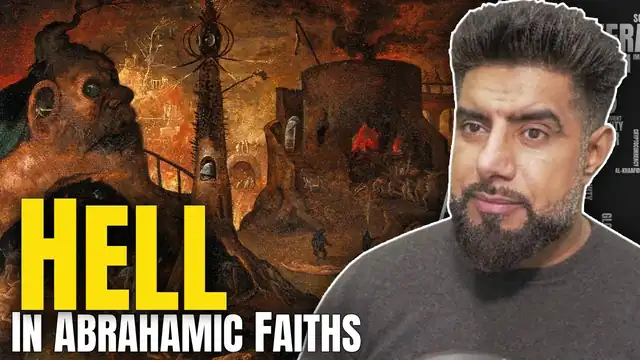 Press play to load from YouTube. Nothing loads until you do.
Transcript
machineauto-transcribed, may contain errors · source: youtube auto · click a time to seek · dotted terms open the glossarydo unbelievers have to go to hell okay so right so let's understand this so this is how some people look at this they look at this text scripture the quran and they say well allah has threatened and he has said well those who reject him there's this punishment okay in the afterlife and this and then there's the imagery and that's a discussion okay and then this and there's the concept of the punishment which is a discussion okay
now and then there's the element of time which is a discussion because keeping in consideration none of this has happened yet the afterlife has not yet commenced so it's all future tense uh propositional so that you've got the the the reward or the or the or the or the punishment yeah the sanctions so okay now okay so let's let's take a look at that let's unwrap that unpack that for a
moment so does allah have to follow through with a punishment now most theologians islamic scholars in arabic a promise is called a word and a threat is called so they say well look allah if so if a person reneges on a promise like i promise to give you something and i don't do it that's seen as a negative a bad quality but if i threaten you with something
and then i let it go that's actually seen as a noble act okay so hulful wade is not the same as so the scholars have said generally faculty and other people will write that look allah can do as he pleases as he says in the quran that look allah says allah can't be asked about whatever he chooses to do allah says in a verse well may if allah be other become what would allah get out of punishing you that's the verse of the quran isn't it so the the question is now does god have to
punish anybody now the truth is allah doesn't have to do anything and that's the belief of of muslims for the most part the hadith of the prophet sallam is that any let's say positive reward or bliss that a person encounters in the afterlife is simply by the act by the grace of god it is not by their actions by the grace of god that he graces you okay so the question here is that okay can god do this
can he reward can he do sure he can reward he can torment he can he just choose to forgo he can can he choose to forgive he can can he choose to allah could do whatever he wants so the question is well okay so that's one discussion and you're not there yet so what is the the the obsession in trying to understand well i i want to be god and i want oh i'm not saying you're you're saying that but a person that oh well i need to i need to pin down what god would do well you'd
never be able to do that now one of the discussions was the actual afterlife and the the kind of imagery and the description and well if you go through the the whole development of the judeo abrahamic faith this these are journeys so so that's one discussion right there and if you unwrap that you begin with the jewish bible so the old uh jewish tradition they were divided since the time of you know from their tradition since the time of moses so some of them said that we have no details about the afterlife
this is why many of the earlier jews neither affirmed nor negated an afterlife but they weren't they never spoke of an afterlife because they said well you know it's not been mentioned to us but maybe it'll happen maybe it won't happen we'll just focus on this life so that was okay many of the jews now you see that okay so and there is the mention of seoul um in the in the old jewish bible and some people say well maybe that was the state of suffering or uh they equate that to maybe let's say hell what later on comes to be hell and then you've got the jewish journey and it goes through exile and the whole and the greek
kind of uh influence as well and then you see hades comes in because that's so in a lot of the jewish uh sorry in a lot of the biblical translations the earlier term for hell is hades so there's this journey of hell that kind of develops along the way so you've got the imagery so first of all it's hades that they use in fact many of many bibles still use the word hades which is from greek hades and then what happens is gehennam is used by jesus because the valley of the people of hinnom so okay so there's
this valley and some people say well maybe children were being burnt to death there's offerings to certain gods and some people say no it was a kind of uh disposal site where people used to burn rubbish and there was a constant burning fire in that um in that location in the valley of hennam so jesus said well such and such people that are let's say really terrible they deserve to be in forever this valley of this this fire so this now becomes a a concept and you see with
as christianity spreads and it spreads right through arabia because you fast forward let's say five six hundred years up until pre-islam most of the arabs are actually christian so if you look at most of the arabs lived in the middle east and then there was a considerable part in the arabian peninsula and you have the southern arabian axiomite kingdoms which were christian the northern arab kingdoms or the hassanids which were greek and arab they were all christian and the manadera the mids were all were mainly christian and around bahrain they were mainly
christian and then you had a lot of the hijaz region in central uh kind of arabia that was still kind of pagan but the arabic backdrop they had these this existed in the notion whether people believed in it or not so let's say today uh let's say somebody's an atheist but they still understand the term if they speak english paradise so um they will so if somebody let's say somebody is in i don't know in hawaii or there is somewhere and they say hey i'm in paradise okay so even if they don't believe in power let's say you say to them oh but do you believe in a paradigm no i don't
believe in the power but they have or do they believe in god i don't even believe in a god let's say they they're atheists but they still have a psychosocial construct of the terms because it exists in the psychosocial realm and it is a linguistic construct that has a at least a psychosocial reality whether the person believes in it or not so god for example exists as even if people don't believe in god they still understand the narrative because it exists in the psychosocial part of the world so
now jahannam already existed people the arabs this is why the quran never explains what jahannam is the arabs already knew the word jahannam even the pagans who didn't really believe in let's say jahannam because they weren't christian but they believed that they understood the word so this is why they would then mock and say oh they claim these believers claim that god will bring our bring back life to these dead bones and question them and they would mock the prophet salallahu so
so you have to understand that revelation has to come in a language to a people it can't come in every language to every people because the psychosocial narratives vary and the language by its nature has to lock in to a psychosocial reality the other people are by extension so you we you and i the quran is for us but we were not there in seventh century and we were not part of the arab psychosocial world when it came
the quran is just as much for us islam is just as much for us but it has to begin somewhere and it begins in arabia so it is an arabic quran and not just any arabic but an arabic of that day and age you can't divorce allah says you cannot divorce it from that and it's not just a linguistic you see it's not just a this is not just um an issue of semantics this is not just an adjective
a language is embedded within the psychosocial narrative of its age so the quran has to address people with that okay now well and that's a discussion one could say well okay why are certain well this is the tradition this is the this is the abrahamic tradition in which the quran comes to affirm it says it affirms that this tradition of ibrahim alaihi salaam that has gone before you say well why is it not speaking in line with the tradition of buddha or speaking in line well it hasn't come in line with that tradition
that's a different milla this is ibrahim you see so you have to understand things that the people they they yeah so i don't think people have a good understanding or maybe look it's their understanding i suppose each person the quran is for everyone everybody can understand it how they understand it but it is an incredibly profound text much more profound than people some people may you know that look at it superficially so once you understand all of this
you think well oh okay and there's so many little discussions that are in and of themselves profound discussion so the concept of consequence why does consequence exist as a concept well i don't know if you watched our our book lounge meeting off was it last month before when we spoke about we had the book of the month bonobo and the atheist the the primatologists discussing even animals even in a primatological surrounding so studying monkeys chimpanzees or bonobos where they have structures of consequences the tribe perform much more
effectively even at a chimpanzee level substructures that have been self um endorsed and created by the tribe itself structures of consequence whether they are seen out or not result in the efficacy and the success of the tribe that's in monkeys what do you think it'd be like in human beings they could not really human beings and even creatures they function effectively
with the with with the horizon of consequence now the manifestation and the realization of that consequence is a different discussion because you haven't even got there so i would say that look focus yourself on where you are which is in this world you are here allah has this wonderful message for you the quran and you have your faith and the message of it is for you to be a good a better person and to live your life as a better person it is not to worry about
oh i wonder how this person will be once they've gone beyond the that's not you know it's not your job to be you are here to serve mankind you do that sure you proclaim the wonderful positive blissful blissful beautiful message of islam as you go along but and and people may join the caravan along the way alhamdulillah and maybe
people won't but you serve them too you know that's the the beauty of islam and and you just this is the submission you just have to trust the process and you go with it it's not don't get obsessed with this kind of this doom and gloom of the oh my god who's going to hell who's going to burn who's going to do this who's going to allah has not you know when you look at the verses in the quran that speak of that that that obviously because it's part of the the tradition they are so few
in relation to the entire quran and its verses which are let's say 6 200 plus verses so yeah i hope that helps because this is such a i feel it's it's it's becoming you know it's become pathologized okay it's become a um you know it's it it ruins people i think and it makes them miss you know there's that famous clip of bruce lee where he's saying you know and he's saying
all that heavenly glory and he's kind of pointing out and then he kind of slaps the person and he says do not concentrate on the finger or you'll miss all the heavenly glory and and that's exactly the point that what happens is we get so caught up and i get it i'm not trying to fault people i'm not trying to blame you or blame someone it's i guess my frustration is somewhat to just recognizing how much of a widespread problem this pathology is
because so many people are so bogged down and they miss the glory of god they miss the love the compassion they spend their lives in this kind of uh ocd kind of um almost not to detract or not to use this in a derogatory sense but i'm just giving almost in somewhat of an autism-like realm that they are so um horror
driven into a state of perpetual anxiety that all they think about is like oh my god oh my god what's gonna happen what's gonna happen i need to be crying i need to be i'm guilty i'm sinful and i feel part of this has been inherited from that the catholic tradition of like this kind of guilt-centric faith but yeah may allah make it easy may allah you know when we study when we learn really the life of the prophet really teaches us to be in a state of flow you know there's a beautiful hadith
and this really you know by extraction it captures this spirit it's in sahih muslim that the prophet sallallahu alaihi sallam said that if the final hour was to be upon you and one of you is planting a plant you know his final hour the world the apocalypse is nigh not not it's it's activated and you and i are here planting a plant
the prophet said keep planting see and in another in the same hadith he said if if the final hour was to come and you're feeding a morsel a piece of food to your mouth he said keep eating i think you're still in this world be in this world as you are of this world focus on the good yard you're planting a plant planted just trust the process go with it
and i think that really captures to me as an individual the the beauty of the teachings of the prophet sallallahu alaihi the compassion of the quran for me as an individual this this kind of really it it kind of symbolizes its trait and so yeah i hope that sheds some light and i do understand these are difficult for people i speak to people you have some perspective sessions one-on-one sessions with people who are you know they they're struggling
immensely because they've got trapped in this and some of them have converted to islam and they've become trapped in this for years this kind of this kind of saddened doom and gloom guilt driven ocd state of perpetual anxiety so may allah make it easy for them ami i mean i hope that helps people
Something wrong here?
Tell us what is wrong and it will be checked against the recording. Nothing changes until a person has reviewed it.
Sending a note needs JavaScript, which is off or unavailable in this browser. Nothing has been sent.
No name, email address or account is asked for or stored, and the inbox does not store your IP address. For rate limiting it keeps an unreadable fingerprint of your connection for 48 hours, and our database provider's own logs record connections as every website's do. Only your note, its kind, the page and the moment in the recording are kept, for review.
Cite this recording
Stable id, transcript version and tier are part of the citation. Every change to a transcript is logged.Mufti Abu Layth Archive, auto-transcribed, may contain errors. https://muftiabulayth.org/r/f9e5njsh-dc/ (accessed 1 November 2026)
- APA 7
Mufti Abu Layth. (2022, June 17). Hell Throughout The Abrahamic Faiths | Mufti Abu Layth [Video, auto-transcribed, may contain errors]. Mufti Abu Layth Archive. Retrieved November 1, 2026, from https://muftiabulayth.org/r/f9e5njsh-dc/
- Chicago author-date
Mufti Abu Layth. 2022. "Hell Throughout The Abrahamic Faiths | Mufti Abu Layth." Video, auto-transcribed, may contain errors. Mufti Abu Layth Archive. Recorded June 17, 2022. Accessed November 1, 2026. https://muftiabulayth.org/r/f9e5njsh-dc/
- BibTeX
@misc{abulayth-f9E5Njsh-Dc,
  author = {Mufti Abu Layth},
  title = {{Hell Throughout The Abrahamic Faiths | Mufti Abu Layth}},
  year = {2022},
  month = {6},
  date = {2022-06-17},
  howpublished = {\url{https://muftiabulayth.org/r/f9e5njsh-dc/}},
  url = {https://muftiabulayth.org/r/f9e5njsh-dc/},
  organization = {Mufti Abu Layth Archive},
  urldate = {2026-11-01},
  note = {Auto-transcribed, may contain errors}
}