
Who Were The Ahl al-Ra'y? The Mu'tazilites? And How To Absorb New Learning | Mufti Abu Layth
hadeeth ahadith ahaadeeth hadis hadees ahaadith malik ibn anas malik bin anas imam maalik imam malik ibn anas imaam imams prayer leader shari'ah shariat sharee'ah maaliki malikite malikiyyah maliki school muftisvideo · 9:26 · 6,600 views · 4 Dec 2022 · Open on YouTube
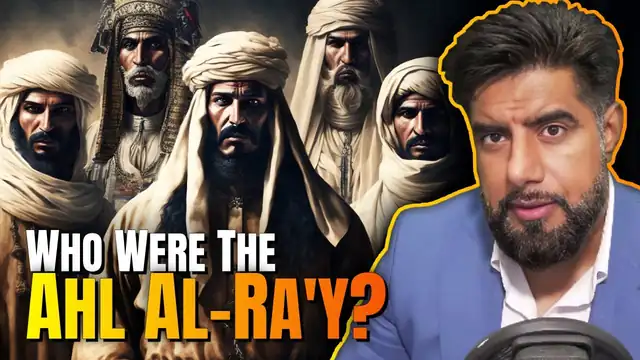 Press play to load from YouTube. Nothing loads until you do.
Transcript
machineauto-transcribed, may contain errors · source: youtube auto · click a time to seek · dotted terms open the glossaryright Mufti who are the who how was their practice of Islam different a subcategory of them or different class what's the difference between them where can I read more about them first of all much love for the supercharge right so um right yeah well I mean there's so many places to read up about these it's difficult you know when people say where can I read up about them you can to be honest look you can um
in fact let me answer this question and then I'll guide I'll give some words on how to learn about something right so let me um so first of all this in Islam are not the Marcus
and it depends on who's using the term some people use it pejorative you know to kind of in a denigrating manner other people own it so the hanafia are amongst many consider the malikia amongst it means people who used reason so some people you use that term in a negative sense other people used it in a positive sense for example will will argue that Imam Malik is from
the allurai but he's arguing for it in a positive way um and no it's not um unless a person was using it in a negative sense and saying therefore but usually this is used to mean the hanafia and people who use reason when establishing the laws of the Sharia what else was a part of that question where can I read more about them yeah you could there's so much online
just just you know just start off basic search I'm just go about it so on that thought let me share some quick words on this is how I learned something a couple of times people have asked me that they want to they're trying to learn something and they can't seem to they're struggling and people will say look can you recommend some books on a certain topic and there's some there's
always books available but this is how I learn and I thought I'll share my kind of strategy so I've done this usually with the with almost every uh major theme and topic that I've been learning studying especially in the last decade that's how I've what I've done and it's a uh it's a Socratic method of learning and what I do is
let's say I want to learn about something and I've used this for whatever I've done my learning in whether it's been in certain areas of psychology in philosophy quantum physics when I or there's evolutionary psychology you you name it whatever I've tried to learn as long as it's information and not a skill then this is how I tend to do it whether it's been whatever theme whatever Topic in Islam especially within the last decade so post having uh graduated so what I do is I first of all try to
learn about the who's who in something so it could be anything like I want to learn about a certain so so you want to say well the allurai so okay so who are the okay the who's who so I might get some names so you might say well okay this or they are a group of usulin or they are a group of aha or they're a group of and I might get some names I might get some or I want to learn about a branch of psychology okay this is what it is these are some of the key names these are some of the then what I do is my learning is it's it's all by uh
philosophy it's all by uh inquiry okay so I formulate a question so I will think and it could be a simple question like you could start off with well what is okay so Allura is this okay what does writing mean so I'm just asking a question and now I will put this question in to like I'll search it let's I'll Google it and something will come up I'll start reading it and as I'm reading it I may think well okay I make it okay what's this point I don't get hmm so imagine you speaking about he said this is this and somebody said well
uh you know this is more as opposed to Hadith division which is this division so okay tangent yeah what's this Division I read about this I come back to this I finish this section usually as I'm reading this I've got other questions I'll now ask those questions I'll put that down I'll start searching that as I search this I stem off into five different directions because I'll have this point here I'll learn that I'll come back to it I'll do this come back to this then I finished all of this by the time I finish this I've got like five other questions
and this is how I learn and and this method of learning is active learning it's very different to just reading a book because you see reading a book is passive learning and the thing about Active Learning is because it's driven by curiosity you are much more likely to remember what you learn because you will only pursue those things that you are curious about and because you're curious about them you'll actually know them and learn them and remember them and then usually what I'll do is I'll see if I can still recall it let once I
finish it I will sum it up to myself and then I'll try to see if I can recall it maybe eight hours later because certain psychological studies show that if you can record something eight hours later there's a a greater likelihood you'll remember it and then I'll see if I can recall it 24 hours later because if you can recall it 24 hours later you likelihood of remembering it has just it's it's multiplied and then usually at some point I will have a discussion about it with someone I'll speak to some friends about it I'll say oh by the way I've learned this and you know this was really fascinating I was reading about this and I'll tell
someone about it somebody that's Keen to listen and once you've done that you've Consolidated your learning and sometimes when you're explaining it to them you'll also identify gaps in your learning because you'll realize ah well they might ask you a question or you're trying to explain it and you realize actually I can't explain it as well as I thought I can because Hmm this part doesn't make sense so when you go back you'll research that question again a new question and you'll fill in those gaps this is how I do most of my learning this is why it's so difficult for me when people ask me to recommend a
book they will say to me almost the you know you you know this topic so well some people so for example people say oh you know you knew this so well can you recommend a book or let's say I was speaking about certain themes within Islam or certain topics uh trajectory hermeneutics how the akam change or um certain um I don't know it could be certain aspects of Maliki Ferg um whatever it is people say can you recommend a book and I struggle because I've
seldom read just books from A to Z to learn something hardly ever I mean I finish books now just because of my the book club but otherwise I seldom read books like that I read from things following a line of inquiry so that's how and believe me you start doing that you'll be surprised how much you how much you learn so yeah I thought I'd share that with you guys
Something wrong here?
Tell us what is wrong and it will be checked against the recording. Nothing changes until a person has reviewed it.
Sending a note needs JavaScript, which is off or unavailable in this browser. Nothing has been sent.
No name, email address or account is asked for or stored, and the inbox does not store your IP address. For rate limiting it keeps an unreadable fingerprint of your connection for 48 hours, and our database provider's own logs record connections as every website's do. Only your note, its kind, the page and the moment in the recording are kept, for review.
Cite this recording
Stable id, transcript version and tier are part of the citation. Every change to a transcript is logged.Mufti Abu Layth Archive, auto-transcribed, may contain errors. https://muftiabulayth.org/r/epmaydzdf7i/ (accessed 1 November 2026)
- APA 7
Mufti Abu Layth. (2022, December 4). Who Were The Ahl al-Ra'y? The Mu'tazilites? And How To Absorb New Learning | Mufti Abu Layth [Video, auto-transcribed, may contain errors]. Mufti Abu Layth Archive. Retrieved November 1, 2026, from https://muftiabulayth.org/r/epmaydzdf7i/
- Chicago author-date
Mufti Abu Layth. 2022. "Who Were The Ahl al-Ra'y? The Mu'tazilites? And How To Absorb New Learning | Mufti Abu Layth." Video, auto-transcribed, may contain errors. Mufti Abu Layth Archive. Recorded December 4, 2022. Accessed November 1, 2026. https://muftiabulayth.org/r/epmaydzdf7i/
- BibTeX
@misc{abulayth-EpMAydzDF7I,
  author = {Mufti Abu Layth},
  title = {{Who Were The Ahl al-Ra'y? The Mu'tazilites? And How To Absorb New Learning | Mufti Abu Layth}},
  year = {2022},
  month = {12},
  date = {2022-12-04},
  howpublished = {\url{https://muftiabulayth.org/r/epmaydzdf7i/}},
  url = {https://muftiabulayth.org/r/epmaydzdf7i/},
  organization = {Mufti Abu Layth Archive},
  urldate = {2026-11-01},
  note = {Auto-transcribed, may contain errors}
}