
Recordings › MindTrap with Mufti Abu Layth
Dr Toseef Ansari | Nafs, Naturalism & Navigating 'God' | MindTrap #51 | Mufti Abu Layth
fiqah jurisprudence fikh hadeeth ahadith ahaadeeth hadis hadees ahaadith saheeh sahih hadith saheeh hadith sound hadith authentic al-ghazali imam ghazali imam al-ghazali maghreb magrib salat al-maghrib maghrib prayer sunset prayer takbir takbeer takbirat takbeerat imam imaam prayer leader usool usool al-fiqh usul ul-fiqh usool ul-fiqh legal theory shari'ah shariat sharee'ah maaliki malikite malikiyyah maliki school hukm hukum hukam ahkaam ruling daleel adillah adilla evidence proof riba ribaa sood usury shirq mushrikin polytheism kufr kuffar kaafir kufar kaafirun disbelief iman imaan eemaan eeman ilm al-kalam kalaam theology shaytan shaytaan iblis iblees shayateen akhirah akhira aakhirah akhirat hereafter qiyamah qiyama qiyamat yawm al-qiyamah yawm al-qiyama resurrection janna jannat paradise koran quraan al-quran sura soorah surat suwar soora ayah aya ayat ayaat aayah aayat nasikh mansukh nasikh wa mansukh abrogation ahl al-sunnah ahl as-sunnah ahlus sunnah ahl al-sunna sunnis shiah shiite shi'i twelver ithna ashari sufi sufism soofi aalim scholar ulema ulamaa shaykh shaikh sheik shuyukh shaykhs fitnah fitna fitan strife alhamdulillah alhamdulilah al-hamdu lillah alhumdulillah alhamdulillaah salam assalamu alaikum assalamualaikum salaams salam alaykum wa alaykum as-salam peace greeting barakah baraka barakat barkat baraqah deen al-din ad-deen ad-dinlive stream · 1:29:16 · 5,700 views · 26 Feb 2021 · Open on YouTube
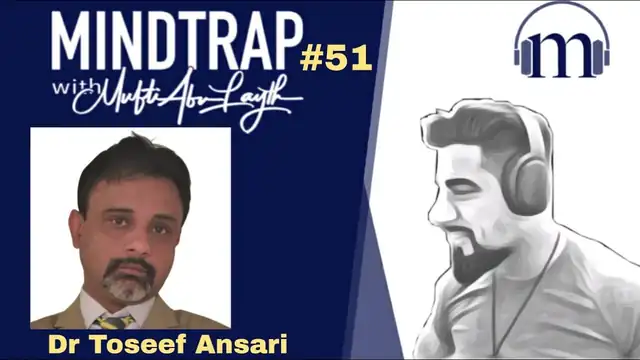 Press play to load from YouTube. Nothing loads until you do.
Transcript
machineauto-transcribed, may contain errors · source: youtube auto · click a time to seek · dotted terms open the glossaryAll right, people. All right. All right, as always.
Just going to do a very quick audio check. Let me just see. Um All right, just got to bring up both the Facebook and um YouTube people. All right, guys. Can you hear me loud and clear? What is going on? All right, so Facebook people, you're doing it.
You're doing it. It says uh Sorry, more Sorry, having trouble loading this on Facebook. Guess that's all. What is going on, people? Don't say this uh uh But, you guys can still see me on Facebook. Is that okay? For some reason, on Facebook, it's showing me as um It's telling me it's not there, but as long as you guys can see it, that's the main thing. Uh the YouTube I can see.
Uh seems to be all fine. Let me just bring up All right, so people, what is going on? By public demand, people, by public demand. We had a guest who appeared on Mufti's Meetup on the Valentine's Valentine's edition, people, and there was such a demand that we have to get this person on Mind Draft.
So, let me bring up his profile. All right here, people. Allahu Akbar. Look at that right there. Look at that seriously committed philosophical profile picture right there. That is the man, the myth, people, Dr. Tauseef Ansari, uh all the way from Ottawa, Canada. Somebody with a great interest not only in science, but Quran.
Let's bring him on, people. As-salamu alaykum. All right, so that's that's just the the thing. I'm just going to do a quick uh sound check with people because to make sure sometimes I've had in the past where you're speaking to me, I can hear you, but people have had some issues.
So, all right, people, is What is going on? Is the Is the doc coming through pretty uh coming through fine? Warrior says it's coming through fine. All right, so Let me just check with somebody says no, there's an audio. We can't hear him. No, it's not. Achcha, achcha. Misleading me, huh? Misleading me, people. So, let me just check here. No, no, it's not going to be your end, doc.
Let me just check here. Uh All right, if you speak now, doc. Hello, hello. Testing, testing. 1 2 3. All right. So, now I take it you can hear the doc. Is that cool? Uh somebody said no again. All right, now. Is that right there? Right there? You know what? Sometimes I got to have some trustworthy people replying. They're saying we can't hear the the doc.
Right, so doc, uh, just Yeah, just tell us a bit about yourself. Um, I know that people that have come across the Mufti's Meetup are aware and with the profile that you you know, you're coming with this background in the medical field, but you have this deep interest in Islam. Um, how do you see these two bridging?
And whilst you're talking, I will make sure this is correct uh corrected. It's just I I I need some authenticated people to be vouching. There's a lot of people sometimes just saying all sorts. I'm pretty sure your volume's coming through fine. So, go for it, doc. Well, so my background is pretty unremarkable in the sense that I mean, there's no uh, um, I was born in Pakistan.
I the my formative years were in Africa. Uh, West Africa, Nigeria. That's where I did my high school, my secondary school, high school, and college. Uh, and then uh Pakistan, where I acquired my medical degree. I trained in Karachi at Aga Khan University in internal medicine.
Uh, then went to Hong Kong uh at the University of Hong Kong. I took uh two master's de- uh had two master's degrees from uh research in clinical trials research methods from University of Hong Kong. And then came to Canada in great Canada 15 or so years ago. Did a fellowship in research uh methods.
Uh, then worked at the university and now working in the government setting within Health Canada. Here I'm speaking on behalf my own. I have been reading Quran and I just like to think through things. And haven't had really an opportunity to share my thoughts with with people who are academically oriented like you I I feel I've heard you and it sounds like you have that academic academic flair in you.
Wow. I don't know about your degrees or anything. I'm going to have to wire across some cash to Doc now for praising me. So so yeah, because most of the time because these thoughts are novel and uh and and they might be they might come across as outrageous and and people people just get emotional about things, right? So and you can't discuss this in in in just any oral settings.
Uh and this is a good forum. And and I'm I'm I'm coming here as a learner as a as a student who's sharing my thoughts with you and with your audience who are smart people out here. And and and see if there is anything worth taking up further Mhm. and refining it. Wow. So these are just yeah. We're all learning on this path, Doc.
We're all on this path just seekers of knowledge and enlightenment. Doc, you've got a um you know, vast background in the medical stuff. Your thesis in your master's MPhil was also in what what what was the name? It was It was related to uh, venous thrombosis coagulation fibrinolysis.
It was kind of a trial. Wow. Yeah. So, you you know, you've got this whole and you're conducting all this kind of research as a profession and and, you know, setting out policies and things. But then this interest in Islam is this because sometimes people feel, you know, when you go too much into certain other fields, it's difficult to one maintain that flame, but then two, not only an interest, people feel that, you know, they're not um, they kind of shy away from this discourse.
But you haven't shied away, have you? I mean, you find it Yeah. Yeah, and and the way I think I'll put it is and I'm we're not going into discussions of that at this time, which is I do believe Mhm. uh, in Allah Subhana Wa Ta'ala with quite quite certainty. uh, uh, how how do I can I quantify it? Uh, of course I can you could say well, so let me let me ask, you know, you or just anyone how certain are you of your own thinking?
And one would be if one is modest and and realistic, one would say well, I'm 70% certain that I I know how to think right. What What does that mean? How certain are you of your thinking? are you that your thinking leads you to the right answers? to the truth. So, if you're if you're a thinking person, but a modest person, you would you would quantify it at 70%.
But then something that comes out of that thinking could not be more than 70%. Mhm. You've kind of got because I you see I would see say well, so let's say if you ask me, well, how confident are you that, you know, you you you can analyze things and so, what are the chances that you'll get the to the right answer? Uh uh I would say well, the probability is probably uh 70%.
How certain are you of Allah subhana wa ta'ala? 100%. Where is that coming from? From me if it's coming from your intellect. Mhm. I see what you're saying now. 70%. I see what you're saying. So, you're trying to Because I was trying you know for a while I was trying to figure out where you what you meant by that, doc. Because you see, I would always draw a distinction. Um I I would see a distinction between your thinking faculties, the tools to think, and between arriving at the truth.
Because the these That's this there's a sense of hope that with these tools you will arrive there. But even if the tools are good, you might still miss the truth on certain occasions. Yeah, yeah, absolutely. But now I I get what you're saying. You're saying well, where is that yaqeen, if we can use the word yaqeen, uh this kind of near enough, good enough, you know, as psychologists sometimes good enough certainty um when it comes to Allah.
Um that's that's fascinating. Are you saying this is an intuition? Is that what you're saying? No, I'm not saying that. What I'm saying that is realizing your capacity as a human being and judging it realistically. It is almost impossible to be absolutist about anything. Of course. If you cannot be absolutist about your own self and anything that comes out of that.
Yeah. Uh so, there has to be some level of uncertainty there. Uh Do you know what I mean? Isn't that necessary for development though? I I think it is only natural that you when you're saying that I am 70% confident of my neuronal capacities. But then I'm 100% confident of things that I mean originate in those capacities.
Mhm. It just doesn't make sense. But but is that because things like faith in God, although they are rational I do feel it's a rational argument as well. Like it makes sense. I don't feel it's counter rational. And I feel that faith is to be based on reason. But when I've been asked why do I think most people believe in God?
I don't think they the believe in God is because of a rational argument they've had but because they this experience that they feel that you know like wow like there is something out there and Yeah, I don't know what your thoughts are on that. Yeah, so I don't know. So uh maybe at some point in time God Yeah. So you you take a step towards Allah Subhana Wa Ta'ala.
Yeah. And then maybe he takes a step towards you. In the Hadith Harwala, you know, he come he he Yeah. And then and then the certainty comes to you rather than you acquire it on your own accord. That I can understand. But most but but but at least I'm not there. So my own Is anyone Is anyone there doc? Maybe there are some Sufis or or some you know uh uh spiritually elevated people there.
I don't know. But at least as far as I'm concerned all my faith is to the best of my understanding is intellectually derived. uh And I'm very confident within my own limitations that that there is Allah Subhana Wa Ta'ala that Quran is his book. uh verbatim his speech.
uh But don't you find the Oh, sorry. I was going to say, but don't you find answer you, how do you reconcile science and this? Sure. Uh which is But just before before just getting to the science thing, don't you find dark that you know, like with the Dunning-Kruger effect that people as they learn more, their acceptance of doubt in a topic and their their certainty of uncertainty increases.
That they now become certain that actually I'm quite uncertain on this topic in some regards. And people who have lack knowledge appear much more confidently certain on topics. Uh there's there's almost this weird Yeah, but I thought Dunning-Kruger effect, if I'm not mistaken, has to do with if you're completely ignorant of something. Yeah, yeah. But I mean, but you don't have to be completely like you could know something, but what they found was like a correlation between the the more you keep learning, the more reserved and kind of uncertain you become of things.
And the less you learn, like the less you know, the more certain you feel of them. Yes. Yeah, yeah, yeah. Yeah, yeah. I agree with that. Yes. I was much more certain in my 20s But weren't we all dark, weren't we all dark? Yeah. That is that is absolutely true. But but between science and and Islam, I I see a lot of concordance.
Yeah. Uh because it's originating, as far as my own understanding is concerned, it's originating in the same source. One is the works of Allah. Yeah. The other is the Kalam of Allah Subhana Wa Ta'ala. You know, so he's communicating to us through two ways, by doing things and making us observe and then analyze them and discover.
And then been sites and then sending us these ayahs. Yeah. And making us think. The approach for both should be very similar. Right? It should be systematic. It should be methodical. Mhm. Speaking of approaches to faith, doc, and I know this is also something that you're very um you know, involved in because your whole thing is about trying to explore one have a deep connection with the Quran, with Islam, but through analytic reasoning and and taking a look at it
like that as as a as a believer and and somebody who's also has that those tools in your day-to-day life. You see, but with this in mind, with things of certainty, with this kind of uh having opinions, being opinionated, and and also um you mentioned about having this methodolo- methodological approach.
How you know, people feel that well, if Islam is correct, let's say yes, we do feel Islam is correct, but then Christians feel equally Christianity is correct. Jewish people feel Judaism is correct. Hindus feel Hindu- Hinduism is correct. Buddhists the same. Every person for the most part who's born into a faith Yeah. Um feels for the most part, I mean, some people denounce a faith, but for the most part they feel that is, you know, this view, this path of exclusivity, they all walk it.
And and so, how do how does that reckon up? Because you've got your certainty and they've got their certainty. Yeah, it depends how you how you arrive at that certainty about your own faith. If you arrive at it simply because it is part of a tradition in which you grew, and it is because of certain scholars and ulama in your religion that you have faith in, then really as far as I'm concerned on the day of judgement everyone has this excuse, whether you're Hindu or Christian or Muslim.
Right? Yeah. So, this excuse that you know I I am I believe in this in the ulama in the in our imams and they they've done amazing work and their hard intellectual work and and and they can't be wrong. Of course. If that's if that's how you've acquired your faith, well others have acquired it in a similar way. So, but the thing is the only way out is I think for someone to say well I'm sincerely trying to attempt, I'm using the capacities Allah subhanahu wa ta'ala you've given me.
Yeah. And and this is what I arrive at. At least you have an excuse there. Uh for Allah subhanahu wa ta'ala and and it and then we can these two groups even though they're arriving at different answers can at least sit at the table and discuss. But if your faith is not based on reasoning then there is no common language to discuss except it's this is my tradition, my scholars versus your tradition, your scholars.
Yeah. Hmm. Because you see this this whole question, doc, because it is a very deep question, this one of exclusivity. Um I have felt that look, um you know in the past the world worked in a certain way that um rigorous competition competition was required for society to prosper, for mankind to prosper.
You know, there were several different umam. You know, that were kind of these nations that were pitted against each other in order to because the the nature of nature is there must be a struggle for development. Yeah. But I feel that what's happened is we've now arrived at a certain plateau in human civilization and history.
With the world the paradigm has changed and we now need cooperation. You know, global markets, global economy, global structures, things like nuclear, you know, ironically have become the deterrent to war. Because, you know, you start a war now and it you know, and this is the, you know, as people have said it's the um it's actually disproven arguably the Chekhovian axiom that, you know, if you have something it must be used.
And nuclear is that thing that well, you know, we're going to end humanity here. So, Right. uh I feel that we're in a day and age where because the paradigm has changed Muslims need to as well revisit certain understandings because the Quran addresses believers. You see, it's interesting it doesn't address Muslims so often.
Like as in ya ayyuhallazina aslamu. It says ya ayyuhallazina amanu. Ayyuhallazina innal-ladhina amanu. And and and and a mu'min I was just reading the other day how Ibn Ashur discussing about I mean that's a tangential topic about somebody had sent it to me about um uh intermarriages and how his justification for saying well, he was discussing this thing can women marry Muslim women marry non-Muslim men?
And he he kind of says, "Look, scholars have said they can't, but he highlights that the Quran isn't actually clear on this, and the scholars just based it on reasoning." And he says the Quran, people who use this verse, who say they can, they would use this verse that yes, the verse says then a believer in woman should marry a believing man. But he says, "What does believing mean?" He says that there's a huge scope under believing because this verse is saying those who believe and are Jews and Christians and Sabeans that that they they are successful.
You know, this verse is in the Quran saying this. So, yeah. I mean, so what what are your thoughts on this doc because I know you also I I I totally I think I think the the pr- The issue is for any any thought process, we have to see a perspective of we we you tend to see from our perspective as opposed to what might Allah's perspective be.
Uh it's one thing to say, "Well, I'm a Muslim." Yeah. But from Allah's So, I'm saying I'm a Muslim. My family is Muslim. I'm born in a Muslim household. Uh Pakistanis, by and large, are Muslims, 80 90% of the population. Of course, yeah. But that's that is a that's a categorization we have carved out for ourselves.
Yeah. But Allah's characterization of who a Muslim is, do we meet Do I meet that? Wow. So, so the way I conceptualize this in the past was, if you can imagine a graph with an Y axis and X axis, with these bars or histograms, Wow.
all being various religions and denominations within those religions. And then we say, well, here is Islam. And then there is here is Shia or Sunni Islam and within Shia or Sunni Islam here is this further and this is the safe sect. But I think we'll be sur- surprised because my and own understanding is Allah is looking from Y axis across these sects.
I mean, to Allah none of this would matter. This would just be nonsense, isn't it, from a God perspective? So So, within that sect is So, it's horizon- It cuts across the various religions and denominations and picks out those who are moderate and and I would say guarded in their views.
Mhm. You know, they're guarded in their views. Uh, they they say as much as they know, nothing beyond, no exaggerations. And And I think that's what Islam is. So, I have had the opportunity to in the past to engage with people from other religions, Baha'is, Christians, Hindus.
And And I'll give you one example. And And this person is is Berkeley qualified lawyer. Mhm. I'm still in touch with him. And we met through and we would He would invite me to the church, I'd go there on Sundays. But I And I said to myself, never once will I make a judgment about this person's righteousness.
Mhm. Whether he's Whether he's Mormon or Kafir. One would say, well, he's a Christian. He's going to the church. Of course, he's a Mushrik. I said, I'm not going to make that judgment. Mhm. And and I continued. Uh we kept meeting every other week or every week, I forget. And one day we were walking, this is this was way back in Hong Kong. We were walking walking uphill.
And this gentleman tells me, he was much older than I, and he says, he's to we're talking about God and all that. And he said, "Well, you know, this Jesus as God is Christians say that, I don't believe that. I am a Christian, but he didn't have that belief. And well, the shirk is gone. There's no shirk then, right?
Exactly. And and just going to that same verse that we were saying that look, Allah is addressing certain things like in those who believe and those who believe and then but then Allah goes on to explain the Jewish, the Christians. The Sabeans the Sabeans seem to just be people who weren't with an institutionalized faith, but they were just people that just accepted God.
That that man man man in whom that whosoever believes from them in whom after whom man in whom you know, these people you know, these people do not have any kind of damnation or are not unsuccessful. The interesting Now, I know some people argue this verse was abrogated.
But the problem was that you see according to the same Sharia usul usul al-fiqh uh akhbar that means statements of God can never be abrogated. Absolutely. It can only be rulings. Ahkam can only be abrogated, not statements. So, when Allah says things like, "Oh, there's an afterlife." That is can't be abrogated cuz that's a statement to Haman. So, they say a Naskh la ilaha ill Allah, you know, it doesn't it's only it's only rulings can change.
But, you know, with this doc, you see because you've highlighted this is a how, you know, you said how we view God, how does God view us? Obviously, we don't know how God views but we're trying to think well, how would God view us? This comes to the understanding of God. Like, well, you know, this on ontology, this kind of the being, the entity. And is this this this is a mind- boggling, you know, it's like absolutely mind a decimating kind of topic because how do we understand God?
How do we understand God? Yeah, so as we Well, my my speculation, again, these are just speculation. Is is exactly what I shared last time that whoever believes in in a God. So, first of all, this word God to me is very confusing. Okay. That's why I want to restrict to Allah because God in my view is I don't know how people are using it.
Maybe some people are calling even angels gods. I mean, God is what? People with powers and dominion. Mhm. You know, malaika, they have dominions. Yeah. So, so if you're calling them God, then then they're gods. They're multiple gods. But, we're talking about Mhm. the ultimate origin of all these things.
That is what Allah subhanahu wa ta'ala is in my view. And and if you're trying to look trying to under I don't I don't shouldn't say understand, but at least think about that ultimate Allah subhanahu wa ta'ala everyone, no matter what religion you belong to at la- as long as you're you're you're teased in some ways you have to make it has to make sense in in a world in a in a not in a world in a in a scenario in which nothing was created in absolute
zero-ness. It has to make sense. And as I told you in that scenario, if nothing ever had willed or have been willed and was never created, then these attributes don't make sense. What attributes are you attributes like Rahman, Raheem uh you know uh Razzaq, Al-Razzaq. So, because there's nothing there.
Mhm. That who is God giving risk to if there's nothing there? Yeah, of course. and so yeah. I think I've already discussed that. I don't want to bore your audience back into that. But but then even the first cause Mhm. only makes sense when things have been created. Mhm. You know in a wo- in a scenario in which nothing is created, we're not even talking about cause.
We're talking about potential for a cause should things be created. Mhm. The will This is what they they kind of define as the will isn't the iradat Allah. So, so that's what I suspect that the first cause is a manifestation of Allah's will as an order or command. Mhm. Which When he has this irada, he says kun fa yakun.
Fa yakun. But then the ruh and and I know this is I'm not going into details of ruh because Go go into details. Go into details, professor. rule the rule is really according to Quran, it's the command of Allah. Right? That's that is what the verse is. Rule is Amr Allah fi Amr Allah, something like that.
Am I Arabic? It is from the Amr. Yeah, I mean the Amr being command. One could say it is from the affair of God as well because it does mean that as well. Yeah, yeah. So, it is the manifestation of desire into an order. That is the first cause, but Allah is even before that.
Allah is So, you can't So, you know, like atheists would say, "Well, what caused this?" Well, this caused this and then finally what's the first cause? Allah. Then what caused you? Allah subhanahu wa ta'ala. Who created you? Allah. That is a nonsensical question based on my understanding of what Allah is. It is a potential. You don't ask about who created the potential. Potential is either there or it's not there and we have the last time when we when I talked about it, it is very clear-cut that in a world that in which nothing was ever created, the potential had to be there because now we have a world in which something was created.
So, it just cannot it just cannot not exist, right? So, we that that fact has now materialized. So, that emptiness is full of all potentials, but the first cause is this command. And which I suspect in Christianity is the Logos. So, in the beginning was the word. Was the word. And the word here being the command. The command.
Which is a manifestation of the will. The the potential. Wow. So, so what happens? This first cause because they're not going proximal to it, although there's no proximity because now the first cause happens at time zero, so that's why it's in the beginning. Mhm. Right? But before that time zero, before the cause manifestation is just potential, that is what Allah is.
Allah cannot be the cause. It is the potential for the cause. And that's where the confusion arises, I think, suspect in Christianity when you confound that logos with Allah subhanahu wa ta'ala. Wow. Mhm. Another confusion that arises is and that is again from the view of man because we are so primed in this material world with we we get we have to think we think of structures and and materials.
So, they talk about ousia. Of God. Okay. The substance of God. Mhm. So, it's like, you know, the trinity aspect is it's like water being steam, ice, and water. So, it's just one thing, but different forms. But again, so they talk about ousia. Well, in that potential, there is no ousia. Ousia happens once you get into a world in which there is creation.
Yeah. But what happens to ousia in a world when nothing is created? Is this Is this not like our journey up to God? It as opposed to you see God's journey to us because obviously we're using because like the Muslim framework, now even though Muslims refrain from saying God is a jawhar or he's a you know, he's a but they use the word that. So, God is an essence, like he has this essence.
Uh because they needed words, you see, because they're stuck as well. They don't know what to Like, what do we say? So, they don't want to use these words. They've tarnished. Uh so, I know what we'll do is we'll we'll use the word that or we'll use the word so, they say, you know, that Allah's essence is that. Um but this is really our struggle, isn't it? Because we don't know how to capture God within this world of words.
Yeah, so that's where I think logic and philosophy is very helpful because the words take you, but not your conceptualization of things. Words take you to a potential. But that potential doesn't have a structure. Okay. I'm just It just has a Hmm, I'm just trying to understand that. Yeah, okay.
Yeah, I mean, that potential is in zero-ness. There's no time. There's no space. There's nothing. There is just a qudra. Qudrat. For everything to happen. This is what, in my view, is Allah subhanahu wa ta'ala because and that also fits that he is zahir and batin. Mhm. He is hidden.
And manifest. And manifest through the command. But hidden in it what exactly it is. It is just it is just an idea. A potential. Mhm. And that's So, you can't go beyond it because you you're not created in a world in which you can in which you can envision something when there's nothing.
Yeah, because I do because I think sometimes to myself, I think that, you know, the way we because we've been brought up in a certain way that many people of this of this recent era um we're brought up with God in if I'm just going to be, you know, honest uh as in in an anthropomorphic forms. Uh people, you know, I know we don't like saying this, but whether they're Muslims, Christians, whoever, they picture God generally, we're brought up in this era in as though God is this man watching down on us, this wise man.
But, you know, I often think, and then we have to work through life to try and unlearn this. But, the problem is as well with unlearning because we don't have a substitute to go to. We're just trying to unlearn to a sense of nothingness, which is then like a bit, you know, it's confounding naturally. And but, I wonder, you know, people in the past um you know, in the time of the prophet, before the time of the prophet, you know, even if you went back in in the time of Moses, before the time of What was there?
Did Is this as Freud may argue that look, this is the father figure in the mind being projected out there. So, everybody does it. Or did they have a different kind of perception? Did they feel that God is more a presence, for example, as opposed to a father figure? Did they feel God is like we would just we just don't know. And I feel like I don't know what your thoughts are on this.
I I Yeah, I can't I couldn't I couldn't possibly even speculate about what they would be thinking, but I would at least assume that the prophets themselves with the noses would certainly be not thinking of God in a structural way, but only functional. Mhm. So, if divinity, the ultimate divinity we're talking about, not the secondary divinity, which are these malaika and and mala ula and you know, other Yeah.
So, the primary divinity is functional. And the moment you lose that functionality, you're not divine. Right? So, because divinity is functional. To say in Christianity, for example, for God to come and die is losing that functional supremacy.
You're not God anymore then. Right? I mean, you're So, for example, you, Mufti Sahab, may So, this is your house. You're a landlord. But the moment you sell your house, you're still the same, but you're not lord any landlord anymore. You've lost that functionality, right? So, the moment Allah that functionality, if you could imagine, was actually coming down and and getting killed or or dying even, you've lost that functional supremacy.
Uh so, you're not God. So, what you're saying, doc, is it's the the functionality of God have do this potential of these things like razaq, khalaq, khaliq, uh you know, uh qadir, alim, samia. These things that he is seeing, providing, doing this.
This is what ultimately makes him God. But then, would that not be a question be See, because if you say that is what makes God God, then in a way there's an interdependent relationship now because God is Yeah. Yeah, no, I'm I'm What I'm saying is that these attributes belong to him are not his identity, are his possessions. Right? Uh because he would still be Allah subhanahu wa ta'ala had nothing been created.
Had he There would have been no reason to be merciful or sustaining a sustainer. Exactly. still be Allah. So, so they are his possessions, his tools. Uh uh Yeah, but but divinity is really functional and not structural. And the problem arises if you come up come to it from the structural perspective of who she say, "Oh, yeah.
So, God came down and decided to die, but it is that same substance. So, it's still God." But, that's not how I think of divinity. I think it's a functional thing, not a structural thing. And the moment you lose that, you're not God anymore. Mhm. I'm trying Yeah, yeah, yeah. Yeah. I mean, you know, but this comes back to as well a moment ago when you said, "Well, you know, some people think of God as you know, you said, well, sometimes I abstain.
I'm, you know, reticent with by even using the word God because people, you know, they impose it on all different things." But, then is that just not the perception? Because, you know, sometimes atheists will say, uh in fact, it's a very popular argument that's made by uh you know, Professor Dawkins and other people that look, "We're all atheists. They say, 'We're all atheists. Some of us just go that one God further.'" It's a very famous quote of his and it's a very powerful, hard-hitting one.
But, you see, I've challenged it in the sense that I I I disagree because you're saying, "Yes, there were 3,000 gods or whatever in antiquity." Uh but ultimately, isn't even in those people's concepts and minds, isn't God just God? But, they are just superimposing it on like So, for example, to relate to God, they need certain figureheads that they come up with or Thor or Zeus are going to distribute, but they still the concept, the ground concept of there being this being that naturally or
is still I would argue is not 3,000 different even though you know because you're saying he is called Zeus, he's called this, he's called that. The the essence is still just God except people have applied it differently. Yeah, but yeah, it might so might be so but it's would still be different than the concept that I have of divinity because you'd still be looking at divinity from the actions.
Oh, yeah, you know, the rain. The all the all the bounties that we see around us. I'm trying to conceive of divinity had divinity not decided to create anything. Mhm. You you know what I mean? So, I don't see God from his actions. Of course, that's that is a signal that prompts you but I don't understand God from his actions.
I see God in I try to understand God in had he decided not to create anything. Because the the the most as I said previously the default thing is is zero and there should nothing be nothing be there. We shouldn't have anything. Why is there Heidegger's Heidegger's Heidegger's slam hammer, you know, the his sledgehammer. That why is there something as opposed to nothing?
Yeah. There there has to be there should I mean, that's the natural thing to assume. Nothingness. And yeah. Is that is that then, you know, the the famous traditional the the such a the the storm, the tsunami, sorry, not even a storm. That okay, since there is something as opposed to nothing, is the something the best of any something that could have been.
Is this the best of all worlds? You know. Um I I know Ghazali in his historically he said uh laisa fil imkan abda'u mimma kan that in the will of God there was nothing more like there wasn't a better world that he could have created and didn't create. Like this world is the abda. And a lot of scholars took you know they they were really really peeved off with him for saying that.
And even Ibn al-Arabi the Maliki writes about you know Ghazali's lost the plot and he's my sheikh but he's kind of gone all insane. How dare he say this? And this is Leibniz as well. Uh you know going on with this centuries later. What What do you think? Could the world was the potential to have been a there have been to there have been a better world?
So better in what sense? Like people might argue. So for example less suffering less this less that. You like like the Jannah uh Yeah exactly. Exactly. I mean could that not I mean Of course. I mean Allah subhanahu wa ta'ala has the ability to create uh that kind of world. But but then what's the purpose? Yeah. Because I mean the whole idea and and this is again a speculation that the idea to create things what's the what's the Why did he need to Why did that potential need to create
things in that nothingness? I think it is only to be recognized. And there can be no recognition in a perfect world. Yeah. Because you would assume oh yeah you never die. There's no you you never suffer. That's the natural order of things. I mean you can't think of a just like we cannot think of that nothingness, you won't be able to think of of a of a possibility or probability that something other than this could ever exist.
So, that means why do I need to if I am living forever uh in all perfection that's the natural order of things. Why do I need to think of God? Yeah. Right? I mean, because why would God need to be there because that's always how things are. They're all the perfect. So, that's why you need to create a world in which there is God as well as the possibility of absence of God.
You see, and I think in many ways as well, doc, what's interesting is you know, because you spoke of the will the this potential that this attribute in human beings or not even just in humans, but in beings, in entities uh the as the the importance of it because you know what you said about a utopia.
Let's say cuz the argument is God could have made a utopia, which he could have. But when humans have replicated these experiments like and I've quoted this before Calhoun's uh universe 25, the rodent utopia, the rat utopia, the uh sorry, the mice utopia. Okay. Where he he had space for you know, several thousands of mice and they they they started off with a group of eight and bred them and and they had everything in the you know, in this in this huge place, everything fresh food, fresh just just to play, no threats.
When the mice reach a certain stage much under his maximum capacity, I don't even think they've reached I don't think they'd even reached 50% of the maximum capacity that he had planned. The whole thing went to pieces and the mice they they just they they displayed really bizarre behavior. The mothers started to kill their own young.
And there were several mice that became secluded. They weren't interested in mating. They weren't interested in any and the analysis was that they had lost the will to survive. Because there was no will left and because there was no struggle the the mice just faded into a sense of a dystopia even though everything was being provided.
It's really strange but and I just I I think obviously that was with mice and not with human beings but I'm just saying that wow, you know, this is uh reflecting that same will that you're speaking of the Irada Irada to Allah but then the Irada even in creatures uh it stays alive as long as this this and if it doesn't stay alive because everything's given. It just I don't know.
I just you know, you're saying that and it just triggered these thoughts. But the see way humans understand things is by investigating them in some way and all our ways of investigating things are based on contrast.
Something has to be somewhere and absent elsewhere. Because if you have a same value on either side side of the equation, it cancels out. Right. Yeah, I see what you're saying. Yeah. Right. But it But that doesn't mean it doesn't exist. It just cancels out because you cannot you cannot perceive something which is everywhere. It's impossible. Scientifically impossible. I see what you're saying, doc.
Yeah, that's actually very profound. Yeah, wow. So in a very perfect world where there is no other possibility, you won't think of God. In a very negative world, if at all it could exist for a second or two, Yeah. you won't think of God, because that's the natural. So, you have to live in a world where there is perfection as well as imperfection. Mhm. Or a mixable. So, that's why respite had to be given to Shaitan for us to recognize.
So, only then we can contrast and say, "Well, what leads to this and what leads to that?" Then you can question. Mhm. I see. it it it it cancels out, right? So, so that's the issue. Right. Speaking Yes. Yeah. I know speaking of these things, you know, related to all of this the unseen and you mentioned Shaitan, and I know you mentioned this before, but you have more thoughts on consciousness.
Um and I think you tapped into You have more thoughts on consciousness. I want to learn from you. Well, I have some thoughts are My thoughts are are published are not published, sorry. They're published on YouTube. Yeah, that's called published, so that's published. But I'll I'll give you a a little something here. So, Go for it. Go for it. based on This is I I people might be saying, "Well, this guy doesn't complete one issue and moves on to other because I'm just speculating, sharing my speculation." that's the nature of life talk.
We jump from one thing to another. That's what makes life so entertaining. So, first of all, a quick question to you because because you have the you you know Arabic. Is there a difference between insan and bashar? I believe there is, but it's a debate. So, I've said that bashar was the actual genus, so it was would have been all the the homo species, but then the subcategories like Neanderthals, Homo sapiens, They So, it's only Homo sapiens who were insan.
This theory isn't actually my theory, but Dr. Abdul Saboor Shaheen in his book, he presents it and I thought it was quite compelling. So, so are you saying bashar is bashar is less evolved than insan or insan is less evolved So, bashar includes all of them by this definition. So, it includes Neanderthals, includes any kind of what whether they were, you know, whichever Heidelbergensis or whatever kind of homo homo erectus homo it would have included them all.
Okay. So, because he uses the dalil in the Quran that Allah says inni khalaqun what is it? Basharan min tin. That and it's used as a nakira in Arabic that I'm creating a bashar. So, he says this is now a type of bashar that will be unique which is insan. So, he says the rest were just bashar, but this is a type, yeah. Okay. Okay.
I'll take it. So, here So, based on my reading of the Quran as a non-expert insan is a composite of three things, the flesh the nafs and the rooh. Okay. Okay. Because Allah blew into Yeah.
So, so the rooh. The rooh is is a medium of truth and gives life. So, that's the logos, the first thing. Okay. The flesh and the nafs, but what exactly is me? Who will be questioned? Not my arms and legs. They won't face any accountability. It's how I use them.
Mhm. So, what what is this this is So, then who am I? The consciousness. I I think I am my No, I think I am not even my consciousness. Because I think I am what consciousness imprints, the experience acquired from consciousness that imprints on a slate of nerves.
So, for example, if you were to if I would could wipe your memory Okay. all your memory. Right. Would you be somebody else? Or would you be you? That's very interesting. I mean, that's the fundamental With the personality as well? Would we wipe all the No, so personality, I I don't know about personality, but at least the uh your your memories are gone, your consciousness Okay, let's put it this way.
If you were This is a thought experiment. So, you are born in your body, but there's no sensory nerves up there. You receive no sensory input. Okay. from the body. So, that means you are locked within yourself. Okay.
You're in a locked-in state. Okay. But somebody's feeding you, you're growing, and your body's growing. Uh there is no conscious experience, so there's no learning for you. Mhm. But are you are you there? Or you don't exist?
I mean, you would exist if you were um conscious of it. But I I feel Right. Okay. I mean, if you Let's say you could have some learning, some form of learning to be able to Because the question is if there's no form of learning uh do you even have language and words? Yeah, you don't. You don't have language or words. Wow. Yeah, yeah.
But but but you have you have no language, no words. So Wow. Okay. Yeah, I I don't know I don't know about that. This is a bit complicated. no, I think it's a very fascinating experiment I thought experiment because I think like what are you then? Because you are then uh trapped within this kind of this this prison of a body you know, not having even though you can see, you can hear, but you can't there's no sensory kind of stuff coming in and even though people are feeding you so you grow and stay alive.
One one could one could one could say well, you are then exactly what you were four or five days before you were delivered by your mother. But wouldn't you be a lot more now because wouldn't there be an anguish? Because just cuz the question is does does man, and by man I mean human, uh you know, the the age-old question do we by nature desire to know?
And so if there is that which I feel we do, so if there is that curiosity and you you're not being fed it then there's an anguish in trying to well, what's got you know, like what's this? Why am I like you're trying to make sense of a world without uh good tools because you don't have language, you don't have communication, you don't have um And now you're suffering I think I I don't know what wouldn't you think you'd suffer if you were just would there be an there would be an anxiety and anger?
Yeah, that thought experiment is a bit too complicated I think because one could argue that you would not about the complicated doc? Yeah. I think one could argue that you won't even develop intellectually to to perceive anything. It's like a it's like a a 37 week fetus. You see some Uh you know, uh uh the has that has nerves in it, but has no conscious recognition of anything.
But if you take like Helen Keller or, you know, the famous author deaf, dumb, and blind. Yeah. Um and then not locked in. They had sensory input from elsewhere, from other things if they even if they couldn't see. But she couldn't she but she couldn't hear or speak. She's deaf, dumb, and blind. But it was only until the teacher because first she was like a rebel kind not you know, like as in completely insubordinate.
But when she did settle in with that particular teacher and he taught her through bone conduction and made meanings of words, then she went on to become a great one of the greatest thinkers of the last century, but and an inspiration. But obviously so the capacity was there, but she And I suppose feral children, you know, you get feral children. So this case study is on feral children who've lived in the wild and they've been found when they're about 11, 10 and they've got no language.
They've just lived with animals. Um and that's an interesting study because they do struggle to become fully like the rest of people. They because there's a certain amount of years that have passed and they haven't developed language. Yeah. But so I okay, I think this is we can explore this some other time, but Uh But the point I was coming to is Sure.
Sure. Sure. That the really the one who is me is my nerves. It is not ruh. Ruh will not be questioned. When people say, "Well, you know, in Urdu you mar gaya si ruh chal gayi. No, it's ki ruh it's ki nafs chal gayi. Ruh to waisi jayegi because your ruh is going because you're you know, it gives life. So it has no reason to stay there anymore.
But really, you are your nafs. Okay. Kullu nafsin za'iqatul maut. So, Here is a Yeah. No, no, no. Go go ahead. Because I was going to say that the you know, the way I uh no no not to dis- derail your thought patterns, but the way I kind of always saw that these two were that the rooh I felt was consciousness out there, but your consciousness out there.
And as it takes a personal form within the body, because obviously now it's interacting with you who is restricted by the you know, this this body, it is then termed the nafs. That's just just as a thought pattern, but carrying on with what you were saying. But based on my reading of the Quran, if the rooh is just like malaika, another entity.
Okay. it is a specific type of angel or a totally different being. It is it is rooh rooh al-amin, rooh al-qudus. Uh this is one medium. And its main purpose, I think I suspect, is is to impart truth. Uh Um It's for the because the nafs is we don't generate nafs doesn't generate thoughts.
Thoughts are out there. And the rooh gives you the right thoughts. Maybe shaitan gives you the wrong and you make a choice between the two. Okay. Okay. So, what happens in rare cases, the nafs is completely one consciously uh strangulates one's nafs completely.
What So, that what is speak The the rooh I shouldn't use the word strangulate. It's basically one one basically quietens one's enough completely and gives oneself all over to the rule. And that means in that insan then speaks only the rule. That is why Isa Alayhis Salaam is Ruhum Minhum.
Because what is what is happening is decided that So, usually what happens is the So, I'm the nafs. I'm getting some thoughts from Shaitan, some thoughts from Ruh. I make my decision. I'm like you know, most of the time it's a mixture, you know, some good and some bad coming out of me. But in rare cases, these individuals completely push aside Shaitan.
And then what speaks through them is the rule of Allah. Okay. Do you feel, Doc, that, you know, just out of curiosity, that, you know, when people say the Shaitan, the voice of Shaitan, or the voice of Like in the Hadith it says, you know, man minkum illa wakala ma'au, you know, you have two beings with you, one like a devil, one an angel. This kind of archetype that a lot of people have. Do you not feel that that that trope, religious trope, is just a metaphor for intuition, like how we have sometimes bad negative thoughts, negative insinuations, and sometimes we have It is.
intuitive positive Or do you feel they're actually coming from a a devil is is out there kind of tuned into Yeah, I I don't have those Yeah, I how I personally think they're they're they're extraneous. They're external to us, but they come into us. I mean, every all thoughts are all thoughts are extraneous to us, whether they're the right thoughts or I mean, I don't say, well, I I I'm pretty sure uh Even Einstein could never tell when he's going to come up with this theory of general relativity.
You keep thinking, you keep thinking, you keep thinking. And one day you get something, right? So, you're not originating those thoughts. You are receiving those thoughts. You're a radar. Mhm. Right? You don't because you don't even know when you're going to come up with an answer. They don't originate in you. You are You're a neuronal radar that's out there capturing things and you decide what you're going to take and when.
In case of In case of particularly Jesus, maybe other prophets as well, they're taking entirely from the rule. And that is why in the Bible and I suspect when when Jesus is saying, "Oh, nay, I am even before Abraham." Okay, yeah. It is what It is the rule that is saying it through him.
Mhm. Okay. Okay. I see Because people would say the same thing with the Hadith of the prophet that, you know, I was when Adam was still, you know, evolving, I was already there. in the prophet to the rule was speaking. Maybe it speaks through all the prophets, right? And uh But listen to So, so yeah, go ahead. I was going to bounce something very quickly. I don't know if you've come across and if you have, your thoughts on, you know, this this theory of the bicameral mind.
And I don't know like in in Basically, it's well, it's been espoused by somebody called Julian What's his name? Julian Jaynes. And but the point is what he's trying to say is that the brain is in its two compartments as it is and he feels that the corpus that consciousness, the way we're conscious today, is something which emerges only so many thousands of years ago.
Prior to that, humans were kind of conscious, but he feels that the corpus callosum combining the two sides of the hemisphere wasn't a strong connection. So, language is on the he feels the right-hand side. So, certain things, voices, it would generate and pass it through. It wasn't kind of connected. So, this side, the other that the left side would hear it as though it's a voice, and they would think that, "Oh, this is something speaking to me." And they would then act out.
Like they would they Cuz to them it would be like an actual auditory like a Oh, I've heard somebody saying, but it's actually the other hemisphere generating it, but that's how it passed passed through. Uh and he uses that to explain how people had all these, you know, in the past they used to have a lot of like, "Oh, such and such. I heard the voice of this, or I heard the voice" It was actually this bicameral mind. He uses this expression. Um I don't know what your thoughts are on that as well in a in a medical things.
He says that I don't know much about this. And he says things like schizophrenia, they would argue are a vestige vestigial uh you know, a residue of that of this uh Just Mhm. Well, I have to I'll have to read up on this. I have no I have really no clue. I'm just thinking I'm just trying to think based on the Quranic verses. Uh so, here is a Here's a is a verse uh the uh interesting one that I really like and like to share with you.
Uh this is I uh uh I don't know what I just uh right now I don't have it in front of me, but this is chapter 39 verse 32. Mhm. So, that I'm just going to read the translation. It is Allah that takes Here takes is Yatawaffa. Mhm. the souls Anfusah Yeah, yeah. at death Mautiha In the Mautiha.
So, and those that die not he takes during their sleep. During their sleep, right? So, you know the verse, right? yeah. This tells me number one Yatawaffa means to take. Doesn't mean to die. No, of course not. Yeah, yeah. So, so when you are So, in in in original Although Although Although in essence, it does mean death.
But by this verse, you can understand, well, okay, it's being used to show that it doesn't always uh Well, I I think I think all death is yatawaffa. Yeah, yeah, yeah. All yatawaffa is death. So, it's that Venn diagram. You When you are I like that. I like the way you said that. Yeah. So, so why? Because when I'm asleep, technically, you can say he's fault.
Tawfiq is fault. Okay. Because really, I'm not there. Mhm. It's only my body. When when I'm operating on a patient under general anesthesia, I'm not operating on him. I'm operating on his body or her body. Mhm. That nufs is not there. It is with Allah subhanahu wa ta'ala.
Now, if Allah subhanahu wa ta'ala decides that this person is going to continue life, it comes back. But otherwise, it stays behind. And then you say it's mine. Do Do you feel that Are Are you alluding to that, let's say, dream states? So, what I was alluding to is what might have happened in crucifixion. All right. Okay. Well, I would never have thought Doc, I would never have realized you were alluding to that.
So, why? Because Allah says, "This is what appeared to them." Okay. Okay. So, they are not lying. Yeah, and that that substitution theory is too far-fetched for me. Just doesn't make sense. It's too magical. Yeah. I agree. This is for people with magical thinking, you know, that's far-fetched. So, anyways, so they when when Christian witnesses are saying they saw this Jesus to be crucified, they are not lying.
This is what history reports, right? And this and Quran attest to it that this is what appeared to them. If it is what appeared to them, this is what they are reporting, right? You see, and you know, that's a fascinating take on you know, it's saying yaqinan. A lot of people translate that as look like a lot like this is like exclamation marks, yeah? Like and they did not kill him exclamation yaqinan.
They're using it like that. But, what you could also read this as it equally means that wa ma qataluhu as you know, as far as certainty is concerned. Like that they thought they did, but from min haythu yaqinan from reality, from a certain perspective, they didn't you know, not from a certain from a certainty perspective, they didn't kill him.
Yeah. Yeah. So, now listen to this. And I think this is the last thing and then we can wrap it up. And but I would like I have many other theories to discuss with you. But, listen to this from the Bible. Matthew's chapter 16 and Mark chapter 8. I'll just quickly read through. From that time on, Jesus began to show his disciples that he must go to Jerusalem and undergo great sufferings at the hands of the elders and chief priests and scribes and be killed on the third day may be raised.
And on the third day be raised. And Peter the gospel of Which which is? Matthew and Mark. Matthew and Mark, excellent. So, and Peter took him aside and began to rebuke him saying, rebuke who? Jesus saying, God forbid it, Lord. This must never happen to you. But, he turned to Peter and said, get behind me, Satan. You are a stumbling block to me, for you are setting your mind not on divine things, but on human things.
So, what is happening is here is Jesus Alaihis Salaam is talking to Peter and telling him of his end time end days. Peter listens to it, derives an understanding, and says, "Well, that's not possible because Peter knows that he's from He's from party of Allah Subhana Wa Ta'ala. So, how could he die?" And you know, how could he go on to crucifixion and all that?
So, he's saying, "And that time, Jesus understands, oh, Peter misunderstand." So, he's not telling Peter because, you know, it's it's hard to imagine a prophet telling his one of his closest disciples, "Satan." He's actually referring to Satan. Because he now knows between him and Peter is Satan standing there and influencing Peter's thoughts.
Because Peter is misunderstanding, and then he tells Peter, "Peter, you don't understand. You You view it from the eyes of the world, not from the eyes of the eyes of God." So, he That means in the Matthew and and Mark chapters, these verses themselves are saying there are two views about the crucifixion. A view of man and a view of God.
Right? Now, what is the view of those who killed tried to kill Jesus that he was killed? Then the view of God should be other. And how is it happening? This is how I think it's happening that Allah Subhana Wa Ta'ala at that time, Allah Subhana Wa Ta'ala takes his nafs like in a deep deep sleep. What Mutawaffika?
His body is there. They're doing things to his body, not to him. They didn't crucify him. It was his body. They didn't kill him. And then his he doesn't die. His body is returned after they think he's dead because he's probably gone into some sort of suspended animation. And then he's returned. Suspended animation. Do you know what I'm You know what I'm saying? Yeah.
Yeah. But because plus the whole crucifixion on average was done for for general people was done for a period least three plus days. In the case of Jesus it it was just in for generally for people, but in Six or eight hours or so. Yeah, it was like just an afternoon. Like by the time they've, you know, made him do all this from the morning up and then put him on the cross. They had to take him down before Maghrib, before before the Sabbath kicked in.
So, it wasn't until even the Christian narrative that that, you know, to check they just kind of puncture his lungs to see if if he's bleeding or not. Um and that's it because the way people died on the crucifix was through suffocation. A lot of people don't know this, isn't it, doc? I don't know if you It wasn't through like it wasn't just through they would you would eventually kind of suffocate because when trying to hold up your own weight.
So, that period being so long, sorry, so short, it's very possible that he perceptibly like went in, you know, due to the shock and everything went into almost like a dead state. Like, you know, like a very low heartbeat, a very low where people even in the past people would bury people thinking they were dead and they weren't, you know, they never had But but the Quranic view of about sleep and Nafs, what exactly are you is not your body.
So, something happening to your body is not necessarily happening to you. That's why Allah is saying it appears to them. But they did not kill him, neither did they crucify him. So, that means he did not actually experience the pains associated. But it appears to them. Yeah, even in deep sleep, you may, you know, make these noises, but you're not really not there. So, do you feel he wasn't feeling the pain?
Because I didn't I mean that I'm curious because my perception was that he was there, but he was there, yes. That's my understanding. when he So, if yeah. So, if you're identifying him as in a physical way as his body, yes. But what I'm saying is that's not what it is. It's just like saying, "Well, you know, Tosef, I just operated on you in deep anesthesia." I say, "Well, you didn't operate.
I wasn't even there. You operated on my body." And that also explained the the that also explains the the shahid, you know. Okay. Those who are killed in the in in the cause of Allah, they are not dead. They enough just moves on from one body to another. But you perceive they actually have their food and everything.
Maybe they're walking around. What Okay, so do you feel that they that the the the them the spirit is like a reflection of the body as in float like a kind of ghost-like figure? No, no, no, no. I'm not so so we're not So, we're again confusing the spirit which is the rule and the enoughs. Okay. All right. Okay. Okay. Right.
And and whether it is a gaseous or ghost or or none of these, I don't care I don't I see I see. It's the structural or yeah. It's the conceptual thing. So, that means because I I take Quran as that the words are have to be scientific just like Allah's words. So, sodium is sodium and chloride is chloride and electron is electron.
It doesn't keep changing. So, these words are just as absolute in themselves, though our understanding is problematic because we see them from our perspective. But, could the words not have also a kind of dynamism uh to it in the sense that yes, you know, sodium is sodium, uh these things are these elements are elements, uh but you know, there there is even these elements apart from okay, you one could say, "Well, when they combine, they change." Or not, but if you were to delve deeper into them at a subatomic level, these from a scientific perspective, there's just nothing but
uncertainty at a quantum level, you know. Oh, of course. So, of course, but yeah, could they not be a kind of mystery as well in in the Quran for the human mystery? That is that I agree. They they can, but it has to be it ha- If Quran is meant to be as a source of information, the mystery is in theory solvable. Whether you or I can solve it or not.
And if it is solvable, then the it has to be the words have to have a systematic consistent meaning. It's not that oh, here it means this and there it means that. To me, that's that's really problematic. Yeah. Uh if it is if it's Kalam of Allah Subhana Wa Ta'ala. So, I'll give you an example, and I don't know it just my I I don't know Sanskrit, but in Urdu we say he's Buddu.
Buddu, yeah. Have you said Buddu? Yeah. Buddu in in colloquial Urdu means like, you know, this guy is kind of stupid. Mhm. But, but the origin of the word in Sanskrit means Buddh to be enlightened. Mhm. Right? See how it's the the the words are bastardized through human usage. All right, doc. Now the masala's coming out. I like it.
Well, this is this is what really is. But if God damn bastard words. if Allah if Allah Subhana Wa Ta'ala was using was revealing the Quran or a scripture in Urdu language and the word Buddha was there. People will say, "Oh, yeah, you know, this is how Karachiites or Pakistanis understand Buddha." But I would say, "No. Allah would not leave it to, you know, how we understand it, but how it should be purely understood is from its etymological origin, not as how it's misused.
But but it could be that, doc, that for example, in an era uh the language of that era uses certain tropes and certain motives and certain So, for example, when it describes the heavens and it's describing it's obviously talking to a people who have you know, they speak in a religious rhetoric. So, it may say, "Oh, the devils are doing this." But as time changes, people may not use similar language and you may say, "Well, oh, looking at it now, you know, this is probably what it was referring to, but it was using uh do you do you not feel it could do some of that as well?
No, I don't I don't think that divine Kalam would accommodate stupidity of people. You're killing it, doc. Yeah. It has to be perfect in itself and people have to come to it. But what about the let's say the stoning the devils? Yeah, the the people that take that kind of as a literal.
They say that the stars No, they say these kind of comets or shooting stars kind of stuff. Uh Rujum al-Shayatin and, you know, Oh, yes. Okay. Yeah. Or they say that, you know, that What is it? You know, that they a flame comes after them in the sky when the devils uh what's the verse in Surah Yeah, I I know I know what you're saying. Yeah. So I know what you're saying. So that means they overhear certain things, some of the secrets, and then they're decimated and we see them as comets.
But are you taking that as a literal or are you seeing that as just religious trope, religious language being used don't think it's a trope. I think it's literally correct, but our understanding of it, I mean, at least I haven't understood it the way it should should have been understood, but I think literally it means what it means. Okay. But but not what I think it means.
Do you know what I mean? It's not what I think it means. So it's not like So what does it mean? What does it mean? That's the That's the million-dollar question. So so some some words some things are some things are are difficult to to uh to to answer. Uh you know, intelligent Could things Intelligence be We know that intelligence has emerged out of carbon and hydrogen and oxygen.
Of course. Right? Which is us. But could intelligence also not come out in form in energy? in wave forms. Sure. I mean, true true true. I mean Could there be Could there be waves and energies and I don't even I'm not saying photon electrons. Maybe as yet un undiscovered particles.
That beings are made out of it which are which have the power to to to to disobey Allah or to compel the disobedience. And that energy is somehow destroyed because it it creates imbalance in the in the overall energy content of the universe from time to time.
like let's say there's a negativity of this kind of Satan. If we want to use satanic negativity, let's say in the cosmos. And as it enters our atmosphere, there is a protection from Allah. On these against an imbalance of this kind of satanic negativity. In that sense.
I don't even know if that has to enter the the atmosphere. It could be simply quantum entanglement. Something over there. And influencing my thoughts. Okay. Okay, now that's that's that's a lot more because for a moment I thought you meant you were going with the very but that's actually a very profound way of looking at it. Okay, I I see because I would have said that you know in Hadith you find a lot of these things as well that you know, whoever didn't wash his hands after eating and fell asleep then the Shaitan will lick his hands and or whoever leaves a flame of fire you know, without putting it out at
night then a devil comes and there's a lot of Hadith like this but this religious trope is very clear about about hygiene and it's just a trope used to kind of protect people, you know, don't make your houses burn down. It says like don't let children go out at night. There's a Hadith that Shaitan This this kind of language just seems very like in that day and age, it would have been the language to use when you are trying to emphasize something.
Um in my perspective that that's I think not just whether Hadith are sahih or not, but a lot of people would have spoken like that. No, I agree. In in the Hadith narrative, I can understand because the information is passed on, it's how people understand it, how I can I I do understand that that those tropes come in. But the Quranic language, assuming it is from Allah, I mean in my case I do believe that it is enough for those who are so then then it has to be it has to be as methodical Wow.
as as his works. Wow. You know, because his Kalam is is one form of his communications works is another. It's it's another thing how we how we perceive it. It it's that that's that's different. And we we look at these things from our end, but it could mean something quite different. Yeah. You know, I know I know Doc, I know you you are in a rush as well and it's your your daughter's birthday as well.
So, you know Yeah. Bless her and and give her an amazing future. Many happy returns to come. Just a quick one before you go, Doc. Just two two points. I mean, one just if people want to connect with you, but before that I just want to ask, you know, with somebody who's so involved in the medical scientific, you know, you said things must be scientific. Sodium is sodium. This is this. This is this.
The Quran must be methodical. Somebody coming from that perspective, but with such a an admirable ease an admirable certitude in faith. I I see that just beaming right from you. Have you faced problems with that like with your faith coming with that angle of like this kind of like everything must be scientific. Have you felt, you know, has your faith presented crises because of that?
Uh no. Not not so far. Okay. Because because I've I've I've I've Quite easily answered there. No. Yeah. Not not so far. Because I haven't thought about a lot of things, right? So, there are many things that But but but I personally think that there should be no conflict between science between the works of They can be conflict between science and religion. But they cannot be conflict between works of Allah and Kalam of Allah.
Either we are not understanding his work correctly and our theories are problematic. Or we're not understanding his Kalam properly. And, you know, just viewing things from our own limited uh uh tradition. Uh but, there has to be no conflict. And and my whole not felt you've not struggled because, you know, sometimes people say, "Oh, look, if you go down this road of trying to make everything, you know, you you use" Because you're clearly saying, "Look, I'm coming from a scientist kind of myth uh from a scientific methodical uh kind of perspective trajectory." You know, it's it's coming from this.
So, people say, "Oh, well, then your faith's going to run into trouble. This is going to happen, you know, you're going to see" Like this this was a perfect example about like saying, you know, "Shayatin in in the cosmos." And and you gave a very an angle I didn't even anticipate really. You you know, you took it down to a very uh even a potentially even a quantum level in saying, "Look, this could mean this." So, So, you haven't you you you haven't felt that was a struggle basically using that approach.
Hamdulillah, okay, that's very uh good to good to good to know, doc. Good to know. Doc, if people want to reach out to you or connect with you, what's the best way? I think we should you This is a proposal. I think you should create a like just like your mind trap, another one which is uh idea idea bank. Okay. So, people like myself and uh other listeners, when we come up with with ideas uh like these that we think probably from at least our end they hold water.
Yeah. Then we come up uh we discuss those ideas with you. You can say, "Yeah, I think there there could be something there." And then we work together in our spare time. Sure. I mean, that's I think that that is uh that is pretty much one of the key objectives of Mind Trap is to do that. To get people on crowd sourcing using the power of your audience in developing these ideas.
uh You know, um Wow. No, definitely. And I think maybe to have snippets of these key ideas and put them up as a separate playlist is something very definitely that I I just like a lot. I appreciate that. That's an amazing idea. Let's get on to that. But doc, it's been amazing. Um Pleasure is all mine. Shukran for taking your time out. I know you've got a lot of family commitments today. So people Jazakallahu Khair for tuning in, listening to that.
A lot of deep profound talk went on. You know, by courtesy, by the blessing of Dr. Wright Tawsif doing it for us. So once again, doc, shukran with Jazakallahu Khair. Take care. Have a good evening. People, I'm about to put up my final page. Do like. Do subscribe. Uh spread the love, people. Spread the love. Take care of yourselves. Have a good evening. Was salaam alaikum wa rahmatullahi wa barakatuh wa barakatuh, people.
Over and out. Right.
Something wrong here?
Tell us what is wrong and it will be checked against the recording. Nothing changes until a person has reviewed it.
Sending a note needs JavaScript, which is off or unavailable in this browser. Nothing has been sent.
No name, email address or account is asked for or stored, and the inbox does not store your IP address. For rate limiting it keeps an unreadable fingerprint of your connection for 48 hours, and our database provider's own logs record connections as every website's do. Only your note, its kind, the page and the moment in the recording are kept, for review.
Cite this recording
Stable id, transcript version and tier are part of the citation. Every change to a transcript is logged.Mufti Abu Layth Archive, auto-transcribed, may contain errors. https://muftiabulayth.org/r/ejz3fhvdayu/ (accessed 1 November 2026)
- APA 7
Mufti Abu Layth. (2021, February 26). Dr Toseef Ansari | Nafs, Naturalism & Navigating 'God' | MindTrap #51 | Mufti Abu Layth [Video, auto-transcribed, may contain errors]. Mufti Abu Layth Archive. Retrieved November 1, 2026, from https://muftiabulayth.org/r/ejz3fhvdayu/
- Chicago author-date
Mufti Abu Layth. 2021. "Dr Toseef Ansari | Nafs, Naturalism & Navigating 'God' | MindTrap #51 | Mufti Abu Layth." Video, auto-transcribed, may contain errors. Mufti Abu Layth Archive. Recorded February 26, 2021. Accessed November 1, 2026. https://muftiabulayth.org/r/ejz3fhvdayu/
- BibTeX
@misc{abulayth-eJZ3FhvdAyU,
  author = {Mufti Abu Layth},
  title = {{Dr Toseef Ansari | Nafs, Naturalism \& Navigating 'God' | MindTrap \#51 | Mufti Abu Layth}},
  year = {2021},
  month = {2},
  date = {2021-02-26},
  howpublished = {\url{https://muftiabulayth.org/r/ejz3fhvdayu/}},
  url = {https://muftiabulayth.org/r/ejz3fhvdayu/},
  organization = {Mufti Abu Layth Archive},
  urldate = {2026-11-01},
  note = {Auto-transcribed, may contain errors}
}