
Recordings › MindTrap with Mufti Abu Layth
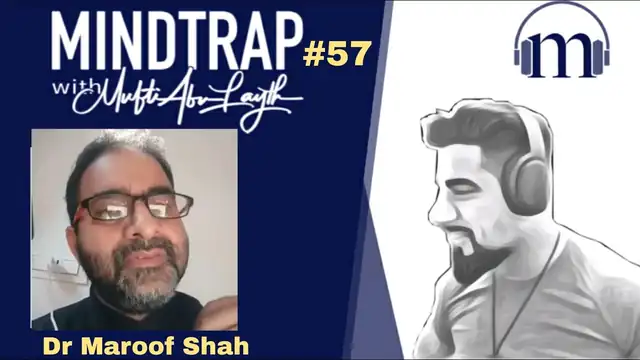
Dr. Maroof Shah | Red Sulphur (Ibn Araby), Rahma & Reality | MindTrap#57 | Mufti Abu Layth
salah salat salaah namaz salaat namaaz as-salah al-salah salawat aqidah aqeedah aqida creed aqeeda aqaid hadeeth ahadith ahaadeeth ahaadith tafseer exegesis tafasir tafaseer commentary sirah sira seera seerat prophetic biography takbir takbeer takbirat takbeerat ka'bah ka'ba kaabah masjed masaajid masajid shari'ah shariat sharee'ah maaliki malikite malikiyyah maliki school muftis halaal permitted lawful haraam sunna sunnat sunan prophetic practice hasan hadith hasan li-ghayrihi hasan li-dhatihi hasan sahih shirq mushrik mushrikin polytheism kufr kuffar kaafir kaafirun disbelief iman imaan eemaan eeman qadar qadr taqdir taqdeer qada wa qadar al-qada wa al-qadar predestination kalam ilm al-kalam kalaam akhira aakhirah akhirat hereafter janna jannat jahannam jahanam jahannum koran quraan al-quran aya ayat ayaat aayah aayat wahy wahi wahee salafi salafis salafism wahhabism soofi tasawwuf tasawuf tasawwof tariqah tareeqah turuq tareeqa sufi order 'alim aalim ulema ulamaa shaykh shaikh sheik shuyukh shaykhs umma ummat in sha allah insha'allah in shaa allah insha allah inshaa allah alhamdulilah al-hamdu lillah alhumdulillah alhamdulillaah hamdulillah jazak allah jazakallahu khayran jazak allah khair jazakallah khair jazakallahu khairan jazakumullah jazakallah khayr salam as-salamu alaykum assalamualaikum salaam salaams salam alaykum wa alaykum as-salam peace greeting barakah baraka barakat barkat baraqah taqwa taqwaa muttaqi god-consciousness deen al-din ad-deen ad-din ibadah ibada ibaadah ibadat rahmatlive stream · 1:27:15 · 3,600 views · 27 Aug 2021 · Open on YouTube
 Press play to load from YouTube. Nothing loads until you do.
Transcript
machineauto-transcribed, may contain errors · source: youtube auto · click a time to seek · dotted terms open the glossary[Music] all right let me just make sure this is all live and kicking and that you guys can hear me fine and well okay just one moment um let's bring this closer what i'll do is bring up your uh your chats just make sure that you guys can hear me right is the sound coming through loud and clear people
okay there's one moment let me just check on with facebook as well [Music] all right right right so we can hear you alright alia aliyah ali yan i said rather different name i've not heard that i take it you guys can hear me all loud and clear so in alhamdulillah
mustafa allah i've got another very interesting session for you guys tonight on mindtrap we've got a repeated guest somebody who illuminated us with much of his thoughts previously i'm just gonna bring up the profile picture of the esteemed guest tonight allahu akbar right there that is dr marufsa
somebody who specializes in islamic mystic philosophy in comparative religious literature he hails from kashmir in india and has contributed significantly to the islamic discourse on especially sufi practices and their contribution to islamic enlightenment so without further ado assalamu alaikum was
i must apologize i've been keeping dr saab here for quite a while we've we've been having some back and forth uh pleasant technology should apologize for us and technology so dr saab once again shukran for uh taking the time out and joining us again we've had you previously discuss some very interesting things from comparative religious literature dr i want to really explore one of the most intriguing figures throughout
islamic history and somebody who has sparked as much passion as much as he has controversy um a luminary figure and somebody you specialize in as part of your research and that is known to many as
red sulfur people and the great sheikh himself [Music] i found myself in recent years being quite drawn to his his whole um his content and what he has to his way of looking at the world what what would you say when we come to ibn arabi why is he a simple question first of all do you feel he is relevant or important to to this day and age and if so why that's the more important
why i think there is no doubt about his relevance uh [Music] the why is very simple even therapy invites you to oneself to alter and he wanted yes you've got to invites us not a particular belief or an ideology or a system of thought or a conceptual schema but purely to oneself to investigate your own essence and we just opened to the real see when he interprets islam as submission to truth it is a metaphysical
claim i think that no even atheist would disagree with so ignorably is relevant because he tried to synthesize all sciences available at his time or in a way that are possibly that have been included in human sciences that's why he was considered to be the foremost teacher in various disciplines not just sufism when he mastered the traditional sciences of his day and he and what made the difference that he was able to put a vast synthesis of the spiritual the mystical the religious the
theological the philosophical the aesthetical and what the so-called scientific into a grand grand synthesis while god is at the center and everything is inevitable truly divine or the face of the divine so in that grand harmony that grand system the hebrew which if we could put in courts he would then then that has influenced history of islamic thought from from last you know more than 700 years 800 years so it means he has been at the center of islamic cultural philosophical mystical spiritual
tradition so if islam is relevant if aslav who have been asked to come afterwards him are relevant he wrote that all discourse is relevant which illuminates man's complex constitution and his complex problems than ibn arabi is relevant and why is more relevant is because he has been in a major way appropriated or engaged by major western philosophers and writers so especially in modernity than in post-modernity as well if nairobi as if
like rumi has been one of the most interesting figures to be explored yeah and for those who and for those who want islam to be who want people to be attracted to islam for example amid allah that great scholar of seerah and islamic tradition he said if islam if west is to be converted to islam or attracted to islam i can use that word it has to be true people like ibn arabi or making them better known so if we now see 20th century's greatest western metaphysicians from renew going on to
adoption to others from traditional school and others who are not not belong traditional school they have been all in a way influenced by ibn arab so one of the so great i should now take for example kashmir kashmir has been in a very influenced significantly by saying in fact it is of south asia and he wrote from fan hero took two commentaries on versus and he never wrote halal as well this is
great of central asia who helped islama is kashmir so he was so central to in a way redefining kashmir's identity and he and he is in a way in arabian and then when we find following said major sufi poets in kashmir and other sufi thinkers they have been fundamentally influenced by ibn araby's doctrine of father and if we now come to south asia take take i think almost any great sufficient who's who are known worldwide most of them are beholden to ibn arabic if
and yes most if there will be no major muslim thinker has been able to afford to not engage with has been able to ignore him or in a way reject him they have all tried to engage with him and most of them respectfully see if therapy is not in every confirmation he became controversial from some for some ulama and and retrospectively it has been now we have been able to better see the controversy for example which surrounded
[Music] was opposed to and why it was why why it was not much influential and why and it has been also pointed out by the scotland later and that later later mujad is very appreciative
okay could you slightly unpack a bit of that yeah i we can in fact it was then you know he's been so central to south asian this religious climate he then he was then able to show that there is only a linguistic difference between we know that he the unity of witnessing community of being his vatican now his his point was it is only a temporary phase in the life in the journey of a mystic it was the point of this
but when we go just beyond this the trap of the language and just see the what he really means or he could have indicated we really see that there is deep down there was an impression that abner is vulnerable to an understanding which in a way trivializes sharia some people did try to misappropriate him or misuse him so that was a danger so um was responding to that so in that that's why he tried to evolve and alternate to epistemology if we can put it that way but when you go deeper into it for him
as well his sufi through and through and he has in a way he borrows many terms from ibn arabi as well and he pleases him in a great deal and at the end of the day he also says god is at the center so but more important is his own progeny didn't take his criticism seriously so it was restricted to a small in a
religious uh elite in india so the rest of india the rest of sufi the rest of supreme poets who are famous worldwide and who have been really able to influence masses they are in a way so we can say there is little controversy on ignorability till recent history when super means became controversial so that is in a way we can say 20th century buddha that sufism was questioned as if it is not integral to islamic tradition then ibn arabi came for some skating criticism from certain quarters but i think now the key
critique of ign arabi was in a way projected but later studies by mukbang he usually begins that's if it is reported about him then this is this that and we now know that he had not access to all of his purpose and his central reservations about ibn arabi that there might be an incarnationism and he might be trivializing sharia something like that there is a danger of in a way
losing the sight of creator creature or lord servant polarity that have been well taken care of i think none of those criticisms now in a way is taken seriously by the most serious students wouldn't you feel that you see the the thinking the thought of uh is definitely very different from the thought of people like ibn s you know one is somebody that is very involved like his
passion it revolves around uh you know like um figuring out philip sectarian dialogues and polem polemics and trying to figure out who is a deviant and who is upon orthodoxy and who's and the other he seems to even though er even audrey does speak about and he does speak about sharia and he actually is quite strict surprisingly uh all these things but yet he seems to be somebody that is more immersed in the incomprehensible mercy of god
as an exclusive sorry as an inclusivist approach to all of mankind he's not even he doesn't even seem even though on one hand ibn arabi seems to be uh very strict on certain ferrya so he's saying this is haram if you do this or this is this this is this on the other hand he doesn't even he seems to be showing aside that islam is for ev even if those who have not embraced islam allah's mercy is equally applicable to them and i don't just mean in the common sense way here in the
dunya but even in the akhirah that's a very different way of looking at the faith than people like you are you are in the right my ibn arabia is primarily a metaphysician he's not a theology very well said very well he's not a religious thinker as such so his primary point of departure and point of the way he would try to approach everything is metaphysical and that in a way in a way it converges with us what we call sufistic and and that makes all the difference now now when we differentiate between the ontological and the moral for example
the creative command and what we call which is and what is in the religious command then we fundamentally see him siding on the creative command side on the ontological command sign and explicating the mystery of existence the mercy of existence any in fact he identifies universe as the breath of the merciful so if that is why ibn arabi is now taken more seriously by those who are in a way trying to engage with the problems raised by literalist fundamentalism but my point was that what has been projected as a very significant critique
of ibm ibn arabi by evan thiamine has been in a way punctured it has it does not hold much water it has been shown that if that thymias criticisms do not happen yeah that was my point otherwise it was very cool who would you feel was significant in showing some of those uh punctures in ibn samia's critique who would you feel which scholars or which i think i i think see we know we have more than 100 commentaries on for social hickam by the best minds you know fusion is such a difficult text and only the most versatile brains of islamic
tradition could comment down so from day first the commentaries of which which have been in a pouring on arabi which have been written everywhere especially in indian subcontinent so many so we they have been all defending ibn arabi generally speaking though somehow been trying to in a way take exception to his certain individual opinions for example regarding salvation of firaoun his interpretation of the story of no no that's and that's something i'd like to come back to just in a moment yeah in fact for example if we know simon simnani was a teacher of
small and sectioned and to make strong reservations had strong resolutions about his individual opinions i think is nothing new in history we know that many great scholars had certain opinions personal opinions that were not taken generally by the ummah in a way but these person these opinions do not define their larger parts yeah so that is my point so do you understand
in in indian subcontinent they have been in a way not defending his initial opinions in that sense but largely speaking both yo bundy barely and previously al hadi's campus they have all been respectful of ibn arabi and they call him so these masters especially just as a as a caveat especially the classic hadith of india like uh you know you're going to have nazir hussein delivery and those people maybe not so much the modern day celebrity late 19th century early 20th century who
are the major scholars yeah yeah the great uh azim abadi sab and and all the great kind of uh major hadith scholars of of of previous india yeah yes yes yes yes would you you know dr do you feel you see this is something that i i'm thinking you know you mentioned that ibn arabi has risen to prominence again in our contemporary as of late as has uh jalaluddin maulana rumi now would you feel part of this is because we have the world or certain parts of the world especially the
western world has moved into a post-religion era and you know they've gone we are living in a post-religion era now so people don't really they're not drawn towards structuralist organized institutionalized religions and symbols like jalal mawlana jalaluddin or rumi or people like ibn arabi these people seem to be uh super institutionalized like they're above institutionalization they seem to be uh people who are inclusivists for everyone
uh showing so is this do you think this is part of the reason he's kind of coming back into flavor and people are more interested in him yeah that is one of the reasons but there is a danger that we must we must call against that we must appreciate that if an arabic live within the institutional structure himself yeah that he never in a way questions sharia he has been so observant of sharia and every sunnah that he could come across he tried to follow so the point is when modern man has been disenchanted or disillusioned with organized religion
and then and he finds an opening to the supra formal truth in rumi and ibn army-like figures they are really rightly attracted to ignorability but we must appreciate that if narratives whole purpose is a great integral synthesis of sharia tariqa morifah everything is put in proper perspective so if we see the 20th century we found we found post theological we call it post theological era but religion has also come with vehemence we know that but i got fundamentalist movements they have also been so much influential yeah then how do we then how do we place in
arabia in all this scenario here comes the problem we approach the whole question from a supra religious what we call metaphysical perspective and that is that converts with the poetic and the aesthetic and you know post-modern term is more aesthetic it is more poetic it is not in a way it it has some problems with what we call ideas the belief context the technology what is this sorry post modernizationism yeah personal postmodernism was famously defined by leotard as incredulity towards metanarratives when religion was defined as a system as an ideology that
is in a way our embracing but that in a way tries to in a way exclude more intellectual more aesthetic more philosophical pursuits so that became the problem then post modernity was in a way returned to us what we call smaller narratives local narratives and the institute that was so central to it but and we know sorry the second part
there are so many paths to the ultimate and all are in a way invalid in their own contexts but that does not mean he is as superficially singled man my point is if the araby opens a window to the divine from all human experiences yeah the bacon was bacon used to say that you all human experiences his province all knowledge is his province but i think it is applies best to impenetrability every phenomenon in the world is of god so in ibn arabia says if a
small insect moves on the grass is a messenger so we should be able to see god in the sand in the way for example black black had famously said holding infinity in the yeah william blake yeah yeah um we've just momentarily lost stock if natalie is able is able to see everything in that sacred context and he is able to show us that despair
can't be the final word that mercy is the ultimate thing in here that we are all the way ripened up with mystery and the so-called misguidance and getting distracted or getting astray is part of the larger divine scheme of mercy there is really no one who is really astray we have been just so he for example he has given that it has been explained with reference to the bow and the arrow the bow and the arrow yeah the curvature of the bow is it just straightness so we need to distinguish trade path and as straight path point is for ibn arabi
all paths are ultimately from the divine there are as many understandings of god as are humans and that was his great contribution was illuminating the conception of rob plural there is one god only but the rope is plural every individual is oriented to his own rob so to be one has to submit to one stop that that is probably the sustainer and that is plural so that is why the mercy-centric perspective allows every creature to fulfill it is destiny in whatever way it wants so deep so in that deeper sense that
relativity of religious forms that is what attracts modern men in ibn arabi but ibn arabi is also about the absoluteness of the absolute that should not be forgotten because in post-modern transit post-modern thought there is a trend there is sometimes a tendency that we try to try to absolutely relativism itself so we since in post-modernity we have been trying to explore institute uh this literary root or the poetic root to the divine ignorability comes again because he was such a great point and we we know that deep relation between the poetry and philosophy and poetry and the mystical in islamic tradition
that was my point right now that that's uh incredibly profound uh just slightly there you mentioned that let's not uh overlook the fact that even arabi would absolute ties the absolute and he was not about necessarily aggrandizing the the relative or making ever making relativism absolute could you slightly unpack that for us i mean what what yeah yeah yeah yeah yeah yeah ibn arabi has been in a very great advocate of what we call adobe revelation he says
of revelation of revelation yeah he is considered one of the most literal stories in explanatory eschatological data he respects the literal sense of the word he's basically a great linguist i mean he's argued by certain people to be a vaheri when it comes to the actual we know he was that but when we read his existence of the quranic verses when we read his whole corpus he is able to devote ultimate respect to every word and every nuance of the revelation of this of secret and hadees the whole purpose of it
so that means even the arabic that why was it considered why every muslim in a way i mean generally speaking was positively turned towards him his origin towards him is because he is able to respect revelation with all its nuancing with all its literality and other symbolic dimensions as well that goes without saying so ibn arabi is able to show why quran is called fulton that makes categorical decision between the truth and the error between truth and error so the [ __ ] on this person
and then he is able to make other he is able to illuminate all other meanings of the quran but we know point is without making a clear distinction between good and evil or the guided and the business guide we are not able to arrive at a particular what we can call hermeneutic that innovate he what what was ignorably about he said though from a divine perspective everything is in a way endorsed but somehow man has to be in a way beholden to god the guide we do not pray for to god the muslim we pray to god the guide
as humans we are to be in a way tutored under certain divine attributes attributes of mercy so attributes of jalal that jalali attributes attributes of majesty they are for running the whole universe but as humans we must in a way select certain attributes of mercy attributes which in a way are channelized in sharia so what is sharia sharia we know is also that shortest road to the oasis so it never is able to show us if there is able to show there is mercy in every scriptural command and he was he was able to in a way
there is a some sufis have been able to distinguish quran and hadees by particular aura all of the words yeah that was that was in arabic's distinction he was able to he was able to show that every quranic world comes with a particular aura and he is able to discern that so that is why that we call this great alikash these people they cannot be dismissed blood men are no judge of colors those who do not travel the sufi path and then criticize on that none they criticize it they're just blind man
we can't take them seriously so if if we see in the arabi he is categorically saying that absolute has the absolute right everything must be in every orange towards the real what we call what we call is the real world this world is a dream it needs to be interspersed it's not illusion this is a dream but in terms of what we call so we need to interpret this dream we are living in light of revelation and that are in life and enlightenment yes
in light of that divine reality so this helps us to put and say if it has to be disciplined that is the domain of sharia but then man is not only real man is also a man is also understanding so ignatius point was fundamentally trying to trying to trying to in a way explicate that understanding of the divine realities see we know he has been able to explicate what we call the the secrets of sharia you know gazali wrote on them
wrote on them wrote wrote much on that but when we see if there is explication we can see that it is more so comprehensive and that is why none has excelled him as the as the expositor of the secrets of sharia that is why all those people who in a way try to save god the right subsyria they in a way heavily rely on arabia as well so every word for example let us just take but how is it he's able to then previously in a way for for
everything for the harmonics of mercy the word azab for example it was derived this was something i was looking to come to because it yes which means a sweet thing which means a sweet thing then ibn arabi is able to show that there is sweetness in hell's torment because nothing is impenetrable to divine mercy then he's able to argue that ultimately hell will be cooled or it will turn into a place of pleasure that is it it will be everlasting but it will not be everlasting torture it will its nature will be then changed in a way so he is able to then place every human being who has ever come followed any
path ultimately he is in a way embraced by the by divine mercy just to slightly for the the listeners and viewers as well so um when it comes to this concept of which to many people to i would say the overwhelming majority see because they understand the the word adhab in arabic means punishment and or torment now interestingly enough even b's perspective on it was to look at its root which comes from the word
uber which is sweetness something that is pleasant and sweet and his take on this was a complete 180 to say that the adverb of allah is in the akhirah in speaking about the afterlife was actually a mercy from god wasn't he and thereby he's kind of uh and he uses certain verses of the quran where uh allah says that about that from apparent it may seem uh like an adap but you know but it's actually part that it actually has
but the barton is actually a mercy and and thereby he's saying that all people regardless of muslims non-muslims they are you know they will be recipients of this mercy now this this is um as you can imagine to many people it's a great kind of surprise or it sometimes rocks the boat for many people could you uh shed some light on that doctor though yeah if we somehow if we try to understand the idea
of hell and heaven in a deeper sense for example we know it has been interpreted by mystics and philosophers and agnostics in a different sense than popular understanding of it as a doctor but hell has been best understood as distance from god and heaven as proximity yeah now some people's now some people choose to be self-willed from god they do not want to encounter the truth for example the truth of their self is nothingness the truth that god alone is so they are nearly caught up in the empires of ego their status their megalomania they are they are these are they are that but it would not be if we are but we are really
nothing god alone is and if we accept this through hana then we are enemy appropriating the divine attributes that gives us the real liberation and this just to uh translate that for our viewers that this is a self annihilation it's almost like what i would use contemporary terms to say like an ego death isn't it at least to kind of annihilate but fanat filla this ego death into god and so what what just just just adding some light onto that for the viewers first of all and then coming back to what you were
saying what this fanat concept because people will say well what does that mean you know ego death into god or becoming this oneness being at one with god because these terms are used nowadays in different ways so yes yes yes yes yes we know in our traditional understanding of man we have what we call body soul or nafs and rooh yeah ego whenever this spirit never simply does not die but
nafs dies of the divine divine origin it is in fact it is in a way what we call normally knowledge and consciousness and illumination and awareness that are the functions of the spirit in a way they are eternally there they can't disappear with their death and the end they are trans person see whatever gives men real joy is trans person when we lose ourselves into something bigger for example in our
work in our spouse in our love in our music in our in in whatever way something other than the actual trans personal god suprapersonal divine is the real joy that all men seek that's why ignorably able to show that we are all worshippers of god all men really want to worship or all real men who really want to be happy and that happiness we know a higher degree of happiness is called joy that highest value we call it is bliss anand that is also called another tradition so
god is that rasa of existence if if we want to in a way all people want to be happy to be maximally joyful that is only possible if we surrender our claims to be separate egos if we are ready for fana fahna gives us the real self the higher self that's what iqbal in a way explicated in another's philosophy of philosophy of
that i am truth that is in every explanation of when later when if there is expression of that best understood in that context so anna if it is separate that is hak but if anna is identified with a small petty ego of nafs then that has to be locked and then then that has to be transcended so we are to in a way lose our smaller self to gain the real self to gain real life why we love everything we shared because we are really trans personal secrets yeah why would allow nothing to be consumed in private without family [Music]
nothing is android best that's enjoyed only for the sake of one person we enjoyed this yeah it's true so and if natalie has been able to show that god is love we know that bible that jesus statement regarding the god and love but when what entirely was able to show that non-dualistic love is at the center of everything yeah everything wants to be why why did god create the world because it was a hidden treasure he wanted to be appreciated yeah so what does that mean
to translate in september it means world is god's playground god just enjoys projecting as small as the way the world's this manifold forms and our job should be to be actors to be spectators we should not claim agency to our actions that is what profoundly comments on the quranic words that we created you and your actions so god is following us god is pleased which we ordinarily do religion is not something of an imposition something from without and we know sharia sharia is fundamentally tackling
and tackling is not something to be in a way endorsed at the as an end it's only a means so when if therapy is able to show that since there is absolutely nothing why what why simply he is able he is able to show that god creates only for the sake of mercy and so if we see people in a way engaging in certain problematic issues problematic crimes problematic things they are trying to they are convert they are trying a convoluted path too much for example if you sermonize someone and ask him do not go after in a way when pleasures he will not take it
seriously but when he goes after those man pleasures and then he finds there is nothing really in it then he comes back but after hurting himself after losing that sting of that real dignity of human being why is lust and all that what why is it in a way wild why is question why is it critic it's because it is below the human dignity human dignity is identified with right use of intelligence at least selling that is why we are saved by using right by using illumination by using reflecting powers every man is called to understand god
we know foreign ways the discourse uh the discussion at hand that people like uh like mansur or that a few centuries later mahadeen of were having it's just that it's on a different paradigm to the common folk like the common folk need uh like let's say as ibn arush would say that they just need organized or whatever they need
structured not organized but structured religion to just get by and this talk of of the people on the path that you know the mystics common people won't relate to it and this do you feel that this that that this validity to this that that really he his talk is of a different paradigm this is why it got so much there was so much of a reaction to it that people they're not walking that path so they're not seeing it from his lens uh i understand your point in fact it has been well cited sufism is not for
everyone common people are saved by what is called traditional belief it is enough for them to be saved so if there we can recognize that as well yeah but the point is how common people are able to relate to ignorability through other lenses as well for example all people common people are today beset by doubts despair they think their family life is disturbed their relationships are disturbed then ignorability comes and shows that we have never loved anything except god or what we enemy he's able to put in another way
man only allows us in existence in existence in existence he is able to show what you really love when you try to capture that object it disappears love is still there status no man loves power no man loves great buildings great cars for it for themselves but for the sake of god in fact upanishads had already said that everything is there for the sake of the self not for the sake of that particular thing or object that is called idolatry if we really love a particular thing
whatsoever it is yeah it is idolatry we have to allow everything as a means to the end which is god which is the button of everything but when you said dr people don't love things net i mean if we dig deep enough they don't love things per se but what are we saying but what those things bring for them so for example somebody may love a building because it brings them status is this what we're saying amongst people no no no no no i i mean what if that is able to show we are all fundamentally condemned to our privilege to worship
god on only [Music] we try to worship our little ideologies great buildings great power game great power we are in a way trying to what is masculine in a way it is really the real thirst for the absolute but if there be we have an identity no man status percy we love status for the sake of something grand in human secret of which we thinks this great building is us in a way indicator no one loves women for example let us take that
i think many of people would probably hear that and think that we disagree but you're right you're right let us just i will comment first on this agreement that's why i love ibn arabi so much he has been able to profoundly comment on that yo that that prophetic statement though which is sometimes in every question it's authenticity that uh disagreement between ulama is rahmah yeah no i was just saying as a joke but you're exactly right so let's take this example you said doctors like women men
yes we are few things two things i will first explain then you may kindly yeah yeah has been able to show given god is supra formal yeah he has no form but we also not that all formers are in a way in every imbued with the divine they are of god but the best tajali of god is in the feminine phase this is ibn arabi
that is why all people are attracted to women as as such in a way it is himself is the jameel all jamal is of divine so whenever we are attracted we are attract not a particular physical physicality of a woman but to something that is so mysterious that's a that's that is something so in a way that is something that in a way pulls us
out of the self and puts us into the real name of the secret even in fact even in fact in orgasm we lose sense of the self that's why it is such a great job that's why that's why gazali would say for example orgasm is a poor taste of paradise yeah so my yes in fact in fact vision of god or paradise has been explained as orgasm 24 into seven so what does that mean in the words of in the words of harlem
god is able to attract us to beautiful faces yeah no that does not mean beautiful it will become an idol that's amazing because there's a hadith like if you want providence you want risk take it from the beautiful faces you know and and islam has cultivated duty islam has cultivated beauty everywhere in the garden in the home in the street in the mosque everywhere islam is the culture that has emphasized beauty so thoroughly but so few people realize it beautiful beauty in the close beauty in the way you
you you cannot move to the mosque even if it is late because it is below the human dignity it is not beautiful just tell him since calmly stately steps that dignity elegance and the prophet said don't just don't hasten to the masjid go with a sense of elegant dignity yes elegant dignity is yes it applies to every civilian that is why islamic architecture is so beautiful
allah is beautiful and this is amazing that many people don't sometimes understand that this because they don't sometimes see that as one of the names of god but this is the prophet explaining that this is god in the logic that are great is schools of god we need to learn from artists artists are the real priests of the most modern world no that is so true and musicians i i would feel some some but
yes so what you were saying just to to clarify uh also just to to kind of share you know for the viewers that even when the same binary we're saying men women when a man is drawn to let's say a beautiful woman even though perceptibly and to his somewhat consciousness he is drawn to something he sees that is a form he sees some kind of aesthetics that draws him in he feels kind of just magnetically kind of gravitating
really add a psychic at a kind of raw level the subconsciously the rule sees an echo a kind of tagilly of beauty with a capital b which really is in the realm of the divine manifesting here so this is why the person is drawn to that even if he doesn't recognize it he just thinks well i'm just drawn to you know this this person because they're so beautiful but that is you know the subtext that is what's
actually happening at the at the level wow and that's in in nature altogether you know a person is drawn to to nature he's drawn to beauty anyway it doesn't whether it's in people and things in the cosmos flowers everywhere yeah yeah wow that is why plato said god attracted most people to the letter to the we can't move
the trinity of the philosophers that beauty goodness and justice yes you see exactly in fact in fact we define la la la la there is no beauty but beauty there is no justice but justice i mean there is no truth but truth so in a way everywhere wherever justice is pursued wherever truth is pursued whatever goodness is pursued it is really god being worshiped and in fact here a thesis and thesis all converge there is no ideological binary here we all all people naturally are attracted to goodness all people are naturally attracted to beauty all people are naturally attracted to justice so this
defines human state that is not these are in islam these are all really just uh representations of allah you know justice is justice he is and here here comes arabic's explication of muhammadan station he says it's a station of new station station of no station okay it means it means it has to embrace all stations of human perfection it means you have to perpetually travel and you have to seize the situation you have to never stay somewhere if you stay somewhere you are obsessed by a particular idea or a belief you are
stuck you are not on a muhammadan station muhammadan station is a station of bewilderment obstetrician of perpetual travel of experiencing mystery and beauty in every phenomenon sees lastly because god never repeats god never repeats his creation god is ever in his new glory that's why he would say that we must understand quran every day anew if we read quran yesterday and today as well understood it the way we are
there is no repetition in creation every day is unique every moment is unique that's why ishtahar must be there ever we must we cannot foreclose possibilities of their understanding university understanding and if therapy had a great respect for what he called that age age zamaniki pachan so he said every age has its own secret in fact he also indicated yes he also indicated every era god will in a way communicate his in his secrets in a new way and it won't he gave him and and he gave hints that we the moderns or in a privilege
to decipher greater secrets than our staff you know i just want to ask that just and it really ties in so beautifully with what you're saying here people would uh some people will question that look uh it is uh when we hear this message um but we know that that they will say that the prophet salallahu it condemns let's say the idols it condemns says that this is you know it kind of denigrates this kind of pagan
paganism and and to some extent at times other rises makes them the other um but this message is a very entirely exclusive inclusivist story and ibn arabi on his tafsir of the ayah innama that it doesn't matter who your illah is ultimately you are still this is a tajelli of the one um they will say but this this is such a difference between there seems to be a difference between these two messages on one hand the quran does say that you know these idols and this pagan practice
is uh what are your um just because it ties in so well with what you're just saying there could you shed some some some light on that yeah yeah it's a very important question let us be absolutely no doubt that if nara b is what we call music or what we call idolatry but he tries to but but what he but what
but he illuminates the believers or any kinds of believers perception or understanding see what his point is his point is that we should why why why is muhammad station praised for example why is muhammad the ideal example because muhammad symbolizes that sees less movement towards higher perfection so it means you are never fixated to any idea and the prophet was sent to perfect yes everything is idle that that in that
one makes into a civil everything that you make into an absolute is an ideal pick up idol because only absolute is the absolute so it means for ibn arabi when we try to see the fix the absolute or when we freeze the absolute in a particular image say idle we are in a way trying against the rights of the absolute so if the arab is inviting us not to idolatry but to the highest but the tajinya that are open in every sphere in every form ibn arabi would even point out that who
are fixated a particular religion as the absolute they are also committed to idolatry because god is opening other forms as well what was ignorably trying to emphasize what was it doctors how when khalid is saying uh about the kaaba now you know
that when people are they they've become so arrogant in their toheed that they don't realize that they've missed the mark yes yes there is a party of using arrogance he recognized that there is atheism in the heart but what atheist real sin is that he does not want to travel further he limits truth to a particular form and denies its in some other form
when if there be defines moving as someone who is open to all forms who is not attached to an uk to a belief particular belief that's why what is perfect definition of perfect man is man should be able to experience god in every form in every image in in every era in every whatsoever god has been able to please to and manifest himself that was his point yeah so that's why he he he never anyway eulogized it paganism or i don't let you know but he tried to but he tried to understand it at a deeper level that those see we're all idolaters in some
way when we worship ego games who does not worship himself when we say i i 10 000 times in a day and get angry on petty things what it is it is idolatry of the self so he is trying to pull us away from our relatives when we achieve that see self is the real idol i once interviewed some local kashmiri mystic women i asked her normally what is called that wahhabi when i asked her that wahhabis are critical about these sufi mystics what so-called wahabis then yes another
debate who is not sure and she said wahabi is my own self my own ego i don't find it elsewhere so my point is to our we are not judge god [Music] if yeah if i could just uh just uh just put in some words there as well doctors about you see my the way i understood this and i'd just like to present that to you as well just echoing
what you're saying about the same question that it is a very important question people would say well it's very clear in the quran somebody reads the quran as certain parts it does condem the paganist practices it does condem the kind of shirk it does can and and this happened in the seerah of the prophet sallallahu alaihi and this message seems to be slightly different so what's going on here one aspect of that is as well that you see because of course that is the theme be laying the foundations for everyone and it is important to free humans from
the fetters and shackles of superstition because this superstition it plagues the lives of people turning it into a misery and the the purpose the mission of the prophet sallallahu alaihi wasallam was to connect insane from you know from here with to the divine that people already believed in god the the the you know quraysh and all these people already believed in allah but they felt he was impersonal he is not interested in us and to bridge that was the mission of the prophet sallallahu alaihi wasallam between the
personal and the impersonal god now once the akam and everything had been said that was an era as well of what some would call the post axel era in which religions had come prior to that christianity than islam and it sealed the deal and never was a faith to ever arise again in humanity that would ever be a global religion that's i mean that's we can take that pretty much factually but over the centuries now certain meanings will dawn on people so as you said and as ulama say that
people who ponder over the quran like the quran it gives new meanings it gives for the era for their times and this is part of the the miraculous nature of the quran so what if no arabic or other ulama at times or other people who've walked the path will say this is something coming to them in the era that they understand from and they can only have understood it because the quran and islam has already been established so and and they by no means are against uh against that but they are just understa they are recognizing at a substratum
level that okay this is what's going on fundamentally these people are they're not saying that every people do shill but they're saying okay these people that are doing this [ __ ] this is at a sub the substrata if we go beneath it this is what's going on they're trapped in this just as some people are doing it with the ego some people are doing it with shrines some people are doing it with uh yeah you know with other kind of kind of modes as well so just i just that's that's what we say what we're saying uh dr zab i wanted to quickly uh if possible just come back to circle back to what we
said uh are we taking a very interesting uh approach on even and this this is obviously it's quite you know just wow in a way that's it's very whoa okay unexpected to certain people if you could shed some light on it and then we could start to uh come to a a closure if you like yeah yeah yeah first let us generally admit that firaoun when therapy uses that term he uses generally impeduatively
compares to the of his time who have persecuted him to the pharaoh yeah so yeah but but he is able to interpret quranic words which is on firearms drowning and all that that he was ultimately saved because his that i i now believe in the moses is god he interprets it that it could be interpreted as his ultimate uh in a way surrender to the total divine but but what is more important is not this particular gloss on this particular verse of quran but what is deeper
at stake the deeper point is ultimately none is excluded from the mercy of god so that is the point of ignorability for which he is able to bring every all evidences for example he is able to build on the rahman and the raheem which is refrain in the quran you know in the islamic tradition he is able to show that the dominant of rahman can never cease we know it is especially through the prophetic guidance it is being exemplified or in akhirah we know it is continuing so point is since mercy can never be
stopped and none can in a way resist mercy for too long yeah no no and he does the same thing with the home of noah isn't it the whole uh yeah yeah yeah yeah we know that has been so counter-intuitive but so where is ibn arabi's greatness all those terms of exclusion for example zollium kaffir and all these he is able to see their deeper bathing from the harmonics of mercy zalim is someone who really does a great harm to himself over in a way
truth cover truth now now what happens for example if you if you read your arabic closely all these terms are transposed it does not mean he's in a way praising kaffir but he's trying to always suggest that there is an alternative to understanding of coffee alternative our understanding of islam that is that is in a way for example in kashmir sufi for example we read kafir subject guru maharaj has been interpreted in a slightly different sense that after disappearing i believe our point is for ignorability
it is not ultimately in man's capacity to deny god one can one see god one of the gods them is irresistible so man cannot resist god man can only deceive people when you're saying irresistible which right have we just i wrapped this up have we lost you you're on hold you're on hold uh i take it doc's coming back we just doc are you there you go on hold oh you're back doc can you hear us
back i am back i'm back you know some interruptions also no no just just just a quick point there doctors up you know when you said allah's name irresistible i was just curious which one are you translating the irresistible so how the sub for example you just try to understand even kahar kahar which attracts you so much that you cannot resist the attraction yeah so i
mean irresistible is in so many forms it it it is in a way so many divine names god is compelled god is compeller yeah exactly so yes why we are not able to resist gravity for example [Laughter] because god is ultimately that's it's amazing that just like gravity how we
so god is in any way embracing through his mercy every creature who has created because there is no creator separate from god ultimately god has only projected certain creatures as if out of his own self they are playing the drama of separate beings but they are only they have to be reintegrated into the divine that is their final and that is their ultimate salvation yeah so so and so at the end of the day if there means there is no scope for despair the despair is to be and that's so amazing that one of the the things about ibn arabi he says even and i covered this in one of my clips is that he says even a person who committed
suicide he says that he quotes this hadith could see that allah is saying that he's so hurried and hastened to see me that i will make jannah haram on him until he sees me first you know it's like one of the only you know this thing that you're saying this hermeneutics this this lens of mercy he sees everything from that uh hermeneutics and it changes the akam of everything so it is really i have to say that message of mercy um is so profound and just a slight one day i was going to say that there is a hadith just tying into what
you were saying dr saab about the thalim there is a hadith that the prophet said your brother thaliman or mathum even if he is muslim oppressed people said we understand that how do you how do you help someone who's an oppressor and the prophet said that khufahu that prevent him from harming because he's harming himself you know it just comes back to what you said that the real valium is one who harms himself dr i know we've gone on and we have taken your time i want to just with wrapping up there's a very important question uh just to get your thoughts on it see
people who hear this and sometimes you get certain people who would say that oh my god that's kufar and anybody who believes like this is a cafe um and we do get this unfortunately in society uh what what would your kind of response or reply your words be to that to to that phenomenon and just as we've asked doctors oh he's back he's gone i know you're back so yeah i will i will try to in a way
therapy has some uh small treatises on these ethics very for example he for example he says do not compare bu great exemplification of piety and ubunaws was not known for that piety but he said when you compare the two great poet though great poem this is don't compare them so and he's very clear to never never hate a sinner sorry when you compare them what do you do you in a way in a way you are affronting the
divine decree god in a way every man is under the divine decree a particular attribute of god name of god that is why for example he has been profoundly meditated on abu jahl's opposition to the prophet and what was the real secret of it because in ultimately ibn arabi's point is there is shari that means in the ontological that god has in a way endorsed in a way
[Music] that has to be understood so religion and belief is subservient to that to the ontology so what's that for example he said we cannot kill a person for his belief of course that's another debate but he said no religious ideology should come in a way to in should i be allowed to harm anyone's life that is why he was in a way he has in a way shown
why hazard was not allowed to build the temple because somehow some somehow this way or that way so him it was a point that sulaiman should only make that he says every man is himself then those then those relative appellations come later he is a kufa he's a muslim he's sinner or he's that but percy every man is a taj of god honored treasured and it is god's decree to save him or not to save him who are we to comment
upon it that's why islamic tradition it is forbidden that you cannot buy a particular as a particular person and send and then say he will be sent to hellfire in prophet has ah prophet has for example named a few persons they are exceptional because he is the prophet he can know but as as muslims we cannot say on any real particular person that he is this or he is that and he is going to be he's going to hell around so to avoid judgment to avoid this holier than thou this righteousness that we are so so easily commit prone to ignorability is all about that and if we really
learn that fundamentalism is this intolerance that will be over yeah then we will there we will mind our own business but buddha said mind your own business of salvation with diligence yeah we never solve intelligence and then we do not in a way meddle with people affairs of the other people you know islam does not allow even city to pry on the sinner's privacy those who want to commerce the consumers in the private private space islamic state is not allowed to pry on them yeah so this shows so this shows deeply god respects human choices in some particular in a way yeah i'm not i i love that i i love
that concept back then we are manifestations of the physical manifestation is why hell comes as an ultimate mercy whatever wrong we have done to any other or to our own selves we are made to show that that we have wronged ourselves and that pain is hell wronging ourselves is hell that pain of realization that we have not been true to human dignity human treasure human higher potentiality that sense of loss that sense of religion we have not been really true humans that is hell but then that is apparition we are purified through it hell we know
fire is a purifier in every tradition fire is fire is for purification yeah so why is it fire and then there is also some debate what why the the fire that is that dawns on the hearts so what is this fire in the hearts we know it is the fire of jealousy fire of pride fire of all these things and then ibn arabi is able to comment on that great prophetic tradition that all will be allowed to enter heaven except those who have as great enough pride he said christ that is our ego
pride means we are not letting god enter us enter into heaven because to enter heaven we have to surrender we have to not be small egos we have to be the ocean that is in the way the higher trans personal reality so the pride is to worship the small self to resist mercy but then there is an arrangement by god that he makes us he humiliates those who are in trample in these ego games he makes in in this world very he makes arrangement in this world that we are humbled we are humiliated we are anyway taught these lessons that
we do not ultimately count that our we as persons are not the absolutes and then we are all sober we generally are detached and detachment from the attachments of the world is what makes us entitled to help and god arranges our salvation god arrives our return to himself in this very world you can see generally most people who sin or who are committed to certain moral christ moral transgressions they are generally generally speaking they are in a way when you should hear through thus the way circumstances evolve in their lives but
yes it becomes elegant their children call them society when they go to hospital no one visits them so ignorant is where we are ready to embrace the ocean then the void within when we are ready to embrace that god alone is real and no other thing is real no spouse no passion nothing no family no other support no hospital no doctor is our savior then god is really pleased with us and then he tries to arrange our death that's why we usually die late and we die humble we die after some terrible disease because their disease humbles us
let's hope not because i know so many people get enlightened after be only after becoming humbled after becoming i mean it is almost from the nature of insane you know and cited in the quran that uh allah says when things afflict them then they turn they come to a realization of god i at this this perspective i find it incredibly profound that look we are ultimately manifestations of the divine
and that as you mentioned tajaliyat not enough we're not saying in a physical kind of anthropomorphic sense but we are saying as for example we see something that is the manifestation of allah being who gives form we see somebody who is misguiding uh in a way like you mentioned or other characters manifestations of the one who misguides you see manifestations of power as you see so ultimately through one way or another it's as though we are all
echoing or reflecting the the divine attributes or names a better way names of god so i do find that incredibly profound um and i would like to add as well that doctor sub that people who do not like people who feel that let's say this understanding or they want it may come as a bit of a shock to them uh right from the very onset i would say as as you've already said that look it's you know this this it's like horses for courses you will different people will
find themselves drawn to different ideas not every idea not every concept is for everyone but as the famous saying says and some people transmit it as a hadith the people when they are you know they become easily angrily opposed to something when they are ignorant of it but within islam this is the beautiful kind of diversity of islam that it has all kinds of amazing ideas and it has so many people that you know from this end to that end that have contributed in their own way and affected uh people's lives so if somebody finds themselves
it's not their cup of tea that's absolutely fine i mean it doesn't have to be everybody's cup of tea but some for many people this lens of mercy this uh which has zero room for despair especially in the modern day and age where people are living lives suffering from depression i find people like known as
the red sulfur a great beacon of hope for many people even if they don't agree with everything he has to say doctors up uh i know we've we've gone on a bit slightly longer than we did say is there uh something to wrap up that you'd like to say to the viewers well i will i will just try to wrap up with some of his quotations from that are mostly on ethics that that i think amazing i think that everyone will allow appreciate and understand so he says looking down looking down upon the ordinary people in relation to the spiritual elite
in the sense of comparing the particular injury with that individual such as comparing the famous mr khasna basri with hasan rivnahani the scandalous part of universe cannot be relied upon in general you should hold a good opinion of everyone and your heart should be at least with them and this is what he says in the mantle of initiation pardon the one who has harmed you that is do not even defend yourself somehow do not hold down your children to serve your interests take no joy in repetition flattering to yourself spreading among the general public even if you deserve it care nothing for the ignorance of him who does not know your birth rather it
is not simply that there be any sense of your worth even in your own eyes have no desire that people should listen to your speech be not anxious to give answer to anything displeasing i said displeasing said about you and lastly be content with god's decree not necessarily with each thing decreed but rather with it is decorate itself with that whatever may come from so that is the great ibn arabi for all of us so we can ever try to read him and i would recommend his seven days of the heart they are special prayers for special days
that is called prayer that one one of the the great devotion in those prayers that shows so called ignoring he was [ __ ] he was capable of praying with such devotion kindly see his seven days of the heart for everyday his special prayers and that's a great wazifa if we try to connect with the great sheikh and receive something from that great blessing which was the mercy to the in the way he said his mission was to broadcast the mercy of the world the mercy of god all of those who are just who are desperate to all of us so that is on that is what i would love to
say in conclusion oh shukran shukran uh deeply appreciative of your time your thoughts your contribution here today i'm sure many hundreds of people will benefit from your words and if you don't thank people you don't thank god um and i'd love to inshallah in the future see much more of you as well so jazakallah best of all to you and our viewers as well
thank you so much right people signing out likewise to you doctor as i'm just bringing up the final slide people if you haven't already uh liked and subscribed then head over to youtube and you can if you want to show some extra love you can always go to patreon and subscribe and show your love there much love take very good care of yourselves and most importantly may allah keep you all smiling
Something wrong here?
Tell us what is wrong and it will be checked against the recording. Nothing changes until a person has reviewed it.
Sending a note needs JavaScript, which is off or unavailable in this browser. Nothing has been sent.
No name, email address or account is asked for or stored, and the inbox does not store your IP address. For rate limiting it keeps an unreadable fingerprint of your connection for 48 hours, and our database provider's own logs record connections as every website's do. Only your note, its kind, the page and the moment in the recording are kept, for review.
Cite this recording
Stable id, transcript version and tier are part of the citation. Every change to a transcript is logged.Mufti Abu Layth Archive, auto-transcribed, may contain errors. https://muftiabulayth.org/r/eipmsfsparc/ (accessed 1 November 2026)
- APA 7
Mufti Abu Layth. (2021, August 27). Dr. Maroof Shah | Red Sulphur (Ibn Araby), Rahma & Reality | MindTrap#57 | Mufti Abu Layth [Video, auto-transcribed, may contain errors]. Mufti Abu Layth Archive. Retrieved November 1, 2026, from https://muftiabulayth.org/r/eipmsfsparc/
- Chicago author-date
Mufti Abu Layth. 2021. "Dr. Maroof Shah | Red Sulphur (Ibn Araby), Rahma & Reality | MindTrap#57 | Mufti Abu Layth." Video, auto-transcribed, may contain errors. Mufti Abu Layth Archive. Recorded August 27, 2021. Accessed November 1, 2026. https://muftiabulayth.org/r/eipmsfsparc/
- BibTeX
@misc{abulayth-eIPmsfSparc,
  author = {Mufti Abu Layth},
  title = {{Dr. Maroof Shah | Red Sulphur (Ibn Araby), Rahma \& Reality | MindTrap\#57 | Mufti Abu Layth}},
  year = {2021},
  month = {8},
  date = {2021-08-27},
  howpublished = {\url{https://muftiabulayth.org/r/eipmsfsparc/}},
  url = {https://muftiabulayth.org/r/eipmsfsparc/},
  organization = {Mufti Abu Layth Archive},
  urldate = {2026-11-01},
  note = {Auto-transcribed, may contain errors}
}