
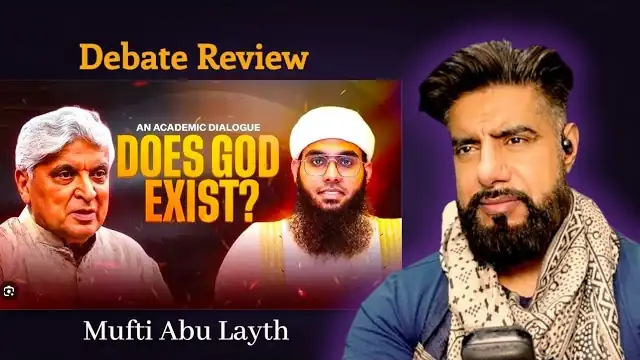
Debate Review- Javed Akhtar V Mufti Shamail Nadwi - "Does God Exist?"
pilgrimage hadj aqidah aqeedah aqida creed aqeeda aqaid hadeeth ahadith ahaadeeth hadis hadees ahaadith combining prayers jam' al-salah jam bayn al-salatayn jam' al-salatayn malik ibn anas malik bin anas imam maalik imam malik ibn anas imaam imams prayer leader masjid masjed masaajid masajid shari'ah shariat sharee'ah muftis hukm ahkam hukum hukam ahkaam haraam dalil daleel adillah adilla riba ribaa sood usury raawi ruwat rijal narrator iman imaan eemaan eeman ilm al-kalam kalaam shaytan shaytaan iblis iblees shayateen shayatin satan devil jahannam jahanam jahannum koran quraan al-quran aya ayat ayaat aayah aayat wahy wahi wahee sahabah sahabi sahabiyyah sahabiyat companions umma ummat community in sha allah insha'allah in shaa allah insha allah inshaa allah alhamdulilah al-hamdu lillah alhumdulillah alhamdulillaah hamdulillah subhanallah subhaanallah subhanallaah ma sha allah masha'allah masha allah mashaa allah bismillah ir-rahman ir-rahim bismillahir rahmanir rahim bismillahi bismillah al-rahman al-rahim as-salamu alaykum assalamu alaikum assalamualaikum salaam salaams salam alaykum wa alaykum as-salam greeting barakah baraka barakat barkat baraqah deen al-din ad-deen ad-din ibadah ibada ibaadah ibadat ajr sawab thawab thawaab sawaablive stream · 2:13:44 · 14,000 views · 23 Dec 2025 · Open on YouTube
 Press play to load from YouTube. Nothing loads until you do.
Transcript
machineauto-transcribed, may contain errors · source: youtube auto · click a time to seek · dotted terms open the glossary[music] Allahbar. Allahbar. In the words of the poet. So salam.
Alhamdulillah. All right. So off one I was trying to go live and then you know it's always the same some technical issue actually.
So whilst I was trying to go live my PCE um I couldn't figure out it's you know some of the settings had changed since I'd gone on here a while and it just took me so long to to quieten down the fan speed. had such a right bismillah bismillah right so Allah Allah hi fad love you too y Allah bless you
and keep you smiling a mean right yeah it's been a while uh things as always things are kind of going on really I guess and But I do intend to inshallah start uh I say that and whenever I say something's always distracting but I do intend to uh have more regularity.
There's a comment here about Christmas day. I don't know about Christmas day but uh before New Year's let's do another so like let's say within a week. Yeah. after this and right shukran shukran hi hi hi it's this is your love I guess uh all of you Allah keep you all blessed right bismillah it has been uh it has been quite a a fascinating
um weekend really. So yeah Allah Akbar from before coming back coming zeroing in on this debate. I wanted to review this debate between Javedar and Mti Shamay and it was on the existence of God.
Does God exist? So, it's a fascinating I think not only pioneering, groundbreaking debate that took place because yeah, it really is in many ways unprecedented of its nature. You know where you have a person like Javeed Akdar who is so renowned uh somebody who is a poet a you know concerns himself with literature apparently concerns himself with academia but um clearly didn't show
in this debate he is somebody who comes across as very sophisticated self-expressed atheist um somebody who often can take stings and these kind of digs at people of faith. So he'd accepted a debate with a muti who now has risen to celebrity start but I think prior to this I don't think really many people had heard of uh Mi Sham.
So he's from but this debate was just spectacular in the sense that Mutisab really just wow did a number on Javed and you didn't expect that you know I I I I don't know I expected I think everybody expected Javeed Aar to like really you know pack some punches, but he didn't.
And he seemed so underwhelming and ill equipped philosophically to even engage the platform. And on that note, we've seen this I was saying weekend um you know in that vein uh beginning with Jake Paul [laughter] I don't know what I just find I find all of these people so annoying.
So Jake Paul miserably put in his place which I think thank God and Tommy Robinson, Allah Akbar. I was really, you know, it brought delight to my heart to see Tai Mitchell put him in his place. And I'm, you know, I I think it brought uh [laughter] peace to the hearts of believers and and just soundminded people worldwide to see that.
And uh Tai Mitchell interrupted a um interview somebody was giving him and he said, "Look, don't give this some air time. He's a racist, a bigot. He's an Islamophobe. He hates Muslims. Here he is in a Muslim country. Look at the irony in Dubai." [snorts] And I I did see online that he got then deported from Dubai.
So, I'm not sure if that part's true, but I saw certain posts online showing that he got deported. So, that also, you know, it um brought coolness [laughter] to the eyes and hearts of uh yeah, just people of fairness and faith, I think. And in addition to that, Andrew Tate, right? Ah, you know, somebody has become so annoying over ah, you know, it's been a bit of a long day.
I do that sometimes. If I got a cold drink, I'll put on my eyes and it [snorts] So, Andrew Tate, wow, what a humiliating uh defeat and really just an expose of himself. I found it so just I don't know revvelatory how embarrassing you know it's one of those things that like when the person came to Imam Malik and he said Imam Malik he said [laughter] you know if the shaitan wanted to
humiliate you [laughter] he couldn't have done a better job than you've done to yourself so it's a bit like that I I feel Andrew Tate just humiliated himself just in recordbreaking. He went up against a YouTuber that I mean, for God's sake, the guy clearly that he's going up against cannot fight.
And and he's getting knocked out. He's getting the guy's swinging punches like from here. You could see them coming a mile off and he's just taking them in his face. It's like, isn't this guy going on about being the world kickboxing champion and all this about fighting fighting? And you know, he he carried an an awe that people, you see, sometimes when people don't know you, they don't know you so closely.
And then you, in his case, have a title. Oh, I'm the world kickboxing champion. Then you always talk about fighting. It gives a um you know the confidence makes people possibly back off think you know you know you know he must be some some ruthless fighter. That's how he and then it's like wow he embarrassed himself and it's like acha you know that acha mia juice [laughter] you know there's that old where
this imam goes in this person with a big buggery you know big imama he goes in to speak to a molana to ask him a question and uh as he goes in The Imam Sab is sitting relaxing and he sees he sits up. He says, "Yeah, you know this Lama has come to ask me and this person sits down and he's got all this aura and he goes, I want to ask you a question." And he says, and I im says, uh, you know, sure, you know, do you
mind if what's your name? could you know what's your and he goes uh oh my name is people call me Mia Joseph [laughter] not evensef [laughter] so the imam just kind of stretches back out again goes musf [laughter] so it's a bit like that And yeah, so it's been an interesting revelatory few days.
[snorts] Um, yeah, in line with that people, Allah bless you. Look at this. Right, we've got peace and love from Colorado. Hi. Hi. Hi. Colorado. The Isn't that the the the state of um the connect?
Isn't that the Connecticut shade rapper for cigars grown in Colorado? Are they not? [laughter] Allah. Allah. You know that. So,ii hi [laughter] swagger. Hi. Brown. But yeah, so moving on to this debate.
I think it was really interesting. It's under two hours. I think the whole debate including Q&A. It's the first time I've seen a debate in that dissy world, if you like, that is so um for the most of it dignified. None of this shouting and it's almost dialogical.
I mean, it's getting there. It's not an entire dialogue, but it's almost dialogical and that is groundbreaking. You know you can't and people thinking that look people of faith will get rinsed this faith people it is not you know there's people as in the words of Mubarak you know the legend of hadith from the time of IM Malik and Imam Abu Hanifh He's from the
early the first wave muadith if you like and when he was passing away they said to him you know they go you know who you know what's going to come of this affair after you.
This is and he says he's on his deathbed and he says Allah legends will be born for it. He's like you think this dean is you know that there there will be legends that will rise and they did you know the second wave muadith and so on but that's you know we see even in this debate between javedar and mti shamal
it's fascinating that he javeed a dar got absolutely annihilated and you know He was really just evidently not only punching above his weight, he was so underwhelmingly prepared. And it just reminds you of the um what does the poet say that
Allah Maktal is the the kind of battlefield but it's the place where you know people are slain in Arabic it comes from the word the place oft the legend Masaki the poet.
So yeah he says that even after us there will be a glory a kind of ronach is also that kind of a glow and a glory a light as well that that even after us there will be glory in the battlefield or in the maktal in the place where people are slain.
That the people of heart we have left them in an elated spirit of mind. Allah [snorts] [gasps] Allah
what poetry does to a person. Huh. Yeah. So yeah, what I want to do is go over this debate and then also tap into some arguments. I want to share with you [snorts] certain arguments that people I'm not sure what they're kind of my what I've kind of put together for the proof for the existence of God.
And I call them the big five. And I I'm sure you know in places I've leaned into other people and some of them have probably been cited and some I think I've not seen as much really being cited. But these are the modern arguments [snorts] for the proof uh of God. This is what I'm putting them as as the big five. I should actually compile a book on this, shouldn't I?
>> [laughter] >> Now that we have that Allah. So right the traditional the old school the classical arguments for the existence of God for the proof you have Aristotles. So I'll just give you some highlights and I'll talk a bit about the debate as well.
So the main classical arguments were things like you have the teological argument which is the argument from design things have a design that they seem to have a purpose to them and therefore if they have a design there must be an intelligent designer behind the design. This in theology is called the teological argument.
This didn't come up really in the debate between Javeed Aar and Mui Sham, but that is one of the classical arguments that when I look at things, I can tell there's a design to things that things work in a certain way. So, they must be uh it shows there's an intelligent design. The second argument is known as the um prime mover argument.
This was Aristotle's argument the Aristoilian that and it's really an argument from about motion and kinesis things are set into motion. So everything including the you know the celestial bodies, the planets, the you name it you know whether we're seeing the sun in motion it's the earth I guess but the sun too is in motion as we now know the moon is in motion everything is in motion motion I guess in some ways is also our in one perspective it's what by which we
identify time and I guess entropy too But the point in which one could say entropy is an element of or a uh you know a manifestation or a or motion in one dynamic. Right? So Aristotle was saying that if things are moved and are in motion then they could not have moved themselves. Something has moved them.
So if something's moved them and then what's moved that and then this would just go on. So there must be an unmoved mover. This unmoved mover is Aristotle's um argument. Okay, this is the Aristoilian argument. The unmoved mover.
Now, Rush and the many of the Islamic theologians further they kind of used that as a springboard and came up with one called the cosmological argument which also is known as the calam argument. in the calam argument similar to the moved the unmoved mover sorry the yeah is the one who is moving everything because otherwise there would be infinite regress infinite regress means something and this does come up in the debate that would just goes on forever
and that is logically flawed that something would just go on into a kind of ad infinitum. So this prime mover, the mutakalimin, the Muslim philosophers and theologians, they put together the cosmological argument which is that all things not just being moved but seem to have something that created them, a kind of cause to them.
And this thing that created them, it would just caused them. So we're not just talking about motion. Aristotle was only speaking of movement. We're speaking of things bringing into existence. You know whether we're going to see the chair is made out of wood which is made out of the tree which is from the seed which is from so everything goes back.
There must be a point where there is an uncaused cause. So like the unmoved mover there must be the uncaused cause. the first cause, the primary cause because he the primary cause cannot be from the series of causation. This is known as the calam argument.
This in some way was brought in in this discussion um between these two gentlemen. So you've got that coming in. Um there is another argument I'll go into some uh there's the ontological argument which was not brought in. The ontological argument is the um the argument by St.
Anel and that was that God by definition is that than which nothing greater can be. So God is the ultimate and because we can conceive God and this is the necessary definition of God. So it was a logic argument. He was trying to say well God by definition is something that is the greatest and necessary requirement of that must be to exist otherwise how can it be the greatest.
So he's almost going in from a semantic argument. I'm trying to say this is in philosophy they call it a priori or sometimes an analytic analytical statement as Kant would say. So statements which like if I said you know all bachelors are male but really the word bachelor kind of carries the word male in it.
So you even if I didn't say that you could figure that out. So now in this sense what he was saying is that and St. Anselm that look God exists in the minds of people and God by definition is that the than which nothing greater can be. So if God exists in the mind but doesn't exist in reality. So like let's say there's an let's say there's an apple.
I've got a picture of an apple in my mind and you've got an apple then the one in my mind can never be greater because it doesn't you know the one that exists is obviously the greatest like if I'm just saying sure I could think of one but I need it to exist as well for it to be you know for it to have like a double plus otherwise it's lacking. And so his point was because God is the ultimate the greatest existence is a necessary requisite of being perfect because otherwise if there's no existence God is imperfect.
So it was a bit of a semantic argument. It was it didn't come up in this debate and often it doesn't and it was challenged by even you know St. Hansel was a monk and in his time he was challenged by other monks as well who said um that you know it doesn't really they gave the example well just because I think of an island does it mean the island exists etc. But coming back here, the calam argument was used in a way um to do kind of to do with the contingencies and and I'll explain this because it really took up
so much of the dialogue and I was quite taken aback that um Javeed Aar he just admits that look I don't even know. He goes, "What you mean? I don't even understand what you mean by contingency." And and that's, you know, quite uh wow, you know, to say something like that is is quite, you know, for a person like Javar and I'm sure he's got the Richard Dawan
award. goes to show the token award can't amount to much, can it? [laughter] He goes, "Look, I don't I'm going to be straight up with you. I don't even know what this contingency means." He goes, "I don't even understand the English word." And then when he explained it to him in Udu, he goes, "Look, sorry," so he explains it to him, right?
So he goes um right what what is this right? So he goes to him look um explain it to he explains it to him and in in some kind of you know he's trying to explain it to him in in in some kind of a way and he still doesn't get it. So this comes up a lot in the debate. So it's worth understanding. They they use the term contingent beings, a necessary being.
So a contingent being is something which is dependent upon. That's what it means. And a necessary being. But really in the Elm Kalam tradition, in the Muslim calam tradition, we are taught this in ways like this in a different way. So even though that is the calam argument but it's a slight nuance of it because the contingency argument in Arabic we would refer to this as the mumkat you see something is possible does like so for example this world
exists it's possible it didn't have to exist would you agree so just like anything I could say look this tree exists. It was possible it didn't exist. That's at a micro scale. But you go on a macro scale. This universe exists. But it's plausible in physics that this universe didn't have to exist. In fact, matter and antimatter are of equal proportion in essence in the beginning.
So something now and obviously antimatter would have canceled out matter. So if something is possible to exist and equally possible that it could have not existed, then there must be a determinate will or power that pushes it into existence.
Because if something is possible to exist and possible not to exist like if wud and wjud is this being and is the absence of being are equal then the thing doesn't you need a determinate something that will a will or a power that will preponderate the into the moj into that which is contingent or that which is possible into that which is actual.
So to actualize it, we need something external to it because otherwise it doesn't make sense because if something can exist and also doesn't cannot exist at the same time like it's plausible that something is possible and at the same time its absence is possible. Then there must be an actualizing there must be a factor that determines its actualization.
So this is the contingency discussion that keeps coming up in the debate, right? So we've got and this comes up a lot and so I really wanted to explain that. I hope that makes sense. So it kind of ties into the it is it's like a nuance of the calam argument which is really to do with first cause.
Kalam is slightly different because kalam is talking about things everything having a cause to exist. So like the you know this is made from ceramics it's made from pottery it's made from this that's made by that that's made by water which is made by chemicals which is made by molecules which is made. So that's kind of tracing back an origin a cause to bring that and although one could by a nuance say well that is the mumkinat debate as well sure could be one could say well you know that for example this could have existed
and equally it's absence was plausible as well. So yeah, so in from that side it's a nuance of the calam argument, but really when they're speaking about the moj theat inam the theologians are really speaking at a kind of cosmic level. The cosmos is what the philosophers said was from the mumkat.
It didn't have to be but it was. And therefore, because it didn't have to be, both its existence and non-existence were plausible. So, it's like 50/50. So, what pushes it one way? Whatever pushes it must be an independent determinant of will and power that brings it into existence. Just as I said, you know, with the big bang, they say that with matter, antimatter and anti- and matter are of proportionate symmetry, then there was an asymmetry that had to have happened for matter to
preponderate and even if it was at a tiny level. So the mumkin and the mkin or the they usually say the moj and the madum that which is and that which is absent of being are both equal. There's a symmetry. So for things to come into existence the mjud must there must be an asymmetry. It must preponderate.
Now this debate it went on. I really loved the way uh Mui Shamay he you know his opening so there was an opening clause to the debate. So they um they I think they have 5 10 minutes or something to give an opening like an opener and he really laid out the framework.
I loved that. He said look the discussion today is does God exist? He said this is not about he said how what do we debate he said like how do we prove this he said we can't prove it through scripture because javeed is an atheist so he's not going to accept scripture so I will not be citing any literature sorry any religious literature any scripture secondly he said he said god is not this is not restricted to Islam Here I'm speaking about God as a universal.
Doesn't matter what religion and faith are ascribing to God whether it's Christianity, Hinduism, whoever. The ultimate being of God. That is what we're discussing. We're not discussing is Allah in the Islamic concept or God in the Christianity concept or God. This is God with a capital G. And so he goes, "So I'm not going to be." So that's the first point.
Does God exist? And I'm not going to be using scripture. So, he should not be using scripture to come at me or analyzing because you know there's no point. He said, "Well, what about science?" And he said, "God is not the inquiry of science. It's not from the mass of the objectives of science. Therefore, I will not be using science to explain this." Which was, I think, a beautiful point that he made because he said, "Look, science is about empirical data.
And God is not something you testable. That doesn't mean that God doesn't exist. It's a different question. It's a different overlapping magisteria. So if and he gives the example which I thought was great. He said like if I had a metal detector and I'm looking for plastic. Now the metal detector doesn't pick up plastic. So if I was to say oh therefore plastic doesn't exist.
But no, it's that the detector is you're using the wrong tools and instruments. That's not what a metal, you know, it's so exactly the field of inquiry for science is not God. So he says, I won't be using science and I expect him not to be wasting time with science either. Then he says, well, what by what can we prove God? He says we can only prove God as a mutual uh arbiter between us and that is by reason and logic.
So by the voice of reason and by logic. So these are the this is what I will resort to and I expect him to resort to that as well. He did say that I think he should you know don't waste time with resorting to the morality argument but really in all fairness I think that that is that is you know the argument. So I think it's we we can't say don't resort to it because that is the you know the the the horns of the bull when it comes to believers versus disbelievers.
So we can't really say that although he did say that oh don't use the morality argument against me but I felt that was you know obviously he wasn't going to abide by that but I did feel that was wasn't really uh philosophically fair to to stip try to stipulate that because that is what atheists will use and they've used that since time immemorial so all the of Islam in the past they contended with those arguments so we expect them to use that argument so we can't say don't use that argument
Um the discussion began it unfolded. Javeed Aar really was he couldn't really come at it with anything. his main thing he kept resorting to the morality argument saying that look and this is known as these are the theodicies you know in um when you're discussing al-am theology the theodysy that that you see if God in his simple way he was saying well if God exists why does evil exist this argument
broken down in its format is that see what they've tried to say to people of God or people of faith is that e if God is allloving and if he is all powerful then evil shouldn't exist. So if evil does exist then either he's not all powerful or either he's not allloving. So this is the argument. They didn't really quite uh narrow it down with that precision in the dialogue but that is the precise argument.
Um they kind of loosely javeed a kept loosely throwing in you know look oh why is this suffering in Gaza then? Why are children why are babies dying? And he also touched into briefly into natural evil which we call in in theology or philosophy they will call it natural evil. So you have two types. You have moral evil and natural evil.
And what that means is natural disasters. So they're calling it evil, but that's just the word. So things like earthquakes, hurricanes, tsunamis, uh things where no person but they're causing destruction and death. Uh that's called natural evil. And then moral evil where human beings are causing suffering of other human beings. He briefly touches up on natural evil.
not that much. It doesn't expand much. Um Javed he does touch up repetitively on moral evil that why is this suffering? Um the response given to this is usually more or less or you know consistent by people of faith. In Islam we give it even Christians other people they give a very similar response and that is the response of free will that Allah has given insan free will.
If he is to intervene in at every point, there would no longer be free will. Um, all right. So there would be there would be no free will. Now this point that the um I guess to um Jave because there isn't really he's not obviously he's not new in this discussion.
This discussion's been going on for you know God knows over over a thousand possibly yeah a couple of maybe 2,000 years or more. So this discussion that look there is free will. Their argument is that well God should intervene if he exists and because he doesn't intervene therefore he doesn't exist which is their point to people of faith Allah gives free will.
I don't like by the way in between Mui Sham made some points where he said things like you see uh this is part of a bigger picture. I don't like that and I do find it um berating of um I I do find it almost at at you know at the very least uncomfortable if not uncomfortable unsettling and even you know very difficult to bear that people this kind of thing that oh [snorts] babies are
dying so there's a bigger picture to is I I think that's a very inaccurate way to put this and even maybe disrespectful. The truth is it is just free will and yes you could say it's a test for people but it's not being you see it being a test is secondary tertiary by its circumstance it's become a test we put it like that not that it is a test by default so it's not that God is saying because then picks up on this
point he goes oh you know so so God is killing these babies to test you guys. That's absolutely wrong. People are committing massacres and genocide. Those are the people doing that. Their actions result in becoming a test to see the courage of other people stand up and voice uh justice.
And we're often humanity fails unfortunately. So it's not that this is by its primary action a test it it becomes that okay by its unfortunate consequence so there is a big difference in that and it's not um so I don't really uh and and then I think Muti Shamal did retract on some of his wording as well because he kind of gave these examples of oh if you have a children sitting a test and if the examin was to give them the results, would he be helping them or and then he gave this one example of look, you know,
if you take a child to the doctor and he needs to give him a jab injection and there's a bit of pain in that injection, you know, but you got to go with the good sense of the doctor and this was really a poor example and because then Javeed does kind of go at him at that and and then he has to retract that and he has to apologize. He says, "I I didn't, you know, I want to retract that." Cuz he says, "So you're saying, so this is like an injection.
So God is killing these babies as an injection." Um, and that's really a very poor way of putting it. And we don't put it like that generally. We, you know, Muslims shouldn't be presenting it like that. But yes, it is the exercising of free will where it becomes devastating. By consequence, it becomes a test. not that it was a test by default. So that's that.
I did like the angle that Muti Shamay brought in and I don't think generally people bring that in. Um he brought in the recompense uh argument for morality because why does evil exist? And he said well you see the evil exists regardless of whether you believe in God or don't. So those who don't believe in God well to them the people who did evil got away with it but to the faithful they will be taken to account.
So there is a recompense argument and so at least that gives a a kind of a fuller picture or more to the picture than just those who deny God because to them the evil's happening as well. So he said like if you take Gaza now as an example and what Netanyahu and the the IDF were doing. So to the atheist, well they're just doing it and they've got away with it.
But to the believer, they will be taken to task before God. So even if they think they got away with it in this, they don't get away with it in the so there is a fuller picture to look to. And I've in that sense I think this isn't usually people don't or I've not come across them arguing in that with that nuance in that way. So I give credit to Mui Shamal for that.
Um that's a unique uh angle of bringing that. So yeah that was good. Other than that, Javeed Aar made some silly points. You know, he said things like, "Oh, look, all people of uh religion." Um, right. Somebody said, "Is there some parts I may be missing that were in? If so, do drop a um uh do drop a comment and I'll pick up on it just in case it's kind of, you know, my ADHD brain." Hi.
Hi. Hi. ADHD, huh? It is. It's a blessing. It's a blessing. It's a superpower and and a curse, I guess. But I do love it. I won't lie. Um the only thing I hate about it is the procrastinating part. But coming back to the discussion, exhibit a ADHD, [laughter] right? So uh he says jave says at in one point, look a all the religions in the world believe in all these things.
Uh, you know, they've all got scripture. Why is there no dinosaurs mentioned in the Quran? Why is there no dinosaur in any scripture? Are you telling me do God didn't know about the dinosaurs? Why did it take us now to know about the dinosaurs? And this was really such a silly uh this was like a 12year-old's argument, right?
So, and Mishal answered it very well. Um he said you know he said show me a book on mathematics that mentions dinosaurs. He goes does that mean that dinosaurs don't exist? Uh or the people who wrote the book on mathematics were ignorant of dinosaurs. He goes but the but the theme and the topic of those books is mathematics and it's not dinosaurs.
So the theme of revelation is not dinosaurs. The theme of revelation is it's the book of God and it's to connect people with God. It's not about connecting people with dinosaurs. I would have gone a step further and said that the Quran does say go explore your world people. And in fact, Allah says, how did Allah begin creation?
Go travel, traverse, explore. So yeah, so I feel that that's um you know that's something he did answer that very well. Then there were certain points on equality. uh he was trying to say well you know if you look at uh countries where there is more atheism you know there's more equality there's a sense of justice there's a sense of and sometimes that you know things may appear a bit that way but I I would say that that is a uh a very cropped view of
the present state without analyzing history there is no denying that, you know, colonization or colonial um history yielded the power dynamic that the West had. There's no denying that. And and that's not to go into saying I'm not trying to not trying to play victim here.
What I'm trying to say is you it would be incredibly naive to deny that. So to say well you know there is it is true that a sense of affluence is often correlated with a sense of liberality in views. There's no denying that that there is a sense of people a a greater sense of liberalism and freedom of thought often correlating with affluence in society.
But where you know you take history just our recent few centuries where India was nearing I think 30% of the global GDP and then by the time the British have looted ransacked raped starved the the Indian subcontinent uh it's simply responsible for 3% of the world's GDP and all of a sudden Britain had, you know, has become this elite superpower at one point on top of the entire world at one point.
There's no denying it only did that by ridiculously looting the resources of these places. So yes, when affluence comes, it does bring with it a um the luxury of, you know, a kind of liberal mindset or freedoms. But let's, you know, let's not be naive that that came at a ridiculous cost of barbaric colonial brutality.
So it didn't just arrive by, you know, oh, enlightenment. It wasn't like, you know, the Buddha sitting under the tree and they became enlightened. They killed millions of people and then sat you know they the fire of enlightenment was on the ashes of millions of people.
So this argument was uh presented as well. Once again I feel that was an argument from emotion. Other than that, they um they really I I did love the overall uh kind of decorum that was maintained. Uh the kind of general respect that was given.
Uh I really have to give it to the moderator because moderators are usually for the most part useless. I feel that they either biased uh they have you know an axe to grind they uh this is why as as a person I've never really I've always felt we need to rise even above this and get to a point of dialogue that we should be able to have a dialogue as two grown adults always having a dialogue and even if at times you know voices go up and down but they should be self-regulated Now this even though he had the mo the
moderator was spectacular and there was a point where some guy in the audience asks a question and they um he says something like uh right he he he brings a point and he says uh he says this question let me give you an example of what this would mean. So if you had the guy just stops him goes listen nobody's come here to listen to you. [laughter] He says, "We're here to listen to these two.
So if you've got a question, say don't try to teach us." He says, "Don't give a lecture. You know, we're not interested in any lectures." And I thought that was spectacular. You really hit that on the head. Um, right. Uh, right. So yeah, I was just checking if somebody had put some of the uh so these I did love the section at the end the format that they allowed crossexamination that they could cross-examine one another that that was very mature.
I liked that. Ah yeah that was uh yeah I did like that. Other than that, the debate for the most part was um you know, from the atheist side viewpoint, it was underwhelming because he clearly wasn't trained. He wasn't even you know, he was a incredibly lightweight atheist.
Here's somebody, you know, [laughter] you've come way overprepared for somebody like that. But I do long for the days. You know what people should be able to do is have a debate. You know what? Have like a reasonably like a good timed out. Let's say cigar.
I say that's going to take a good hour, hour and a half. You could go with a good Toro or a Churchill size and and have a and you have your discussions. You know it's very cerebral thought going into that I feel inshallah these times will come. There was an interesting point where [snorts] uh javed he's asked a question by mut he says to him that where do you say morality comes from and
goes there's two types of animals there's those who are solo live isolated and those who live in groups and herds so the group and herd is what is respons responsible for this myth of object you know of morality. So he go so Mui Shamal says okay so it's people come up with morality and society and he goes yeah so he goes okay so if society says you know killing is okay or rape is okay or society says this you you wouldn't have a problem with it and he goes no no I'm not saying of course I'd have a problem with it and then he says well okay Nazi
Germany for the most part the society all agreed with it so was that okay then because the society agreed with So jave says nay you have to look at the people not just in the society but people on the planet as a whole. So then says okay so oh so we've gone from society to the planetary people majority. So he says well as a planet majority of the people on earth believe in god so therefore it would be immoral not to believe in god then.
And he [laughter] he kind of he hammered him on that because Chaved was just making a uh uh you know he was making him laughing stock out of himself. He did also highlight that there is not a a morality amongst animals. There is you know there is a low-level sense of uh justice that animals recognize mammals do recognize it.
There's been research on primates that do uh understand fairness to some level like they have a concept of fairness. They have a concept of exacting revenge and retaliation if and there's been studies you know France Dewal who is one of the leading primatologists in the world has several books on this and I think in the past I reviewed uh one of them as well I think the bonobo and the atheist but they show in their studies that when for example with living within a uh a group of primates
when one chimp had. So, they're all part of the same group. Um, and they could be something like, let's say, up to 50, you know, anything give or take. They could be that many chimps even living in a whole group. So when one uh chimp had uh not not not deathly but had assaulted or attacked let's say it hurt is a better word had hurt another chimp that chimp's sister then in the following day went and hurt
that the perpetrating chimp's sibling. So she kind of got his brother back or his sister back. But it was interesting when they were observing that that it wasn't like there was method to what they were doing. It wasn't just randomized anger. And so they were taking exacting that they had a sense of fairness.
And even when um monkeys so some of these chimpanzees when they would um when they would be given favoritism so they would they had a hierarchy they had rules that they have to follow. So let's say the alpha goes and eats first and then the other chimps like there was like a pecking order to how they come and can eat the food. They can't just all go together.
They have like an order to their they have a method to their madness if you like. So they and what I'll tell you what's fascinating I'll just come back to that point is they saw that there was one so if any of the chimps violate the rules. So let's say when it comes to food time the alpha chimp goes first and then the others and then the then the rest of them. But if let's say some of the teenage chimps or the other ones decided to go first, they would beat up and discipline that chimp that did that, it was unacceptable.
They would beat them up. And what what they found interesting is that they allowed of they they would allow infants like if an infant did it, they would ignore it. But they also, this was really intriguing what France Dewal found. There was in the group, there was one chimp that had Down syndrome and he wasn't an infant, but he was like as in but he had Down syndrome.
So that chimp whenever he would violate it, they wouldn't say anything to him. So they could recognize he's different, like he has different rules, like he doesn't have to. they wouldn't ever discipline or beat him up. So that that was fas. So my point was when Jave once again when he was saying oh the animals don't have this they do this is part of the fra but there's there's almost degrees of it and humans are at the pinnacle you know what we have obviously they don't have it to that level and really the um morality
argument I often find this is put forward in not the most powerful way that it should be put forward. The truth is that with the uh morality argument, the way it is is that there is a base morality, a base instinct of of morality that is in our frapp
it's like a construct of two key things. One is that we can identify harm. So we can see what harm is and the other is empathy. So these two put together are the kind of um the baseline of this argument and then that is nested in the sanctity argument.
Okay. or the sacredness or sacrality is in there as well. So that there is we do sense intuitively that there is a sacredness to human beings and to life as a whole. We do tend to especially humans and even other life we do feel intuitively there is a sacredness to it and especially humans. So this is really all our morality is and the rest is shaped by our let's say society by teachings by faith by um social ethics
by other things it's it's allowed and this is why in Islam we would say that Allah says um that that we gave different to different So it's not that oh one ruling is so let's say alcohol is haram for in Islam it wasn't haram in other times it wouldn't have been haram in the time of noisam or even let's say or arguably maybe not in the time of Jesus or other prophets let's say before that so
these rulings these ethics change over time based on a society and based on and Islam Islam or faiths would regulate that in accordance with uh the era in which they revealed but the base morality Allah has placed as part of our fra.
So and this is the argument that really uh atheists would be stuck on and they this never came up in the debate but I'll present it to you guys that this uh and then I'll present to you the modern so these arguments I was saying before are the classical arguments but the modern let's say arguments that we have today the big five uh which I've kind of in my which I tend to put forward in my personal discussions with people for the if we can say the proof for the existence of
God. But before that this thing of the sacredness, the sacrality, the sanctity argument, this is separate. But this we to an atheist. How can you justify anything being sacred? Is not sacredness the realm of religion?
Because for something to be sacred you would where would you get this sacredness from? Like how does it become? Because to be sacred is to almost be transcendental. Um, and where do you get that from? Because otherwise it's just arbitrary and you can't say it's based on function because function is more utilitarianism.
It's not a sacredness. So if we most I would say human beings recognize the sanctity uh principle that they recognize sacredness and they definitely recognize the sacredness of human life. So one question would be why is human life sacred? Why?
And any argument you say to prove it, it cannot be biased or prejudiced. Like anything you say is well well you're going to say that because you're a human being. And if you say well human beings are so intelligent, human beings are this. Human beings are sentient. Human beings can express themselves. Human beings have culture. They have But let's say an alien species came and to them let's say to them they're much more clever and intelligent than us.
So we are to them like how pets are to us. Then how would this argument stand to them? It wouldn't stand like why are humans why is human life sacred? So they couldn't care less like they would say not that intelligent to be fair. AI is possibly more intelligent than many people today. So even though it doesn't have general intelligence but is the way we look at intelligence it's more intelligent but let's say an alien species was much more intelligent.
So how do you posit the sanctity of life of human life? Well, this argument must be transhuman. It must be transcendental. Otherwise, human life doesn't have any sacredness. It just has an arbitrary intersubjectivity like we've just agreed on it for the sake of it. But the truth is we intuitively we don't just rationally we intuitively believe human life to be sacred.
that the just looking at spilled blood sends shivers down the human spine because and it's not just that there is something so existential that recognizes the profound sacredness of that. So that is an argument that really atheists can't answer and they and the first time I came across that argument although I totally can't stand him now that's Jordan Peterson but you know I'm grateful that he came out with that argument [laughter]
he he and that was the first time I heard him and I think he said it in a debate with it kind of came out I think impromptu with in a debate with Sam Harur ries and I don't think he even realized how powerful the argument was that he was that what he was saying because he didn't really capitalize on it whilst he was saying it and I remember listening to it years ago and thinking damn that is so powerful of an argument and then I'm thinking wait I don't even think he realized how powerful that argument is because he he should have like he should have hammered that point in but he didn't say it that's that so overall I think it was a spectacular debate
uh in the sense it was groundbreaking. These are how we should debate and discuss. We should move on to dialogues, right? we should move on to having um you know even when we disagree when people within Islam when they want to disagree on things when people have all kinds of arguments you know whether it's the age of Aisha which I still I can never understand why Muslims some Muslims push that so hard that they are the greatest um you know it's like with good
intentions s they've really are hellbent on leading Islam to the slaughter. It's like, you know, like lambs to the slaughter. It's like they with the kindest of intentions are so destructive in their um you know in their mission.
But we should learn from this and emerge to have dialogues maturity. Like I said, I'll add to this with uh some arguments for the proof of existence for the existence of God. And these are the the big five that I would present. And this is these are like un I mean you've got the classical, you've got the teological, the cosmological, the prime mover, you've got the ontological, you've got so you've got all of those.
Those are more the classical arguments. Hundreds and hundreds of years they've been around. Um these what I would argue you see to me why do people believe in God? So they don't really believe because of those things. I don't think I've never met a person who's believed in God because the cosmological argument or the teological argument. These things just reinforce our beliefs like they help us kind of they give a um like a parameter to our faith.
However, what I why do people actually believe people the first point is the existential intuition argument that we have a deep certain intuition which we can't escape of the existential.
This is the truth. Like the person you could go out there in a desert and come across somebody to and you ask them why do you why do you believe there's a god they say I know it because I know there is a god like know how intuitively they feel god this existential intuition it is undeniable.
So in psychoanalysis and one way of looking at this is the big other in psychoanalysis the symbolic big other or the big other our psyche is designed for the big other we can it's not design it is made it is that way the big other is inescapable from a psychoanalytic perspective we all have the we all experience the big other we all experience the gaze we all not the gaze as and G- A Y S.
[laughter] Hopefully we all don't experience the gaze. We experience the gaze. G A Z E G A Z E gaze. So the the gaze we experience the um this this that that almost that we are on this theatrical stage where we live up to expectations of perform to act out and we all do this at all times you know and we go into
we talk to at times When people are on their own, they talk aloud. They talk to things. They will talk, let's say, to a person as if the person is there. Like, let's say something was on their mind, they'll be like, "Oh, well, why do people do this? People will talk to inanimate objects. Oh, what's wrong? Come on." They'll, "God damn it, talk." I I gave the example once in a discussion. They'll talk to the car when it stalls.
Like, come on. God damn it. Start. Who are you talking to? This is engaged with the big other. It is inescapable. People act out according to the big other. You'll see a person who let's say let's say you're going somewhere and you you realize oh I've ah forgotten my keys.
But then there will be almost a larger than life acting out of. Now some of that may have been real, but there's no denying a large part of that is an act. It's [clears throat] performative. I mean, really, am I going to are my keys going to be stuck up here? Like, what's the And even if you do have a pocket there, I mean, when's the last time you put your keys up there?
So this it's almost a performative manifestation of hey I've lost I've forgotten I'm missing something my my keys my phone who are you performing to the big other in psychoanalysis they they call it we are it is undeniable I mean it's just people don't understand these things Otherwise if they if they understand the dialogue of what's being discussed they it's un like it's
something it is so a priority right now. Okay. So the existential intuitive argument that that we believe it's as if we can feel you know What is he saying? That every atom it reflects and mirrors the uh the the the the light of God.
Every breath cries out that if I am then God must be this. So this is one argument. The second is the the illusory quantum reality argument that you see what quantum physics has shown us from a physics perspective is that quantum physics has shown us that everything we understand to be real it's how Neil's B said it that everything we
call real is made up of stuff we can't call real. We have understood that 99.999% of everything is um is empty space. Atoms are mainly non-existent.
So this whole reality, this whole world is mostly 99% not here than it is here. [laughter] Now that's crazy. It's a mind-bending um you know realization but it is true that this world is actually more like more dreamlike than it is real and concrete.
So that does away with reality. But we do believe that we like we have you see this quantum reality is tied into a certainty because one thing we have is a certainty of of us. So we almost have you see and and we are pursuing certainty in life.
In fact, what we tend to do is pursue we try to escape as much uncertainty towards as much certainty as we can in life. And one could equate this to the pleasure and death principle because in this dunya we can never attain ultimate certainty. Ultimate certainty would be g.
And that's why death is called aly in Arabic. So because it is that certainty by which we will get to certainty. So you see so to an atheist knowing that well don't you don't you believe within that you are that this is real but you know this is more dreamlike than real.
So it now it by that reason by that understanding it makes more sense it preponderates as a proof that if all of this is here almost in a dream state that there is a god because because if this is all illusory and dreamlike then where is it?
What is it? So this and and I would say I would kind of give a um I won't say I would like a footnote argument to that the Boltzman brain argument that you see statistically as Ludwig uh Boltzman he was a physicist leading you know person who contributed so much to um uh to physics and statistics and he has an equation named after him and contributed to the laws of thermodynamics and um I mean in their understanding that is and statistics he
came up with look understanding probability that what is mathematically see because the atheist will say we you know let's go with mathematics because it provides a sense of certainty mathematically it is much more probable that we are just a brain somewhere a boltzman brain either the one large brain or multiple brains making up false memories and realities as opposed to us actually being here.
That is much more probable mathematically than this yet here we are. So either we're actually not here. What it does is this is such a thorn because it problematizes from a statistical mathematical perspective our reality. It problematizes it for the atheist. So if and it problematiz for everyone but at least if you have a belief in God you anchor it because then to the atheist even this reality is more probable that it's false.
That's the Boltzman brain. But this you could say is all coupled into that um the the illusory quantum reality argument. I would say the third of the big five is understand intelligibility of being and that is that being itself with a capital B has an intelligibility to it.
This is crazy because intelligibility is that it is all that it that being itself emerges with an intellig to be in to be digested from an intelligent perspective to be understood.
the ontological nature of being has an intelligibility to it. So this is actually I find this a very compelling argument and I would say from our perspective that this is when Allah when Allah loved to see his majesty and glory and the first primordial being the you know the logos or the first creating principle the or the or whatever you want to call emerges this
this just beingness emerges and it mirrors to Allah his glory in the Arabi um mystical understanding from this the are born and I understood I understand to mean meaning is born and you see because meaning is intelligibility And the fact that being has meaning inherent within it that is
it doesn't make any sense otherwise otherwise that makes zero sense. So that is a very compelling argument because to the atheist they meaning should not be inherent it should be randomized byproducts. So this is uh the third. The fourth argument follows on from that. It's really Wheeler's argument the quantum physicist that uh that it is from bit that information precedes
matter. So even when things are growing the the protein must be coded where to go. DNA precedes life. DNA gives a coding what where the protein should go, what should happen. This means that the information the bit here as in the information bit using bit like that precedes it.
This argument to me is a compelling argument from the modern arguments for the proof for the existence of God. I think it's very difficult getting out of that one that data precedes matter and not just matter it precedes existence as we know it which is crazy of things because that means surely there's an intelligibility to that and it ties in and these obviously are kind of one could say there's you know the sheer roots and then I would say the fifth is the is consciousness you see the the
the consciousness being an irreducible fundamental of reality that these are the big five which are the modern arguments I would say for the existence of God that they are very difficult to I think explain and they tie into physics quantum mechanics quantum physics they tie into uh psych psychology psychoanalysis is they tie into um all of these science uh in that sense in that kind of loose sense.
So and philosophy of course. So to me the big five these so if we're to look at the um the existential intuitive argument that almost everybody has and the fact that we have this you know this this um that if you that people would they that they without a doubt believe like they don't you see to them you can't just deny reality and really one could say, you know, you've got once again the Boltzman brain argument in that as well.
The second being the quantum the illusory quantum reality that we're reality is really more not 99.9% not here yet we believe it to be. So either all of this is you or it's because it's all very dreamike. So it makes a lot more sense um that there is a god you see because how because if everything is dreamlike then and it's really not here but feels here so how do you answer that as an atheist so really you're in a dreamlike state
and then once again like I mentioned the Boltzman brain statistical argument from mathematics Boltzman in the end committed suicide Um yeah, but that's um and then you've got the intelligibility of being. Then you've got the information argument because information in the universe is cons it's the conservation of information is necessary. It's one of the laws of thermodynamics.
The that's not be broken. Information must stay. So the bit precedes it. This is a very powerful argument. and also consciousness. I feel that that you know the is an irreducible fundamental of reality and once again we can't really get our heads around consciousness. So these are the the modern big five l I hope that's been of some uh um interest and help.
What I'll do is uh I'll share the link. Let me see. Um, right. And maybe we could probably have if Let me see. Am I Ah, right. No. See, they change all the, [laughter] you know, you give it a But I I I thought I'd come on share this and pick some of your brains as well.
What is going on Hussein? Salam. Is that is that Kaiser? Is that the Just wondering is that from years ago? We did Arabic together. Is it I wonder if it's you and if it is. Wow. It's been ages. I hope you're keeping well.
Yeah. So, I've shared the link and I think Yeah. you know this yeah you know there there is something to this this whole journey I do tell you that from a pro from a real world perspective I feel that age as well does bring people to philosophical inquiry it does that yeah psychedelics can help as well along the way yeah I feel there comes a point in a
person's life you know it's as Carl Young said that the latter half man's life needs the luminous you know the all striking to yeah to find meaning it's not I think otherwise it becomes difficult let's see who do we have here I've shared the link Um
I didn't really add but one could have added into those also the argument from language because language really is a kind of synthesia. We really shouldn't have language, should we? Like, you know, when you think about it, we we do, yet it doesn't make any sense that we have language. And the only reason we have it or the way we have it is because our unconscious mind is also structured like a language.
So, that's wild, you know, when you think about it because language otherwise makes zero sense. Like, we can pull off like there's so much going on with language. It's like a a Wi-Fi software that we just tap into. We've got safe >> salam.
How are you keeping? >> How are you doing? >> Allah be praised. Allah be praised. I'm good. I'm good. What about yourself? >> Alhamdulillah. Doing good, man. And uh recently uh I don't know if you heard about what happened in Sydney, Australia, which is where I reside now. There was, you know, this >> unfortunate shooting which has been a bit of a difficult time for the Muslim society here, you know, >> that's been keeping us busy, unfortunately.
And and I I feel that also to a great extent at least globally uh that the tragedy obviously it's an utter tragedy the killing of all those people um a travesty a a kind of you know brutal act of terror but the fact that the gunman was taken down by by a Muslim Ahmed Ahmedi I believe really salvaged the what was going to be another brutal onslaught against Muslims as a whole.
You know, they're just going to blame Muslims now. So, and and unfortunately because there's been a history as well of I'm not saying this was or wasn't, but there's been a history of false flag uh things in the past where often Muslims are just always held collectively responsible. The fact that this Muslim saved or you know he what had happened but at least he took down the gunman risked his life became a global hero not just a national Australian a global hero people have flooded in with their thoughts prayers
he's even they've donated I I believe a few million to him as well and he deserves that and much more >> he's a millionaire now he's he's a millionaire subhan allah it's it's You know the wisdom of God that >> the person who went and took the gun from from the shooter, >> you know, the people and it's funny because am I wrong in didn't Yahoo tried to say it was Jewish?
Yeah. See, I was about to say this. I said that look at that. Great minds, great minds. >> That is crazy, man. It was it was like obviously in in terms of global scale, you know, these things happen, mass shootings happen a lot more in America, but here in Australia, it was a very very big deal. And it was very disturbing, man. And >> and I started seeing some of the locals or the so-called Australians, like the white Australians, a lot of the people that, you know, you thought they would be reasonable and accepting and all that.
The true colors came out very very quickly when they knew that it was a Muslim who who you know who did the shooting unfortunately. >> But then the moment that uh it was revealed that Ahmed al Ahmed is I believe he's of of Syrian origin and he came here as a refugee somewhere in 2006 or something like that >> and just the name Ahmed Ahmed couldn't get more Muslim than that. >> [laughter] >> A lot of people just went back.
>> You speak that you do it. You're doing it. What is it? >> Allah the poet says that see it's the safe safe also means sword in Arabic. Obviously a safe here but it's it speaks more clearly than the pen.
>> But yeah, you've said that so well. Honestly, people, the name couldn't have been more Muslim, Ahmed Alhmedi. I'm pretty sure I saw a clip on social media, Benjamin the bloody, you know, genocidal barbarian trying to say, "Oh, it was a Jewish, thank God, a Jewish person." I thought Ahmed Ali, how is he Jewish? And [laughter] >> they're going to claim that as well, man. They claim a lot of things.
>> Yeah. Yeah. Salam. But you know, I wanted to ask you a question, man. Just this has been keeping me very very busy. >> This question, >> man, it's a it's a difficult >> question should Oh, okay. Okay. Salam. >> It's not It's not scary, you know.
[laughter] >> All right. Okay. What's Yeah. What's keeping our brother safe? busy mother. >> Allah Allah. See, and the one that what is it? Replenishes the thirst as well. >> That one. Yeah. I I actually tried to to look up the history of Alawi, the tribal, the name of my tribe. And >> some people said it's the Rawi tribe.
A lot of them were hadith, like narrators of hadith. And some said no because the city of Rawa falls on one of the rivers in Iraq. So a lot of people that passed by, we would back in the day give them water allegedly. I don't know. >> So there are two meanings here, you know. [laughter] >> But it's a it's an awesome name. Sounds cool. Say >> it sounds cool.
>> Sounds so cool that you think so. You're like who? You go who is this person? He goes, I'm safe for Allah. You better you better take this. Accept it right now before this is the safe of the Rawi coming out. [laughter] >> Be careful. That's it. >> No, no. Mashallah. So, yeah. What was the question? >> Mi the question was about Hajj actually and it's uh uh you know it's it's one of the one of the one of the mandatory things as Muslims that we should do and we have to do.
It's I feel like I am one of the people that uh >> I'm just going to be honest. A lot of us we do not prioritize. That's the uh question that I have. And [laughter] a lot of us would uh go to the ayah that says which means obviously you should go to Hajj if you are able to. And a lot of us think oh I'm not able to I don't have the money.
I don't have the time. But then obviously a lot of us have the money and the time to travel elsewhere which is uh a bit of a problem. It's been a problem for me. So I started looking up Hajj a lot more in the last few months. I started having this discussion with my friends and I >> came across a video of uh the late Dr.
Muhammad Shah. So he has said a very uh unorthodox opinion which he >> uh he bases it on a verse from the Quran that uh the I'm just going to read out the verse very quickly. Uh yeah, go for it. Go for it. >> It says So if I could just uh translate it to you please
>> English quickly. It basically means um Hajj is well known months. So whoever undertakes the duty of Hajj therein let him not engage in sexual relations nor commit sin nor dispute during Hajj and until the end of the ayah. But the main point that I'm uh that has been problematic to me, it's why does the verse say or why does it say that Hajj is basically well-known months?
>> We all know that Hajj is carried out during the Hajj season and obviously there are a lot of that says and that >> if you miss then your H is gone. So >> I really >> Yeah. What did you find? That would be interesting. >> Well, Dr. Muhammad Shah says that uh you can basically do conduct the Hajj during the
so it's basically four months as well known in the in the Islamic months and obviously that's a very un unorthodox opinion. the mainstream is that the Hajj has to be yeah you can start the Hajj in the but you have to be in in in specifically on the 9th of of so >> this is the problem that I'm having why does the verse say it's why does it say that you can basically do Hajj during the known months and what are these known months >> yeah now that is >> you see so so that is it now people will
say oh Well, you know, Hajj has these months, you know, like it has, but really, you're right, when we say Hajj, we're looking at really the 10 days. And really from the 10 days, the three days, you know, you're going to go, you know, just before leading up to Arafa, you're going to have then the day after and then even really the stoning, some of these can be substituted, but the taw afterwards and standing at these are really the main, you know, the the acts of Hajj and the
hadith saying actually just so what how so how does this work and so there's two ways of looking at this one is I suppose how uh the traditional the traditional understanding which is that look which is the main understanding and I'm going to come back to that I'll just I'll mention this then I'll come to uh Dr.
Shaharu's point and then I'll bring it back um with an a bit of an elaboration so the the main the traditional point is when we say What was being referred to was that you could set off and do theam during those times because now in the past it took people ages sometimes to go and sometimes they didn't now true Islam hadn't spread the way it spread after the prophet in you know but people were still sometimes
coming from Yemen there some the belief you know people had embraced Islam right down to Yemen. They had embraced even and sometimes they might be doing something like u like detouring. So they might be setting off for Hajj, but prior to Hajj, you had some, you know, the the Mosim, which is now called the Mosim Hajj, but they actually had these 12 moasim, which were like uh almost like trade um I don't know if if we could say like festivals.
Um maybe we could say trade festivals or trade fears. They had these places where you'd uh and it would kind of go um I checked it years ago so if I recall it correctly kind of go clockwise it would come around like that. So they will start in the north uh in modern day Iraq but obviously in the past places like Hra and Busra and these not Basra but Busra and these other place and it would go around it'd come towards Bahin and each month it would be in a different place and each month and the one of would be Arafa used to be at Arafa and this is why Arafa was then selected as
that place where people got together anyway uh for the Now, it could have been as well that some people, for example, they set off from, let's say, a place like Yemen. Now, but they're not nonstop walking because one could say, well, you know, if I'm sitting on a camel and a horse nonstop, I could get there in, you know, so many days or maybe like a week or two. Why do I need a few months? Why do I need two months, for example?
Because sometimes they might have been going through a certain route that okay, we're going to go off for Hajj but but we're going to stop at this Mosim this and we're going to finish that trade that we've got or whatever it is then we're going to make our way. So to incorporate all of this they were allowed to do the Hajj. The other thing as well is the Hajj brought the state ofam.
You see a lot of these things by the way today to us we can't relate to. So, we're trying to relate to them. >> Yeah. The the the brought to the Arabs a state of um not global but I mean to them universal universal immunity.
So like like today like let's say you turn up to a place and you wave a white flag or you've gone with like peacekeeping in a way or you've gone with let's say the UN have turned up into a place and they're wearing you or journalists even though you know Israel bloody doesn't give a damn about but let's say journalists are generally protected you know you can't attack a journalist even if he's walking into enemy territory so hostile territory so the Arabs in the time of the prophet had a similar concept with the state of >> right >> in a state ofam you were in a state of uh immunity
and and to you know and what's interesting is you see because the the verb in Arabic the fourth was of this one of its meanings is to enter into a state of >> and so like is to enter into a state of >> imal but and and here haram I know something haram we say for forbidden but really I mean that is the meaning of haram as well but the other meaning of haram is something sacred and that's why often it
was the sacred that was forbidden and there is this >> when they say like haram that's also like >> and they say as well like in the Quran Y >> in the Quran. So haram is and just as like let's say today for example in China you've got the forbidden temple >> right >> the forbidden there doesn't mean forbidden it means like haram as in sacred >> right >> like so al masid haram it would have been the forbidden mosque but so to to avoid the confusion a lot of people don't use the word haram as much even though it's in the Quran but they'll use
say haram instead so to avoid the confusion between forbidden and sacred. But the word in its essence was that things that are sacred are therefore forbidden to violate. So the so now when a person he's entered into a state of sacredness. So you cannot attack him. You cannot violate him. You cannot do this kind of it's kind of he's it's like we're walking around waving white flags.
We've got a white flag on our convoy on our caravan. you can't, you know, don't don't don't, you know, pick any trouble with us. So, this also was a great opportunity for people that were going to head off. Maybe they had a task or two on the way, but they could leave home in a state of so and you and you've got the reward of Hajj from the get-go.
So, you know, it's like you're heading towards Hajj. So you know what this person or we've come across that caravan they're going towards Hajj but they might stop here and see to something or they might stop in that village where they know some people but they might but they are on route to Hajj. So it's as if they've got a particular passport we're going to leave them alone and that also but at the same time because they're in a state ofam uh then restrictions apply you know like and so sometimes that was another thing as well that you know you and that's difficult as well you don't want to always becauseam is more of a struggle then because you know you can't being in a state ofam you shouldn't be cutting
your hair doing this doing that so it's obviously a very difficult thing but it's rewarding as well you're going through this state uh you know there's a reward in it. So this was one I'm not I'm giving certain angles on it. The main angle being that people said the distance it took all these months were allowed um incorporated and then the state ofam was an angle in there as well. Coming to Dr. Shah's point, you know, Allah bless him.
I I do um every now and then, it's been a little while. Well, I haven't watched his videos, but every now and then before I used to love hearing, you know, sometimes his whether uh you end up being convinced or not was irrelevant, but I liked the way he would try and be thoughtprovoking because I think that's how >> you know and so so I used to listen to I wonder what he has to say on this or say on that and sometimes you know you'd be like I'm not quite convinced.
Sometimes you'd be like actually you know you got something interesting there. So uh this thing that Dr. is saying that um technically Hajj could be in other months as well right I think one two people have said that of of late I don't think the early tradition or I'm not aware of the early tradition saying that once again I can't say nobody said it but what I can say is I'm not aware of it having reached us from anybody having said it >> okay >> so whether somebody said it some because sometimes it's true You know just because you don't know something doesn't mean you know its absence.
>> So just the absence of knowledge doesn't necessitate the knowledge of absence. So in that sense right I'm not aware of any of it reaching us from the tradition that people held that view historically. I'm not aware of that but they did differ on that but recent times I've heard this like how Dr. Shahut said it. I've heard it from one two other places. I know the Quranists as well nowadays do use it as well saying that Hajj can be done in any of the you know the the the four months or the three months or the month of Hajj that they could go and do Hajj when it's not busy and come back.
So >> yeah that's yeah that that's what also says yeah >> yeah so the what I was going to now that's their position I you know acknowledge that uh I don't agree with it and here's why you see I have this to me I have this uh realization of the Sharia that I'd like to explain to people as as almost a quantum field like a quantum theory like a quantum mechanics theory of the Sharia and that is that you see there's some
things that we all accept are like we said today the sanctity of life and these things but a lot of individual rulings they're somewhat they clearly are driven for muslah they're driven for you know we believe they as they say that um that the in the reason they have a and they usually are there either or to bring a benefit or to like to stop stealing because it obviously causes harm to do this like there's a a reason
to these things. So now there's a debate and this is a debate by the way so it's not agreed upon that is there the so so first of all is there poetic uh sorry not poetic prophetic uh license of the prophet to engage dynamically with the sharia that can the prophet legislate from himself now people disagree I go with the fact and that se several Malikia and those that go with that the
prophet can legislate and the evidence for this actually a Hajj example when the the person asks the prophet uh when do we do Hajj and the prophet said and then he said and is it like every year do we have to go and the prophet said, "If I said yes, it would have become like and then he kind of tells him off like look like when we give you certain rulings, just take them and go and stop like trying to be over penicity and trying to get into everything." Now, and there's other rulings as well where the
prophet is is there and then in real time making adjustments. So hold this thought that there is prophetic license to to to legislate in the Sharia. This then comes into is nested in a larger equation which is does every in are they all correct or is there only one correct person?
And this is part of the greater debate that are there multiplicity of truths or is there one truth and there is a split between the fukah on this. Now before many years ago I was very clearly and I saw otherwise being absurd. I was on the part with where I think many people are that the truth is always one and the fact that only one mid is correct but the others are just rewarded for their attempts.
But you know when I used to learn that decades ago I I read this in the books and I read people like Khadi uh Ibn Arabi saying that know this multiplicity of truths and and I read people like I'm sure Khadi the dawn of the Malik saying multiplicity of I was thinking what the hell are these how can these great not get this simple masala like I don't get it like how can they be like they're legends how do they not get it how can they see like multip multiplicity of truths.
Recently in recent time it has kind of dawned on me like I've kind of realized that actually there is a lot more depth to that issue and that is that there's for example Sukki in his Jama has a where he says that what is the truth and one of the opinions he gives like he says well it could be you know we could say like the truth is always one we could say It's he says is the truth always predetermined.
So for example there's only one truth it's fixed and the prophet is teaching it or could the prophet for example like the example we gave he legislate. Now he has one answer. He says and one of the answers is you rule with whatever you whatever you feel is right.
That becomes the truth as far as we're concerned. Now hold that thought. We come back to the quantum. You see this cup is here. that thing you know this mic is there I'm here you're there this is in the classical world at a quantum level all the subatomic particles are in superp positions everywhere then what happens is they say the wave function collapses and it appears here so like this cup is here but before it was here in quantum physics the at a subatomical level one could say it was
everywhere the superp positionality is that it is everywhere until the wave function collapses it appears here. So this quantum field where everything can be anywhere and is everywhere. Not just can be is I feel for not for the absolute essentials but for many things in the Sharia would be like that that they would be in a position of superpositionality.
Then the ruling would the wave function would collapse and the ruling appears here. So they are there for a muslah for our welfare and in the time of the prophet sallallahu alaihi wasallam obvious the circumstances as well that were bringing them about some of these rulings now some of them are obviously like let's say the sanctity of life and things like that are clearly anchored so this isn't about everything but it's about these general rulings so [snorts] now when it comes to hajj when is hajj done like this once again I would see as a ruling Now
I would say that look even if let's go with the argument that Dr. Shah is correct. And let's say there were some people I'm not aware of any but let's say there were some people from the that did believe that as in it could have been done in the other months. Let's say hypothetically I'm once again I'm not aware that they did disagree but let's say they did as well.
I would say what's happened is where we're at now is the wave function for however reason whatever reason it's collapsed and Haj is here and this is what the collective ummah has kind of now agreed upon so and because it's symbolic of unity and it's a ritual it's not something which is about you know it's not otherwise rationalized it's like an iba so I would as the says that look.
So even if let's say we run the hypothesis that Hajj was valid in other times as well this is where we found it and this is where people have agreed upon it. So I to me that would be the accurate and correct position to go with. So to go against that to me wouldn't make sense in terms of the the symbolic unity and the the one of the the main purpose of Hajj.
So yeah that was quite a I you know I know I threw a lot in there. So beginning with you know how this is traditionally understood from the you know the journey to the state of immunity universal immunity to well Dr. Shah's point to then this how aam work and fick works and you know are there multiplicity of truths or is there just one truth or is every mush correct to jam jaw of subkis that the prophet can has been given this license that he can just give a rule whatever he whatever he will uh decide on will be
considered the the truth according to the sharia from that perspective and the quantum uh field collapsing and you know the the superp positionality. So with all of that I know I packed a lot in there but [laughter] >> no I I completely get you. I just have uh I'd have just like two followup or maybe you call them objections man you know what because I've I've been I've been like grappling with this for some time.
I I try to obviously refer to the Quran as the number one uh source of me basing any religious understanding that I have including the role of the messenger and if he is allowed to >> Can I just Sorry to interrupt you. Sorry to interrupt you there. Right. Somebody just said no no not I didn't say that.
uh I said it's the reason that it is the occurrence. It's not an it is the occurren it is the understanding and its makad is worship. It doesn't carry another it's not like like when you say don't steal there's a reason that's be it's not a worship that you're telling people not to steal. It's because of the musla the hajj itself is the i and the unity.
So this I agree with you. >> I just saying to that to that comment, not to the comment said, "Oh, so you're trying to say the reason is it." No, I didn't even use the word. >> So [snorts] yeah, >> people people are not focusing. >> Yeah. I mean, it was a difficult one to follow. So I'll give them that. >> I get it. I get it. >> You were saying difficult. It's because and back to the to the last point that you made.
If the ummah has if the um has seen something and they have agreed that this is something hass and so that's what even even if you say it hypothetically we agree with the hajj being possibly being done through several months or four months in this case but that the um is now is doing it at this specific time but does that not um I understand that the um is doing it at this time But me as a Muslim who's living in 2025, I think about it and okay, just because the um is doing it at this specific
time, is that what Allah meant for it to be done in the Quran? Because there are a few ays that kind of throw me off in this in these things where, you know, the um is agreeing to do something >> something like I'm just going to read out the verse to you very quickly. I know in this context it's talking about a different um here but you see the thing is the other argument is that there is an unbroken chain of tradition
going back to the prophet's time or the sahaba that had would happen at this time and people would inh be going. So you see it's not this is what I'm saying as well. if you were to catch like like you see the the issue here the only thing I could see here the argument could be is that one there is an ambiguity to the verse which I don't deny there is an ambiguity to that um you know but the other thing is one could be saying well you know it it creates ease
because there's so many people I just want to get it out the way uh but really we do have you see things like for example Example, why do we pray towards thea? Why do we do certain things in some ways? These are known as the in Islam that we you know these are the the the living tradition that was being passed down.
the living tradition. Part of that was the Hajj because it was a it was an apparent act that was not uh you know it was something that people it's like doing the adan it was something that was apparent and being passed down uh in the Hajj case year after year. So it's not it's practice I don't think is ambigu ambiguous in any way but you're right this verse if looked um unrestricted can can create a sense of ambiguity so I agree with you on that
if >> it's also when when you say that the prophet is able to legislate in Sharia Right. You did make that argument and >> yeah, >> I mean in in my understanding and I'm sure you can tell a little bit here that I do have not going to deny it. There is some Quranist influence in me lately because I've just been >> focusing on Quran a lot more than just the tradition and >> and the living tradition as you said.
But the the Quran sort of defines what the role of the messenger is which is just to deliver the message. So this is the problem that uh but I do agree with you. It's I do agree with the >> you see there is a Hajj has >> you see whether we like it or not or with I mean we do like it but let's say even if a person didn't like it >> Hajj has a like it has a um it's not even I'm not even going into the
purpose of it but it has a practice a ritual to it which is a collective ritual. Now, if I go off and just do Hajj, you know, me and my, I don't know, let's say five friends, we go on Hajj, [laughter] it doesn't fulfill that collective. Uh, it's just, you know, we're just going on like our own little thing that there is a larger than life manifestation and phenomenon.
That's it. It has a phenomenon of collectivity that you one can't deny that it has that phenomenon. So to to say well look you know I want Hajj but I just want it you know like I tell you what us seven will go and we'll go do Hajj whilst you know beat everybody to it but [laughter] >> let's go on a trip.
Let's go. It doesn't quite cut it, you know. [laughter] It doesn't like it doesn't have that. I get it. I mean, is it would it really be the same Hajj now? Would it be the Hajj with a capital H? I don't mean from the Islamic billion phenomena. >> There's a billion of us and still like the there is only a few months that you can go and given the number of Muslims.
Oh, you mean Oh, you mean if you mean if the authorities in Saudi were to say, "Look, I tell you what, we're following this ruling." >> Okay, that's different. Okay. Okay. If as a hypothetical, >> let's say many people came together, many Muslim countries, and they said, "Look, um, you know what, we know Hajj is in, let's say, the uh, you know, we're going to say it's the 8th, 9th, 10th of uh, Dulah.
However, due to the impracticality of many [clears throat] other people being able to get a spot, we want to now enable the 8th, 9th, and 10th of Dula to also be uh a period of Hajj as well. So, let's say now all these countries, Muslim countries had a big you know what, what is it?
Oh, I see. [laughter] It's like you know a good friend of mine Dr. Imran Khan. I've heard him on a mind trap. He he, you know, the OIC, the Muslim, they have that convention, whatever. >> Oh, I see. >> He says he says like, you know, how redundant and useless they are. He'll be like the Oh, I see. Okay. [laughter] Oh, I see. I see. You know the Oh, I see. So let's say the the Muslim countries got together and they got Mashia and to rule this ruling to give this Fatma to say yeah we think this would allow many more and let's say they did it for four months or they did it for two
months or three months whatever but the makad was to enable a collective Hajj that otherwise people can't do because it's just like let's say it only capacitates for 3 million people now you know you you've got like two billion Muslim. Okay, let's say you got 1 billion wanting to go on Hajj. You can only get a few, you know, tiny fraction going. So yes, if they all came together and did that, I would feel that in that sense they would they like if they agreed on doing it, I would hope inshallah that would be okay.
Then if they agreed on >> Yeah. But they would never do it, which defeats the purpose. So I don't I wouldn't agree on the um >> like in that case if they did it I would believe that okay inshallah I would hope it would be like if you somebody was to say to me oh look I'm following this ruling now would my hajj be valid I would say inshallah it would be then but if if it's not done like that in a collective global spirit if it's just like you know me and my little WhatsApp group we're going to go on Hajj this year [laughter] you six weeks before everybody else
kills. I don't believe like that it would be Hajj. Like I think that's just I I don't agree with that as being >> it wouldn't it wouldn't even feel right even if it was. >> It wouldn't feel exactly this is what I'm saying. The real feel of it is missing because there is a collective phenomenon of Hajj >> you know otherwise it's just you know it's like call it whatever you want and it's like what does that what does that poet say?
He says, he says, uh, uh, like is there an Egyptian poet where he's just, he's not really saying anything. [laughter] He's saying we, you know, as we're here and the water is around us, we're like a people who are sitting with water around them.
I mean, it's just saying, [laughter] you know, it's kind of like a lot of words. A lot of words that don't make sense. [clears throat] >> It's just saying the same thing. It doesn't really He says, what is it? He says, [laughter] >> Captain Obvious. >> Yeah. So, he's just kind of repeating redundant statements.
He's saying, you know, like men generally universally are men and and as to women, >> then they're always women as well. And it's just like it's not really saying anything. It's just >> Yeah. But >> no, I get it. Absolutely, man. Uh yeah, man. I >> inshallah in a pleasure safe having you on here sharing and I hope that's been of help to other people as well.
Thank you very much. God bless you. Take care. Speak soonamkum. >> Right people that was safe. What a slick name. Right. So yeah, some very fascinating, intriguing uh discussion. Damn, it's gone over two hours, people. We're going to have to wrap this. You know, somebody said, "How do I uh share a thumbnail I created for you?
Universe today. for me. You You naughty naughty. Hope as long as it's a decent thumbnail, then uh you can Why don't you reach out to me on Instagram? Oh, I don't know if you can send them here. But if you can't send it here, is there isn't there like a private chat here? There's a private chat. I don't know how you Oh, is that only on the studio? Only people in the studio get to do the private chat.
So, okay, sure. You could uh Well, on Instagram, reach out to me. And uh yeah, do that. That would be awesome. I'd look forward to it. And stone return broken piece of black stone. [clears throat] Imagine it collectively is going on there. Uh Muriam, how much did I miss? Well, I take it depends what time you join the live stream.
So, it's been going now for over two hours. Let's wrap this up, people. It's been a pleasure as always and yeah I will be uh doing this more often inshallah [laughter] you know he has that line where he says uh says
hi hi hi says, "What else have we done, John?" He says, "But then again, we did this that we did we we spent our days." So, Allah bless you all. And yeah, I see Cla Cla Jones. Salam. Allah bless you. The awake early, right? Today we covered a live stream.
I think we covered quite a bit. Um we spoke on the uh analyzing the events of this weekend have been intriguing. [laughter] Uh we've also then did a coverage of the debate of Jave Dakdar versus Muti Shamay. We looked at some of the key arguments they spoke about explained the classical arguments the uh cos the prime mover argument aristoilian the teological design argument the cosmological calam argument of the first cause we spoke of what contingency was
contingent and exist existent necessary existent and based on contingent realities. So we spoke on that. We did an overview. We spoke on morality. We uh looked at fairness among species just different kind of free will argument. I then also shared with you the big five you know the modern which I personally these are things that I've kind of either formulated.
It's not like you know these thoughts are out there but I've kind of um some I mean some most of them let's say of the five but obviously they're generally out there but I've kind of formulated them as the um and see them as the modern big five uh proofs for the existence of God if you want to call them proofs or persuasions or arguments for the proof of for the existence of God.
And we went into that, you know, discussing things like the existential intuitive argument, the elusory quantum reality argument, including the Boltz Boltzman brain argument in that, the intelligibility of being, the um Wheeler's uh it from bit argument and the consciousness being an irreducible fundamental of reality that these five really do um I think really add a flavor to the proof for the existence of God in this day and age the modern in addition
to the sacredness of uh human life being uh or sacredness as a whole and then especially anchored in human life but sacredness as a whole because otherwise is I don't think atheists can prove anything to be sacred. Yeah. Yeah. So I think that was a fascinating discussion and now to kind of wrap it up with this discussion on Hajj and we really went into the quantum field theory right QFT um breakdown of or stroke Sharia rulings.
Hope that's been of some help. Um any of you that need to reach out more than welcome. Um um when did you know you're more than welcome to reach out on Instagram. If you uh have more indepth questions that you want to discuss with me on a one-to-one basis, you're more than welcome to go to patreon.com/malm and you can select tier two.
That does also allow you to the discord, but it allows you to book your one-to-one consultation with me. Other than that, wherever you are, take very good care of yourselves. Allah bless you all. May he keep you always smiling people.
Something wrong here?
Tell us what is wrong and it will be checked against the recording. Nothing changes until a person has reviewed it.
Sending a note needs JavaScript, which is off or unavailable in this browser. Nothing has been sent.
No name, email address or account is asked for or stored, and the inbox does not store your IP address. For rate limiting it keeps an unreadable fingerprint of your connection for 48 hours, and our database provider's own logs record connections as every website's do. Only your note, its kind, the page and the moment in the recording are kept, for review.
Cite this recording
Stable id, transcript version and tier are part of the citation. Every change to a transcript is logged.Mufti Abu Layth Archive, auto-transcribed, may contain errors. https://muftiabulayth.org/r/e_hivfravk4/ (accessed 1 November 2026)
- APA 7
Mufti Abu Layth. (2025, December 23). Debate Review- Javed Akhtar V Mufti Shamail Nadwi - "Does God Exist?" [Video, auto-transcribed, may contain errors]. Mufti Abu Layth Archive. Retrieved November 1, 2026, from https://muftiabulayth.org/r/e_hivfravk4/
- Chicago author-date
Mufti Abu Layth. 2025. "Debate Review- Javed Akhtar V Mufti Shamail Nadwi - "Does God Exist?"." Video, auto-transcribed, may contain errors. Mufti Abu Layth Archive. Recorded December 23, 2025. Accessed November 1, 2026. https://muftiabulayth.org/r/e_hivfravk4/
- BibTeX
@misc{abulayth-e-HIVfRAvK4,
  author = {Mufti Abu Layth},
  title = {{Debate Review- Javed Akhtar V Mufti Shamail Nadwi - "Does God Exist?"}},
  year = {2025},
  month = {12},
  date = {2025-12-23},
  howpublished = {\url{https://muftiabulayth.org/r/e_hivfravk4/}},
  url = {https://muftiabulayth.org/r/e_hivfravk4/},
  organization = {Mufti Abu Layth Archive},
  urldate = {2026-11-01},
  note = {Auto-transcribed, may contain errors}
}