
Recordings › Monday Nights with Mufti Abu Layth
Monday Nights with Mufti Abu Layth: Session 80
wudhu wudoo wuzu ablution al-wudu wudhoo salat salaah namaz salaat namaaz as-salah al-salah salawat sawm roza siyam rozah saum zakah zakaat zakah al-mal zakat al-mal obligatory charity haj pilgrimage hadj fiqah jurisprudence fikh hadeeth ahadith ahaadeeth hadis hadees ahaadith saheeh sahih hadith saheeh hadith sound hadith tafsir tafseer exegesis tafasir tafaseer madhab mazhab school of law madhahib mazahib madhaahib malik ibn anas malik bin anas imam maalik imam malik ibn anas saheeh al-bukhari saheeh bukhari imam al-bukhari qadi ayyad qadi iyaad al-qadi iyad imaam imams prayer leader udhiyah qurbani qurbaani udhiya udhiyya kurbani ka'bah ka'ba kaabah khutba khutbas usul al-fiqh usool usool al-fiqh usul ul-fiqh usool ul-fiqh legal theory shari'ah shariat sharee'ah maaliki malikite malikiyyah shafei shafiite shafi'i school hambali hanbalite qiyaas 'urf fatwah fatwaa fataawa legal opinion hukm ahkam hukum hukam ahkaam haraam forbidden fard farz faraid fard ayn fard kifayah fardh sunna sunnat sunan prophetic practice ikhtilaaf khilaf scholarly disagreement dalil daleel adillah adilla proof dhaeef zaeef da'eef da'if hadith weak hadith rawi raawi ruwat rijal saheeh muslim muslim ibn al-hajjaj saheehain saheehayn the two sahihs al-muwatta muwatta malik muwatta imam malik muwata kufr kuffar kaafir kaafirun disbelief iman imaan eemaan eeman ilm al-kalam kalaam theology 'ayn al-ayn nazar sihr sihar jadu jadoo kala jadu sorcery shaitan shaytaan iblis iblees shayateen jahannam jahanam jahannum al-dajjal dajjaal ad-dajjal antichrist koran quraan al-quran surah sura soorah surat suwar soora ayah aya ayat ayaat aayah aayat sahabah sahabi sahabiyat companions hijrah hijra hijrat migration madinah madina al-madinah madeenah yathrib andalusia moorish spain ahl as-sunnah ahlus sunnah ahl al-sunna shiah shiite shi'i twelver ithna ashari salafism wahabi wahhabism 'alim aalim ulema ulamaa shaikh sheik shuyukh shaykhs umma ummat jihaad mujahid takfeer takfiri takfeeri madrasah madrassa madaris madrassah religious school deobandis deoband nikah nikkah nikaah nikah nama nikahnama talaaq triple talaq talak divorce insha'allah in shaa allah insha allah inshaa allah alhamdulilah al-hamdu lillah alhumdulillah alhamdulillaah hamdulillah subhan allah subhaanallah subhanallaah assalamu alaikum assalamualaikum salaams salam alaykum wa alaykum as-salam peace greeting duaa duaas supplication aadaab adaab manners etiquette tawba tauba taubah repentance al-din ad-deen ad-din religion ibadah ibada ibaadah ibadatvideo · 1:45:59 · 7,800 views · 25 Jun 2018 · Open on YouTube
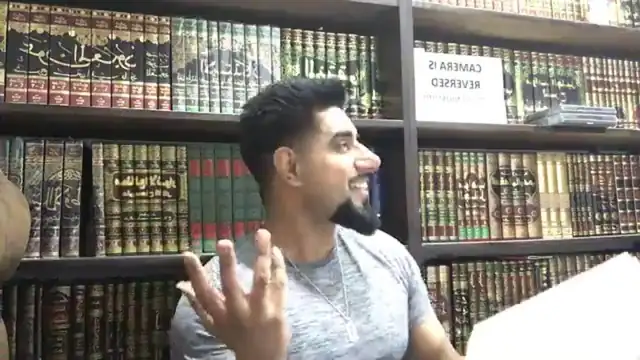 Press play to load from YouTube. Nothing loads until you do.
Transcript
machineauto-transcribed, may contain errors · source: youtube auto · click a time to seek · dotted terms open the glossaryAll right. Are we live? Let me just straighten this up. How are we doing? Let me see. Right, I'm just going to share this on moment on momento. I don't know whether this is Let me just check on here.
Yeah, it looks reasonably clear on here. All right. Just share this. Right post. All right.
On moment on momento. All right, where's that gone? I'm just sharing this. Okay, so You know what? On this end, the way I'm seeing it, it looks a bit fuzzy.
I don't know if that's making a difference or not, but All right. I don't know. Is it I hope it's It seems to be going smooth.
Yeah, I don't know if it's interrupting. What preoccupations? Uh, well, I could tell you, but then of course I'd have to kill you. Story of my life, people. Story of my life, huh? Preoccupations. It's not clear.
Right. Is it not clear? Do you mean by that the Do you mean by that the Is this clear? It's a little blurred. Yeah, I don't know why that is. It's not making any sense. I could I
don't know. Is that any better or not? Is that still no good, people? Still not clear enough? Need some feedback. No. It is clear. Okay, cool. It's clear. So, what on earth am I getting all this wrong feedback for? It's still blurry. Let me check on here.
The iPad I don't know. It seems Uh Yeah, it does seem a bit blurry, doesn't it? Take it to Specsavers. I know. I don't know what's going on here. I'm a bit uh confused.
Could have to go to get some Seems I don't know. It's the Can't seem to Is it fine? Is it okay? Is it I mean, I can if it's blurry, if it's coming out blurry, I can't seem to tell here. It seems okay. But, a lot of people are saying it's blurry.
I can go and get some I don't know, like a wipe and bring it back and try it. Yeah. Mm. Okay. Un momento. Un momento. Un momento, people. I'll just be right back, okay? Daddy.
Hello, Mom. All right. All right. Look at that. Looks like my books were just doing the teaching while I was gone. Right. So, that's a Hopefully, that will now deal with it.
That's a Come on. It's should have removed. I don't know. If not, just carry on however it is now. Right. So, nevertheless, going to have to just leave this one the way it is for today.
All right. So, how is it going, people? How is it going? All right. Look, my hair stylist has given me certain instructions. Are you guys feeling it? It's like this is the So, I'm trying this out. Let's see. Right. So, anyway, people, what is going down?
What is going down? Right. Talk to me, people. Talk to me. Reply Reply to Sunni Defense. I will be responding to Sunni Defense a little later on. Right. Let's just get a few questions out the way. Then we'll come to our dear friends. Right. How are you, Biz Style?
I've Yeah, I'm good. No idea what bear style is, but it's all good. It's all good. So, what are some of the questions? The Turkish elections, right? God knows what's going on with the Turkish elections. All right. Somebody's saying say all right. All right, people. All right. I know in the Pakistan elections, Pakistan elections are coming up, people.
For once, Pakistan has some hope. It's almost, dare I say, use the terms God-forsaken land. But for once, it's got some hope. I hope and that is with Imran Khan. Hopefully, may become the prime minister of Pakistan and I sure hope he does.
Absolutely rooting for Imran Khan. You know, may Allah grant him success. I mean, right. Is Qada Salah a thing? Let's take some questions. Let's get this ball rolling, people. Uh PTI all the way. Absolutely.
Absolutely. Is Qada Salah a thing? Qada Salah is interesting because it does exist. Um You see it clearly if you look in the Quran, there's no clear understanding of Qada. If you look in the Sunnah, you find that Qada is taught for things, clearly for things like if a person oversleeps or unintentionally forgets his prayer, he forgets about it.
However, the question then arises, what about those prayers which you've intentionally missed? So, you've not been forgetful, you've not overslept, you've just not prayed. Do you make them up as well? And these kind of fall in between. So, some people said that no, this is you know, this is like this is like Kufar if you leave salah.
In the past, some scholars felt that if you left your prayer you become a kafir. Uh anyway, there were quite a few I mean there weren't that many but there were a few scholars that held that view. Amongst them the Hanbali school. Now, majority of the scholars felt that no, we're going to add this like qiyas, like an analogy onto forgetful prayers and therefore you will make them up.
I would say I agree with that. You make up your prayers unless they are excessive. If they are excessive, then you do do not have an obligation to make them up. If you do make them up, that's amazing. But if you don't, then tawbah is enough. You can repent to Allah and focus on the prayers at hand. So, if I had 5 years of salah to make up.
I'm just saying. Uh not that I do. Right now, so but if you had years of salah to make up. Uh some scholars would say you still have to make them up. I find that kind of a a very um almost borderline absurd imposition. That how could because Allah doesn't even ask the woman who is menstruating to make up her prayers.
Which is only if you think about it every month. How many are they going to be? Because that's deemed excessive. Fama baluka? What do you think about having hundreds and hundreds and thousands of salah to make up? That's to me I don't know why how people think that's possible. But if people do it, alhamdulillah.
But I don't feel there's any obligation. Was autism What Was autism cases also in existence amongst the early Muslims? Any accounts of this nature? Bahar. Bahar, I think that's a very good question.
I think autism or special needs or these kind of things have always existed. I don't think they a modern phenomenon per se. Um but in the past, these things obviously weren't I mean, it's only the very recent kind of past that we've started to identify and term and and differentiate and recognize and acknowledge. I think in the past, definitely people were autistic.
Um I would personally believe that many of these great scholars may have been autistic. Uh in a kind of savant autistic way. So, you get sometimes um it depends because autism is seen sometimes as people see as like almost like a disability. And it doesn't have to be seen like that. Uh it's the People usually on the autism spectrum will find social interactions difficult.
So, they won't register like social cues and things like this won't register with them. So, they don't necessarily understand people when they're not when like in when we say things generally in in language, we're not very direct. In fact, often we're not direct. Um you know, like people will say things like uh I don't know, like from basic things to um Yeah.
Like I don't know, like let's say I'm going to Uh would you like a cup of tea? Like people might say something like I'm going to put the kettle on. Like they they won't say do you want some tea? Uh or they might like the way people like let's say I'm going to ask somebody to do something I might ask it in a way like oh you couldn't do this, could you? Oh you couldn't you couldn't pick that up from there, could you? Like this it softens the imperative that the kind of command it's softened by making it into a kind of hypothetical and saying oh you couldn't do this, could you?
Uh now things like this I'm not saying all of them it's a spectrum but different things like this and beyond social interactions and cues sometimes are difficult. They don't understand and they just and they need everything to be shipshape and kind of to fit in compartmentalized. Um and so you see sometimes in the past many of the scholars like that.
But with autism you also find savants sometimes like you get a lot of professors in universities who are autistic. They may be maths professors or sometimes different types of professors. They're incredibly intelligent but they're autistic. And that happens a lot in universities and stuff like this. So uh sometimes yeah things like eye contact and stuff like this. And may Allah make things easy and it is a I have to say who those people who uh have members of family or that they have loved ones or other people that that go through some of these experiences it can be a a great challenge sometimes for people around
them. So our thoughts and prayers are always with these people. I mean may Allah grant them ease. Uh but in the past I would feel maybe people like uh I've said this in the past and people have made maybe people I felt maybe people like Imam Shafi and people like that had this kind of streak of autism to them. Uh in just the way they saw things and their fiqh rulings are all very, you know, uh, everything is impure when it's like this or when you're going to buy and sell, you have to say a khutbah, a sermon, before you buy and sell.
And, you know, very kind of, uh, like almost detached from the real world. Like people in the real world wouldn't do things like, you know, like they won't start saying a sermon before they're going to buy and sell or, uh, you know, you know, so this and things like, uh, like Imam Shafi'i's madhhab where Imam Shafi'i had this understanding that if a person, uh, anything that separates from a living organism becomes impure.
So, if a person's tooth, uh, or, uh, became, like, let's say, fell out. Now, he considers that impure, but let's say you it fell out, but you held it back in. And you held it long enough that it reconnected. Um, he actually his fatwa is you have to knock that tooth out again because you're carrying impurity. And I find these kind of fatawa sometimes so detached from the real world.
And so, so it makes me think that maybe there was some el- element of this the on be- you know, this kind of streak of autism, uh, in not in in not relating to social cues. But that doesn't take away from them being a genius in their own way, uh, savant and having great memory and things like this. But, uh, yeah, so, before people go, "What the hell did he just say about Imam Shafi'i?" Right, so, yeah, so let's move on.
What are the question what questions are going on, people? What's going on? What's bothering What's on your mind? Uh, are we revert or converts? In my understanding, it's called converts. Revert is like a a Muslim made-up word. Revert, as far as I'm aware, uh unless I'm wrong in this, that revert is not a noun in the English language.
It's actually just a verb. And it comes from a negative connotation. To revert into something, it's it's not seen as a good thing. Generally, I mean, the actual English essence of the term revert. Uh and and you get words that are related with obviously you can imagine what rhymes with vert and and in but Muslims have started to use this as a noun, like I'm a revert.
I don't think this is a noun. Um I'm not aware of this being a noun. I know uh I think was it Ustad Jamal Badawi was one of the first people to use this term. And when he used it, for some reason, Muslims just it just stuck to it like like a magnet, and they started using it. Like re- And obviously they turned it into a noun.
They started saying revert revert. And but it's actually in essence a verb, and it's actually a verb which has a negative So, if something reverted, it wasn't seen as in a positive sense. The essence of the word. I know you could use it in other ways, but that's how the essence of the word was. Uh No, I don't mean uh Saima, if it's a noun like a name, but a noun like convert is a noun.
Uh but to convert is a verb as well. But revert is not actually I don't believe it's actually a noun. It's just a verb that Muslims have started to use as a as a noun. And this is just Muslim speak. It's And now non-Muslims have picked up on it because so many Muslims use it. I don't like it at all. I think fair if a person is a convert, he's a convert. I mean, and then he's just or she's just a Muslim, full stop.
You know, I I don't know. I think it's a good question at what point does a person stop being a convert and they become just a Muslim? Uh I'll tell you somebody who has a great uh discussion on this and that's Sheikh Adam Kelwick. And he actually has a poem in English on this whole revert thing and really kind of take it He's ridiculing this whole thing in a nice way, in a in a very light-hearted manner.
So, you can check out his Facebook page. Uh and if you're not following him, then you need to follow him. He's an awesome Sheikh from the UK, Sheikh Adam Kelwick. Why did the Quran become a tertiary source in scholarship? That's really an such a crucial question. And that the Quran has become a tertiary kind of background. It's just like the background wallpaper.
Nobody really cares much about the Quran. I know they claim to care much about it, but they don't in essence really Like Islam for Muslims is no longer for Sunni Muslims, Islam happens to no longer be about the Quran. It's not Allah-centric. It's not even Quran-centric. It's not even Sunnah per se with a capital S centric.
Islam Sunni Islam has become unfortunately like like kind of if I can slightly may come across exaggerated, but it's kind of become like Bukhari-centric. So, this concept of Sahih al-Bukhari seems to have taken the center stage and Allah, his messenger, the Quran, the Sunnah, everything revolves around this myth this kind of like almost like what's taken like a god-like status.
At this this thing of Bukhari, Sahih Bukhari. Uh and everything floats in its orbit around Sahih Bukhari. Everything has to be interpreted to fit Sahih Bukhari. Not the other way around. The Quran if it has a if we have a problem, we'll interpret the verse. We'll reject the verse. We'll consider it abrogated. We'll put it in the background. If it's the honor of the prophet, doesn't matter, we'll accept it as long as it's in Bukhari.
This has become unfortunately the new cancer of modern and recent It's not just absolutely modern, but I would say latter-day Islam. Latter-day Islam has has been kind of struck with this cancer. May Allah grant us all shifa.
Amen. And I I want to speak a bit about that when I'm going to come to Sunni defense about this thing. And And by the way, it's not an issue with Imam Bukhari per se. And I want to speak about that when I come to it, okay? It's more about this myth that people have created. Right. In your opinion, is there a Is there a need for a new type of fiqh?
I absolutely believe that there is an uh I mean, it is so overdue that there is such a necessity to update fiqh. Such a necessity, honestly. Wallahi, we are way overdue with updating fiqh. Our fiqh is so out of sync with our age.
So, today fiqh ought to be about things like like the wudu section, starting from basic things to cover the the taps and cover things like this and these kind of ruling they're still talking about rulings like you've got three buckets of water and one of them you're not sure and this this this and the rope that you're using to take out water and nobody I mean generally a huge part of the world has significantly moved on from all of these.
We are in the modern age yet we're still and and that is the least of the issues. Salah is you know it's it's got some issues that can be updated not the actual worship but issues with it and then you've got things like okay fasting some issues zakat is completely out of date. Zakat has no relevance with our modern world at all. In fact if you read a book of zakat today that it will have something like let's say let's say for example it's got 10 pages 10 pages dedicated to zakat.
It's going to have much more. Let's say in essence a book depends on the size of the book but it's going to be a whole a sub book a sub a great chapter dedicated to zakat. Could be 10 15 pages whatever it's going to be dedicated to zakat at least could be many more. In all of that probably at most one page would be to do with actual gold and silver. And which by the way is so out of date.
Nothing is to do with our day and age in dealing with assets in dealing with whether it's going to money currency having different currency having stocks bearing all of these nothing nothing. Um when you go through okay hatch can have some issues updated but stuff like food has very little relevance today.
It's all about how to slaughter the animal and so on and nobody very few people slaughter their actual their slaughter animals themselves. Then there's things like Uh, all these other transactions a majority of Fiqh books are all to do with these other transactions which today don't exist. So, it's things like, oh, when you're doing this with a piece of land, or you're renting this, and it's not like rent like today.
So, it needs to be updated to today's kind of rent. How rent works. There should be a chapter on mortgages. There ought to be a chapter on things like student loans. There ought to be these other kind of things. Uh, uh, these are the kind of things that ought to be in our Fiqh books today. They ought to be things like when it's about food, that these small kind of, let's say, additives, preservatives, sections on this, the ikhtilaf involved.
And then you've got at the end the criminal justice system, which, oh my god, is so, if you open that by accident, I can open any one of these books, you'll be traumatized. It's like, okay, so, he got struck, and, uh, is the bone, is the wound a muwaddihah? Is it like something that reveals the bone? Does it just cut into the meat? How much of the meat? And then you will also retaliate by cutting this much meat from that person, and you will cut into the flesh, and no, will you reach the bone?
Oh, this is how you, they're going to be executed. This is how, what on earth is all of this on about? And people still publishing Fiqh books today, and this is every, this is this is what it says in the end, in all of them. Nothing today is it talking about contemporary punishments, contemporary code of justice. Uh, there's nothing, nothing, nothing at all. So, and, and by the way, oh, if, if they've killed, accidental death, you can give 100 camels, you can give, uh, you can give, uh, a thousand, you know, what is it like, you can give a thousand gold pieces, you
can give this, you can give that. Who the hell has gold pieces? Who the hell carries gold? Who the hell has camels? A huge section in salah is all talking sorry in zakat is all talking about for this many camels in five camels you give one sheep and in this many camels you give this and and then the cow has to be of this age and in this many cows a camel of this age and a camel of two years old camel is called this and then a camel is called a bint laboun and bint makhould and blah blah blah and blah blah blah and I don't even know why I know all this
stuff. It's like why do I why do I know about these camels and when they call different things at different ages like What what who who why Like but this is what we've had to learn. And So exactly so it's completely out of sync. And I wish that the ulama You know there's all these projects and I've said this before.
I was at a few years back I was at Sheikh Ahmad Taha Rayyan's house in Cairo. He's one of the leading and most senior Maliki scholars in the world. And legendary scholar and so I was at his house and and he was hosting us there and you know we're just having excellent conversation and and he was telling me about he was involved in a recent project.
I don't know if it's come to an end now it possibly may have. But he it was a commentary on uh It was on one of the it was basically one of the commentaries on Mukhtasar Khalil. I believe it was or it may have been either Sharhul Kabir or Sharhul Saghir. I can't remember now it's been many years but he was telling me that look we there's actually it's a group project that's been commissioned in one of the the Gulf states.
And every so often every few months he is flown out there amongst leading scholars of the world. I I believe Sheikh Rougui was amongst them as well, who's a Don scholar from Morocco. Uh once again a leading Maliki scholar from you know from worldwide. So people like this of the the highest caliber have been flown in and they do their own kind of personal research, they come back and basically they're going through this book but putting the deals in there, evidences for the normal thick that is in the books.
And this has been taking them so many years and they hope to have this complete and then published. But you know obviously like I that was amazing and everything but when I went away and I was thinking about it later on and I thought to myself that you know in a way it's such a shame that people are commissioning and paying all this money for all these projects. What they ought to do is have bring these people in but have an updated uh uh a kind of in sync version of thick produced.
They ought to tell them okay we're going to work on this book this month. We're going to write a brand new kind of text and we're going to have issues that are relevant to us. Rather than saying here's all the old rulings just go find evidences for them. Like we've got plenty of evidences. I don't see why I mean I just felt that it's a bit of uh hmm you know like so much effort but so wrongly placed in in a way.
Not wrongly like it's an amazing thing. May Allah bless them and bless the effort but it's so not the need if you understand. Right. So let's take some other questions people. Let's take some other questions. Right. So I I have people posted some. Let me take a few questions.
Cuz I did have a post today. Right, let's see. As-salamu alaykum. Mufti, can you answer my question regarding Hajar Aswad? This is Indra asking. Not the Hindu god Indra. If the Hindu god Indra is asking me Uh I asked you uh what about Hajar Hajar Aswad?
Hajar Aswad, the black stone, which is in the Kaaba. We don't worship the Kaaba, and we don't worship the black stone, and the black stone is not a stone from heaven. I hate to burst the bubble. So, this is the myth amongst Muslims that the black stone was sent down from heaven, and it's been absorbing the sins of mankind. It used to be white, and then then it turned black.
No racial undertones there. But, it turned black because because it absorbed the sins of mankind. That's a load of nonsense, right? The black stone is just a stone, which was there. That it has some relevance, it's a ritual. And the prophet sallallahu alayhi wasallam, he kissed the black stone as an act of ritual, we kiss it.
It has nothing special. Sayyidna Umar radiyallahu anhu said it very clearly. He said, "Look, I know you're nothing but a stone. La tanfa' wala tadur. You know, you can't benefit, you can't harm. And if it wasn't for the fact that I saw the prophet kiss you, I would never bother to kiss you." And so, this is that's all the black stone really is. It's not a um it's just a ritual.
That's all it is. Right, so let's take a look at some of these questions. All right. Uh What does this verse mean when it says to prevent it shaking under you? What verse is that?
What are What are you talking about, Waqar? He has made mountains stand firm on the earth to prevent it shaking under you. All right, okay. Oh, as about mountains. Okay, I thought you were talking about um the verse to do with Musa Alayhis Salaam. And the mountain Jabal Tur. Uh Mount Sinai. And I'll I'll answer that as well since that's come to my mind. But uh this thing about mountains, do they cause a Do they kind of contribute to a a form of stability of the globe?
I believe there is some some kind of uh uh some reality to things like that. Um I mean, you can these kind of things look, you don't need religious scholars to teach you these kind of things. You can look at what geologists say. You can research, Google. You don't need You know, these kind of things we have We don't need to go to Mulvis or uh Maulanas or Muftis necessarily and say, you know, is it true in geology this happens or is it true in physics this happens?
I mean, these kind of things scientists and people who study the earth and nature and these kind of things, they are much more well-versed in these kind of things. But I haven't My understanding is that the mountains and things like this do con- uh contribute to the kind of stability of the formation uh of the globe. But uh But I mean, you know, you can you can research that further.
I'm by no means uh some kind of an expert on things like this. So, I would don't want to just speak out of my depth. Just in case I just act like I'm some kind of a expert. And then I have some guy refuting me saying, "Is Abu Layth a Dajjal or a Jahil?" That's That's awesome, huh?
Let me come to that. Let me come back to that, huh? Let me come back to that. Right. So, the thing I was saying is about Jabal al-Tawr, Mount Sinai. Uh the she-camel I've already answered before. The she-camel there was nothing There's nothing in the Quran out of the ordinary about the she-camel.
Okay, that that is mentioned in the Quran uh to do with Thamud. So, the she-camel of Salih. So, you can You can check what the Quran Quran doesn't say any It just says that this camel is a sign, and they are not to harm the camel, and they choose to harm it. All the rest of this um are all stories, all kind of like fairy tales that have been made up along along the way, nothing established uh uncritically from the Quran or Sunnah to do with I mean, the Quran there's no mention of anything out extraordinary like as in when I say extraordinary,
nothing uh supernatural about this camel. It just says that there was this camel that was selected, and it was a sign for the people, and they chose to sacrifice it. And they Oh, sorry, kill it, and they weren't supposed to. That's all it says. Um Right, you've got uh Anwar ahlan wa sahlan, Munazza ahlan wa sahlan. Uh Jushan Right, ahlan wa sahlan. Those of you just tuning in, click like, click share, people.
Right, get this out there. Right, to do with Mount Sinai, I'd like to say that I You see, I think Muslims in the past have once again been falsely misled by uh leaning in on our Judeo-Christian uh cousins, if we can say, yeah?
By leaning in on their heritage. And they have got this wrong. Okay? So, there's verses in the Quran about that Allah had spoken to him at the Torah, and that we raised the Mount Tur above you. Uh and people always believe So, today there's this strong understanding that Mount Sinai, where Moses took uh the the people, is in the Sinai Peninsula.
And that's actually not true. Um I mean, when you look at it from an investigative perspective, uh it was named the Sinai Peninsula much after It was named the Sinai Peninsula after Jesus, let alone Moses. Way after Jesus. I believe it was like maybe the 3rd century uh CE that it was named uh but it was named way after nothing to do with Moses and things like this.
Obviously, I mean, the name gets it from there, but there's a a monastery there called St. Catherine's Monastery, which is meant to have kind of been set up at this mount that they believed may have been Mount Sinai. Uh and it was from amongst of a group of mounts, mountains. Now, from here the peninsula became known as the Sinai Peninsula. So, everybody just assumed that because it's called the Sinai Peninsula, that is where Mount Sinai is.
And that is not true. Um upon detailed investigation, you will see that you see when Musa Alayhis Salaam goes to Madyan, Midian, the the the people of Midian, the tribe of Midian, and Shu'aib, and marries into them. Midian did not reside in what is the current-day Sinai Peninsula. They resided in Northwest Arabia.
And you can check archaeological findings of the kind of Midianite pottery and stuff like this still found and unearthed even up until recently in the Northwest Arabian Peninsula. Nothing of that nature to be found in the Sinai Peninsula. It was not and Jabal al-Thawr was actually a volcano. It was not a You know, there's this understanding it was a regular mountain.
It wasn't. It was a volcano and most likely it was what is today called, I believe, Jabal Badar, uh, the mountain of the moon. And And that is in Northwest Saudi Arabia, and it is around there that the Midianites lived. And the people of Shu'aib, and hence they say to Shu'aib, asqit 'alayna kisafan min al-sama' that shower onto us from the heavens these these kind of balls of fire.
And that is the punishment they get. It was because of the volcano that erupted. And even when if you look at the biblical sources, which go into much more detail, the burning bush, uh, was was a result of vol- volcanic volcanic fumes that are kind of released. And hence it didn't completely consume, uh, the bush. Although in the Islamic sources, there's just a slight reference to the to the bush, uh, as in he says in an ustun aran like I you know, and let me go and to this fire.
But if it was actually something on fire, you would never go to it. You would actually be a frightened. And in in the actual biblical sources like in Exodus and things like this in the Judaic sources, you will see that they actually write that the Lord led Moses during the day as a giant pillar of smoke and by night as a pillar of fire to Mount Sinai.
Because you have to remember these people had never seen a volcano before. And this also explains that the the detailed description of the mount of the tremors when they're on the mount. And it also adds a lot more explanation of when Allah says he raised the mountain above them the mushroom kind of cloud that comes above it. Um this is what Mount Sinai actually was.
It was a volcano. It wasn't this kind of that people feel that Allah kind of raised a mountain and a mountain was flying around in the air because because why did they say this? Because they once again, what did the prophet say? He said you will end up following the Jews and the Christians. So just because the and today some detailed biblical scholars, investigative scholars have have come to this same conclusion that they've been getting it wrong.
In fact, there's a very interesting book, a very detailed book. I've got it here actually. I've been going through the miracles of Exodus by Colin Humphreys and there's other research as well where they go through great detail in showing how everything adds up so systematically and that the people were mistaken in thinking it was a regular mountain. It was clearly a volcano that they were going to.
And and then there's a great detailed description and it also adds light to when Allah says that when Musa Islam asks let me see and and Allah says, "You cannot see me." Now, this verse, falamma tajalla, when the Now, this verse, what does this verse mean?
To manifest to the when the Lord that ja'alahu dakkan, the mountain kind of trembled and and it crumbled. Now, people here believe that oh, the mountain completely collapsed. It didn't. Nobody's saying the mountain completely collapsed. What does it crum- What does that mean?
That was the eruption. And tajalla here was the manifestation through the power of the uh of the the the majesty of Allah at work in nature. Not Allah actually manifesting to the mountain as people believed in the past that Allah actually showed himself to the mountain. And that's so silly. That's absurd. Doesn't make any sense. Allah showed himself to a mountain.
That doesn't make But it was that to these people. You see, like in if you remember that in books like Exodus, when the Israelites are actually describing, they say, "And the Lord that the Lord appeared as a pillar of smoke guiding Moses during the day and a pillar of fire guiding him at night to Mount Sinai.
That the Lord appeared as this." Obviously, today we know that the Lord didn't appear as that. What they mean is people in the past used to see the Lord They used to see nature like wind, storms, these things. They would describe them as the Lord doing these things. And different cultures would even divide different gods into them, like the god of the wind and the god of this and the god of that.
So, to the Obviously, to the Israelites, it was just one God, but the God that Lord the Lord is appearing as this. So, for Allah to Jalla, but the Lord manifest in this mountain, it crumbles. It's the mountain erupting, the volcano erupting, and having that crumbling effect that especially to a people who have never witnessed, if you'd never in your life seen a volcano, and you now witness this, the the kind of impact and all striking effect it would have, and the ground to shake, and and fire to come out, and all
of these things. This experience in itself would be would be kind of like out uh literally an out-of-this-world experience it would be. So, that's what um uh Jabal al-Tūr actually is. And it's not And what's interesting is in the the classical times, like so, before uh Moses and these kind of the people that lived inhabited that northwest uh Arabia, they used to worship the moon god.
And Sin actually me was one of the names dedicated to the moon god. And hence, Jabal al-Sinai that you've got Tūr al-Sinīn or or what they call Sinai from there. This actually makes a lot more sense. Uh and hence, that volcano even today is called Jabal al-Badā. It's called the the kind of mountain of the moon.
Um this this is some discussion into this. I mean, one could say it's maybe not conclusive, but it's definitely far more convincing than the other kind of narrative that we that as many Muslims have borrowed from the Jews and the Christians who even their scholars today are correcting that it's in the Sinai Peninsula, and actual mountains were floating around, and all this kind of stuff. So, I hope that's of some help.
Right, people. Let's move on. Right. So, let's take a look at uh We've had uh some old dear friends of mine. All right, people. I'd like you to click like, click share. We're going to share some words on uh the the Sunni Defense. So, people the Sunni Defense are back.
Um I say Sunni Defense, but really they've I don't know what they've got to do with Sunni. I mean, maybe like Wahhabi Defense. Right. So, and not even maybe all Wahhabis, but you know, but these guys are back. And one of them, this guy uh he's made a video exposed Right.
And is Abu Layth a Dajjal or a Jahil? Ah ha ha. Ah. Like Look at the the false compassion that they're giving you a choice. That's like, you know, we're giving you a choice, man. Like, are you a Dajjal or you a Jahil? You know, just You got to love the compassion.
I love you. So, these guys are back. So, this guy I think his name is Farid. Fariduddin. Baba Fariduddin Ganj-e-Shakar. Toba toba. Baba Fariduddin Ganj-e-Shakar is an amazing and awesome uh uh like a saint figure from from India.
Ancient India, Pakistan, like that. Obviously, nothing to do with uh This Fariduddin, there's a what's that What's that saying? Kahan Raja Bhoj, Kahan Gangu Teli? In fact, that's a better name. BABA FARIDUDDIN GANGU TELI. SO, GANGU TELI HERE has done a a refutation of me, right?
And he's upset. And he's he's really upset that Oh, oh police! Because a Hadith on equality in marriage doesn't sit well with him because there's this lack of equal Uh-huh. Why don't you Why don't we begin by you actually saying what the Hadith is?
Uh my friend my friend, please, you know, please, this one, please. Say this one, you know, this one. The Hadith, ladies and gentlemen, that he's referring to, that he's talking about, "Oh, because it doesn't have equality." It's nothing to do with equality. The Hadith is to do with raping your wife. That's what the Hadith is. It's not a laughing matter. The Hadith he's trying to justify, right?
Typical typical Wahhabis. Uh idhā bātat il mar'atu hājiratan firāshihā, firāshi zawjihā, that if a woman refuses to have sex with her husband, the angels curse her. The God God is ang- God Almighty is angry. That Why hasn't he had sex? Like God is angry.
The The heavens are are are aflame. That how is it that he has not had sex? For I will strike down upon thee with great vengeance. Right, so this Hadith, which in one of my previous sessions, and you can watch the whole segment, it's on YouTube, about religious blackmail, is haram. Like I've said that marital rape is ca- categorically haram, and that includes religious blackmail.
So, to say to somebody uh that you have to have sex with me, otherwise God is going to be angry with you, is haram. You can't do this kind of stuff. You can't use God to to to gain favors or sexual favors from people. That's sick, right? So, now and the angels will curse and so on. And so, I've been through this Hadith in the past. I won't go through the whole thing. I went through the riwayat in Muslim, Abu Dawud, Bukhari, al-Darimi, Ahmad, and showed how they all centrally pretty much are based on al-A'mash, who takes it from Abu Huray- And although I go into uh the other
riwayat as well, but because a lot of them centrally are based on al-A'mash, uh I I showed the criticism to do with al-A'mash, Sulaiman al-A'mash. Now, our friend here, brother, you know, brother, this one, please, please this one, you know, brother. I think the brother is from Bahrain, you know, the brother.
And I believe that he's not allowed to do the preaching in Bahrain, you know, this one. So, now, oh, he's not allowed to do it because this cuz all he does is just bashes Shia. And obviously, I think he's a bit scared, you know, in Bahrain because the Shia, you know, they will then arrest him and then bash him back, you know, this one, not nice, you know.
So, he's not allowed to preach in in Bahrain. But anyway, he's managed to find time to dedicate it to me. Shukran Shukran jazilan ya akhi ya akhi. Shukran. Wallahi Wallahi. Right, so Fariduddin Fariduddin Ganguteli what he's done is he said, "How dare Abu Layth just because this Hadith doesn't sit well with him?" And it's because he feels there's inequality.
First of all, it's nothing to do with inequality. This is to do with rape. Okay, so let's get the thing clear. Right, it's nothing to do We're not just talking about An inequality would be a problem anyway, but this is much greater than that. So he says, "How dare he criticize al-A'mash? This is such a reliable narrator. This narrator he has over 500 Hadith, you know, 500 Hadith in the Sahihayn in the Muslim and the Bukhari, you know, brother.
So in the Muslim and the Bukhari. Oh, well well, my friend, let me tell you this one. You know, we go to the We go to the kalam. We go to the kalam. This This way. Por aquí, mi amigo. Por aquí. Right, so we've got here al-A'mash. What had people said about al-A'mash?
Abdullah ibn al-Mubarak had said about him that innama afsada the ahl al- innama afsada Hadith the ahl al-Kufa the people who destroyed the Hadith of ahl al-Kufa was Abu Ishaq and and who who on kian man al-A'mash A'mash destroyed the Hadith of ahl al-Kufa, huh?
Okay, but let's go on. A'mash my dear friends, was a great mudallis. What does mudallis mean? A mudallis is somebody who would omit names in the chain. So, if I'm narrating, let's say I'm narrating something from let's say from Omar from Abdullah.
Now, I realize that Omar, people maybe there may be a problem with him. Or some people may not like him. So, there's different types of tadlis, but the one I want to get to that Al-A'mash used to do is he would drop this name altogether. This name of Omar that may be problematic, let's say as an example. That people may say, "Oh, uh and they may go straight to Abdullah." And this could be any person.
I'm just using a random name. Now, because he assumes that people know I also took from Abdullah. So, people will assume that this is a connected chain. But I've dropped a person in the middle. Now, what do people say about tadlis? Now, tadlis is of different categories. You've got they usually branch it into three categories.
The third category being the worst of its kind, and that is where the person you drop and omit is actually a weak narrator. So, you've actually done this with malicious intent because you see, if you did it benevolently, like let's say I just dropped the name just because oh, I just said it like I wasn't fussed. But even if I mentioned the name, he's a sound narrator, so you've got no problem with him.
That's of a lesser category because really I should be transparent and disclose everything. But where I dropped the name and he's weak, there that's massively problematic because I'm misleading you. Okay. Now, in Tahdhib al-Kamal, it's mentioned that al-A'mash did tadlis on more than 20 of his teachers.
He did tadlis. Tadlis on akthar min 'ishrin shaykhan. Wa an ahadihim and from one of them, one of these particular 20, he did more than 100 riwayat, 100 narrations he did tadlis. 100. So, it's not tadlis is not just omitting somebody, dropping them from the name, but in this case, it's dropping problematic people and then connecting with another person, his shaykh, who I'm also connected with.
So, people assume I took it directly from him. So, if you if you see where I'm coming from. Right now, what does al-Dhahabi say? Al-Dhahabi Al-Dhahabi says, "Rubbama dallasa 'an da'if." That Mhm, and at times he did tadlis from weak people, from da'if.
What does al-'Ala'i say in Jami' al-Tahsil? And what does Ibn 'Abd al-Barr say in the Tamhid? They say, "Yudallisu 'an al-du'afa'." He would do tadlis from weak narrators. He would hide them and complete the chain. Tadlis from weak narrators. This is why Shu'bah, who was called Amir al-Mu'minin fi al-hadith, said, "TADLIS IS HARAM." HARAM.
WAIT, I GOT TO DO this the proper proper, you know, the Pakistani munazara style. Right there, the right there. Not just yudallisu 'an al-du'afa'. YUDALLISU 'AN AL-DU'AFA'. I NEED MORE FUN. YOU TELL ME SO I NEED more fun.
He would do the least. So yeah, I am modeling soon. So for read and modeling soon. So Sunni defense should be actually called the least defense. All right, so trying to defend so they're so offended. How have I said that there's problems with a lot more. Look at this the end of term easy.
Commentaries on this. Right. They mention Ali even Madini mentions that he has it the wrong in some of his narrations. Uh and they mention Lisa be that. A lot more authority.
A lot more check this out. He could have been a lot more than Ali even Madini called a lot more cuz he wrote a lot more home. Cuz he wrote a lot more home. I need a lot more home. Is he a lot more home? Is like where you make mistakes and but not just mistakes like uh blunders. It's like blunders like that.
Is it a lot more home? Is he you know, he would have some kind of is a lot more home. Cuz he wrote a lot more home. He would make mistakes in these kind of he would miss kind of like misrepresent them in and then he gives examples of who. Okay. So cuz he wrote a lot more home.
You tell me so I NEED MORE FUN. SO UH SUNNI DEFENSE UH my brother this one big problem, you know, this one big problem. So, Sunni defense was to say, "Oh, is Abu Layth then?" Yeah, you could say have illusions, but as in to make mistakes is the main thing what they're trying to get at.
Now, Sunni defense is saying that there's over 500 narrations in Sahihain of Al-A'mash. Does that mean every single one of them is weak? I never said every single one of them has to be weak. Why? Because hadith what is the whole purpose of chain criticism?
Something people constantly forget is chain criticism was really only invented so we could know whether the matan, the actual content of the hadith, was sound. Chain criticism was not a goal in itself. Chain criticism was only there so we know the teaching of the prophet was correct. So, let's first of all, we look at the chain.
Fine. Then we look at All right. Look at that. Gym in the morning, huh? Cramping up now, so right now the Now, we look at the content, the hadith content. Does it go against the three principles? Does it go against reason? Does it go against the established sources like the Quran and and the corroborated and the total authentic Sunnah, the authentic Sunnah?
Does it go against the principles of Islam? Maybe it complements them perfectly. Then we've got no problem with that hadith. Because it just complements teachings which are already there. No hay problemas, mi amigo. But if the teaching is telling you, "Oh, you can blackmail somebody into having sex with them." There's one big problem, my friend.
But, then seriously, what do we expect from these people? These are the same people who in their last reputation against me, and I played the recording if you watch my clip, and I believe it was him as well, this exact same person, saying that so what if the prophet was sexually impotent? These were their words. Said, "So what?" It's in Bukhari. So what?
You see, this is the kind of respect these people have to our deen, to Allah and his messenger. What do we expect from these kind of people? They will do anything to salvage Bukhari. Now, I've got nothing against Bukhari per se. You see, Imam Bukhari may have been a great person. His book was his private project. But, what these people have turned Bukhari into is is unacceptable.
They've given it infallible status. They've said that every Hadith, the Hadith in Sahihain, they've said you feed which means are certain, certain. And that is utter nonsense. Let me elaborate, people. Now, first of all, Bukhari is nothing like uh Papa you're talking.
Oh, now I've been interrupted by the little And you got to go. Okay, take care. Take care. Why are you cold? So, the thing is that look, now you've got to remember something.
I'm going to mention some interesting points. Right? And that is that Imam Bukhari's book, today what these people have turned it into, is not like other books of Hadith. It's not like, for example, the Muwatta of Imam Malik. Imam Malik in his time, his Muwatta was popular. You have to remember Imam Bukhari got blacklisted towards the end of his life. The last few years of Imam Bukhari's life, nobody took anything from him in Hadith.
He was his he was rejected. He was chucked out of every major city. And he just wandered through these and eventually just like a bit like a nomad and just died in an unknown town. He wasn't He was not welcome because of the controversy that they they said he he believed the Quran was created. So, they all blacklisted him. Nobody would take from Imam Bukhari. Imam Muslim hasn't included any Hadith from Imam Bukhari in his book.
Even though Imam Muslim stuck with Imam Bukhari almost till the end, but then he eventually boycotted him as well. But Imam Bukhari was not like like people like Imam Malik who in his day and age, right up until his death, everybody's coming, taking his book, and doing things like this. Imam Bukhari in the last few years had went through a great ordeal. He was rejected. Nobody took any Hadith from him.
So, that we have a great problem. And that is and this may come as a shock to some of these people, but do you know the Bukhari that we have in print today is nowhere near as certain as people like it to like to present it to be. And I will ask any of these people to show me with certainty how they know with certainty that this Bukhari we have today goes back to Imam Bukhari.
Now, before let me explain that. Right? first of all, Imam Bukhari people, all today's prints that we have, they are only several key template manuscripts throughout the ages that existed that everybody copied from. So, all of the Bukharis that you have in around today that are printed come from a particular manuscript which is known as the Nuskha Sultania.
The Nuskha Sultania, which is from Sultan Abdul Hamid from the Ottoman times, he had it commission. There are several problems even with the Nuskha Sultania as in what did he actually what did they base it upon? And then there were at least 100 mistakes found in that that were edited in the Bulaq and then in Dar Turath and this is the copy we have today. This is a patched up copy.
Let me add to that a bit of flavor. Pause that for a moment. I'm I'm giving you some and I know these people will hopefully hear this and I'd love to hear their response. Imam Bukhari had several key students that transmitted from him. There's popularly about six. Let's take these six as a popular example. The eldest amongst them, the most senior amongst them, that is his transmitter is Ibrahim ibn Ma'qal an-Nasafi.
All of these six that you have and there may be more but let's say these popular six kind of transmitters, right? These people, none of their narrations reach us except through one. And that is through Muhammad ibn Yusuf al-Farbari. Farbari is the only person whose narration reaches us. The problem with Farbari, first of all, one problem is that nobody in his contemporaries declared him to be authentic in Hadith.
Nobody. The only people declaring him to be okay are people like Zahabi almost 3-400 years later. We I From his contemporary, he's a contemporary of Bukhari, he's younger than him, but he's contemporary. Where are the people saying he's a thiqah to start off with? Secondly, Firabri, by the way, he has about seven key people taking it from him or six key people taking it from him.
All of them disagree in what they transmit from him. So, they have not just different chapter headings, they have different names in chains, they have different chains, they have hadith missing, they have so many all amongst themselves. One of Firabri's key student, his name is Abu Ishaq al-Mustamli. Al-Mustamli says that we used to sit by Firabri and he had a text which was a musawwada.
Musawwada means it was incomplete. He says his book was incomplete and we used to copy it had a lot of blanks in it and we the students used to fill it in. We used to move it around and make chapter headings and do things ourselves. Now, Qastallani, Abu al-Walid al-Baji, all these other people say that is actually true because their narrations are all moved about. The fact that the students of Firabri interfered in Bukhari, the book of Bukhari today, is a fact.
This is undeniable. And you know, they try to coat over this by saying, "Oh, it's just little differences like they change the chapter headings." No, they didn't. No, they didn't. Well, the scholars like Ibn Abd al-Hadi, the great Hanbali scholar, I'm sure they've heard of him, they love him.
These Hanbalis, right? So, he has a book called al-Riwayat to al-Nusakh al-Riwayat al-Bukhari wa Ikhtilaf fi Nusakhiha an al-Firabri that that the Sorry, Ikhtilaf al-Riwayat al-Bukhari an al-Firabri that the ikhtilaf of the students of Firabri transmitting from him. And you will read this, you will see yes, sometimes these chapter headings are different.
That's true. Sometimes Sometimes names are different. Sometimes slight differences like here the name is Abdullah, there they've called him Ubaidullah. Slight different, but still a different name. Sometimes it's a completely different name, completely different. Sometimes the names are completely dropped. Several occasions the Hadith don't even exist in each other.
Now there's only certain manuscripts that existed throughout the time that were template manuscripts. None of Firabri Firabri's actual manuscript doesn't reach us. Nothing like this does. Some of his They say there's a small a few pages from one of his students Abu Zaid, which was actually they claim the oldest in Cambridge. It was published in the 1930s. We have today manuscripts of people who came after and they chose and they patched together and they disagreed.
So hence Ibn Hajar relies on a narration by Abu Dhar al-Harawi, the template of Abu Dhar al-Harawi. The template of Abu Dhar al-Harawi is based on the three students of Firabri only. And it's patched together. So it's not one of them, patches three together. And that is al-Mustamli, al-Sarakhsi, and he also does al-Kushmaihani. These three patches them together.
Now that's a problem because they disagree amongst themselves. Now you will see some narrations By the way, in our narration there's a In our narration of Bukhari today in Kitab al-Ilm I believe it is, there's a narration in which Imam Bukhari is there himself. So in the chain it begins by saying Muhammad ibn Hadda thani Muhammad ibn Yusuf al-Firabri. Hadda thani Qala Hadda thani Muhammad ibn Ismail al-Bukhari.
So what the hell is Bukhari doing in his own chain? And what the hell is February doing in his own chain? It goes to show that the person writing this is much after them. Now, when you look in Ibn Hajar's commentary on this, oh, it isn't there. People say, "Oh, it's not in there because Ibn Hajar didn't rely on this what we've got today. He relied on a different Abu Dharr al-Harawi's text, which had 200
So, my point is, people, and I know there is a Saudi project underway. I know that. Where they're trying to take one single riwaya. In fact, there's a Salafi scholar online saying that it's a debt on this ummah to still produce a authentic narration of Bukhari. And they they've been working on it for years to bring it out through one transmission of al-Hamawi and through Yunini's nuskha.
Now, Yunini, by the way, who comes in like a hundred like he he's like in the 700 Hijri, he's commissioned and he sits with a grammarian Ibn Malik and they make corrections because most of the templates of Bukhari didn't even have dots. They didn't even have dots. So, one of the key templates is a Sudafi, who apart from being sayyid al-khat was really terrible handwriting, illegible handwriting, never used to write dots.
And this is three This is like in the 500 Hijri, like so many hundred So, I'm asking you, the Bukhari you have today, how do you know with certainty? Like we know Okay, we can go with it. I'm not saying we can't go with it. We can go with it as in, let's take this with a pinch of salt. As long as it fits in with Islam, we'll take it.
But, where there's a problem, we need to be critical. Not make the Quran and the prophet rotate around Bukhari because the copy of Bukhari you have today is actually a patched up copy. It's not even It's not even a certain copy. It's an opinion, not a fact. So, let's get that right. The copy you have of Bukhari today is an opinion, not a fact.
And they say You know what they say? They say, "Oh, but that's not a problem because we've got all these mustakhrajat that uh We've got all these mustakhrajat that people who came after Bukhari and what they did was they went through surpassed Imam Bukhari and went through his teachers. Where are these mustakhrajat in print? Where are they? Show me. Which ones are you talking about?
And how do we know that they weren't influenced with these copies? Because this is another issue. And people say, "Oh, but you know, you can look at Sahih Muslim and you can look at other books and you can as long as all the hadiths in Sahih Bukhari are in the other books." But I ask you, how do you know whether they were influenced by this? Like let me give you a good example.
Right? Now, people, bear with this. It's a bit complex, but I know this whole topic is a bit complex, but it's incredibly important. Look. All right. You have a book of um Right. You've got a book of Al-Khatib al-Baghdadi, the Mudih Awahm. Now, in this, you will see uh
Right. Just one moment. Right. So, what you see is basically these people who criticized Imam Bukhari. Right. Now, they criticized him. They were contemporary to him. So, people great scholars like uh You will have the great Razian. All right, sorry. I was just trying to open this.
Uh Okay, now you had great scholars like the Razian who are, by the way, Abu Zur'ah al-Razi was a greater scholar than Imam Bukhari. People generally accept that. Uh Now, Abu Hatim al-Razi was another great scholar of Hadith and they were contemporaries of Imam Bukhari. Now, uh Anyway, in this book Muwaddih Awaham uh by Khatib al-Baghdadi, you have in the beginning he's critiquing certain scholars like Bukhari.
So, he shows a precedent. He says, "Look, I'm not the first person to do this." Uh uh people like the great Razis criticized Bukhari. But then he makes an interesting point. Now, listen to this. He says, "Do you know the two Razis did a joint venture, a joint book refuting Imam Bukhari with all the mistakes he made in the chain?" He says, "However, and this is like 150 years after Imam Bukhari almost." Uh he says, "But when I looked at my copy of Sahih al-Bukhari and I looked at their refutation, none of those mistakes were there.
Like they were already all correct." So, he says that So, I don't know. Like maybe they had an old manuscript of Imam Bukhari. But they were contemporaries of his. Uh of him. You see, that's one way of looking at it. Or the other reality is by the time it's reached Khatib al-Baghdadi, it's been amended. Because a lot of people were fixing Sahih al-Bukhari. Like the students were doing a lot of The students of probably were doing a lot of moving back and forth, changing names where where it was suited.
Now, that's the more likely outcome. Now, people say, "Yeah, but we can look at Sahih al-Bukhari and find the Hadith in Sahih Muslim." And I would say, "Okay, let's Let's a Hadith as an example." I want to give you a Hadith as an example. There's a Hadith in Sahih Bukhari where the prophet is allegedly saying uh the prophet Muhammad is saying that a a pious slave has two rewards.
Right now and then he goes on to say So obviously if he's good to his Lord and he's good to his master etc. stuff like this. But then he goes on to say that and if it wasn't for Listen to this. The prophet is saying if it wasn't for being good to my mother, virtue of help, you know, like being kind of like serving my mother and doing Hajj and Jihad if it wasn't for these three things I would have loved to have died as a slave.
Now that is nonsense. There's no way on earth the prophet of God would want to be a slave. Nobody would want to be a slave. This is This is utterly fabricated. Now the interesting thing is so some scholars didn't like they just said oh maybe the prophet said this out of exaggeration or this or that or whatever out of virtue. Other scholars said oh this this part of the Hadith is not the words of the prophet.
This part of the Hadith is the words of Abu Hurairah. May Allah be pleased with him. So hence you have hence you have in Sahih Muslim and in Musnad of Ahmad and these books you have it says Abu Hurairah Abu Hurairah said right? Abu Hurairah said that if it wasn't for uh serving my mother and doing Hajj and doing Jihad in the way of Allah I would have loved to have died as a slave.
Now people say alhamdulillah problem solved. Now, this then is circulated in these books of Hadith. It's found in Muslim, it's found in other books, it's found this and it's also, by the way, Imam Bukhari actually transmits that same narration with Abu Hurairah in his Adab al-Mufrad, but not in his Sahih al-Bukhari. Now, upon later inspection again, people found problems once again with this. Now, you ask me, what's the problem?
So, first of all, what is the problem with the prophet saying this? Well, obviously, the prophet would never wish to be a slave. But, secondly, the prophet's mother was not alive. Why would the prophet be saying if it wasn't for serving my mother? His mother was never alive like, you know, during his adulthood. And if it wasn't for doing Hajj all the time, the prophet did one Hajj and that was the final, you know, the year and then the prophet passed away. Now, it doesn't make any sense.
But, then you look at Abu Hurairah's lifetime. Now, although Abu Hurairah anhu was had a the people say he had a good relationship with his mother and his mother embraced Islam, but there's no evidence of his mother coming to Medina. Even I looked up many of these sources and they all wrote the same thing that we have no evidence to show that she actually came with her son, came with Abu Hurairah to Medina.
There's no evidence. Now, another key thing is Abu Hurairah never did Jihad after the prophet. That's not true. He didn't participate in the Jihad. So, we've got another problem. So, this doesn't fit Abu Hurairah either. Because him saying, "Oh, I'd love to die as a slave if it wasn't for these things that I love doing." But, he doesn't do them.
Because it's not proven that his mother lived with him in Medina and in these places and he definitely after the prophet didn't participate in the Jihad. So, what is then people say, "Oh, well, this must have been Ibn Shihab Zuhri in the chain, and it's from him." Which makes sense, because Abu Ibn Shihab Zuhri had a very close bond with his mother. He did do a lot of Hajj, and he also did a lot of Jihad.
Now, that makes makes a lot of sense. But, the issue now is, why did people say in the chain, "Qala Abu Hurayrah, Abu Hurayrah said this." That these that he said himself that these are his words. And we did that start getting bounced around. So, we've got a problem. Because people at some point have started bouncing off each other.
So, it isn't as easy to say, "Well, Bukhari is always so sound." Because one, we've got Mustakhrajat. Well, which Mustakhrajat are you talking about, and how do you know they weren't influenced? And two, uh we can corroborate it through these other books of Hadith, because you don't know whether they bounced off each other. You don't know that, because we definitely see some issues. Now, this does not mean to say, and I want to clarify something, this does not mean to say that is the is all Hadith is Hadith useless?
Not at all. We take the Hadith. But, Ahl al-Sunnah, we embrace the Hadith to find the Sunnah amongst it. But, the Sunnah is also transmitted in fiqh. The Sunnah is transmitted in Hadith as well, but the Hadith has to be weighed for its content as well. You have to see if the content doesn't, as they said, lam yubayin al-ma'qul, it doesn't go against reason, lam yukhalif al-manqul, it doesn't clash with the established text like the Quran and the established Sunnah.
Walam yunaqid al-usul, it doesn't uproot an Islamic principle. Then, we can accept it. And then we've got no problem with it. But, and even then we accept it knowing that there's a small, you know, it's we we act we're going with it. We can't say 100% but it's enough to go by.
Like it's enough to practice by. But, 100% we can't say this is the word of the prophet but it's a very strongly held to be the word of the prophet if it's corroborated with all these things. So, people say, "Well, why are you making an issue out of these things?" And I'm making an issue because today, look, people what the Quran is over here and people have pushed it aside.
They've pushed the prophet aside. And it's all about Bukhari. So, let me give you an example, people. Let me give you an example. Did you know, like, Bukhari will say something. So, for example, the Quran says, "La ikraha fid-din." There is no compulsion in Islam enforcing people. Bukhari says, "If somebody leaves the faith, kill them." Move the Quran aside.
The Quran says that the prophet "Qala alladhina Wa qala al-dhalimuna" Those people said that the prophet had magic done on to him. Bukhari says, "Prophet had magic done on to him." Push the Quran aside. The Quran says that "Innaka la 'ala khuluqin 'azim." You are upon the greatest of character.
Let me tell you a hadith from Bukhari. Did you know in Kitab al-Talaq, people brace yourselves. There is a hadith in Kitab al-Talaq that the prophet This is what the hadith reads. The prophet goes to a woman and says to her, "Gift yourself to me." "Hibi nafsaki li." This is in Sahih al-Bukhari In Kitab al-Talaq. Hebi nafsaki li, give yourself to me.
And she says, Wa hal tahabu malikatun nafsaha li safala? Does a queen give herself to low-life people? And then the prophet leaves. And she says, "Audhu billah mink, I seek refuge in Allah from you." This is in Sahih al-Bukhari. Wallahi, this is in Sahih al-Bukhari.
The Quran says, "Innaka la'ala khuluqin adhim." Put that aside. Sahih al-Bukhari, the prophet saying to a woman, "Give yourself to me." Oh, Sahih al-Bukhari. The Quran says that you can follow the messenger of Allah that he he is his character, his strong resolve. Sahih al-Bukhari, oh, the prophet became all weak, he became all uh they they're trying to interpret that he became impotent and stuff like this.
They're trying to interpret that from from there. The Quran says about Musa alayhis salam, "Wa kana indallahi wajiha." That he was honorable. He had great honor with Allah. Bukhari says, "And oh, and he ran around naked so they could see his testicles as an act from God because they thought he had swollen testicles." That's in Sahih al-Bukhari. That's in Sahih Muslim. That Moses he because he used to bathe alone, the Israelites said, "Oh, he's adhar." Adhar is somebody with swollen testicles.
And that's why so when Moses came out, it was a miracle that God made the rock run away with his clothes. So Moses ran naked after the rock, chasing the rock. And and and and and the Israelites looked at his testicles and said, "Oh, actually his testicles are okay. He's not adhar." The Quran says, "Wa kana indallahi he was wajihan he was honorable." And Bukhari has this hadith and they Oh, the Quran doesn't matter.
Where is your honor for Allah, for his messengers? Is this how we treat them? This kind of garbage that saying stuff like this, saying stuff like Oh, running around with swollen whether he's got swollen testicles. Oh, the prophet saying to a woman, "Give yourself to me." And she's calling him like a lowlife. Uh and she's supposed to be a Sahabiyyah. Where What is this nonsense?
So, I Of course I have a goddamn problem with some of these narrations that are being transmitted. Right? So, we have to examine this stuff. The honor Allah and his messenger come before everything. Our loyalty always lies with Allah and his messenger. Never with these kind of Oh, just because it's in a book which by the way is only transmitted through forgery, which by the way we don't even know how reliable it was.
And even the nuskha today we have is problematic. But put that aside, just because it's attributed to Imam Bukhari we're going to compromise the honor of Allah and his messenger. Never. Ever. That anybody is teaching this is the kind of This is where we lose our deen. This is why Imam Malik This is why I'm telling you people Imam Malik His Muwatta was so different. His Muwatta He it was one of the earliest compilations of hadith.
In his time it was popular and he also in there says, "I put hadith in here which we don't act by." So, he's told you, "Look, there's hadith in here. I put them here so you know I wasn't ignorant of them." I'm not saying you should act by them. That is a legend. And this is why Imam Malik said that you know this one-on-one narration, he said it will snatch the deen right from in front of you.
So, and wallahi that is happening today. So, today we have this screwed-up kind of messed-up understanding of Islam. We're bending over backwards, acrobats, compromising our principles, compromising Islam, trying to justify marital rape in the name of Islam, trying to say it's okay to blackmail women to have sex with you just because oh, it's okay because this there's a Hadith I found in Bukhari which by the way has a problematic chain.
Somebody who's a who's got huge issues of tadlis. Right? He's in the third tabaka, the third tabaka according to Hajar in his right. So, this this is what what the our state has come to. So, I'm sorry to kind of go on about these things, but they are very kind of serious. May Allah give us all taufiq. Give us all taufiq.
Amen. But, I hate to kind of break some of these uh drop some of these kind of H-bombs on you, man. These kind of It's like a Hiroshima kind of thing going on. But, it's got to be done. We've got to get rid of this infallibility status of Bukhari because it's not true. It's not infallible. And and I will by the way and there's several scholars who have written books on this.
You know, there's a scholar It's interesting. There's a scholar uh Ahmed Saeed Multani in Pakistan who's written a book called Bukhari Quran e Muqaddas or Bukhari e Muhaddas. And he was imprisoned for it. And he's he's a scholar. He's not like a munkir of Hadith. He's a a scholar initially of the kind of Deobandi tradition, gone into into this. And And And he said that Bukhari What on earth is this nonsense in Bukhari?
And he picked up some of these narrations I've mentioned. And they sent him to prison for it. There was a book written last year in Morocco by a scholar called Sahih al-Bukhari Nihayat al-Ustura. That Sahih al-Bukhari, the end of a fairy tale. And he brought all these issues with the transcripts and the going through forgery and the manuscript and and you know that they they they got a local court, the Salafis said to burn the book and they got a judicial ruling banning the book in Morocco.
I mean, this is what the age we're in burning books. I mean, this is what we've kind of got to. But yeah, so uh Cool people, I just want to share some of that. You know, I'll do some rapid round and then I got to call it a call it a night, people. I got to call it a a night. All I got to say about that is that in the words of the poet, get
where he speaks about having put forward his words and expressed them uh to the best in of the manner that he could. Ab jiske jee mein aaye isse roshni. That whosoever wants, let them take light from this. Humne to dil jala kar sare aam rakh diya. That we've set our heart a flame and just put it there for people.
Right, so Thank thank you, my darling. Okay. So now And the and that exactly and the and the Hadith of the underage is nonsense that the uh Chalo aap to no Okay. Okay. Okay. Okay. Right, so Right, people. Any uh any key kind of questions? Right, okay.
What What does it mean by Imam Malik having a What having aura? I'm not sure what that means. What does that mean? Somebody saying, "I like the new look." All right. look. You like it. I thought my stylist has told me to improvise. What the never I I Sonia. Right.
Assist me with my Shahada. Okay, inshallah. Of course, by all means. Say Ashhadu Ashhadu Allah Ilaha Illallah Wa Ash hadu Anna Muhammadan Abduhu Wa Rasuluhu.
And that you testify here live that there are none worthy of worship except God alone. Allah is just the Arabic word for God. God alone and that Muhammad was his messenger and servant sent with the final message to mankind. Wa ahlan wa sahlan wa marhaban bikum to this this amazing family of 1.
5 billion people is it? So, it's I don't know if that was, but if that's of any help, ahlan wa sahlan bikum. Ahlan wa sahlan. Right, it's amazing. I think we really need to have a message of of hope. I want to say, "Look, last week some people did reach out to me who are are very dear to me in that sense and and they did highlight I spoke I was asked about the Shia community and and I said that look, we don't do takfir and some people did reach out to me saying, "Look, you but we have first-hand experienced Shia saying certain things and all these things and first-hand kind
of heard this." And and I don't deny that and I have spoken to some Shia as well. Uh although just generally my it's not not out of discrimination, but just I've not generally grown up most of the people I've always grown up with if they were Muslim, they were always just Sunni. But I have spoken to some Shia and it is true. Look, there are certain people who do do certain things amongst them and they do do these things and I do accept that to be true and I don't condone that kind of behavior.
I don't condone disrespecting the wives of the prophet. I don't calling them prostitutes, things like I don't condone that and I don't condone any of that that kind of abuse to any of the Sahaba. I don't condone that. However, I do accept that look, the Shia also have many kinds just as uh just as the kind of Sunnis are. Like, you know, if you're going to speak to a Salafi, he or some Salafi, not all Salafi, but you might get They don't even have to be Salafi.
Some people they hateful. They believe all kafir really just filth and impure and most people are deviants and they're all going to go to hell and but that's not all Sunni Muslims are not like that. And and but you will get Muslims that saying that we live in Darul Harb and in the war zones and but not all Sunni Muslims are like that and then I think look the Shia as well, I think look not all Shia are like that.
And they have been many of their scholars who have said it's haram to insult and to swear at Aisha or to swear at this and I believe even Khomeini said that, I believe. And Sistani and all these other people and and look, what I'm saying is there has to be a message of hope. Look, if if if all we're going to ever do is keep fighting with each other, then where will this get to? You know, there's a there's a nice Urdu poem where he says
You know, this that it's never going to work out like this. That you know, for us to get by like this that you you be a sword and I be a sword. Like we're both it's never going to work, you know. Tu bhi talwar sa, main bhi talwar sa. You know, this is uh and it's got an awesome killer ending to that poem where he says uh um Main farishton ke sohbat ke layak nahin.
That I'm not uh that I don't deserve uh being in the company of angels. Humsafar koi chahiye gunahgar sa. That I need a companion who's sinful. That's what we're talking about. Cheers to that. So But my point is there needs to be a message of hope.
So if any Sunni Shia people are watching this or whoever's watching this, I think look, let's try let let there be bridges of hope. Okay. And I know people will have their own personal opinions. But as long as we're not agitating each other, you know, like in their own spaces people may have opinions, but I think we need to kind of have some hope with the future, inshallah.
Uh is it possible that the devil is a metaphor? I I it's I mean, possible to mean uh when you say metaphor as in the the negative and uh kind of an evil inclinations people can have. Yeah, I believe that could be an interpretation. Uh although most people go with some kind of reality to it, but that could still be a reality. That could be saying that they that is still the devil as in a force because the hadith says it runs in your blood, meaning it's within you.
Uh that could be an interpretation, although that's not the common how most people understand it, but I mean, look, I don't think these things are at the end of the day that you know, to me it's just like, well, you know, if that if something makes some life easier for people. I I was reading something about some ex-Muslims and I was shocked to see that many of the challenges they had before they left Islam.
So, subhanallah I was thinking we've already answered on this and and it it kind of upset me to realize that they struggled so much to find answers. Like, demonic possessions, magic, the night journey, miracles, evil eye, you know, these kind of things and they were so shunned that eventually they just left the faith. Uh, where to learn Maliki fiqh from?
I have got some audio courses on YouTube. I've got the Ash-Shama'il in six courses. I've got the foundations of Islam by Qadi Iyad in 21 lectures. It's on YouTube. You can check it out. I've got the history of al-Andalus as well on the that's in I think 12 13 lectures. Uh, do check it out. Do subscribe to my YouTube channel, people. I've got a Always sounds kind of cool now, ain't it? Subscribe to my YouTube channel.
Right, so, uh, but yeah, I I try to put these short clips on there. Um, why did why do the dua for the bathroom say more or less to the effect where it says protect me from the shaytan? Uh, you see, Allahumma inni a'udhu bika min al-khubthi wal-khaba'ith, it doesn't actually say save me from the shaytan.
It says from khubth, uh, which is kind of like it's it's more to do with foulness and impurities. But, some people interpret this to Khabayith to mean shayatin, but the word itself is the plural of kind of like filth or foulness or I mean, some people said it could be at the time this dua was used for many things.
Like it could be at the very least it's a ritual and rituals help people sometimes cuz a lot of people in the world they believe it or not, but they have a strong inclination and a need for rituals. But, some people said in the past it could be referring to other harmful things like snakes and you got to remember when this happened people never used to have bathrooms. They used to kind of go out in the open.
Um, and you can say the dua inside the bathroom by the way. It's not You know, there's this thing that you got to say it before you get into the bathroom. They never used to have bathrooms then. Hence, Imam Malik's method was very clear with that. Uh, Stoning, I've answered this before that if if you watch my video on YouTube on Trajectory Home and New Texts, uh, great scholars of the Maliki method have addressed that first of all, I don't believe that, uh, stoning was part of this sharia as part of the Jewish thing which was condoned for a while then abrogated.
Uh, but all the rulings that were there like the cutting of the hand and all this, I've explained how great scholars like Abu Qasim al-Burzuli it's on Trajectory Home and New Texts and, uh, it's on, uh, uh, how hudud change with the day and age if you YouTube that. Uh, and he about 600 years ago issued the fatwa that all these would change in his day and age. And he actually substituted them with finan- financial, uh, monetary punishment.
And we would change them with the in this day and age with other things like prison and stuff like this. No idea about football. I don't really watch football. So, all right people, with that I'm going to call it a wrap. Uh, entering bathroom dua. Uh, Maliki school says that you can say but you can say inside death by firing squad. You got to be joking.
Until when can a mother nurse her child? A mother I mean technically that she can nurse her child up until you know whenever she feels comfortable. Now in the Quran it mentions that two complete years. Now is this being mentioned prescriptively or descriptively is a debate. That is Allah mandating this or is he saying this because this is the general custom.
Generally that is the usual custom that people up until about two maybe two and a half they kind of and then they start to kind of wean them off breastfeeding and stuff like that but that's fine. I mean that kind of that's what's mentioned in the Quran. I would just say it's kind of just recognizing it as guidelines and just highlighting the bond that is created.
Right Imran Khan love you ya. Love you too ya. Geo Geo. Right so should how long are you allowed to be on Snapchat? You can be on there as long as you like man as long as you like. Keep from shaving this how long can I keep from shaving the Sattar Sattar's area? Who is this Sattar whose area you're shaving?
Poor old Sattar's like uh-oh he's going to shave my area again. Everybody's shaving Sattar's area. Poor old Abdul Sattar. I think what you meant to say was like the Sattar. Is that what you meant to say? Well look just shave it when it These kind of things you don't need to be kind of pedantic and just be normal and natural and I don't know.
People probably do it weekly or something like that. Cool. I hope that's of some help. Or I could kind of get diagrams and pictures. You know when we're in a club we're in a class once and this you know these people in madrasa they keep asking like pedantic OCD questions. So somebody asked the ustad about shaving his kind of area.
So the ustad said yeah it's okay. Yeah yeah of course of course. So he asked how much do I shave? Like how much of the circumference around the area? Seriously people got OCD. There was a guy who was shaving up to his knees. We were thinking huh? But the funny thing is they kept asking this ustad.
The ustad goes goes get hold of your your your magic your royal part and kind of stretch it and turn it in a circumference and the whole area that it encircles JUST SHAVE THAT. WE COULDN'T STOP LAUGHING.
What the hell did he just come come with that ruling from? But God is hilarious it's hilarious. All right people in sha Allah leave you to it. What is he on about? God knows. Even that's what you know as Ghalib said the famous poet. He said kuch kuch na samjhe Khuda kare koi.
Said what nonsense am I uttering in this kind of state of insanity? By the the of Allah nobody will understand me. So inshallah, people, with that I'm going to leave you to it. Sid, awesome having you in the house. Take care, people. Like, subscribe, YouTube, Facebook, Twitter, Snap, Mount 2014. That's it, people. Just keep it rocking. That's what I'm talking about. Have an awesome time till next week, inshallah.
I'll catch you not this Monday, the Monday after. Take very good care of yourselves, inshallah. Stay blessed, people. Stay blessed, man.
Something wrong here?
Tell us what is wrong and it will be checked against the recording. Nothing changes until a person has reviewed it.
Sending a note needs JavaScript, which is off or unavailable in this browser. Nothing has been sent.
No name, email address or account is asked for or stored, and the inbox does not store your IP address. For rate limiting it keeps an unreadable fingerprint of your connection for 48 hours, and our database provider's own logs record connections as every website's do. Only your note, its kind, the page and the moment in the recording are kept, for review.
Cite this recording
Stable id, transcript version and tier are part of the citation. Every change to a transcript is logged.Mufti Abu Layth Archive, auto-transcribed, may contain errors. https://muftiabulayth.org/r/dxhzcxhjyl4/ (accessed 1 November 2026)
- APA 7
Mufti Abu Layth. (2018, June 25). Monday Nights with Mufti Abu Layth: Session 80 [Video, auto-transcribed, may contain errors]. Mufti Abu Layth Archive. Retrieved November 1, 2026, from https://muftiabulayth.org/r/dxhzcxhjyl4/
- Chicago author-date
Mufti Abu Layth. 2018. "Monday Nights with Mufti Abu Layth: Session 80." Video, auto-transcribed, may contain errors. Mufti Abu Layth Archive. Recorded June 25, 2018. Accessed November 1, 2026. https://muftiabulayth.org/r/dxhzcxhjyl4/
- BibTeX
@misc{abulayth-dxhzcXhjYl4,
  author = {Mufti Abu Layth},
  title = {{Monday Nights with Mufti Abu Layth: Session 80}},
  year = {2018},
  month = {6},
  date = {2018-06-25},
  howpublished = {\url{https://muftiabulayth.org/r/dxhzcxhjyl4/}},
  url = {https://muftiabulayth.org/r/dxhzcxhjyl4/},
  organization = {Mufti Abu Layth Archive},
  urldate = {2026-11-01},
  note = {Auto-transcribed, may contain errors}
}