
Recordings › Quran Quest - Tafseer of the Quran
Mawaqif - Quranic Reflections - Juz 5 مواقف عند آيات القرآن
hadeeth ahadith ahaadeeth hadis hadees ahaadith madhhab mazhab school of law madhahib mazahib madhaahib musafir traveller musaafir safar imaam prayer leader ramadhan ramzan ramazan ramadaan usul al-fiqh usool usool al-fiqh usul ul-fiqh usool ul-fiqh shari'ah shariat sharee'ah qiyas qiyaas ijma' ijmaa 'urf fatwa fatwah fatwaa fataawa legal opinion hukm ahkam hukum hukam ahkaam halal halaal lawful haraam mubah mubaah fard farz faraid fard ayn fard kifayah fardh sunna sunnat sunan prophetic practice dalil daleel adillah adilla evidence iman imaan eemaan eeman koran quraan al-quran sura soorah surat suwar soora chapter ayah aya ayat ayaat aayah aayat juzz ajza ajzaa siparah sipara naskh nasikh mansukh nasikh wa mansukh sahabah sahaba sahabi sahabiyyah sahabiyat mecca makka mekka madinah madina al-madinah madeenah yathrib ahl al-sunnah ahl as-sunnah ahlus sunnah ahl al-sunna shiah shiite shi'i twelver ithna ashari ummah umma ummat nikkah nikaah nikah nama nikahnama mahr mehr meher haq mehr dower hijaab hejab hijabi zina zinaa zinah in sha allah insha'allah in shaa allah insha allah inshaa allah alhamdulilah al-hamdu lillah alhumdulillah alhamdulillaah hamdulillah duaa duas duaas supplication deen al-din ad-deen ad-din ibadah ibada ibaadah ibadatvideo · 43:54 · 6,500 views · 16 Mar 2025 · Open on YouTube
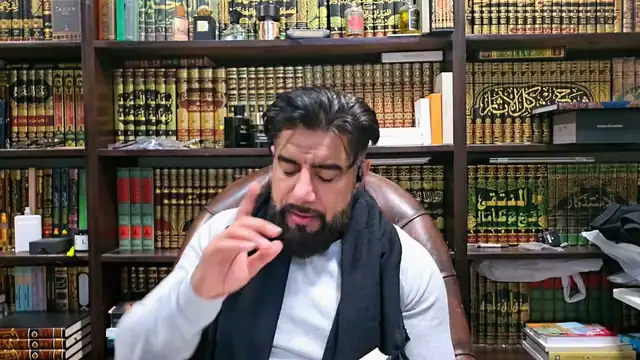 Press play to load from YouTube. Nothing loads until you do.
Transcript
machineauto-transcribed, may contain errors · source: youtube auto · click a time to seek · dotted terms open the glossaryAlhamdulillah. Quran. Today we're going to take a look and pause at some mak some stations for some reflection from J
5 mat means those um fortified or secured women. Um and in this contextan with the is used in the Arabic language within the context of familial relationships to refer to marriage. Okay. So it's a kaya referring to marriage and we're continuing through surah uh surah about women and that's because of the amount of verses and meanings that are so important and relevant to the discourse of women.
So the verse continues telling that what a person cannot who they cannot marry and it continues that those things that were forbidden for you and married women to marry and here the discourse of slave girls comes up and this is something that previously I've done very lengthy uh videos explaining it's something we can't really go going to do justice so briefly uh in this m today but uh I do refer you to my previous videos and inshallah maybe in the future I'll
repeat some of those about how what is collective consciousness and how it alters over the uh the passing of time. So this verse continues to tell you that these things are permissible and it mentions that whatever is beyond that a person can go and seek. So it finalizes the the list of prohibition that a person cannot marry so and so and so.
I mentioned that previously uh I'm not sure if we took a look there's the verse. It's a connection continuing that these things are forbidden for you in marriage. Your mothers, your daughters, your sisters, your aunts, etc., your nieces. And it goes on uh it mentions that on a side note um Jalaladi something a little a point to just share that he'd made a um an observation.
He'd said this is that right throughout the Quran that that there is no generic statement. So the Quran does not mention anything uh that is general except that there are some there is some exemption for that verse. So almost everything he says that you will find some exemption for it.
So let's say Allah is saying pray but there's exemptions. Let's say the person who's unconscious or the person who's ill that well one could say or a traveler or uh uh a woman on her menstrual cycle for example or the the child that is not yet pubescent. They're exempt from that ruling. So that there's
no and he says that however this was one verse I found that there was nois for uh the verse doing of incest and you know years ago I I stumbled upon some notes that um I had done when I was studying ifa my the kind of muti course and this was a point in that that I'd mentioned that jaladina had said this and I had added So I don't know whether it's whether he meant it but I had said but what about verses like and you know that Allah knows everything or
Allah is uh all powerful over all things those two areas you know there's no of those uh either so it was just an um upon the observation of Jalali So I thought it's uh it occurred to me.
So this carrying on from this topic and you can see this whole surah is very relevant to people trying to um seize the rights especially in Jahilia time unfortunately today as well in some parts of the world from women's inheritance to maybe stealing their wealth to even trade or loans not giving not repaying what they owe them or uh whether it's to do with marriage marage and points of justice and people not um you know maybe they marry a certain
woman so as to confiscate or usurp her wealth. So yeah and there was a reflection on that by the way I'm not um even though it's from the previous jurors and we spoke briefly on the verse of [Music] u that that you that if you fear you would not do justice regarding the orphans
then and we did speak about well this may not whether it's limited or not in polygamy but you know there was a reflection that when I was thinking about this verse that it occurred to me that I'd never really thought of before And since the topic is still about Nissa, I think it's worth sharing that you see from the beauty and the majesty of the Quran is that it has layers and just infinite uh gems of understanding that you can that you can take from each verse and and you can come back to it and it might give you something
new. And this verse that that why does it begin with the orphans and then go on to say and marry women and whether in in many numbers if you want. But see a thought that I'd not really observed before was that in one one connection that is it by surrounding yourself and especially for men that and it doesn't have to be all the time but in certain settings at least to surround yourself in the company of
women so as to be very close. So they could you know one is well you know person could say well you know when you're out and about let's say in the world there's men and women there but not in that context but where it's where they could truly you know have your ear and speak to you intimately even like so without fear of um repercussions or they have that.
So if a person was to surround themselves, would that prevent them from committing oppression? That maybe there was there is something in the company of women that is more enveloped in virtue that in the company of men men don't get that.
So that that that was an observation because Allah begins that verse by saying do not you know usurp the wealth of the orphans. But if you feared that you would not this then surround yourself in the company of women intimately as in take them as spouses that well and it's almost like there's a leap here. We've changed the topic or we're trying to figure well what is the connection here?
And it occurred to me that maybe that there is this call to virtue, a gentleness that men may not find in the company of men. I thought that's worth sharing. Back to the verse on this verse also highlights one of the um you know most what amongst many controversial topics the topic of
mut temporary marriage in Islam. Now you'll find in many of the books a discussion of it underneath this verse that so what you delight in with them as in here speaking in the context of marriage then pay them. So and Ashur has a a reasonably lengthy discussion on this as well.
He does highlight that really that's it's it is a weak point an ili point to connect the topic of mut to this verse that this verse was not revealed for mut although some uh companions uh did transmit that this verse was to do with and others said no this is actually linked to mah giving the dowry when a person marries And a dow the dowi is considered by most of the to be
aen. So you have the popularly the the kind of four aran in nikah. Now the you you im Abuhanifh it's transmitted that he challenged it being a rrooken but he said it was a ne it was an obligation of nikah and that does make sense as well and I think it may be a bit of semantics because there is the known as if a person got married and didn't mention the mahar does the and the general understanding is
that it does and it's called and the mah is whatever would customarily be said and that brings in once again a discussion on so are powerful tools within the toolbox of Sharia. So, you know, going off on a slight tangent, you you see in Islam, we don't we don't generally have a constitution, so to speak.
You know how let's say it's popularized by the Americans, the constitution they have in Islam, we have we have something called us, which is legal theory or or to understand it, you could imagine it, it is a toolbox. And from this toolbox we make whatever we have to you know we go to work based on it as in constructing the rulings within the sharia.
So what tools go into this toolbox. There are everybody would agree that the tools by which you know for lack of a better word here or the the usul the usel the the foundations by which we build they would all agree it is the Quran is one and the sunnah is another. So everybody agrees on this.
Most people agree on analogy is one some debate with the methma is one that is put in their consensus. Although nobody ever agreed on what the definition of consensus is and they never agreed on consensus but they say it is one of the tools in the toolbox. Then they disagree on everything between themselves.
The Malikia, the school of Medina, it has the most tools in according to any Madhab to make Sharia, to make law, Islamic rulings and fatawa. And so it has the you know whether some have counted out 13 and some have counted them as more or but the point is it has many tools in there. The have the least they really just stop with those four.
Um then you've got I suppose the hanfi m and the hales are probably similar to the malik a bit short. So one of the tools is custom and convention that we use this to stipulate law to generate law. So whenever we're giving Islamic law whenever we're giving rulings we base them on what the custom and convention of the time says.
So this for example a person doesn't mention the mahar well what would the people of that convention normally stipulate and that becomes stipulated. So these things decide you know um so if you got into a dispute with someone um let's say you ask somebody to buy something for you and now you have a dispute you take it to the courts it would be based on things like that so you could say well let's say a popular one like meat is fish meat well even in
the western culture I think it is meat but they consider it they still put it separately. Some cultures they would lump it together. So you know if somebody had asked you to you know contracted you to provide them with meat and you just provided them with fish and then they took you to court well the custom would decide. So here in na once again it's the custom. This discussion on mut circling back to that it has be it is really one of those issues that it it became so controversial just because of its nature.
You take something that it's something that's to do with the nature of sex. It's going to be very controversial anyway. um especially from the perspective of religion and then you add something like well a temporary marriage um and you can imagine the kind of social shame that that's going to bring and then this ended up becoming a dispute between Sunni and Shia which in all fairness it never was a debate between Sunni and Shia Islam this is has
it was just a debate within Islam so Everybody agreed that mutah used to be allowed in Islam and then they disagreed after that. So they all agreed that it used to be allowed. Then there's some debate that the general Sunni understanding the general I say general because it was not all Sunnis but it was most Sunnis overwhelmingly but they believed that it became prohibited that the prophet sallallahu alaihi wasallam abrogated it and then they disagree when did he abrogate it.
So did he abrogate it in but then we know that it was practiced after during the time of the fat of Makkah. So then the general Sunni opinion is it was abrogated then it was made permissible then it was abrogated again. So it was abrogated twice canled twice. Um some companions continued to believe it was always permissible like Abbas Imran Hussein uh and there's some narrations from Sa Ali.
Now the popular narrations from Sni is that afterwards he said no it was not permitted and in fact many of the hadith we have in the Sunni tradition come through Sa Ali to say that it was prohibited. Um so you have and then this became with the Shia they said it was never cancelled ever and then some Sunnis took an understanding that well maybe it wasn't constant abrogation but it was that it was allowed with that when there was a necessity it was allowed and then this by and this is
what was transmitted by some of the like Juber and later became the position of grandfather Majinamia and also what Ashur argues for in his taps of the Quran but this topic the nature of it it's one that so easily evokes disgust in people so it became a very difficult topic to even discuss to and then the fact that it became between Sunni and Shia it got incredibly um you know incredibly heated
and almost blacklisted to even discuss. So, and I guess that's unfortunately the nature of a lot of um themes and topics within the realm of faith. And this is where we are reminded in Islam that always to you know to to take a path away from being riled up by emotions so easily.
But yeah, this for people that wanted the general understanding within Islam is that it is haram. But those were the the kind of discussions around it. And this verse, it continues into the second verse that says about those people who could not marry and it continues about slave speaking about slave guilds in the past which by the way Islam would have ruled out today.
the the topic of slavery would categorically be haram and this it would use one of the tools which I've mentioned known as masala which is a tool within the school of Medina that rulings are based there is an arc what in English you would call trajectory hermeneutics that when the time reaches that it would become haram.
So just as those who say for example um there's many things that and I know that becomes another debate in itself that in the time of Omar they became haram they say um and amongst them people put the three tal they put this discussion of mut in there as well in fact there's a hadith in um in the actually of Imran Hussein where he says that uh this used to be permissible but then in the time of Omar you know he made it haram now so and I understand the general understanding the wheel to that would be would say Omar
declared it haram based on his understanding of the Quran was sunnah but coming back here about circling back to slavery that when the time would be right the Sharia would mandate its haram and that's what we call masala it has long been practiced uh within the Sharia it is a mandate of the Sharia according to the school of Medina.
Hence, slavery is categorically haram. And any person uh that would feel that it's differently today, I mean today. Uh that's not to say previously was not haram, but it would have been abrogated. And you say, well, how can something be abrogated after the time of the prophet sallallahu alaihi wasallam? Well, it can based on the assul the tool within the toolbox of Malam.
Now that does leave a challenge for those people who don't believe that tool exists in the toolbox and so they then have to find other ways to come around to explain why they would feel slavery is haram or maybe they shy away from categorically saying so because like the shafy would find it because in their toolbox there's only they don't have that uh the assel of mas
Right. Speaking of which, this verse here speaks about um speaking about the slave girls. It mentions and if they have attained a status of of fortification which means in this context marriage. And if they commit adultery then the slave girls would their punishment would be half of what of what normal women uh non-slave
women would have as a penalty. This verse opens up a huge discussion as Ashur and many would highlight on well that can only be speaking about lashing which is in the Quran that to to lash it could not be speaking of a stoning because there could be no there is no half of stoning.
So this makes a a very intriguing discussion once again and you know and these were the things that um that she Abu Zra for example when he highlights amongst um other people that the verses they used to to highlight the whole which is once again a became a controversial topic the topic of stoning whether it did exist or whether it was something they all agreed that it existed in the sense that it was a
continuation of the Judeaic law of the of the Torah and the Talmud that it was continuing but when the verse came in Islam about lashing that it abrogated that and did that still carry on according to some people let's say many people felt that no it still carried on so that was their interpretation But did it stop with this verse or sorry with the verse of the lashing?
And this is then used by those who say it was abregated as a proof in saying when the slave girl is married and commits adultery, she only gets half of what married women get as a punishment. Others then did interpret this saying here aan because this became another discussion does a slave girl is there even a punishment of adultery or fornication for a slave girl and that it's fascinating to read that that was quite a heated discussion in the past uh
in the early part of this um to many narrations at one point and Ashul brings a narration two narrations from soumar. One being that the slave girl had no punishment at all if she was never married. Um because he felt that well you know she wasn't as bound by the uh the the social ethics that normal people were bound by.
So that makes a really intriguing discussion that Ashul brings. But he does highlight that there is another hire that he was then shown this that okay the married um women do and some people interpreted thisan to say well here to fortify doesn't mean marriage it means to become a Muslim and this is then transmitted from the that they said that the four imams then took an interpretation or their madhabs more likely took an interpretation of saying here means they became Muslim.
um to which um Ashur brings the discussion of uh Khadi Ismael a legend and I have to say you know after a while I I've read Khadi is name and his interpretation where he said that that is all he said that that is so you know to sayan here means Islam it's clearly talking about mar but he you know there's something wall when I read when I was reading the and I was going over ah he's because he's always been this figure
this this kind of dawn that I've always admired so much is he was a legend of the school of Medina absolute legend one of the teachers of Imam Bkari by the way he was a legend in almost every field hadith you name it you know in uh Arabic grammar in He is the one that revives the entire school of Medina, brought it to life in Iraq.
And there's just something you know there's I remembered that poem that Allah that you know it's not that these things increase those people or but it's just there is a a delight to it that we find Allah may Allah bless seriously these people were such they were just heroes man they were just dons of their own But yeah, he had uh mentioned that and I'll there is more to discuss here.
One just keeping it because um one is the verse verse 34 that men are the the kind of protectors and providers of women. And this is set as a paradigm.
The question is, is this here uh prescriptive or is it descriptive? Is it or you know is this in the sense that we are saying it is uh it is a command.
Obviously, Allah is not saying it as a command. It's a statement that men are the providers uh and protectors of women and by what they spend from their wealth and so on. Now, does this mean that this is a an injunction? Allah is saying this is how it must be or is this the Sharia explaining that this is how it generally is?
It can be read in both ways. Ashur and other people would uh they'll highlight these differences and generally the understanding of this verse is it's this is the general norm. This is descriptive of how the world generally works. It doesn't mean that in some societies if they were matriarchal or if women in certain households they are providing is that permissible?
I mean it's permissible. So it doesn't mean that this is a that a woman cannot provide she that these roles could not be reversed in some settings in some context in some uh homes in some societies maybe they are but the general norm is that okay but if there was a household where the woman was providing and doing all of that doesn't mean it's haram or anything she can choose to you know you get stay-at-home husbands nowadays.
So, uh things like that you could get um but you know there is a speaking of the fra of men and women and I know this would be very controversial in this day and age now maybe even as a thought experiment. I think if the thought we I was once having a discussion and and and I mentioned this I said that if let's say there's a woman who's not just taking this as a
hypothetical let's say she's she's not working not doing anything she's just whatever just stays at home and and the husband let's say he provides for her so a man is giving her spending money and taking care of and doing and you know she let's say she helps out in the house in the home and things like this even let's even take the hypothesis that there's no children involved and let's take the hypothesis that there's m multiple women because of just in this thought experiment.
So, a man, let's say there's four women or two women, three women, and he's just giving expenses, but he's working, he's doing his thing, and they uh, you know, they might help out in in the home and help out with other things, and they might just do hobbies, like they might, you know, whatever. Let's say they're artists or they're into things and but they're not necessarily earning or even if they are, let's take them to be let's let's, you know, add absurdum, take the argument to its nth degree.
Let's say that they're absolute like complete uh you know like they use the term like just just doing nothing just like an absolute bum sitting at home doing nothing. Now let's say you take that on one side and you flip the scenario. Let's say there's a woman where men are like that. two men, three men, even one man. An absolute like a somebody that's just wasting or we take it to the absurdum argument.
They're doing nothing just to wear like a like an absolute bum just sitting at home. And there is something about the and the fra of men not always but often Allah has placed it in those you know the where it is found that it still wouldn't bother these men as much as much as it would bother a woman if the man was like that and I think that speaks to our you know
that men do have this thing that that it's still seen like it would still be to to like they it could be negligible like they wouldn't really it wouldn't bother them but the sight of a man that is useless irritates everybody like I think a man just sitting around doing nothing there is something that stirs a strong emotion against it and that's not to say I'm not saying in any way that women should not be high achievers they should be as well but I was just speaking to the fra that is evoked at the sight of that that
there is something and we see maybe that spirit in this verse that that Allah speaks in that so not to mean that women can't be but that there is something in the fra of men that is that even if they were just taking care of even multiple women, it wouldn't true men the ones that are true, you know, and I don't just mean useless because here's Alifam is referring to the the the right kind.
Yeah. So I thought that's worth sharing. And and then Allah goes on to speak about you know people those people who are stingy that Allah then describes such people as even though they're not don't have to be kufur you get people from the believers that might be stingy and
misily why because it is almost like a kufur it is a kufur of the the and the verse before that that worship Allah and do not commit This sums up the entire Islam. Entire Sharia is summed up in this verse. Verse 36 that worship Allah no to absolute no.
Avoid superstitions like the plague. Take care of your parents. Allah and the kinship. kindness to orphans, help those who are poor. But there's also a kinship of the neighbor of the people around you.
They're also like see friends can become the new family. People who are a far from you, take care of them as well. Allah And then those who are tightfisted, Allah describes them as because they are.
So what a powerful verse wallah and there is the um in the verse of and we'll wrap it up with this in that verse 34. It is also one of you know a point of one of the most uh especially in recent times controversial uh verses or rulings that are uh relevant to that is about what if there is dispute or you fear nush with a woman with the spouse where you are taking
care of her providing doing all of this and there is this source of uh uh disrespectful uh disobedience And uh whatever that however that may be the term covers it that you that you admonish like you speak wise words abandon especially you separate your you know your the bedroom for places of where where you sleep and then and then to hit them.
Now this verse has uh brought about so much discussion and even has a huge you know a whole discussion on it as well. And then it goes on to say well if there's further dispute you should mediate and um try and patch seek consiliatory efforts.
this. So, people had discussed what does mean here and I do have certain videos about this in the past and I think I've it's been a good few years since I've made them. I do refer you to them that in surah verse 34 uh the hitting verse. So I do have an old video you can watch that I'll do you know I I won't really be able to do justice in this short time to this whole discussion but what I would say is that just like this verse is literal some people had
said meant didn't mean hitting it meant kind of you know leave him alone walk away and but generally speaking the verse does one reading it would understand it to So what does that mean? Does it mean today you could just go and hit somebody? What speaks about is we come back to that discussion of the toolbox of custom and convention and that sets parameters on law.
So there were certain customs and certain cultures in which people felt that there was an element of physical discipline in those cultures that did apply in cultures where it was deemed an utter no no just like let's say today in this day and age where we live in the west it's deemed utterly uh wrong that this would then be prohibited and haram.
So it would be referring to those times especially and you have to remember in the prophet's time sallallahu alaihi wasallam the culture was this kind of warrior culture was almost the closest example you'd get in the western understanding is like that of Vikings for example because all they lived on was raiding they just raided other tribes and that's how they looted and raiding and warriors and fighting to the death And that's all they that's how they were in that culture.
The women were a part of that as well. And they felt too that there was this order of discipline. Now to us this may sound bizarre and and we're entitled to that opinion and I would say that it is haram for people to hit in this uh here where we are and this is not because this is not our culture is not like that and it should not be like that because of trajectory hermeneutics as well the the what I spoke of earlier now the male the tools we have and how and that interprets that how we read the Sharia for our
age. But there in certain cultures, you know, and I when I made that video, the hitting verse a few years ago in it, I discussed that there was a uh that there was a viral clip at the time. I think it was from a woman in Morocco or was it Tunis? I can't remember now, but it was North African uh woman.
very modern, contemporary, young, and she was also a bit of a um like a celebrity. I think she was a singer or something. So maybe not absolute top of, you know, A-list kind of singers, but she was some kind of a reasonable uh like an influencer and quite popular. And she in an interview was asked something and she made a statement.
which is very modern, not apparently, you know, and the reason I'm saying that is so as to this wasn't indoctrinated by, let's say, you know, the certain religious kind. She wasn't apparently, you know, wearing hijab or very modern, very kind of all uh online strong of the age. And she was asked a question and she said something like, "If I did something wrong and my man didn't slap me, then what kind of a man is he?" Now this caused huge controversy at the time right throughout the Arab world and people said shame on her you know she's encouraging domestic abuse and then she gave several dis interviews
after that saying look I'm totally condemning domestic violence but I'm just speaking about a principle that she said she felt was still part of the Arab culture and the kind of thing that men this this concept of discipline now it sparked huge outrage But it was a point of reflection that there are certain cultures that see things like that an authority and a discipline.
That's what the verse was speaking to primarily when it came in a culture where everybody or most people the backdrop was one of warriors, one of you know fighting constantly to the death, raiding, looting. It was like that non-stop waring and the women were a part of that and they felt not that necessarily it doesn't mean that they this wasn't a kind of masochistic thing about them wanting to be hit.
It was something about saying that they there was something about that discipline that they saw and the Quran spoke to that community primarily and by extension the rest of the world leaving with us the tools of and when we're in our day and age it fits and it's like Islam is the the water the riverbed you know that the the stream that it takes the color of the the of the ground and the bed over which the rivers and the streams flow.
May Allah bless us all. Shukran once again and you know do you know this in Ramadan these are special days make Allah make dua observe say a kind word for me if you can as well uh for my mother as well.
Something wrong here?
Tell us what is wrong and it will be checked against the recording. Nothing changes until a person has reviewed it.
Sending a note needs JavaScript, which is off or unavailable in this browser. Nothing has been sent.
No name, email address or account is asked for or stored, and the inbox does not store your IP address. For rate limiting it keeps an unreadable fingerprint of your connection for 48 hours, and our database provider's own logs record connections as every website's do. Only your note, its kind, the page and the moment in the recording are kept, for review.
Cite this recording
Stable id, transcript version and tier are part of the citation. Every change to a transcript is logged.Mufti Abu Layth Archive, auto-transcribed, may contain errors. https://muftiabulayth.org/r/dx82w6dd8je/ (accessed 1 November 2026)
- APA 7
Mufti Abu Layth. (2025, March 16). Mawaqif - Quranic Reflections - Juz 5 مواقف عند آيات القرآن [Video, auto-transcribed, may contain errors]. Mufti Abu Layth Archive. Retrieved November 1, 2026, from https://muftiabulayth.org/r/dx82w6dd8je/
- Chicago author-date
Mufti Abu Layth. 2025. "Mawaqif - Quranic Reflections - Juz 5 مواقف عند آيات القرآن." Video, auto-transcribed, may contain errors. Mufti Abu Layth Archive. Recorded March 16, 2025. Accessed November 1, 2026. https://muftiabulayth.org/r/dx82w6dd8je/
- BibTeX
@misc{abulayth-DX82w6dD8JE,
  author = {Mufti Abu Layth},
  title = {{Mawaqif - Quranic Reflections - Juz 5 مواقف عند آيات القرآن}},
  year = {2025},
  month = {3},
  date = {2025-03-16},
  howpublished = {\url{https://muftiabulayth.org/r/dx82w6dd8je/}},
  url = {https://muftiabulayth.org/r/dx82w6dd8je/},
  organization = {Mufti Abu Layth Archive},
  urldate = {2026-11-01},
  note = {Auto-transcribed, may contain errors}
}