
Recordings › From the Mind of a Mufti
An Anthropological Perspective on why Shia Mourn the Tragedy of Karbala
imaam imams prayer leader muftis shiah shiite shi'i twelver ithna ashari ummah umma ummatvideo · 7:26 · 9,600 views · 14 Sep 2018 · Open on YouTube
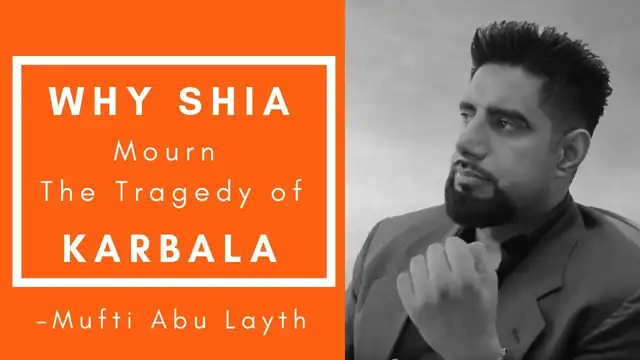 Press play to load from YouTube. Nothing loads until you do.
Transcript
machineauto-transcribed, may contain errors · source: youtube auto · click a time to seek · dotted terms open the glossaryright look speaking about the Shia uh I was uh okay this this weekend I was looking at some poetry in Urdu and it was the classic poet mere a nice now he is a contemporary for me that they made the legend me the dawn Mir but this one seems to only focus will be popular for things like what they call Murcia which are the like the eulogies the kind of religious poetry dedicated to really
just to the Battle of Karbala and Husain radi allahu on and said now i li Rodya la on so it's mainly like it doesn't have to be Shia but it's usually she our literature it doesn't have to be Shia though that to be fair but generally that's where it's found within the Shia communities and this got me thinking so I mean I'm not too much into all of that kind of you you know this kind of thing but he got me thinking because I was learning about Mir and ease and I thought you see as I was learning about
him the poet I realized like as a young person he because he becomes a legend in India for Marcia for writing these kind of sad like these eulogies about the about Karbala the Battle of Hussein rowdy aloha and things like this now it got me thinking that as a young boy you see one of the things he did as well was he studied he studied with Hindus as why study with Muslims obviously very Leonard but you also studied the Ramayana Mahabharata things like this
the him great Hindu kind of stories and epics and things like this about you know the whole thing the whole battles for right and wrong and out of john and all these kind of great Hindu characters that that appear in this battle and stuff like this and this whole thing got me now observing this I began to think it got me thinking that what is it you see human beings we are drawn to tragedies
okay we are drawn to we have our affinity to tragedy is actually greater than our affinity to the observation of joy I don't mean experiencing tragedy but observing so so what many people let me give you let me just expand on this many people will love to watch a movie that is a tragedy let's take the Titanic
as an example it was a super hit right it was a blockbuster it probably wouldn't have been so if it had a good ending people don't like good endings it's weird now this sounds crazy but it's actually true people like bad endings I know they don't like to own up to that but they like watching tragedies they don't like experiencing tragedies but they like watching tragedies they like listening to tragedies why psychology shows us that when we and
when we observe tragedy like we're watching it for entertainment or listening to it we empathize with the people going through them once it's over we sense a great sense of relief and that we are safe it also allows us to count our blessings to make us think oh wow look at all the great things I've got it also allows us to kind of release emotions to cry for example people who watch movies reads let's say sad
tragedies they cry it allows them to release these emotions the brain actually releases a certain amount of oxytocin right releases a certain amount of oxytocin when dealing with tragedies when observing tragedies I don't mean undergoing them when observing them so cultures want to have their own epic stories of tragedy to have a good cry if this also another point if done with numerous individuals
it creates a sense of community so if you do it on your own that's an individual thing if several of us get together and hear a sad story it can actually create a community spirit so my kind of theory is that a lot of this this kind of this kind of narrating of storytelling about the the tragedies of karbala are linked in with this psychology that Muslims kind of also being human beings many Muslim
especially in India and those places felt that need to have their own tragedy story that they felt that the way things like let's say Hindus have the Mahabharat or other people have that we also have a story of epic tragedy suffering death betrayal good versus evil these kind of things in a collective spirit of where crying is encouraged oxytocin is released where empathy is realized where community spirit is created and I think these are
the things that actually kind of kindled that whole culture of these kind of storytelling and because people like I suppose in people weren't really familiar with other characters like in the past I suppose your common people don't know about let's say more how we are or the allow on or even other people so they just hear a name like let's say you see then it's easy to kind of think of this whole good versus evil and this whole thing I'm not saying for example I'm not use in any way kind of belittling the
tragedy that occurred at Karbala I mean it was a tragedy unquestionably it was a tragedy but this whole storytelling of it this epic kind of the way it's been kind of turned into this great Mahabharat version and kind of told over and over and this whole thing I wouldn't be surprised if along the way this is the the kind of underlying subconscious triggers that have led to that okay so that's some thoughts anyway let's move on people let's move on
Something wrong here?
Tell us what is wrong and it will be checked against the recording. Nothing changes until a person has reviewed it.
Sending a note needs JavaScript, which is off or unavailable in this browser. Nothing has been sent.
No name, email address or account is asked for or stored, and the inbox does not store your IP address. For rate limiting it keeps an unreadable fingerprint of your connection for 48 hours, and our database provider's own logs record connections as every website's do. Only your note, its kind, the page and the moment in the recording are kept, for review.
Cite this recording
Stable id, transcript version and tier are part of the citation. Every change to a transcript is logged.Mufti Abu Layth Archive, auto-transcribed, may contain errors. https://muftiabulayth.org/r/di23wcpygg0/ (accessed 1 November 2026)
- APA 7
Mufti Abu Layth. (2018, September 14). An Anthropological Perspective on why Shia Mourn the Tragedy of Karbala [Video, auto-transcribed, may contain errors]. Mufti Abu Layth Archive. Retrieved November 1, 2026, from https://muftiabulayth.org/r/di23wcpygg0/
- Chicago author-date
Mufti Abu Layth. 2018. "An Anthropological Perspective on why Shia Mourn the Tragedy of Karbala." Video, auto-transcribed, may contain errors. Mufti Abu Layth Archive. Recorded September 14, 2018. Accessed November 1, 2026. https://muftiabulayth.org/r/di23wcpygg0/
- BibTeX
@misc{abulayth-dI23WCPygG0,
  author = {Mufti Abu Layth},
  title = {{An Anthropological Perspective on why Shia Mourn the Tragedy of Karbala}},
  year = {2018},
  month = {9},
  date = {2018-09-14},
  howpublished = {\url{https://muftiabulayth.org/r/di23wcpygg0/}},
  url = {https://muftiabulayth.org/r/di23wcpygg0/},
  organization = {Mufti Abu Layth Archive},
  urldate = {2026-11-01},
  note = {Auto-transcribed, may contain errors}
}