
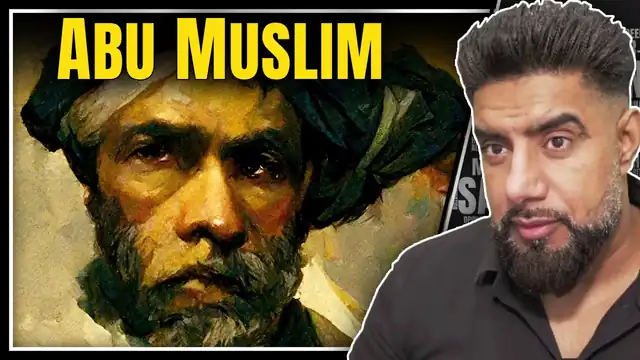
Abu Muslim Al-Khurasani: Strength In Stories | Mufti Abu Layth
haj pilgrimage hadj hadeeth ahaadeeth hadis hadees ahaadith malik ibn anas malik bin anas imam maalik imam malik ibn anas jumu'ah juma jumma jumah salat al-jumuah friday prayer imaam imams prayer leader eid al-fitr eid al-adha eid ul-fitr eid ul-adha eidul fitr eidul adha bakra eid bari eid choti eid festival khutba khutbas muftis haram haraam mubah mubaah ihsan ihsaan sihr sihar jadu jadoo kala jadu sorcery jahannam jahanam jahannum ayah aya ayat ayaat aayah aayat tabi'un tabieen tabi'i successors hijrah hijra hijrat migration ahl al-bayt ahl ul-bayt ahle bait ahlulbayt ahl-e-bait ahlul bait ahl al-bait khalifah khalifa khulafa khilafah khilafat caliphate khilafa shiah shiite shi'i twelver ithna ashari ulama ulema ulamaa shaykh shaikh sheik shuyukh shaykhs dawa dawat da'ee invitation alhamdulilah al-hamdu lillah alhumdulillah alhamdulillaah hamdulillah adab aadaab adaab manners ad-deen ad-din religionvideo · 1:05:04 · 6,500 views · 29 Aug 2022 · Open on YouTube
 Press play to load from YouTube. Nothing loads until you do.
Transcript
machineauto-transcribed, may contain errors · source: youtube auto · click a time to seek · dotted terms open the glossaryLet's introduce a personality. Allah. Right, I wanted to speak last week and then we got distracted. I had said I will introduce the personality of Abu Muslim al-Khorasani. And who was he? So, learning a bit about him, we'll come across the um we'll come across certain certain other personalities, okay?
Certain names. And the good thing is like I mentioned to kind of map these out, maybe research them in your own time, maybe learn about them, watch stuff on YouTube about them, do different things. Um so, in this journey of this character, Abu Muslim al-Khorasani, we there'll be people you'll hear the names of uh Marwan ibn Muhammad or Marwan al-Ja'di or Marwan al-Himar, the the last Umayyad caliph, uh Abd al-Hamid al-Katib, uh one
of the the earliest um um one of the earliest influences on Arabic uh Arabic prose. Or uh or Arabic, what's a better way to say it? That how almost like sermon um like on the he's he set out the science of how to which would dictate sermon practice and things like this.
We'll we'll we'll get to that. Uh people like that, people like um Ibrahim al-Imam, the great grandson of Abdullah ibn Abbas and the the the leader of the Abbasids. Umayyad, this is a key term, but Umayyad, but al-Abbas, the Abbasids. Uh Abu Ja'far al-Mansur, who we've met previously spoken about in a few stories, especially the story of Abu Dulama.
Um you'll have uh Abu al-Abbas al-Saffah, who we've spoken about previously as well. So, these are some of the names that, you know, you'll hear being kind of bounced around and you may want to explore them at your own leisure. But coming back to this individual, Abu Muslim al-Khorasani is an incredibly fascinating individual.
Why? Because he in many ways is a nobody, yet while simultaneously being everybody when it came to an entire imperial change.
Okay, so a shift. So, you have right, to understand this, we're going to have to pause Abu Muslim al-Khorasani. He himself, let's before we pause him, just giving a brief introduction to him. He is somebody who is of Persian descent. Um his some people say whether his parents became Muslim or not is discussed, but he himself, according to certain people, is ends up as a slave, a small boy, he's kind of brought, freed, uh and he
is uh he encounters as a young man apparently his ancestors, his Persian ancestors may have been of um kind of imperial aristocracy, so they may have been people of great lineage within the Persian kind of Sassanid empires, allegedly. Obviously, it's difficult to ascertain these things when empires have collapsed and some people claim things.
Now, you don't know whether it was real or not. Um but that's this this lad who grows up quite destitute, incredibly formidable in character, has something very, you know, just striking about his personality, very charming, charismatic.
Um he's incredibly eloquent in Farsi, but also learns Arabic and is incredibly eloquent in Arabic. And he he ends up from this nobody not only rubbing shoulders with the elite of Banu al-Abbas, the Abbasids, but arguably the the kind of key determinator, the the kind of determining factor, the kind of the
the dagger in the sleeve of the Abbasid gown that enables them to topple the Umayyad dynasty. So, this is this this person is a nobody yet everybody. Okay. So, this is why he's so fascinating. It's okay, let's put him aside. And his his kind of he has this meteoric rise to fame.
He just comes out of nowhere and suddenly he's this this icon, celebrity, and then as he rises, he falls. Far. What till al-Ayyam? No doubt we will happen So, let's put him aside. Right, somebody said reminds me of myself, Muftiji.
I sure hope so. I sure hope so. So, let's go back to the time of Banu Umayyad. Now, we've we've already spoken, we've got a I've got a a whole video on Sulayman ibn Abd al-Malik and it's definitely worth watching if you haven't watched it. It's it gives a lot of history in that, what was happening in Banu Umayyad's time, the kind of the the downhill uh trend and then how Sulayman tries to push an uphill trend and after him he puts in place Umar ibn Abd al-Aziz, which becomes this kind of
twilight phase once again in what was otherwise becoming a very dark le- legacy for Banu Umayyad. Now, Banu Umayyad are almost um the uh they they they rule, let's say, about arguably um no, just on no not they don't make 100 years, but near enough, over 90.
So, after Umar ibn Abd al-Aziz, there's some changes. You do go through uh you'll go through you'll go through Yazid and then there'll be someone This is not the first Yazid, this is a a late Yazid. And we go through them in that video. However, they eventually end up on this person known as Marwan, Marwan ibn Muhammad.
Now, he's popularly known as uh they call him Marwan al-Himar, Marwan the donkey, or Marwan al-Ja'di. The reason they call him Ja'di is because of his he had this teacher that he was inspired by, Ja'd, that they refer him to. And ironically, they don't You know when they call him Marwan al-Himar, and I must say I too was guilty of this, I assumed it's as an insult, but it's actually as an accolade, it's actually as a as an element of praise.
Just goes to show, when people think that you can you can read into history. So, this must be the biggest gaslighting. They got a chart. No, you thought when we're calling you a donkey, we were insulting you. Yeah, we were praising you. Haha, we weren't saying donkey, we're saying donkey.
So, it's true that they they say that he's called donkey as a as a praise because of his um his kind of tenacity to go on. So, this what you raised this, this is the years we're talking maybe the final like 125 Hijri, that kind of time.
So, it's almost we're talking over, you know, 115 years after plus after the Prophet Sallallahu alayhi wasallam. So, it's in the time that people like Imam Abu Hanifah are around, it's in the time Imam Malik is around. It's in that kind of era of the Tabi'in. So, Marwan, uh known as Marwan al-Himar, he is called this because there's a saying in Arabic as well that asbar min himar, that somebody's more patient than a donkey.
Because a donkey, I don't know if you've seen in in the in certain in countries where they utilize donkeys, they actually load them with quite a load and they, you know, stack them, make them carry quite a burden. I've seen it in villages. Like they'll make them carry bricks and carry all this and the donkey just just trods along. You know, just occasionally just chucks over.
It's not that but it has this uh this kind of tenacity to just keep trotting along. And they say that was uh why they were calling That's why they were calling him a donkey. Either that was true or this was like the biggest gaslighting event of They go, "Haha, that wasn't an insult.
That was a an accolade, yeah." Doesn't even understand the difference between praise and So, that's like calling somebody a dog and then saying I meant you're like a true best friend to man. That's what I meant. You know, they say a dog is a a man's best friend.
But anyway, I'm not making this up. This is in the books. They say that by the way, himar is not an insult to Marwan. It's actually an an accolade. It's a praise for him because he he he he he would this this meant he had the tenacity to keep going. So anyway, Marwan before he becomes caliph, he's in charge of these areas like Armenia and some of the the kind of Balkan regions and stuff like this.
So he's had his expertise in war. But there is a huge restlessness that is rising against Bani Umayya. And we've spoken of this previously. People were upset. And there was a lot of factions that were uh conspiring against them. Especially the the main strength against them was the Shia.
Okay, because the the the kind of family of the prophet sallallahu alaihi wasallam being persecuted, this narrative was the strongest narrative. And people were fed up anyway. It's not just Sometimes you need something to believe in but people also give you an excuse because Bani Umayya weren't you know, they they they were you know, they were who they were.
It's very obvious they were they weren't that considerate of people. They were heavy taxes at times. There were confiscations. There were all these kind of things going on. So the the kind of Shia movement is rising and it's it seems to garner and harness an ear in the in the far east of the Muslim world.
So places like Khorasan, which is modern day Afghanistan and maybe parts of that region going north, maybe today some parts of uh that kind of western central Asia. Sorry, central Asia being part of it. But this Khorasan region they seem to have a soft spot for the Shia kind of movement.
And at the forefront of the Shia movement were obviously you had the you had uh the Alawite, people who were claiming that being, let's say, the descendants of Sayyidna Ali radiyallahu anhu. But you also had people just generally from Bani Hashim, the greater clan. And amongst them you had people that would be the offspring of Abdullah ibn Abbas, the uncle I mean and Abbas, the uncle of the prophet, which is all the clan of Hashim.
And remember, all of Hashim including Sayyidna Ali, they they are united by that cause because they're all ultimately one blood. So to them, Bani Umayya are the arch rivals. So you start to see a strategic elevation, a rise in the Abbasids amongst it. So let's say all of these are one group and those from Abbas seem to have more charming characters and personalities.
So you have uh this personality, Ibrahim. Ibrahim ibn Muhammad. Now they call him Ibrahim al-Imam. He is somebody that starts calling to towards this dawah and calling people and and he's very charming, very kind of has that mysterious element to him. So Bani Umayya imprison him. They catch him. He's locked up him in in prison. But in that day and age, the prisons were slightly different.
So people would allow people to come visit prisoners. It wasn't the kind of way today we see prisons. They're a lot more institutionalized. And on a separate discussion, one could speak about Foucault. You know, the Foucauldian analysis of prisons and the institutionalization in of modernity.
But prisons in that day and age were quite like you were locked up. The person was locked up. They were in this thing but people could come and go and they could bring them food and they could do stuff and they could even spend like a whole day there. They could spend several days with them. Like people didn't actually care. It wasn't like, "Oh, who are you?" or what. They were just like weren't bothered, indifferent to it.
So what happens is somebody gives um Abu Muslim al-Khorasani they give him some some things to take to Ibrahim al-Imam like as in like a just use him as a gofer. Go for this, go for that. He's this kind of young boy. He's not very um you know, it's just a a being a former slave and stuff.
And so Ibrahim al-Imam sees something special in him. And he asks him, "What's your name?" And then there's differences that his name was something else before and people use different uh names. What Ibrahim al-Imam says to him is that he takes a liking to him and he renames him.
He says that he he gives him this name, Abu Muslim. That this is who you are. And so okay, and you can see that there's this clear kind of dynamic you know, like a bond. Like this like almost a guide, a sheikh and a disciple or almost like a senior warrior kind of spirit and you've got this disciple.
This kind of bond gets created because this Abu Muslim is all he's bringing him food every other day and he's spending time there. He ends up talking to him. And Ibrahim al-Imam can see this guy is very he has a charm to him and a charisma. He's obviously very he's got a strong stature. He's physically has this presence. He's young but he has this presence. And as the days turn into months, which turn into uh one or two years that there is this bond going on.
The dawah of the let's say the Abbasids, which is actually the dawah of the Hashimiyyin, the Shia, it is growing stronger and stronger day by day in in the Khorasan region. So people ask Ibrahim al-Imam that look, we need to send someone to you know, we need to capitalize on it. We need to send someone that can take charge and kind of uh mobilize.
Get armies together and you know, we have to like it's ripe. We need to do something. So he says, "You're right." And and they So they're asking him, "Who who who will you nominate?" Cuz they've got all these figures. They've got you know, these great people from Abbasids and the Hashimiyyin and Alawite. And he says says, "This young lad here, Abu Muslim." Says, "I send him in charge." And you know, it's incredibly
fascinating. There's in psychology, you have something known as the Pygmalion effect. That maybe sometimes the expectation of excellence from someone it impacts and influences the performance of excellence in the observed. So if a coach, let's say, a football coach or or any sports coach kind of just sees for some reason has the belief of excellence in a particular young player, often it happens that player rises to
that excellence to match the expectation and this is called the Pygmalion effect. And it's like a self-fulfilling prophecy. And so Abu Muslim takes this up. And he goes and first of all, there's some uh you know, there's battles and he's this relentless. People are shocked how ruthless this person is. And he just suddenly rises to fame.
And the people of the region actually, once he locks control of Khorasan, they love him. They absolutely love him. And maybe this was Some people say maybe it's because he was Persian. And he could speak Farsi. You see a lot of those people spoke back then they spoke Farsi. And people say he was eloquent in Farsi and some people say maybe because he or he alleged to have been from the legacy of the Kisras.
Like he claimed his forefathers were the great Sassanid rulers and maybe that struck awe in the hearts of these Horasanin and people and maybe I mean or maybe it was just his stature maybe it was the fact that he was ruthless in his military campaigns. And and he and he was he would where he would go to he would crush any rebellion.
And this is why he became such a renowned figure. So what happens the key people of the Abbasid movement because remember this is all the Shia movement but the Abbasids seem to be taking the they seem to be at the vanguard at the front of it. Okay, taking lead in it. So he starts to rub shoulders with the top people that are there like he already knows Ibrahim al Imam like Abul Abbas al-Saffah.
And other people these are all he's like as if he's one of them. And do you know when he's going Ibrahim al Imam says to him and this is interesting. He says to him now speaking about that prophecy he says to him he says Abu Muslim he says antum minna ahlul bayt. And in many ways reenacting that scene where the prophet salallahu alayhi wasallam is saying this to Salman al-Farsi that you are from us one of our
household like you to us are real family. And and this is then celebrated and you can imagine what it does to how it boosts the the the the spirit of this who's who's very young by by the way in the at this time he's just in his 20s. And he's doing all these expeditions and these stories are going wild that he Ibrahim al Imam has called him like from us ahlul bayt and and so all this starts to happen.
He locks Horasan. Meanwhile Ibrahim al Imam kind of passes away people say that he's killed by the Umayyads and and and there's more turbulence going right throughout the the Umayyad state. So what happens is at the year 131 Hijri the Abbasids from Horasan mobilize an army to move down.
They think the time is ripe we should attack and take over whatever we can. Now Marwan al-Himar he realizes and he was a he was like a strong warrior as well. He thinks that okay he hears of these armies coming from the east with black flags. Now this is interesting by the way because a lot of the hadith literature that people will sometimes present of these armies coming from the east with black flags at the end of time it is about the Abbasids and this is why most of this it's very it it
seems very plausible that most of these kind of ahadith are fabricated to serve the Abbasids. Because where it mentions these people will come out of the east with black flags and they will have kunyas and like Abu something Abu Muslim al-Khorasani. And these things were there to support that kind of cause because people really you know the power of belief the script it's phenomenal.
If anybody watches whether it's going to be a boxing match or sometimes you get these UFC matches and and they having that square off and one of the opponents is trying to he's kind of he's doing a lot of trash talk. I'm going to do this. Whoa you're already dead. I already see you know it's like you're going to see Conor McGregor he'll be you know he'll be saying things like oh I already see you know your lips already blue you're dead man walking blah blah blah.
Now what are they they're trying to kill the spirit? Because once you kill the spirit the man is just a dead man walking. You see. So the power of belief it is one could argue even more than half the battle. So so these armies are coming out of the east carrying black flags with kunyas like Abu something.
Okay like Abu Muslim Abul Abbas al-Saffah Abu Ja'far al-Mansur all these kind of things. But especially people like Abu Muslim because he's not even known by his name he's just known as Abu Muslim. That's his kind of that's the name that he goes by he doesn't but that's really just a kunya but it's how he's known. So Marwan mobilizes an army and they move forward and they meet at this place and there's this famous battle and we can cover that on another day called the battle of Zab.
But it is the key determining factor that topples the entire Umayyad dynasty and you know puts a full stop on a dynastic reign that began since the time of Muawiyah radiyallahu anhu right down to Marwan. And it ends in that year at this location in uh in the Middle East north uh northern I believe modern-day Iraq but it was the called Waq'at al-Zab.
Now Marwan goes there he takes these armies and he and he thinks that you know what he's got a good good chance. And there is a point where and this battle goes on and so many casualties. And there is a point where Marwan thinks he's going to win. But you know I'll tell you speaking of beliefs check this out. Marwan himself was a he he was mixed race so his mother was Kurdish.
And so she and she was kind of very like fair-skinned white-skinned and and this is why they describe him as very kind of like white-looking white-skinned or Marwan's done um and sh see prior to Marwan the other people their mothers were usually usually of Arab descent or they were free women they weren't slaves.
Marwan's mom this Kurdish lady was a slave. Um and then I think she they freed her afterwards but she was a slave to the the you know to his father Muhammad who who wasn't a king but he was part of the Bani Umayya. Now there was this kind of I don't know what I would I would not a rumor ain't the word but this kind of urban myth that the Umayyads had that if a king if there was if the son of a a female slave was ever
to be crowned the dynasty will be toppled. Allah so people have um these beliefs. You see and it's interesting because they can become self-fulfilling prophecies like in Pakistan uh if I recall correctly there was a
an urban myth that when many years ago when I used to study there that there was that if Eid occurred coincided with a Jummah it meant that the government will be toppled. So whoever is in power will basically the seat of power will be toppled. This was like a common I don't know if people still believe it but this is I'm talking almost two decades ago but so but I remember at the time it was like a widely held belief that if Eid coincides
with a Jummah then the seat of power will be taken from whoever has it. Like this was and people would just say oh and it would happen. It's mad how these beliefs then they kind of materialize. Um so yeah so there there was this urban myth that if the son of a female slave was to be crowned then then then the dynasty will be toppled.
So they had this kind of urban myth floating. Now Marwan al-Himar fits that character see you got to remember he's got this going on in the back of his head as well. And they have this decisive battle plays out. And what we'll do is maybe one day another day we'll actually concentrate on the battle as well because that's interesting.
But there is a there's there's like a sidekick to Marwan al-Himar. Um he's just he's just a um a literary genius. He's not like politician. His name was Abdul Hamid al-Katib. And he's one of the people one of the most eloquent Arabs of that era.
And they say his dictat his kind of diction of how to write sermons is how everybody did it after him. So when you want to study kitaba like how like today it seems silly like when we say teaching kitaba people think do you mean like teaching how to write? Not how to write in a handwriting sense but how does one write a book?
How does one write a letter? Now this seems dumb when we say today because it's so common sense. But actually there's a science to it. So for example I actually recall like when I was a kid people obviously now they don't but when I was a kid people would write letters. And there was a method to it.
Like you would begin a letter by first of all you'd explain that you know you you you'd kind of ask like okay you know greetings. I hope you're well. I hope you'd ask about the these people are well. I hope this is well. Then you'd explain for example I am well this has been happening this this this this. Then you'd have a different paragraph that would get into some of what you're saying. Then you're going you know it's like there was an etiquette to how to write and it's not just letters how to write books for example.
How do you have an introduction? How do you first of all you begin by praising Allah? How long does this praise of Allah go on for? So does it is it just like alhamdulillah or does it go on for an entire paragraph? Many uh um many scholars argue that the person who set this style all into motion of how to write the first khutbah in Arabic in a book was Abdul Hamid al-Katib.
And that it most people follow following him that wrote their books and everything were were were were influenced by his methodology. And prior to him nobody used to do it. So it's fascinating that you that this person how influential he was. He was so um so when it came to things like this so he was like a sidekick to um Marwan al-Himar not politically but almost like a kind of like a counselor friend.
Like he was a friend he was always with him but he wasn't like Bani Umayya and he wasn't from that kind of kingly princely class but he was just somebody that was so educated and he had he was always full of wisdom and and he was a great at convincing people. He was a huge I I don't know if you want to say manipulator ain't the right word but you could imagine a a walking talking psychologist back then.
They say that he would write to people and he'd have them convinced just like this. Like his words had magic in them. Abdul Hamid al-Katib. And for many years he was with Marwan al-Himar and he's with him in this battle. And you know in the past they've been in many battles and when it's getting it's just dragging on and there's so many casualties what Abdul Hamid would do is sometimes he would write this epic proposal which would be a truce but it would always be very graceful and it would be
so convincing and compelling. So what he does is he says look let me write to them. So they say he has this kind of um what they wrote on these parchments yeah which was like kind of like that leathery thing. And he has so much he writes so much that they had to put it like they were these huge sheets of parchment they had to put it on a camel to take it across to Abu Muslim.
And to their camp. And this is one of the most eloquent people in the world when it comes to the Arabic language this Abdul Hamid al-Katib. Obviously Abu Muslim's eloquent but we're talking in a different league this person Abdul Hamid al-Katib. And this was to be read and remember you've got the senior kind of commanders and all that would be standing and they usually listen.
And he had a way with the hearts of men. This Abdul Hamid did. So he sends these parchments huge they had to take them off they're like sheets and it's in like the most mesmerizing Arabic. And you know this This is you know when they say Abu Muslim al-Khorasani huh?
I guess that's um uh when the sword meets the pen. You know when they took it off before they could even approach it Abu Muslim set fire to it. He got some fire. You know as they took it off the camel all these sheets of the most hard-hitting heart-compelling you know mind-swaying Arabic that has come as a proposal.
They say before they could even they took it off the camel Abdul Hamid got this torch and he just chucked it on there. Set fire to it and with a sword he cut off one small piece of a little parchment just a small piece just like they say just chop that off let the rest burn.
And and he's he's told everybody stand back. And he right and he wrote on that little thing that he cut off. He wrote maha that to delete to remove. He said maha saifu astara
He wrote that and handed it to the person said take it back. It said that the sword has torn the lines of eloquence and cast it aside. He said the youth lath means lion. He said the lions of the jungle have surrounded you on every front.
That maha saifu astara al-balaghati wantaha alayka layuth al-ghabi min kulli janib. Allah. That ladies and gentlemen was the decisive turning point in that battle. It crushed the spirits. You know warfare has always been psychological more than physical.
That it was then just it was just moments now. You can just say it was simply formalities. The Umayyads suffered a crushing defeat after that. Marwan manages to escape. And Abdul Hamid escapes with him.
And Marwan does say to Abdul Hamid you know you are so eloquent that if you go to them and switch sides they will definitely honor you because you're just a celebrity. But Abdul Hamid says you know he says you know it's that perspective I guess. He says well when all of life has gone this way why why switch at this last moment huh? He says well we got to die anyway someday.
And then they are they they managed to escape to Egypt where they're both eventually killed. And what happens is there is this huge victory for the Abbasids. And Abu al-Abbas al-Saffah takes lead and he does and he's really vicious and he kills so many people thousands upon thousands as he enters Damascus and stuff like this but you see what follows is Abu Muslim al-Khorasani has now attained this kind of princely status.
So he starts to hope that maybe I too can become caliph. And then what he starts to do is when people ask him he starts to claim that apparently his grandfather you know before how he would claim that his ancestors were from the Sassanids. He now starts to say "No, actually he's like and his kind of great-grandfather was a an offspring of Abdullah ibn Abbas." So, he starts to kind of align himself with the Abbasids and he even tries to propose for uh who is the aunt of
uh Abu Ja'far al-Mansur. Obviously, they turn it down though. But, this is him him telling people I'm like this and he's really tight with the current ruler which is Abu al-Abbas al-Saffah. And what happens is there is this uh incident where he himself wants obviously he wants more people Abu Muslim to like him and he can start to see this rivalry between him and Abu Ja'far al-Mansur.
And there's another uh you have um you within the Abbasids there's some breakaways. There's a lot of tension that who's going to be the next ruler. And people are kind of like privately competing and Abu Muslim's kind of competing and he's getting the masses to kind of like him. He's giving them gifts and he's doing stuff and remember we mentioned this before some of them were very kind of open-hearted and they would do that.
So, this one year Abu uh Muslim asks Abu Saffah that can I this year lead the Hajj? Because you see the person who leads the Hajj has this seniority. Like people see him as an Imam of the people. So, just as Saffah is about to agree Mansur asks "Can I lead people this year?" So, this really gets to uh really bothers uh Abu Muslim and he even says that could he find no other year to ask except this year?
Does Hajj not happen in other years? And so, what happens is when they set off on the Hajj kind of convoy Abu Muslim takes a different route and beats Mansur to the Hajj and starts giving all these gifts and winning the hearts and minds of people. People think, "Oh, wow." So, when Abu Mansur got there he didn't get the audience that he wanted because people because Abu Mansur was really tight-fisted.
We've covered this before. He's like super tight. He's one of the most tight-fisted if you remember people would call him Abu al-Dawaniq like the person of pennies cuz he'd cling to the pennies. And so Abu Muslim has already gone and he's squandered this wealth and people are like, "Wow." So, when Abu Mansur gets there um um Abu Ja'far al-Mansur you know, very few people receive him and he asks that where are the people?
And they say, "Oh, yeah, but yeah, they know you're here, but um you know, Abu Muslim had come before and he gave all these gifts and people kind of took them and went home." So, you can imagine this is like really hm and what happens is um on the way back um the news comes that Saffah has passed away.
So, people give the allegiance automatically to Mansur Abu Abu Ja'far al-Mansur. So, this really annoys um Abu Muslim. So, he kind of doesn't come back in that part of Iraq. Goes somewhere else. And this then leads to this rivalry that is going on between them. So, at first Abu Muslim goes back towards Khorasan sides and he starts gathering some kind of an army thinking that I will fight Abu Ja'far al-Mansur.
And um Abu Ja'far at one point he kind of sends this threatening letter to him. And it's amazing how although Abu Muslim is so courageous, but this one threat seems to they say it hit him hard. That Abu Ja'far said to him that look that I had that I swear by God no matter what corner of the earth you go to to hide in, I will seek you out and hunt you.
Like he says he kind of writes this threat to him. And they say that apparently this threat for some reason kind of shook Abu Muslim and then Abu Ja'far thinks, "Look, let's let's do psychological warfare." So, he sends some of his people to say that you know, "By the way, we've softened up Mansur and now he's cool with you. Just come with us. He just wants to patch it up." And he sets up this whole this scenario of betrayal.
So, let me see if I can bring up some of these things here. Um so, these are I should have some of the script here somewhere actually. This is uh a poem just contributing to what you can see somebody said walau la sayufi Abu Muslimin la'azzat ala jawdi tullabiha. Like this is somebody uh dissing the Abbasids afterwards saying that you know, it was really just Abu Abu Muslim who if it wasn't for his swords you guys would never have conquered what you conquered.
Um now yeah, let me just get this show you guys the script. So, what happens is uh just to um right to 1 second to bring you up to speed first. So, he sends Abu Ja'far al-Mansur sends these people to win him over. That look to sweet-talk him. Tell him that I've changed my mind. Uh he says it's very clear.
So, you know, you got to be don't um let him cat cotton on. And when you guys come here, I'm going to treat him really well, but I'm going to have a code. And when I kind of click my fingers and then I want you all to march forward with your swords and kind of stab him. Wow. Wow.
Uh the poison chalice. Allah. So, what happens is these people go to Abu Muslim. They meet him. They are some senior figures. They they they convince him that you know, Mansur has kind of softened up now and he wants you to come down. And Abu Muslim says, "You know, I don't know, you know, he seems like I don't know." And they say they say, "What are you talking about? We give you we vouch for you."
He says "Chaudhry Saab right here is vouching for you." It's like a cha cha cha. You know, I see up no entry ya. What did the person say? He said but I but there's no there isn't a sign here a no entry sign. He said to the copper. He goes that the copper goes this is a no entry. He goes, "But there's no sign here." And the copper goes "I see up sign up." He goes, "I am the no entry sign."
So, these people are like, "Look, don't worry about it, you know, we're with you, ya'ar." "We're with you." They're like, "Look, he's totally cool. He's changed. You know, yeah, he was a bit unsettled, but now he's cool." So, they actually managed to convince him. So, Abu Muslim turns up and he comes to the royal court. But, when he's coming in, they the the people like the guards outside start kind of manhandling him.
And obviously, he's on his own. He's not like he's with an army. And you've got some guard and he's kind of pushing him. He's saying, "Oh, come this." And obviously, this is a huge person. He's like the the governor of Khorasan, you know. He's like uh by the way, in his lifetime they say he contributed to the the killing of over 500,000 people. I mean, that's over half a million. This is who he is.
And and at this stage he's probably I think about 27, 28 or something. He's not that old. So, he's being all manhandled and and he's obviously finding this insulting. So, he comes in to Abu Mansur. And so, right. 1 second. Right. Okay, that's better.
So, you've got here that look Abu Mansur says to him that he asks him. He says he's cuz first of all, he complains about being manhandled at the door of the palace and stuff. And and he says, "Oh, these Did they?" Says, "Huh? Achha, I'm going to see to them. Don't worry. I'm going to see to them. How dare they man you know, disrespect you? Don't they know who you are?" And all this.
And and he and check Abu Ja'far al-Mansur. He goes Abu Ja'far al-Mansur goes "Oh, I told them to to you know, to obviously shake down normal guests. Not you. You're not a normal Come on. You're you're VIP. You're VIP ya'ar VIP." So, then he says to him, "I got to ask you something." He says He says that ma hamalaka ala an taktub li Abi Abdallah Saffah tanhawu an al-muwat.
Aradta an tu'allimana al-din. You see in the time of Saffah there was a point where Abu Muslim wrote to him. They were kind of acquiring there was this acquisition of certain territories and he felt that that was forbidden in Islam. You couldn't do it like this. So, he's asking him, "Were you trying to teach us Islam by the way?" Achcha cha. It's like we trying to And he says look all of
he said I just thought it wasn't permissible in Islam. He says but when the Amir al-Mu'minin wrote to me he says I realized that they obviously from the household of Abbas must have a better understanding of the deen. He says look that they are a source of knowledge. And Mansour says point huh diplomacy.
He says he says what? This is where the old diary is being opened up. He says you remember when we were going to Hajj, why did you beat me to it? He says He says He says your Excellency I didn't want both of our troops to stop at the same water reservoir because the water because when on these journeys they would stop at set
designated reservoirs. And he said that the water would end up being less because there's too many you know both of our troops. So I thought let us go first so you guys can have ease. Diplomacy huh diplomacy. He says he says Abu Abbas.
He says in that case when you came to learn of the death of Abu Abbas, why didn't you come to me? You know you didn't come back here. You went off. And he says uh All right. He says Abu Abbas he says Hajj.
You see he uses the same excuse. He says you know what it is if I came to you and I've got all these troops with me, we're going to congest the streets. And he says I don't know Abu Abbas Kufa. He says I knew we will end up meeting in Kufa anyway in Iraq. He says I'm not going to object to your being the caliph.
He says Abu Abbas. This is You know prior to the Hajj, there was Abdullah ibn Ali was another Abbasid this the uncle of Abu Ja'far Mansour. He had uh rise he had risen in rebellion as well against Mansour. So check this. Mansour had used Abu Muslim to crush him.
He had said can you please deal with him? And he did he crushed him. And when he crushed him, he took obviously one of the concubines. So check this now. He's saying oh and you took the the concubine of Abdullah ibn Ali for yourself. He says He says no he says I thought people might just mistreat her so I put her in my kind of Caravan and just took her for her safety.
Political correctness uh political correctness. Okay. Uh He said to him unless you believe you believe you believe you believe you believe uh Abu Abbas Abu Abbas Abu Abbas Abu Abbas Abu Abbas Abu Abbas.
Uh So what happens when he's talking, Mansour says to him look come close hold my hand. Morning huh hold my hand. So he's holding and he's got Mansour has got his hand amongst his hands. And he's not letting go and he's asking him these questions. He says to him okay he says tell me when you would write to me, you wouldn't seem to seem to be more a bit ego-centric.
And he says that you and started to claim that you're the son of Salit ibn Abdullah ibn Abbas like you're from our lineage. And you even proposed Aminah bint Ali you know his aunt who's Abbasid you proposed for her. So So what Abu Muslim al-Khorasani does You see this is diplomacy people.
So obviously his hands his hand is kind of sandwiched between his hands. Mansour's kind of got them like this and he's kind of he's asking these questions being a bit awkward. So in between Abu Muslim al-Khorasani says he says look I apologize your Excellency and he kisses his hand. Honestly it is stylish it is stylish. Every time you'd bring something like that up he and his hand is caught there anyway.
He'd say it was my mistake and then he would just kind of kiss his hand. And so this is going on. Right. Then he says to him He says He says why did you head back towards Khorasan? He says and you could have come to me straight away and I could have wrote to you straight away.
He says no look I thought maybe there was some mistaken bad blood. And I thought let me go back to Khorasan then I'll write to you. Now here there used to be a leader from the Abbasid that was in Khorasan. They would call him Sheikh ul-Islam. His name was Sulayman ibn Kathir. Abu Muslim had killed him previously.
Here he asks him Sulayman ibn Kathir. He says why did you kill Sulayman? And he says he says Abu Abbas Abu Abbas. Because he was like from the classics and they used to call him Sheikh ul-Islam. He was like from the classics and they used to call him Sheikh ul-Islam. He says why did you kill him? And he says You see this is the point. He gives that he says He says he started to disobey me.
So at this point Abu Ja'far Mansour and he's holding his hand remember. He says wait up. He says damn you. He says you disobey me. And he says and he says and people who disobey you you get killed. But yet whilst you disobey me, don't you deserve to be killed? And as he does that he kind of does that click or some say he kind of taps this pole or or some say may have been a clap.
He does that. And as soon as he does that, the guards come in and unleash. He has these some say four or five guards waiting behind these kind of curtains. They come straight in and just strike with their swords at uh Abu Muslim al-Khorasani and they continue to strike. They say he obviously fell dead.
They sliced him into pieces. And they say whilst it's happening, Mansour is yelling He's saying he's saying like Hurry cut him up cut him up. He's he's kind of saying these things and says Abu Abbas. And cut him cut him cut him.
And they threw him they threw him in the in the Tigris river. Now and you can see this is um a part of it as well. And they say that just as he had done that, somebody that was actually close to Abu Muslim and was from the Abbasid had come he just made it to the palace. He'd heard Abu Muslim had come.
And he goes to Mansour. He says listen listen Abu Muslim's coming. I just want you to He was trying to kind of negotiate and and Abu Ja'far says to him too late mate. And he goes what do you mean? And he just kind of looks at these cut pieces in this kind of leather wrap that they have which are like human pieces and and he says that's him.
And and this you see was what lied right there in front of them. That not only this waste of life but this this this young man in his late 20s was the determining force that actually crowned the Abbasid dynasty.
How he rose just suddenly in his late teens his meteoric rise and within a decade kind of collapsed having left in his wake also half a million corpses. And the ruins of the Umayyad dynasty and how he met his own demise. It's such shocking stories that you see really echoing in light of that verse what till I am
and those days we rotate them amongst people. And how these great mighty people crossed path whether it was going to be people of literature like Abdul Hamid al-Katib whether it was people of dynasty like Marwan al-Himar or and people like Abu Muslim al-Khorasani and so intelligent as well. They say that after him um people of Khorasan was still so they had so much allegiance to him that Mansour tried to first of all um
fake a letter from his stamp that people would carry this kind of ring with a seal on it. And they used his ring to feign a letter back to Khorasan saying, "Look, I'm going to stay here and I'm going to send somebody else. He's going to be in charge." But as soon as it got there the the recipient said this is fake.
And you know why? Check this out the genius of Abu Muslim al-Khorasani. He had told his kind of deputies always in Khorasan you see whenever he writes a letter and he would seal it he would only only seal half like he would like let's say this was the letter and you put the seal on he would only always tilt it.
So it would be half a seal. But people wouldn't know this and he always told them if a full seal ever comes to you know it's not me. What a genius. So when they saw the full seal they said that no we don't we don't we don't believe that this this cannot be him something's wrong. Then Abu then Mansour eventually had to reconquer them and and it leads to the whole thing which he manages to eventually but this was this individual who was a nobody yet such a powerful figure
and you can see here these poems as well that um that some people obviously um that you see Mansour to justify to the people because people did love Abu Muslim he justified it with this speech of his and you can see it's here as well I've put it here he says that uh
he says he tells them look don't be ungrateful that before lest you too fall victim to consequences and he mentions that look he goes on to say that uh that we basically ruled with a law that he says
that he mentions that we had this rule amongst us the Abbasids that any uprising would be crushed and Abu Muslim pledged his allegiance with this with this law. And it is by that law that he got executed that those who live by the sword die by the sword and he had promised that whoever rises against the ruler deserves to be executed.
So he so this was his speech to people Mansour's. But in it you saw and you can see there that look I put a poem of Firaq Gorakhpuri mot ka bhi ka koi ilaj la that mot ka bhi ilaj ho shaya that maybe death actually has a cure itself but life there is no cure to life zindagi ka koi ilaj People I want to share that story with us the vicissitudes.
Now whether you see that as a celebration or a you know a travesty it is a matter of perspective. Um you know on one hand this person conquered what nobody before him could have achieved they couldn't have achieved. But then on the other hand he you know met his tragedy at awaiting him.
As uh as it's been said that we on the what I am no so I
Something wrong here?
Tell us what is wrong and it will be checked against the recording. Nothing changes until a person has reviewed it.
Sending a note needs JavaScript, which is off or unavailable in this browser. Nothing has been sent.
No name, email address or account is asked for or stored, and the inbox does not store your IP address. For rate limiting it keeps an unreadable fingerprint of your connection for 48 hours, and our database provider's own logs record connections as every website's do. Only your note, its kind, the page and the moment in the recording are kept, for review.
Cite this recording
Stable id, transcript version and tier are part of the citation. Every change to a transcript is logged.Mufti Abu Layth Archive, auto-transcribed, may contain errors. https://muftiabulayth.org/r/bxx5gbfrx1o/ (accessed 1 November 2026)
- APA 7
Mufti Abu Layth. (2022, August 29). Abu Muslim Al-Khurasani: Strength In Stories | Mufti Abu Layth [Video, auto-transcribed, may contain errors]. Mufti Abu Layth Archive. Retrieved November 1, 2026, from https://muftiabulayth.org/r/bxx5gbfrx1o/
- Chicago author-date
Mufti Abu Layth. 2022. "Abu Muslim Al-Khurasani: Strength In Stories | Mufti Abu Layth." Video, auto-transcribed, may contain errors. Mufti Abu Layth Archive. Recorded August 29, 2022. Accessed November 1, 2026. https://muftiabulayth.org/r/bxx5gbfrx1o/
- BibTeX
@misc{abulayth-bxX5GBFRX1o,
  author = {Mufti Abu Layth},
  title = {{Abu Muslim Al-Khurasani: Strength In Stories | Mufti Abu Layth}},
  year = {2022},
  month = {8},
  date = {2022-08-29},
  howpublished = {\url{https://muftiabulayth.org/r/bxx5gbfrx1o/}},
  url = {https://muftiabulayth.org/r/bxx5gbfrx1o/},
  organization = {Mufti Abu Layth Archive},
  urldate = {2026-11-01},
  note = {Auto-transcribed, may contain errors}
}