
Recordings › MindTrap with Mufti Abu Layth
Shaykh Dr. Shabir Ally | Memoirs of Learning & Mysteries around Tafseer | MindTrap with Mufti #12
salaah namaz prayer salaat namaaz as-salah al-salah salawat aqidah aqeedah aqida theology aqeeda aqaid fiqh fiqah fikh tafsir exegesis tafasir tafaseer commentary imaam imams prayer leader shafi'i shafei shafiite shafi'i school muftis riba ribaa sood usury iman imaan eemaan eeman jahannam jahanam jahannum quraan al-quran ulama ulema ulamaa sheikh shaikh sheik shuyukh shaykhs ummah umma ummat fitnah fitna fitan strife alhamdulillah alhamdulilah al-hamdu lillah alhumdulillah alhamdulillaah subhan allah subhaanallah subhanallaah bismillah ir-rahman ir-rahim bismillahir rahmanir rahim bismillahi bismillah al-rahman al-rahim as-salamu alaykum assalamu alaikum assalamualaikum salaam salaams salam alaykum wa alaykum as-salam greeting deen al-din ad-deen ad-din ibadah ibada ibaadah ibadat rahmah rahma rahmat ajr sawab thawab thawaab sawaablive stream · 31:00 · 8,200 views · 15 Apr 2020 · Open on YouTube
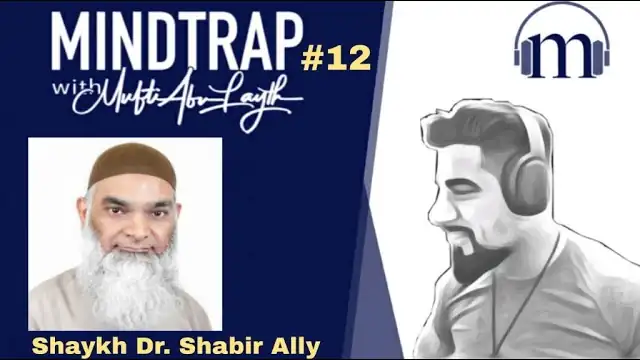 Press play to load from YouTube. Nothing loads until you do.
Transcript
machineauto-transcribed, may contain errors · source: youtube auto · click a time to seek · dotted terms open the glossarybismillah r-rahman r-rahim in hamdulillah wa kafa vas salat wa salam o allah rasool allah mustafa ala ideality notable women be Hoda method or be Arthur Almudena dr. firebird for salam ala allah o allah wa salim people marhaban f1 for the slight for the slight delay D and it's awesome to be back we've got an amazing guest with us tonight it's an absolute honor I'm gonna bring the slide right before us
the esteemed guest tonight is none other than chef doctor dr. Shabbir Ali from Canada I'm bringing you in share your life Aloha and welcome thank you thank you it really is an absolute honor seriously chef I'm so I'm so elated why seriously having this opportunity of getting you on here I I mean when
somebody when it was suggested I thought to myself you know but I'm sure the ship's gonna be incredibly busy but I handily laughs it's really it's been amazing people are already waiting for us oh I'm so hon Allah I'm just gonna first of all just make sure because I know in the past they have been some on one or two sessions audio mishap so I'm just gonna double check if if if you guys can just confirm that the audio is fine or just double check with the Facebook people as well Oh hahaha hey this thing they're so
excited to be here so let me just get a confirmation people if you can hear us all loud and clear I take it right I take it you can if there's any issues you can give us a shout right I'm taking getting a confirmation excellent right so okay right sure subhanAllah I know we've briefly met in the past you've come here I mean you've come here on several events it's actually been it's actually been due to
circumstances sometimes I've been away your things have been happening but hamdulillah you know we come back and buy the virtual sure I've mean not that you not as an introduction because you require no introduction but more into an acquaintance for people who may have an intriguing curiosity to know more about you you're kind of where you came from in that sense you're kind of perspective of learning how your trajectory
throughout the years a bit about yourself in in your words yeah all praise is due to Allah and you know I mentioned this only so that people can become aware of what benefit maybe they can hope to gain from my discourse so I am did a an undergrad degree in religious studies in in the in Ontario my province in Canada then I went on to do a master's degree and basically Tufts
year was my specialty but because I was studying through the department for the study of religion in at the University of Toronto many of my courses were like across religions so just interrupt you slightly could you would it be possible to slightly I'm having a few people think that your audio is coming across to them your audio is coming across slightly low some of them I've had about four or five comments saying the sound is too low for shift should be cannot they struggling to you okay if
that's just me what I can do about it if I I use a different different headset then I will then I'll speak directly into the computer's microphone but that work sure I mean I can you find right now actually but I'm just I'm just thinking since they they seem to I've had a few comments saying no I know I have raised a microphone closer to my mouth okay hopefully that that is an improvement hopefully I mean I'm
watching the kind of equalizer strip see of that or picking up your sound they seem to be picking it up well okay so let's continue to monitor the feedback and if Jeff is not doing well then then he'll have to choke I'd have to speak louder or I have to go here to different I tried okay so then to continue I so I did a master's degree in in religious studies at the University of Toronto both with a specialization in Islamic studies and more more so in tafseer and then that got me further into studying tafseer and I did a ph.d program at the University
of Toronto as well in India what's this something that you were kind of guided towards was a family led was it a personal interest for yourself this whole this this path you know the past wasn't charted from from the beginning like I wasn't as a teenager's you know I want to grow up to be a study student of tough cedar but through my work with in comparative religion and in in discourse with people of other faiths and I got drawn into discourses about what the Quran actually says these are we what
the other religious scriptures say on various subjects so then I needed to know the Quran better than I that I knew before plus I needed to learn the Arabic line which and not having studied in an Arabic environment this has remained you know one of my one of my struggles to learn the Arabic language now it so happens that the University of Toronto was teaching teaching Arabic all places so I joined the University of Toronto primarily to learn the Arabic language but after I've taken the Attic and a few courses in in Arabic grammar and some
Arabic readings it one of my classmates pointed out to me that I'm only a few courses away from getting a master's degree at the time because I already had more so so then I continued and took the required courses and adopt the master's and by that time I was so enthused about studying like I was a school kid all over again and enjoying it in my adult years yeah and and so I continued to take courses that would get me more and more to read Arabic literature and an Arabic text books and and so I got channeled into the tafseer program which
would have me reading a lot of books in in Arabic but but but having said that I was interested not only in the Arabic but by this time I was very interested in tafseer for the one reason that I pointed out already because of comparative religious studies but also because in in order to be able to deliver the message that others as I was trying to deliver to non-muslims I felt that I needed to understand our own religion better and our own religion has to come out of the Quran and that means we have to understand the tafseer and we have to understand how Muslims have tended to stray away from the Quran and
they have used other sources of knowledge and guidance in Islam which are important in their own right but they have used those in a way that overshadow the the Quran can and I wanted to know the Quran in greater depth to see how we can reapply the Quran in our present times that led you to doing your PhD which is also on tuffsy that's right please and what a bit about what what kind of areas or specialization that you looked at Intel seed well in in tafseer you
know you have three in I mean in our program we have like three years of of taking two actually two years of taking courses on a wide variety of subjects but in a way that's that's channeling towards a specialization and then you write your preliminary sort of thrust you have a facetious proposal then you have so many years to continually study studying on your own and and developing and writing your year thesis so in in in thinking of it this way we realize that
there isn't one definite narrow area you have to have a kind of a broad knowledge but when it came to writing my thesis my thesis was basically a descriptive work to get a better understanding of it the tafseer of alabama's to UT his major cap sort of seed it's interesting that I was once in fact I discussed it once on my Monday nights and it was a follow on comment from a discussion I'd had with
some people that despite Islam really in essence one would assume because Islam is on the backbone to Islam is the Quran yet historically scholars within Islam have not really been identified as the scholars of the see it's been rather the scholars of people have gravitated towards fear or other why do you think I mean what do you think that that's all about like why because that first doesn't it seem obvious that people would gravitate towards the Quran yet the reality hasn't been that yeah it
could be because the the Quran by their very nature speaks in in a general way about subjects it doesn't doesn't go into great detail and so the the details have tended to come from observing the Prophet Muhammad peace be upon him in action and and remembering the kinds of things that he said and did and witnessed so this became precedent for Islamic law and then more to the finer points people would have new questions arising they would go to the movies like yourself and they would ask okay well you know what are we doing in cases a B and C and and the both these will give
rulings and and those rulings become more definitive because they're right on on the ground it's no more theoretical here's a practical situation so when all of those roles that rulings and and finer points are combined they they themselves can be compiled into hefty volumes and and if one then wants to know what do we do in our real day-to-day circumstances people tended to go not to the Quran to find the answers because they're they will just get a broad statement about major issues without you know the nitty-gritty of what they're asking about so they would
tend to go to these other books and and and to the other scholars not so much to the khari who has memorized and is reciting the Quran but to the jurisprudence to the [ __ ] to the mufti and so the great scholars come to be known this way they're you know father did the eponyms behind the four major schools of islamic jurisprudence for example al imam abu hanifa imam ali mama Shafi le mama had been humble and so on i mean that there's an interesting question and he applies to other factors as well but definitely tough seed that
the first 100 years of islam leaning in towards the second hundred years of islam almost you know the first century in the second century almost of islam doesn't really see much tuffsy i mean that there's the you know the tafseer of even ama Partyland things like these but no I mean what was because what what is this all about in the sense that why were none of the seller or were they inclined toward stuff Zealand doesn't reach us or were they generally not you know that was not the the thing that
they were kind of going for or what what do you think was happening because that's a very intriguing question that for one to two hundred years of Islam you know there ain't really any tough sieves that seem to come our way yeah it seems that this was a natural development shake because if you have to think of the literary scene in Arabia prior to Islam there wasn't a textbook and then the Koran became the first textbook so the the earliest Muslims were busy trying to memorize and to preserve the quran as a text and then the elaboration of the Quran would come
later on but when people start pondering it in in greater detail from from everything we've been taught as Muslims as Muslim children growing up a phenomenon Islam society you you tend to think that the earliest generation was the most knowledgeable and so on well they had some aspects of knowledge which we we don't have I mean they had direct access to the Prophet Muhammad peace be upon him they saw him in action the knew certain things instinctively but in terms of discursively you know we have more happening later on so and then the discourse has come to be recorded and
what we have is the great books of tafseer starting with you know in the second century have mcarthism so like mine and then more so in the third century and in the fourth century with Abu Jaffa Aubree come compiling his magnum magnum opus in the early part of the fourth century so it's it's a natural development that occur the reason I was asking that is because I had actually been asked this as well in the past that look what's going on I mean the first one to two centuries and I know sometimes Islamophobes raised these kind of
as well that you know the skull is that doesn't seem to be tough see this doesn't seem to be Syrah that doesn't seem to be you know they'll they'll say that these things don't seem to be this of what Creed there doesn't seem to be Creed so what is you know something but it's it's very much I agree we you know definitely and resonate with what you're saying share you found yourself on a path you know after these kind of studies coming from a background of comparative religion specializing within Islam within Islamic studies and then you know deepening that
kind of learning with a thesis on tough seed you found yourself on many platforms debating Christians and other mainly Christians I take it another kind of religious scholars I mean was that something you wanted to go down or was that something you just found yourself in or what what's the yeah well yeah it's I mean at one point it came to the point where I wanted to do that but naturally like I stumbled into that but what's the story behind that
so when I will see a youth growing up in Guyana where I was born in South America formerly British Guiana there there were missionaries making inroads preaching their religion to Hindus and and to enter Muslims there and they they sometimes made better sense to the the average Muslim who you know found learning the Arabic language or learning to recite the Quran in Arabic is like a chore and then that is only one step away from trying to understand like what's the religion about and sometimes it's just lifted that step what one you
know the community does not seem to take it further to explain to us what what the Quran actually teaches where it just teaches us to read the Quran and and and let it sound so beautiful in the Arabic language and so some people found it that it made sense because the Bible was being presented to them in the English language and everything that was being about faith was about ethics and good behavior and healthy living whereas there was a little you know little on rules and regulations and you know how people are in modern times we don't want a creator up there to be regulating our lives down here you just want to live our own lives and so so Christianity
made its appeals to many of the youth at that time and so that left a deep-seated impression upon me like what are we as a religion and and what do we want to promote to the world but it reached a crescendo when I migrated to Canada I was only 16 years old and there we lived in an apartment complex and we will find that missionaries would come knocking door-to-door telling us about their religions among these about their religion but among these missionaries there were the jovis witnesses who would
come and spend long hours discussing various issues and I found at the time as a young man I didn't have all of the answers nor do I have all of the answers now but but then I had even less and as someone directed me to write to shake the deaths organisation in South Africa because they had produced some excellent booklets and and that was healthy so I wrote to them they sent me booklets for free I read those and I was better equipped to have discussions with these spokesmen they came back next time and eventually they didn't want to come back anymore so then then I had the idea that
I should go out to them so I started visiting their places of worship and I would sit there towards the end and then try to engage them in conversation after that that didn't go down too very well because I found that people are protective of their places of worship they feel that there's a sanctity there that you should not violate with a contrary message I get that now but at the time I was all with you but then I thought why not take it to a door to door as they do and and I tried that as well and we even went to the street corners and Deliver leaflets and pamphlets into the hands of passers-by
so all of that got me more and more deeply into this let's see sure there's been a suggestion regarding the audio settings even though it has been improved that a few people have suggested that it may be that even though you've got the mic but on the Skype setting it's actually picking up your laptop mic I'm just going to just double if you can just double check very different microphone yes not just on the Skype setting so if you just one moment
I'm just going to switch you relax
people relax I had actually paused the mic so you couldn't hear us it wasn't we got mute I was just checking but it seems to be fine we will I mean in in in something like maybe about 5-10 minutes the ship will be stopping for mother of Salah in Toronto and during that time when after mother he'll try a different mic so but the sound seems to be fine as it is right now in Charlotte so sure just following on from that this whole you know this Howard debating kind of scene
because it really exploded in the time of like amethy that I mean he was like The Legend of this Eva this you know he really held a heavyweight belt of that but do you feel that that Eva is kind of over now this this debating or do with Christians that Christianity thing or do you feel it's still it's or not I mean what are your thoughts on it because I think two things need to be said about that one is that those shifty that is to be credited with stimulating us I just
mentioned that you know I've benefited from his booklets and so on and that got me started off as one of the young men from my country said you know 50 that made it possible for us to pick our heads out of the sand so you know after he debated with Jimmy Swaggart for example yeah yeah we got in it and he felt that you know if succeeded by his own admission being a high school dropout he could stand up to you know one of the stalwarts of the Christian message and and debate him in such a public manner then we have something to be proud of and so so so that that's
gotta started but the the way in which he debated we find that that does not fit with many of our modern contexts so in Canada for example if we came across like that yeah so may Allah reward him and have mercy on him but where we're learning as we grow and as Sir Isaac Newton said the only reason I can see further is because I stand on the shoulders of giants so he was our giant so that's the one aspect about the nature of religious discourse in our modern times and and they calm with
which people want to see it approached and the second issue is that where as he was debating Christians a lot now we find ourselves needing to debate atheists a lot and my own experience I've only had a few such occasions when I deviated an atheist but but that's more of what we need to do nowadays in in fact Muslims and Christians together need to be combating certain common threats that we have out there and one of them is this neo atheism which we all have to stand up there and face I feel
the same thing that the era of debating Christians or that kind of whole scene I feel is kind of dead in my and and perhaps maybe just a great extent futile because it's not really what is relevant to the challenge and young people when it comes to faith today because Christianity like you mentioned you know Jehovah's Witnesses would come to your door they would challenge your faith that Eva witch and I remember watching a medida mentioning that he said that you know they came and they asked me that you know show me in this book with is a mistake then and he said and I hope that
my life's doing has at least answered that question and I you know he's an absolute legend in his time for what he did I mean he but I I feel that in this day and age that the challenges have just completely changed so let me take a break and I'll come back with a different microphone hopefully yes absolutely I mean and guys some questions if you like til [ __ ] goes away all I'm still here with you guys right here Here I am
alright so alright let me just check if that's all right so read your unread let me check if that is going through fine or not a fry people of rice so I've
loaded that up again let me just check cool let me check people right so I have restarted that I don't know if it's I don't know if it's coming across any
better people are saying it's lagging quite bad I don't know really what to do about that that's unfortunately still lagging though I genuinely well I guess we'll just have to kind of what I can do is just maybe hope this stuff improves it
right there a fright so it seems to be lagging clucking lucking hmm well I do not know people alright let's let's take a look I'll take a look at
the chat see what's going on has there been any right YouTube is not receiving enough video for smooth stream hmm alright okay let me shut this down stop the screen start again
Something wrong here?
Tell us what is wrong and it will be checked against the recording. Nothing changes until a person has reviewed it.
Sending a note needs JavaScript, which is off or unavailable in this browser. Nothing has been sent.
No name, email address or account is asked for or stored, and the inbox does not store your IP address. For rate limiting it keeps an unreadable fingerprint of your connection for 48 hours, and our database provider's own logs record connections as every website's do. Only your note, its kind, the page and the moment in the recording are kept, for review.
Cite this recording
Stable id, transcript version and tier are part of the citation. Every change to a transcript is logged.Mufti Abu Layth Archive, auto-transcribed, may contain errors. https://muftiabulayth.org/r/_ctqayqtra0/ (accessed 1 November 2026)
- APA 7
Mufti Abu Layth. (2020, April 15). Shaykh Dr. Shabir Ally | Memoirs of Learning & Mysteries around Tafseer | MindTrap with Mufti #12 [Video, auto-transcribed, may contain errors]. Mufti Abu Layth Archive. Retrieved November 1, 2026, from https://muftiabulayth.org/r/_ctqayqtra0/
- Chicago author-date
Mufti Abu Layth. 2020. "Shaykh Dr. Shabir Ally | Memoirs of Learning & Mysteries around Tafseer | MindTrap with Mufti #12." Video, auto-transcribed, may contain errors. Mufti Abu Layth Archive. Recorded April 15, 2020. Accessed November 1, 2026. https://muftiabulayth.org/r/_ctqayqtra0/
- BibTeX
@misc{abulayth-CTQaYQTRa0,
  author = {Mufti Abu Layth},
  title = {{Shaykh Dr. Shabir Ally | Memoirs of Learning \& Mysteries around Tafseer | MindTrap with Mufti \#12}},
  year = {2020},
  month = {4},
  date = {2020-04-15},
  howpublished = {\url{https://muftiabulayth.org/r/_ctqayqtra0/}},
  url = {https://muftiabulayth.org/r/_ctqayqtra0/},
  organization = {Mufti Abu Layth Archive},
  urldate = {2026-11-01},
  note = {Auto-transcribed, may contain errors}
}