
Recordings › Quran Quest - Tafseer of the Quran
Quran Quest | Surah - Al- Fatiha | Tafseer of the Quran | Mufti Abu Layth al-Maliki
salat salaah namaz salaat namaaz as-salah al-salah hadeeth ahadith ahaadeeth hadis hadees ahaadith saheeh sahih hadith saheeh hadith sound hadith exegesis tafasir tafaseer malik ibn anas malik bin anas imam maalik imam malik ibn anas al-bukhari imam bukhari sahih al-bukhari sahih bukhari saheeh al-bukhari saheeh bukhari imam al-bukhari takbir takbeer takbirat takbeerat imaam imams prayer leader masjid masjed masaajid masajid shari'ah shariat sharee'ah maaliki malikite malikiyyah hanafite hanafiyyah shafi'i shafei shafiite shafi'i school ijma' ijmaa fatwah fatawa fatwaa fataawa legal opinion muftis hukm ahkam hukum hukam ahkaam haraam forbidden sunna sunnat sunan prophetic practice riba ribaa sood usury aahaad khabar al-wahid khabar wahid khabar al-ahad solitary report saheeh muslim imam muslim muslim ibn al-hajjaj shirq mushrik mushrikin polytheism iman imaan eemaan eeman djinn jinnat jinni akhira aakhirah akhirat jannah janna jannat jahannam jahanam jahannum koran quraan al-quran sura soorah suwar soora aya ayat ayaat aayah aayat tilawah tilawat tilaawah wahy wahi wahee makki and madani madani meccan medinan makki surah madani surah sahabah sahaba sahabi sahabiyyah sahabiyat mecca makka mekka al-madinah madeenah yathrib salafi salafis salafism wahabi wahhabism sufi sufism soofi ulama ulema ulamaa shaykh shaikh sheik shuyukh shaykhs zinaa zinah fornication adultery in sha allah insha'allah in shaa allah inshaa allah alhamdulilah al-hamdu lillah alhumdulillah alhamdulillaah hamdulillah bismillah ir-rahman ir-rahim bismillahir rahmanir rahim bismillahi bismillah al-rahman al-rahim salam as-salamu alaykum assalamu alaikum assalamualaikum salaams salam alaykum wa alaykum as-salam peace greeting barakah barakat barkat baraqah tawakkul tawakkal reliance on god shukr shukar shukur duaa duas duaas supplication tawbah tauba taubah repentance amanah amana amaanah amanat ibadah ibaadah ibadat rahmah rahma rahmatlive stream · 2:24:56 · 12,000 views · 21 Sep 2023 · Open on YouTube
 Press play to load from YouTube. Nothing loads until you do.
Transcript
machineauto-transcribed, may contain errors · source: youtube auto · click a time to seek · dotted terms open the glossaryforeign let's just first and foremost check that checked out my coffee ink falling over yeah right okay now
all right Bismillah let's just do a quick audio check all right we're over yet is the voice coming through on momentico right one second let me just bring up the file as well till then click like Click Share people all right so I take it you can
um sound is coming through clear if it isn't give me a shout people I'll fix it before we begin so Bismillah alhamdulillah um all right so I see we've got uh foreign [Music]
Okay so we've got what we have here us very late we are we are inshallah we're never too late we're just on time you know yeah as a verse of the Quran and we'll reach that verse as well one day to learn the wisdom within that so right who do we have here Allah
right so Allah Allahu Akbar let's begin Bismillah what we'd like to cover is to to go through this series um which will which is called Quran Quest and to to navigate through these verses whilst
adding meaning to our daily lives not only that but taking a an immersive approach into understanding the verses the context the rulings things like this whatever we can take meaning from of the verses as we pass them inshallah along the way on this beautiful Journey Allahu Akbar see what better than the book of Allah and I guess in some ways oh I've just moved this sorry
um in some ways I guess maybe this was something I should have I thought to myself why didn't I begin this a long while back but then everything you see like that well you know what everything is upon a decree so there is divine wisdom in things when they happen and that's something we're going to also cover today business all right let's bring this up okay
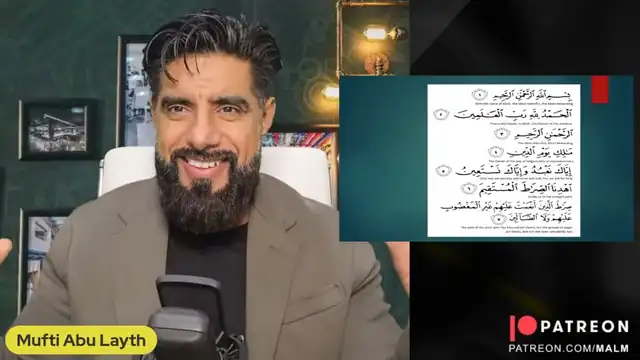
Bismillah so Surah Fatiha what I'd like to do is take a look at oh did it not see all that for I was supposed to prompt but it didn't show up not to worry um I'd like to take first of all a to navigate through the verses in a
in a simpler way so we can understand what they mean how they can help us in our day-to-day living then revisit them with more depth okay so Bismillah it's come to now Surah Fatiha I was beloved now we do is the other before we begin recitation of the Quran and there is a ruling for that but once we are reciting
Quran we don't need to say on our team again and Bismillah and I've got the translation there as well and everybody most likely everybody knows the translation is okay
now Surah Fatiha and one of the most repeated surahs every single day every single day we are repeating this many times I mean in every raka of prayer you are repeating people may be reciting just daily they may be going to funerals reciting it there they may be sometimes you they just people say fatihao it's
written somewhere they recite it Surah the opener or the Conqueror or the Surah of victories and will come to its meaning but let's straight away take me take an understanding and value for our daily lives you can note that here the the person in this picture has put that as number one and and we're going to come back to that debate it's not actually verse number
one of the Quran but Bismillah comes before Surah fatihan we'll visit that in just a few moments but before you begin anything Allah reminds you that Bismillah [Music] that you are seeking you are seeking whatever it is you've begun your day you've gotta there's a whole day ahead of you so many things to unveil
events to unfold and manifest Bismillah Allah is not a tyrant he is not somebody that he's not he is not one that is out there to get you he's not one that is
trying to take you to trying to set you up for failure he doesn't hate you he doesn't look upon you negatively Bismillah the one of abundant infinite Mercy the one that is being merciful AR Rahman and we're gonna we'll take a look at the Linguistics a little later and if that isn't enough you're reminded again arrive
so people often have a you encounter people to have a negative outlook on God oh is Allah is going to punish me for something Allah is going to oh no you know Allah is giving me a tough life oh no Allah is every time you begin Allah is reminding you all right
see it's you who's not turning to God Allah thank you every single time you can't begin without setting and what do you learn from that the first thing is human beings in a way attempt to mirror the Divine attributes on Earth
as you want as Allah shows Mercy onto us we should also be compassionate kind and merciful to others first thing you learn from that is we're all fighting a difficult battle everybody so you be you'll remind straight away You're entering this portal it's positive Bismillah secondly we should be like that to people the Hadith
you want Allah to be compassionate to you be compassionate to others straight away not only have we got this positive mindset but we've checked ourselves that we should be aiming to be kind to others straight away this is first thing in the morning or first thing that you soon then alhamdulillah
look all praise be to Allah now why is this important first it's clear it is abundantly clear that we are nothing you see no matter what we think we are we are not in control
we didn't you didn't design to be here only a delusional person thinks that they somehow all of their success in life is down to them that is an arrogant person their very existence isn't down to them so you begin immediately with the state acknowledging a state of submission and gratitude so and this is how you're beginning your day so Bismillah you've got the positive
mindset alhamdulillah you know what it's not me that's doing all of this it's not me that's accomplished anything it's not me Allah has done it and you think and you're reminded me not just you in this little microcosm you know you and that person and this person and that person not even your locality your town your city your region your District your
country your continent this globe the solar system the Milky Way the cosmos I bet if Allah is in control of everything he's doing everything why would he not take care of you he's taking care of the entire Cosmos so there's a sense of relief
you know it's not like I'm doing this at last Allah is handling it it's alhamdulillah see straight away positive de-stressed I've just got to go along in life whatever the battle whatever the struggle whatever the challenge whatever the path I'm just walking along Allah is guiding the path is just unfolding it's appearing if Allah will take care of everything will take care of me I'll take care of you
um there is no creature except Allah has taken it upon himself provide that risk so okay foreign trade away you see you're reminded with the Positive mindset again now why the repetition for so much positivity why because the way human beings are the way our mind works
it is drawn to negativity human beings are so drawn to negative thoughts there was a study done that where if you say aloud positive things you are more likely to achieve them yeah so if a person you know I I'm gonna do this I can do this you can you manifested in a way by embodying it but the study showed if you express negative things
you're even more likely then the positive for the negative things to to to to become a manifestation of them to embody them this is how dangerous negativity is and we are so drawn to it so drawn to it you see we have such a greater Affinity to negative things oh my God thinking of problems you know what if this happens what you see we we make ourselves suffer inside humans we make ourselves you know
there's a quote that one who suffers before its necessary suffers more than is necessary and Mark Twain who said that you know I've been through many terrible things in my life some of which actually happened the rest I was just torturing myself in my mind this is going to happen that's going to happen yeah oh no what am I gonna I'm living in a heightened state of anxiety why is he not me
reminded again you see think of it like this if your parents had a chance if your parent let's say Your mother had a chance to let's say you're in a difficult situation in life or you're going through life in a way and your mother had a chance to she was given the option to say well can my child get success can my child get happiness can yes or no shall I give it or no let's say she had the chance to press the button
or even in the akhirah that you it was up to your mother that you were to have salvation or not and of course you know the answer Allah loves you more than your mother infinitely in a Hadith says empty times more but the Arabs would use the word 70 to mean like God you know like we say oh a hundred times like meaning like you know or a million times they would use the word 70 like that so positivity again
the possessor the owner of the day of judgment you know here you are reminded straight away that think about it we're going about our lives we've got to struggle we're thinking we've got the positive thing we're being we've got a sense of tawakul going on trust in God Allah is taking care of the cosmos he'll take care of me once again the positivity of
we're being reminded that look this world let me just lower the volume on this thing right this world as great as it may seem to you or as huge there is a a life Hereafter to come that is infinitely more abundant
you immediately reminded of this you've also reminded you see the day of Dean this word here is linked to judgment like in the uh our proverb as you judge others you shall be judged was you handle others but here with the context the subtext of judgment why is this important you see there you
are going in your positive thing but remember Justice do not wrong other people foreign just remember that immediately you become conscious again of your own actions now it shifts
die it's gone from this perspective of Allah all praise the merciful the most kind possessor of the day of judgment and judgment and Justice and then straight away now it's us speaking is that it is you we truly submit to In Worship in devotion it is you we seek help from why is this important
well you see worship devotion help on one level clearly worship is to do with ibadan we're going to come back to all the the more detailed the the other strata of tafsir will come back to but firstly from a meaning perspective for our daily lives there are other layers and levels to this in addition to you know obviously worshiping other gods clearly that that goes without saying but in our daily
lives not just Worship in the sense you pray to statues but Worship in the sense do you worship money do you worship chasing after people do you worship the attention from people what are you worshiping are you that besotted by something that if somebody was to see you they would think oh my God does this person worship that thing
do you worship the Dunya to that extent to you do we not in a shirky sense we don't think that the Dunya is our creator in that sense but does it are we acting like that's the question see you're reminding yourself and you're also pledging to Allah it doesn't mean you have to abandon the Dunya it doesn't mean you shouldn't take wealth it doesn't mean you shouldn't
um do these things the Dua says place it in our hands not in our hearts see why uh you know one of the many wisdoms is not to say that we don't take help from other people we do you know in a Dunya we sense you may take help from your friends from your neighbors from other people from services from we need help
this world is time ultimately see every person everything in this Dunya can let you down happens may happen your friends your family your people assistants whoever every person we are all full of weaknesses
you pledge your devotion Allah Will Never Let You Down you're reminding yourself with that in the morning as you wake up before you go to sleep so many times a day guide us on the straight path now this can as many incorporates many meanings obviously guidance and so on and unquestionably those things are true also
straight in the sense hassle-free you know one of Pleasant passing Passage you know one that is a joy to be on one that has companions that are on this journey of Faith with you throughout your life
[Music] the path of those that you have shown favor upon now naturally those who have gone before us those who are still around us today this obviously means people of faith and great people the pious the prophets the pious and other but also taking meaning from this that those people you see him that you have done in harm you have blessed how do we see their blessings
you see it radiating from them see people that they being a kind of positivity that they are a joy within this Dunya the path of these people make us be people like that and people who walk this path with such people and I'm telling him
and here we'll go into the tough saves in a moment all the different but to take meaning straight away and people will say Jews and Christians and other polytheists and other people and unquestionably all of these meanings go into it but look at the verse him now one way one meaning from this it's not just restricted in one meaning that is it just a lot obviously people who Allah is angry with but also the verse mentions in a way that Those whom anger is upon
and it can be from the Dunya as well you have people who people don't that they are just full of hate not not the path of these people not the path that people also hate that there is a negativity they do harm to society they are involved in just crimes they're involved in spreading just poison and toxins within Society not people like that not people who've
they've lost they've strayed lost their path you know let this journey of life for us be a straight path Hustle free Allah I mean and you see this is something we repeat every single day now
right okay what I'm going to do is um take a look right now that we've covered we've taken some a general meaning from we can now go through these verses with more depth um
right so let's take a look right and just go through some of the gems on this I'll just move my water bottle a lot Allah Allah people right straight away now this Surah has been given many names many titles
highlights up to over 20 odd names for it but really very few have been established from the authentic texts from the Sunnah you will find except for at best okay this Surah has been called you will find it Al Fatiha
Sabal mathani um these are the four names that you will find for this in different in certain Hadith you'll find them in bukhari and a few of them um you get the um Hadith but you'll get a very popular one is when the companion I believe when he's traveling and somebody says that look
we have a person here who's in severe need of attention he's not feeling well can somebody recite something and he says that I recited uh um okay and this is one name obviously the most popular name is Fatiha and there is a discussion why is it called Fatiha okay is it because it's opening the Quran which which it is unquestionably it's a you know it's opening into the Quran almost as an introduction
is it because it's a conqueror it's a conquering Surah fatah you have in the Quran as well uh often this template or this uh Ferrari line this comes in the Quran so meaning fatah conquest and a victory this Surah it provides a sense of Victory like I said you all you begin your morning you conquer the morning okay with it that's one way of looking
at it another way is that it is um that it is really a summation of the entire Quran and this is more towards um means mother but when used in um in this sense it means like almost the nectar of you know how we have they use it in uh in some products as well I believe like um you have um like with vinegar they say the mother you know the thing with it like you have
apple cider vinegar and you'll have the mother with it as well so those of you that are you know the the kind of nectar part so um the mother of the Quran oh but it doesn't mean the mother but it means like either a summation or the the heart the nectar of the Quran why why would we consider this the nectar the nectar of the nectar with this creeping into right so well one way is um
that it's a summary of the Quran if you think about it it has Praise of Allah it speaks of the afterlife it speaks of devotion and worship and some could say speaks of those who went before us and were misguided So Stories and it asks you just it guides you to seek guidance from God now you put these things together and that is in one way the nectar of the entire Quran um
some say like a summary that's very similar to what's being said there with the nectar as well just move this here right so and an interesting point as well that is he explains that he has this famous statement of you see the submission is through two that you'll have a Sharia and this is the same thing people are
saying well in a way the Sharia is what you are what you are abiding by is a a rule a practice of rules and rules to God but the is the inner devotion the reality so in a way that that is what Surah Fatiha is doing as well because if you think about it there is the asking for guidance on being on the path but I mean there is it is an inner State and an outer state but right
and another uh before we move on from from the name the seventh repetitive or the repeating seven now what does that mean and some will say it's because these verses are repeated time and time again during a day during the seven which fold and unfold see one meaning could be fold and unfold and the other to be repeated and and that does
add white to well these verses are seven and we'll come to that uh in just a moment right this Surah is Mucky it was revealed in Makkah by uh agreement and consensus of the of everyone you know all Scholars within Islam except that and some um had said this is the first Surah as a whole that was revealed and that's not an IBN ashur he um you know he he disagrees with that as many others do they say that
was was revealed before that was revealed then Fatiha but some people go with and that is because um some transmitted from Ali that he had said that Fatiha was the first and and they and they support that understanding that Surah fatih was the first complete Surah to be revealed so
you then come to an interesting point how many verses does this have now I know the numbering that we've got on there you have to ignore that numbering for a moment not the numbers so there are seven verses generally speaking in suratul Fatiha but Bismillah is not one of them and I'm going to come to that in just a moment I can see this is um foreign you know it seems to be having a little drag when I'm watching it I hope it's not uh if it is uh if there is a delay in the live stream I can just refresh it
let me know okay now seven verses the repeating seven there is a difference of opinion on that believed these were eight verses and we'll come to that so what you see here basically if we're looking at if I bring this back up and you can see these seven verses Bismillah Rahman Rahim is not one of the verses however and the scholars disagreed on this but when it says many of them put a verse there
so if you started with alhamdulillah being number one Rahim being number two not three and you keep going down but when you say him said there is a stop there this is then a new verse so it still makes seven said that they were eight because he considered like many of them to be a verse from Surat al-fatih and we'll come to that in just uh a moment as well okay and then there was some like Hussein who was a teacher of Imam Ahmed
and I believe is who said there were six verses and that's uh fascinating for those who um are unaware of that so people basmallah let's move to Bismillah Bismillah in short is called basmala okay and the Arabs do this they used to well mentions that what the uh Arabs had a method for lineage so they would bring names and compress them to make a lineage
so just as you have normal names but they might say let's say now that's a full name and they might compress it as so he mentions with the Advent of Islam um yeah right with the Advent of Islam Scholars started to do this for terminology as well so you have the word as um you'll have the word as uh Bismillah to stand for saying Bismillah so they have a verb saying okay
and it means saying Bismillah saying so like this they've come up with words or hamdullah saying alhamdulillah so the Arabs kind of started to create verbs to represent phrases so when there is a poem that you've got um let me see
there was a poem here somewhere as well yeah there is a Allah so he's saying Layla she had said Bismillah the day I met her wow what a beloved person he's saying but the point is they used to use this so the debate is on um on this is Bismillah and even ashur also goes on to cite from other so he has he has an extract from ibnah harun a
tunisis uh commentary on Ibrahim where he mentions a bunch of these examples like which I mentioned saying that handle I mentioned uh [Music] right so Jay Allah and uh okay that was a new one I never used to know so you can see they've made these abbreviations to stand for that this is for the Arab linguists you know those who have that special for Allah Arabia now I'm right so
Bismillah is it a verse from the Quran yes or no now everybody accepts that Bismillah in and of itself is a verse from suratum namal verse 30. so in Surah namal there is a verse that Suleiman alaihi salaam is writing a letter to the Queen of Sheba and he says
nobody disagrees that Bismillah verse 30 is a verse of the Quran everybody agrees that Bismillah is in the Quran however rather they disagree is Bismillah the way we find it written before every Surah so when we go you know you've got a Surah of the Quran let's say Fatiha baqarah Ali Imran all of these before it begins
is that Bismillah a verse of the Quran in that place here they disagree so people here the people of Medina the school of Medina for the most part and Imam Malik obviously the legend the dawn of Madina himself a the scholars of Basra the scholars of sham historically this is not speaking about now this is like from the early
Islam period they say that Bismillah Rahman Rahim is not a verse of these surahs where it's placed it's just written there because it's nice to say it it's Sunnah to say the prophet would say it it is not a verse of the Quran but it's not a verse there so when you begin it says Bismillah that is not a verse from Fatiha that is on its own it's it's it's like a it's seeking almost but it's getting you in the state of mind to recite the Surah
so this is this the the understanding of the people of Madina of Imam Malik Imam historically then you have uh people like Imam Chef I who you'll have Imam Ahmad is the scholars of Makkah and kufa who say that this Ayah is an Bismillah is a part of suratul Fatiha
to them does not begin with alhamdulillah it begins with Bismillah then you have a second opinion from Imam and then from Abdullah Mubarak that this is an Ayah of every Surah okay except Surah Toba which begins but apart from that every other Surah where you find it in the must-have in the Quran where it says Bismillah they will say they will say that this is a verse of
every single Surah so if you began that Surah without reading Bismillah you've missed out of verse now Imam himself so I've quoted Imam Malik Imam sure himself has no transmitted opinion in this chapter I mean on this topic so he seems to have been silent on it and some have understood as the makshari writes that he understood from Imam that it's not a verse of Fatiha why because when you're reciting Surah
Fatiha aloud as the Imam recites it aloud in the Jahari salawat Salah so let's say the evening prayers when you begin by saying alhamdulillah you don't begin with saying Bismillah not according to Abu hanifa and the hanafi school neither the Maliki school but you begin with alhamdulillah so they understood from this that Bismillah isn't a verse from there otherwise you ought to begin with aloud with Bismillah not with alhamdulillah so that's interesting what else can we deduce from here as of ruling people
we must place on our fatwa caps you see another ruling is if you it is necessary then for you to recite Miss Miller in the Salah when you're reading the prayer for those who believe Bismillah is a verse of Fatiha so if you were to say begin you must begin with Bismillah according to the likes of Imam
all these people you must otherwise your Salah is invalid um why invalid because Fatiha is incomplete so you see the ramifications however people a little twist twist see because before you start to get slightly um bewildered by these opinions that these Scholars have the truth is Bismillah is not a verse of Fatiha
and the school of Medina and the Maliki madhub long before settled this debate absolutely seal the deal on the debate first of all bakalani the legend of the malachia in rusul and the student of ashadi he said he sealed this debate with a simple simple point
he said look the Quran comes to us in two ways either it comes to us motawater in a way that nobody like it's so well known so well known or it comes through us through isolated narrations like somebody might say oh I've got a certain reading of the Quran but it's just I heard from him who heard from his grandfather and and it's slightly let's say the verse is a bit different but that we don't accept like we accept it just as a flavor but we don't include
it in the main Quran so he said look now once you know that that the Quran comes through us either through tawat or through Ahad then this couldn't have come through us come to us through thawatu because the Amal of the practice of the people of Medina is upon that Fatiha does not have Bismillah the narration that is in sahih Muslim and other books where the the person says I prayed behind abubakar and Omar and I prayed behind all of these and never once did I hear them reciting
Bismillah and this is in Medina so that's nail number one in this argument nail number two people and hear the legend of Muslim Spain he says and he you know there is a joy even feeding these people honestly they have they have this life to them so in his akam he'll mention he says but look
the Quran is something which Muslims have no debate in let's hear this deep hear this argument he says the Quran is something that Muslims have no debate in Muslims have no debate the fact that we are debating whether Bismillah is in the beginning of the Quran goes to show that it is not from the Quran in that way because the Quran is something which Muslims have no debate if there's a debate in it it's not
because authentic Quran is that which all Muslims have accepted and Muslims clearly have not accepted the people of madinah did not accept Fatiha beginning with Bismillah they said that the prophet used to read Bismillah out of an honor and respect and love this is a Sunnah to read it this is not from Surah Fatiha Surah Fatiha begins with alhamdulillah it doesn't begin with Bismillah we just say Bismillah and the fact that there is a debate on this goes to show that it can't be from the Quran because the Quran is
conclusive it has no debate and with that really the Malik here really sealed the deal on this debate Bismillah being a part of every Surah makes known cannot hold weight the fact that we till today Muslims dispute this
and the Quran has zero disputes so that is a beautiful um way of looking at that now IBN want to add the legend says let me add my flavor as well look obvious it is a joy to read these honestly IBN adds a linguistic perspective in saying look he says he says that there is repetition and okay sorry let me slightly
um take this back because he is adding to right he uh [Music] right okay so he's responding to a hanafi perspective
where some there is an angle that some people have argued you see they've tried to bring language in they said the reason Bismillah is not a verse of Fatiha because it would necessitate repetition too soon so Bismillah alhamdulillah repetition you see so sialkoti who is known in uh he he mentions he tries to argue this point saying that look you know
even though there is repetition that the repetition is to remind you and so on but he says look for a for a speech to be absolutely eloquent the classical Arabs would avoid beginning a new thing with always the same so the way every Surah begins with Bismillah we say that out of Baraka like we are beginning this Bismillah Rahman Rahim in the name of God but it's not a part of it if it were if
if every Surah began like that he said this would Clash with eloquence according to the classical Arabs this is kind of take on this so he's um looking at it from that perspective now the people who've answered like the chef who believed that Bismillah is either a versafate or reverse of every Surah like Imam says they've used as an argument that this is their strongest argument it's not there's one two hadiths they have but
they're not really from the major books like bukhari or so on they have one they have a narration from Abu dawood and some from other books but that's where they say somebody began reciting and and he began then he began sorry he's narrating hearing the recitation and that the prophet began saying Bismillah that's what they're saying but the more sound narrations say that when the prophet would teach Fatiha so there's a famous narration of urban nakab the prophet says shall I not teach you Asura that is so valuable and you
know it's it's it it in its value um comprises and surpasses the gospels and the Torah and and said please teach me and then when the prophet said I'll teach you before we leave the mosque and when they were ready to leave the prophet said here repeat after me alhamdulillah
now he didn't begin so that is one of the evidences you have all of these you have a few Hadith like this the other the thing that the chef used the other camp that are saying that the other group that are saying that this is a verse of every Surah they say you know they must have the Quran that was written in uthman's time it had Bismillah written before every Surah so the fact that it's in the book in the must-have we call a book of the Quran we call it
Okay in Arabic so the actual book is called the musaf now in the must-have It Was Written Bismillah so that's the Delilah that whatever is in the musl is the Quran but this and Imam hazali refers to this and other people use this argument trying to respond to the malikia but you know they fall short in responding to the Maliki nice try but it's a bit short because the truth is in the must-have you have other things written as well you have the names of surahs written you have sometimes whether the Surah was makki you have sometimes the number of the
verses are written doesn't mean all of those are Quran like when you've got the number of the verses verse number three that number three is not a verse of the Quran like that is not the numbers are not verses of the Quran when the numbering going on or if it says the title of the Surah let's say it says that's not that's this is for our ease you know we have people have added things into the writing to to make it easier for the reciter it doesn't mean that that was revealed Revelation in and of itself
so that is a response really to um uh to that and you know this reciting um when you recite Fatiha in in Salah do you read Bismillah well the school of Medina right the school of Medina we don't read so I'm also Malik in madhub I follow the teachings of Imam Malik in the school of Medina when we begin Salah We Begin Allahu Akbar alhamdulillah so we don't read anything between those
two so we don't as soon as we say Allahu Akbar we say alhamdulillah we don't say subhanak Allah we don't read that we don't read alhamdulillah that's it Street like that that is the school of Medina that's how Imam Malik was taught from his teachers who learned from their fathers who learned from their fathers who learned from The Companions and the prophet in Medina so Imam Malik is only three you know those he is
you have the students Companions and then you have their students and Imam Maliks from that generation that comes so the school of Medina does not recite like that and so it is in essence um Bismillah it is Sunnah to read Bismillah the prophet did this he showed us this it is but it is not a verse when we are reading it it is a verse of the Quran in Surat when the verse that reads is
telling the story of Suleiman when he wrote a letter and he says and there everybody agrees it is a verse but it is not a separate verse before each Surah some people here now came out with their own opinion is ante people this is an interesting one you know
here gets so animated here Allah Allah foreign [Music] now Lucy oh he has such a a vendetta against it so it's so uh entertaining to read
that you see he and he mentions this because Sheikh alusi used to be a chef that then converted to becoming a hanafi and when he became a hanafi he then dissed or you know he he argued against the shaf so naturally Rasheed river is not Shafi by the way Rasheed River his interest he's tough series is is intriguing why because he describes himself in his introduction as being humbly he says I'm humbly but he was kind of selfiesque
he says I'm selfie humbly and this is why he he took a liking to the kind of uh Muhammad his wahhabi movement at the time it was actually I mean he was just before if you like Rasheed radar but in his time Abdul Aziz from the south family he was heading that kind of movement and Rasheed Radar really Praises it and says you guys are upon the true Akita and gives him a praise and he gets into a bit of a scandal over this because
people say he always took money from them and was bribed and but Alice out to be fair back then weren't the way the Saudi kingdom is today's incredibly Rich beyond measure that said let me just do a little plug that since I'm doing this to see if uh Muhammad bin Salman MBS catches wind of this and would like to fund my tercer project so let bake since you're building the neon City you can I'll be you can happily fund this product so back then the Ali Saud were not as nowhere near as rich as they are today but they were still somewhat
powerful because they were a powerful tribe now Rasheed Radar really backs them and says they're the true people and here there's this claims that he was you know they were maybe funding him or bribing him and this is why I'm not saying any of that's true but this is the the kind of backdrop so he surprisingly Rasheed riddhar his holth of seer is a he's trying to present the views of his Sheikh Muhammad Abdul but at the same time he has his own personality and his personality is it is reason based but at the same time it's it's like a split personality because he has this
side to him which is very almost in certain ways so he doesn't like Lucy and he mentions the story of him so he has it if I'll in his uh and he goes through this story where he says that look Lucy he came up with his own opinion on Bismillah because he says you know what he says I took fatwa from my heart
it's a beautiful way of saying because it comes in a Hadith that you know if you are ever doubtful about something take a fatwa from your heart that that which is wrong the heart will not settle upon foreign and he says that my heart guided me to saying I must recite it in every Fatiha
now here Rasheed River says that he snaps at him and he says that okay his heart guided him to reciting it in every so every time he says Fatiha but it betrayed him in guiding him to knowing that this is a verse of the Quran and he really snaps at him so harshly I mean it's it is uh it is amusing to read I won't lie but it is very temperamental and it's got all these exclamation marks and things and so he's saying what is
wrong with this person how so alusi comes out with his own with his own understanding in saying that is not a verse before every Surah but it was revealed once as a free-floating verse that is recited every time you begin a Surah but it's not fixed with every Surah it kind of floats around so every time you're beginning a Surah you recite it but it was revealed once on its own just on its own not Surah namal but on
its own just as Bismillah that's what I understood from what he's saying and and then Rashid riddha is just you know he is just unleashing the Wrath uh upon really having a girl and wow it is um it is it is interesting to read so people who want to catch up on that feel free to read it um you know razi he brings I think 17 arguments or something to say that basmala is a verse of Fatiha obviously he's a shafa he's
supporting that but really IBN ashur um says that he hasn't brought anything you know he just brings at best it's those that Hadith from Abu dhab and the other one which is already answered and nobody answers it better than bakalani and Arabi the fact that the Quran comes to us in an Undisputed way and that this has come to us with dispute goes to show that it's not from that channel and really nothing can can beat that line of argument of arguing when as to
the issue now another issue moving on that if you are reading between surahs do you read Bismillah now certain Quran like Wars they say if you're reading between surahs you do not read Bismillah let's say I I read Allah I won't say Bismillah I'll just say
who generally the popular recitation that we all recite today uh uh ask him so uh they say that you it is better to read Bismillah if you are reading non-stop everybody agrees if you're about to begin reciting so let's say I've just opened the Quran now I'm going to begin everybody agrees you should say Bismillah Rahman Rahim now however they disagree that should you say it if you're reading any in any case and between surahs every time a new Surah
comes should you say Bismillah and that's the the dispute between the scholars that said they all agree that you do not read Bismillah when we're reading Surah tawba so in that we don't okay and really no Scholars believed that
in front of it and and this there are mixed narrations on why and that's something we can get to once we get to suratoba but some some say it was simply you know some say that oh at the time when they were putting it in the must-have they they assumed that were won or they followed the same context others say no the message of Surah is so um you know it's it's antithetical to saying Bismillah
so because it's it's one beginning with so much like look we've got nothing to do with those who betray us so if you were to say Bismillah I mean Allah the most compassionate the most merciful it's as if you're you see this here it's not speaking about compassion it's speaking about those who betrayed us we will we cut all ties from them you know so this word means that and we'll obviously cover that when we get to you know they have like in Urdu shave you know but this Knight of
Bara means this kind of free from I'm pretty sure the Urdu word Bharat comes from that as well I don't know is that barata from the letting go of the Bride or I don't know what's the logic there Adam but uh let's that said people um right let's move on there is a whole discussion on why what is the bar in Bismillah and really look you know people will go into all of
these little malabasa generally they say little malabas are something that accompanies and it is because it's saying in the name of Allah then there is a huge debate on the word Isam in Arabic what does the word Isam come from in the name of God we do not say in God see what changed the meaning say in the name of God okay so and that's the way as IBN ashur says people understood it in the past they all did this you know Christians said in
the name of the Father the Son and the Holy Ghost and other people said in the name of we say in the name of God in the name of Allah okay what it means is in the name of Allah I am beginning this in the name of Allah I'm reciting in the name of Allah I will and beginning to eat in the name of Allah I am about to do you know when you sit down say Bismillah that's what is understood in the name of Allah I am about to do XYZ now this word Isam name what does it come from
so here the kufin and the bosarin the two major major schools of grammar are at loggerheads people the bosarin they're from Basra so you have these major schools of grammar and they really were they became like so anti one another it's amazing it's so fun to read this stuff though by the way those of you I encourage that you read um uh Arab Quran Bible he has he by the way seems to be more koofy in his inclination because he uses
their terminology you'll see as he's describing stuff so the scholars here disagree look what does the word Isam come from so the bosarin say it comes from the word to elevate something like that and then they use uh conjugation like you see and they use other these kind of evidences that we say when when somebody's name something that Sami or Sumi or it comes from you see so you've got this um so the fact that it comes from the
roots sama to you know uh that it kind of elevates now IBN says yeah they've got a point from the angle of conjugation you know surf when you conjugate like some do something like this you name it or you it seems that the Boston from conjugation point or on point however the cool theme they say comes from wasam okay and the wow is dropped here now and wasamashe is to kind of
to almost label it with something okay and you'll find here that this seems um to to make us this seems to make sense from a linguistic perspective I was just seeing the examples that they give um and yeah they'll say look it's wisdom but the wow is missingly anonymous it's something to label or uh um a title for something or a sign a sign for something even better a sign like semiotics and
IBN says that from the meaning perspective they seem to be more right here so the Boston seemed to be on point with the conjugation and the kufine with the meaning and what's interesting here people a little for those of you that are uh Arabic kind of fans is that those of you that don't know the zahiri movement was really anti-all this uh over Theory you know um theorizing so IBN hazam in his middle one nehal really just lashes out at both the kufine the Baseline saying this is
all nonsense he says that the grammarians has made all this stuff up just ignore them he says look this is uh you know that the word Isam is from neither it's neither from this neither from that and that's something we could talk about another day those of you that don't know movement when it did take off it triggered a grammatical movement as well that uh refuted previous cromerians like the kufine and bosarin and they took a literalist approach and you have his book and that's also it's not a big book but
it it's that line of thinking for the you know those of you that have got a deep interest in Arabic so that's worth reading IBN Ashu really just has a go at IBN hazam he mentions that and he says you know IBN hazam he says he says I'm not going to even bother with his nonsense and so I thought I thought yeah you know please please I love him I love both of them is my teacher's teacher you see in the sense that who I have ijaza from indirectly through uh who took it from himself so he's indirectly my teacher in
this when I'm teaching you this stuff so I have that indirect that license that is not coming down right um an interesting debate here and we won't go too much into it but it is that what are names does you know this is the is really um it goes into semiotics and linguistics that the signifier and the signify the name of something does it is it just a name or is it is it more than that what
is it and some have argued that the name of something is to the existence like the the it to name something is to bring something into existence it is more than just a title for something and they've argued and there's a verse of the Quran as well that um it's in Surah
and they made Allah says and they made God's Partners unto God why don't you name them then why is Allah saying here called name them they could surely just make up any names Zeus Apollo Apollo different gods no because here to name them is going and bring show them show us them in existence name it and this is where we see this in in social sciences as well once you name something you bring it into existence in
a way that even a phenomenon wants it is given a certain name it becomes a thing and prior to that it's as if it even if it was understood but it wasn't a thing you see so and it changes a whole mindset that people you know once it's been named it's as if it's spoken into existence in a different way like you could take movements like people when they name something
you know but they might a movement Against Racism a movement against it it's the moment it is named it is brought into existence and the psychosocial realm as a discussion it becomes a a discourse to be heard so and similarly like one um to go off topic uh just slightly that the discussion on things like even homosexuality that it's not that these things that never
happened before in throughout human existence the Quran will speak of the stories of the people of Latin and so on but in let's say the recent century or going just before that when it was given a term it be it became an identity that people then centered their whole lives around you see that they began to identify
their entire existence through a a point which in this case was their sexuality but it could be in other things as well you see when people they name something in a certain way it's as if it emerges in a different existence of itself and so hence that verse of the Quran that they are jealous that they have made Partners unto God called
why don't you name them and here Allah is equating naming with existence foreign there is no uh so that's why and it's a fascinating discussion and the classics had they had this discussion is the signifier the signified
and in recent times you've had in linguistics uh so sir who has his whole you know semiotics and and it's kind of come forth from that it is a fascinating discussion in and of itself I've spoken about it on many occasions but um that that is interesting that the the signify and lacan speaks about this a lot as well that is the signifier the signified and and they clearly you know not but this goes to show that there is this relationship so you've
seen names and we'll come to this more when we cover the verse of Adam naming things that the names to things right they are somewhat arbitrary but not random and that's an important discussion to be had that the naming of objects is arbitrary yet not random so it's like the rules of a game that when you're playing chess there's
rules and these rules are somewhat arbitrary the way they've been defined the way a knight can move in an let's say it can you know move in an L shape or let's say somebody had made it differently so they are arbitrary but they're not random and there is a big difference in that but the name of something to name something and it's tying into existence is a deep discussion and it goes right back to the verse of Allah saying Kun be Fair and and
we see that mirrored in the Bible within the beginning there was the word because the word then brings it into existence as Kun and this brings us back as well to our lesson today to avoid negativity always don't speak negative ever even if you're feeling bad don't be oh I'm having such a bad day oh it's a horrible day oh it's a horrible week oh my life sucks oh my life is so miserable don't speak these things into existence do not do that
even if you're having a terrible time say you know what I'm having I'm having a character developing time I'm having an interesting time this is fun say that to yourself what's happening anyway why can't you just say that to yourself okay let's see how Allah is gonna resolve this issue so you always see things from never speak negativity into existence don't do that don't say aloud to
yourself not bad and how are you doing not bad what the hell is that sounds fantastic alhamdulillah from so many ways you are fantastic even if you think you're having a terrible time so you see the name of something this this whole thing in a way when even that verse that we're tying it into called Allah is saying they name these other gods as in by naming them bring them into existence then so it ties back that you never bring negative States into existence okay
right so that moving on from we've got going into Fatiha an interesting point people alhamdulillah al-hand all praise or praise is a genre now here those of you that are Arabic Buffs and you know Arabic nerds the AL can be used for many things it can be used
it can be used for many things the other does it mean all of does it mean the genre of does the category of does it mean something we're talking about here alhamdulillah people will generally argue that it is the category the genre of gratitude of praise belongs to Allah and and IBN ashur also kind of goes with that and other people and they do and I think zamashari has a go um at some people who claim if I'm right uh he has a go at people who claim
that uh it's the Rock but [Music] um but this you see there's a question here what is the difference those of you that know Arabic mother means to praise as well so what is the difference between and here's the mushari says in his kashaf that these two are siblings a sibling love between these two they both mean to praise those of you that know Arabic you know that I'm praising him what is the difference between alhamdul and
and here many people including IBN ashur and others they show the linguistic that these are the same letters reorganized and therefore they share similar roots is alhamdul reorganized it's an anagram of uh alhamdul and therefore the the meaning is deeply rooted together but we don't say we don't say that and and some people say that's because and they go into this lengthy debate you
know that this is to do with um you know that to do with those actions or traits or attributes that are by choice and those that ain't by choice and I personally didn't really all of this discourse you're going to find it really goes on for quite a while and in other books it didn't really gel well as as well with me to me this is much simpler okay alhamdulillah it has a context a connotation
of they both mean praise alhamdul means praise means praise means praise with a sense of gratitude doesn't so you might come down you might do mother of somebody's Beauty and I say wow yes person so beautiful or you might say wow that person's so talented oh wow that car looks so amazing wow this house looks
or you know you might do mother of his person's so intelligent but hand has a devotional element of gratitude to it that's how to me it's simpler than you know they go through this whole IBN Ashu brings the whole debate from kashaf and these other and others who've contributed I I don't really and then they get into a theological fix because then they say this is to do with actions that are by choice but then some of God's attributes are going to just
always and it just becomes a whole you know I didn't really find it as uh you know comforting shall I say right now an alhamdul is generally read um for the most part always as marfon alhamdulillah that said in the other Linguistics it is read as alhamdulillah and it is read as even alhamdi Lila and that I believe that is the Lura of
Bonita mean and they among certain other tribes dialects that every time a word was followed by a Kasra they found it easier to as opposed to saying alhamdulillah is easier for themselves it makes it easier well it's what they call a circle they found it heavy to pronounce it like that so yeah so so this and nahastas go through a few of these things so that's worth checking up those of you that are into
uh want to take their Linguistics further foreign and there is a whole debate on um there is a whole debate by the way on why what makes certain things uh what makes alhamdulillah okay those of you that are into grammar a word can either be my footman it can be either nominative accusative or genitive and whether it has called or whether it has a Kasra which is
[Music] a massively divided in this kind of stuff by the way so you'll have the so you're going to get uh what's what's interesting um is that you will find the the kufine very intriguing on this so Kasai says it's and and he comes they have their own wordings by the way so he says because it's associated with the word Lila which what we would call today
in gramadorf but he used to call it sifa back then which is not to be confused with sifa which the Cuffin also called naad by the way they don't call it God this is gonna be you know this is so intriguingly confusing for people who've learned Grammar with today's wordings and nahas uses the kufik language so he'll always be describing sifa's not but kasati called sifa what we'd call today zarf which Farah calls mahad and the bosarin called zarf okay so so he's saying well that's how it's getting
its uh Rafa State and says no it's because nothing is is acting upon it uh in that sense and sorry the baserin will say because nothing in that sense is acting upon it and it's just it really this is for people who find who want to go so deep into grammar it's a real Delight for them for everybody else they'll just be confused as as hell but but it is it is an interesting um point and by the way those of them
that read alhamdulillah it slightly changes the meaning that alhamdulillah that I am praising praise and it's slightly different to saying alhamdulillah that all praise or praise always belongs to Allah there is a subtle Nuance difference in the meaning there and that's important to know as well right so um moving on uh
um write another another discussion that is had by the grammarians when you're saying alhamdulillah is this something that you are saying as a statement or is it as an imperative meaning is this something you're saying as in alhamdulillah by saying you're actually praising Allah or you're saying it as a statement that praise is to Allah
let me explain that again so when you're saying alhamdulillah all praise uh belongs to Allah are you declaring a statement that all praise belongs to Allah or by stating it are you praising Allah and therefore this is not a statement this is an imperative what they call an insha hello is this something that you are you know you are by saying it praising Allah or is it declarative You're simply declaring it as a statement
you see so I would say it is and then they debate this it's fascinating but if you were to say alhamdulillah then it definitely is uh it's an imperative that you therefore are praising Allah by it but by saying alhamdulillah it is also a statement but I would say look the subtext could equally you know it is a statement but by declaring the statement in and of itself it is an act of praise but it's fascinating see this is how deep the mufaserin went people
there is depth to this stuff this layers you gotta you gotta just appreciate what the where they've taken uh us with all of this stuff um right and you know what I'm saying this is also what IBN ashur kind of goes into saying that then there's a fascinating discussion people what does the word Allah come from
Allah so now some people said it comes from Allah which means to worship others say it comes from aliha which means to be wildered confused in all terrified almost
and there is also some say even ashur also brings another little Point here and this is on a side note we'll go off on a tangent here um people have said we shouldn't say the word whenever you're saying God's name by the way in in in the books when they write it so when they're referring to the name of God they don't say ismullah they'll say is
okay so the name of like the Majestic name for example Autumn so they don't say is some people would say the Majestic word for example others had raised a small point in saying the word love which means word in Arabic the thing about it is that love originally comes from something to to throw
that like I spotted out I threw it so you know to utter in that way and here people felt that to say to attribute the word love with Allah it's almost not befitting with to his glory and so therefore they will say is I think that's another Macomb of devotion and love that said if people do say it I don't think you know it's it's
we can't one shouldn't become all riled up and uh I noticed Sheikh Rashid Ridah in history even though um uh and even IBN in his tafseed they will say is but then sometimes they say as well so that's just on a side note I thought I'd tell you that that debate does exist as well now if Nashua also mentions that it could come from the root of okay
um if something becomes hidden veiled Away Home now what is fascinating with all of these meanings whether it's Allah to worship aliha or La hand I think some had even said as well now whether the meaning is to I I feel all of these meanings and infinitely more are captured in this essence of the name Allah
that to worship to be bewildered to be confused by if you're trying to you can't by confused what it means not confused and more bewildered like you're almost in awe and you can't grasp because we can't grasp Allah trying to Fathom Allah bewilders us ER strikes all it terrifies
mysterium tremendum great mystery terrifies yet incredibly fascinates see all of this is the archaic classical understanding of the word Allah that the Arabs classically understood I think that's just so amazingly beautiful
so take that into consideration with our relationship with God at this great terrifying and all striking unbelievably fascinating mystery which is so compassionate and kind to us and in control this Allah ibna sure does mention that some had argued that it has Syriac roots of Laha
okay and and everybody generally agrees that Allah is said with we don't say Allah Allah normally in Arabic the alarm is set as Allah not as La so we don't say so for example if there was uh like learn at something is it became let's say soft learned not learned don't do law say la in Arabic the L is pronounced as la not his law
so there's no tahim in it so if I said lail or La Allah Allah not like that only in the word Allah we pronounce it with Allah we don't say Allah Allah you know Allah says Allah says Allah says okay now
but what does it the name mean and it's worth mentioning here that um speaking of mystery IBN ashur mentions that a tilmasani in his when he in his commentary upon called the iyad shifa he says that is he says out of this D out of dignifying this name and its honor and all it isn't it does not befit us to even
speak of its meaning and IBN Ashwell finds that quite strange but but that that is a powerful way of looking at it what team said these are great Maliki Legends by the way he huge in the Malachi method when called The Yacht shifter obviously how they are the great Spanish Maliki Legend right so now they do go into other discussions here of rub and once again that it's fascinating that in Islam you see Islam it is a continuation of the
abrahamic Fates from Judaism Christianity and Islam but it didn't take that route you see for them was AB the father Islam didn't take that route he said rub the natural see didn't say AB said rub which is much more holistic much more and so much more beautiful honestly and it comes from this uh meaning of nurturing and and there is this debate then even ashur opens up this debate of are we allowed to expand sorry on this
debate are we allowed to uh say rub to to people like because it used to mean Master as well and he highlights that that to school people rub is only discouraged he says so there is a Hadith that the prophet salallahu said don't say Rabbi my rub says so there was a slave who said you know my rub and the
prophet said don't say my Rob say my say it but don't use the words for Allah now but this is not a Haram as if not ashur argues and he quotes the Quran in Surah Yusuf where Yusuf Ali salaam is referring to um the governor of Egypt where he says that my Lord has and it's like using the word Lord that he has look he's look how well he's taken care of me how can he speaking about how can I betray him and so on but
and some had said well this was the Islam Sharia before our Sharia but the truth is as if argues if it's in the Quran that we're reciting how can it be shirk this is just discouraged to do it so he says it's not Haram and and other people may disagree with that then we have the word al-ameen the the world Allah lord of the worlds and this is a fascinating word and it means really the cosmos and it's plural and in Arabic there's only two words generally speaking
shows that that from that um scale find this plural like a la moon like that mean and one is yasum Yasmin which is the um you know the the the the flower okay jasmine flowers so which can be said as Yas moon or Yasmin which is commonly a Desi name as well so you'd have that right now and the and the world the cosmos the island is every it is the entire Cosmos
and we'll move um on from that some people there was a discussion somebody mentioned about um Hebrew Roots there was a discussion here that if Nashua brings about Rahman Rahim and it's from cortobi the great Maliki Legend history is actually a Hebrew name and this then opens up an entire debate and they do quote a poem
and so this this is a debate that date um the word Rahman exists previously amongst the Arabs and you know it generally and some say it didn't and Islam introduced this name but others argue that didn't the others used to use the word Rahman wasn't called yamama and so there is a debate but generally what you see one way to look at this is that the word probably did exist and people probably it wasn't that it didn't exist
in their Consciousness but it wasn't Co used as common uh as commonly with God as as it became with the Advent of Islam then there's a whole discussion that um right on that is this simply a safer or is it a name and like I said look you know it is used in the Quran it is very
um it is it is very clear the Arabs do use patterns like this like they would say angry they would use these things so there is this whole debate that is it simply on that pattern or is it just coincidental this um becomes a whole debate even our school does bring it he mentions that you've got some people said it just means exactly the same as Rahim as the great gramerian you know the student um of uh sibaway and so he'll just mention that look it's
just the same this is for those who are really into the Arabic Linguistics others will say the fact in Arabic if something is always more in letters it always has more of a meaning so Rahman is um some have argued that it is the way you would say somebody is angry it's like Allah he's like in a state of being merciful but Justin and this was a beautiful interpretation and if Nashua brings this
and just as you move away from that in case you think well maybe he might go away from like if I said he's in a state of anger you might think well the anger will eventually you know it will come away from being angry so if you're saying Rahman in a state of Mercy being merciful maybe he'll come away from it so as you step away not as you just as you just move past a Rahman it's followed immediately by Ari to remind you no this is not a state that Allah leaves he's forever
compassionate I think that's a beautiful way of looking at it okay and and as I did mention you know is this on the pattern of Allah and so on and zamakshari does argue that it is so then there's the question can you do serve of it those of you that are into grammar you know like you say you don't say this
can you say that and here you do have a disagree you know the the linguists disagreement they opposed um this View and said you can't so there's an interesting debate that can you if you can do surf of it if you can give it a Kasra you can also make a feminine version so hence you get people think insan nowadays we do insan in Arabic in China
feminine in Arabic we use this now commonly isn't it like they would say such and such person is angry you know so but you know from a Linguistics perspective it wasn't that clear historically and so people disagreed and but Assad always did that and you could see it's these people they disagree with that they say no you know you can't do surf of it it must always be that's for the linguists out there that love um Arabic grammar then there's an interesting fascinating discussion on
milk when we say the word Maliki and it's read as Maliki yamidin Maliki omidine Maliki yomidin and in fact nahas brings I think one or two more as well but all of these things look refer to Allah okay and we generally read Maliki yomidin others read it as now here there is an interesting point you know IBN he in his tafsi brings a point that there is a narration some people said the first person to
read Maliki yamidin was sorry now you know that's not true okay that's not true and many of the grammarians have taken point with that and amongst others they said look that's nonsensical that's you can't say things that's not true the companions did read like that and you know uh to say to somehow link this to Bonnie umeja it's just a pathetic uh political
event and even ashur and others said look maybe what they meant was Marwan Ibraham was the first to read it in this particular City or something but to say he's the first person come on you know we shouldn't really we should always avoid politicizing things um right now going back to the Fatiha there's an interesting point when Fatiha is coming down alhamdulillah then there's a jump you see first you it's as if unlike all praise is to Allah
is third person then it's second but yeah you we worship so you've gone from third person to second person okay right now how does that and some people try to say oh my God this is uh you know oh this is a fault clearly do not understand the Arabic language this in Arabic balaja is called when you shift the discourse between the the between the perspectives of speech
so the third person to the second person to the first person and this is known um they pronounce it again they write it Ginny right so I think maybe they did that on purpose to honor him because otherwise it'll sound like Jimmy and I'm sure that will be insulting so
the courage of Arabic the ability to shift uh perspectives during speech is an article or an expression of eloquence so just so you know that so sometimes people have tried to say oh why does this happen this is actually part of um the Arabic expression and here there is this a debate as well in or a discussion in Fatiha about worshiping how do we worship Allah and upon what level if we like
he brings these three categories them as well and he says that look there's some people who worship Allah out of fear and they want his paradise and they fear his hell and he said this darja the sufis or the mystics called ibada and he says and then there's a second layer which is slightly above that and he goes into um you know they want to become closer to God through his uh worshiping but the third he says
they worship Allah because that's what Allah deserves to be worshiping he created us after all that the mystics and the sufis call that obodia and that is the true level of worship although all of these levels are acceptable in our person people worship Allah because they fear Allah that's not really the optimum category to be in but people do it and IBN Ashu does kind of spend it goes on a bit here really trying to argue against or not argue about you know he's
taking a stance in but what's wrong with worshiping out of fear and so on but really the the optimum devotion is out of love for God out of gratitude out of devotion it's not out of fear and there is a discussion when we're speaking about yeah it is when we say we bring It Forward it is you we worship I'm not saying we
worship you it is you we worship this you fiddle Castle it makes it means only you we worship here there is a discussion by IBN hajib you know the Maliki who in his he uh he mentions where he's quoting
um so some people say that you know this and even hajib is refuting um that this is when we say it is you we worship it's not just emphasis it is only you we worship we're reminding ourselves expressing it to Allah that's a discussion for those who love language that you know this uh bring it does does it restrict or is it simply a
an exclamation like so really it is a hussar you know you feel um it's restricting it meaning only you right so and let's with the move on to is talking
guide us on this straight path Allah you know what's fascinating is um sirat so sirat in Arabic generally is actually written with a scene but it was they would say all the other Arabs would say sirat with a scene now although IBN ashore who is very dear to me um would
he's not a fan of saying the word sirat is of non-arabic origin but it seems it may be and that's what ibno Josie and others have argued that it actually comes from Latin that in Latin you see because the Arabs never had straight roads they never had big roads that were made it was the Romans who came up with big long straight roads even in the UK the classical roots that they had in many of the cities were Roman built by the Romans and hence the
saying all roads lead to Rome because the straight roads if you followed any of them eventually they would tie in and Lead You Back to Rome so they had and the road was called the Via or B you know as even in Spanish today via beer pronounced it with the b in espanol but via and the way VIA strata okay via strata straight path from here the Arabs took strata the Roman great straight road to mean Sarah
uh and that's a fascinating um insight there and even though Josie highlights that that this is from the Latin root so it is very interesting that this the straight you know this kind of strata this pathakim this path that has no withering in it and
you know and this it is very comprehensive it's not just I mean guidance is unquestionably there that asking Allah for guidance but also other things you know the path to be straight in my dealings with people to be straight in my expression you know to to be straight in in arriving at my goals you know I don't go off Target to be straight to the top in my
achievements it's all of these things and then um yeah there was a question here if sirat mentions that look um he says
so if all of the Arabs read this as Sirata not sirat why is it written in the Quran as sirat with the sword and that's because the Quran kutibat or Quran and Croatia from Allah so that's the and I did mention as I said already that this was what Ibrahim Josie said uh and ibno Josie just reference that to Abu hatim who mentions it in his kitabhu Zina and that's what ciuti also
highlights then in his film Arab when he brings his he has a long poem about those words especially quranic words that were of non-arabic origin before Islam so this is before Islam when Arabic was kind of developing these words came from from those words and then there's many words and there's no harajinda that doesn't languages or rule ultimately many languages are related and they borrow words like the word dina comes from the Roman dinari you know and it comes from that and the word Dirham comes from the Persians so there's silver things and the gold
pieces but this was the arrows before Islam when Arabic was still in its formative stages and so this is so those of you that are into grammar this is now badal or at from that Ali him now to many people that's a stop there and a new verse starts
um so right let's the blessing I'm just moving forward here that we've got okay you see who you blessed and this is see this is not many there is a Hadith in termidi that the prophet said oh this like the Christians and the Jews
the Christians but it's not restricted to that it means anybody of these categories okay and it begins with the path of those who favored but not just favored you gave your blessings on and blessings are not just you see now the question is well this ties in with other uh rulings that Allah there's a hadithi
if Allah has blessed you with something he wants you to express it and be a manifestation of it Allah has given you wealth you should press well or reasonably well it doesn't mean you start showing off you're having arrogance no but with gratitude Allah says us to the blessings of you Lord then speak of them why why should I speak of them should isn't it more humble to
speak them into existence speak them into existence for other people encouraged by saying it people are like wow I want to be like that we are social creatures we you know through uh mimetic behavior my mises we follow we copy one another um
I love Allah you know Allah has done so much for me not in a not in a toxic way don't be kind of delusional about it but when speaking about you know not in a way a person's going through obviously all this let's say somebody's going through a lot of tragedy and you're like yeah I love Allah obviously that's as an intern you have a certain amount of wisdom that would be absurd ridiculously absurd but you remind people that there are blessings in everything
what could my blessing be I'm going through all this hardship blessing that you can see the blessing that you can think blessing that you have a heart that beats the blessing you know we should read Victor Frankel's book man search for meaning where he speaks about people who were in the content in the concentration camps how they found happiness or in a certain or a certain contentment by gratitude his book mind search for meaning is impeccable so it's you know it's a must but it comes back here
the path of those people you favored now one way is well Allah knows who he favored how do we know who who Allah has favored because we can see the blessings upon them they manifest they express God's blessings Allah see they're not arrogant but they're not you see but they enjoy what Allah has given them but at the same time are grateful they try to help others
foreign you know uh it says that you know other than those you were angry upon so beautiful that it doesn't even mention Allah being angry see you're gonna repeat this every day Allah doesn't even want you to say it in a way that you are saying Allah was angry other than those
whom were angered whom you see it's him whom had anger upon them by who by Allah by people could be Allah doesn't even associate the anger with himself here it doesn't say you were angry upon them it says Ali anger was upon them because you're repeating this time and time again
so in a way you see you realize it's being contrasted but Allah doesn't say uh uh what is it or you know him foreign you gave blessings unto them but it doesn't say you were angry he said so anger was upon them
see the default position is Allah will always shower you with blessings but the anger upon them is a mindset and you can contract those who don't have these blessings and it comes back to maybe they do have apparently maybe you think you might see somebody they've got a lot of wealth they've got an amazing amazing cause not one maybe ten cars live in a mansion living their life
think far this person could nothing this person can't have yet they're in a state of misery there's no inner arm state of misery you know I was thinking one of the days I can't remember a while back I was watching some clip came up and it mentioned you know it's Will Smith going through all his you know his palava and his drama and I thought to myself yeah
I thought to myself that this guy from a worldly perspective what doesn't he have Oscars World nominated actor you know like the people love him to bits good looking Charming you know celebrity money popularity uh love from fun everything Mansion money world you name it he's got it the Chara is on the screen crying you know I'm not laughing at he's crying
I'm laughing at the situation at the situation every single thing you know Ali who have I done in harm upon you will see it he will see them being an expression of Allah's gifts upon them they will beam and radiate This Joy from God Allah
and not those that have gone astray and this too it's it's not just restricted to people who've naturally includes people who've rejected Allah rejected God and done but it also by extension includes other people that have lost the path trade from the path you know and and in a way it reminds us you see because in some way we've all straight from the path
see so it puts you into a state of reflection you see you name it you think yeah you know that I too have straight you know I'm not perfect or you're not perfect we're not perfect we've we've all straight you know we've wronged people I'm sure you've done something wrong in life Allah says but here you see the the other this is how the Quran it ties That that you were you were astray but Allah guides you back
so this you know there is a beauty that when you come to the end of all of this it's not just oh you know not those over there that are astray you know not me this is sure they're a straight but it's a reflection yeah I too have straight you know we've all gone off this path it's a tricky train you know we're going through this Dunya it is um none of us are perfect and
they will be and here you see you might have gone off it's also a reminder of lost opportunities you might have missed and gone you might have strayed from an opportunity strayed from the love of people strayed from um being able to express something to someone and never been able to say maybe people you know if you've lost somebody near and dear to you you've come you've strayed from moments you could have had from accomplishments from success so much
and it's just it puts us in a this state of reflection damn you know this isn't just out there this is in here too and this is where it circles back the repetitive alhamdulillah all praises to Allah back into that state of submission people none of us are gonna are perfect and we will go through this Dunya and you know we will learn and we will do things and but as long as we can have a state of devotion some you know some meaning
inshallah he will you know it will get us there in the end so Allah be praised and and for the Arabic uh Buffs on that this the the linguistic this was a it was the silent alif and the lamb was silent that's why there's a uh a stretch bar lean and there were some that I think ayuba satyani ready as he actually read the Hamza and then there is a debate that what is the lamb in um you know in this you have this debate that what is uh this lamb that you get
here uh because the kuf the bosarin they said that the lamb was that it was extra okay and and you had the coffee in said it was it means and what was fascinating is the andalusi the Spanish Maliki he in his um
so people Allah is to differentiate just in case somebody thinks this is the connect the connective is joining onto an ass so he says and I think that's a beautiful point there although IBN ashore didn't really wasn't too impressed by it but in his country but I think that's powerful and the linguistic debate between the bosarin they think it's either doesn't have any meaning
and we'll always get more of the uh debates and discussions going on people with that let's wrap this up this has been uh quite a lengthy tafsir I hope it's been of some help to people we'll pick it up next week insha Allah a thousand um he brings and foreign
[Laughter] Commandments a thousand prohibitions a thousand judgments and a thousand statements it is Surah of shall we say thousands and thousands but people Allah bless you all may we remain connected to the Quran and people with that I'll catch up with you next week if you did uh want to reach out to me I'll try and see if there's any um is there a difference between right
um um sorry I'm trying to see that question I can't see it so uh shukran shukran I didn't I believe late said he doesn't believe in Jinn no I've not said that I do believe in the Jinn the Jinn is the Unseen in the in the entities sense but the nature of the Gin what do the gin look like or what are they like what is the existence that is a fascinating discussion for another time when we cover it in the surahs we'll go over it in depth because Jin in Arabic meant the Unseen
uh what that which could not be seen now when you picture them up as certain looking demons or certain things that's our imagination the Quran doesn't actually give a picture of them then there's a whole different discussion can the gym possess humans or not possess humans and that's a a discussion where really they can't possess humans but although people think they can and that's will when we reach one of those verses that people use for that we'll go over that right okay guys I hope that's been a helpful much love to all of you too um I love you guys to Allah bless you
all honestly keep you all always smiling those of you that do want to reach out to me either Instagram is a great place do like and subscribe to my YouTube channel I will be now making this more lively if you are interested in one-to-one perspective sessions you can go to patreon and you can sign up it's on patreon.com forward slash Mel and it's tier two which then allows you to have one-to-one sessions which once you sign up it does have a cost that is approximately uh it's about a hundred pound a session but that entitles you to be part of the Discord group and that has monthly sessions as
well and other things as well so but you can then schedule yourself in it gives you the slots and you can schedule yourself into a one-to-one and we can use that we use it diversely different people for different issues that they have or understandings they want on Islamic points or they want to elaborate on now's worth of discussion on something you can book yourself in other than that people take very good care of yourselves Allah bless you all till next week
Something wrong here?
Tell us what is wrong and it will be checked against the recording. Nothing changes until a person has reviewed it.
Sending a note needs JavaScript, which is off or unavailable in this browser. Nothing has been sent.
No name, email address or account is asked for or stored, and the inbox does not store your IP address. For rate limiting it keeps an unreadable fingerprint of your connection for 48 hours, and our database provider's own logs record connections as every website's do. Only your note, its kind, the page and the moment in the recording are kept, for review.
Cite this recording
Stable id, transcript version and tier are part of the citation. Every change to a transcript is logged.Mufti Abu Layth Archive, auto-transcribed, may contain errors. https://muftiabulayth.org/r/_0ty7opraaw/ (accessed 1 November 2026)
- APA 7
Mufti Abu Layth. (2023, September 21). Quran Quest | Surah - Al- Fatiha | Tafseer of the Quran | Mufti Abu Layth al-Maliki [Video, auto-transcribed, may contain errors]. Mufti Abu Layth Archive. Retrieved November 1, 2026, from https://muftiabulayth.org/r/_0ty7opraaw/
- Chicago author-date
Mufti Abu Layth. 2023. "Quran Quest | Surah - Al- Fatiha | Tafseer of the Quran | Mufti Abu Layth al-Maliki." Video, auto-transcribed, may contain errors. Mufti Abu Layth Archive. Recorded September 21, 2023. Accessed November 1, 2026. https://muftiabulayth.org/r/_0ty7opraaw/
- BibTeX
@misc{abulayth-0TY7OpraAw,
  author = {Mufti Abu Layth},
  title = {{Quran Quest | Surah - Al- Fatiha | Tafseer of the Quran | Mufti Abu Layth al-Maliki}},
  year = {2023},
  month = {9},
  date = {2023-09-21},
  howpublished = {\url{https://muftiabulayth.org/r/_0ty7opraaw/}},
  url = {https://muftiabulayth.org/r/_0ty7opraaw/},
  organization = {Mufti Abu Layth Archive},
  urldate = {2026-11-01},
  note = {Auto-transcribed, may contain errors}
}