
The Mudawwana; An Introduction - Mufti Abu Layth
fiqah jurisprudence fikh tafsir tafseer exegesis tafasir tafaseer malik ibn anas malik bin anas imam maalik imam malik ibn anas imaam imams prayer leader maaliki malikite malikiyyah maliki school muftis hukm ahkam hukum hukam ahkaam jahannam jahanam jahannum madinah madina al-madinah madeenah yathrib ulama ulema ulamaavideo · 13:36 · 5,300 views · 25 Jan 2014 · Open on YouTube
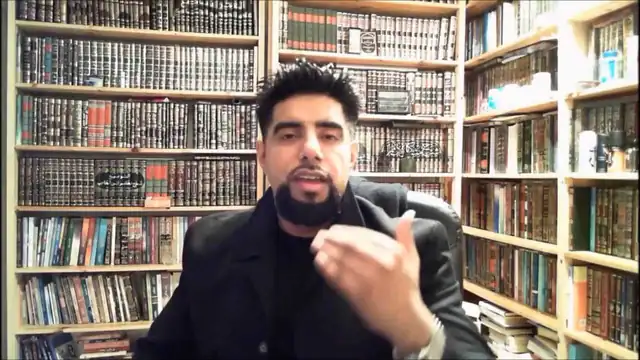 Press play to load from YouTube. Nothing loads until you do.
Transcript
machineauto-transcribed, may contain errors · source: youtube auto · click a time to seek · dotted terms open the glossary[Music] B
people I'd like to introduce to you today a text a mother text of some of the major legal scholarship that has taken place in this umah the text we will be learning about is Al at times referred to as the M of IM Malik it is it can be translated as almost the cannon if you like so at times referred to as the M of IM Malik some people refer to it as the M of s since he authored it this book contains over 6,000 M it's in several
volumes and it has become one of the major sources of Islamic scholarship for over a millennium and many people have continued to use this text as the basis for other texts that arrived later on on the Islamic scene we'll take a look at a bit of the history about this and how it actually emerged and what were the intentions before it was written and that's interesting as well because we'll see many people uh who have contributed yet Perhaps some who didn't
intend to kind of arrive at this masterpiece in the end so going back we're going to have to go right back to the time of Imam Malik and he's has many students obviously an absolute Legend IM Abu abdah among some of his key students were people like ABD Rim there were people like ashab Abdullah wahab uh and many people Z these are some of the
prominent students and their names you will hear quite often within the circles of the school of Medina now Imam Malik was a particular person with a personality that was very a striking so in his presence people would often be reserved and reticent to ask out whatever they wanted it was almost quite of a contrast to some of the other study circles throughout various parts of the Muslim world so in Medina in Malik Circle it was very it it was very kind of teacher-led if you like and the whole
thing Imam Malik would go through the M people would ask and then it would just end the IM Malik would explain and they would leave it was there wasn't much of oh everybody getting into a discussion and debating and these type of things were not the norm in the circles of knowledge that took place within Medina uh in the early days so Along Comes a student who comes from thean region which is modern day Tunisia and he travels and he's a student of the student of Imam Malik of Al and he comes to his circles and he's not too familiar with the protocol so he starts to ask
questions upon questions and what when the other students noticed this about him his name was assat and that's a name to remember people now when people notice this about him they think well why don't we utilize and optimize this type of Courage that he has so they started to say to him hey why didn't you ask the Imam this as well and that as well and keep asking him and and because they knew that they couldn't they Wen really up to this to question IM Malik like that so soat would do that he would ask a question Imam Malik would respond and then he would say oh but
what if it was like this and Malik would respond and say yeah but what about the and you'd get into what would appear to be a bit of a debate almost so this happened on several occasions and Imam Malik was not really fond of it so Imam Malik told him on one occasion M he said what is this he said that everything I explain to you it just follows on with a chain of uh of all these follow-up questions and in and type of especially this type of debating discourse so IM Malik says to him that look either
you stick to our type of protocol here or he says why don't you go to Iraq because the people of Iraq were known for this type of a discourse soat is pleased to go to Iraq and he actually takes with him a letter of recommendation by none other than Imam Malik himself that he's a student of Imam Malik and that he should be acknowledged for the studies that he has conducted there nowat when he's in Iraq all of a sudden he gets an idea I mean after having studied there for a good while several
years he gains this he has this inspiration that what I would like to do is have a like almost a document a book if you like which will will contrast the views of the school of Iraq with the school of Medina this idea that he comes up with he thinks that that would be awesome now he then comes to hear that Imam Malik has passed away so what he does is he returns to uh his hometown he hears that most of Imam Malik's students have returned to their homelands and many of them were
Egyptians so he goes to some of the most prominent students of Imam Malik and the interesting thing is he sets about with this Vision now little does he know that it will turn out to become something perhaps very different yet so extraordinary this is really where we are reminded that that insan plans and Allah decrees that
that that this and such is destiny that you can say all you like to it no matter whether you miss the target Destiny will always be spot on and it's interesting that he goes to Imam Malik students and this initial Vision he has along the way begins to change and then he just ends up documenting so many M so many issues he speaks like he'll ask what did IM Malik say about this what and he seems to get so much into this that he eventually ends up documenting a
whole text really volumes of what becomes known as alad named after him Assad now the Assad then becomes reasonably widespread however it has several shortcomings to it because it was written as almost a draft at that time a contemporary by the name of sah another Legend within the school of Medina who sees this Assad for the potential that it has in it he takes this back to the student of IM
Malik who had originally given the narrations of what Imam Malik had said so he had been asked by Assad what does what does Malik say about this and he would say he says this and sometimes he would say things like oh I'm not too sure I think or perhaps he said this and he used a lot of words which lacked certainty at times so s approaches and he says and he says to him that look this book has great potential however we have to put in there only matters of certainty he says this where you where you are saying perhaps and I'm not too sure he says leave it up let's put in there matters which are
built upon certainty he says let's do this let's organize it let's give it some structure perhaps at that time sah himself doesn't realize what he is setting in motion this is the thing you see that you Destiny has its own plan now as he finishes this type of text this re-evaluation of this entire text what he does is each Masa each issue he laces it he follows it up with the
varying narrations from the other students so after he's finished with he would also ask wahab he would ask asab he would get narrations from other people well did you hear anything different from IM Malik he'll include that then he follows It Up by including and that support this masalah and then usually he follows it with a tradition of one of the seven F of Medina um the founding fathers really amongst the founding fathers of the school of Medina who have clearly spoken in that issue and he will kind of lace it with that
usually and that's how he kind of like really polished and really set out an amazing new structure to this text the and he terms it the see what he doesn't know is that this text will become a text by which civilizations and dynasties will end up ruling it will be something that when once somebody was asked about some of
the AAL in it that where are you getting this from and they said from here narrated by and they said what what is that he said it is he said he said it is what is said by it he says he says beginning from Egypt to where the sunsets this is what they rule by and for centuries every Century saw Scholars working upon this text Al some began to summarize it others wrote commentaries on it footnotes upon
it they all added notes and detail upon this commentary upon commentary it became one of the most relied upon sources for the school of Medina till our very date till this very day we see that the m is indispensible it went on to influence language that we see in many parts of North Africa today that when they are referring to a legal Cannon it is called Al the M of this the M of that that name has been you can see the
impact from something that began over a thousand years ago with the simple efforts of a student of knowledge who wish to compile a text we are reminded of the words of the poet that it was I was just individually I had just set off on my own towards my destiny towards my destination little did I know that people began to come
along and join me and eventually this turned into an amazing amazing Caravan of people heading towards this same Destiny and what's interesting there is that the word is also the same root for the wordan in Arabic which is the city in Tunisia from which sah and Assad both emerged from with that people I'll leave you for
today in
Something wrong here?
Tell us what is wrong and it will be checked against the recording. Nothing changes until a person has reviewed it.
Sending a note needs JavaScript, which is off or unavailable in this browser. Nothing has been sent.
No name, email address or account is asked for or stored, and the inbox does not store your IP address. For rate limiting it keeps an unreadable fingerprint of your connection for 48 hours, and our database provider's own logs record connections as every website's do. Only your note, its kind, the page and the moment in the recording are kept, for review.
Cite this recording
Stable id, transcript version and tier are part of the citation. Every change to a transcript is logged.Mufti Abu Layth Archive, auto-transcribed, may contain errors. https://muftiabulayth.org/r/9r-buivmwbq/ (accessed 1 November 2026)
- APA 7
Mufti Abu Layth. (2014, January 25). The Mudawwana; An Introduction - Mufti Abu Layth [Video, auto-transcribed, may contain errors]. Mufti Abu Layth Archive. Retrieved November 1, 2026, from https://muftiabulayth.org/r/9r-buivmwbq/
- Chicago author-date
Mufti Abu Layth. 2014. "The Mudawwana; An Introduction - Mufti Abu Layth." Video, auto-transcribed, may contain errors. Mufti Abu Layth Archive. Recorded January 25, 2014. Accessed November 1, 2026. https://muftiabulayth.org/r/9r-buivmwbq/
- BibTeX
@misc{abulayth-9R-buIvmWBQ,
  author = {Mufti Abu Layth},
  title = {{The Mudawwana; An Introduction - Mufti Abu Layth}},
  year = {2014},
  month = {1},
  date = {2014-01-25},
  howpublished = {\url{https://muftiabulayth.org/r/9r-buivmwbq/}},
  url = {https://muftiabulayth.org/r/9r-buivmwbq/},
  organization = {Mufti Abu Layth Archive},
  urldate = {2026-11-01},
  note = {Auto-transcribed, may contain errors}
}