
Sharia: Between Urban Myths and Islamic Reality
salat salaah namaz salaat namaaz as-salah al-salah salawat haj pilgrimage hadj hadeeth ahadith ahaadeeth hadis hadees ahaadith malik ibn anas malik bin anas imam maalik imam malik ibn anas imaam imams prayer leader usul al-fiqh usul usool usool al-fiqh usul ul-fiqh usool ul-fiqh shari'ah shariat sharee'ah maaliki malikite malikiyyah maliki school muftis hukm ahkam hukum hukam ahkaam halaal permitted lawful haraam forbidden wajib waajib wajibat fard farz faraid fard ayn fard kifayah fardh sunna sunnat sunan prophetic practice jahannam jahanam jahannum koran quraan al-quran ayah aya ayat ayaat aayah aayat sahabah sahabi sahabiyyah sahabiyat madinah al-madinah madeenah yathrib shiah shiite shi'i twelver ithna ashari 'alim aalim ulama ulema ulamaa ummah umma ummat madrasah madrassa madaris madrassah religious school nikkah nikaah nikah nama nikahnama talaq talaaq triple talaq talak ibadah ibada ibaadah ibadat ajr sawab thawab thawaab sawaabvideo · 41:01 · 8,500 views · 24 Jun 2014 · Open on YouTube
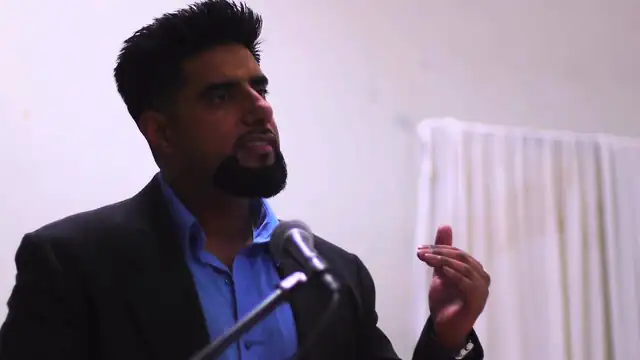 Press play to load from YouTube. Nothing loads until you do.
Transcript
machineauto-transcribed, may contain errors · source: youtube auto · click a time to seek · dotted terms open the glossaryin alhamd I think it's been it's a very great opportunity to kind of be here with with the she share some thoughts and benefit from uh the presence and knowledge that is being that is being
shared we the topic we are looking at is the Shar between urban myths and Islamic reality what I'd like to do is go through um almost a systemic like go through the definition of what the Shar is highlight its uh legal definition a bit of background into what do we mean when we speak of the Shar and then maybe take a look at some myths which which people may think are true about the sh and open up some
questions of about them that's what uh we're aiming to do sh in Arabic comes from the root which can mean to begin something that's linguistically it also the word as sh actually is like a spring of water where water has kind of descended for people that people or animals can drink from and the Arabs use this word Shar for a a place of water that is not difficult to access so it's something where you would
be able to access the water with with ease that is all that is almost a condition for calling something a Shar traditionally then we have an Islamic understanding when we say the word Shar now we first of all when we're going into this when I say the word Shar something has come to our minds everybody here has kind of perceived something you've got some type of impression some type of uh
some concept floating within you within your type of mental sphere of what we're talking about the first thing is this is a legal system this is what Islam is telling us to live by or which it is telling us to be governed by the question is first of all that where has this actually come from the Shar that we're speaking of another question is has this thing always been the
same I mean when we say the Shar do we think that this has been something that's always been systematically the same throughout time and I'm sure uh I could open it up to questions and answers and quickly get some feedback but I think I think people would pretty much I mean well the answer is no it hasn't me the same so I hope that is what you're thinking the thing is that the Sharia has changed from era to ERA with prophit to messenger that the sh
that for each and every one of you we placed a here is referring to and a is a way the with this verse of have really taken two Roots most of them have very clearly said that Allah is telling us in the Quran that for each Nation there was a a very particular Shar which they followed and a particular type of roote or understanding to it the other type of understanding which kind of points out is that he says
that for each Allah placed a method a way by which they could access the truth which is perhaps less popular the main understanding that have taken is that every um had its own sh okay now we understand that okay each umah has its legal system it's had this okay so what is this that we're talking what is it then today is it simply like when we're saying okay the Shar what are we exactly talking about it's
sources this is a net result of the Quran of the Sunnah of its interpretation its understanding in addition to other mechanisms legal mechanisms that would be necessary to make law Shar is something which governs our entire life so it's going to start with whether it's Salah the five pillars of Islam it's going to go into marriage
divorce buying selling the criminal justice system inheritance it covers everything it is synonymous for the term however the when they use the word sh they usually this is just a customary practice are referring to the nonat non worship elements of the Sharia so they're usually talking about anything that's not to do with worship more to do with buying selling marriage divorce uh the criminal justice system things like that that's what they're usually using it for that's the usage for this term so
I mean so now we okay we've got this understanding this is what the Shar is here's a question that we are faced with is this law this Shar is this sacred and this kind of comes into some of what we want to talk about tonight about elements of myths and realities this will be the first question that is the Shar sacred and and obviously from a an immediate response would be yes of course it is which it is
but the what I'm trying to say is that we need to explore the question because these are some of the things that are creating myths in our society we have a lot of confusion today when people feel that the Sharia is being challenged and it comes back to things like this that the sovereignty of the Sharia is being challenged that people feel that wait a minute the Sharia is sacred how can somebody question certain aspects of it doesn't that mean you're questioning Islam Now by Essence we would say that the
Shar has is composite of two type of parts to it there is a core aspect which is sacred things which are clearly defined by the Quran by the Sunnah by things like this clear definitive rulings these things will have that sanctity to them then the Sharia will expand into your to cover your everyday issues of Life the mundane the the boring the the things which people are arguing over everything the Sharia
will expand to cater for it all so when a person is saying things like um even to your customary usage of language will be governed by the Shar the Sharia will accommodate for it so if a person said I know I I want to buy a car so he says to somebody would you look go get me go get me some Wheels now is that a usage that could be used for a car people many people do or people say a motor get me a motor now you pay somebody some money and he comes back
with just the engine you're like what the hell what's what's this and he's like I've just done what you've asked me to do you've asked me to go get your a motor I've got your motor so you're like ideal Islamic situation of course you're like to the judge let's go to the Islamic church with the Assumption obviously the Sharia caters for this which it does does the Sharia have a response it does have a response the Sharia will say okay we will look at the the and the of that region we will look at what is understood by people when they say that
oh I want to buy a motor or this is my motor or these are my wheels what do they mean by that if they do you mean by a car then that person is clearly in the wrong the Sharia will cater for that it will pass a ruling it will pass a judgment are we saying that now this term this usage or this saying motra or whatever has a sacred aspect to it it doesn't this is the Sharia accommodating for your customary and conventional usage of language and your practices so the Sharia has a core part to it which which is sacred and it
extends to cover your everyday life issues which may not necessarily be sacred per say but it's been Incorporated by the Sharia so why is this important this is one of the things that it is important because not every question which is raised at the Sharia is questioning Islam it is a myth to think that every time a question is raised about the about an aspect of the sh that it is a question that is aimed or H at Islam it's not NE it may be the case but it's not necessarily the case okay another
thing is the sh from 1,400 years ago you see once again another question which you would say yes it is but it's we need to raise the question and explore this concept because you're right it is from, 1400 years ago the Shar is from then but does it mean it's stuck there you see it's interesting because some of the im as an example a legend from granard lelus um very amazing
Maliki scholar who who who writes in his M that one way of understanding or getting a trer picture of Islam is really to see the early practices so if we want to so if we're thinking oh look I've got a Hadith here this Hadith could mean this it could mean that I don't know that it's mentioning that the prophet Sall alaihi wasallam used to let's say used to do this or used to does that mean it was a regular practice does that mean it was a one-off practice does that mean it's something we should be encouraging everybody to do or is this the exception or how do we understand that by just reading one text well obviously I mean there's
guidance from the but the thing is that we look at how did the early Community Practice it so it's always yes so from one aspect you're absolutely correct that Islam from that aspect will always be stuck in that era it will always be from and of that era but then the myth is that it does not incorporate for all time to come it does incorporate it does deal with our issues it will adjust when I spoke of which is one of the principles upon which the Shar is built when it
looks at your Norms obviously when your Norms will change so will the rulings that there is a clear principle okay that the rulings will change as the day and AG changes so that's not talking about oh today we're in a different day and age so let's stop praying lot or we don't need to be doing that's obviously a bit obviously if somebody was thinking like that then we' got a few problems but the thing is that what we're talking about is those rulings which are built upon convention which are built
upon like issues of like divorce are built upon a huge part of them are built upon convention would you know okay I'm going to alarm a lot of you now in a lot of the traditional books of you see as an example divorce is of two types that um when a person uh pronounces the divorce that he could either be divorcing clearly or he could be giving a k like he could use a phrase which refers to a divorce so historically in many of the books of they would say that saying to if a man said to his to his wife that get out of
here I don't want to ever see you again get lost in other words that that would actually that would mean it was a divorce that would actually seal a divorce like blood yeah if that was to happen today that would be like I mean so the the whole day and age has changed that would no longer constitute a divorce but it doesn't mean that it didn't apply back then that's one example okay so there is a once again it's coming back to understanding that look the Shar is built upon
tools okay there is diversity first of all in it there are sources where we're taking it from we're taking it from the Quran we're taking it from the Sunnah but also from the interpretation of the people who received it and then those who came after so everybody is kind of looking into this I mean the scholars are and not just everybody and so they and they're coming up with an their understanding and people by their nature will disagree so we're not only coming to recognize that there there are legitimate differences there are also Parts which will be based on convention there's
Parts which won't won't necessarily be sacred that if somebody questioned them it doesn't mean it's an attack upon Islam as an example that's um the other interesting thing is that okay so okay so this's this Sharia and okay yeah it go us and yeah he tells us a bit about what we meant to be doing and stuff like this and but do I really have to be learning it they really have to learn the Shar is it I mean people are already thinking what the hell do I really have to the unfortunate truth is you have
to the thing is this is the understanding of Islam which is being presented to you people complain they say that you know oh such and such is saying this is what Islam is saying such and such is saying this is what Islam is saying I'm confused I don't know what what should I be taking what should I be looking at well the answer is that you first of all have an obligation upon you to be seeking knowledge you need to be learning about the Shar there are no there is no kind of alternative to that the the
alternative is you just remain ignorant that's not a a viable alternative that's just okay for I mean whoever did it did it but you have an obligation that seeking knowledge is an obligation for every upon every man and woman so you need to be actually doing that and then here's another type of myth that follows from that but of course I've got some knowledge of Islam I'm a Muslim of course I've got some knowledge of what the Sharia Islam
is saying I've been a Muslim my entire life so why am I not entitled to some type of an opinion you see one answer to that is like that's almost equivalent to saying because you possess a physical Anatomy therefore you should have some opinion on anatomy and physiology you should because you've had a body all your life you've been living with it I mean why is it that when it comes to matters of physiology or or the
actual uh matters of anatomy you would have no no expertise whatsoever from a scientific perspective if you haven't studied it even though you've had and carried you've been yourself as long as you have been yet when it comes to Islam people will feel but I've been a Muslim of course I I'm entitled to my opinion on what Islam is actually saying that's another type of myth and this why does it cause a problem well it causes a problem when you start to get unqualified opinions circulating adding to the confusion
which is already there and there is and this is why we have a tradition of learning within Islam so I mean these are some of the things so another type of myth that we are kind of then led into and it's an interesting one is that obviously when we think that okay Islam is governing all aspects of our life this Sharia is governing us so surely it must have created for us an identity it's created something for us to kind of to to identify as that I'm a Muslim this is my
identity so I mean this this from one aspect you'd say that that's once again from an aspect it's correct and from another aspect it's a myth but what do we mean that Islam created for you an identity what do we mean by that like did it create a particular uniform that it gave you weirdly I mean people when when just thinking about the question will think of course not although on the ground people will feel that no perhaps it did did Islam come to kind of arabasz almost the entire world like to turn
everybody into what was an Arab was that what Islam came for did Islam come to spread just an Arabic culture is that what it came for I mean what these are very pertinent questions today you see when when we look at Islam and we look at how is it symbolized how do you identify Islam you'll be surprised to realize many of the things by which we identify Islam were perhaps complet I mean like let's say okay let's just look at a Masid Islam is symbolized by a Masid isn't it
a dome okay was it there in the time of in time of sah in time of the prophet in the time of companions in no a minate no okay what about the crescent and the star huh okay but at least the Pakistani flag was there no I mean okay okay what about the Shar Kam then toy hat on the head was it there in the time of the sah the or the no no damn we we're running out of identity measures here so what
what when we think about what are the things that we identify Islam like did Islam identify Itself by this historically and what is interesting is that it does it does this is why I said in part it's true that it did try to speak of an identity but yet it had a myth which we carry around today an urban myth about no it carried it tried to teach you to kind of have a uniform or to have this or to have that when the prophet sallallah alaihi wasallam was asked to identify a Muslim he said that
man whosoever faces our and praise or offers our prayer and he eats from our meat and that is that is a Muslim how star is the contrast today between what they were Define and you think okay was that a one-off okay let's just was that a one-off maybe the prophet s Al said that just there maybe the the sahaba had a whole different concept is that so let's fast forward a bit go to the time
of and the unfortunate event of when he'd actually uh and his assassination of when he stabs him during the Salah and Omar is taken away and now when he's at home and the sahab are visiting him and comes to him and he says to him that and he says that you were right because there was this debate about non-muslims were entering Medina and they were taking up residency and stuff like this and there was a discussion amongst the sahab that should we allow
this and Abbas had said that there is no the Quran or the Sunnah does not teach us to stop this so why are we imposing rules which are not there in the Shar so that was what they went with that is what Omar had gone with so Omar had so now he's obviously there at home and he'd been he'd been stabbed and he was on his deathbed and at this stage Abbas comes to him and he says that I'm sorry that you know I was wrong that we should have imposed to prevent these people from com coming into Medina then this wouldn't have happened he's telling this
to Omar and then he says to Omar you know what we'll have them all expelled from Medina so we fast forwarded yeah we've gone look look how we're all through the right through to the end of right and what does say he says LA but why not he says no but why not he says he says
now he says what now after they've eaten our meat and they faced our meaning that you know these people have become a part of our society now now you want to expose them but the point is what I was highlighting was that look for identity he still referred to the exact same criteria from that Hadith but the problem is if we use that criteria today everybody would just look totally different because if the only thing is whether we eat halal meat and we pray to the same what do we do with our mechanisms of uniformity of everybody being in one
uniform and so this type of um it really there's a lot of question shall I say which really need to be raised another interesting myth this leads us to okay so this identity another and we see this a lot the Sharia is something which needs to be imposed why not it's a law and what do what do you do with laws you impose them so therefore the Shar needs to be imposed and this once again some it's got some truths to what it's saying and it's got some
myths the Shar yes obviously it's a legal system it's a method to govern your entire life of course it would have its feere to be imposed to be operational that is the purpose of it is it there to just be imposed upon people and this is going people we've got this problem here within the UK Big Time many people going around needs to be here need to be this it need to be there we need to impose this we need to do that otherwise we're failing the
Shar okay so as Imam shab said let's go back to the early Community let's see what they were doing so we're going to rewind go back let's go to the time of the legend IM Malik IM the legend the IM of Madina let's take a look at what was happening in his time so Imam Malik he is the authority you've got legislation is in place got the control things are going on let's look at some of the rulings I'll tell you a very good place to start
looking since we're looking at this map we're trying to figure out who should we start looking at let's look at the non-muslims that are there no point looking at the Muslims because they're obviously going to be part of the system let's look at the non-muslims now were there non-muslims living within Muslim societies yeah they were and they had a specific term given to them the people of zma okay the people of zma this type of responsibility now let's look at the rulings to do with the people of zma now here's a surprise that IM Malik is asked and it's reported in the M which is he's
being asked by a student and he's being asked about matters of ncah marriage and he says tell me says you know the people of them are getting married to each other is their nikah valid so IM Malik responds he says look it's upon their Dean you know what they doas it's it's valid and this and that and we don't object to and then they start getting into some technical debates and then asks him oh but so okay so let's say they were people of themma who got married at that time and now they became Muslim but when they got married they used things like I don't know like for
the Mah he gave her alcohol or he gave her pork would we still allow it now because Islam doesn't recognize that so IM Malik says look it's their thing it's valid for them it's pork or whatever so then he asks IM Malik he says okay what about when people these people of come to us so that we can give judgment in them so we can be the judges so we can judge in their matters I I would say that's an ideal opportunity to land with the imposition of the Shar that's it right there like think
about it Hometown Islam got no opposition here's the non-muslims living there they come to you they actually come to you or or we know that there's this issue going on shouldn't we just step in that is the ideal place to step in what does IM Malik say says he says we don't get involved in their matters and he said oh what if somebody what if somebody wants you know like what if he does IM Malik says I don't like that he does but if he chooses to then let him judge by
Islam but it doesn't stop there the questions go on so he asks IM Malik the questions start to go from he says really so we won't get involved he says no he says okay so what if they doing this wrong and that he says no and this in the M he asks IM Malik okay what if they are conducting marriages which are incestous so a son is marrying his mother right here within Hometown Islam within the Muslim Community they marrying brother is marrying sister father is marrying daughter he asks him this he
says what does Imam Malik say says says we leave them alone he says that's he says if that's their de then that's their de even though that is in our de clearly I mean that is interesting as a s on a a tangential note they say this is a principle in uh in Islam that within legal theory that there is no generic text except it has been
specified they say that there is no so there is no ruling which hasn't been specified in Islam so for example if Allah says pray but then there's going to be the child who is not obligatory for him to pray so it specifies him out of it it's going to be the in let's say somebody who's not capable mentally of praying they're going to be excused there's always EXC like some people who have been excused there is no generic text except it has an exception so Jal legendary scholar says you know what that really got me thinking so he says I thought there's got to be one he thought but they all accept that they accept accept the the fact that Allah is all
powerful and those verses they say that those are not specified but we're talking about verses to do with rulings he says I thought now there's got to be one so he started to look and then he says allahar I found one see that's scholarship he go that your mothers have been made Haram for you to marry he says there's no specification to that there's no exceptions I mean so now coming back to the point that you see so this understanding this myth that we have to impose Islam we have to impose the Shar
you can see that there was an ideal opportunity to impose it what is the legend the IM of responding with that we leave them alone we don't go to them that it's their way leave them and this is within the Muslim type of communities so I think and this there are several other type of myths we see which once again are questions like if somebody an interesting one is isn't the Sharia isn't Islam built upon struggle what would you
think huh isn't it built upon struggling isn't that the oh that's the the whole thing of the yeah no somebody saying Hell no no way but but you see in part that is correct there has it has a history of struggle to it has a history of being established the whole people when they want to do something they don't feel like it there is you don't feel like praying you don't feel like doing this you don't feel like so there is that struggle that's correct however however there is a myth a huge
myth that is also Incorporated in that IM writes in his once again he says that and he says that the that seeking out hardship has never been intended by the Shar if it comes and you bear it Allah will reward you should you go out looking for it never that is not what Islam has come with but there is this but it may have hardships with it some like so a person's going to Hajj there's hardships
there he's bearing them he's getting rewarded but it's not telling you to seek out the hardship per se but this is a huge myth as well sometimes people feel that no no no no this is too no no Islam is there for a particular reason I need to feel that struggle so I'm not feeling a struggle I knew someone once who um he was a student studying alongside with us when we were back in the madrasa days right so and and this person he would purposely he would kind of set his bed in this type of Lobby where you had all this excessive heat coming out from the air conditioners and
stuff like this and all this and he would just that's where he would rest suffering I mean it's hot enough as it was it was Pakistan on top of that this guy was it was an absolute saer so I remember seeing that and I asked the guy what on Earth are you what's happening here what oh no no it's just I was feeling a bit cold I was feeling with this and then he eventually said oh you know what it is that the sahaba went through difficulties you thinking look this is not what the Shar is asking you to do there is no
reward whatsoever in this what you are doing this seeking is it is not intended by the sh so you doing that is just ignorance you're only like suffering and making yourself you know torturing yourself really there's no reward in it from Islam but these I mean are really some of the things and another interesting speaking of torture another interesting thing is that see when we say Shia there's another myth or I suppose it's got some truths to it like all of the things we've said
before is or the the sh the capital punishment system within Islam is that the Shar has a criminal justice system to it just as any legal system will have you know when you look at the books of F and their volumes it's like a section of the last volume usually that deals with the criminal justice system within Islam and you'll deal with whether it's going to be this or robberies or whatever and the punishments or the the type of penalties that are
conducted what about all of this what happened to all the other volumes people will feel that right okay I want the sh I want the Sharia I want I want to here I want the Sharia okay what do you want what do you want what's what you I want people's hands to be cut off it's like chill out a little we understand your passion for for what you're trying to say but that is not what the Sharia is about have you ever heard in a place people saying I want the sh I want the so what do you want I want education for
everybody I want everybody to have a literacy rate I want there to be a hospital system a medical system for everyone or a Weare system as the Muslims have had traditionally with the B and the other derivatives that they set up from nobody would would they ever say something like that that's that's what I want to sh I want what you want yeah I want everybody to be learning I want this I want I want trading no no no no no don't worry about that we'll sort all of that out let's first of all I I want I think people need to be
killed so this this attitude is not the attitude of the early generation this is not the attitude at all when Imam Malik was asked how will people in the later generations become rectified that when we're hearing that every generation becomes worse than the one which and so on and so on and he said that he said that they will only be reformed by that which reformed the early community that this is and in [Music]
AI that my um is like the rain that we don't know whether the will come in in the beginning or the end meaning that there will be goodness in the end as well just not to have a a pessimistic approach that oh no we're so far from the proph Ali's time therefore everybody's just full of you know nonsense and every everything's are so terrible and it doesn't it does not mean that at all so I mean we're taking a look at really a lot of things to do with the Shar in terms of myths these are questions what do see the point the
object Ive of raising these today is that you go away and maybe just think about what has actually been said it's more about just kind of thinking okay that wait a minute a lot of questions we are in a day and age when a lot of questions are being asked there's there a lot going on and so people are asking and now there's all these debates going on TV and on this on the social media and so on and and some of them are and may be problematic and some May be aimed at Islam to attack them but it doesn't necessarily mean that we can't look into these questions but I tell you where that's
going to begin that's going to begin with each and every one of us taking the responsibility to learn for ourselves so when we go away from here today everybody should be thinking well what am I doing to learn what am I doing to learn the Arabic language what am I doing to learn about about how to practice Salah how to how to kind of pray how to conduct my fasts how to do these what am I doing about that CU if the answer is very little then that explains the situation that we
are in
Something wrong here?
Tell us what is wrong and it will be checked against the recording. Nothing changes until a person has reviewed it.
Sending a note needs JavaScript, which is off or unavailable in this browser. Nothing has been sent.
No name, email address or account is asked for or stored, and the inbox does not store your IP address. For rate limiting it keeps an unreadable fingerprint of your connection for 48 hours, and our database provider's own logs record connections as every website's do. Only your note, its kind, the page and the moment in the recording are kept, for review.
Cite this recording
Stable id, transcript version and tier are part of the citation. Every change to a transcript is logged.Mufti Abu Layth Archive, auto-transcribed, may contain errors. https://muftiabulayth.org/r/5i9qoetykti/ (accessed 1 November 2026)
- APA 7
Mufti Abu Layth. (2014, June 24). Sharia: Between Urban Myths and Islamic Reality [Video, auto-transcribed, may contain errors]. Mufti Abu Layth Archive. Retrieved November 1, 2026, from https://muftiabulayth.org/r/5i9qoetykti/
- Chicago author-date
Mufti Abu Layth. 2014. "Sharia: Between Urban Myths and Islamic Reality." Video, auto-transcribed, may contain errors. Mufti Abu Layth Archive. Recorded June 24, 2014. Accessed November 1, 2026. https://muftiabulayth.org/r/5i9qoetykti/
- BibTeX
@misc{abulayth-5I9QOetyktI,
  author = {Mufti Abu Layth},
  title = {{Sharia: Between Urban Myths and Islamic Reality}},
  year = {2014},
  month = {6},
  date = {2014-06-24},
  howpublished = {\url{https://muftiabulayth.org/r/5i9qoetykti/}},
  url = {https://muftiabulayth.org/r/5i9qoetykti/},
  organization = {Mufti Abu Layth Archive},
  urldate = {2026-11-01},
  note = {Auto-transcribed, may contain errors}
}