
Recordings › Islamic Psychology
Seeing the Divine Names In Everything | al-Baqara 30-34 | Islamic Psychology
salah salaah namaz prayer salaat namaaz as-salah al-salah salawat sawm roza siyam rozah saum hadeeth ahadith ahaadeeth hadis hadees ahaadith saheeh saheeh hadith sound hadith tafseer exegesis tafasir tafaseer commentary al-bukhari imam bukhari sahih al-bukhari sahih bukhari saheeh al-bukhari saheeh bukhari imam al-bukhari takbir takbeer takbirat takbeerat ramadhan ramzan ramazan ramadaan qiyas qiyaas muftis haraam forbidden sunna sunnat sunan prophetic practice hasan hadith hasan li-ghayrihi hasan li-dhatihi hasan sahih sahihayn saheehain saheehayn the two sahihs kuffar kafir kaafir kufar kaafirun disbelief atharis atharism athariyyah shaytaan iblees shayateen shayatin satan koran quraan al-quran sura soorah suwar soora chapter ayah aya ayaat aayah aayat hifz hafidh haafiz hifdh huffaz hafiza memorisation wahy wahi wahee sahabah sahaba sahabi sahabiyyah sahabiyat khalifah caliph khulafa khilafah khilafat caliphate khilafa medina madina madeenah yathrib sufi sufism soofi aalim scholar ulama ulema ulamaa shaykh shaikh sheik shuyukh shaykhs in sha allah insha'allah in shaa allah insha allah inshaa allah alhamdulilah al-hamdu lillah alhumdulillah alhamdulillaah hamdulillah subhan allah subhaanallah subhanallaah bismillah ir-rahman ir-rahim bismillahir rahmanir rahim bismillahi as-salamu alaykum assalamu alaikum salaams salam alaykum wa alaykum as-salam peace greeting barakah baraka barakat barkat baraqah taqwa taqwaa muttaqi piety shukr shukar shukur ibadah ibada ibaadah ibadatlive stream · 1:22:46 · 5,200 views · 21 Mar 2024 · Open on YouTube
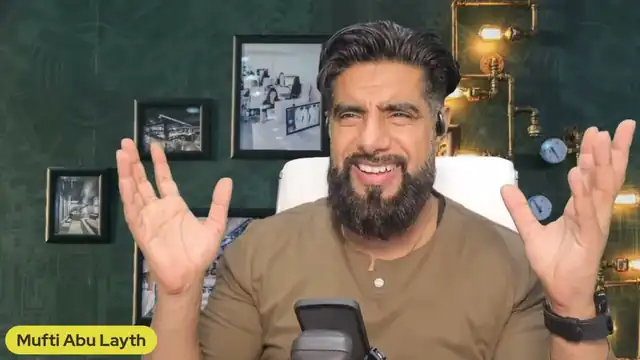 Press play to load from YouTube. Nothing loads until you do.
Transcript
machineauto-transcribed, may contain errors · source: youtube auto · click a time to seek · dotted terms open the glossary[music] All right. Bismillah al-Rahman al-Rahim. Right, people. Apologies for that slight delay there.
Let me just do before anything just make sure that we is live. So, let as long as you so long as you can just hear me just doing a sound check. Right. Bismillah inna alhamdulillah wa kafa wa salat wa salam ala rasulih al-Mustafa wa ala ibadi alladhina irtada wa man bi hudahum ihtada wa bi athari ahl al-Madinah iqtada wa ba'd.
Allahu akbar. Allahumma [snorts] allimna min ladunka ilman nafi'an. Amin. Amin. Right. Bismillah, we've got people a a meet and greet from my baby Z. My baby Zozo is right here, people. Hello. There you go. You can say Assalamualaikum.
Assalamualaikum. Right. There you go. That's people baby Z, Zozo. All right. As you can see, enjoying her Ramadan. [laughter] Right. So, she thought that she would uh like to greet you all express her wishes. Yeah, back in here, my baby Z.
I have to say Zozo's been um uh writing. She's in year five in primary school. So, and she's been working quite a bit on her writing skills. I've been so impressed with her writing recently. She's been reading it to me. So, but she was here today. She saw that I was going to do a live and she thought she'd jump on say salam.
Right. Kayfa halukum? Do you like to say Kayfa halukum? Kayfa halukum? All right. [laughter] There you go, people. There you go. So, uh people saying she looks like you. Well, you know, my pictures as a boy her age or younger than her, I think were identical. There was like I was like the boy version or she's the girl when I was that age.
But hopefully she's got all the true good looks [laughter] unlike me. Nah. So, people, now whilst you're all waiting, I thought you know, today some of you are tuning in, we would uh take the time just reflect over some verses about the divine.
And you know, a beautiful verse that really it it really sows the seed of the beginning of it all. Which sets out Right, which sets out the the trajectory.
And that is where this whole story for us as insan began. With the creation of Adam. So, I want to take a look at some uh from verse 30 to 34 Surat al-Baqarah. And what I'm going to do is actually yep, whilst baby Z, my Zozo will probably have to be going to get things to sleep.
So, she'd like to say salam and then I'll play for you guys the verses and Zozo can get Would you like to go? Would you like to [laughter] [gasps] cuz you've got school in the morning. Assalamualaikum. Assalamualaikum. Okay. So, people, I'm going to I'll let you guys go through the verses and so just give me a second.
Subhanallah. So, All right, let me just make sure this is active again. This is a really fascinating verse. Um with so many angles and just nuances that would light up our learning and our lives no matter what age we look at this from and what time.
So, you've let's take this back. And what First of all, what I wanted to speak briefly about is this topic that you see, one way to understand things is that Allah
Why did he create creation? Now, this we can go into this in much more detail on another um you know, another rendezvous if you like. But so many people feel that, you know, maybe it's to be worshipped. And that's one way of you know, wa ma khalaqtul jinna wal insa illa liya'budun.
Um the verse of the Quran that they see that lam there as ta'lil. That I created you I created the jinnkind and the mankind or I created beings so that you see, this lam they're doing it as ta'lil. So that so you know, so that liya'budun so that they may worship me.
Now, that's one way of looking at this verse. Another way of looking at that verse is the lam is not lit ta'lil. And and this to me adds a whole new splendor to the verse. That the lam is lil aqibah. It is as a consequence. So, I created beings and consequently they worship me.
That it is a that out as a consequence of me having created them they worship me. Not that I create them. So, the lam here is as a consequence they do this. So, and that's many times the lam in Arabic comes lit lil aqibah comes as a consequence.
So, that's a much more profound and you know uh way of looking at that verse that adds just infinite splendor because the first version or the first interpretation and both of these are literal readings of the Quran by the way. This is not a metaphorical reading. The lamb is the same lamb in Arabic.
So the lamb in Arabic I could say for example like people will often say that um um let's say I don't know ishtaraito hada liarbah I bought this so that I may benefit. Now this lamb here in Arabic is uh litalil for the reason why I did it.
um but if I said something like um imagine I said that uh that same sentence if I said istathmartu fi hada I you know I invested in this liakhsar I mean unless I literally was trying to say I did it on purpose to make a loss but otherwise that would be and as a consequence look what happened.
you know um so for example if um you you have and there's many verses in the Quran as well where that is being used. um you know whether it's going to say that where you express a favor or you do something and look as a consequence this happens. You do it and as a consequence they choose. So these are both literal readings of the Quran.
They're not one is not a metaphorical reading. But it gives a profundity because you see in the first interpretation um what you are saying in a way is that it's as if it's giving this thing that I created them so they do this.
They must do this. And the truth is our worship does not benefit Allah in the slightest. In the slightest it does not benefit Allah. So why create creation? And the mystics and the Sufis in Islam it they have a beautiful explanation.
And this this whole the spiritual tradition has that that there's a Hadith. Now the Hadith itself is it's criticized from a sunnah perspective but it's a very well-known Hadith and many people believe it to be authentic in a different manner. And the Hadith is a Hadith Qudsi and you've probably all heard it that Allah says "Kuntu kanzan makhfiyan." And I feel it's one of the most beautiful uh you know teachings within whether a person is going to say they believe it's a Hadith or overall
the meaning is correct but a teaching I believe it's one of the most beautiful teachings of Islam. That Allah says "Kuntu kanzan makhfiyan." I was a hidden treasure faahbabtu an u'raf wa'radtu an u'raf then I wanted to know be known to to himself.
Now fakhalaqtu al-khalq then I created creation fabi'arafuni you see the the teachings with within the Sufic and mystic tradition are that Allah wished to know his to see to to behold his own majesty.
And in that willing appears the first sense of beingness unbounded and that beingness reflects the divine majesty to the divine. Now it is this point that we fast forward and bring to creation.
That everything around us is a manifestation of one of the [snorts] names of Allah. Whether you will see splendor you know al-ali or you will see uh you will see beauty al-jamil or creation al-khaliq or you will see almost infinity what we comprehend as the vastness as al-wasi or you will see
even the brutality is the potential you of al-jabbar human beings then become the mirror to reflect the divine potential on earth.
That we have the capacity the potential to mirror divine the names of Allah on earth. You see if you think about it Allah is al-alim and all of these names of Allah insan is forever in pursuit of them.
You know to be qawi to be all knowing and I mean we we never all knowing but we're always pursuing. You know further knowledge further wanting to know it wanting to be uh be kept abreast to to to see things to keep records to be powerful to be rich al-ghani to be our entire lives everything it is an attempt to to to actualize this potential and where whatever we
look at around us it will be a manifestation of the divine expression of one of Allah's names. So this is it is an absolutely refreshing and completely different perspective on looking at the world.
That you understand that everything is a divine expression a manifestation a reflection of a divine name of Allah at work in his creation. So with this in mind right we'll take a look at these verses.
And you can see here that and this is beginning with verse 30 wa'idh qala rabbuka audhubillah min ash-shaytan ar-rajim bismillah ar-rahman ar-rahim and I did play the audio. I'll play it again. I take it you guys can hear this audio. And when your Lord said to the angels that I I'm indeed placing in the earth
this this being right this this this now khalifa is a fascinating term because it can mean like a vicegerent. This is what it's come to an authority. Now that's one way and that does make sense because human beings are an authority on earth even though you know we're not in terms of size we're not that impressive.
If you look at all creatures there's nothing you know if aliens were to observe human beings um as the famous book The Third Chimpanzee we wouldn't look that different on from from you know the from other hominins and other you know chimpanzees and gorillas to an alien.
Human beings wouldn't look so radically different but yet Allah says "Inni ja'ilun fil ardhi khalifa." qalu a One of the meanings of khalifa as well is something that comes after.
That succeeds. That's the original meaning of khalifa. So the when we use the word Khalifa today, we understand a like a ruler. But, this understanding of Khalifa is a post-Islamic occurrence. So, this understanding became widespread after the lifetime of the prophet.
Because after his lifetime, the companions became known as Khalifa because they succeeded, came after the prophet. From here, uh Abu Bakr was called the Khalifa to Rasulillah. Then, when it came to Umar's time, they started calling Khalifa to Khalifati Rasulillah. And he said, "Well, you know, this is too much for me, you know, saying Khalifati Rasulillah." So, he just went with Amir al-Mu'minin.
That the the commander of the faithful. And Muslims in that early period of Islam weren't known often as Muslims. They were known as Mu'min. Later on, like they didn't know the term Muslim. Just as today we know the word Mu'min. So, it's not you know, if somebody said, "Oh, he's Mu'min billah, he believes in God." We understand the word, but we don't use it as much.
We tend to use Muslim. It was the reverse in the prophet's lifetime. So, they would use the word Mu'min, not Muslim as much. And then Muslim becomes more famous during the time of later time of Bani Umayya and then it becomes part of the culture. There's nothing wrong in using Muslim. It's also in the Quran. But, so, he says, "I'll I'll be called Amir al-Mu'minin.
The commander of the faithful." And this then continues and Sayyidna Ali is also called Amir al-Mu'minin. Now, after after Sayyidna Ali, and you have the a civil war breaks out and not to digress too much and you have Hasan and then after him Muawiyah. And now, with Muawiyah begins what is Bani Umayya.
Now, the Umayya dynasty, they did they was an attempt during the Umayya dynasty, especially after Muawiyah, and to to assert themselves with an Islamic legitimacy. Right now, to in order to do that, they needed to draw on a religious rhetoric.
So, one of the things they did is they they re-earthed or they allowed they they kind of unearthed once again and brought back these titles of Khalifa. So, and in fact, they started calling themselves Khalifatullah as well. Now, Abu Bakr and Umar never I I don't believe they generally ever referred to themselves as Khalifatullah, as the Khalifa of Allah, but rather the Khalifa of Rasulillah.
So, this is something that really appears during the history of Bani Umayya. And then it becomes widespread. You know, then Bani Abbas and then everybody's on it. You know, everybody's Khalifa Khalifa. To the extent that we now have a Right, we now have This is the first understanding that comes to our mind. But, in the Quran when it's being used before all this terminology has developed, it means something that comes after.
And what is it Insan is coming after certain creatures. How do we know that? Well, the angels themselves are making an analogy. And they're saying, "Well, why do you know is he just going to What's so special about this Insan?" And that's because humans, Insan as we are, came after other hominins.
So, we came after Neanderthals. We came after Heidelbergensis or all the other types of uh hominins that were around. Now, from an angelic perspective, we're not that different from Neanderthals or whether it's going to be Denisovans or other. So, So, they ask, "Are you going to put a creature that just sheds blood?" Are you just going to put another creature in this earth that just sheds blood?
Cuz that's all these other hominins do. They just fight and you know, they they have some form of intelligence, but they weren't as intelligent as Homo sapiens, as us, as the children of Adam. So, and the angels say that whereas whereas we, you have beings and entities that glorify you. Now,
it comes to this verse here, 31. Allah taught Adam the names. Now, you see here, like in the translation, it says the names of all things. That's not what the verse actually says.
The verse does not say asma al-ashya. Kulliha. It doesn't say that. There's no word ashya there. Things. It does not say um asma whatever you want to to say is It says al-asma. Allah taught Adam the names. All of them. Now, the question is what were these names that Allah taught?
And here people have disagreed amongst themselves. Some thought it's the names of things. So, Allah taught Adam how to name things. Now, to be fair, naming something is an incredible quality and a strength. Why? And I'll come to that in a moment when we speak about Shaitan. Because when you name something, you can control it. There and there's a whole psychology to that.
So, Allah taught Adam the names of things. That's one understanding as in this is called a tree. This is called you know, a mountain. This is called a lion. This is called That's That's an understanding that some people many people may take.
A better understanding, and you can and these get more developed if you like. To develop it further, uh another understanding is that Allah taught Adam the categories of constructing constructive knowledge. As in taught him such foundations by which he himself can build new knowledge.
So, so as to have the basic axioms of knowledge whereby you can create new knowledge now yourself. And that's a more powerful way. And then this can be developed further. And that's where I wanted to go. That he taught Adam his names.
The names. Allah's names. Not just the names, but the realities. As in he placed within Adam all of the potential to mirror these divine attributes on earth. Adam al-asma.
Kulliha. See why? There is a Hadith in um in Sahihain in Bukhari and Muslim that the prophet said, "Khalaq Allah Adam ala suratihi." Allah created Adam in his own image. Now, you see this Hadith often has troubled people.
And rightly so, that people but we think look, Allah doesn't have an image. True. But, a beautiful and mesmerizing way to look at this is that Allah created Insan in his own image as in to mirror his divine names on earth.
So, as Allah is uh Allah is al-Alim, Insan on earth has the power to possess knowledge. As Allah is Qawi, Insan has that power to possess that. Allah is al-Raziq, Insan will also give a form of risk. But, here you see here's the the beauty.
You see here Insan can easily be beguiled. Because this power is tremendous. Insan in a way one could say from a perception one could see that Insan could think, "Oh, look, I give life." He could be beguiled by his potential.
You see, misled. Instead of You see, by seeing Allah's names manifest in his creation, this should bring us back to the divine. But here [snorts] a person could easily be beguiled. You see, insan could think, "Well, I give death.
Cause chaos and destruction on earth. Shed blood and as you see people doing today." An arrogance. They have power. There's an arrogance. You see, because this mirroring these divine qualities insan Many humans can't handle this.
So, this coming back to this point right here that the angels were saying, "Look, what the What's so special?" Allah says he teaches Adam his names. All See,
the angels are asked that you tell me, express to me these divine names. The angels don't even know where to begin. See, this is the secret that Allah has hidden in this creation.
Hidden within insan. We will show them our ayat. What are the ayat? Same ayat as in The Quran has ayat of Allah. And you can find ayat fil afaq, in the horizons, in the cosmos, in And the ayat of Allah are in them themselves.
Within insan. We are walking, talking manifestations of Allah's ayat. Until it becomes clear.
What is the it? What is this who? One way to see that is Allah. So, the interpretation he is the truth. And this is why many um as part of this tradition within Islam, especially the spiritual tradition, the mystic and the Sufis, they often refer to Allah as al-haqq.
Just the truth. So, you'll find in many of these works, they just refer to Allah as al-haqq. So, that this becomes manifest to them. And that is such a beautiful verse as well. Very mesmerizing. And And you know what? It's amazing.
And we'll come back to this one that in that verse Allah shows that his ayat are in the horizons and they are within us. Within us as humans. To the extent that we realize that Allah is the truth. And then Allah ends [laughter] What a way to end the verse.
That was it not sufficient? That, you know, with that in mind was it not Was it not enough for you? Was it not enough that your Lord Now, the amazing thing here is this form fa'il in Arabic can be both passive and active.
So, in a way, is it not sufficient that your Lord was witnessing? Shahid. Like somebody witnessing, like shahid. You use fa'il to mean We were using it here like alim to mean alim. Shahid. Birabbika annahu ala kulli shayin shahid.
That if you failed to see the signs of Allah, was it not sufficient that your Lord was a witness over all of these things? And it simultaneously can carry the meaning the passive of maf'ul. Where like you say fa'il, let's say qatil in Arabic means maqtul. Killed means it's it's you're using fa'il not as an active participle, but as a passive to mean maqtul.
In that sense, shahid mashhud. Was it not sufficient? Awalam yakfi birabbika. That your Lord in every single thing was witnessed. That was that not sufficient that maybe you just didn't have eyes to see it. You see, so that that is a totally mesmerizing verse.
We'll come back to that inshallah another day. Right, so Allah.
You see this it brings it back to to the beginning we spoke of that Allah wanting to see to to apprehend his own majesty. And therefore, he the first sense of beingness comes into creation.
Which mirrors the divine glory to the divine. That is where this story is all beginning. That first beingness, by the way, and it has many names, whether people want to call it um Some people refer to it as the qalam, the pen. They refer to it as uh Some have said refer to it as the arsh. They've referred to it as al- the al-haqiqah muhammadiyah.
That's one of the names given to it. But this first sense of beingness that emerges. This which mirrors It is just beingness. There's no forms. [snorts] There's no It It's incomprehensible to us. This is where this whole thing this whole story is beginning.
Because from as creation will begin beings We see we, too, if you think about it, human beings, that's what we are. What the mystics call the the In fact, they call the whole cosmos the they they call that internal Kabir, a kind of like a a great human, if you like. It's not human as in our sense, but a being.
And we are you have a in you have us a you'd say an internal Kabir in terms of saleeb, but we in our sense mirror. We we are the ones where the sahih hadith, by the way, says that Allah says that then I was the eye by which he sees.
That's a sahih hadith. Allah says fa kuntul ain allati yubsiru biha. And I was the foot by which he walked. I was the hand by which he grasped. The hadith beginning that my servant does not fulfill all his far'id and then continues with extra things to as a gratitude, except I was the eyes by which he sees and the ears by which he hears.
And the amazing thing is that in this hadith, Allah does not say that uh I became. But kuntul, I was already the eyes by which he sees. It's just that insan m- many insan m- many humans will never grasp that. Fa kuntul I The hadith says Allah I was.
And we'll go into that hadith uh on another occasion in more detail. But Speaking of this divine potential that I mentioned, that humans have this capacity that everywhere around us, everything in nature and us, we epitomize this.
That we the divine expression. Now, the problem with this is it can be you see it can be too much power to handle for insan. And insan goes astray. And this is nothing new. You see, Allah, when speaking of Adam speaking of this he him having this capacity, being taught the names of Allah their realities, their potential, and to bring them the capacity to bring it from potential into actual, potentiality into
actuality. Allah then brings our attention to this. Wa idh qulna lil malaikati sujudu li Adam. This is showing that all of these higher beings, pure beings, creation is being brought
under and [clears throat] subjugated to insan for the betterment in the servitude of insan, whilst insan is in the servitude of his Lord. But when this happens you see, Allah shows that fa sajada illa iblis. Except the devil, except iblis, except shaytan.
Aba wastakbara wa kana min al-kafirin. Now, this comes back to that point that I mentioned, that one of the most powerful things you can do you see is name something. That when insan has this potential with it there is a potential You see, with positive comes negative.
With everything, you'll find it in binaries. You'll find matter, antimatter. You know, particles, antiparticles. You'll find these powers being used for good these powers being used for harm. Our attention is brought to shaytan.
See, Allah names this for us, this negativity. That there will be this inescapable dark side, potentially to this glory. You see, like if you if you light a Imagine you you light a lamp or a right around it there's actually a shade even though it's giving light everywhere else.
Similarly, that there is an inevitable darkness that insan will not be able to escape. This this tamarrud, this this is the shaytan. This is iblis. Being reminded straight away in the moment you are Like I said, you can name something.
This is a a divine gift we as humans have. The moment you can name it you can subdue it. And you see, what we were saying about the divine qualities, what's the first uh description Allah brings out about iblis? Aba. Somebody that that is insubordinate.
Refusing, you know, refuses. Wastakbara. See, this aba, this kind of denial this kind of like a stubborn denial denial quality. Wastikbar. Arrogance. Allah. And what is that?
Kana min al-kafirin. That is kufr. So this beautifully sums up this story and us as human beings, what we everywhere you look, everybody you look at everything, every instance, every incident every celebration, every calamity every triumph, every tragedy it is but a manifestation
of the divine name of Allah in operation in his creation. That everything you see you will see Allah. Yatabayyana lahum annahu al-haqq. And the story begins right there with our ability to be this mirror to the divine.
To be this mirror to the divine names. Allahu Akbar. I hope that's of some help, people. I wanted to share that with you guys. Um I'll take a look at some of the questions and then we can uh wrap this up. Uh This is perhaps why we seek beauty.
Um Absolutely. Absolutely. Uh Right. So we insan is forever drawn, uncontrollably drawn to beauty. Because it is one of the names of Allah.
Allah is true beauty. Al-Jameel. Yuhibbul Jamal. Allah loves beauty. So, we are forever destined to be drawn to it, magnetically, hypnotically like moths to a flame. That is that we are fated to to be just enamored by beauty.
And perfection, yeah. But this is why And that's that's you know, Mark, that's that's an amazing insight. Because we forever seek perfection. We see we although we will always fall short of it. But there's this yearning within us to to seek it out because And immortality, you see, all of these things to to mirror the divine names, we have this yearning within us.
That in this constant unfulfilled this this this this kind of uh pursuit which has an angst to it. Yeah. Right. Right. Let me take a look at
This perhaps why we seek yep. Roshan, Shokran, Allah keep you blessed. Uh I mean, I mean. Somebody said, "I hate Ramadan and I hate fasting." Yeah, may Allah make it easy for you, I mean. You know, in psychology, like in Union psychology and other things, we're taught that you see, when we hate there's something that we have a problem with, we hate, it often isn't the thing itself.
There's an inner battle going on that we often, when we hate something, what we are hating is that we see something within us that we don't like. Whether that's abstractly or whether that's and we have a problem with that. There is a great beauty to fasting.
I mean, if you if we you know, we we as creatures, as humans, are very selfish. And so, there's no harm in beginning from a selfish perspective, a self-centered perspective. You just have to read the benefits of fasting. I mean, they are so it is counterintuitive.
You know, when the body enters into a state of autophagy, the the the body's ability to self-heal, to self-regulate insulin, to to boost uh the the release of stem cells within the body. To you'll find a sense of clarity. Now, there is there are certain stages. Now, when a person is fasting, there is there is going to be if if we're not used to the concept, there will be a point where the body releases ghrelin, which is a hunger hormone,
within, you know, these kind of uh now, that will make you feel all hungry and but ghrelin subsides after a little while. If you don't feed yourself, it'll just subside. You know, you won't you won't just stay hungry. So, within an hour, you you'll probably subside. Now, you see, what the the fasting itself does as a physical not just a cleanse, it is amazing what it does as a cleanse.
It is in fact, if you go on YouTube, you know, one of the things that I was watching so much, you know, when my mom was going through cancer, and I was watching uh all these things. I was trying to learn as much as I could and those people who beat cancer. And there's so many if you go on YouTube, you'll find people they've shared their stories and they they you know, they their journey and and one of the most powerful methods to fight cancer and to heal from it was fasting.
That you'll see that those who went on these rigorous fasts often had a capacity to beat cancer because when the body was triggered autophagy, it would actually kill off cancerous cells. The power, I mean, it's amazing because if this is so ironic and counterintuitive because, you know, when you look at Islamic history, you see that Muslims, you'll find that some of the greatest conquests and liberations happened during Ramadan.
And it's not necessary that Muslims had to be fasting during, you know, if they were on these conquests, but many of them mostly were. Although Islam would give them a choice that they didn't have to if they felt that they didn't, you know, they didn't want to fast, even if you're traveling or things like this, especially if they were going to be prepared for a military confrontation. However, most Muslims often, as we read in the history books, would choose to fast.
Now, that's ironic because when you think about it, you see, the people they're fighting would often think that, "No, you need to stack up on energy." And from a perspective, that seems to make rational sense. But, what we learned today is the the the the just almost the shocking clarity and even strength reserves that emerge when a person is fasting when put to the test.
It's not the same and even the amount of healing properties that are triggered. So, from the eyes of those who were being who were trying to attack the Muslims of the past, they were thinking, "Ha, these poor people, they're starved, they're impoverished, ha ha ha, you know, they're so weak. Look, we're eating all this meat and we're drinking all of these feasting and it'll be so easy to crush them." Yet, those Muslims were an insurmountable wall, a fortress that could not be broken.
Allahu Akbar. But you see, even from a human perspective, we're now learning that miracle. Now, people are doing this. This has become a huge thing now in in the Western world for health gurus. So, I started with a self-centered approach because we we as humans, unfortunately, are very self-centered. Now, the true approach, Allah says that
you know, when it becomes, you know, it's strange. It becomes a relief. This is so strange that you don't sometimes it's a relief that you don't have to eat. And that sounds bizarre, maybe, but they'll reach you'll reach a stage in life where you'll understand that. That, you know, you know that, "Oh, I don't well, I don't have to eat today because I'm fasting."
It clears up not only your space and but it gives you a sense of the the verses in the hope that you can attain this God-mindfulness, that God-consciousness, that you become conscious of Allah.
That you can exercise control and thereby express gratitude. You know, we live in in the West today where [snorts] by the grace of Allah, we don't truly have a fear of starvation. You know, all all of us, you know, by the blessing of Allah, you could open your fridge and there will be some food in it.
You know, like it's just a given. Like we are unprecedented in human history like that. For the average person to be able to be like that. That we never actually get hungry hungry. Like you might sometimes, maybe as a one-off, "Oh my god, I'm starving. I was at work and you know, I couldn't have lunch today. Oh my god, I'm starving." But we never truly experience it.
And sometimes you choose your struggle. And it makes you a more grateful person. So, I think this is a beautiful blessing and even if you don't realize it, Mark, you um it is. Right? Shokran Shokran, Hazim, Allah keep you blessed. There was a um times I'm sorry, there was a uh where's it gone?
All right, a super chat. Dear Mufti Yusuf Al Khalifa Shokran, Allah keep you blessed. Thank you for your work. We benefit so much from your videos. How do you reconcile Allah being all knowledgeable and free will? The video about Muhammad ibn Yusuf Al Farabi. Allahu Akbar. Shokran Shokran. You see, Allah being all knowledgeable and free will.
You see, there's some things you can't see them both from one lens. That from you can either view one at a time because us as humans, cuz we're limited. Let me give you an example. Like we human beings can't seem to comprehend four dimensions.
You see, so we obviously our world is 3D and we see in 2D, although we think we see in 3D, but really and but we can't grasp 4D. What does 4D actually look like? And I don't mean just with time involved because that's you know, space-time really, if we're just seeing it how we see it, it's still part of this realm, this dimension.
So, actual four dimensions, just as you see two dimensions to to us, if you if you that's how from a four-dimension perspective, it would be our world would be. And then imagine, we can't even imagine from Allah's perspective. Now, the reason I'm saying that is that we can see things through one thing and it makes sense and then we can see it through the other and it makes sense.
But when you try to simultaneously see them, you can't. And a good example of that in reality as well, like you could take in quantum physics, Heisenberg's uncertainty principle. That you could know these particles, you could know their spin or you could know their velocity. Um you know, you could know their spin, velocity or position, where they are. But you couldn't know both. You couldn't know the spin and the position simultaneously with accuracy.
You couldn't know them both. It's impossible. You can only measure one at a certain time. That's just the way human That's just our capacity and that's reality for us. So So with that in like with I mean with that in mind from you see, one way to think of this is this world is like a game, a computer game.
So yeah, I know my heart is doing well like that know that this reality of yours is but a game. Now if this is a let's say you've got a simulation going on. Now with that in mind you see the game has already been designed with every potentiality. That it has been designed in a way that it could you could reach level one, level five, you could go this way, that way, you could reach level seven, you could clock the game, you could collapse in between, you could die, you could
You see the game has to have had every potentiality created. We now then are the players in that game. You see you can't change the game. You can't say all of a sudden this game has become a different game. No. But every possible outcome has been designed. Where you get to is you as the player.
But Allah in his infinite knowledge knows because to Allah time does not exist. So So that's how so so to give you about knowledge as a poor example This is not a but as a poor example from our perspective, let's say humans, you could be standing at a I give this example, you could be standing at a corner and two people are rushing at a certain speed that you can see that at this speed they're about to crash into each other.
And lo and behold, that's exactly what happens. How could you see that? You could just see that because of your vantage point. You knew that before it happened. That's with such knowledge ilm, with such lacking knowledge. Allah knows everything. So his knowledge is complete.
So what turns out of it what how do events you know, what eventuates and manifests, Allah knows. But from our perspective, things are unfolding. Time is linear. Okay, the direction, the arrow of time goes is mono-directional for us.
So yeah, I hope that helps. Did I miss any of the Right, okay, let me go back to um uh Yeah, so some Not going to lie, I get irritated.
Yeah, and that's you know, it's human. There's nothing wrong with you know, look, it's the It's the nafs, isn't it? It's You know what we'll do the next session, we'll speak about that, the ego. Cuz it's amazing. There's a whole discussion really. You know, I versus me. This whole thing of the the ego between the subject and the object.
Because truly speaking you know, when we said we become mirrors for the divine. Truly speaking, even our sense of selfhood this I it is an emergent property that is reflecting the divine I.
See, what was the first expression, the first a revelation to Moses in many anna Allah indeed I am. And insan then gains this sense of selfhood. [laughter] It's miniature I.
And we'll talk all about that because it's crazy that where does this sense of the self come from? And it's psychologists can't get their head around it, you know, the bundle loop theory and all these others. So what what is the sense of self? They don't seem to understand it. So we'll we'll we'll speak about that another time. But this this ego, this this I Allah, there's so much in in this I, isn't there?
Anna And what's amazing is this word, you know, from our Islamic tradition of anna this word has then found itself into other languages like in Urdu anna means this sense of this this ego of pride. You know, this kind of like that somebody's not pride in a good way but in a negative way.
This kind of um uh this stubbornness that somebody may have. This egoistic stubbornness. They call it anna. You know, they say anna. But the anna is from the Arabic word anna. [laughter] I am. Allah Allah.
It is amazing, honestly. The poet says that That's truly the the journey, isn't it? He says I you know, I lost myself amidst the just the the noise and ruins of the of this life, huh?
He says had I met had I bumped into myself, had I met myself I would have surely loved myself. I would have loved me. It's I mean, it's just Suppose it's the thing about poetry as well when you try to translate it or explain it. It's like explaining a joke. It loses its its charisma.
That man in the had a bad day make all day for now may happen they have some milk to be out there for now. All right, [clears throat] let's see people. What we'll do is we'll uh I'm so All right, our self ident- identity is also just an emergent property.
It is. It's an emergent property. But the question is You see our consciousness is one could say it's an emergent Yeah, like an emergent property in a way. And that We'll we'll go into this into You know, I have the I I I'd like to explain and I'll do it in another video.
You know, where Lacan Jacques Lacan. He I I feel Lacan on many things was kind of onto, you know, his ex- his kind of psychoanalytic ex- explanations in certain things. When Lacan meets Ibn Arabi. Allah. I want to bridge that journey.
So obviously Ibn Arabi is way before Lacan, but this is you know um just to explain the journey, that's all. So and we'll talk about that. But yeah, it's an emergent property it is. But then I feel in many ways this whole this reality is like an emergent property.
I think this cosmos is is more like a hologram kind of reality that it's a manifestation of the other realms. So let's say the the barzakh realm or the realm of the alam al-mithal, then this world is a mazhar and a majla, a manifestation of it.
And so yeah. So in that sense You see, this is why we can never truly You know, people are thinking that God is up there somewhere or he's in you know, now they're using the you know such the latest telescope. You know, the James Webb and trying to see oh, I saw something we said oh, is is this and maybe they're just saying it as a you know, they said oh, you know, is this God out there?
Is it No, it's not. This whole cosmos, this whole universe as we know it is but a manifestation of another dimension. This is why we'll never find you'll never physically I mean, obviously you will find God here, of course. Um yeah, this is the whole point of today's explanation and tafsir that you will see God in everything.
If only you know, you will see with but Allah says in in the Quran, it is not in the that it's not the eyes that are blind, but the hearts that are blind to see it. So, but this dimension is but a manifestation of another. So, this whole dimension is is like a khayal.
But it's a real haqiqi khayal. So, even though this is a holographic, let's say, reality or a simulation if you want to say that. Um it's a constructed reality that we have here, but it is 100% concretely real to us.
And there's no denying that. [snorts] But in the greater sense of reality, how real is it? That's something we can explore. Um Our pastor Matt is constantly asked about alcohol. Matt, you need to chill out, mate. All right.
All right, so there you go. All right, so constantly obsessed with alcohol, alcohol, alcohol. I'll be bothered, I'll tell you. It's the month of Ramadan. He's obsessed, he's worried. Is 4.something percent of alcohol haram or is it 3.something percent?
[laughter] [laughter] You know what? [laughter] I remember once our teacher Abdullah Montiki Saab, he told us this [laughter] amidst he told us this story of this is tiny bird called a biddy.
[laughter] In Urdu. So, this biddy, a tiny little bird, one day a wind blew, a subtle wind, and it fell off the branch. And as it fell a leaf came and fell down on it. And the biddy, this tiny little it picked up its legs and it held the leaf up. And it thought that the heavens had collapsed today, but the sky fell.
But had it not been for me, there would have been destruction on earth today. [laughter] I biddy, huh? This is This is the thing, huh? So, [laughter] we've got Matt here trying to get his head around here. If only I could just figure out is it 4.2% alcohol or is it 3.4% alcohol? You know, if only I could do the whole world whole of humanity would be saved.
[laughter] Ah. Yeah, salaam. So um See, Matt, somebody said Matt was concerned that he may have drunk some alcohol. Is it and he he wants to know if he should make up the fast for his missed fast.
[laughter] Was he drunk? There is no Look. Yeah, just [laughter] shanti shanti, you know. Bring yourself You know what it is? Look, rise above these things of this you know, there's a pettiness that don't get me wrong, everybody. You know, it's a it's a journey and we all go through it.
So yeah. [laughter] Somebody said 4.2 remove the dot written add 7 minus drink it 24. Ah, Allah Allah. [laughter] Matt makes over Matt is Matt is drinking the spiritual wine.
You know, the wine of the Sufis and you know, within this tradition, the Islamic tradition, we have so much there's a wine is a powerful motif often used by many great scholars and you know, people of Allah in their poetry referring to this uh often referring to the love of God, the divine intoxication.
So, that is uh often used. So, you'll see people will uh will use that all the time. And then they'll play on the words as well and you know, the uncaloma for in the loma ehra on what are we need bill at the cannot hear that. Allah. He says, you know, enough of this blaming and [snorts] um give me he's asking for the alcohol.
[snorts] He says, there we need bill at the cannot hear that. That my cure is in my illness. Like give medicate me with my illness, meaning give me more to drink. Um yeah, so this is often a powerful motif that appears time and time again, a trope within a lot of poetry.
As Ghalib says, he says you must the soul of you are there by Ghalib. To J humble is so much there to not bother her. All right. He says that you you know, the the way these topics of spirituality and the way you explain them, Ghalib. I would have truly understood you to be a willy of God had you not been an alcoholic.
[laughter] Allah Allah. And there's a great play in on words. You know, in because the part of you have different cultures, but the Urdu culture develops within this this kind of backdrop of Muslim spirituality. The Urdu language, especially a lot of poetry.
And what's fascinating is may. See, there's this whole play on the word may. Because may is is similar to may, which means I. But may without the subtle nasalized, so you've got may and may. Um which has a subtle The second one has this kind of like a silent n at the end of it. Like it's a nasalized subtle may.
And the first one's may without may. So, without may means alcohol. And may means I. So, there's this huge play on this in in often a lot of poetry. So yeah. Um Yeah, sure.
Somebody said about legends and stories of those who uh you know, those during of of of the Muslim past. Of course, inshallah. Why not? Why not? Let's uh Asham Rose GL at I sugar and sugar and Allah keep you blessed.
Who is this person copying my logo and name? I don't All right, so with that people, let's call this a night. Let's wrap it up. Until another Ramadan rendezvous. We will let's rendezvous again, inshallah. How about maybe Friday night or Saturday night? Let's do it one of these You know, I'm I'm glad it's a we're coming to um school break.
It does get a bit exhausting, doesn't it? Uh but that said, you know, I feel this Ramadan now you we don't uh we don't feel it at hardly at all, you know. I I don't feel it. I mean, Allah be praised. Like knowing like at all compared to what I was expecting.
I thought to myself maybe the coffee might hit me or maybe the thirst. But, no. And so Right, Allah bless us all. Right, guys. I'll leave you guys to it. Bro, didn't answer my alcohol question. Go to YouTube and watch uh some videos on it. There's uh Sheikh Assim al-Hakeem has a few videos and Allah bless him and and others have videos on alcohol.
[laughter] Yeah, we we've These things are beneath our discussion now. So We're speaking about the intoxication of the divine glory. And you're speaking about the intoxication of grapes. Grape grape. And yeah, these lowly things. Yeah, come on.
You need to rise above. So, guys, till next time. Take very good care of yourselves. And uh to my uh Patreons, always a special love to you guys. I will be doing uh you know, with you guys another Discord live.
Uh probably maybe maybe yeah, I'll pro- I'll probably do it before the next rendezvous. So Yeah, but I'll I'll post it on there maybe Friday night or something. But, till then, guys, those of you that do want to become members, let me see. Have I got um I'll have to bring this out.
Can you see? Right, so there you go. patreon.com/mal. Uh that's the Patreon which gives access to uh the Discord. Uh it does have subscription. So, there's different tiers. There's maratib. There's levels. You know, as they as you say, there's levels to beingness.
Maratibul wujud. So, there's levels to this as well. And uh the top layer does have a one-to-one monthly. So, that's if if you're in need of that, feel free to go over to patreon.com/mal. Guys, I am also now that I've decided to inshallah come back and resume, I I'm looking for somebody to assist me with some you know, like clip editing and stuff like this.
Getting clips out, maybe making thumbnails. I did used to have this very consistently before. And then I guess um you know, that kind of stopped and then there was my mother's illness, the cancer. And then after that I've more or less just kind of been off really. So Yep. Guys, so if anybody's feeling that, do reach out to me and Allah bless you all.
Take very good care of yourselves. Salamullahi alaykum. Wa khuda hafiz.
Something wrong here?
Tell us what is wrong and it will be checked against the recording. Nothing changes until a person has reviewed it.
Sending a note needs JavaScript, which is off or unavailable in this browser. Nothing has been sent.
No name, email address or account is asked for or stored, and the inbox does not store your IP address. For rate limiting it keeps an unreadable fingerprint of your connection for 48 hours, and our database provider's own logs record connections as every website's do. Only your note, its kind, the page and the moment in the recording are kept, for review.
Cite this recording
Stable id, transcript version and tier are part of the citation. Every change to a transcript is logged.Mufti Abu Layth Archive, auto-transcribed, may contain errors. https://muftiabulayth.org/r/5hmvsykqf24/ (accessed 1 November 2026)
- APA 7
Mufti Abu Layth. (2024, March 21). Seeing the Divine Names In Everything | al-Baqara 30-34 | Islamic Psychology [Video, auto-transcribed, may contain errors]. Mufti Abu Layth Archive. Retrieved November 1, 2026, from https://muftiabulayth.org/r/5hmvsykqf24/
- Chicago author-date
Mufti Abu Layth. 2024. "Seeing the Divine Names In Everything | al-Baqara 30-34 | Islamic Psychology." Video, auto-transcribed, may contain errors. Mufti Abu Layth Archive. Recorded March 21, 2024. Accessed November 1, 2026. https://muftiabulayth.org/r/5hmvsykqf24/
- BibTeX
@misc{abulayth-5HmVsYkQF24,
  author = {Mufti Abu Layth},
  title = {{Seeing the Divine Names In Everything | al-Baqara 30-34 | Islamic Psychology}},
  year = {2024},
  month = {3},
  date = {2024-03-21},
  howpublished = {\url{https://muftiabulayth.org/r/5hmvsykqf24/}},
  url = {https://muftiabulayth.org/r/5hmvsykqf24/},
  organization = {Mufti Abu Layth Archive},
  urldate = {2026-11-01},
  note = {Auto-transcribed, may contain errors}
}